































































Article Contents:
- Why a staircase hall cannot be designed like an ordinary corridor
- Balusters and handrails: the foundation of the staircase look
- How the rhythm of balusters works
- Handrail as an architectural gesture
- Wooden baluster: why solid wood matters
- Staircase components: what to buy together with balusters
- Complete staircase railing set
- Why it is better to assemble a staircase as a set
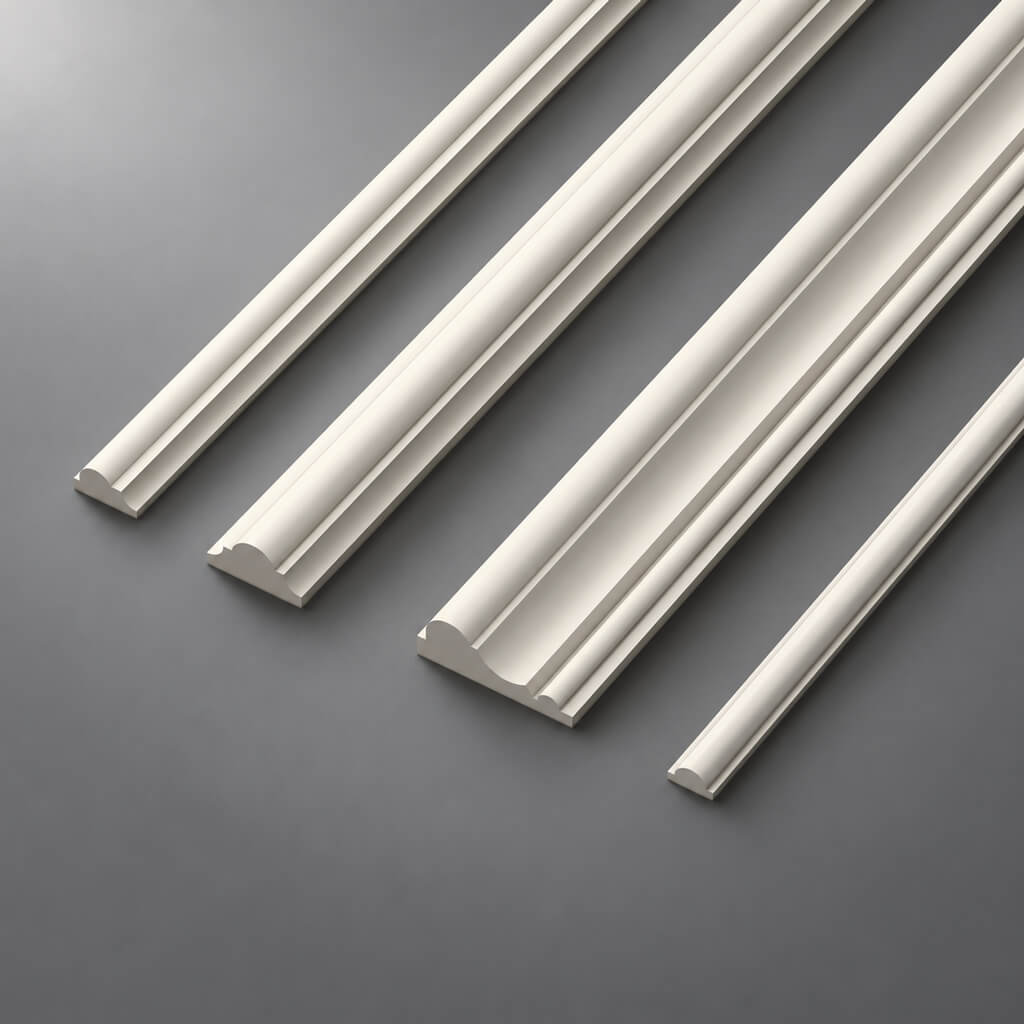
- Wooden baseboard around the staircase and hall
- Baseboard along the staircase: nuances
- Baseboard height and style
- How to connect the baseboard with balusters
- Ceiling cornice and wooden cornice in the stair hall
- Cornice and ceiling height: proportions
- How to combine the cornice with other elements
- Wooden slats and layout on the staircase walls
- Principles of working with slats in the hall
- Wooden layout: neat frames on the walls
- How not to overload a narrow stairwell
- Wooden beam in the stairwell
- When a beam is appropriate
- When a beam weighs down the space
- Beam as zoning element
- Staircase hall design scenarios
- Classic house
- Neoclassicism
- Country house
- Modern Interior
- Mistakes in designing a stair hall
- Where to buy staircase hall elements
- Frequently Asked Questions
- Which balusters to choose for a staircase hall?
- How to combine balusters and wooden baseboard?
- Is a ceiling cornice needed in a staircase hall?
- Can wooden slats be used along the staircase?
- What decor suits a narrow staircase?
- What to buy together with balusters for a staircase?
- How to make a staircase hall look visually expensive?
- How not to overload a staircase with wooden decor?
- About the Company STAVROS
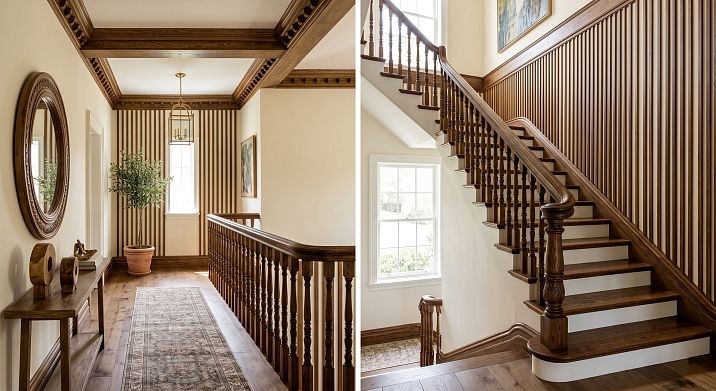
The staircase hall is the first thing a person sees when crossing the threshold of a private home. It is not a corridor, not a utility room, and not just a place where a staircase stands. It is the center around which the entire interior unfolds. It is here that verticals and horizontals, the first and second floors, architecture and life intersect. And it is here that the homeowner most often makes the same mistake: choosing each element separately. Balusters in one place, baseboard in another, cornice later, slats when the time comes. As a result, the hall looks like a set of random details, rather than a unified architectural statement.
This article is about how to assemble a staircase hall into a system. Not just a beautiful one, but a consistent, precise, and durable one. About how balusters, railings, wooden baseboards, ceiling cornices, slats, and beams work together — and why it is precisely together that they produce the result for which houses are built.




Why a staircase hall cannot be decorated like an ordinary corridor
It would seem that a hall is just a transitional space. Entered, went up, left. But in a private home, everything is different. The staircase hall is the first impression, which cannot be made twice. The guest sees it immediately, entirely, with all its height and all its details.
Here, laws apply that do not work in any other room.
Verticality. A staircase, by its nature, is a vertical element. It lifts the gaze upward. This means that any detail on the wall, any cornice, any slat, any molding will be perceived in the context of this movement from bottom to top. If the wall decoration is interrupted, if the baseboard ends and does not transition into the staircase flight, if the cornice disappears in the most tense spot — the space falls apart.
Rhythm. Balusters are rhythm. Equal intervals, repeating shape, vertical beat. If this rhythm is not supported by the walls, if the decorative slats on the wall have a different step, and the ceiling cornice completely breaks the upper contour — the rhythm breaks, and the eye cannot find a point of support.
Light. In a stair hall, light is always more complex than in a room. It comes from above, from the side, sometimes from below. It falls on the balusters and casts shadows. It glides along the rails and brings the texture of the wood to life. Wooden elements in the right lighting become alive — they breathe, change throughout the day, and create volume.
Safety. Here, you cannot sacrifice reliability for beauty. staircase components must be not only beautiful but also durable. Balusters and posts are made of solid wood, handrails are free of burrs and unreliable joints. This is not an option, it is a mandatory condition.
Unity. The hall connects two floors. This means that materials, shades, and profiles must be readable from both points — from below and above. If the baseboard on the first floor is wooden and on the second floor it is plastic, if the cornice is present in the living room but disappears in the stair area — it is immediately visible, and it cannot be fixed with cosmetic methods.
A stair hall requires design thinking. Not individual purchases, but a systematic approach where each element takes its place from the very first time.




Balusters and railings: the foundation of the staircase image
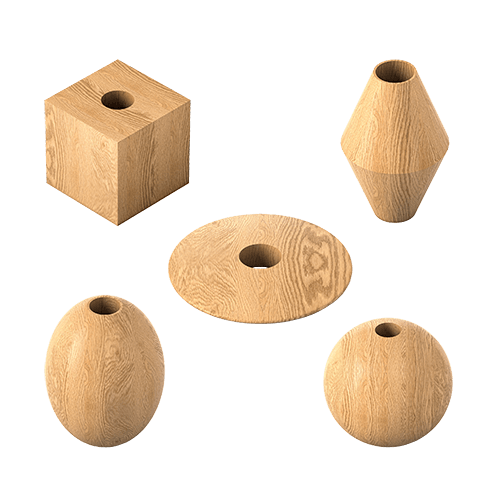
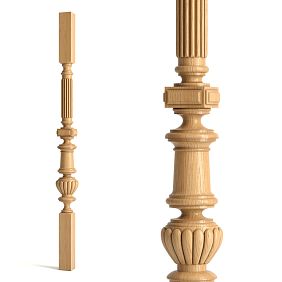
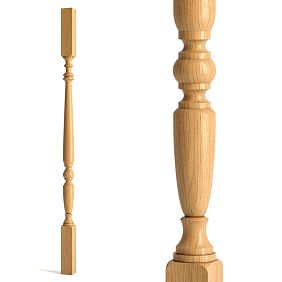
A baluster is more than just a support for the handrail. It is the character of the staircase. It is by the balusters that the style of the house is read from the doorstep. One shape — and before you is classic. Another — and the staircase speaks of modern minimalism. A third — and the wood tells of rustic country coziness.
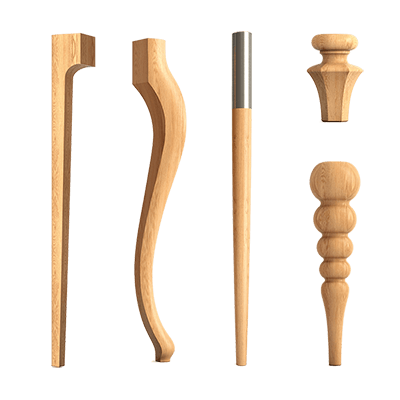
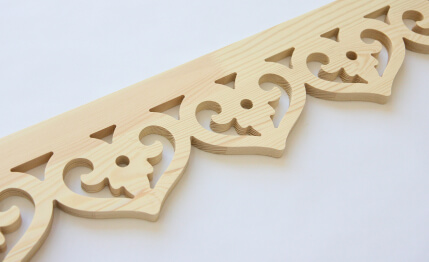
Balusters for staircase made of solid wood is not just a technical fencing element. It is an architectural detail that sets the tone for the entire hall. Turned balusters with barrel-shaped bodies and thin grips are a sign of the classical school. Straight, geometrically strict ones signal a modern home. Carved ones with plant motifs are the language of a Russian estate or romantic style.
Our factory also produces:



How the rhythm of balusters works
The spacing of balusters is not a technical calculation, but a visual decision. Frequent spacing creates a dense rhythm, fragments the space, and gives the staircase a closed and strict feel. Rare spacing opens up the space, makes the staircase airy, but requires a more substantial handrail and more expressive posts.
Key rule: the spacing of balusters must be a multiple of the tread width or riser height. This makes the rhythm appear intentional, not random. In classic interiors — two balusters per step. In modern ones — one, but larger.
Get Consultation
Handrail as an architectural gesture
The handrail is what unites the balusters into a single line. It should be comfortable in the hand, reliable in connection, and precise in profile. A handrail that is too thin on massive balusters looks odd. One that is too wide overwhelms the railing.
Wooden balusters and the handrails should be from the same wood species and, ideally, with the same tint. This is not a mandatory condition — contrast can also work. But it must be intentional, not accidental.
Wooden baluster: why solid wood matters
A solid wood baluster is a living material with its own texture, temperature, and character. It is warmer than metal, softer than stone, more expressive than plastic. Oak provides a heavy, noble texture. Beech is uniform and takes well to any shade of tint. Pine is an affordable option for a classic country house.
Handrails and balusters cannot be chosen in isolation from the posts, risers, and floor baseboard. It is a system. And if different shades, different wood species, or different profile languages enter this system — the system breaks down.
Staircase components: what to buy together with balusters
This is one of the most important sections for those building a staircase in a private home for the first time. Most often, the following happens: first, steps are bought, then balusters, then the handrail — and it turns out that all of these are from different batches, with different shades and slightly different profiles. The result is a staircase that looks as if it was assembled from leftovers.
The right approach is to buy components for wooden staircases in one order, from one batch, from one wood species
Complete stair railing kit
What the system includes:
-
Balusters — vertical railing elements that set the rhythm and style
-
Posts — sturdy vertical supports at the start, end, and turns of the staircase
-
Handrails — horizontal or inclined guide for the hand
-
Risers — vertical elements of steps, covering the space under the flight
-
Decorative covers and rosettes — conceal the attachment points of balusters to the stringer or step
-
Caps and end pieces — finishing detail without which the product looks incomplete
-
Wall-mounted handrails — for the wall along the staircase flight
Each of these elements matters. A forgotten plug or an incorrectly chosen socket is a small detail that is always visible. Conversely, when all parts are assembled into one system, the staircase acquires the completeness you want to show off to guests.
Why it's better to assemble a staircase as a kit
First, it guarantees matching shades and texture. Even within the same wood species, different batches can vary in color. Second, the element profiles are designed as a system — the handrail is specifically designed for these balusters, the posts for this handrail. Third, it simplifies installation and reduces the number of errors on the construction site.
If you are building a house from scratch or doing a major renovation, order everything at once. It's simpler, more profitable, and more reliable than buying parts later.
Wooden baseboard around the staircase and hall
The baseboard is the bottom frame of the entire room. Invisible when it's in place. Unbearably noticeable when it's missing or doesn't match the rest of the decor.
In the stair hall Wooden baseboard it performs several functions at once. It covers the bottom joint between the wall and the floor. It guides the eye along the entire perimeter — both in the hallway, along the staircase, and on the second-floor landing. It forms the lower contour of the space, without which the verticals of the balusters and slats on the walls hang in the air.
Baseboard along the staircase: nuances
The main challenge is that the baseboard must 'go around' the staircase without breaks. Where the steps begin, the baseboard goes under the flight or transitions into the stringer. On the second-floor landings, it reappears. This transition must be thoughtful.
There are two approaches. The first is Wooden baseboard to run along the wall under the stairs at an angle, following the angle of the flight. This is typical for classic interiors and requires precise trimming. The second is that the baseboard ends at the bottom newel post and resumes on the landing. This is simpler and, with a properly chosen post, no less beautiful.
Baseboard height and style
A tall baseboard — from 100 mm and above — is classic, neoclassical, Empire, historicism. It visually 'raises' the room, making it more solid and grand.
A low baseboard — from 50 to 80 mm — is for modern interiors, Scandinavian style, minimalism. It is modest but requires perfect geometry of walls and floors.
For a stair hall, the height of the baseboard should match the scale of the space. If the hall is double-height, with ceiling heights of 4–5 meters, a 60 mm baseboard will look lost. Here, a profile of at least 120–150 mm with an expressive outline is needed.
How to connect the baseboard with balusters
The most elegant solution is when the wooden baseboard and the lower part of the balusters are made from the same wood species and have a similar profile. The baseboard then seems to 'grow' from the same material world as the stair railing. This unity is read immediately, on a subconscious level.
If the balusters are stained in dark oak, the baseboard should be the same or a close stain. If the railing is light, made of birch or beech, a baseboard in a neutral or slightly warm tone will tie the space together without overloading it.
Ceiling cornice and wooden cornice in the stair hall
The ceiling in a stair hall is a special story. In most private homes, the hall has a double height: the first and second floors are open to each other. This gives a stunning sense of space but poses a serious challenge for the designer. How to finish the upper contour of the wall?
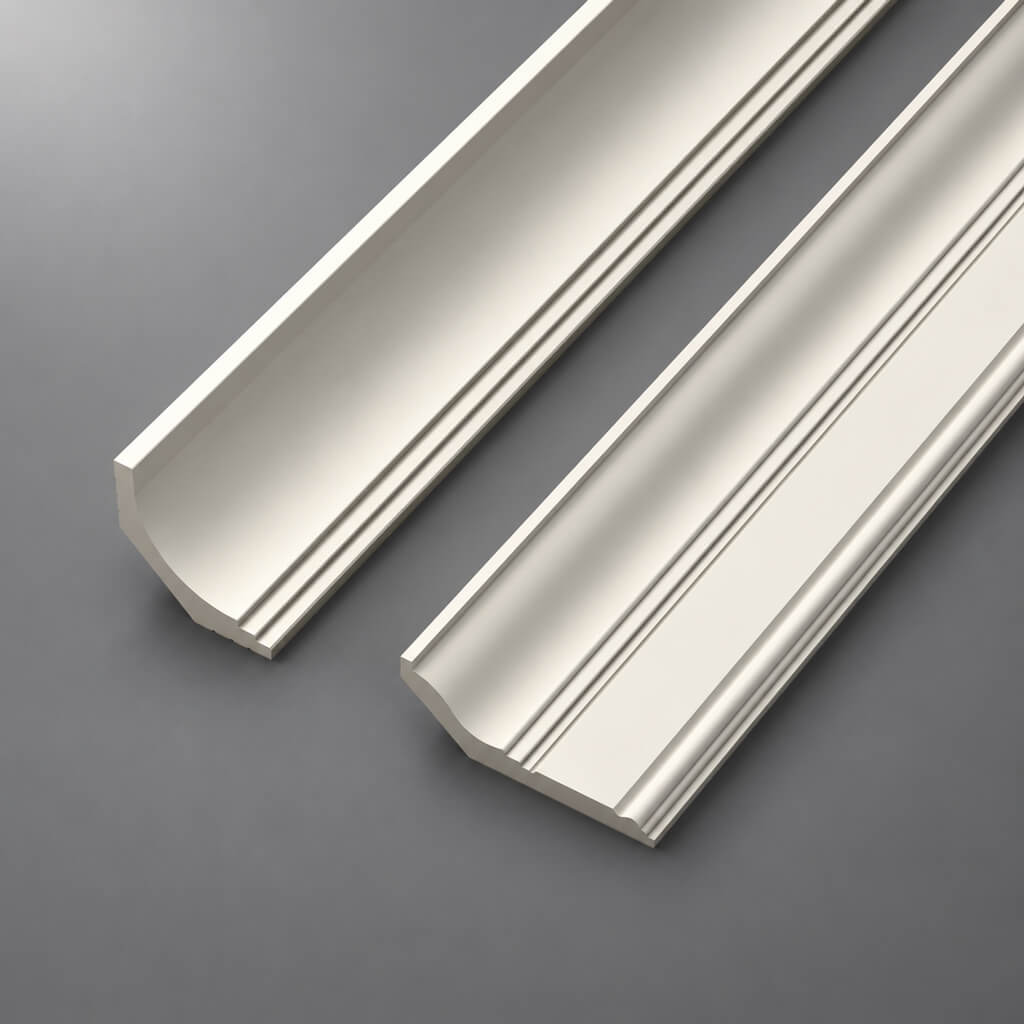
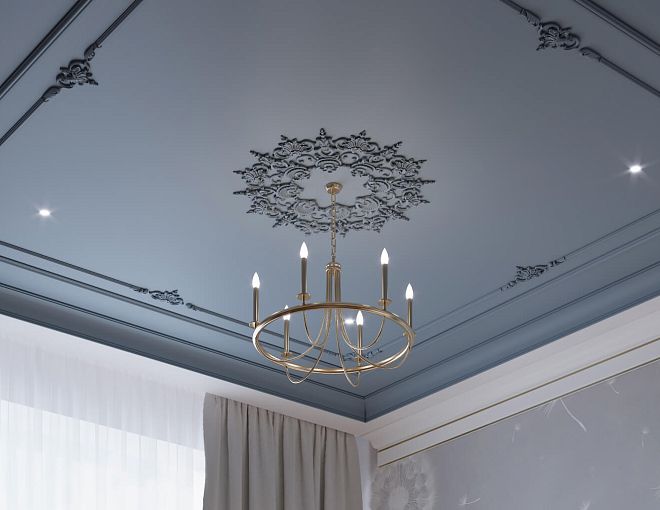
Ceiling cornice — this is the top frame that encloses the space from above. Without it, the wall and ceiling meet at a rough right angle that emphasizes neither height nor architecture. With it, the space acquires completeness.
Cornice and ceiling height: proportions
A simple rule applies here: the higher the ceiling, the larger and more complex the cornice should be. In a hall with 3-meter ceilings, a cornice height of 80–100 mm is sufficient. In a double-height space of 5–6 meters, the cornice should be at least 150–200 mm, otherwise it simply gets lost.
wooden cornice in a classic or country house — the right choice. It is not only decorative but also tactilely matches wooden balusters, baseboards, and slats. Wood responds to wood — this is the law of interior harmony.
How to combine the cornice with other elements
The cornice should not be "on its own." Its profile should echo the profile of the baseboard — not mirror it exactly, but respond to it in complexity and scale. If the baseboard is a simple rectangular profile, the cornice can be slightly more complex, with one or two breaks. If the baseboard is classic with a heel and shelf, the cornice can be multi-element.
An important nuance: the cornice in a double-height hall is installed at the level of the second-floor ceiling, not the first. This is the boundary where the height ends and the cozy living space of the upper floor begins.
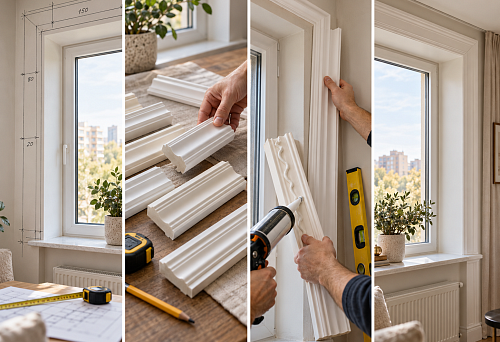
Wooden slats and layout on the staircase walls
The wall along the staircase is the longest and most expressive plane in the hall. It is what catches the eye when going up and down. This is where a wooden accent is appropriate, which will enliven the interior and add depth.
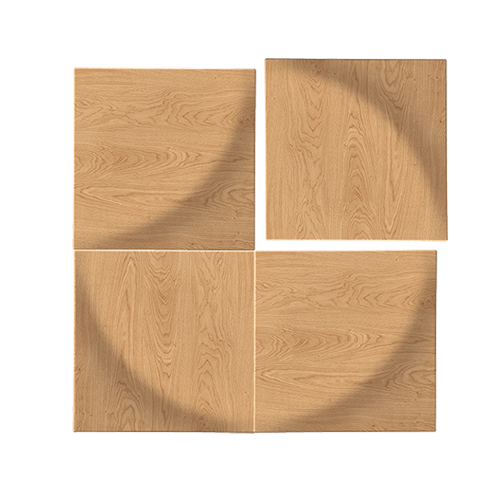
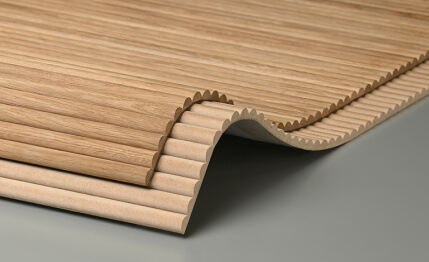
wooden planks on the wall — this is one of the most popular tools in modern interiors. They can be installed vertically, horizontally, or diagonally. In a staircase hall, vertical slats work best: they support the movement of the stairs, enhance the vertical rhythm of the balusters, and visually lift the space.
Principles of working with slats in the hallway
First — spacing. Too frequent slats on a narrow wall create tension, a "cage." Too sparse ones look random. The optimal spacing for a stair hall is 80–150 mm, depending on the wall width and ceiling height.
Second — cross-section. Thin slats 10×20 mm provide a graphic, light effect — for a modern minimalist interior. Slats 20×40 mm create expressive volume — for neoclassicism or a country house.
Third — height. Slats don't necessarily have to go from floor to ceiling. They can be limited to a zone — for example, only the lower half of the wall or only at the level of the staircase. This creates zoning without heaviness.
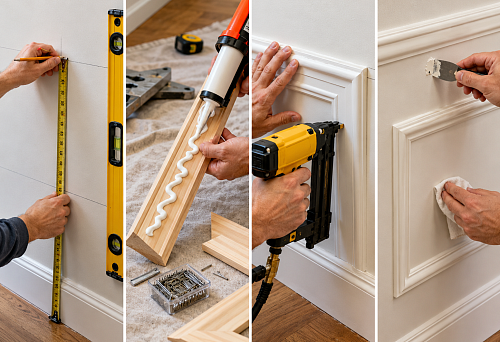
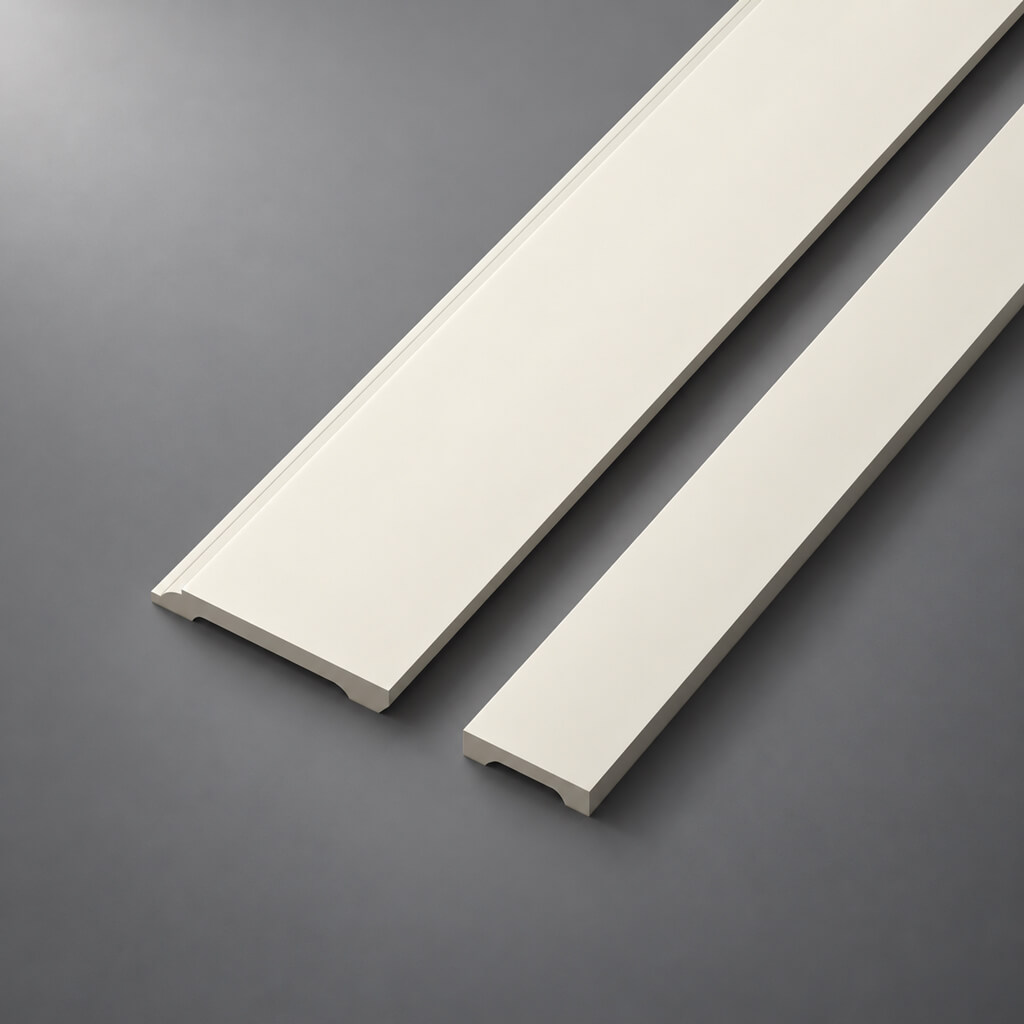
Wooden paneling: neat frames on walls
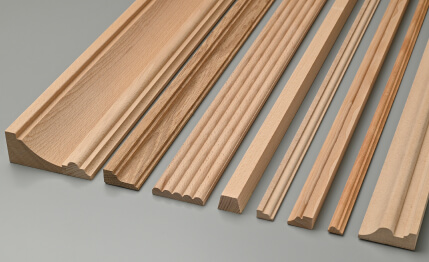
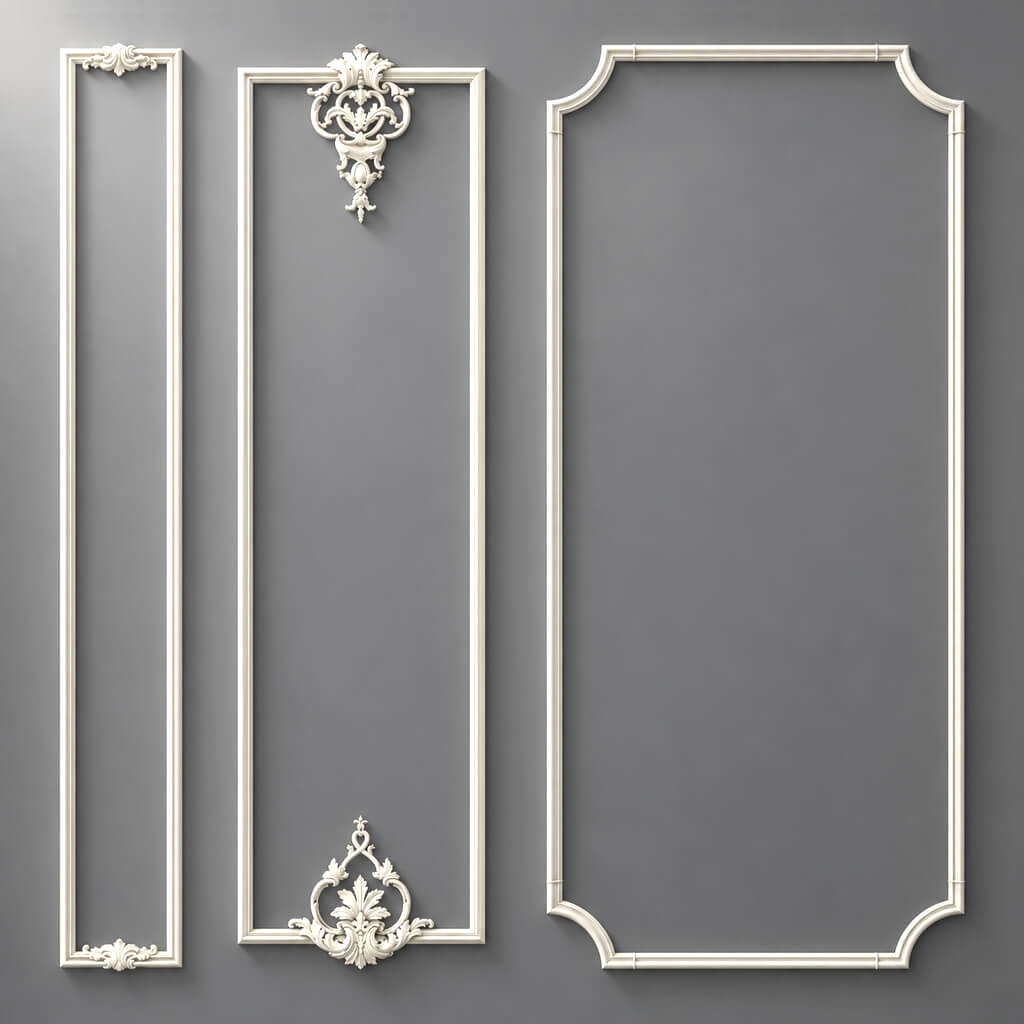
Wooden molding — these are thin flat strips used to form rectangular or square frames on the wall. This is a classic wall decoration technique, known from the interiors of palace mansions. In a stair hall, it works excellently.
Frames made of paneling create rhythm on the wall, visually structure a large surface, and add depth without heaviness. Inside the frames, you can insert fabric, paint in a different shade, hang paintings or mirrors. Around a mirror in the hallway, paneling looks especially exquisite.
How not to overload a narrow staircase
A narrow staircase does not like frequent patterns. You cannot simultaneously use slats, paneling, and moldings here. You need to choose one tool and work with it. Slats — and only slats, but with good spacing. Paneling — and only paneling, but with large frames.
The rule is simple: the narrower the staircase, the larger and calmer the decor should be. And never — symmetry for symmetry's sake. Asymmetric paneling or a single accent slat on the stair wall is bolder and more interesting than an aligned grid.
Wooden beam in the stairwell
A wooden beam is not a mandatory element of a stair hall. But when it is appropriate, it becomes the main accent of the entire space.
Wooden beam in a high hall creates a horizontal break, zoning the space between the first and second floors. This is an architectural gesture that speaks to the intention, to the character of the house.
When a beam is appropriate
In a country house with exposed beams on the ceiling, a decorative beam in the hall is a continuation of the image. It is organic and requires no explanation.
In a classic house with a double-height atrium, a beam in the transition zone between the first and second floors creates a visual support. Especially if it is combined with wooden railings on the second floor landing.
In a modern minimalist house, a massive wooden beam can become the only natural accent in a space of white walls and metal. The contrast works perfectly here.
When a beam weighs down the space
A narrow stairwell with a low ceiling is not a place for a beam. It will lower the ceiling even further. In a small hall with a ceiling height of less than 3 meters, a beam will create a feeling of pressure.
A beam should always be proportionate to the space. In a double-height hall, the cross-section is from 150×150 mm. In a regular hall, no more than 100×100 mm. And never a beam as the only wooden element in a space of plastic and laminate. It requires surroundings.
Beam as zoning
One of the best functions of a beam in the hall is zone separation. A beam above the entrance to the living room, above the start of a staircase, or above the transition from the second-floor landing provides soft zoning without walls or partitions. The space remains open but gains structure.
Staircase hall design scenarios
Every home has its own character. The staircase hall should speak the same language as the entire interior. Below are four scenarios, each based on a specific set of elements.
Classic house
Here, everything speaks of tradition, quality, and time. Carved wooden balusters with turned elements, a massive expressive oak handrail, a tall wooden baseboard with a classic profile, a complex ceiling cornice with several ledges, and decorative wall paneling in the form of vertical rectangular panels. All elements are made of dark oak or stained to match. No metal in visible details. No plastic. Only wood, only solid wood.
Neoclassicism
A calmer and more modern version of classic style. Balusters with a strict shape without excessive carving. A light wooden baseboard 100–120 mm high. A neat cornice with one or two ledges. Wooden slats on the wall or laconic paneling. Color palette: ivory, white with gold, light natural beech. Nothing superfluous, but everything is in its place.
Country house
Naturalness, warmth, tactility. Massive handrails with a rough finish, balusters made of pine or oak with a warm stain, wooden beams on the ceiling, baseboards and slats in a warm honey or walnut shade. The paneling may have a deliberately lively texture. Traces of tools, pronounced growth rings, and knots as elements of natural beauty are appropriate here.
Modern interior
Strictness, geometry, rhythm. Laconic rectangular balusters or thin metal posts with a wooden handrail. Minimalist Wooden baseboard 60–80 mm high without decoration. Vertical wooden slats on the wall with a clear equal spacing. The cornice is small, angular, without stucco. Color palette: black, white, natural oak. No carved elements, no gilding, no romantic curls.
Mistakes in designing a stair hall
Here is a list of what ruins the interior of a stair hall — even if each individual element is beautiful on its own.
-
Buying balusters separately, and the baseboard and cornice — "later." "Later" means a different batch, a different shade, a different profile language. It shows.
-
Not coordinating the wood shade. Balusters — dark oak, baseboard — light beech, slats — cherry. The hall starts to resemble a showroom of samples.
-
Choosing balusters that are too small for a large hall. In a double-height space, thin balusters get lost. The scale of the element must match the scale of the space.
-
Installing a massive cornice with a low ceiling. A cornice 200 mm high with a ceiling of 2.7 m will lower the space and create a cage-like feeling.
-
Making the slats too frequent on a narrow wall. A tight rhythm in a narrow span is not coziness, it's anxiety.
-
Not connecting the staircase with doors, baseboards, and furniture. The staircase is not an island. It must be part of the overall finishing system.
-
Forgetting about lighting the stair area. Wooden elements reveal their beauty only with proper light. Recessed lights under the steps, sconces along the flight, handrail lighting — this is not a luxury, it's a necessity.
-
Mixing classic, loft, and minimalism without a common logic. Eclecticism requires skill. Without a deliberate concept, it looks like an inability to make a choice.
Where to buy elements for a stair hall
The stair hall is the most complex and most significant node of a private house. You cannot skimp on material quality here, you cannot assemble parts from different suppliers, and you cannot leave final decisions "for later."
For the stair hall, it is best to select not a single part, but a complete set: buy balusters along with posts, handrails, baseboard, cornice, slats, layout, and decorative elements. Then the staircase, walls, floor, and ceiling will look like a single architectural system — rather than a set of disparate solutions.
Solid Wood Items for the stair hall must be manufactured with precise tolerances, from dry calibrated wood, with high-quality finishing. This is not a place for compromise.
Frequently asked questions
Which balusters to choose for the stair hall?
The choice of baluster shape depends on the interior style. For classic — turned with a barrel-shaped body, carved details. For neoclassical — strict, without excessive decor, with a clean silhouette. For a modern home — rectangular or square. The size of the baluster should match the scale of the hall: in a double-height space — more massive, in a small hall — more elegant.
How to combine balusters and wooden baseboard?
The main rule is unity of wood species and shade. If the balusters are made of dark-toned oak, the baseboard should be from the same species or close in color. The profile of the baseboard should echo the lower part of the baluster — not copy it, but match in complexity and scale.
Is a ceiling cornice needed in the stair hall?
Yes, especially in a double-height space. The cornice completes the upper contour of the wall, sets the scale and style. Without it, the wall and ceiling meet roughly. In a hall with ceiling heights over 4 meters, a cornice is a mandatory element.
Can wooden slats be used along the staircase?
They can and should be used — with the right choice of spacing and cross-section. Vertical slats along the stair flight create a rhythm that supports the staircase's movement and visually lifts the space. The main thing is not to make them too frequent in a narrow span.
What decor is suitable for a narrow stair flight?
One tool, but done well. Either slats with wide spacing, or a layout with large frames, or one expressive molding. There's no need to try to fit everything at once. The narrower the flight, the calmer the decor should be.
What to buy together with balusters for a staircase?
Full set: posts, handrails, risers, decorative overlays, caps. Also — baseboard, cornice, and slats from the same wood species and tint. Only then will the stair hall look like a unified system.
How to make a stair hall look visually expensive?
Three pillars: unity of material, correct proportions, quality lighting. If all wooden elements are from the same species, if the scale of each element matches the size of the space, and if the lighting is properly arranged — the hall will look expensive even without additional decorations.
How not to overload the staircase with wooden decor?
The 'one strong accent' rule: choose the main element — either balusters, or slats, or a beam. The rest should support, not compete. And don't use carving, layout, slats, and a beam all at once in one space — that will be chaos, not richness.
About the company STAVROS
All the elements described in this article — balusters, posts, handrails, baseboard, cornice, slats, layout, beams — are produced by the Russian company STAVROS. This is full-cycle production: from raw material selection to final finishing. Solid oak, beech, and other valuable species, modern equipment, strict quality control at every stage.
STAVROS works with architects, designers, and private homeowners across Russia. The company offers not just individual items, but a systemic solution for interiors: a unified profile language, coordinated shades, and compatible elements for stairs, walls, floors, and ceilings. This is what distinguishes a professional approach from a random set of purchases.
If you are building a house or renovating, start with the stair hall. This space sets the tone for everything. And start your choice of materials for it with the STAVROS catalog — it has everything you need for a unified, beautiful, and durable system of wooden decor.