
































Article Contents:
- Can stucco decor be used on a balcony and loggia
- What tasks does wall decor on a loggia solve
- Makes the loggia an extension of the room
- Frames narrow walls
- Highlights the relaxation area
- Helps to design a workspace
- Adds relief to painted walls
- Makes a small space visually neater
- Where to use moldings on the balcony
- On the end wall
- Around the window or partition
- Behind an armchair or small sofa
- Behind the desk
- In the storage area
- In the winter garden area
- What to choose: moldings, overlays, or a ready-made set
- Moldings for simple frames
- Vertical moldings
- Decorative appliqués
- Decor for moldings
- Ready-made set
- How to choose a style for the balcony and loggia
- Neoclassical Light
- Jatoba
- Modern style
- Neoclassicism
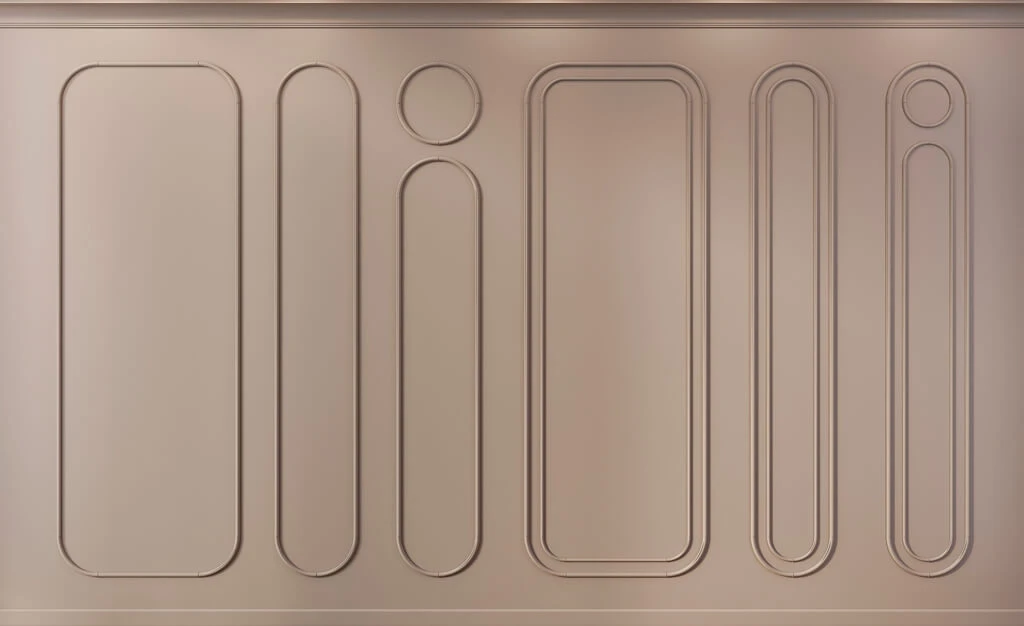
- Art Deco
- How not to overload a small balcony with stucco decor
- Don't decorate all walls at once
- Don't use large patterns
- Don't use too many small frames
- Don't place contrasting moldings on every surface
- Don't forget about windows, window sills, radiators, and furniture
- Don't use complex decor where there's little light
- How to combine moldings with paint, windows, and furniture
- Moldings in wall color
- White moldings
- Moldings and wooden slats
- Moldings and shelves
- Moldings and plants
- Practical scenarios for different types of balconies
- What to buy for balcony or loggia decor
- Frequently asked questions
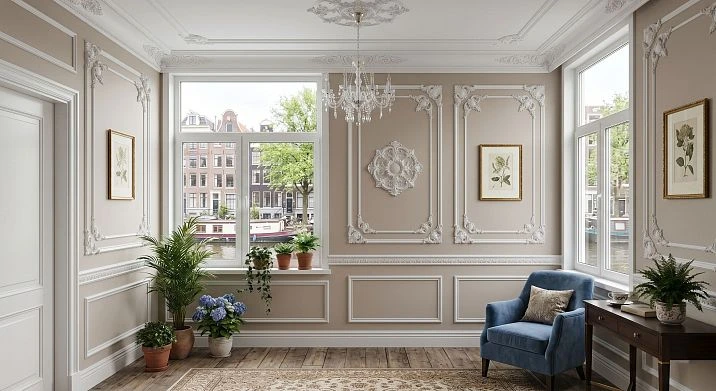
A balcony is a strange space. Almost everyone has one, but few treat it as a full-fledged room. Most often it's a "storage room with a nice view." Or a place to put a bicycle and boxes. But here's what's interesting: today, on balconies and insulated loggias, some of the most atmospheric interior zones are created. A mini-office with a desk. A coffee corner with wicker chairs. A winter garden with shelves and plants. A reading nook by the window.
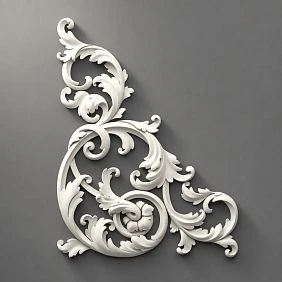
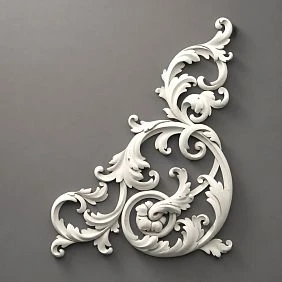
And in each of these scenarios, sooner or later the question arises: what to do with the walls? They are painted, smooth, devoid of any character. This is wherestucco decor for the balconymade of polyurethane becomes a solution that changes everything: adds relief, structures the surface, turns an insulated loggia into a space with interior logic. And it does this without dismantling, without plaster craftsmen, and without months of waiting.
Can stucco decor be used on a balcony and loggia
The question is not rhetorical — it is truly important, and the answer requires nuance.
Polyurethane moldings are a material with fairly high moisture resistance. This is a fundamental difference from plaster: plaster, when wet, deteriorates, deforms, and over time crumbles in conditions of high humidity. Polyurethane does not absorb water, does not swell, does not crack. That is why for an insulated loggia and glazed balconypolyurethane decor for the loggia — a practical and durable solution.
However, it is important to clearly distinguish the conditions.
An insulated, glazed loggia is essentially an extra room. Temperature fluctuations are moderate, there is no direct wetting, and humidity is within normal living levels. Under such conditions, polyurethane moldings perform just as they would inside an apartment. Installation with glue, painting with acrylic paint — and the result lasts for years.
A glazed but uninsulated balcony presents more challenging conditions. In winter, temperatures can drop significantly below zero, and condensation on windows and walls is normal. Polyurethane can withstand temperature changes, but the adhesive bond may weaken over time with systematic freezing and thawing. Solution: use construction adhesives with high elasticity and resistance to temperature fluctuations, and additionally secure the elements with finishing nails or screws.
An open, unglazed balcony is not recommended. Direct rain, UV radiation, frost, and thaws are conditions for facade materials, not for interior decor. Polyurethane moldings are not designed for such conditions.
Result:moldings for an insulated loggia — an excellent solution. For a glazed balcony with prepared walls, it is possible, with certain nuances. For an open one, it is not. And this is an honest answer that helps make the right decision even before purchase. Full selection polyurethane products for interior— in the STAVROS catalog.
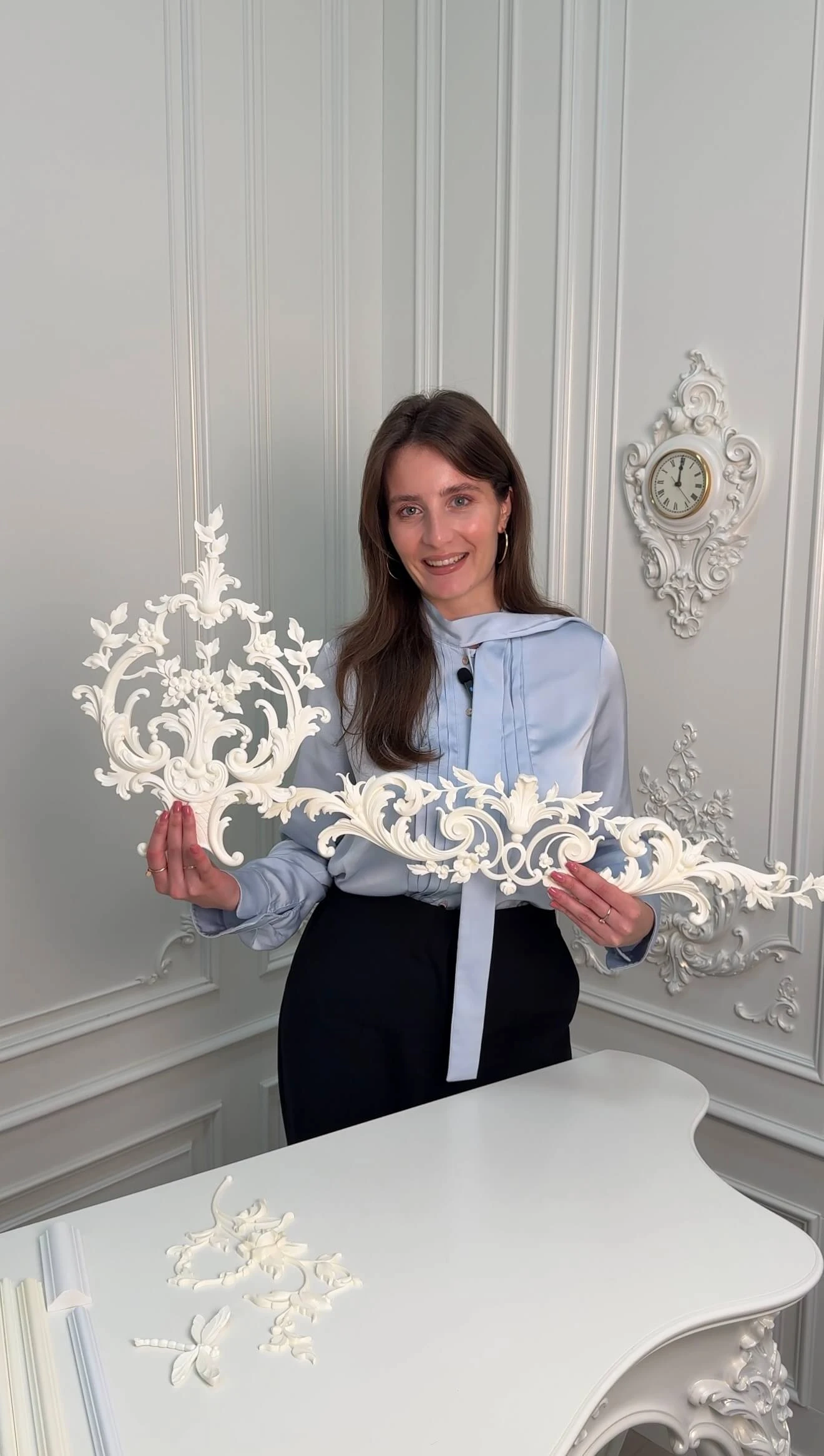

What tasks does wall decor on the loggia solve?
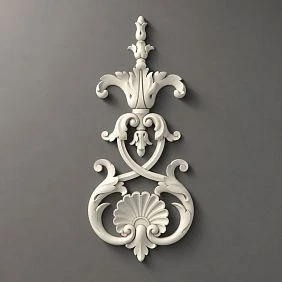
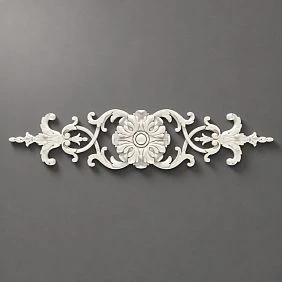
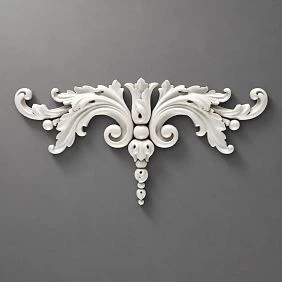
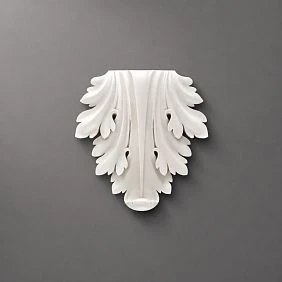
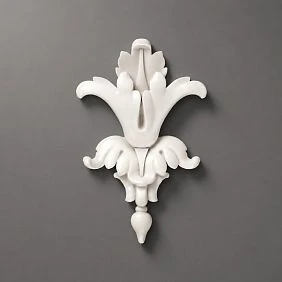
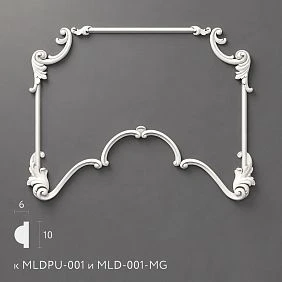
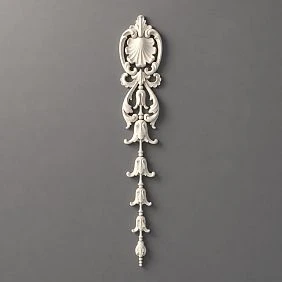
Our factory also produces:

Makes the loggia an extension of the room
An insulated loggia adjacent to the living room or bedroom represents potential extra square meters. But this potential is only realized when the spaces read as a single whole. If the room has beautiful walls with moldings, while the loggia has bare painted concrete surfaces, the transition feels like stepping from one world into another.
Wall decor on the loggia in the same style as the room — the same profiles, the same color, the same logic of the frame system — unifies the spaces. The boundary between the "room" and the "balcony" blurs. The apartment visually becomes larger.
This works especially convincingly when the wall between the room and the loggia has been removed or the doors have been rearranged. But even with the transition preserved, continuing the style through the opening creates a sense of a unified space.
Get Consultation
Frames narrow wall sections
A narrow wall section between window frames on the loggia is a typical "dead" zone: neither a wall, nor a window, nor anything functional. Width 30–60 cm, height 2–2.5 m. Usually just painted. But here, a pair of vertical moldings from floor to ceiling creates what is missing: the feeling that the wall section is a designed element, not a random gap.
Moldings on a narrow balcony wall — thin profiles 20–25 mm in the same tone as the surface. No ornament, no frame. Two vertical lines creating rhythm.Vertical wall decor made of polyurethane — about the principles of working with vertical systems in narrow spaces.
Highlights the relaxation area
An armchair or a small sofa on the loggia deserves its own "place" — a visual framing that turns the relaxation area into a zone, not just "furniture against the wall." One accent frame made of moldings on the end wall behind the chair completely solves this task. The frame creates a "niche" — even without a physical recess in the wall. The chair visually fits into it, becoming part of the interior composition.
Helps organize a workspace
A loggia as a mini-office is one of the most popular scenarios. A desk by the window, good lighting, shelves on the sides. And the wall behind the monitor, which usually remains empty. Decorating the wall with a desk on the loggia is not an excess, but a practical necessity for those who spend working hours here: a structured wall creates a sense of workspace and reduces fatigue from "emptiness" in the field of view.
stucco decor for niches, ledges, and piers — with an analysis of work in spaces with non-standard parameters.
Adds relief to painted walls
Most loggias have painted walls. Without texture, without pattern, without character. Moldings change the situation: they add relief where there is none, create a play of light and shadow, turning "painted concrete" into a "designed wall." In the same tone as the wall — delicately and unobtrusively. In contrast — expressively and modernly.Stucco decor for painted walls — practical material on working with painted surfaces.
Makes a small space visually neater
A small loggia with bare walls looks like an unfinished utility room. The same small loggia with a couple of well-thought-out moldings looks like an intimate corner with character. The difference is not in size, but in the feeling of completeness. And it is this feeling that decor creates.stucco decor for a small apartment— about working principles in confined spaces.
Where to use moldings on the balcony
On the end wall
The end wall of a balcony or loggia is typically the only fully "free" surface. No windows, no pipes, no niches. This is where decor works most convincingly, and this is where you should focus your main decorative efforts.
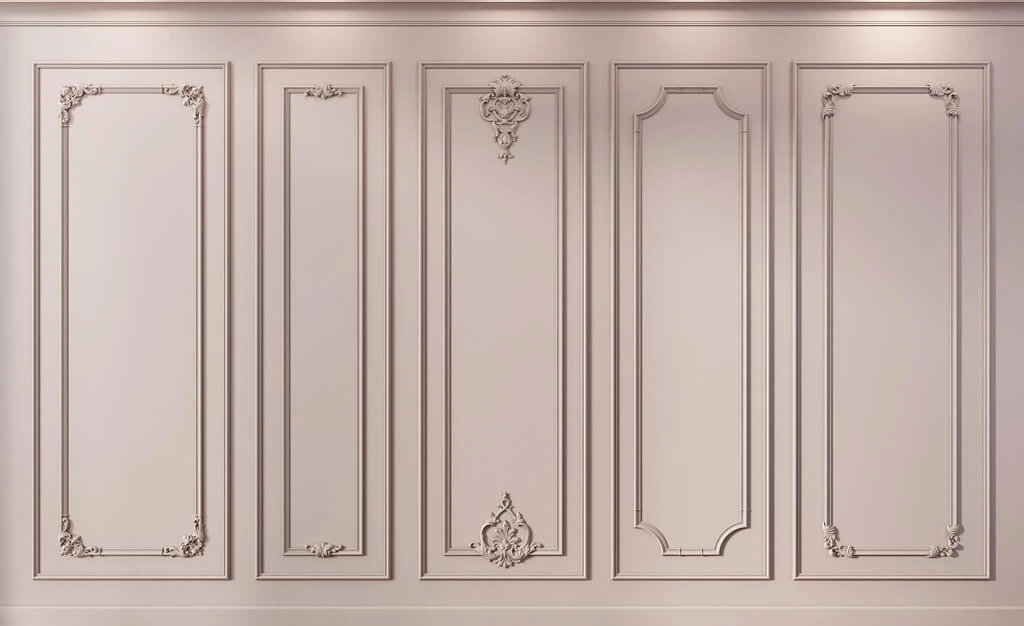
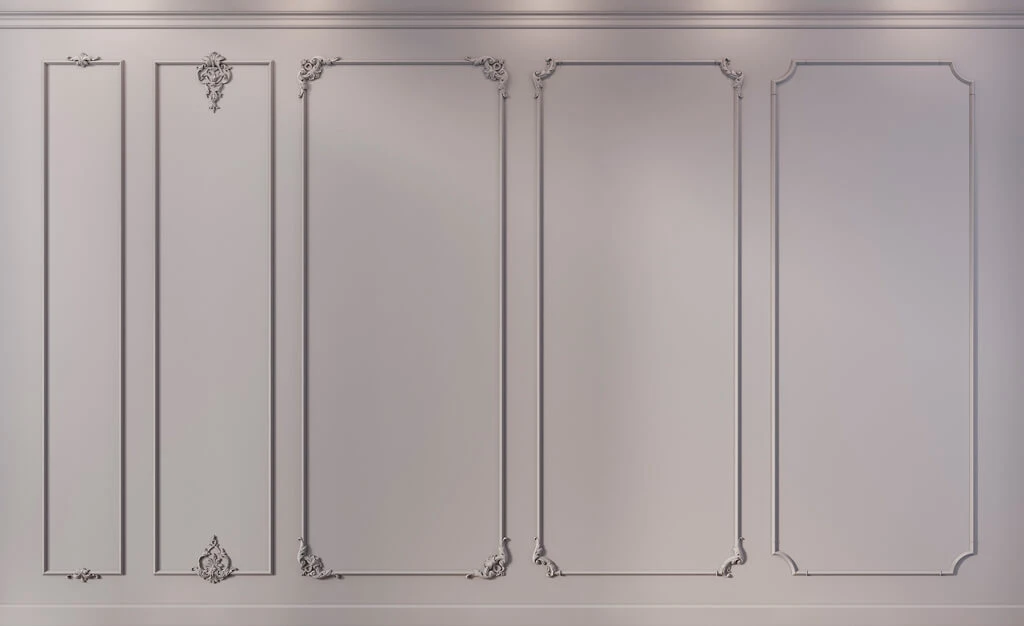
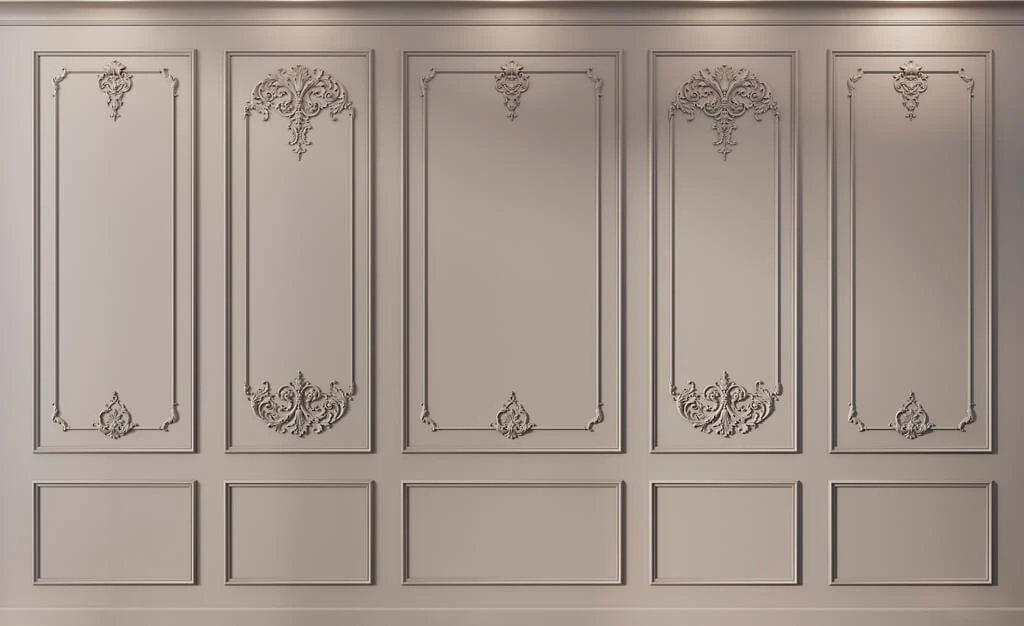
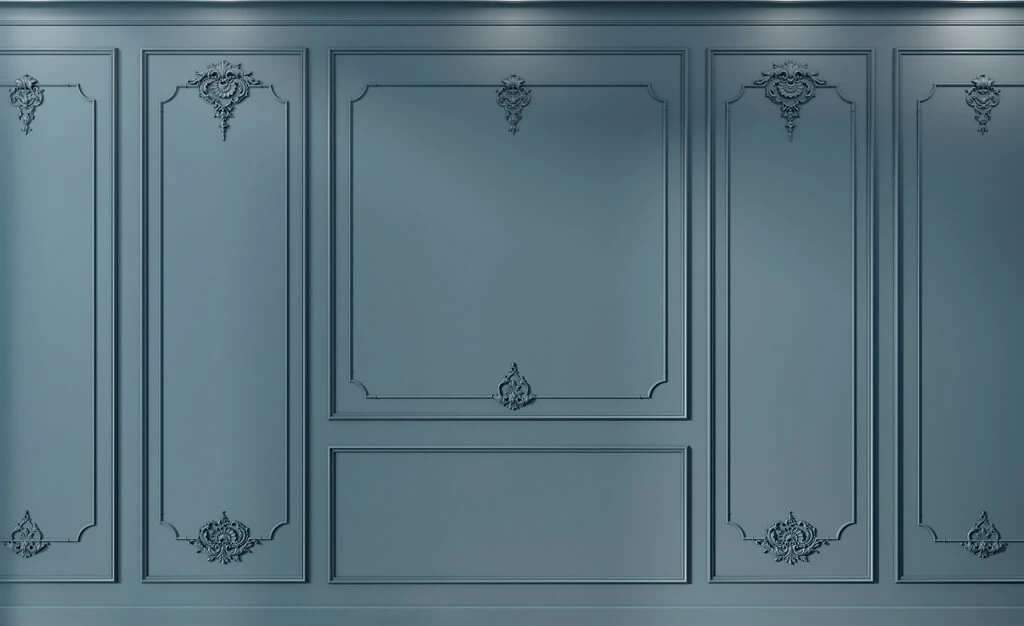
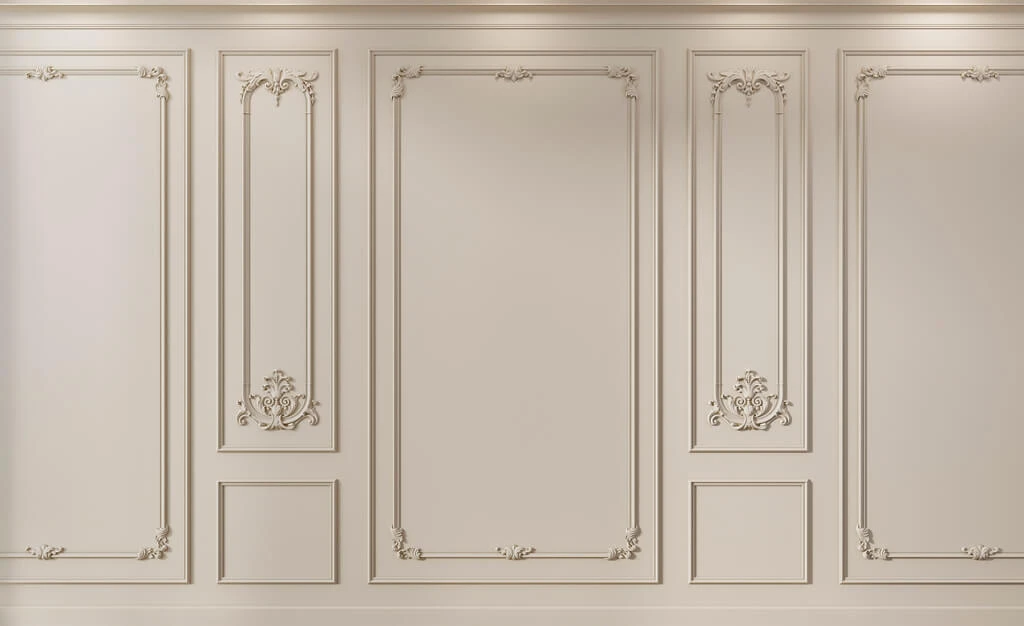
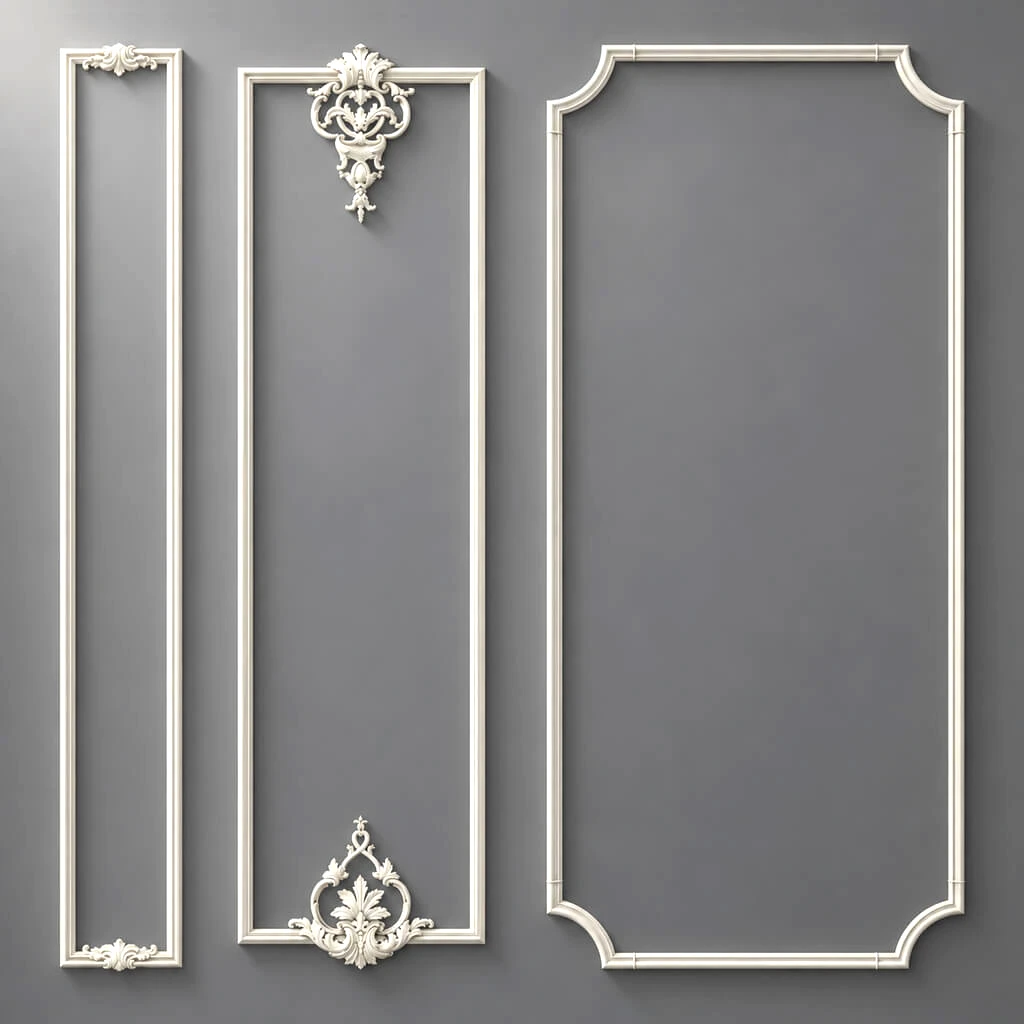
What can be done on the end wall? First, one central frame made of moldings — proportional to the wall, with indents of 20–30 cm from the edges. This is a simple and elegant technique that instantly turns the wall into a "finished" one. Second, a vertical system: three narrow frames in a row — works well on a wide loggia with a ceiling of 2.5+ m. Third, a panel: a central frame with a decorative overlay in the center or symmetrical accents at the corners.
Stucco decor for the loggiaon the end wall — it's not just beauty, it's the anchor point of the entire space. It defines the character of the room and sets its style.
Practical calculation for a standard loggia 3 m wide and ceiling height 2.5 m: frame width 1.8–2 m, height 1.9–2 m, molding 28–35 mm, indent from the wall edge 15–20 cm on each side. Profile in the tone of the wall or with moderate contrast.how to calculate moldings and stucco decor for a wall— with ready-made formulas and examples.
Around the window or partition
Decorating a window opening with moldings is a technique that significantly enhances the interior feel of a loggia.Stucco decoration around the window — a topic with its own principles and nuances.
Basic scheme: molding along the perimeter of the window slope with a 15–20 cm offset from the frame. Creates the effect of a "framed window," as in classical architecture. For a loggia with multiple window sections, a horizontal lintel between them at the level of the upper third of the window unites the sections into a single window wall.
Pier between two windows: two vertical moldings at a distance of 5–8 cm from the window frames. Thin, matching the wall color. Creates the feeling that the pier is an architectural element, not just a "space between."
Behind an armchair or small sofa
A relaxation area on the loggia only makes sense when it is perceived as a zone, not as a "chair by the wall." This requires a wall with character. A single frame of moldings on the end or side wall behind the chair — slightly wider and taller than the chair itself (chair width + 40–60 cm on each side, height up to 140–160 cm) — creates the effect of a "niche" for the furniture.
Wall decor on the balcony in the relaxation area is also a winning backdrop for photos: a beautiful shot with a book and coffee against a structured wall.
Behind a desk
If the loggia is arranged as a mini-office, the wall behind the monitor requires special attention. Here, the decor works as a "frame" for the workspace — structuring the background and reducing visual discomfort from an empty surface.
For a balcony office, the optimal solution is: vertical moldings on the sides of the work area — from floor to ceiling, creating a "portal" structure. Plus, a horizontal molding at a height of 120–130 cm, separating the lower work area from the upper one. This creates the feeling of an architecturally designed office even on 3 square meters.
Moldings for the loggiain the office scenario — strict, without ornamentation, matching the wall color. Nothing extra. The relief works for concentration, not distraction.
In the storage area
Shelves and cabinets on the loggia are a common function. And moldings work here the same way as in a dressing room: they connect the storage system to the wall, turning "shelves on the wall" into "built-in furniture." Vertical profiles on the sides of the shelving unit, a horizontal strip under the ceiling — and storage looks like part of the interior, not an additional installation.
stucco decor behind furniture— about the principles of moldings working as a connecting element between furniture and the wall.
In the winter garden area
A loggia with plants is a special atmosphere. Greenery, natural light, leaf textures. And a textured wall as a background for greenery is one of the best interior techniques: moldings create a neutral architectural background against which plants appear more voluminous and expressive. Vertical profiles next to tall plants work especially well — they create a rhythm that echoes the stems and trunks.
What to choose: moldings, overlays, or a ready-made set
Moldings for simple frames
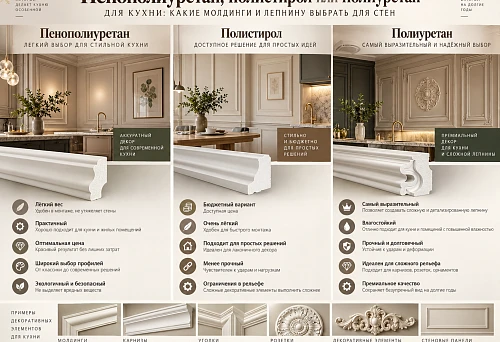
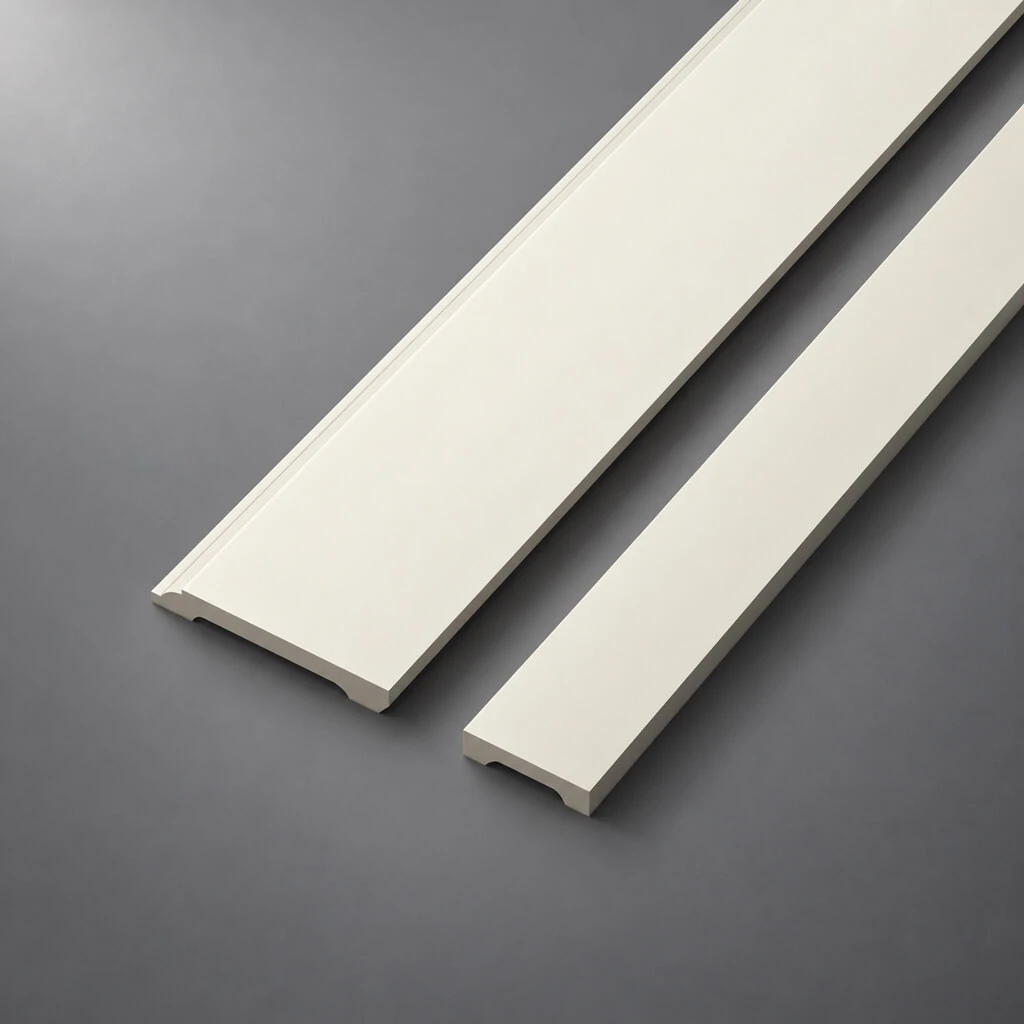
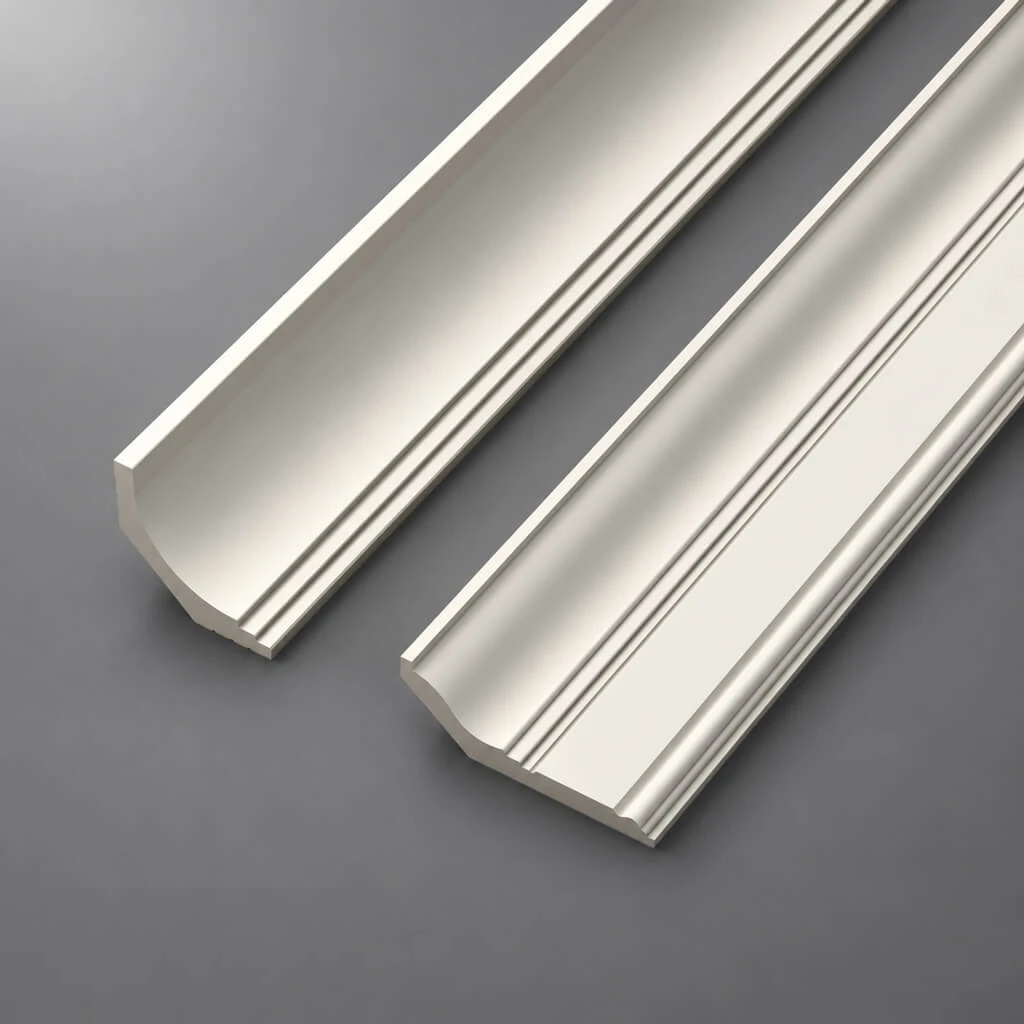
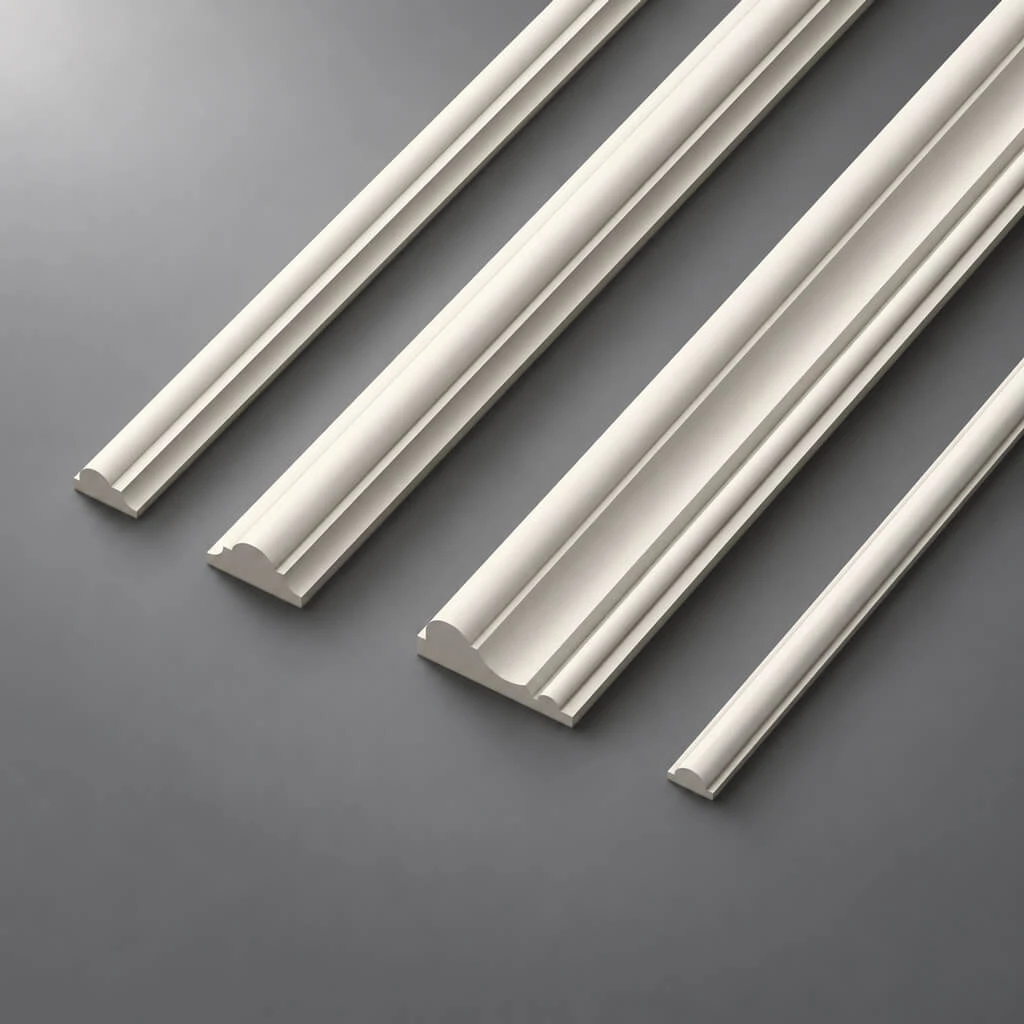
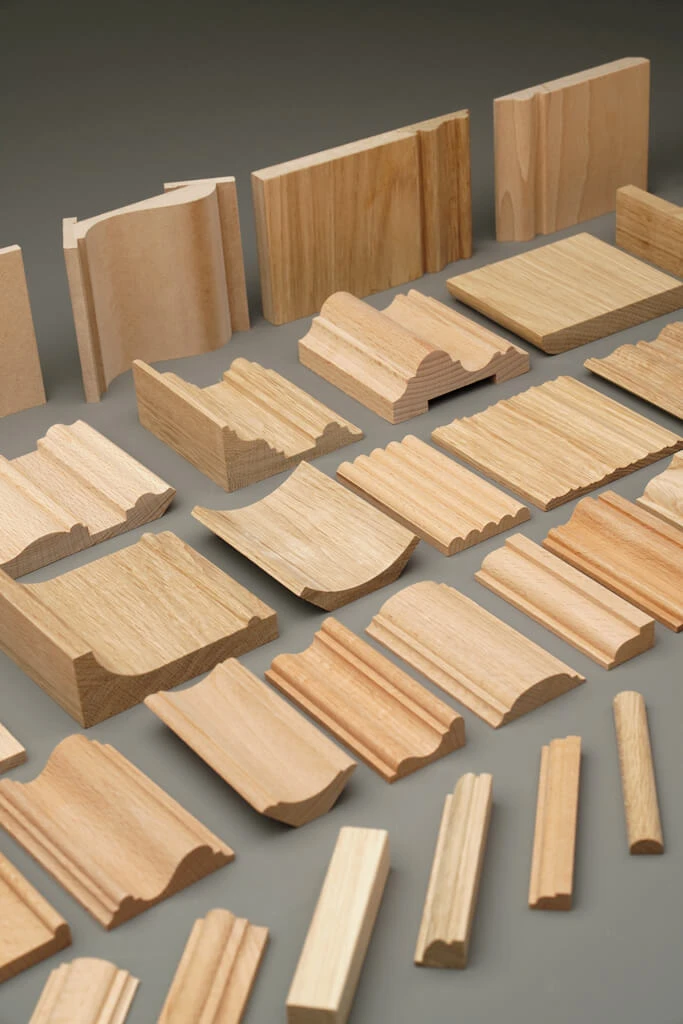
Buy moldings for the balcony— the most versatile and practical choice. Linear profiles allow you to create frames of any size and shape, adapting to the specific parameters of your loggia. For a balcony 1.2–1.5 m wide and a loggia 2.5–3 m wide, a relatively small linear footage is needed — making this option economical.
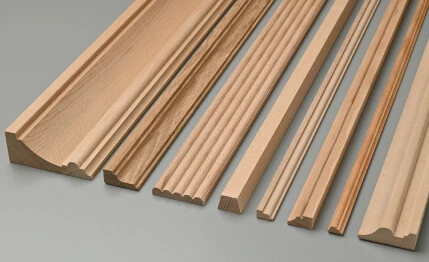
Choosing a profile for a balcony is a key point. Do not take wide, massive moldings with rich relief: in a small space they create pressure. The optimal width for a balcony is 20–30 mm. For a spacious insulated loggia — 25–38 mm.
| Type of balcony/loggia | Profile width | Style | Color |
|---|---|---|---|
| Small balcony (1.2–1.5 m) | 18–25 mm | Minimalism, Japandi | Matching the wall |
| Standard loggia (2.5–3 m) | 25–35 mm | Neoclassic Light | Matching or soft contrast |
| Spacious loggia (3+ m) | 30–45 mm | Neoclassical | White or pastel |
| Loggia-office | 22–30 mm | Modern | Strictly in tone |
| Relaxation area | 28–38 mm | Any | According to the concept |
Vertical moldings
Vertical lines are the best tool for small loggias with low ceilings. They visually "stretch" the space, make the ceiling higher, and create a feeling of greater height.stucco decor for walls with low ceilings — about the principles of choosing the direction of moldings depending on the height of the room.
On the end wall of the loggia, two or three vertical moldings from the baseboard to the ceiling cornice are the minimal and most effective decor. No frames, no horizontals. Only vertical.
Decorative appliqués
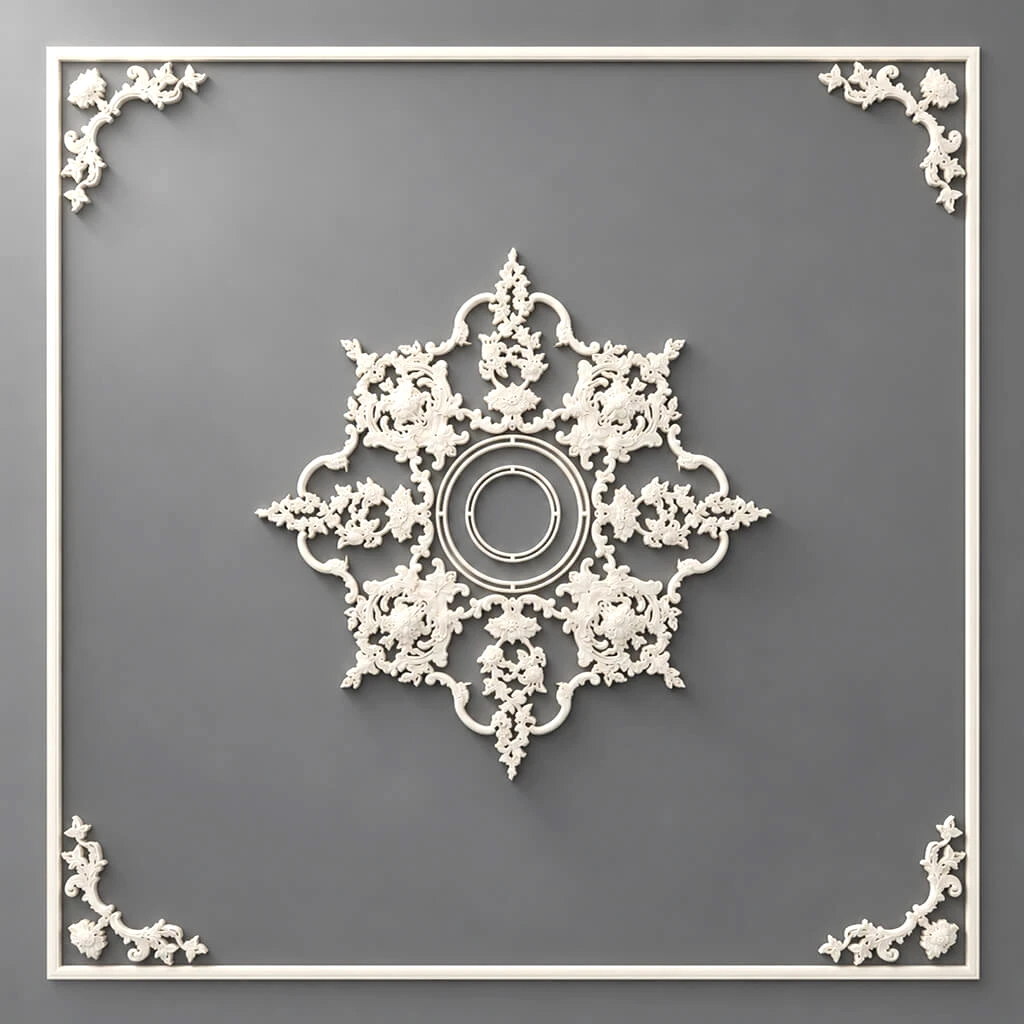
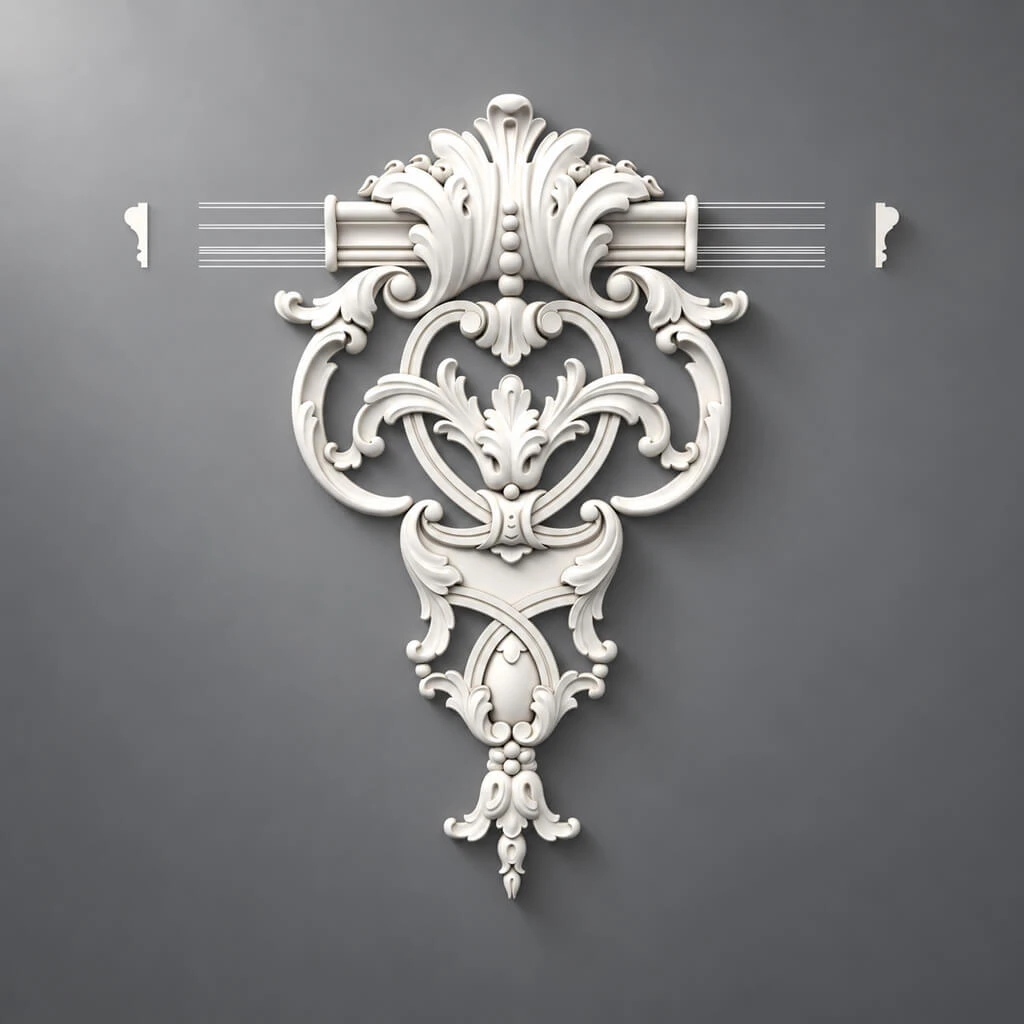
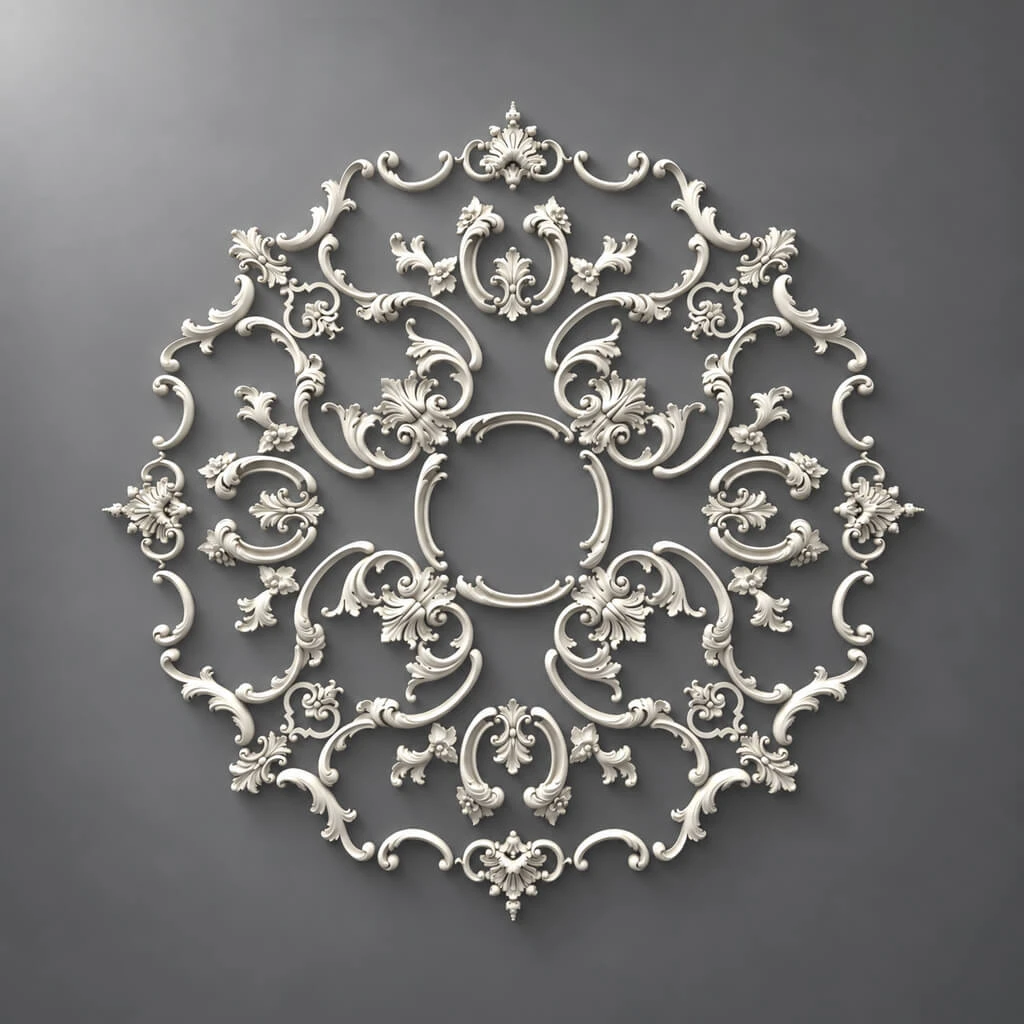
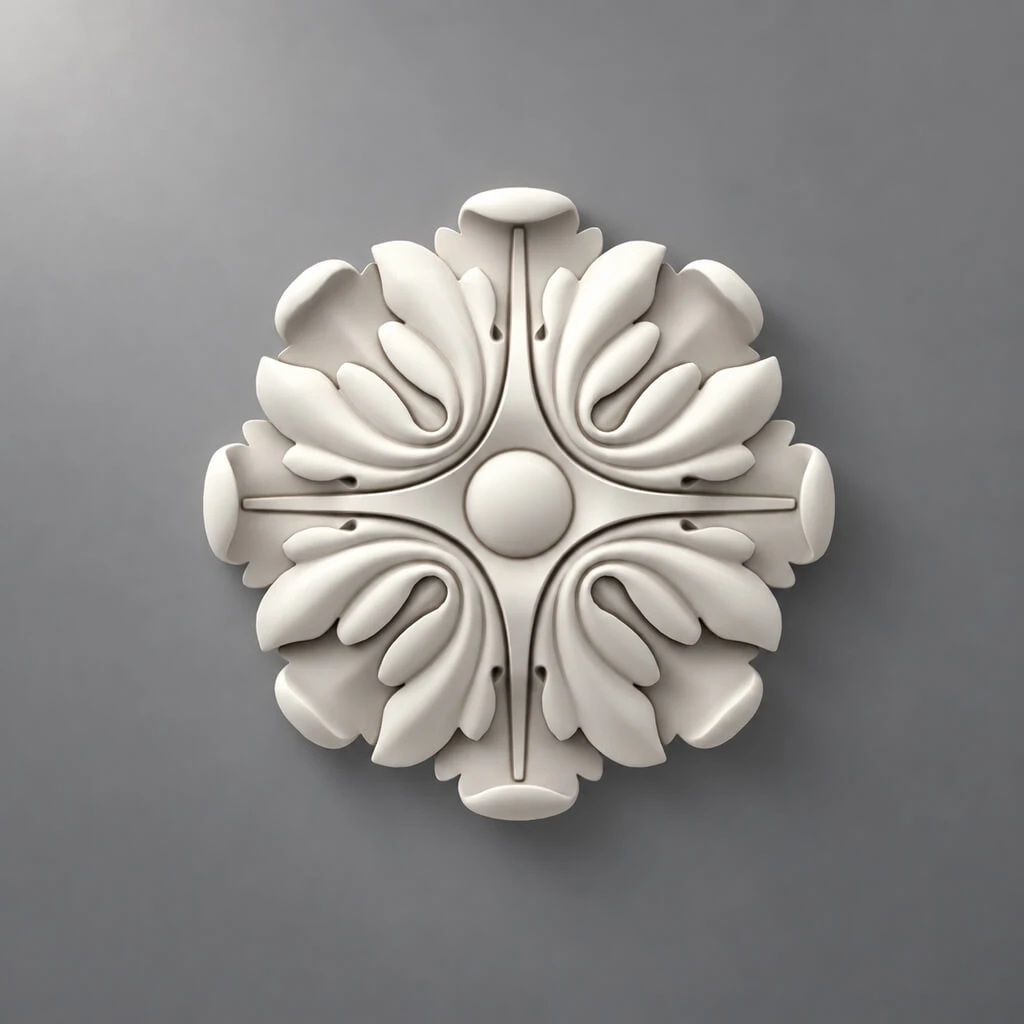
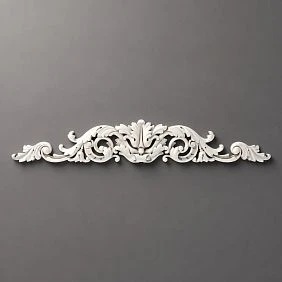
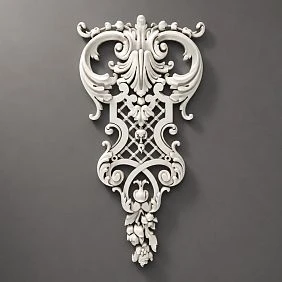
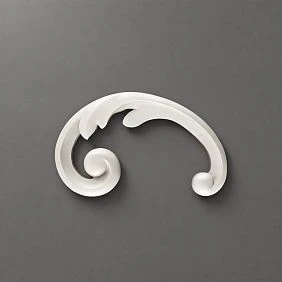
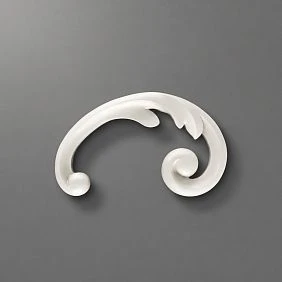
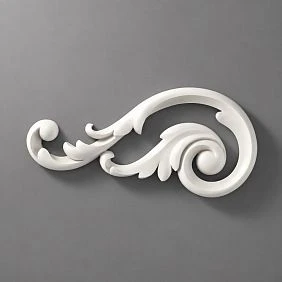
Decorative overlays for the loggia — point accents for the end wall, for the center of the frame, for the area above the coffee table or above the cabinet. On the balcony, they are used strictly sparingly: 1–2 overlays for the entire space. No more.
Why is dosage important? A balcony is a small space where every element "weighs" more than in a spacious room. One overlay of 20–25 cm in the center of the end wall is an accent. Three overlays in different places is chaos.
Buy decorative wall overlays — the STAVROS catalog offers a wide selection of sizes and styles.
Decor for moldings
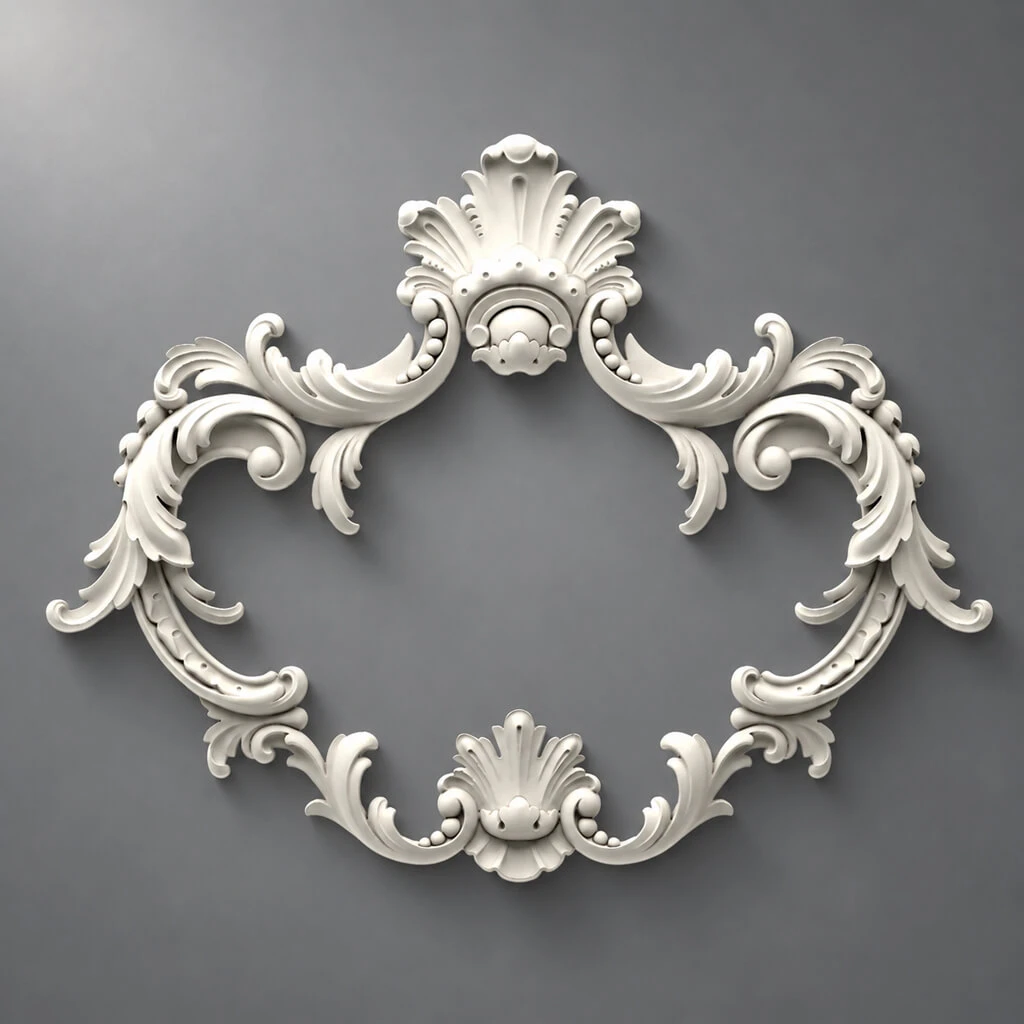
Decor for moldings on the loggia — corner inserts and connecting elements for frame systems. If you are making a frame on the end wall, corner inserts will make it truly complete. They are especially important in the neoclassical style, where the corner detail is part of the style's "language."Corner elements for frames on the balcony — are selected strictly in the style of the main profile.
Ready-made set
Ready-made decor set for the loggia — is optimal for a spacious insulated loggia where the end wall is wide enough (from 2.5 m) to accommodate a full decorative system. The set includes all elements in coordinated proportions, eliminating the need for independent calculation and selection.
For a standard loggia and small balcony, linear moldings are sufficient. For an accent end wall in a spacious space, the set saves time and guarantees results.Ready-made molding frames for the wall — breakdown of formats and selection principles.
How to choose a style for a balcony and loggia
Neoclassicism Light
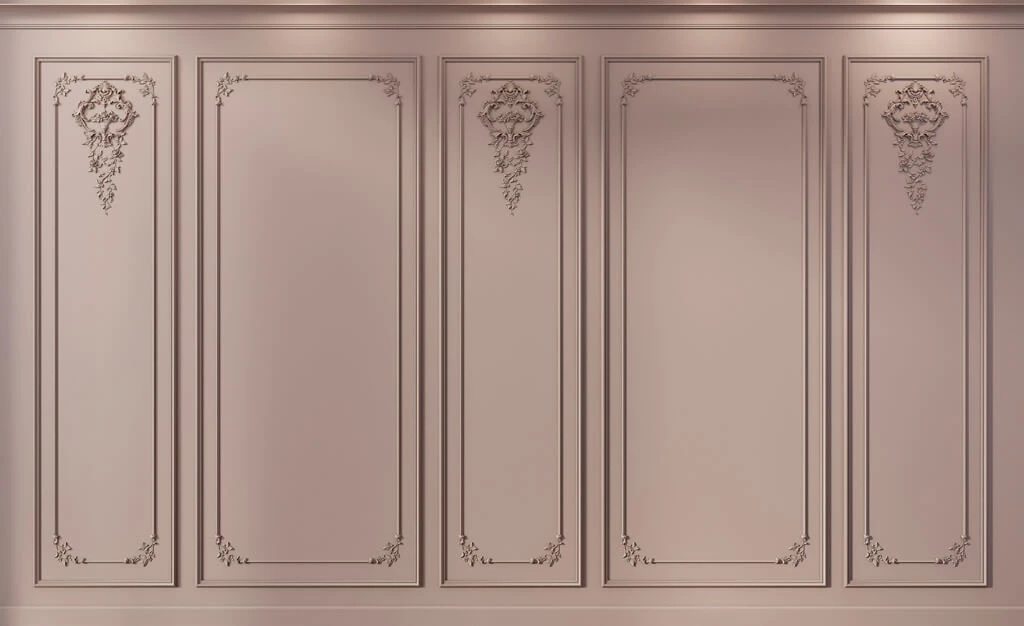
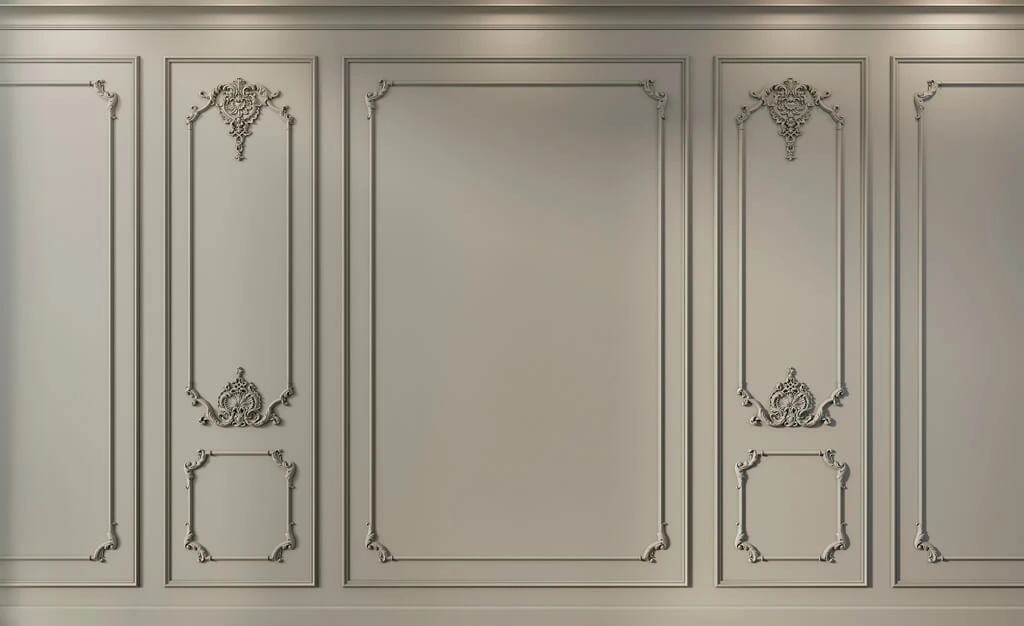
Light neoclassicism on the loggia — a style that works in the vast majority of cases. Thin profiles of 22–30 mm matching the wall color, a delicate frame without ornamentation, no heavy elements. Result: the walls look well-thought-out, the space feels complete, yet light and uncluttered.
Light Neoclassicism pairs well with any furniture — both with wicker chairs in Provence style, and with a minimalist desk, and with wooden shelves. A universal choice for those who want it "right" but don't want to commit to a strict style.
Japandi
Loggia in Japandi style with moldings — for those who prefer tranquility, naturalness, and minimalism. Walls in the color of linen, warm gray, wet sand. Moldings — vertical, thin, strictly matching the color. No ornamentation. Only clean lines.
Japandi on the loggia works especially convincingly in combination with plants: a textured neutral wall and greenery create a feeling of an "indoor garden" even in a city apartment. Add wooden elements (shelves, a mirror frame, plant stands) — and the loggia turns into a space for mindful relaxation.
Stucco decor and slatted panels on the wall — about combining different decorative systems within a minimalist concept.
Modern style
Moldings matching the wall color, minimal relief, simple geometric frames without corner decor. Walls are monochromatic — white, gray, warm neutrals. This is not a "faceless" option, it is a conscious choice in favor of purity and clarity. In a modern space, moldings work as an architectural element, not a decorative one: they structure the wall without drawing attention to themselves.
stucco decor in the color of the wall or contrasting— about choosing between monochrome and contrast solutions with examples.
Neoclassicism
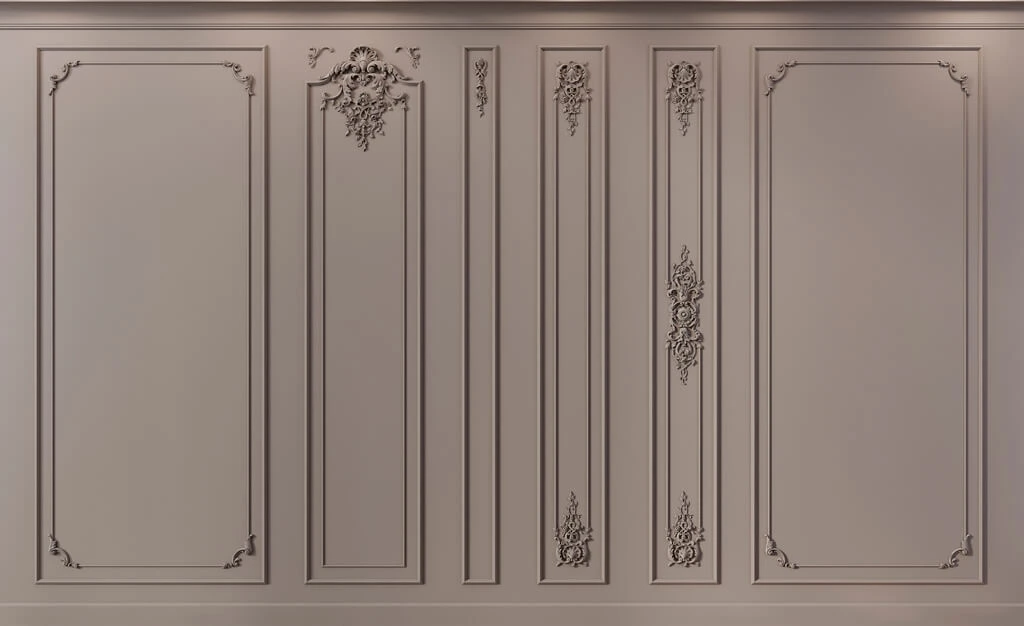
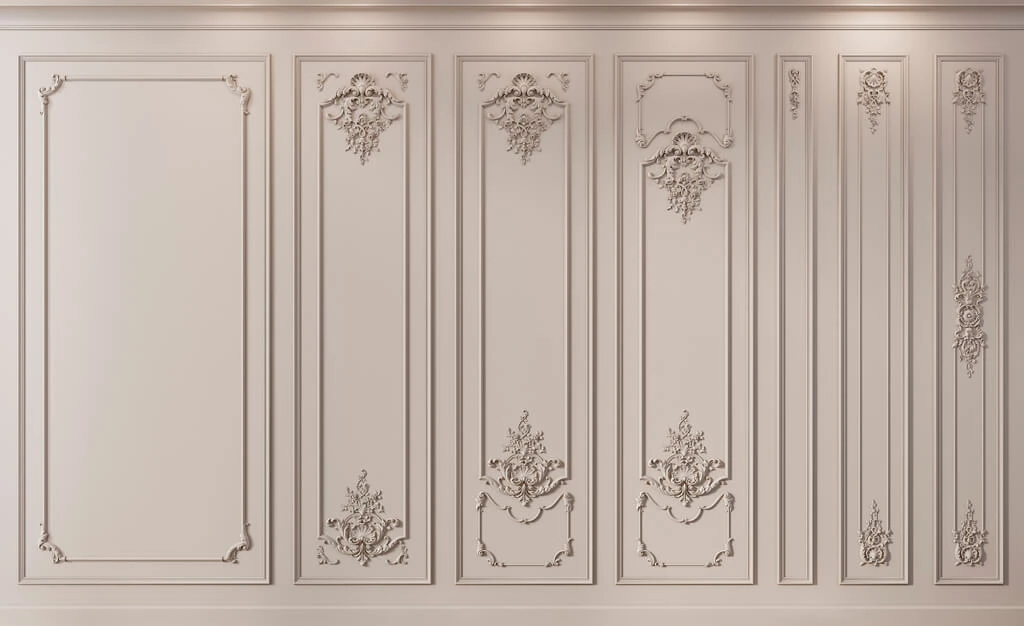
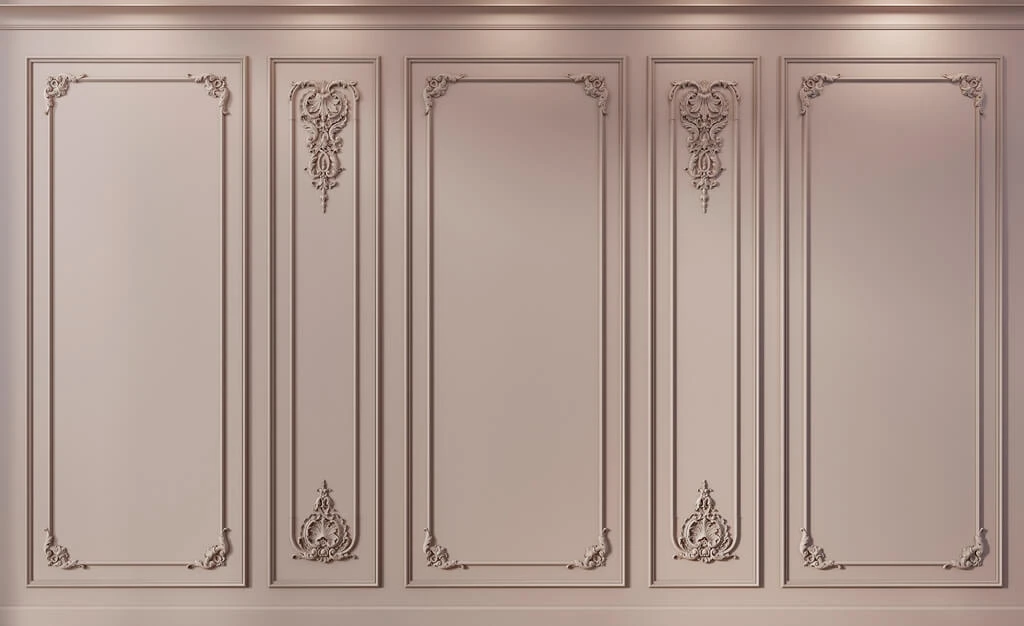
Loggia with moldings in neoclassical style— for those whose loggia is an extension of a classic living room or bedroom. White moldings on pastel walls, corner inserts with ornament, symmetrical frame system. If the room is decorated in neoclassical style, the loggia should continue it.
Important point: full neoclassical style requires sufficient scale. For a loggia 1.2–1.5 m wide — only the most delicate elements, without heavy profiles and large ornament. For a spacious loggia of 3+ m — a full neoclassical system is quite appropriate.
Art Deco
A small expressive area with a dark wall, geometric moldings, a mirror in a black frame and a brass sconce — that's what Art Deco on a balcony is. This style requires courage and precision: one wrong element and the effect is lost. But if everything is done correctly, the result is so convincing that a small balcony turns into "the most beautiful place in the apartment."
Stucco wall decor in Art Deco style— with analysis of style and composition techniques.
How not to overload a small balcony with stucco decor
A balcony is not a living room. Mistakes are especially visible here. Understanding limitations is not pessimism, it's a professional approach.
Don't decorate all walls at once
One accent wall is the end wall. At most one additional wall (side wall where the chair is placed). The rest are neutral. If you decorate every surface in a small space, the space will "close in": it will lose depth, become visually heavy and cramped.
Do not use large patterns
Overlays with a diameter of 40–60 cm, profiles 60–80 mm wide with a rich baroque relief are for high ceilings and spacious halls, not for a loggia with a 2.5 m ceiling. The scale of the decor must match the scale of the space.stucco decor for walls with low ceilings— principles for choosing decor in spaces with limited height.
Do not make too many small frames
Four small frames on the end wall of a loggia 1.5 m wide create a fragmented space. One well-sized frame works better than several small ones that create a "grid" effect.
Do not place contrasting moldings on every surface
Contrasting decor is an expressive tool. But in a small space, it quickly turns into visual noise. Rule: contrast only on the accent wall. On other surfaces, match the tone.
Do not forget about windows, the windowsill, the radiator, and furniture
The decorative system should be designed taking into account all technical and furniture elements. Moldings should not cross radiator pipes, "overlap" the windowsill, or interfere with window opening. Plan the placement of frames in advance, mark the wall before purchasing material.
Do not use complex decor where there is little light
A loggia with small windows or a shaded location is a dark space. In such a room, relief decor with a deep profile does not 'work': the shadow is not visible, the relief is lost. In the dark, it makes sense to use white molding on a light wall — only due to the difference in tone. Or abandon decor altogether and focus on lighting.
How to combine moldings with paint, windows, and furniture
Moldings in the color of the wall
The safest and most professional option for a small loggia. Molding painted exactly the same color as the wall creates architectural depth through shadows in the profile, without fragmenting the space with an additional color. This is a quiet, calm decor for those who appreciate nuance.
Technically: moldings are supplied white, after installation they are painted together with the wall in one coat. It is important to use matte paint — gloss emphasizes every joint and unevenness.
White moldings
Work well in neoclassical style if the walls are pastel — cream, soft gray, mint, powder. White molding on a colored wall is a classic architectural technique that is perceived as 'correct' on an intuitive level.Symmetrical loggia decor — about the principles of building symmetrical systems.
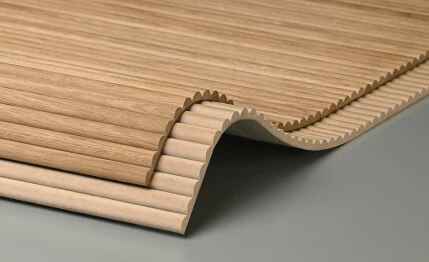
Moldings and wooden slats
The combination of polyurethane moldings and wooden slat panels is a popular technique for Japandi style or modern Scandinavian interiors. The slats cover the lower part of the wall (up to a height of 90–100 cm), while the moldings form the upper zone or frames above the slats. This creates a two-level decorative solution with a play of textures.Stucco decor and slatted panels on the wall — more details about this combination.
Moldings and Shelves
Shelves on a loggia often take up a significant part of the wall. An important rule: moldings and shelves should not 'intersect' chaotically. Either the shelves are integrated into the frame system (located inside a frame, below a molding, or between two moldings), or the moldings are placed on the part of the wall free from shelves. A random intersection of a molding with a shelf bracket looks unprofessional.
Moldings and Plants
A textured wall is an ideal background for greenery. Leaves, stems, and the volumetric shapes of pots are more distinctly visible on a structured surface than on a smooth one. However, it is important that moldings do not compete with plants for attention. In the winter garden area, use the most delicate decor, thin profiles in the color of the wall. Plants are the main focus, moldings are the background.
Practical Scenarios for Different Types of Balconies
Scenario 1: Small glazed balcony 1.2 × 3 m. End wall 1.2 m. Solution: one central frame made of 22 mm molding, 0.8–0.9 m wide, 1.5–1.8 m high. In the color of the wall. One small decorative overlay in the center of the frame is optional but adds completeness. Result: the wall ceases to be 'empty' in one evening of installation.
Scenario 2: Insulated loggia 1.5 × 3.5 m, relaxation area. End wall 1.5 m, side walls 3.5 m each. On the end wall: frame + overlay in the center. On the side wall where the armchair is placed: a frame behind the armchair, 1.1–1.2 m wide, up to 1.6 m high. Other surfaces are neutral. Moldings in the color of the wall. Profile 28–32 mm.
Scenario 3: Spacious loggia 2 × 4 m, extension of the living room. Decor in the style of the living room — Light Neoclassicism. End wall: two-level frame system, profile 32–38 mm, white. Side walls: horizontal molding belt at a height of 1.1 m — separates the lower zone (storage, furniture) from the upper one. Profile and color match the living room.
What to buy for balcony or loggia decor
Full list for different tasks:
-
Buy stucco decor for balcony — wall decor for painting for the end wall, relaxation area, frames and panels.
-
Buy moldings for loggia — linear profiles for frames, verticals, horizontal belts.
-
Buy decorative wall overlays — point accents for the center of the frame, end wall, area above the cabinet.
-
Decor for moldings on the loggia — corner inserts for frame systems.
-
Ready-made decor set for the loggia — for a spacious accent end wall.
-
The STAVROS collection"Neoclassic Light" — for most standard loggias.
-
The STAVROS collection"Japandi" — for minimalist loggias with plants and natural materials.
-
The STAVROS collection«Neoclassic» — for a spacious loggia adjacent to a classic room.
-
The STAVROS collection"Versailles Light" — for a formal classic design.
-
Full catalogpolyurethane products — for a systematic choice.
-
installing polyurethane molding — detailed instructions with nuances for complex surfaces.
Frequently Asked Questions
Can you glue moldings on a balcony?
Yes — on an insulated glazed loggia. On a glazed uninsulated balcony — using elastic frost-resistant glue and additional mechanical fastening. On an open unglazed balcony — not recommended.
Are polyurethane moldings suitable for a loggia?
Yes. Polyurethane does not absorb moisture, is resistant to temperature fluctuations within the living range, does not deform or crack. In these parameters, it significantly outperforms plaster in high humidity conditions.
Which moldings to choose for a small balcony?
Thin profiles 18–25 mm matching the wall color. One frame on the end wall. No large overlays.polyurethane wall moldings— full breakdown of options.
What is better for a loggia: moldings matching the wall color or white ones?
On small loggias — matching the wall color: the space appears larger. On spacious ones adjacent to a classic room — white moldings continue the interior style.stucco decor in the color of the wall or contrasting— with specific examples.
How to design the end wall on a balcony?
One central frame made of molding with proportional indentation from the edges. Profile 22–32 mm, matching or with moderate contrast. Optionally — one small overlay in the center.Ready-made molding frames for the wall— with an analysis of design principles.
What to buy for decorating an insulated loggia?
Basic set: linear moldings for frames + corner inserts for professional corners. Extended option: ready-made kit for the end wall + overlay for the center of the frame.Buy stucco decor for the loggia — STAVROS catalog with ready-made solutions.
Can stucco decor be used on an uninsulated loggia?
Technically possible using frost-resistant glue, but not recommended as a long-term solution. Systematic freeze-thaw cycles weaken the adhesive bond over time. The best solution for an uninsulated loggia is to insulate first, then finish.