




























































Article Contents:
- What is floor skirting and why the choice is important
- What floor skirting can you buy: a complete market overview
- Solid Wood Skirting Board
- MDF Skirting: Geometry Without Compromises
- Skirting for painting made of polystyrene and polyurethane
- White floor skirting board
- How to choose skirting by material: detailed analysis
- Wood — for natural and status interiors
- MDF — precision of shape and convenient color work
- Polystyrene — moisture resistance and decorative relief
- Material comparison in one table
- How to choose a skirting board by height and profile shape
- Low skirting board (40–60 mm)
- Medium skirting board (70–80 mm)
- High skirting board (100–160 mm)
- Straight Profile
- Shaped Profile
- Wide skirting board: a separate story
- Which skirting board to choose for different types of flooring
- Skirting board for laminate
- Skirting board for parquet
- Skirting Board for Wooden Floors
- Skirting board for quartz vinyl
- Baseboard for Tile and Porcelain Tile
- How to choose a floor skirting board by interior style
- Classic interior: height and profile are mandatory
- Neoclassical: restraint, but with character
- Modern interior: two scenarios
- For light interior
- For dark flooring
- Which floor skirting boards are most often purchased in St. Petersburg
- How to Match Floor Skirting: Interior System
- Baseboard and wall moldings
- Skirting board and ceiling cornice
- Baseboard and door casings
- Skirting boards and slatted panels
- Baseboard and decorative elements
- Skirting board and wall finishing for painting
- What to consider before buying a floor skirting board in St. Petersburg
- Where to buy floor skirting board in St. Petersburg: how to navigate the catalog
- How to choose the right section
- Why it's profitable to buy skirting boards, moldings, cornices and decor in one place
- How to assemble a unified interior solution
- FAQ: Answers to the most common questions about floor skirting boards
- Which skirting board is best to buy for the floor?
- What to choose: wood, MDF or polystyrene?
- Which baseboard is best for laminate flooring?
- Which skirting board to choose for painting?
- What height skirting board to choose for an apartment?
- Where to buy floor baseboard in St. Petersburg with delivery?
- Can you paint a wooden skirting board yourself?
- How to correctly calculate the amount of skirting board?
- Conclusion: skirting board is the boundary that makes the interior

Imagine: the renovation is almost complete. The walls are painted perfectly, the floor is laid evenly, the furniture is arranged. And suddenly your gaze falls downward — to where the wall meets the floor. There is either nothing there, or a thin strip of cheap plastic that negates everything you've worked on. It is at this moment you realize: skirting board is not a trifle. It is the final touch that either brings the interior together or treacherously destroys it.
If you wantBuy floor skirting boardin St. Petersburg — wooden, MDF, for painting, tall or wide — this article will give you a complete practical guide. No fluff, no extra words, with specific selection criteria for specific tasks.
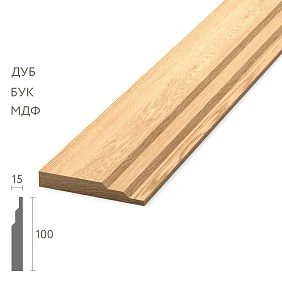
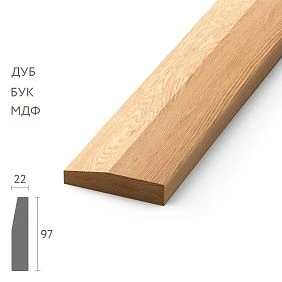
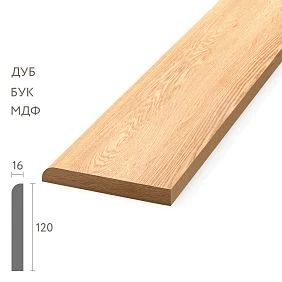
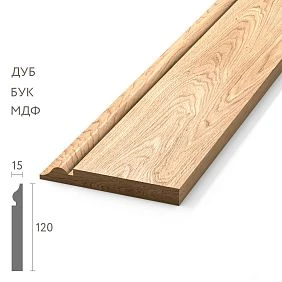
What is a floor skirting board and why the choice is important
Formallybaseboard— is a linear profile mounted along the perimeter of a room at the junction of the wall and floor. But to speak of it only in technical terms is to miss the main point. Skirting board is an architectural element. It sets the lower boundary of the interior, creates a visual foundation for the entire vertical of the room, and determines whether the space looks finished or incomplete.
Three problems that floor skirting solves — and each is important in its own way.
The first is technical. A deformation gap is left between the wall and any floor covering: laminate, parquet, engineered board expand and contract with changes in temperature and humidity. The skirting board covers this gap, keeping the covering free to work.
The second is protective. The lower edge of the wall is its most vulnerable part: chair legs reach here, water splashes here during cleaning, dirt collects here. A properly selected profile takes all this impact, protecting the finish.
The third is aesthetic. A wall without skirting looks 'detached' from the floor — the space loses its architectural foundation. Proper skirting connects the horizontal and vertical planes into a single whole.
And here is the question to ask yourself at the beginning of the selection: which of the three tasks is a priority for you? The answer will determine both the material, the profile height, and the finish.
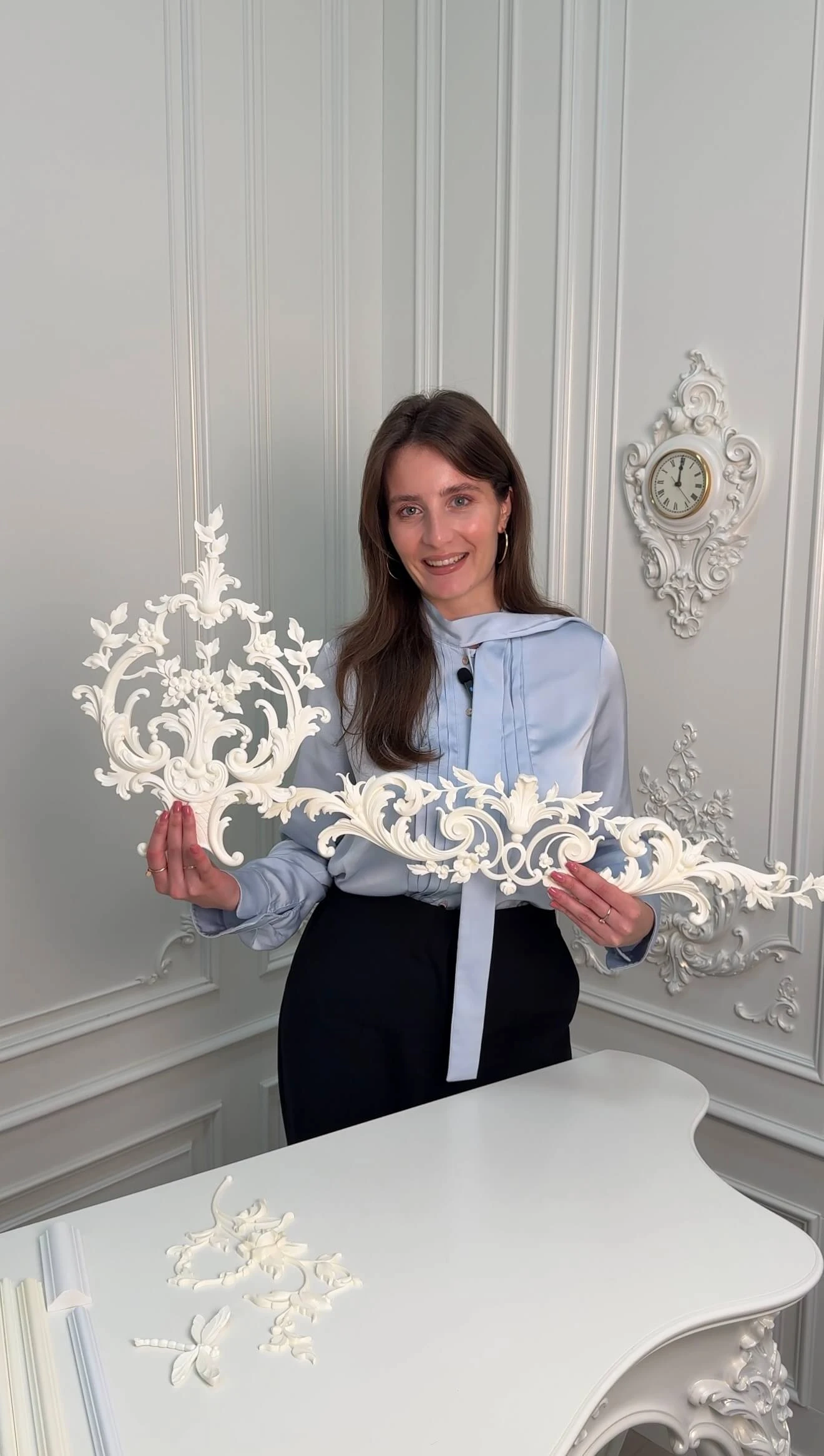
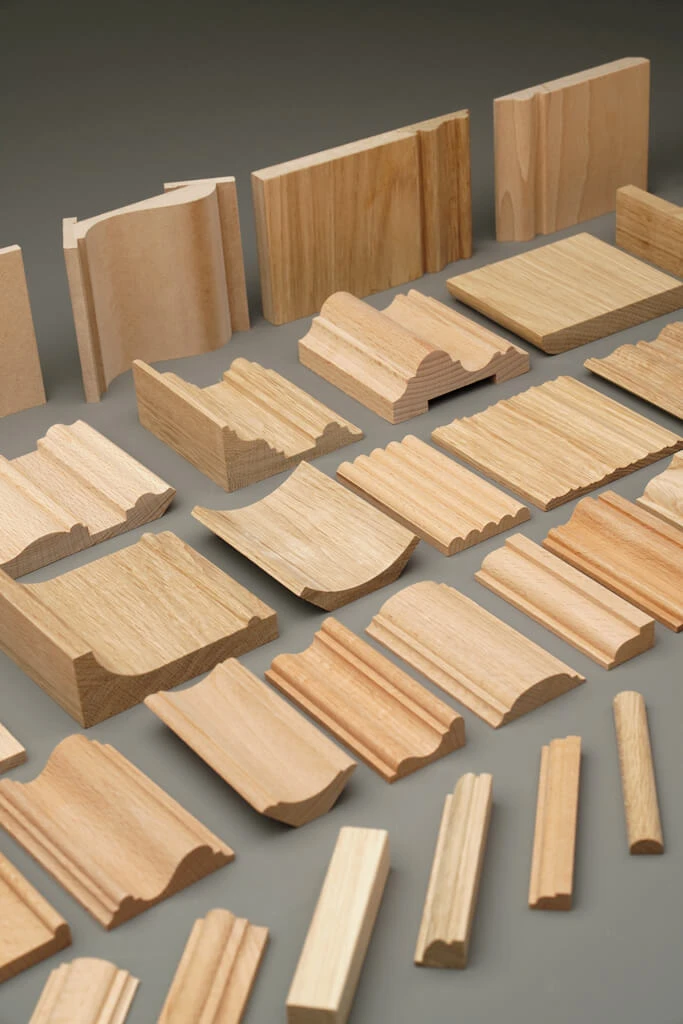
What floor skirting boards can you buy: a complete picture of the market
Understanding the variety of formats means saving time and not making a mistake in your choice. The market offers four fundamentally different categories.
Our factory also produces:
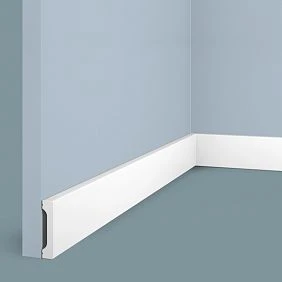
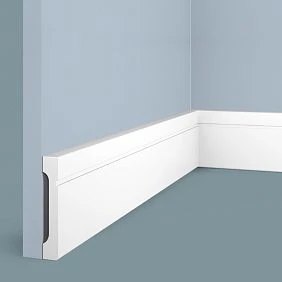
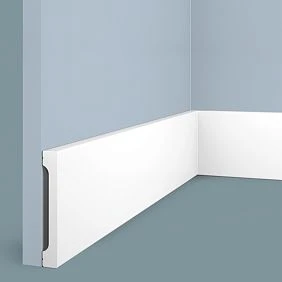
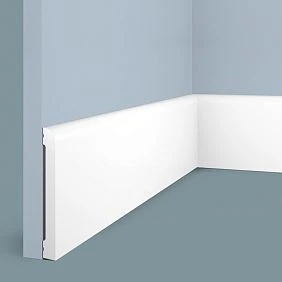
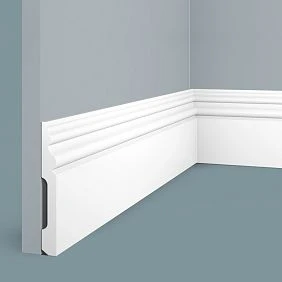
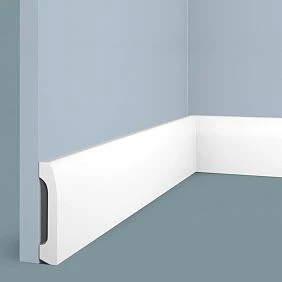


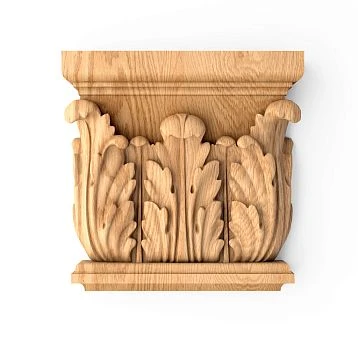
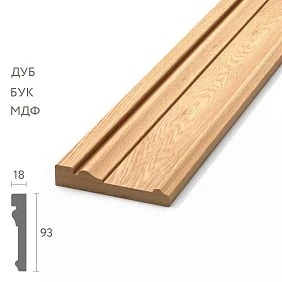
Solid wood skirting board
with a classic profile creates a sense of solidity, reliability.— the benchmark for natural and representative interiors. Made from oak, beech, ash, pine, birch. Each species carries its own character and working qualities.
Oak — density from 680 to 750 kg/m³, high resistance to mechanical loads, pronounced texture with large pores. Ideal next to oak parquet. Beech — even structure, takes paint and tinting well, medium hardness. Pine — affordable price, easy installation, slightly softer than hardwoods, but with proper care lasts for decades.
Wooden skirting is an honest choice. It doesn't need to imitate anything: under enamel it looks like real joinery work, under varnish it shows a living texture.
Get Consultation
MDF Skirting: Geometry Without Compromise
MDF Skirting BoardMade from fine wood fibers compressed under pressure and temperature. The result is an absolutely homogeneous surface, free of pores and knots, that accepts paint perfectly. This is why white MDF skirting for painting delivers results comparable to professional carpentry work—without putty, without multi-layer preparation.
MDF floor skirting is chosen when impeccable paintability, precise geometry, and reasonable price are important. Heights range from 60 to 120 mm, profiles are straight and shaped.
Skirting for painting made of polystyrene and polyurethane
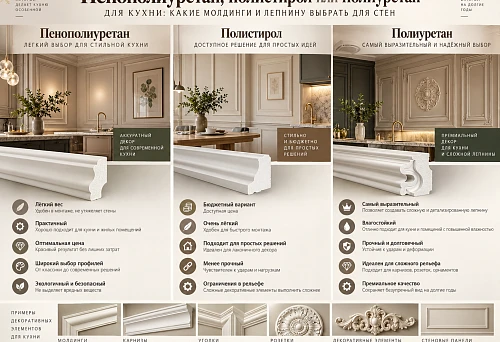
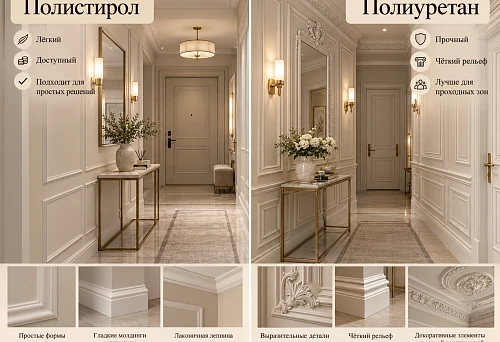
Paintable skirting boardPolystyrene is a different story. The material is lightweight, moisture-resistant, stable against deformation, with a perfectly smooth surface ready for final painting. The HI WOOD line from STAVROS offers heights from 58 to 140 mm: straight and shaped profiles, ready for installation and painting.
Buying polystyrene skirting is the right decision for rooms with high humidity: kitchens, bathrooms, hallways. Moisture resistance at 100%—the skirting does not swell, deform, or delaminate upon contact with water.
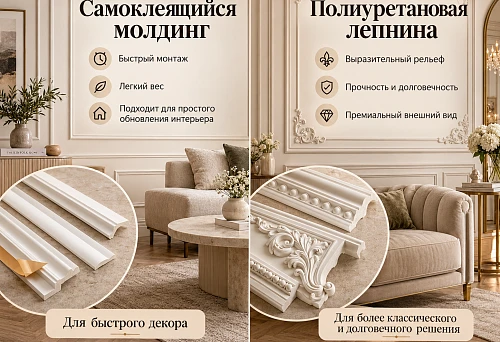
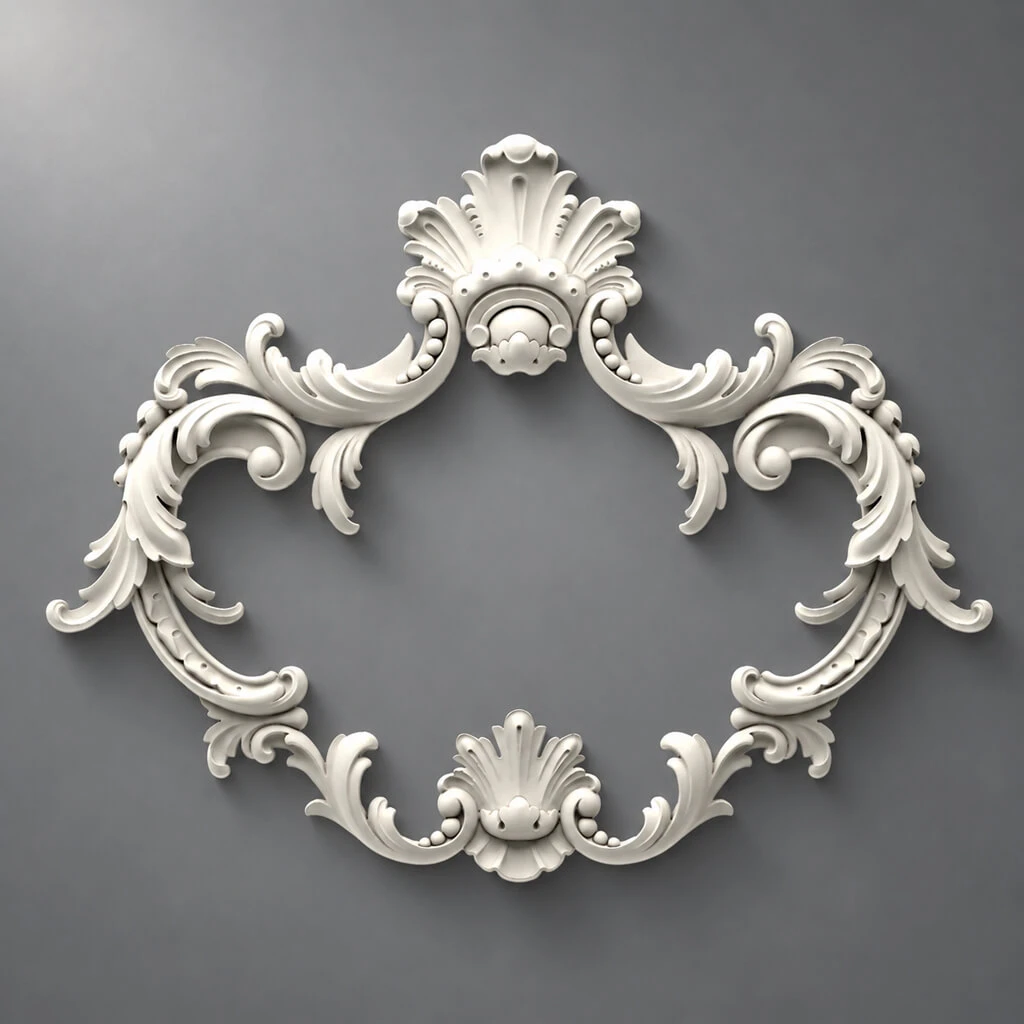
Polyurethane skirting is for decorative interiors with developed profiles. Cast molding reproduces any ornament: classical, baroque, renaissance.
White floor skirting
White floor skirting is not just a color, but an architectural principle. A white horizontal strip at the base of the wall creates a visual 'border' that makes the interior complete regardless of style, floor color, or wall finish.
Buying white floor skirting in St. Petersburg is relevant for most modern interiors: it is neutral, universal, and works with both dark and light floors.
How to choose skirting by material: a detailed analysis
Wood—for natural and status interiors
buy wooden baseboard for flooris appropriate in several specific cases.
If the floor is parquet or solid wood planks. Material unity is not a designer's whim but a logic of spatial perception. When the skirting board and floor are made from the same wood species or at least the same type of material, the boundary between the floor and wall reads as an architectural solution, not a technical joint.
If the interior is executed in natural materials. Stone, untreated wood, natural textiles — here MDF or polystyrene will look alien. A wooden skirting board is part of this same value system.
If the renovation is done 'forever'. A properly installed wooden skirting board coated with quality enamel or lacquer lasts 50–70 years. It can be repainted, sanded, tinted — it can be restored multiple times without losing integrity.
Technical note: a wooden skirting board requires acclimatization in the room before installation — 48–72 hours under operating conditions. For St. Petersburg with its humid climate, this is especially important.
MDF — precision of form and convenient color work
Baseboard MDF— the choice of a rational approach. It does not deform after painting, does not warp at corner joints, does not absorb paint unevenly. The surface of MDF after priming accepts any acrylic or alkyd composition perfectly — without brush marks and without gloss variations.
Height range in the STAVROS catalog: 60, 70, 80, 100, 120 mm — this is the standard range for most St. Petersburg apartments and houses. Profiles: straight and shaped, with a bead, with a stepped transition, with a rounded top edge.
The main disadvantage of MDF: hygroscopicity if the coating is damaged. If the end of the skirting board or a scratch leaves an unprotected surface — upon contact with water it swells. In bathrooms and kitchens, MDF should only be used in a moisture-resistant version or replaced with polystyrene.
Polystyrene — moisture resistance and decorative relief
Moisture-resistant floor skirting boardMade of HI WOOD polystyrene — a specialized format for rooms with high humidity and interiors with an elaborate decorative program. Material density: 400–500 kg/m³. Surface: perfectly smooth, ready for painting without additional preparation. Profiles: from minimalist straight to classic multi-level.
Key advantage: polystyrene skirting board does not react to humidity from 0 to 100% — no deformation, no delamination, no separation from the wall.
Material comparison in one table
| Criterion | Solid wood | MDF | Polystyrene |
|---|---|---|---|
| Naturalness | Yes | No (base — wood fibers) | No |
| Moisture resistance | Requires coating | Medium | High |
| Geometric precision | High | Very High | Very High |
| Paintability | Good (with preparation) | Good | Good |
| Height range | 60–160 mm | 60–120 mm | 58–140 mm |
| Repairability | High | Medium | Medium |
| Service life | 50–70 years | 15–25 years | 25–35 years |
| Optimal application | Parquet, natural interior | Modern apartment | Kitchen, bathroom, classic |
How to choose a skirting board by height and profile shape
Skirting board height is primarily a matter of proportion. Not taste, not trend, but a mathematical relationship between wall height and the width of the lower horizontal strip.
Low baseboard (40–60 mm)
For rooms with ceilings up to 2.6 m. For minimalist interiors where the goal is to make the wall-floor transition as delicate as possible. A low skirting board is almost invisible — it works on a technical level, without claiming an architectural role.
Medium skirting board (70–80 mm)
Universal format. Suitable for most St. Petersburg apartments with ceilings of 2.7–3 m. Standard proportion: skirting board height is 1/35–1/40 of the ceiling height. At 2.8 m, this gives 70–80 mm. These heights are the most in demand in the STAVROS catalog.
High skirting board (100–160 mm)
For rooms with ceilings from 3 m and above. For classical, neoclassical, and Baroque interiors where the skirting board is a full-fledged architectural element.Buy tall floor skirting boardA profile of 100–160 mm means creating a visual 'plinth' for the room, which sets the scale for the entire interior.
The STAVROS catalog features profiles of 100, 120, and 160 mm — the latter format is used in historical St. Petersburg apartments and country houses with high ceilings.
Straight profile
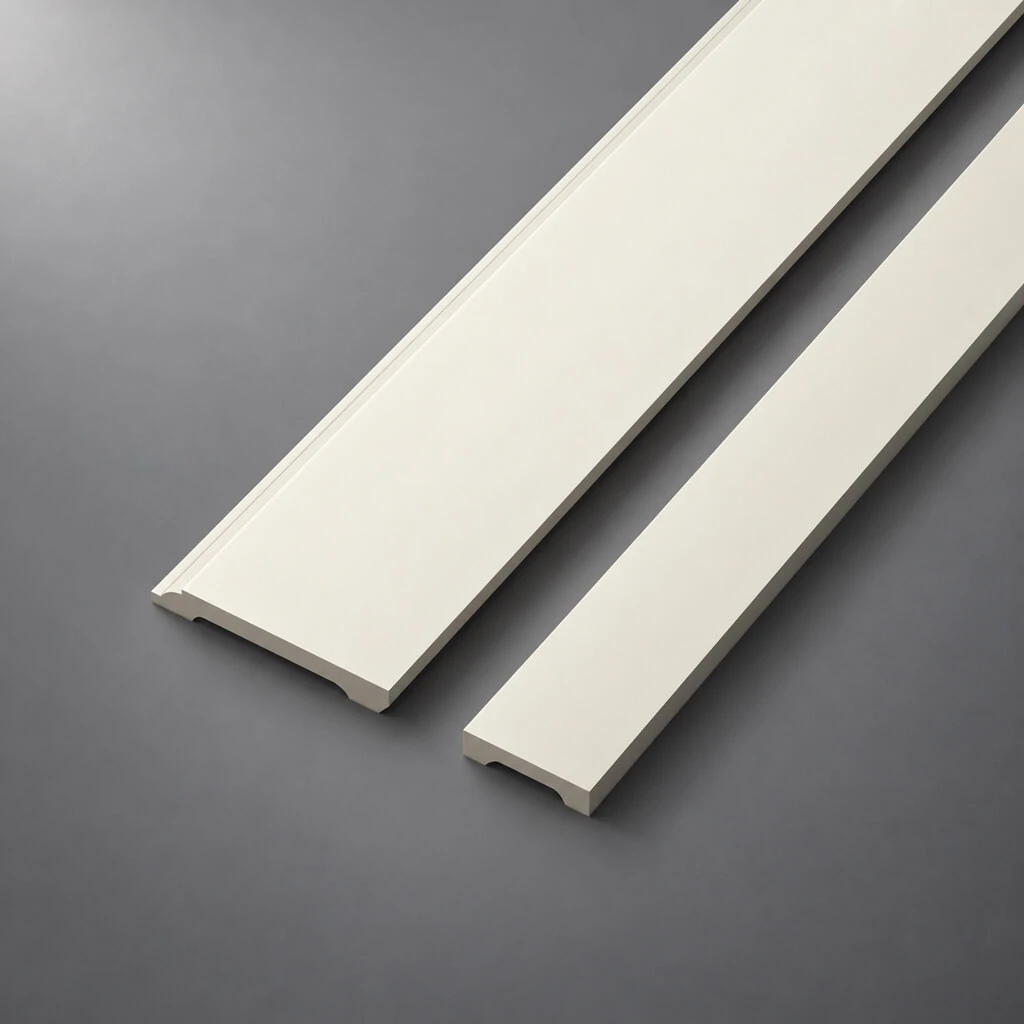
Rectangular or trapezoidal cross-section without ornamentation. Edges are sharp, lines are clear. For modern, Scandinavian, and minimalist interiors. With monochrome painting matching the wall color, the profile's edges are revealed only through the play of shadows, creating volume without decorative excess.
Shaped profile
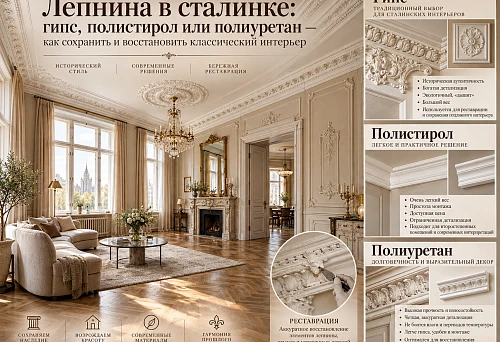
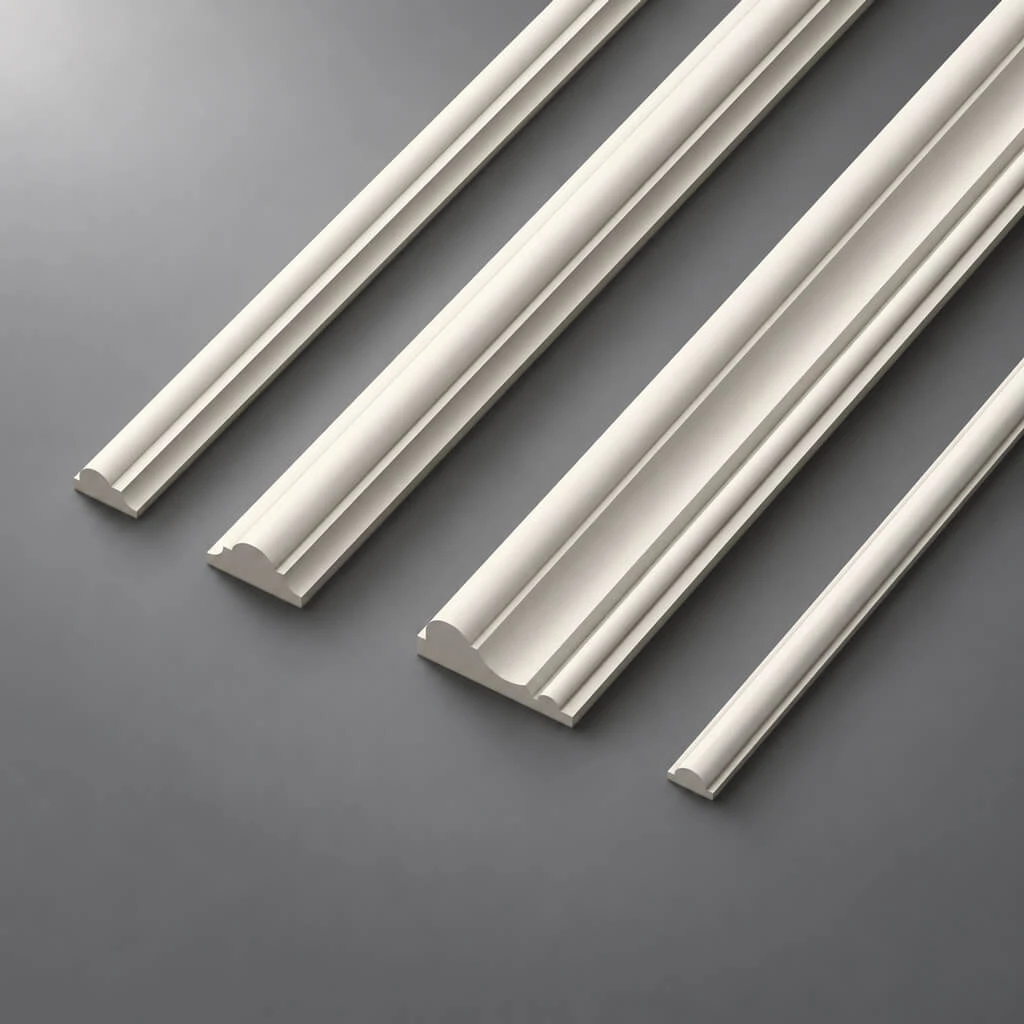
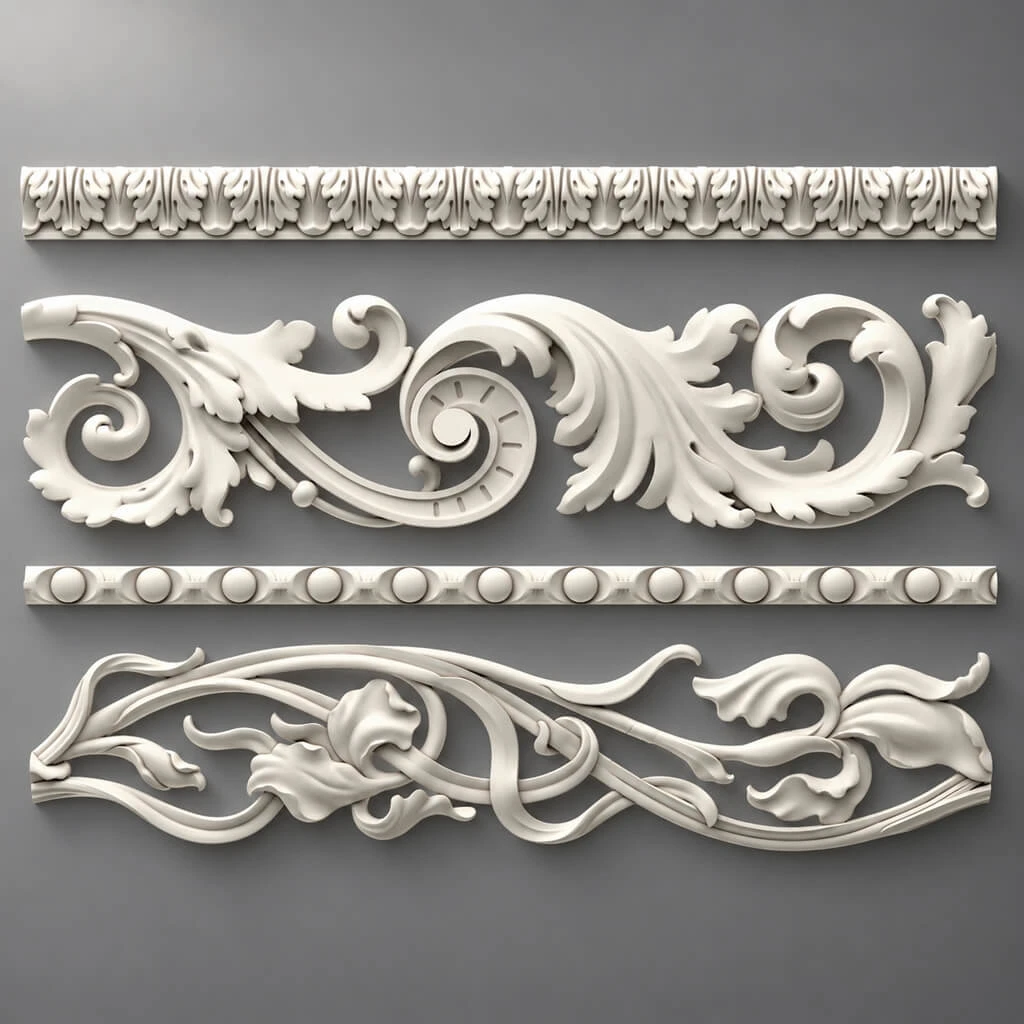
Multiple levels of cross-section, cornice break, beveled edges, rounded transitions. For classic and neoclassical styles. A shaped profile on a high baseboard creates a full-fledged architectural element — especially when paired withmoldings, cornices, and baseboardsfrom a unified decorative program.
Wide baseboard: a separate story
Buy wide floor skirting board— means making a conscious designer choice. A wide baseboard of 100 mm and above is used not only as a decorative element but also as a technical one: it's convenient for hiding wiring, and in rooms with uneven subfloors, a wide profile covers defects at the baseboard joint.
Which baseboard to choose for different types of flooring
Baseboard for laminate
Laminate is the most common flooring in modern St. Petersburg apartments. The baseboard for laminate is attached exclusively to the wall, without touching the flooring: laminate 'floats,' and any fixation of the baseboard to it blocks normal expansion.
For laminate flooring, the optimal materials are: MDF or wooden baseboard. For color: matching the flooring for a monolithic solution or white for contrast.
Baseboard for parquet
Parquet and engineered wood require a wooden baseboard — this is a rule without exceptions for representative interiors.wooden skirting board purchasefrom the same wood species as the parquet — oak, beech, ash — means creating material unity at the foundation level of the interior. Finish coating: the same varnish or the same enamel as on the parquet.
Skirting board for wooden floors
Solid wood flooring in a historic home is a special case. Here, a solid wood skirting board is not an option, but the only correct choice. Both surfaces—the floor and the skirting—work identically under the same conditions: they expand and contract synchronously, keeping the joints crack-free.
Skirting board for quartz vinyl
Quartz vinyl is neutral in compatibility: any skirting material suits it. The choice is determined by the interior style. For wood-look quartz vinyl—MDF with a finish matching the corresponding wood species. For plain quartz vinyl—a white paintable skirting.
Baseboard for tile and porcelain stoneware
Tiles are used where moisture is inevitable: kitchen, bathroom, hallway. For these roomsMoisture-resistant floor skirting boardmade of polystyrene is the optimal choice. A wooden skirting without special coating near tiles will quickly lose its appearance: moisture will damage the protective layer, and the wood will darken.
How to choose a floor skirting board based on interior style
Classical interior: height and profile are mandatory
A classical interior is built on the principle of an order system: there is a base (skirting), a body (wall with moldings), and a crown (ceiling cornice). Omitting any of these elements means disrupting the entire spatial logic.
For classic style, you need: a high skirting (from 100 mm), a figured profile with several levels, white or ivory color.Solid Wood Itemsis the only material that behaves organically in a classical interior.
Neoclassical: restraint, but with character
Neoclassicism is classicism without excess. Medium complexity profile: smooth or with one level of relief. Height: 80–120 mm. Color: white or restrained gray. Wooden skirting board or MDF for painting — both are appropriate.
Modern interior: two scenarios
Scenario 'invisible skirting board'. Narrow straight profile (40–60 mm) matching the wall color. The goal is to make the wall–floor transition unnoticeable while preserving the technical function.
Scenario 'accent plinth'. High white skirting board (120–160 mm) with a dark floor. A contrasting horizontal stripe creates an architectural accent at the base of the wall. This is a technique that requires confidence — but works flawlessly.
For a light interior
White walls, light floor — a white skirting board matching the walls dissolves the transition line. The gaze moves vertically upward, the room visually 'grows'. If you want to define the line — a white skirting board next to a slightly warmer white floor creates a subtle nuance.
For dark floors
Dark parquet or dark laminate paired with a white skirting board — a classic contrast. A white horizontal line clearly separates the floor from the wall and creates a sense of cleanliness and completeness. A skirting board matching the dark floor color — an alternative for those who want to 'hide' the transition.
Which floor skirting boards are most often bought in St. Petersburg
St. Petersburg is a city with architectural memory. Here, historical details are preserved, scale and proportion are valued. Which skirting boards are chosen most often?
Historical fund (19th–20th centuries). Houses with 3–4 m ceilings, herringbone parquet, stucco or its remnants. Request: wooden skirting board made of oak or beech, height 100–120 mm, white enamel or enamel matching the color of historical interiors. The task is to combine with parquet restoration.
Typical Khrushchyovka and Brezhnevka buildings after major renovation. Ceiling 2.5–2.6 m, laminate or quartz vinyl flooring. Request: white MDF skirting board for painting, height 60–70 mm. Budget — reasonable, result — neat.
New buildings with high ceilings. Ceiling from 2.8 to 3.2 m, engineered wood or large-format porcelain stoneware. Request: oak wooden skirting board matching the floor or white MDF with a height of 80–100 mm. Interior — neoclassical or modern classic.
Country houses in the Leningrad region. Solid wood flooring, wooden doors and windows. Request: solid wood skirting board made of the same species as the floor — oak, pine. Height: 100–160 mm for spacious areas.
Offices and commercial premises. Request: MDF or wooden skirting board, straight profile, height 60–80 mm. Criteria: durability, ease of replacement if damaged, neutral appearance.
What to combine floor skirting board with: interior system
Skirting boards never work alone. They are part of a system of vertical decorative elements that runs from floor to ceiling. How to build this system?
Skirting boards and wall moldings
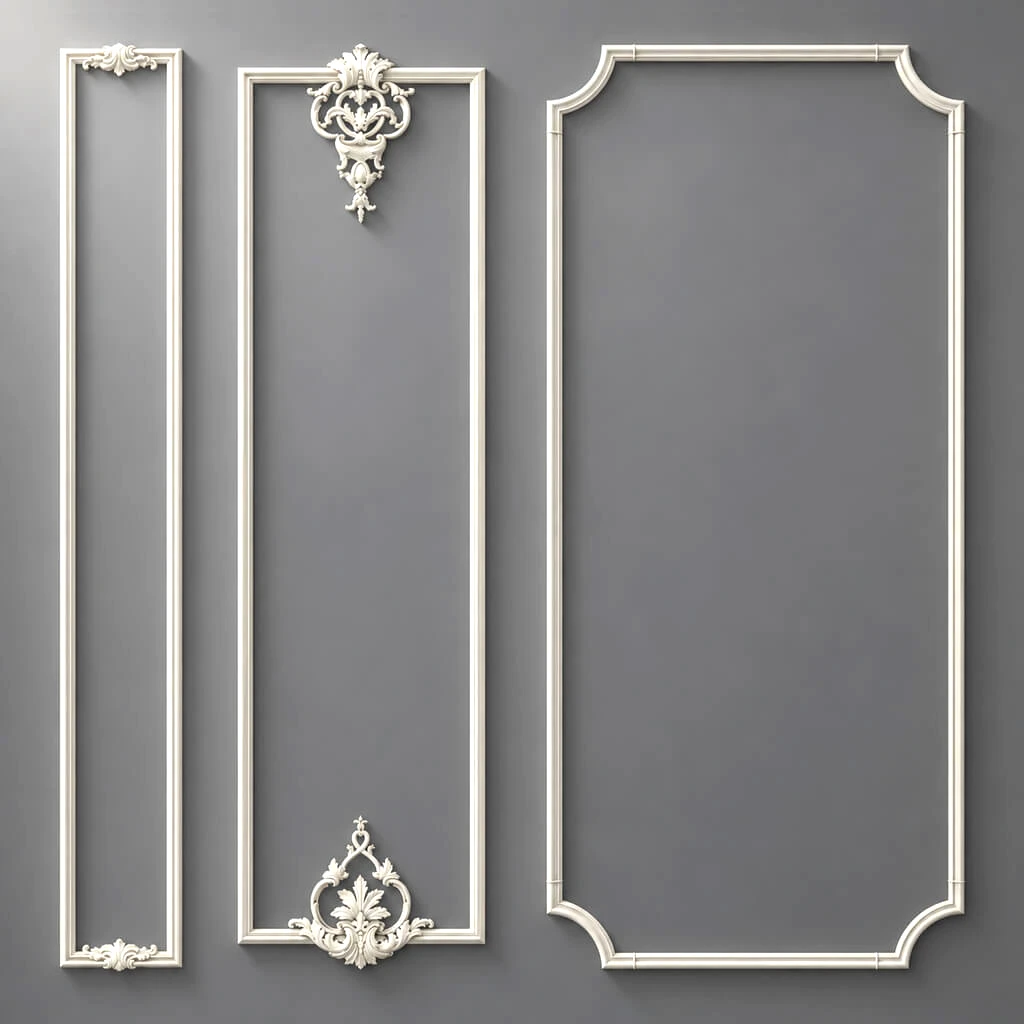
Skirting board at the floor andmoldings, cornices, and baseboardson the walls — parts of a single decorative program. If the walls have classic molding frames, the skirting board should be proportionate to them in height and profile complexity. If the moldings are smooth — the skirting board is also smooth.
Skirting board and cornice at the ceiling
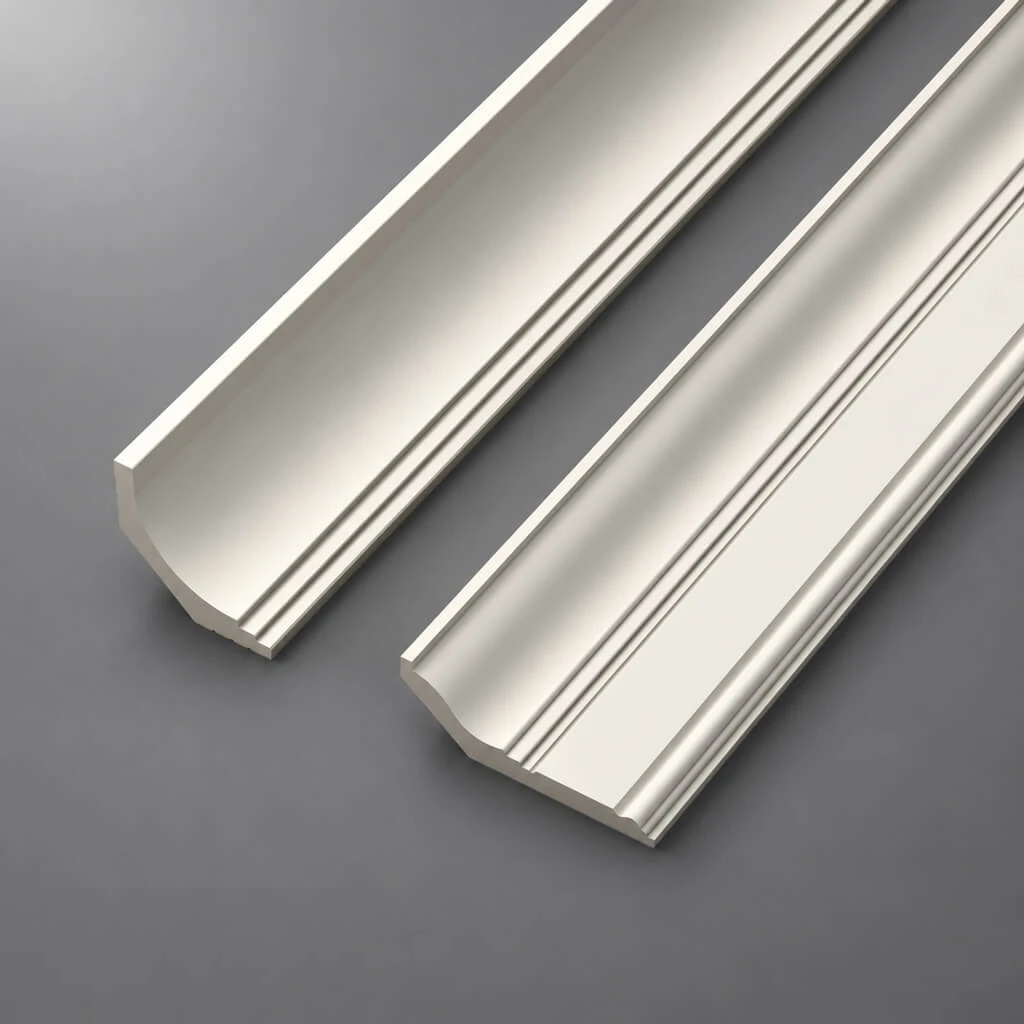
The cornice at the ceiling and the skirting board at the floor are mirror elements. In a classic interior, their height and profile complexity are coordinated: a wide relief cornice — a wide relief skirting board. A thin minimalist cornice — a thin straight skirting board. Violation of this proportion is felt as imbalance — even if it's hard to explain why.
Skirting and door casings
The meeting point of the skirting board and the door casing — the lower point of the doorway — requires attention. Classic solution: the skirting board 'meets' the casing through a decorative corner element. Modern solution: the skirting board goes under the casing without a visible joint. Both work — provided they are applied consistently throughout the room.
Baseboard and slatted panels
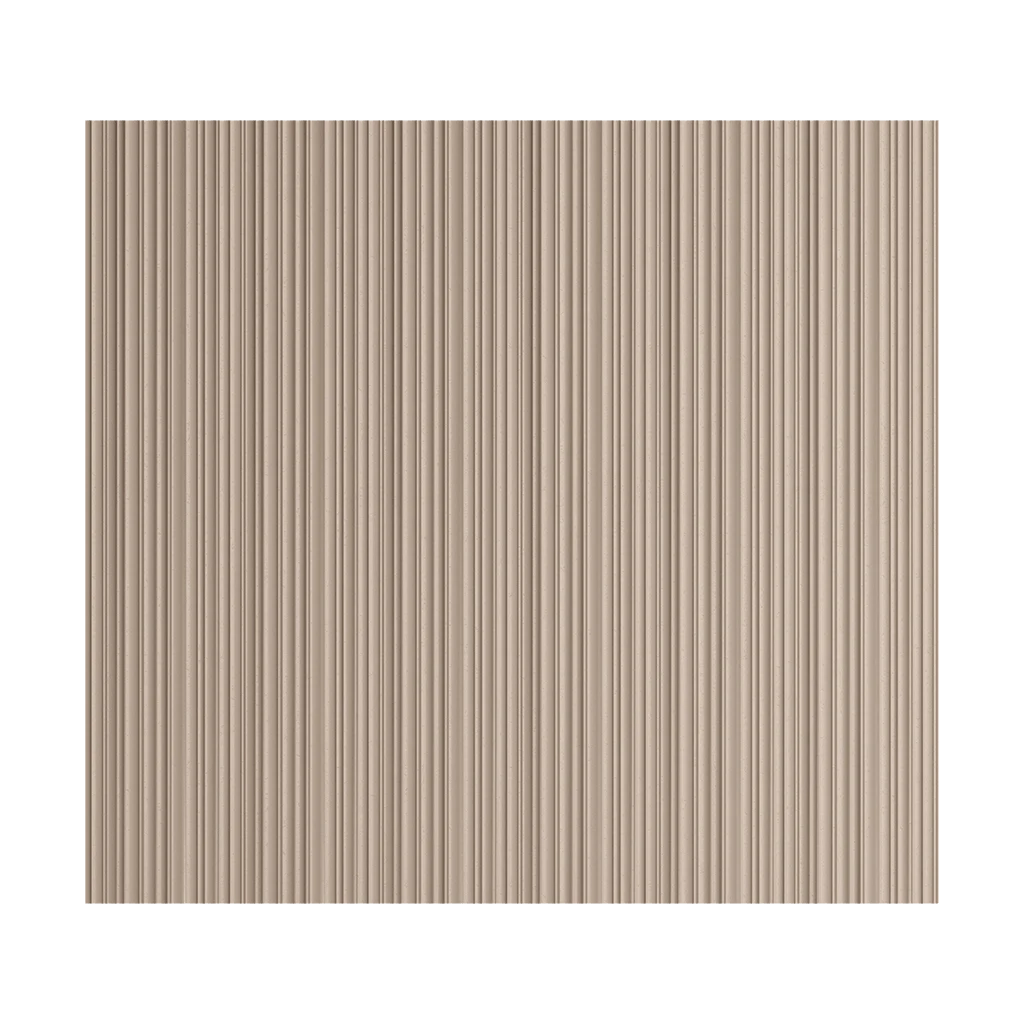
Rafter panelsOn the lower part of the wall — a popular modern technique. Vertical battens + horizontal molding as the upper boundary + baseboard at the floor — this is a complete decorative system for the lower wall zone. The baseboard here acts as the lower finishing element of the entire structure.
Baseboard and decorative elements
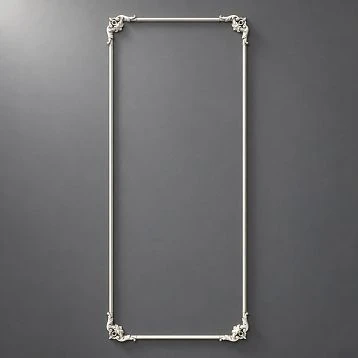
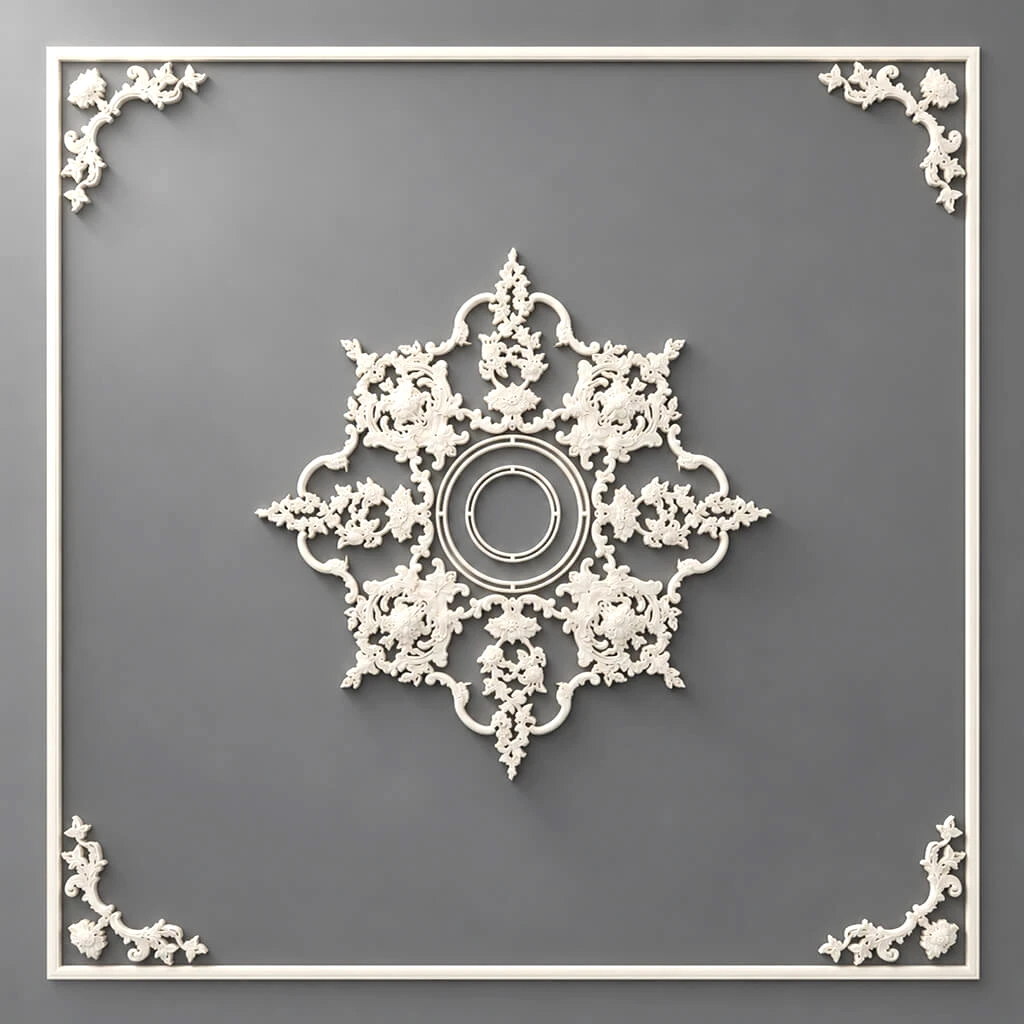
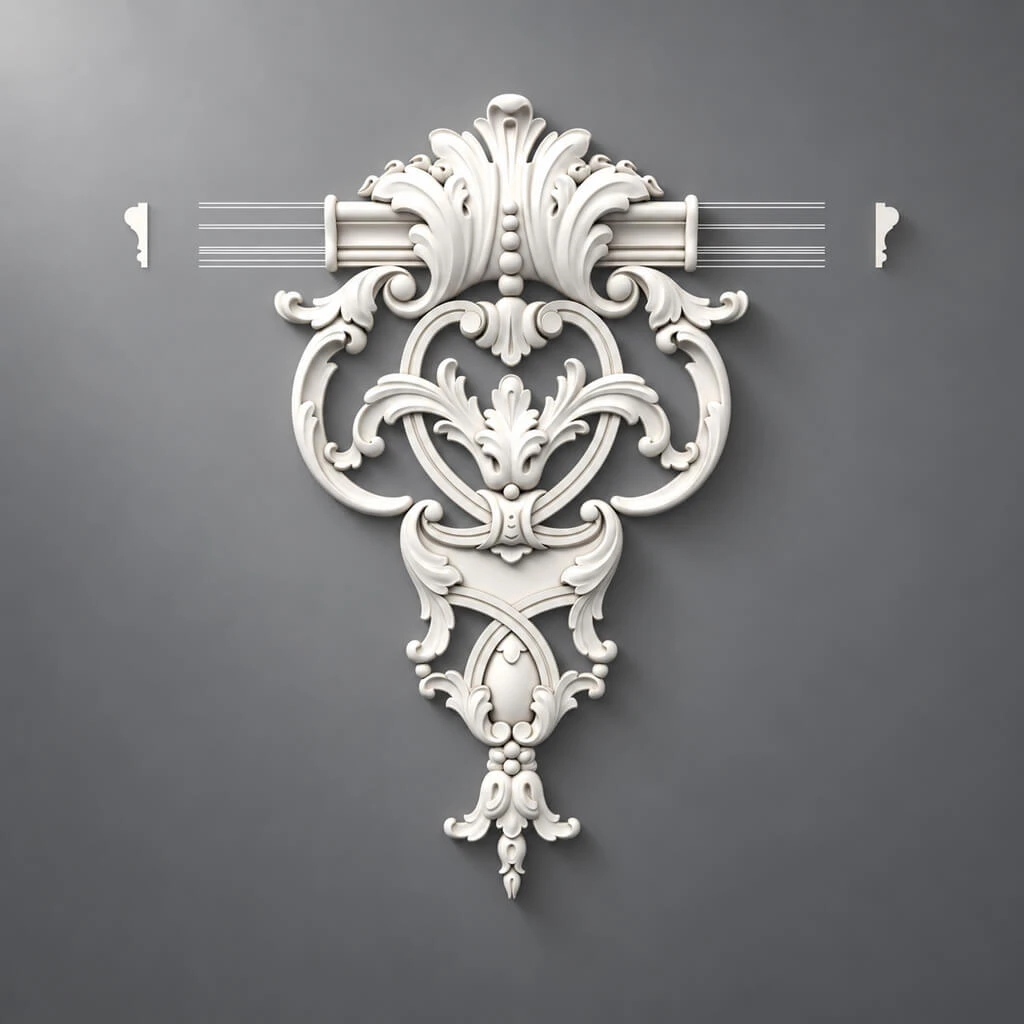
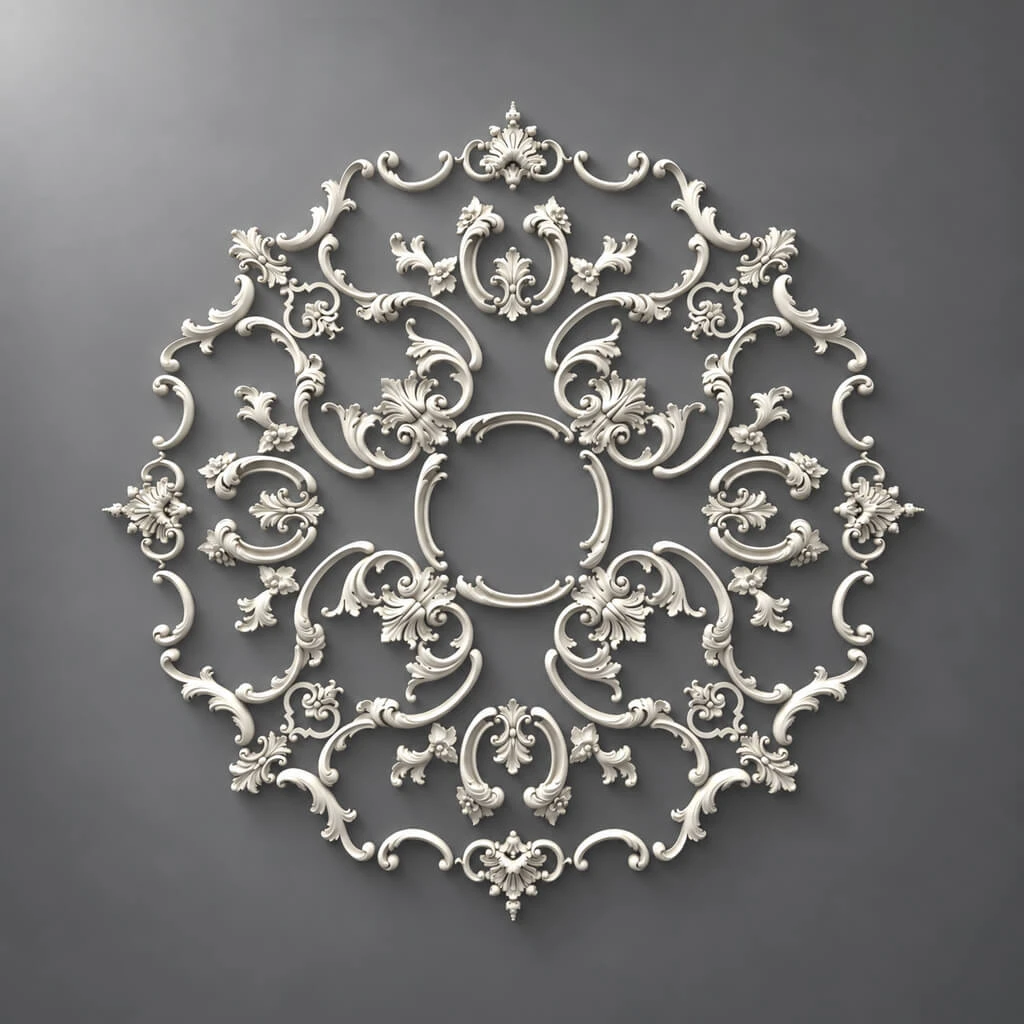
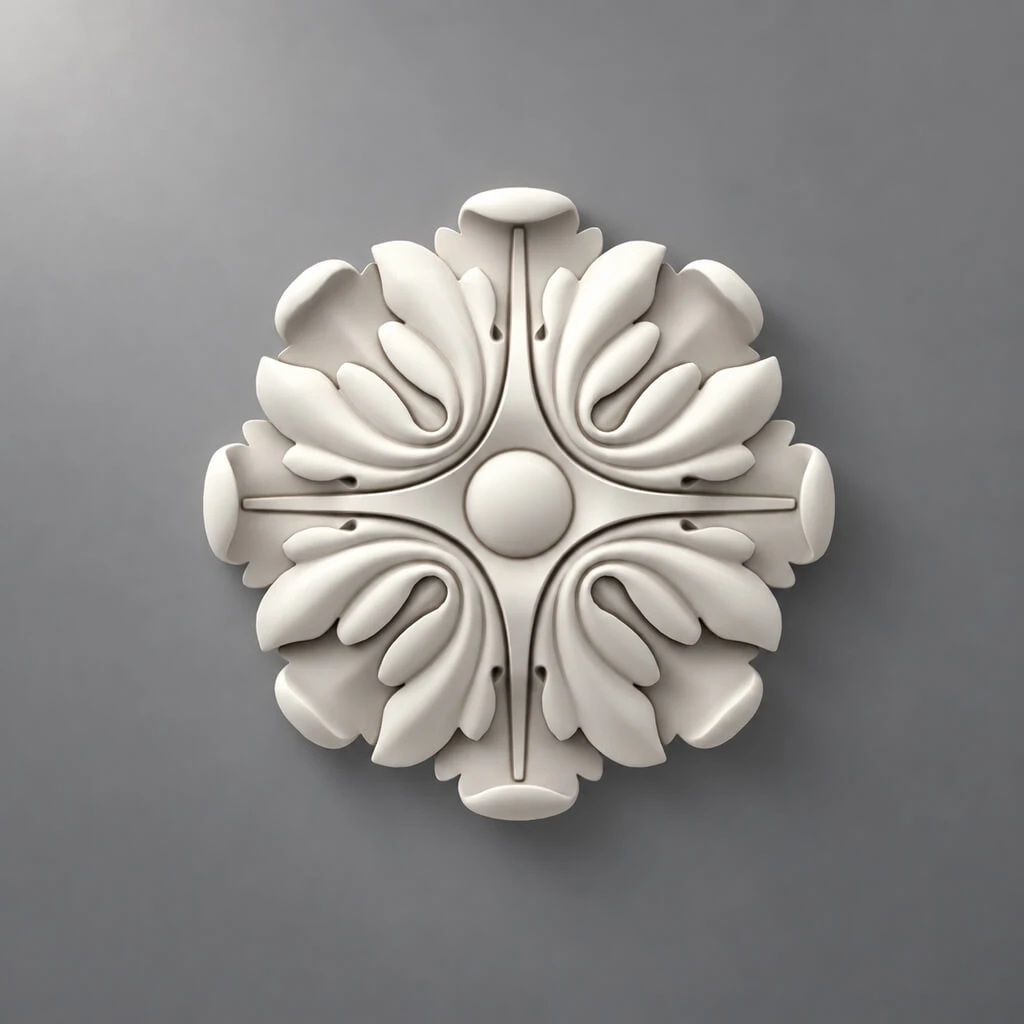
Decor for Molding— corner inserts, rosettes, transition elements — finish joints in corners and give the decorative program completeness. Where baseboards and moldings meet, they ensure clean, neat junctions.
Baseboard and wall finish for painting
When walls are painted the same color as the baseboard — a monochrome solution creates a sense of a unified architectural volume. The baseboard literally 'grows' out of the wall and becomes part of it. This is a technique of expensive interiors: complex form + unified color = maximum expressiveness without excess.
What to consider before buying a floor baseboard in St. Petersburg
Checklist for those who want to buy a floor baseboard in St. Petersburg without mistakes:
Material. Parquet → solid wood. Laminate, quartz vinyl → MDF. Kitchen, bathroom, hallway → paintable polystyrene.
Height. Ceiling up to 2.6 m → 40–60 mm. Ceiling 2.7–3 m → 70–100 mm. Ceiling from 3 m → 100–160 mm.
Color. White — universal for any interior. Matching the floor — to dissolve the joint. Contrasting — for an architectural accent.
Profile type. Straight — for modern and Scandinavian interiors. Figurative — for classic and neoclassical.
Room humidity. In wet areas — only moisture-resistant polystyrene or special moisture-resistant MDF.
Is painting needed? If yes — MDF or paintable polystyrene, primed surface. If no — wood with a finished lacquer coating.
Compatibility with doors and architraves. Before purchase, place a skirting board sample against a floor covering sample and an architrave sample. Assess the match in tone, texture, and scale.
Complete decorative set. Skirting board is a system element. If you are assembling an interior with moldings and cornices — choose everything from one catalog. This is the only way to guarantee proportional coordination of profiles.
Where to buy floor skirting boards in St. Petersburg: how to navigate the catalog
How to choose the right section
For most tasks — the catalog of floor skirting boards covers the main range: wooden, MDF, different heights and profiles. If you specifically need a solid wood skirting board — a separate section wooden baseboards with selection by wood species, height, and profile. If you need a skirting board for painting, moisture-resistant, or polystyrene — the section polyurethane and polystyrene skirting boards.
Why it's advantageous to buy skirting boards, moldings, cornices, and decor in one place
Argument one: proportions. All elements of the decorative program—baseboard, wall moldings, cornice—are designed as a system. Buying them from one catalog means guaranteed consistency of profiles in scale and style.
Argument two: logistics. One delivery across St. Petersburg, one invoice, one storage location for the order.
Argument three: expertise. A specialist who knows the entire range will help select a combination: baseboard + molding + cornice + decorative elements—for a specific interior, specific ceiling height, and specific type of flooring.
How to assemble a unified interior solution
Complete system for a classic St. Petersburg apartment:
-
Skirting made of solid wood100–120 mm high—the foundation of the interior.
-
moldings, cornices, and baseboards—decorative frames on walls and cornice finishing at the ceiling.
-
Decor for Molding— corner and transition elements.
-
Rafter panels—for the lower decorative zone of the wall.
-
Solid Wood Items—full range of wooden decor for a unified natural interior program.
FAQ: Answers to the most common questions about floor baseboards
Which baseboard is best to buy for the floor?
Depends on the type of flooring and interior style. Parquet — wooden skirting of the same wood species. Laminate and quartz vinyl — MDF for painting or with a finished coating. Classic interior with high ceilings — shaped wooden or polystyrene skirting with a height from 100 mm. Bathroom, kitchen — moisture-resistant polystyrene.
What to choose: wood, MDF, or polystyrene?
Wood — if naturalness, durability, and status are important. MDF — if precise geometry, convenient painting, and reasonable price are important. Polystyrene — if moisture resistance or a rich decorative profile for painting is important.
Which skirting board is better for laminate?
MDF or wooden — to choose from. Height: 70–80 mm for a standard apartment. Mounting — only to the wall, not to the laminate. Color: white or matching the laminate.
Which skirting to choose for painting?
Paintable skirting boardMDF or polystyrene — already primed surface, ready for applying finish paint without additional preparation. MDF — for dry rooms. Polystyrene — for wet rooms and for decorative profiles with rich relief.
What height skirting to choose for an apartment?
Ceiling up to 2.6 m — 40–60 mm. Ceiling 2.7–3 m — 70–100 mm. Ceiling above 3 m — 100–160 mm.
Where to buy floor baseboard in St. Petersburg with delivery?
In the STAVROS catalog:with a classic profile creates a sense of solidity, reliability., MDF Skirting Board, moisture-resistant skirting for painting— with delivery to St. Petersburg and all of Russia. Height range: from 58 to 160 mm.
Can you paint a wooden baseboard yourself?
Yes. Procedure: sanding with 120-grit sandpaper, priming (acrylic wood primer), two coats of enamel with intermediate sanding. If the baseboard is already varnished — first remove the varnish by scraping or with a chemical stripper, then prime.
How to correctly calculate the amount of baseboard needed?
Measure the perimeter of the room (sum of all sides). Subtract the width of door openings. Add 10–15% extra for miter cuts and possible installation defects. For a 4×5 m room with one door 0.9 m wide: (4+4+5+5) – 0.9 × 1.12 ≈ 20 linear meters with extra.
Conclusion: baseboard — the boundary that makes the interior
The line where the floor meets the wall is not just a joint of two surfaces. It is the boundary the eye sees first when assessing the quality of finishing. The right baseboard closes this boundary architecturally: it sets the scale, emphasizes proportions, completes what has been worked on for months.
Buying floor baseboard in St. Petersburg means making a choice once and getting a result that will work every day. Wooden baseboard — for those who value naturalness and durability. MDF baseboard — for those who want flawless painting and precise geometry. Moisture-resistant polystyrene — for those who prioritize practicality above all.
STAVROS — a manufacturer and supplier of wooden and decorative interior profile for St. Petersburg apartments, country houses, and commercial spaces. In the catalog:solid wood floor skirting boards, Buy floor skirting boardin a wide range of heights and profiles,Paintable skirting boardmade of polystyrene and polyurethane,moldings, cornices, and baseboardsto create a unified decorative system. Delivery across St. Petersburg and all of Russia. Here, you don't just buy a skirting board—here, you assemble the entire interior, from floor to ceiling.