Article Contents:
- How classic office furniture differs from office furniture
- What items are needed in a classic office
- Desk: the main focal point of the office
- Office chair
- Library and bookcase
- Closed cabinets and storage systems
- Chest of drawers or sideboard
- Console
- Showcase
- Classic office in an apartment vs. a house: key differences
- Office in an apartment
- Office in a country house
- Dark or light classic furniture: how to choose
- Dark furniture
- Light and natural furniture
- Mixing shades: rules and exceptions
- Wooden panels, moldings, cornice and baseboard: the architectural framework of the office
- Wood Panels
- Moldings and frames
- Cornice
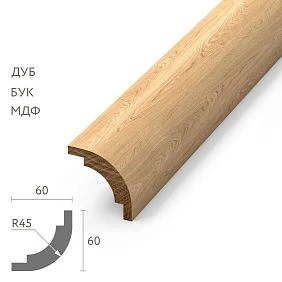
- Wooden baseboard
- Handles, legs and carved decor: details that create the image
- Furniture handles
- Furniture legs
- Carved overlays and decor
- Executive office in classic style: a separate conversation
- Executive desk
- Cabinets and bookcase behind the back
- Symmetry
- Color palette
- Mistakes when choosing classic office furniture
- How to coordinate the office with frames, mirrors, and decor
- Frames for paintings and mirrors
- Decorative Items
- What to buy for a classic office: a complete list
- How to buy classic office furniture without mistakes: an algorithm
- About the Company STAVROS
- FAQ: Answers to Popular Questions
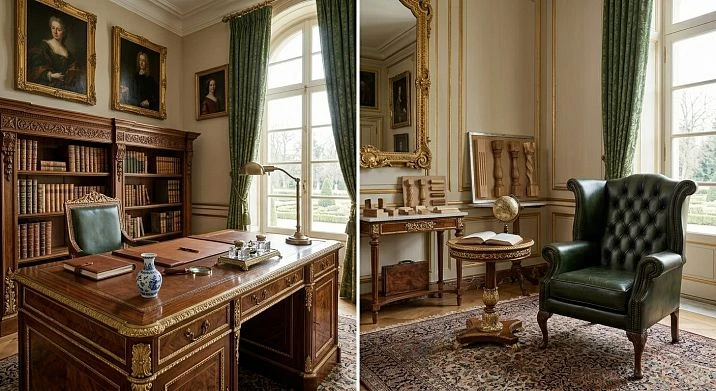
There are spaces that say more about a person than any business card. The office is one of them. It is not just a room with a desk. It is a place where decisions are made, negotiations are held, reading, thinking, creating. And that is why a classic-style office is not a whim, but a conscious choice of people who understand that space influences the nature of thinking.
Classic office furniture is a system, not a set of items. A writing desk, a library, cabinets, an armchair, a console — each item carries its own architectural and semantic load. They are complemented by details that many underestimate: Wooden moldings, wooden furniture handles, Carved decorative inserts for furniture, Wooden baseboard. It is these that transform the office from a "furnished room" into a "classic interior."
This article provides a detailed breakdown: what items are needed, how to choose, what to consider, what mistakes to avoid. For an apartment and for a house, for a small office and for an executive representative space.
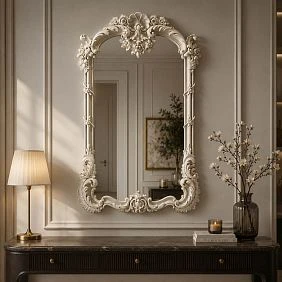
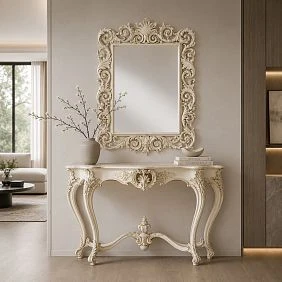
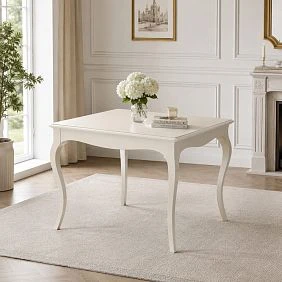
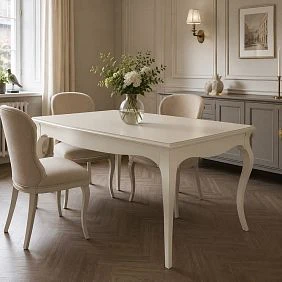
How classic office furniture differs from office furniture
The question seems obvious — but only until you start choosing. The internet is full of "classic" desks that, upon closer inspection, turn out to be office structures with imitation wood veneer and flat, featureless fronts. Let's break down the differences honestly.
Proportions and scale. Classic furniture is built on precise proportions derived from architectural tradition. A desk has a clear structure: tabletop, pedestals, supports, base. Each element is proportionate to the others and to the room as a whole. Office furniture is designed with a different logic — functionality and compactness are more important than architectural image.
Material and texture. Real Classic furniture made of solid wood is natural wood with a living texture that ages beautifully. Warm oak, rich walnut, expressive cherry. Office furniture is made from laminated chipboard with film or veneer coating — this is immediately apparent.
Paneled fronts. A classic wardrobe, chest of drawers, cabinet, library — all have fronts with paneled divisions. This is a frame with an inset panel inside. Visually, the front gains depth, plasticity, and play of shadows. A flat front without profile is not classic.
carved appliqués and decorative details. Classic furniture features carved decor — on fronts, cornices, bases, and joints. This is not superfluous — it is the architectural language of the style.
Furniture legs and supports. A desk on carved legs, a cabinet on a profiled base, a console on turned supports — all create an image. An office desk stands on square metal legs or plastic supports.
wooden furniture handles. Handles are the signature of the style. In a classic office, they are made of wood, bronze, or a combination of materials. A wooden handle feels warm to the touch, is proportionate to the front, and supports the overall decorative motif.




What items are needed in a classic office
Let's start with the catalog of items — and examine each one in detail.
Our factory also produces:
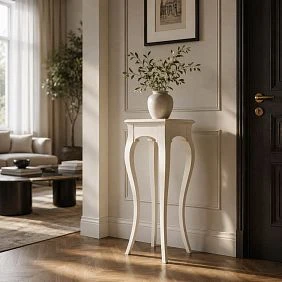
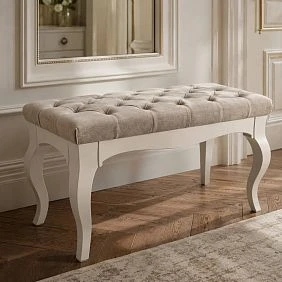
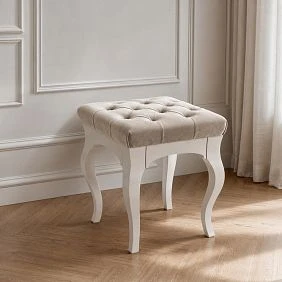
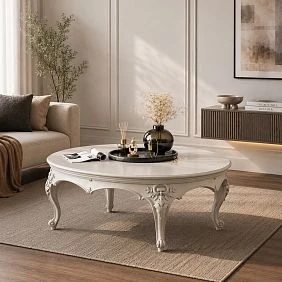
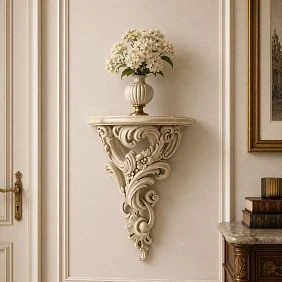
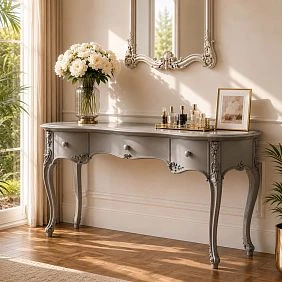
Writing desk: the main focal point of the study
The desk is the center of the study. Everything else is arranged around it or in dialogue with it. For a classic study, the writing desk should:
-
Have a massive tabletop — deep and wide, so it's comfortable to work on, not just to hold a laptop.
-
Have cabinets with drawers — for documents, accessories, equipment.
-
Stand on expressive legs or a plinth base.
-
Have fronts with profile frames or paneled divisions.
-
Be equipped wooden furniture handles, consistent in style with the other items.
Desk size: for a home study — width from 140 to 180 cm, depth from 70 to 90 cm. For an executive study — from 180 to 220 cm.
Get Consultation
Office chair
The chair should match the desk in scale and style, but not compete with it. For a classic study — a chair with wooden armrests or a wooden frame, upholstered in natural leather or dense fabric in a neutral color.
A high-back chair in a classic style is a separate architectural object within the study. It creates a sense of a "throne," which is entirely appropriate in the right context.
Library and bookcase
A library in a classic study is not just a bookcase. It is a wall that speaks about its owner. A built-in library from floor to ceiling, occupying the entire wall behind or next to the desk, is one of the strongest interior elements.
What is important when choosing a library:
-
Height: from floor to ceiling or to the cornice — creates a sense of monumentality.
-
Upper sections above 180 cm — behind glass, lower sections — with closed solid or glazed fronts.
-
A profiled cornice at the top — connects the library to the wall and ceiling.
-
A plinth at the bottom — connects to the floor and wooden skirting board.
A library, properly integrated into a study with moldings, baseboards, and wooden panels, transforms an ordinary room into a true classic interior.
Closed cabinets and storage systems
In addition to the library, the study requires closed storage: for documents, office equipment, folders, and supplies. A classic cabinet with solid or glazed facades is a must-have element.
Important: cabinets in the study should be coordinated with the desk in height, wood color, and facade style. Mismatched items in one space ruin the look.
Chest of drawers or cabinet
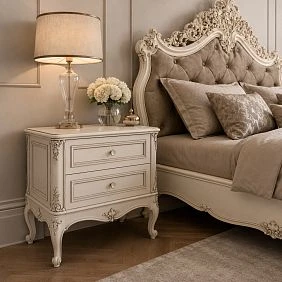
A chest of drawers in the study is not decor, but a functional item. It is needed for storage, visual balance of the space, and can serve as a base for a decorative area: frames, clocks, a small sculpture, a lamp.
Classic furniture made of solid wood in the form of a chest of drawers with three to four drawers, carved overlays, and wooden handles — an organic element of a study of any scale.
Console
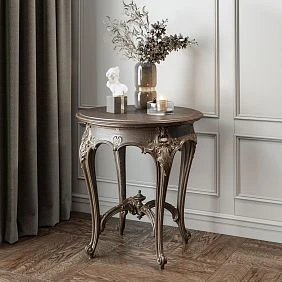
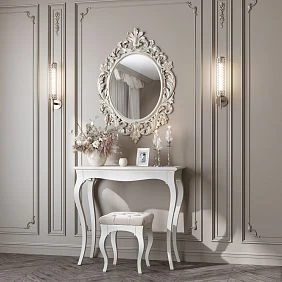
A console is an item that is often underestimated. In a study, a console works well against the wall opposite the desk, by the window, or next to the door. It provides a horizontal surface for placing items and creates a sense of lived-in space.
For a classic study: a console on turned wooden legs with a profiled facade.
Display cabinet
If your office houses a collection — books, objects, souvenirs, awards — a display case with glazed facades will be the right choice. It simultaneously solves the storage problem and creates an exhibition area.
Classic office in an apartment and in a house: fundamental differences
This is not the same interior at different scales. These are two different scenarios with different possibilities and limitations.
Office in an apartment
For an apartment — especially with standard ceiling heights of 2.7–3 m — classic style requires a more cautious approach.
-
Choose lighter forms. A desk on thin turned legs looks more elegant than a massive desk on pedestals. A cabinet with thin facade proportions — does not overwhelm.
-
Do not overload with dark furniture. Dark walnut in a small apartment creates a feeling of confinement. Natural light oak or painted furniture in light tones — a more reliable choice.
-
Moldings and baseboards — be careful. In an apartment with 2.7 m ceilings, a massive cornice and high Wooden baseboard will be overwhelming. Optimal baseboard — 8–10 cm, moldings — thin, elegant.
-
Leave air around the table. A small home office cannot tolerate clutter. One strong piece — a desk or a bookcase — and compact additional elements.
Home office in a country house
In a house with ceilings of 3.5–4 m and spacious rooms, classic style unfolds to its full potential.
-
A built-in bookcase from floor to ceiling — this is where it looks organic and powerful.
-
Dark wood tones — walnut, wenge, dark oak — create a prestigious look without the risk of overloading a small space.
-
Wooden panels on walls — in a house, you can fully cover the walls with wooden panels or decorate them with moldings using the "frame with panels" technique.
-
A large wooden baseboard (12–15 cm), a cornice with a rich profile — appropriate and expressive specifically in a large space.
-
Carved decor without scale limitations — ceiling rosettes, overlays on facades, decorative pilasters.
Dark or light classic furniture: how to choose
This is one of the key questions, and the answer depends on the specific space and goals.
Dark furniture
Dark walnut, wenge, dark tinted oak — this is the image of a traditional classic study. Status, solid, "masculine" in its character. Such a study evokes the feeling that serious decisions are made here.
Dark Classical office furniture requires:
-
a spacious room — preferably from 18–20 sq. m;
-
good natural or high-quality artificial lighting;
-
light walls — so that the furniture stands out against their background;
-
coordinated dark details: Skirting, doors, Handles, Moldings.
Light and natural furniture
Light oak, ash, light birch shade — a more versatile and light classic. Works well in apartments, in studies with small windows, in spaces with white walls.
A neoclassical study in white with natural wood details is one of the most sought-after options for apartments in Moscow. Classic Furniture in white and milky tones gives lightness, air, while preserving the architectural character.
Mixing shades: rules and exceptions
Cannot: place a dark walnut desk, a light oak cabinet, and a white chest of drawers in one study — without systematic logic. These are three different interiors in one room.
Can: use one main wood shade for all furniture and an additional one for details (handles, legs, moldings). For example, light oak as the main shade + dark details as accents.
Wooden panels, moldings, cornice, and baseboard: the architectural framework of the study
This is the block that most people underestimate when planning a study — and this is where the difference lies between a 'just furnished room' and a 'classic interior'.
Wooden panels
Wooden panels on the lower part of the study walls — waxed oak, tinted pine, natural ash — create a feeling of security and solidity. In a classic study, panels traditionally occupy a third or half of the wall height: from the floor to the horizontal molding belt.
The panels match the wood of the furniture and wooden skirting board at the bottom and molding belt at the top. This is a three-level architectural system of the lower wall zone.
Moldings and frames
Wooden moldings — one of the most effective techniques for classic wall decoration. Moldings are applied to the wall in the form of frames — rectangular or shaped — creating the illusion of more complex architecture. Inside the frames — painted wall, wallpaper, or decorative plaster.
In the study, moldings are appropriate:
-
on the wall behind the desk;
-
on the side walls as an architectural background for the library;
-
above the panels in the lower wall zone.
Cornice
Cornice — transition from wall to ceiling. solid wood cornice with a classic profile — this is the completeness that no other element provides. It visually "closes" the room from above, creating an architectural frame for the entire space.
In the study, the cornice should be coordinated with the top cornice of the library, if there is one. Unified wood, unified profile character.
Wooden skirting board
solid wood baseboard in a classic study — this is not a technical detail, but an architectural lower belt of the entire space. For a classic study — baseboard height 10–15 cm, expressive profile, coordinated wood color.
The baseboard should "flow" under the library, continue behind the desk, and coordinate with the furniture base. Three different baseboards in one study — a mistake.
Handles, legs, and carved decor: details that create the image
Details are not the final touch. They are an equal part of the system. In a classic study, they are responsible for the feeling of expensive quality and stylistic integrity.
Furniture handles
Wooden furniture handles for the study — straight, bead, bracket, button with thread, turned handle with profile. Wood is warm to the touch, does not heat up in the cold, organically combines with wooden facades.
All handles in the study should be from the same series or at least the same style. Handles on desk drawers, handles on the cabinet, handles on the chest — a unified ensemble.
Mistake: beautiful forged handles on the desk and plastic buttons on the cabinet next to it.
Furniture Legs
Wooden furniture legs — turned, with a profile, with carving or with a simple taper (narrowing downward) — set the character of the piece. A table on turned legs with a neck and disk is a classic image. A console on legs with floral carved decor is a more decorative, Baroque approach.
The legs should be coordinated with the profile of the handles and decorative overlays. Together they create a unified decorative language of the furniture.
Carved overlays and decor
Carved decorative inserts for furniture enhance the classic facade: overlays on the central desk drawer, overlays on the top of the cabinet, decorative elements on the corners. They add relief and visual complexity where otherwise there would be just a flat facade.
Furniture decor from carved wood — acanthus leaves, floral garlands, cartouches, geometric motifs — is chosen according to a single ornamental principle for all the furniture in the study.
Rule: one ornamental theme. Not acanthus leaves on the table and geometry on the cabinet. One language — a unified space.
Executive office in classic style: a separate discussion
An executive office is a special scenario. Here, classic furniture works not only as an interior solution but also as a communication tool. The space where a person receives guests and partners should speak of status, taste, and seriousness of intentions.
Executive desk
A massive writing desk 180–220 cm wide, 90–100 cm deep. Pedestals with drawers on both sides. Tabletop made of natural wood or with a leather insert. Facades of the pedestals with paneled division and wooden handlesCarved applique in accent areas.
The executive's desk should not look cluttered. Only the essentials should be on it: a screen, phone, documents, and writing utensils. Nothing extra.
Cabinets and bookcase behind
Traditional arrangement: the executive's desk is placed with its back to a window or a wall with a bookcase. A bookcase or cabinets behind create additional visual "weight" for the position. The guest sees the person in front of them against a backdrop of wooden cabinets — this is subconsciously perceived as authority.
Symmetry
A classic executive office is built on symmetry. Two identical cabinets on either side of a central element (door, window, fireplace), identical lamps, mirror-arranged items. Symmetry is calmness and confidence in interior expression.
Color palette
For an executive office: dark walnut or dark oak as the main furniture shade. Walls — light neutral tones (warm white, cream, light gray). Wooden baseboard и Moldings — matching the furniture or a coordinated shade.
Mistakes when choosing classic furniture for an office
Let's speak plainly — because mistakes in an expensive office cost a lot.
Buying a desk without considering the room size. A 200 cm desk in a 12 sq. m office with a 60 cm passage on each side is a prison, not an office.
Choosing too dark furniture for a small space. Dark walnut in a 10 sq. m room with one small window is darkness and pressure.
Not planning storage. A classic office should be functional. A beautiful desk without space for documents is decoration.
Forgetting about outlets and equipment. Cable channels and outlets should be provided in the tabletop and cabinets. Wires sticking out from under a classic desk is a disaster for the image.
Using random handles. Handles not "in style" or "similar" — only those that support the overall decorative language of the furniture. wooden furniture handles — the right choice for a classic office.
Mixing several wood shades without logic. Three different wood shades without a single system is chaos.
Not considering doors, architraves, and baseboards. Furniture in the office is part of the room. Wooden baseboard, doors and Moldings should be coordinated with the furniture.
Do not overload the study with carved decor. Carving is an accent, not a background. carved appliqués only on key pieces and in key areas.
Buying cabinets separately from the desk. The desk from one catalog, the cabinet from another — and they don't match in color or facade profile.
Relying only on photos. A beautiful photo in a large space is no guarantee that the piece will fit into your room. Always work with dimensions.
How to coordinate the study with frames, mirrors, and decor
Frames for paintings and mirrors
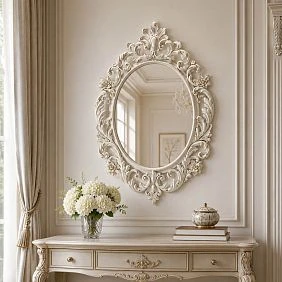
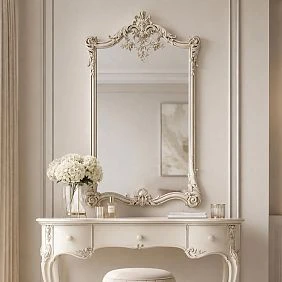
Solid wood frames — an organic part of a classic study. A painting above the fireplace or console, a mirror in a wooden frame on the wall — this is not decoration, but an architectural accent.
The frame should be coordinated with the wood of the furniture. A thin light frame next to a dark walnut desk is a conflict. A frame matching the furniture's tone or with gilding in the classic version is the right solution.
Decorative items
A classic study does not tolerate random objects. On the desk — only functional and intentionally decorative items: an inkwell, a paperweight, bronze candelabras, a clock. On the bookcase — books, frames with photographs or paintings, one or two sculptural forms.
A study cluttered with random objects is a place of chaos, not thought.
What to buy for a classic study: a complete list
-
Classic Furniture — desk, cabinets, bookcase, chest of drawers, console, display case.
-
Furniture and interior items — full catalog.
-
wooden furniture handles — for desk, cabinets, bedside tables, chest of drawers.
-
wooden furniture legs — for desk, console, chest of drawers.
-
Carved decorative inserts for furniture — facade decor.
-
Furniture decor from carved wood — for classic and baroque accents.
-
solid wood baseboard — lower architectural belt.
-
Wooden moldings and cornice — for walls and ceiling transition.
-
wooden frames — for paintings, mirrors, decorative panels.
-
Solid Wood Items — full catalog of wooden elements for interior.
How to buy classic office furniture without mistakes: an algorithm
1. Measure the office — width, length, ceiling height, location of doors and windows.
2. Determine the main item — the desk — and choose it first.
3. Decide if you need a built-in library, a separate wardrobe, a chest of drawers, or a console.
4. Choose the color scheme: dark furniture for a spacious office, light for a small one.
5. Check consistency with doors, floor, wooden skirting board and walls.
6. Choose Handles, Legs и Carved Decor as a single detail drawing.
7. Think through the panels, Moldings and the cornice.
8. Choose wooden frames for paintings and mirrors.
9. Go to the catalog classic furniture STAVROS and to the section of solid wood.
About the company STAVROS
A classic study requires everything — from a massive desk to the last handle on the drawer. STAVROS produces classic furniture, Wooden moldings, Skirting made of solid wood, Furniture Handles, Legs, carved appliqués, decor from carved wood, Solid wood frames and the entire range of solid wood for classic interiors.
STAVROS has been operating since 2002. Production in Saint Petersburg. Own joinery workshop, turning and milling equipment, quality control department. Contact us to confirm shipping to your destination. Production of custom sizes and shapes on order. Catalog for designers and private buyers.
FAQ: Answers to popular questions
What furniture is needed for a classic-style study?
Writing desk, work chair, bookcases or library, chest of drawers, console, display cabinet, and wooden decorative elements — handles, legs, overlays, moldings, baseboard.
Is classic furniture suitable for a small study?
Yes. For a small study, choose lighter forms, light wood shades, a compact desk, and shallow cabinets. Moderate decor and neat moldings preserve the classic character without overwhelming the space.
What is better for a study — dark or light furniture?
Dark furniture is for spacious studies with good lighting. Light furniture is for small rooms and apartment spaces. The natural wood shade is versatile in any context.
What to pair classic study furniture with?
With wooden panels, moldings, cornice, baseboard, door casings, frames, furniture handles, legs, and carved decor — all in a coordinated shade system.
Can you assemble a study without a full set?
Yes. Often one strong desk, a good cabinet or library, and properly selected details are enough: handles, supports, baseboard, moldings, and wooden decor.
How to coordinate furniture with the architectural details of the study?
All wooden elements should be in the same tone: baseboards, moldings, architraves, furniture, frames — a unified wooden system. Then the study is perceived as a cohesive interior, not a collection of separate items.