Article Contents:
- Why stucco decor for painting has become a convenient solution for renovation
- What is included in stucco decor for walls under painting
- Moldings for frames and panels
- Decorative appliqués and ornaments
- Ready-made kits for wall compositions
- Vertical inserts, panels and accent elements
- When it is better to choose a ready-made kit, and when individual elements
- Which styles are suitable for stucco decor under painting
- Neoclassicism
- Light neoclassicism
- Jatoba
- Classic and Versailles
- How to choose stucco decor for painting according to wall size
- Where to use stucco decor for painting
- Empty wall
- Wall behind the sofa
- Wall at the headboard
- Piers and narrow zones
- Mirror or picture area
- Hallway and entrance hall
- How to prepare stucco decor for painting
- Color of decor for painting: three working strategies
- Material features: why polyurethane is better than plaster for painting
- Why it's profitable to buy ready-made STAVROS stucco decor
- Frequently asked questions
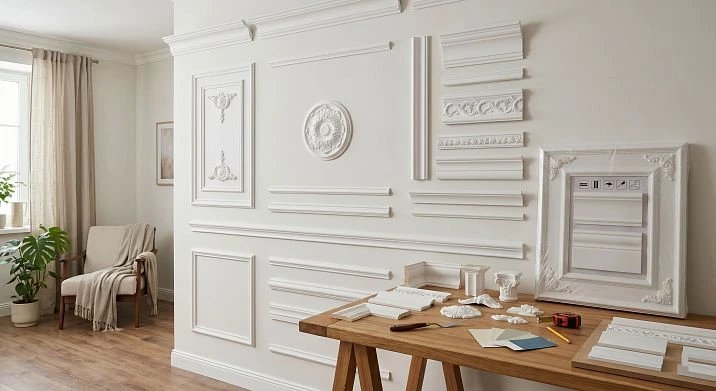
Imagine: the renovation is almost complete. The walls are puttied, the ceiling is painted, the parquet is laid. The most important thing remains — to paint the walls and get the interior that has been living in your head since the first day of the project. And here arises the question that thousands of people ask: how to make a wall not just painted, but architectural? How to get relief, frames, profile, structure — and at the same time not dismantle the already finished finish?
The answer isStucco decor for walls for paintingmade of polyurethane. These are moldings, decorative overlays, ready-made kits and vertical panels that are mounted on an already finished wall and painted together with it in any desired color. No extra complexity. No work with plaster. No waiting for multi-layer hand-made stucco to dry.
Polyurethane wall decor for painting— is a new generation material that has replaced plaster stucco where speed, precision, and predictable results matter. Lightweight, durable, geometrically precise, compatible with any paint. And — importantly — it turns an ordinary painted wall into an architectural surface with character.
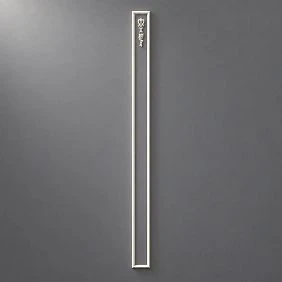
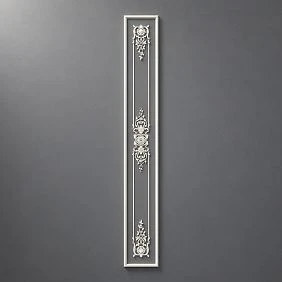
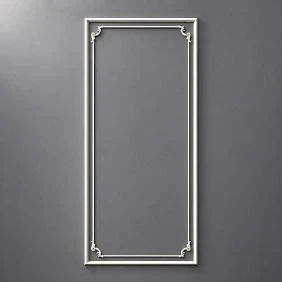
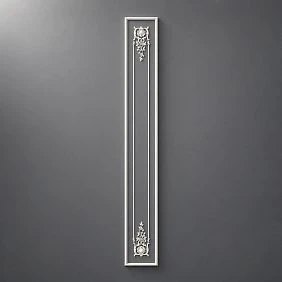
Why stucco decor for painting has become a convenient solution for renovation
Previously, decorative stucco was a privilege of formal interiors. Not because it wasn't wanted in ordinary apartments, but because plaster stucco was expensive, heavy, required highly skilled specialists, and gave a result that couldn't be changed without dismantling. Made a mistake in color or scale — start over.
Polyurethane stucco completely changed this dynamic. The first and main advantage: it's for painting. This means you don't need to guess the color of the finished product in advance. You install moldings and overlays on the wall — they are white or in a neutral beige tone — and then paint everything together: both the wall and the decor. The result: a monolithic surface where the relief and background exist in a single color. This is exactly the effect that looks expensive and appears as true architecture.
The second advantage: repainting. After a few years, you change the interior, want a different wall color — apply a new layer of paint directly on top. The decor doesn't need to be removed, puttied, or re-glued. Polyurethane can be painted an unlimited number of times.
The third advantage: weight.Polyurethane wall moldings for paintingare 8–15 times lighter than plaster counterparts. This means that for their installation, you don't need dowels in load-bearing structures, special fasteners, or an experienced stucco master. Glue and finishing nails — that's enough for reliable installation on a plastered or puttied wall.
The fourth advantage: geometric precision. Industrial production of polyurethane profiles ensures perfect straightness, consistent profile pitch along the entire length, and precise cutting angle. Handmade plaster stucco inherently lacks such precision.
Finally, fifth: price. Polyurethane stucco molding on the wall is significantly more affordable than plaster counterparts with a comparable visual result. This balance has made polyurethane decor a standard tool in modern renovation.




What is included in stucco decor for walls for painting
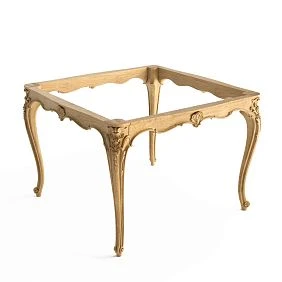
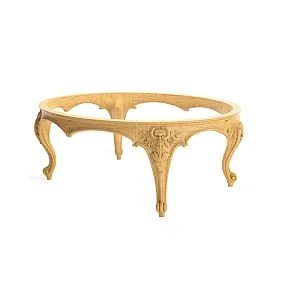
Our factory also produces:
Moldings for frames and panels
Molding is a profiled strip, the main building element of any decorative system on the wall. Frames, vertical lines, horizontal belts, and molding cornices are created from moldings.
Polyurethane wall moldings for paintingare produced in a wide range of profiles: from thin geometric strips 10–16 mm wide to classic profiles 40–60 mm with developed relief. The choice of profile is determined by the scale of the wall and the interior style.
For Japandi and modern neutral interiors — a thin straight profile 12–20 mm. For neoclassicism — molding with a classic profile 25–35 mm, with a shelf and fillet. For formal classic solutions — a more complex and wider profile 40–60 mm with developed relief.
Moldings for frames for painting are cut at a 45° angle for clean corner joints. This can be done manually with a miter box or on an electric miter saw. There is one requirement: the cut must be precise — an error of one degree gives a noticeable gap in the corner of the frame.
Important point: moldings that will be painted are best ordered with a small margin — 10–15% of the calculated quantity. This is insurance against cutting errors and situations where a damaged element needs to be replaced.
Get Consultation
Decorative Appliqués and Ornaments
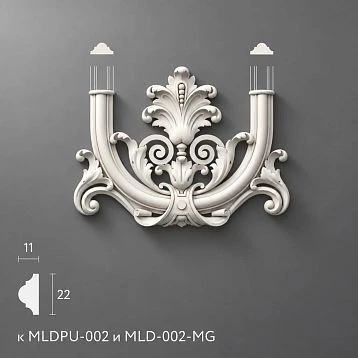
Decorative polyurethane overlays on the wallare ornamental elements that are installed at key points of the molding system. Corner overlays at frame intersections, central rosettes, floral inserts, cartouches, diamonds, and geometric accents.
Polyurethane overlays for painting have one important feature: before painting, the joints between the overlay and the wall, between the overlay and the molding must be carefully puttied and primed. After that, the element is painted together with the entire wall and looks like a monolithic part of the architectural surface.
For frame systems intended for painting, two types of corner pieces are most often chosen: square ones for strict geometric frames, and floral ones for neoclassical and classical systems.
Decor for moldings for paintingincludes not only corner pieces, but also connecting elements, crosses, T-joints — everything needed to create complex rhythmic systems on large walls.
Ready-made kits for wall compositions
A ready-made set of decorative molding is not just a collection of elements in one package. It is a system developed by designers, where moldings, corner pieces, and ornamental accents are already coordinated with each other: matched in scale, rhythm, and stylistic code.
ready-made sets of stucco decor for wallsis the most commercially accurate format for those doing renovations independently or working with interiors for the first time. One kit = one wall panel of the required size. Two or three kits = an accent wall in the living room, bedroom, or hallway.
The advantage of a ready-made kit for painting is especially noticeable in this scenario: when all the decor will be the same color as the wall, any inconsistency in the scale or proportions of the elements becomes obvious. The ready-made kit eliminates this problem — everything in it is already calibrated.
Vertical inserts, panels, and accent elements
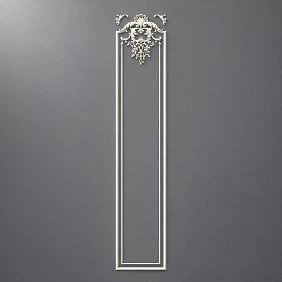
polyurethane interior itemsare not limited to moldings and corner pieces. For wall decoration under painting, vertical inserts are also used — pilaster overlays, vertical ornamental strips, and accent elements with high relief.
Vertical decor for walls under painting is indispensable in narrow spaces, corridors, hallways, and niches. One or two vertical elements with equal spacing on a narrow wall create rhythm and architecturize the surface without a frame system.
Decorative polyurethane panels — large modular elements with a relief pattern — are a format for large walls. The panel occupies a significant area, creating a monolithic background. When painted to match the wall color, such a panel looks particularly convincing: the relief pattern is revealed in the light, creating volume and shadows.
When is it better to choose a ready-made kit, and when to choose individual elements
This is a practical question that determines the final budget, labor costs, and quality of the result. There is no single correct answer 'in general' — there is a correct answer for a specific situation.
A ready-made kit is the right choice when:
-
the wall is of standard size (width 1.2–2.5 m, height 2.4–3 m);
-
there is no experience in designing molding layouts;
-
speed is important: the kit is installed in one day without prior design;
-
a predictable result is needed without the risk of making mistakes in proportions;
-
the budget is limited, and rework is undesirable.
Individual moldings and overlays are the right choice when: -
the wall is of non-standard width or has architectural features (niches, protrusions, windows);
-
requires a custom layout with a non-standard number of frames;
-
the wall is very large — 4 m or more — and requires a series of panels;
-
there is design skill or work is done with a designer;
-
requires precise fitting to a specific furniture scenario (table, sofa, mirror).
Selection table:
| Criterion | Ready set | Individual elements |
|---|---|---|
| Selection speed | High | Requires design |
| Proportion accuracy | Guaranteed | Depends on experience |
| Flexibility | Limited by size | Complete |
| Non-standard walls | Not always | Yes |
| Risk of error | Minimal | Medium |
| Budget | Predictable | Depends on layout |
Often the optimal scenario is a combined one: a ready-made set is taken as a base, to which individual moldings are added for non-standard areas. This provides both speed and flexibility.
Which styles are suitable for stucco decor for painting
Neoclassicism
Neoclassicism and stucco decor is a union proven over centuries. The classical style has always featured decorated walls: frame systems, horizontal friezes, ornamental accents at key points. Modern neoclassicism does the same — but without historical overload.
Stucco decor for walls in neoclassicismis built on symmetry, a pronounced molding profile, and moderate ornamentation. The "Neoclassic" collection by STAVROS is a developed system of ready-made sets where all elements are already coordinated in style and scale. Floral corner overlays with a pronounced relief, a classic molding profile of 30–40 mm, a central ornamental rosette — this is the neoclassical vocabulary in its modern interpretation.
Wall decor for painting in neoclassicism works well with monochrome painting: the wall and relief in a single shade create depth without color contrast. Shades of cream, ivory, warm gray, deep blue, or rich green — all these colors reveal the neoclassical relief through the play of light and shadow.
For studies, living rooms, and halls with ceilings of 2.7 m and higher — "Neoclassic" fully covers the need for classical stucco decor for walls.
Light neoclassics
A standard Russian apartment is not a grand mansion. Ceilings are 2.5 m, walls have no architectural excesses, and modern furniture has laconic lines. A more delicate tool is needed here.
Light stucco decor in neoclassicism— the "Neoclassic Light" collection is a lighter version of classics with a thin molding profile, a soft ornament, and a scale designed for standard apartment parameters. There is no excessive relief, no heavy corner overlays with a high baroque rise.
"Neoclassic Light" for painting in the bedroom, hallway, or workspace is a professional result without a design education and without complex installation. Light neoclassical stucco for walls for painting creates an architectural context in which any furniture begins to look more expensive.
Another application of "Neoclassic Light" is when decor for painting is needed quickly, as part of ongoing renovations, without additional design. Ready-made sets of the collection solve this issue: choose the right size — install — paint.
Japandi
The Japanese-Scandinavian style in the context of stucco decor for painting is a paradoxical but very precise combination. Japandi is about minimalism, clean lines, and the absence of excess. It would seem that decor is inappropriate here. But no: architectural relief in Japandi exists — it is just different.
Stucco decor for walls in Japandi style— this is geometry without ornament. Thin straight molding, square corner accents without floral elements, vertical rhythm without horizontal excess. For painting in a neutral shade — linen, warm gray, white, or beige — such a system looks like a monolithic architectural surface.
The "Japandi" collection by STAVROS is created specifically for those who want a wall with character but without decorative load. This is minimalist stucco decor for painting in its most consistent execution.
An important detail: in Japandi for painting, uniformity is critically important. No contrast between the molding and the wall. Only relief in light.
Classic and Versailles
For those designing a space with a grand character. A hall, a living room with high ceilings, a library, an executive office — these are scenarios where stucco decor for painting should sound convincing and majestic.
classic stucco wall decor— the "Versailles Light" collection features a rich floral relief, a wide molding profile, and corner overlays with a high rise. Ready-made sets CPU-4-1, CPU-4-2, CPU-4-3, CPU-4-4, CPU-4-5 cover different wall zone formats — from a compact accent panel to a full-fledged grand wall.
When painted in deep tones — anthracite, dark blue "night sky", rich terracotta — the "Versailles Light" decor creates an effect that would otherwise only be achieved with expensive hand-crafted stucco. When painted in white or cream — classic grandeur without age.
How to choose stucco decor for painting based on wall size
Size is not just footage. It's proportion. And it determines whether the decor will look organic or appear as a random object "stuck" to the wall.
Ceiling height. This is the first parameter. For ceilings up to 2.6 m — lightweight collections: "Neoclassic Light", "Japandi", thin moldings. For ceilings 2.7–3.0 m — "Neoclassic", medium molding 25–35 mm. For ceilings from 3 m — "Versailles Light", large profile, series of panels by height.
Wall width. The width of the decorative system should match the dominant horizontal: the width of the sofa, the width of the bed, the width of the desk. For accent walls without furniture — 60–80% of the wall width.
Center of composition. The vertical axis of the decor's center should align with the center of the key object on the wall: furniture, mirror, painting, TV. This is not an aesthetic rule — it's an optical one. A shifted center creates a feeling of awkwardness that is hard to explain but easy to feel.
Frame proportion. The field inside the frame — at least 30×40 cm. The field between frames — 15–30 cm depending on the system's scale. The distance from the outer edge of the system to the wall corner — at least 15–20 cm.
Distance from baseboard and ceiling. The lower edge of the decorative system — 20–30 cm from the upper edge of the baseboard. The upper edge — 20–25 cm from the ceiling cornice or from the ceiling. This creates air that makes the system light, not weighed down.
Balance with furniture. Decor for painting should not compete with furniture — it should become its background. A frame that matches the width of a sofa or bed creates an organic connection between the wall and the furniture. A frame that extends beyond the furniture by more than a third creates a disconnect.
Where to use stucco decor for painting
Empty wall
An empty wall in any room is the first and most common scenario for stucco decor for painting. A large surface without moldings is perceived as unfinished, even if the wall is painted in a beautiful color. A frame system of moldings for painting turns an empty surface into an architectural surface.
A detailed breakdown of this scenario is in the article about polyurethane decor for an empty wall.
Wall behind the sofa
An accent wall behind the sofa is the most popular use of stucco decor for painting in the living room. A molding system or a ready-made kit installed behind the sofa in the same color as the wall or in a contrasting color creates a grand backdrop that makes the living room complete.
Calculation: system width — width of the sofa or plus 10–20 cm on each side. Height — from 20 cm above the baseboard to 20 cm from the ceiling. Details about the wall behind the sofa are in the article polyurethane wall decor behind the sofa.
Wall at the headboard
In the bedroom, stucco decor for painting at the head of the bed is quiet luxury. A monochrome frame system in the same color as the wall creates an architectural accent without visual noise. No contrast, no aggressive decorativeness — only relief that appears in soft night lighting.
More about bedroom decor in the article Decorating the wall at the head of the bed.
Piers and narrow zones
Vertical moldings and accent overlays on a narrow wall are one of the most effective techniques for working with tight spaces. The vertical rhythm makes the room feel taller, and the wall becomes an architectural element rather than a random piece of wall between doors.
Detailed material is in the article about vertical polyurethane wall decor.
Mirror or picture zone
A molding frame around a mirror is one of the most affordable and effective techniques for decorating a hallway, living room, or bedroom. A mirror in an architectural frame painted to match the wall ceases to be just an object against the wall and becomes an architectural feature.
Corridor and hallway
A long wall in a corridor is monotony that needs to be broken. A series of identical molding frames with equal spacing along the wall creates rhythm. Painted in a neutral shade, this is calm, almost neutral architecture that transforms the corridor from a utilitarian space into something significant.
How to prepare stucco decor for painting
This section is a practical guide. Five sequential stages that turn raw installation into a finished surface ready for painting.
Stage one: dry fitting without glue. Before installation, be sure to lay out all elements on the floor in the required order and check that all joints align, corners match, and lengths correspond to the plan. This is especially important for frame systems: 45° corner cuts must match precisely.
Stage two: marking on the wall. Draw the outline of the future system on the wall with a pencil using a laser level. Mark the central axis, horizontal and vertical boundaries. This is your grid for installation.
Stage three: installation. Apply construction adhesive to the back side of the molding along its entire length without gaps. Press it against the wall according to the markings, secure with finishing nails every 40–60 cm. For overlays, apply adhesive to the entire back surface.
Detailed installation technique is in the articlehow to install polyurethane moldingandinstallation of polyurethane molding.
Stage four: sealing joints. After installation, all joints between the molding and the wall, between corner elements and the molding, between overlays and the background are sealed with finishing putty or acrylic sealant. This is a critically important stage: the quality of sealing determines whether the decor will look monolithic after painting or like a "glued-on" object.
Stage five: priming and painting. After the putty has completely dried, apply primer. Then two coats of matte acrylic paint. The first coat is diluted for impregnation. The second is the working coat. Paint is applied with a roller on the background and a brush on the moldings — or vice versa: first brush over all relief elements, then roller on the wall.
Color of decor for painting: three working strategies
It would seem the topic is simple: paint together with the wall — and that's it. But there are nuances, and they determine the final result.
Strategy "full monochrome". Moldings, overlays, frames — everything exactly in the tone of the wall. One color, one tone. Relief is revealed only through light. This is the most delicate and most professional solution. It works especially well with saturated walls: dark green, graphite, deep blue.
Strategy "tone-on-tone, but lighter". The wall in one shade, the decor in the same shade, but 20–30% lighter. This creates a slight contrast that makes the relief visible even under direct lighting. A good solution for neutral beige and gray walls.
Strategy "contrast". The wall in one color, moldings and overlays in white, cream, or another contrasting shade. This is the most expressive option, creating an architectural "blueprint" on the wall. Works well in neoclassical and classical styles.
Important: with contrasting painting of the decor, its joints with the wall must be especially carefully sealed. Any gap on a contrasting border is immediately visible.
Material features: why polyurethane is better than plaster for painting
This question is asked often — and it deserves a precise answer. Let's compare by key parameters:
| Parameter | Polyurethane | Gypsum |
|---|---|---|
| Weight | Lightweight (8–15 times lighter than plaster) | Heavy |
| Installation | Glue + finishing nails | Fastening to load-bearing structures |
| Geometric precision | Industrial | Manual, depends on the craftsman |
| Painting | Any paint, any color | Any paint |
| Moisture resistance | High | Low |
| Price | Significantly lower | 3–5 times higher |
| Repairability | Element is easily replaced | Difficult, requires a craftsman |
| Repainting | Unlimited | Unlimited |
Moisture-resistant polyurethane stucco is a special advantage in the Russian climate and in rooms with temperature fluctuations. Polyurethane does not absorb moisture, does not swell, and does not crack with changes in humidity. For kitchen areas, hallways with frequent ventilation, and country houses with seasonal heating, this is a significant argument.
Why it's profitable to buy ready-made STAVROS stucco decor
STAVROS is a catalog of architectural polyurethane decor with a full range for wall decoration under painting.Buy stucco decor for walls under paintinghere means to choose from a system, not from a set of random items.
Each collection is a system designed by designers where all elements are coordinated with each other. This means that by choosing a collection, you can be sure: any molding from "Neoclassica" will fit into a single system with any overlay from the same collection. This is especially important for painting — when all elements are painted in one color and any inconsistency becomes obvious.
Polyurethane wall moldings for paintingin the STAVROS catalog — a wide range of profiles for all styles.Polyurethane decorative appliques— corner elements, rosettes, floral inserts, geometric accents.Decor for Molding— connecting and accent elements for complex systems.
Factory geometry: each molding is straight, with a precise profile along the entire length. Each overlay is symmetrical, with clear edges. This is what allows you to achieve a professional result without professional experience.
STAVROS provides technical consultations on element selection, DWG drawings for complex systems, and Contact us to confirm shipping to your destination.Buy polyurethane stucco molding for the wall — это первый практический шаг от замысла к результату.
Frequently Asked Questions
Can polyurethane stucco molding be painted the same color as the wall?
Yes, this is the main use case for polyurethane decor for painting. After installation and sealing of joints, the decor is painted with any acrylic paint together with the wall or separately — in the tone of the background or in a contrasting color.
Which is better for painting: plaster or polyurethane?
Polyurethane. It is 8–15 times lighter, mounted with glue without special fasteners, has industrial geometric precision, is not afraid of humidity, and costs significantly less than plaster analogs with a comparable visual result.
Can polyurethane molding be used in humid rooms?
Yes. Polyurethane is a moisture-resistant material; it does not absorb water and does not deform with changes in humidity. This makes it applicable in kitchens, hallways, and other rooms with variable climates.
What to choose: moldings or a ready-made kit?
A ready-made kit — if you need a quick result without design work on a standard wall. Individual moldings — if the wall is non-standard or an individual layout is needed. In both cases, the result for painting is equally convincing.
Is stucco suitable for painting in a modern interior?
Yes. The 'Neoclassic Light' and 'Japandi' collections are designed specifically for modern interiors: thin profile, delicate ornament, or pure geometry without historical references. Under monochrome painting, such decor looks like an organic part of a modern space.
Should the decor be painted before or after installation?
After. First installation, then sealing of joints, then primer, then painting. Painting before installation does not allow painting over the joints between the decor and the wall — the border will be visible.
How long will polyurethane decor last under paint?
With proper installation and on a high-quality prepared wall — 20–30 years or more. The material does not deform, crack, or yellow. It can be repainted an unlimited number of times without degrading its properties.