Article Contents:
- What is the difference between classic furniture for living room and hall
- Philosophy of form
- Signs of true classics: quick test
- What furniture is needed for a classic living room
- Anatomy of a classic hall
- Minimum composition of a classic living room for an apartment
- How to choose furniture for a hall in an apartment
- An apartment is not a palace. But classics are possible here
- Ceiling height: the main scale limiter
- Room area: arrangement without overload
- Lighting and visual lightness
- Light or dark classic furniture for the living room
- The eternal question: color as a life choice
- Light furniture in the living room: arguments for
- Dark classic furniture: when it works
- Combining light and dark
- Cabinets, display cases, and chests of drawers in classic style
- Case furniture — the foundation of the space
- Facades: How to Read Classics
- Showcase for the Living Room: Glass and Light
- Chest of Drawers in the Living Room: Multifunctional Accent
- TV Zone in a Classic Living Room
- Modern Screen in a Classic Space
- Decor of the TV Zone
- Wooden Decor for Classic Furniture
- Details that make all the difference
- Decorative furniture overlays
- Furniture Legs for Classic Furniture
- Furniture handles
- Modern Classics for the Living Room
- Less 'Palace', More Life
- Principles of modern classics for the living room
- Common mistakes when choosing furniture for the living room
- Mistake 1: Too massive furniture for a small room
- Mistake 2: Different wood shades in one interior
- Mistake 3: Random hardware
- Mistake 4: Ignoring ceiling height
- Mistake 5: A sofa without classic details in a classic interior
- Mistake 6: Neglecting decorative details
- Mistake 7: Unbalanced arrangement
- Where to buy classic furniture and decor for the living room
- Systematic approach to purchasing
- Complete catalog for the living room from STAVROS
- FAQ: popular questions about classic living room furniture
- STAVROS: classic furniture and wooden decor for your living room
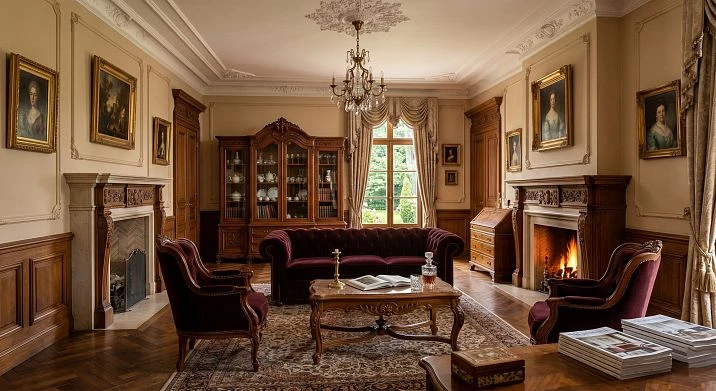
The living room is the most public space in the house. Here guests are received, the family gathers, and the first impression of the interior and the owners' taste is formed. And if the bedroom is personal, the kitchen is functional, then the living room is the face of the home. That is why choosing furniture for it requires special attention: not only to beauty, but also to systematic thinking.
Classic Furniture for the Living Room — this is not a museum set of antiques or a cold copy of a palace hall. It is a living, breathing interior where natural materials, balanced proportions, wooden decor, and properly selected details create an atmosphere of dignity, comfort, and style. Today, such a living room is possible both in a new building apartment and in a spacious country house.
In this article — a complete breakdown: what makes up a classic living room, what furniture items are needed for the hall, how to choose color, shape, finish, and decor, and how to avoid the most common mistakes.
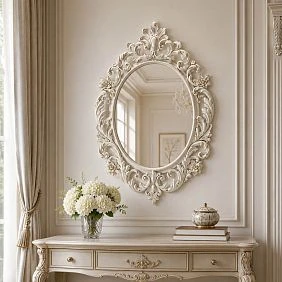
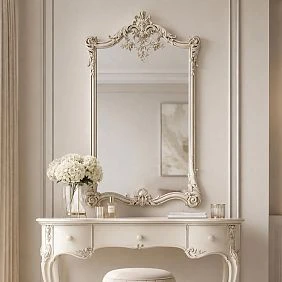
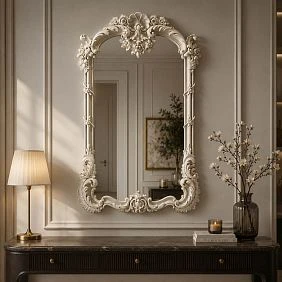
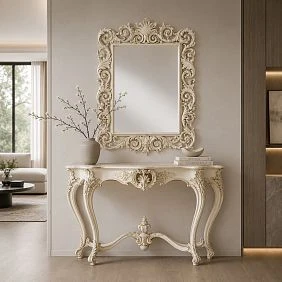
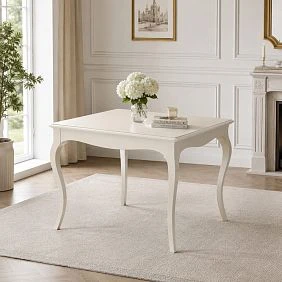
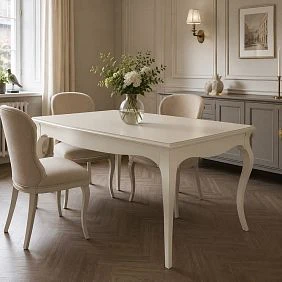
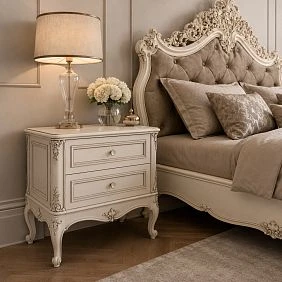

How classic furniture for the living room and hall differs




Philosophy of form
Before moving on to specific items, you need to understand: what makes furniture classic? This is not just the presence of carving or curved legs. Classics are a system of aesthetic principles rooted in the European architectural tradition from antiquity to the 19th century.
Symmetry as a foundation. A classic interior is built on symmetry: two nightstands on either side of the bed, two armchairs flanking the fireplace, paired lamps. Symmetry is not boring—it is an architectural order that provides a sense of stability and harmony.
Natural materials. Classic wooden furniture — this is the first and foremost material of classic style. Solid wood, veneer, wooden facade details—without natural wood, a classic interior does not exist. Metal (bronze, brass) for hardware. Fabric (velvet, silk, jacquard) for upholstered furniture. Stone or imitation for countertops.
Decorative facade details. Cornices, overlays, moldings, carved inserts, profiled frames—these are not excess, they are the "vocabulary" of the classic style. It is through the details that the level of the interior is read.
Legs and hardware. Classic furniture never stands "on the floor" with straight flat bases—it is raised on legs. Curved cabriole legs, turned conical legs, carved legs—depending on the style direction. Handles—wooden, bronze, ceramic—are always decorative, never utilitarian.
Calm colors. Color palette of classic living room furniture — these are milky white, ivory, taupe, walnut, wenge, gray-beige shades, white with gold. Bright accent colors—only in textiles, not in furniture.
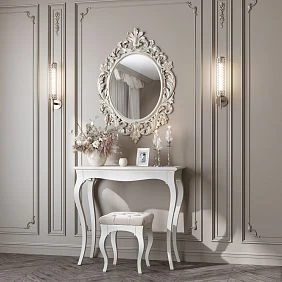
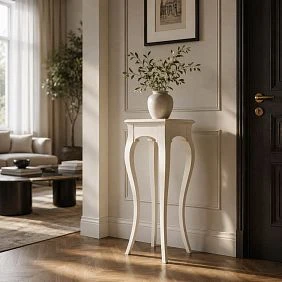
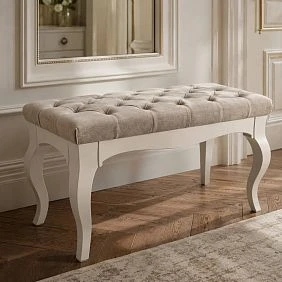
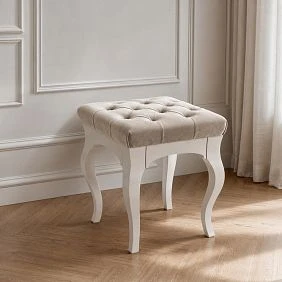
Our factory also produces:
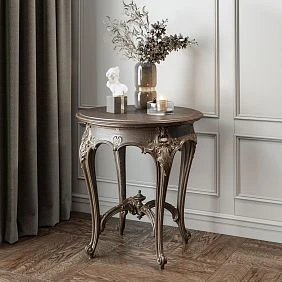
Signs of true classic: a quick test
Open a photo of any living room and check it against five points:
-
Is there symmetry in the arrangement of large objects?
-
Is natural wood present, at least in the details?
-
Are there profile decorative elements on the facades?
-
Is the furniture on legs?
-
Are the color and texture of all items coordinated?
If yes — you have a classic. If not — it may be a beautiful interior, but not a classic one.
Get Consultation
What furniture is needed for a classic living room
Anatomy of a classic hall
Furniture for the hall in classic style — this is not an arbitrary set of beautiful objects. It is a functionally verified system in which each item has its place and fulfills its role.
The sofa area is the heart of the living room. The sofa and armchairs are the main ensemble of the room. In a classic interior, the sofa is straight, with a high back, wooden armrests and legs. Upholstery is textured fabric: jacquard, velvet, chenille. Two armchairs on either side of a coffee table is a classic arrangement. The sofa area should be symmetrical relative to the central axis: a fireplace, TV panel, or window.
A cabinet and a sideboard are functional parts of the living room. Bookcases, sideboards with glazed doors, storage sections. In classic style — with profiled cornices, decorative facades, legs or a plinth. Color — matching the rest of the living room furniture.
A display cabinet is a decorative and functional element. Glass doors, internal lighting, space for displaying decor, dishes, collections. In a classic interior, a display cabinet is always decorative, with a profiled cornice and expressive handles.
A chest of drawers — for storage and as a decorative element. In the living room, a chest of drawers serves as a "decor stand": a mirror, lamp, or vases are placed on it. A classic chest of drawers — with several drawers, wooden decorative elements for furniture, with elegant legs.
A TV cabinet — a special issue in a classic interior. The TV screen is a modern element that fits poorly into "formal" classic style. Solutions: build the TV into a cabinet-sideboard with opening doors; install a TV cabinet with an expressive classic facade; design the TV area as an architectural niche with a wooden frame.
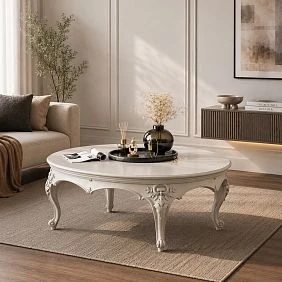
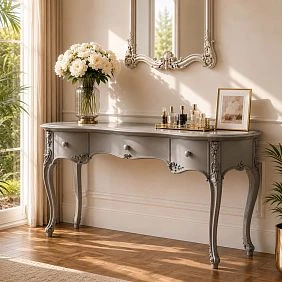
A coffee table and consoles — functional accents. A coffee table with wooden legs in the center of the seating area. A console against the wall — for decor, lamps, a mirror. In classic style — always with expressive legs and decorative details.
Decorative elements — mirrors in wooden frames, floor lamps with shades, table lamps, paintings in classic frames, vases, sculptures.
Minimum composition of a classic living room for an apartment
For an apartment of 20–25 m², the following is sufficient:
-
Sofa (3-seater or 2+1 with armchair)
-
TV cabinet or wall unit
-
Coffee table
-
Chest of drawers or small wardrobe
-
Decorative mirror
This minimal set, designed in a unified classic style with coordinated wooden decor, creates a full-fledged classic interior without excessive clutter.
How to choose furniture for a living room in an apartment
An apartment is not a palace. But classic style is possible here
Classic Furniture for the Living Room in an Apartment — a topic that scares many buyers. It seems that classic style requires high ceilings, spacious halls, and a huge budget. In practice, a competent approach allows you to create an elegant classic living room even in a standard apartment with a ceiling height of 2.6 m.
Ceiling height: the main limiter of scale
Ceiling height determines the permissible scale of furniture and decor.
| Ceiling Height | Recommendations |
|---|---|
| 2.4–2.6 m | Furniture with low profiles, delicate cornices, no overlays above 80 mm, light colors |
| 2.6–2.8 m | Standard classic scale, moderate facade decor |
| 3.0 m and above | Full-size wall units, tall cabinets, rich decor are possible |
In low rooms, horizontal lines are preferable to vertical ones: wide low chests of drawers and cabinets instead of tall wall units, horizontal molding strips instead of vertical pilasters.
Room area: arrangement without clutter
A classic living room in an apartment often suffers from one problem — clutter. A sofa, two armchairs, a wardrobe, a wall unit, a chest of drawers, a coffee table, a console — all this in an 18 m² room creates the feeling of an antique shop warehouse rather than a living space.
Free space rule: at least 40% of the floor area should remain free. The passage between the sofa and the coffee table should be at least 45 cm. The passage to the sofa should be at least 90 cm.
Lighting and visual lightness
A classic living room in an apartment needs proper lighting:
-
A chandelier with a "classic" character — with crystal elements, lampshades, bronze details — in the center of the ceiling.
-
Wall sconces for zone lighting.
-
A floor lamp by the sofa for reading.
-
Lighting inside cabinets and display cases.
Good lighting makes even a rich classic interior feel light and alive. Bad lighting turns it into a dark, overloaded cave.
Light or dark classic furniture for the living room
The eternal question: color as a life choice
colors of classic furniture — a topic on which every buyer has a clear opinion. And everyone has their own truth. There is no "right" or "wrong" color for a classic living room: there is a color that suits a specific space, light, and lifestyle.
Light furniture in the living room: arguments for
light classic style living room furniture — the obvious sales leader of the last decade. White, milky, ivory, cashmere beige — these shades win for several reasons:
Visual expansion of space. Light-colored furniture does not "eat up" space — it expands it. In an apartment with north-facing windows or a small living room, light furniture is almost a mandatory solution.
Versatility with textiles. Against the backdrop of light furniture, it's easy to change color accents through pillows, throws, curtains — without replacing the furniture.
Perceptual longevity. Light neutral shades do not get "boring" as quickly as bright or overly specific tones.
Consistency with modern classics. modern classic furniture in light shades — this is a direction that organically combines classical form with a modern sense of space.
Dark classic furniture: when it works
Dark classic furniture — wenge, dark walnut, ebony, smoked oak — makes a powerful impression. It is solid, weighty, speaks of the owner from a position of strength. But dark furniture requires conditions:
-
Sufficient light. Dark furniture in a dark room is a dungeon. Large windows or powerful artificial lighting are mandatory.
-
Light background. Dark furniture requires light walls: milky, cream, gray-white — so that contrast creates expressiveness, not oppression.
-
Spacious room. In a small living room, dark furniture compresses the space. At least 25 m² — for a comfortable feeling.
-
The right textiles. Dark wooden furniture with dark upholstery creates a monolithic "block" that looks heavy. Contrasting light upholstery on the sofa and armchairs "lightens" the ensemble.
Combination of light and dark
One of the most expressive techniques of a classic interior is the combination of a light furniture body with dark details: dark wooden legs on a light chest of drawers, dark handles on white cabinet fronts. This creates dynamics, "outlines" details, and adds depth.
Cabinets, display cases, and chests of drawers in classic style
Case furniture — the foundation of the space
Cabinets, sideboards, display cases, and chests of drawers are the "walls" of the living room. They organize the space, create the background, and set the scale of the entire interior. That is why choosing case furniture is a strategically important step.
Fronts: how classic style is read
The front is the face of a cabinet or chest of drawers. In a classic style, the front is never flat and faceless. Decorative principles of a classic front:
Profiled frames. Milled or applied frames dividing the front into rectangular fields — "mirrors". The depth and width of the frame set the style level: a delicate frame — modern classic, a wide one with a double profile — Baroque or Empire.
Decorative overlays. decor for furniture — applied carved rosettes, cartouches, corner elements, ornamental inserts — are placed in the center of the front fields or in the corners of the frames. They create the "face" of the furniture — a recognizable decorative signature.
Cornices. The top cornice of a cabinet is the "crown" of the piece. A profiled cornice with a forward projection is a sign of high-quality classic furniture. A flat horizontal top without a cornice is a sign of a budget or imperfect execution.
Base. The lower part of a cabinet is the base or legs. In classic style, legs (turned, carved, cabriole) are preferable — they visually "lift" the piece and add lightness.
Display cabinet for the living room: glass and light
A display cabinet in a classic living room is not just a cabinet with glass doors. It is a decorative object showcasing a collection: dishes, crystal, figurines, books. Rules for choosing a display cabinet:
-
Glass — clear, without a greenish tint (tinted glass distorts the color of items inside).
-
Internal lighting — LED strip along the upper perimeter or spotlights.
-
Back wall — mirrored or upholstered in fabric matching the sofa upholstery.
-
A decorative cornice on top is mandatory for classic style.
-
Handles — matching the style (wooden, bronze, ceramic).
Chest of drawers in the living room: a multifunctional accent
A chest of drawers in the living room is one of the most "functional" pieces of furniture. It simultaneously provides storage and serves as a decorative "shelf" for a mirror, lamps, vases, and decorative objects. Classic interior style furniture suggests a chest of drawers with 3–6 drawers, decorative fronts, and expressive hardware.
Parameters for choosing a classic chest of drawers:
-
Height: 80–90 cm — comfortable for use and proportionate to the mirror above it.
-
Width: 100–140 cm for spacious living rooms, 80–100 cm for apartment options.
-
Depth: 40–50 cm.
-
Legs: turned conical, cabriole, or shaped.
-
Handles: wooden or bronze — matching the hardware of the cabinet and display case.
TV area in a classic living room
Modern screen in a classic space
Perhaps this is the sharpest design conflict in a classic interior. A flat rectangular screen is a completely modern object that categorically does not fit into the aesthetics of classics. But a TV in the living room is a practical necessity for most. How to reconcile?
Solution 1: TV cabinet with decorative facades. Choose a TV cabinet in a classic style — with profiled facades, wooden handle brackets, legs. The screen itself above it — on the wall or on a special stand. The cabinet takes on the classic context, neutralizing the modernity of the screen.
Solution 2: Built into a wall unit. A classic wall unit or cabinet with a central open compartment for the TV is a standard solution. The screen is hidden in the architecture of the furniture wall.
Solution 3: Decorative frame around the TV. A classic wooden frame mounted around the screen on the wall turns the TV into a picture. This is a relatively new technique that has become widespread in classic interiors.
Decor of the TV zone
The wall around the TV in a classic interior is a separate task. Solutions:
-
Wooden panels on the wall with molding framing create an architectural background for the TV.
-
Mirror panel on the sides of the screen expands the space and adds depth.
-
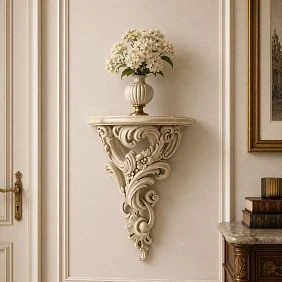
Decorative shelf-console under the screen — for decorative objects, candles, small sculptures.
-
Symmetrical wall sconces on either side of the TV — provide soft side lighting and enhance the symmetry of the composition.
Wooden decor for classic furniture
Details that make all the difference
A professional designer knows: the difference between a “simply beautiful” and a “truly classic” living room lies in the details. The right Wooden Inlays, coordinated handles and legs, delicate furniture decor — these are what elevate an interior from “pleasant” to “flawless”.
Decorative furniture overlays
decorative elements for furniture — applied carved elements made of solid wood or PU: rosettes, cartouches, corner appliqués, medallions, frieze inserts. They are mounted on the furniture facade using glue or small fasteners.
Application of decorative overlays:
-
In the center of the facade fields between the frames — a classic medallion or cartouche.
-
In the corners of the frames — corner rosettes to give the facade a “stitched” look.
-
On the cabinet cornice there are decorative inserts into the ornamental strip.
-
On the front faces of the drawers there are small overlays between the handles.
Important: the overlays must be painted or tinted to match the main color of the furniture. Contrasting overlays are a separate design technique that requires confidence.
Furniture legs for classic furniture
Wooden legs — one of the main factors distinguishing classic furniture from modern. Types of classic legs:
Cabriole legs — S-shaped profile with widening at the top and narrowing at the bottom, ending in a "paw" or ball. Typical for Louis XV, Chippendale styles.
Tapered turned legs — straight, with a turned profile, tapering downwards. More restrained, suitable for modern classic and neoclassical.
Carved legs with sculptural decor — for formal, richly decorated items.
Barrel-shaped legs — widen in the middle, taper at the base. Typical for Baroque and Empire.
buy furniture legs unpainted — the right strategy if you want to paint them exactly to match the furniture color. Or choose legs with a ready-made coating for the desired wood shade.
Furniture handles
A handle is a small but decisive element. It is the last thing the eye notices when looking at furniture, and the first thing the hand touches. In classic furniture, the handle should be decorative and consistent with the style.
wooden hook handle — an arched shape with two attachment points. A classic type for drawers and cabinet swing doors. Can be wooden, with a bronze finish, or with ceramic inserts.
wooden button handle — a round or shaped "button" with a single attachment point. Suitable for small drawers, display cabinet doors, and decorative niches.
Bronze overlay handles — metal, with cast ornamentation. The most "ceremonial" option for richly decorated classic interiors.
The rule of hardware unity: all handles in the living room must be of the same type and style. A wooden bracket + a metal knob is acceptable if they match in color. Three different types of handles on different pieces of furniture is a mistake.
Modern classic for the living room
Less "palace", more life
modern classic furniture — this is a direction that answers the main demand of the modern buyer: how to get a classic atmosphere without overload, heaviness, and a museum-like feel?
Modern classic is restraint in decor while maintaining the formal features of the style. It is when the form is classic, but the ornament is minimal. When the material is natural, but the color is neutral. When the handles are wooden, but without excessive decoration.
Principles of modern classic for the living room
Clean lines of facades. Instead of rich multi-layered decor — one profiled frame, one medallion in the center, one type of handle.
Single color. All furniture items in the living room are in one color or within two coordinated shades. No "mismatched" set.
Moderate decor. Decorative overlays — yes, but placed deliberately. Not on every drawer and not on every facade. Selectively: on the chest of drawers, on the cabinet doors.
Modern hardware in a classic style. Wooden handles without coating or with matte bronze — instead of gold and shine.
Textiles as an accent. Pillows, throw, curtains — they bring color and texture. Furniture is a neutral background.
Common mistakes when choosing furniture for a living room
Mistake 1: Too massive furniture for a small room
Large corner sofa + wall unit covering the entire wall + massive chest of drawers — in a room of 18 m² this is a disaster. Classics do not require "everything and more." Fewer items, but properly selected — that's the principle of modern classics.
Mistake 2: Different wood shades in one interior
Chest of drawers in dark walnut + cabinet with light beech facades + coffee table in ash — three different wood shades create visual chaos. In a classic living room, all wooden elements should be in a single tone. A difference of 1–2 tones between, for example, flooring and furniture is acceptable — but no more.
Error 3: Random Hardware
"I just used whatever handles I found in the store" — a common approach. The result: three different types of handles on three different pieces of furniture. This destroys the unity of style more than anything else. Plan your hardware in advance — a single type for the entire living room.
Error 4: Ignoring Ceiling Height
Classic wall units and cabinets are often manufactured with a height of 220–240 cm. In a room with a 260 cm ceiling, this is fine. In a 240 cm room, the cabinet will hit the ceiling and create a feeling of pressure. Always measure and compare with the furniture height.
Error 5: A Sofa Without Classic Details in a Classic Interior
Buying "classic" cabinets and display cases — and placing a modern sofa without legs and with a straight, simple front in front of them. A sofa in a classic interior should have wooden legs and decorative details — at least minimal ones: wooden overlays on the armrests or a decorative strip on the back.
Error 6: Neglecting Decorative Details
"I'll buy the furniture first, then figure out the decor" — and the decor never appears. Empty fronts without overlays, standard handles, legs without finish. The furniture is there — the style is not. Wooden decoration — this is not an option, it is a mandatory element of a finished classic interior.
Error 7: Unbalanced Arrangement
All furniture items against one wall — and emptiness against the other. Classics are built on symmetry and balance. Arrange furniture so that all walls "participate" in the interior: one wall has a wardrobe and a sideboard, another has a sofa, opposite is a TV area, and the fourth has a console with a mirror.
Where to buy classic furniture and decor for the living room
A systematic approach to purchasing
Buy classic furniture — means making a systematic choice, not a set of random beautiful items. A professional supplier of classic furniture should offer:
-
A full range for the living room in unified collections.
-
Case furniture and upholstered furniture in a coordinated style.
-
Decorative elements: overlays, handles, legs — compatible with the furniture.
-
The ability to choose finish and color.
-
Real photos in the interior — to assess scale and aesthetics.
Full catalog for the living room from STAVROS
To create a classic turnkey living room:
-
classic living room furniture Moscow — full catalog in stock.
-
Buy classical furniture in Moscow — current assortment with prices.
-
classic furniture factory — products of manufacturing quality.
-
Wooden decoration — overlays, applied elements, furniture decor.
-
Wooden furniture legs — turned, carved, cabriole.
-
Furniture handles wooden — staples, buttons, with and without coating.
-
Solid Wood Items — full catalog of wooden elements.
FAQ: popular questions about classic living room furniture
Is it possible to create a classic living room in a one-bedroom apartment?
Yes. For this, you need a minimal set: a sofa with wooden legs, a TV cabinet with classic fronts, a small chest of drawers with decorative handles, and a mirror in a wooden frame. Restrained decor, a single color — and classic style is present even on 20 m².
How to choose a wardrobe for a low ceiling?
Choose wardrobes with horizontally oriented fronts — without tall vertical sections. The cornice should be delicate, without a large overhang. The color should be light, blending into the ceiling. With a ceiling height of 240–250 cm, the maximum wardrobe height is 210–220 cm.
What fabric to choose for a sofa in a classic living room?
Jacquard, velvet, chenille, fine-textured matting. Avoid plain smooth synthetics — they look cheap. The fabric texture should have tactile and visual depth.
Are overlay elements needed on wardrobe doors?
It depends on the style level. For strict modern classic, a profiled frame is enough. For rich classic, an overlay medallion in the center and corner rosettes will enhance the facade's character.
How to combine furniture and decorative ceiling molding?
Decorative Moldings on the ceiling — a cornice, a rosette — should be consistent in style with the furniture. If the furniture is in modern classic style, the stucco should be delicate, without Baroque saturation.
Where to buy classic living room furniture in Moscow and St. Petersburg?
STAVROS works with customers throughout Russia. Classic furniture in Moscow and in St. Petersburg is available for order with delivery.
STAVROS: classic furniture and wooden decor for your living room
A classic living room is not a luxury that only owners of country estates can afford. It is a choice for those who value natural materials, human-scaled forms, details with character, and an interior that doesn't get boring after a year.
STAVROS is a manufacturer and supplier of classic furniture for the living room and hall, wooden furniture decor, overlay elements, legs and handles made of solid wood. Here you can choose both ready-made furniture in a classic style and individual decorative elements to update an existing interior.
STAVROS works with private customers, interior designers and furniture workshops throughout Russia — with delivery to Moscow, St. Petersburg and other cities. If you want to create a classic living room that will still delight you in twenty years — start with the right choice of material, proportions and details.