
























Article Contents:
- Cornice stucco: what it is and how it differs from other elements
- Ornament on the cornice: why it is needed and what it adds to the interior
- STAVROS ornament dictionary: what each pattern means
- Acanthus: the eternal classic ornament
- Ionic: the strict rhythm of the Greek order
- Beads: an elegant rhythmic motif
- Braid: the dynamics of interweaving
- Floral ornament: natural organicity
- Bog plant: a natural motif for unconventional interiors
- Geometric ornament: precision and modernity
- Frieze: a horizontal ornamental band
- Which STAVROS elements to use for cornice stucco
- Ornamental molding: a continuous decorative strip
- Polyurethane cornices: a full-fledged architectural element
- Ornamental moldings: a flexible element of the cornice system
- Decor for moldings: finishing joints and corners
- Cornice stucco by style: a detailed selection matrix
- Classic: a full cornice with ornament
- Empire style: strictness and symmetry
- Art Deco: geometry as the main tool
- Art Nouveau: living lines
- Where to use cornice molding with ornament: zones and scenarios
- Wall-to-ceiling transition: basic scenario
- Living room: full decorative set
- Hall: first and main impression
- Long corridor: horizontal rhythm
- Study: authority and concentration
- Commercial interiors and restaurants
- How to correctly calculate the size of a cornice belt
- Cornice width depending on ceiling height
- Depth of Relief
- Ornament repeat step and pattern matching
- Distance to ceiling and wall
- Compatibility with moldings and baseboards
- How not to confuse cornice stucco with other elements
- Mistakes when choosing cornice stucco with ornament
- Where to buy cornice stucco with ornament STAVROS
- FAQ: answers to popular questions about cornice stucco with ornament
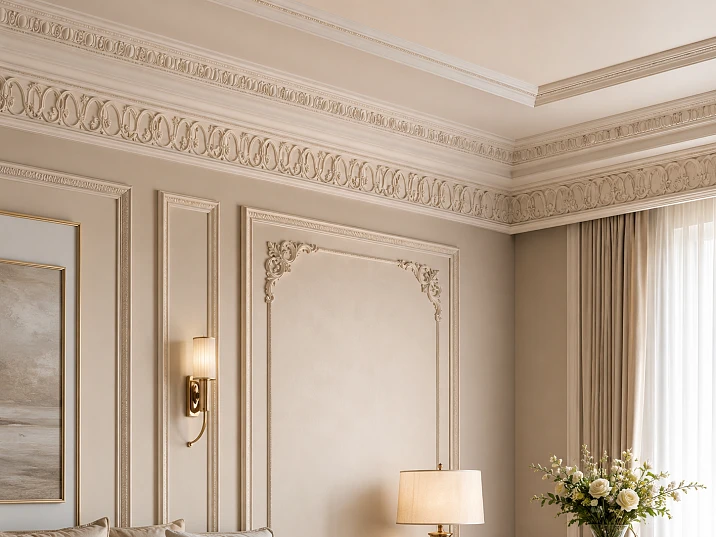
Look at any classic interior — a palace hall, a grand foyer, a library with high ceilings. What first creates a sense of completeness in the space? Not the furniture. Not the wall color. Not the chandelier. It is the line that runs along the perimeter of the room where the wall meets the ceiling: cornice stucco with ornament, a decorative belt that covers the corner, connects the vertical and horizontal planes, and at the same time carries an artistic statement. One ornamental belt under the ceiling can turn an ordinary room into an architecturally complete space.
That's what the entire article is about. Not about curtain rods or ceiling rosettes. About stucco in its upper, cornice form: how to choose a decorative polyurethane band with an ornament, which ornament matches which style, how to calculate the size, which Polyurethane trim will suit a specific task — and where to find all this in the STAVROS catalog.
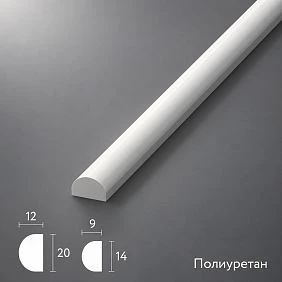
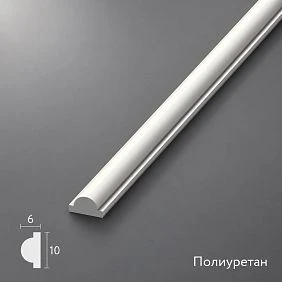
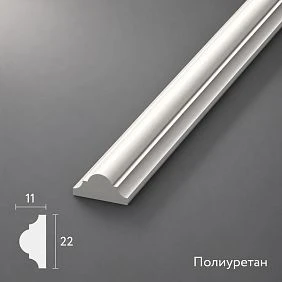
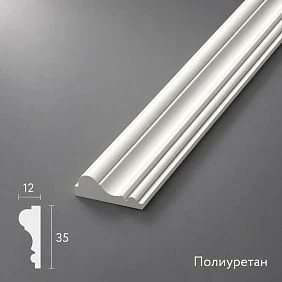
Cornice stucco: what it is and how it differs from other elements
First of all, let's clarify the terminology. When someone says 'cornice,' a person far from interior design first thinks of a curtain rod. These are fundamentally different things. A polyurethane stucco cornice band is an architectural decorative element, a linear molding, installed in the upper part of the wall or directly in the corner zone where the wall meets the ceiling. It does not hold curtains and has no mechanical functions. Its only purpose is decorative and architectural: to finish the wall, mark the upper horizontal accent, and create a visual frame for the entire space.
Polyurethane cornice stucco with ornament differs from related elements by several key features.
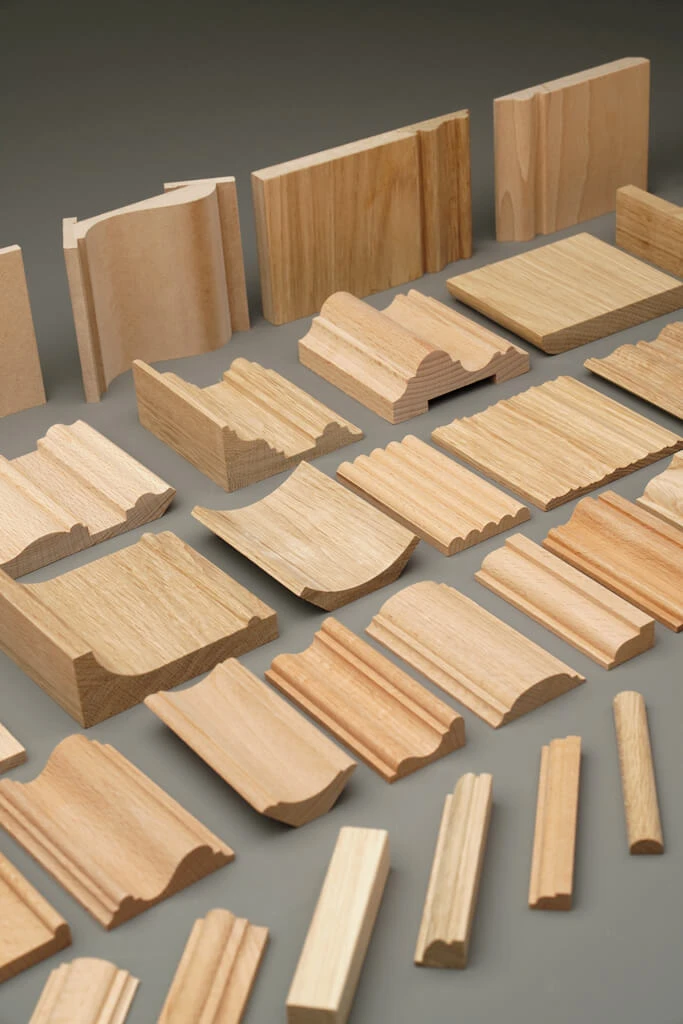
Cornice vs. molding. A molding is a linear profile for wall frames, dividing planes, and horizontal divisions. It can be installed at any height on the wall. A cornice band is installed strictly in the upper zone and often includes several profiles: a shelf, a frieze, and a lower profile. Its width is typically much larger than that of a molding.
Cornice vs. frieze. A frieze is a horizontal decorative strip that can be part of a cornice band (the frieze as the zone between the shelf and the lower profile) or a standalone element. A frieze can run not only under the ceiling but also at the level of the upper third of the wall. A cornice band is always at the top, always associated with the corner of the wall and ceiling.
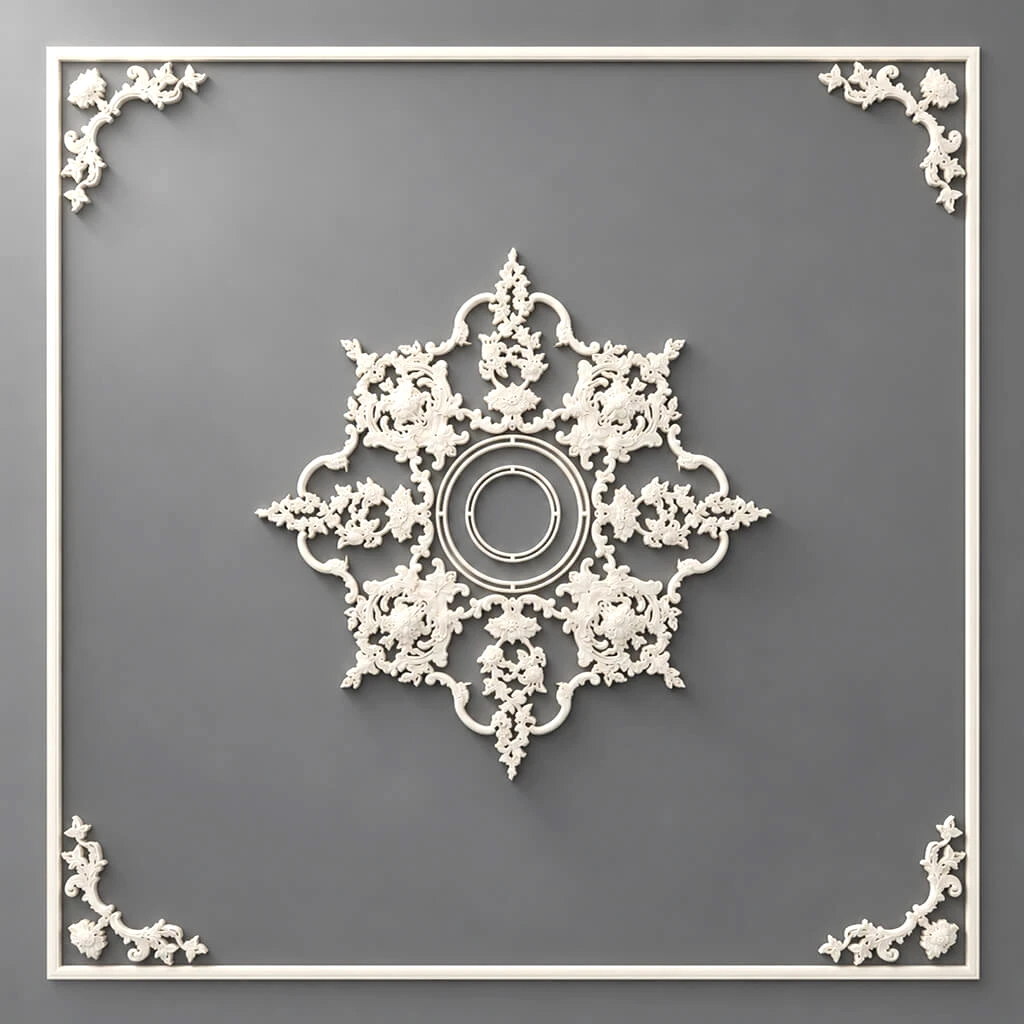
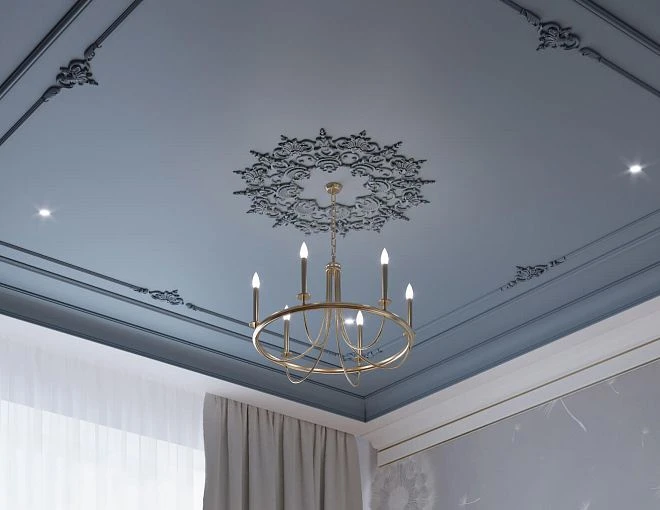
Cornice vs. ceiling rosette. A rosette is a central accent element on the ceiling for a chandelier. A cornice band is a perimeter element. They work together in one system but perform different functions: the rosette focuses the eye, the cornice structures the space.
Cornice vs. baseboard. A baseboard finishes the wall at the bottom, a cornice at the top. Together they create a vertical 'frame' for the room.
Understanding these differences is a prerequisite for making the right choice. Many mistakes when ordering cornice decor occur precisely due to terminological confusion.
Ornament on the cornice: why it is needed and what it gives to the interior
You can install a smooth cornice without a pattern. It will fulfill its structural task: cover the corner, create a transition. But a smooth cornice is silent. An ornamental cornice speaks.
A relief pattern on the cornice belt performs three functions simultaneously.
The first is style identification. The ornament on the cornice directly and unambiguously communicates the stylistic affiliation of the interior. An acanthus leaf is classic. A geometric meander is Art Deco. Smooth plant shoots are Art Nouveau. A strict rhythmic belt of ionics or beads is Neoclassicism. One look at a cornice with an ornament — and the style is read.
The second is visual activation. The relief ornament interacts with light. Under side artificial lighting, the ornamental protrusions cast shadows, and the cornice begins to "live" — its pattern changes depending on the lighting angle. This cannot be replicated with any paints or wallpaper.
The third is space scaling. A properly selected ornamental cornice visually raises the ceiling: the gaze moves upward along the ornamental rhythm and is "pushed" toward the ceiling plane. This is an optical illusion created by the relief pattern — and it works flawlessly.
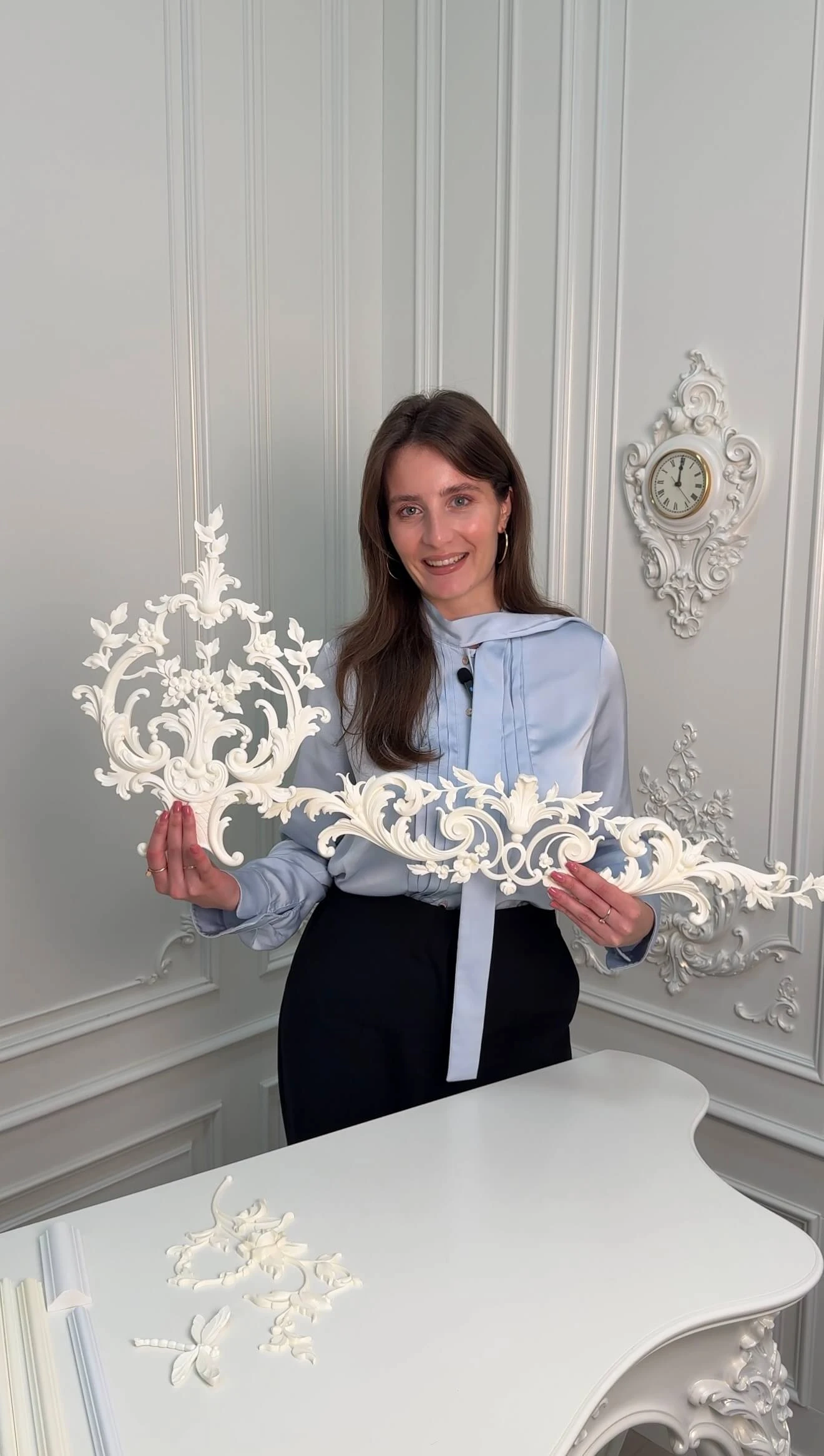
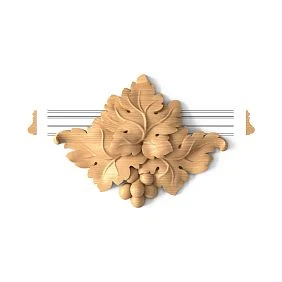
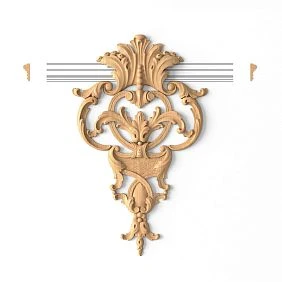
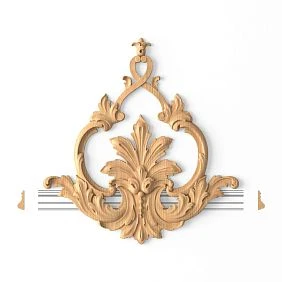
Decorative Relief Decoration Polyurethane in cornice format is available at STAVROS in several design options: ready-made cornice profiles with ornament, ornamental linear molding, and modular systems of several elements. The choice depends on the stylistic task, ceiling height, and room scale.
Our factory also produces:
STAVROS Ornament Dictionary: what each pattern means
STAVROS offers ornamental cornices and linear moldings with several types of patterns. These are not just different "designs" — each ornament carries a historical and stylistic weight. Knowing this logic, you will accurately select the ornament for your interior.
Get Consultation
Acanthus: eternal classic ornament
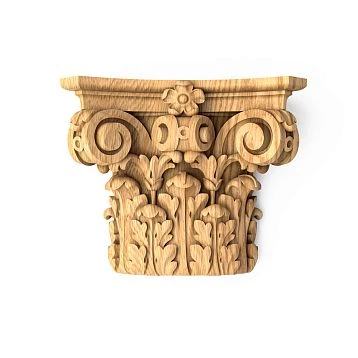
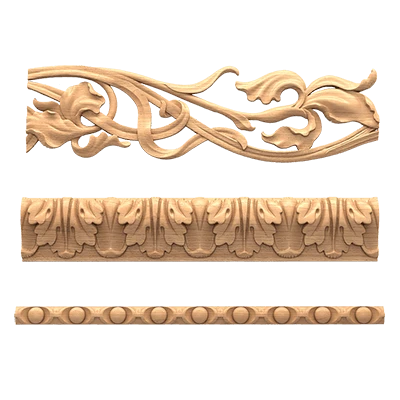
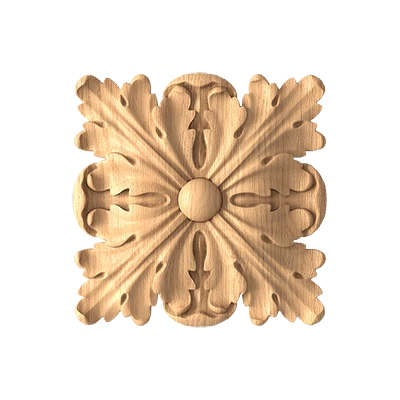
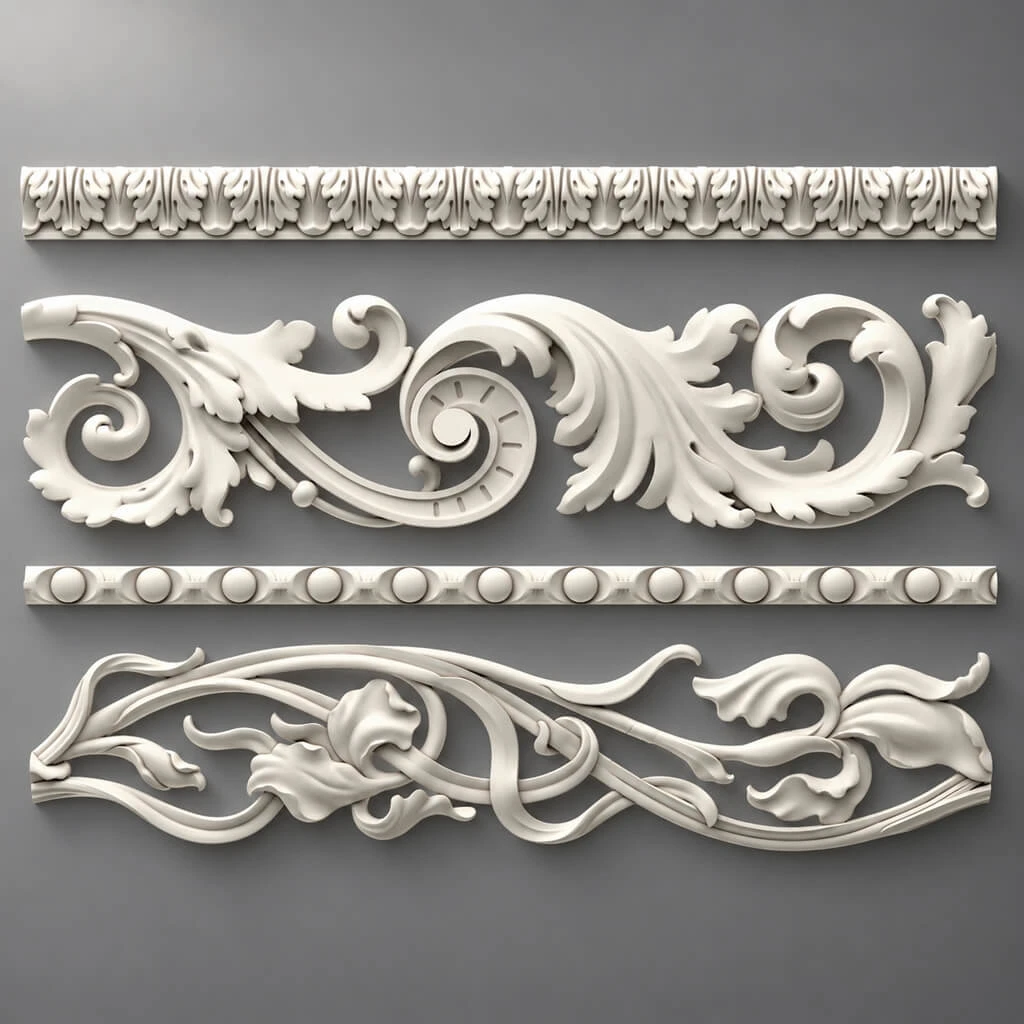
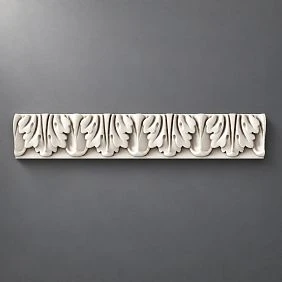
The acanthus leaf is the most famous ornamental motif in architectural history. It appears in Greek Corinthian capitals, Roman friezes, Renaissance coffers, and Baroque cornices. The form of the acanthus—large leaves with rounded lobes and clearly defined veins—has a natural sculptural quality: it reads well from a distance, interacts expressively with light, and looks both monumental and organic.
Polyurethane cornice with ornament Acanthus is a choice for classical and neoclassical interiors, formal living rooms, halls, libraries, and studies. Acanthus requires rooms with ceilings of at least 2.8 m and sufficient space for the pattern to unfold.
Ionic: strict rhythm of the Greek order
Ionic (also called "ionicon" or "egg-and-dart ornament") is a rhythmic alternation of oval and arrow-shaped elements. This ornament originates from the Greek Doric and Ionic orders, where it adorned the cyma—the transitional profile of the cornice.
In modern interiors, ionic is used in strict neoclassical solutions, Empire and academic interiors. Its rhythm—mathematically precise, without unnecessary details—creates a sense of architectural discipline and restrained dignity. Ionic works well on medium-width cornices (8–14 cm) as a standalone pattern or in combination with other profiles as part of a composite cornice band.
Beads: elegant rhythmic motif
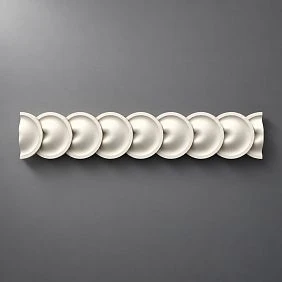
The "beads" ornament is a rhythmic alternation of spherical or disc-shaped elements strung on a horizontal thread. A simple and very expressive motif found in all historical architectural styles: from Greek classicism to Baroque and Neoclassicism.
On the cornice band, beads work as a subtle rhythmic accent: they do not claim the main role but add decorative liveliness. Typically, beads are present in a multi-profile cornice as one of the elements in the lower part of the band—in combination with smooth shelves and larger ornamental motifs.
Braid: dynamics of interweaving
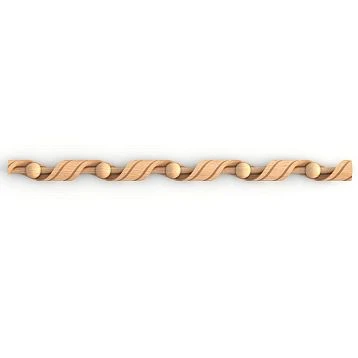
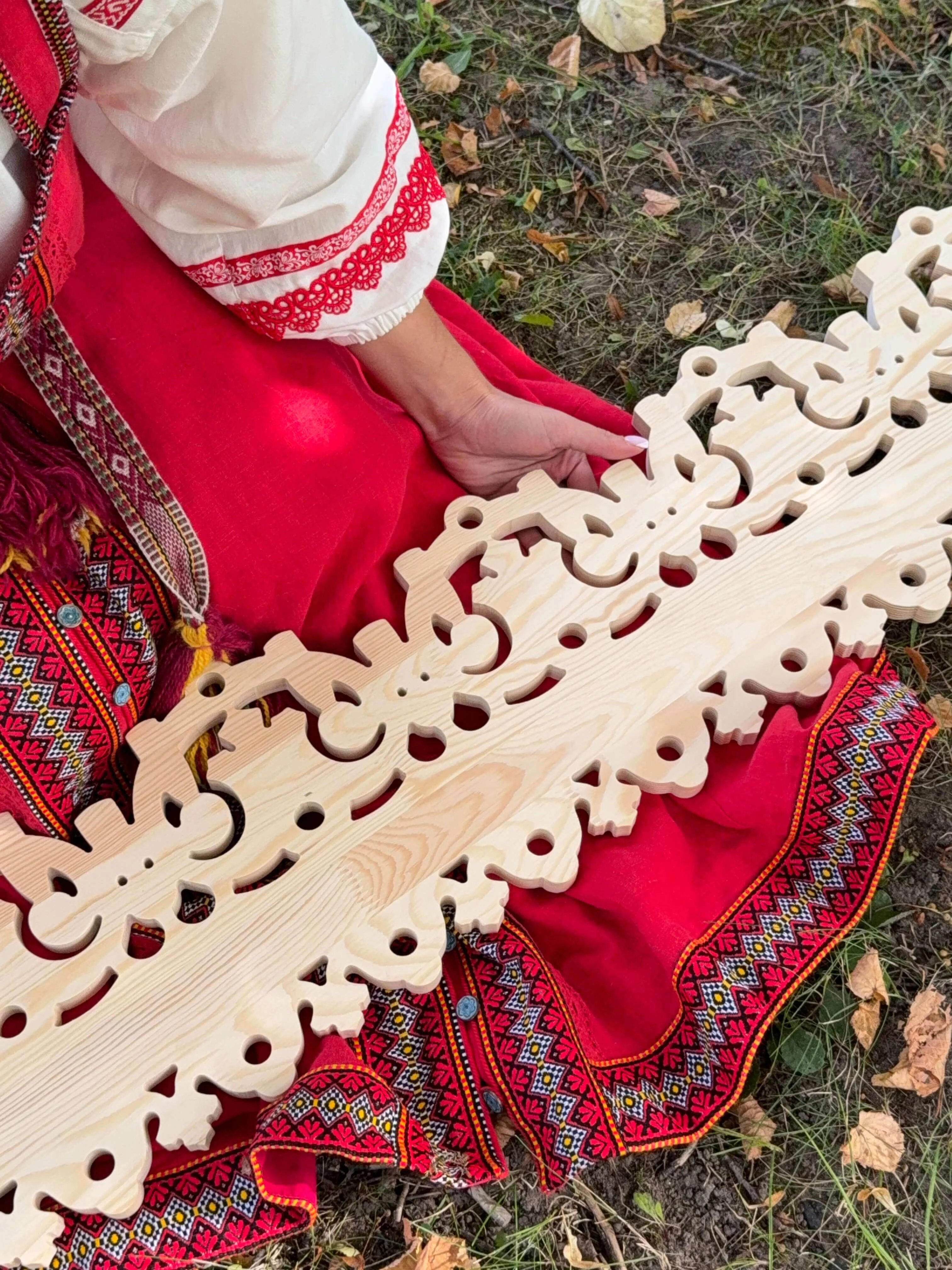
"Braid" is an ornament based on interwoven ribbons, cords, or shoots, creating a continuous rhythm of interweaving. This motif is found in Romanesque decoration, Celtic ornament, Russian architectural style, and certain directions of Art Nouveau.
In the cornice polyurethane relief the braid is used as an independent narrow ornamental band (4–6 cm) or as an additional accent element within a multi-profile cornice. It adds dynamics and a sense of movement — while looking moderately restrained. The braid is especially good in interiors where a moderate ornamental signal is needed without heavy classicism.
Floral ornament: natural organic
Floral ornament in cornice moldings is smooth stems, leaves, shoots, branches. Unlike strict acanthus, floral ornament in the cornice version can be more free: asymmetrical, flowing, "breathing." It is organic in Provence, Art Nouveau, modern classic, and soft neoclassical interiors.
Floral pattern on polyurethane cornices goes well with natural materials: wood, linen, natural stone. It softens the strictness of geometric lines in the interior and brings warmth.
Bulrush: natural motif for non-standard interiors
Bog plant — an ornamental motif with soft curved leaves and shoots reminiscent of aquatic plants. Found in Art Nouveau decor and certain directions of exotic romanticism. In the cornice belt, the bog plant creates a non-trivial ornamental accent — natural, lively, unconventional.
Geometric ornament: precision and modernity
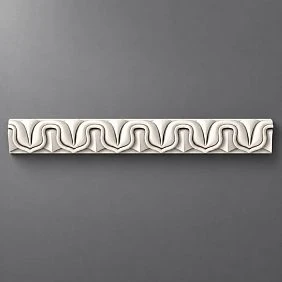
Geometric ornament on the cornice — strict lines, meanders, stepped belts, zigzags, rhombuses, rectangular alternations. This type of pattern belongs to the architectural language of Art Deco, strict neoclassicism, and modern classicism.
Geometric ornament made of polyurethane in the cornice — an ideal choice for interiors that need decorative richness without the "lyricism" of plant motifs. It looks authoritative, graphic, modern. Especially expressive on dark walls — in anthracite, deep blue, or rich green.
Frieze: horizontal ornamental strip
The frieze in the cornice belt is a wide middle zone between the upper shelf and the lower profile, occupied by a continuous ornamental pattern. The frieze can carry any of the listed ornaments — acanthus, plant, geometric, meander — depending on the stylistic task.
In modern interiors, the frieze is used as an independent decorative element: a horizontal ornamental strip at the level of the upper third of the wall, not necessarily associated with the cornice. This allows creating a decorative belt even with ceilings of 2.5 m, where a full classic cornice with a frieze may look heavy.
Which STAVROS elements to use for cornice stucco molding
To create an ornamental decorative belt in the upper part of the wall, the STAVROS catalog provides several types of products, each performing a specific role.
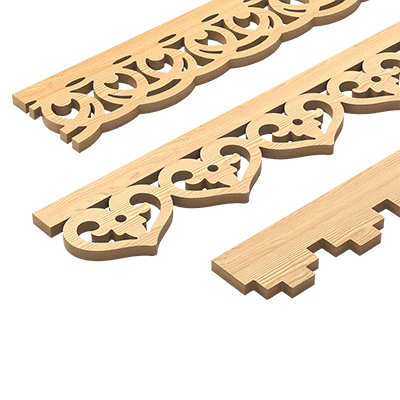
Ornamental molding: continuous strip of decor
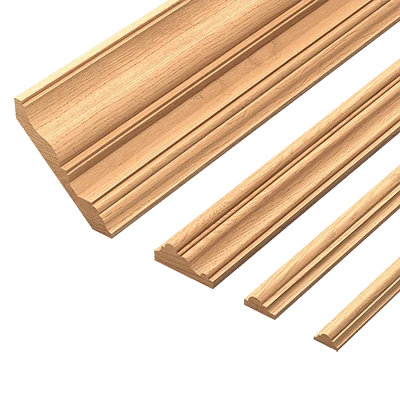
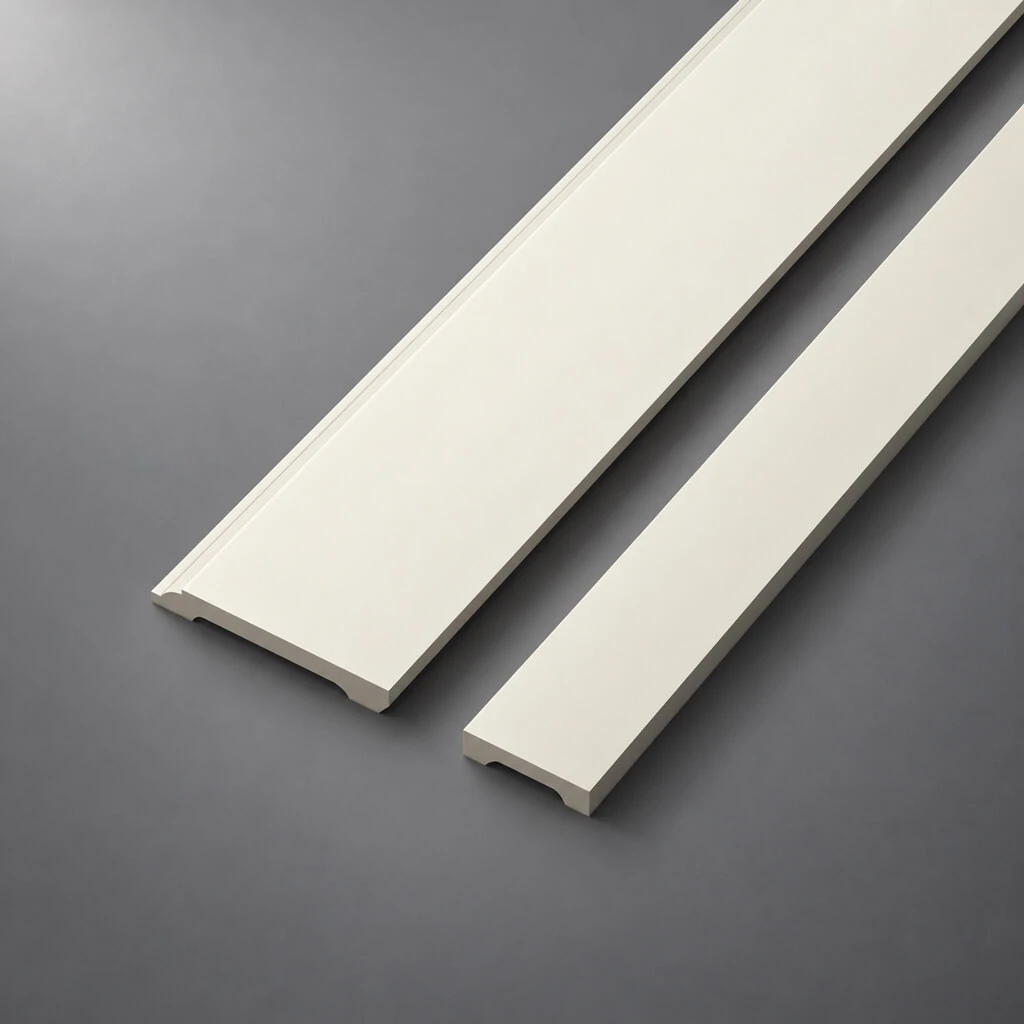
Polyurethane trim — these are linear products designed for horizontal installation along the perimeter of a room or along a specified line. Unlike cornice profiles, which are often complete architectural elements with a specific structure (shelf — frieze — lower profile), moldings can be any linear ornamental element: a belt with acanthus, a band with ionic, a frieze strip with a plant motif, a narrow geometric belt.
It is Trim with ornament is the most flexible in application. It can be installed:
-
In the corner area of the wall and ceiling — as a simplified cornice
-
At the level of the upper third of the wall — as a decorative frieze belt
-
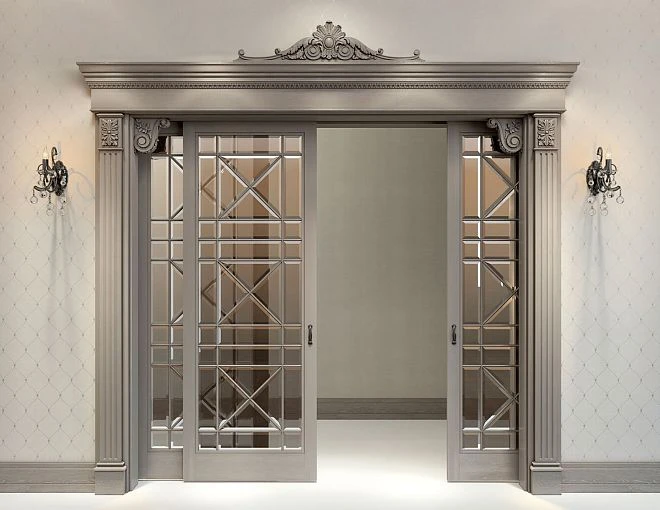
Above the door opening — as an ornamental accent
-
Along the top edge of the wall panel — as a completion of the panel zone
-
In niches and arched openings — as a contour ornamental element
Polyurethane cornices: a full-fledged architectural element
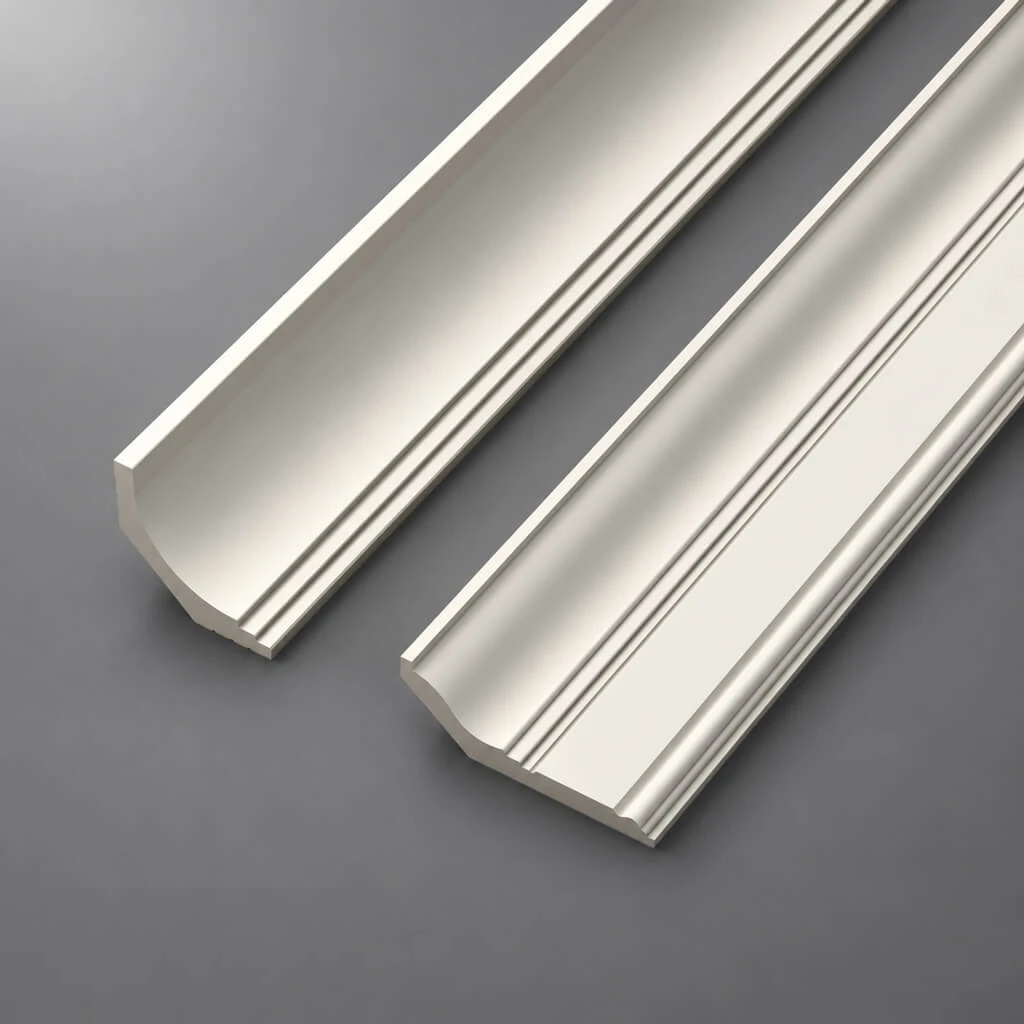
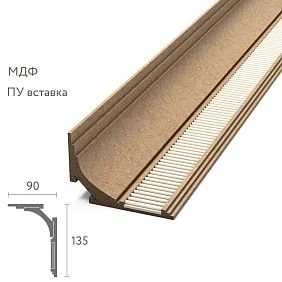
Polyurethane Crown Molding in the STAVROS catalog — these are complete profile products with a full cornice cross-section: upper shelf, frieze, lower profile. They are installed in the corner area of the wall and ceiling and create a classic architectural cornice with ornamental decor.
Polyurethane cornices come in different widths — from 7–8 cm to 25–30 cm and more. The width of the cornice directly determines the stylistic tone: a narrow cornice with moderate ornament — neoclassicism and modern classic; a wide cornice with rich relief — classic and baroque.
Ornamental moldings: flexible element of the cornice system
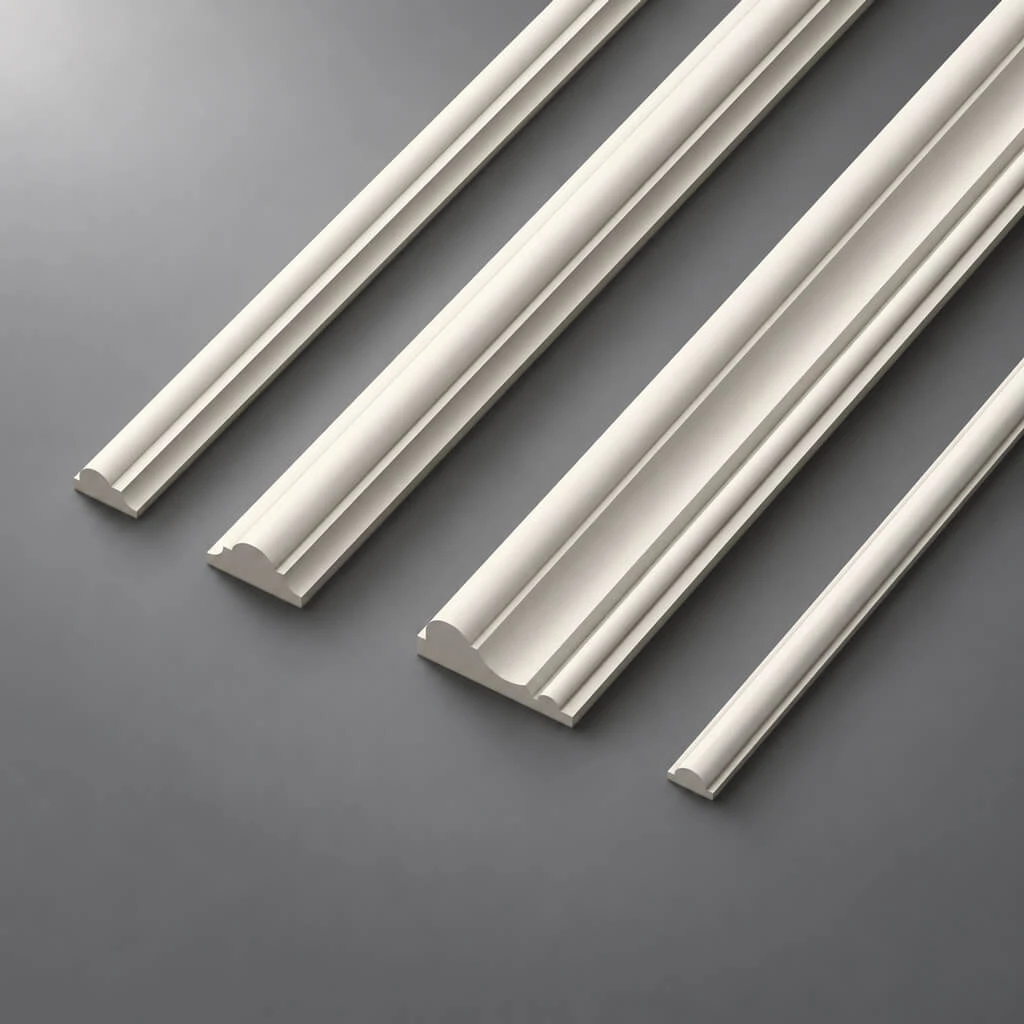
Moldings made of polyurethane With an ornamental profile, they are used in the cornice system as additional elements: a thin ornamental molding above or below the main cornice profile, a strip with a geometric pattern between the cornice and the ceiling, an additional belt under the cornice at a level of 15–20 cm from it.
Such a modular system of several elements of different widths creates a visually complex, multi-level decorative belt that looks more substantial and richer than a single cornice of the same total width.
Decor for moldings: finishing joints and corners
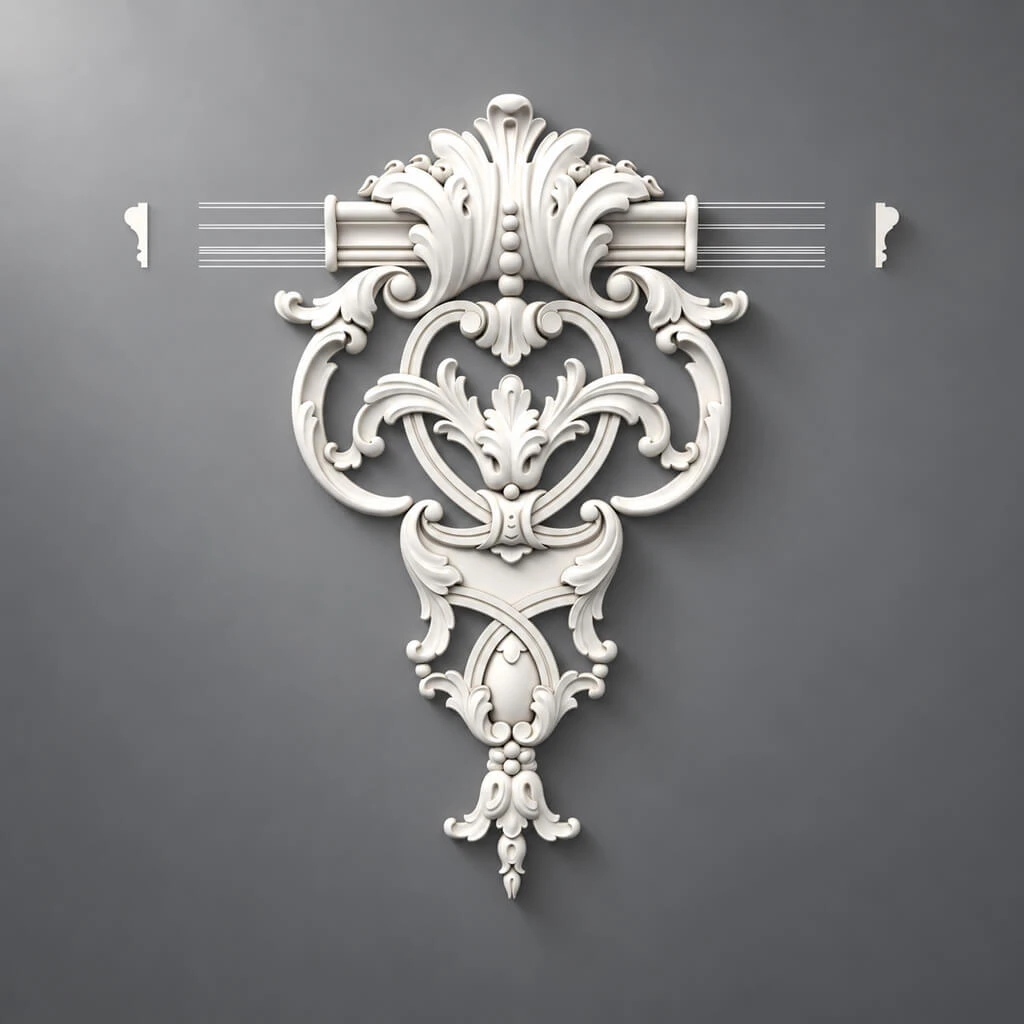
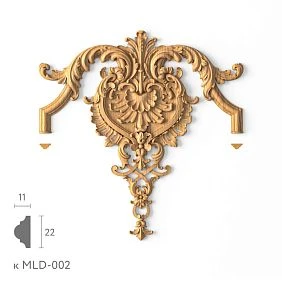
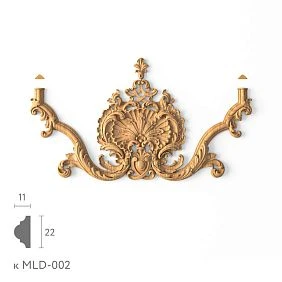
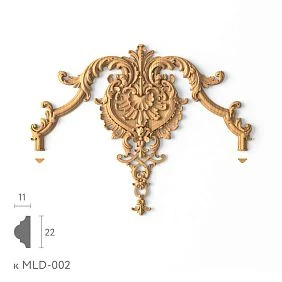
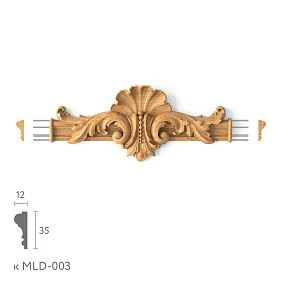
Decor for Molding In the cornice system, it serves as corner inserts at the connection points of cornice elements: in room corners, above doorways, in niches and arched transitions. Without corner decorative inserts, the joint of the cornice in the corner looks technical and unfinished — even with precise miter cuts. The ornamental corner insert hides the joint and adds a decorative accent.
Cornice stucco by style: detailed selection matrix
Choosing an ornament for the cornice belt is not a question of "which pattern is prettier." It is a question of stylistic consistency. The wrong ornament on the cornice destroys the interior style with the same inevitability as the wrong furniture.
| Style | Ornament | Cornice width | Relief | What to avoid |
|---|---|---|---|---|
| Classic | Acanthus, frieze with ornament | 16–28 cm | Deep, 3–5 cm | Small, inexpressive pattern |
| Empire | Strict rhythm, ionic, symmetrical motifs | 14–22 cm | Moderate–deep | Blend with floral Art Nouveau |
| Baroque | Rich foliage, acanthus, scrolls | 20–30+ cm | Very deep | Use in low rooms |
| Neoclassical | Beads, ionic, moderate acanthus | 10–16 cm | Moderate, 1.5–3 cm | Overloaded large relief |
| Art Deco | Geometric, meander | 10–18 cm | Clear, 2–3 cm | Floral ornament |
| Modern | Vegetal, marsh plant, smooth branches | 8–14 cm | Medium, 1–2.5 cm | Strict symmetry, Empire motifs |
| Russian style | Braid, frieze, rhythmic plant pattern | 10–16 cm | Moderate | Blend with minimalism |
| Modern Classic | Moderate acanthus, beads, painted in wall color | 8–14 cm | Light to moderate | Contrast highlighting without design purpose |
| Provence | Smooth plant, floral pattern | 8–12 cm | Lightweight | Heavy Empire profile |
Classic: full cornice with ornament
A classic interior requires a full cornice belt: a wide profile with a frieze, ornamental motifs (acanthus or rich plant pattern), and clear shelves at the top and bottom. This is an architectural cornice, not just a decorative molding. It requires ceilings of 2.9–3 m and rooms of at least 20 sq m: in a small space, a wide cornice will "eat up" the height.
Color in classic style — a white cornice on a white ceiling or white on cream walls. Monochrome is a mandatory condition for classic style: a colored cornice shifts the emphasis from ornament to color, which destroys the logic of the decor.
Empire style: strictness and symmetry
An Empire-style cornice should be large, strict, and symmetrical. Ornament — Ionic order, laurel wreaths, strict geometric frieze, vertical accents at the corners. No "softness" or asymmetry: Empire style is architectural discipline.
The Empire-style cornice is characterized by a darker color palette than classic style: warm white, ivory, ochre tones — in contrast with rich deep walls in burgundy, blue, or green.
Art Deco: geometry as the main tool
Art Deco in the cornice belt is geometric ornament made of polyurethane in its pure form. Meander, zigzags, stepped profiles, strict alternation of protrusions and indentations. No leaves, flowers, or curls — only geometry. The relief is moderate but clear: the form must be perfectly even.
For Art Deco, high installation precision is especially important: a horizontal geometric line under the ceiling immediately reveals any deviation from the level. Install using a water or laser level.
Art Nouveau: living lines
A cornice in Art Nouveau style is an ornament with plant motifs: irises, stems, smooth branches, asymmetrical shoots. The profile shape is also softer than in classic style: there are no strict steps or rigid shelves — everything flows smoothly into one another.
Decorative stucco Art Nouveau style is used in interiors that feature natural materials, a warm color palette, and organic furniture forms. This is an internally consistent style that does not tolerate mixing with heavy classic style.
Where to apply cornice molding with ornament: zones and scenarios
An ornamental cornice belt is appropriate not only in the living room. Let's analyze specific interior scenarios.
Wall-to-ceiling transition: basic scenario
This is the first and main application. The corner zone of the wall and ceiling is a technically complex place: there is always a joint, often unevenness, sometimes a shrinkage crack. Polyurethane cornice with ornament covers this corner, solving both technical and aesthetic tasks. The ornament turns the technical cover into an architectural statement.
The minimum cornice belt for any room is 8 cm. The optimal one for a modern apartment with 2.7 m ceilings is 10–14 cm. A full classical cornice is from 16 cm.
Living room: full decorative set
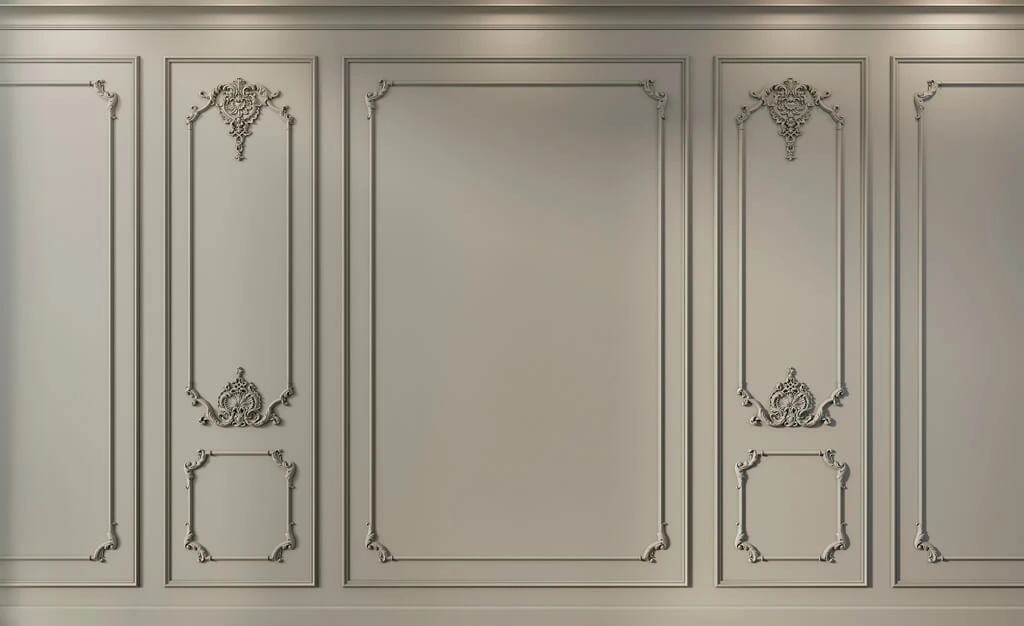
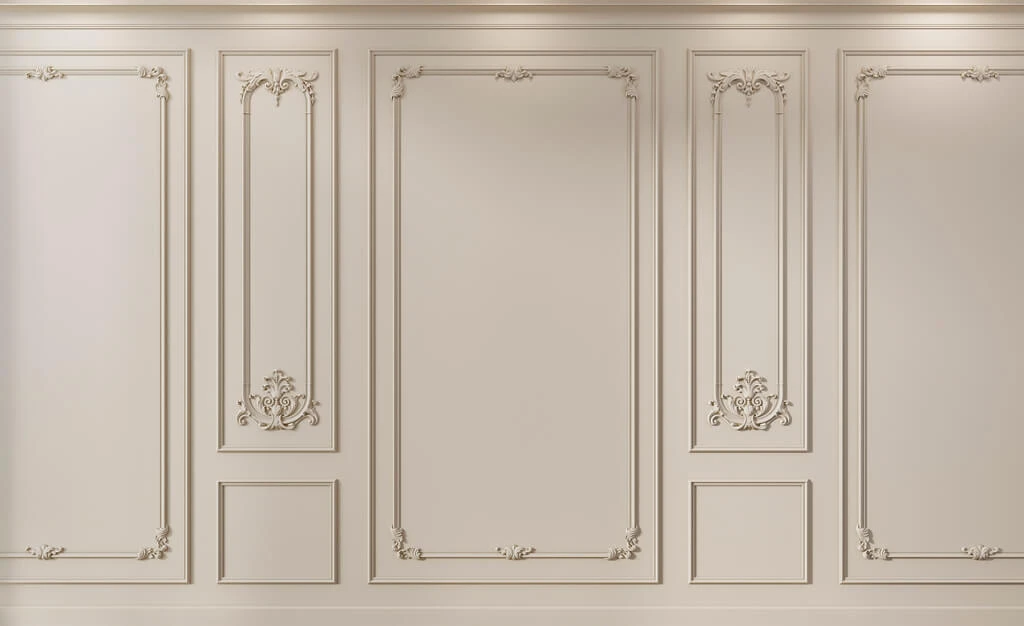
In the living room, the ornamental cornice belt works as part of a complete stucco set: cornice around the perimeter → rosette under the chandelier → wall frames from moldings → baseboard. The ornament of the cornice should echo the ornament of corner inserts in wall frames and the profile of the baseboard.
for ceiling decor in the living room, scale is important: a cornice that looks good in a 25 sq. m room may be insufficient for a 50 sq. m hall. In large spaces, the ornamental belt should be wider, and the relief deeper: this compensates for the increased viewing distance.
Hall: the first and main impression
The hall and entryway are rooms that greet guests. It is here that the ornamental cornice performs a representative function: it sets the tone for the entire house. In a hall with high ceilings, the ornamental cornice can be especially large-scale — this is justified by the formal nature of the space.
In narrow corridors, the cornice should, on the contrary, be restrained: a narrow ornamental molding 6–8 cm wide with a light pattern — and no wider. In a tight space, a wide relief cornice creates a feeling of pressure.
Long corridor: horizontal rhythm
A long corridor is an ideal platform for a horizontal ornamental belt. The continuous rhythm of the ornament along the ceiling line creates a sense of movement and structures the extended surface. For a corridor, ornaments with a directed rhythm work especially well: meander, braid, alternating plant motif — all create a feeling of "flow" along the wall.
Study: authority and concentration
In a study, the cornice ornamental belt works to create an atmosphere of business seriousness and authority. A strict geometric ornament, moderate cornice width, painting in a contrasting tone (white cornice on a dark wall) — this is the working formula for a study interior.
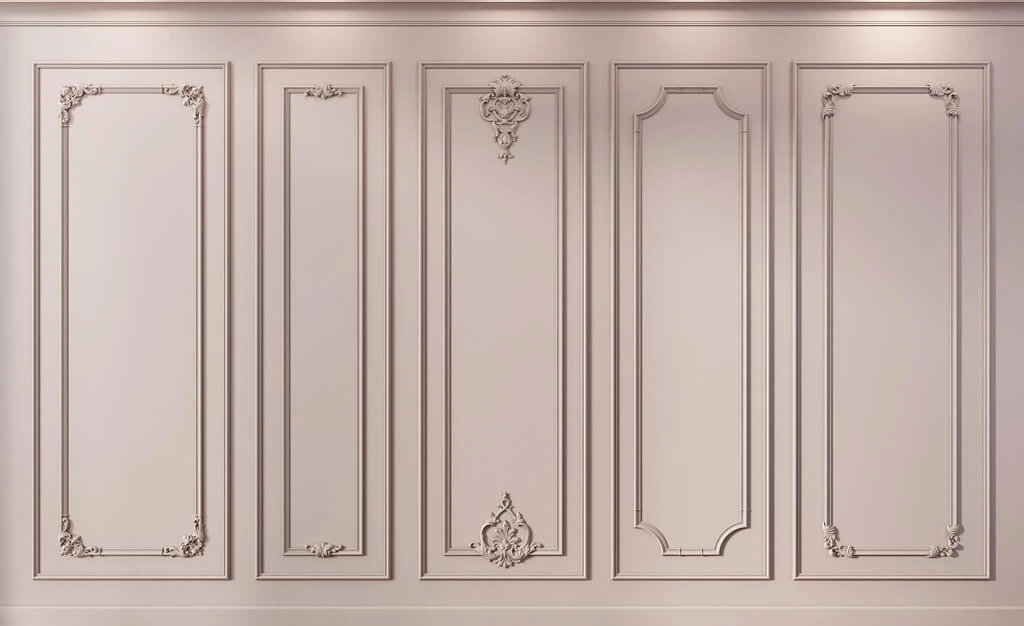
Polyurethane wall decor in the study should be coordinated with the cornice belt: if the cornice carries a geometric ornament, the wall panels should be made of smooth molding of the same style register — strict, without ornamental inserts.
Commercial interiors and restaurants
Ornamental cornice moldings in commercial spaces — restaurants, hotels, conference rooms — create a sense of status and quality. This is one of the most cost-effective ways to "elevate" the interior level: an ornamental cornice is incomparably cheaper than redevelopment or expensive finishing, but it produces a tangible effect on visitors.
How to correctly calculate the size of a cornice belt
Accurate calculation is the key to a correct result. A cornice of the wrong scale will ruin the interior regardless of the quality of execution.
Cornice width depending on ceiling height
This is the main dependency when choosing a cornice belt.
-
Ceiling 2.4–2.5 m → cornice 6–10 cm
-
Ceiling 2.5–2.7 m → cornice 8–12 cm
-
Ceiling 2.7–2.9 m → cornice 10–16 cm
-
Ceiling 2.9–3.2 m → cornice 14–20 cm
-
Ceiling 3.2–3.8 m → cornice 18–26 cm
-
Ceiling from 3.8 m → cornice 24 cm and more
Formula: cornice width = approximately 4–5% of ceiling height. With a ceiling of 2.8 m → 11–14 cm. This is a working guideline that can be adjusted depending on the stylistic task.
Relief Depth
The depth of the ornament relief directly affects the readability of the pattern from a distance:
-
With a ceiling of 2.5 m and a viewing distance of 3–4 m → relief 1–2.5 cm
-
With a ceiling of 3 m and a viewing distance of 4–6 m → relief 2–4 cm
-
In formal halls with ceilings from 3.5 m → relief from 4 cm
Too shallow relief at a large viewing distance simply cannot be read: the ornament merges and looks like a textured strip without a pattern. Too deep relief at close viewing — heavy and overloaded.
Ornament repeat step and pattern matching
When ordering ornamental moldings, it is important to consider the pattern repeat step. If the ornament has a rapport (repeat unit) of 15 cm and the wall length is 420 cm, then the pattern will repeat exactly 28 times — the matching will be perfect. If the wall length is not a multiple of the rapport, the pattern will not align at the corner, which will be noticeable.
When ordering polyurethane molding For patterned moldings, clarify the pattern repeat step — and plan trimming considering matching. The allowance for trimming for ornamental moldings is at least 15–20%, and for complex patterns — up to 25%.
Distance to ceiling and wall
A classic cornice is installed flush against the ceiling — the shelf adjoins the ceiling plane. In this case, horizontal installation accuracy is critically important: even a deviation from horizontal of 3–4 mm will be visually noticeable on long sections.
A decorative linear molding belt can be installed with a gap from the ceiling — as an independent horizontal accent. In this case, a distance of 10–20 cm from the ceiling is chosen: enough for the belt to be perceived as an independent element, rather than a "shifted" cornice.
Compatibility with moldings and baseboards
The ornamental cornice belt should be coordinated with the wall moldings and the baseboard:
-
The baseboard should be 20–30% narrower than the cornice: with a cornice of 14 cm → baseboard 9–11 cm
-
The molding for wall frames should be thinner and more modest than the cornice
-
The ornamental type on the cornice and corner inserts of molding frames should match in style
How not to confuse cornice stucco with other elements
This question regularly arises during selection. Therefore, we provide a clear and practical system of differences.
Cornice — upper perimeter decorative belt, covers the corner of the wall and ceiling. The main element of the cornice system. Width from 8 to 30+ cm. Installed in the corner area.
Frieze — a horizontal decorative strip. It can be part of a cornice (middle zone) or an independent element at any height on the wall. Narrower than a cornice. Not necessarily in the corner zone.
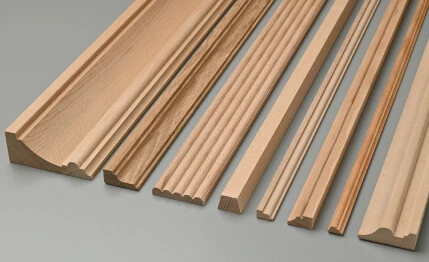
Molding — a thin linear profile for frames, divisions, and horizontal lines. Installed in any zone of the wall. In a cornice system, it is an additional element.
Baseboard — the lower finish of the wall. The opposite "frame" line to the cornice. Always at the floor.
Trim — a general term for linear decorative products of any type, including cornices, moldings, and friezes. It can feature any ornament.
Ceiling rosette — a round central accent on the ceiling under a chandelier. Not part of the perimeter decor.
Mistakes when choosing ornamental cornice molding
Let's break down what most often goes wrong when choosing an ornamental cornice.
Cornice too wide for a low ceiling. A 20 cm wide cornice with a 2.5 m ceiling visually reduces the height to a minimum. Choose according to the proportion table.
Ornamental pattern alignment not checked. In room corners, the ornament "meets" — and if the pattern doesn't match, it's immediately noticeable. Check the ornament repeat and calculate alignment in advance.
Mixing ornaments of different styles. An acanthus cornice, moldings with a geometric meander, and a baseboard with Art Nouveau foliage — these are three incompatible style languages. Maintain a unified ornamental system.
Ignoring relief depth. A flat ornament with minimal relief is simply unreadable with high ceilings and large areas. The depth of the relief must correspond to the viewing distance.
Lack of corner inserts. Without decoration for moldings the cornice line looks unfinished in the corners, joints are exposed. Always provide corner decorative elements.
Inconsistency of the cornice with the baseboard and wall frames. The cornice is part of a unified system. Select all elements from the same style line or at least from the same ornamental type.
Where to buy cornice molding with STAVROS ornament
The full range of elements for creating an ornamental cornice belt is concentrated in several sections of the STAVROS catalog.
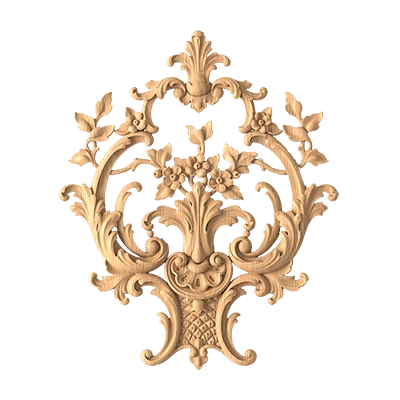
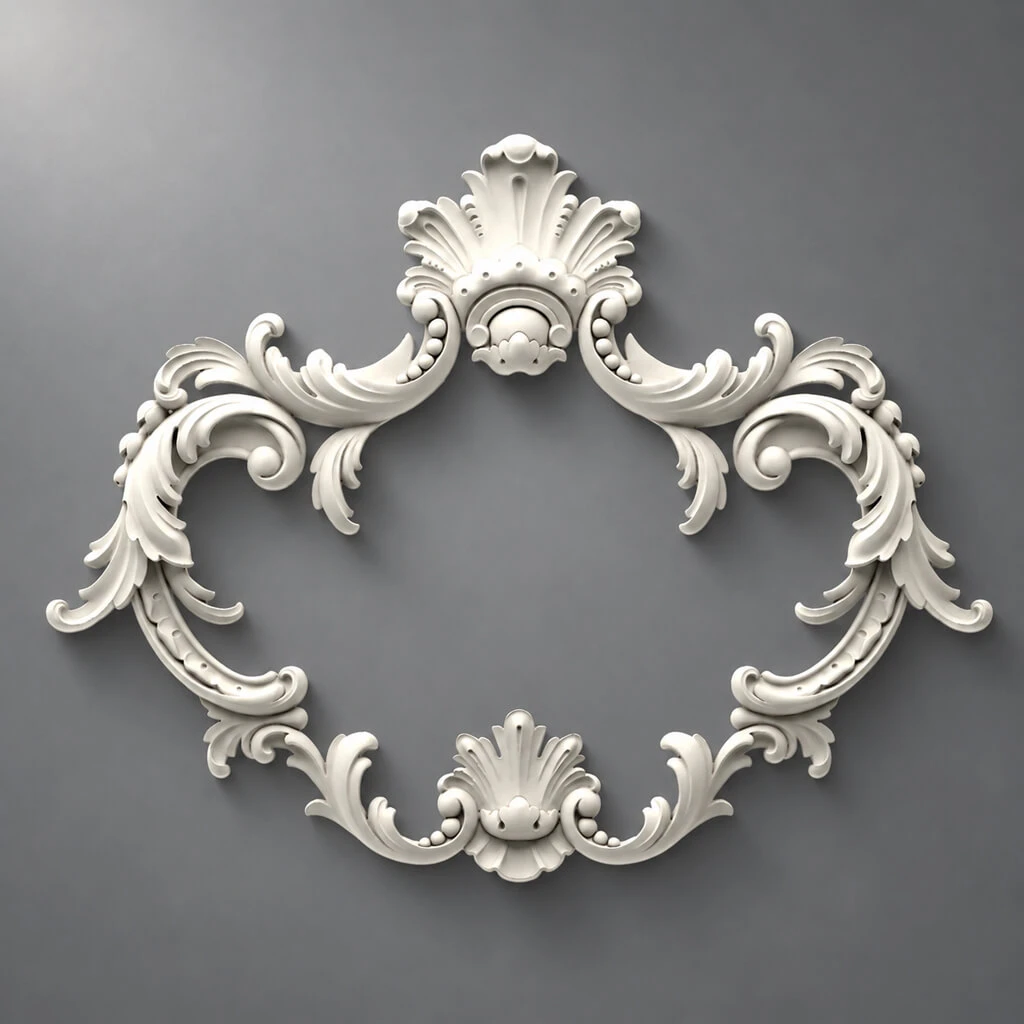
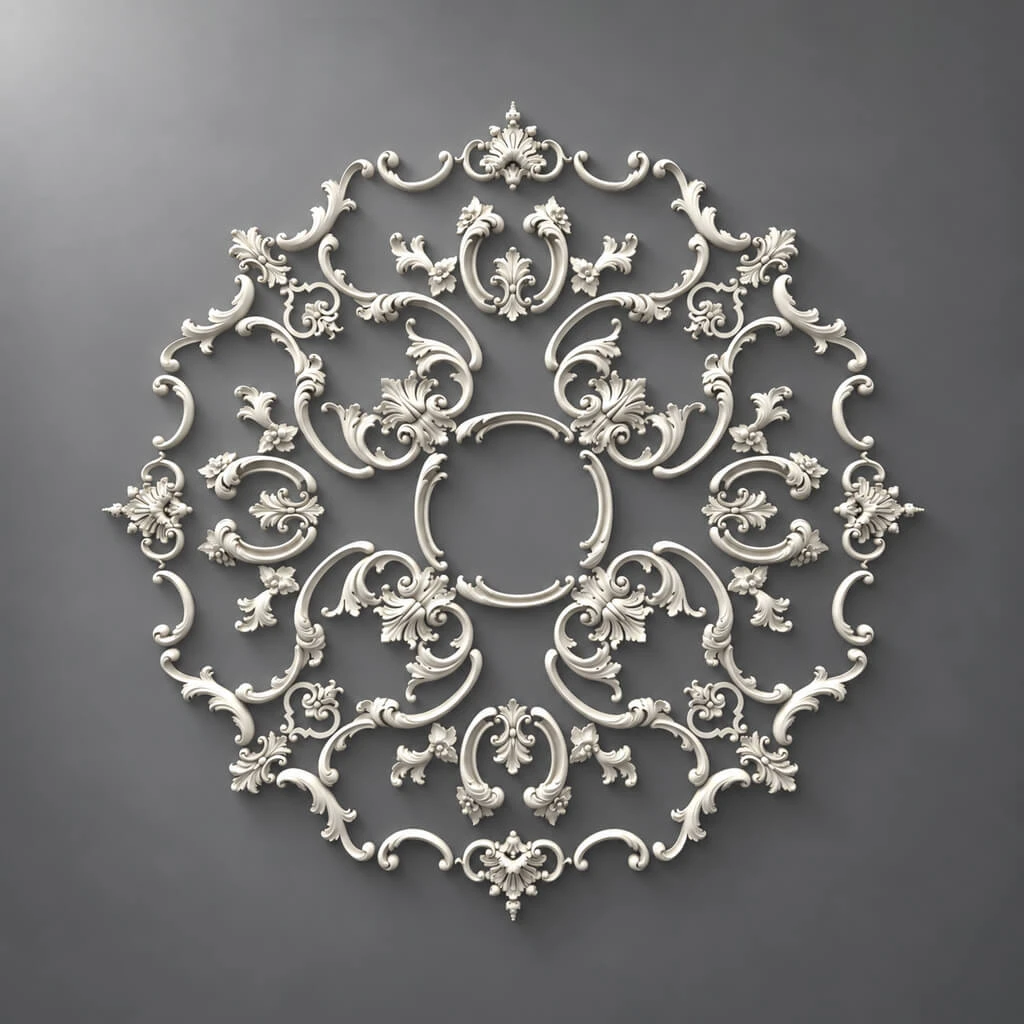
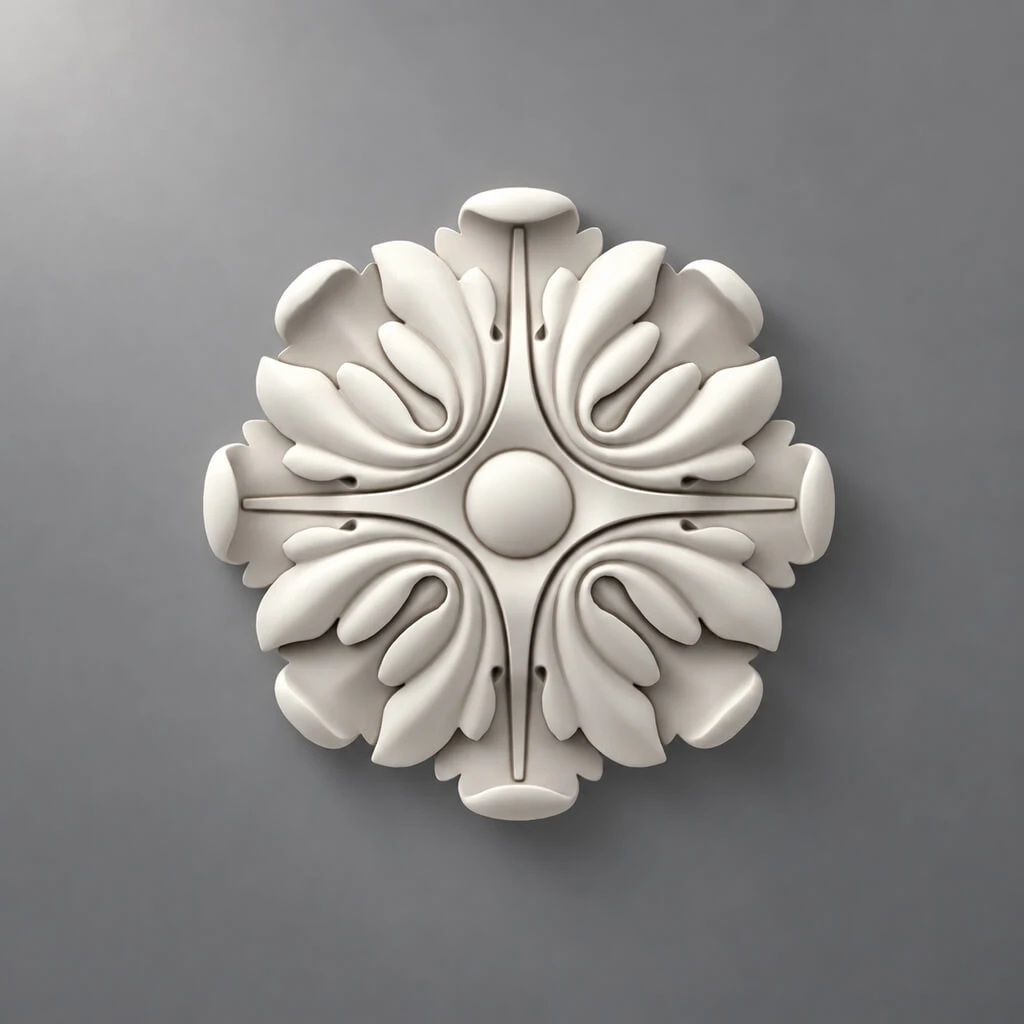
To select the main stucco decoration and overlay ornamental elements, go to the decorative overlays section. Here are concentrated ornamental accents to complement the cornice system: central and corner elements with acanthus, plant motifs, and classic patterns.
To select ornamental polyurethane molding with various types of ornaments, go to the molding section. Here are presented linear products with geometric, plant, acanthus, bead, and other ornamental patterns. This is where you will find frieze belts, braids, ionic, and bolotnik.
For full cornice profiles with ornament — section cornices made of polyurethane. Wide selection of cornice sections of different widths and reliefs.
For additional linear elements — frame moldings with ornament, narrow ornamental strips — section moldings, cornices, and baseboards.
For corner inserts, connecting decorative elements at cornice joints — section decoration for moldings.
For a complete overview of the entire assortment and selection of cornice decor in a unified system with wall panels, ceiling rosettes, and baseboards — main section polyurethane products.
If you are decorating not only the cornice line but also the walls — also refer to the section wall decor и ceiling decor — there are elements that complete the system from above and along vertical planes.
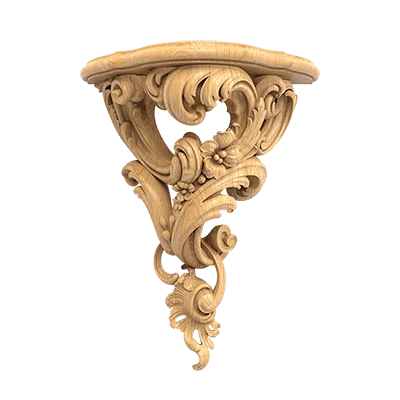
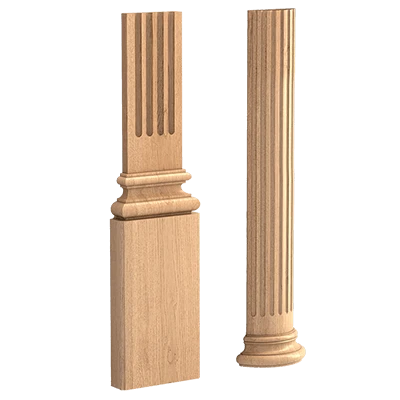
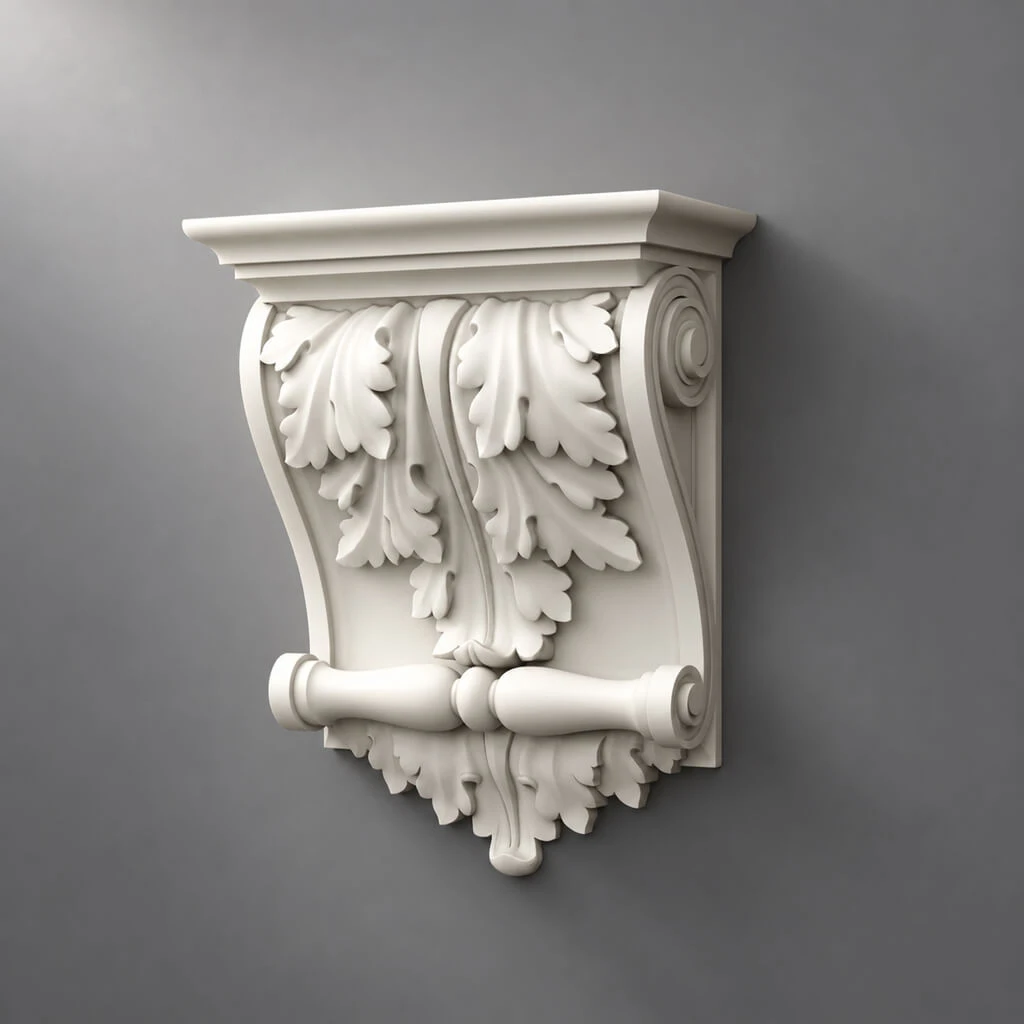
Want You can buy ready-made stucco matching the Baroque style. Calculate the quantity: linear meters of cornices and moldings, number of rosettes, pilasters, consoles, corner elements. Add a ten to fifteen percent allowance for trimming. for a complete cornice-wall set — start with the main section and use filtering by ornament type and profile width. Delivery across all of Russia.
FAQ: answers to popular questions about cornice stucco with ornament
Is cornice stucco a curtain rod?
No. This is an architectural decorative element made of polyurethane, installed in the corner area of the wall and ceiling. It has nothing to do with curtain systems.
Which ornament should I choose for a classic interior?
Acanthus, a rich plant ornament, or ionic — depending on the room size and ceiling height. Acanthus suits formal areas, ionic is for more restrained classic solutions.
How to calculate the width of the cornice?
Approximate formula: 4–5% of the ceiling height. For a 2.8 m ceiling → 11–14 cm. For a 3.5 m ceiling → 14–18 cm.
Do I need to match the ornament of the cornice with the baseboard?
Absolutely. They must belong to the same style register and the same ornamental type. The baseboard should always be 20–30% narrower than the cornice.
Can I paint the ornamental cornice in the wall color?
Yes. A monochrome solution — cornice in the wall color — is a modern and sophisticated technique. The ornament works as a relief accent without drawing attention through color.
How to avoid pattern mismatch at the corners?
Specify the pattern repeat step and pre-calculate the alignment based on wall lengths. Allow 15–20% for trimming. Use decorative corner inserts from the decor section for moldings at corners.
Which linear molding is best for a hallway with a 2.5 m ceiling?
Ornamental linear molding 6–8 cm wide with moderate relief (1–1.5 cm). Geometric or moderate floral pattern. Paint to match the wall or ceiling color.
Where can I find all the necessary elements for the cornice system in STAVROS?
Cornices are in the cornices section, patterned linear moldings are in the linear moldings section, moldings are in the moldings, cornices, and baseboards section, corner inserts are in the decor section for moldings. The full range is in the main section of polyurethane products.