








































































Article Contents:
- Polyurethane stucco for arches: how to design an arched opening with STAVROS moldings, overlays and decor
- Why an arched opening requires a special approach
- What is included in stucco decor for an arch: a complete system of elements
- Molding along the arch contour
- Central element above the arch: keystone and decorative accent
- Side symmetrical elements
- Decor for moldings: joints, corners and connecting elements
- Linear elements for vertical side panels
- Connecting elements: baseboard and cornice
- Arch design options: from minimalism to a grand portal
- Minimal contour: modern and Scandinavian interior
- Contour plus central accent: neoclassicism
- Arch with side elements: wide opening
- Arch with floral ornament: classic and Provence
- Arch as a portal: grand hall and ceremonial areas
- Arch in wall color: invisible architectural accent
- How to choose the size of stucco for an arch: precise guidelines
- Molding width
- Central overlay
- Side elements
- Height of vertical side panels
- Arch radius and molding flexibility
- How not to overload an arched opening: seven rules
- Application scenarios: where arch molding is installed
- Transition between kitchen and living room
- Hall and living room: a grand transition
- Corridor: modest but with character
- Niche with an arched finish
- Study: strictness as a principle
- Material and finish: what you need to know about polyurethane for arches
- Mistakes when choosing stucco for arches: what most people do
- Where to buy stucco for an arch: sections of the STAVROS catalog
- FAQ: answers to popular questions about stucco for arches
- About the Company STAVROS
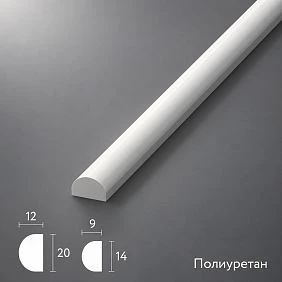
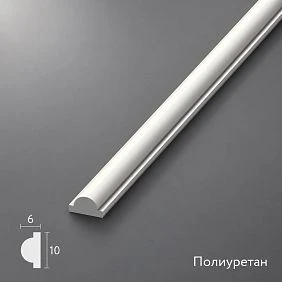
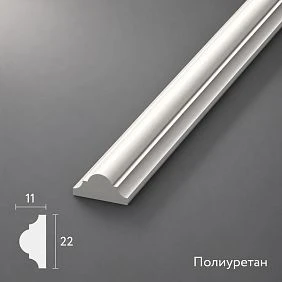
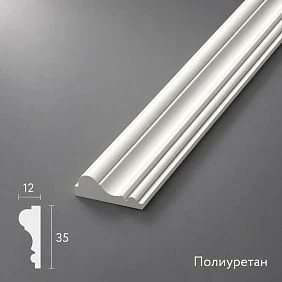
Polyurethane stucco for arches: how to design an arched opening with moldings, overlays, and STAVROS decor
An arched opening is one of the few architectural elements that exists in an interior on its own: without a door, without a casing, without a frame. It is open, visible from all sides, and works around the clock. And that is precisely why it either decorates the space or looks like an unfinished construction detail. It all depends on whether the opening has received a decorative frame or remains a bare concrete or drywall contour.
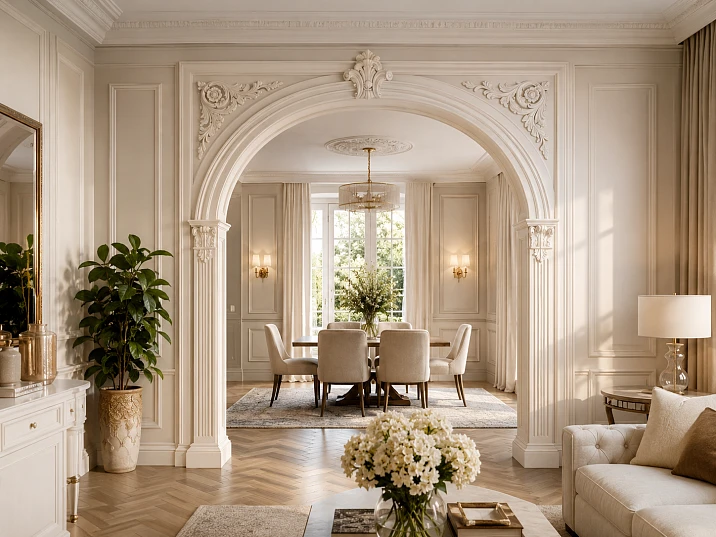
Polyurethane stucco for arches is a solution that turns an arched opening into an architectural accent. Moldings along the arc contour, a central overlay above the keystone, symmetrical side elements, Decor for polyurethane moldings at the transition points from the arch arc to the vertical sides — all of this together creates a complete architectural image that works as a single composition, not as a set of glued parts. In this article, we will break down exactly how this is done: what elements are needed, how to choose the size, how not to overload the opening, and where to find everything you need in the STAVROS catalog.




Why an arched opening requires a special approach
A rectangular door opening is predictable geometry. It is easy to frame: molding on three sides, corner inserts, done. An arch is a completely different story. There is an arc, and that changes everything.
An arch is a living line. It cannot tolerate rough framing, does not forgive disproportionate moldings, and does not accept random elements. Stucco for arches must follow its curve, repeat its rhythm, and emphasize its shape—rather than compete with it for attention. This is why choosing decorative elements for an arched opening requires more caution and precision than framing a rectangular doorway.
The second feature of an arch is its visual openness. An arched opening is visible from several points simultaneously: from the hallway, from the adjacent room, sometimes from around a corner. This means the decor must look good from different viewing angles and not visually "fall apart" when viewed obliquely. A molding that looks beautiful strictly from the front may appear heavy and random from a side view if its width does not match the wall thickness.
The third feature is connectivity with the entire interior. An arch is a transition between two spaces. The stucco around it must be connected to the decor of both rooms: echo the moldings on the walls, respond to the cornice, and "greet" the baseboard. An isolated arch decor, unconnected to the rest of the interior, looks like a separate decorative idea—beautiful in itself but "alien" in the space.
It is with these three factors in mind that you should choose polyurethane stucco for arches: follow the curve of the arch, work with the wall thickness, and connect the opening to the overall decorative system of the interior.
Our factory also produces:
What is included in stucco decor for an arch: a complete system of elements
Before moving on to specific scenarios, you need to understand what elements the decorative design of an arched opening consists of. It is not one molding or one overlay—it is a system of several types of products, each performing its own function.
Get Consultation
Molding along the arch contour
The basis of any arch framing is the molding that runs along the contour of the opening: it follows the curve of the arch at the top and descends vertically along the sides. This is precisely the element that visually "draws" the boundary of the arch, separating it from the wall and giving the opening clarity and definition.
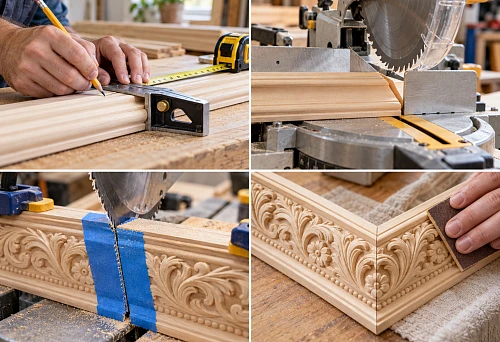
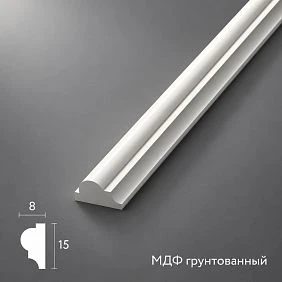
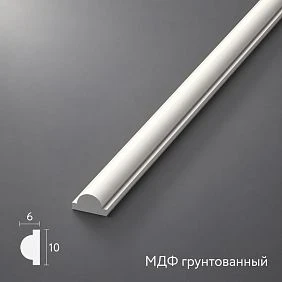
Moldings made of polyurethane for the arch are selected based on two parameters: profile width and flexibility. Most arched openings require the molding to be able to bend around the curve — this means that rigid linear trim is not suitable here. To frame the arch curve, either specially cut segments with fitted joints or flexible polyurethane moldings that bend to the radius of the curve without breaks or cracks are used.
The width of the molding for an arched opening is one of the key variables. A profile that is too wide will visually narrow the opening and weigh down the arch. One that is too thin will get lost and fail to fulfill its decorative purpose. Guideline: the width of the molding for the arch should be 4–8% of the opening width. For an arch 120 cm wide, this is 5–10 cm.
Central element above the arch: keystone and decorative accent
In classical architecture, the keystone is a structural element that locks the arch vault at the top point. In interior design, stucco it serves a decorative function: it marks the apex of the curve, focuses attention on the top point of the arch, and gives the opening a finished look.
The central overlay above the arch is one element that changes the entire impression. Without it, the curve looks like a construction outline even with molding. With it, it looks like a meaningful architectural detail. The central decorative accent can be different: a strict geometric wedge for a neoclassical interior, an ornamental rosette for classic style, a concise relief block for modern design.
Size of the central overlay: from 10 to 25 cm in width, height 8–15 cm. The element should be noticeable but not dominant. It is an accent, not the main character.
Side symmetrical elements
For wide arched openings (from 120–150 cm) and arches with high side verticals, it is appropriate to add symmetrical side overlay elements. They are installed at the transition point from the curve to the vertical part — where the curvature ends and the straight line begins. These are the so-called "spring points" of the arch — structurally significant zones that are marked with special elements in the decorative system.
Side elements work in pairs — strictly symmetrical relative to the vertical axis of the arch. Asymmetry here is unacceptable: it will visually "warp" the opening even with perfectly straight wall geometry.
Decor for moldings: joints, corners and connecting elements
Decor for polyurethane moldings — these are not corner inserts for straight frames (although they are also present here). For an arch, these are decorative elements that shape transition points: where the arc meets the vertical, where a molding of one character transitions into another, where the arch contour adjoins the wall plane. Without these "connecting" details, even a beautifully chosen molding looks unfinished — the joint is always visible and always unsightly.
In the STAVROS section, decor for moldings covers a wide range of such transitional and accent elements: from strict geometric inserts to ornamental details with floral motifs. For an arch, the most important among them are connectors at the "heel" points and finishing elements at the base of the vertical side panels.
Molding for vertical side panels
The vertical parts of the arched opening — the side "legs" of the arch — are designed in the same way as the arched part: with the same molding, following the same logic. It is important that the vertical molding and the arched molding are of the same profile and are joined at the "heel" point through a decorative transition element.
If the height of the vertical side panels is significant (from 80–100 cm), an ornamental decorative insert can be added in the center: a small relief element that holds attention on the side part and prevents the vertical from "sagging".
Connecting elements: baseboard and cornice
An arched opening does not exist in a vacuum. It is surrounded by walls that have a baseboard at the bottom and a cornice at the top. The stucco for the arch must be coordinated with these horizontal lines: the arch molding must either transition into the baseboard at the base of the side panels, or clearly end at the same height as the top line of the baseboard. The cornice above the arch on the ceiling must either echo the profile of the arch molding or create a contrasting but harmonious visual dialogue with it.
Arch design options: from minimalism to a grand portal
An arch is not a uniform object. A narrow arched opening in a corridor, a wide transition between the kitchen and living room, a tall arch in the hall of a private house with a 3.5 m ceiling — these are three completely different tasks. Each requires its own approach to selection decorative stucco molding for arches.
Minimal contour: modern and Scandinavian interior
The most restrained option is a thin molding along the arch contour without any additional overlays. This technique works in modern interiors, Scandinavian style, minimalism, and Japandi: the decor marks the boundary of the opening, gives it clarity and completeness, but does not claim to be an independent artistic statement.
For this option, suitable Moldings made of polyurethane width 2.5–4 cm with a smooth profile without ornament. The optimal technique is to paint the molding the color of the wall: then the arch contour works as a relief 'shadow' rather than a color accent. This is very modern and does not require complex fitting of elements.
Where to use: apartments with modern or Scandinavian interiors, small openings up to 100 cm wide, corridors with low ceilings.
Contour plus central accent: neoclassicism
Adding a central decorative element above the apex of the arch is the next level of design. The molding along the arch contour sets the shape, the central overlay above the keystone sets the character. It is this technique that turns an ordinary arched opening into a neoclassical architectural element: strict, symmetrical, elegant.
For neoclassicism, moldings of moderate width (4–6 cm) with a simple profile are suitable: step, quarter-round, small torus. The central element is geometrically clean or with a moderate floral motif, without heavy baroque ornament. decorative polyurethane elements for such design are selected from the same style line so that the profile of the molding and the central overlay echo each other in pattern.
Where to use: neoclassical living room, bedroom with moderate classic decor, transition between hall and living room.
Arch with side elements: wide opening
If the arch width exceeds 130–150 cm, a single molding and central overlay may not be enough: the vertical side panels will appear "empty," and all the decorative load will be concentrated only in the upper part of the arch. This creates a visual imbalance.
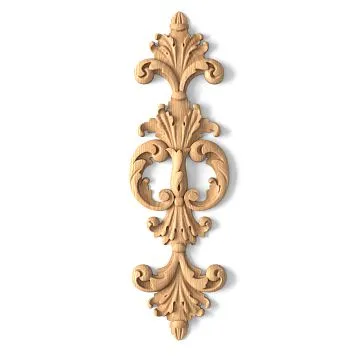
Adding symmetrical side overlay elements at the "heel" points solves this problem: the decor is evenly distributed along the entire contour, and the arch acquires proportional completeness. The side elements can be the same ornamental overlays from the section polyurethane molding decoration or special corner pieces that visually "close" the transition from the arch to the vertical.
Where to use: wide transitions between living room and dining room, interior arches 130–200 cm wide, formal halls.
Arch with floral ornament: classic and Provence
In classic and Provencal interiors, the stucco around the arch can be more elaborate: a molding with an ornamental profile, a central overlay with floral motifs—acanthus, laurel branches, wavy shoots—and side decorative elements with symmetrical ornamental inserts. All this creates a feeling of warm, living architecture where every detail looks handcrafted.
Important: in classic or Provencal design, there should not be too many ornamental elements. The rule "each element in its place" applies especially strictly—the ornament should appear at accent points, not cover the entire arch contour with a continuous relief.
Where to use: classic living room, kitchen-living room in Provencal style, hallway in a house with high ceilings.
Arch as a portal: grand hall and ceremonial zones
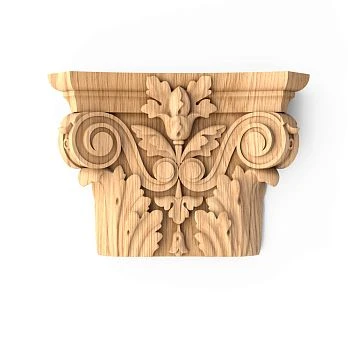
The most large-scale and complex option is designing an arch as a full-fledged ceremonial portal. Here, pilasters are added to the moldings and overlays on the sides of the opening, capitals at the top points of the sidewalls, a decorative entablature above the arch, and ornamental friezes. This is a miniature architectural structure that turns an ordinary passage into a grand entrance.
For such a design, you need: a wide ornamental molding along the arch contour, pilasters with capitals on the sidewalls, a large central overlay above the arch apex, and symmetrical decorative inserts. Polyurethane wall decor from the classic line is ideal for creating ceremonial portals: it has all the necessary types of elements, from lightweight overlay details to large-scale ornamental panels.
Where to use: grand hall of a private house, ceremonial entrance to the living room, opening to the official reception hall. A mandatory condition is ceilings from 2.9 m and opening width from 140 cm.
Arch in wall color: invisible architectural accent
Monochromatic arch design is one of the most modern and refined techniques. The molding and overlay elements are painted in the same color as the surrounding walls. The decor becomes invisible as a separate element, but its relief creates a textural depth that you feel on a sensory level, even without realizing the source.
This technique works especially expressively in rooms with a neutral and soft palette: cream, gray, powder, warm white tones. Polyurethane stucco for arches under painting is an ideal material for such a solution: the surface evenly accepts acrylic paint, the color lasts for years without yellowing or peeling.
How to choose the size of stucco for an arch: precise guidelines
This is the most practical part of the article. Save it for future reference.
Molding width
Depends on the opening width:
-
Opening up to 80 cm → molding 2.5–4 cm
-
Opening 80–120 cm → molding 4–6 cm
-
Opening 120–160 cm → molding 5–8 cm
-
Opening over 160 cm → molding 6–10 cm
Additional guideline: the width of the molding should not exceed the thickness of the wall. If the wall is 15 cm, the molding cannot be wider than 12–14 cm — otherwise it will protrude beyond the wall plane and look inappropriate.
Central overlay
-
Overlay width: 15–20% of the opening width
-
Overlay height: 50–70% of its width
-
Relief: no deeper than the height of the molding, preferably slightly deeper than its profile to create hierarchy
For an arch with a width of 120 cm, the central overlay should be about 18–24 cm wide.
Side elements
-
Height of side elements: 80–120% of the molding width
-
Location: at the 'heel' point — where the arch transitions into a vertical line
-
Symmetry: strict, without deviations
Height of vertical side panels
If the height of the vertical side panels of the arch exceeds 60–70 cm, the vertical molding needs 'support' — an additional decorative insert element in the center of the side panel. Without it, the long vertical line of the molding looks monotonous and unfinished.
Arch radius and molding flexibility
A critically important parameter that is often ignored when ordering. The molding for the arch must be able to bend along the radius of the opening's arch. Rigid linear molding cannot be bent without special equipment and heat treatment — it will crack or deform.
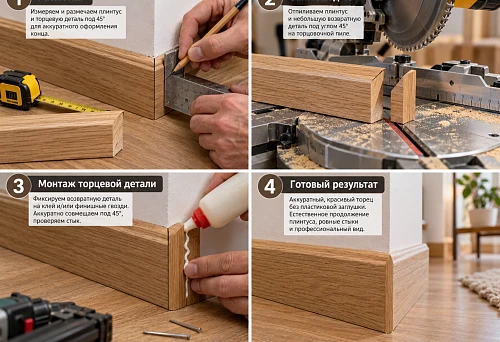
If the arch radius is less than 80–100 cm, be sure to use flexible polyurethane moldings or assemble the arch from short segments with carefully fitted joints. Details on installing arch stucco are described in the material installation of polyurethane molding.
How not to overload an arched opening: seven rules
Architectural decor is about balance. Overloading an opening is as bad as leaving it bare. Here are practical rules to help maintain that balance.
Rule 1. Small arch — thin molding. For a narrow corridor or small opening up to 90 cm wide, choose molding no wider than 4 cm. Wide molding will visually narrow the opening to the limit.
Rule 2. Low ceiling — do not add tall decorative elements above the arch. If the distance from the top of the arch to the ceiling is less than 30–40 cm, a large central overlay above the arch will "press down" on the space. In this case, it's better to limit yourself to molding or use a minimal-height central element.
Rule 3. Narrow corridor — avoid voluminous relief. In a corridor up to 120 cm wide, a person passes very close to the arch. Deep relief with large ornamentation will look excessive and inappropriate up close. Prefer a smooth profile.
Rule 4. Classic requires symmetry. If you choose a classic or neoclassical design — not a single random asymmetrical detail. Side elements are paired. The central overlay is strictly on axis. Moldings on both sides are of the same profile.
Rule 5. Modern interior — stucco in the color of the walls. Contrasting white stucco on dark or saturated walls looks expressive but requires very precise selection. If unsure, paint it the color of the wall. It's always safe and always stylish.
Rule 6. Do not mix incompatible ornaments. A baroque central overlay with floral swirls and a geometric rectilinear molding are two different stylistic languages in one phrase. Choose one ornamental key and follow it consistently.
Rule 7. Connect the arch with the interior. The arch molding should echo the moldings on the walls of adjacent rooms. The baseboard at the base of the side panels should match the baseboard in the corridor and living room. The cornice above the arch should be coordinated with the cornices in both adjoining rooms.
Application scenarios: where stucco for arches is installed
Arched openings are found in various zones of modern interiors. Let's explore how stucco decor works in each of them.
Transition between kitchen and living room
One of the most common scenarios in open-plan apartments or combined spaces. Here, the arch acts as a soft zone divider—it marks the boundary without a physical barrier.
Stucco around such an arch should be moderate: the kitchen space style is typically more concise than the living room. Optimal is a thin molding along the contour, a small central overlay, painting in the wall color. The stucco should connect the two spaces, not create an additional accent that competes with both the kitchen set and the sofa.
The entire range is suitable for this scenario stucco decoration STAVROS in the neoclassical and modern interior category.
Hall and living room: grand transition
The arch from the hall to the living room is the most visible arch in the house. Here, the most complete decor option is justified: molding along the contour, a central overlay above the arch, side elements at the 'heel' points, pilasters on the sides, connection with the living room cornice. This is an architectural accent that sets the tone for the entire interior.
The decor of this arch must be clearly coordinated with the overall decorative system of the hall and living room: if the living room uses moldings of a certain profile and style, the arch molding should belong to the same line.
Corridor: modest but with character
A corridor is a narrow space where the decor should be even more restrained than in rooms. For an arch in the corridor, choose a minimal design option: a thin molding, possibly a small central overlay, painted in the wall color. No voluminous ornament, no side elements if the corridor width is less than 120–130 cm.
At the same time, even a minimal molding in the corridor produces a noticeable effect: the arch gains clarity, the corridor gains a sense of thoughtfulness. This is one of those cases where a small effort yields a disproportionately large visual result.
A niche with an arched finish
Arched niches — decorative or functional (for a TV, a vase, a fireplace) — are designed according to the same logic as passage arches, but with one difference: the niche is visible only from the front. Therefore, the decor here can be slightly richer than for a passage opening — there is no risk that the ornament will look heavy when viewed at an angle.
For an arched niche, the following are appropriate: molding along the contour, a central overlay, side ornamental elements, decorative inserts inside the niche at the corners. A complete system of decorative elements from the STAVROS catalog allows you to create a finished niche composition without going beyond one style line.
Study: strictness as a principle
An arch in a study is a special case. Everything here should be geometrically precise, without plant ornaments and baroque curls. A strict molding of a rectilinear profile, possibly a small geometric central element, painted in a contrasting wall color — this is the maximum that is appropriate in a workspace.
For study design, moldings with a rectangular or stepped profile from the section are suitable of polyurethane moldings.
Material and finish: what you need to know about polyurethane for arches
Polyurethane stucco for an arched opening has a number of properties that make it especially convenient for this application.
Lightness. The arched molding is held on glue without additional fasteners. Polyurethane weighs 5–8 times less than plaster, which reduces the load on the adhesive joint and simplifies installation on curved surfaces.
Flexibility. Special flexible polyurethane moldings are designed specifically for arches and curved surfaces. They bend to any radius without heating and without special equipment.
Relief precision. Polyurethane reproduces ornamental details with high precision. Central overlays and side elements have a clear, expressive relief that does not become "blurry" when painted.
Paint acceptance. Polyurethane accepts acrylic, alkyd, and decorative paints. For an arch, it is recommended to prime the surface before painting — this improves adhesion and prevents yellowing.
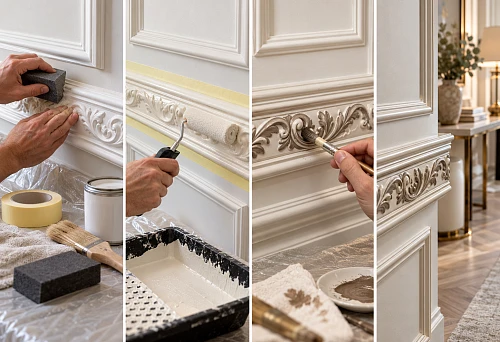
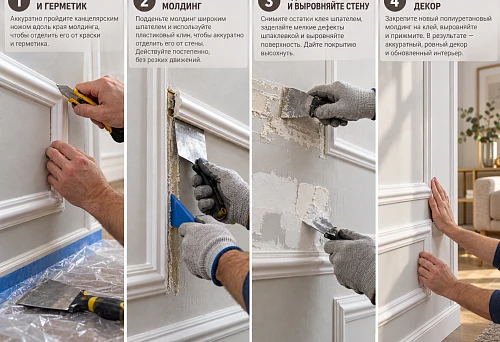
Joints. The joint between the molding and the central overlay, side elements, and wall surface must be carefully filled with acrylic putty or finishing putty, then painted in the overall tone. Only with thorough joint sealing will the arch decor look like a monolithic architectural detail, rather than a set of glued strips.
About choosing the right glue for installing polyurethane elements — in the article what to glue polyurethane molding with.
Mistakes when choosing stucco for arches: what most people do
Knowing typical mistakes in advance makes them easy to avoid. Let's list the most common ones.
Molding too wide. This is the first and most common mistake. A wide molding visually narrows the opening and makes the arch "heavy." Recalculate the molding width based on the opening width, not personal aesthetic preferences.
Ignoring the arch radius. Ordering a rigid linear molding for an arch is a waste of money. Be sure to check when ordering whether the molding is suitable for flexible installation along an arch, or if a special flexible profile is needed.
Missing central element. Molding along the contour without a central overlay is like a frame without a painting. Complete the arch with an accent at the top.
Disconnection from adjacent decor. Arch decor detached from wall moldings and ceiling cornices looks like a random detail. Always coordinate the style and profile of the arch molding with the decor of adjacent rooms.
Mixing styles. Baroque ornament on the central overlay with a minimalist molding is a visual conflict. Maintain stylistic unity.
Asymmetrical side elements. Asymmetry in arch design is perceived as an installation error, even if intentional. An arch is a symmetrical structure, and the decor should support it.
Where to buy arch stucco: STAVROS catalog sections
All elements needed for arch opening design are collected in the STAVROS catalog. Here is direct navigation to the required sections.
For central and side overlay elements — decorative accents above the arch and at the 'heel' points — go to the section polyurethane molding decoration. Here, overlay ornamental and geometric elements of all scales are collected, including items for arch decoration.
For moldings along the arch contour and vertical sides — including flexible linear elements for arches — the section of polyurethane moldings. A wide selection of profiles from thin modern to ornamental classic.
For corner inserts, connecting elements at the transition points of the arch into the vertical, and decorative accents within frames — section polyurethane molding decor.
For a general overview of the assortment and selection of additional decorative elements that will help tie the arch design with the interior of adjacent rooms — main section stucco decoration. Here you can compare profiles, assess scales, and select elements that will work in the same system as wall moldings and ceiling cornices.
If you are planning a full interior set, including not only arch decor but also Polyurethane wall decor — moldings, panels, pilasters — go to the corresponding section. Here are also ready-made style collections, the elements of which harmoniously combine with arch decor.
Want Buy molding for a complete set — walls, arch, and ceiling — start with the main section of polyurethane products and use filtering by element type. This way you will find the needed items faster and not miss important accompanying details.
FAQ: answers to popular questions about stucco for arches
Can you decorate an arch with polyurethane stucco yourself, without a craftsman?
Yes. Polyurethane elements are mounted with glue without drilling. The molding is cut with a regular knife or hacksaw. Joints are filled with acrylic putty. The only tricky part is flexible installation along the arch radius, but when using a special flexible molding, this is solved without special tools.
What to use for framing the arch — flexible molding or a set of segments?
Depends on the radius. For smooth arches with a large radius (from 120 cm), you can use either flexible molding or a set of short segments with fitted joints. For tight arches with a small radius (up to 80 cm), it is better to use special flexible trim.
Is a central overlay needed above each arch?
No. For a modern and minimalist interior, molding along the contour is sufficient. The central overlay is an additional accent that is appropriate in classic, neoclassical, and Provencal interiors, as well as in the case of a high opening and a ceremonial function of the arch.
How to coordinate the arch decor with moldings in adjacent rooms?
Use moldings from the same style line for the arch and wall decor of adjacent rooms. If the moldings on the living room walls have a stepped profile, the arch molding should be of the same profile or similar in pattern.
What glue to use for installing arch molding?
Acrylic mounting glue or special glue for polyurethane. For curved surfaces, apply glue with a slight excess along the entire contact length. Detailed selection of adhesive composition is in the article. what to glue polyurethane molding with.
Can the arch molding be painted the color of the wall?
Yes, this is one of the best modern techniques. Polyurethane evenly accepts acrylic paint and retains color for years. The surface is pre-primed.
Is it necessary to coordinate the arch with the baseboard and cornice?
Mandatory. The molding along the sides of the arch must either transition into the baseboard at the bottom or end at the height of the top edge of the baseboard. The cornice above the arch should echo the profile of the arch molding or create a deliberate contrasting accent.
Can stucco molding be used for arches in the bathroom?
Yes. Polyurethane is absolutely moisture-resistant and does not deteriorate in high humidity. For the bathroom, choose moldings with a minimal profile and paint them with moisture-resistant paint.
About the company STAVROS
STAVROS is a specialized online store of polyurethane stucco decor with a full range for interior solutions of any complexity. In the catalog moldings STAVROS you will find all the elements needed for decorating arched openings: flexible and linear moldings for contours, decorative overlay elements for central and side accents, decor for moldings, pilasters, capitals, and full linear products. The company works with private customers, designers, and construction teams across Russia, ensuring precise dimensions, professional descriptions, and reliable delivery. STAVROS is the choice of those who approach interior design systematically and want a result that speaks for itself.