Article Contents:
- A dresser 160 mm high won't work: the size refers only to the frame
- Where the boundary between the frame and the body lies
- First level — wooden frame
- Second level — body
- Third level — functional filling
- Fourth level — face parts
- Fifth level — top and finishing
- Who is responsible for assembly
- Why 780 mm cannot immediately be called the width of the facades
- Why 500 mm does not equal the clear depth of the drawer
- Why 160 mm does not equal the height of the finished dresser
- Which dimensions should be requested additionally
- Height to match existing furniture
- Height for specific use
- Height including countertop
- External dimensions
- Body material
- Side panels and bottom construction
- Back panel
- Connection to the frame
- Finishing before or after connection
- One row or multiple columns
- Height of each front
- Type of guides
- Load capacity
- Access to the mounting
- One overlay on the entire front or repeat on each drawer
- Symmetry relative to the body or handles
- Why frame trim changes handle placement
- One handle for a wide drawer
- Two handles
- Knob handle
- Bracket handle
- Beech frame
- Oak frame
- Frame wood type and body material
- Frame wood type and tabletop
- One material does not guarantee the same shade
- Paint before assembly or after
- Room dimension constraint
- Required capacity
- Number of facades
- Top load
- Front style
- Finishing
- Assembly conditions
- Mistake 1. Taking 160 mm as the height of the finished dresser
- Mistake 2. Considering 780 mm as the width of the fronts
- Mistake 3. Considering 500 mm as the clear depth of the drawers
- Mistake 4. Seeing the word "frame" and expecting a finished box
- Mistake 5. Deciding that the hardware set applies to the entire dresser
- Error 6. Counting drawers as included
- Error 7. Not asking about guides
- Error 8. Ordering the countertop after furniture manufacturing
- Error 9. Choosing handles after drilling facades
- Error 10. Adding overlays after installing handles
- Error 11. Not determining the cabinet material
- Error 12. Counting enamel preparation as finished paint
- Error 13. Ordering oak for texture without checking the finish
- Error 14. Not assigning an assembler
- Error 15. Not checking the cabinet mounting
- Error 16. Consider the image as a complete set
- Error 17. Not checking the drawing
- Error 18. Ordering only one item without a total estimate
- Error 19. Not accounting for the thickness of the finish
- Error 20. Mixing responsibilities of several contractors
- Error 21. Not checking the delivery
- Error 22. Not comparing adjacent frames
- Error 23. Choosing material only by the name of the species
- Error 24. Not determining the load of the drawers
- Error 25. Not providing access for assembly
- Step 1. Open the product page
- Step 2. Choose the wood species
- Step 3. Check the package contents
- Step 4. Receive the drawing
- Step 5. Calculate the cabinet
- Step 6. Determine the drawers and slides
- Step 7. Choose the countertop
- Step 8. Design the facades
- Step 9. Agree on the finish
- Step 10. Assign the assembler
- Step 11. Compile the overall estimate
- Step 12. Check the delivery
- Why does the STL-026-13 card specify a height of 160 mm?
- Is STL-026-13 a ready-made dresser?
- What is confirmed to be included in the product?
- Is the dresser body included?
- Are the drawers included?
- Are the guides included?
- Is the tabletop included?
- Are the fronts included?
- Are the handles included?
- What does the size 780 × 500 × 160 mm mean?
- Can 780 mm be considered the width of the finished dresser?
- Can 500 mm be considered the depth of the drawer?
- How to calculate the height of the finished dresser?
- Can I choose the height of the body myself?
- Should I choose beech or oak?
- Can I order oak with visible texture?
- What does the "Prestige" sanding quality mean?
- Will the frame arrive assembled?
- Can I assemble it myself?
- Is a craftsman needed?
- How can I find out the composition of the fittings?
- Can I use STL-026-13 for a nightstand?
- Can I install any cabinet on top?
- How do I choose the number of drawers?
- When should I buy the handles?
- When should I choose overlays and moldings?
- How do I calculate the price of a finished dresser?
- Can I buy only one STL-026-13?
- Is a spare frame needed?
- Where can I see other dresser frames?
- Where can I see other furniture bases?
- What to check before final payment?
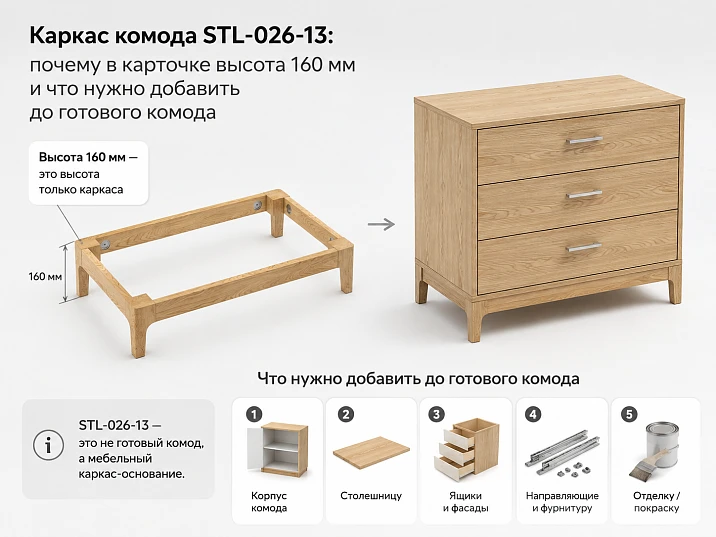
The phrase "dresser frame" can easily be read as "almost finished dresser." A buyer opens the STL-026-13 listing, sees a wooden structure, chooses beech or oak, and then notices the dimensions 780 × 500 × 160 mm. A natural question arises: why is the height only 160 mm if a regular dresser is noticeably taller? Where are the body, drawers, fronts, and tabletop? What exactly will arrive after placing the order?
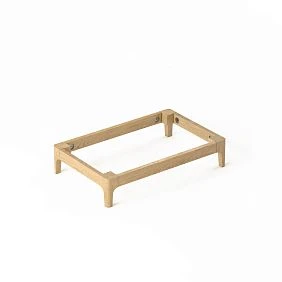
The answer lies in the product name itself. STL-026-13 is a dresser frame, that is, the structural wooden base of a future piece of furniture. The size 780 × 500 × 160 mm refers to the frame being sold, not to the entire finished dresser with the body, drawers, fronts, tabletop, handles, and finishing installed on top. Therefore, 160 mm should not be perceived as the final height of the furniture.
The listing confirms the article number STL-026-13, the size 780 × 500 × 160 mm, execution in beech or oak, "Prestige" sanding quality, preparation for enamel, delivery in disassembled form, and a set of hardware. Everything else must be explicitly stated in the specification. Until the tabletop, body, fronts, guides, or handles are listed as separate items, they cannot be considered automatically included just because the buyer imagines a finished dresser in the image.
This is not a drawback of the frame. On the contrary, such a design allows you to assemble furniture for a specific room: choose the body height, number of drawers, material of the fronts, tabletop thickness, handle placement, and type of finishing. But design freedom requires a precise order. Before Buy dresser frame STL-026-13, you need to separate two things: the confirmed configuration of the frame itself and the full composition of the future piece of furniture.
A dresser 160 mm high won't work: the size refers only to the frame
The confusion arises from the habit of perceiving the dimensions in the listing as the external dimensions of the finished product. For a completed cabinet, table, or nightstand, this logic often works: the specified values describe the item that will stand in the room after assembly. In the case of STL-026-13, what is sold is not a finished dresser, but its separate structural part.
The frame is located in the lower part of the future furniture and bears the body, which is designed separately. This is why one of the values is 160 mm. This size describes the frame, not the sum of all elements above it.
The final height depends on at least the following components:
-
the vertical size of the frame itself;
-
the height of the installed body;
-
tabletop thickness;
-
the design of the connecting joint;
-
the specified technological clearances;
-
the thickness of finishing layers, if they affect the fit;
-
additional elements at the top or bottom, if provided by the project.
In a simplified form, the design calculation can be expressed as follows:
Final dresser height = frame height + body height + tabletop thickness + dimensions of the provided connecting and decorative components.
The formula shows the principle but does not replace a drawing. You cannot take 160 mm, add a randomly chosen body height, and consider the project complete. You need to determine how the body is installed on the frame, whether it fits between individual parts of the structure, whether it rests on top, whether there is a transition piece, and how the tabletop is installed.
The same caution is needed when reading the dimensions 780 and 500 mm. Without checking the drawing, one cannot automatically assert that 780 mm equals the final width of the facades, and 500 mm is the clear internal depth of the drawer. These are the dimensions of the frame being sold. The overall dimensions of the carcass and the usable space inside the furniture are calculated separately.




Where is the boundary between the frame and the carcass
The frame is the lower load-bearing and decorative base. The carcass is the volumetric part that houses drawers, partitions, guides, the back panel, and facades. In finished furniture, these elements are perceived as a single whole, but in the estimate and production, they remain separate items.
This separation is convenient for several reasons. The same frame can be paired with a carcass of different heights. The buyer can choose three wide drawers, four lower ones, or another configuration if the developed project allows it. The countertop also does not have to match the frame material: it can be coordinated with the facades, other furniture, or the overall room decor.
However, versatility does not mean automatic compatibility with any random carcass. The base and carcass must match in support points, dimensions, mounting method, and load distribution. Therefore, STL-026-13 is purchased not as a decorative stand that can be placed under any box, but as the base of a pre-calculated dresser.
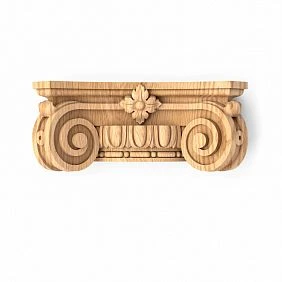
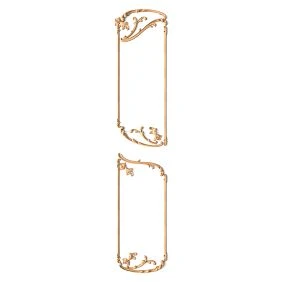
Our factory also produces:

What is confirmed for STL-026-13
Below are the characteristics that can be relied upon when preparing an order.
| Parameter | Confirmed data | Practical Meaning |
|---|---|---|
| Article number | STL-026-13 | In the specification, the number cannot be shortened or replaced with a general name |
| Product type | Chest of drawers frame | This is a structural base, not a finished piece of furniture |
| Size | 780 × 500 × 160 mm | The values refer to the frame; the purpose of each dimension is verified against the drawing |
| Material | Beech or oak | The breed is selected when configuring a specific configuration |
| Sanding quality | «Prestige» | Confirmed method for preparing a wooden surface |
| Preparation | For enamel | The final color and the painting cycle itself cannot be considered automatically included |
| Delivery condition | Disassembled | Assembly of the structure will be required |
| Hardware | Set of fittings | The exact composition needs to be checked in the specification |
| Purpose | The basis of the future dresser | The body, facades, drawers, and countertop are calculated as parts of the full project |
| Product card | STL-026-13 | The point of selecting the material, quantity, and current order conditions |
The table answers the main question: what the buyer actually selects in the product card. It does not provide grounds to consider drawers, guides, countertop, or finished painting as included. The presence of such items is confirmed not by the general purpose of the product or by the image, but by the written order specification.
Get Consultation
The furniture frame and the finished body are different levels of configuration
The phrase "what is a furniture frame" sounds theoretical, but for the buyer of STL-026-13 the answer is extremely practical. The frame is the base that sets the lower geometry of the future dresser, participates in load distribution, and forms the visible wooden part of the structure. The finished dresser appears only after the frame is connected to the body and all functional elements.
Conventionally, the future item can be divided into five levels.
The first level is the wooden frame
This part includes STL-026-13. The buyer chooses beech or oak, receives the structure disassembled and the provided set of hardware. The exact composition of wooden parts and hardware must be reflected in the order documents.
The second level is the body
The body creates useful volume. It determines the overall height of the dresser, the depth of internal compartments, the number of drawer rows, and the position of the back panel. The body material is not specified in the confirmed specifications of STL-026-13, so it is calculated separately.
The third level is functional filling
This includes drawers, guides, internal partitions, and other mechanisms. They are selected taking into account the number of stored items, the expected load, and the body structure.
The fourth level is face parts
Facades, handles, overlays, and moldings shape the furniture's appearance. They also affect dimensions: gaps are needed between facades, handles require holes, and applied decor takes up space on the surface.
Fifth level — top and finish
The tabletop completes the dresser from above. The finish unifies the frame, body, and decorative elements by color and texture. Preparation of STL-026-13 for enamel does not mean that the enamel has already been selected, included in the cost, and applied.
Such a breakdown protects against two opposite mistakes. The first is expecting an almost finished dresser in one box. The second is considering STL-026-13 an ordinary blank without independent value. In fact, the frame already solves a specific structural and visual task, but requires further design.
What does delivery in disassembled form mean
The phrase "in disassembled form" refers to the state of the frame upon transfer to the buyer. It does not mean that a disassembled complete dresser will arrive with STL-026-13.
The buyer receives frame parts that need to be assembled into the intended structure. A set of hardware is confirmed with the product, but the exact list of items must be checked. The word "set" itself does not explain:
-
which specific connecting elements are included;
-
whether the hardware is intended only for assembling the frame;
-
whether body-to-frame fastening elements are included;
-
whether drawer slides are included;
-
Do the tabletop mounts come included?
-
Are adjustable supports provided?
-
Are additional tools and materials needed?
The value of the confirmed hardware kit cannot be extended to the entire future dresser. The safest wording in the order is as follows: "Hardware kit for STL-026-13 — composition according to the specification." Then the manager or manufacturer specifies the exact list.
Who is responsible for assembly
The frame is delivered disassembled, therefore, an assembly contractor must be assigned in the project. This can be a furniture workshop, an assembler, the cabinet manufacturer, or another specialist. The buyer must understand in advance who will:
-
check the completeness;
-
assemble the frame;
-
control the geometry;
-
connect it to the cabinet;
-
perform the painting;
-
will install boxes and facades;
-
will secure the countertop;
-
is responsible for the final result.
If different operations are performed by different contractors, the boundaries of responsibility are fixed before purchase. Otherwise, the painter may wait for the assembled structure, the assembler for painted parts, and the cabinet manufacturer for exact dimensions of the already finished frame.
What cannot be considered automatically included
The main rule is simple: until a specific item is listed in the specification, it cannot be considered part of order STL-026-13.
| Possible part of the future dresser | Can it be considered automatically included | What to ask before payment |
|---|---|---|
| Tall cabinet | No | Is the body manufactured and who calculates its dimensions |
| Drawers | No | How many boxes are provided, what are they made of |
| Guides | No | Which type is selected and are they included in separate configuration |
| Facades | No | Who produces the facades, what are their dimensions and gaps |
| Tabletop | No | Is it included, what are the material, thickness, and overhangs |
| Back panel | No | Is it provided by the body design |
| Furniture handles | No | Model, quantity, mounting dimensions, and drilling |
| Decorative overlays | No | Article numbers, material, quantity, and placement |
| Moldings | No | Profile, length, cutting map, and finish |
| Ready enamel | No | Who selects the color, primes, and paints |
| Full assembly of the dresser | No | Which contractor is responsible for assembling all parts |
| Delivery of the finished item | No | The frame or already assembled furniture is delivered |
The wording "cannot be considered automatically included" differs from the categorical statement "this is definitely not there." Some elements may be added to the individual estimate. But the buyer must see them as separate line items, not guess from the image.
The size 780 × 500 × 160 mm should be read from the drawing, not out of habit
Three numbers are often automatically perceived as width, depth, and height. In a furniture card, this order may indeed be used, but when processing STL-026-13, the purpose of each value must be checked against the drawing of the specific product. This is especially important if the frame has protruding elements, a complex contour, or internal mounting dimensions.
Why 780 mm cannot be immediately called the width of the fronts
Even if 780 mm corresponds to the external horizontal dimension of the frame, the width of the body may be calculated differently. Protruding parts, internal support zones, technological gaps, or connecting nodes are possible. The fronts already depend on the body, the number of drawers, and the gaps between fronts.
Therefore, you cannot order facades with a width of 780 mm just because that number is listed in the frame's card.
Why 500 mm does not equal the clear depth of the drawer
The external depth of the base and the usable depth of the drawer are different values. The thickness of the back panel, the position of the facade, gaps, and the requirements of the selected guide rail system are subtracted from the overall dimensions of the cabinet.
Even if 500 mm describes one of the external dimensions of the frame, a drawer of that depth may not fit. The clear size is calculated by a furniture designer.
Why 160 mm does not equal the height of the finished dresser
This dimension refers to the frame itself. On top, a cabinet body appears, then a countertop, and possibly additional connecting or decorative parts. The final height can only be determined after selecting the entire structure.
Which dimensions should you request additionally
A single line of 780 × 500 × 160 mm is not enough to manufacture the rest of the furniture. For a complete project, you need:
-
a drawing of the frame;
-
external dimensions;
-
internal support distances;
-
dimensions of connection points to the body;
-
position of holes or fastening units;
-
height of support and decorative parts;
-
allowable body overhangs;
-
requirements for countertop installation;
-
dimensions after assembly;
-
data that may change after finishing is applied.
Not all listed parameters are necessarily present as separate values in the card. Some may be clarified in documentation or with a manager. The main thing is not to assign them yourself.
From what height to start the finished dresser project
A customer often starts with the article number, although it is more convenient to start a project with the required final dimension. First, you need to decide what height the finished furniture should be in the room. After that, the frame, body, and tabletop are allocated from the overall size.
Height to match existing furniture
If STL-026-13 is used in the bedroom next to a bed, wardrobe, or dressing table, the top surface of the dresser should align with the surrounding items. They don't have to be identical, but the difference should be intentional.
Measure:
-
the height of adjacent furniture;
-
the height of outlets and switches;
-
the lower edge of a mirror or picture;
-
the height of the windowsill, if the dresser is by the window;
-
the position of the wall light;
-
clear space for opening drawers.
Height for specific use
A dresser can serve only for storage or simultaneously be used as a base for a mirror, lamps, decorative items, or equipment. The final height affects the convenience of access to the top surface.
One should not assume that a single frame automatically defines a standard dresser. STL-026-13 leaves the designer freedom to determine the height of the body above the base.
Height including the tabletop
The thickness of the tabletop is added to the total height. If the material protrudes beyond the body, it also affects the width and depth of the finished item.
Before manufacturing the body, the tabletop must be selected at least at the level of confirmed design parameters:
-
outer size;
-
thickness;
-
material;
-
overhangs;
-
edge shape;
-
mounting method;
-
finishing.
The tabletop for a dresser is a separate item, not a top part "by default"
The request "tabletop for a dresser" often arises after the purchase of the base. A person expects that the top can be selected later. Sometimes this is possible, but postponing the decision affects the entire project.
The thickness of the countertop is included in the calculation of the final height. Width and depth determine the overhangs relative to the body and frame. The material affects the weight, the method of attachment, and the overall appearance.
Before ordering the body, answer the following questions:
-
Will the countertop match the size of the body or protrude?
-
Should it match the material of the frame?
-
Is a covering enamel or visible wood texture planned?
-
What thickness will the top be?
-
Is treatment of visible edges needed?
-
How is the countertop attached to the body?
-
Does the project allow for subsequent removal?
-
Do the overhangs interfere with the opening of the top drawer?
-
Should the top plane support additional load?
-
Who is responsible for manufacturing and installation?
Until answers are received, the cost of STL-026-13 cannot be considered as the price of a finished dresser.
Body above the frame: which parameters to determine before production
The frame for the dresser sets the base, but the useful volume is formed by the body. Errors in its design cannot be corrected by replacing handles or decor.
External dimensions
The body must correctly rest on STL-026-13. Its width and depth are not determined only by the first and second numbers from the card. A connection joint is needed.
Body material
Confirmed frame materials are beech or oak. The body material can be different, but it must be chosen deliberately. If all furniture is painted with enamel, different bases can be visually unified. If the texture is left visible, the combination of materials becomes part of the design.
Construction of side panels and bottom
The thickness of parts affects the internal space. The thicker the sides, the less useful width of the drawers with the same external size.
Back panel
It affects the depth of the drawer and the rigidity of the body. The presence, material, and installation method cannot be derived from the STL-026-13 card.
Connection to the frame
The body should not just be placed on top, but securely connected to the base according to the project. The attachment points, access to them, and assembly sequence are determined by a specialist.
Finishing before or after connection
If the body and frame are painted separately, the joints and shade need to be controlled. If finishing is done after assembly, the craftsman must have access to all visible surfaces.
The number of drawers changes the entire dresser
Three wide drawers and six small drawers can use a common external body, but will require different internal construction, fronts, guides, and handles.
One row or several columns
A vertical column of wide drawers creates one load pattern. Two columns require a central partition and a different distribution of fronts.
Height of each front
The front is not equal to the height of the inner drawer. Design gaps are needed between face panels. The top and bottom fronts may have special offsets relative to the countertop and frame.
Type of slides
Different mechanisms require specific internal dimensions and mounting distances. Choosing slides after manufacturing the carcass is risky: the available space may not match the system.
Load
A dresser for linen, documents, dishes, or heavy items requires different calculations. STL-026-13 remains the base, but all furniture must be calculated as a single structure.
Access to the mounting
Drawers may overlap areas where the carcass connects to the frame. The assembly sequence is determined in advance.
Fronts for a dresser: the size cannot be taken from the external dimension of the carcass
Fronts form the face of the item, but their dimensions appear only after calculating the carcass and drawers.
For each front, determine:
-
width;
-
height;
-
thickness;
-
gaps;
-
position relative to the side panels;
-
opening type;
-
handle location;
-
material;
-
finishing;
-
placement of the decor.
If relief elements are planned on the facades, it is better to account for them before drilling the handles. In the catalog, you can order wooden overlays for the dresser facades, but each overlay must match the size of the front panel and not interfere with the grip.
One overlay across the entire facade or a repeat on each drawer
Large decor can combine several facades into a single composition, but when opened, the pattern is divided by inter-facade gaps. Small repeating overlays highlight each drawer separately.
The choice affects the quantity of items. You cannot order one piece "for the dresser" until its exact location is determined.
Symmetry relative to the body or the handle
The handle can be positioned in the center of the facade, and the decorative overlay can be above, below, or on the sides. If the decor is designed relative to the entire dresser, individual drawers must maintain the overall rhythm.
Molding on facades: the frame is calculated after determining the gaps
Thin furniture molding can frame the perimeter of a drawer, emphasize the central field, or connect facades with the frame. However, the profile cannot be calculated based on the dimension of STL-026-13.
First, the size of each facade is approved. Then choose:
-
the shape of the molding;
-
profile width;
-
distance to the edge;
-
dimensions of the inner field;
-
method of joining corners;
-
material;
-
finishing;
-
direction of the relief.
After that, you can buy furniture molding for facades and create a cutting map.
Why frame finishing changes the handle position
If the handle is installed inside the molding contour, it needs free space. If it crosses the frame, the mounting bases can rest on the relief. If it is placed above the contour, the vertical balance of the facade changes.
Do not drill holes before laying out moldings and overlays. Otherwise, the finished decor will have to be adjusted to an already occupied area.
Handles for a dresser: the quantity depends on the facade scheme
Handles are not included in the concept of "frame". Even if the furniture is shown with hardware in the image, the specific model must be in the specification.
Before buy wooden handles for a dresser, determine:
-
the number of facades;
-
one or two handles for a wide drawer;
-
handle type;
-
mounting dimensions;
-
position of holes;
-
facade thickness;
-
length of the fasteners;
-
color and material;
-
Compatibility with overlays and moldings.
One handle for a wide drawer
The composition looks calmer, but the grip and load are concentrated in the center. You need to ensure that the drawer width and mechanism allow for this scenario.
Two handles
The facade gets a symmetrical rhythm. Decor can be placed between the handles if it does not interfere with the palms.
Knob handle
Each drawer requires one or more drilling points. The button base must fit on a flat area.
Pull handle
The center distance becomes the key parameter. It is approved before manufacturing or drilling the facade.
Beech or oak: the question concerns not only the color of the frame
The STL-026-13 card allows you to choose beech or oak. Since preparation for enamel has been confirmed, the decision needs to be linked to the overall finish of the dresser.
Beech frame
Beech can be considered when the frame is painted opaquely and the natural grain should not become the main visual element. But choosing beech does not mean that the enamel has already been applied.
You need to determine:
-
color;
-
gloss level;
-
priming system;
-
who performs the finishing;
-
is the body painted at the same time;
-
should handles and decor have the same color.
Oak frame
Oak is also available in the card. If the project involves enamel, the texture will be partially or fully covered by finishing layers. If the buyer wants to preserve the visible oak grain, the possibility of different preparation or a transparent finish should be separately confirmed. Finishing options from other product groups cannot be automatically transferred to STL-026-13.
Frame wood species and body material
They do not have to match if the furniture is painted in one color and the components are calculated correctly. But with a transparent or partially transparent finish, the difference in materials will be noticeable.
Frame wood species and tabletop
An oak frame with an oak tabletop can create a solid wood system. A beech frame under enamel can be combined with a painted body. These are design scenarios, not a confirmed configuration of STL-026-13.
One material does not guarantee the same shade
Even details from the same species have natural differences. With a visible texture, a consistent finish is needed and, for a large project, sorting details by overall impression.
Preparation for enamel is not equal to finished painting
This difference is especially important when calculating the total price.
Preparation for enamel means that the product is intended for a subsequent covering finish within an appropriate technology. It does not automatically mean:
-
the selected color;
-
applied primer;
-
applied enamel;
-
patina;
-
gilding;
-
lacquer;
-
sanding between layers;
-
painting of the body;
-
painting of handles and decor;
-
assembly after finishing.
The exact scope of work is determined by a separate estimate.
For the project, you can to buy materials for furniture installation and finishing, but the choice of primer, enamel, glue, and auxiliary compounds depends on the base and the master's technique.
Paint before assembly or after
Both methods have limitations.
When finishing before assembly, it is easier to paint individual parts, but joints need protection from an excessive layer. When painting an assembled frame, it is easier to perceive the structure as a whole, but access to internal areas may be more difficult.
The decision is made by the master, taking into account the type of joints and the composition of the hardware.
Hardware kit: what questions to ask the manager
Confirmation of the hardware kit is useful, but it does not reveal its contents. Before payment, request a written list.
Minimum list of questions:
-
How many parts are included in the kit?
-
What connections are they intended for?
-
Does it include everything needed to assemble the frame itself?
-
Are additional screws, bolts, or dowels required?
-
Are the fasteners for attaching the frame to the body included?
-
Are supports or feet provided?
-
Is glue needed?
-
What tools will be needed?
-
Can the frame be assembled after painting?
-
Is there a recommended assembly sequence?
Guides, hinges, handles, or tabletop fasteners should not be independently attributed to the hardware kit. These items belong to other parts of the furniture and must be confirmed separately.
Total estimate: what a finished dresser actually costs
The price of STL-026-13 is the price of one item in the project. To understand the cost of the finished dresser, you need to compile a complete list.
| Position | Where to order | What to Check |
|---|---|---|
| Frame STL-026-13 | STAVROS | Beech or oak, quantity, confirmed configuration |
| Dresser body | Furniture production | Final dimensions, material, connection to the frame |
| Drawers | Production | Quantity, internal dimensions, material |
| Guides | Hardware supplier or production | Type, length, load, mounting dimensions |
| Tabletop | Separate order or production | Size, thickness, material, overhangs, fastening |
| Facades | Production | Dimensions, gaps, thickness, finish |
| Handles | STAVROS or separate configuration | Model, quantity, fit |
| Overlays | STAVROS | Article numbers, scale, location |
| Moldings | STAVROS | Profile, length, cutting |
| Finishing materials | STAVROS or painting workshop | Primer, enamel, compatibility |
| Assembly | Workshop | Responsible executor and stages |
| Delivery | According to the order terms | What exactly is being transported and in what condition |
The final price is calculated across all line items. Without such a list, a seemingly cheap project can unexpectedly grow after adding facades and mechanisms. The reverse situation is also possible: a ready-made frame reduces the volume of complex carpentry work and makes the estimate clearer.
How to calculate the cabinet without turning the article into a random drawing
The full dimensions of the cabinet must be determined by a furniture designer. But the buyer can prepare the initial data without which the calculation is impossible.
Room dimensional constraints
Measure the niche, wall section, or space between other furniture. Take into account the baseboard, outlets, door swing, and passage.
Required capacity
Make a list of items. A dresser for linens and a dresser for documents require different internal layouts.
Number of facades
Decide whether you need wide drawers, two columns, or a combination of drawers and doors.
Top load
If there will be a heavy object on the countertop, this is reported to the designer.
Front style
Handles, overlays, and moldings affect the size of the free field.
Finishing
Covering enamel and finish with visible texture require different material solutions.
Assembly conditions
Clarify whether the finished cabinet can be brought into the room or the furniture must be assembled on site.
With this data, the specialist connects the cabinet to STL-026-13. Without it, even an accurate frame drawing does not provide a complete project.
Practical example: a chest of drawers with three wide drawers
Let's consider not ready-made dimensions, but the logic of configuration.
The buyer selects STL-026-13 from beech under enamel. Above the frame, a body with three wide drawers is planned. For such a project, the following is required:
-
determine the external dimensions of the body;
-
calculate the height of three fronts;
-
set gaps;
-
select three sets of guides;
-
choose one or two handles for each front;
-
determine the thickness of the tabletop;
-
agree on the molding frame;
-
calculate the painting of the frame, body, and facades;
-
determine the attachment of the body to the base.
If two handles are used per drawer, six handles will be needed. If one — three. The quantity cannot be determined from the frame card.
If each facade is decorated with a wooden overlay, three elements will be needed, or another set according to the approved composition. If one pattern must run across all facades, precise layout relative to the gaps will be required.
Practical example: two columns of small drawers
This configuration increases the number of mechanisms and face parts. A central partition appears in the body.
For six drawers, the following may be required:
-
six facades;
-
six sets of guides;
-
six or twelve handles;
-
a larger number of decorative elements;
-
precise horizontal and vertical gap grid.
The STL-026-13 frame remains the same, but the functional configuration becomes significantly more complex. Therefore, the expression "dresser assembly kit" should cover not only the base but also all items in the overall estimate.
Practical example: a dresser with a wood texture
The buyer chooses oak, expecting to preserve the natural grain. However, the product card confirms preparation for enamel. Before payment, it is necessary to clarify whether the desired finish scenario is available for the specific order.
You cannot first buy an oak frame and then assume that any transparent finish will be compatible with the factory preparation. Requirements must be agreed upon in advance.
This project also checks:
-
tabletop material;
-
facade material;
-
texture direction;
-
handle shade;
-
combination with the body;
-
sorting of visible parts.
Practical example: a chest of drawers as part of a bedroom suite
Here the task is not only about a single piece. The frame must support the shape of the bed, nightstands, or wardrobe.
Before ordering, they compare:
-
height and shape of supports;
-
enamel color;
-
gloss level;
-
handle material;
-
molding profile;
-
character of decorative overlays;
-
The thickness of the tabletop;
-
overall proportion of the furniture.
You can look at solutions for dressers and cabinets, to determine the project direction, but the specific configuration of STL-026-13 is still calculated separately.
Practical example: a chest of drawers for the hallway
In the hallway, depth and passage width are especially important. You cannot take the 500 mm value from the card and automatically consider it the final depth of the finished item. The frame, facades, handles, and countertop can change the external dimensions.
Check:
-
passage width when the drawer is open;
-
distance to the entrance door;
-
position of the baseboard;
-
presence of electrical outlets;
-
height of the light switch;
-
free space for handles;
When a dresser frame is needed, and when another furniture base is needed
- A body with drawers or other sections is designed on top;
- The base dimensions are coordinated with the body;
- The decorative shape suits the furniture;
- The material and finish match the project;
- The craftsman can assemble and connect the structure;
- The final height is calculated taking into account 160 mm.
- An open console without a body is planned;
- A underframe is required;
- A frame of a different width is needed;
- the item must have a different depth;
- the load and construction do not match the dresser design;
- fully finished furniture is required.
- how the body rests on the frame;
- what height will the finished dresser be;
- how are the drawers arranged;
- what are the dimensions of the facades;
- where are the handles located;
- how does the molding frame run;
- what countertop completes the structure;
- how are the materials joined;
- in what sequence are assembly and painting carried out.
STL-026-13 is designed for a dresser project. However, the buyer may be looking for a base for a console, nightstand, table, or another item. Choosing based on a single appealing photo is risky.
A dresser frame is suitable when:
A different base is needed when:
For comparison of constructions, you can buy furniture frames and underframes, opening cards by specific purpose.
What to buy together with STL-026-13
Below is a commercial map of the project. It does not replace the specification, but shows which groups should not be forgotten.
| What to add | Why | What to check | Inner page |
| Frame STL-026-13 | Create a wooden base | Beech or oak, quantity, configuration | Buy dresser frame STL-026-13 |
| Another dresser frame | Compare shape and dimensions | Article, drawing, material | Order a frame for a dresser made of oak or beech |
| Wooden overlays | Arrange the facades | Size, quantity, location | order wooden overlays for the dresser facades |
| Furniture moldings | Assemble frame trim | Profile, length, cuts | buy furniture molding for facades |
| Wooden handles | Ensure convenient opening | Fit, quantity, drilling | buy wooden handles for a dresser |
| Installation and finishing materials | Assemble and paint elements | Compatibility with bases | to buy materials for furniture installation and finishing |
| Design project | Connect the base, body, and facades | All dimensions and configuration | Order a design project for the dresser |
| Delivery | Get the frame and related products | Address, delivery time, and shipment contents | Calculate delivery of the dresser frame |
It is not necessary to buy all items at once. But before paying for the frame, you need to understand where each missing part will come from.
A design project is not needed just for a pretty picture
For STL-026-13, the project solves specific technical issues:
Without a project, each contractor can count their part separately. The frame will turn out narrower than the body, handles will land on the molding, the countertop won't account for overhangs, and the slides will require different internal dimensions.
For complex furniture, it is reasonable Order a design project for the dresser before the production of the body and facades.
How to request a commercial offer for a ready-made dresser as a whole
Do not send only a link to STL-026-13 with the words "calculate the dresser". Prepare a clear task.
Specify:
- Frame article number.
- Selected wood species.
- Required final height.
- Maximum width and depth of the furniture.
- Number of drawers.
- Expected contents.
- Cabinet material.
- Material and thickness of the countertop.
- Requirements for facades.
- Model or type of handles.
- Presence of overlays and moldings.
- Color and degree of gloss.
- Who performs the assembly.
- Delivery address.
- Desired completion date.
Ask to break down the price by items. Then you can see how much the frame costs, how much the cabinet body, how much the mechanisms, finishing, assembly, and delivery.
Mistakes that cause the buyer to receive a different level of readiness
Mistake 1. Taking 160 mm as the height of the finished dresser
This is the frame size. For the final height, you need to add the body and the tabletop.
Mistake 2. Assuming 780 mm is the width of the facades
Facades are calculated based on the body and gaps.
Mistake 3. Assuming 500 mm is the clear depth of the drawers
The usable depth depends on the body and the slides.
Mistake 4. Seeing the word "frame" and expecting a finished box
The frame is the base, and the body is designed separately.
Mistake 5. Deciding that the hardware set applies to the entire dresser
The exact contents of the kit need to be checked.
Error 6. Count drawers as included
Drawers must be listed as a separate line item.
Error 7. Not asking about slides
Without a selected system, the cabinet cannot be finally calculated.
Error 8. Ordering the countertop after furniture production
Thickness and overhangs affect the final dimensions.
Error 9. Choosing handles after drilling facades
Mounting dimensions may not match.
Error 10. Adding overlays after installing handles
Decor may fall into the grip zone.
Error 11. Unable to determine the body material
The frame and body may require different preparation.
Error 12. Mistaking primer for enamel as finished paint
Finishing work is calculated separately.
Error 13. Ordering oak for its texture without checking the finish
The card confirms preparation for enamel. Any other finish is agreed upon separately.
Error 14. Not assigning an assembler
A disassembled frame requires a responsible contractor.
Error 15. Not checking the body attachment
A random connection may not match the design.
Error 16. Consider the image as a complete set
The specification remains the decisive document.
Error 17. Not checking the drawing
Dimensions cannot be assigned arbitrarily.
Error 18. Ordering only one item without a total estimate
The price of the finished item will remain unknown.
Error 19. Not accounting for the thickness of the finish
In precise fits, layers may matter.
Error 20. Mixing responsibilities of multiple contractors
Everyone must know their part and the sequence of work.
Error 21. Not checking the delivery
You need to understand whether a disassembled frame or a larger kit is delivered.
Error 22. Not comparing adjacent frames
Similar products may have different dimensions.
Error 23. Choosing material only by the name of the wood species
The wood species should be linked to the finish and the rest of the furniture.
Error 24. Not determining the load on the drawers
Guides and the cabinet body are selected based on actual usage.
Error 25. Not allowing access for assembly
The mounts may be covered by mechanisms.
Who is STL-026-13 suitable for
The frame should be considered by a buyer who:
- wants to create a dresser with custom body dimensions;
- is ready to separately calculate the functional filling;
- chooses a wooden structural base;
- plans a covering finish;
- can arrange professional assembly;
- understands the difference between a frame and finished furniture;
- wants to independently choose facades, handles, and decor;
- ready to provide a full specification.
STL-026-13 is especially useful for a project where the external character of the base has already been chosen, and the upper part should adapt to the room and storage tasks.
Who this purchase format is not suitable for
The frame will not suit a person who expects to receive a finished dresser after adding one item to the cart.
It is better to look for ready-made furniture or a comprehensive order if the buyer:
- does not want to separately manufacture the body;
- does not plan to choose drawers and guides;
- is not ready to handle finishing;
- does not have an assembly contractor;
- does not know the required dimensions;
- expects a fixed price for the finished item;
- wants furniture that can be immediately placed in the room.
This does not make STL-026-13 worse. It's just that the product is designed for a different purchasing path.
How to order STL-026-13 from STAVROS
Step 1. Open the product page
Check the article number and size 780 × 500 × 160 mm.
Step 2. Choose the wood type
Decide between beech or oak. Link your choice to the future finish.
Step 3. Check the package contents
Request a list of wooden parts and hardware.
Step 4. Get the drawing
Do not assign dimensions yourself.
Step 5. Calculate the body
Pass the drawing to a furniture designer.
Step 6. Determine drawers and guides
The quantity and mechanisms affect internal dimensions.
Step 7. Choose the countertop
Specify thickness, material, and overhangs.
Step 8. Design the facades
Calculate gaps, handles, and decor.
Step 9. Coordinate the finish
Preparation for enamel requires further finishing.
Step 10. Assign an assembler
Clarify the sequence of assembly and painting.
Step 11. Compile the overall estimate
Calculate all parts of the dresser separately.
Step 12. Check delivery
You can Calculate delivery of the dresser frame after confirming the order composition.
Final checklist before payment
Request a written response to each item:
-
The article STL-026-13 is confirmed.
-
The size 780 × 500 × 160 mm refers specifically to the frame.
-
Drawing received.
-
Beech or oak has been selected.
-
Grinding "Prestige" confirmed.
-
It is clear what preparation for enamel means.
-
It is indicated that the product is supplied disassembled.
-
The composition of the hardware kit is disclosed.
-
The wooden frame parts are listed.
-
It is confirmed whether the body is included.
-
It is confirmed whether the drawers are included.
-
It is confirmed whether the guides are included.
-
It is confirmed whether the facades are included.
-
Confirmed whether the countertop is included.
-
Confirmed whether the handles are included.
-
Confirmed whether the decorative trim is included.
-
The final height of the finished dresser is known.
-
The material of the body is determined.
-
The number of drawers is selected.
-
The facade gaps are calculated.
-
The thickness of the countertop is determined.
-
The guides are selected.
-
The location of the handles is specified.
-
The method of connecting the body to the frame has been agreed upon.
-
The assembly executor has been assigned.
-
The finishing has been calculated.
-
The total price of the finished item has been obtained.
-
Delivery conditions have been checked.
FAQ: questions about the frame of the STL-026-13 dresser
Why does the STL-026-13 card indicate a height of 160 mm?
Because 160 mm refers to the size of the frame being sold, not the total height of the finished dresser. The body, tabletop, and specified connecting elements are added on top.
Is STL-026-13 a finished dresser?
No, the item is designated as a dresser frame. The finished item requires a body, functional contents, facades, a tabletop, and finishing.
What is confirmed to be included in the product?
Confirmed: frame made of beech or oak, "Prestige" sanding quality, preparation for enamel, disassembled delivery, and a set of fittings. The exact list of parts and fittings should be checked in the specification.
Is the dresser body included?
The body cannot be considered automatically included. Its presence must be separately specified in the order.
Are the drawers included?
They cannot be considered included without a separate line. The number and construction of drawers are calculated according to the project.
Are the guides included?
The composition of the kit needs to be clarified. Drawer guides cannot be automatically attributed to frame hardware.
Is the tabletop included?
Its presence must be confirmed separately. The tabletop affects the final dimensions and cost.
Are facades included?
The presence of facades is confirmed only by the specification. Their dimensions are calculated based on the finished body.
Are handles included?
Handles cannot be considered part of STL-026-13 without a separate indication.
What does the size 780 × 500 × 160 mm mean?
These are the dimensions of the frame. The purpose of each value should be verified against the drawing.
Can 780 mm be considered the width of the finished dresser?
No. The final dimension depends on the body, tabletop, and connection unit.
Can 500 mm be considered the depth of the drawer?
No. The useful depth depends on the body, back panel, front, and guides.
How to calculate the height of the finished dresser?
You need to add up the vertical dimensions of the frame, body, tabletop, and the provided connecting nodes according to the drawing.
Can I choose the body height myself?
The desired height is set by the customer, but the structure is calculated by a specialist taking into account the frame, drawers, and tabletop.
Which is better to choose: beech or oak?
The choice depends on the overall finish. For STL-026-13, preparation for enamel is confirmed, so the wood species should be linked to the color, body material, and other wooden parts.
Can I order oak with visible texture?
The possibility of a different finish needs to be separately confirmed. A transparent finish cannot be automatically considered available if the card specifies preparation for enamel.
What does the "Prestige" grinding quality mean?
This is a confirmed surface preparation option. It does not replace the full priming and painting cycle.
Will the frame arrive assembled?
No, delivery is confirmed in disassembled form.
Can it be assembled independently?
Assembly depends on the design and skills. Before starting work, you need to obtain the diagram and check the set of fittings.
Is a specialist needed?
For connecting the frame to a custom cabinet, a professional furniture maker reduces the risk of errors in geometry and fastening.
How can I find out the composition of the fittings?
Ask for a written specification with the quantity and purpose of each item.
Can STL-026-13 be used for a cabinet?
The product is intended as a dresser frame. Use in another structure requires separate calculation and confirmation of compatibility.
Can any body be installed on top?
No. The body must match the support dimensions and the frame mounting method.
How to choose the number of drawers?
Based on the required capacity, body height, and the selected guide system.
When should I buy the handles?
The model is chosen before final drilling of the fronts and layout of the decor.
When to choose overlays and moldings?
Before manufacturing or drilling the fronts, to preserve free zones and symmetry.
How to calculate the price of a finished dresser?
Add up the cost of the frame, body, drawers, guides, top, fronts, handles, decor, finishing, assembly, and delivery.
Can I buy only one STL-026-13?
The quantity is selected according to the project. For one dresser, one frame is usually required, unless the drawing specifies otherwise.
Is a spare frame needed?
For a single item, random stock is usually not needed. For a furniture series, the quantity is calculated based on the number of items and the production plan.
Where can I see other dresser frames?
In a separate section, you can Order a frame for a dresser made of oak or beech after comparing dimensions and drawings.
Where can I see other furniture bases?
In the general catalog you can buy furniture frames and underframes for different types of furniture.
What should I check before final payment?
Article number, drawing, material, frame configuration, hardware composition, body, drawers, tabletop, facades, handles, finishing, assembly, and delivery.
STL-026-13 — an exact base, but not a promise of a finished dresser
The size 780 × 500 × 160 mm stops looking strange when the product is viewed correctly. This is the dimension of the frame — the lower structural base, not the entire finished item. The height of the dresser will appear after calculating the body, tabletop, and connecting nodes.
The card confirms beech or oak, "Prestige" sanding, preparation for enamel, disassembled delivery, and a set of hardware. Neither the body, nor the drawers, nor the facades, nor the tabletop, nor the handles can be considered automatically included until they are specified in the specification.
Before ordering, you need to obtain a drawing, determine the final height of the furniture, choose the number of drawers, calculate the facades and countertop, agree on the finish, and assign an assembler. Only after this does the price of STL-026-13 become part of a clear overall estimate.
STAVROS company allows you to choose a ready-made wooden frame, related categories of handles, overlays, moldings, and finishing materials. This path saves you from trying to cut out a complex base from scratch, but does not eliminate design work. First, determine exactly what is included in STL-026-13, then calculate the missing parts — and only after that move from a beautiful image to ordering a full-fledged dresser.