Article Contents:
- Bench, stool, banquette — what's the difference and why it matters when choosing a frame
- Why it's more profitable to buy a ready-made frame rather than start from scratch
- Where to use a bench or banquette frame: scenarios and tasks
- Hallway: banquette for putting on shoes
- Kitchen: bench at the dining table
- Bedroom: banquette by the bed
- Dressing room and storage area
- Hall, living room, lounge area
- Garden zone: veranda, terrace, gazebo
- How to choose the size of a bench frame — practical numbers
- Bench length
- Seat depth
- Seat height — a key parameter
- Frame material: why wood and which species to choose
- Solid wood
- Metal
- Plywood / MDF
- Legs for a banquette and bench — a separate topic
- When legs are part of the frame
- When legs are selected separately
- Frame load: what to consider
- Load calculation
- Seat sagging
- Load on legs with a soft seat
- Frame for a hallway bench: how not to make a mistake
- Size and traffic capacity
- Open space underneath or closed
- Combination with hallway interior
- Frame for a bench at a dining table: height and length for a specific table
- How to calculate bench height for a table
- How to calculate the length of a bench for a table
- Stability under lateral load
- Mistakes when choosing a frame for a bench or ottoman
- How to choose a coating for a wooden frame
- What to check before buying a frame — final checklist
- FAQ — answers to frequently asked questions about bench and ottoman frames
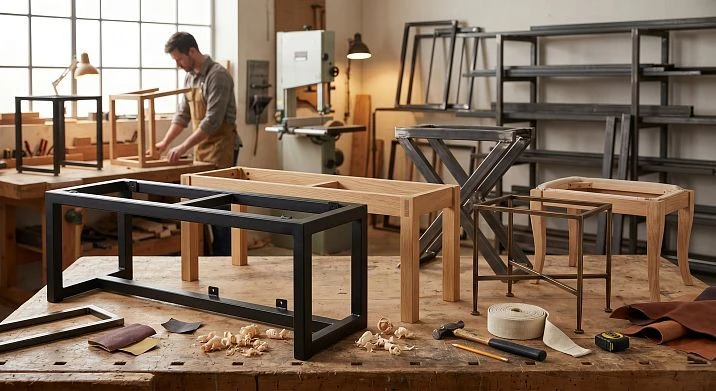
There are pieces of furniture that seem simple — but that's where the devil is in the details. A bench in the hallway. An ottoman by the bed. A bench along the kitchen table. At first glance, nothing complicated. But make a mistake with the height, the length, or the strength of the base, and instead of a comfortable piece, you get an unstable structure that either wobbles, is too low, or simply doesn't fit into the space.
A properly chosen frame for a bench or ottoman is half the result. It determines stability, seat height, the ability to install a soft seat, appearance, and durability. That's why choosing a frame requires the same attention as choosing upholstery fabric or legs.
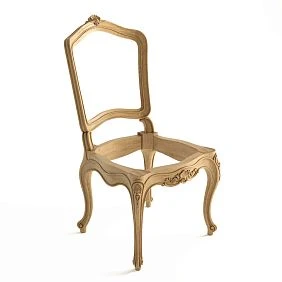
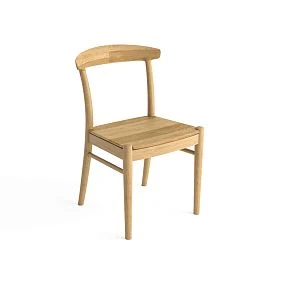
View Furniture Frames from Solid Wood и legs for an ottoman — in the STAVROS catalog.
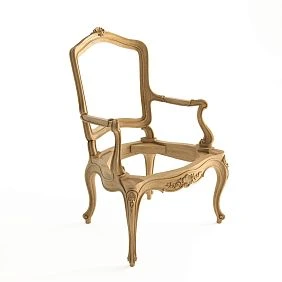
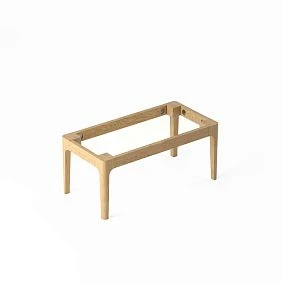
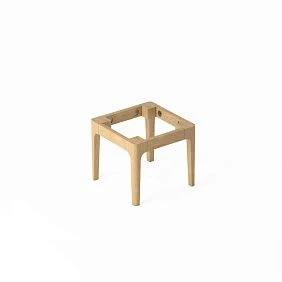
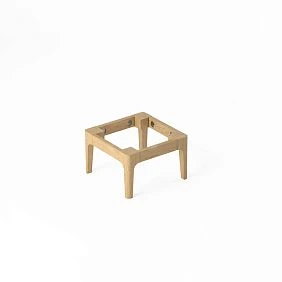
Bench, stool, ottoman — what's the difference and why it matters when choosing a frame
Terminology in this topic is fluid: people call the same thing by different words, and sometimes different things by the same word. Let's agree on concepts, because the frame's design, its dimensions, and installation location depend on them.
A bench is universal seating for several people. Typically without a backrest, with a rigid or semi-rigid seat. Used in hallways, kitchens, living rooms, bedrooms, and garden areas. Length — from 80 to 200 cm. Seat height — standard, like a chair: 44–50 cm.
Lavochka (lavka) is a colloquial word for a bench. In everyday use, it often means a simpler, less decorative structure: a kitchen bench by the table, a garden bench on the veranda. Frame for a bench — the same structure as for a bench, just in a different context.
A banquette is a more interior, often more elegant item. Most often with a soft seat, decorative legs, designed for one or two people. Standardly used in hallways (for putting on shoes), by the bed in the bedroom, in the dressing room. The seat height of a banquette is slightly lower than a chair: 38–45 cm — to make it comfortable to put on shoes.
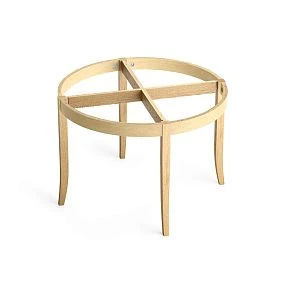
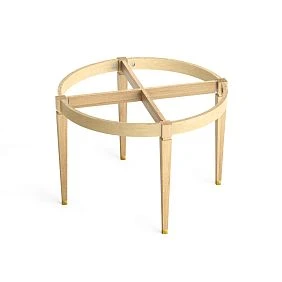
In any of these cases, the frame is the load-bearing base that holds the seat, distributes the load, and sets the geometry of the item. On the finished frame for a banquette all that remains is to install the seat — rigid or soft — and finish the surface.




Why it's more profitable to buy a ready-made frame rather than start from scratch
It would seem that a bench can be made from boards. You take bars, connect them — and it's done. But between "take and connect" and a "stable, level, beautiful piece of furniture" lies a huge gap.
Ready-made wooden bench frame solves several problems that arise during DIY manufacturing:
Geometry. The factory frame is rectangular, all angles are precise, all dimensions are symmetrical. A homemade structure without experience and tools often turns out skewed: the furniture wobbles, the seat sits unevenly.
Joint strength. Factory joints — tenons, dowels, glue, fasteners — are designed for load. During DIY assembly with screws and without professional gluing, joints weaken over time.
Time savings. DIY frame assembly with marking, cutting, sanding takes several hours. A ready-made frame: unpack, place the seat, done.
Customization options. A ready-made frame is a neutral base. It can be painted, tinted, varnished, or oiled. The seat can be selected separately: hard, soft, fabric, leather. Legs can be replaced with more decorative ones from the catalog. furniture legs.
Material quality. Frames made of dry oak or beech wood do not warp or crack with humidity changes — unlike random lumber from the market.
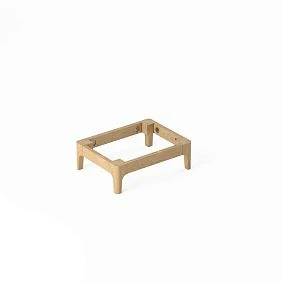
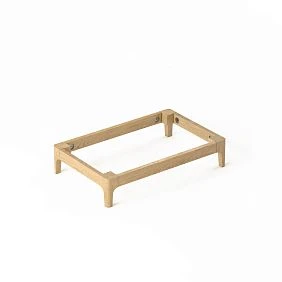
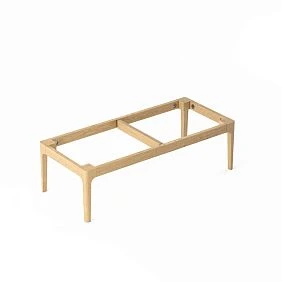
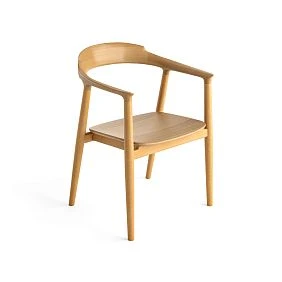
Our factory also produces:
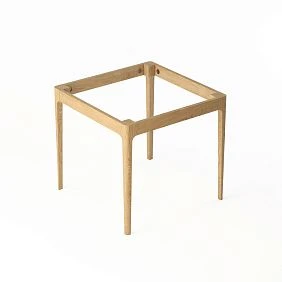
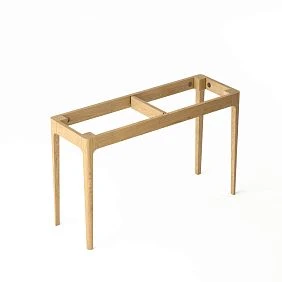
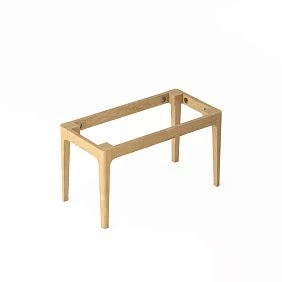
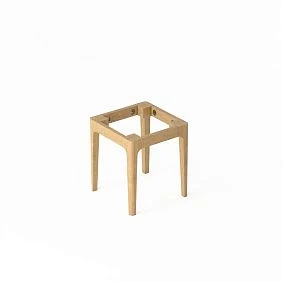
Where to use a bench or settee frame: scenarios and tasks
Before choosing the size and design, it's worth understanding: where exactly the furniture will be placed and what the person will do with it. This determines everything: length, height, load, presence of a soft seat.
Get Consultation
Hallway: shoe bench
The most popular scenario. A bench in the hallway is an everyday item. People sit on it, bend over, lean on it. Sometimes they put things on it.
Requirements for the frame of a hallway bench:
-
compactness: the hallway is usually small, the bench should not block the passage;
-
seat height 40–45 cm — optimal for putting on shoes;
-
rigidity and stability: when leaning with one hand while putting on shoes, the furniture should not slide;
-
the ability to place a soft seat — a cushion or a foam-padded board;
-
open space underneath is convenient for shoes: slippers, sandals can be placed under the seat.
A wooden bench frame pairs well with wooden trim, baseboards, and hallway flooring. If there is wooden decor in the interior, a single material creates a cohesive look.
Kitchen: bench at the dining table
Frame for a kitchen bench — a separate story. Here, not only the seating is important, but also the interaction with the table.
Key parameters for a kitchen bench:
-
seat height: 44–48 cm for a standard dining table with a height of 75–76 cm;
-
length: equal to or slightly less than the length of the table on the corresponding side;
-
seat depth: 35–40 cm — sufficient for sitting;
-
stability under lateral load: people lean with their elbows, push with their legs — the structure must hold;
-
possibility to add a soft cushion: it will add 3–5 cm to the height, this needs to be taken into account.
A bench along the wall in the kitchen saves space: on one side of the table, instead of 3–4 chairs, there is one bench that accommodates the same 3–4 people, freeing up space around the table.
A wooden bench goes well with the wooden table legs and the overall wooden decor of the kitchen — trim, moldings, baseboards.
Bedroom: bench at the foot of the bed
At the foot of the bed or by the window — a bench in the bedroom serves not only a utilitarian but also a decorative function. It completes the bed composition and creates an additional horizontal line in the space.
For this scenario, the following are important:
-
frame width — matching the bed width (160 or 180 cm);
-
height: slightly lower than the bed height or level with the mattress;
-
soft seat: in the bedroom, an upholstered bench looks harsh without padding;
-
aesthetics: legs and frame finish matching the bedroom furniture tone.
Equipment with legs for a bench of the desired style and tinting — this is what makes the bench at the bed part of the set.
Wardrobe and storage area
In the wardrobe, a bench is a functional item: to place a suitcase, to sit while changing. Requirements: compactness, stability, simplicity. A soft seat is desirable. Decor — minimalist, matching the storage system.
Hall, living room, relaxation area
A decorative bench in the living room or hall is an interior element. Here, the aesthetics of the frame are important: the shape of the legs, the profile of the support elements, the tinting. Furniture Frames from Solid Wood in a classic style — with turned or carved legs — makes the bench a decorative object, not just functional.
Garden area: veranda, terrace, gazebo
Frame for a garden bench — a separate topic. Key condition: a tree on the street requires proper protection. Oil, varnish with UV filter, paint — without coating, wood outdoors quickly turns gray, cracks, and absorbs moisture.
For closed verandas and glazed gazebos — the same frame as for the interior is suitable. For open outdoor areas — moisture-resistant species (larch, teak) and special coating are needed.
How to choose the size of a bench frame — practical numbers
Size is the most specific question asked when choosing. Let's give specific guidelines.
Bench length
| Scenario | Recommended length |
|---|---|
| Bench for 1 person (hallway) | 60–80 cm |
| Bench for 2 people | 90–110 cm |
| Bench for 3 people | 120–150 cm |
| Bench at the dining table | table length minus 10–20 cm |
| Bench at the bed 160 | 140–160 cm |
| Bench at the bed 180 | 160–180 cm |
| Decorative bench in the hall | custom, often 100–140 cm |
Seat depth
The standard bench seat depth is 35–42 cm. This is less than a sofa (55–65 cm), but sufficient for comfortable sitting for 30–60 minutes. For a hallway banquette, 30–35 cm is acceptable: here people don't sit for long, only to put on shoes.
A seat that is too shallow (less than 30 cm) is uncomfortable: the person sits "on the edge." A seat that is too deep (more than 45 cm) takes up a lot of space, especially in a narrow hallway.
Seat height is a key parameter
This is what many people ignore when choosing, and then regret it.
44–48 cm is the standard height for a chair and kitchen bench. Feet rest flat on the floor, seating is comfortable. For the kitchen and dining area, this range is mandatory.
40–44 cm is the height of a banquette for the hallway and bedroom. Slightly lower than a chair: when putting on shoes, a person leans forward slightly, and this is more convenient from a low seat.
38–40 cm is a low banquette, closer to a coffee table in seating. For children's and accent decorative items.
Important: if a soft seat with 5 cm thick foam is planned, the final height increases by 5 cm. If 8 cm foam + 2 cm fabric, add 10 cm. The frame height must be calculated taking into account the future seat.
Example: you want a hallway banquette with a final height of 43 cm, with a 7 cm thick soft seat — you need a frame height of 36 cm.
Frame material: why wood and which species to choose
Frames for benches and banquettes can be wooden, metal, or made of plywood/MDF. Each material has its own logic.
Wood (solid)
Solid wood is a classic in furniture manufacturing. A wooden frame is warm, aesthetic, and durable. It accepts any finish: varnish, oil, wax, stain, paint. During repairs, it can be sanded and renewed without replacement.
Solid wood products — these are oak, beech, birch, ash, pine. Different species provide different properties.
Oak is dense, strong, with a expressive texture. For classic, neoclassical interiors and kitchens with wooden elements. It accepts oil and wax well, and stains beautifully.
Beech is dense, stable, with a fine, uniform texture. Slightly lighter than oak. It bends well (used in curved elements). Excellent for painting.
Ash has a large, light texture and good strength. Slightly lighter than oak, popular in modern interiors.
Birch is affordable, even, and paints well in any color. For frames to be painted with enamel.
Pine is a soft wood, easier to work with. For simple country and budget options. Less durable under load.
Metal
Metal frames (steel, aluminum) — for modern, industrial, loft style. Strong, withstand high loads. But cold, require welding for geometry changes, and fit poorly into classic and wooden interiors.
Plywood / MDF
For soft banquettes with foam upholstery — a plywood seat on wooden legs for a banquette — a popular option. The seat base made of 12–18 mm plywood, covered with foam and fabric, is mounted on wooden legs.
Legs for banquettes and benches — a separate topic
The frame and legs are not always one piece. Often the frame is purchased separately, and the legs are selected to match the interior style.
When legs are part of the frame
Ready bench frames are supplied already with a load-bearing frame that includes leg posts. This is a fully finished base: place the seat — and the furniture is ready. There is no need to change the legs in this case — the structure is designed as a single unit.
When legs are selected separately
For soft benches with a plywood seat base: the plywood panel is upholstered with foam rubber and fabric, and legs are screwed in from below. Here, the choice of legs is a design decision.
solid wood legs for benches and seats:
-
tapered (straight narrowing) — minimalist modern style;
-
turned (with thickenings along the length) — classic, neoclassical;
-
straight square — loft, Scandinavian style;
-
twisted — baroque, Provence, classic style.
Leg height when assembling a bench yourself: final height = leg height + plywood thickness (18 mm) + foam thickness + fabric. Calculate in advance.
Furniture legs for bench and stool — a specialized category: shortened, with load calculation specifically for this type of furniture.
Load on the frame: what to consider
A bench is furniture that experiences serious loads. Especially if someone sits down abruptly, shifts their body weight, or leans to the side.
Load calculation
The standard weight of an adult is 70–90 kg. Two people on a bench — 140–180 kg. With dynamic load (sitting down with force) — multiply by a factor of 1.5–2.
For a two-person bench, the design load is 200–250 kg. This is a requirement for the load-bearing capacity of joints, leg cross-section, and crossbars.
A wooden frame made of dry beech or oak with leg cross-sections of 40×40 mm or more can withstand such a load without deformation. Thin legs of 25×25 mm on a long bench may cause the middle crossbars to sag.
Sagging of the seat
For long benches (from 120 cm), it is important to have a central transverse crossbar underneath — it prevents the seat from sagging in the middle. If the seat is rigid (a board), a support in the center is needed. If it is soft (foam rubber on plywood), the plywood holds its shape on its own, but the frame must have enough support points.
Load on legs with a soft seat
When someone sits down abruptly on a soft seat, the load on the legs increases. The connection of the legs to the frame should be not only with glue but also with fasteners: screws, dowels, ties. A purely glued joint for an intensively used bench is a risk.
Frame for a hallway bench: how not to make a mistake
The hallway is an area with special requirements. Let's discuss in more detail, because this is where mistakes are most often made when choosing.
Size and passability
Standard hallway: corridor width 90–120 cm. If you place a bench 80 cm wide in a 100 cm corridor, 20 cm remains for passage on one side. This is inconvenient. Optimal: bench no more than 50–60% of corridor width. With a corridor width of 100 cm, bench up to 60 cm deep.
Bench length: 60–80 cm for one person. If the hallway allows, 90–100 cm for greater stability and comfort.
Open space underneath or closed
Two layout options for a bench in the hallway:
-
Open bottom — space under the seat is free. Shoes are placed there: slippers, flip-flops. Convenient and practical.
-
Closed drawer — storage drawer inside the seat. For storing shoes, hats, gloves.
frame for a banquette For an open construction — just a frame on legs. For a bench with a drawer, a different type of base is needed, with a support base under the seat-lid.
Combination with hallway interior
A wooden bench in the hallway is an organic choice. Especially if the hallway has wooden door trims, baseboards, a mirror in a wooden frame. A single wood species and tint create a sense of thoughtfulness.
Frame for a bench at a dining table: height and length for a specific table
This scenario requires precision. A bench at a dining table is furniture seen every day and used for every meal. An error in height or length means chronic discomfort.
How to calculate the height of a bench for a table
The standard height of a dining table is 74–76 cm. A comfortable gap between the table surface and the seated person's thighs is 25–30 cm. Therefore, the seat height of the bench: 74 − 28 = 46 cm. The comfortable height range for a kitchen bench is 44–48 cm.
If a soft cushion is planned for the bench, the frame needs to be 5–8 cm lower: 38–42 cm. With the cushion, the final height will be the same 44–48 cm.
How to calculate the length of a bench for a table
Bench length = table length − 10–20 cm. If the table is 160 cm, the bench is 140–150 cm. If the table is 120 cm, the bench is 100–110 cm.
Why reduce it? So that when the bench is pushed under the table, it does not protrude from the sides and does not obstruct passage.
Stability under lateral load
At the table, people actively use the bench: they lean on their elbows, move, and sometimes stand up while supporting themselves on the edge. The lateral load on a long bench is significant. Bench frame must have crossbars not only along the length, but also at the ends — for structural rigidity.
Mistakes when choosing a bench or ottoman frame
Choosing only by appearance without load calculation. A beautiful thin birch frame under a load of 200+ kg will start to "play" at the joints within a year. Strength must match the actual load.
Not considering the height of the soft seat when choosing the frame height. Ordered a frame 45 cm high, added 8 cm of soft seat — total 53 cm. This is no longer an ottoman, but a high stool, uncomfortable for putting on shoes.
Taking too narrow a base for a long bench. A long bench on narrow legs (cross-section 25×25 mm with a length of 150 cm) bends in the middle under load.
Not checking stability before final assembly. Furniture should stand without wobbling on all four support points. If one leg does not touch the floor, install an adjustable foot pad. Before mounting the seat, place the frame on the floor and make sure there is not the slightest rocking.
Buying a frame without understanding the final style. A classic turned frame in a Scandinavian kitchen with straight lines is a dissonance. A modern straight-line frame in a classic living room with moldings is also. The style of the frame must match the style of the room.
Not considering the installation location. A frame for the kitchen is a humid environment: a coating resistant to splashes and grease is needed. A frame for the hallway is impact load, high joint strength is needed. A frame for the bedroom is aesthetics more important than strength.
Forgetting about seat attachment. The seat must be fastened to the frame — not just lying on it. Under asymmetrical load, an unfastened seat shifts.
Buying a frame of a different shade than the planned coating. If you are going to paint the frame, the wood species does not matter — birch is as good for white enamel as oak. If tinting to a natural color, the species matters.
How to choose a coating for a wooden frame
A ready-made solid wood frame is a blank. The finish determines both the appearance and protection from wear.
Oil with wax is a natural coating that penetrates the wood structure. Suitable for oak and ash. Gives a velvety matte surface. Refreshed by applying a new layer without sanding. For the kitchen and hallway — a good choice.
Varnish (nitro, water-based, two-component) is a film-forming coating. Gives a glossy or matte surface. Water-based varnish is odorless and eco-friendly. Two-component (2K) is very hard, resistant to mechanical stress. For a bench in the hallway — optimal.
Enamel (acrylic, alkyd) is an opaque coating in any color. For frames to be painted white, gray, black. MDF and birch are the best base for enamel.
Tinting (stain, covering impregnation) changes the color of the wood while preserving the texture. Oak in "dark walnut", "wenge", "gray" — all this is tinting. After tinting, a final layer of varnish or oil is mandatory.
What to check before buying a frame — final checklist
Before placing an order, answer these questions:
-
Where will the furniture be placed? Hallway, kitchen, bedroom, living room, veranda.
-
For how many people? Determines the length.
-
Will there be a soft seat? What thickness — determines the frame height.
-
Required seat height? With or without a seat — calculate the final height.
-
Load? One person 80 kg or two people 90 kg each?
-
Bench length? Considering space and adjacent furniture (table).
-
Seat depth? 35, 38, or 42 cm.
-
Material? Oak, beech, birch — depends on coating and load.
-
Planned coating? Oil, varnish, tinting, enamel.
-
Interior style? Classic, modern, Scandinavian, loft.
If all questions are answered, choosing a specific frame and legs from the catalog will be easy.
FAQ — answers to frequently asked questions about bench and ottoman frames
What is better: to buy a ready-made ottoman or a separate frame?
A ready-made ottoman — if you need it quickly and a standard size works. A separate frame for a banquette — if you need your own size, your own seat, your own fabric, and your own finish. Frame + separate seat = furniture that fits the interior exactly.
Which frame to choose for a bench in the hallway?
A sturdy wooden frame with a height of 38–42 cm (for a soft seat) or 44–45 cm (for a hard seat). Length — 60–80 cm. View ottoman frames for the hallway.
Can I make an ottoman from a ready-made frame myself?
Yes. Choose a frame, seat (plywood + foam + fabric or hard wood), fasteners, and finish. Instructions — how to make an ottoman with your own hands.
How does a bench frame differ from individual legs?
Legs are independent supports. solid wood legs They screw into the seat base. A frame is an already assembled structure with legs and crossbars, onto which you simply place the seat.
Is a wooden frame suitable for a kitchen bench?
Yes. With the correct height (44–48 cm or less to accommodate a cushion) and length (to match the table), and a moisture-resistant finish, a wooden bench in the kitchen will last a long time. View bench frames.
What is the optimal height for a bench in the hallway?
With a padded seat, the final height is 40–44 cm. Frame without seat: 34–38 cm with a 6–8 cm padded seat.
Which legs are best for a bench?
It depends on the style. For classic — turned or twisted. For Scandinavian and minimalist — tapered straight. For loft — straight square. All options are in the catalog of legs for benches and stools.
A bench in the hallway is every morning, every evening. A banquette by the bed is the first thing your eyes fall on. A bench in the kitchen is a family dinner every day. This furniture is not in the background. It is at the center of life. And the right frame for a bench is the foundation that determines whether this furniture will delight or annoy.
STAVROS offers Furniture Frames from Solid Wood for benches and banquettes, legs for an ottoman and stools, Wooden furniture legs of all styles and sizes, as well as a wide range of solid wood products for self-assembly and furniture decor. Own production, dry oak and beech of the highest grade, warehouses in St. Petersburg and Moscow, Contact us to confirm shipping to your destination. STAVROS — because good furniture starts with the right foundation.