Article Contents:
- Why the wall behind the desk solves everything
- Three mistakes that ruin the workspace
- Moldings as a frame for the workspace
- Options for placing moldings behind the desk
- How to choose molding width
- Decorative stucco: where exactly the accent is needed
- Where to place decorative elements
- How many decorative elements are needed
- Painting: how color makes stucco part of the wall
- Choosing a color for the work area
- How to connect the molding with the table and furniture
- By height and width
- By furniture style
- By the color of facades and decor
- Work area in different room formats
- Home office — a separate room
- Work area in the bedroom
- Work area in the living room or open space
- Light as part of the system: sconces and accent lighting
- Installation: what is important to know before setting up
- Work sequence
- What to buy for a complete set
- What to buy for different tasks
- Style solutions: from classics to modern minimalism
- Classic Office
- Modern neutral office
- Transitional style
- Workspace with molding: examples of ready-made solutions
- Scenario 1: minimum effort, maximum result
- Scenario 2: home office in classic style
- Scenario 3: workspace in an open-plan living room
- Frequently Asked Questions
- About the Company STAVROS
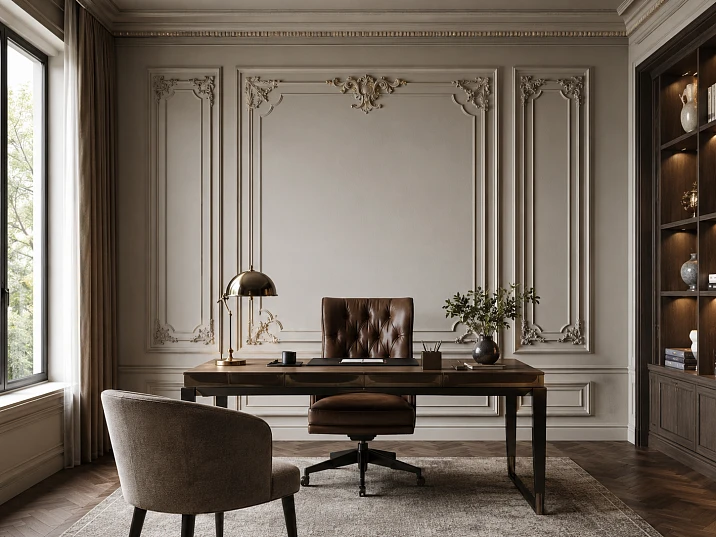
A workspace looks more expensive when the wall behind the desk is not empty: Moldings made of polyurethane they frame the background with an architectural frame, Decorative stucco creates an accent, while a unified paint job makes the office calm, prestigious, and cohesive. It is this principle — combining the desk, light, wall, and decor into one thoughtful composition — that turns an ordinary workspace into a space you want to show off.
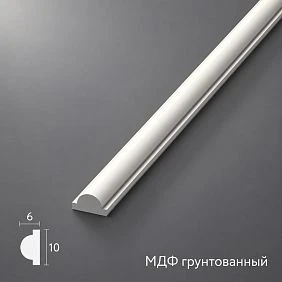
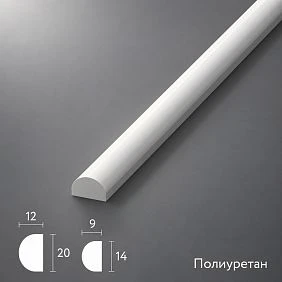
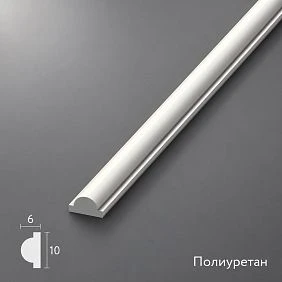
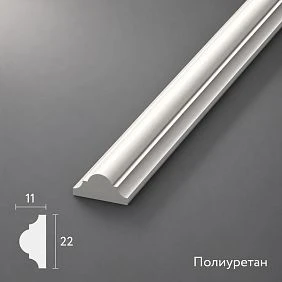
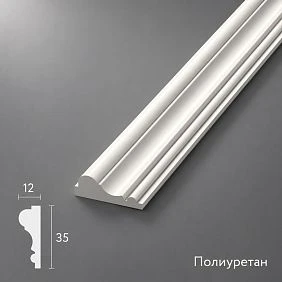
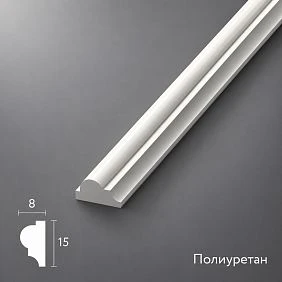
Why the wall behind your desk solves everything
There is an interior design rule rarely spoken aloud: any space is perceived by the eye as a single whole precisely through its background. A sofa looks expensive if the wall behind it is well-designed. A bed — if the headboard is framed by decor. A desk is no exception. On the contrary, it is perhaps the most demanding object when it comes to its surroundings.
Think about it: a desk is a place where a person spends hours. Where decisions are made, projects are created, negotiations are conducted. And yet, this very zone is most often left unfinished. A bare wall with a single random poster or just a surface painted in a neutral color is not a background for work — it is emptiness that dilutes the status of the entire room.
When the space is visible on video calls, the situation becomes even more acute. The background behind you is a silent statement about taste, level, and attention to detail. An empty wall says 'temporary,' a wall with thoughtful decor says 'a person with a stance lives here.'
It is here Buy moldings becomes not just a decorative solution, but an architectural tool. Molding creates a frame, decorative elements set accents, and painting in a single tone completes the picture. All of this works together — and costs much less than it seems at first glance.




Three mistakes that ruin a workspace
Before talking about how to properly design the wall behind a desk, it is worth naming the typical miscalculations found in nine out of ten home offices.
The first mistake is leaving the wall empty and 'dealing with it later.' 'Later' never comes, and in the meantime, the bare wall daily devalues the entire interior, no matter how expensive it is.
The second mistake is hanging one large poster or painting without a frame. A picture without a frame in a space is a point without context. It does not hold the wall, does not set the scale, does not structure the zone.
The third mistake is overloading the wall: shelves up to the ceiling, a gallery of twenty photos, various textures in one space. As a result, the wall "screams," and the workspace loses its sense of order and focus.
The right solution lies between emptiness and chaos. And Buy molding — means choosing the very tool that allows you to strike a balance that is architecturally precise and aesthetically flawless.
Our factory also produces:
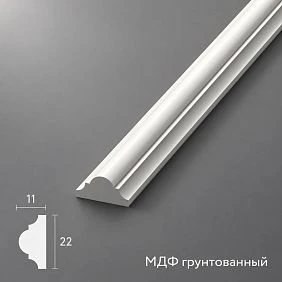


Moldings as a frame for the workspace
A molding is, essentially, architectural punctuation. It doesn't shout. It doesn't announce itself loudly. But it is what organizes the wall space, sets its scale, and turns a flat surface into a structured composition.
Behind a desk, moldings work in several directions at once. The first and most obvious is creating a frame. One large rectangular frame made of molding, placed exactly the width of the desk or slightly wider, instantly makes the area feel complete. This is not just a wall — it's a stage where the workspace unfolds.
The second direction is the symmetrical division of the wall into sections. Two vertical rectangles on either side of the center — a classic solution for a study in a living space. It creates the feel of a library, an atelier, an architecturally refined room. Moldings made of polyurethane are ideal for this task: lightweight, durable, precisely cut to the required size, and paintable in any color.
Get Consultation
Options for placing moldings behind the desk
Here are a few working schemes that can be adapted to any layout:
One large frame. Molding is laid along the perimeter of an area 120–180 cm wide and from the table to the ceiling or to the middle of the wall. Inside the frame — solid color paint, a sconce, or nothing. Minimalist and precise.
Two vertical sections. Two identical rectangular frames, symmetrically placed on either side of the central axis. A light fixture or decorative element can be placed between them. This scheme works well for wide walls from 200 cm.
Horizontal division. Molding divides the wall into upper and lower zones. The lower part is painted in a deeper shade, the upper part lighter. This solution adds depth and emphasizes the height of the room.
Frame around a sconce. A wall light above the table takes on a completely different status when it is framed by molding. The light ceases to be just a functional element and becomes part of the composition.
Connection with the baseboard. Molding is laid vertically from the baseboard to the upper frame. This creates the feel of an architectural column — soft, without excessive decoration, but very convincing.
All these solutions are implemented using buy polyurethane moldings which are available in the STAVROS catalog in a wide range: from thin neutral profiles to expressive classic shapes with bevels and relief.
How to choose molding width
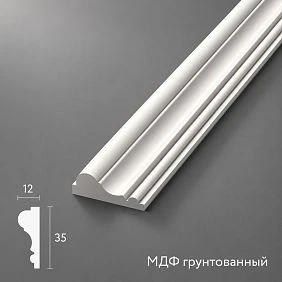
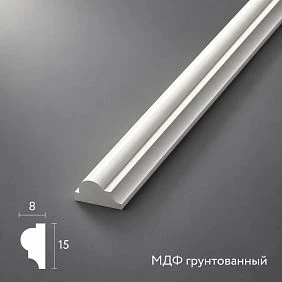
Proportion is key. If the wall behind the table is small (up to 150 cm wide), molding 20–30 mm wide will look organic: it is present but not overwhelming. If the wall is wide and tall, the profile can be wider — 40–60 mm — so the frame is visible and holds the space.
Important: the molding should always be thinner than it seems necessary at the selection stage. A decorative element that looks "just right" on the store floor often turns out to be too heavy on the room wall. Therefore, it is better to take a sample and hold it against the wall in daylight.
Polyurethane wall decor is presented in the STAVROS catalog in different scales — from delicate thread-like profiles to massive architectural cornices, allowing you to precisely choose the format for a specific room.
Decorative stucco: where exactly the accent is needed
Moldings create structure. Decorative elements create character. These are two different tools, and they should not be confused. Where molding works with lines and frames, Decorative stucco it works as a focal point.
For a workspace, accents should be restrained. Not stucco in the style of a palace hall — one ornament for an entire wall. We are talking about a few thoughtfully placed details that give the eye a point of support and create a sense of completeness.
Where to place decorative elements
Above the desk, in the center of the frame. This is the most advantageous position. A decorative element placed in the upper part of the molding frame, in the center, immediately makes the composition complete. The eye finds a focal point — and stops perceiving the wall as random.
At the intersections of moldings. Where a vertical and horizontal molding form a corner or cross, a small decorative element hides the joint and simultaneously decorates it. This works both functionally and aesthetically.
On the sides of wall sconces. Paired decorative overlays on both sides of a wall light fixture is an elegant technique that makes the light accent more ceremonial. This is especially valuable for classic interiors.
At the top of the wall. A frieze of small decorative elements or a single detail under the ceiling adds vertical weight and completeness to the wall.
Next to shelves or a painting. If there is a hanging shelf or a piece of art in the work area, decorative elements next to them turn a set of objects into a single composition.
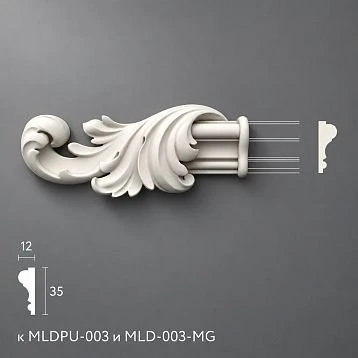
Buy Moldings For all these tasks, in the STAVROS catalog, polyurethane overlays are available in a wide variety of shapes: from strict geometric details to classic floral motifs and bas-relief ornaments.
How many decorative elements are needed
One or two elements per wall is a working rule for an office. More than that, and the space starts to 'speak' too loudly for a place where you need to concentrate. Stucco in a home office should create a background, not attract all the attention.
The exception is the classic style in a formal office: there, more saturated decor is acceptable, but even then, symmetry and rhythm are important, not chaotic placement.
Buy decorative stucco in the STAVROS catalog means getting European quality products, precisely crafted, resistant to humidity and temperature changes, ready for painting in any color.
Painting: how color makes stucco part of the wall
This is perhaps the most underestimated step. Many install moldings and leave them white on a white wall — and get a boring result. Or they paint the molding in a contrasting color on a light wall — and get 'frames for the sake of frames,' without architectural meaning.
The right strategy: paint the moldings and the wall in the same tone. This creates a monochrome textured plane where the stucco is perceived not as glued-on decor, but as an architectural relief of the wall. This is how interiors that look expensive even in photos work.
Choosing a color for the work area
For a home office, the following are ideal:
-
deep neutral shades: dark gray, anthracite, dark blue, olive green;
-
light restrained tones: warm white, ivory, light taupe;
-
soft earthy shades: terracotta, warm beige, muted ochre.
Dark colors behind a desk work surprisingly well: they create a sense of depth, make moldings stand out, and give the area a feeling of intimacy and focus. It's not darkness — it's richness.
If the room is small, it's better to stick with a light background — and play on the subtle contrast between the molding and the wall: a difference of 1–2 tones within the same palette will provide delicate relief without heaviness.
How to connect molding with the desk and furniture
The workspace becomes cohesive only when all its elements speak the same language. The molding on the wall and Classic Furniture behind the desk — it's a dialogue, not a monologue of each element individually. And for this dialogue to work, several parameters need to be aligned.
By height and width
The height of the molding frame should correspond to the height of the chair or desk back. A classic scheme: the lower horizontal line of the frame runs approximately at the level of the tabletop or slightly below, the upper one — at 180–200 cm from the floor. This makes the frame proportionate to a person and creates the feeling of a "window" behind the workspace.
The frame width should ideally match the table width or be slightly wider — 15–25 cm on each side. If the table is 120 cm, the frame can be 150–160 cm. This defines the zone, visually separating the workspace from the rest of the space without a physical partition.
By furniture style
If the furniture behind the table has straight, clear lines — the molding should also be laconic, without extra profiles. If the furniture is in a classic style with carved details and figured legs — the molding can be more decorative, with a chamfer, fillet, or slight relief.
decor for furniture made of solid wood allows matching the table surface details with the wall decor: when the furniture facades have carved inserts or overlay elements, and the wall has moldings in the same style, the space gains architectural completeness.
By the color of facades and decor
The molding and furniture do not have to be the same color, but they should be in the same color system. A dark walnut table pairs well with a dark or restrained neutral wall. A white table — with moldings in the wall color, white or cream. A table with brass handles — with stucco in a "warm white" shade and a brass lamp.
Every time a color is repeated in at least three points in the space, the interior gains a sense of thoughtfulness. This rule works flawlessly.
Workspace in different room formats
The wall behind the desk is handled differently depending on where the office is located. Let's break down three main scenarios — and for each, we'll propose a specific scheme with molding.
Home office — a separate room
This is the most "free" format: the wall behind the desk is a full architectural plane that can be worked with to its full potential. Here, the following are justified:
-
large molding frame from baseboard to ceiling;
-
symmetrical side sections;
-
decorative elements at the top of the frame;
-
sconce in a molding frame;
-
dark painting of the accent area.
Moldings made of polyurethane here they can be more expressive: a profile 40–60 mm wide, possibly with a classic relief, creates a sense of real architecture.
Work area in the bedroom
This is a more delicate situation. The workspace coexists with the relaxation area, and it's important that it doesn't 'shout over' the entire space. Here it works better:
-
one compact frame strictly the width of the table;
-
smooth neutral molding in the wall color;
-
one decorative element — maximum;
-
painting only inside the frame in a slightly deeper shade.
This solution visually highlights the work area without making it the dominant feature of the bedroom. Stucco for the study in a bedroom context, it should be quiet and architectural.
Work area in the living room or open space
The most challenging task: to define a workspace without a physical partition, while preserving the unity of the overall space. Molding here acts as an 'invisible wall': it outlines the zone, creates a backdrop, sets the scale — and the space remains open.
It is recommended:
-
a strict vertical frame spanning the width of the zone;
-
neutral painting in the overall color palette of the room;
-
minimal decor — only structural molding without ornaments;
-
a consistent furniture style in the work area and the rest of the space.
Here, consistency with is especially important furniture decor — solid wood overlays on table or cabinet facades create a connection between the furniture and the wall.
Light as part of the system: sconces and accent lighting
Molding without proper light works at half volume. It is light that brings the relief of the molding to life, makes decorative elements voluminous, and creates those very shadows that give the wall depth.
For the work area, two light sources are optimal: task lighting (a desk lamp or built-in light above the table) and decorative lighting (a sconce or spotlight aimed at the accent wall). They solve different tasks: the first illuminates the surface for work, the second creates an atmosphere and highlights the decor.
A sconce built into a molding frame is a classic and very advantageous technique. The light fixture gains an architectural context, and the wall gains a living element. Decorative stucco on the sides of the sconce additionally enhances this effect, making the light point part of a symmetrical composition.
With a dark paint finish on the accent wall, a sconce with warm light creates an intimate atmosphere, while the wall behind the table itself "recedes" into the background, and the work area becomes like a cozy study from a movie — collected, warm, and prestigious.
Installation: what to know before mounting
Working with polyurethane moldings and stucco is a task that can be handled on your own. The material is lightweight, cuts with a regular hacksaw or miter box, and is glued with special glue or liquid nails. The main thing is precise marking and careful cutting of corners.
Work sequence
-
Marking. Draw the outlines of the future frame on the wall with a pencil and a spirit level. Check symmetry from the central axis of the table, not from the edges of the wall.
-
Cutting the molding. The corners of the frame are cut at 45°. Use a miter box or miter saw — this ensures a precise joint.
-
Sticker. Apply glue evenly along the length of the molding, press against the wall, secure with painter's tape until dry. Fixation time is 20–30 minutes depending on the glue.
-
Puttying joints. Fill connection points and small gaps with acrylic sealant or finishing putty.
-
Painting. After the putty dries, prime the surface and paint the molding in the wall color or a chosen contrasting shade. Usually two coats are enough.
If a dark paint for the accent area is planned, it's more convenient to first paint the wall, then glue the moldings, then paint them on top. This saves time on masking and gives a cleaner border.
What to buy for a complete set
| Task | What you need |
|---|---|
| Frame base | Moldings made of polyurethane |
| Accents and details | Decorative stucco |
| Wall enrichment | Wall Decor |
| Furniture decor | planks from solid wood |
| Interior furniture | Classic Furniture |
| All polyurethane decor | Buy moldings |
What to buy for different tasks
Different interior situations require different solutions. Here is a practical guide for those who know what they want:
Highlight a work area without a partition — Moldings made of polyurethane in the form of a single vertical frame strictly the width of the table. Paint inside the frame in a shade different from the rest of the wall.
Make the background more expensive and prestigious — Decorative stucco in the center of the frame or along its perimeter. Monochrome painting of the molding and the wall.
Design a video call area — a clear symmetrical frame of molding, no extra details, a solid color wall, sconces on the sides. No shelves with objects inside the frame — only a clean, professional background.
Support a classic table — Buy Moldings with floral or geometric motifs consistent with the furniture style. decor for furniture from the array on the facades and desk drawers creates a connection between surfaces.
Do not overload a small office — smooth moldings of minimal width (20–25 mm) in the exact wall color. No decorative elements — only structure. Buy molding in a neutral profile — the best solution for a compact space.
Assemble a complete turnkey set — moldings, decorative overlays, glue, paint, allowance for trimming (10–15% of the frame perimeter). All of this can be selected from a single catalog, without gathering parts from different sources.
Style solutions: from classic to modern minimalism
One of the main advantages of polyurethane stucco is its stylistic flexibility. The same tool (molding + decorative element + painting) yields completely different results depending on the chosen profile and color.
Classic study
Wide molding with a chamfer and cove, decorative overlays with floral ornament, warm painting — taupe, ecru, dark walnut. Classic Furniture with carved details, a leather armchair, a desk lamp with a fabric shade. The wall behind the desk is painted dark green or deep blue — moldings in the same tone.
This is a space where history, weight, and seriousness are felt. Such an office needs no explanations.
Modern neutral office
Thin molding 20–30 mm without excess relief, no decorative overlays — only the geometry of the frame. The wall and molding in the same shade of warm white or light gray. Furniture — minimalist, without decorative details, with matte facades. Lighting — built-in track with adjustable spots.
This format works in any room and any context. It never ages and never goes out of style.
Transitional style — transitional
Medium-width molding with a delicate profile, one decorative element at the top of the frame, painted in a deep neutral color. Furniture — a mix of modern and classic details: straight body lines, but with brass handles and fine carved details on the facades.
Relief Decoration in this style takes on the role of a "bridge" between styles — connecting classic and modern, without contradicting either.
Workspace with stucco: examples of ready-made solutions
To turn theory into practice, let's break down three specific scenarios — from simple to complex.
Scenario 1: minimum effort, maximum result
Task: a small work area in the bedroom, a desk 100 cm wide, white walls.
Solution:
-
One rectangular frame made of smooth molding 25 mm: width 130 cm, height from 60 to 200 cm.
-
Painting inside the frame in warm light gray or soft powder pink.
-
No decorative elements — just the frame.
-
Above the desk — a small sconce in matte metal.
Result: the workspace is highlighted, the wall comes alive, the desk gains context. Installation time — half a day. Cost — a few molding strips and paint.
Scenario 2: home office in classic style
Task: a separate office, desk 140 cm, walls 260 cm high.
Solution:
-
Two symmetrical frames made of molding with a 40 mm bevel: each 80 cm wide, 200 cm high, placed on either side of the center.
-
Between the frames — a decorative element in the center at a height of 160–170 cm.
-
In each frame — a sconce with warm light.
-
Painting the wall and moldings in anthracite or dark blue.
-
Half the table below the frames — in the same tone.
Result: a formal study with a deep colored wall, symmetrical light points, and architecturally organized space.
Scenario 3: a workspace in an open-plan living room
Task: designate a work corner in the living room without partitions, a 160 cm table against the wall.
Solution:
-
One large vertical frame from baseboard to ceiling, width 190 cm.
-
Thin molding, exactly the color of the wall — so the frame reads as relief, not contrast.
-
Inside the frame — only the table, a desk lamp, and a small shelf.
-
No decorative elements — only pure geometry.
Result: the workspace is visually separated from the living room without disrupting the unity of the space. It is concise, smart, and absolutely modern.
Frequently asked questions
How to decorate the wall behind the desk?
The wall behind the desk is decorated with polyurethane moldings, decorative stucco, stucco decor, wall sconces framed by molding frames, and a single paint color across the entire surface. The key principle is architectural structure through moldings and accent points through decor. Together, it creates a prestigious, neutral, and cohesive backdrop.
What to buy for a workspace with stucco?
Basic set: Moldings made of polyurethane for the frame, Decorative stucco for accents, mounting adhesive, primer, and paint. Additionally, a reserve for trimming (10–15% of the total length) and, if necessary, decor for furniture to coordinate the desk with the wall.
Is stucco suitable for a home office?
Yes, and very much so. In an office, stucco works differently than in a living room or bedroom: restraint, architectural precision, and minimal decorative details are important here. One or two moldings in a frame pattern and one decorative element are all that is needed to transform a blank wall into a prestigious work backdrop.
How to make a workspace look more expensive without a full renovation?
Decorate the wall behind the desk with a molding frame, add one decorative element, paint everything in a single tone, and tie the decor to the desk in style and color. This is not a renovation. It is an interior design move that changes the perception of the entire room through one wall.
Can moldings be installed by oneself?
Yes. Polyurethane moldings are one of the most accessible materials for DIY installation. They are cut with a hacksaw, glued with liquid nails or special adhesive, and do not require complex wall preparation. The main thing is precise marking and careful cutting of corners at 45°.
What color to choose for an accent wall behind the desk?
Depends on the room's style. For a modern office — dark gray, anthracite, matte black. For a classic one — dark blue, deep green, burgundy. For a neutral space — warm white, ivory, light taupe. In all cases, the molding is painted the same shade as the wall.
Are special tools needed?
No. You only need: a hacksaw or electric saw, a miter box or miter saw for 45° cuts, a spirit level, a tape measure, and painter's tape. All of these are in any home tool kit.
About the company STAVROS
The article you just read was prepared with the support of materials and products from STAVROS — one of Russia's leading suppliers of decorative stucco, moldings, and interior solutions made of polyurethane and solid wood.
STAVROS offers a wide catalog of interior and facade products: moldings and cornices, decorative overlays, stucco decor, furniture elements, classic furniture, and accessories. The products are available in various price segments, can be ordered with Contact us to confirm shipping to your destination., and the extensive range allows you to select a set for any project — from a minimalist home office to a classic formal interior.
In the STAVROS catalog, you will find everything for designing a workspace: Buy polyurethane moldings, decorative molding, Buy Moldings, Wall Decor, classic furniture и decor for furniture. The entire range of polyurethane products is available in the section Buy molding.