








































































Article Contents:
- What is stucco for painting
- Which STAVROS elements can be used for painting
- Moldings, cornices and baseboards made of polyurethane
- Polyurethane baseboards for painting
- Polyurethane cornices for painting
- Polyurethane ceiling rosettes for painting
- PU overlays for painting
- Polyurethane wall decor for painting
- Polyurethane ceiling decor
- Why choose stucco for painting: commercial logic
- How to choose stucco for painting by application area
- Stucco for walls for painting
- Stucco for ceiling for painting
- Stucco for floor for painting: baseboard
- Complete set of stucco for painting
- How to choose a color for stucco for painting
- Stucco matching wall color
- White stucco on a colored wall
- Stucco in ceiling color
- Baseboard and moldings in one color
- Stucco under enamel: when special durability is needed
- Contrast stucco in a classic interior
- Sizes of stucco for painting: how to choose correctly
- Stucco on wallpaper for painting: a separate issue
- How to paint polyurethane stucco: practical part
- Mistakes when choosing stucco for painting
- Buying elements without an overall scheme
- Too wide profile for a low ceiling
- Did not account for the baseboard height
- Painting without surface preparation
- Mixing different styles in one room
- Did not check the compatibility of wall, floor, and ceiling colors
- Did not include a reserve for trimming
- Did not connect elements stylistically and by size
- Tips for painting in different styles
- Classic
- Neoclassicism
- Modern Interior
- Where to buy molding for painting in the STAVROS catalog
- FAQ: answers to popular questions about molding for painting
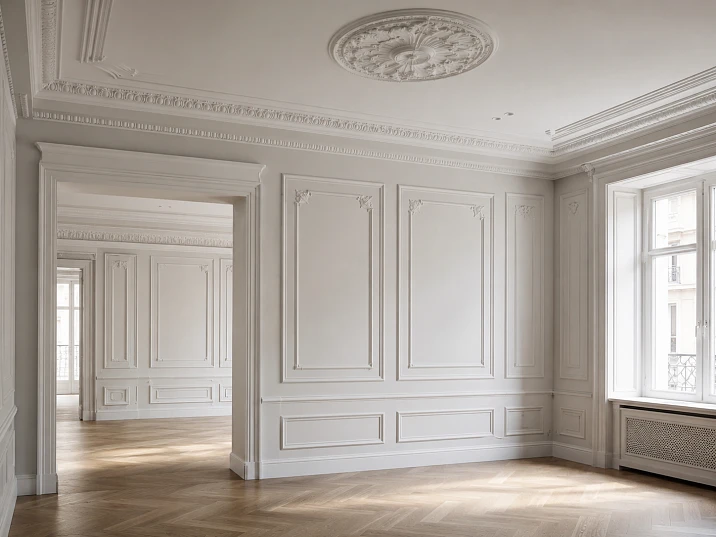
There is an idea that changes the attitude towards decor once and for all: molding is not just a white relief on a white wall. It is a material that lives in any color. Paint it to match the walls — and the decor becomes part of the architecture. Highlight it with a contrasting shade — and it turns into the main accent of the room. That is why polyurethane stucco for painting is not a compromise, but a design tool.
At STAVROS, all polyurethane products are supplied in white and are fully ready for painting. Moldings, cornices, baseboards, ceiling rosettes, overlays, and decorative elements — every item in the catalog can be adapted to any interior color concept without special preparation or complex manipulations. This is the main freedom of polyurethane decor: once you purchase the elements, you are not tied to a specific color forever.
But how to choose correctly? Which molding for painting should you take for the wall, which baseboard for the floor, which cornice for the ceiling? And how to assemble all this into a single system that works? We break it down in detail — from meaning to catalog.
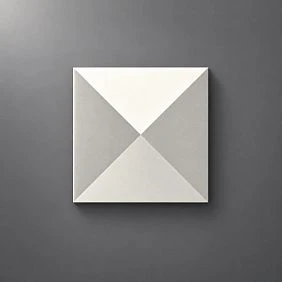
What is stucco for painting
Formally, stucco for painting is decorative polyurethane products with a clean, smooth surface suitable for applying paints and varnishes. But essentially, it is a usage scenario, not a separate type of product.
Any polyurethane moldings by its nature is a material for painting. Polyurethane does not absorb moisture, does not change shape with temperature changes, and does not cause shrinkage cracks at joints. Paint lays on it evenly, lasts a long time, and can be repainted if necessary. That is why polyurethane stucco decor is the choice of those who want not just to install an element and forget about it, but to integrate it into a living, evolving interior concept.
Unlike plaster stucco, which often loses relief clarity when repainted due to paint layer buildup in recesses, polyurethane retains the sharpness of details even after several repaintings. For fine ornamentation — beads, leaves, dentils — this is a fundamental advantage.
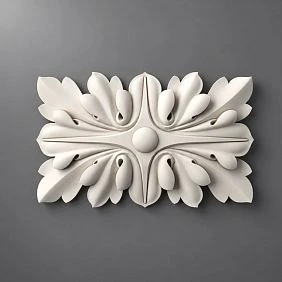
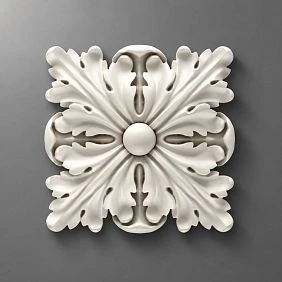
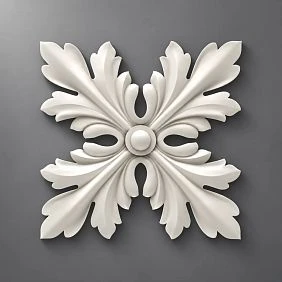
Polyurethane stucco for painting at STAVROS covers the full range: moldings, cornices, rosettes, overlays, baseboards, and wall decor. All of this is made from one material, with a single installation logic and a single painting logic.




Which STAVROS elements can be used for painting
There will be no abstractions here. Only a real catalog — and an explanation of why each section is needed in the context of painting.
Our factory also produces:
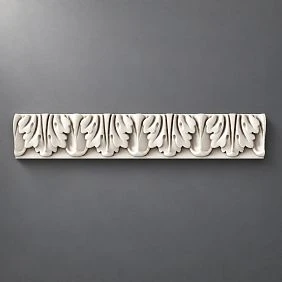
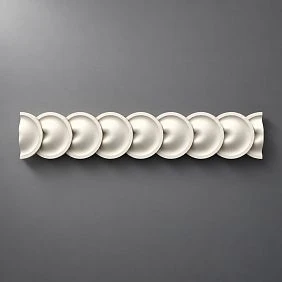
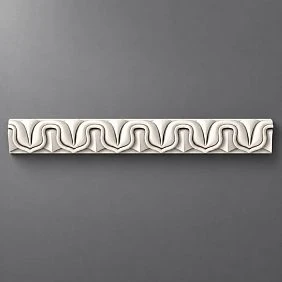
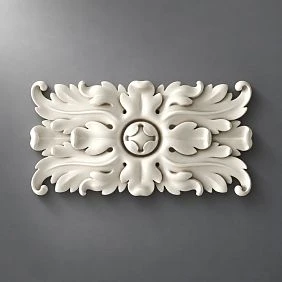
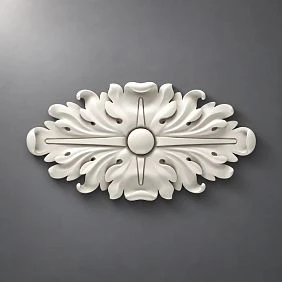
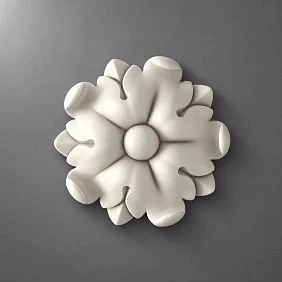
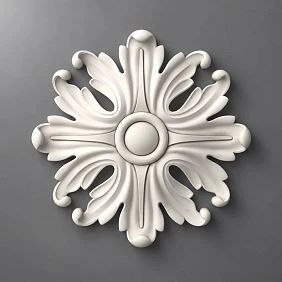
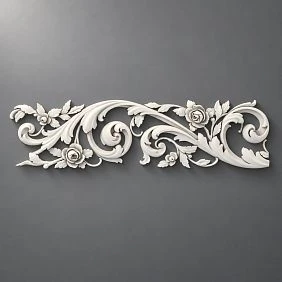
Moldings, cornices and baseboards made of polyurethane
Polyurethane moldings, cornices, and baseboards — this is a basic set for creating a unified decorative scheme. Molding goes on the wall, cornice — on the joint of wall and ceiling, baseboard — on the joint of wall and floor. Three elements, three zones, one concept. If all of them are painted in the same color, the interior acquires a rare integrity.
For painting in this section, choose profiles with a well-defined relief: the deeper the relief, the more expressive the chiaroscuro will be after painting, especially when using glazing compounds or a patina effect.
Get Consultation
Polyurethane baseboards for painting
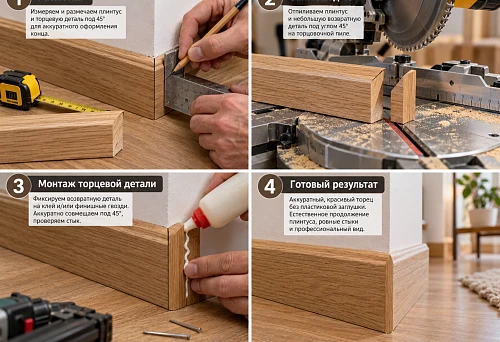
Polyurethane baseboard for painting — this is a separate section with high commercial frequency, and not by chance. It is the baseboard that most buyers traditionally take ready-made in the color of the floor (white, brown, wood-like). A polyurethane baseboard for painting changes this logic: you take a neutral white profile and paint it in any desired color — to match the wall, the floor, or the door.
Floor polyurethane baseboard for painting is available in different heights: from 50 to 120 mm and higher. The higher the baseboard, the greater the decorative weight it carries. For a modern interior with a ceiling of 3 m and higher, profiles of 80–100 mm work well. For standard apartments — 50–70 mm. Product cards indicate exact dimensions — width, height, plank length. Current prices for polyurethane baseboard for painting are only in the catalog; they are updated regularly.
Polyurethane cornices for painting
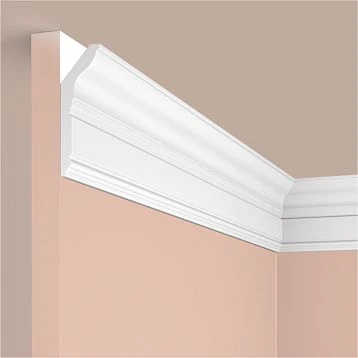
Polyurethane cornice for painting — this is a ceiling perimeter frame. A ceiling cornice serves two functions: it covers the joint between the wall and ceiling (and any defects on it) and sets the tone for the entire decor of the upper zone. Painted white on a colored ceiling, it provides a classic contrast. In the color of the walls, it creates the effect of a continuous surface, where the wall smoothly transitions into the ceiling.
Polyurethane cornices for painting come with projections from 30 to 120 mm and more. A narrow cornice is for modern interiors. A wide one with a rich relief is for classic and neoclassical styles. For rooms with ceilings lower than 2.7 m, we recommend profiles with a projection of up to 60–70 mm: they do not eat up the volume.
Polyurethane ceiling rosettes for painting
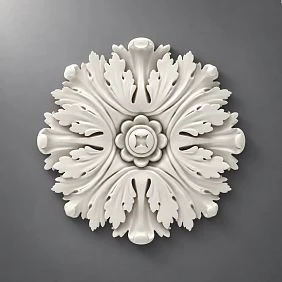
Polyurethane ceiling rosettes — this is a point accent of the central part of the ceiling. A rosette for painting opens up interesting possibilities: in white on a white ceiling — classic. In the color of the ceiling — a delicate volumetric motif that you only notice up close. With a contrasting color (e.g., anthracite or deep blue) — a bold design statement.
The diameter of the rosette is chosen proportionally to the room area: for rooms up to 15–18 m² — 30–50 cm, for 20–30 m² — 50–80 cm, for large halls — 80 cm and more. The catalog features models of different diameters and reliefs.
PU overlays for painting
PU overlays for painting — these are individual decorative elements for walls, doors, and furniture. They are painted either in the color of the surface (for a delicate volumetric effect) or in a contrasting color (to highlight accents). An overlay with patina over the base paint is one of the most effective techniques in a classic interior: the relief "reveals" through different layers of paint and looks like aged decor.
Wall decor from polyurethane for painting
Polyurethane wall decor — these are ready-made elements for creating frame panels, wall compositions, and accent surfaces. Decorative wall moldings for painting are one of the most popular requests in this topic. This section specifically covers the scenario "I want stucco on the wall for painting": you take moldings, form frames, paint them in the color of the wall — and the space acquires classic depth without renovation.
Polyurethane ceiling decor
polyurethane ceiling decor Expands possibilities beyond the socket and cornice. Decorative domes, caisson modules, ornamental inserts — all can be painted and fit into any ceiling color scheme.
Why choose stucco for painting: commercial logic
Why should you even consider stucco decor for painting instead of just buying a ready-made colored solution? Let's be honest — it's a matter of freedom.
Decor in the color of the walls. When the molding is painted in the same shade as the wall, it ceases to be perceived as a "glued strip" and becomes part of the architecture. A wall with molding frames in a single color looks like a finished surface in a historic mansion. This effect cannot be replicated with any wallpaper or decorative panels.
White stucco on a colored wall. A classic technique: rich paint on the walls (green, blue, ochre, anthracite) and white molding as a clear line. The contrast works flawlessly in neoclassicism, and even in a modern interior — if the wall is sufficiently saturated in color.
A unified set for painting. Molding on the wall, cornice on the ceiling, baseboard on the floor — all three elements in one color. This is called through chromatic decor. It is this approach that gives the interior a sense of thoughtfulness that is impossible to explain but easy to feel.
Decor for enamel. Oil or alkyd enamel on a polyurethane molding or baseboard provides a durable, glossy, easy-to-clean surface. This is especially relevant for hallways, kitchens, and other high-traffic areas.
The ability to refresh the color. Tired of the shade? Repainting a polyurethane baseboard or molding is incomparably easier than replacing the decor. This makes the investment in stucco long-term: the elements last for years, and the color can be changed along with the concept.
Adaptation to any style. The same molding in white is classic. In matte gray — modern minimalist neutrality. In deep green — an unexpectedly bold accent. Polyurethane for painting is a material without stylistic limitations.
How to choose stucco for painting by application area
Stucco for walls for painting
The wall is the main working surface for stucco decor. It is here that moldings for painting on walls work most expressively: they create a frame rhythm, structure large planes, and allow you to play with color inside and outside the frames.
Decorative moldings for walls for painting are selected according to several parameters. Profile width — for a standard ceiling height of 2.7 m, 30–60 mm is optimal. For high rooms from 3 m — 60–100 mm. Relief — for a monochrome interior, profiles with medium relief are better readable: too flat gets lost in color, too high looks rough. Style — smooth geometric profile for modern classic, ornamental with a belt for neoclassical, rich acanthus for classic.
Stucco on the wall for painting is also an excellent way to work with paintable wallpaper. Moldings are mounted on top of already glued wallpaper, fixed with glue, and painted together with the wall. As a result, the wallpaper serves as a textured background, and the moldings create a relief frame contour. The effect is professional, the labor intensity is minimal.
Stucco on wallpaper for painting is a popular request, and here is an important point: the base must be level, clean, and well-adhering. Loose or bubbling wallpaper will not provide a reliable base for mounting the molding. More details about installation rules are in the article How to glue polyurethane molding.
To create wall frames, accent panels, and decorative surfaces, use the sections wall decor и molding.
Stucco for ceiling for painting
The ceiling is an area where stucco for painting opens up special possibilities. The traditional solution — white decor on a white ceiling — remains impeccable. But a modern interior offers other options.
Ceiling cornice for painting is the first choice for decorating the upper area. a polyurethane cornice matching the wall color creates the effect of a smooth transition from the vertical surface to the horizontal one. The boundary disappears, and the space visually expands. This works especially well in rooms with dark or saturated walls.
Ceiling baseboard for painting is a concept often confused with a cornice. A ceiling baseboard (cove molding) is a less massive profile for the joint between the wall and ceiling, typically with a simple cross-section. Polyurethane ceiling baseboard for painting — a budget-friendly and concise alternative to a cornice for modern interiors.
Ceiling rosette for painting — the central accent. The rosette is painted either white (on a white or light ceiling — classic), or in the ceiling color (a delicate volumetric solution), or highlighted with a darker or golden shade as an independent accent. Section ceiling rose offers a wide selection of diameters and reliefs.
For complex ceiling solutions — domes, coffers, ornamental inserts — see polyurethane ceiling decor.
Floor molding for painting: baseboard
The baseboard is the most prosaic yet one of the most important elements in the stucco decoration system. It closes the bottom line of the interior and determines how finished the space looks.
Polyurethane baseboard for painting — this is a solution for those who want not just to cover the joint between the wall and floor, but to make it a decorative accent. A polyurethane baseboard for painting differs from standard plastic and MDF baseboards primarily in its relief: here there is a profile, an architectural cross-section, and visual weight that makes the lower part of the wall complete.
Baseboard dimensions are a critical parameter. For a modern interior with minimalist decor, a height of 50–70 mm with a simple profile is suitable. For classic or neoclassical styles, 80–120 mm with a stretched relief is appropriate. For high rooms from 3.5 m, 120–180 mm and above. Current baseboard sizes for painting and prices are in the product cards of the section. baseboards.
Baseboard color is a separate design question. A baseboard matching the floor is a traditional solution that visually "presses" the space to the ground. A baseboard matching the wall is a modern technique that makes the floor area "invisible" and visually raises the height. A white baseboard on a dark floor and light walls is a classic that never gets old.
A unified set of stucco molding for painting
This is where the real design challenge arises. Not "buy a baseboard" and not "take a cornice," but to assemble a working system: three levels of decor in one style, one proportion, and one color logic.
Kit diagram:
-
Lower level: polyurethane baseboard — finishing at the floor
-
Middle level: wall moldings — frames, a horizontal belt, or just a line at a height of 900–1000 mm
-
Upper level: a polyurethane cornice — transition of wall and ceiling
-
Central accent: Ceiling rosette under the chandelier
All four elements, painted in a unified scheme, transform the space from a set of separate surfaces into an architectural ensemble. This is what distinguishes an interior that was simply "painted and furnished" from one that was designed.
How to choose a color for stucco molding for painting
Color is a topic where there is no single right answer, but there are proven techniques. Let's break down the main scenarios.
Stucco molding in the color of the walls
The most modern and technically complex option. The molding, cornice, and baseboard are painted the same color (same paint code, same finish—matte or satin) as the wall. The decor becomes part of the surface. It is visible due to relief and chiaroscuro—but not through color contrast.
This technique is called "total painting" and is actively used in modern neoclassicism and contemporary interiors. Deep relief of the elements is especially important for it: on a smooth profile, the effect will be lost, but on a classic cornice with acanthus or a molding with beads, it will work flawlessly.
White stucco molding on a colored wall
A classic that never goes out of style. White molding on a dark blue, green, olive, or burgundy wall is a dialogue of color and form. The decor reads clearly, the relief is perceived as maximally expressive, and the contrast adds energy to the space.
For this scenario, the following work particularly well PU overlays on colored walls: a white cartouche or medallion on a dark surface looks like an interior detail in the best homes of Europe.
Stucco molding in the color of the ceiling
The cornice and rosette are painted white — a standard story. But try something different: the ceiling in light gray, the cornice in the same gray. Or a colored ceiling (dusty green, blue) — and the cornice in unison with it. The boundary between the wall and ceiling becomes blurred, the space soft and enveloping.
Baseboard and moldings in the same color
Chromatic connection of the lower and middle zones: baseboard and horizontal molding on the wall in the same color, the wall between them in a contrasting one. This is a 'panel' finishing technique: the lower part of the wall in dark, the upper part in light, the molding and baseboard connect these zones.
Stucco molding under enamel: when special durability is needed
For a kitchen backsplash (if the molding runs along the work surface), for a hallway, for a bathroom — painting with alkyd or polyurethane enamel is optimal. It provides a dense, glossy surface that is easy to clean and resistant to mechanical impact. Stucco molding under enamel is primarily baseboards and moldings in high-traffic areas.
Contrasting stucco molding in a classic interior
Gold and white, anthracite and ivory, copper and dark walnut — classic decorative pairs for painting stucco molding. A ceiling rosette with gold patina on a white ceiling is an image that immediately sets the tone for the entire interior. To achieve a gilding effect, special waxes or acrylic paints with metallic pigment are used.
Sizes of stucco molding for painting: how to choose correctly
Sizes are a matter not only of aesthetics but also of installation logic. Here is a working table for selection:
| Zone | What to choose | What to look for |
|---|---|---|
| Wall | moldings, overlays, wall decor | profile width, wall height, frame size |
| Ceiling | cornice, rosette, ceiling decor | ceiling height, rosette diameter, cornice projection |
| Floor | Baseboard | baseboard height, wall length, floor color |
| full set | molding + cornice + baseboard | unified style and proportions |
A few guidelines that work in most cases.
Wall molding: width 30–50 mm — for rooms with ceilings up to 2.8 m; 50–80 mm — for 2.8–3.2 m; 80–100 mm — for rooms higher than 3.2 m.
Cornice: projection (shelf width) 40–60 mm — for modern interiors, light visual weight; 80–120 mm — for classic and neoclassical styles with rich ornamentation.
Baseboard: height 50–70 mm — minimalism and modern style; 80–120 mm — classic and neoclassical; 120+ mm — high rooms and formal areas.
Rosette: diameter 20–40 cm — compact rooms up to 15 m²; 40–70 cm — standard rooms 15–30 m²; 70 cm and more — large living rooms and formal spaces.
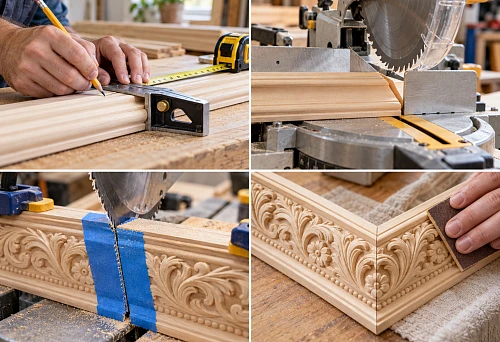
Exact dimensions of each product — in product cards. To calculate the footage, use the formula: room perimeter + 10–15% allowance for trimming and joints.
Stucco on paintable wallpaper: a separate issue
This scenario deserves a separate discussion because the request "stucco on paintable wallpaper" is really in demand — and at the same time requires understanding of the nuances.
Paintable wallpaper is a structured vinyl or non-woven base with a relief pattern (wood, weave, plaster, etc.) that is painted after installation. Installing moldings on top of such wallpaper is possible, but there are conditions.
First: the wallpaper must be firmly glued without bubbles, bulges, or peeling at the edges. Second: the molding adhesive must be compatible with the surface (acrylic mounting adhesive works in most cases). Third: the molding should not be heavy — a lightweight polyurethane profile holds securely, while heavy plaster on wallpaper will not last long.
If you plan to glue stucco on paintable wallpaper — study the installation recommendations in STAVROS materials: How to glue polyurethane molding и what to glue polyurethane molding with.
After installation, the moldings and wallpaper are painted together in one color. If the molding has a relief, it stands out against the wallpaper texture due to its clearer geometry. The effect is interesting and, with the right selection, very convincing.
How to Paint Polyurethane Moldings: Practical Part
A section many search for in parallel with choosing elements.
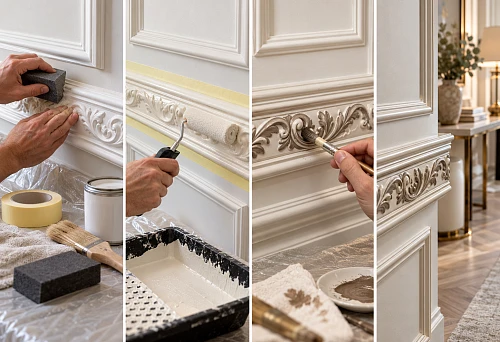
Surface preparation. New polyurethane products can be painted without primer — their surface is smooth enough and non-absorbent. But if you want maximum paint adhesion or are using alkyd enamel, a light priming with acrylic primer won't hurt. On already installed elements, fill joints and cuts, sand to a smooth surface.
Choosing paint. For interior use, the best option is water-based acrylic paint. It is odorless, dries quickly, applies easily with a brush or small roller, and holds well. For high-humidity areas (kitchen, bathroom), use acrylic with moisture-resistant properties or alkyd enamel. For imitation of metal and patina, use special decorative waxes or acrylic paints with metallic pigment.
Application. First coat — thin, without drips, let dry. Second coat — final, if necessary, a third. For ornamental relief, a brush with stiff bristles is convenient: it paints the recesses without excessive paint buildup.
Patina and aged effect. Apply dark wax or paint over the dried base coat, then wipe the raised parts with a cloth, leaving a dark shade in the recesses. The relief 'emerges,' the decor gains depth and visual volume.
About choosing glue for installation before painting — in the article what to glue polyurethane molding with.
Mistakes When Choosing Moldings for Painting
Let's look at eight mistakes that occur most often. Not because we want to scare you, but because they are easy to avoid — if you know in advance.
Buying elements without an overall scheme
"I'll take this molding, then the cornice, then the baseboard — I'll see how it fits" — this is exactly how the story of an incompatible interior begins. The scheme should be in place before the first purchase: zones, elements, sizes, color — everything in one table.
Too wide a profile for a low ceiling
A cornice with a 100 mm projection on a 2.5 m ceiling eats up height and feels oppressive. A 120 mm baseboard in a small room visually "cuts" the space. Guideline: the profile should not take up more than 4–5% of the room's height.
Did not account for the baseboard height
If the baseboard is 80 mm and the belt molding on the wall starts at a height of 900 mm from the floor — everything is fine, the proportion works. If the baseboard is 120 mm and the belt is at the same height — the lower zone looks overloaded. The baseboard height sets the lower "base" — the entire remaining rhythm of the decor is calculated from it.
Painting without surface preparation
Paint applied to a dirty or greasy molding will peel. After installation, always wipe the elements with a damp cloth, let them dry — and only then paint. If installation was done with acrylic glue — wait for the glue to dry completely (usually 24 hours).
Mixing different styles in one room
A Baroque rosette + a minimalist cornice + a decorative baseboard with Art Deco ornament — this is not eclecticism, it's chaos. All elements that you paint in the same color scheme must be in the same stylistic context. Otherwise, a single color won't save it — the stylistic mismatch will be even more obvious.
Did not check the compatibility of wall, floor, and ceiling colors
Before painting the molding in the "wall color" — make sure this color matches the floor and ceiling. Sometimes a monochrome scheme reveals a conflict of shades that was previously unnoticed.
Did not account for cutting waste
Molding is sold in fixed-length planks. When cutting corners and fitting joints, some material goes to waste. Minimum reserve — 10%, optimal — 15%. Especially important for non-standard layouts with many corners.
Did not connect elements stylistically and by size
Baseboard 50 mm + cornice with overhang 120 mm + molding width 80 mm — these are three different scales in one space. They do not work as a system, even if all three are white. Proportional matching of kit elements is mandatory.
Painting tips in different styles
Classic
In a classic interior, molding is traditionally painted white or ivory against colored walls (dark green, burgundy, ochre, blue). To enhance the effect — light gold patina on the convex parts of the cornice and rosette. This adds depth and a sense of a "lived-in" interior.
Neoclassicism
Neutral palette: moldings in wall color, white ceiling, minimal cornice without ornament. Or — light contrast: walls in warm neutral (beige, vanilla), moldings slightly darker or slightly lighter. No sharp transitions, no theatricality.
Modern interior
Bold solutions: dark molding on a light wall, black baseboard on a white floor, gray rosette on a light gray ceiling. Polyurethane for painting in a modern interior is about geometry and minimalism, not ornament.
All these solutions start with the right choice of elements. Installation and surface preparation tips are in the section STAVROS information and tips.
Where to buy paintable moldings in the STAVROS catalog
All the necessary assortment for creating a decorative scheme for painting is in the STAVROS catalog. Go to the desired section, study product cards with photos, sizes, and current prices, place your order.
Navigation for selecting elements:
-
General catalog moldings from polyurethane — to start and overview
-
moldings, cornices, and baseboards — for walls, ceiling, and floor
-
Polyurethane baseboard for painting — for the lower zone
-
Polyurethane cornice for painting — for the ceiling perimeter
-
ceiling rosettes — for central accent
-
PU overlays for painting — for artificial decor
-
Polyurethane wall decor — for wall frames and panels
-
ceiling decor — for complex ceiling solutions
Contact us to confirm shipping to your destination. Prices for moldings under paint — in the product cards of the catalog, current and updated.
FAQ: answers to popular questions about moldings under paint
Can polyurethane stucco be painted?
Yes, and this is one of the key advantages of polyurethane decor. Any product from the STAVROS catalog is ready for painting with acrylic and alkyd paints without special preparation.
Which paint to choose for polyurethane moldings?
For most rooms — water-based acrylic interior paint. For areas with humidity — moisture-resistant acrylic or alkyd enamel. For patina and gilding effects — decorative waxes or acrylic paints with metallic pigment.
Can moldings be glued onto paintable wallpaper?
Yes, if the wallpaper is tightly glued, without bubbles or bulges. Installation — acrylic mounting adhesive. The molding is fixed on top of the wallpaper and painted together with it.
What to choose for painting: molding, cornice, or baseboard?
The best result is a set of all three: molding on the wall, cornice on the ceiling, baseboard by the floor. A single color unites the elements into a system and gives a sense of a well-thought-out interior.
How to choose the size of a baseboard for painting?
Based on ceiling height and style. Ceiling up to 2.8 m — baseboard 50–70 mm. Ceiling 2.8–3.5 m — 80–120 mm. Higher — 120 mm and more. Current sizes are in the section polyurethane baseboards.
How to choose moldings for painting on walls?
Determine the style (modern, neoclassical, classic), wall height, and desired effect (panel frames, horizontal belt, simple framing). Then choose the profile width — from 30 mm for a minimalist solution to 100 mm for rich classic.
How many layers of paint are needed for stucco?
Typically, two layers: the first is a thin priming layer, the second is a finishing layer. On ornamental elements, a third layer is sometimes needed to evenly cover the recesses.
Can the stucco be repainted after installation?
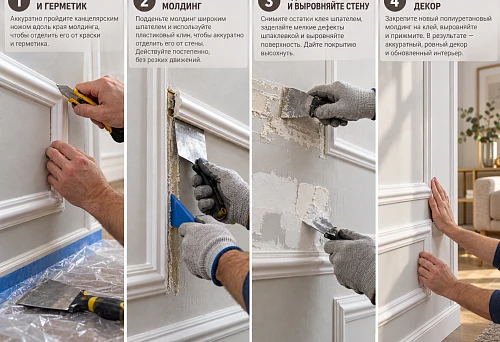
Yes, without restrictions. Polyurethane is easy to repaint. Just sand the old layer if necessary and apply a new one. This is one of the main long-term advantages of the material.