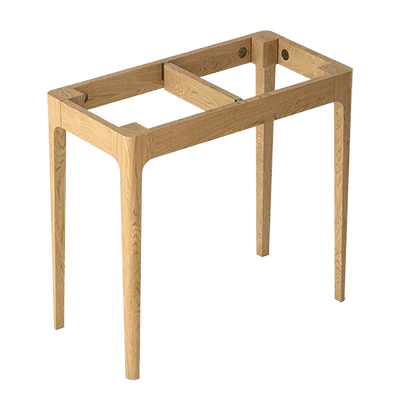
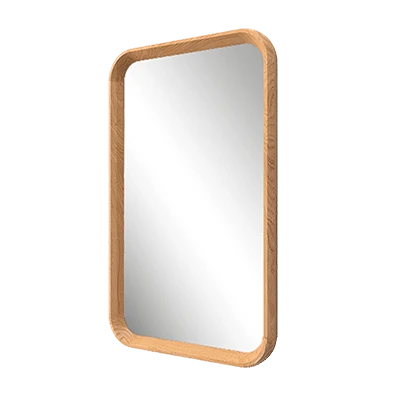

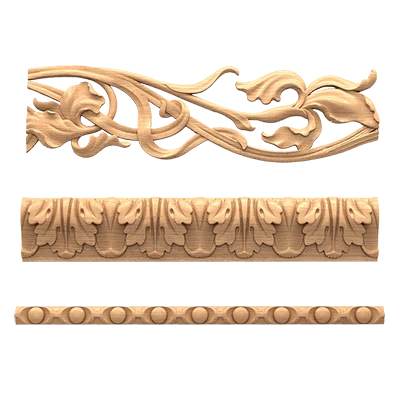
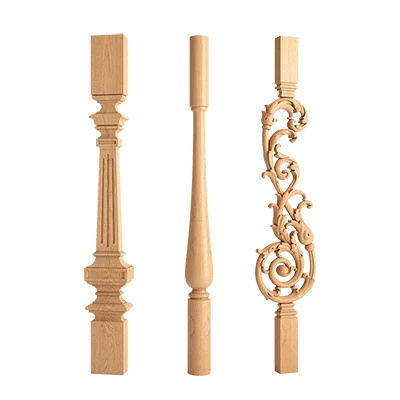

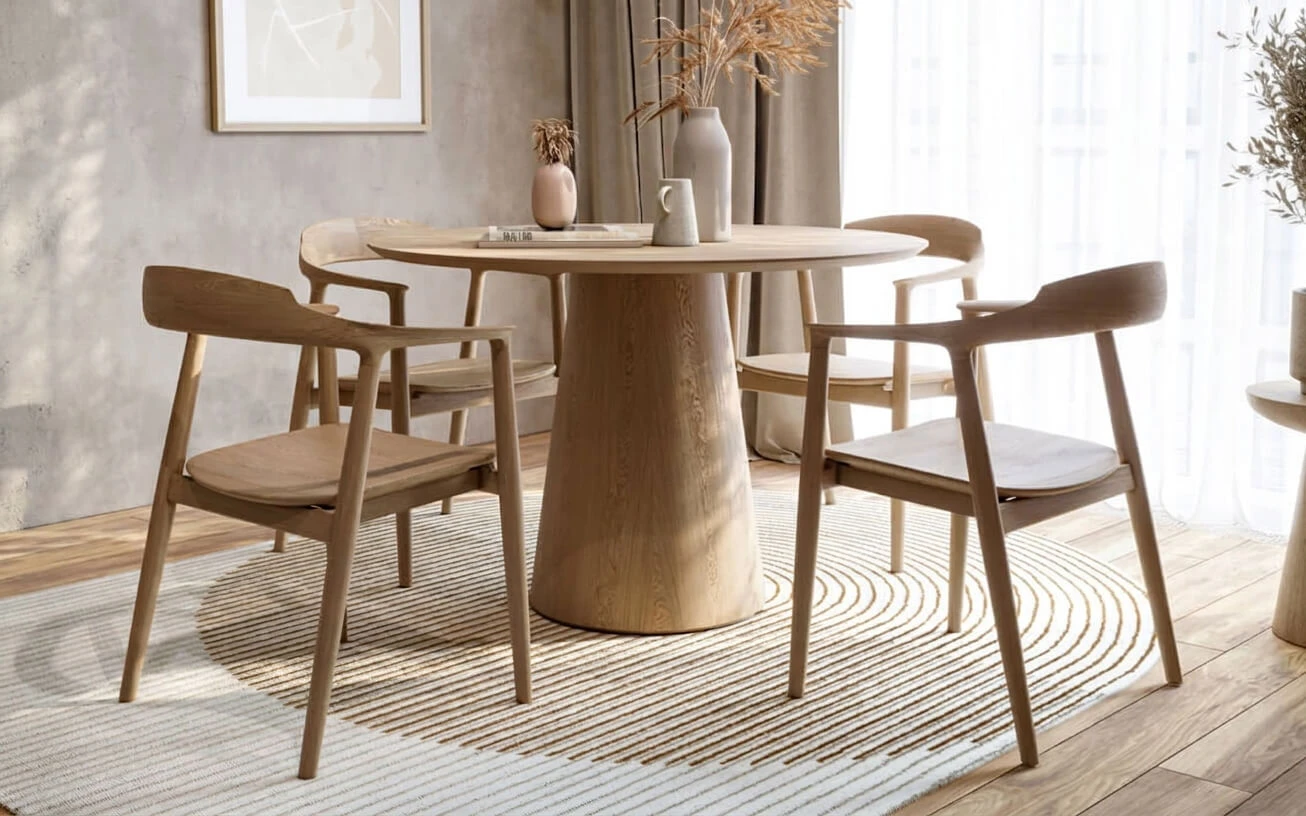

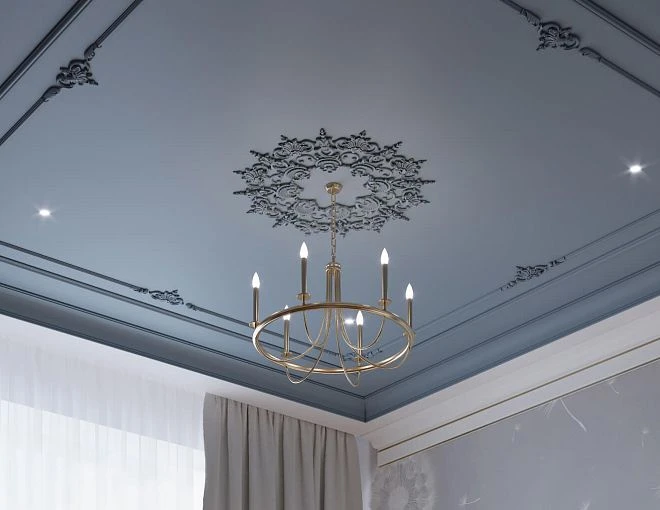
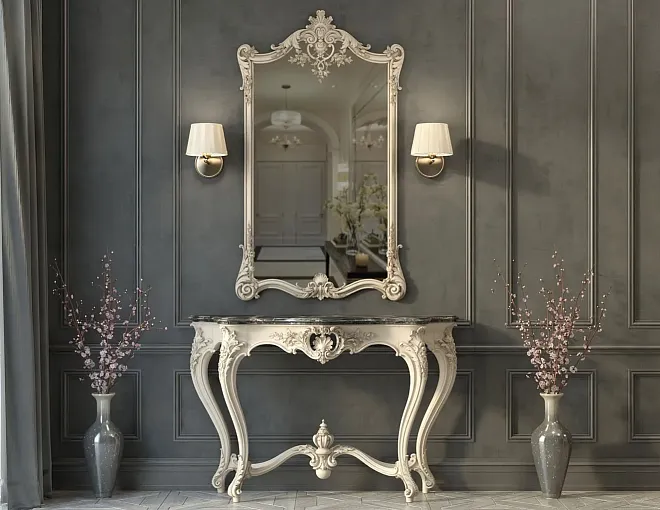
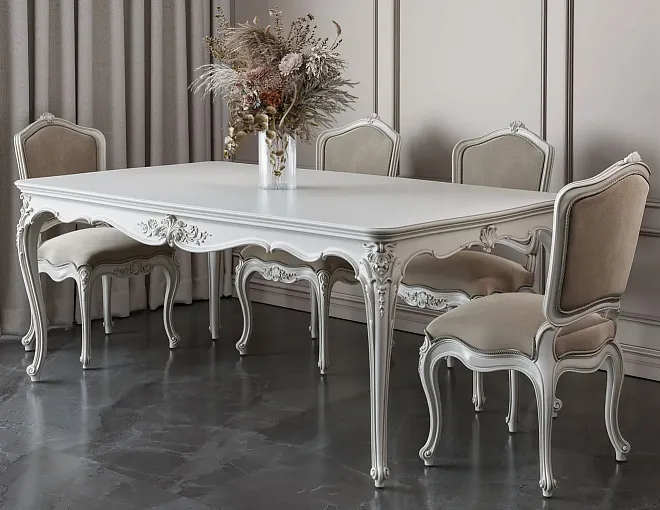
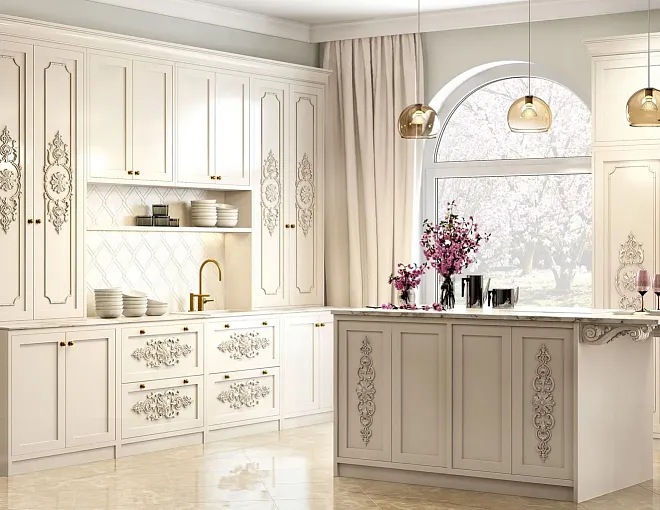

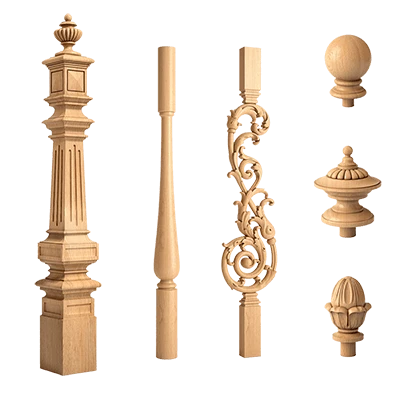
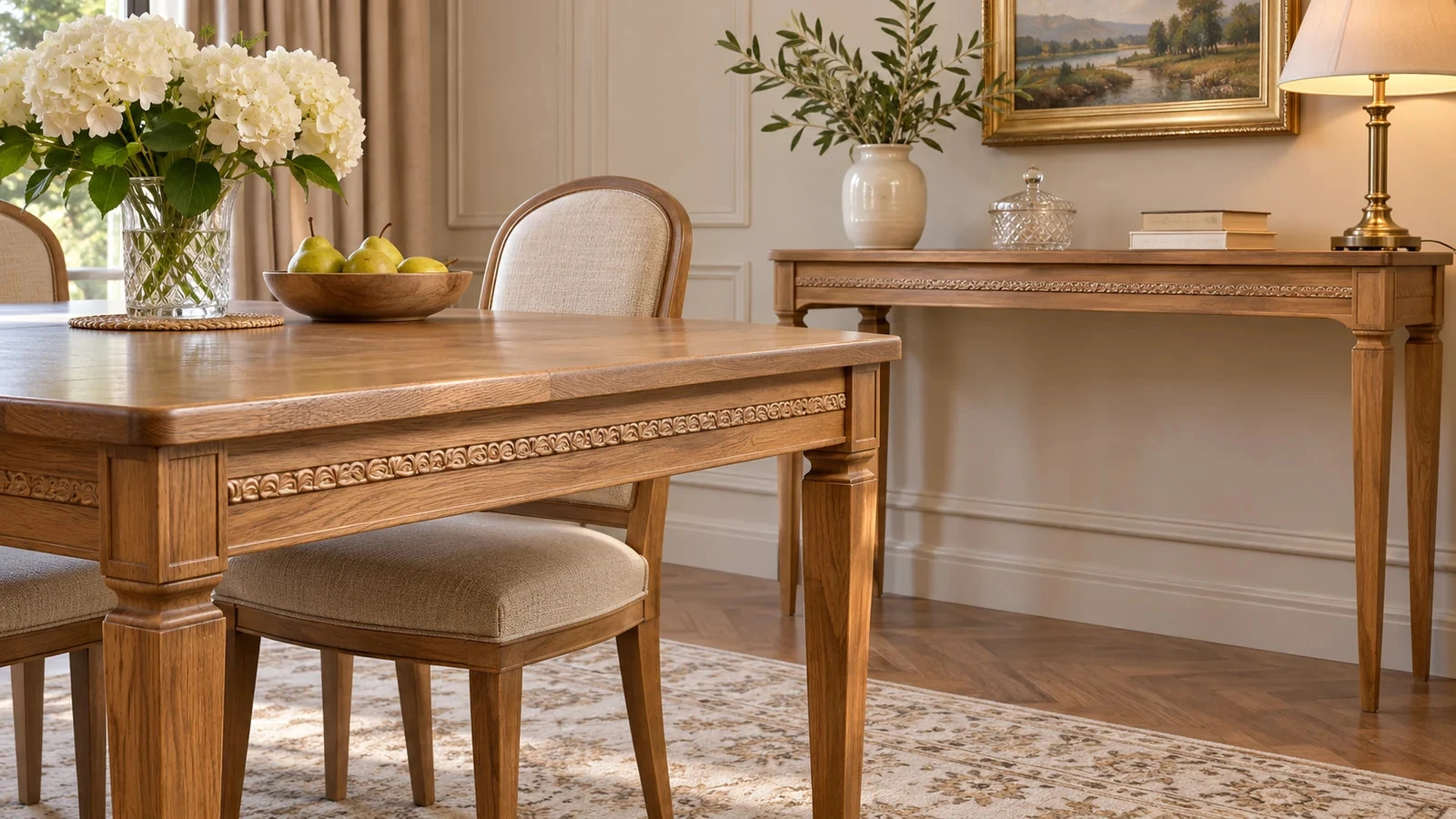
A dining table and a freestanding console may have different dimensions, but they do not have to differ in decorative character. Imagine a dining room set for Syzran: the table has four open aprons, and the console also has four. Between the table legs there remain two long planes of 1100 mm each and two short ones of 600 mm each; on the console, two of 850 mm and two of 280 mm. If a thin carved line is run down the center of each apron, the furniture will gain a shared detailing without requiring any change to the underframe structure. The finished length of the eight inserts will be 5.66 m. At the same time, purchasing material by linear meterage alone may prove incorrect: the long parts must come out whole, and the carving should preferably be coordinated with the pattern on adjacent sides.
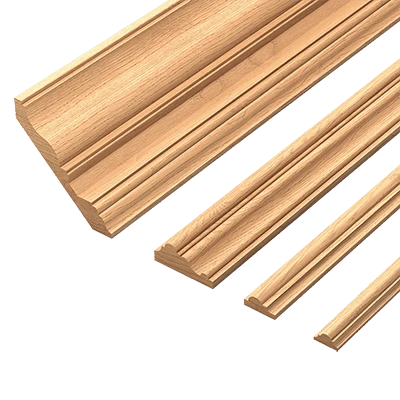
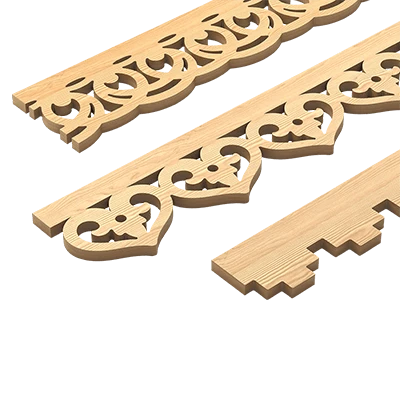
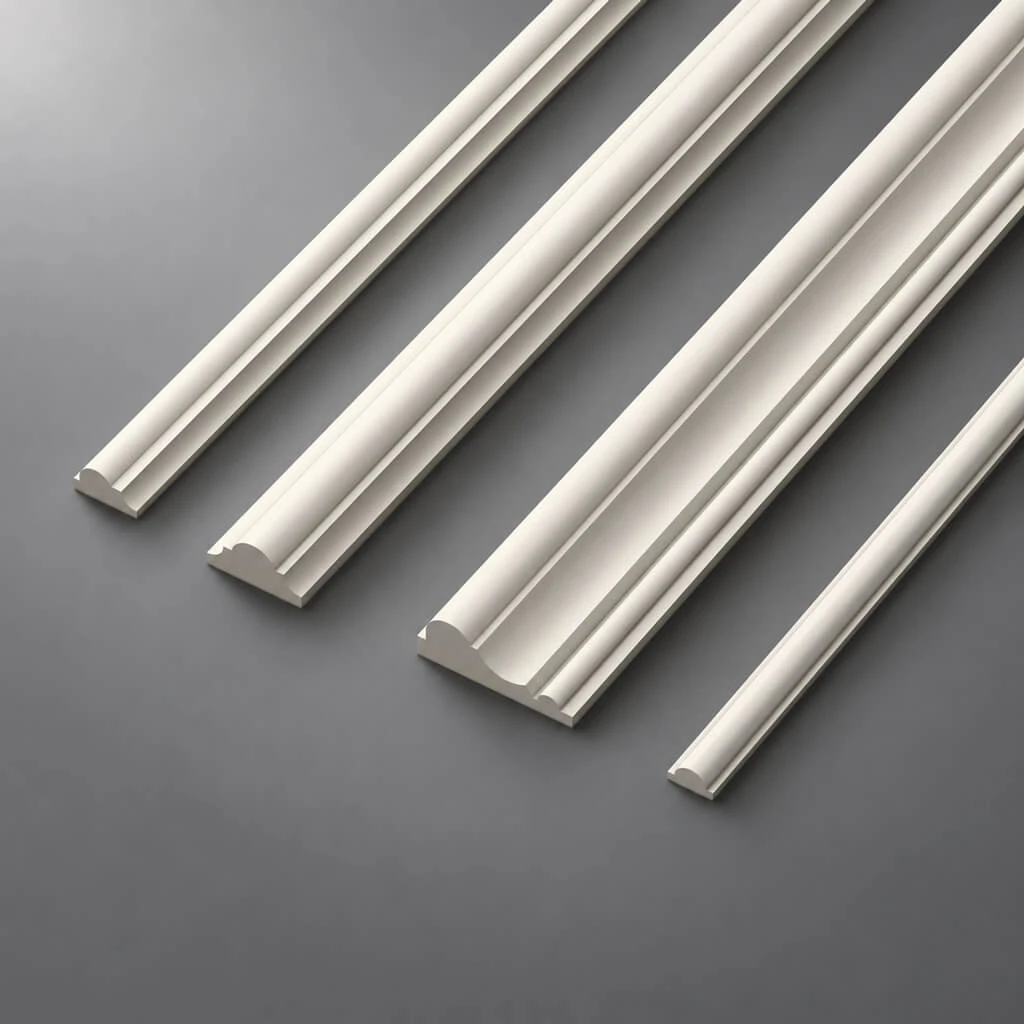
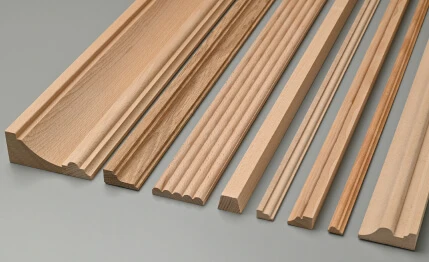
For this task, two narrow profiles in the STAVROS catalog are of interest: the geometric K-034 with a 10 × 6 mm section and the more expressive K-078 with a 15 × 10 mm section. Both are available in beech and oak versions. These products are bought as blanks for subsequent cutting and finishing. To achieve the expected result, you need to choose not only the pattern and species but also the processing method and the placement of the decor relative to the legs, and then check whether the factory lengths allow the entire set to be made without unnecessary joints.
Below is a conditional project for a preliminary estimate, not a finished production drawing of specific furniture. The dimensions of each item should be replaced with actual measurements. This procedure is especially useful when ordering from the Samara region: the craftsman will be able to coordinate the batch in advance, reduce waste, and avoid having to return to selecting individual parts after finishing work has begun.
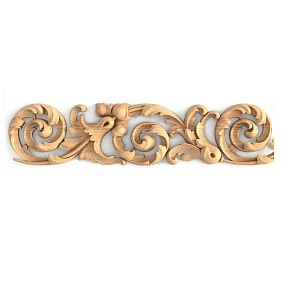
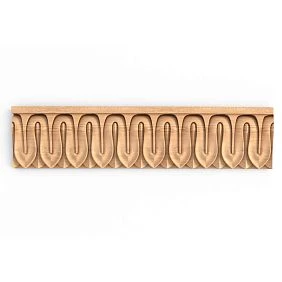
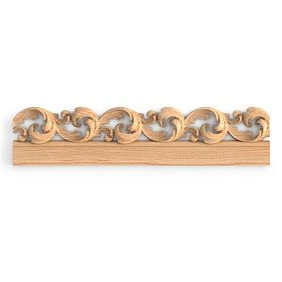
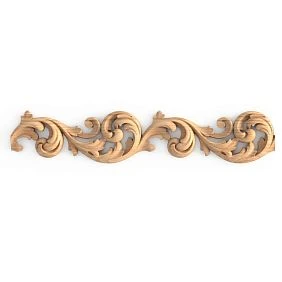
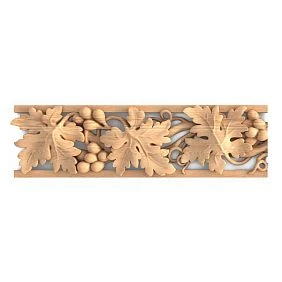
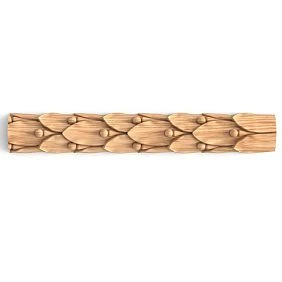
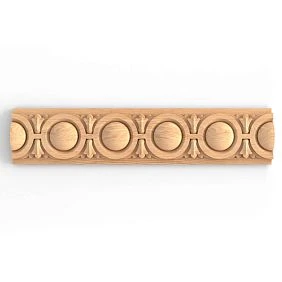
Where to buy wooden baguette in Syzran
For a buyer assembling furniture independently, it is important to separate three operations: selecting the product, purchasing factory strips, and manufacturing parts according to a drawing. In the STAVROS decorative moulding catalog you can Buy wooden picture frame molding from a suitable species with the specified cross-section. However, the product card does not replace a cutting plan. Even if the total length of all lines is less than six meters, the furniture workshop must check whether eight parts of the required size can be obtained from three two-meter blanks.
It is convenient to start with a photograph of the existing table, a sketch of the future console, and a small drawing of one joint between the apron and the leg. From these, the available width of the face surface is determined. If the table has a thin apron with an already formed shaped edge, a wide profile may overlap it. If the face surface is smooth and sufficiently high, a more relief-like pattern is permissible. With the same species and shade, two separate items will look related thanks to the repetition of a single line.
A craftsman from Syzran does not need to limit their choice to the assortment of the nearest store. You can select a model remotely, check its dimensions, and send the specification to the supplier. Indicate the desired type of finish, the number of long strips, and whether a short sample is needed. Do not mix furniture part dimensions with factory dimensions in the request: the supplier needs the article number and the quantity of the selected versions, while the joiner needs the length after trimming.
This project considers specifically oak and beech. The purpose of the baguette is decorative, so it is chosen based on the installation location and appearance rather than on permissible load. If the table or console is still being designed, the frame and joints are approved first, then the position of the carved strip is agreed upon. If the furniture already exists, before purchasing it is determined whether the surface can be prepared without damaging its finish and warranty conditions.
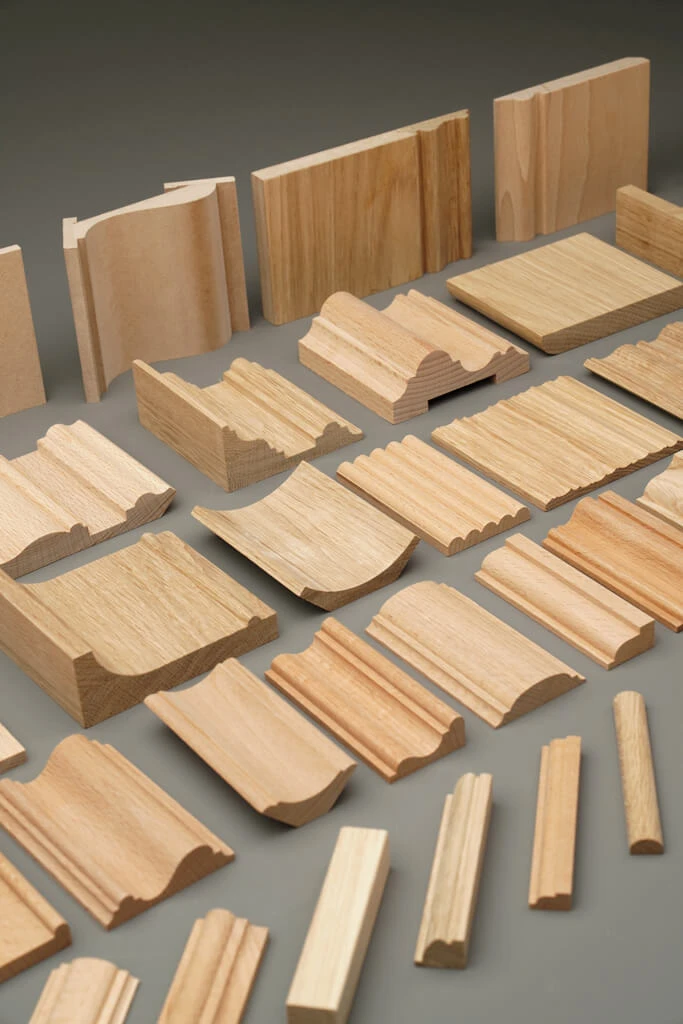
How to use carved moulding for furniture aprons
An apron is the frame element between the supports, located under the tabletop. On a table it helps ensure the stability of the base, and its outer side may remain clearly visible. An applied baguette, by contrast, works as a decorative detail. It is glued or fastened in another way chosen for the specific construction, but it is not calculated as reinforcement for the joint between the legs and the tabletop. This distinction matters during repair: table wobble cannot be fixed by installing a carved strip over the damaged joint.
On four straight aprons, it is easiest to make eight separate ends divided by the legs. The pattern does not have to run continuously around the furniture if there are supports between the aprons. Such a composition allows you to choose symmetrical fragments and avoid making a corner mitre where it is not needed. On the long front side, the ornament is perceived as a solid horizontal. On the short side, it becomes a small accent that supports the main line.
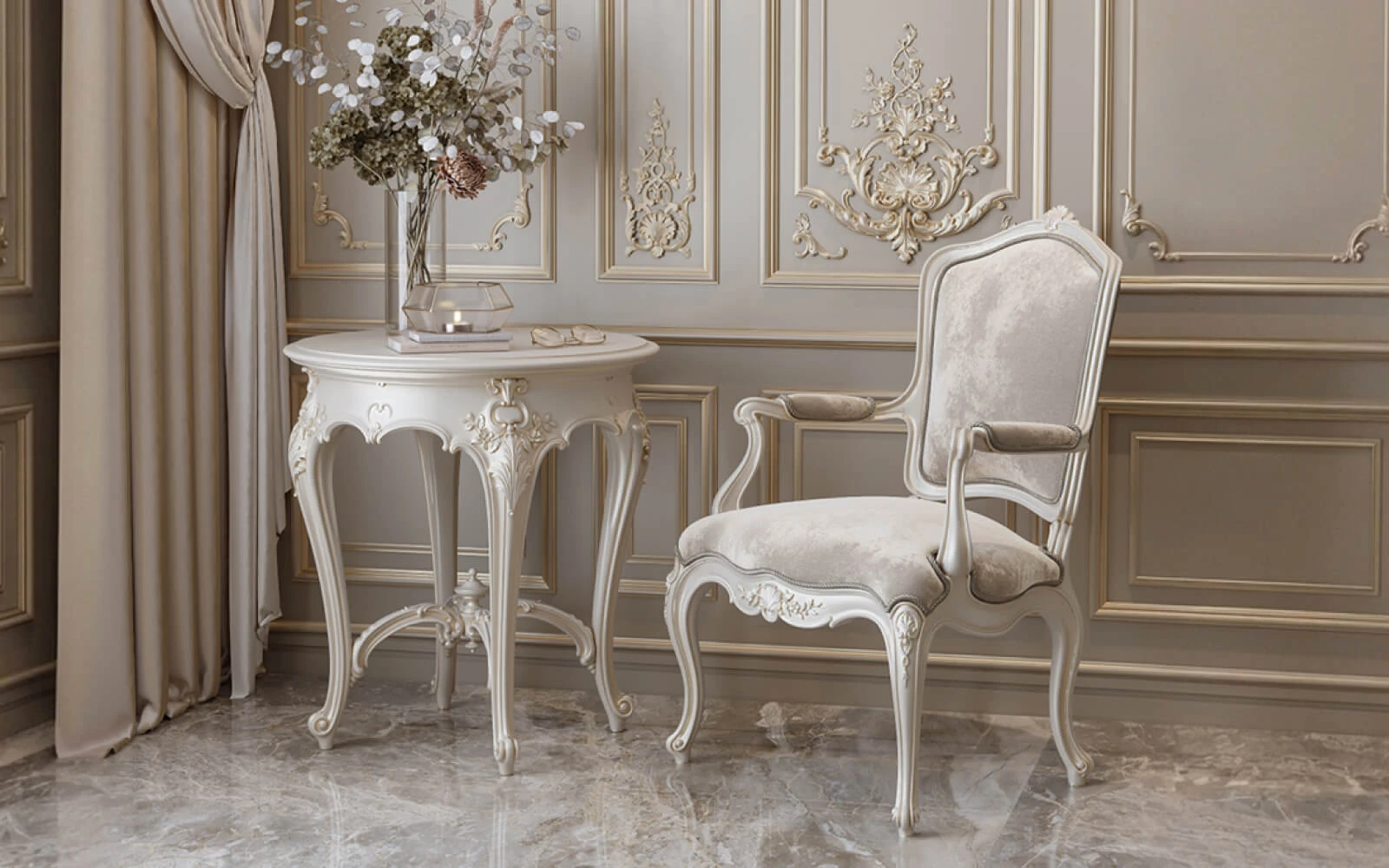
For a dining room with classic chairs and expressive frames, different scales of carving are suitable, but it is better not to introduce a third independent pattern without necessity. On a console located next to the dining area, you can repeat the same article and shade. However, the apron width of the console often differs from the apron width of the table. The overall composition is preserved not by mechanically transferring all the indents, but by a single principle: for example, placing the centre of the baguette at the centre of the available smooth strip.
There is also a practical limitation. In the dining area, people regularly pull chairs in, stand up and touch the edges of the furniture. If a protruding profile ends up in the path of the backrest or armrest, the relief may be damaged. Therefore, at the sketch stage, you should check the position of the chairs both in normal and pushed-in states. The console is checked separately: whether the decor protrudes beyond its edge and whether it is convenient to wipe dust under the tabletop. A successful moulding complements the piece without worsening its everyday use.
Wooden baguette K-034: fine geometry for a table and console
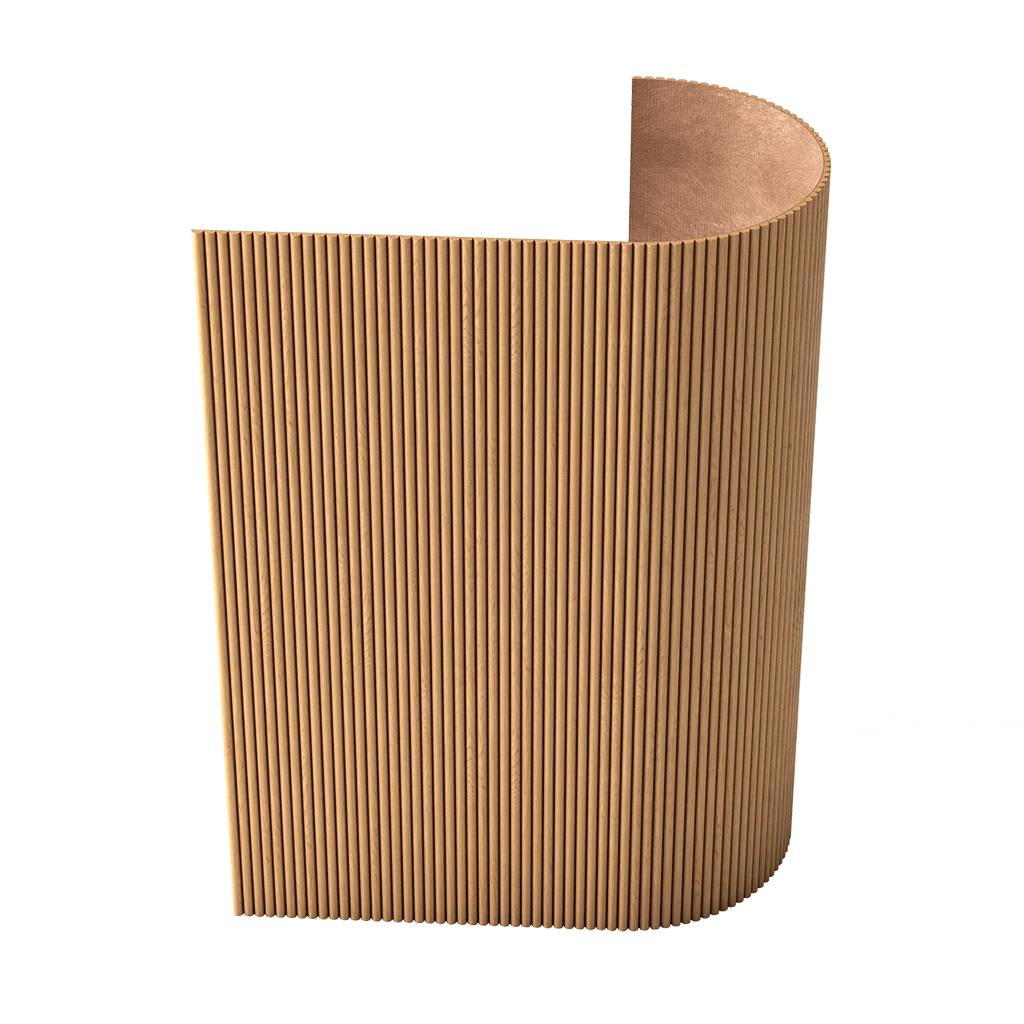
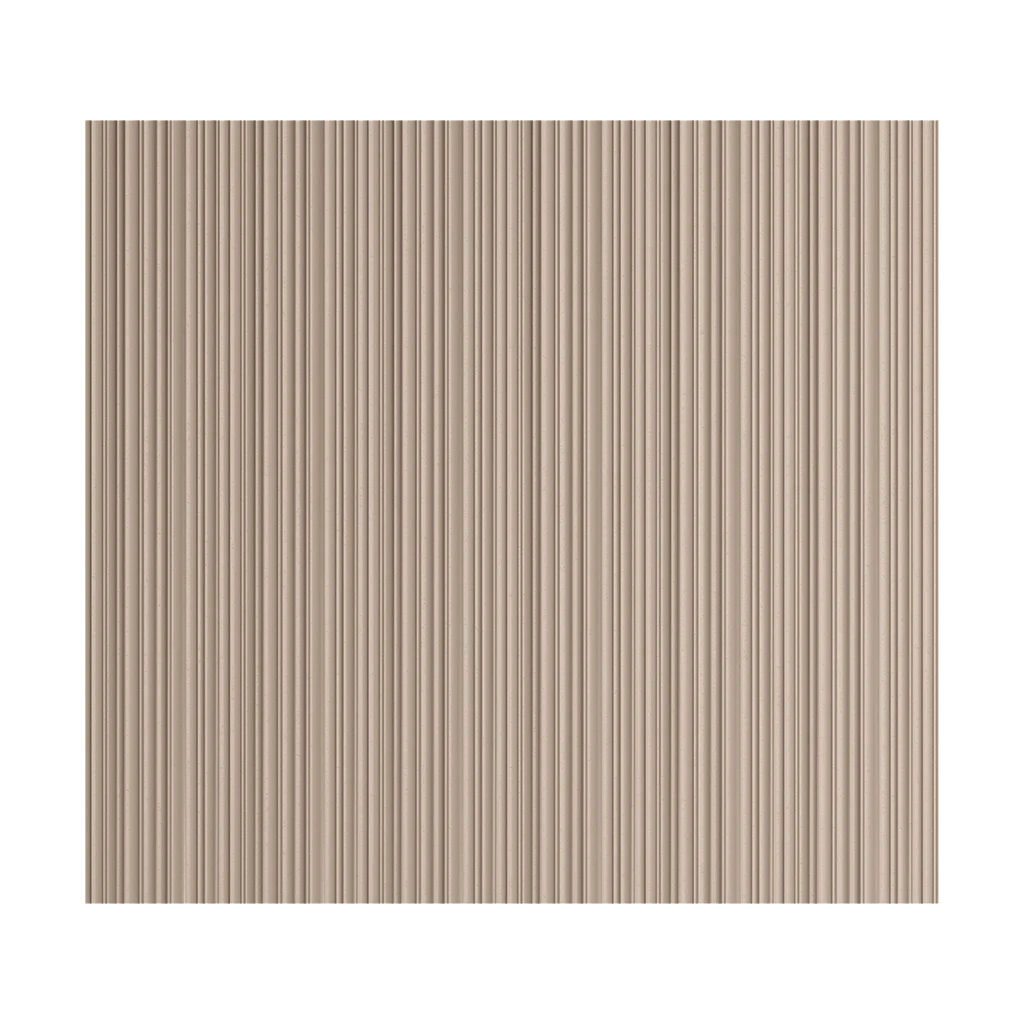
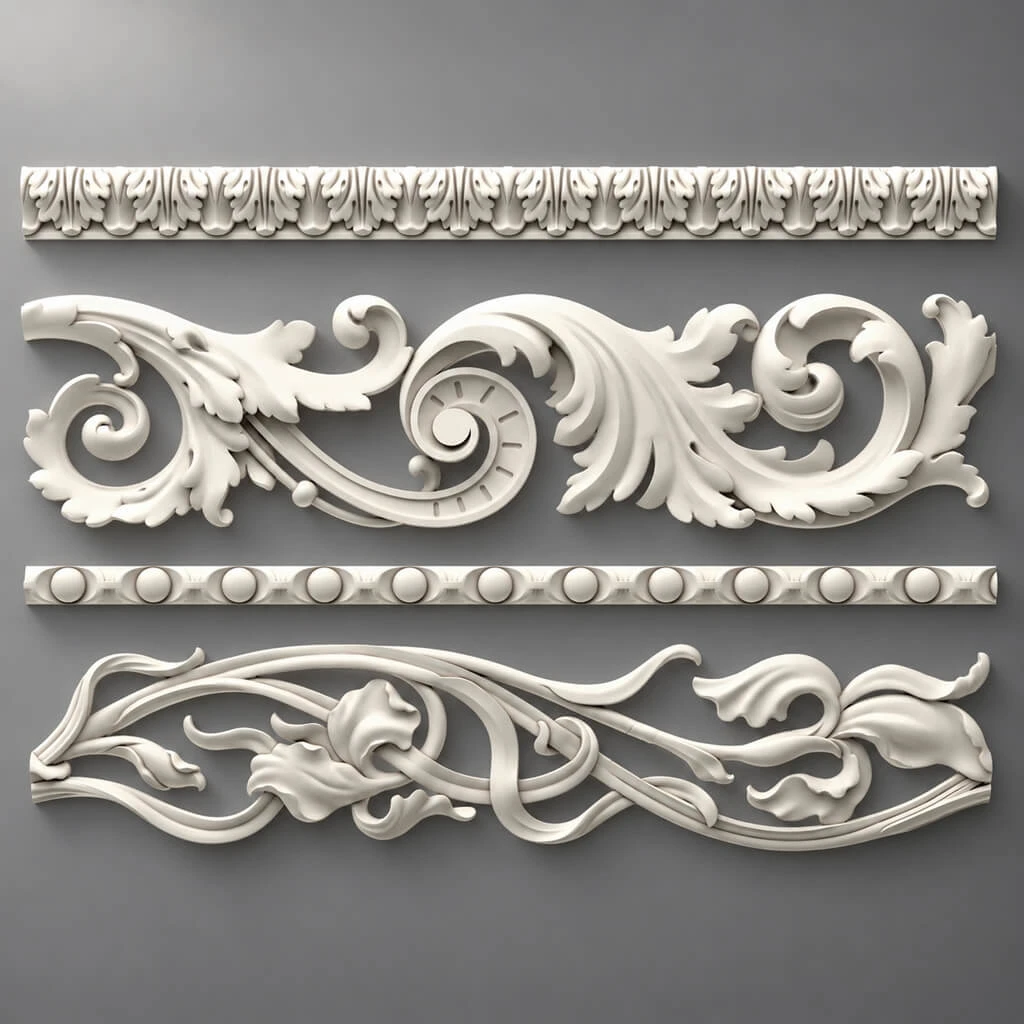
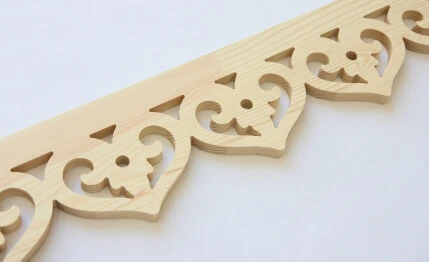
Article K-034 is a small decorative profile with a geometric motif reminiscent of alternating beads and bugles. Catalogue dimensions — 10 mm in width and 6 mm in thickness. Available factory lengths — 300 and 2000 mm. For two pieces of furniture, this scale is good because it does not compete with the legs and the tabletop edge. From a distance, the viewer notices a neat line, and up close they can distinguish the rhythm of the elements.
If you need to decorate furniture with an already sufficiently rich texture, you can buy wooden baguette K-034 and test it on a small area. For example, an oak table with noticeable growth rings does not always need large carving. A narrow ornament leaves most of the front plane of the apron open, thanks to which the wood grain is preserved. On painted furniture, the profile can create a slight shadow transition without a contrasting colour.
For the price, it is important to distinguish the species, length and quality of sanding. As of 25 November 2026, the product page lists the following values per one strip of the selected finish, in rubles. These are catalogue data, not a fixed offer for any future order.
| Length and sanding | Beech | Oak |
|---|---|---|
| 300 mm, “Standard” | 200 | 250 |
| 300 mm, “Prestige” | 280 | 320 |
| 2000 mm, “Standard” | 1280 | 1640 |
| 2000 mm, “Prestige” | 1870 | 2130 |
When choosing this model, it is worth allowing for clean areas at both ends of the parts. A fine pattern is visually sensitive to interruption near the leg: one cut may fall in the middle of a rounded element, while the other falls on a narrow gap. On the long sides this is less noticeable, but on two adjacent short fragments the difference is striking. It is therefore useful to postpone the final marking until the batch arrives, rather than setting the position of each protrusion based only on the image on the screen.
In a furniture workshop, K-034 can be used as a delicate frieze: installed in the centre of the apron, closer to the top edge, or along the smooth part beneath an existing chamfer. The decision is tested on a sample, since the character of the shadow depends on the direction of lighting. If the profile is to be painted together with the underframe, even a slight unevenness in sanding on small elements may become apparent after the primer is applied. During surface preparation, it is important not to smooth down the protrusions themselves.
K-078 wooden baguette: expressive carving on a narrow strip
The K-078 profile stands out more due to its greater thickness and ornament in a Slavic style. Its width is 15 mm and its thickness is 10 mm. The catalogue lists lengths of 300 and 2000 mm for beech and oak. This is not a large cornice but a comparatively compact applied element that can be used on façade and furniture surfaces. In a table and console project, it is especially interesting when the legs have a simple shape and the aprons require a pattern of their own.
For items with a massive tabletop and calm supports, you can buy carved moulding K-078. A deeper relief creates noticeable light-and-shadow transitions. Under side lighting, the upper faces appear lighter than the recesses, so a single-color finish can look expressive even without additional color highlighting of the ornament. However, on a small apron with a shaped lower edge, you need to make sure that these forms do not overlap each other.
Prices per unit as of November 25, 2026:
| Length and sanding | Beech | Oak |
|---|---|---|
| 300 mm, “Standard” | 620 ₽ | 780 ₽ |
| 300 mm, “Prestige” | 890 ₽ | 1030 ₽ |
| 2000 mm, “Standard” | 4110 ₽ | 5240 ₽ |
| 2000 mm, “Prestige” | 5870 ₽ | 6870 ₽ |
The expressiveness of this item comes with a higher cost, so an error in determining the number of blanks has a greater impact on the estimate. To preserve the pattern, it is especially useful to clarify in advance the repeatability of the motif on the actual strip and to assess whether the remainder after cutting long elements for the console is sufficient. If the pattern has a distinct direction, parts must not be arbitrarily turned over to save material. All strips should be laid out as they will be seen when walking around the furniture.
The projection relative to the base for K-078 is nominally greater than for K-034. You need to consider not only the frontal view but also the side view: the ends will be noticeable near the legs, especially if the legs are flush with the apron. Do not bring the carving into the plane of the structural joint without checking. It is better to provide a small area of smooth wood that will separate the end of the moulding from the support and allow the transition to be finished neatly. The specific offset depends on the geometry of the underframe, not on a universal standard.
Comparison of wooden moulding 10 and 15 mm wide
The profile width determines the share of the visible surface occupied by the decor. The thickness affects the projection of the overlay and the prominence of the shadow. K-078 should not be considered simply an enlarged copy of K-034: they differ both in geometry and in the character of the pattern. If both products are placed on the same plane, the difference will be visible not only in a frontal photo but also when viewed from the side. For a project where the furniture should look like part of one series, it is better to choose based on a joint mockup of both items.
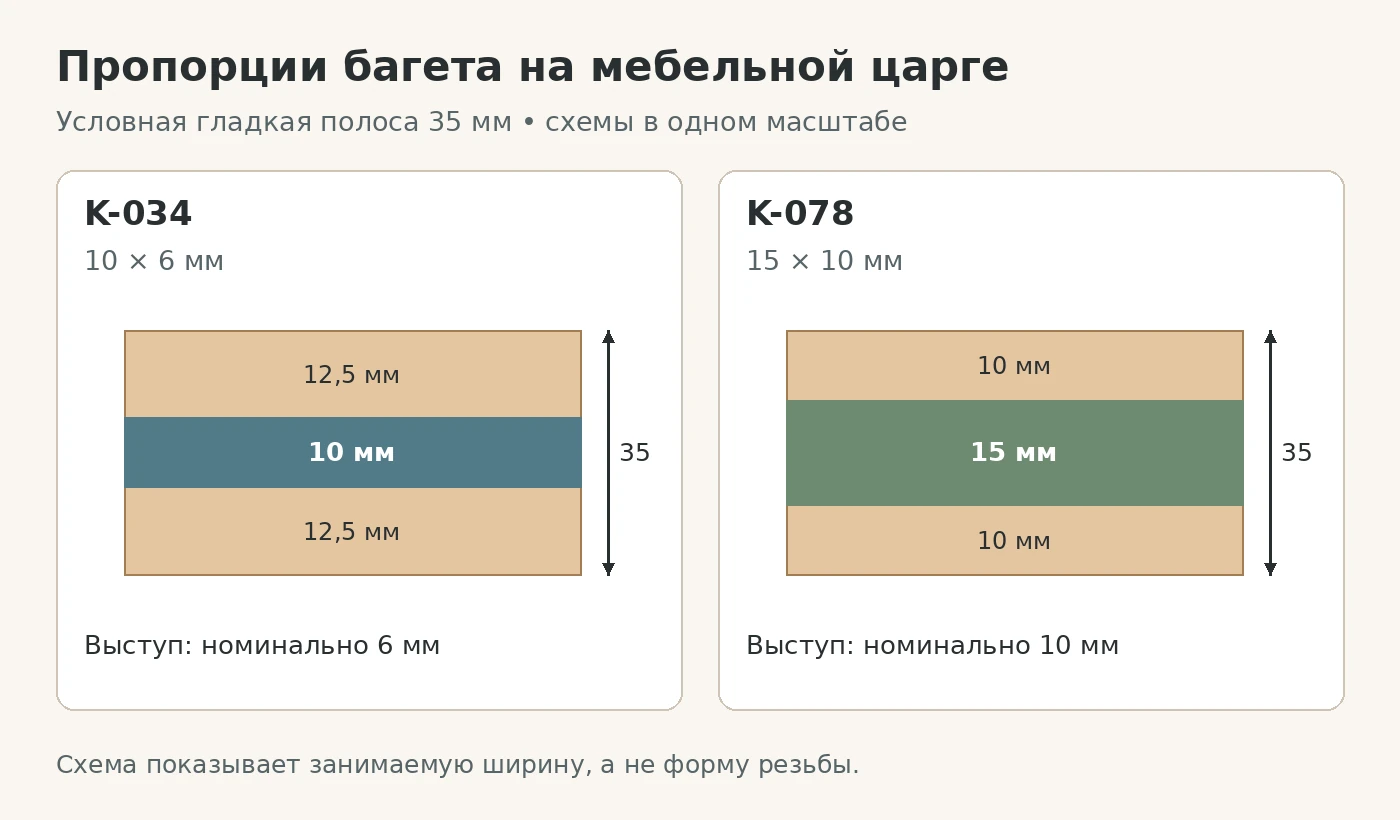
Suppose that after excluding the upper chamfer and the lower rounding, a smooth strip 35 mm high remains on the apron. With central placement of a 10 mm wide profile, margins of 12.5 mm will remain on both sides. For a width of 15 mm, 10 mm will remain on each side. If the free strip is only 22 mm, the margins will decrease to 6 and 3.5 mm, respectively. These examples show how strongly the proportions depend on the available surface, even with a width difference of only five millimeters.
| Parameter | K-034 | K-078 |
|---|---|---|
| Nominal cross-section | 10 × 6 mm | 15 × 10 mm |
| Drawing | Small geometric | More elaborate carving |
| Margins on a 35 mm strip | 12.5 mm each | 10 mm each |
| Margins on a 22 mm strip | 6 mm each | 3.5 mm each |
| Preferred character of the composition | Restrained, rhythmic | More decorative |
If the table is made in a restrained style, a wooden baguette 10 mm wide may be sufficient decoration even for a long apron. For a more ornate underframe, it is worth evaluating the K-078 relief on a small fragment. On a console with a narrow front strip, it is useful to first place a 15 mm wide paper template, then a sample of the actual profile. The paper will help assess the proportions, while the wood will show the actual shadow and ease of installation.
Combining two different product codes on a single set is also possible if one serves as the main motif and the other supports it. But then a completely different purchasing task arises: blanks for one item cannot be exchanged for blanks for another in order to reduce waste. Our calculation compares two alternative sets, in each of which the entire table and console are finished with a single product code.
Which wood to choose: oak or beech
The type of material should be coordinated with the existing wood of the furniture and the future finish. For clear or semi-transparent finishes, the character of the grain, matching grain direction and the tone of the blanks are important. Oak is usually chosen for its expressive natural pattern. Beech has a visually calmer surface, so it is convenient for projects where color or the carving itself plays the main role. Both materials remain wood and require careful preparation, protection from prolonged moisture and compliance with operating conditions.
If the oak base is already coated with oil or lacquer, buying oak decor does not guarantee a complete color match. Blanks may differ in their original tone, and the old surface may change over time. Comparison should be made using prepared samples under identical lighting. With a clear finish, differences between parts are often amplified. Sometimes a small intentional contrast turns out to be more successful than an attempt to invisibly combine two different shades. This decision should be made before gluing.
For a console and table that will be painted in the same opaque enamel, beech provides a calm background under the decorative finish. Here the main issue is the quality of preparation of the recesses, end faces and protruding areas. If the profile consists of glued wooden lamellas, for a clear finish the selection of wood by texture matters. The seller separately designates the gluing options for different coatings; clarify this when choosing, since the quality of sanding and the grade of blank selection are different characteristics. It is useful to study in more detail materials and quality of STAVROS wooden decor.
Let us imagine two specific palettes. In the first, oak furniture stands on a light floor, surrounded by white walls and natural fabrics. The baguette can be left in the shade of the apron, keeping the emphasis on the relief. In the second, the console and base are painted in a soft gray-green color, while the tabletops remain a wood shade. Here it is reasonable to check the compatibility of the primer and enamel with beech blanks. The decor links the items by repeating the pattern, even if the tabletops are made with slight differences.
It is useful to have separately labeled samples of the two species in the workshop. On each, a test is made of the coating that will be used on the finished furniture, including the specified primer or intermediate layer. A test on a smooth board without relief is less informative than a test on an offcut of the selected baguette: different optical effects may result in the recesses and on the peaks. The fully dried layer should be evaluated according to the coating manufacturer's regulations.
"Standard" and "Prestige" sanding: what the buyer pays for
The K-034 and K-078 product cards include two sanding categories. According to the manufacturer's description, "Standard" involves machine processing, while "Prestige" involves more detailed hand work. It is useful for the buyer to perceive them as surface readiness options rather than different wood grades or different profile sizes. The coating, gluing and required degree of preparation before painting must be agreed separately.
If the furniture workshop has the time and skills for fine finishing of carved elements, basic sanding may be justified. The cost of each two-meter beech plank K-034 in the standard version is 590 rubles lower compared to the "Prestige" version. For three blanks, the difference is 1,770 rubles. The craftsman can compare this amount with the cost of their own operations by checking a real sample. One should not automatically subtract the entire difference from the budget without taking into account working time and possible defects.
For K-078, the difference between the two options is above. Three long beech planks in the "Prestige" version cost 5,280 rubles more than the standard option according to the table provided. If relief processing in the workshop is labor-intensive, choosing the higher quality may be justified; if the entire set is anyway undergoing individual preparation and finishing, a different approach is possible. The final decision depends on the standards of the specific workshop and the agreed surface appearance.
For those who are going to Buy an unpainted wooden baguetteit is important to understand that sanding readiness does not mean a finish coating is present. After cutting, it is necessary to check the fresh ends, remove dust, and prepare the product for the chosen system. All surfaces should not be additionally sanded with the same intensity: excessive processing of a thin pattern can change its shape. If local touch-up is required, use tools suited to the specific relief and perform it on a test piece.
For a buyer of finished furniture, it is more convenient to ask the contractor to include baguette preparation as a separate line item in the estimate. Then it will be clear which work is included in the cost of the decor and which is performed independently of it. It is important to determine in advance who is responsible for the test painting, color matching, ornament fitting, and final installation. With such a distribution of tasks, the customer will be able to compare offers from different workshops by the same scope of work rather than by a single final figure.
What dimensions to measure before buying molding
You need to measure the accessible sections of the aprons, not the overall dimensions of the furniture across the tabletop. With the same tabletop length, two underframes may have different overhangs, legs, and connection methods. The dimension between the outer edges of the supports does not coincide with the distance between the inner boundaries of the smooth front surface. If the decorative part rests against a leg or extends beyond the chamfer line, the length will have to be reduced and the composition re-agreed.
First, determine the working plane of each side. Measure its length in the intended position of the baguette, then the height of the available strip in several places. If the surface has a curve, thickening, or transition to the leg, mark these zones on the sketch. A straight wooden plank should not be forcibly pressed against a curved apron: the load on the narrow overlay and the adhesive seam will be different. Such a section requires a separate structural solution.
Then establish where the parts will end. In a project with separate inserts, an equal visual offset from each leg can be left. In this case, the measurement is taken between the already marked ends, not between any convenient points on the furniture. Independent dimensions should be taken on opposite sides. Do not assume that two aprons are equal until this has been verified: an old table or a custom-made console may have slight deviations.
It is useful to also record in the schedule the side marking, viewing direction, and end type. For example, for the front apron of a table, indicate the part length, the position of the left end when viewed from the front, and whether it adjoins a leg. A separate entry should be made for the rear side, even if the nominal length matches on the drawing. Such documentation prevents confusion during fitting when several similar fragments are lying on the same workbench.
The last measurement concerns the gap between the apron and surrounding objects. Make sure that the added thickness does not interfere with sitting at the table, moving chairs, or operating pull-out elements if they are provided in the console. The protrusion level is checked with a temporary sample. After this, it becomes clear whether the chosen profile can be installed on all eight sections or whether one of the sides requires a design change. It is better to discover a limitation before the long planks are ordered and cut.
Practical project of a dining table and console
For the calculation, let's take two items on four legs. The table is positioned so that it can be inspected from all sides. The console is also freestanding: the rear rail is not permanently hidden against a wall. Each side is finished with a single solid insert. We use one article number, one wood species, and one sanding category for the entire batch. This allows the blanks to be cut together without disrupting the visual unity of the set.
The dimensions below are the finished lengths of the inserts after final marking, not the lengths of the tabletops or the distances between the leg axes. Assume that the visual offsets from the supports have already been taken into account. If the actual dimension differs, the table must be recalculated. The rail-to-leg joints remain unchanged, and the linear stock is positioned on the outer face plane. The inserts do not cover the fasteners, which must remain accessible for maintenance.
Four decorative lines of the dining table
For the two long sides, we take 1100 mm. These are the main decorative lines, which read well when entering the room. On the two cross sides, 600 mm pieces are installed. The sum of the lengths is 3400 mm, or 3.4 m. If one of the long rails is often exposed to direct sunlight, the difference in shade is best assessed in that position, not only in the workshop.
On the long lines, it is important to maintain an even position of the profile relative to the underside of the tabletop. On the short sides, the same alignment principle can be repeated, but check separately whether the rail height changes. During installation, temporary guides are set first and the overall appearance is checked from several points. It is especially undesirable to transfer the line to the opposite side without re-measuring: even a small error in the horizontal is visible against a flat tabletop.
Four decorative lines of the console
For the console, we provide two longitudinal inserts of 850 mm and two cross inserts of 280 mm. The finished sum is 2260 mm, or 2.26 m. The shorter fragments of the side faces require special attention: the repetition of the carved motif is almost fully visible here, so a poor cut has a stronger effect on symmetry.
If the console is used as a wall-mounted item, the rear rail may become less noticeable in the future. But in this project it is included in the calculation so that the estimate does not change after the furniture is rearranged. For a true wall-mounted model, the invisible line can be excluded in agreement with the customer. This cannot be done automatically: the decorative task depends on the position of the furniture in the room and whether the item will be visible from the passage side.
If the customer plans to use the console for displaying dishes, serving, or storing keys in the hallway, its decorative line should remain below the work surface and not fall into areas of regular impact. The project assumes normal use in a dry room. The protective coating and the placement of the inserts are chosen taking into account the actual operating conditions, not just the photograph.
Bill of materials for eight wooden parts
Once the dimensions are agreed upon, it is convenient to draw up a table listing all the fragments, their quantity, and their purpose. Let us designate the decorative lines of the table with the letter C and those of the console with the letter K. The numbering is used only in the workshop and is not a manufacturer's product designation. After cutting, the corresponding marking can be transferred to the reverse side of the blank without damaging the face pattern.
| Designation | Section | Length of one part | Quantity | Total length |
|---|---|---|---|---|
| C1, C2 | Long table aprons | 1100 мм | 2 | 2200 мм |
| C3, C4 | Short table aprons | 600 мм | 2 | 1200 мм |
| K1, K2 | Long console aprons | 850 мм | 2 | 1700 мм |
| K3, K4 | Short console aprons | 280 мм | 2 | 560 мм |
| Total | 8 | 5660 мм |
The bill of materials explains why it is not enough to order an arbitrary 5.66 linear meters. Eight solid inserts with a specific geometry will be required. Part of the total remainder may be at the end of one strip, and another part at the end of the next. These sections cannot be joined without a visible seam if the design calls for a continuous carved band. That is precisely why the purchased footage must exceed the finished footage even with a very economical layout.
For a buyer who wants Buy wooden molding by the meter, it is necessary to check the available factory sizes for the specific model. For K-034 and K-078, blanks with a length of 300 and 2000 mm are specified. Purchasing three long items means obtaining six meters of source material, not the delivery of eight already prepared segments. One should not assume that the supplier performs custom cutting on a retail order: this possibility and its terms are clarified separately.
After receiving the items, measure the actual usable length of each strip. If a defect is found, do not immediately cut out the damaged fragment: first assess whether it can be placed outside the required parts and, if necessary, discuss the matter with the supplier. It is best to draw up the working cutting plan for the entire batch at once. Then the straightest sections that match best in color can be assigned to the front aprons, and the remaining ones to the other sides.
Separate purchase of moulding: four factory strips
In the basic scheme, separate two-meter blanks are reserved for each piece of furniture. The table requires two: the first holds a long insert of 1100 mm and a short one of 600 mm, and the second holds the same pair. Each contains 1700 mm of finished parts, leaving 300 mm before accounting for the saw kerf and end trimming. This scheme is convenient to follow if the table is made separately from the console, and the sequence in which the furniture arrives at the workshop does not allow both items to be optimized at the same time.
Two long strips are also used for the console. Each holds one 850 mm part and one 280 mm part. The finished length of the pair is 1130 mm, so the remainder will be 870 mm before technological losses. Taken separately, the total length of the console inserts slightly exceeds two thousand millimeters, which means one long strip is not enough. With a separate purchase of four two-meter items, the total purchased length is eight meters.
| Plank | Purpose | Finished fragments | Nominal remainder |
|---|---|---|---|
| 1 | Table | 1100 + 600 mm | 300 мм |
| 2 | Table | 1100 + 600 mm | 300 мм |
| 3 | Console | 850 + 280 mm | 870 мм |
| 4 | Console | 850 + 280 mm | 870 мм |
| TOTAL | Two items | 5660 мм | 2340 мм |
Such a purchase is not a mistake. It leaves enough room to shift the blanks relative to the pattern and to match the ends. For example, on the console you can start cutting the short fragment not immediately after the long one, but shift the marking to the desired position of the motif. With a reserve, it will be easier to exclude an undesirable section by color or texture. In addition, some offcuts can be kept for future repairs if they are long enough and finished in the same way as the furniture.
However, for a small one-time order, purchasing four long items may be excessive. This is especially significant for the expensive K-078. Before choosing, it is worth comparing the cost of an additional two-meter blank with the risk that the optimized plan will prove unworkable. If the repeat is not yet known, the customer can agree on a reserve with the workshop rather than accept an economical scheme without a technical check.
Joint cutting of wooden baguette: three strips instead of four
When making a table and a console together, it is more efficient to group fragments from different items. The two longest table inserts can be combined with the two longitudinal console inserts. The remaining four short parts will fit on the third board. This gives six meters of source material and 340 mm of total nominal offcut. Geometrically the layout is feasible, but there is little free material on the first two boards.
| 2000 mm strip | Parts | Total length | Remainder before processing |
|---|---|---|---|
| 1 | C1 + K1: 1100 + 850 mm | 1950 мм | 50 мм |
| 2 | C2 + K2: 1100 + 850 mm | 1950 мм | 50 мм |
| 3 | C3 + C4 + K3 + K4: 600 + 600 + 280 + 280 mm | 1760 мм | 240 мм |
| TOTAL | 8 pieces | 5660 мм | 340 мм |
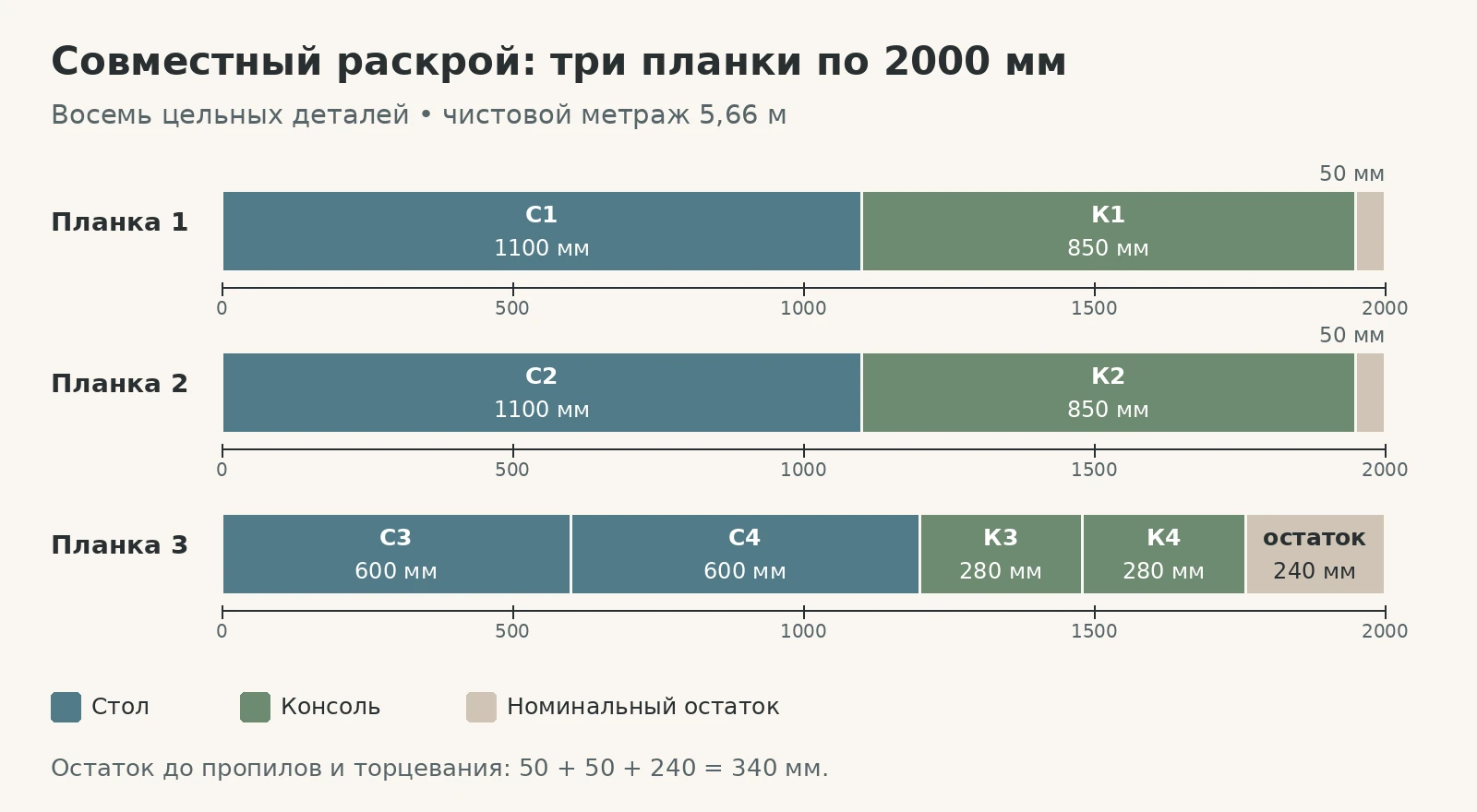
To estimate the margin, consider a hypothetical workshop where the saw kerf is 3 mm. For the calculation, we will reserve 5 mm for the initial preparation of each factory end, as well as one separating kerf for each extracted part. These values are chosen as an example and should be replaced with the actual kerf width, the results of inspecting the blanks, and the adopted technology. Straight ends are processed here, so no additional allowance for an angled joint is included.
| Plank | Remainder before operations | Trimming both ends | Cuts | Margin after accounted operations |
|---|---|---|---|---|
| 1 | 50 мм | 10 мм | 6 мм | 34 мм |
| 2 | 50 мм | 10 мм | 6 мм | 34 мм |
| 3 | 240 мм | 10 мм | 12 мм | 218 мм |
| TOTAL | 340 мм | 30 мм | 24 мм | 286 мм |
Thus, with the chosen hypothetical allowances, 34 mm remains on each of the first two boards. This value cannot be considered a guaranteed free margin for all methods of aligning the pattern. If matching the initial phase of the pattern requires a larger offset, the long pair may not fit. The margin on the third board is larger, but it does not compensate for the lack of length on the first two if both long parts must be continuous.
Before ordering three strips, the craftsman must confirm that the actual repeat and the required pattern direction allow pairs of 1100 and 850 mm to be produced within the available length. If there is no such check, it is reasonable to treat joint cutting as an opportunity to save rather than as a mandatory solution. When strictly defined symmetry is required, the spare material has value in its own right. Rejecting it is acceptable only after evaluating all eight fragments, including the ends of the short lines.
When it makes sense to use 300 mm blanks
Two transverse console inserts 280 mm long can formally be cut from two short factory strips. Nominally, 20 mm remains on each. With conditional allowances of 10 mm for end trimming and 3 mm for the saw kerf, only 7 mm of free length will remain on each short blank. This may not be enough for symmetrical fitting. Short items are convenient as samples if there is no need to guarantee finished parts from them.
An intermediate purchase for the console can be considered: one long strip for two 850 mm inserts and two short ones for the side pieces. Together with the two long table strips, this gives three long and two short, i.e. 6.6 m of purchased length. This scheme leaves more freedom on the first two long table strips than joint placement of a 1100 and 850 mm pair, but the margin on the short inserts is limited. It should be compared with the actual price of two short items and the additional cost of processing them.
For beech K-034 in the standard version, three two-metre strips and two short strips cost 4,240 roubles if the catalogue prices given are used. This is 400 roubles more than the optimised purchase of three long strips and 880 roubles less than the separate purchase of four long items. For beech K-078 the corresponding amount is 13,570 roubles: the increase relative to three long strips is 1,240 roubles. These options are worth discussing if the geometrically advantageous cutting plan does not match the pattern. At the same time, each specific fragment must still pass a check for length and quality.
How much a wooden baguette costs in Syzran: eight estimate options
The cost of the decorative configuration depends on the selected article, wood species and sanding quality. The table compares two purchasing schemes using STAVROS listing prices verified on 25 November 2026. The amounts relate only to long items and do not include coating, installation, transport or packaging. The type of lamination, availability of the required version and the final price should be confirmed at checkout.
| Item code and version | Price of one 2000 mm strip | 4 slats | 3 strips | Difference |
|---|---|---|---|---|
| K-034, beech, “Standard” | 1280 ₽ | 5120 ₽ | 3840 ₽ | 1280 ₽ |
| K-034, oak, “Standard” | 1640 ₽ | 6560 ₽ | 4920 ₽ | 1640 ₽ |
| K-078, beech, “Standard” | 4110 ₽ | 16 440 ₽ | 12 330 ₽ | 4110 ₽ |
| K-078, oak, “Standard” | 5240 ₽ | 20 960 ₽ | 15 720 ₽ | 5240 ₽ |
| K-034, beech, “Prestige” | 1870 ₽ | 7480 ₽ | 5610 ₽ | 1870 ₽ |
| K-034, oak, “Prestige” | 2130 ₽ | 8520 ₽ | 6390 ₽ | 2130 ₽ |
| K-078, beech, “Prestige” | 5870 ₽ | 23 480 ₽ | 17 610 ₽ | 5870 ₽ |
| K-078, oak, “Prestige” | 6870 ₽ | 27 480 ₽ | 20 610 ₽ | 6870 ₽ |
In all rows, reducing the number of long planks from four to three lowers the cost of the items themselves by a quarter. But this does not mean that the finished suite will become a quarter cheaper. If a batch with minimal remnants requires lengthy pattern matching and additional operations, part of the savings may be spent on labor. Costs for manufacturing the furniture's load-bearing elements, finishing, and delivery also remain unchanged if they are calculated separately.
When choosing between two SKUs, do not focus only on the final amount. For example, the beech K-034 set made of three planks in the “Prestige” finish costs 5,610 rubles, whereas the beech K-078 with standard sanding costs 12,330 rubles. This comparison shows the impact of the pattern and model on the procurement estimate, but it does not prove that the more expensive profile is needed in every case. If small aprons require light detailing, a less expressive profile may better match the design intent.
For a project with a transparent finish, the difference between beech and oak is assessed together with the future shade. Buying beech only because it is cheaper and then trying to reproduce oak texture exactly by staining is not always rational. If all the furniture will be finished with an opaque material, it makes sense to compare the cost of oak with the result of a test coating on beech. The technical requirements for the frame remain independent: the choice of species for applied decor does not change the calculation of load-bearing parts.
The product cards separately provide for a packaging frame costing 390 rubles under the relevant order conditions. For K-034, its addition is specified for orders of up to 150 pieces, while for K-078, the addition of a rigid packaging frame to the order is specified. The final invoice must reflect the actual configuration and the applicable conditions. If several product groups are purchased, packaging should not be summed up or excluded in advance without confirmation from the seller. The agreed transport and other associated costs are added to the cost of the products.
How to match the ornament on two pieces of furniture
The most noticeable area of the future set is the front long apron of the table. It is convenient to start selecting the pattern phase from there. Unlike a smooth strip, a carved baguette has a sequence of repeating elements. If several fragments are accidentally cut in different places of the motif, the ends may look mismatched on the finished furniture. It is important to determine which element should be located in the center and how the pattern approaches the legs at opposite ends.
For the geometric K-034, you can check the central position of a single bead or the gap between motifs, depending on the actual ornament. For K-078, it is useful to consider how the main element reads in the center and whether the direction of the composition changes when the strip is turned over. The actual repeat pitch is measured directly on the received product or clarified from the manufacturer's drawing. The number of repeats cannot be reliably calculated from the overall width of the baguette alone.
Make working templates for lengths of 1100, 850, 600 and 280 mm. Mark the middle and both ends on each. By moving the template along the strip, the craftsman can evaluate several possible cut positions. For a pair of identical lengths, it is desirable to find a similar pattern phase before assigning fragments to specific sides. On short parts, it matters how large a motif remains intact. At the same time, a slight difference on the back side of the furniture is sometimes acceptable if it is agreed in advance and does not disturb the overall appearance.
If the table and console are finished in the same room, look at the composition from the distances usual for it. A minor difference in the ornament may be noticeable in a close-up photograph but not perceived as a defect from the other end of the room. Conversely, an overall slant of the line or a mismatched height of the inserts will be obvious even from a distance. Priorities should be fixed before cutting: the same article and finish, the integrity of long parts, the symmetry of the most visible areas and the absence of conflicts with existing shapes.
Sometimes the customer wants a continuous pattern around the entire furniture, including the corners. This is a different project option. Continuity requires special marking, coordination of corners and the choice of a suitable joining method. In our calculation, eight inserts end at the legs and do not connect to each other. Therefore, there is no need to miter all ends at 45 degrees. If the construction actually has continuous aprons without separation by supports, a new schedule should be developed, taking into account the corner joints and the dimensions along the selected measurement line.
Preparation and installation of carved moulding
Decorative work begins after the frame has been checked. The aprons must be stable, and the attachment points accessible. If old furniture needs to be repaired, first eliminate play, damage and other structural problems. The overlay is not intended to hide unreliable joints. Before buy wooden trim for new furniture, agree with the manufacturer at which stage it is convenient to install the carving — before the final finishing or after the preliminary painting of individual parts.
Receiving, test fitting and cutting
Unpacked items must be inspected and laid out on a flat, clean surface. Wood is sensitive to storage conditions, so do not leave thin strips near heating appliances or where they may get wet. Allow the material to adapt to the workshop conditions according to the manufacturer's recommendations and the requirements of the technology being used. Check the length, geometry, workmanship and condition of the ornament while it is still possible to compare all elements of the batch with one another.
Before processing, prepare a table of fragments and do a trial fit on a piece of leftover material. A narrow profile requires careful support when sawing; the fastening method must prevent damage to the protruding parts of the pattern. Use a suitable tool and standard protective equipment, and follow its operating rules. If you have no experience with fine carving, it is better to entrust the cutting to a joinery workshop. Do not risk a finished long part just to test a tool that has not yet been set up.
After cutting, label the reverse sides and place the fragments in their positions without final fastening. Check that the ends align and the offsets are equal. If a finish is planned, take its thickness into account when joining with other elements. It is impossible to determine a universal fastening method in advance: the base wood species, the condition of its surface, the chosen material and the finishing requirements all matter. Read the STAVROS recommendations for finishing and installing the decor, and use the products according to their manufacturers' instructions.
How to prepare wood for finishing
If the option of opaque painting is chosen, check the surface on a small test section. Clean the relief of dust, treat the ends and prepare the base according to the requirements of the chosen coating system. With a transparent finish, a preliminary test is even more important: knots, transitions between lamellas and differences in shade may become more noticeable. The same shade number does not always give the same visual result on two wood species.
On the side rails, it is useful to control the amount of material that gets into the recesses of the carving. Too thick a layer can reduce the legibility of small details. If the decorative effect involves highlighting the relief, first make a sample and agree it with the customer. An untested technique should not be applied straight away to eight inserts. When surfaces are painted separately, leave the fastening points prepared according to the instructions of the chosen adhesive: not every material bonds reliably to an already applied lacquer or enamel.
During fixing, the profile must be held on the specified line without skewing and without excessive pressure on the protrusions. Depending on the design, temporary devices may be needed for even pressing. Excess product is removed in the manner permitted by its manufacturer, without smearing it over the ornament. Make sure that after installation no contamination remains on the adjacent surface that would interfere with subsequent finishing. Final acceptance is carried out after the materials have been held under the conditions stipulated by the technology.
Use of the finished furniture set
The carved baguette under the countertop is less exposed to direct liquid contact than the upper work surface, but it is still subject to everyday soiling. For cleaning, choose products compatible with the finish. Do not use hard tools that could damage the relief, and do not leave a damp cloth on the wood for long. Chairs should be moved so that their backs and armrests do not strike the applied decor. It is useful to familiarize yourself in advance with the rules for storage and use of carved products.
If, during subsequent use, one fragment is damaged, you can try to make a replacement from the saved part of the same batch. To do this, it is better to label the spare stock indicating the article number, wood species, finish and order date. However, even material from the same batch may over time visually differ from the already finished furniture. Before replacing, compare a test shade and pattern. Sometimes it is more correct to renew an entire decorative line than to insert a short patch that would disrupt the rhythm of the ornament.
Mistakes when buying a wooden baguette for aprons
The first mistake is choosing a profile by the width of the countertop rather than by the width of the free plane of the apron. In a photograph, a tall table may look sufficiently massive, although a narrow decorative strip remains under its countertop. A 10 mm thick overlay may turn out to be too noticeable from the side. Therefore, check not only the dimensions in the catalog, but also the position of the actual profile relative to the furniture edges.
The second mistake is buying wood without agreeing on the finishing method. If the customer wants to preserve visible grain, they need to discuss the selection of lamellas, the test tone and the match with the base wood. For opaque painting, attention is paid to surface preparation and the quality of the relief. A randomly chosen processing category can increase the workshop's labor costs, even if the blank itself cost less.
The third mistake is calculating the cost only by the price per short strip shown first in the product card. For long aprons, 300 mm products are not suitable if the decorative line must be continuous. When ordering, compare options 2000 mm long in the same finish. Buy a short profile deliberately: for a sample, a separate short insert or a future small repair.
The fourth mistake is using optimized cutting without allowance for the actual pattern. Formally, a pair of parts fits into a two-meter strip if their lengths add up to 1950 mm. However, if it is necessary to cut off a damaged end, change the phase of the ornament or correct an unsuccessful end, the free 50 mm are quickly used up. Do not start with the shortest part until the layout of all long fragments in the batch has been checked.
The fifth mistake is choosing decorative trim as a means of strengthening the aprons. The carved profile is responsible for the appearance of the item. If the load-bearing structure needs to be changed, a separate solution is required for the joints, frame materials and the dimensions of its parts. Gluing baguette over a shaky joint can only mask the problem without eliminating it.
The sixth mistake relates to splitting an order between two pieces of furniture. If the table has already been decorated with one article, and a similar profile in a different size is later purchased for the console, achieving complete visual unity becomes more difficult. Before starting work, it is better to approve a single sample and order the required batch at the same time. Keep the model information so that the decorative solution can be repeated in the future or a repair part can be matched.
Ordering and delivery of wooden moulding to Syzran
Before placing an order, prepare a brief specification sheet for the supplier. Specify the article, wood species, product length, sanding category, preferred lamination option, number of strips and the delivery address in Samara Oblast. If a short blank is needed to assess the pattern, include it as a separate line. It is advisable to ask about the available repeat before approving the final quantity of long products.
On the manufacturer's website, you can select the finish in the product card and submit a request. If the required batch is not in stock, agree on the production terms and dispatch date. For a furniture workshop, this matters more than the estimated lead time, since the decor is usually needed before the preparation and painting of the table base is completed. You should not plan installation for a specific day without confirmation of the complete set and delivery.
In the section delivery of wooden moulding you can review the dispatch procedure. The shipping cost depends, among other things, on the dimensions of the packed order and the address. When purchasing two-metre products, clarify the acceptance terms for long-length packaging and the chosen delivery method. Do not calculate transport costs using the rates for an ordinary small parcel. In the final invoice, check the number of products, the selected finishes, and the cost of the frame and delivery.
When receiving the batch, inspect the integrity of the packaging and compare the contents with the documents. If damage is found, follow the procedure for recording comments stipulated by the carrier and the supplier. Do not send the products straight to cutting if there are questions about length, article, wood species or processing quality. First agree on further actions. This procedure will help avoid wasting time and material on adjusting an unsuitable part.
For a private customer, a single specification that can be handed to both the seller and the joinery workshop is convenient. For a professional furniture maker, it is useful to keep two versions: a purchasing version with factory dimensions and a production version with the lengths of finished parts. After completing the project, note the quantity actually used and the remaining blanks. If the customer later decides to furnish a small sideboard or coffee table in the same style, this information will help estimate the remaining stock and correctly select additional products.
Frequently asked questions
Where to buy wooden baguette in Syzran?
You can choose moulding in the official STAVROS catalogue and arrange delivery to Syzran. For a project with eight decorative lines, it is better to send the list of factory blanks straight away, specifying the exact article, wood, finish and length. The availability of the required batch is confirmed when placing the order.
What is the difference between wooden baguettes K-034 and K-078?
K-034 measures 10 × 6 mm and features a fine geometric pattern. K-078 is wider and thicker — 15 × 10 mm — and differs in the character of its carving. It is the two profiles that should be compared, not just their photographs: a deeper overlay creates a different shadow and requires a sufficient flat surface.
Which carved moulding is suitable for furniture aprons?
For understated pieces, K-034 can be considered, and where a more noticeable accent is needed — wooden baguette for furniture aprons K-078. The final choice depends on the geometry of the furniture assembly, the finish, the overlay's projection and the desired decorative effect. Both products are considered as applied decoration.
What to choose for furniture decoration: solid oak or beech?
If visible wood grain matters, evaluate oak and arrange the finish for a semi-transparent coating. For opaque enamel, beech can be considered. Whichever you choose, check the result on a sample and compare it with the actual finish of the furniture frame.
How to choose the width of a wooden baguette?
Measure the smooth surface of the apron between chamfers, roundings and other decorative elements. For central placement, subtract the profile width from the height of the available strip and divide the difference in half. This gives you the estimated margins above and below. Thickness and projection are checked separately.
What is the difference between "Standard" sanding and "Prestige"?
The difference relates to the degree of surface treatment. The first option involves machine sanding, the second — more detailed hand sanding. Choose it according to the required result and the workshop's capabilities. Even a carefully prepared product needs its end faces checked after cutting and preparation for the chosen coating.
How much wooden moulding is needed for two pieces of furniture?
In the given sample project, eight solid parts with a total length of 5.66 m are required. If pattern matching is confirmed, three two-metre strips can be used. For separate cutting or if additional stock is needed, four long blanks or another agreed combination of sizes will be required.
How should ornament repeat be taken into account when cutting?
Measure the actual pattern repeat pitch and lay out all part templates on the resulting strips. Mark the position of the central motifs and the direction of the carving. If the required offsets exceed the remainder after end trimming and saw cuts, review the purchase before starting irreversible operations.
Can wooden moulding be bought by the metre?
The product cards for the items in question state factory lengths of 300 and 2000 mm. The price is calculated based on the number of selected strips. Requirements for individual lengths or cutting should be agreed separately, without assuming automatic production of arbitrary lengths at the price per linear metre.
How can wooden moulding be painted to match the furniture colour?
Start with a sample of the profile and the coating system used on the furniture. Check how the primer, colour coat and topcoat look on the relief. Once the shade is agreed, treat the parts according to the material manufacturer's instructions, taking into account the preparation of surfaces that will be glued.
How much does a STAVROS carved moulding set cost?
When purchasing three two-metre strips at prices from 25 November 2026, the K-034 set in beech with standard sanding costs 3,840 roubles, and in oak — 4,920 roubles. Similar K-078 options cost 12,330 and 15,720 roubles. This is the cost of the products only; the final amount depends on the finish, packaging, delivery and other services.
How to order a wooden baguette with delivery to Syzran?
Specify the selected model, wood species, length, finish and number of blanks, then confirm that long-length cargo can be delivered to your address. Agree on the price, availability and payment procedure before production work begins. For a batch with minimal remnants, additionally check whether the pattern can be matched.
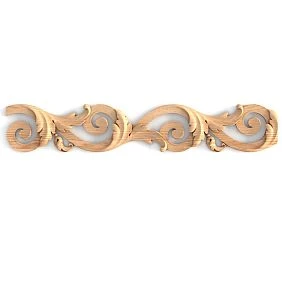
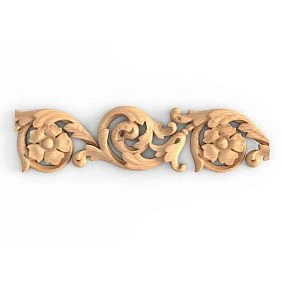
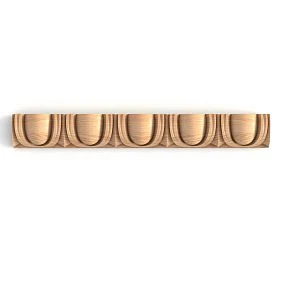
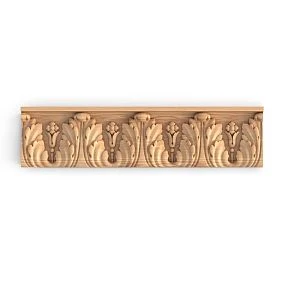
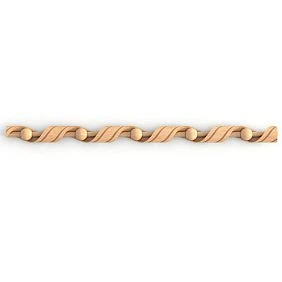
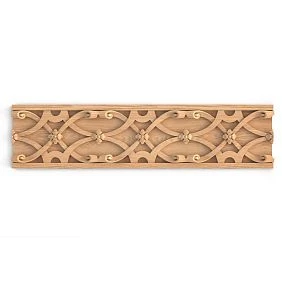
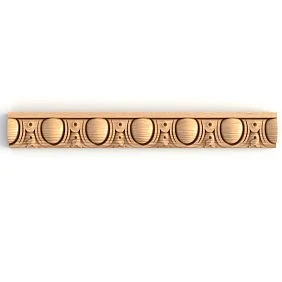
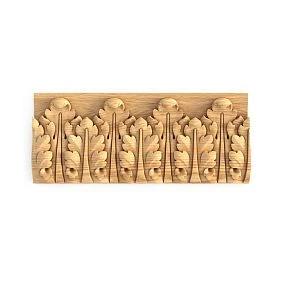
Buy carved wooden baguette STAVROS for the table and console
To give both pieces of furniture in this project a unified look, eight decorative inserts will be needed. Their finished linear footage is 5.66 m. The optimal geometric cutting plan assumes three two-meter strips, but it requires checking the actual length of the blanks, the pattern and technological allowances. If in doubt, use a more generous cutting scheme or agree on an additional strip.
If you want to give the furniture set a finished look without overly large carving, consider the narrow geometric K-034. If the aprons should become an independent decorative element, evaluate K-078. Choose the same wood and finish for the table and console if a shared color scheme is intended. Keep the batch information and a coating sample.
In the STAVROS catalog you can buy wooden carved moulding for your furniture project. Select the appropriate item code, match the dimensions with your specification sheet and place an order with delivery to Syzran. If necessary, confirm the finish and configuration with the manufacturer so that suitable oak or beech blanks are obtained before cutting begins.