Article Contents:
- Why combine garland and moldings
- Where to use a frame made of moldings with a garland
- On the wall behind the sofa
- In the bedroom at the headboard
- In the dining area
- In the hallway and corridor
- On a door or fireplace portal
- Which moldings to choose for a garland
- How to choose a garland for a frame made of moldings
- Polyurethane or wood — which is better in a composition with moldings
- Garland in the center of the frame or on the sides — what to choose
- Central garland
- Paired garlands
- Corners + garland
- How to assemble a purchase set
- Technical nuances of installation
- Mistakes when choosing a garland and moldings
- FAQ: Answers to Popular Questions
- About the company
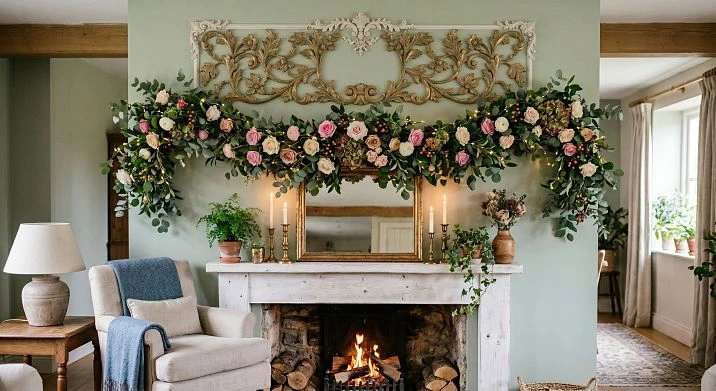
A garland and moldings on the wall are not two separate decorative solutions, but a single architectural system. Moldings build geometry: they divide the plane into fields, create a frame structure, and add depth and rhythm to the wall. The garland, on the other hand, is the living soul of this system. It fills the frame with meaning, ornament, a central focus, and a sense of completeness. An empty frame of moldings is beautiful with its strict geometry. A frame with a decorative garland inside is already a full-fledged interior statement.
For walls to be painted and large decorative panels, it is logical to choose Moldings made of polyurethane in combination with with polyurethane overlays — they are from the same family, easy to prepare for a single coating. For furniture, natural frames, wooden facades, and tinted portals — Wooden decorative inlays give that lively, warm character that polyurethane, with all its advantages, cannot reproduce. The purpose of this article is to honestly and methodically analyze both paths so that you can make an informed decision before purchasing.

Why combine a garland and moldings
There is one question worth asking yourself at the very beginning: why add a garland to a molding frame if the frame itself already decorates the wall? The answer lies in the nature of perception. A molding frame is an architectural gesture. It organizes the surface, giving the wall or facade scale and a classic character. But it remains geometry—cold, clear, and unfilled. And it is this emptiness that sometimes works against the idea: a large empty frame on the wall draws the eye precisely because of its emptiness, not its decorative concept.
A decorative garland inside the frame radically solves this problem. It creates a central ornamental focus—something for the eye to linger on. A plant motif: flowers, leaves, grapevines, buds, laurel branches—any of these ornaments adds liveliness, historical depth, and interior mood. The frame ceases to be just geometry and becomes a decorative panel with character.
Furthermore, the combination of moldings and a garland creates a multi-level relief effect: the molding forms the first contour, the garland adds a second, more complex, ornamental one. This is exactly the principle used in classic palace interiors: the frame as a border, the ornament as content. Today, this principle works just as precisely as it did three hundred years ago.




Where to use a molding frame with a garland
Before choosing specific moldings and overlays, you need to answer the question of location. Because the location determines the scale, format (vertical or horizontal), number of frames, and character of the ornament. Let's consider each space separately.
Our factory also produces:


On the wall behind the sofa
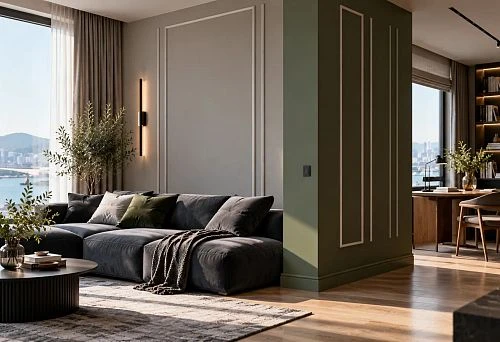
The wall behind the sofa is the focal point of the living room. This is where guests look, and this is where the accent is most often placed. A molding frame with a garland works perfectly here: it creates a visual "background" for the sofa, enlarges the wall, and adds architectural weight.
For a wide wall behind the sofa, a scheme of three frames is optimal: a central one—larger, with a horizontal garland at the top; side ones—narrower, with vertical paired overlays or without a garland at all. This is a classic three-part division of the wall, which gives the space proportion and order.
For a more modest wall, one frame with a central garland is enough—it already sets the axis around which everything else is built. Polyurethane wall decor offers solutions specifically for such tasks—from compact central accents to more complex multi-element panels.
Get Consultation
In the bedroom at the headboard
The wall at the head of the bed is the second most important space for a molding-decorative system. Here the logic is different: the frame should be slightly softer, the ornament slightly more elegant. The bedroom requires tranquility, so an overly lush grape garland with a large relief can create a feeling of overload here.
The optimal solution is one wide panel frame with a central horizontal garland featuring a floral or leaf ornament. For the bedroom, it is better to choose a medium-profile molding — not too massive, but not decoratively poor either. a polyurethane stucco garland NPU-043 with a plant ornament looks organic precisely in such a bedroom composition — a soft rhythm of leaves, moderate relief, a neutral format suitable for any paint color.
If the wall at the headboard is wooden or finished with wooden panels, it is better to choose the molding frame and garland from natural material. Carved wooden garland N-079-1 in such a context provides a lively, warm accent — and it will look more organic than polyurethane precisely because it materially rhymes with the surroundings.
In the dining area
The dining room and dining area is a space where decor should be expressive but not overwhelming. Here people eat, talk, spend time in company — and the interior should create a sense of celebration without heaviness. A molding frame with a grape or floral garland on the wall next to the dining table is a classic scheme for classical and neoclassical interiors.
The grape ornament is especially appropriate here: it is historically associated with the theme of feast, abundance, hospitality. Moldings for the dining area can be chosen slightly wider — the wall should hold the scale of a large table and large chairs. Decor for Molding in the corners of the frame will add detail and completeness — the entire system will look like a single architectural solution, rather than a set of separately purchased parts.
In the hallway and corridor
The hallway and corridor are spaces with limited dimensions. Here there is rarely an opportunity to assemble wide horizontal frames. However, the vertical format works perfectly: a tall narrow frame made of moldings with a vertical garland inside creates a "arrow" effect — stretches the space upward, making it visually taller.
For the hallway, it's better to choose thin or medium moldings — a massive profile in a narrow space creates a feeling of constriction. A vertical garland with leaves and buds — elegant, not lush — is exactly what is needed for an elongated wall between doors or near the entrance. Among the solutions for such tasks, it's worth paying attention to the vertical polyurethane garland NPU-316 — its elongated format is designed specifically for such spaces.
On a door or fireplace portal
Door and fireplace portals are architectural dominants of any classic interior. Here, moldings and garlands work in the most solemn register: frames form the framing of the opening or fireplace, and the garland occupies the upper horizontal zone — the place of maximum visual attention.
For a fireplace portal, the garland is especially good above the shelf: it adds an ornamental band between the shelf and the ceiling cornice, filling this zone with decor. Moldings for the portal are chosen wider and more relief — the portal should be a noticeable architectural element. Wooden overlays with garland ornament for a wooden portal provide the necessary depth and naturalness — such decor does not imitate stone or plaster, it is honest in its material.
Which moldings to choose for a garland
A molding is not just a strip. It is a profile with a specific cross-sectional geometry: width, height, shape. It is the profile that determines how expressive the frame will be, how distinctly it will cast a shadow and be readable on the wall. And it is the profile of the molding that should match the scale of the garland.
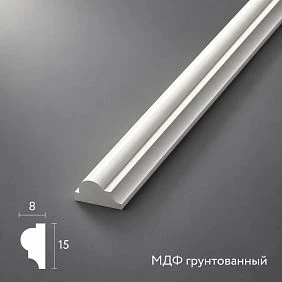
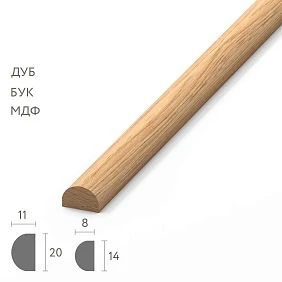
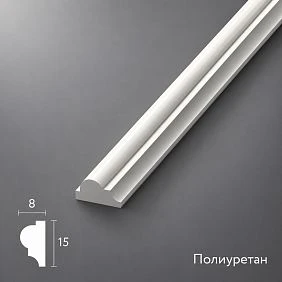
Thin moldings (8–15 mm wide) are suitable for light neoclassicism, small frames on furniture facades and partitions, and interiors with a minimalist character. Such a molding does not claim architectural weight — it marks the border of the frame with a barely noticeable outline. It requires a small, compact garland with a thin relief — otherwise the overlay will be disproportionately large.
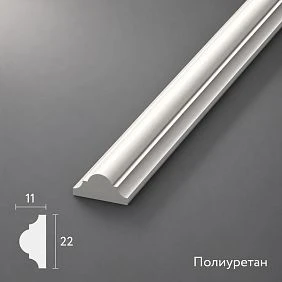
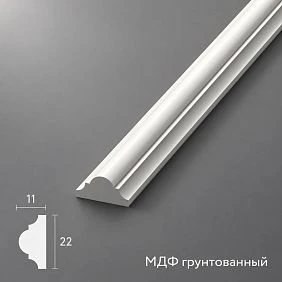
Medium-profile moldings (20–40 mm wide) are a universal choice for most interior tasks. They provide a readable frame on the wall, create a sufficiently deep shadow to be noticeable, and at the same time do not draw all the attention. Most standard garlands — both horizontal and vertical — are suitable for such a molding.
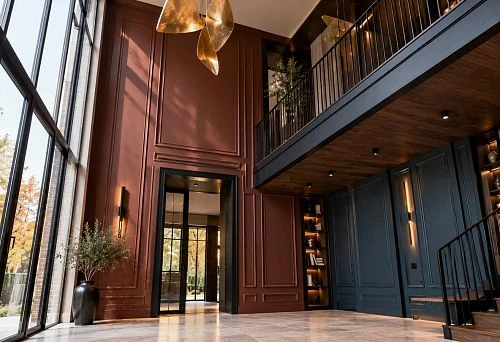
Wide and relief moldings (50 mm and more) are used for large wall compositions, door and fireplace portals, in classic interiors with high ceilings. Such a molding itself is an architectural element — it requires a proportionate garland with developed relief and expressive ornament.
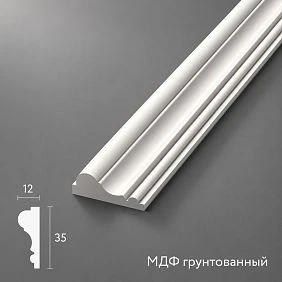
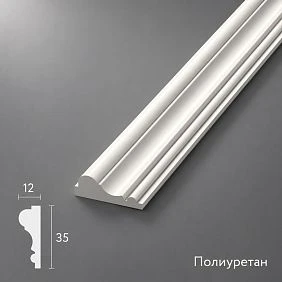
The STAVROS catalog presents different formats polyurethane moldings: for example, profile MLDPU-001 — laconic, 10×6 mm, 2600 mm long — is a solution for thin contour frames and furniture facades with a minimalist character. Profile MLDPU-003 — 35×12 mm, the same length — is already more expressive, with noticeable depth and play of light and shadow. These two examples well illustrate the difference between a "light cutoff" and an "architectural framing": the first is barely noticeable, the second shapes the space.
Another principle that is most often violated is important: the molding should be visually quieter than the garland. It frames, it dominates. If the molding is too wide and relief, and the garland is thin and compact — the decor will compete with itself. The rule is simple: the more expressive the garland, the more restrained the molding should be.
How to choose a garland for a frame made of moldings
This is a key question, and it is solved not by the principle of "like — dislike", but by a system of parameters. Let's list them sequentially.
Frame width. The horizontal garland should occupy from 40 to 65% of the internal width of the frame. Too short — it will get lost. Too long — it will go beyond natural proportions and create tension. If the frame is 60 cm wide — the garland is 25–40 cm. If the frame is 100 cm wide — the garland is 40–65 cm.
Frame height. For vertical garlands, the height of the overlay should not exceed 50–60% of the internal height of the frame. The garland should "breathe" — have free space above and below. This space creates a feeling of elegance.
Central axis. The garland is always placed along the central axis of the frame — horizontal or vertical. Any shift is immediately noticeable and destroys symmetry. Before installation, you need to accurately find the center of the frame and mark the overlay location from it.
Relief depth. For wall frames, a relief of 8 to 20 mm is recommended. It creates a noticeable play of shadows under side lighting — especially with spotlights or sconces. For furniture frames, the relief should be smaller: 4–8 mm is enough for the pattern to be readable without creating excessive volume.
Ornament style. The rule of correspondence applies here: a floral garland — for soft classic, bedroom, boudoir, living room with a pastel palette. A grape garland — for dining room, kitchen, pantry area. A laurel garland — for study, formal hallway, strict classical spaces. A neutral leaf or bud garland — for neoclassicism, where the ornament should be delicate and not claim historical affiliation.
Vertical or horizontal format. A horizontal garland emphasizes the upper zone of the frame or the center — it creates a feeling of a "belt," decoration, frieze. A vertical garland emphasizes the axis, directs the gaze upward, works like a "column" inside the frame. The choice between them is a question of what movement you want to create: horizontal (calm, breadth, solidity) or vertical (dynamics, height, aspiration).
One garland or a pair. One central overlay — for symmetrical horizontal frames, for fireplace portals, for the wall behind the sofa. Paired side garlands — for vertical portals, narrow piers, tall wall panels. The combination "central + paired side" — for very large frame systems with multiple fields.
Polyurethane or wood — which is better in composition with moldings
The question of material is always a question of context. There is no universally better material. There is a task and its most accurate solution.
| Task | Best choice |
|---|---|
| Wall to be painted in wall color | polyurethane molding + PU overlay |
| Large wall decorative panel | Polyurethane |
| Classic furniture panel for tinting | wooden garland + wooden decor |
| Furniture facade for enamel coating | Beech or polyurethane |
| Furniture facade for tinting | Oak |
| Portal in natural wood | wood (beech or oak) |
| Portal for painting | Polyurethane |
| Neoclassical with painted walls | Polyurethane |
| Classic / Empire with pronounced decor | relief polyurethane or wood |
| Restoration of antique furniture | Wood |
Polyurethane moldings and overlays are a system with high functional logic. They are produced with a predetermined profile, do not deform from changes in humidity and temperature, easily accept any paint, and do not require complex surface preparation. Their main advantage is uniformity. If you paint a wall in the color "broken white" — the molding, corner elements, and garland will be painted in exactly the same shade and create a monolithic architectural surface without seams or transitions.
Wooden overlays are always an individual story. Each product made of beech or oak has its own structure, its own fiber character, its own reaction to finishing. Tinted oak paired with wooden moldings creates a warm, lively, deep surface that polyurethane, despite all efforts, cannot reproduce. But the limitations here are different: wood is more sensitive to moisture, requires more careful installation, and color batches may vary slightly — this must be taken into account when ordering a large volume.
Decor for Molding in STAVROS is a separate and very important direction. Corner elements, central rosettes, decorative inserts for intersections of molding strips — all this allows transforming a simple geometric frame into a full-fledged architectural detail. Without these elements, the frame looks "technical": straight angles, no decoration at the junction points. With corner decor, it acquires completeness and a classic character.
Garland in the center of the frame or on the sides — what to choose
This is a question about the role of the garland in the overall composition. And the answer to it determines both the character of the space and the specific purchase parameters.
Central garland
A central horizontal garland in the upper part of the frame is the "crown" of the composition. It emphasizes the upper zone and directs the gaze to the ornament. This solution is ideal for a fireplace portal, for a wall behind a sofa, for a mirror in a classic frame, for a dining area. A central garland is always read at first glance — it is located where the eye naturally "looks" for an accent.
For a central horizontal garland, correct alignment to the axis is important. Installation is performed from the center of the frame to the edges — first, the exact middle of the inner field is determined, then the garland is applied symmetrically along this point. Any shift — even 5–7 mm — will be noticeable from a distance of three meters. This is the law.
Paired garlands
Paired vertical garlands along the side axes of the frame are "pillars" that frame the inner space on both sides. This technique is used for door portals, high wall panels in the hallway, for symmetrical piers between windows. Here, the key requirement is mirroring. The left and right overlays must be exact mirror reflections of each other.
That is why in the STAVROS catalog, most overlays with plant ornaments are presented in pairs: L (left) and R (right). This is not a marketing gimmick, but a production necessity: an ornament with a directional pattern cannot simply be flipped — a separately cut mirror version is needed.
Corners + garland
The third scheme — corner decorative elements at the junction points of moldings plus a central garland in the upper zone — is the most complex and the richest of the three. It is suitable for large wall frames, fireplace portals, and formal hallways. The corner elements "seal" the intersections of molding strips, eliminating empty corners, while the central garland gives ornamental meaning to the entire structure.
It is this scheme that is most often used in projects with a classical and Empire style: the molding sets the outline, the corners handle the details, and the garland becomes the semantic center. Such a set, assembled from interconnected elements of the same stylistic family, looks like an architectural solution, not like decor from different places.
How to assemble a set for purchase
Buying moldings and a garland separately, without a system, is a sure way to be disappointed with the result. Even if each individual element is beautiful on its own, together they may not work: different scales, incompatible ornament, mismatched relief. The right approach is to assemble a set based on a specific task.
The sequence is as follows:
Step 1. Determine the location. Wall, facade, portal, pier, dining area — each location has its own requirements for scale and format.
Step 2. Measure the surface. Width and height of the wall or facade, location of outlets, switches, doors, windows. All of this determines the possible dimensions of the frame.
Step 3. Choose the molding. Based on the scale of the space and the style. Thin — for light neoclassicism. Medium — for universal tasks. Wide — for large portals and high walls.
Step 4. Calculate the perimeter of the frame. Each molding strip has a standard length — usually 2600 mm. Calculate how many strips are needed for the perimeter of the chosen frame, add 10–15% for joints and possible defects.
Step 5. Choose the garland. Based on the internal dimensions of the frame, the selected ornament style, and the format (horizontal / vertical / central / paired). Check the size of the overlay relative to the frame field.
Step 6. Add corner elements. One corner element for each corner of the frame. Total: 4 corners per frame. For three frames — 12 corner elements. Ensure they are from the same stylistic catalog as the molding.
Step 7. Determine the finish. Paint in wall color — polyurethane. Enamel on furniture — beech or polyurethane. Toning — oak. Patina — polyurethane or wood with appropriate preparation.
Step 8. Order as a set. Moldings, garland, corner elements, and if necessary — additional decor for moldings. Everything together from one source ensures compatibility of style, material, and production batch.
In the interior decoration Stavros All these elements are presented in one place: moldings, PU overlays, decor for moldings, carved wooden overlays. This is convenient precisely because the system is assembled without the risk of mismatch: everything is manufactured to uniform quality standards and stylistic logic.
Technical installation nuances
A good system can be ruined by poor installation — this is an axiom. Decorative moldings and overlays require careful preparation and the correct sequence of actions.
Surface preparation. The wall must be level, dry, and free of grease stains. If the wall is already painted, the surface should be lightly sanded to ensure the adhesive bonds securely. Polyurethane moldings and overlays are mounted with acrylic adhesive like 'liquid nails' or special PU molding glue. Wooden overlays for furniture fronts are mounted with woodworking PVA glue or epoxy glue, depending on the base.
Marking. Before installation, precise marking is mandatory: the central axis of the frame, all four corners, and the center point for the garland. Use a level, tape measure, and pencil — do not rely on the eye. A marking error of 3–5 mm will be visible to the naked eye after everything is installed and painted.
Installation sequence. First — the moldings. Horizontal top and bottom strips, then vertical side strips. After the glue dries — corner elements at the joints. And only last — the central garland. This allows precise positioning of the overlay relative to the already installed frame.
Painting. After installation, all joints are filled with acrylic putty or filler. The surface is primed, then painted. When painted in the wall color, the moldings and overlay 'sink' into the surface — only the relief with the play of shadows remains. This is one of the most beautiful results: concise, strict, architectural.
Mistakes when choosing a garland and moldings
Even experienced buyers make predictable mistakes. Let's call them out directly.
They buy a garland without understanding the frame size. They see a beautiful overlay in the catalog, buy it — and discover it's half the size or twice as large as needed. Always start with measurements.
They take a molding that is too thin for large decor. A thin molding strip under a relief garland with a deep ornament looks ridiculous — like a jewelry frame for a heavy oil painting. The molding must match the weight of the garland.
They place a small garland in a large frame. A small overlay in a huge empty field is completely lost. It doesn't create an accent — it creates a feeling of incompleteness.
They don't account for the thickness of the relief. A too deep relief on a furniture facade hits handles or hinges. Always check if there is enough clearance between the overlay and functional elements.
They don't think through the central axis. They mount the garland 'by eye' — and get a noticeable shift from the center. Marking is mandatory.
They don't count the number of moldings along the perimeter. They buy 'approximately' — and one strip is missing. Count precisely with a 10% margin.
They buy corner elements of a different style. Baroque corner decor and a stucco garland in neoclassical style are incompatible. Always choose elements from the same stylistic system.
They mix wood and polyurethane without a unified finish. A wooden garland for tinting and a polyurethane molding for painting are different materials with different visual languages. If you mix them, a unified final finish is necessary to make them indistinguishable.
They don't mark up before installation. They install moldings without a level or tape measure — and the frame ends up not parallel to the ceiling. This is a disaster that everyone notices.
They buy decor before the final size of the wall or facade. When the renovation is not yet complete, the dimensions seem one way, but after the finishing touches, they turn out different. Order decor only after all dimensions are finalized.
FAQ: Answers to popular questions
Can you combine a decorative garland and moldings on the same wall?
Yes, and this is one of the most effective solutions for classic and neoclassical interiors. Moldings create a frame geometry, the garland provides an ornamental accent inside. Together, they form a complete decorative panel.
How to choose the size of the garland for the molding frame?
A horizontal garland should occupy 40–65% of the inner width of the frame. A vertical one — 50–60% of the inner height. Always leave a free field around the overlay — this creates a sense of elegance and completeness.
What is better for a wall: polyurethane moldings or wooden ones?
For walls to be painted — polyurethane: it is lighter, does not deform, perfectly accepts paint, and creates a monolithic surface. For natural wooden surfaces and furniture — wood: it provides a living texture and warmth that polyurethane cannot replicate.
Can you place a garland inside a molding frame?
That's exactly how it should be done. The garland is attached to the inner surface of the frame along the central axis. First, the moldings are installed, then, after marking the center, the garland. Installation is done with acrylic glue, if necessary, with additional fixation using headless finishing nails.
Are corner elements needed for moldings?
Without corner elements, the frame looks technical and unfinished. Decor for Molding in the corners gives the frame completeness, detail, and a classic character. These are relatively low-cost elements that significantly improve the quality of the final composition.
Which molding to choose for neoclassicism?
A thin or medium profile with a smooth, concise cross-section. Neoclassicism does not tolerate excess — the molding here should be noticeable but not heavy. A width of 15–30 mm is the optimal range.
Which garland is best for a classic interior?
For strict classicism — laurel or leaf. For soft classicism and French style — floral. For Baroque and Empire — lush grape or mixed with fruits and flowers. The choice of ornament should match the style of the space, not just personal taste.
Can moldings and a garland be painted the same color?
Yes, and this is one of the best techniques for creating a monolithic architectural surface. Moldings, corner elements, and the garland are painted in a single color — then the relief and play of shadows come to the forefront, not the color. It looks especially impressive in white, cream, or gray-pearl finishes.
How to calculate the number of moldings for a frame?
Measure the perimeter of the frame. Divide by the length of one molding strip (usually 2600 mm). Add 10–15% margin for joints and possible defects when cutting at a 45° angle. Round up.
Where to buy moldings and decorative garlands for the wall?
In the STAVROS catalog: Moldings made of polyurethane, Polyurethane appliqués, Decor for Molding, Wooden decorative inlays — all in one place, with the ability to select elements of the same style and scale.
About the Company
STAVROS is a Russian manufacturer and supplier of decorative overlays, moldings, carved and stucco decor for walls, furniture, doors, ceilings, and portals. The extensive catalog includes polyurethane moldings of various profiles, PU overlays with floral and botanical patterns, corner decor for moldings, and wooden carved overlays made of beech and oak. If you want to assemble a garland and moldings on the wall into a single, proportionate, and stylistically cohesive composition — start with the catalog STAVROS: here you will find everything you need for working with both a small wall section and a full-fledged classic portal.