Article Contents:
- What to buy for a home library: complete list of materials
- Wooden elements
- Polyurethane Elements
- Consumables and fasteners
- How a home library differs from a regular bookshelf
- A bookshelf is storage. A library is architecture
- Scale as an argument
- Where to use wood in a home library
- Shelves and frame: the foundation of durability
- Vertical posts and their decoration
- Molding for shelf ends and horizontal lines
- Wooden handles: parts that are touched
- Lower base and side decorative elements
- Where to use polyurethane in a classic library
- Top cornice: the main architectural gesture
- Decorative frames on walls near the library
- Molding decor: point accents in key places
- Baseboard as the lower architectural line
- What absolutely cannot be done with polyurethane in a library
- Ready-made kits for the library area
- Small bookcase: handles + thin trim + lightweight cornice
- Floor-to-ceiling bookcase: trim + cornice + handles + moldings
- Home office library: wooden decor + baseboard + calm stucco
- Built-in shelving: wooden uprights + polyurethane moldings around the opening
- Living room library: lower base + cabinet handles + moldings on the adjacent wall
- How to make a regular shelf look like a built-in library
- Stylistic variations of a classic library
- English club library
- French classic and Empire style
- Neoclassicism and transitional style
- Typical mistakes when creating a home library
- Buying a kit for a classic library: how to calculate correctly
- Finishing: wood and polyurethane in the same color
- About the Company STAVROS
- FAQ: Answers to Popular Questions
- Can you combine a bookcase with polyurethane molding?
- What to buy for a classic-style library?
- How to make a regular shelf look like a built-in library?
- Which handles are suitable for a classic library?
- How high should the cornice profile be for a ceiling-height library?
- How many meters of molding are needed for one wall frame?
- Do I need to prime wooden parts before installation?
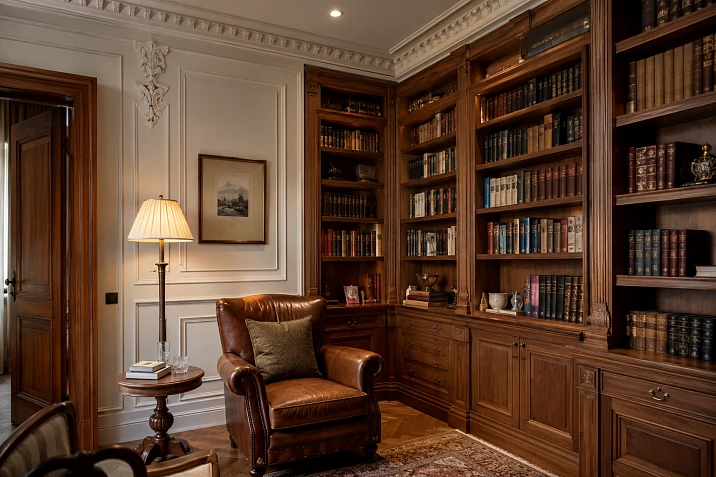
There is something fundamentally different about the idea of a home library compared to just a "place for books." It is not a shelf against the wall or a couple of shelves above a desk. A classic-style home library is an architectural statement, a manifesto of taste, a space where time slows down and thinking takes on a different quality. The question here is not just how many books need to be accommodated — the question is what this space is built from and how it is constructed. Today, the answer consists of two materials: wood in its various linear and decorative forms, and polyurethane as a tool for light yet convincing classical ornament.
What to Buy for a Home Library: Complete List of Materials
Before discussing style, proportions, and the relief of moldings, one must honestly answer a practical question: what exactly will need to be purchased? A library in a classic interior is not a single line item on a receipt, but a set of interconnected elements, each working toward the final result.




Wooden elements
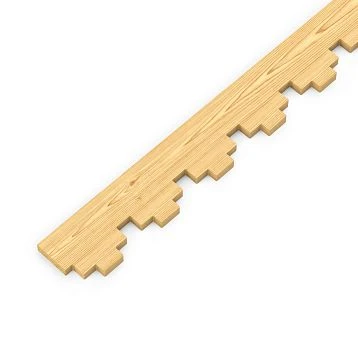
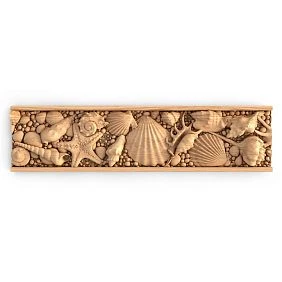
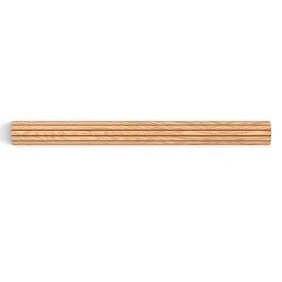
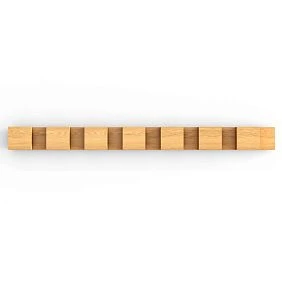
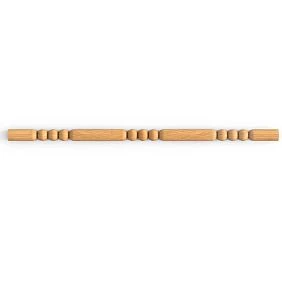
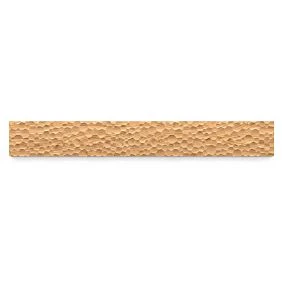
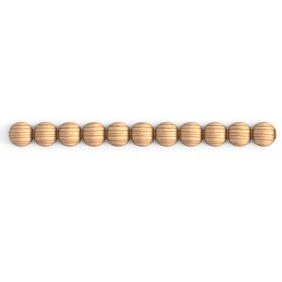
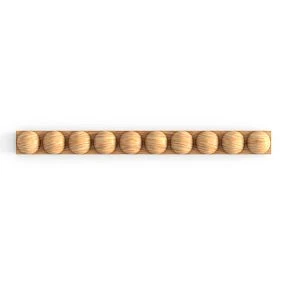
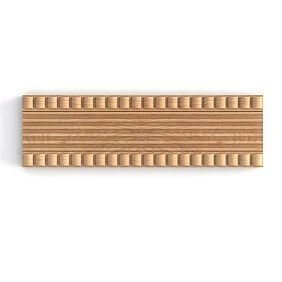
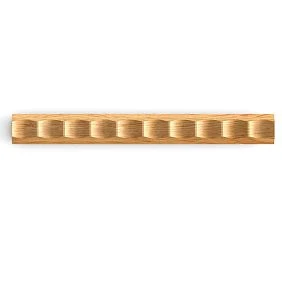
Pogonazh iz massiva — this is the foundation of the entire wooden part of the library. Cornice strips, trims, face strips for framing shelves, side overlays — all these are linear products made of beech or oak. They form the horizontal and vertical rhythms of the structure, creating the feel of massive, expensive furniture even when the body itself is made of sheet material.
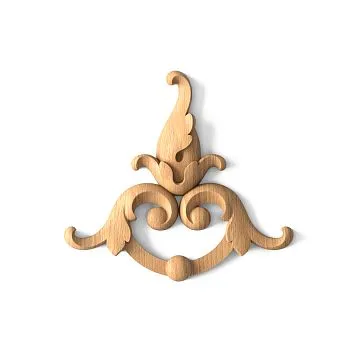
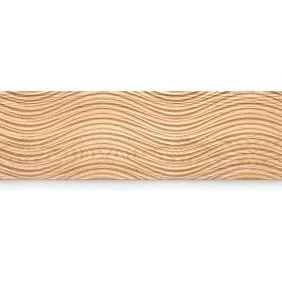
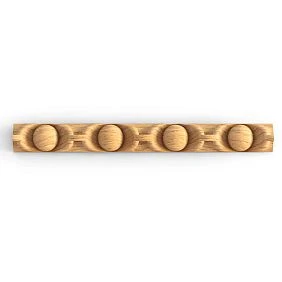
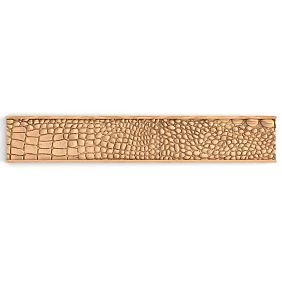
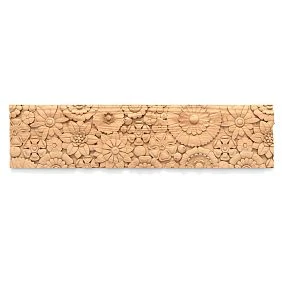
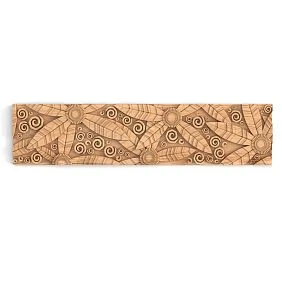
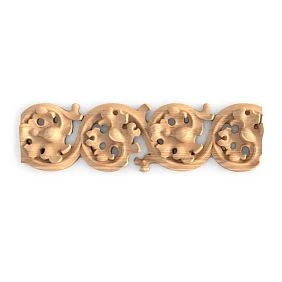
Wooden decoration — carved and milled solid wood overlays for facades, side walls, vertical posts, and the lower base. These are the elements that transform flat surfaces into relief, "living" planes, rich with the play of shadows.
Furniture Handles wooden — an essential detail for doors and drawers of the library's lower cabinet. In a classic study, a wooden handle made of beech or oak is not a compromise, but a full-fledged design choice.
Our factory also produces:
Polyurethane elements
Moldings made of polyurethane — for the upper cornice of the library, decorative frames on the walls next to it, horizontal lines of the belt molding, and the baseboard at the bottom of the lower cabinet.
Polyurethane moldings — cornice profiles, corner overlays, and decorative inserts for decorating the wall around the library area. It is this that creates the feeling of a built-in architectural niche.
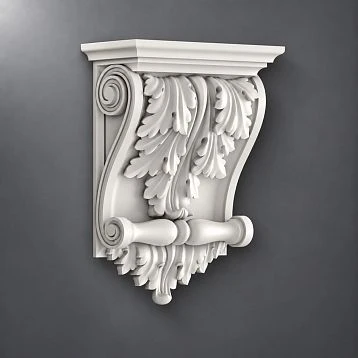
Decor for Molding — rosettes, brackets, decorative inserts that are mounted in the corners of frames, at the joints of cornice profiles, at the intersection points of horizontal and vertical moldings.
Get Consultation
Consumables and Fasteners
The kit includes: liquid nails for polyurethane profiles, finishing nails and screws with plugs for wooden parts, acrylic primer for both materials before finishing, enamel or oil for wood, sealant for sealing joints. A 15–20% margin on all items is not a recommendation, but a rule.
How a home library differs from a regular bookshelf
This question sounds rhetorical only at first glance. In practice, this is where the key difference lies between "shelves with books" and a real library that becomes the center of the room.
A bookshelf is storage. A library is architecture
A regular bookshelf solves one task: vertical storage of books. It has side walls, shelves, possibly a back wall. It can be well made from quality material—and still remain just a piece of furniture.
A classic-style home library works completely differently. It consists of structurally different zones, each with its own purpose and decorative logic:
-
The lower base—closed cabinets with doors or drawers. This is the "plinth" of the library, which visually grounds the structure and provides storage for items that should not be in plain sight. The lower base is sheathed with wooden overlays, equipped furniture handles with oak and framed by a baseboard molding at the floor.
-
Open shelf sections—the main volume occupied by books. Here, the rhythm of horizontal shelves, their thickness, and visible ends, which are finished with wooden trim, are important.
-
Vertical posts—separate the sections and carry the main visual load. In a classic library, they are designed as pilasters: a flat surface with applied relief elements made of solid wood or with fluting.
-
The upper cornice completes the structure horizontally and connects it to the ceiling. This is the zone polyurethane decor: a lightweight cornice profile with relief is mounted on the upper horizontal plane and "embeds" the library into the room's architecture.
-
The wall behind and next to the library is decorated with molding frames, pilaster overlays, and cornice lines, which turn the cabinet into part of the interior paneling.
Scale as an argument
A floor-to-ceiling library in a classic study is typically 3–5 meters wide and 2.6–3.2 meters high. Such a volume requires a significant amount of molding: the cornice profile along the top line alone will take several meters, the baseboard the same, and the molding frames on the side walls several more. That is why a library is a big-ticket item, and that is why it is important to make an accurate calculation of all items in advance.
Where to use wood in a home library
Wood in a classic bookcase is a material of strength and tangibility. It bears the load, holds its shape, and creates a sense of solidity that cannot be achieved with any other material.
Shelves and frame: the foundation of durability
Shelves made of solid beech or oak can support the weight of books without sagging even on spans of 80–100 cm. This is a fundamental difference from shelves made of laminated chipboard, which sag under load after a few years. For a home library with a large collection of books—encyclopedias, albums, multi-volume sets—solid wood shelves are the only correct choice. A shelf thickness of 25–30 mm of beech is sufficient for spans up to 100 cm; for wider sections, an oak panel is used or the structure is reinforced with an intermediate upright.
Vertical uprights and their decoration
The vertical posts of the library are its columns. In a classic style, they should not be flat and faceless. decor for furniture Made from solid wood — milled overlays, fluted strips, three-dimensional relief elements — mounted on the side planes of the posts, creating the feel of a pilaster structure. The same solution works on the side walls of the end sections visible from the room.
Molding for shelf ends and horizontal lines
Pogonazh iz massiva — one of the key tools for working with the library's horizontal lines. Shelf ends are finished with a semicircular or chamfered oak molding profile: this covers the end cut, protects the edge from mechanical damage, and simultaneously creates a visual rhythm. A belt molding from the molding profile separates the lower cabinet and the open shelf zone — a classic architectural technique dating back to the division of the base and the main tier of the facade.
Wooden handles: details that are touched
Wooden handles Made from beech and oak — the right choice for the lower cabinets of a classic library. First, the material matches the overall concept: wood to wood. Second, a solid wood handle is pleasant to the touch — every time you open the door, you feel the warmth and texture of natural wood, which no metal or plastic handle can replicate. Third, wooden handles can be coated with the same oil or the same enamel tone as the rest of the body — then the hardware becomes part of a unified color scheme, rather than a standout accent.
An important detail when choosing handles: in classic style, both long pull handles with a rounded profile and small knob handles for compact doors work well. The key is unity of form within one object: if you choose pulls, all handles in the lower cabinet should be pulls. Mixing formats is a mistake that destroys the integrity of the image.
Lower base and side decorative elements
The lower base is the area of maximum mechanical contact: doors are opened, feet bump into it, objects are placed on the countertop. Here, wood is irreplaceable: visible parts of the lower base, end panels, profiled front edges of the countertop are made from solid wood. Classic Furniture STAVROS is built precisely on this principle: load-bearing and stressed elements are made from solid oak and beech, decorative additions are made from polyurethane where justified by weight and load.
Where to use polyurethane in a classic library
Polyurethane decor takes on the task of architectural design: cornices, molding frames, wall framing, baseboard lines. All of these are lightweight, non-load-bearing elements that work purely visually.
Upper cornice: the main architectural gesture
A polyurethane cornice along the top line of the library is perhaps the most striking element of the entire structure. A good cornice profile with relief — ionics, egg-shaped trim, leaf ornament — creates the feeling that the library grows out of the wall as an architectural object, rather than simply standing in front of it. Moldings made of polyurethane for the upper cornice, choose a relief height of 50–80 mm: enough to be expressive, but not so massive as to "hover" over the structure.
Decorative frames on the walls next to the library
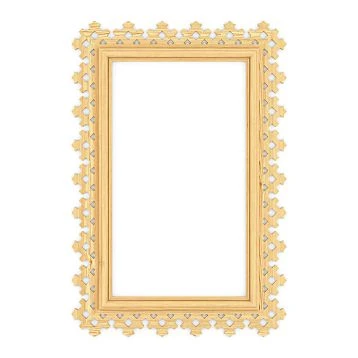
The wall sections on the sides of the bookcase are an area that can easily be lost or, conversely, skillfully incorporated into the overall architectural concept. Polyurethane moldings in the form of molding frames on these wall sections creates a paneling effect: the wall ceases to be just a wall and becomes a structured surface with cells that repeat the proportions of the library sections. This technique is one of the favorites in classic interior design: it unites furniture and wall into a single architectural plane.
Decor for moldings: point accents in key places
Decor for Molding — these are polyurethane inserts that are mounted in the corners of frames, at the joints of cornice profiles, and at the intersections of horizontal and vertical moldings. Rosettes, brackets with acanthus leaf, sculptural corner overlays — these are the details that distinguish a well-designed library area from simply glued moldings around the perimeter. There shouldn't be too many of them: two to four corner elements per molding frame is enough.
Baseboard as the lower architectural line
A polyurethane baseboard at the base of the library is a continuation of the lower horizontal line of the entire room perimeter. It hides the gap between the lower cabinet and the floor, forms the "plinth" tier of the entire structure, and visually grounds it. If the room already has a wooden baseboard, the library area can be finished with a taller, more textured polyurethane profile of the same pattern — this will emphasize the specialness of this area in the interior.
What is absolutely forbidden to do with polyurethane in the library
Polyurethane elements are not used as shelf brackets or load-bearing parts — they are not designed for load. Also, do not coat polyurethane decor with oil-based compounds: oil is not absorbed into polyurethane and dries unevenly. The finishing coating for polyurethane is only acrylic or alkyd enamel over a preliminary acrylic primer.
Ready-made kits for the library area
Different tasks require different material kits. Here are five practical options, from minimal to maximum.
Small bookcase: handles + thin trim + lightweight cornice
For a compact bookcase up to 1.2 m wide, a small intervention is enough to give it a classic look. Wooden knob handles or short beech brackets — on the lower cabinet doors. Thin dividing trim — on the ends of the shelves. A lightweight polyurethane cornice profile — along the top line. Everything is coated with a single enamel. Result: a standard cabinet acquires a furniture-like, handcrafted appearance.
Floor-to-ceiling bookcase: trim + cornice + handles + moldings
For a full-size floor-to-ceiling library, the kit includes: Pogonazh iz massiva for the ends of shelves and belt molding, Wooden handles for the lower cabinet, polyurethane cornice profile along the top line (with allowance for corner joints), moldings along the side walls. This is a basic set for a library up to 3 m wide.
Library in the study: wooden decor + baseboard + calm stucco
Restraint is important in a study: rich relief is appropriate in formal living rooms, but in a workspace it is distracting. Here they choose decor for furniture with simple geometric shapes — straight flutes, geometric rosettes, flat frame overlays. Polyurethane baseboard — low, with one or two horizontal pulls. Stucco — minimal, only along the top cornice line. Style — restrained classic or neoclassicism in the version of an English club study.
Built-in shelving: wooden uprights + polyurethane moldings around the opening
A built-in shelving unit in a niche is a special case. Vertical solid wood uprights dividing the sections are decorated with wooden overlays. The opening itself — arched or rectangular — is framed with a polyurethane molding profile with corner overlays. This turns the niche with shelving into an architectural portal, not just a "hole in the wall with shelves."
Library in the living room: lower base + front handles + moldings on the adjacent wall
In the living room, the library works as a representative element. The lower base with wooden decorative overlays and oak front handles is sturdy, visually weighty. The upper open area with wooden trim on the ends of the shelves is airy. The wall next to it is decorated with polyurethane molding frames, creating a horizontal extension of the entire library area. It is this solution that turns the library in the living room from a "piece of furniture" into an "architectural fragment of the wall."
How to make an ordinary shelving unit look like a built-in library
One of the most popular questions among those who don't want to completely redo their furniture but want a different result. And the answer here is quite specific: a shelving unit can be "upgraded" to the level of a built-in library using several techniques.
Add a lower base. A wooden plinth with applied decorative elements made of solid wood is placed under the shelving unit — this visually lifts the structure off the floor and adds solidity.
Install a top cornice. A polyurethane cornice profile is attached to the top plane of the shelving unit and extends onto the wall on both sides — then the cabinet visually "grows into" the wall rather than standing in front of it.
Add side moldings. Molding frames on the walls to the right and left of the shelving unit — this is the very solution that creates the effect of built-in furniture without a single nail in the cabinet body.
Replace the handles. Standard metal hardware is the first thing that gives away an "ordinary" shelving unit. Wooden Furniture Handles handles made of oak or beech instantly elevate the perception of quality by several levels.
Add a baseboard. A polyurethane baseboard that goes around the base of the shelving unit and continues along the wall on both sides — the final touch that ties the structure into the interior as a single whole.
Style options for a classic library
Classic style is a broad concept. It encompasses very different aesthetic systems, and each requires its own set of decorative tools.
English club library
Dark-toned oak, matte oil finish preserving texture. Handles are forged metal brackets or wooden with dark impregnation. Moldings are geometric, strict, without floral motifs. Baseboard is tall, with a single horizontal pull. No whiteness — only warm dark tones. For this style, the texture of oak with its expressive large pattern is a self-sufficient decoration.
French classic and Empire style
Here the wood is coated with light enamel — milky, ivory, light gray. Polyurethane decor is active: cornice with Ionic ornament, frames with lush rosettes, pilaster overlays with fluting. Handles are wooden, coated with the same enamel tone as the body. Polyurethane moldings — rich but not overloaded: the key word of this style is 'elegance', not 'pomposity'.
Neoclassicism and transitional style
A compromise between historical and modern: wooden trim with moderate relief, moldings without floral ornaments, geometric frames on the wall, handles are minimalist, wooden or matte metal. Color scheme is neutral: white, light gray, warm cream. Polyurethane decor is present but not dominant.
Typical mistakes when creating a home library
Experience shows that most mistakes repeat from project to project. Here is a list of those that are easier to prevent than fix.
Did not calculate the amount of linear molding. The footage of linear products is easy to underestimate. One profile goes around the top line — that's already several meters. Plus a belt molding, plus shelf ends, plus a reserve for cutting. Calculate with a reserve of at least 20%.
Chose too active relief for a small room. A cornice profile with high relief is appropriate for ceiling heights from 3 m. In rooms with a 2.5 m ceiling, a heavy cornice visually lowers the ceiling. Choose a profile proportional to the room height.
Mixed different decor styles. Geometric moldings combined with floral rosettes, dark-toned oak and white enamel — this is a conflict, not a contrast. The decor style should be unified from handles to cornice.
The polyurethane was not primed before painting. Without primer, the enamel lays unevenly and may peel off after a few months. Acrylic primer before painting is a mandatory step.
The gap between the cornice and the ceiling was forgotten. If the ceiling is not perfectly level (which is the case in most apartments), a cornice pressed tightly against the ceiling will reveal all unevenness. Either install the cornice with a small gap and fill it after installation with acrylic sealant, or mount the cornice slightly away from the ceiling to create a beautiful horizontal shadow.
Wooden handles were installed without unification. Different handle shapes on doors and drawers of the same object is an obvious mistake. In a classic library, all facade elements should be in a uniform format.
Buying a kit for a classic library: how to calculate correctly
The calculation begins with measurements. Take the following parameters:
-
Total width of the library area from wall to wall
-
Height from floor to ceiling
-
Width of each section
-
Height of the lower cabinet (usually 80–90 cm)
-
Number of doors and drawers in the lower cabinet
-
Width of the piers to the right and left of the cabinet (for molding frames on the walls)
Based on this data, the following is calculated:
-
Length of cornice profile = library width + 30–50 cm per wall on each side + 20% reserve
-
Length of baseboard = same logic
-
Number of handles = one for each door, one for each drawer
-
Length of trim for shelf ends = total length of all shelves × 2 (front and back ends, if shelves are open on both sides) + 20%
-
Length of molding for wall frames = perimeter of each frame × number of frames + 20%
Buy wooden trim, wooden handles, and decorative elements for furniture it is better to place one order: this makes it easier to ensure unity of relief scale and that all profiles belong to the same style line. The same applies to polyurethane: Moldings made of polyurethane, Decor for Molding and baseboard profiles must be from the same collection, otherwise the relief height and ornament scale will not match.
Finish: wood and polyurethane in the same color
One of the most striking techniques in a classic interior is to cover the entire library, including wooden and polyurethane elements, with a single color of enamel. White, cream, light gray, warm dove gray — in such unity of surfaces, the boundaries between materials disappear, and the structure is perceived as a monolithic architectural object.
For painting, the wood is sanded, primed with acrylic primer, then 2 coats of enamel are applied with intermediate drying. The polyurethane is primed with the same compound and painted with the same tone. Joints between wooden and polyurethane parts are filled with acrylic sealant after installation and before final painting — this makes the seam invisible.
If tinting or oil finishing of wood is chosen, polyurethane parts in this case are still painted with enamel — to match the main coating or in an accent color (for example, a white cornice against dark oak is a classic combination in the English style).
About the company STAVROS
Behind every article about wooden moldings, polyurethane trims, and furniture handles lies a specific production facility you can trust. STAVROS is a company that began its history in St. Petersburg in 2002. Two artists opened a small workshop for carved products — and within a year, their work appeared in the interiors of the Constantine Palace in Strelna, and later in the Hermitage, Alexander Palace, Sheremetev Mansion, and Trinity-Izmailovsky Cathedral.
Today, STAVROS is a full-fledged production facility with 3D milling, hand sanding, and a wide range of products made from solid oak and beech, as well as a line of polyurethane decor. The company works with retail customers (from a single item with Contact us to confirm shipping to your destination.), designers, and furniture manufacturers. Showrooms are in St. Petersburg and Moscow. Everything described in this article: moldings, overlays, handles, trims, cornices, stucco — is available in the STAVROS catalog with real stock balances and current prices. For complex projects involving the arrangement of a home library, the company provides consultation with kit selection and calculation of the required amount of materials.
FAQ: Answers to popular questions
Can a bookcase and polyurethane stucco be combined?
Yes, and this is one of the most organic combinations in a classic interior. Wood takes on the durable, load-bearing, and tactilely significant elements: shelves, uprights, moldings, handles, and the lower base. polyurethane decor takes its place on the upper cornice, in molding frames on the walls, and in the baseboard line at the bottom. The two materials work in a unified aesthetic, not competing but complementing each other.
What to buy for a classic-style library?
Basic set: Pogonazh iz massiva for the ends of shelves and horizontal lines, Wooden handles for the doors of the lower cabinet, decorative elements for furniture for decorating posts and facades, Moldings made of polyurethane for the upper cornice and wall frames, Decor for Molding for corner accents, baseboard, fasteners, glue, acrylic primer, and finish coating. Allowance for all items — 15–20%.
How to make an ordinary shelving unit look like a built-in library?
Five steps: add a lower base with applied wooden elements, install a polyurethane cornice profile along the top line transitioning to the wall, create molding frames on the walls next to the cabinet, replace standard hardware with wooden handles, add a baseboard at the bottom. All this is done without altering the cabinet body.
Which handles are suitable for a classic library?
For a classic style, wooden pull handles with a rounded profile or knob handles made of oak and beech are optimal. The shape should be uniform for all doors and drawers of the lower cabinet. The finish coating of the handles should be the same oil or enamel as on the rest of the body.
What height should the cornice profile be for a ceiling-height library?
The cornice height should match the scale of the structure and the ceiling height. For rooms with a ceiling of 2.5–2.7 m — a cornice 50–70 mm high. For rooms with a ceiling of 3 m and higher — 80–120 mm. A cornice that is too thin on a tall library looks random; one that is too massive on a low ceiling feels oppressive.
How many meters of molding are needed for one wall frame?
A standard frame on a wall section 60–80 cm wide and 120–150 cm high will require about 5–6 meters of molding, accounting for corner cuts. Plus four corner caps from decoration for moldings. Take linear footage with a 20% margin — 45° cuts require additional material.
Is it necessary to prime wooden parts before installation?
Yes, if painting with enamel is planned. The scheme: sanding → dust removal → acrylic primer (2 coats with drying) → light matting → 2 coats of finishing enamel. If the wood is coated with oil or tinting varnish, priming is skipped, but sanding and dust removal remain mandatory.