




















































































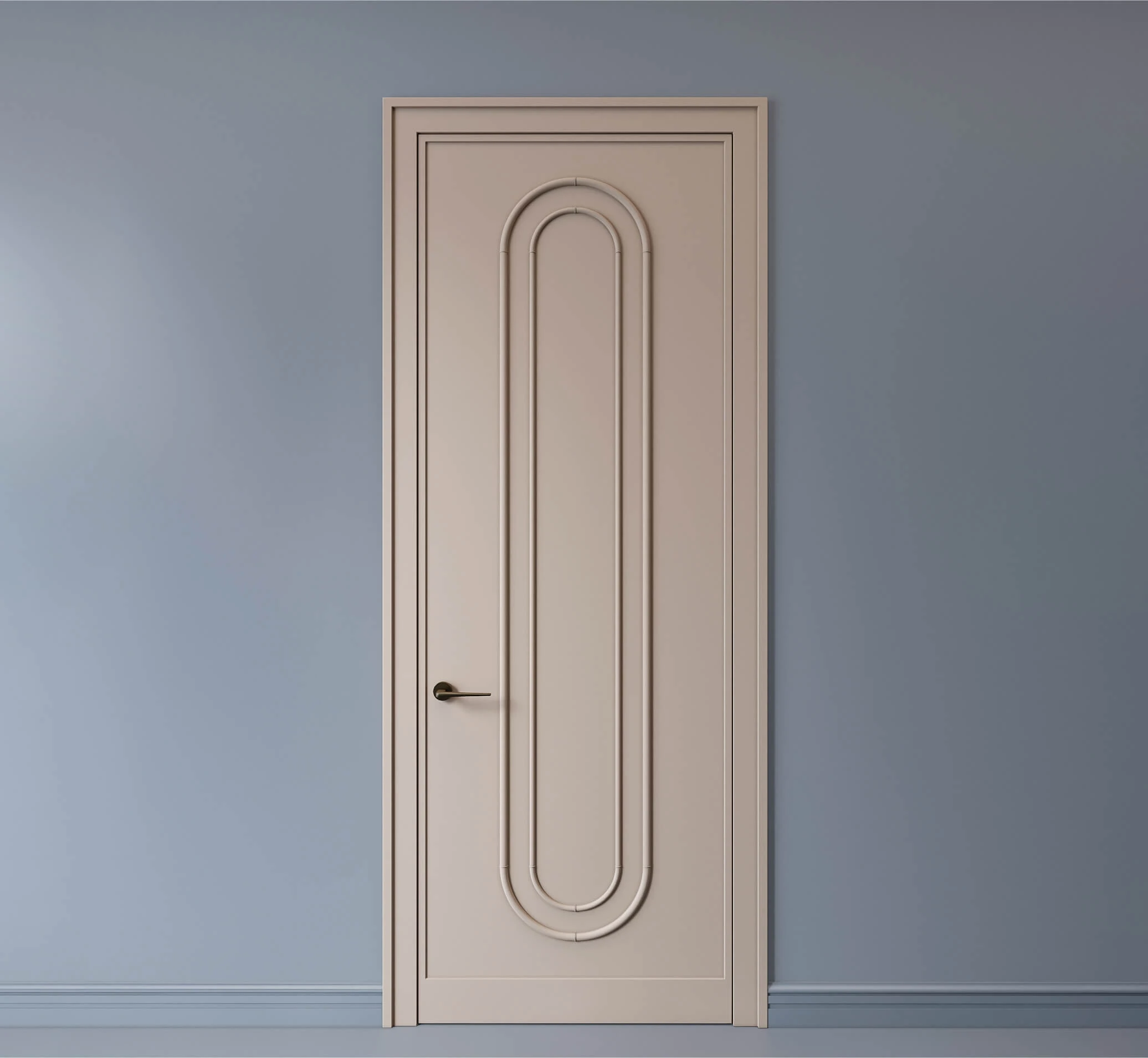
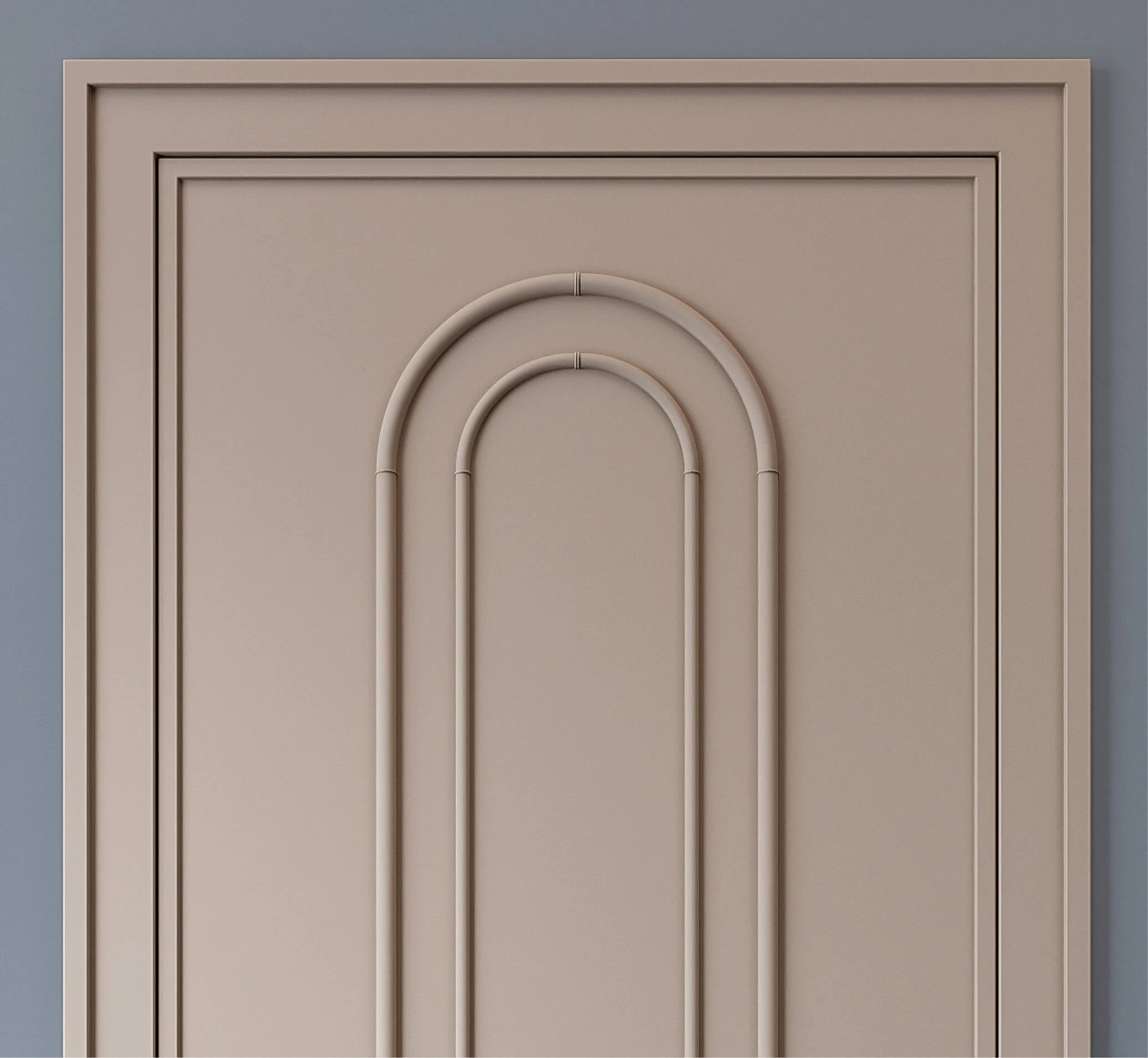
Used elements from the STAVROS array
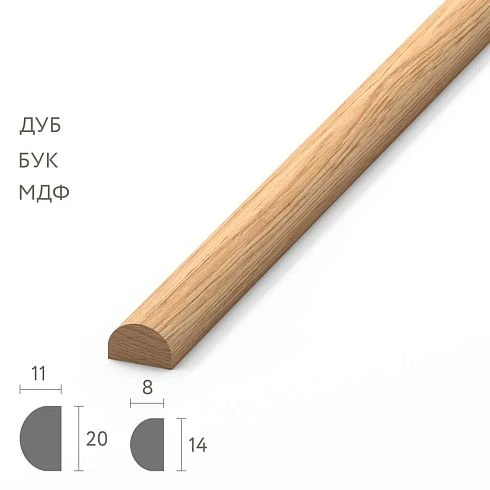
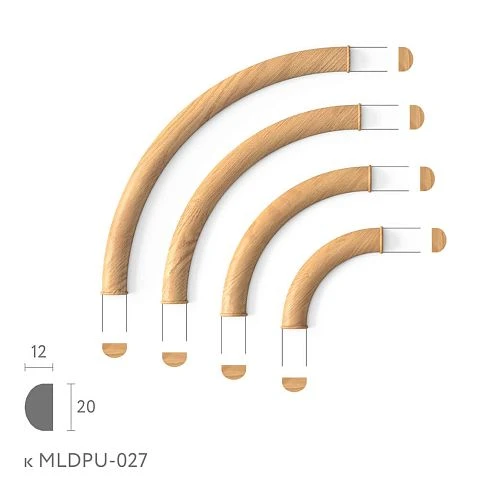
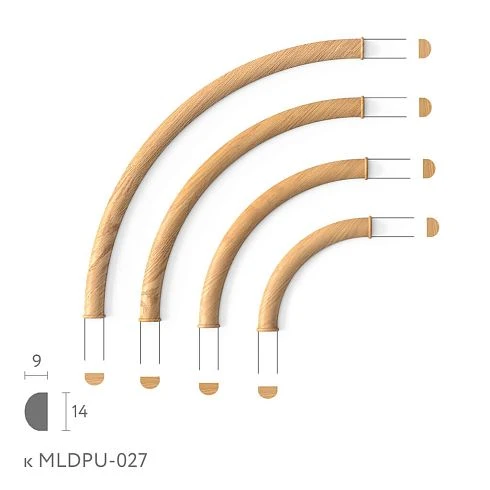
Polyurethane elements used: STAVROS
We will help you implement the project
Measurements
You send us furniture, interior, and preferences dimensions
Design
Our specialists will create a project (paid service, from 2000 rub.)
Kitting
After project approval, you receive a specification
Implementation
We will select partners in your city for painting and mounting decor
You may also be interested in
Frequently asked questions
Our showrooms are located in Saint Petersburg and Moscow. Production is located in Saint Petersburg.
Moscow contacts: https://www.stavros.ru/contacts_all/?tab=msk
Contacts of Saint Petersburg: https://www.stavros.ru/contacts_all/?tab=spb
- Send request by email [email protected]
- Write to us at Telegram
- Write to us at WhatsApp
- Order by phone +7 (800) 555-46-75
- Visit our showroom in Saint Petersburg and Moscow
Yes, we ship orders throughout Russia and to CIS countries.
We cooperate with transportation companies such as СДЭК and DPD.
You can also arrange pickup of your order through any convenient transportation company for you.
Delivery cost depends on the size, weight of the item, and delivery address.
When placing an order, the delivery cost is calculated automatically and displayed as a separate line on our website.
Prices and availability of items on the website are always current. Data is updated daily.
Note: items in stock are stored on the warehouse in unpolished form and shipped within 3 working days.
If the item is not in stock, average production time: 5–10 working days.
This is the quality of polishing of the items.
Standard — machine polishing, at a more attractive price.
Prestige — detailed hand polishing, items do not require further work.
More details: https://www.stavros.ru/information/kachestvo/
This is the type of veneer of the items.
Under enamel: produced by gluing wooden laminates without color and texture matching. Contrast tonal and textural differences are noticeable. This blank should be chosen if the item is intended for opaque coating.
Under tinting: produced by gluing wooden laminates with color and texture matching. Tonal and textural differences may occur. This blank should be chosen if the item is intended for semi-transparent finish.
More details: https://www.stavros.ru/information/kachestvo/
Beech — dense, non-porous wood, most often used for items covered with enamel.
Oak — dense, porous wood with clearly visible natural grain. Due to its strength and decorative properties, it is often used in items with semi-transparent coating, highlighting the wood pattern.
Custom-made, if non-standard items are required, we can produce products from other types of wood, including blanks provided by the customer, manufactured according to our technical specifications.
All our furniture legs can withstand a vertical load of at least 100 kg.
Average production time for custom-made items: 5–10 working days.
Most items are stored on the warehouse in unpolished form. We need time to polish and pack orders.
Yes, we manufacture non-standard items according to individual projects, but we only accept orders with a minimum quantity.
We can manufacture items of the desired size, but we only work with bulk orders. For details, please consult the sales department manager.
Yes, some of our products can be used outdoors. For example, polyurethane items, as well as carved door casings made of pine.
Other items are produced to order using PUR glue, if minimum quantity is available. No warranty is provided for such products, as outdoor conditions are considered aggressive.
Yes, we paint items when ordering products for a total amount of 150,000 rubles or more.
- Dust removal. After sanding, the surface must be dusted.
- Priming. Apply primer in an even layer.
- Matting. After the primer has fully dried, the surface should be matted (lightly sanded for better adhesion).
- Finish coating. Apply finish coating: lacquer or enamel, in 2 layers, with interlayer drying.
More details: https://www.stavros.ru/information/sovety/
Apply adhesive to the decor. Attach to the surface and press briefly. Then, remove the decor from the surface and leave it open for 3–5 minutes. Press the decor firmly onto the surface and hold for 5–10 seconds.
More details: https://www.stavros.ru/information/sovety/
Ideally, you should prepare a design project before placing an order.
You can do this yourself by downloading drawings of our products from our website, or you can order a project from us.
If the number of decorative elements and fittings is small, our company's manager can assist you with selection.
Unfortunately, this service is not provided.
The packaging method depends on the type of items, but in each case, we ensure sufficient protection for safe transportation.
We most often use corrugated cardboard and stretch film. Fragile items are additionally secured on a rigid base to prevent damage during transport.
We ship all items starting from 1 piece.
Room measurements and item installation can be performed by our partners — carpentry companies represented in most regions of Russia.
Also see
Japandi Door Decor Idea CPU-3.1
There are doors that simply close an opening. And then there are those that become a statement in themselves. Not loud, not overloaded — quiet, precise, conscious. Such a statement is the japandi style door decor based on the CPU-3.1 idea: subtle frame geometry, neat corner elements, calm symmetry — and not a single unnecessary detail.
The CPU-3.1 idea shows how to use STAVROS decorative moldings and corner elements to design a door panel so that it becomes an organic part of the interior. Decorating a door with moldings is not about luxury or imitating palace decor. It's about proportions, about architectural lines, about the feeling of handcrafted detail in a space built on the balance of Japanese minimalism and Scandinavian warmth.
Why Japandi and why the door
The Japandi style is one of the most demanding when it comes to details. It forgives neither excess nor randomness. Every element must be in its place: not to decorate for decoration's sake, but to play a role in the overall architectural logic of the space. That is why decorating an interior door in this style is a delicate task.
A door in a typical apartment is a forgotten interior element. It is painted, veneered, sometimes replaced with a hidden one — but rarely worked with as an architectural object. Meanwhile, the door is the first thing you see when entering a room, setting the rhythm of the space.The idea of the CPU-3.1 door decorcorrects this oversight: through the thin frame geometry of moldings, the door leaf gains a meaningful structure — without heaviness, without pathos, without excess.
What the CPU-3.1 idea shows
The essence of the CPU-3.1 composition lies in the frame decor of the door leaf. Linear moldings are mounted on the leaf, forming one or several rectangular frames. Corner decorative elements are installed at the frame corners — they complete the geometry, give the frame a finished look, and create that soft accent that makes thedoor with moldingsnot heavy, but elegant.
Visually, it looks like this: a clean painted leaf, on which thin molding profiles lie in strict symmetry — without protruding rosettes, without lush carvings, without classical architraves. Just a line, an angle, a line. This rhythm is the essence of Japandi in the context of door decor.A decorative frame on a dooris not decoration over function, but architectural work with the proportion of the leaf itself.
The solution suits any modern interior where a warm minimalist aesthetic without classical heaviness is needed: bedroom, study, living room, hallway, dressing room. Anywhere the door should be a neat interior accent — not a dominant feature, but not a random detail either.
Japandi: an aesthetic that cannot be overloaded
Before discussing specific elements, it's worth understanding what this style does not forgive. Japandi is a hybrid of Japanese minimalism and Scandinavian functionality. The Japanese component requires emptiness, silence, respect for pauses. The Scandinavian component demands warmth, natural materials, human scale. Together, they create an interior where every detail carries meaning, but none overwhelms with its significance.
For a door in this style, clean lines and calm proportions are important.Moldings in Japandi style — these are not ornamental carvings with curls, not classic cornice profiles with multiple levels. It is a thin profile with a soft cross-section that works as an architectural line: it defines structure without drawing attention to itself. Corner elements in this logic are not decorative vignettes, but points of geometry fixation. They say: 'the frame ends here, and this is not accidental.'
CPU-3.1 fits this request exactly. Thin profilesdecorative door moldings combined with corner elements create a frame geometry that reads as a conscious design decision, not as 'decorate the door with something.' This is what Japandi values — not decorative abundance, but decorative precision.
The palette in which this idea unfolds best: milky, warm white, sandy, greige, light gray, muted olive, natural wood tone, beige-gray, soft graphite. All these colors are about depth, not brightness. About warmth, not contrast.Calm door decor in modern style lives precisely in this palette.
What elements are used in CPU-3.1
The idea of CPU-3.1 is based on specific STAVROS products, which are available in two versions: solid wood and polyurethane. This is a fundamental choice that determines the final aesthetic and logic of application.
Corner decorative elements made of solid wood
Decorative corner element MLD-027U-1 — a corner element made of beech or oak with a more pronounced profile. Available in four sizes: 84×84×13×23×117 mm, 124×124×13×23×174 mm, 164×164×13×23×231 mm, and 204×204×13×23×287 mm. The linear parameters 13×23 mm describe the profile cross-section: a low but quite expressive relief. It is this profile that creates a noticeable play of light and shadow on the door leaf while maintaining a calm character.
Decorative corner element MLD-027U-2 — a thinner corner option made from the same materials: beech or oak. Sizes: 84×84×10×17×117 mm, 124×124×10×17×174 mm, 164×164×10×17×231 mm, and 204×204×10×17×287 mm. The 10×17 mm profile is a deliberately thin solution, almost graphic. Suchcorner decor for moldings made of beech and oak is ideal for Japandi precisely because it does not take up much space on the panel — it marks the corner but does not emphasize it heavily.
Both solid wood elements allow for working with a choice of finish: white enamel, tinting, or clear lacquer preserving the natural wood tone. Oak gives a slightly warmer shade when tinted, beech — more neutral and lighter. For Japandi with its love for natural shades, both options are organic.
Polyurethane corner elements
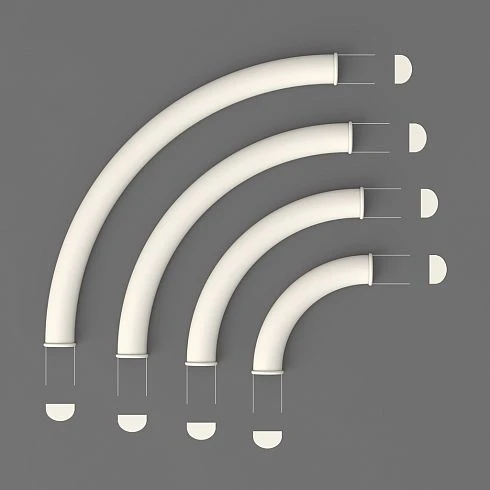
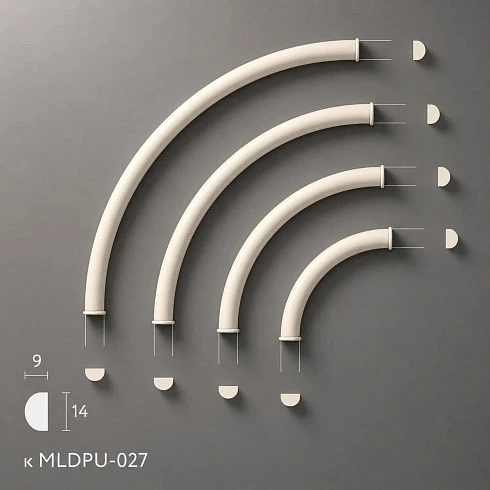
Polyurethane molding MLDPU-027U-1 — a polyurethane analogue of MLD-027U-1 with the same profile cross-sections: from 84×84×13×23×117 mm to 204×204×13×23×287 mm. Polyurethane is lighter than wood, more stable to humidity changes, and can be perfectly painted in any color. For projects where the entire door is finished with enamel, this is a practical choice: the surface looks monolithic, the corner element does not stand out as a separate material but is perceived as part of a single painted plane.
Polyurethane molding MLDPU-027U-2 — a thin polyurethane corner element with a profile of 10×17 mm, in a size range from 84×84 to 204×204 mm. This is the most delicate option for CPU-3.1 — minimal relief, an almost invisible corner line. For doors in the spirit of strict Japanese minimalism, this is an ideal choice.
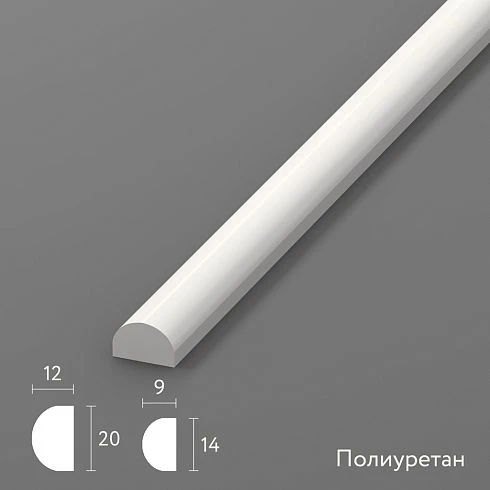
Polyurethane molding MLDPU-027 — a linear profile that forms the horizontal and vertical sides of the frame. It is available in two cross-sections: 14×9×2600 mm and 20×12×2600 mm. The length of 2600 mm covers the height of a standard door leaf (2000–2100 mm) with a margin. The 14×9 mm section gives an almost graphically thin line, the 20×12 mm section gives a slightly more pronounced relief with greater play of shadow. Both options work in the CPU-3.1 concept depending on the desired feel of the door.
Two configuration options: solid wood or polyurethane
On the STAVROS idea page, blocks for "used solid wood elements" and "used polyurethane elements" are displayed separately — and this is no accident. The choice of material here is not a technical question, but a matter of design concept.
When to choose solid wood
Wooden decor for a door is a natural material with a living texture. Beech and oak have their own character, their own structure, which is revealed under varnish or tinting. If the project is built around natural materials, if the interior has wooden floors, solid wood furniture, wooden shelves — corner elements made of beech or oak organically fit into this system. They are perceived as part of the same natural world as the other wooden surfaces. For Japandi, which values the naturalness of materials, this is a very precise choice.Buy MLD-027U-1 — it is worth it when a more pronounced relief with a touch of premium joinery aesthetics is needed.MLD-027U-2 buy — when maximum thinness of the profile and delicacy of the decor are important.
Array under enamel is also a good solution. A wooden surface under white or milk paint looks warmer than polyurethane, because even under enamel, wood 'breathes' differently. The thin relief of corner elements is read as a neat accent, not as an attempt to imitate something more expensive.
When to choose polyurethane
Polyurethane molding for door — is practicality and stability. Polyurethane is not afraid of moisture, does not warp with temperature changes, does not crack at joints. The geometry of the profile remains accurate throughout the entire service life. If the door is painted in a dark color or in the color of the wall, then under the finishing enamel the difference between solid wood and polyurethane is visually almost indistinguishable — but polyurethane elements are easier to install and give a faster result.
MLDPU-027U-1 buy — makes sense for projects where it is important to reduce the load on the door leaf and ensure stable profile geometry.MLDPU-027U-2 buy — for minimalist solutions with the thinnest corner accent.MLDPU-027 buy— when you need a linear profile for painting with predictable results in any shade.
For B2B applications — furniture manufacturers, carpentry workshops, door manufacturers —polyurethane moldings for projectsmore convenient: no length restrictions on the workpiece, no risk of hidden structural defects, consistent results in serial use.
Colors and finishes: when a quiet shade speaks louder than a bright one
In Japandi style, door decor works better through depth and proportions rather than color contrast. This idea seems simple, but implementing it correctly is a non-trivial task. Many mistakenly paint the door in a bright color, thinking that this is the "accent." But in Japandi, the accent is subtlety, not loudness.
The most organic options for CPU-3.1:
Warm white and milky — the most versatile choice for Japandi. A door in a milky color with thin moldings in the same shade is the perfect "invisible" door that is nevertheless structured and detailed.Light door with moldingsin a milky tone works well next to light walls: the difference between the panel and the frame is minimal, but the relief of the corner elements creates a soft play of shadows under side lighting.
Greige and beige-gray are shades at the intersection of beige and gray. They are very popular in Japanese interiors precisely because they are "neither cold nor warm" — they are neutral, but not empty.Beige door with moldings in greige looks balanced and subtle.
Sand — slightly warmer than greige, slightly yellower than milky. It is organic next to oak wood flooring, warm linen textiles, woven details — everything that makes up Scandinavian warmth in the Japandi concept.
Muted olive — an unexpectedly precise choice for Japandi. A quiet green without aggression.Minimalist door for painting in an olive shade with moldings in the same color — this is a very mature, meditative solution.
Soft graphite — for those who want a bit more substance.Graphite door with moldings on a light wall — this is a clear accent, but without aggression. The moldings in the same graphite tone provide relief, not contrast.
The wall color — if the door should "disappear" into the space, it is painted in the exact shade of the surrounding finish. The moldings are not highlighted by color, but structure the panel with relief. This isdoor decor in the wall color — a quiet solution for mature interiors.
The molding can be painted in the color of the panel to achieve a subtle relief, or highlighted half a tone darker or lighter for a more graphic effect. The second option is for those who want the frame to read more distinctly. The first is for the most calm, meditative result.
Which doors CPU-3.1 is suitable for
Frame decor with moldings is not a privilege of one door type. Let's look at scenarios where the CPU-3.1 idea is particularly convincing.
Interior door — the main application.Decorating an interior door with moldings transforms a standard panel into an architectural element. This is especially important for doors that are in plain sight: the entrance to the living room, the study door, the bedroom door.
Bedroom door — here CPU-3.1 works particularly delicately. A Japandi-style bedroom is built on silence and tranquility.Bedroom door decorwith thin moldings is a neat work with space: the door does not break out of the overall rhythm, but does not go unnoticed.
Door in the study — the frame geometry of the moldings adds strictness and composure to the study space. Japanese minimalism in the workspace is not asceticism, it is conscious organization. A thin frame on the door is an element of this organization.
Door in the hallway — the hallway sets the first impression of the interior.Door design in the hallwayusing CPU-3.1 immediately indicates that the space is well thought out. This is not a random door — it is a conscious design element.
Closet door — frame decor on the closet door gives the bedroom area completeness. A closet behind a door with a thin molding frame is perceived as an independent interior volume, not just a built-in wardrobe.
Hidden door — one of the most interesting scenarios.Modern-style door with moldingsWhen painted in the wall color, it turns into a hidden door with a subtle structural hint: it is guessed by the frame but not noticed as a separate element.
Enameled door — a door leaf without a distinct texture under the final enamel looks flat.Moldings on the door leaf for paintingsolve this problem: the surface remains monochrome but gains volume and structure.
How to use CPU-3.1 in the interior: scenarios and options
Door leaf only
The most concise option. Moldings and corner elements are mounted exclusively on the leaf, everything is painted in a single color. The door gains structure but does not stand out from the space. This is an ideal solution for small hallways or bedrooms where the walls are already rich in details.
Door and wall moldings
Design of door and wall with moldingsin a unified concept — a significantly stronger technique. Frame panels on the wall repeat the rhythm of the molding frame on the door. The transition between the wall and the door becomes architectural, not mechanical. The wall and the door are read as a single system.Moldings for the door and wallsfrom one collection — this guarantees consistency of profiles and a unified visual language.
Door and baseboard in the same color
A dark or neutral door with moldings in the same color as the baseboard creates a cohesive architectural contour of the space. The horizontal line of the baseboard and the vertical line of the door frame are connected through a common tone. This is a technique that professional designers use for the visual "packaging" of a space.
Door and furniture fronts with a similar frame
If the room has a built-in wardrobe or kitchen fronts with framed inserts — a door in the same design forms a unified system.Interior moldings for the doorand furniture moldings in the same profile and color unite different objects into one whole.
Door with natural wood
Corner elements made of oak under a clear tint next to a white or milky panel — this is a concise Japandi technique: two materials in one door, a natural accent against a background of pure color.wooden door decorunder varnish preserves the living texture of oak and creates that natural accent so valued in Japanese interior aesthetics.
Who the CPU-3.1 idea suits
Interior designers —moldings for designersSTAVROS provide a tool for creating custom door solutions in projects of any budget. Two versions — solid wood and polyurethane — allow working with both premium orders and mid-range projects.
Furniture manufacturers —decorative elements for joinery workshopsallow offering clients ready-made door decor options without complex manual routing. Corner elements and moldings come ready for installation.
Door manufacturers — CPU-3.1 enables equipping door panels with a ready-made decor set, including moldings and corner elements, for subsequent painting.
Private customers — anyone who wants toupdate a door with moldingswithout a full renovation. Installing moldings on an existing door leaf is a weekend project, and the result is a completely updated door appearance.
Installation: how to properly assemble a frame composition on a door
Installing a molding frame is a task that can be done independently with basic tools. But there are several key points that affect the final result.
First — marking. Before installing the molding, you must accurately mark the position of the frame on the door leaf. For a symmetrical result, the frame must be strictly centered vertically and horizontally. The margins from the edge of the leaf must be equal. For large leaves (900×2100 mm and above), the minimum margin is 60–80 mm; for standard ones (800×2000 mm), it is 50–70 mm.
Second — fixing the molding. Linear molding is fixed with glue (PVA or special construction adhesive) with additional pressing using micro-pins every 150–200 mm. It is important to ensure straightness of placement: any deviation will be clearly visible on the painted surface.
Third — corner elements.Corner decorative elements are installed at the corners of the frame — the molding joints must align exactly under the corner cover. This ensures a clean connection: even if the molding joint is not perfect, the corner element covers it.
Fourth — puttying and sanding. Before painting, all micro-pin attachment points are puttied and sanded. Any depression or protrusion will be visible after painting — especially under side lighting.
Fifth — painting. For polyurethane elements, acrylic enamels are recommended; they provide an even coating and adhere well without additional priming. For wooden elements, use acrylic or water-dispersion enamels with one layer of primer. Apply with a spray gun: it ensures even coverage of relief edges. Apply in two coats with intermediate drying of 4–6 hours.
Before installation and final painting, we recommend studyingAdvice on finishing and installationon the STAVROS website — it describes in detail the features of working with decorative profiles and surface preparation. For understanding the characteristics of materials — oak, beech, polyurethane — the section is usefulMaterials and quality of STAVROS products.
CPU-3.1 and other STAVROS door decor ideas
It is important to understand that CPU-3.1 is not the only idea in the STAVROS "Doors" section. The sectionDoor Decoration Ideascontains several cards, each of which works for its own intent and its own audience.
Ideas with slatted panels PAN-001 and PAN-002 are about texture, about a relief surface, about the vertical rhythm of glazing beads. CPU-3.1 is fundamentally different: it is about frame geometry, about thin molding, about corner decor. These ideas do not compete with each other — they address different design tasks and different search intents.
If you are choosing between a slatted panel and a molding frame for a door in the Japandi style — the answer depends on which accent is closer to you. Slats give rhythm and texture. A molding frame gives structure and proportion. Slats are movement. Moldings are peace. For Japandi, both answers are correct. It all depends on the specific space and what you want from the door.
Full catalogdecorative slatted panelsandMolding decor for purchasecan be found in the STAVROS catalog sections. Allideas for using decorative elementsare combined in a separate section of the site: walls, doors, furniture facades, portals, kitchen sets, cabinets. This is a good way to find systemic solutions for the interior as a whole, not just for one door.
Commercial transition: where to find CPU-3.1 elements
All elements used in the CPU-3.1 concept are available in the STAVROS catalog:
-
Decorative corner element MLD-027U-1— corner decor made of solid wood, four sizes from 84×84 to 204×204 mm
-
Decorative corner element MLD-027U-2— thin corner element made of beech or oak
-
Polyurethane molding MLDPU-027U-1— polyurethane corner element for painting
-
Polyurethane molding MLDPU-027U-2— thin polyurethane corner decor
-
Polyurethane molding MLDPU-027— linear profile 14×9 and 20×12 mm, length 2600 mm
Full rangebuy polyurethane moldingsandwooden decor for moldings— in the corresponding sections of the catalog. SectionPolyurethane molding for interiorcovers the entire range of STAVROS polyurethane products: moldings, cornices, baseboards, decorative elements for interiors of any style.
FAQ: Answers to popular questions
Can moldings be used to decorate an interior door?
Yes. Moldings and corner decorative elements are one of the neatest ways to design a door leaf. They create a frame geometry, emphasize the door's proportions, and add relief without the heaviness of carved classic trim.
How does the CPU-3.1 concept differ from classic door decor?
CPU-3.1 is a minimalist frame geometry, not an overloaded classic carving. Thin molding profiles and corner elements with minimal cross-section make the door structured but not pompous. This is a solution for modern interiors, minimalism, Japandi — not for Rococo and Baroque.
What to choose — solid wood or polyurethane?
Solid wood is for projects with natural materials, for tinting or clear varnish. Polyurethane is for projects fully under paint, especially in dark or rich colors, where the visual difference between materials disappears under enamel.
Can moldings be painted the color of the door?
Yes, and this is one of the best options for Japandi. A molding in the color of the leaf gives a subtle relief without contrast — exactly what is needed for a calm minimalist solution. The corner elements are then perceived as a light structural reinforcement of the corners, not as a separate decorative object.
Is CPU-3.1 suitable for a light-colored door?
Definitely yes. A light door with moldings is one of the basic scenarios in Japandi, minimalism, and Scandinavian interiors. Milky, greige, warm white, sand — all these shades with a thin molding frame work without unnecessary noise.
Can this idea be used not only on doors?
Yes. Frame molding compositions are a universal technique. On furniture facades, wall panels, portals, decorative niches — anywhere that requires frame geometry with corner finishing.
Where can I see other ideas for using STAVROS decor?
SectionSTAVROS interior solutionscontains ideas for decorating doors, walls, furniture facades, kitchens, wardrobes, portals, and other areas. Sectiondoor molding design options — specifically for the door decor theme.
How to choose the size of corner elements for a specific door?
Focus on the height of the frame you plan to create. For a frame up to 1200 mm high, a corner element of 84×84 mm or 124×124 mm will be proportional. For a frame 1500 mm or higher — 164×164 mm or 204×204 mm. The element should not look small relative to the side of the frame: the area of the corner and the length of the straight side should be visually balanced.