








































































Article Contents:
- Home bar and bar counter: what is the fundamental difference
- Bar counter: work surface and seating
- Home bar: storage area and decorative composition
- Complete shopping list: what you need for a home bar
- Wooden elements
- Polyurethane Elements
- Consumables
- Where to place a home bar: typology of zones
- Living room: bar as a decorative wall center
- Study: bar as part of a library system
- Dining room or dining zone: bar as a serving buffet
- Entryway: compact mini-bar
- Niche: perfect geometry for a bar area
- Wood in the bar area: durability and character
- Shelves for bottles: no thinner than 25 mm
- Brackets for heavy shelves: safety margin
- Bar cabinet fronts: handles and overlays
- Wood style: dark or light
- Polyurethane in the bar area: wall architecture
- Molding frame behind the cabinet
- Cornice above the bar cabinet
- Decorative frame panels on the sides of the cabinet
- Keystones and corner overlays
- Ready-made sets for a bar area
- Bar cabinet in the living room: a rich classic solution
- Wine niche: a monolithic architectural zone
- Bar in the study: dark club style
- Open mini-bar in the living room: elegant simplicity
- Bar-buffet in the dining room: grand and functional
- Mistakes when designing a home bar
- Weak brackets under heavy shelves
- Not accounting for the weight of bottles when planning
- Polyurethane in the impact working area
- Not connecting the cabinet with the baseboard and moldings
- Too active stucco for a small niche
- Two active dominants at the same time
- Forgetting the finish for wooden shelves
- Material calculation: what and how much to buy
- For an open bar shelf 90 cm long
- For a bar cabinet 120 cm wide with framing
- About the Company STAVROS
- FAQ: Answers to Popular Questions
- What to buy for a home bar in a classic style?
- Can you combine a bar cabinet with polyurethane molding?
- Where in the bar area should polyurethane not be used?
- How to make a wine area look more expensive without serious investment?
- What type of wood should you choose for a bar shelf?
- How many brackets are needed for a bar shelf?
- Which finish is best for bar shelves?
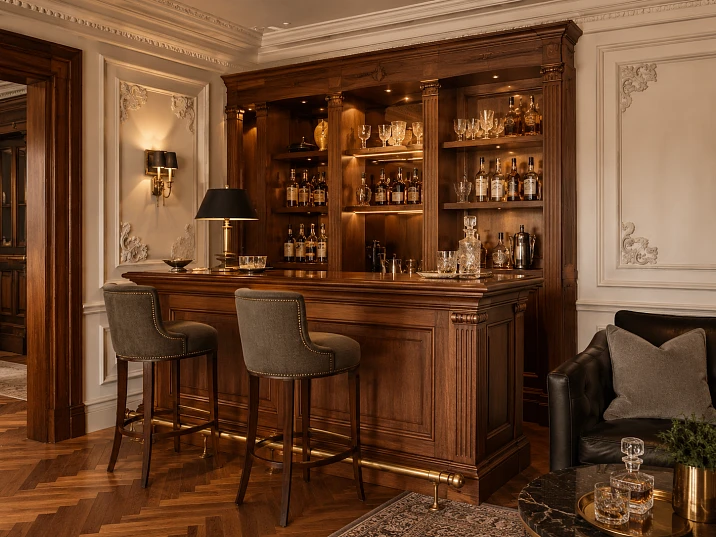
A home bar is not just a place where bottles are stored. It is a lifestyle statement, a focal point in the living room or study, an area that guests notice first. That is why a bar cabinet or wine niche in a classic interior requires a completely special approach: beautiful bottles on a shelf are not enough here. What is needed here is a system — wooden shelves and Decorative bracketsthat hold the weight, Furniture Handles made of solid wood, which set the tactile tone, Moldings made of polyurethane on the wall around, which turn the storage area into an architectural accent.
When a classic-style home bar is assembled correctly — with wooden moldings, quality fittings, and framing made of moldings from polyurethane — it ceases to be furniture and becomes part of the room's interior language. This article is about exactly how that is done.
Home bar and bar counter: what is the fundamental difference
Before discussing materials, it is important to define the concepts. They are often confused — and this leads to incorrect decor choices.




Bar counter: work surface and seating
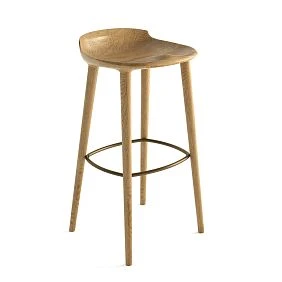
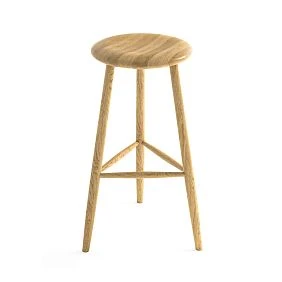
A bar counter is a functional object: a countertop behind which a person stands or sits, high stools, a bartender's work area. In a home, it is often part of a kitchen island or a separate high table against a wall. Its purpose is to provide convenience for work and seating.
Our factory also produces:
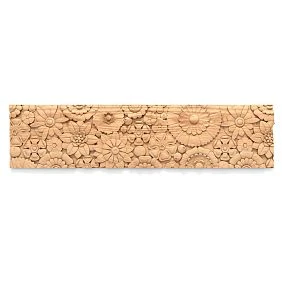
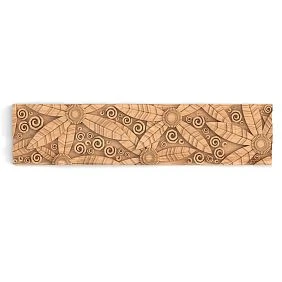
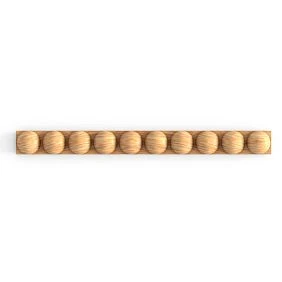
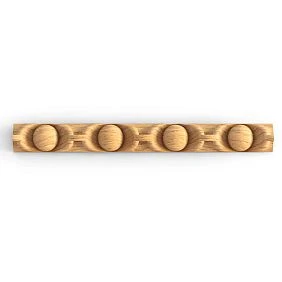
Home bar: storage area and decorative composition
A home bar is a completely different story. Its purpose is to store: bottles, glasses, decanters, accessories. And at the same time — to look good. Bar furniture in the living room or study is constantly on display, and it must be beautiful in its own right — regardless of whether there are guests nearby or not.
That is why a home bar requires a special decorative approach: Wooden decoration on the cabinet fronts, Pogonazh iz massiva on shelves and side panels, cornice polyurethane decor above the cabinet, molding framing on the wall. The bar should look like part of a classic interior — and that's exactly what we'll be breaking down.
Get Consultation
Complete shopping list: what you need for a home bar
Making the right list before starting means avoiding endless additional orders. The bar area requires a comprehensive approach: it needs load-bearing wooden elements, decorative polyurethane profiles, and all the accompanying fittings.
Wooden elements
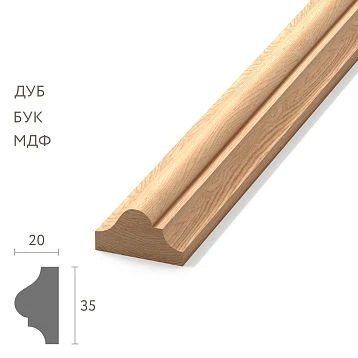
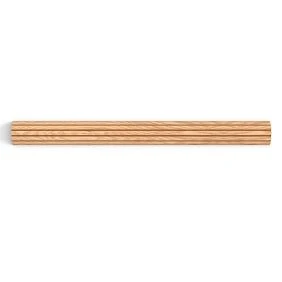
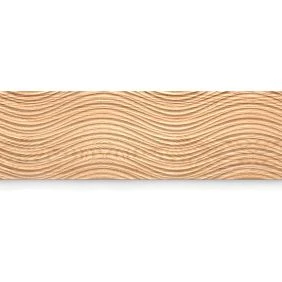
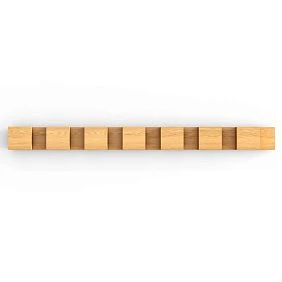
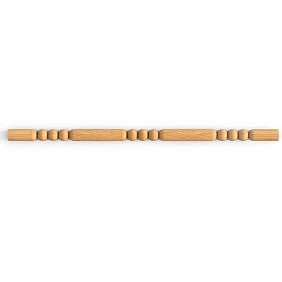
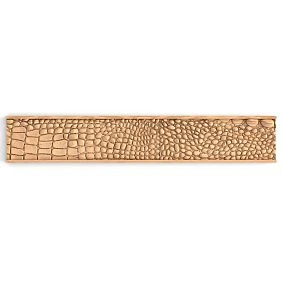
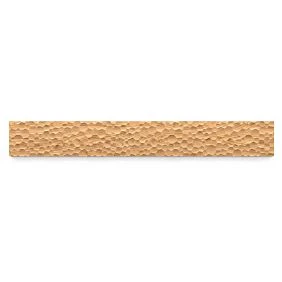
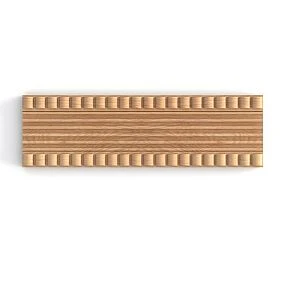
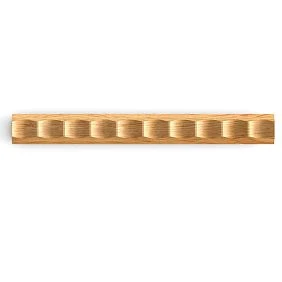
Pogonazh iz massiva — for end profiles of shelves, side strips, horizontal overlays on the cabinet facade. Trim with a profiled section adds depth and relief to any wooden surface: the end of a shelf with a semicircular or stepped profile looks like a furniture detail, not a cut board. Material — beech or oak, thickness from 10 mm.
Wooden Brackets — for open bar shelves. If the bar area has open shelves for bottles or glasses without cabinet furniture, the brackets bear the entire weight of the structure. Bottles are heavy: 750 ml of wine — about 1.5 kg, a bottle of cognac — 1.2–1.5 kg. A shelf with six to eight bottles weighs 10–15 kg. A solid oak bracket with a projection of 200–250 mm provides the necessary safety margin.
Furniture Handles made of wood — for bar cabinet doors, drawers, drop-down panels. A wooden handle in the bar area is a tactile detail that is noticed every time you open the cabinet. An arched handle-bracket 96 or 128 mm long in a classic interior creates a furniture character for the facade.
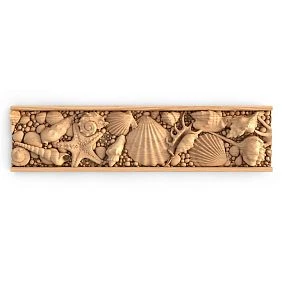
decor for furniture — applied relief elements made of solid wood for bar cabinet facades. An applied rosette in the center of the door, a relief insert along the horizontal axis of the facade, corner applied corners — each of these elements works as a decorative accent, turning a simple facade into a classic furniture piece.
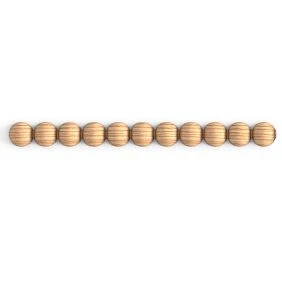
wooden floor — for finishing joints, gaps, abutments in the wooden part of the bar area. A strip 20–40 mm wide covers technological gaps between the cabinet and the wall, between individual structural elements.
Polyurethane elements
Moldings made of polyurethane — for the molding frame on the wall behind the bar cabinet and along its sides. The molding forms a decorative "portal" around the entire bar area — connects the cabinet to the wall and makes it part of the room's architectural system.
Cornice profile made of moldings from polyurethane — for the top finish of the bar cabinet. A cornice 60–100 mm high is mounted on the wall and along the top edge of the cabinet, creating a horizontal accent that visually "crowns" the bar area. A baseboard profile — for the bottom finish, connecting with the room's floor baseboard.
Polyurethane appliqués — corner elements at the intersection points of molding runs on the wall. Decor for Molding — keystones above arched or rectangular molding frames, bracket overlays at the support points of horizontal cornices.
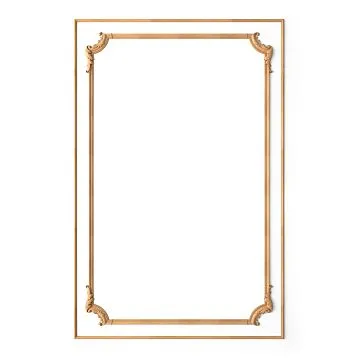
Polyurethane wall decor — frame molding panels on the wall on the sides of the bar cabinet, creating a unified wall decorative system around the bar area.
Consumables
Dowels 8×80 mm for attaching brackets and body elements to the wall. Self-tapping screws for assembling wooden elements. Glue for polyurethane (selection and application technology — in the article what to glue polyurethane molding with). Acrylic sealant — for all joints of moldings with the wall and between each other. Acrylic primer. Finish enamel or oil and varnish for wooden surfaces. Reserve for all profiles — 10–15%.
Where the home bar is located: typology of zones
The location of the bar area in the room determines its format, size, and composition of decor.
Living room: the bar as a decorative center of the wall
The living room is the most natural place for a home bar. Here it works on two levels simultaneously: functionally — stores drinks and glasses; decoratively — creates a representative wall zone. In the living room, the bar cabinet can occupy a niche, flank a fireplace, stand in the space between windows, or form an independent decorative wall.
In the living room with molding wall trim, the bar area should be included in this system: Moldings made of polyurethane behind the cabinet and along its sides, the horizontal bands already existing on the walls continue. The cornice above the cabinet matches the height and relief of the cornice on the adjacent walls. The baseboard at the bottom of the cabinet is unified with the baseboard of the entire room.
Study: bar as part of the library system
In the study, the home bar is often built into the shelving and cabinet system. One of the shelf sections has a closed lower part, shelf space for bottles and glasses, doors on handle. In the study, the decor of the bar area is strict: dark wood species, moderate moldings, Wooden decoration on the facades — without excessive carving. The atmosphere is club-like, restrained, aristocratic.
Dining room or dining zone: bar as a serving buffet
In the dining room, the home bar is a buffet: a closed lower part with dishes and bottles, open upper shelves for decanters, glasses, decorations. Wooden Brackets for the upper shelves — of moderate shape, without excessive ornament, so as not to compete with the table setting. The molding framing at the back creates an "altar" niche for the buffet.
Hallway: compact mini-bar
In a large hallway, a small mini-bar is sometimes created: a few shelves, a compact cabinet with wooden handles, a couple of bottles, a tray with glasses. The decor here is minimal: Pogonazh iz massiva for shelf profiles, a thin molding frame on the wall, a baseboard profile. The hallway is not a place for complex stucco.
Niche: ideal geometry for a bar area
A niche in the wall is a natural frame for a home bar. It sets the depth, defines the side walls and ceiling of the space, protects the contents from drafts and accidental touches. Wooden shelves from wall to wall on brackets, molding trim around the niche opening, a cornice profile at the top of the niche — and you get a barring niche that looks like a planned architectural element.
Wood in the bar area: strength and character
Shelves for bottles: no thinner than 25 mm
A bottle of wine weighs about 1.5 kg. Eight bottles on a shelf 80 cm long is 12 kg of uniform load plus the weight of the shelf itself. For a solid wood shelf, this is the design load at which the board thickness should be at least 25 mm, and for a shelf longer than 80 cm — 30 mm. Oak or ash will withstand without deflection. Pine under such load will begin to slowly deform.
End profile of a shelf made of solid wood trim — it is both decor and reinforcement. A beech profile, glued and nailed along the front edge of the shelf, adds rigidity to the structure.
Brackets for heavy shelves: safety margin
Decorative Bracket made of oak with a projection of 200–250 mm and a vertical plate thickness of 20–22 mm — this is a load-bearing element with a good safety margin for a bar shelf. Wall mounting — dowels 8×80 mm into a concrete or brick wall, two per bracket. For a shelf with eight bottles, at least three brackets per 80–90 cm of length are recommended.
The shape of the bracket for the bar area is a separate story. In a rich classic bar, a figured bracket with carved decor on the vertical plane is appropriate: a vine, geometric ornament, plant curl. In a strict club bar of a study — a cantilever bracket with a geometric brace and a straight profile. decorative elements for furniture on the front plane of the bracket — in the form of an applied wooden rosette or ornamental strip — makes it even richer.
Facades of a bar cabinet: handles and overlays
The facade of a bar cabinet is the face of the entire area. Three elements work here:
The first — Furniture Handles made of solid wood. A wooden arched handle-bracket with a center distance of 96 or 128 mm is a classic furniture standard. Handles made of beech or oak are painted in a single tone with the facade or left in their natural color as a warm contrast to the painted surface.
The second — Decorative Inserts on the facade. A carved rosette 80×80 mm in the center of the door, a relief overlay strip along the horizontal axis — these elements work as a focal point: the eye stops on them, and the facade no longer seems empty.
The third — a horizontal frame structure made of solid wood trim. Strips creating horizontal or vertical frames on the plane of the facade — like furniture paneling — make the cabinet visually richer and more expensive.
Wood style: dark or light
A bar area in classic style allows both solutions. Dark oak with an oil finish creates a club, cigar atmosphere — brutal and aristocratic. This is a bar for whiskey and cognac, for heavy armchairs and leather bindings. Light beech under white or cream enamel is a more formal, light option, organic in a bright living room with gold accents. Both options are correct — it is only important that the choice is consistent throughout the entire area.
Polyurethane in the bar area: wall architecture
Molding frame behind the cabinet
When the bar cabinet stands against the wall, the wall space behind it and on its sides is a decorative area that is visible above and next to the cabinet. A molding frame made of of polyurethane moldings, created on the wall behind the cabinet, turns an empty wall into an architectural "portal" in which the bar cabinet lives. The height of the frame is from the baseboard to the cornice profile. The width is 60–120 mm wider than the cabinet on each side.
Proper installation of corner joints of the molding frame is critical for the result. This technique is detailed in the article about installing polyurethane moldings.
Cornice above the bar cabinet
Cornice profile made of moldings from polyurethane — this is the upper architectural completion of the entire bar area. The cornice is mounted along the top edge of the cabinet and on the wall at the same height, creating a horizontal accent that visually "closes" the area from above. Without a cornice, the bar cabinet looks unfinished: it has no "roof" in a decorative sense. With a cornice, it gains architectural completeness.
Cornice profile height: for a cabinet 120–150 cm high — cornice 60–80 mm. For a cabinet 180–200 cm — cornice 80–120 mm. Standard: cornice height is 5–7% of the total bar area height.
Decorative frame panels on the sides of the cabinet
Polyurethane wall decor on the sides of the bar cabinet — vertical molding frames on the wall — includes the bar area in the overall wall finishing system. Frames to the left and right of the cabinet create symmetry and architectural rhythm. This is especially important in the living room, where the wall above the sofa or opposite the entrance is the area of maximum attention.
Keystones and corner overlays
Decor for Molding — keystones in the center of horizontal molding rods above the cabinet, bracket overlays at the support points of the cornice profile, keystone elements above arched openings (if the bar niche has an arched shape) — these are details that are noticeable only upon close inspection. But it is they that create a sense of completeness and richness. Without them, a well-made bar area looks 80% complete. With them — 100% complete.
Polyurethane appliqués in the corners of molding frames — corner rosettes with ornament — eliminate the need for perfect corner miter cuts and add decorative precision.
Ready-made kits by bar area type
Bar cabinet in the living room: a rich classic solution
Zone type: freestanding cabinet with open upper shelves, closed lower section and fronts.
Wooden elements:
-
Pogonazh iz massiva — end profiles of shelves
-
Wooden Brackets — for open upper shelves
-
Furniture Handles — arc brackets 128 mm, oak
-
decor for furniture — applied rosettes 80×80 mm on doors
Polyurethane elements:
-
Molding frame on the wall — Moldings made of polyurethane, profile height 35 mm
-
Cornice — 80 mm above the top point of the cabinet
-
Polyurethane appliqués — corner pieces in the frame
-
Decor for Molding — keystones above the cabinet
-
Wall Decor — frame panels on the sides of the cabinet
Finish: Cabinet fronts — white acrylic enamel. Open shelves and brackets — natural oak with oil finish. Moldings — white acrylic enamel to match the fronts.
Wine niche: monolithic architectural zone
Zone type: wall niche 30–40 cm deep, 180–200 cm high, 80–120 cm wide.
-
Wooden shelves 250×30 mm, beech — wall to wall
-
Two or three bracket on each shelf, attachment to the side walls of the niche
-
Pogonazh iz massiva — end profiles of shelves and a horizontal framing profile along the outer perimeter of the niche opening
-
Moldings made of polyurethane — frame along the outer perimeter of the niche with a 50–70 mm offset
-
Polyurethane cornice profile — along the upper outer edge of the niche
-
Polyurethane appliqués — corner elements of the frame
Finish: Shelves — natural beech with oil-wax finish. Moldings — acrylic enamel in wall color. Niche back wall — dark paint for visual depth (anthracite, dark blue, burgundy).
Bar in the study: dark club style
Zone type: built-in section in a library bookshelf.
-
Pogonazh iz massiva of dark oak — all visible wooden horizontals
-
Decorative brackets cantilevered with geometric bracing — strict, without ornament
-
Furniture Handles — arched brackets 96 mm, dark shade oak
-
Wooden decoration — minimalist overlays without excessive carving
-
Horizontal polyurethane molding pulls — two lines: at the section's "belt" level and along the top edge
-
Baseboard profile made of polyurethane in wood color
Finish: Wood — dark oil (wenge, walnut, rosewood). Moldings — painted in the same dark tone. A single color creates a monolithic plane with relief — a characteristic feature of the English club style.
Open mini-bar in the living room: elegant simplicity
Zone type: two or three open shelves on brackets against the wall, without case furniture.
-
Three wooden brackets S-shaped profile made of beech
-
Shelf boards 200×25 mm
-
Pogonazh iz massiva — end profiles
-
Molding frame on the wall covering all three shelves
-
Decor for Molding — keystone above the top shelf
-
Horizontal rods from the sides of the frame along the wall — Polyurethane trim
Finish: Unified white enamel on shelves, brackets, and moldings — a monolithic architectural zone. Or shelves and brackets in natural oiled beech, moldings matching the wall color.
Sideboard-bar in the dining room: formal and functional
Zone type: sideboard with a closed lower section and open upper shelves.
-
Wooden trim — trim of upper shelves and horizontal profiles of lower section facades
-
Furniture Handles — brackets 128 mm, beech
-
decor for furniture — applied ornamental elements on central doors
-
Brackets — for upper open shelves of decanters and glasses
-
Polyurethane cornice profile — above the sideboard
-
Molding frame on the wall behind — arched or rectangular frame
-
Polyurethane appliqués in the corners of the frame
Finish: All wooden parts — acrylic enamel, moldings matching. For a ceremonial solution — gilding of overlays and decor.
Mistakes in designing a home bar
Weak brackets under heavy shelves
This is a mistake with consequences. A decorative pine bracket with an elegant silhouette, rated for 5–7 kg, paired with a shelf holding eight wine bottles. Within a month, the bracket will start cracking at the base. A load-bearing bracket for a bar shelf should only be made of dense wood (oak, beech, ash), with a projection of 200–250 mm and a plate thickness of at least 18–20 mm.
Not accounting for bottle weight when planning
Seven bottles weigh 10–11 kg. Plus glasses. Plus decanters. The total weight of a bar shelf with all its contents easily exceeds 20 kg. This is a calculated parameter for selecting brackets, dowels, and shelf board thickness.
Polyurethane in the impact work zone
polyurethane decor Not intended for areas of mechanical contact. A polyurethane trim on the edge of a bar shelf where heavy bottles are regularly placed and removed is a trim that will chip off at the first awkward movement. The shelf edge should be wood with a hard finish coating.
Not connecting the cabinet with the baseboard and moldings
A bar cabinet standing against a wall without a cornice on top, without a baseboard profile at the bottom, and without a molding frame around it is just a cabinet against the wall. It is not integrated into the interior—it is simply placed. Cornice and baseboard profiles made of polyurethane in the wall color create horizontal accents that visually 'blend' the cabinet into the wall plane.
Too elaborate stucco for a small niche
Polyurethane moldings with high relief and intricate ornamentation around a small niche 60–70 cm wide creates decorative overload: the stucco screams louder than the content. For a narrow niche, a molding 20–25 mm high with moderate relief is optimal. For a niche 100 cm wide or more, a molding 30–40 mm is already appropriate.
Two active dominants simultaneously
Rich carved Brackets with ornamentation, both the keystone and corner overlays with relief, and frame panels — all on the area of one wall. The eye has nothing to rest on. Principle: one main accent — one dominant. The remaining elements are supporting.
Forget finish for wooden shelves
Open bar shelves are a surface where wet bottles stand, condensation drips, and wine sometimes spills. Without a finish coating, unprotected wood darkens, swells, and warps within one season. Oil or wax is for regularly refinished shelves. Hard two-component varnish is for maximum protection.
Material calculation: what and how much to buy
For an open bar shelf 90 cm long
| Element | Quantity | Comment |
|---|---|---|
| Wooden brackets | 3 pcs. | One every 30 cm |
| Shelf board 250×30 mm | 1 pc., 90 cm | With margin — 100 cm |
| Linear molding for the end | 1 м | End profile |
| Molding for wall frame | 3 linear meters | Around the perimeter with margin |
| Dowels 8×80 mm | 12 pcs. | 4 per bracket |
| Self-tapping screws | 20 pcs. | Various |
| Polyurethane adhesive | 1 tube | 300 ml |
| Acrylic sealant | 1 tube | for joints |
| Primer | 0.5 L | For wood and polyurethane |
| Finish enamel | 0.5 L | Two coats |
For a bar cabinet 120 cm wide with framing
| Element | Quantity | Comment |
|---|---|---|
| Frame molding | 5–6 linear meters | Height 2.2 m, width 1.4 m with offsets |
| Cornice | 1.5 m | By cabinet width and side offsets |
| Corner overlays | 4 pcs. | By number of frame corners |
| Decor for moldings | 1–2 pcs | Keystones |
| Wooden molding | 4 м | Shelf and facade profiles |
| Furniture handles | 4–6 pcs. | By number of doors and drawers |
| Decorative overlays | 2–4 pcs. | On the facades of the door |
About the company STAVROS
Behind every wooden bracket, molded profile, furniture handle, and polyurethane molding in this article lies a production with history and reputation. STAVROS is a St. Petersburg company founded in 2002 as a workshop for artistic wood carving. The first projects include the Konstantinovsky Palace, the Hermitage, the Sheremetyev Mansion, the Alexander Palace, and the Trinity-Izmailovsky Cathedral. These are state and historically significant sites where every centimeter of decor undergoes strict professional selection.
Today STAVROS is a full-fledged manufacturer of furniture and architectural decor. Wooden items: brackets, solid wood moldings, layouts, furniture handles, decorative overlays made of beech and oak. Polyurethane items: moldings, cornices, baseboards, overlays, decor for moldings, wall decor — a full range for classic stucco under painting. Own production with CNC milling in St. Petersburg. Showrooms in St. Petersburg and Moscow. Delivery across all of Russia. All links in this article lead to real pages of the STAVROS catalog with current items.
FAQ: Answers to popular questions
What to buy for a home bar in a classic style?
Wooden Brackets, shelf boards, Pogonazh iz massiva for end profiles, Furniture Handles for facades, decor for furniture for overlay elements. From polyurethane: Moldings for the frame, cornice and baseboard. Plus fasteners, glue, sealant, primer, finishing enamel or oil.
Can you combine a bar cabinet and polyurethane stucco?
Yes, it is this combination that creates a complete classic bar area. Wood bears the load and sets the tactile character — shelves, brackets, handles, moldings. polyurethane decor creates an architectural context — cornice, molding frame, corner overlays, keystones. A single color scheme unifies both materials.
Where in the bar area should polyurethane not be used?
On the ends of shelves in constant contact with bottles, on facades in areas of impact when opening doors, on load-bearing shelves and brackets. Polyurethane is a decorative material; it does not bear load and cannot withstand regular mechanical impact.
How to make a wine area look more expensive without serious investment?
Three or four actions that radically change perception: add a cornice profile made of moldings from polyurethane above a cabinet or niche; add a molding frame on the wall around the area; replace standard handles with wooden ones Furniture Handles; add one or two decorative overlays on the facades. Overall, this is a small budget, but the visual effect is a level higher.
Which type of wood should be chosen for a bar shelf?
For load-bearing shelves with bottles — oak or beech. For brackets — oak (maximum strength) or beech. For decorative elements — beech, oak, ash. For a dark club bar — choose oak with dark oil. For light classic style — beech with white or cream enamel.
How many brackets are needed for a bar shelf?
For a shelf up to 60 cm long — two brackets. 60–90 cm — three brackets. 90–120 cm — three to four brackets with a spacing of 30–35 cm. For a shelf with bottles, the load is high: do not skimp on the number of support points. The bracket projection equals the shelf depth or exceeds it by 10–15 mm.
Which finish is best for bar shelves?
For regularly refreshed shelves — oil or wax. Refresh every 1–2 years, easily done yourself. For maximum protection against moisture and stains — two-component polyurethane varnish: it forms a hard film resistant to water, alcohol, and grease. For a uniform color across the entire bar area — acrylic enamel: it adheres equally well to wood and polyurethane, creating a monolithic surface.