
























Article Contents:
- Lagom HL-003 and Palmer HL-054: confirmed sizes and specifications
- All sizes of the two series: which option for which facade
- Why overall length A and mounting parameter D are not the same
- When to buy Lagom HL-003
- Kitchen with standard facades
- Chest of drawers, cabinet, and wide drawer
- Standard hinged wardrobe
- Tall kitchen cabinet
- Wardrobe and built-in closet
- One series for small and large fronts
- Choosing only by photo.
- Confusing A and D.
- Buying a handle before checking old holes.
- Setting 1050 mm on a small facade.
- Using 200–400 mm on a floor-to-ceiling facade without fitting.
- Mixing sizes without a system.
- Measuring each door with a separate tape measure.
- Not checking the internal fittings.
- Not accounting for the facade thickness.
- Painting handles from different batches.
- Filling mounting holes with paint.
- Mixing beech and oak without a project.
- Ordering the entire set without a test handle.
- Use a furniture bracket as a door handle.
- Consider the Palmer 1050 mm as a facade amplifier.
- HL-003 suits
- HL-003 may not suit
- HL-054 suits
- HL-054 may not suit
- Which handle to choose for a standard kitchen?
- Which model is better for a tall cabinet?
- Can a Palmer 1050 mm be installed on a kitchen tall cabinet?
- Will HL-003 400 mm fit for a walk-in closet?
- What does A mean in handle sizes?
- What does D mean?
- Can I replace an old handle without drilling new holes?
- Lagom 300 mm and Palmer 250 mm have the same D 160 mm. Does that mean they are interchangeable?
- Which wood species to choose for white enamel?
- Which wood species should I choose for a natural texture?
- Does Palmer come in ready-made colors?
- Do I need to buy a test handle?
- Can I combine Lagom and Palmer in the same room?
- How many sizes should I use in one kitchen?
- Where to place the handle on a tall front?
- Can the handle be installed horizontally and vertically?
- Do I need to consider the thickness of the front?
- How to avoid misalignment of Palmer 1050 mm?
- Can these handles be used on an interior door?
- Where can I see other options?
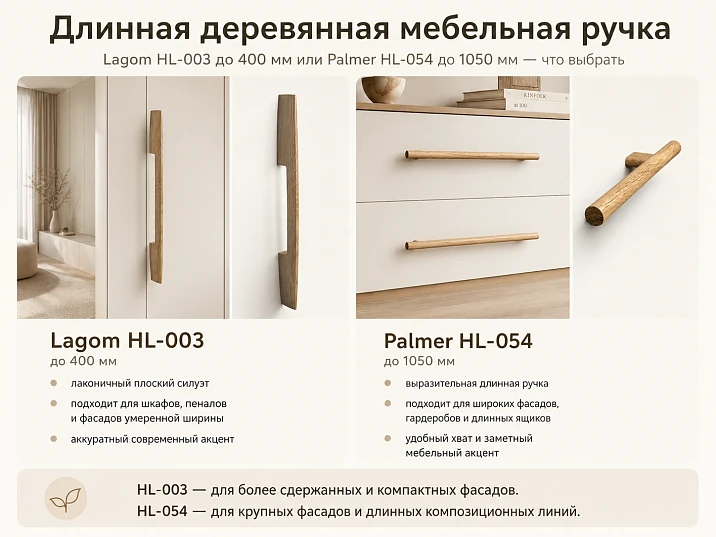
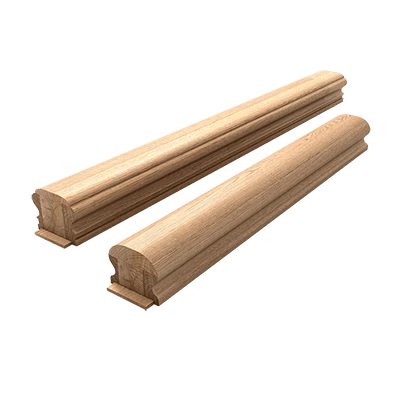
It is easier to buy a long wooden furniture handle when the choice starts not from a photo, but from the size of the front and the usage scenario. Lagom HL-003 is available in lengths of 200, 300, and 400 mm and covers most tasks for kitchens, dressers, cabinets, and regular hinged wardrobes. Palmer HL-054 covers a range from 90 to 1050 mm and allows you to design both a small drawer and a tall pencil case or wardrobe front in one series.
These models are similar in principle: both are wooden bracket handles without coating, available in beech and oak, and have a "Prestige" finish. But the purchasing logic for them is different. Buy a wooden handle Lagom HL-003 is reasonable when the maximum length of 400 mm is sufficient and a calm, proportionate line is needed. buy the long handle Palmer HL-054 suitable for projects where facades vary significantly in height or a version of 670 or 1050 mm is required.
The main mistake is comparing only the maximum length. For actual installation, you need to separately check the external size A, the mounting parameter D of the selected version, the width and projection of the handle, the thickness of the facade, the location of internal shelves, and existing holes. The number in the size name does not replace a drawing: before drilling, you must check the DWG of the specific option.
The article will help distribute handles across the kitchen, dresser, tall cabinet, and wardrobe, create a full-size template, choose beech or oak, avoid misalignment during marking, and understand when one large bracket is better than two small ones. As a result, the cart will contain not a random beautiful piece, but a coordinated set for all facades.
Short answer. For the kitchen, dresser, nightstand, and standard cabinet, Lagom HL-003 is more suitable: lengths of 200, 300, and 400 mm are easy to distribute between drawers and hinged facades. For a tall cabinet, built-in wardrobe, and walk-in closet, Palmer HL-054 is more rational because the series is supplemented with 670 and 1050 mm options.
When replacing old hardware, first check not the total length, but the mounting points. Parameter D must be checked against the DWG of the selected size. If holes have not been made yet, the decision is made based on a paper template at 1:1 scale and the overall layout of the entire furniture wall.
Choose Lagom HL-003 with a length of 200–400 mmChoose Palmer HL-054 with a length of 90–1050 mmBuy wooden furniture handles
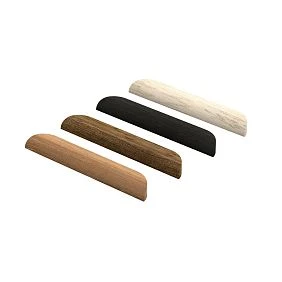
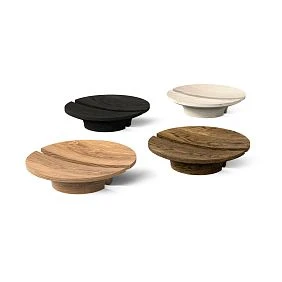
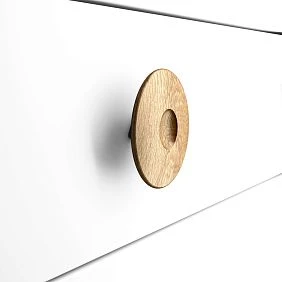
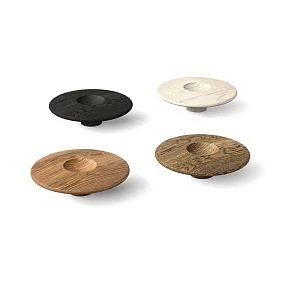
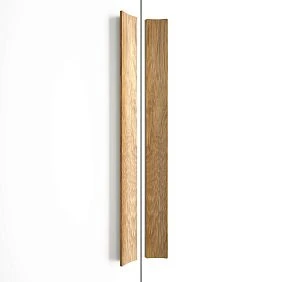
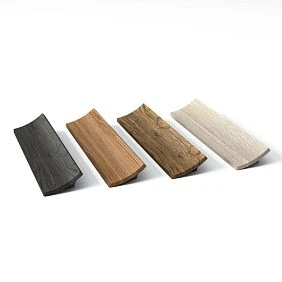
Lagom HL-003 and Palmer HL-054: confirmed dimensions and characteristics
| Parameter | Lagom HL-003 | Palmer HL-054 |
|---|---|---|
| Type | Wooden handle bracket without coating | Wooden handle bracket without coating |
| Size range A | 200, 300 and 400 mm | 90, 250, 350, 670, and 1050 mm |
| Size B | 14 мм | 16 мм |
| Parameter C | 36 мм | 37 мм |
| Parameter D | 128, 160 and 256 mm respectively | 16, 160, 256, 288 and 320 mm respectively |
| Material | Beech or oak | Beech or oak |
| Sanding | «Prestige» | «Prestige» |
| Condition | Unpainted | Unpainted |
| Mounting | Mounting kit included | Metal screws included |
| Main Scenario | Kitchen, chest of drawers, cabinet, standard wardrobe | Tall cabinet, walk-in closet, large hinged front |
| Maximum length | 400 мм | 1050 мм |
| Main risk | Handle may get lost on a floor-to-ceiling front | A long option may overload a small facade |
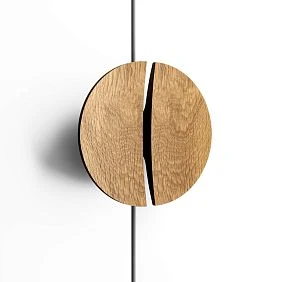
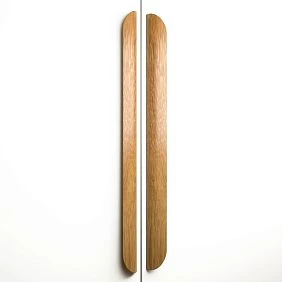
The table shows the main point: there is no universal winner among the models. HL-003 covers three clear sizes for standard cabinet furniture. HL-054 forms a wider size range and allows you to continue one line from compact facades to very tall ones. At the same time, even options close in length — for example, Lagom 400 mm and Palmer 350 mm — cannot be considered identical: proportions, width, mounting parameters, and visual character differ.
All sizes of the two series: which option for which facade
| Model and length | Confirmed size A × B × C × D | Typical scenario | What to Check |
|---|---|---|---|
| Lagom HL-003, 200 mm | 200 × 14 × 36 × 128 mm | Small hinged facades, drawers, cabinets | Check that the handle does not look too long on a narrow door |
| Lagom HL-003, 300 mm | 300 × 14 × 36 × 160 mm | Kitchen cabinets, dressers, wide drawers | Match with adjacent fronts and 200 mm handles |
| Lagom HL-003, 400 mm | 400 × 14 × 36 × 256 mm | Wide drawer, cabinet, moderately tall furniture column | Check if the scale is sufficient for a tall tall cabinet |
| Palmer HL-054, 90 mm | 90 × 16 × 37 × 16 mm | Compact drawer or small front in the Palmer series | Check the mounting parameter D especially carefully |
| Palmer HL-054, 250 mm | 250 × 16 × 37 × 160 mm | Kitchen, cabinet, drawer, small cupboard | Compare with Lagom 200/300 mm using the template |
| Palmer HL-054, 350 mm | 350 × 16 × 37 × 256 mm | Medium facade, cabinet, wide drawer | Compare with Lagom 400 mm not only by overall length |
| Palmer HL-054, 670 mm | 670 × 16 × 37 × 288 mm | Pencil case, tall wardrobe, furniture column | Check the rigidity of the facade and the position of the internal fittings |
| Palmer HL-054, 1050 mm | 1050 × 16 × 37 × 320 mm | Facade of a dressing room or built-in wardrobe from floor to ceiling | Make a 1:1 template and check the view of the entire furniture wall |
It is more convenient to perceive the size range as a system, rather than as eight independent products. First, compile a list of facades and group them by height and purpose. Then select two or three lengths that repeat according to a clear rule. For example, a short handle for drawers, a medium one for regular doors, and a long one for tall cabinets. Such a scheme looks calmer than a random alternation of almost identical sizes.
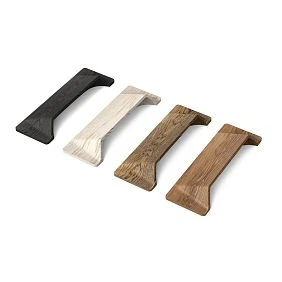
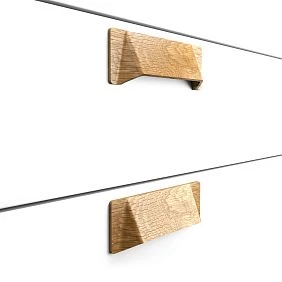
Our factory also produces:
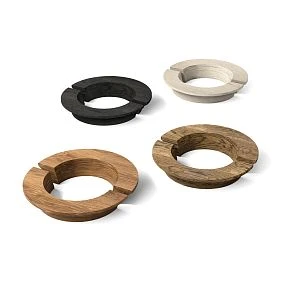
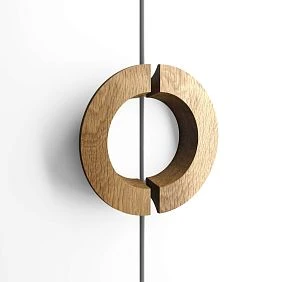
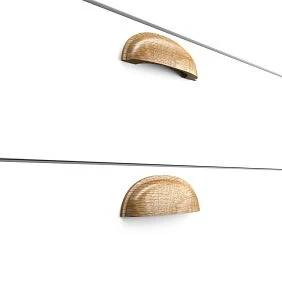
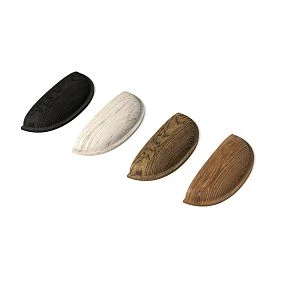
Why the total length A and the mounting parameter D are not the same thing
In the furniture handle card, several sizes describe different parts of the product. A shows the overall length, B — the width, C — the projection or corresponding structural parameter, D — the mounting size of the selected version. The buyer often sees a large number like 400 or 1050 mm and automatically considers it the distance between holes. For HL-003 and HL-054 this is incorrect: the overall dimension and the mounting scheme differ.
The error is especially dangerous when replacing an old handle. The old hardware has already left holes in the facade, and the new model must either exactly match them or cover the previous points according to a pre-planned design. Drilling a second pair of holes next to the first without checking is not allowed: the material between them may weaken, and the old holes may become visible.
Before purchasing, you need to open the card for the selected size, check the drawing, and match D with the actual distance between the centers of the existing holes. The measurement is taken not from the edges of the holes, but between their centers. If the facade has not yet been drilled, the mounting points are transferred to a template and only after checking the entire layout — to the furniture.
For the long Palmer 1050 mm, the external dimension is especially noticeable, but the mounting parameter D is 320 mm. This is not an error or a reason to assume that the fasteners should be at the very ends. The handle design and support placement are determined by the card. The buyer should not independently transfer fastening points, add holes, or change the scheme without technical approval.
Get Consultation
When to buy Lagom HL-003
Kitchen with standard facades
Lagom HL-003 works especially naturally in a kitchen where most facades have a moderate width and form a repeating rhythm. The sizes 200, 300, and 400 mm allow assigning the short version to narrow doors, the medium one to standard cabinets, and the long one to wide drawers and tall cabinets. It is important not to try to use all three sizes at any cost: sometimes it is calmer to choose two and repeat them throughout the composition.
For lower pull-out drawers, a handle of 300 or 400 mm can be visually and functionally convenient because it indicates a wide grip area. On upper cabinets, 200 or 300 mm is often sufficient. However, the final decision depends on the facade, handle placement, and opening method. A paper template helps check whether a long bracket interferes with the adjacent door in a corner module.
Dresser, nightstand, and wide drawer
On a dresser, the handle becomes part of the horizontal division. If the drawers are identical, a single size of HL-003 emphasizes order. If the top drawer is noticeably lower than the bottom ones, you can reduce the handle by one step, but keep the series, material, and finish. For a wide nightstand, the 400 mm version creates a confident line without turning the facade into an architectural panel.
The handle of a wooden drawer should match not only the width of the facade but also the grip location. A too-short model may look random on a wide surface, while an excessively long one may conflict with the lines of the panel, molding, or decorative overlay. Lagom is convenient where a noticeable but not dominant bracket is required.
Standard hinged wardrobe
On a medium-height cabinet HL-003 300 or 400 mm supports verticality but does not turn the handle into a main architectural element. For paired doors, it is important to mirror the installation height and distance from the central gap. One jig is used for the entire group of doors, otherwise even a slight discrepancy will be visible at the upper and lower ends of long brackets.
A buyer looking for this range should go to the product card and select a handle-bracket HL-003 with a length of 200–400 mm. There, you need to check the specific size, material, and installation diagram before placing a full set.
When to buy Palmer HL-054
Tall kitchen cabinet
A tall cabinet often stands out from the regular kitchen row: its front is noticeably higher than doors and drawers. A 300–400 mm handle may be too small and visually "stick" to one area. Palmer 670 mm helps connect the upper and lower parts of the front into one vertical line. It is especially appropriate when several tall columns are nearby.
A length of 1050 mm for the kitchen is chosen only after a trial fitting. On a narrow tall cabinet, it may become too active, while on a large front it may look proportional. You need to check where the comfortable grip zone is, how the door opens, and whether the handle intersects with the countertop line, adjacent fronts, or protruding appliances.
Walk-in closet and built-in wardrobe
In a walk-in closet with floor-to-ceiling fronts, the handle can work as a vertical architectural element. Palmer HL-054 with a length of 670 or 1050 mm makes the layout deliberate: the eye perceives not small hardware on a huge plane, but a sleek system of lines. This is one of the main reasons to choose Palmer over Lagom.
When dealing with a group of identical tall doors, it is important not only to choose the length but also to set a single mark for the top and bottom edges of the handles. Relying on the floor is risky if the furniture or room has slight deviations. The markings are tied to the facades themselves and checked with a common laser or mechanical line according to the installation plan.
One series for small and large facades
Palmer is convenient when a room has drawers, regular cabinets, and very tall doors. Sizes 90, 250, 350, 670, and 1050 mm allow maintaining the overall handle shape while changing only the scale. But transitions must be logical. It is not necessary to place 90 mm next to 1050 mm if there are no intermediate facades between them: sometimes the composition is better limited to two or three sizes.
For a tall facade, you can choose Palmer HL-054 with a length of 670 or 1050 mm, after first checking the DWG, door thickness, and position of internal fittings.
HL-003 400 mm or HL-054 350 mm: why similar sizes still look different
Lagom 400 mm and Palmer 350 mm often end up in the same selection field. The difference in total length is only 50 mm, so the table might suggest the models are interchangeable. On the facade, this is not the case. HL-003 has a width of 14 mm and parameter C of 36 mm, Palmer has 16 and 37 mm. The series shape also differs, so one handle feels lighter or denser depending on the surrounding lines.
The mounting parameter D for both close versions is 256 mm, but this does not eliminate the need to check the drawing. A match in one number does not guarantee the same covering of old holes, the same support shape, or the same position relative to the edge. When replacing a handle, an actual test fit or a precise drawing of both models is required.
For a kitchen with thin frames, calm facades, and repeating horizontals, Lagom 400 mm may look softer. Palmer 350 mm suits a project that should continue with long versions of 670 and 1050 mm. That is, the choice of a similar length is determined by the entire furniture series: which handle will be needed on the largest facade and how it will relate to the small ones.
How to choose handle length based on facade size without a rigid universal formula
The universal rule "the handle should take up exactly one third of the facade" is insufficient. Such a proportion can be a starting point for a paper mockup, but does not replace analysis of shape, height, width, panels, moldings, and adjacent furniture. On a tall cabinet, a 670 mm handle may occupy less than a third of the height and still look convincing. On a wide low drawer, a 400 mm handle can be visually sufficient.
First, determine the orientation. On drawers, the handle usually works horizontally; on tall doors, vertically. Then find the free decorative field: exclude areas of frames, panels, glass, handles of adjacent doors, and dangerous intersections with internal mechanisms. Only within this field is the length evaluated.
The next step is to compare the handle with repeating lines. If the facade is divided into panels, a pull can support the central vertical or the width of a panel. If the furniture is smooth, the handle itself sets the scale. On a small smooth door, a Palmer 1050 mm will be almost an independent detail, while a Lagom 300 mm will remain a functional touch.
The final decision is made not based on a single facade, but on the layout of the entire furniture set. Handles should form a clear system: identical elements on identical facades, a consistent increase in sizes, a uniform installation height, and coordinated finish.
Full-size template: the most useful check before ordering
A 1:1 template is needed even when the facade dimensions are known. On a sheet of paper or thick cardboard, mark the full dimension A, the handle width, and the mounting points according to the drawing. For a Palmer 1050 mm, it is convenient to glue several strips together. It is important not to limit yourself to a thin line: the actual width of 16 mm affects perception.
The template is temporarily fixed on the facade with safe tape that does not damage the coating. Check the handle in closed and open positions, access to the grip area, distance to the edge, adjacent doors, and countertop. On a corner kitchen, be sure to simulate the simultaneous opening of adjacent facades.
After local checking, step back two to four meters and look at the entire furniture set. From this distance, it becomes clear whether the Lagom 400 mm is lost on a tall cabinet or whether the Palmer 1050 mm overloads a narrow tall cabinet. A frontal photo helps to notice misalignments and accidental differences between sections.
If the project includes several sizes, templates are made for each and laid out simultaneously. This way, you can compare Palmer 250 and 350 mm in the kitchen, and then add 670 or 1050 mm for a tall cabinet. This method reduces the risk of ordering a beautiful series that does not form a cohesive system.
Kitchen: how to distribute handles between drawers, cabinets, and tall units
| Facade type | Possible range for fitting | Main check |
|---|---|---|
| Narrow drawer or small front | HL-003 200 mm or HL-054 90/250 mm | Keep one selected series; check mounting points |
| Standard door | HL-003 200/300 mm or HL-054 250/350 mm | Match length with adjacent fronts |
| Wide drawer | HL-003 300/400 mm or HL-054 350 mm | Check comfortable grip zone and symmetry |
| Standard tall cabinet | HL-003 400 mm or HL-054 350/670 mm | Make a template; check if 400 mm is not lost |
| High tall cabinet | HL-054 670 or 1050 mm | Check opening, facade rigidity, and internal fittings |
| Kitchen island | HL-003 300/400 mm or HL-054 250/350 mm | Consider passages and handle protrusion |
In the kitchen, it's especially important not to collect too many sizes. Three lengths on one small wall can create visual noise. Often a short handle for narrow facades, a medium one for most doors, and a separate long version for the tall cabinet are enough. If there is no very long facade, Lagom covers the task more compactly.
Palmer becomes stronger when the kitchen is combined with a dressing room, built-in wardrobe, or a group of tall cabinets. A single series helps connect different furniture blocks, but the finish and material should be coordinated. An oak handle with a pronounced texture on one block and a beech handle under dense enamel on another can look like different systems, even if the shape is the same.
Before ordering the entire set, it is useful to compile a list: facade number, its size, handle orientation, model, length, material, and finish. Such a table prevents a situation where one door remains without a suitable size or different options are accidentally ordered for identical facades.
Chest of drawers and cabinet: handle as part of the horizontal rhythm
A chest of drawers is read along the lines of the drawers, so handles should either continue this rhythm or consciously contrast with it. Lagom HL-003 200–400 mm suits most such projects. The medium and long versions provide sufficient length but do not turn low furniture into a display of large hardware.
Palmer 250 or 350 mm is also suitable on a chest of drawers, especially if the same series is used on a tall cabinet in the room. Then the small facade gets a short version, and the wardrobe gets 670 or 1050 mm. It is important that the transition looks systematic: the same wood species, the same finish, and a repeatable installation height.
For wide drawers, do not automatically install two handles. One long bracket can provide a clean composition, but convenience and facade construction are checked separately. If the project includes two grip points, they are placed symmetrically and evaluated using paper templates. The article does not replace technical calculations and furniture manufacturer recommendations.
Tall cabinet and walk-in closet: when 670 and 1050 mm are truly justified
A very long handle is not needed for the sake of length alone. It solves the scale problem: small hardware can look lost on a facade about two meters high or more. Palmer 670 or 1050 mm connects a large surface and sets a vertical direction. On multiple doors, identical handles turn into an architectural rhythm.
At the same time, the long version requires more rigorous preparation. Any misalignment is more noticeable than with a 200–300 mm bracket. The template must be rigid, the jig stable, and the marking tied to a single coordinate system. Drilling each door "in place" with a separate tape measure is not allowed: accumulated error will appear in the overall line.
It is necessary to check the inner side of the facade. The fasteners should not conflict with shelves, hinges, pull-out mechanisms, and other elements. The thickness of the facade affects the selection of screws and the depth of installation, but the exact parameters of the fasteners are determined by the kit and furniture design. Do not replace the intended screws with random ones without verification.
For a heavy or very tall door, the choice of handle does not confirm the load-bearing capacity of the facade. Palmer 1050 mm creates a large visual line but does not turn the door into a structurally calculated system. Stiffness, material, hinges, and permissible loads are evaluated by the furniture manufacturer.
One long handle or two short ones
On a wide or tall facade, sometimes two short handles are considered instead of one long one. One large bracket provides a continuous line and breaks up the plane less. Two short handles allow for distributing grip points and can match the facade's design, but they add more fastening points and require particularly precise symmetry.
For a tall cabinet, one Palmer 670 or 1050 mm often looks more architectural than two Lagom 300 or 400 mm placed one above the other. But if the facade is divided by panels or frames, two handles can support the internal structure. The decision depends on the design, not on a universal rule.
On a wide drawer, one HL-003 400 mm usually looks calmer than two short brackets. However, grip comfort and the drawer's construction should be checked by the furniture manufacturer. Before ordering, it's useful to stick one long and two short templates, photograph both options, and compare them not only up close but also from a distance.
Beech or oak: which wood to choose for a long handle
Both series are available in beech and oak. In the initial data, beech is associated with preparation for enamel, oak for tinting. Therefore, the choice begins with the future visual result. If the handle should be white, black, or exactly match the opaque color of the facade, beech for enamel forms a logical base. If you need to show the wood grain, oak for tinting helps preserve the texture.
It is better to choose the material for the entire batch to be the same. Mixing beech and oak in one series can lead to differences in texture and reaction to finishing compounds. Even opaque finishing does not eliminate the need to coordinate preparation and a test sample. For transparent and tinting systems, the differences will be especially noticeable.
A long handle visually shows color and texture more strongly than a small knob. On a Palmer 1050 mm, a shade difference, uneven gloss, or varying tint density are noticeable along the entire vertical. Therefore, it is reasonable to order handles for one furniture wall in a single batch and finish them simultaneously.
Before choosing, it is useful compare beech, oak, and preparation quality. The quality page helps to understand the general logic of materials, but the specific option and product condition are still checked in the HL-003 or HL-054 card.
Unpainted handles and finished coating: which route to choose
HL-003 and HL-054 are considered unpainted handles. This is convenient for a custom project: the product can be integrated into the overall furniture finishing system to match the facade or, conversely, create a controlled contrast. However, the buyer must determine in advance who is responsible for preparation, painting, and protection of the mounting areas.
If a ready-made Lagom is needed, the SEO scheme includes a separate card for HL-003M. It repeats the lengths 200, 300, and 400 mm and is offered in oak in confirmed white, brown, transparent, and black options. This is a different commercial branch: a ready-made coating is convenient when an individual color is not required.
Before deciding, you can view the Lagom HL-003M with a ready-made coating and compare it with the unpainted HL-003. Palmer HL-054 in this article is considered under the confirmed card without coating, so its colors or finishing options from HL-003M cannot be automatically transferred.
For individual finishing, it is important to protect the mounting holes from an excessive layer of paint or varnish. Accumulation of coating can complicate assembly. Handles are first tried on, then removed for finishing, or a coordinated furniture production technology is used. Painting the entire set in separate batches is undesirable: the shade and gloss may differ.
How to paint long handles without differences in shade and warping
Work begins with a test application on a compatible sample. It shows the color, coverage, degree of gloss, and how the composition emphasizes or hides the wood. For oak under tinting, it is especially important to evaluate the pattern after finishing. For beech under enamel, the uniformity of the opaque layer is checked.
All handles of one furniture group are marked before finishing. The mark should allow each part to be returned to its place but not damage the visible surface. This is useful if the facades have individual markings or mounting features. At the same time, a list of sizes is kept: 200, 300, 400, 670, or 1050 mm.
The coating is applied so as not to fill the mounting holes and seating areas. The exact process depends on the chosen material system. Random primers, dyes, and varnishes should not be mixed without checking compatibility. In the STAVROS section, you can buy materials for finishing wooden handles, but the consumption, technology, and suitability of the composition are specified for the specific project.
After drying, the handles are again applied to the template and the fastening is checked. Only then is the final installation performed. Long products cannot be used as a lever to forcibly align inaccurately drilled holes: this creates stress in the handle and facade.
Marking and installation: how to avoid skewing a long bracket
The longer the handle, the more noticeable a small angular deviation. For Lagom 200 mm, the error is already visible near the facade line, and for Palmer 1050 mm, the top and bottom edges can significantly diverge from the vertical. Therefore, marking is done not with two independent measurements, but with a jig or rigid template.
On the template, mark the handle dimensions, mounting centers, and the facade baseline. For several identical doors, the same template is used, rotating it according to a predetermined rule. If templates are made separately, they are checked by overlaying them on each other.
Before drilling, evaluate both sides of the facade. Inside, there may be hinges, shelves, pull-out baskets, and other components. The attachment point should not fall into a conflict zone. The facade thickness and screw length are checked against the kit. If the design is non-standard, the parameters are agreed upon with the furniture manufacturer.
First, perform a trial installation on a sample or one test door, especially if a large series of Palmer 1050 mm is ordered. After checking the opening, position, and appearance, proceed to the remaining facades. This procedure is cheaper than correcting dozens of identical errors.
Can the old HL-003 or HL-054 handle be replaced without new drilling
Replacement without drilling is possible only if the mounting points match and the old marks are sufficiently covered. The overall length does not provide an answer. For example, Lagom 300 mm has D 160 mm, Palmer 250 mm also has D 160 mm, but the shape, supports, and dimensions differ. It is necessary to compare the drawings and the actual facade.
If D matches, the diameter and condition of the holes, the contact surface, and whether the new handle covers the old mark are still checked. Do not tighten screws with force to compensate for a slight mismatch. Fasteners must fit without lateral stress.
If the holes do not match, the furniture master makes the decision: facade restoration, decorative covering, or a new drilling pattern. The article cannot confirm the suitability of a specific facade without inspection. For expensive enamel or veneer, it is especially important not to experiment on finished furniture.
What to buy together with HL-003 or HL-054
| What to add to the purchase | Why | For which scenario | What to Check | Link |
|---|---|---|---|---|
| Main handle | Selected size Lagom or Palmer | Forms a working series for facades | Check A, B, C, D and material | Go to Lagom HL-003 / Go to Palmer HL-054 |
| Wooden handle category | Compare adjacent shapes and sizes | Useful if two series do not match in scale | Do not substitute confirmed characteristics with analogies | Buy wooden furniture handles |
| Handle brackets without coating | Collect alternatives of the same type | For individual painting or tinting | Check the card of each SKU | buy wooden pull handles for furniture |
| Unpainted handles | Compare all options without ready coating | For furniture in an individual color | Agree on the species and finishing technology | Select unpainted wooden handles |
| Lagom HL-003M | Ready coating for size range 200–400 mm | When individual painting is not needed | Colors confirmed only for HL-003M | view the Lagom HL-003M with a ready-made coating |
| Finishing materials | Prepare primer, paint or tinting system | For unpainted handles | Check compatibility and make a test coat | buy materials for finishing wooden handles |
The related purchase starts not with glue or random paint, but with an agreed set of handles. The list must include all facades, sizes, orientation and quantity. After that, the material, finishing system and installation method are selected. This order protects against a situation where some handles are already painted, and the missing size is ordered later and differs in shade.
For a large kitchen or wardrobe, one test handle of the required series is useful. It allows you to evaluate the shape, scale, holes and finish before ordering the full quantity. Availability and ordering conditions are checked in the current product card.
How not to confuse HL-003 and HL-054 with other furniture handles
Both models are wooden handle brackets, not buttons, inset profiles, or metal rails. They protrude above the facade and are attached according to the provided scheme. Therefore, recommendations for aluminum profile systems or Gola handles do not apply to them.
The word "long" also does not mean a door bracket for an interior or entrance door. HL-003 and HL-054 are intended for furniture. They cannot be automatically used as a handrail, door handle, or element designed for other loads.
HL-003M is a separate product with a ready-made coating. It should not be confused with unpainted HL-003, and confirmed colors should not be transferred to the base model without finishing. Similarly, the old part of the Palmer URL contains the word lagom, but the current card name is Palmer HL-054.
When a broader overview is needed, you can study the material how to choose wooden handles for a cabinet, kitchen, and drawers. The new article answers a more specific question — Lagom up to 400 mm or Palmer up to 1050 mm.
Practical choice for different projects
| Situation | What to consider | Why |
|---|---|---|
| Small kitchen without tall cabinets | Lagom HL-003 | A range of 200–400 mm is sufficient; the series does not overload the facades |
| Kitchen with one tall column | Compare HL-003 400 and Palmer 670 mm | The solution depends on the size of the pencil case and its connection to the other pens |
| Kitchen and walk-in closet in one space | Palmer HL-054 | One size range from 90 to 1050 mm |
| Chest of drawers and bedside tables | Lagom HL-003 or Palmer 250/350 mm | Choose based on the series of the adjacent cabinet and the template |
| Medium-height cabinet pencil case | Lagom 400 or Palmer 350/670 mm | Check that the short version is not lost |
| Built-in floor-to-ceiling wardrobe | Palmer 670/1050 mm | Long handle supports vertical scale |
| Replacing old handles | Any model only after D check | Matching total length is not enough |
| Custom enamel in facade color | Beech without coating | Order the set in one batch and do a test paint-out |
| Natural wood texture | Oak for tinting | Check the shade and finish the set simultaneously |
| Need a ready color 200–400 mm | Compare HL-003M | Do not transfer its finish to Palmer |
The table does not replace fitting. It helps narrow down the choice to two or three sizes, after which the decision is verified on a specific facade. Fitting is especially important for Palmer 670 and 1050 mm: a very long handle changes the entire furniture pattern.
Mistakes when buying long wooden handles
Choosing only by photo.
On a card without scale, HL-003 and HL-054 may seem similar. A paper template shows the actual length of 400, 670, or 1050 mm.
Confusing A and D.
The overall dimension is not equal to the mounting parameter. A DWG of the selected size is needed before drilling.
Buying a handle before checking old holes.
Even a matching overall length does not guarantee replacement without facade repair.
Installing 1050 mm on a small facade.
A long bracket can take up almost the entire plane and visually overload the furniture.
Use 200–400 mm on the facade from floor to ceiling without fitting.
The handle may appear accidentally small and get lost on a large door.
Mix sizes without a system.
Different lengths should correspond to groups of facades, not change chaotically.
Drill each door with a separate tape measure.
On a series of facades, an error will accumulate; one jig or rigid template is needed.
Do not check the internal fittings.
Fasteners may hit a shelf, hinge, or mechanism.
Do not account for the thickness of the facade.
Screws and fit must match the specific door and kit.
Paint handles in different batches.
Long elements clearly show differences in shade and gloss.
Fill mounting holes with paint.
The coating layer can complicate installation and disrupt the fit.
Mix beech and oak without a project.
Wood species differ in texture and reaction to finishing.
Order the entire set without a test handle.
On a large project, the scale error will repeat on dozens of facades.
Use a furniture bracket as a door handle.
Purpose and load differ; the article discusses furniture fronts.
Consider the Palmer 1050 mm as a facade amplifier.
The handle does not replace the calculation of rigidity, hinges, and door construction.
Who is Lagom HL-003 suitable for, and who should choose a different model
HL-003 is suitable
- for buyers who need three clear lengths of 200, 300, and 400 mm;
- for kitchens, dressers, cabinets, and standard hinged wardrobes;
- for projects with custom enamel or tinting;
- for facades where the handle should be noticeable but not dominant;
- for sets without very tall floor-to-ceiling doors.
HL-003 may not fit
- a walk-in closet where a single handle of 670 or 1050 mm is required;
- a very tall cabinet where 400 mm looks too short;
- a project where one series is needed from a compact drawer to a giant facade;
- replacing an old handle if the mounting points do not match.
If the range of 200–400 mm is sufficient, you can order HL-003 in beech or oak and distribute the sizes according to the facade list.
Who Palmer HL-054 is suitable for, and who should choose a different model
HL-054 is suitable
- built-in wardrobes, dressing rooms, and tall cabinets;
- projects requiring lengths of 670 and 1050 mm;
- furniture groups with facades of very different scales;
- interiors where the handle should support vertical architecture;
- customers who need a single series of 90–1050 mm.
HL-054 may not be suitable
- small kitchen where long versions are not used and the series looks excessive;
- narrow facade where 670 or 1050 mm take up too much space;
- project requiring a ready-made coating not confirmed by the Palmer card;
- replacement without drilling when D does not match.
For a tall cabinet and walk-in closet consider Palmer HL-054 for a tall front and check the 670 and 1050 mm versions with a full-size template.
How to buy long wooden handles for STAVROS without accidental errors
| Stage | What to do |
|---|---|
| Compile a list of fronts. | Specify the number, width, height, orientation, existing holes, and internal constraints. |
| Select a series. | Lagom — if 200–400 mm is sufficient; Palmer — if 670 or 1050 mm and a uniform wide row are needed. |
| Select lengths. | No more than the necessary number of sizes; identical fronts receive identical handles. |
| Compare cards and DWG. | Check A, B, C, D, material, condition, and fastening of the specific size. |
| Make 1:1 templates. | Apply to all types of facades and evaluate from a distance. |
| Choose beech or oak. | Beech for enamel, oak for tinting — according to the confirmed card logic. |
| Order a test sample for a large project. | Check shape, scale, finish, and installation before purchasing the entire batch. |
| Order the set as one batch. | Reduce the risk of differences in shade and preparation. |
| Coordinate finishing and installation. | Protect holes, use a jig, and check internal fittings. |
You can start with the category Buy wooden furniture handles, if you need to compare other forms. If the task is already defined, it is more efficient to open two cards immediately and compare the selected sizes.
For an unpainted project, it is useful to separately Select unpainted wooden handles. Broad recommendations on scale can be read in the article how to choose a long wooden handle based on the facade size.
Before placing an order, it is necessary to double-check the current parameters of the cards. Prices, availability, and deadlines are not fixed in the article because they may change. For complex furniture layouts or replacing old holes, it is better to coordinate compatibility with a STAVROS manager and the furniture manufacturer in advance.
New furniture or replacement of existing fittings: two different selection scenarios
In new furniture, the handle can be chosen more freely because the holes are not yet defined. The designer first determines the series and lengths, then transfers the mounting points to the facade drawing. This is the best time to compare Lagom and Palmer: the external size, grip line, and fastener placement can be coordinated before door production. An error on paper is easier to fix than after painting and drilling.
When replacing ready-made fittings, the priority changes. First, measure the old holes and check the condition of the facade, then look for a suitable mounting parameter. Even if the buyer likes the Palmer 1050 mm, the old layout may require hole repair or new markings. You cannot assume that a large handle will automatically cover all traces: the shape of the supports and visible areas are checked against the drawing and actual fitting.
For furniture after renovation, it is important to account for the new coating layer. If holes were restored, the surface must be fully prepared before final installation. A long handle emphasizes straightness, so defects around the fasteners, asymmetrical plugs, and shade differences become more noticeable. In complex cases, it is better to hand the work over to a furniture specialist.
When ordering a new kitchen or wardrobe, it is wise to record the article numbers in the project documentation. Names like Lagom HL-003 and Palmer HL-054, selected lengths, wood species, and finish should be written next to the facade numbers. Then the installer will not make decisions on site and move handles between doors based on external similarity.
How a handle influences furniture style, not just opening convenience
A long wooden handle is perceived as part of the facade architecture. On a smooth door, it creates the only active line. On a framed facade, it must engage in a dialogue with the panel and molding: not accidentally cross them, not press against the edge, and not create an extra frame within a frame. Therefore, the same length works differently on minimalist and classic furniture.
Lagom up to 400 mm is easier to keep as a functional detail. It supports calm modern furniture, kitchen facades, chests of drawers, and cabinets where the main focus remains on the body proportions. Palmer 670 and 1050 mm more often becomes an independent vertical motif. Such a handle is especially suitable for large monochrome doors, where a long line gathers the tall plane.
In an interior with natural oak, the handle can continue the material of the countertop, wall panel, or adjacent furniture. But matching the wood species does not guarantee matching the shade. Toning and finish must be coordinated based on a sample. In painted furniture, a beech handle can blend with the facade and create a seamless form effect if the color and gloss level are precisely matched.
A contrasting handle requires more discipline. A black or dark long handle on a light facade will emphasize any misalignment and height difference between doors. The stronger the contrast and the longer the Palmer, the more precise the markings must be. If mounting accuracy is questionable, a calm finish in the facade color visually forgives small deviations better.
Ergonomics: where the grip zone should be located
Handle length and a comfortable grip zone are not the same thing. The Palmer 1050 mm looks large, but the user more often grabs a specific section corresponding to their height and door position. Therefore, during fitting, you need not only to look at the facade but also to open it several times in its actual position. A template helps assess the height, but the volume and projection are finally felt only on the sample.
On kitchen drawers, a horizontal handle should allow opening the facade without an awkward wrist bend. Placement too close to the countertop or an adjacent handle can create conflict. On upper doors, accessibility for users of different heights is checked. There is no universal height: furniture, height, and usage scenarios vary.
On a tall cabinet, the handle is often placed vertically closer to the opening edge. The distance from the edge must match the design and not weaken the facade structure. Fasteners cannot be moved too close to the edge solely for visual effect. The position is coordinated with the furniture manufacturer, especially on thin, framed, or glass doors.
For a family, it is useful to have all primary users try a test template or installed sample. What is comfortable for one person may be too high or low for another. In a wardrobe, handles are typically used daily, so ergonomic testing is more important than a nice photo.
Handles for office, salon, hotel, and other commercial interiors
In a commercial space, handles become part of a repeatable brand image. A large number of identical facades amplifies the strengths and weaknesses of the chosen series. Lagom suits counters, cabinets, and drawers of moderate scale. Palmer can unify tall storage cabinets, wardrobes, and display sections with a single vertical line.
Before a bulk order, a test unit is especially important: one facade, one handle, selected finish, and actual fasteners. It shows not only the appearance but also convenience during frequent use, cleaning, and maintenance. Conclusions about the durability of the entire system cannot be drawn solely from the handle size; the facade, fasteners, installation quality, and operating conditions are important.
In public spaces, traffic routes should be considered. A protruding handle should not create a dangerous snag in a narrow passage. Parameter C helps understand the projection, but final safety is assessed on the layout and sample. For furniture near a passage, it is sometimes better to reduce the length or change the position while maintaining the overall series.
If a project has hundreds of handles, article numbers and sizes are recorded by room and section. Information about the finish is saved separately for future repairs or reorders. This allows replacing a damaged part without accidentally choosing a similar model.
How to calculate the number of handles and not mix up sizes
The quantity is counted not by the number of furniture modules, but by the number of opening facades. One cabinet may have two doors, several drawers, and internal doors. Each item gets a separate line in the specification. For paired doors, two handles are indicated, even if they visually form one composition.
It is convenient to divide the list by models and lengths. For example: HL-003 200 mm — six pieces, 300 mm — eight, 400 mm — three. For Palmer, 250, 350, 670, and 1050 mm are counted separately. After counting, the total is checked against the kitchen or cabinet plan, moving from left to right and marking each facade.
Stock is not assigned automatically. An extra handle may be useful in a large project for test finishing or future repairs, but the decision depends on the budget, quantity, and order conditions. The article cannot state a mandatory percentage of stock. It is more rational to discuss it with the manager and furniture production.
It is important to keep labels, article numbers, and data of the selected coating. Externally similar Palmer 350 and Lagom 400 mm can be easily confused on site if packages are opened simultaneously. Marking by rooms and sections reduces the risk of placing the correct model on the wrong door.
Receiving handles before painting and installation
After receiving the order, it is checked before finishing begins. The quantity, article numbers, lengths, material, and mounting kit are verified. Handles are laid out according to the list, without mixing sizes. If packaging or labeling raises a question, it is better to stop work and clarify the item than to paint an unsuitable part.
Long handles are inspected on a flat surface under good side lighting. One should not independently conclude the admissibility of a specific deviation: disputed cases are recorded with photos and discussed with the seller before installation. After painting or drilling the facade, it is more difficult to prove the original condition.
The shade of untreated wood may vary, especially for natural material. The final color is evaluated only after agreed finishing. Nevertheless, it is useful to lay out handles of one furniture wall next to each other and plan painting in one batch.
Fasteners are stored together with the corresponding handles. Do not mix screws from different products or replace them with random ones. Before mass installation, a test assembly is performed to ensure the screw length matches the facade and fit.
Care for wooden handles after installation
Care depends on the finish coating, not just the wood species. An unpainted handle must receive the protective finish provided by the project before use, if required by furniture technology. Cleaning recommendations are coordinated with the manufacturer of the selected paint, varnish, oil, or tinting system.
For daily cleaning, a soft cloth, absence of abrasives, and timely removal of moisture are usually important. However, specific products cannot be prescribed without knowing the coating. An aggressive composition safe for one lacquer can alter the gloss or color of another system.
Long handles are periodically checked for play. Tightening is done carefully, without overtightening the fasteners. If the handle starts to move, the cause may not be in the part itself, but in the facade, hole, or screw. Do not continue to use a loose handle as a lever.
If the finish is damaged, local repair is first tested on an inconspicuous sample. On a Palmer 1050 mm, a stain or difference in gloss is more noticeable than on short hardware. Sometimes an even re-finishing of the entire handle gives a neater result, but the technology is determined by the coating specialist.
FAQ: Questions about Lagom HL-003 and Palmer HL-054
Which handle to choose for a regular kitchen?
Often, a Lagom HL-003 with a length of 200, 300, or 400 mm is sufficient. Palmer is also suitable in versions 250 and 350 mm, especially if the project includes a tall pantry and a single series up to 670 or 1050 mm is needed.
Which model is better for a tall cabinet?
For a floor-to-ceiling facade, the Palmer HL-054 670 or 1050 mm is more often considered. A Lagom 400 mm can also be tried, but on a large surface it may look too short.
Can I install a Palmer 1050 mm on a kitchen pantry?
This option can be considered, but only after a 1:1 template, checking opening, internal hardware, facade rigidity, and installation diagram.
Will HL-003 400 mm work for a walk-in closet?
On individual moderately tall fronts — possibly. For a group of very tall doors, Palmer 670 or 1050 mm usually better supports the scale.
What does A mean in handle dimensions?
A is the overall length dimension. It is not equal to the mounting distance.
What does D mean?
D is a confirmed parameter in the dimensional scheme of a specific version. Before drilling, it must be checked against the DWG, and any number should not be taken as a universal center-to-center distance without a drawing.
Can an old handle be replaced without new holes?
Only if the mounting points match and the new handle covers the old marks. Check the drawing and the actual front.
Lagom 300 mm and Palmer 250 mm have the same D 160 mm. Does that mean they are interchangeable?
No. Matching one parameter does not confirm identical support shape, trace coverage, or fit. A trial fit or comparison of drawings is needed.
Which breed to choose for white enamel?
According to the product cards, the beech is prepared for enamel. Before work, a test coating is still done and the coating system is agreed upon.
Which wood species to choose for a natural texture?
Oak for tinting is more logical when you need to preserve the wood grain. It is better to order and finish all handles for one group in a single batch.
Does Palmer have ready-made colors?
In the confirmed data, the Palmer HL-054 article is considered without coating. Ready white, brown, transparent, and black options are confirmed for a separate model HL-003M, not for Palmer.
Do I need to buy a test handle?
For a large kitchen, walk-in closet, or non-standard finishing, this is reasonable. One sample allows you to check the scale, holes, color, and convenience before ordering the entire batch.
Can Lagom and Palmer be combined in one room?
Yes, but the series shapes differ. Such a combination should be intentional. Often it is calmer to choose Palmer for all facades if very long versions are needed, or Lagom for a separate furniture block.
How many sizes to use in one kitchen?
Usually two or three are enough: a short one for small fronts, a medium one for main ones, and a long one for tall cabinets. Random use of all sizes creates noise.
Where to place the handle on a tall front?
The position depends on the grip zone, door construction, and overall composition. It is checked with a template, by opening, and with the overall furniture layout. There is no universal mark for all cabinets.
Can the handle be installed horizontally and vertically?
Brackets can be used in different orientations depending on the front design, but the mounting scheme and convenience are checked for the specific furniture.
Do I need to consider the front thickness?
Yes. It is related to the fasteners and internal fit. The exact screws and installation method are checked against the kit and furniture construction.
How to avoid misalignment of Palmer 1050 mm?
Use a rigid full-size jig, one baseline for a group of fronts, and a test installation before drilling the entire set.
Can these handles be used on an interior door?
The article and cards review furniture handles. Using them as a door handle or pull requires a different purpose and calculation and is not supported by this comparison.
Where can I see other options?
In the category of wooden furniture handles and in the section of handles without coating. Links are provided in the article and lead only to confirmed STAVROS pages.
Result: Lagom up to 400 mm or Palmer up to 1050 mm
Lagom HL-003 and Palmer HL-054 solve tasks of different scales. Lagom is a restrained series of 200, 300, and 400 mm for kitchens, dressers, cabinets, and standard wardrobes. Palmer is an extended system of 90, 250, 350, 670, and 1050 mm, especially strong for tall cabinets, built-in wardrobes, and closet fronts.
The choice cannot be reduced to maximum length. The buyer needs to check A and D according to the drawing, make a 1:1 template, evaluate the entire furniture wall, agree on beech or oak, finish, facade thickness, and internal fittings. When replacing an old handle, mounting holes are more important than the overall size.
If the furniture consists mainly of standard facades, it is reasonable Buy a wooden handle Lagom HL-003. If the project includes tall doors and a single series up to 1050 mm is needed, it is worth buy the long handle Palmer HL-054. STAVROS allows you to move from a general selection to a specific card, check dimensions, and assemble a coordinated set without accidentally mixing models.