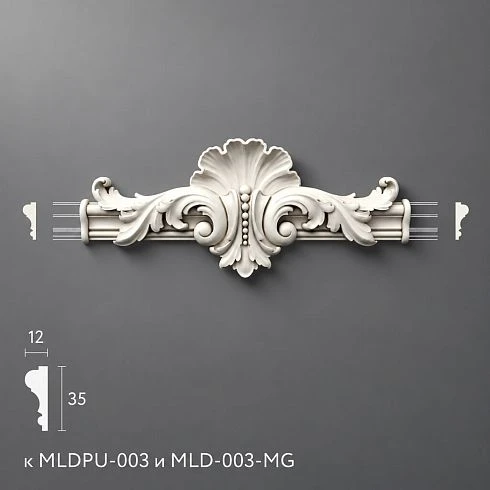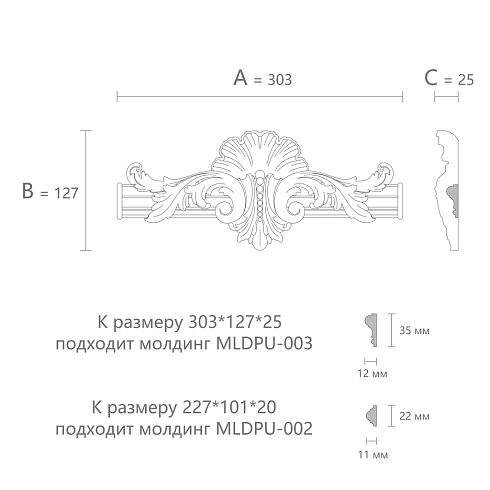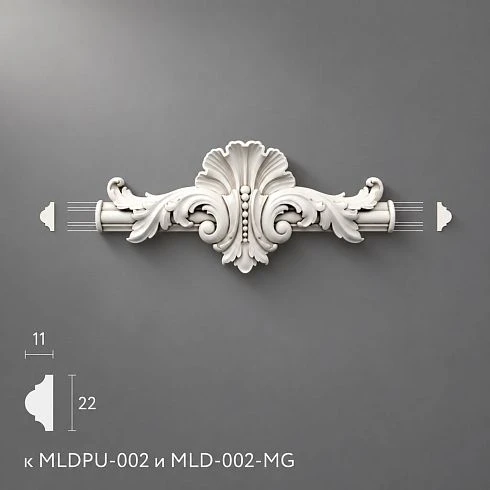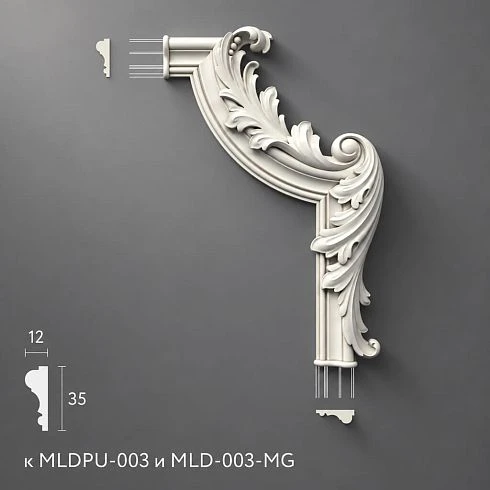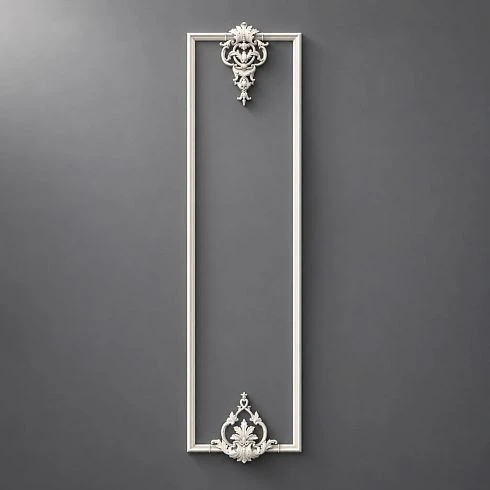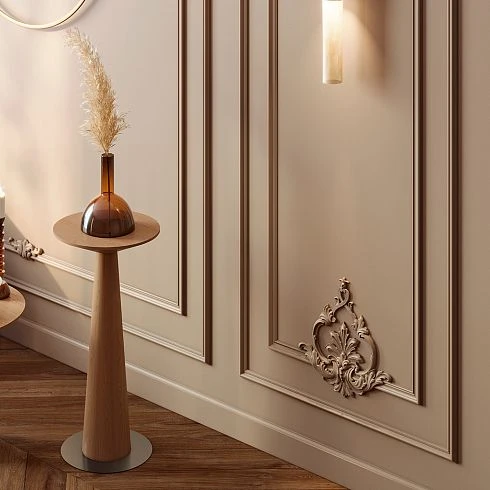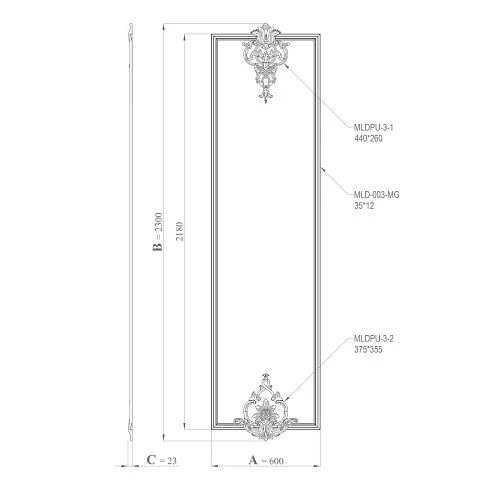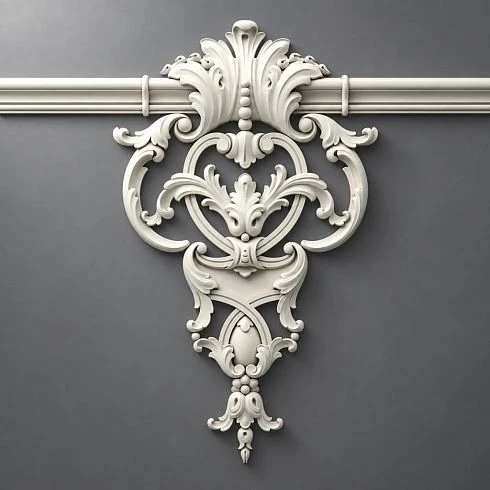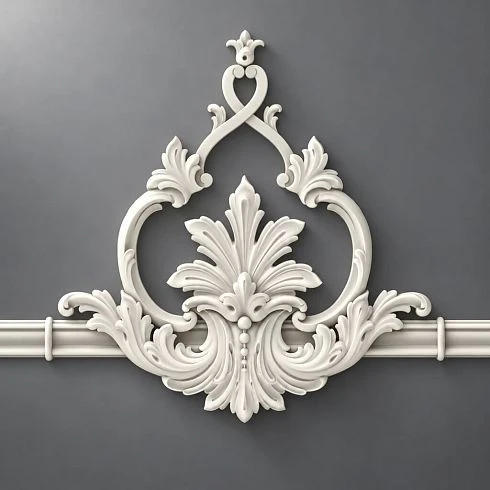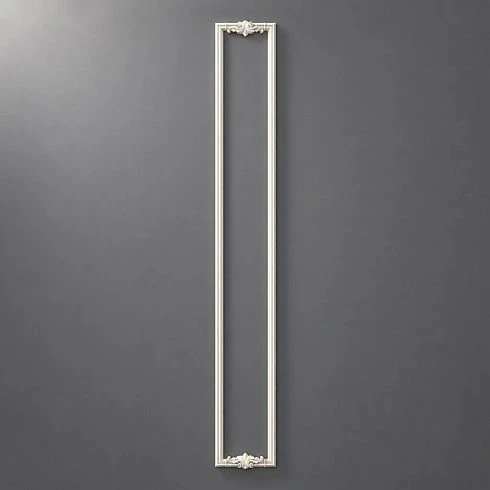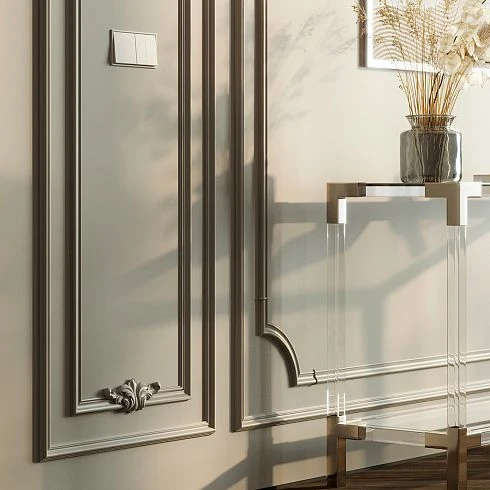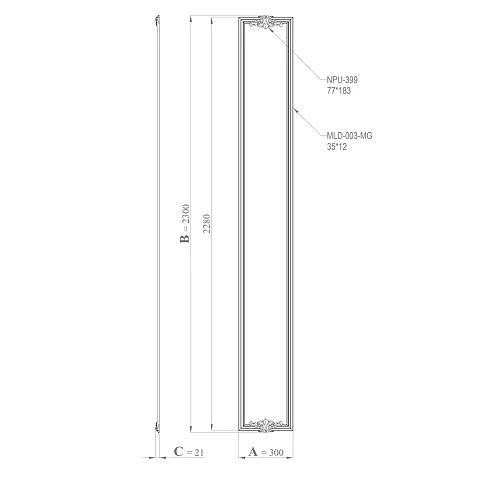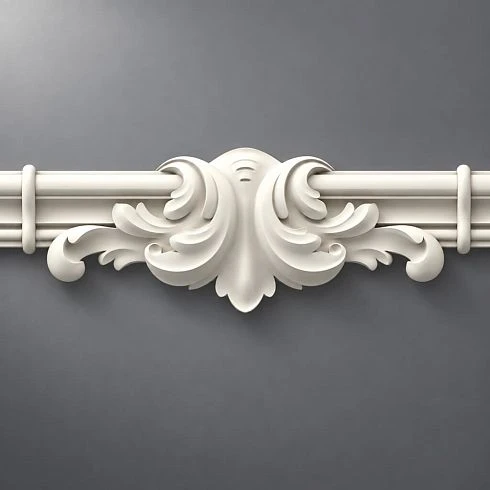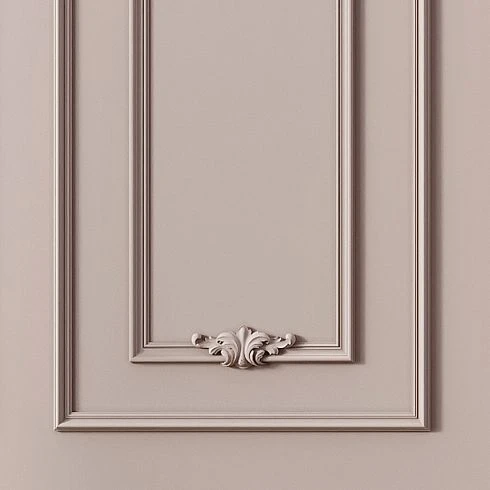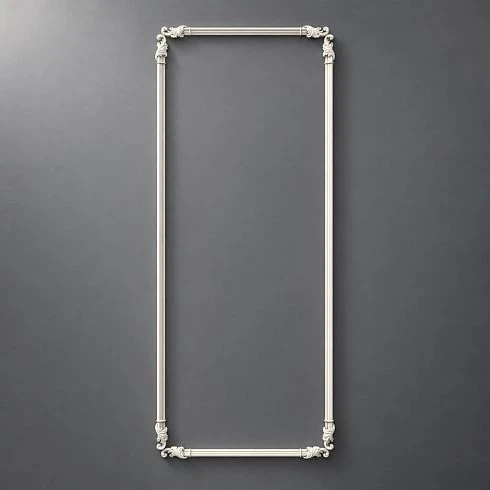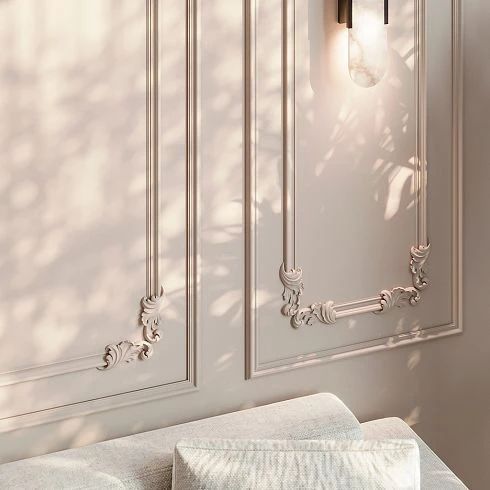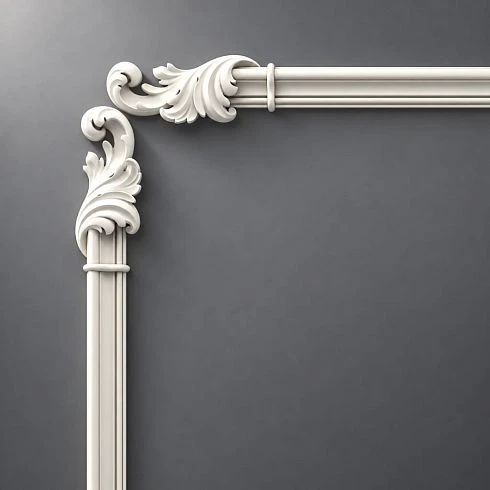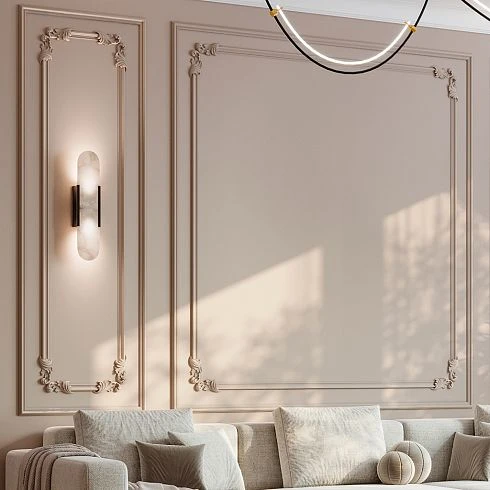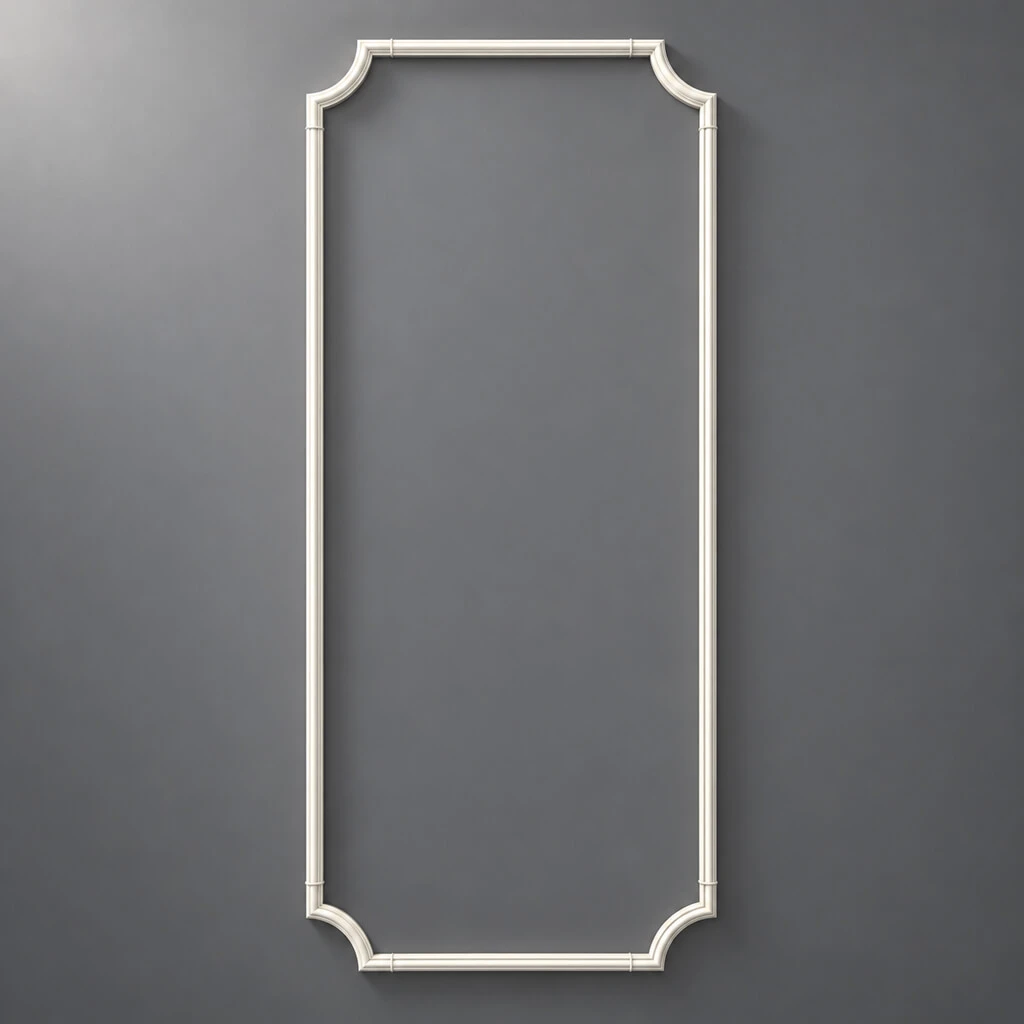
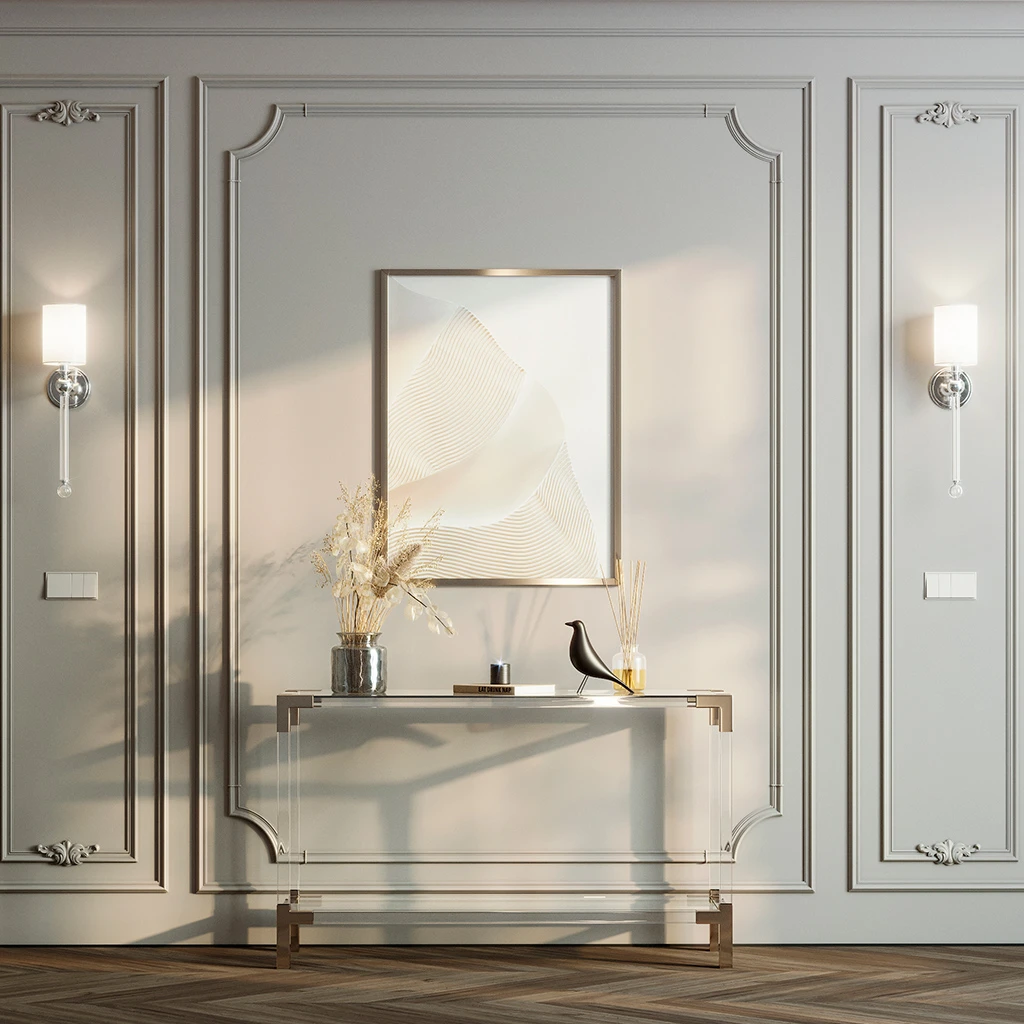



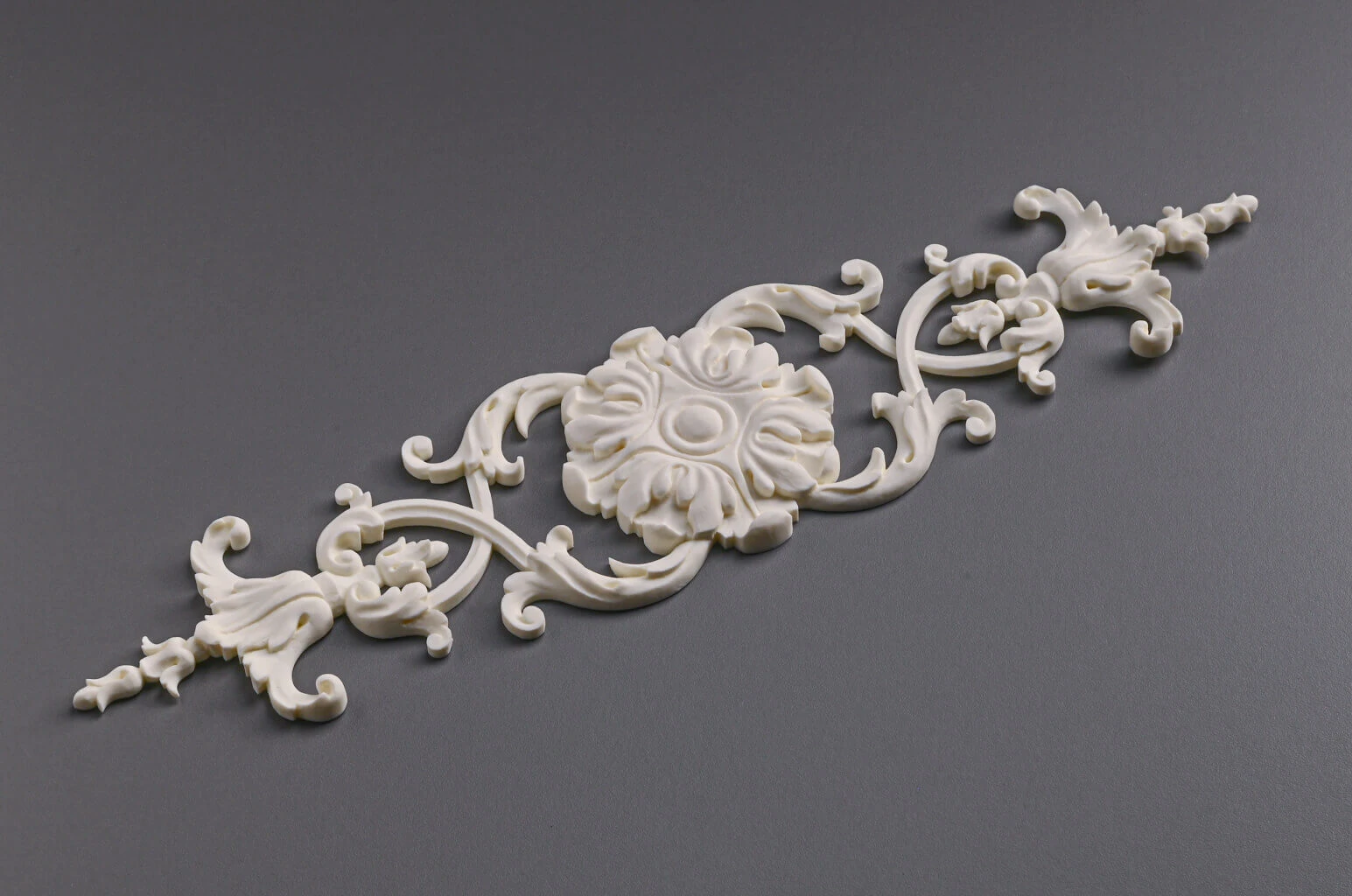
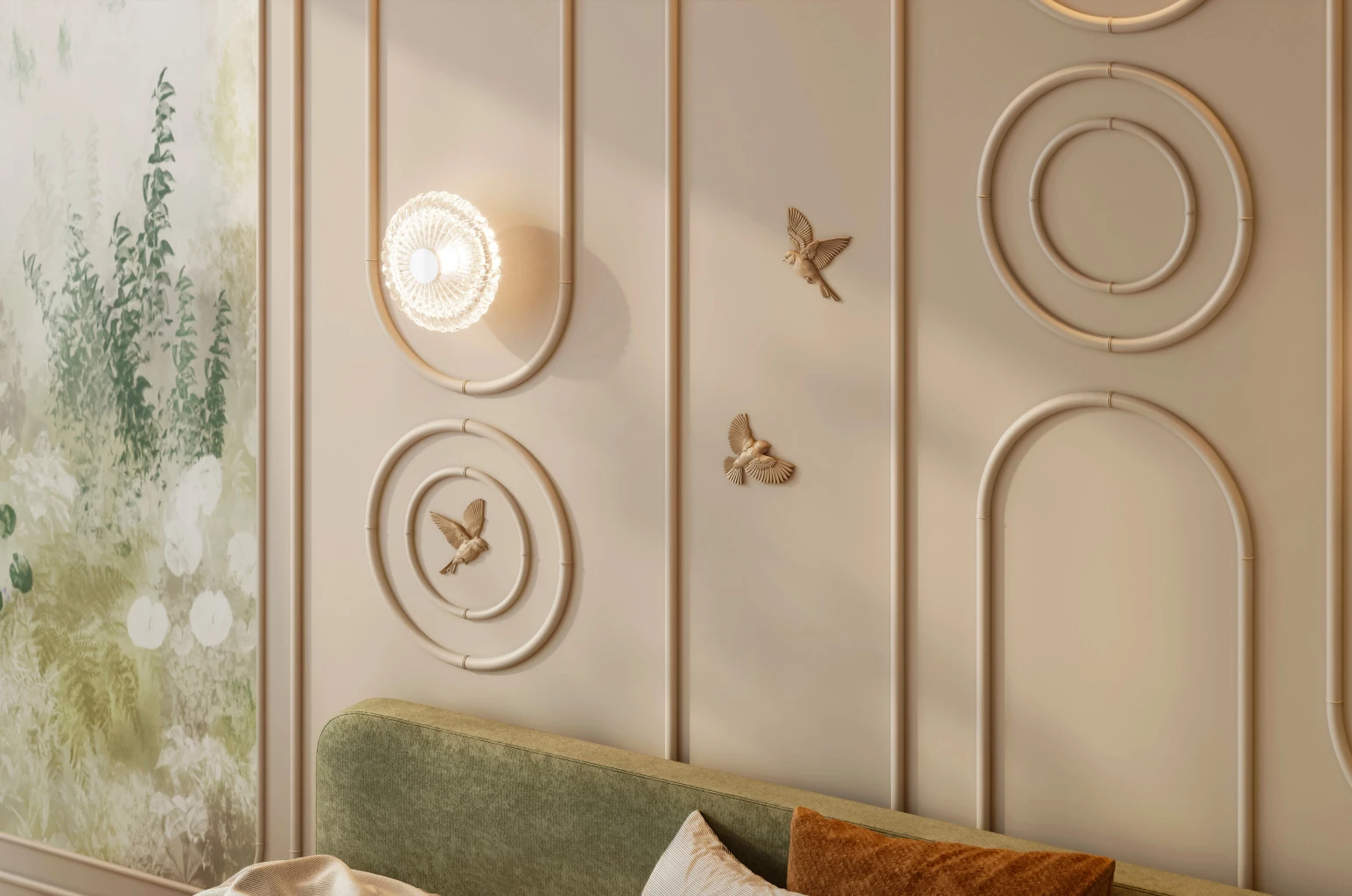
Three decorative accents arranged vertically create an expressive architectural axis and give the wall a neoclassical character. The molding forms a strict elongated outline, while the relief elements guide the eye consistently from bottom to top, maintaining symmetry and a moderate level of decorative richness.
The ready-made wall decor set is already assembled as a complete composition. It can be used on its own, repeated in a rhythm, or combined with other CPU pieces from the Neoclassic collection. For a different configuration, the collection elements can be selected separately to create your own solution.
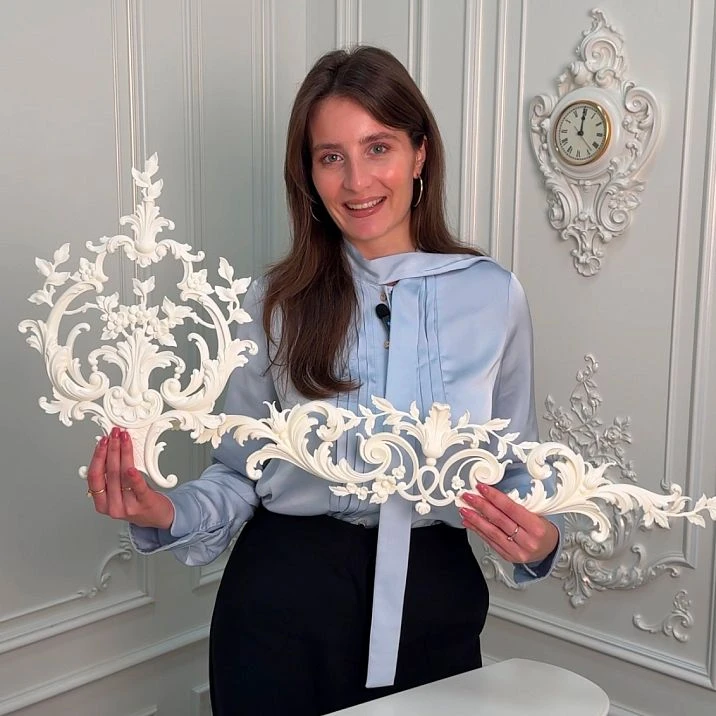
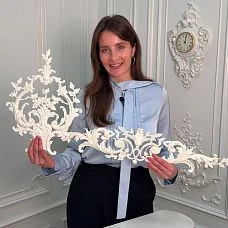
We have been on the market for over 20 years and are ready to offer you the best combination of aesthetics, quality, and practicality. Our polyurethane is not just a material, but a reliable foundation for flawless details, resistance to moisture and cracks, as well as convenient and quick installation. The company's success began in 2002, when two artists – Andrey Ragozin and Evgeny Tsapko – created a small creative workshop for making carved wooden products. The work of the craftsmen was quickly noticed, and within a year they were invited to participate in the reconstruction of the Konstantinovsky Palace in Strelna.
Every product in our range is the result of years of experience, thoughtful technology, and attention to detail. We constantly update our collections, follow and shape trends in interior design ourselves. From elegant neoclassicism to bold Art Deco, you will find the perfect accent for the interior of your dreams.
Choose durable polyurethane decor STAVROS — beauty proven by time and real projects, not just words.
We save your time, peace of mind, and budget
We solve your tasks with maximum speed
Streamlined process reduces all risks
Quality service regardless of order volume
Reliable partner — the foundation of your business
Our showrooms are located in Saint Petersburg and Moscow. Production is located in Saint Petersburg.
Moscow contacts: /contacts_all/
Contacts of Saint Petersburg: /contacts_all/
Send us the product codes, quantities and delivery destination. Contact our team to confirm availability and order details.
Please contact us to confirm shipping availability, costs and delivery times for your destination.
Delivery cost depends on the size, weight of the item, and delivery address.
Please ask our team to confirm shipping costs and delivery arrangements for your destination before placing an order.
Prices and availability of items on the website are always current. Data is updated daily.
Note: items in stock are stored on the warehouse in unpolished form and shipped within 3 working days.
If the item is not in stock, average production time: 5–10 working days.
This is the quality of polishing of the items.
Standard — machine polishing, at a more attractive price.
Prestige — detailed hand polishing, items do not require further work.
More details: /information/kachestvo/
This is the type of veneer of the items.
Under enamel: produced by gluing wooden laminates without color and texture matching. Contrast tonal and textural differences are noticeable. This blank should be chosen if the item is intended for opaque coating.
Under tinting: produced by gluing wooden laminates with color and texture matching. Tonal and textural differences may occur. This blank should be chosen if the item is intended for semi-transparent finish.
More details: /information/kachestvo/
Beech — dense, non-porous wood, most often used for items covered with enamel.
Oak — dense, porous wood with clearly visible natural grain. Due to its strength and decorative properties, it is often used in items with semi-transparent coating, highlighting the wood pattern.
Custom-made, if non-standard items are required, we can produce products from other types of wood, including blanks provided by the customer, manufactured according to our technical specifications.
All our furniture legs can withstand a vertical load of at least 100 kg.
Average production time for custom-made items: 5–10 working days.
Most items are stored on the warehouse in unpolished form. We need time to polish and pack orders.
Yes, we manufacture non-standard items according to individual projects, but we only accept orders with a minimum quantity.
We can manufacture items of the desired size, but we only work with bulk orders. For details, please consult the sales department manager.
Yes, some of our products can be used outdoors. For example, polyurethane items, as well as carved door casings made of pine.
Other items are produced to order using PUR glue, if minimum quantity is available. No warranty is provided for such products, as outdoor conditions are considered aggressive.
Please contact our team to confirm available finishes, minimum quantities and a quotation for your order.
More details: /information/sovety/
Apply adhesive to the decor. Place it on the surface and press briefly. Then, lift the decor from the surface and leave it open for 3–5 minutes. Press the decor firmly onto the surface and hold for 5–10 seconds.
More details: /information/sovety/
Ideally, you should prepare a design project before placing an order.
You can do this yourself by downloading drawings of our products from our website, or you can order a project from us.
If the number of decorative elements and fittings is small, our company's manager can assist you with selection.
Unfortunately, this service is not provided.
The packaging method depends on the type of items, but in each case, we ensure sufficient protection for safe transportation.
We most often use corrugated cardboard and stretch film. Fragile items are additionally secured on a rigid base to prevent damage during transport.
Please confirm the minimum order quantity for your selected products and finishes with our team.
Please contact our team to discuss measurement and installation requirements for your project and destination before ordering.
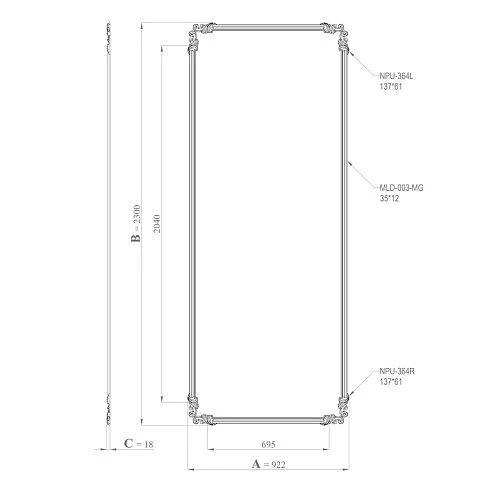
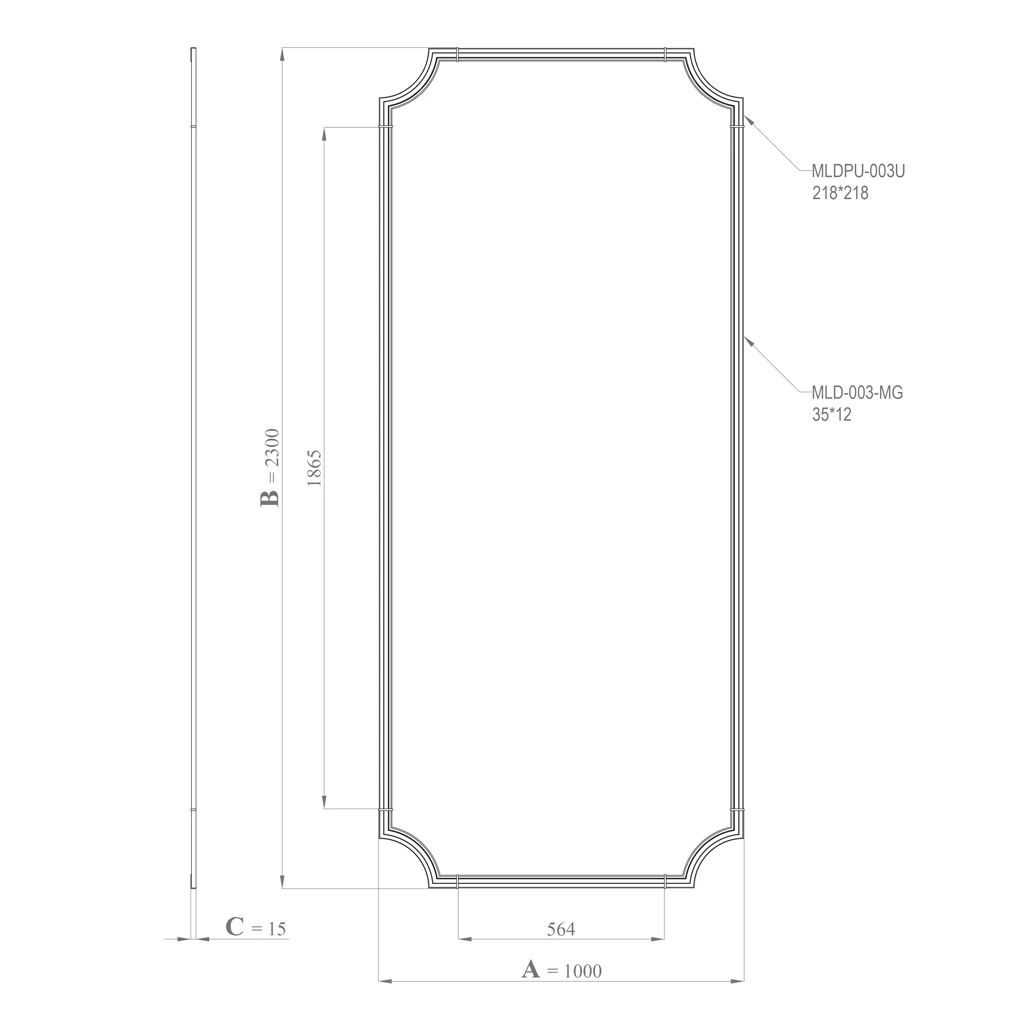
The published composition is 1000 × 2300 × 15 mm (39.37 × 90.55 × 0.59 inches). At just over three feet wide and approximately seven feet six and a half inches tall, it has a tall, deliberately architectural proportion. The STAVROS Neoclassic collection describes CPU-1-3 as a medium-detail composition with three accent positions along a vertical axis; the product's component information also supports creating customized molding frames and corner treatments. Those possibilities should not be confused with a promise that every imaginable alternative layout is included in one package.
The visual idea is a conversation between two different scales. Straight molding establishes the perimeter or guiding line. A shaped corner ornament gives that line a graceful transition and adds just enough detail to catch light. For a modern American interior, that balance can make a dining room, bedroom, entryway, or study feel considered without the complexity of a wall filled with elaborate plasterwork.
Unlike a plain picture frame molding project made entirely from straight strips, CPU-1-3 includes an ornament specifically developed for the point where the line changes direction. Its 218 mm square footprint is an important design dimension: the insert occupies visual space at a corner and should be planned before cutting straight runs. This feature creates a distinctive framed-wall appearance, especially when used with consistent spacing and a carefully chosen paint finish.
It is also important to distinguish a decorative molding composition from structural wall paneling. The set changes the surface visually; it is not a load-bearing system, wall covering board, acoustic panel, or replacement for damaged drywall. A sound wall substrate and appropriate finishing method remain essential.
| Item | Manufacturer dimensions | Approximate US dimensions | Material / function |
|---|---|---|---|
| CPU-1-3 overall design | 1000 × 2300 × 15 mm | 39.37 × 90.55 × 0.59 in. | Decorative wall composition |
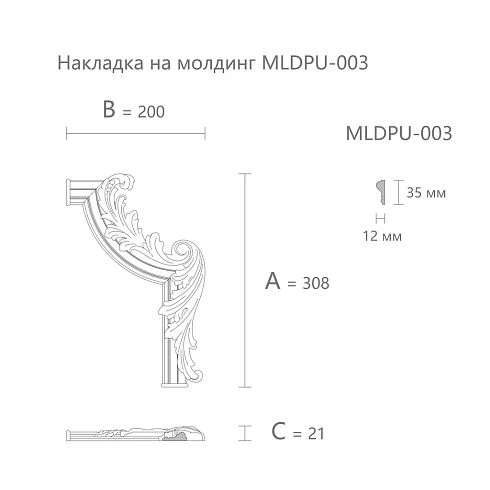
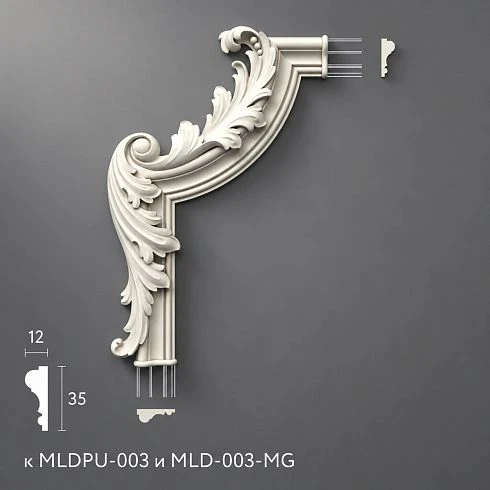
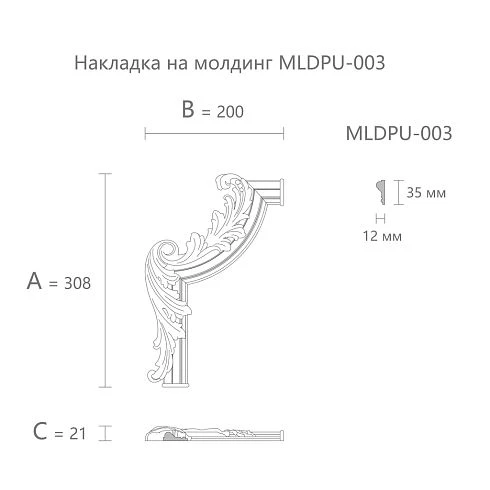
| MLDPU-003U corner ornament | 218 × 218 × 15 mm | 8.58 × 8.58 × 0.59 in. | Polyurethane corner / curved transition |
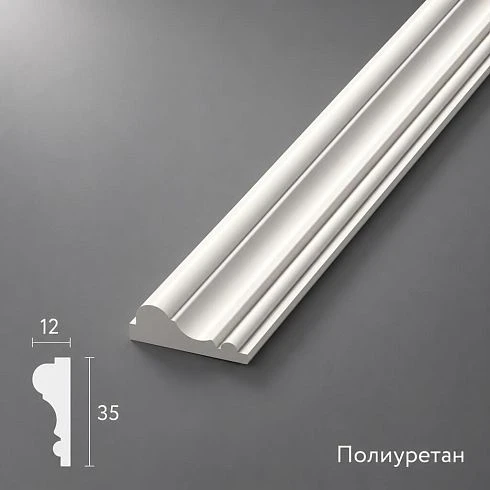
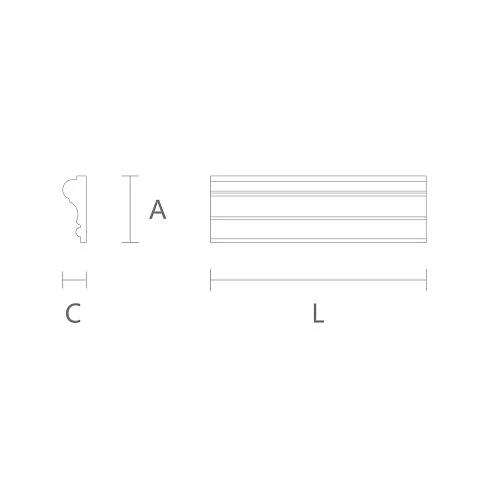
| MLD-003-MG molding | 35 × 12 × 2600 mm | 1.38 × 0.47 × 102.36 in. | Prestige-primed MDF straight profile |
The dimensions above describe different things. The 1000 mm measurement is the composition's published overall width; 2300 mm is its overall height. The 218 mm square measurement belongs to the corner ornament, and 2600 mm is the supplied reference length of the straight MDF profile. You should never treat the 2600 mm stock length as the finished height of the decorative panel. Similarly, the set's 15 mm published depth does not mean a wall can be installed without allowing room for adhesive, substrate irregularities, or subsequent finishes.
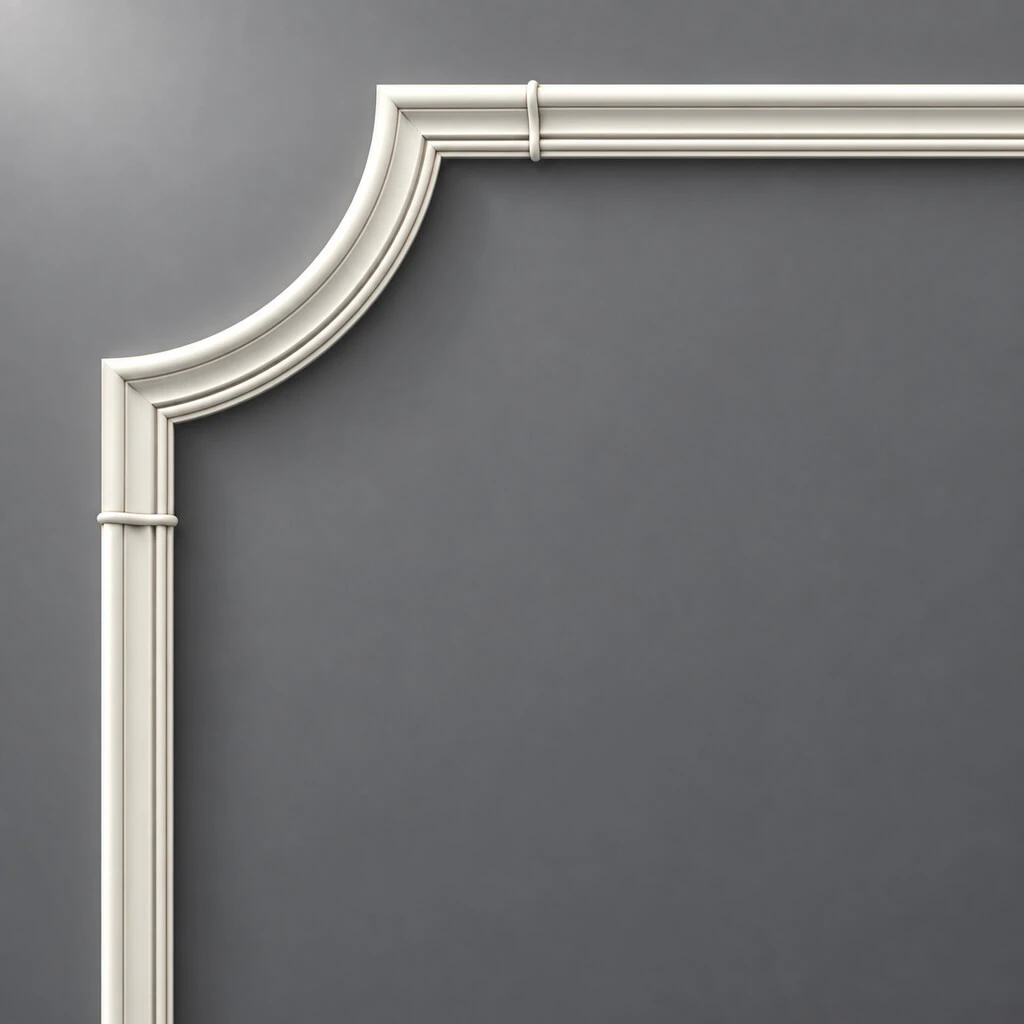
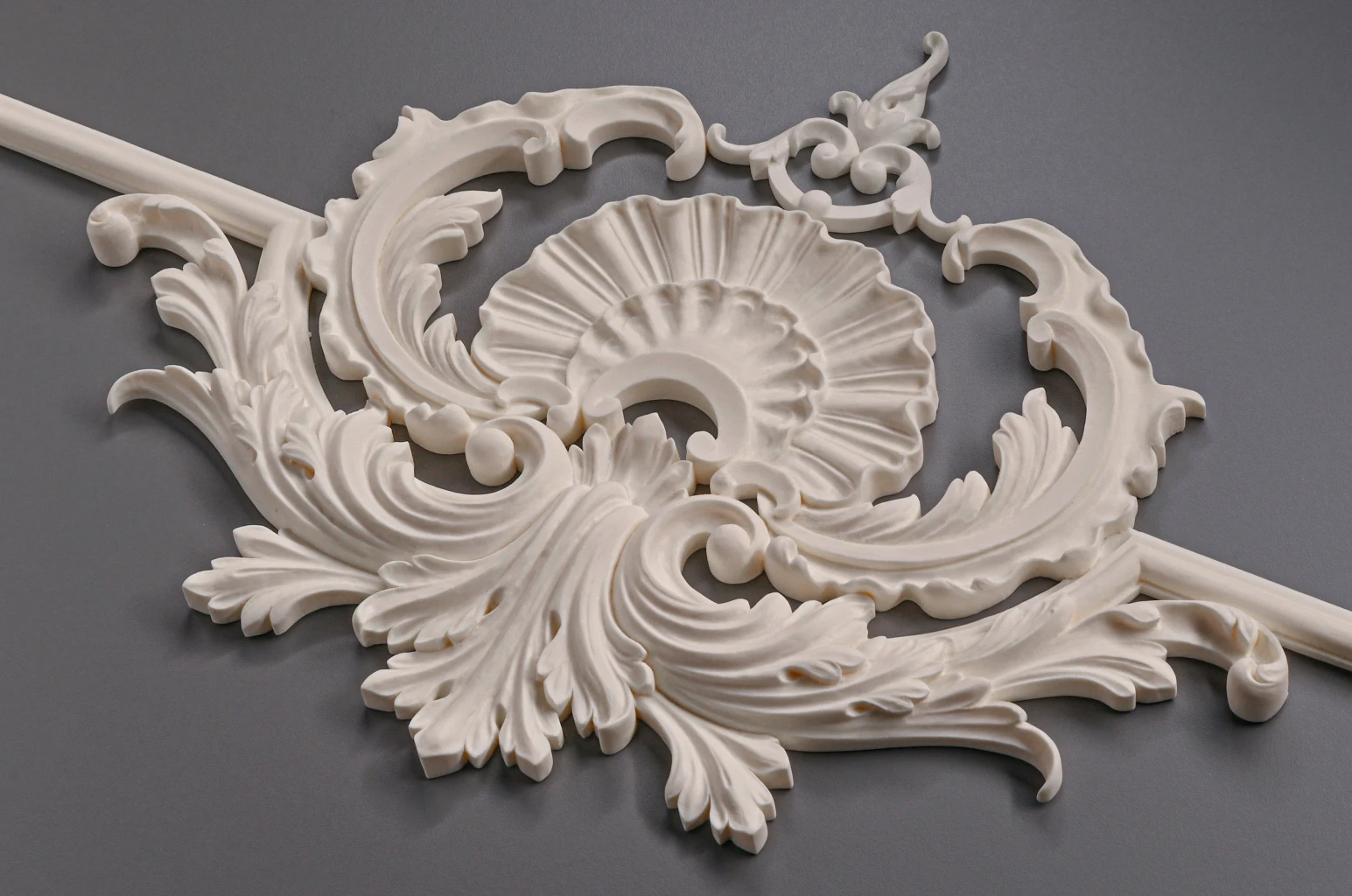
The MLDPU-003U polyurethane corner molding is the key feature of CPU-1-3. STAVROS lists it at 218 × 218 × 15 mm and describes a curved inner transition that connects two straight lengths while preserving the molding's character. This is why it is better understood as an architectural turn or decorative corner piece than as an unrelated wall applique attached at random.
In a framed treatment, the ornament changes the visual language of the corners. A simple miter joint creates a crisp intersection; the MLDPU-003U makes that intersection softer and more sculptural. Before choosing the arrangement, inspect the supplied drawing and dry-fit the ornament with the straight profile. The direction of the profile, visible face, and exact orientation of the corner matter as much as its overall dimensions.
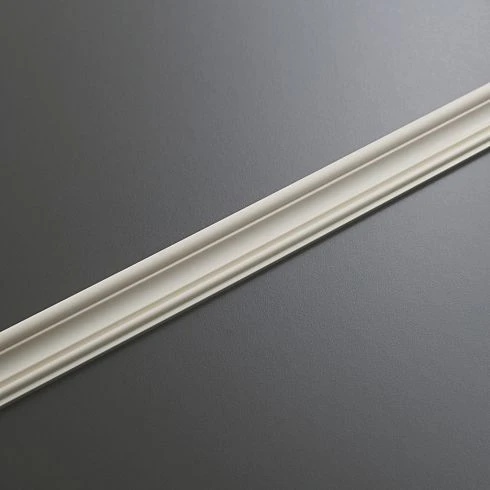
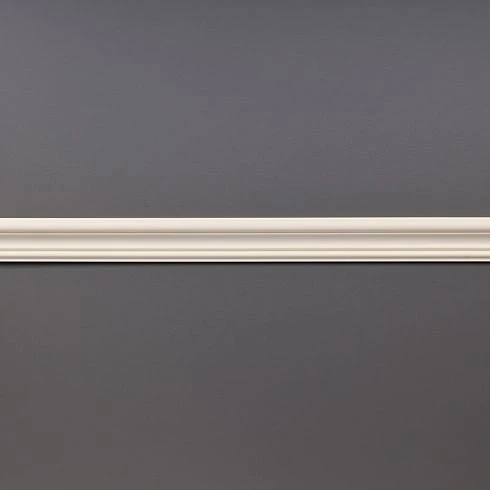
The second verified component is the MLD-003-MG MDF molding, with a 35 mm face dimension, 12 mm profile depth, and 2600 mm listed length. STAVROS describes its finish as Prestige Primed. This provides a prepared base for the final decorative coating, but does not eliminate the need to fill installation joints, repair minor handling marks, and follow the coating manufacturer's preparation instructions.
MDF and polyurethane are different materials. Cutting, fastening, movement at joints, and paint preparation may require different choices for each component. Avoid buying this product under the mistaken assumption that all pieces are polyurethane, that the entire assembly is water-resistant, or that it arrives as a single rigid panel ready to stick on the wall.
A panel approximately 39 inches wide occupies a meaningful portion of a residential wall. It is more substantial than a narrow applied pilaster, but remains narrow enough to be used as one bay in a series. Think of it as a vertical architectural field that needs breathing room around its edges. A crowded wall full of outlets, switches, sconces, and door trim may not be the right location unless the design is carefully adjusted.
For a dining room, CPU-1-3 can help organize a long wall into a sequence of decorative bays. Begin with the usable wall width, remove any areas interrupted by doors or built-ins, and reserve comfortable margins at both ends. Then decide whether one centered panel, a symmetrical pair, or a longer repetition fits the room. Because the individual module is 1000 mm wide, adding more sets requires real spacing between them; simply multiplying the product width will underestimate the total design area.
A monotone finish, using the same paint color on the molding and wall, highlights the raised profile through shadow. A contrasting finish makes every joint and corner more visible, which raises the importance of accurate layout and careful filling. Both approaches are design choices rather than properties of the product.
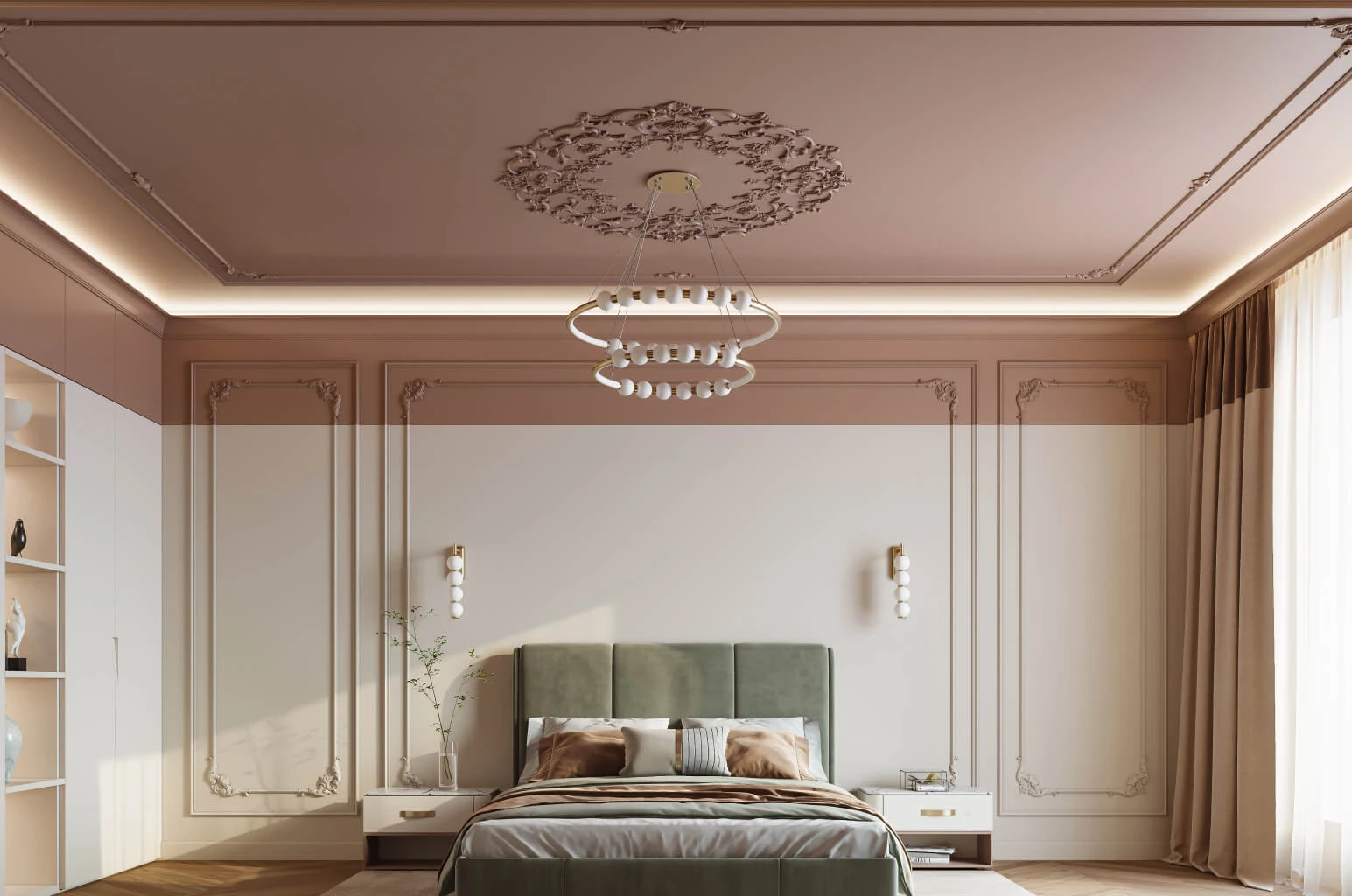
In a bedroom, the best placement may be to either side of a headboard rather than immediately behind a wall-mounted light or a large piece of artwork. A pair of tall frames can establish symmetry without requiring the bed to be centered on a perfectly uninterrupted wall. If the design is placed behind a headboard, account for the bed's actual width, bedside furniture, and sight lines from the doorway. Keep any upholstery, adjustable headboard, or wall-mounted fixture clear of the relief.
For a softer effect, select a warm neutral wall color and paint the decoration in the same color at the sheen recommended for the selected materials. If using a more contrasting palette, test a sample on both primed MDF and polyurethane to see whether the surface response matches.
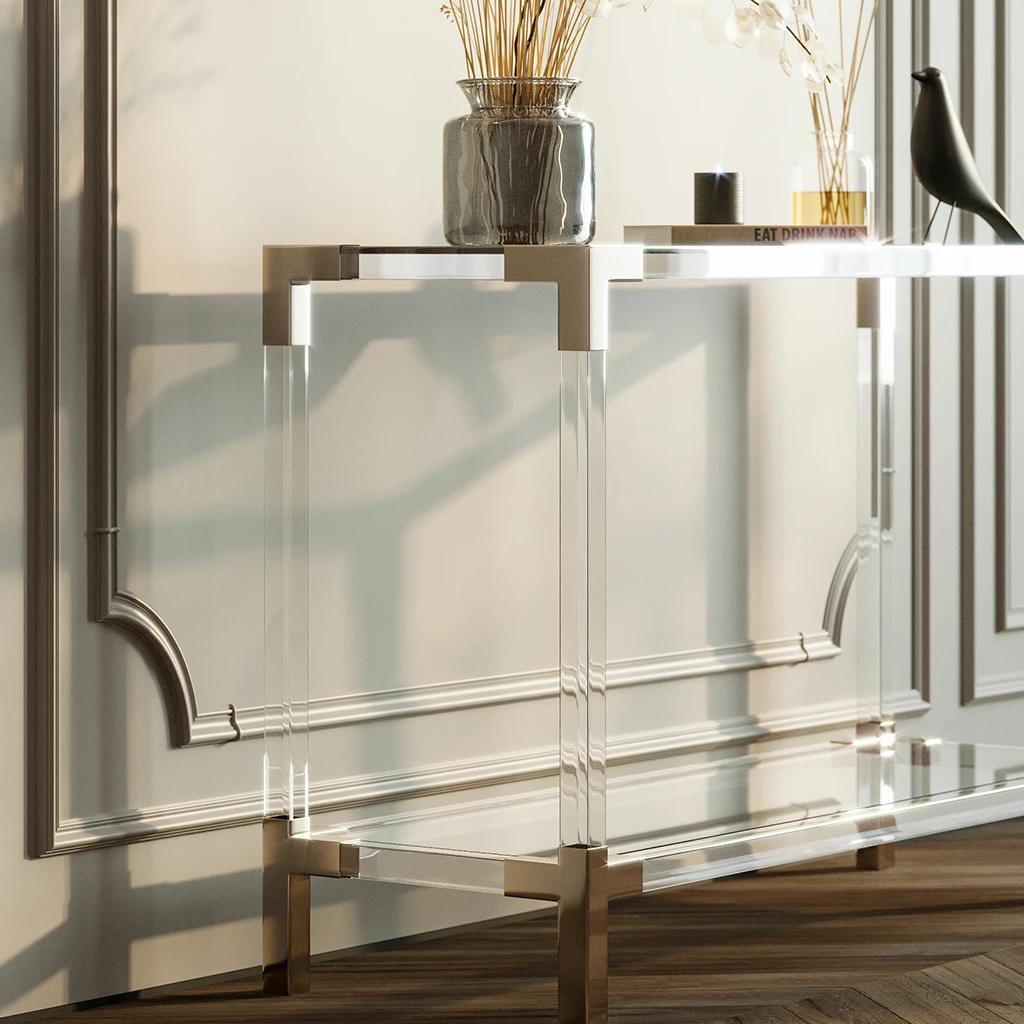
In an entryway, a single CPU-1-3 composition can establish a formal focal point between a console and a doorway. In a home office, it can frame the wall behind a desk or create a backdrop to shelving, provided the shelves do not rely on the decoration for structural support. In a living room, it can serve as a side panel beside a media area. Do not surround ventilation openings, electrical equipment, fireplaces, or heat sources without independently checking all applicable clearances and the material manufacturer's restrictions.
US shoppers searching for picture frame molding on walls often encounter basic trim strips, peel-and-stick frames, DIY guides, and prefabricated rectangles. CPU-1-3 is a different purchasing proposition: a selected combination of a specific MDF profile and decorative polyurethane corner component. Its design value lies in the shape of the turn, the coordinated proportions, and its intended use in the Neoclassic architectural language.
The kit should therefore not be described as peel-and-stick, preassembled, or made entirely from plastic. Those are material and construction claims that cannot be inferred from a decorative style name. It is also not automatically interchangeable with a chair rail, crown molding, or baseboard. Those profiles occupy different parts of the room and perform different functions. CPU-1-3 is about decorative relief on the wall plane.
For projects that use multiple molding styles, a product-specific plan is essential. A chair rail may establish a horizontal datum; a vertical CPU composition introduces another proportion. If both are used, their meeting points should be resolved in a drawing rather than improvised on the wall after the materials arrive.
Measure the finished wall after any drywall repair, skim coating, or built-in work. Record floor-to-ceiling height at more than one location, because rooms are seldom perfectly square. Note baseboards, crown molding, switches, thermostat locations, door casings, and protruding furniture. The published 2300 mm height is approximately 90.55 inches, so the available clear height above the baseboard and below the crown or ceiling needs to be measured, not assumed.
For perspective, a 96-inch-tall wall leaves only about 5.45 inches when compared with a 90.55-inch decorative design, before subtracting baseboard height or any top gap. That is not a recommended installation clearance; it is a reminder to check the real dimensions. On a taller wall, the surrounding negative space can become a more deliberate part of the composition.
To center a single panel on a clear wall, subtract the published 39.37-inch width from the unobstructed wall width and divide the remainder by two. For example, on a 120-inch-wide clear wall, the theoretical side margins would be about 40.32 inches each. If two panels are planned, also specify the intended space between them before calculating the outer margins. Always work from the final manufacturer's drawing and include any installation tolerances.
Begin by deciding whether you are reproducing the published CPU-1-3 composition or adapting its components into a new rectangular frame. STAVROS describes this set within its vertical decorative family, while the individual MLDPU-003U piece is suitable for turns in panel frames. These are related design applications, but a new frame with four decorated corners is not automatically the same package as the shown CPU-1-3 arrangement. Confirm the actual item quantities in the order before producing a cut list.
For a custom frame, draw each run between the actual connection points and establish where the molded corner begins. A 218 mm corner insert occupies more space than a narrow miter joint, so a cut list based only on the outside rectangle can significantly overstate the length of straight molding required. Mark the exact face profile orientation and account for which portion of each corner piece meets the straight section.
Use the 2600 mm stock length as the basis for a cutting plan, not as a guarantee that all sides of a large rectangle can be made from a single length. Include allowance for miter angles where used, damaged ends, saw kerf, and offcuts that cannot be reused. If a continuous run exceeds the available stock length, place the joint where it is least noticeable and follow the manufacturer's instructions for joining, supporting, and filling the profile.
A clean installation starts with a dry, flat, stable, and properly prepared wall. Remove dust and contaminants and repair unsound paint or loose surface materials. The substrate must be capable of supporting the installed trim. Confirm the compatibility of every adhesive, primer, filler, and finish with the specific polyurethane element, primed MDF profile, existing wall coating, and expected interior conditions.
Use level reference lines, a tape measure, and a square to transfer the design onto the actual wall. It is generally easier to check the alignment of the principal straight runs before fixing the more intricate corner ornaments. However, the correct sequence should follow the joint geometry and official STAVROS guidance for these parts. Hold the components in position during any adhesive cure as directed by the adhesive manufacturer; do not assume a generic all-purpose adhesive eliminates the need for temporary support or other fastening.
Where mechanical fastening is specified, choose a method appropriate for the substrate and the MDF profile; avoid driving fasteners through delicate relief without explicit approval. When adhesive is specified, avoid flooding visible joints. After the assembly is secured, use a compatible filler or paintable sealant where appropriate, allow the recommended curing period, and inspect the transitions under angled light. Do not claim that the material is suitable for wet rooms, near flames, or in code-regulated applications without project-specific verification.
Because the CPU-1-3 design combines polyurethane with primed MDF, the finish is a major part of the final appearance. Even if the paint color is the same, the first coat can reveal different levels of absorption or surface texture. Test the selected paint and any additional primer on inconspicuous sample pieces. Follow the coating manufacturer's system rather than assuming that a single wall paint will adhere equally to every surface without preparation.
A tone-on-tone palette keeps attention on profile shape, while white molding against a muted blue, green, or greige wall creates a more graphic period-inspired effect. A subtle accent on the corner inserts can bring out their shape without turning the entire treatment into a heavily gilded composition. If metallic paint or glaze is used, test the appearance under the room's actual lighting first: directed light exaggerates relief and imperfect joints.
Paint carefully into recesses and remove drips before they cure. Recheck filled joints after the initial coat, as minor imperfections may become visible only when the color unifies the MDF and polyurethane surfaces. The goal is an uninterrupted architectural rhythm, not a thick coating that obscures details.
The STAVROS Neoclassic collection includes multiple decorative compositions rather than one universal profile. This allows a designer to vary visual weight across rooms without abandoning the overall style. CPU-1-3 is the wider, corner-oriented option discussed here, while different SKUs use different polyurethane ornaments and dimensions.
For example, CPU-1-1 uses the smaller NPU-399 ornament and a 300 mm overall width, making it a narrower treatment. CPU-1-2 uses the larger MLDPU-3-1 and MLDPU-3-2 relief elements in a 600 mm composition. CPU-1-3 instead relies on the 218 mm square MLDPU-003U corner piece and a 1000 mm overall width. These are genuinely different arrangements; their H1s, names, specifications, and descriptive text should remain separate.
In a cohesive project, you might reserve CPU-1-3 for one principal wall, then choose a narrower design for a hallway. The key is to repeat a restrained set of proportions, colors, and trim details rather than placing every available ornament in the same room. Check real component dimensions before assuming that corner pieces from another set fit the MLD-003-MG line in the same way.
The manufacturer's listed composition size is 1000 × 2300 × 15 mm, approximately 39.37 × 90.55 × 0.59 inches. These figures describe the design as listed, not the dimensions of every separate part or the wall clearances needed around it.
No. The shaped MLDPU-003U corner component is polyurethane. The straight MLD-003-MG molding is Prestige-primed MDF. They should be selected and finished as a coordinated mixed-material installation.
Yes, the components can be used to design decorative frame-style treatments, particularly where a rounded ornamental corner is desired. However, a custom four-corner frame requires its own component count, cut plan, and drawing. Do not assume the quantity of pieces in one CPU-1-3 package covers every new layout.
MLDPU-003U is listed at 218 × 218 × 15 mm, or about 8.58 × 8.58 × 0.59 inches. Its profile transition should be checked against the straight molding during layout.
MLD-003-MG is specified as Prestige Primed. Joints, cut ends, and the combination with polyurethane still need an appropriate final finishing system and any preparation recommended by the manufacturers.
No such construction claim is established by the verified product specifications. Plan for separate components, a supported mounting method, and installation according to the product and adhesive manufacturers.
Draw the installation to scale using the actual clear wall width, height, spacing, and obstructions. Compare that drawing with the 1000 mm published composition width. For an altered layout, verify individual SKU quantities rather than simply dividing the wall area by the panel size.
Select this STAVROS decorative wall molding set when you want the visual order of a tall neoclassical panel, the softness of a dedicated molded corner, and the finish flexibility of a primed MDF line with polyurethane detail. Its strongest application is an interior wall where a carefully centered composition or measured series of frames can stand apart from ordinary flat trim.
Before ordering, confirm the precise package quantities, view the manufacturer's current drawing, and check whether the finished 39.37-inch-wide composition fits the available wall. Those steps protect the design intent and prevent unnecessary cuts. The result is a more credible architectural treatment than choosing decorative moldings by keyword alone.
Our manager will contact you within 5 minutes