


























Article Contents:
- Where and why wooden furniture handles are used
- Cabinets and wardrobes
- Kitchens
- Chests of drawers, nightstands, and drawers
- Classic and historical furniture
- Restoration
- Main types of wooden furniture handles
- Wooden pull handle
- Wooden knob handle
- Long Wooden Handles
- Recessed wooden handles
- Uncoated solid wood handles
- Uncoated handles: why it's needed and who it suits
- For enamel
- Under varnish or oil
- For stain and tinting
- For furniture manufacturing
- How to choose a wooden handle by furniture style
- Classic and neoclassic
- Neoclassicism
- Provence and Country Style
- Rustic and eco
- Scandinavian style and scandi
- Japanese style (japandi)
- Modern style and high-tech
- How to choose the size of a wooden handle
- For boxes
- For cabinet fronts and kitchen modules
- For tall fronts
- Practical tip
- What to pair with wooden furniture handles
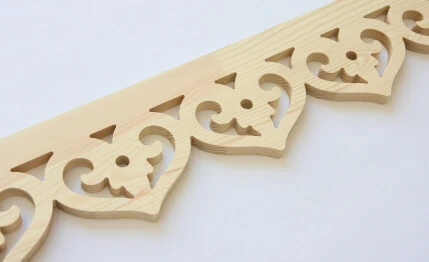
- With carved decorative overlays
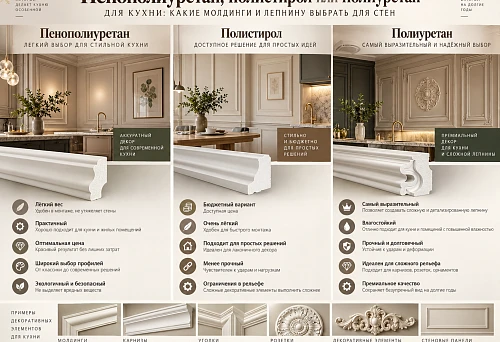
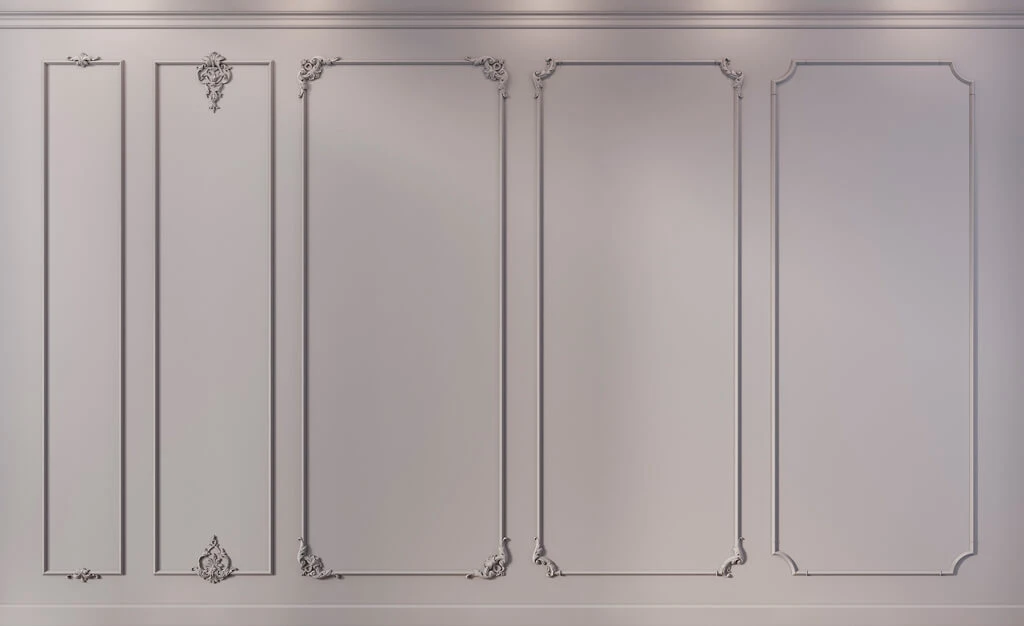
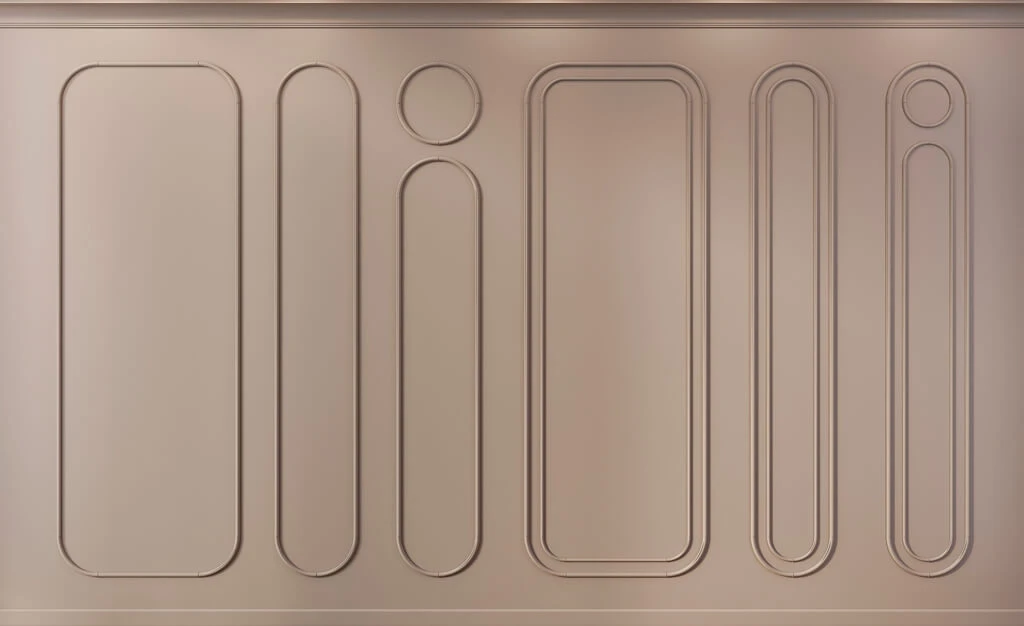
- With Mouldings
- With furniture legs
- With cornices and baseboards
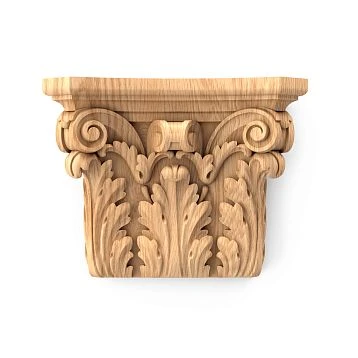
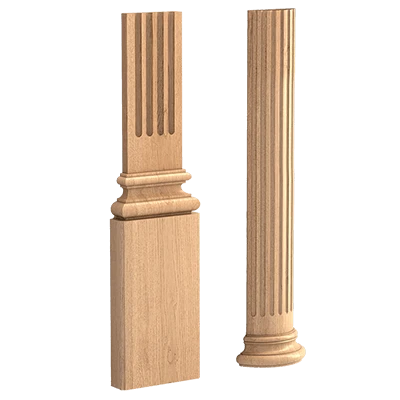
- With pilasters and capitals
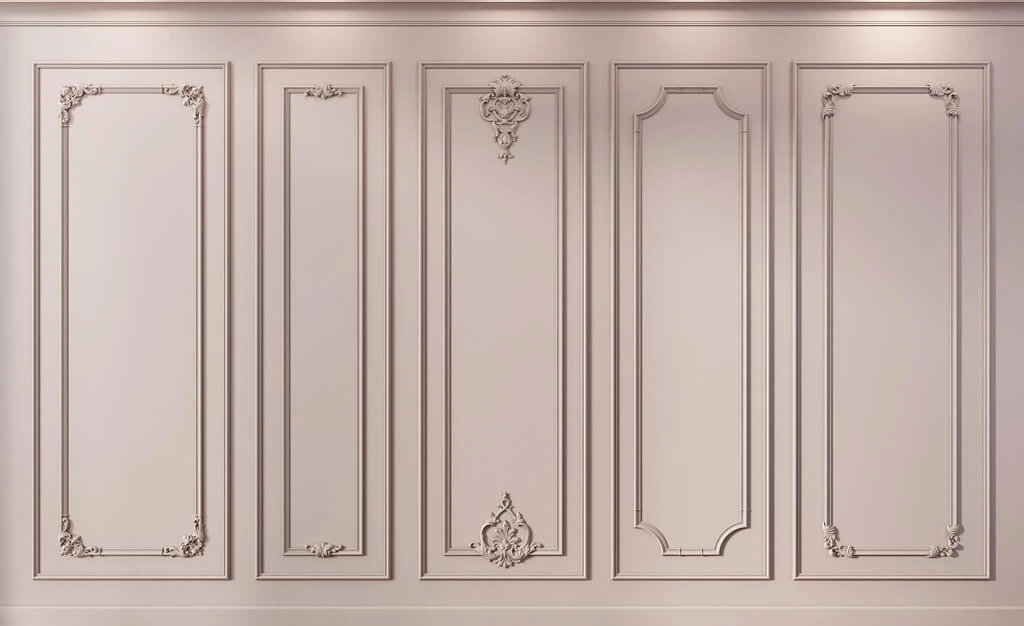
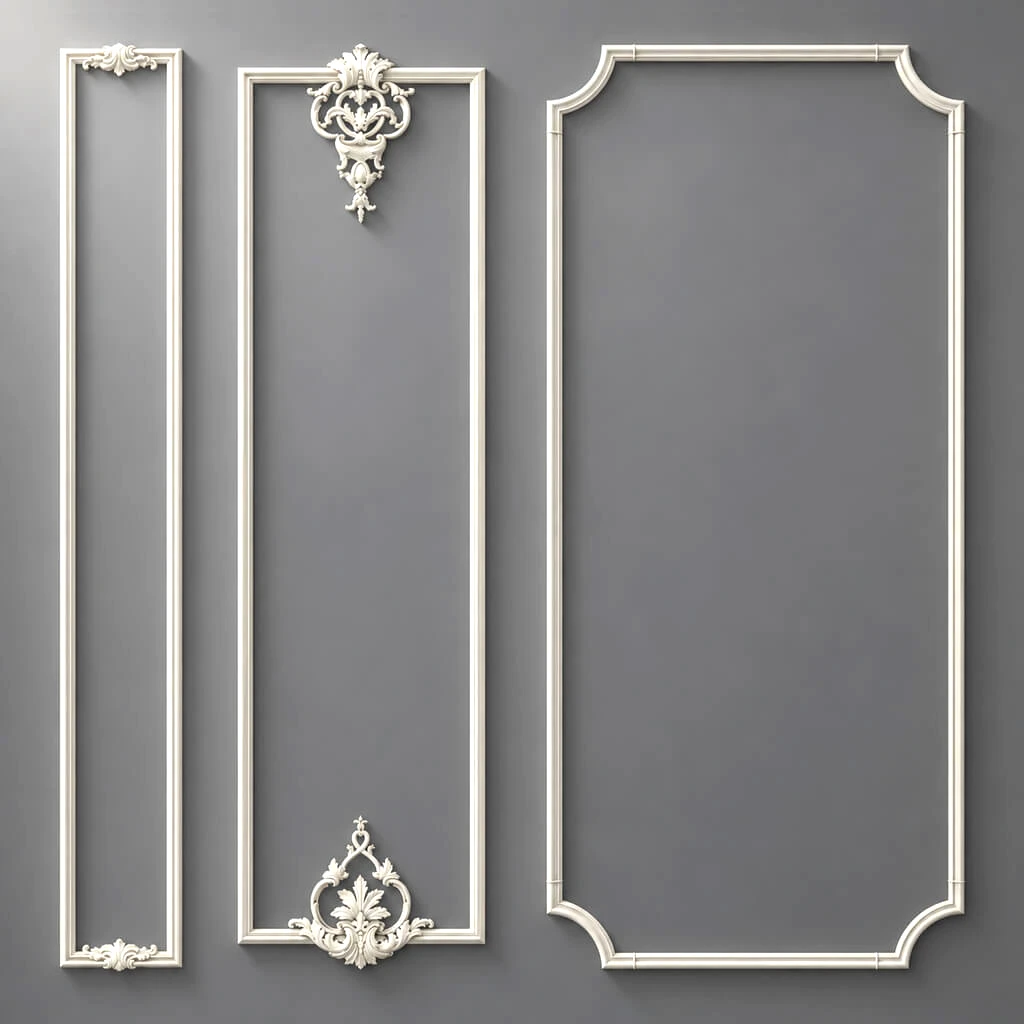
- With panels and decorative frames
- Mistakes when choosing wooden handles
- Mistake 1: choosing only by photo without dimensions
- Error 2: not considering the opening method
- Error 3: too small handle on a large facade
- Error 4: mixing different handle styles in one set
- Error 5: not planning the coating in advance
- Error 6: not matching handles with the rest of the decor
- Error 7: not considering the thickness of the facade
- Why STAVROS wooden handles are the right choice
- FAQ: answers to popular questions about wooden furniture handles
- About the Company STAVROS
Look at any furniture with a fresh eye — without habit, without the long-standing 'this is how it should be.' And you will notice: it is the handle that sets the tone. Not the facade, not the color, not the wood species, not the coating — but that small detail that your hand touches every day.Furniture Handles — it is the first tactile impression of the furniture, and it matters more than one would like to admit.
Wooden furniture handles are experiencing a true comeback. After decades of metal, chrome, and plastic, wood is back in the spotlight — not as a compromise, but as a conscious choice. Scandinavian style, Japanese Japandi, modern classic, neoclassical, rustic, Provence — in all these directionswooden furniture handlesthey look organic, convincing, and expensive.
But choosing them correctly is not as simple a task as it seems. Shape, size, wood species, mounting type, coating or its absence — each parameter affects the result. In this article, we will break down everything in order: from the typology of handles to specific tips for selecting them according to style, facade, and purpose.
Where and why are wooden furniture handles used
The question "where to use?" seems rhetorical at first glance. But this is exactly where many make their first mistake — limiting the application to one type of furniture, missing out on opportunities.
Cabinets and wardrobes
Wooden wardrobe handles — this is one of the most popular requests in this category, and for good reason. A wardrobe in the bedroom, a walk-in closet, a built-in wardrobe in the hallway — all these objects require hardware that is both functional and visually correct. For hinged wardrobe doors with a height of 2200–2400 mm, long vertical handles are ideal: they are comfortable to grip at any height and create an expressive vertical line on the facade.
For built-in wardrobes with multiple door sections, uniformity of handles is critical: identical items on all facades create the feeling of a cohesive furniture solution. Different handles — even slightly different ones — fragment the perception.
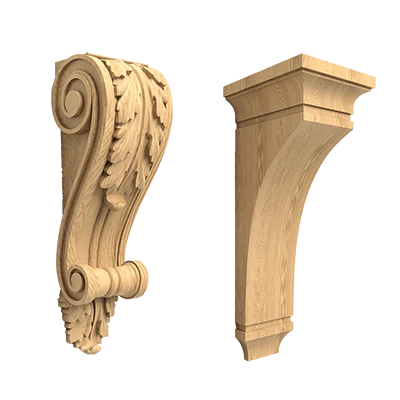
Our factory also produces:
Kitchens
Wooden handles for the kitchen — a special story. The kitchen is the most functional space in the home, where handles are used dozens of times a day. The requirements here are higher: ease of grip, resistance of the coating to grease and moisture, ease of cleaning. Wooden handles handle this under one condition: the coating must be high-quality — oil, varnish, or enamel. It is better not to leave kitchen handles without a coating.
On the upper kitchen modules, pull handles are often installed — they create a horizontal rhythm across the entire row and are convenient for opening doors with an upward motion. On the lower modules and tall cabinets — long vertical handles or vertically oriented pulls. On drawers — pulls or compact knobs.
Get Consultation
Chests of drawers, bedside tables, and drawers
Wooden drawer handle— a laconic element that should be proportionate to the drawer. For a narrow chest drawer 250–300 mm wide, a knob handle or a small bracket 64–96 mm is suitable. For a wide drawer, a bracket 128–160 mm or a compact horizontal handle works. Bedside tables, chests in the bedroom, TV stands — everywhere a wooden handle adds warmth and natural organic feel.
Classic and historical furniture
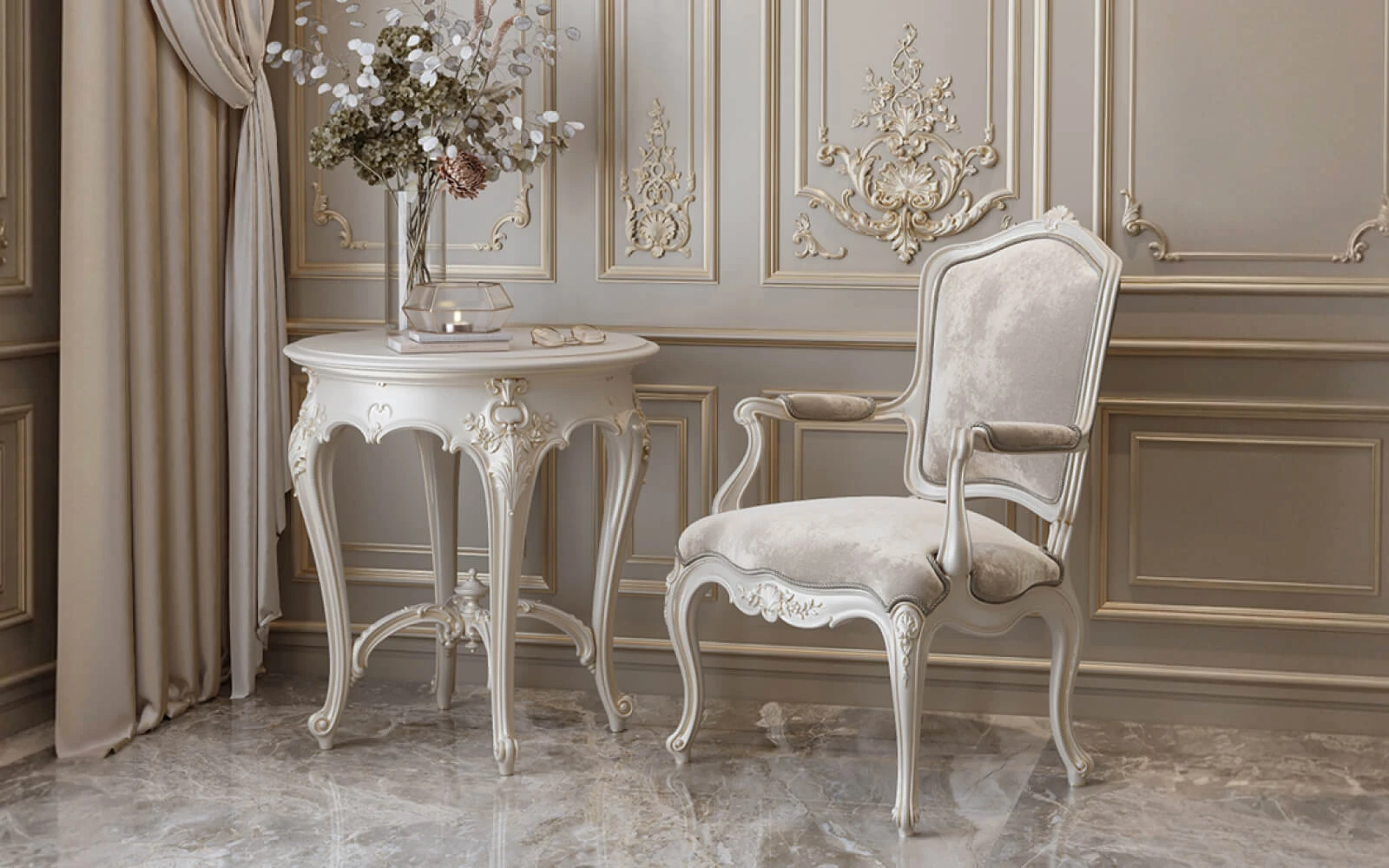
Classic Furniture implies a specific language of hardware — expressive, with a clear form, with character. HereWooden handleswork in pairs with carved overlays, furniture decor and moldings — as part of a unified decorative system. A handle in classic furniture is not just an opening element, but an architectural detail. Its shape and size should be readable from a distance of several meters.
Restoration
Old furniture often loses its original handles — or they become outdated. Replacing handles is one of the cheapest and most effective ways to update a piece of furniture without restoring the fronts. Wooden handles are especially valuable in this context: they blend organically into the old array and create a sense of authenticity.
Main types of wooden furniture handles
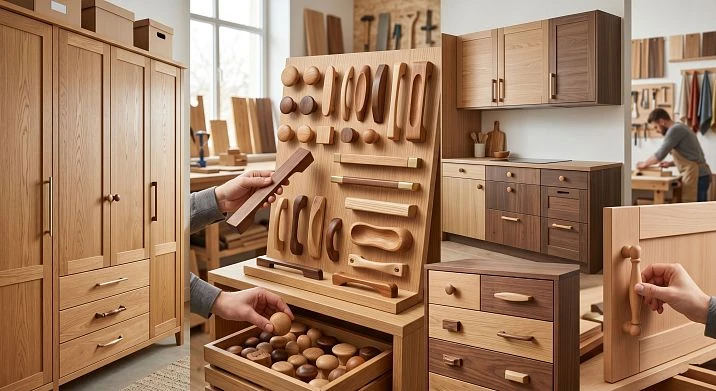
This is a key section — without understanding the typology, it is impossible to choose correctly.wooden furniture handlesare divided into several fundamentally different types, each solving its own task.
Wooden Pull Handle
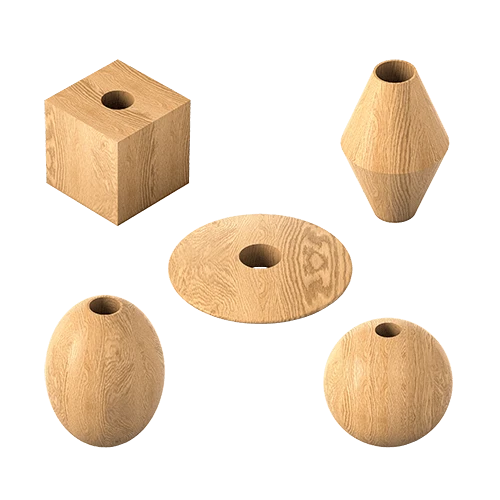
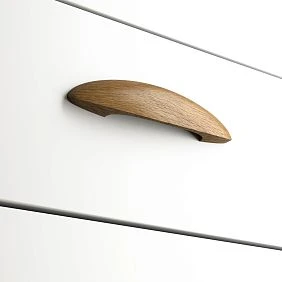
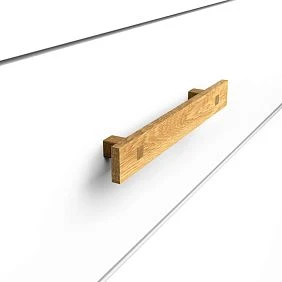
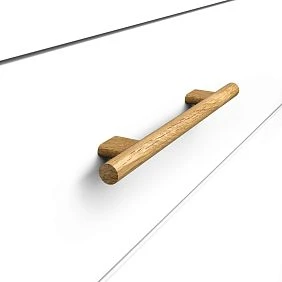
wooden hook handle is a classic arched handle that attaches to the facade at two points. The bracket is comfortable to grip, reliable in use, and visually neutral — it does not dominate but neatly complements the facade.
Wooden bracket handle comes in different sizes: center-to-center distance — from 32 mm (for small drawers) to 320 mm and more (for wide facades). The arch shape also varies: straight, semicircular, teardrop, with a widening in the center. The bracket is a universal type of handle: suitable for cabinets, kitchen facades, dressers, nightstands, drawers.
For kitchen sets in Scandinavian or modern style, brackets with a straight profile and minimalist shape are an ideal choice. For classic furniture — brackets with a curved profile and expressive silhouette. Material: oak, beech, walnut — depends on the project.
Wooden knob handle
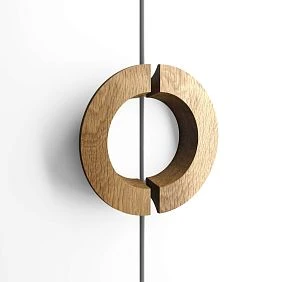
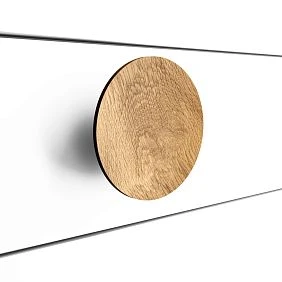
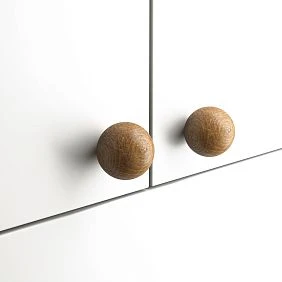
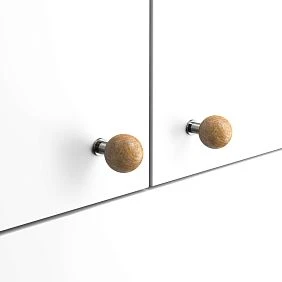
wooden button handle is a single-point element: compact, minimalist, almost decorative. Fastening — one screw through the facade. Shape — usually round, sometimes square or teardrop.
Knob handles work great on small facades: dresser drawers, nightstands, under-bed drawers, children's furniture, small doors. In classic interiors, knobs are often placed on mezzanines, closed shelves, and lower drawers. In Scandinavian and Japanese styles, a small wooden knob on a white facade is an example of that very "quiet luxury" when a detail speaks loudly without shouting.
Important parameter: knob diameter. Standard sizes — 24–40 mm. For a small drawer: 24–28 mm. For a standard door up to 500 mm high: 32–40 mm. Large knobs 40+ mm — for accent decor or for large furniture items with open facades.
Long wooden handles
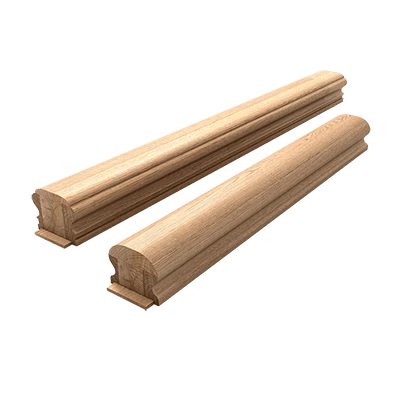
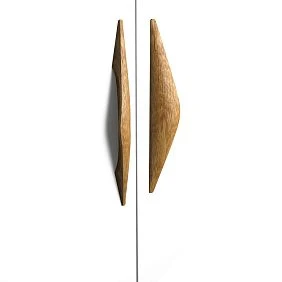
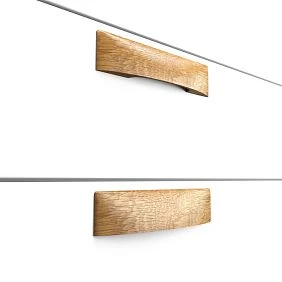
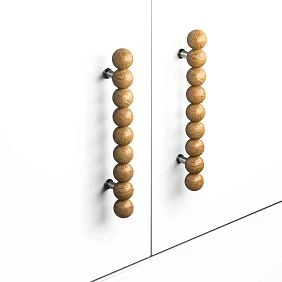
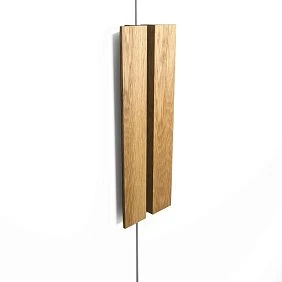
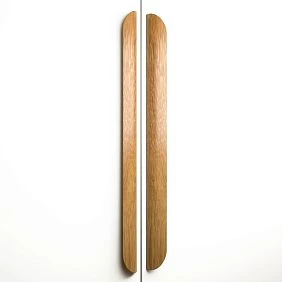
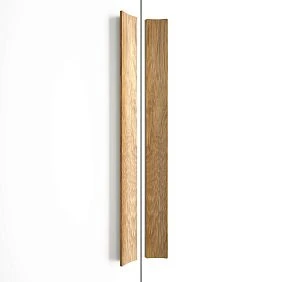
Wooden long handles are rod or slat handles with a length from 200 to 600 mm and more, attached at two or more points. They create an expressive horizontal or vertical line on the facade, giving the furniture a modern, architectural character.
Long handles are ideal for tall cabinet and tall unit facades, for kitchen sets in Scandinavian, modern, or minimalist style. A slat handle along the entire bottom edge of a 900 mm high facade is a strong design move, turning a set of cabinets into a solid horizontal strip.
Dimensions of long handles: center-to-center distance — from 160 to 500 mm. For cabinets with a height of 2000–2400 mm and a width of 600 mm — handles 300–400 mm placed vertically. For kitchen fronts 600 mm wide — handles with a center-to-center distance of 320–400 mm.
Flush-mounted wooden handles
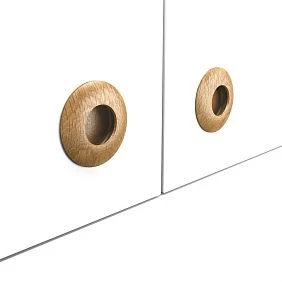
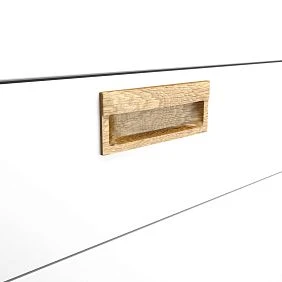
Wooden recessed handles — these are handles that are mounted flush with the surface of the front, without protruding beyond its plane. A flush-mounted handle is minimalism in its absolute form: the front remains smooth, without protruding elements, but at the same time convenient for opening.
This type of handle is especially appropriate in modern interiors where clean lines are important: wardrobes with sliding doors, high-tech kitchens, minimalist bedrooms. Installation requires precise routing for the mounting seat — this is the work of a carpenter or precision tool, but the result is worth the effort.
Uncoated solid wood handles
This is a separate category — and more about it in the next section. Let's just say:uncoated wooden handlesare available in all the listed types — brackets, knobs, long, flush-mounted. They are sold in a "clean solid wood" state and are intended for self or professional finishing.
Uncoated handles: why it's needed and who it suits
It would seem, why buy an unfinished product? The answer is simple: to get exactly the result you need — not the one the manufacturer decided for you.
unfinished wooden handlesare blanks made of solid beech or oak, sanded to a finished state, ready for any coating. And this opens up a completely different level of possibilities.
Under Enamel
Do you want the handle to blend with the painted facade into a single monolithic tone? Then you need a wooden handle for enamel. The handle is primed, sanded, and painted in the same color as the facade — RAL, NCS, Pantone. As a result, the handle does not stand out in color, but works only with its shape. This is the pinnacle of furniture design.
For enamel, beech is preferable: its fine, even structure accepts paint perfectly, without porosity.
Under varnish or oil
If the goal is to emphasize the natural texture of wood, the handle is coated with clear varnish (matte or glossy) or oil. Oak under oil is a warm, lively, textured result. Beech under varnish is smooth, light, somewhat neutral. Both options are good: the first for furniture with a pronounced natural character, the second for more restrained solutions.
Under stain and tinting
Wooden handles for painting — a frequent request from furniture workshops and designers: you need to fit handles into existing furniture of a specific color. Stain provides tinting while preserving the texture. For example, beech treated with walnut stain gives the effect of a more expensive wood at a reasonable cost.
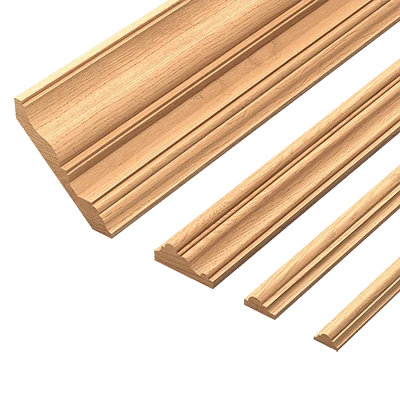
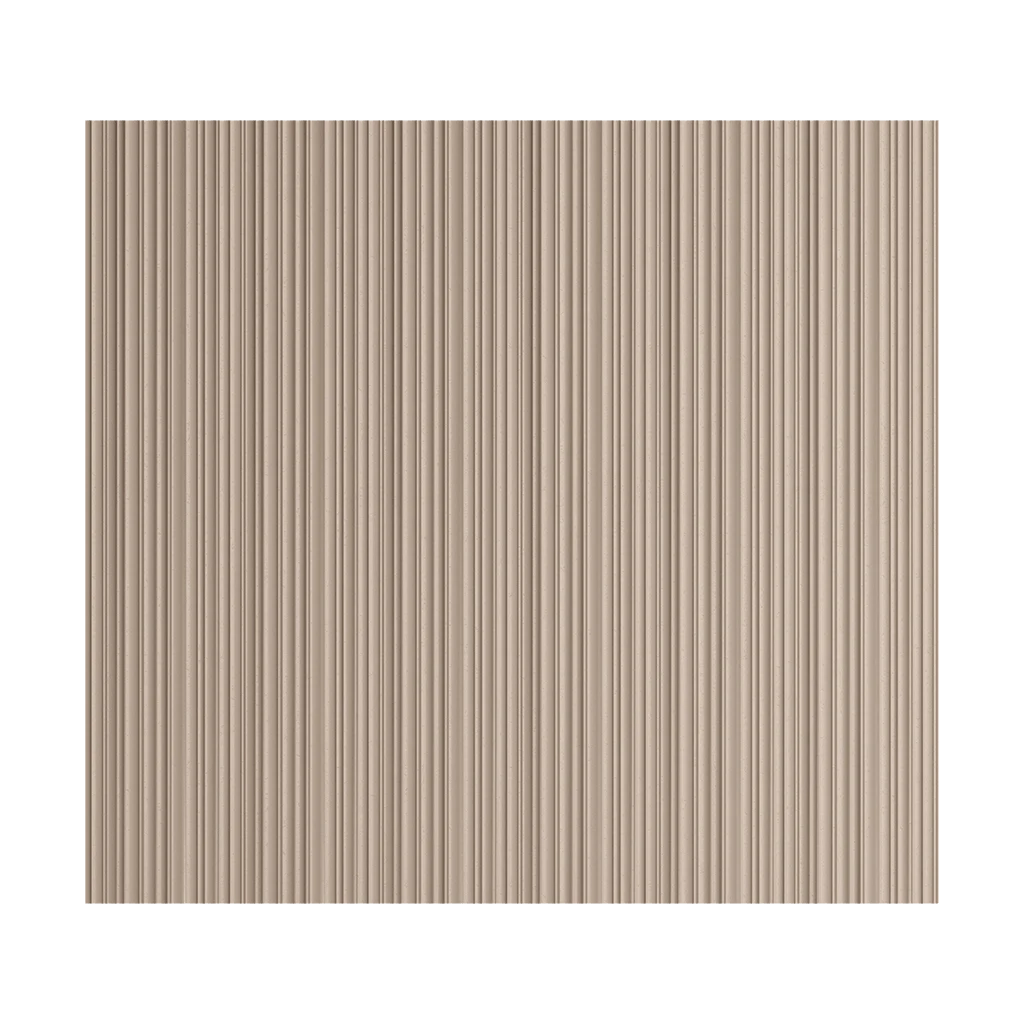
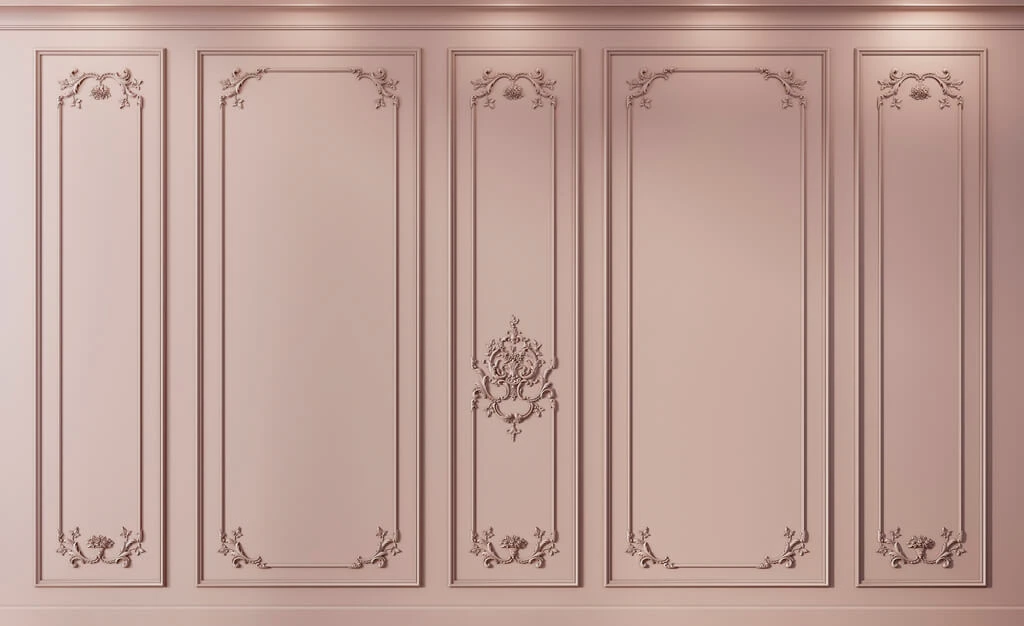
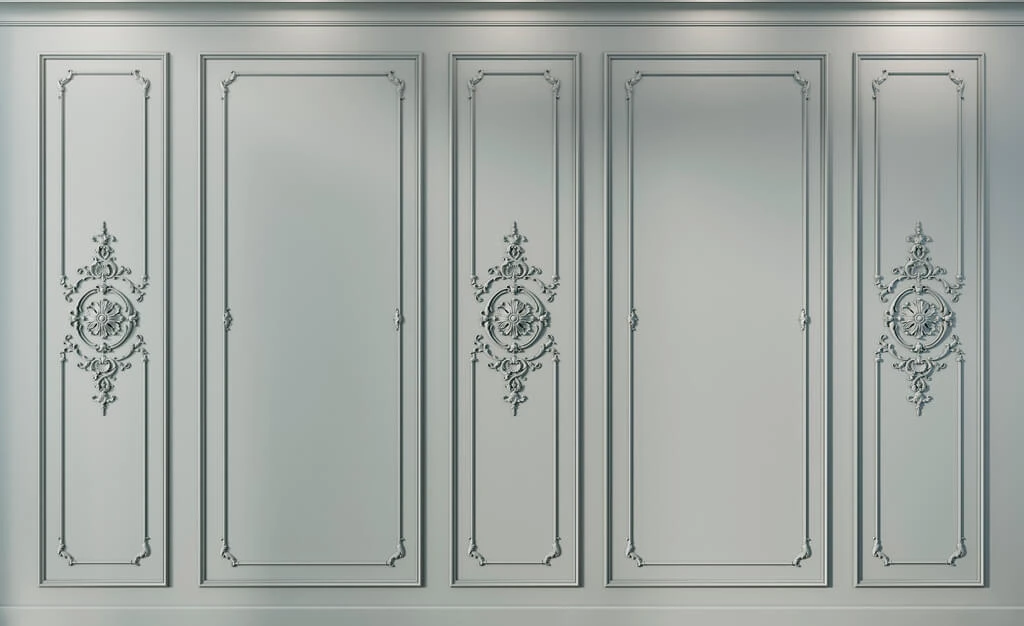
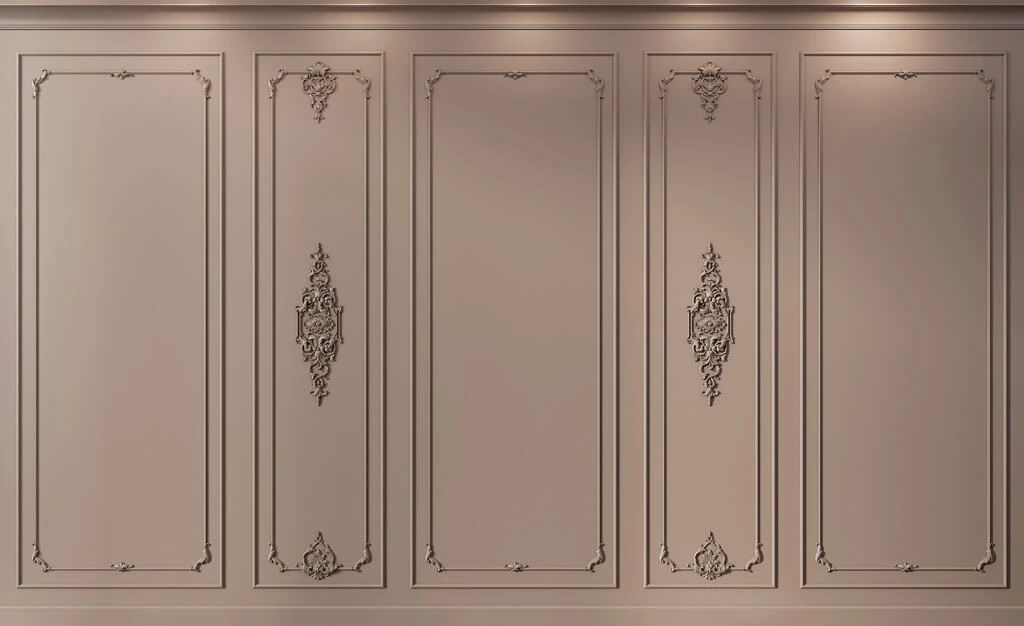
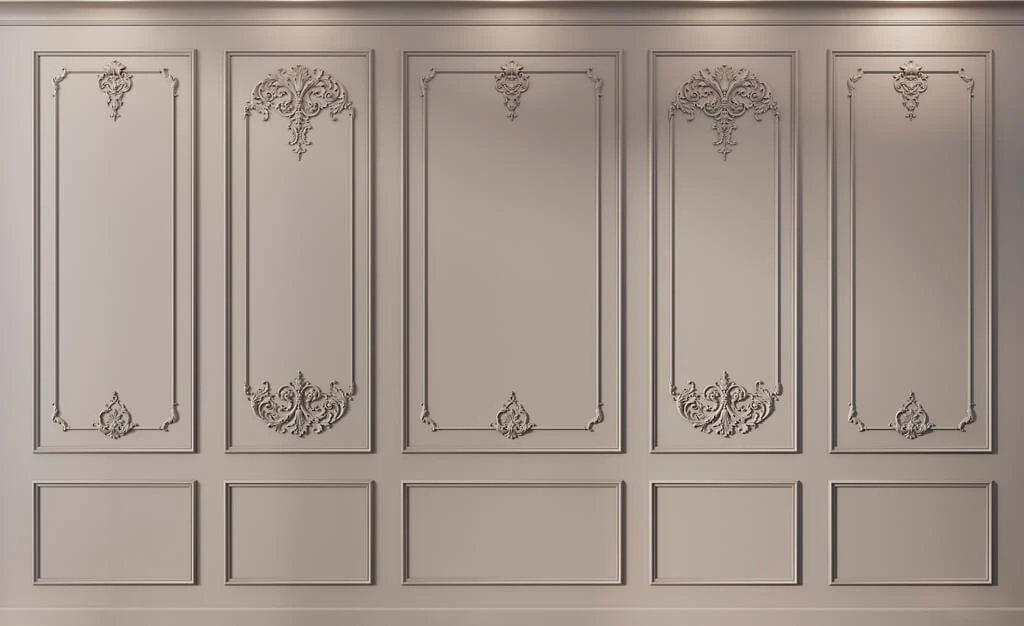
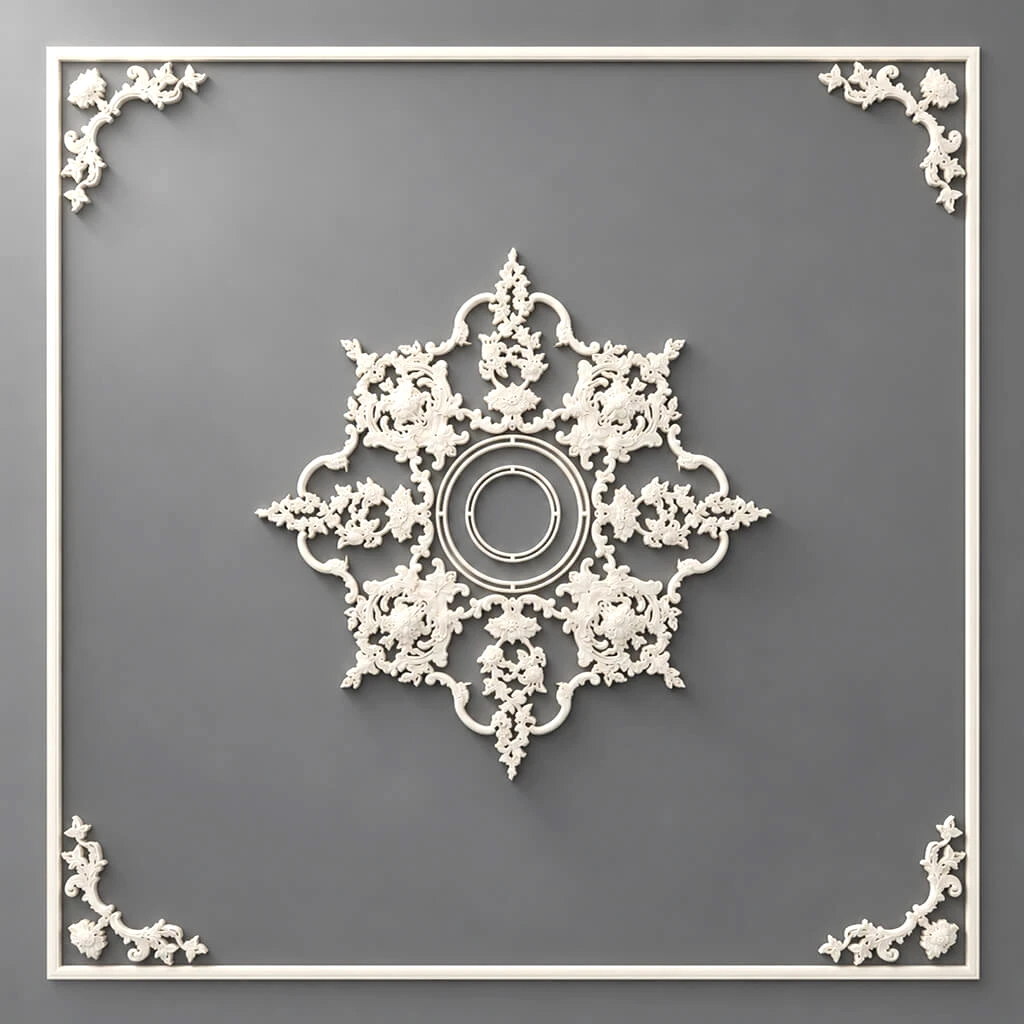
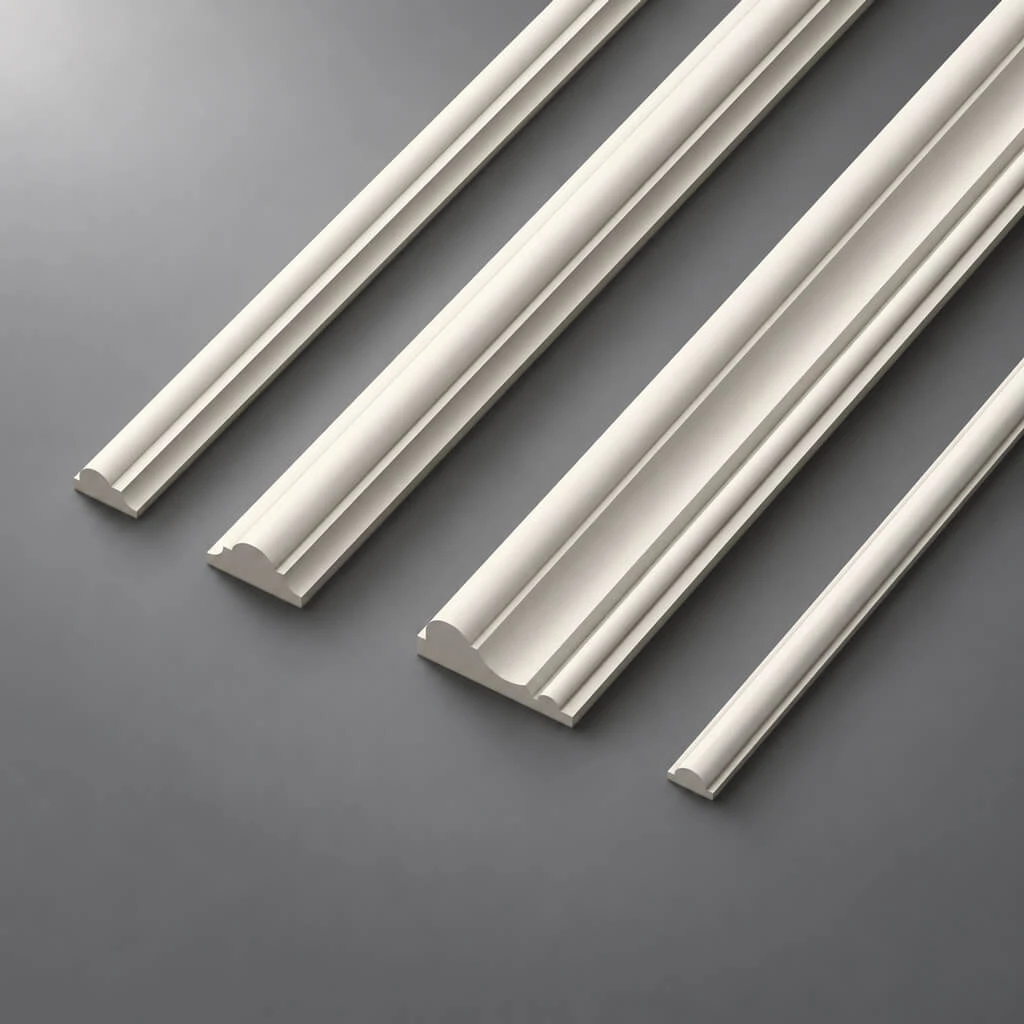
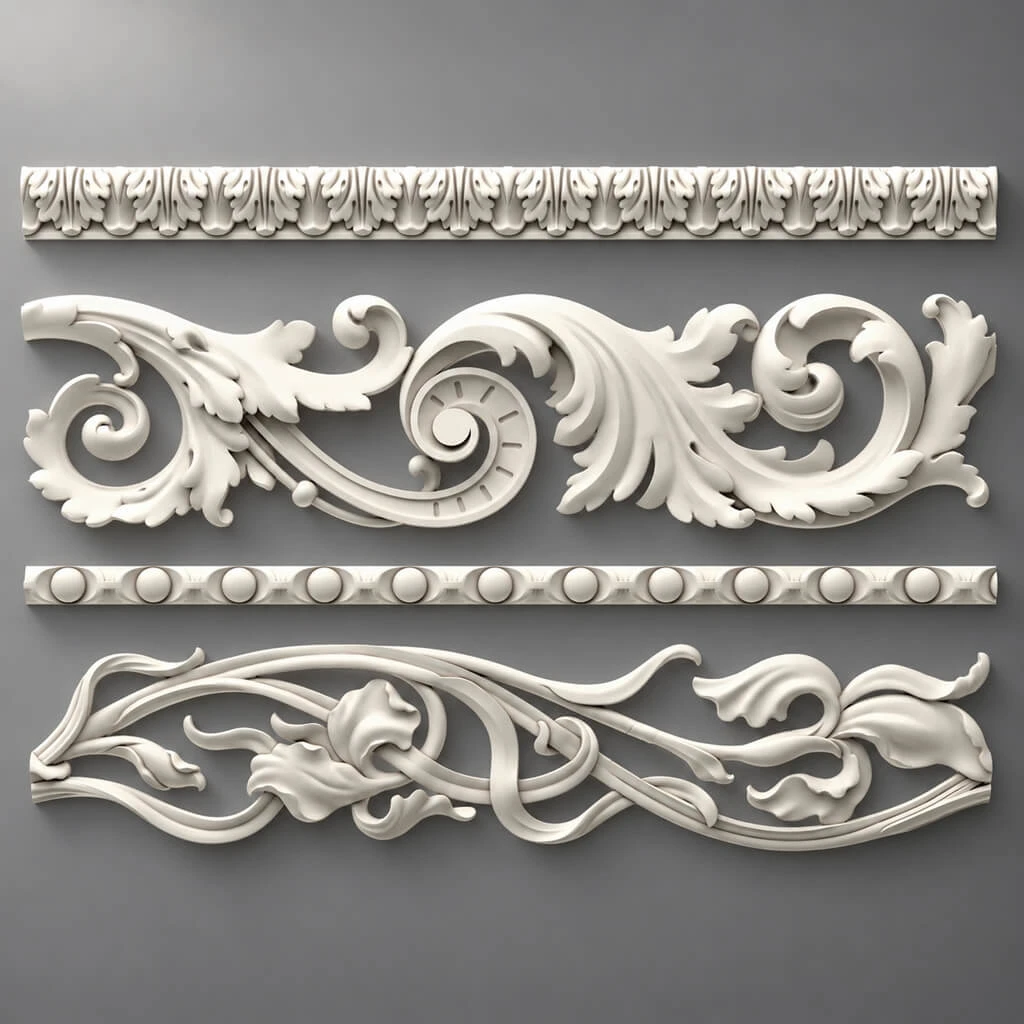
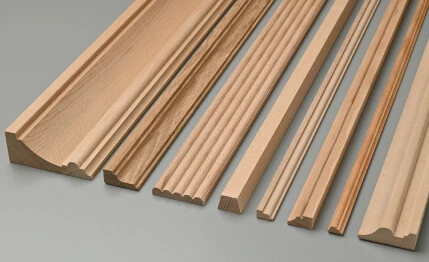
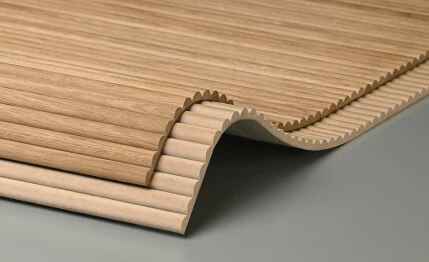
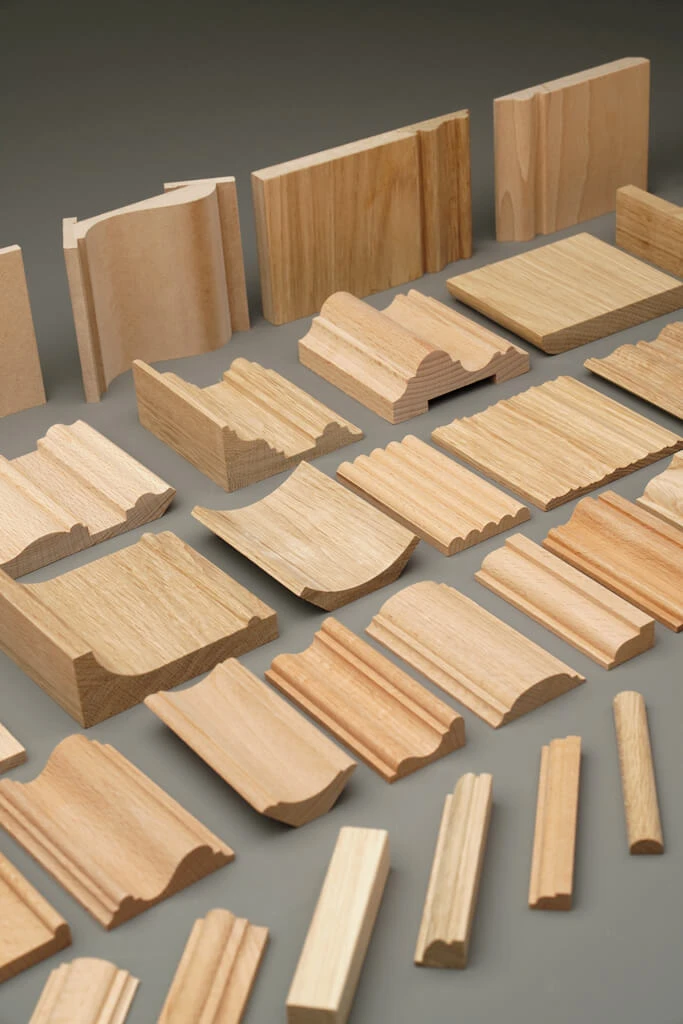
Furniture factories and woodworking workshops use the OMLD-005 set to demonstrate clients available decorative profile options for facades, cornices, bases, and other furniture elements. The samples help select moldings matching furniture styles from classic to modern. Manufacturers can show clients various options for framing panels, edge decoration, and creating relief compositions.
Wooden handles for joinery production— is an indispensable consumable. The production purchases blank handles in bulk, paints them on the line together with facades, and gets a perfectly matched result. No color deviations, no coating inconsistencies. STAVROS works with furniture manufacturers, offering uncoated handles in the required volume.
How to choose a wooden handle to match the furniture style
The most subtle issue is style matching. A technically correct handle placed in an inappropriate style ruins the image as reliably as the wrong color or size.
Classicism and neoclassicism
Classic Furniture requires handles with expressive shape and a plastic silhouette. Brackets with a curved profile, buttons with a relief head, small handles with decorative extension — all of this works in classic style. Material — oak or walnut under a natural coating, or beech under white or cream enamel. Handles should match wooden decor for furniture — overlays, moldings, cornices. These are not separate details — it's a system.
Neoclassicism
A slightly more restrained option: a geometrically clear handle silhouette, without lavish ornamentation, but with a tangible shape. Brackets with a square or rectangular profile, simple buttons with a flat head, neat long handles with a straight, clean design. Coating: white enamel, matte varnish, tinted wax.
Provence and country
Wooden handles here are often painted in pastel tones — white, mint, dusty rose. The shape is soft, rounded: buttons with a convex round head, small brackets with a smooth curve. Sometimes — wooden handles with an imitation of "agedness" through wax patina.
Rustic and eco
Oak with oil finish is the main choice. The handle shape is laconic, natural: a simple bracket, a button with a pronounced end grain texture. Here, what matters is not the complexity of the shape, but the authenticity of the material.
Scandinavian style and Scandi
Long wooden handles on white facades. Smooth, minimalist silhouette. Light wood — beech, ash, or birch. Transparent, barely noticeable finish. The handles act as the only visual accent on clean surfaces — so their shape must be flawless.
Japanese style (Japandi)
Minimalism bordering on asceticism. Thin straight rail handles, wooden knobs with a matte surface. Dark wood — wenge, stained oak — on light or natural facades. No decoration, only form and texture.
Modern style and high-tech
Long handles with a clean geometric profile or flush handles without protrusion. A combination of wood with a metal insert is possible. The handle must be precise — without the slightest randomness in shape.
How to choose the size of a wooden handle
Size is functionality plus proportion. The wrong size makes the handle uncomfortable in the hand or visually awkward on the facade — even if the wood species, style, and finish are chosen correctly.
For drawers
Drawer up to 300 mm wide: handle bracket with center distance 32–64 mm or knob 24–32 mm.
Drawer width 300–450 mm: bracket 64–96 mm or button 32–40 mm.
Drawer width 450–600 mm: bracket 96–128 mm. Two small buttons on symmetrical axes are acceptable.
For cabinet and kitchen module fronts
Front width 300–450 mm: bracket 96–160 mm or long handle 128–160 mm.
Front width 450–600 mm: bracket 128–192 mm or long handle 160–256 mm.
Front width 600–900 mm: bracket 192–256 mm or long handle 256–320 mm.
For tall fronts
For tall cabinets 1800–2400 mm high — long vertical handles 300–500 mm with center-to-center distance 256–400 mm. The handle is placed in the center of the front at palm height — approximately 900–1100 mm from the floor.
Practical tip
Before purchasing, print the handle outline at actual size and hold it against the front. This eliminates perception errors from the screen and allows you to assess the proportion in 10 seconds.
What to pair with wooden furniture handles
A wooden handle is a detail that works within a system. And this system includes several elements that determine the integrity of the image.
With carved decorative overlays
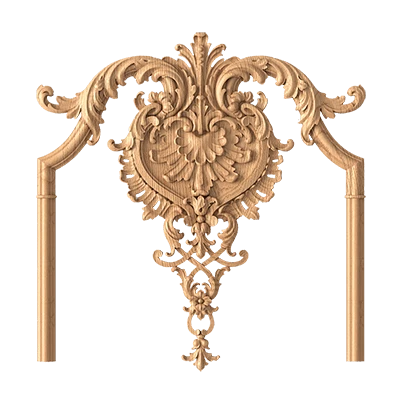
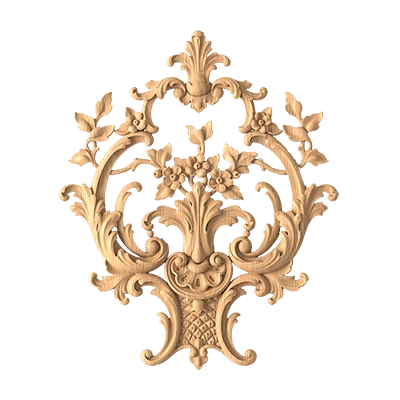
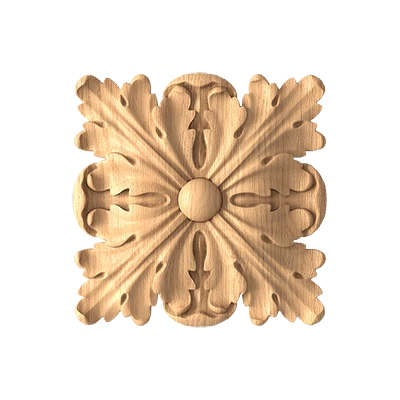
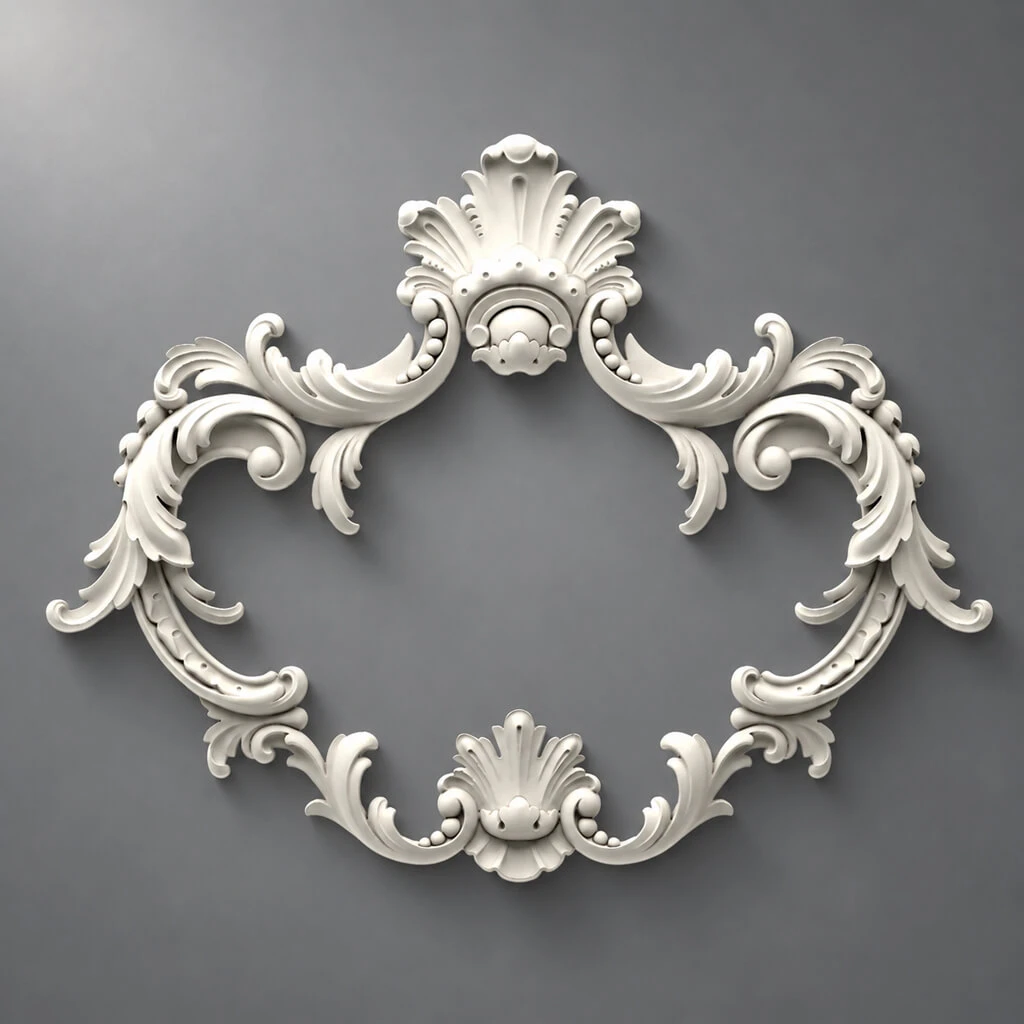
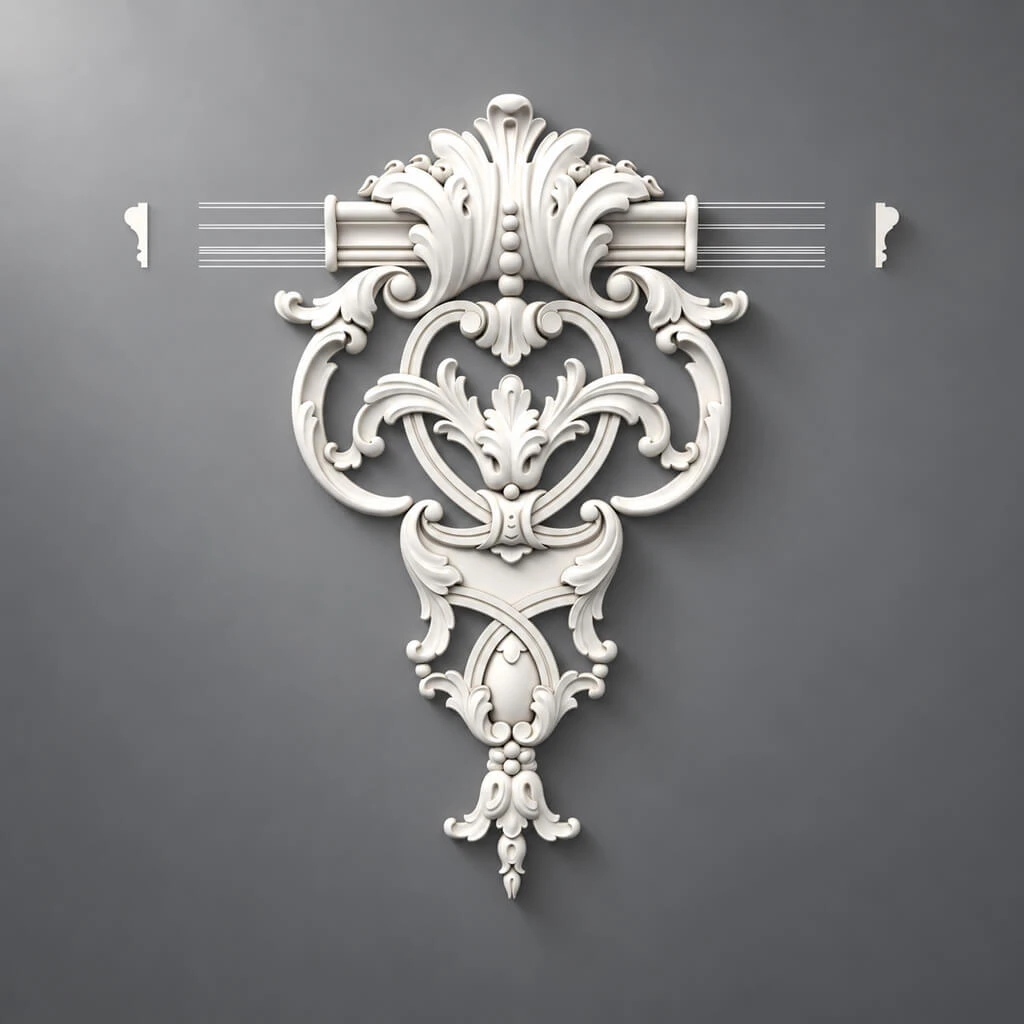
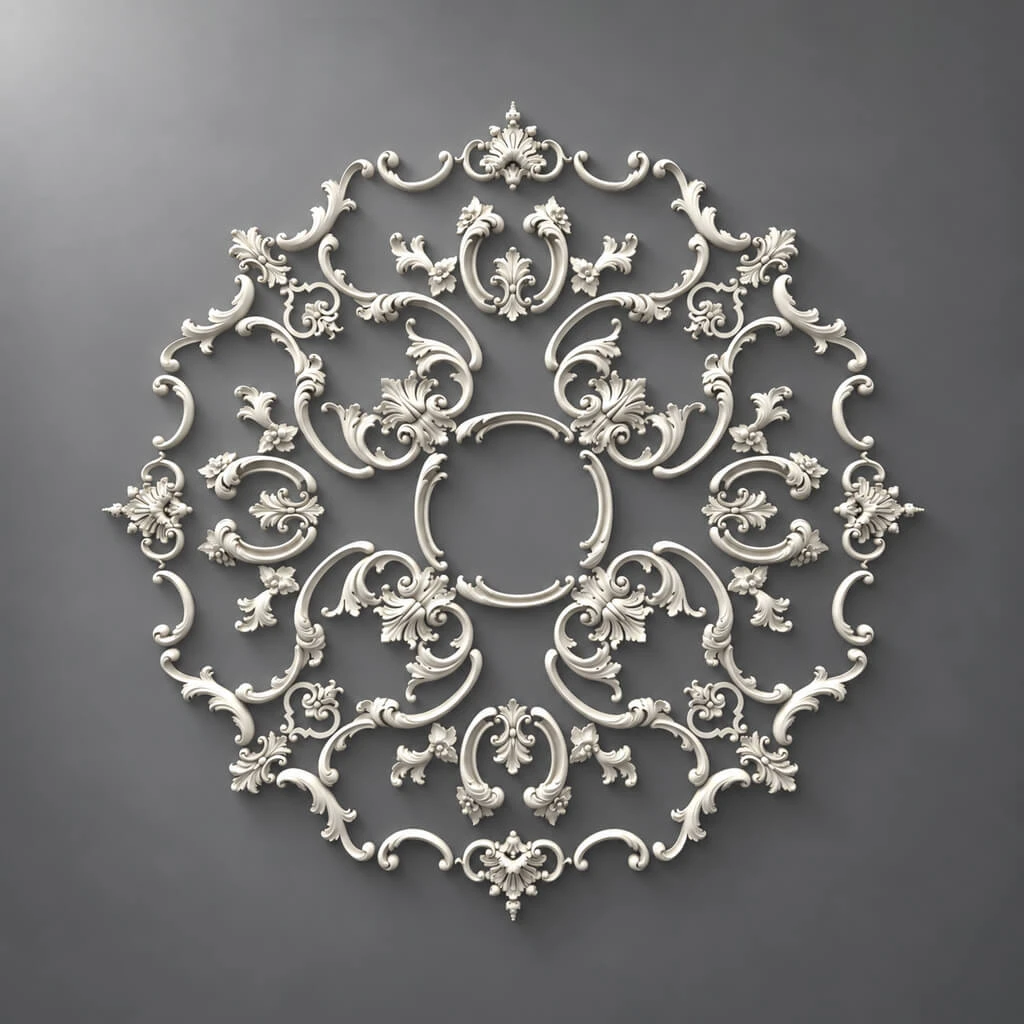
If the facade is decorated decorative wooden overlays — with carved ornaments on furniture, corner elements, or central accents — the handle should be in the same style. Overlays with classic floral ornaments require handles with a flowing silhouette; minimalist geometric overlays require handles with clean lines. The wood species should ideally be the same: if the overlays are oak, the handles should be oak.
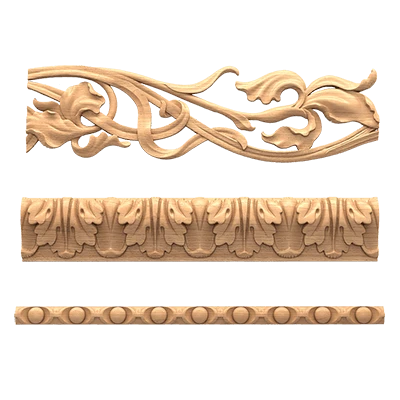
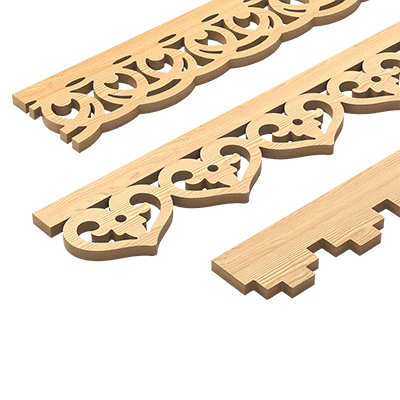
With moldings
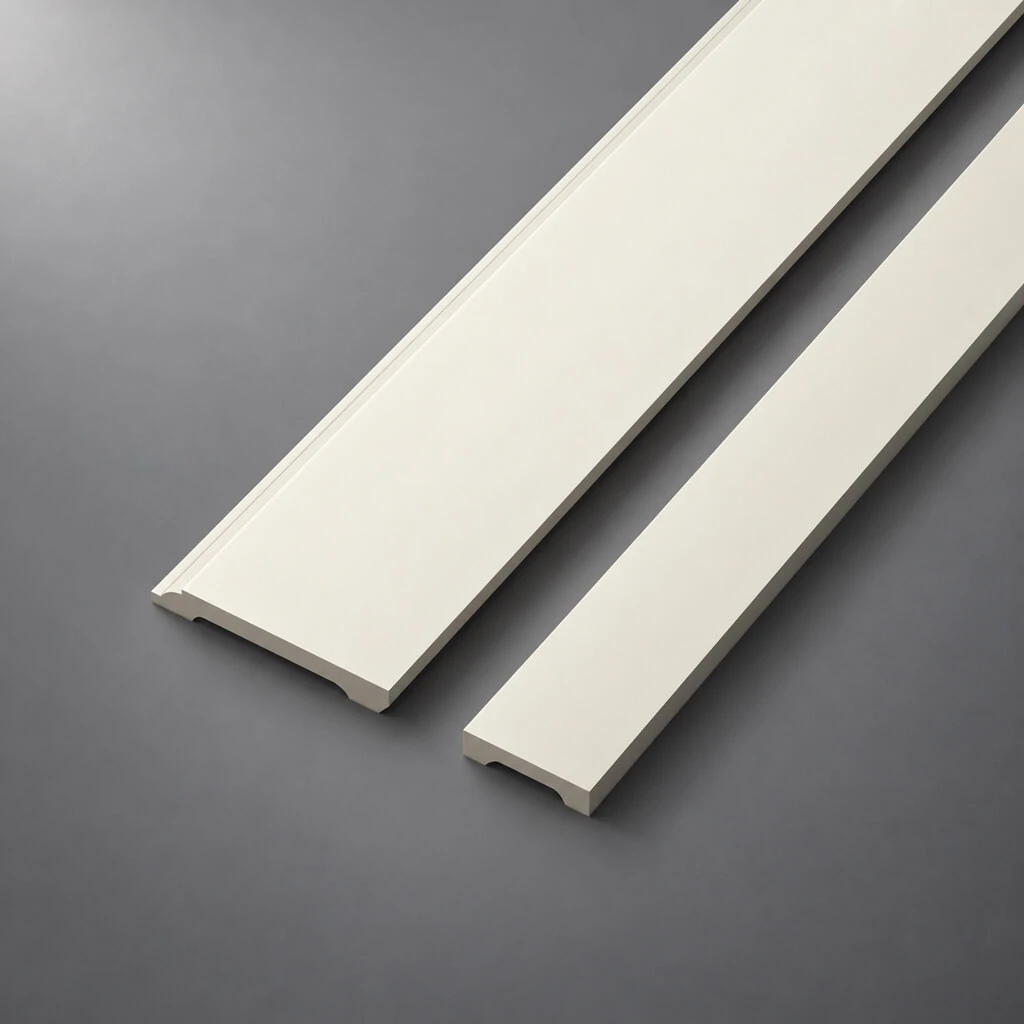
Moldings for furniture create a linear structure for the facade. The handle integrates into this structure as a grip point — and must match its scale. Wide molding — a proportionate handle. Thin molding — a compact handle.
With furniture legs
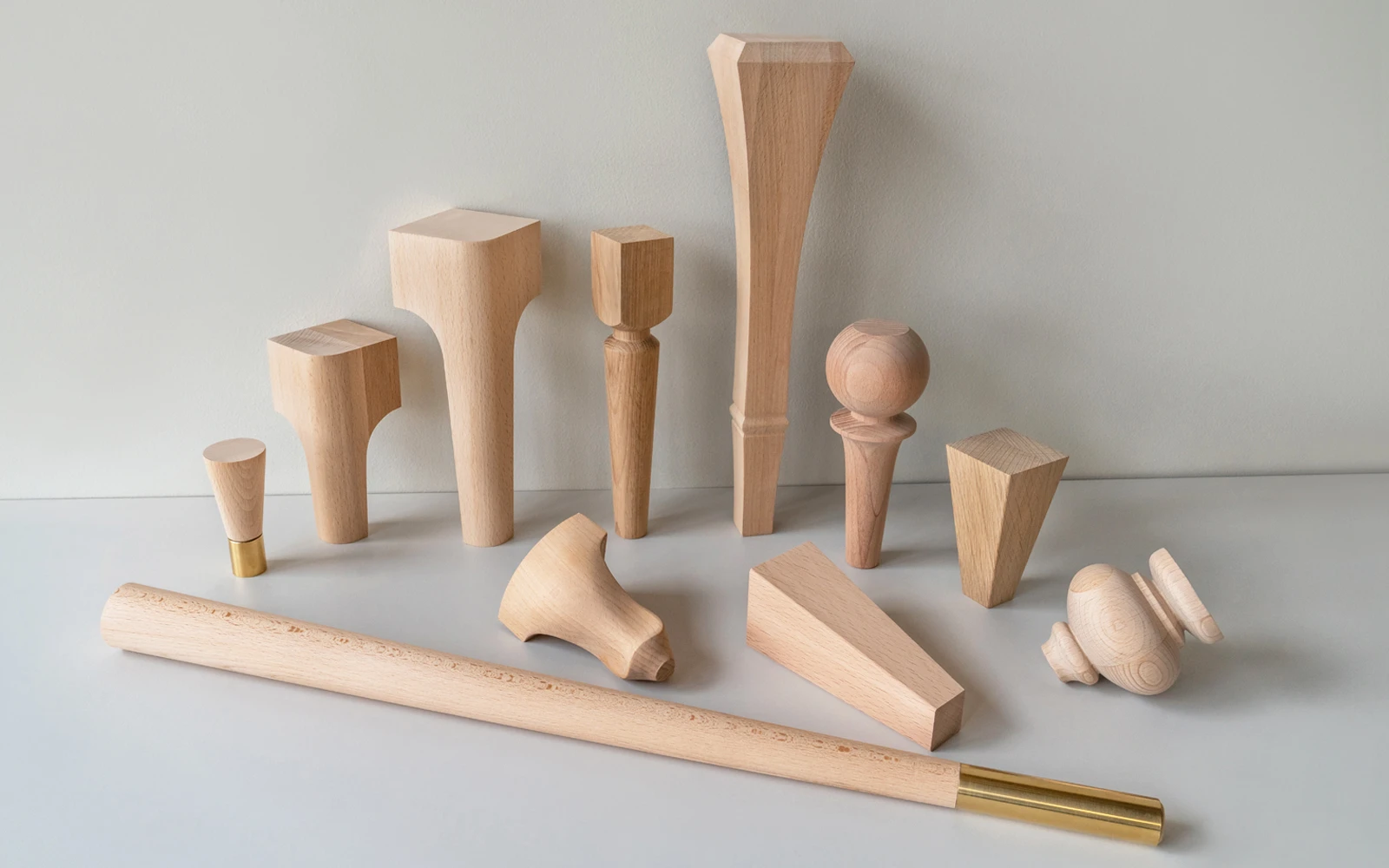
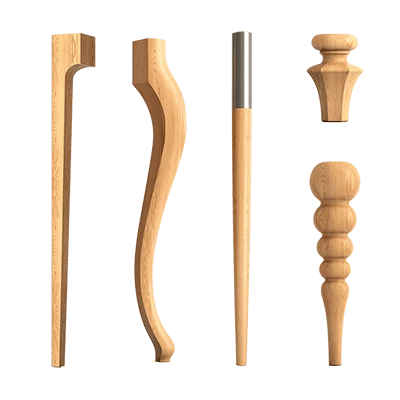
furniture legs wooden — and handles wooden. This simple rule creates a unified material code for the furniture piece. Turned oak legs with oil finish + oak pull handles with oil finish = a cohesive, meaningful look.
With cornices and baseboards
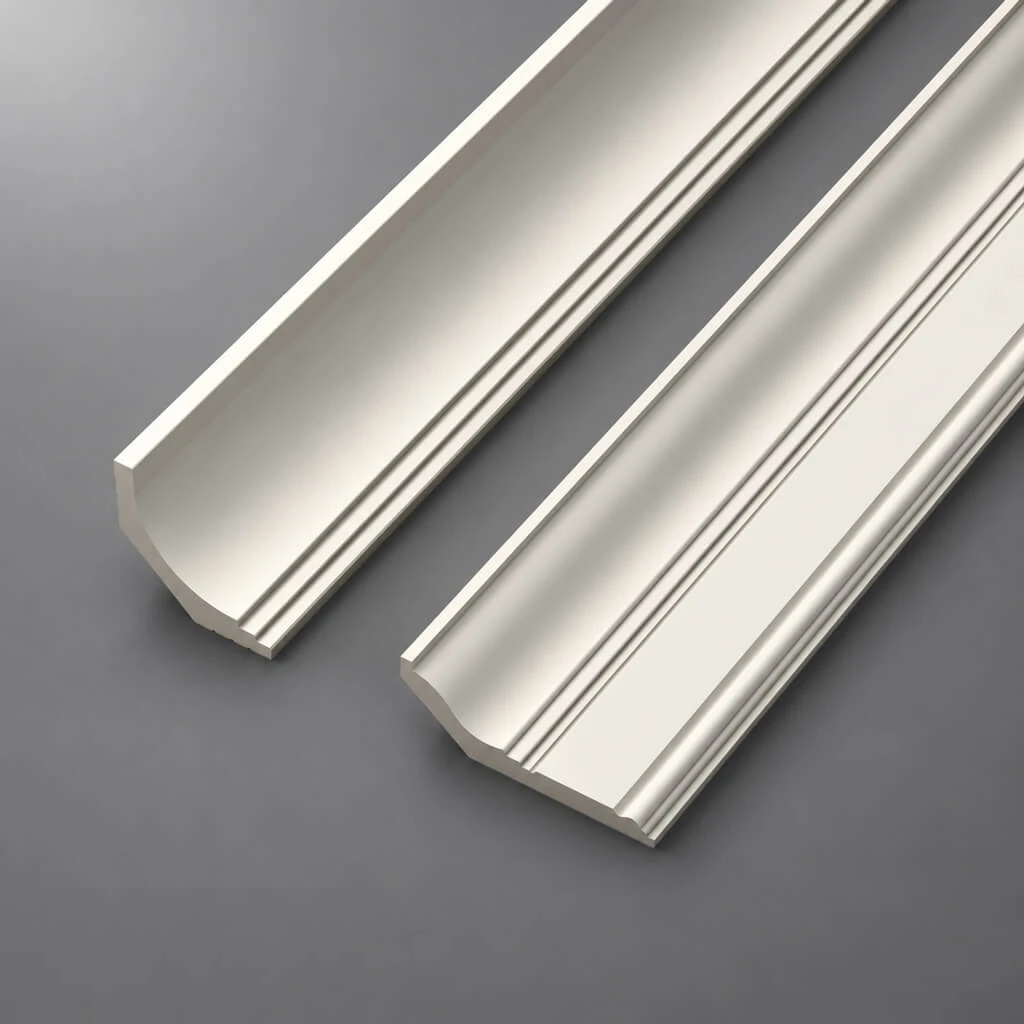
In cabinet furniture — kitchen, wardrobe, library — handles, legs, Crown Molding, baseboards, and overlays should be from the same catalog of the same manufacturer. This is the only way to guarantee stylistic and color unity. That is why STAVROS offers all elements as a set: handles, moldings, overlays, furniture legs — all from the same wood, in the same style.
With pilasters and capitals
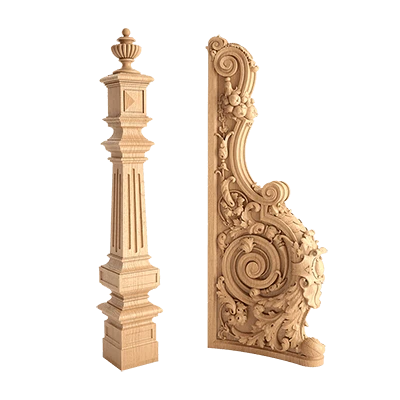
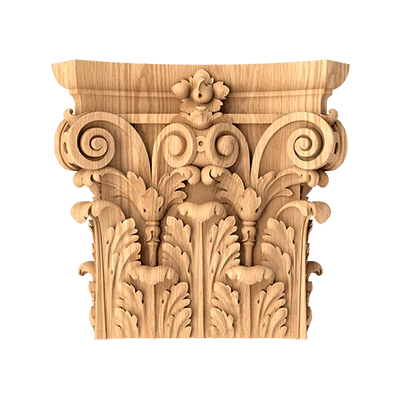
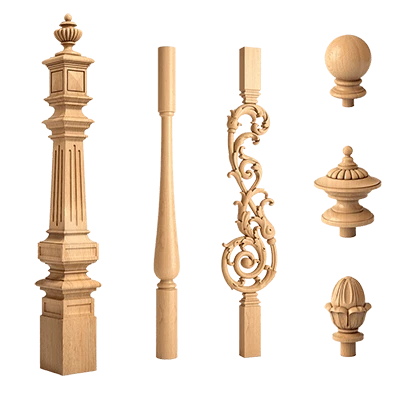
For representative interiors — living room, study, hall — furniture may include pilaster posts with capitals, decorative pylons and arches. Handles in this context should be no less expressive: a wooden handle with a relief profile, patinated or finished to match the furniture color.
With panels and decorative frames
Carved furniture decor in the form of a panel on a cabinet door or buffet facade requires a corresponding handle — small, not competing with the ornament, but harmonious in shape. Here the rule applies: 'the handle supports the style, does not overpower it.'
Mistakes when choosing wooden handles
There are not many mistakes here, but each one is costly — literally: incorrectly chosen handles will have to be replaced.
Mistake 1: choosing only by photo without dimensions
Photos lie about scale. A handle that looks impressive on screen may actually be 64 mm long — for your 600 mm facade, that's toy-like. Always check real numbers: center distance, overall length, rod diameter or width.
Mistake 2: not considering the opening method
A hinged door opens differently than a drawer. For a hinged door, a handle that can be grasped from the side is convenient — a bracket or long handle. For a drawer, a handle that is pulled towards you — a bracket with a comfortable grip or a knob. A recessed handle is not suitable for opening with great force — only for lightweight facades.
Error 3: handle too small for a large facade
A 28 mm diameter button on a 600×900 mm facade is a visual nonsense. The handle should be proportionate to the facade. For large surfaces — long handles or brackets with appropriate center-to-center distance.
Error 4: mixing different handle styles in one set
A classic-style bracket + a Scandinavian button + a high-tech long handle — in one kitchen or one cabinet. This is not eclecticism, it's a lack of concept. All handles in the set should be from the same series or the same style solution.
Error 5: not planning the coating in advance
Buying a handle without coating and then not knowing how to treat it is a recipe for disappointment. Before purchasing, of unfinished wooden handles clearly decide: enamel, varnish, oil, stain. This determines the choice of wood species and the order of final finishing.
Error 6: not matching handles with the rest of the decor
Handles are chosen last — 'we'll pick something.' As a result, handles don't match with overlays, legs, or moldings. The system falls apart. The furniture looks inconsistent. The right approach: handles are part of the decorative concept, chosen simultaneously with other elements.
Error 7: not considering the facade thickness
The standard handle mounting bolt is designed for a facade of a specific thickness — typically 16–22 mm. If your facade thickness is non-standard, you need to clarify the length of the mounting bolt in advance. Otherwise, the handle will wobble or, conversely, be pressed too tightly and split the facade during use.
Why STAVROS wooden handles are the right choice
When the task isbuy wooden handlesfor a specific project — it's not just a wide range that matters, but the ability to assemble a system: handles + decor + moldings + legs + overlays in a unified style and material code.
This is exactly what STAVROS offers. The catalog featureswooden furniture handlesin several versions: handles without coating, bracket handles, knob handles, long and flush-mounted options. All products are made from solid beech and oak, with in-house production and quality control at every stage.
Important:uncoated wooden handlesfrom STAVROS are blanks of the highest sanding class, ready for enamel, lacquer, oil, or stain. For furniture workshops and manufacturers, this saves time and guarantees consistent results.
In one catalog — Solid Wood Items for complete furniture outfitting: handles, Wooden trim, decorative overlays, moldings, cornices, legs. Everything is coordinated in style, proportions, and wood species. Orders from 1 piece, Contact us to confirm shipping to your destination.
FAQ: answers to popular questions about wooden furniture handles
Which wooden handles to choose for a cabinet?
For a hinged cabinet, the optimal choice isWooden wardrobe handleslong vertical handles or brackets. For a built-in cabinet in the hallway, brackets with a center distance of 128–192 mm. For a wardrobe with tall fronts, long handles of 300–400 mm. The choice of finish depends on the color of the front.
Are wooden handles suitable for the kitchen?
Yes.Wooden handles for kitchen frontsare installed provided the correct coating: varnish, oil, or enamel ensures resistance to moisture and grease. On upper fronts, brackets; on lower fronts and tall cabinets, long handles or vertical brackets.
What is better: a bracket handle or a knob handle?
wooden hook handle is convenient for large fronts — cabinets, kitchens, chests of drawers. wooden button handle is optimal for small drawers, nightstands, and doors up to 500 mm in height. If in doubt, choose a bracket: it is more versatile.
Can wooden handles be painted?
Yes,Wooden handles for painting perfectly accept enamel, varnish, oil, and stain. For enamel, beech is better (fine pores, smooth surface), for natural coatings — oak. Before applying the coating, the surface is sanded and, if necessary, primed.
What to pair with wooden furniture handles?
С decorative appliqués for furniture, moldings, with matching legswith cornices, pilasters. It is advisable to select all elements from one catalog to ensure unity of style and material.
Can I order wooden handles wholesale for furniture production?
Yes. STAVROS works with both retail customers (from 1 piece) and furniture manufacturers and workshops.Buy furniture handleswholesale can be done through the website or upon request from the company's managers.
Which material is better: oak or beech?
Oak — for handles with natural finish (oil, varnish) with pronounced texture. Beech — for handles with enamel or paint: even structure provides an ideally smooth surface. Both materials are presented in the STAVROS catalog.
How are wooden handles attached to the facade?
Standard attachment — bolt through the facade. Bolt diameter — 4 mm (EN standard), length — from 20 to 40 mm depending on the facade thickness. The center-to-center distance of the handle must exactly match the distance between the holes. Knob handles are attached with one bolt in the center.
About the company STAVROS
STAVROS is a Russian manufacturer of wooden furniture fittings and decor, working with solid beech and oak. Own production, warehouses in Moscow and St. Petersburg, Contact us to confirm shipping to your destination. The STAVROS catalog includes a full range of furniture products: wooden handles of all types (staples, knobs, long, flush), handles without coating for custom finishing, decorative overlays, moldings, cornices, baseboards, furniture legs and supports. All products are made in a unified style code and are compatible with each other — allowing you to furnish furniture from handle to leg from one supplier. STAVROS works with private customers, interior designers, furniture workshops and manufacturers: order from 1 piece, flexible conditions for wholesale partners.