

























Article Contents:
- What are carved wooden overlays and why are they needed
- Where wooden carved overlays are used: from furniture to fireplace portals
- Furniture fronts
- Cabinets, chests, sideboards
- Doors and door panels
- Wall panels and partitions
- Mirrors and frames
- Fireplace portals and decorative niches
- Restoration of old furniture
- Ceiling decoration
- Oak or beech: an honest breakdown without unnecessary words
- Oak: for those who value character
- Beech: a master of precision and smooth surfaces
- Comparison table
- Finishing decides everything: enamel, varnish, oil, patina
- White and colored enamel
- Tinting and stain
- Clear varnish
- Oil and wax
- Patina
- How to choose the size and pattern of a carved overlay
- Proportion Rule
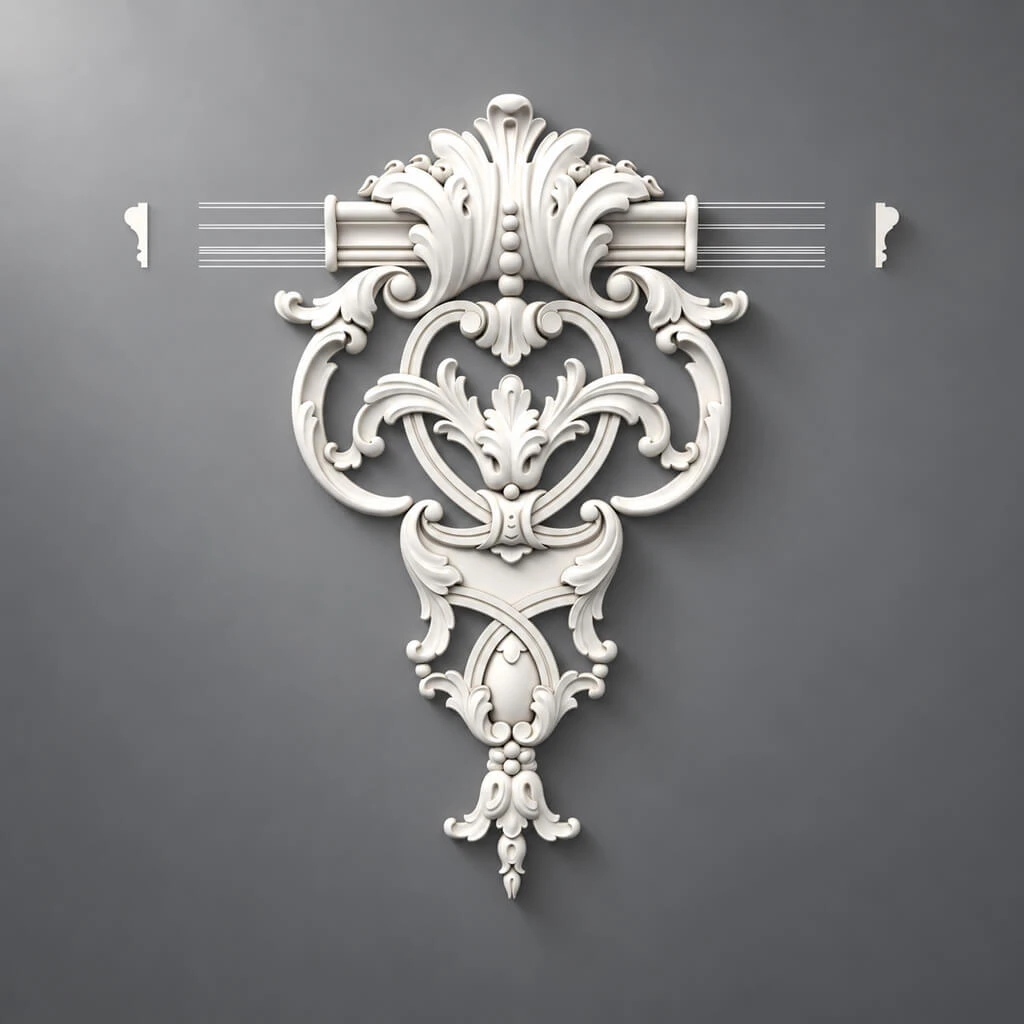
- Central overlays
- Corner Overlays
- Modular (composite) elements
- Ornament pattern
- Carved overlays for furniture: how they change everything
- Which facades are suitable for mounting overlays
- Carved overlays for doors and walls
- How to combine carved overlays with other wooden decor
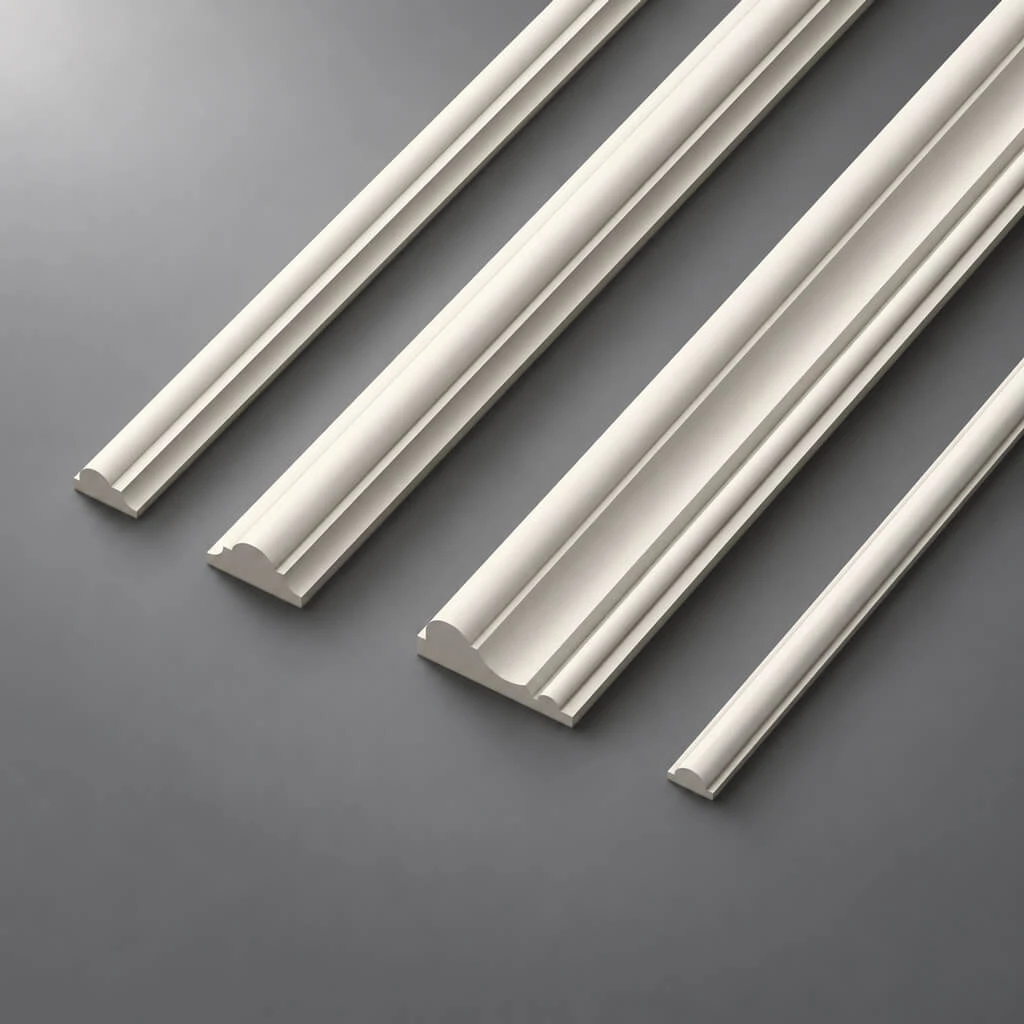
- With Mouldings
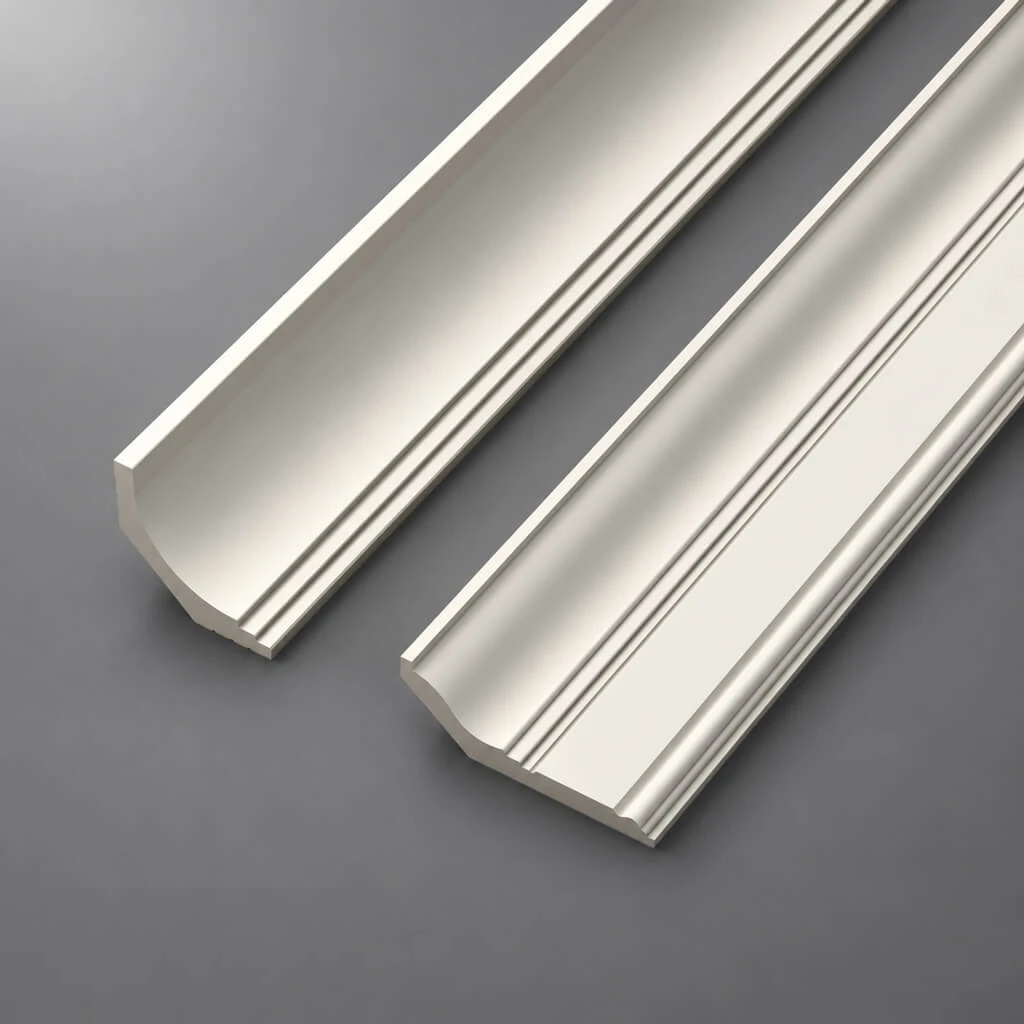
- With cornices and baseboards
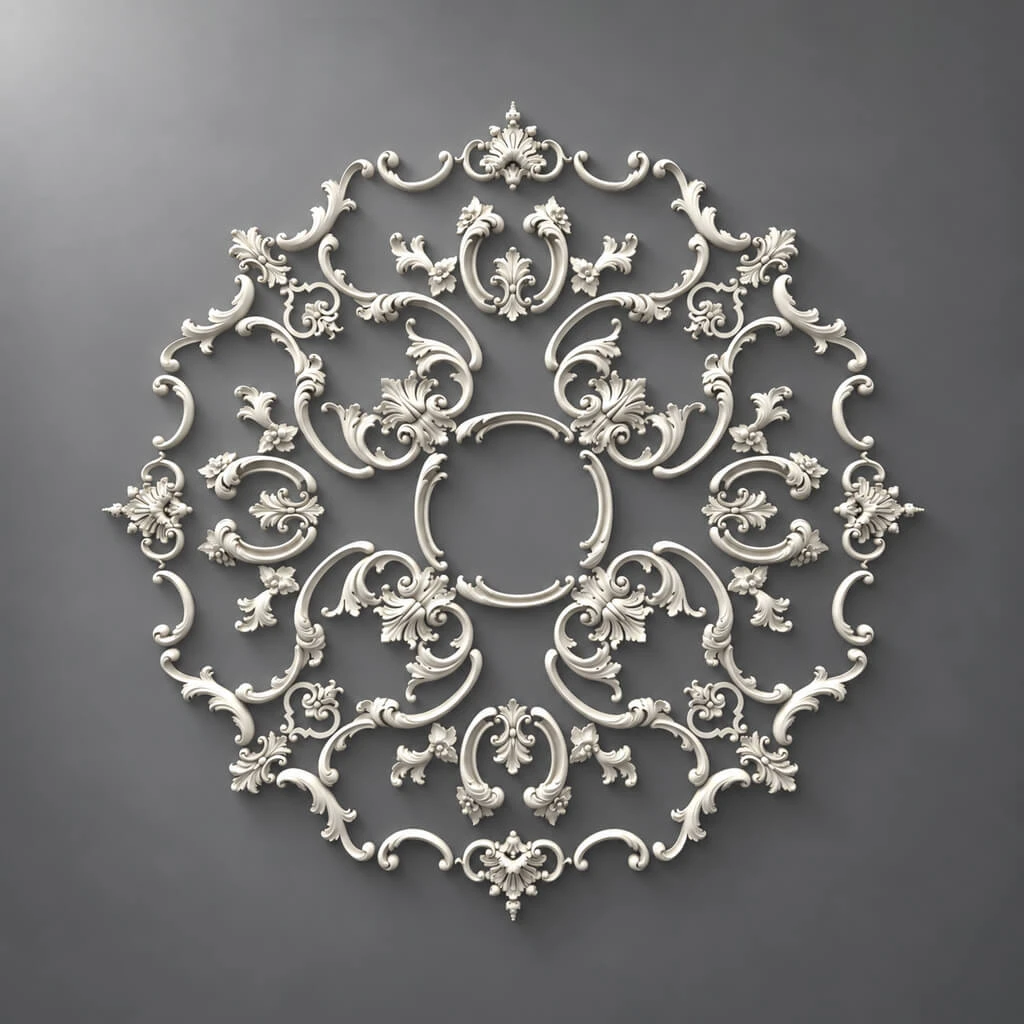
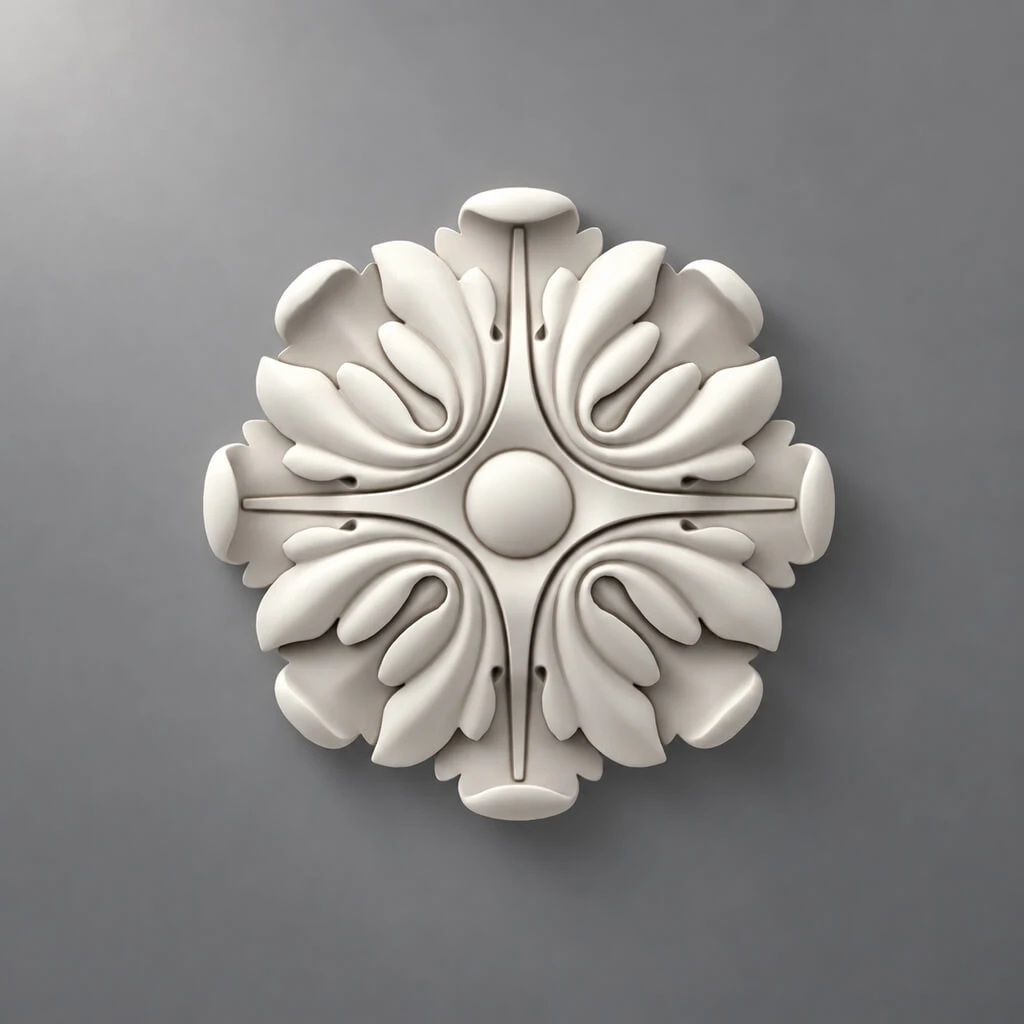
- With rosettes
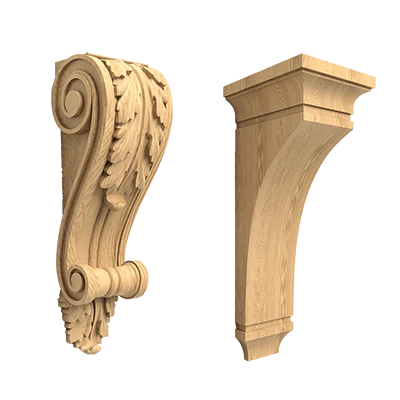
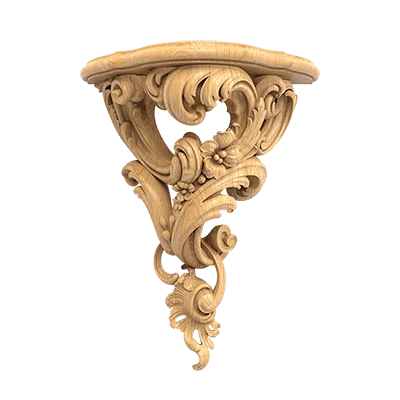
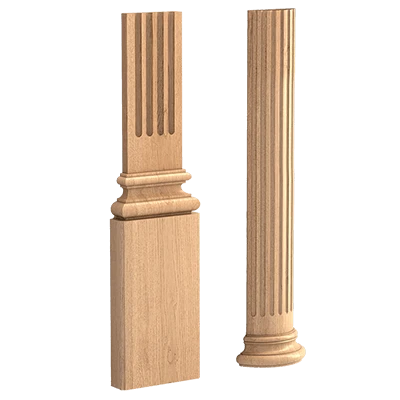
- With furniture legs and brackets
- With baguette and frames
- Typical mistakes when choosing carved wooden overlays
- Mistake 1: choosing only by photo
- Mistake 2: ignoring the thickness of the product
- Mistake 3: mixing ornaments of different styles
- Mistake 4: not thinking about the coating in advance
- Mistake 5: too small decor on a large surface
- Error 6: rejection of symmetry where it is needed
- Error 7: Purchase without stock
- Which styles are suitable for carved wooden overlays
- Classic and neoclassic
- Baroque and Rococo
- Provence
- Rustic and Country
- Modern classicism
- Art Deco
- How to properly buy carved wooden overlays for a specific task
- Step 1: determine the mounting surface
- Step 2: choose the type of finish
- Step 3: determine the ornament style
- Step 4: select the size
- Step 5: check compatibility with moldings
- Step 6: order with a margin
- How to attach wooden carved overlays: short and to the point
- Go to catalog: over 400 models of carved wooden overlays
- FAQ: answers to popular questions about carved wooden overlays
- About the Company STAVROS
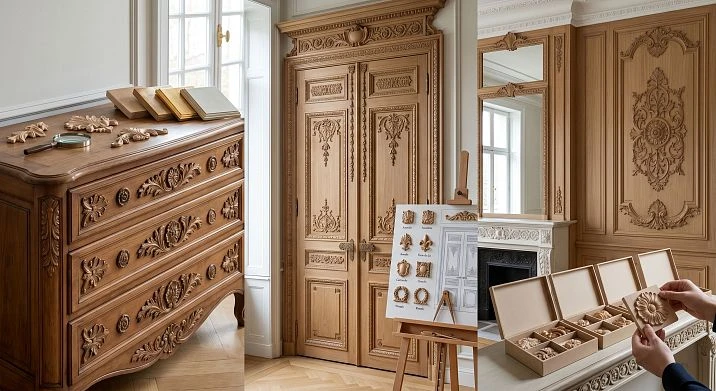
There is a moment in renovation when everything is ready — walls painted, furniture arranged, lighting set — but the feeling of incompleteness persists. Something is off. The space is technically correct, but it lacks character, lacks a voice. It is at this moment that an experienced designer or savvy homeowner reaches for the only tool that requires no major investment yet completely transforms the perception of the interior — to carved wooden overlays.
This article is not a theoretical discussion about the beauty of wood. It is a practical guide: what to choose, where to apply, from which material, for which finish, in which size and style. Read it if you plan to buy Carved Wooden Appliqués and want to do it consciously, not at random.

What are carved wooden overlays and why are they needed
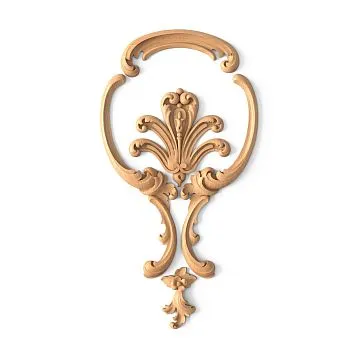
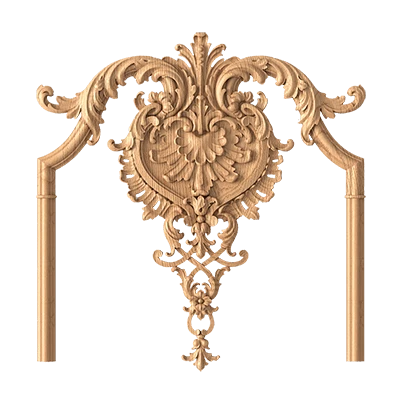
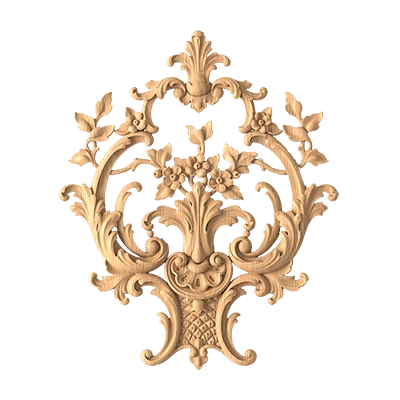
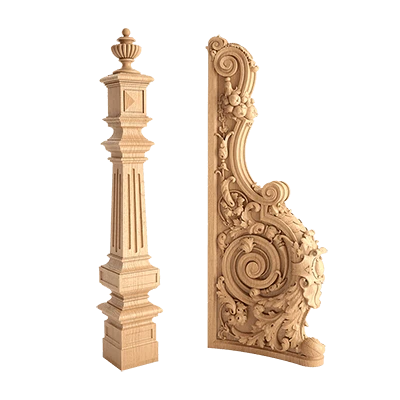
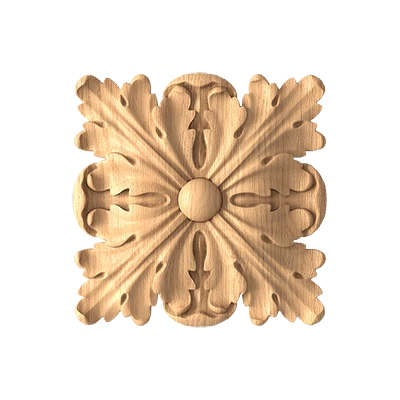
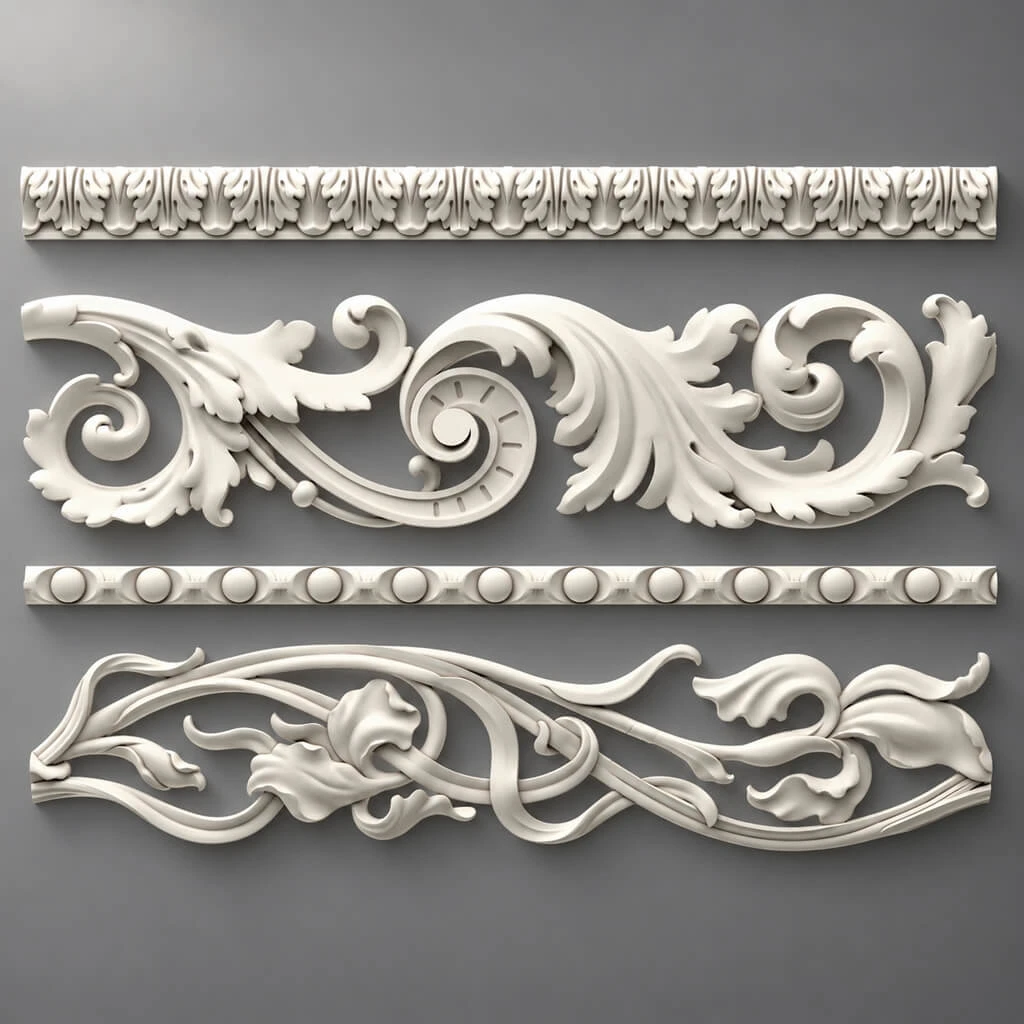
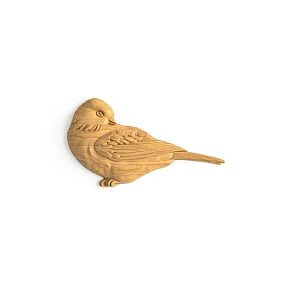
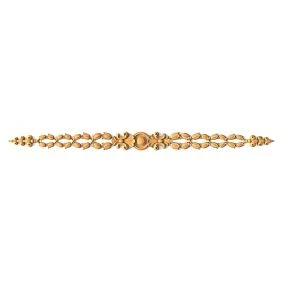
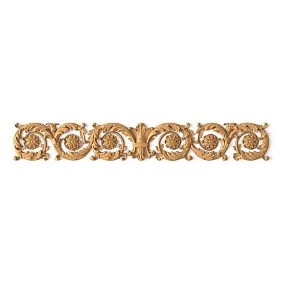
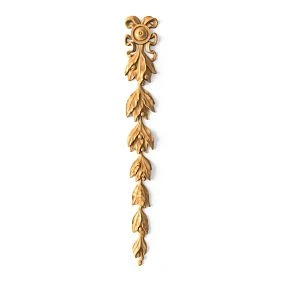
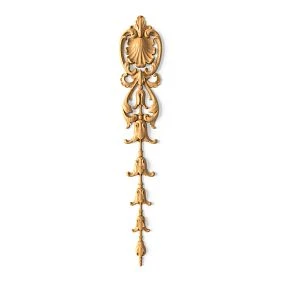
Wooden carved appliqués are three-dimensional decorative elements made of solid wood that are attached to the surface of furniture, door panels, wall panels, mirror frames, fireplace portals, or any other flat surface. They do not bear structural load — their purpose is different: to create visual relief, set the stylistic code, and turn a neutral surface into an architecturally meaningful element.
To be more precise, an overlay works like an accent in text: the sentence itself may be correct, but it is the highlighted word that directs the gaze and creates meaning. A decorative wooden overlay on a furniture facade does exactly the same — it indicates where to look and sets the tone for the entire space.
Choose Decorative wooden inlays According to four key parameters: material (oak or beech), size and shape, ornament pattern, and future finish (enamel, varnish, oil, patina). It is the combination of these parameters that determines how organically the overlay will fit into the project. Let's examine each of them in detail — but first, let's talk about where these products are generally used.
Where wooden carved overlays are used: from furniture to fireplace portals
The scope of application for carved wooden overlays is broader than commonly thought. Many limit themselves to kitchen facades — and miss out on eight other possibilities.
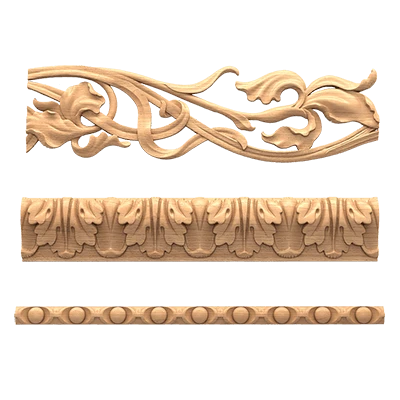
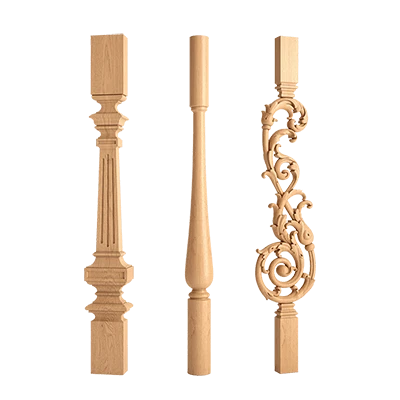
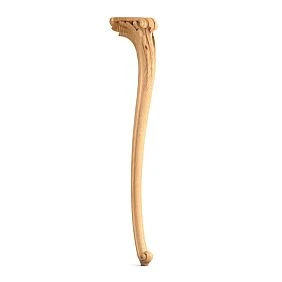
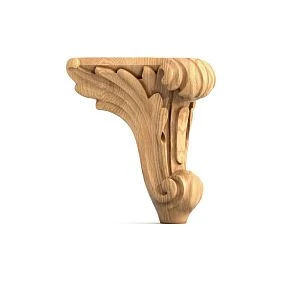
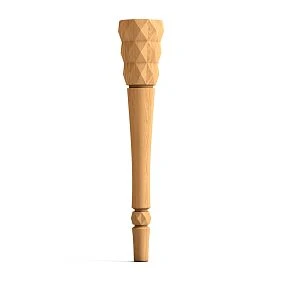
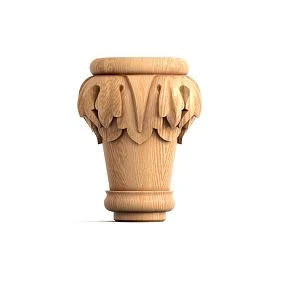
Our factory also produces:
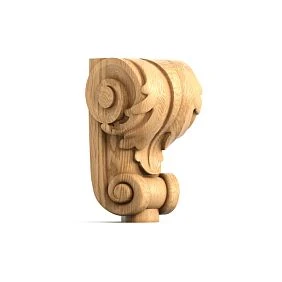
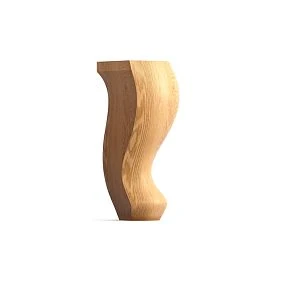
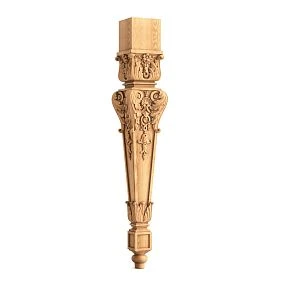

Furniture facades
This is a classic and most common application. The facade of a cabinet, chest of drawers, nightstand, sideboard, or secretary — any flat door is transformed by a single carved element placed in the right spot. A central overlay turns a simple MDF facade into a piece with character. Corner elements create the illusion of a frame. A system of several elements — and the facade reads as a full-fledged piece of joinery art.
For kitchen facades, material and coating are especially important: the environment is humid, and temperature fluctuations are significant. Overlays made of oak and beech handle this better than most wood species — provided the proper finishing treatment.
Get Consultation
Cabinets, chests of drawers, nightstands
Freestanding furniture pieces — wardrobes, dressers, bedside tables — are independent objects where decor works differently than in a kitchen set. Here, proportion is important: the decor must be proportionate to the dimensions of the piece. For a tall wardrobe with facades of 900×2200 mm, large symmetrical overlays or vertical panels are appropriate. For a small nightstand, a delicate central element or corner accents.
Doors and door panels
Wooden overlays for doors — one of the most expressive ways to give an interior door a classic or neoclassical look without completely replacing it. Several overlays arranged in a specific order on a smooth panel create the illusion of a paneled structure. The door gains depth, volume, and style — without an expensive custom joinery order.
This is especially relevant during restoration: old door panels that have retained their structural integrity visually become outdated. A few overlays — and the door is relevant again.
Wall panels and partitions
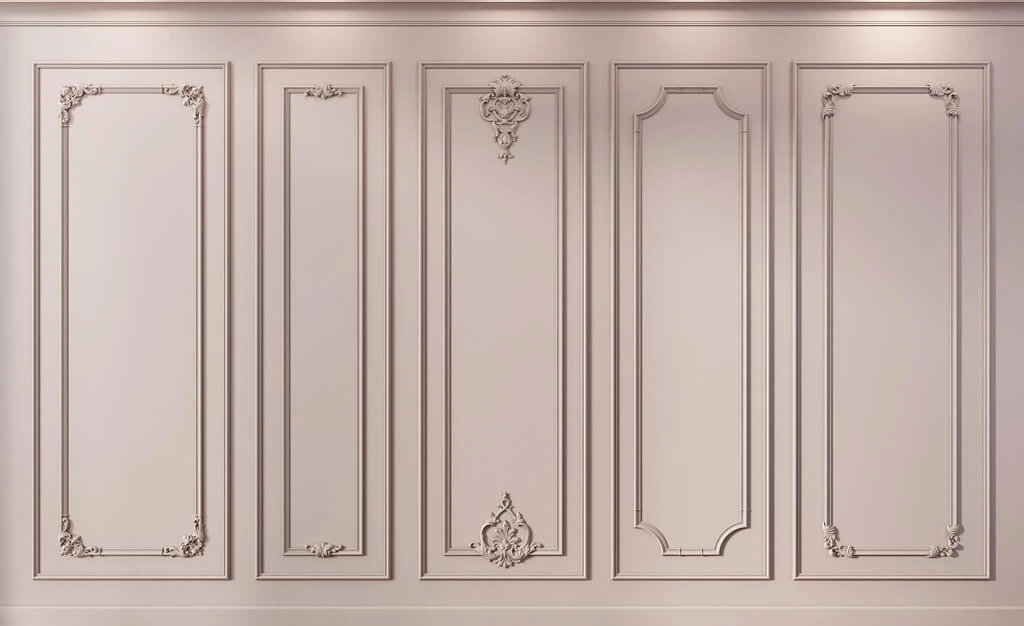
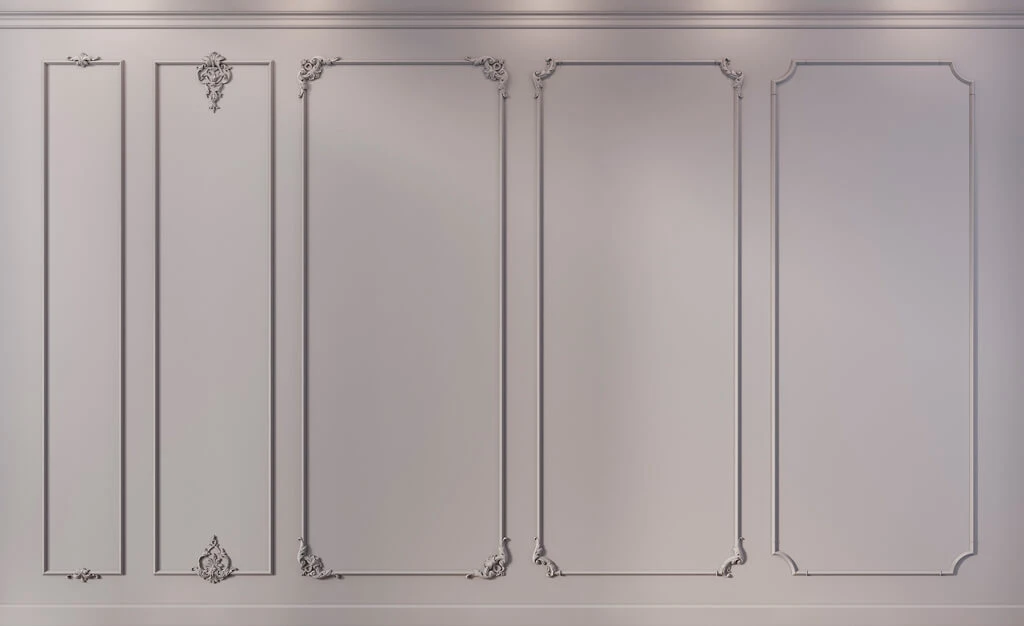
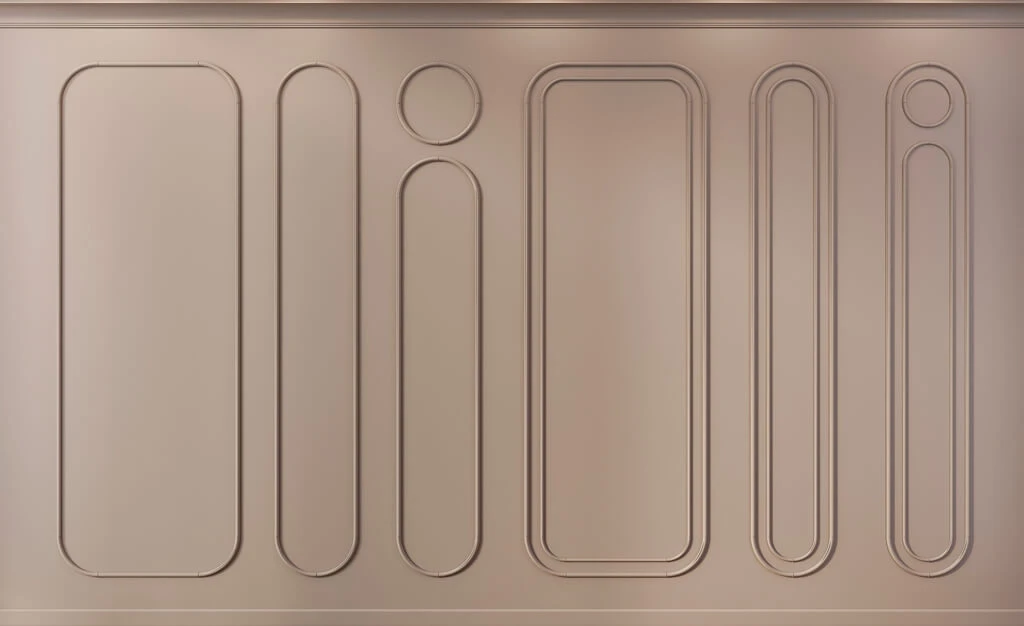
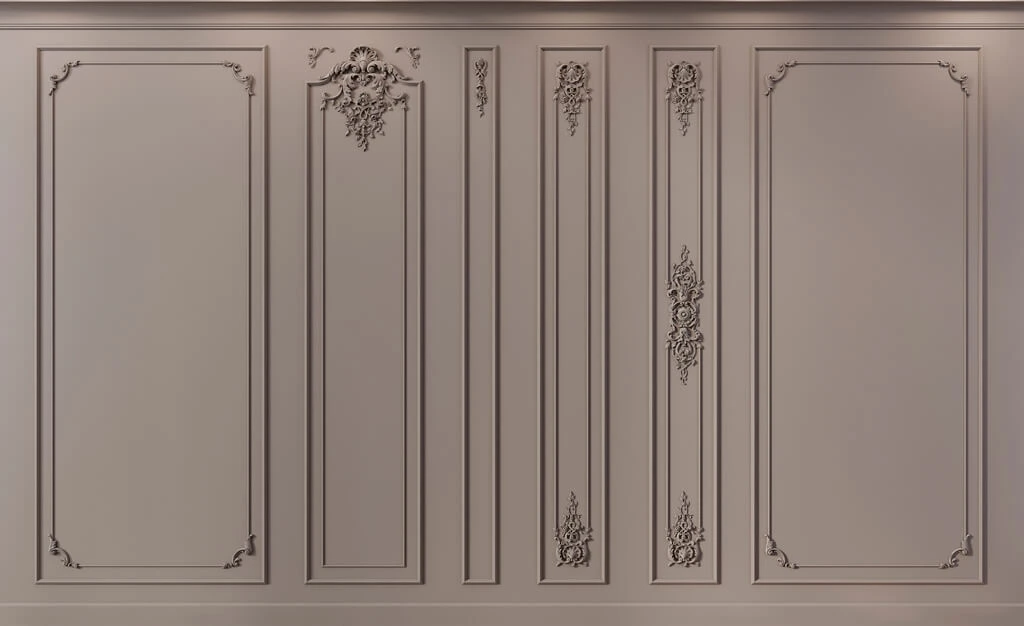
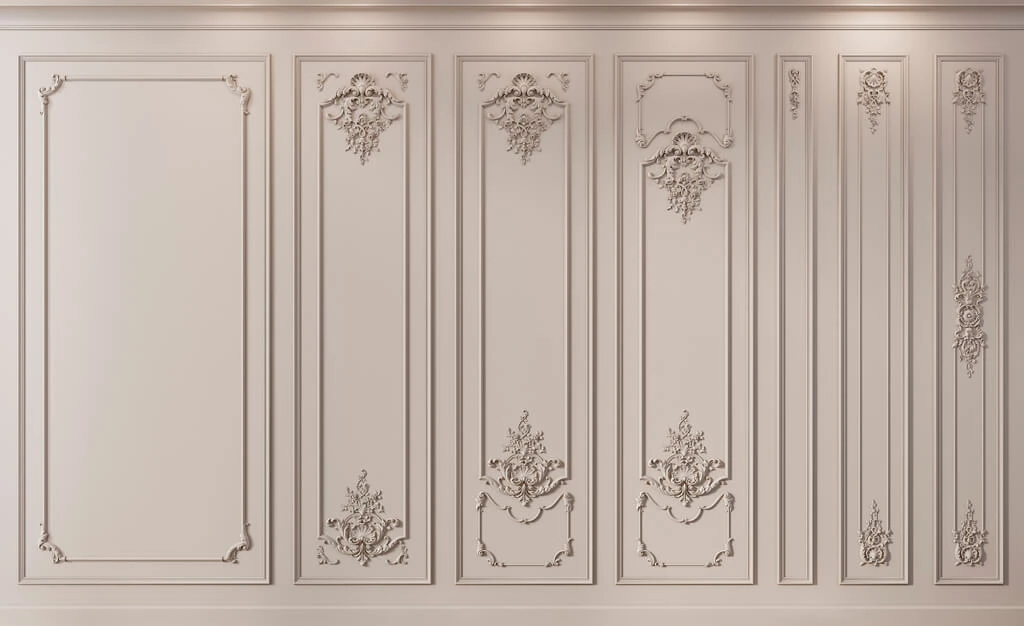
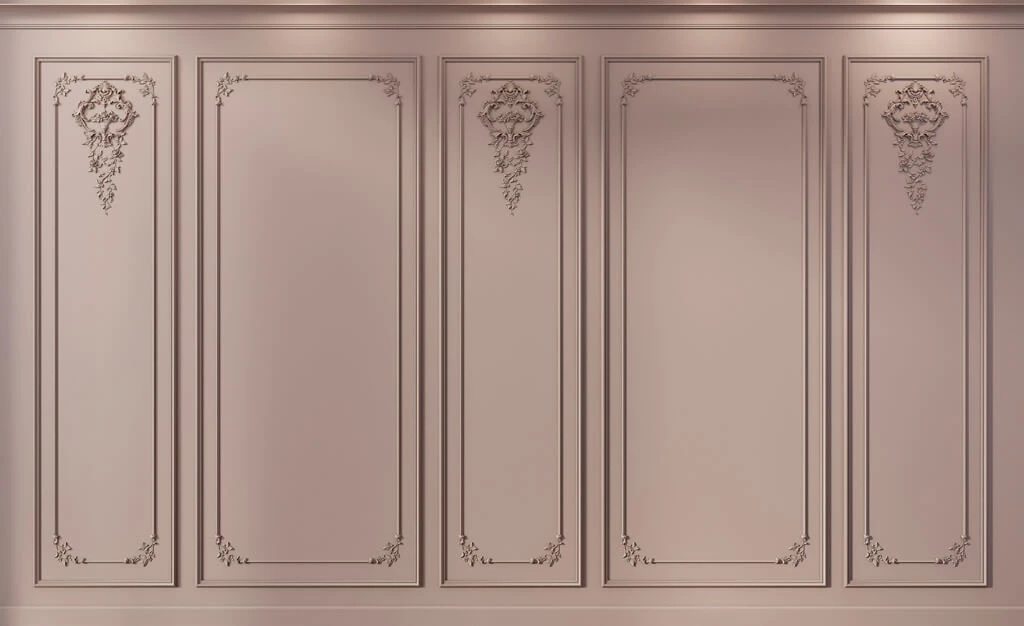
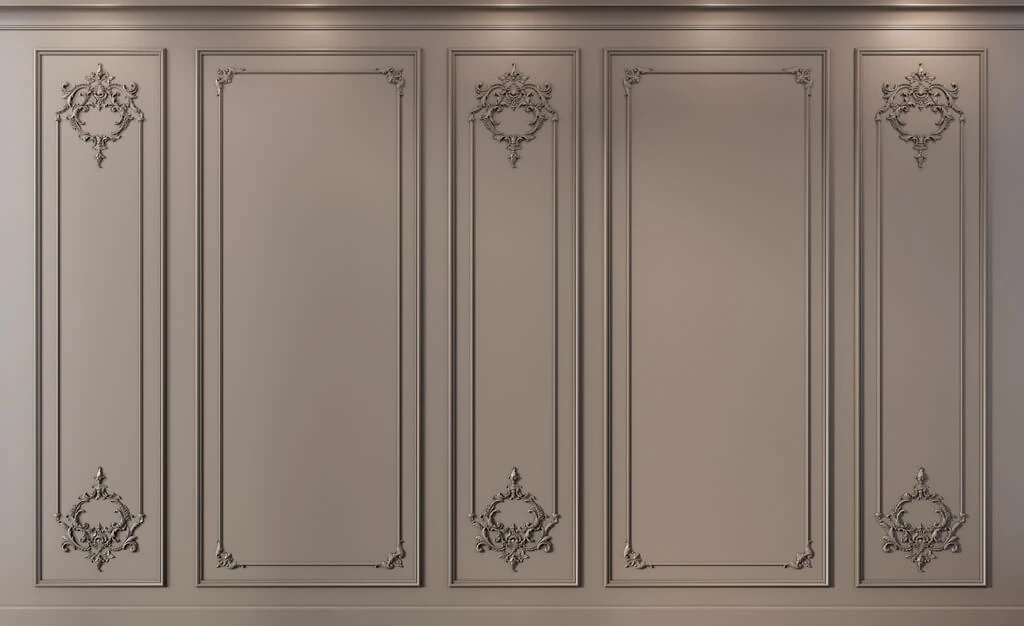
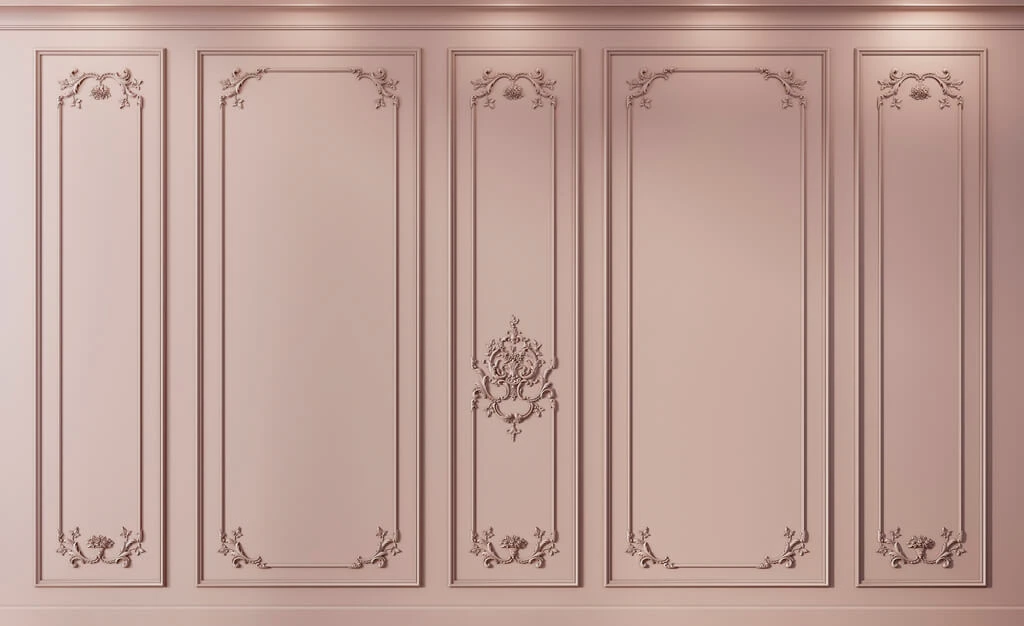
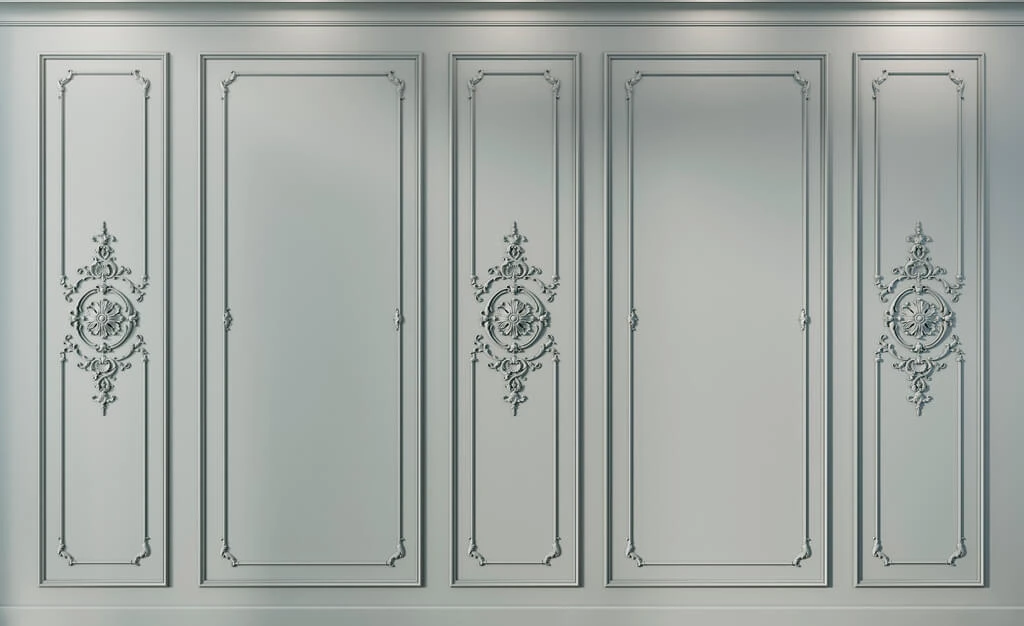
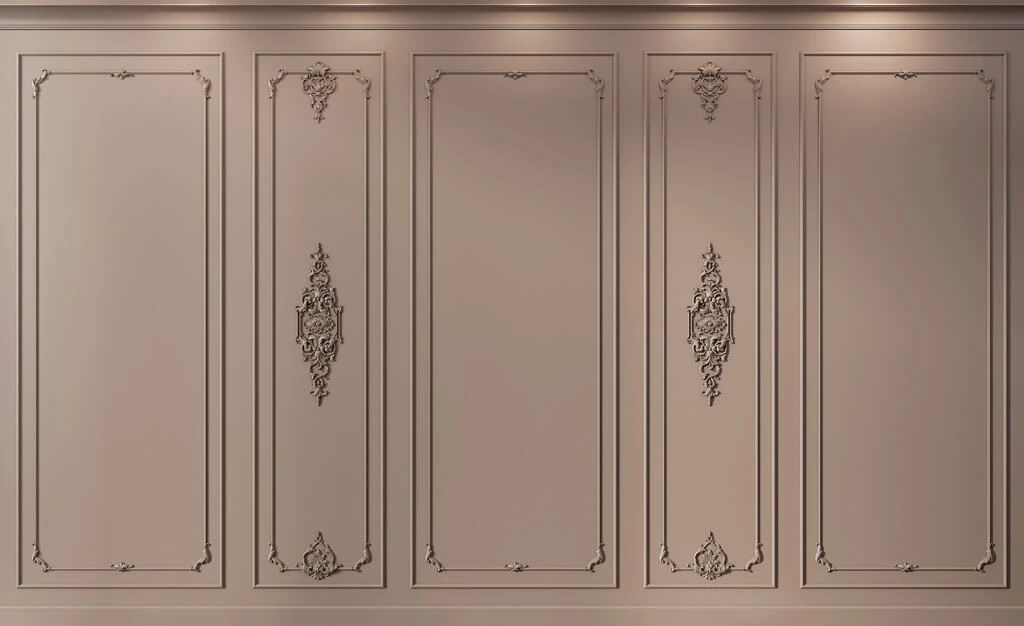
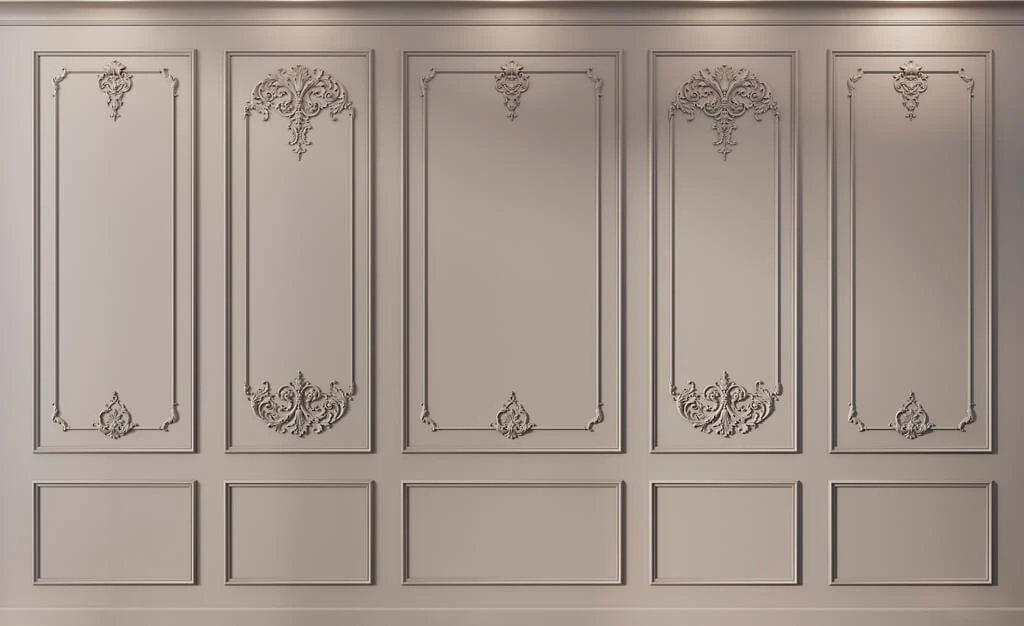
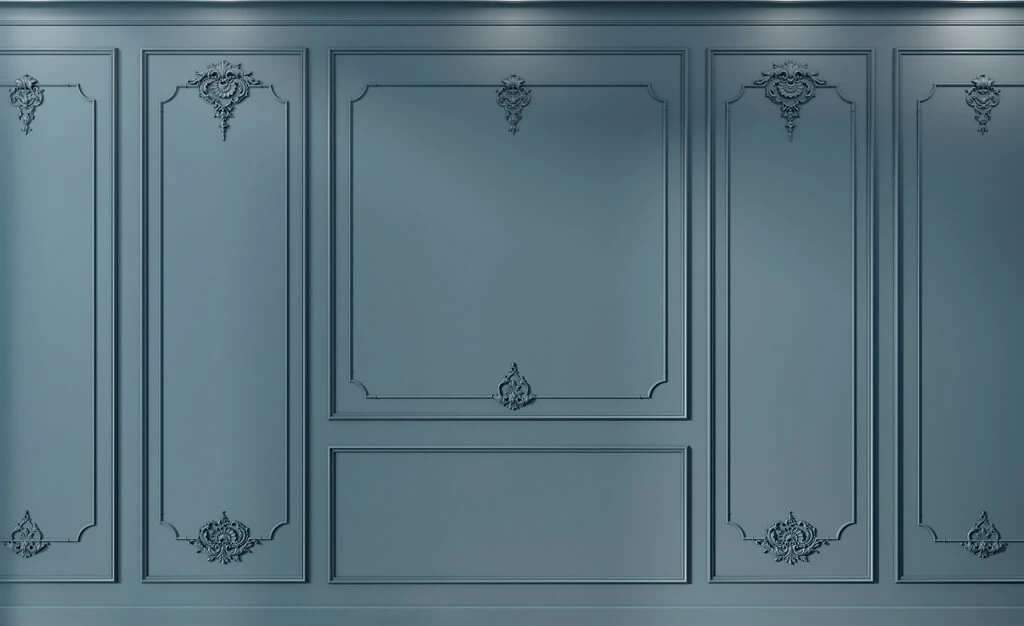
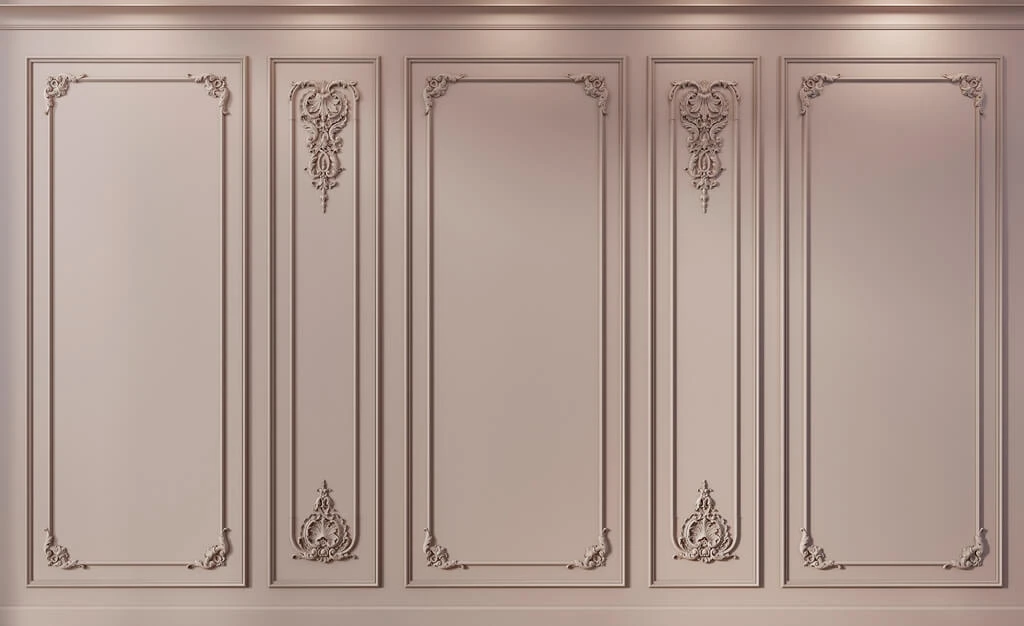
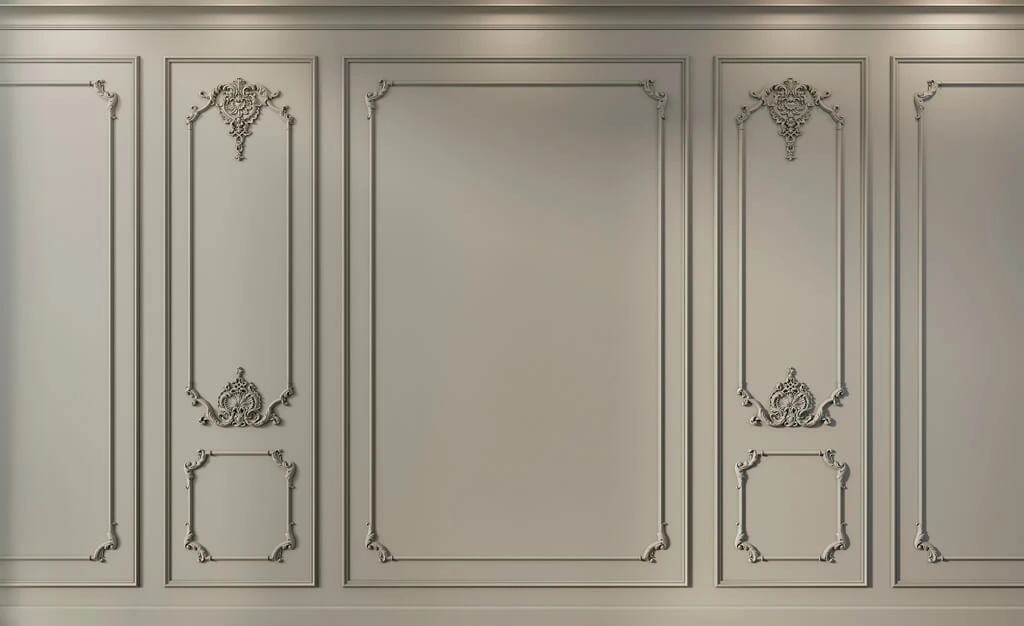
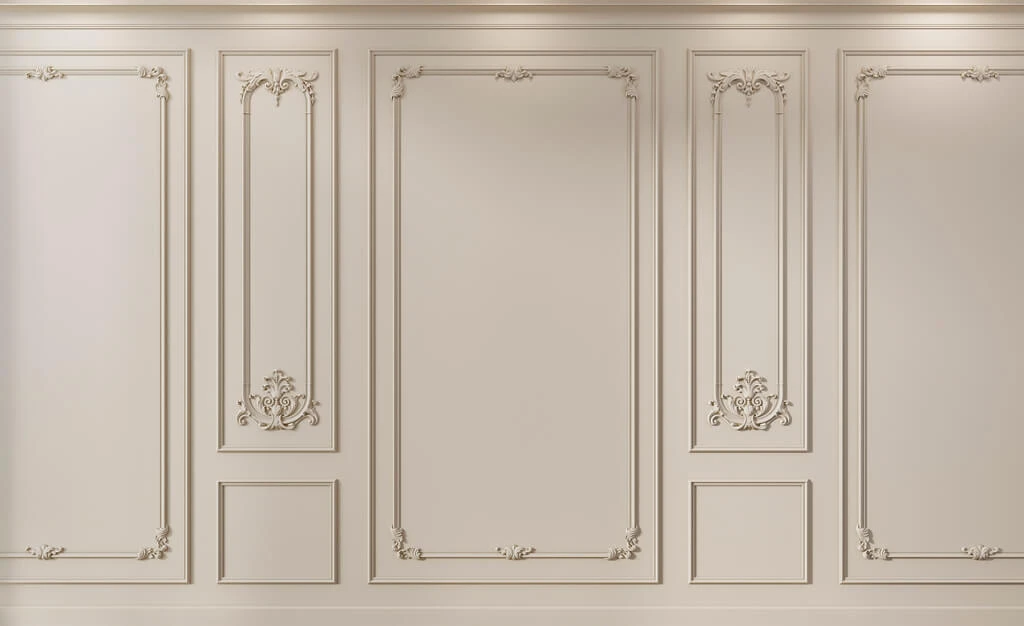
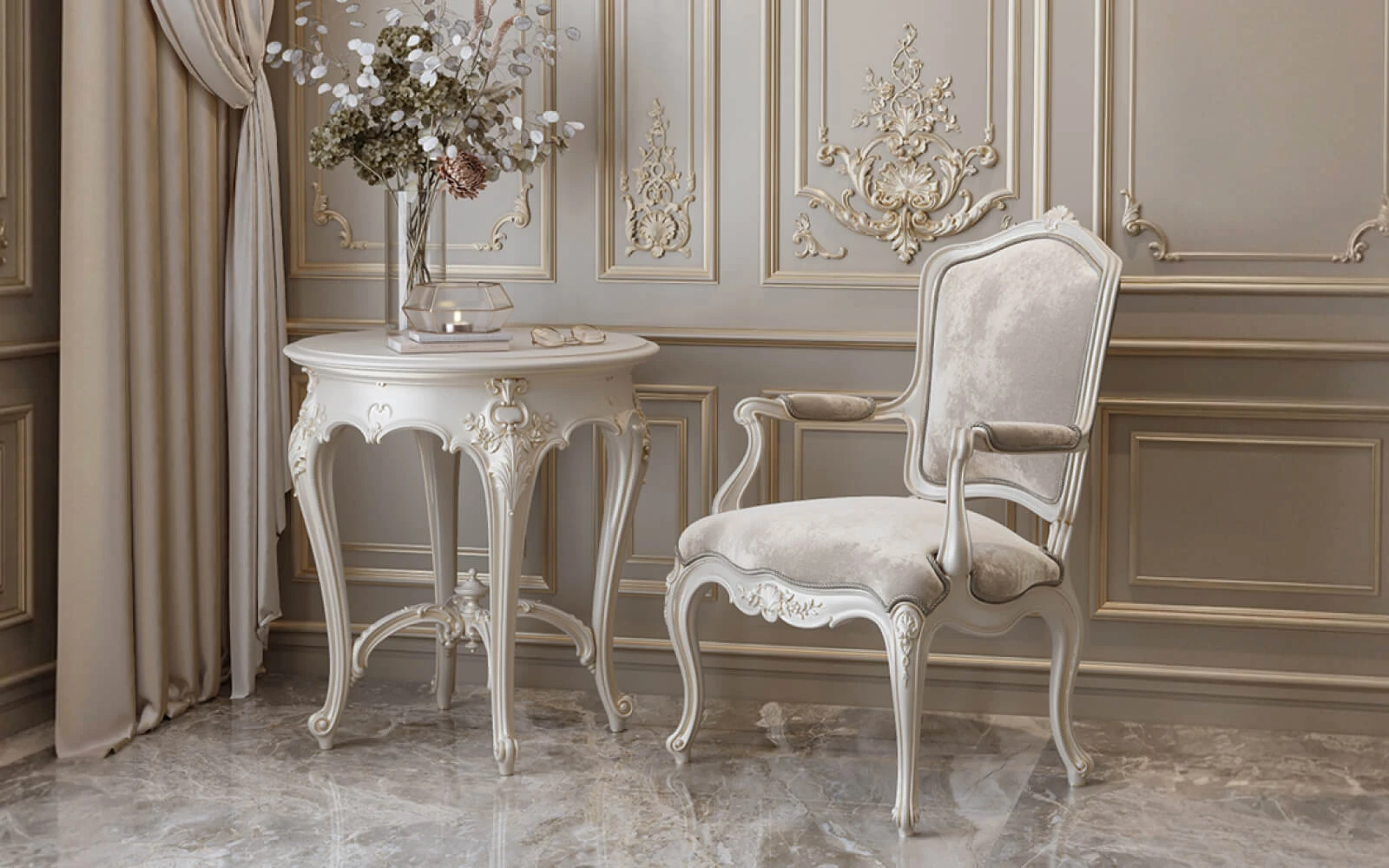
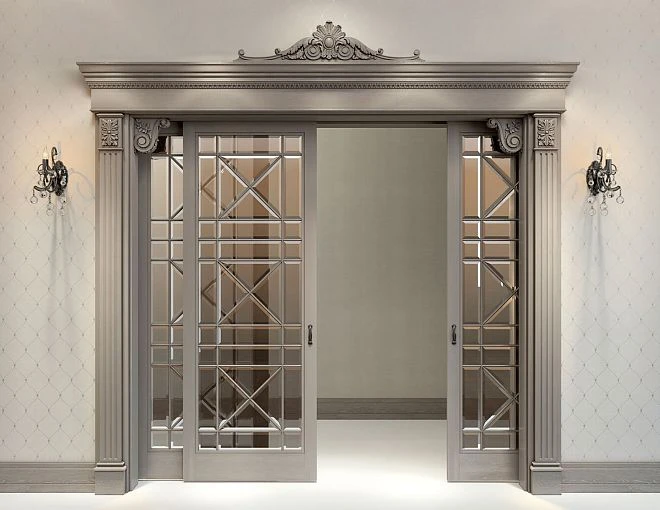
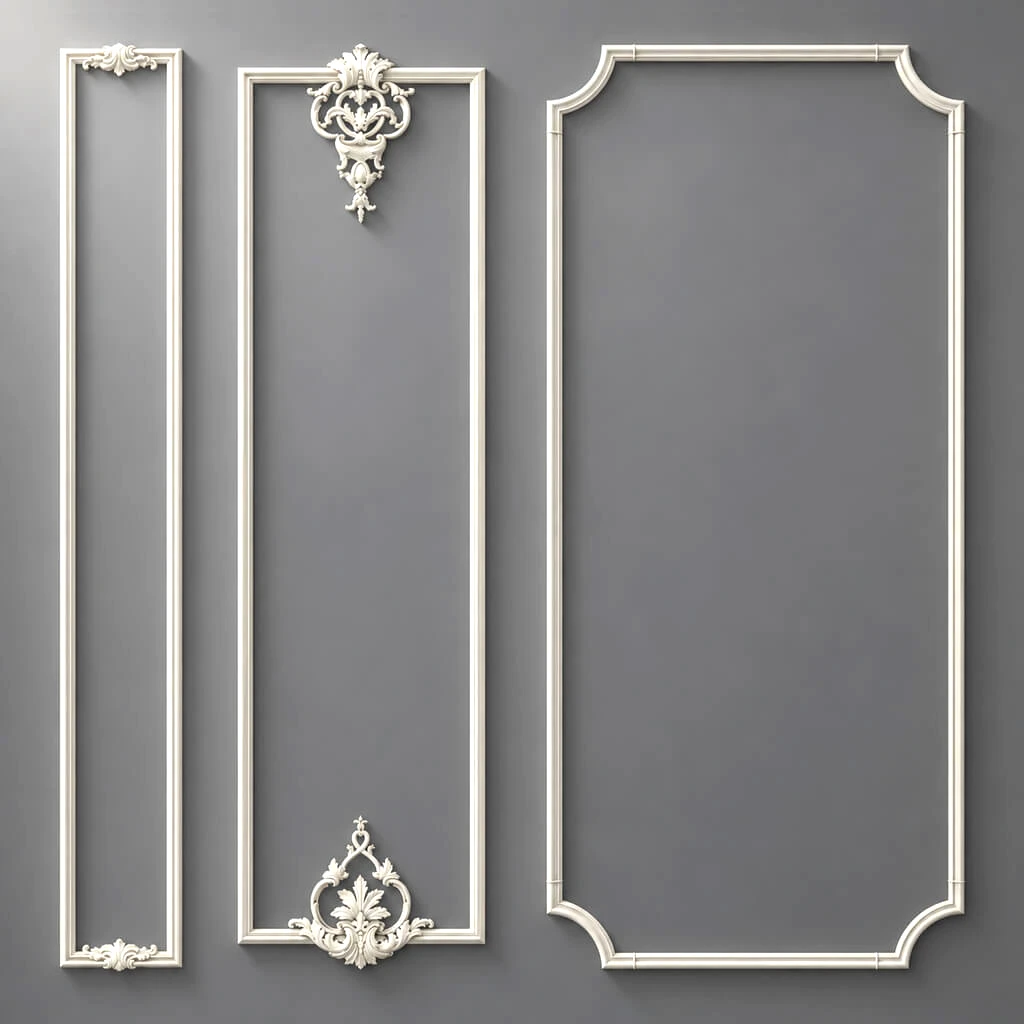
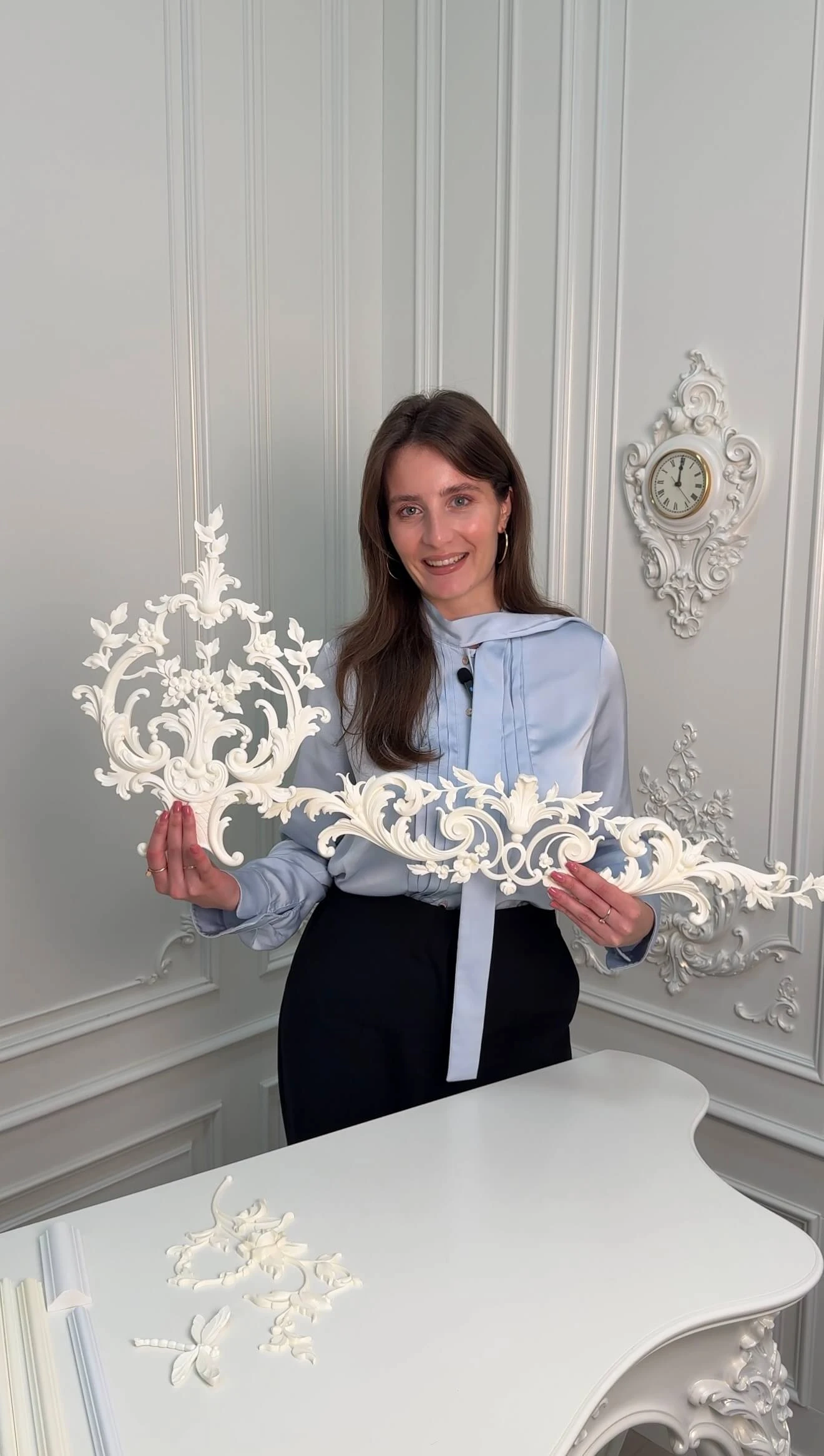
Carved wall overlays are a technique that came from palace architecture. Wall panels with ornamental inserts are a classic of Versailles, Russian Empire style, and English Georgian style. Today, the same effect is achieved much more modestly: MDF or wood panels with carved overlays in the center or corners, framed by moldings, create that same intimate palace atmosphere in an ordinary urban interior.
Carved wooden decoration on walls works especially effectively with side or directional lighting: the relief casts shadows, the ornament comes to life.
Mirrors and frames
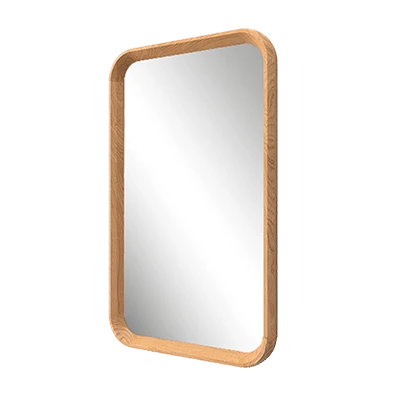
A mirror in a frame with carved wooden overlays is both a piece of furniture and a work of art. The overlays are mounted along the perimeter of the frame or placed as accents in the corners and center. For mirrors, beech wood under white or colored enamel is most often used — this emphasizes the shape of the relief and gives lightness.
Fireplace portals and decorative niches
A fireplace portal without carved decor is just a box. With overlays, it becomes an architectural object. Carved cornice elements, pilaster overlays, corner and central ornaments turn the portal into a complete classical composition. The same principles work for decorative niches, TV portals, and arched openings.
Restoration of old furniture
Antique furniture often loses decorative elements: a leaf breaks off, a curl falls off, an ornament dries out. Finding an exact replacement among ready-made Solid wood furniture overlays — is a quite feasible task if the manufacturer's catalog is broad enough. STAVROS offers over 400 models in various styles, which significantly expands the restorer's possibilities.
Ceiling Decor
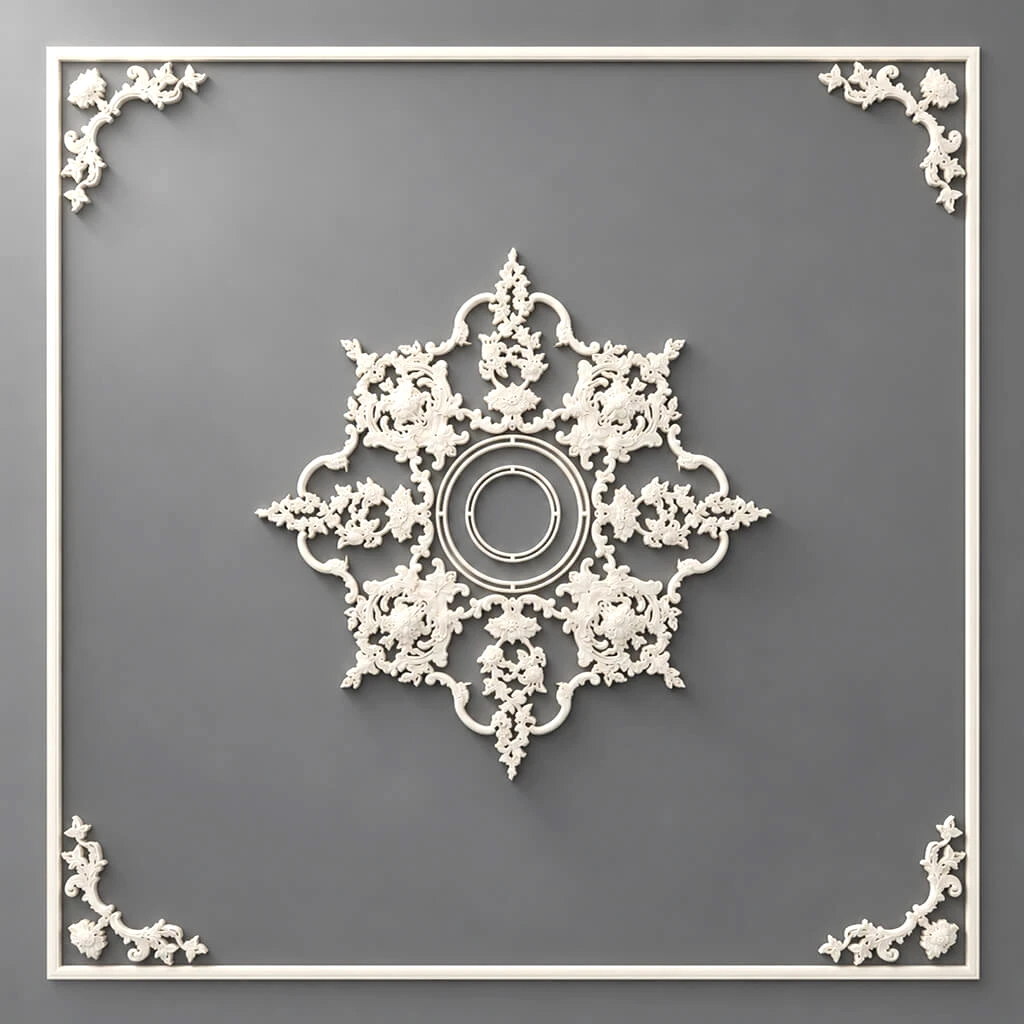
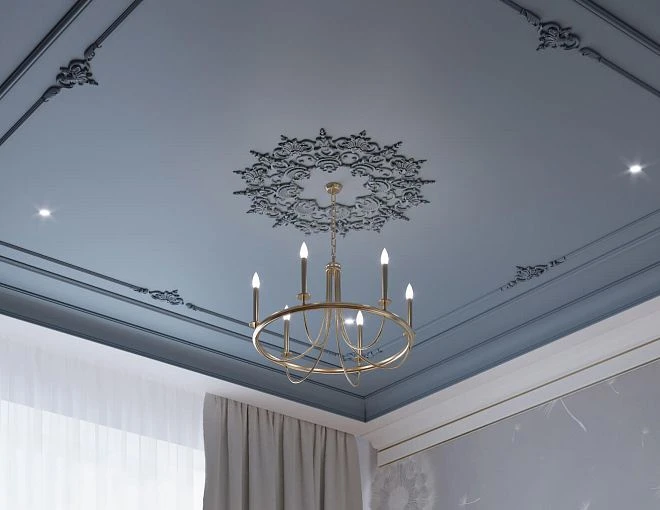
Ceiling overlays, corner elements, rosettes for chandeliers — all of this is carved wooden decor raised to the ceiling. Against polyurethane, wood wins in one aspect: it is alive. Tactilely, visually, and through the play of texture, it interacts with light differently — softer, deeper, more expressive.
Oak or Beech: An Honest Breakdown Without Unnecessary Words
The question of material is fundamental. Yet many buy overlays without thinking about the wood species. This is a mistake: oak and beech are not interchangeable, each has its own area of application.
Oak: For Those Who Value Character
Oak has a density of about 700 kg/m³, a large expressive texture, characteristic medullary rays, high resistance to moisture and mechanical loads. Carving on oak yields clear, relief edges — the ornament is readable from several meters away.
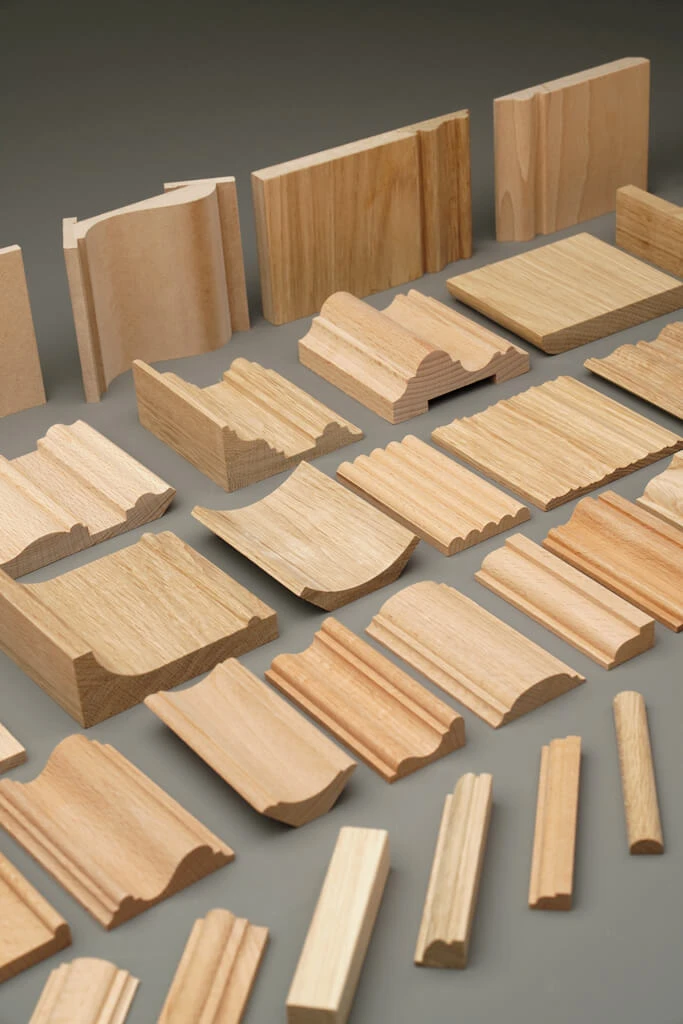
Oak Mouldings — is the first choice when a natural finish is planned: oil, wax, clear or tinted varnish. The texture of oak fully reveals itself with such a finish — warm, alive, with its own unique pattern. That is why oak overlays in modern classics, rustic, and eco-interiors look organic and convincing.
Under enamel, oak is also used — but requires careful priming: the large pores need to be sealed, otherwise they will show through the paint. This is a solvable task, but it adds steps to the finishing process.
Beech: Master of Precision and Smooth Surfaces
Beech is a species with a finer, more uniform texture. It is this uniformity that makes it ideal for fine carving: delicate bridges, graceful curves of ornament, the finest details of the silhouette — beech holds all this without chipping or deformation.
Oak inlays — the first choice for painting with enamel. Fine pores require almost no puttying; after sanding, the surface accepts primer and paint perfectly evenly. A white beech overlay under white enamel is a monolithic, professional result without pores or unevenness.
Comparison table
| Parameter | Oak | Beech |
|---|---|---|
| Density | ~700 kg/m³ | ~660 kg/m³ |
| Texture | Large, expressive | Fine, uniform |
| Carving | Clear relief | Fine details |
| For enamel | With preliminary primer | Ideally |
| For oil/varnish | Excellent | Good |
| Moisture resistance | High | Medium |
| Ideal interior | Rustic, classic, eco | Provence, neoclassical, baroque |
Finishing is everything: enamel, varnish, oil, patina
The same overlay in different finishes is essentially a different product. No exaggeration: the result of the final treatment changes the character of the decor radically.
White and colored enamel
Wooden decor under enamel — this is pure classic. A white overlay on a white facade is read solely by light and shadow: the relief of the ornament appears depending on the angle of light. This technique is subtle, requires good lighting, but when it works, it makes an indelible impression.
A white overlay on a contrasting background — dark green, graphite, dark blue — is already a direct statement of style. Contrast makes the decor graphic, clear, modern. That is why this solution is popular in modern neoclassicism and art deco.
Colored enamel opens up even more possibilities. Pastel shades — mint, dusty rose, soft yellow — for Provence. Rich tones — for bold design solutions. Important: beech is preferred under any enamel; oak requires additional priming.
Toning and stain
Toning allows you to change the natural color of the wood while preserving the texture. Light oak under a dark stain — and we get an overlay in tobacco or wenge color. Light beech under a light 'walnut' toning — a delicate, warm solution. Toning works organically when the overlay needs to be integrated into existing furniture of a specific color.
Clear varnish
Varnish preserves the natural color and grain of the wood, protecting the surface. For oak, this is the best way to maintain the expressiveness of the texture — it will be visible through the varnish layer in all its beauty. Glossy varnish gives a noble shine; matte varnish gives restrained elegance.
Oil and wax
Oil coating is naturalness squared. Oak treated with oil acquires velvety softness, depth, and a lively hue. Oil does not cover the pores — it penetrates the wood structure and makes it softer, warmer to the touch and to the eye. Wax gives a similar effect, but with a lighter sheen and slightly less protection.
Patina
Patination is a technique where paint or gold is applied to the relief so that the recesses remain dark and the protruding parts are light or golden. The result: visual depth and age. Patinated overlays are an attribute of Baroque and Rococo interiors, antique cabinets, and classic libraries.
How to choose the size and pattern of a carved overlay
This is a practical section — without it, even the most beautiful ornament can ruin an interior if it is the wrong size or pattern.
Proportion Rule
The central overlay on the facade should occupy 25–40% of its area. For a facade 400×720 mm, this is an overlay approximately 160–180 mm wide. For a facade 600×900 mm, it is 220–250 mm. If the overlay is smaller, it gets lost. If it is larger, it overwhelms and overloads.
Corner overlays are selected in pairs: their width should match the width of the molding or frame into which they are installed. Standard corner elements — 40×40 mm, 50×50 mm, 65×65 mm — are designed for moldings 20–40 mm wide.
Central overlays
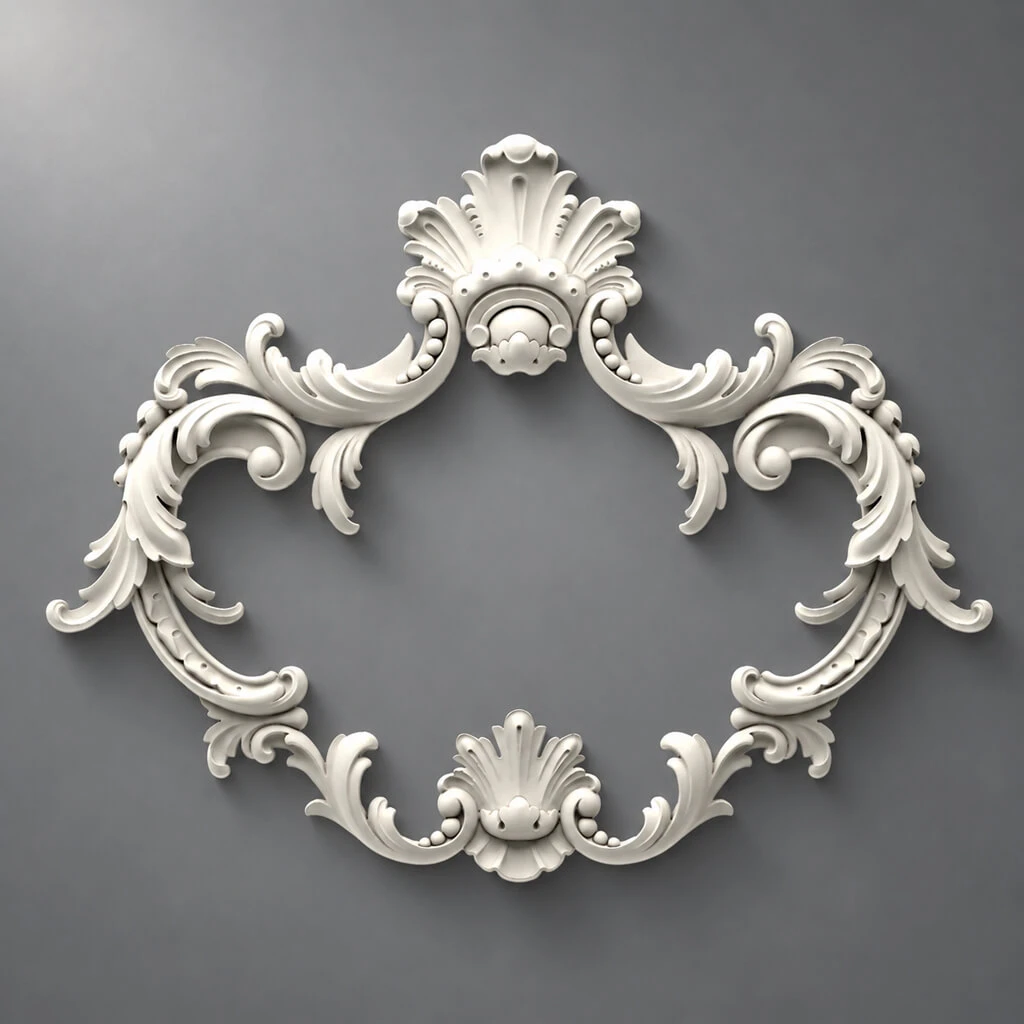
Large symmetrical decorative inlays for furniture — these are always the center, always the accent. They are placed one on a facade or one on each facade in a single system — then stylistic uniformity is important. Several different central elements on adjacent facades are chaos, not decor.
Corner overlays
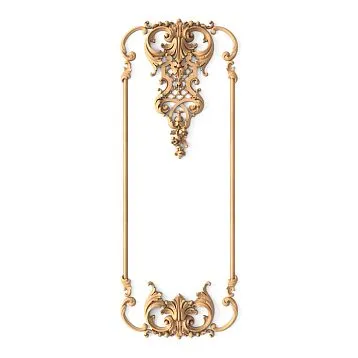
Corner elements frame the perimeter of the facade, working in pairs or in sets of four. Four identical corner overlays at the corners of the facade, connected by molding along the perimeter, form a classic and reliable composition that works in any style from classic to neoclassical.
Modular (composite) elements
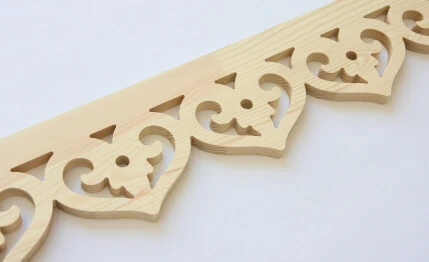
Constructor overlays are a special type of product with pre-designed joining connections. They allow you to assemble a frieze of any length, precisely fitting the decor to the size of the facade. This is indispensable for non-standard dimensions and when working with long horizontal surfaces — for example, a frieze along the top of kitchen cabinets or horizontal decor on a door leaf.
Ornament pattern
A simple rule applies here: the ornament should match the style of the interior.
-
Acanthus leaf, cartouche, rocaille, floral garlands — for classic, neoclassical, baroque.
-
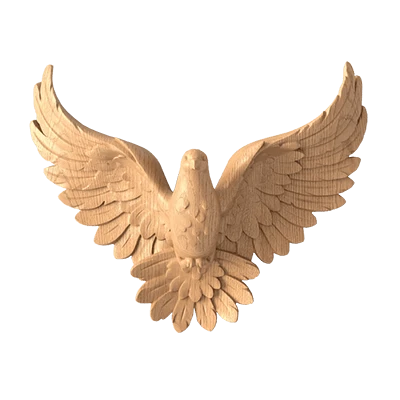
Grapevine, birds, leaves — for Provence, country, rustic.
-
Geometric motifs, restrained petals — for modern classic, art deco, minimalist solutions.
-
Complex ornamental panels, symmetrical multi-level compositions — for representative interiors, living rooms, halls.
Carved overlays for furniture: how they change everything
This is the most commercially viable question: why buy at all decorative wooden overlays for furniture, if you can order facades already with milling?
The answer is simple: flexibility. A milled facade is a fixed pattern embedded in the material. An overlay is a separate element that can be replaced, repainted, rearranged, added, or removed without interfering with the furniture structure. This is a fundamentally different level of adaptability.
Additionally, overlays allow you to update existing furniture without replacing it. An old Soviet cabinet with smooth facades + several beech overlays under white enamel = the visual effect of expensive classic furniture. This is not a trick — it's a technique used by professional restorers and decorators.
Carved elements for furniture also fill empty planes — that very incompleteness mentioned at the beginning of the article. A large, plain cabinet door without decoration looks like an unfinished work. A decorative overlay closes this gap — literally and figuratively.
Which facades are suitable for mounting overlays
Overlays can be attached to almost any flat surface:
-
painted MDF — with preliminary sanding of the mounting area;
-
veneered MDF — with degreasing and glue for mixed surfaces;
-
solid wood — with carpentry PVA D3/D4;
-
laminated chipboard — with laminate removal at the installation point.
Carved overlays for doors and walls
A wall is not just an enclosing structure. In a classic interior, a wall is a background that either works or remains silent. Decorative overlays for walls and panels turn silence into conversation.
Typical scheme: a wall panel made of MDF or lining, framed with molding around the perimeter, with a carved overlay in the center. Such panels are mounted at a height of 80–120 cm from the floor (lower belt) or at the full height of the wall. Several panels in a row — and the wall turns into an architectural surface.
On doors, overlays are placed according to a scheme imitating a paneled construction: two or three horizontal zones with decor, separated by belts or moldings. For classic-style doors, central overlays on each conditional "panel" are sufficient; for more formal solutions — corner accents and an ornamental frieze along the upper part of the leaf.
A separate topic is the decor of piers. The pier between a door and a window, the pier in a hallway, the pier in a corridor — everywhere there is a narrow vertical plane, overlays work as vertical accents, visually lifting the space.
How to combine carved overlays with other wooden decor
A carved overlay is not a lone fighter. It exists within a system, and its surroundings determine whether it becomes a detail of a cohesive image or a random element on a surface.
With moldings
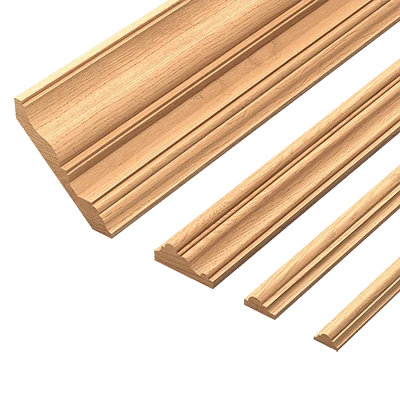
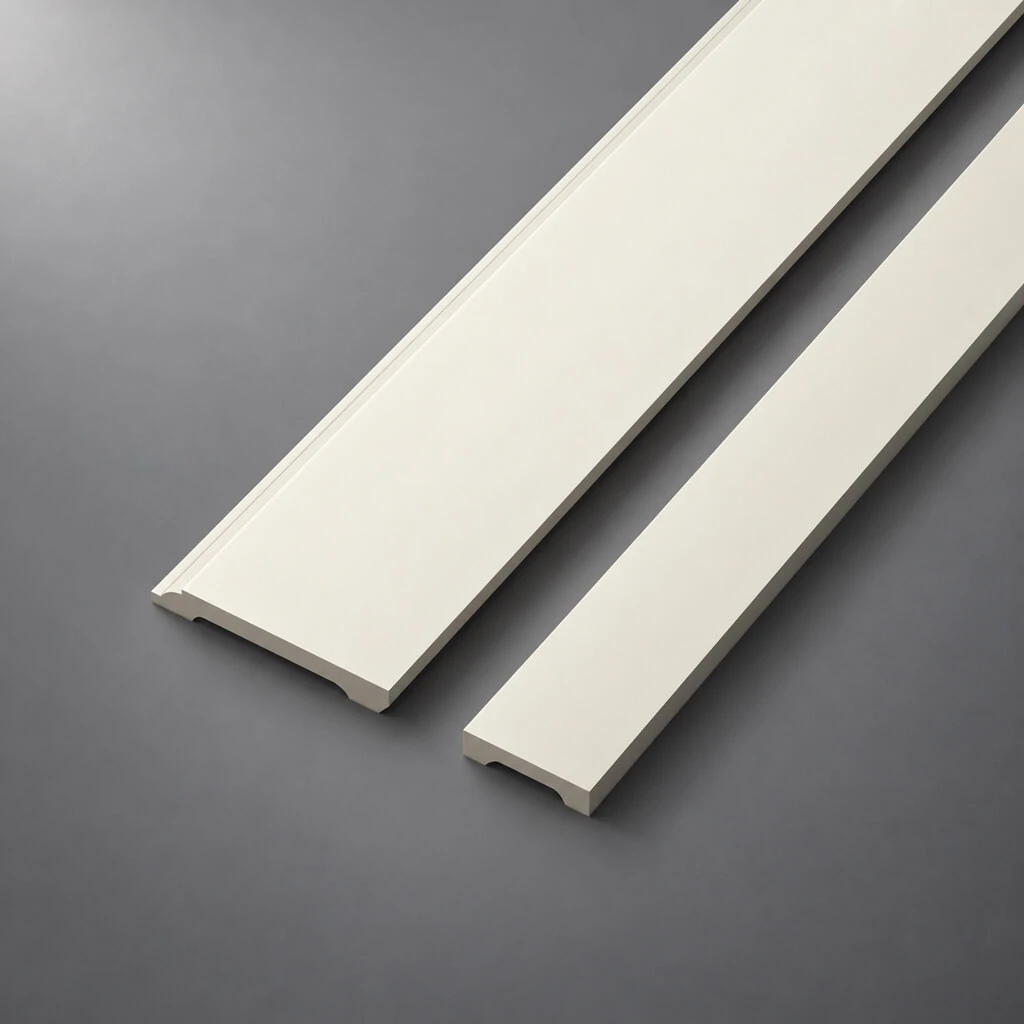
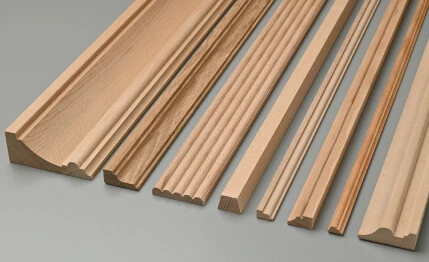
profiled moldings — are natural partners for overlays. Molding creates a linear structure, while the overlay places an accent at key points: in the corners of a frame (corner elements), in the center (central overlays). STAVROS offers designer overlays with a groove for molding on the back side — they literally fit onto the profile without complex adjustment.
With cornices and baseboards
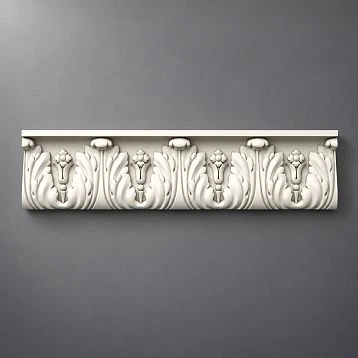
Wooden cornices complete the upper part of furniture or walls; baseboards — the lower part. Overlays in this context are accents between horizontal belts. Cornice + moldings + overlays = a classic architectural system that works at any scale — from a small cabinet to an entire hall.
With rosettes
Ceiling or wall Wooden sockets — these are symmetrical ornamental elements placed in the center of the ceiling plane (under a chandelier) or on the wall. In combination with overlays on furniture or doors, they create a unified decorative language for the space.
With furniture legs and brackets
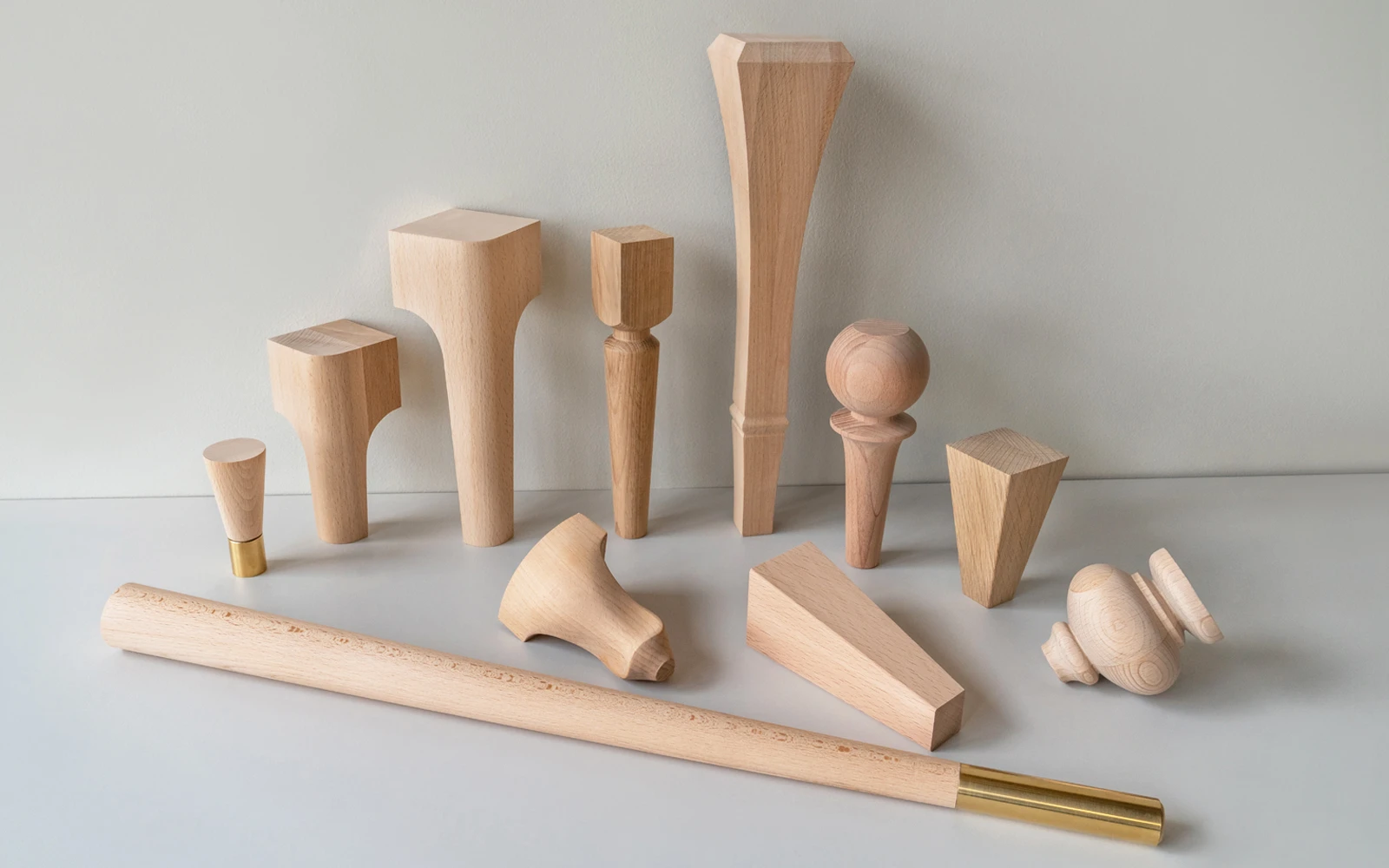
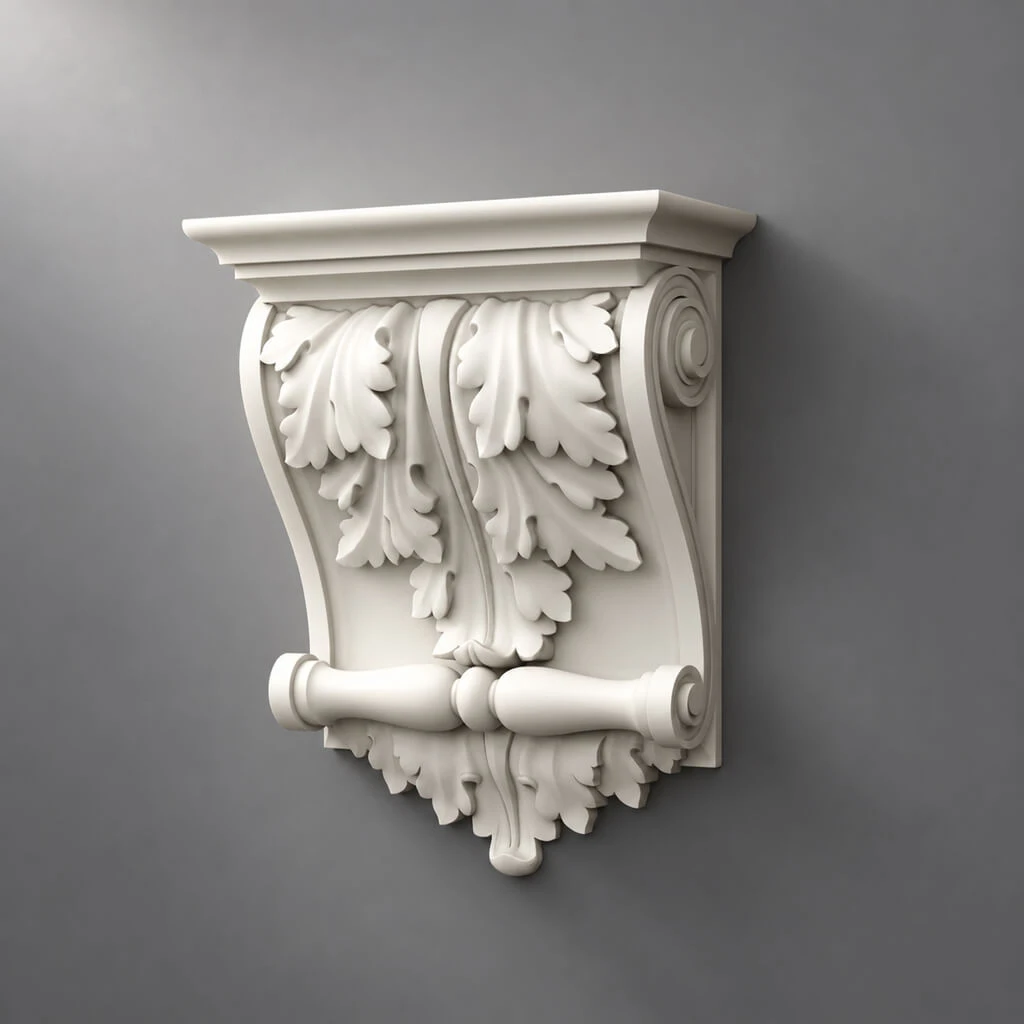
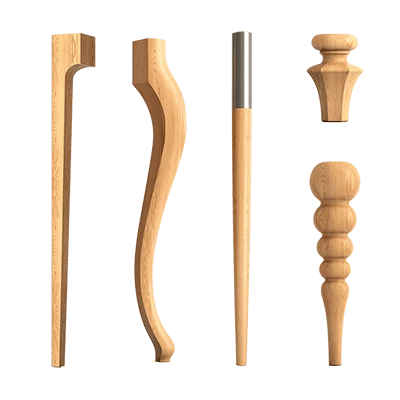
Furniture with turned or carved wooden legs with carved overlays on the facades — this is a cohesive image. Brackets under shelves, made in the same style and from the same wood species — another detail that works towards unity.
With baguette and frames
Carved wooden decor seamlessly integrates into the baguette frame system. Corner overlays on mirror, painting, or panel frames — minimal intervention with maximum effect.
Typical mistakes when choosing carved wooden overlays
Over decades of working with wood, you develop an understanding of where people most often make mistakes. Here are the seven most common blunders.
Mistake 1: choosing only by photo
A photo doesn't convey scale. An overlay that looks convincing on a laptop screen may turn out to be half the required size in reality. Always check the dimensions in numbers and compare them with the dimensions of the surface you plan to mount it on.
Mistake 2: ignoring the thickness of the product
The thickness of the overlay — from 8 to 30 mm depending on the model — matters. On a thin door, a thick overlay will look heavy. On a massive cabinet, a thin overlay will get lost. The thickness should match the scale of the product and the depth of the entire composition's relief.
Mistake 3: mixing ornaments of different styles
Rocaille next to Art Deco geometry next to ethnic ornament — this is not eclecticism, it's a style disaster. All Carved Elements for Interior In one space, you must speak the same ornamental language.
Mistake 4: not thinking about the coating in advance
You bought oak overlays and then decided to paint them with white enamel without primer — resulting in an uneven, porous coating. The type of coating must be determined before purchasing the overlay: this determines the choice of wood species.
Mistake 5: too small decor on a large surface
A small overlay on a large facade is like a comma in the center of a blank sheet. Formally present, but carries no meaning. Large surfaces require proportionate elements or composite panels.
Mistake 6: rejecting symmetry where it is needed
Paired elements (two cabinets, two doors, two pylons) require symmetrical solutions. Different overlays on identical facades create a sense of randomness and incompleteness. STAVROS offers a wide selection of models with mirror imaging — specifically for such situations.
Mistake 7: Buying without a surplus
Production is done in batches. If you need to buy an additional overlay six months later, the model may not be in stock, or it may be a different shade. Always take a 10–15% reserve.
Which styles are suitable for carved wooden overlays
Buy carved wood decor — this is already a style decision. Because the overlay is not stylistically neutral: each ornament carries a history and an address.
Classicism and neoclassicism
Acanthus leaves, cartouches, laurel branches, floral garlands — this is the vocabulary of classicism. In a classic interior, overlays are appropriate everywhere: on furniture, doors, walls, and ceilings. Material: oak under varnish or beech under enamel; system: moldings, cornices, rosettes.
Baroque and Rococo
Lush asymmetrical forms, rocaille scrolls, shells, mascaron, garlands of flowers and fruits. Here, high relief and patination are important — a golden patina on white enamel or a dark base creates that very "baroque" effect that cannot be imitated by other means.
Provence
Simple natural motifs: wildflowers, lavender sprigs, leaves. Beech under white or milk enamel. Delicate sizes. Lightness is the main principle.
Rustic and Country
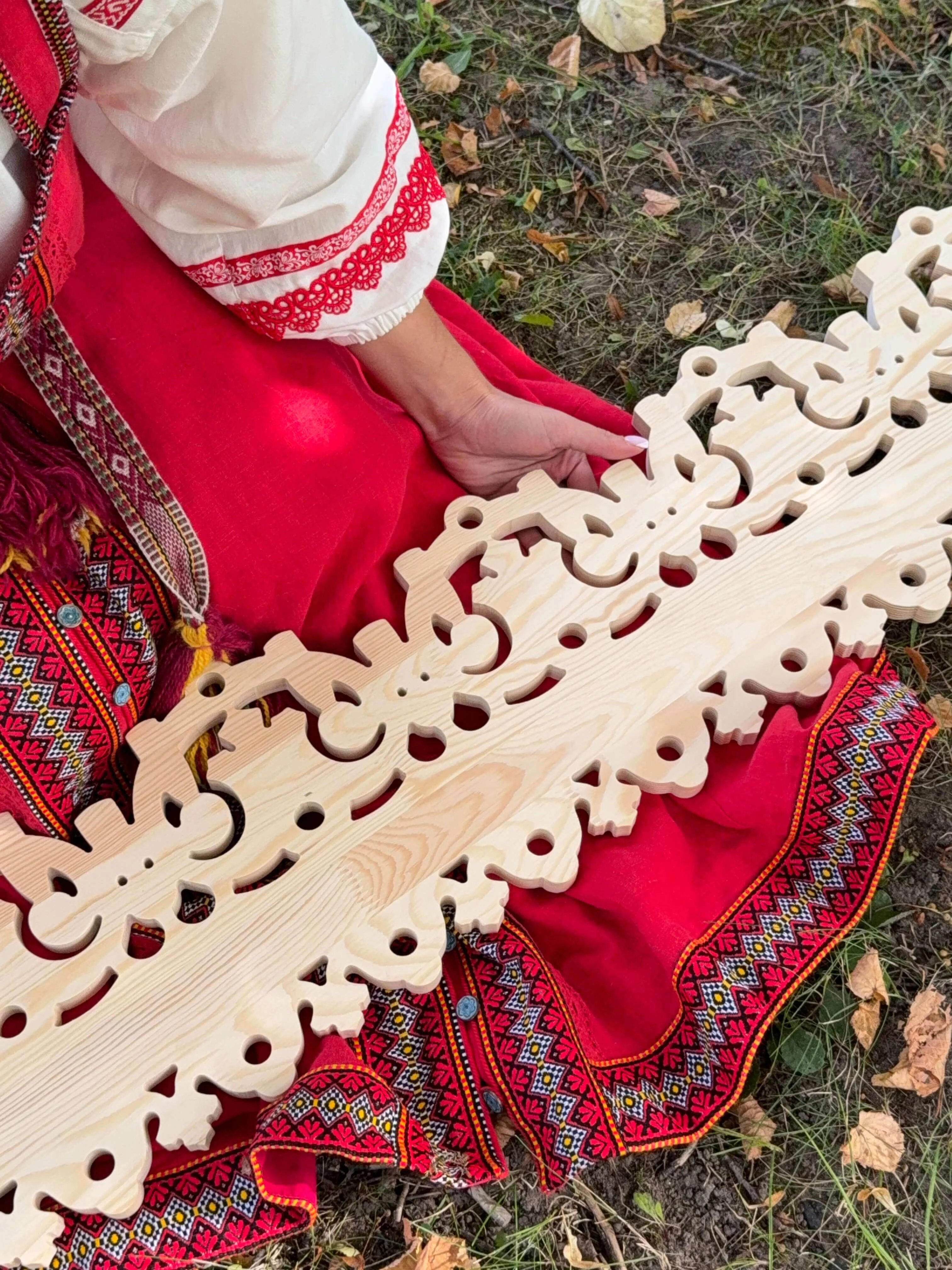
Oak under oil or wax. Natural motifs — vine, leaves, birds. Expressive texture takes center stage. Overlays are small, not overloaded.
Modern classic
Laconic ornaments with even geometry. Monochrome coating. Accent decor — one or two overlays per entire piece. Wood under varnish or tinted oil.
Art Deco
Geometric motifs, symmetry, contrast. Dark wood under varnish on a light background — or vice versa. Overlays as architectural details, not ornamental scrolls.
How to buy carved wooden overlays correctly for a specific task
You have read half of the article — and perhaps already know exactly what you need. It remains to understand how to buy it correctly.
Step 1: determine the mounting surface
Furniture facade, door leaf, wall panel, mirror frame, ceiling — the size and shape of the overlay depend on this. Write down the exact dimensions of the surface.
Step 2: choose the finish type
White enamel, colored enamel, tinting, varnish, oil, patina — decide this in advance. This determines whether you need oak or beech.
Step 3: determine the ornament style
Classic, baroque, provence, rustic, modern classic — each style has its own ornamental vocabulary. Do not mix different styles in one project.
Step 4: choose the size
Use the rule: the central overlay takes up 25–40% of the facade width. Print the image to scale and apply it to the surface — this is the most reliable way to check the proportion.
Step 5: check compatibility with moldings
If you plan to use a molding system, make sure the overlays are compatible in terms of joining profiles. Carved Appliqués STAVROS are available in versions with a groove for molding — this eliminates manual adjustment.
Step 6: order with a margin
10–15% above the calculated quantity — insurance against breakage during transport, installation errors, and future reordering.
How to attach wooden carved overlays: short and to the point
The installation question worries many — and is wrongly considered difficult. In practice, attaching an overlay takes no more than 20–30 minutes, including surface preparation.
The main method is glue. For wood on wood or wood on MDF: waterproof woodworking PVA D3 or D4. For wood on laminate or painted surface: acrylic-based construction adhesive or two-component polyurethane. Epoxy glue — for heavy, voluminous elements.
Algorithm:
-
Clean the surface from dust, degrease.
-
Make markings (level, square, pencil).
-
When installing on a lacquered or painted surface — lightly sand the installation area.
-
Apply glue in a thin, even layer to the back side of the overlay.
-
Press, secure with a clamp or painter's tape until fully set.
-
After drying — putty the joints, sand, prime, apply the finish coating.
Go to catalog: over 400 models of carved wooden overlays
If you already know what you need — here's a direct path: buy carved wooden overlays in the STAVROS catalog. It features over 400 models in beech and oak — central and corner, symmetrical and asymmetrical, modular kits and ornamental panels. The exclusive "Summer Garden" collection with elegant baroque carving — for those seeking something special. The overlays are compatible with the company's range of moldings, cornices, and profiles. Orders — from 1 piece. Delivery — across Russia and CIS countries. Pickup — from warehouses in Moscow and St. Petersburg.
If the task is complex or non-standard, the catalog of carved decor will have an answer — or STAVROS specialists will help you formulate one.
FAQ: answers to popular questions about carved wooden overlays
Which carved overlays are best for furniture?
For furniture, overlays are selected based on three parameters: finish type (enamel — beech, natural coating — oak), facade size (overlay occupies 25–40% of its width), and ornament style (classic, Provence, rustic). decorative wooden overlays for furniture should be stylistically uniform within a single typeface.
Can wooden carved overlays be painted?
Yes. Beech and oak overlays can be painted with enamel, tinted with stain, coated with varnish, patinated, or treated with oil. Beech accepts enamel without porosity; oak requires a preliminary primer. For any coating, the surface is sanded and primed.
Where can wooden carved overlays be used besides furniture?
They are used on interior doors, wall panels, decorative niches, fireplace portals, mirror frames, ceiling rosettes, picture frames, and stair posts. Carved Elements for Interior are versatile and adapt to any flat surface.
What is the difference between oak and beech overlays?
Oak has a large expressive texture, high density, ideal for natural finishes. Beech has a fine uniform structure, ideal for enamel, allows for finer carving. Both materials are produced in the STAVROS catalog in a wide range of shapes and sizes.
Are carved overlays suitable for furniture restoration?
Yes, this is one of the main use cases. Wooden overlays for furniture restoration allow you to replace missing elements, add relief to smooth facades, and refresh the look of old cabinets and chests of drawers. The STAVROS catalog features over 400 models — the chance of finding a suitable pattern is very high.
How to attach wooden carved overlays yourself?
Installation is done with glue: PVA D3/D4 for wood on wood, mounting acrylic glue for wood on MDF or painted surfaces. The surface is pre-degreased and sanded if necessary. After installation — secure until set, then putty the joints and finish.
Can I order overlays for non-standard sizes?
The STAVROS catalog features modular overlay construction kits with connecting elements — they allow you to assemble decor of any length without manual cutting. For complex non-standard tasks, we recommend contacting the company's specialists.
How many overlays are needed for one cabinet?
For a cabinet with four standard-width facades — typically 4 central overlays (one per facade) or a set of corner elements (4 pieces × 4 facades = 16 pieces) plus molding around the perimeter. The exact number depends on the chosen decor scheme.
About the company STAVROS
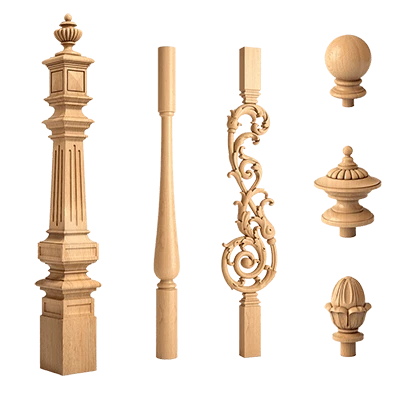
STAVROS is a Russian manufacturer of wooden decor for furniture and interiors with its own production and warehouses in Moscow and St. Petersburg. The company specializes in carved overlays, moldings, cornices, rosettes, balusters, furniture legs, and other elements made from solid beech and oak.
The STAVROS catalog features over 400 models of carved decorative overlays in a wide range of styles, sizes, and patterns, including the author's collection "Summer Garden" with unique baroque carving. All products are manufactured on our own equipment from selected wood, adhering to quality standards.
Purchase at STAVROS is available from 1 piece, with Contact us to confirm shipping to your destination. and CIS countries. The company's specialists provide consultations on decor selection, element compatibility, sizes, and finishing options — this is especially valuable for complex design projects where precision of every detail is important.