Article Contents:
- Building materials distributor: what role it plays in project procurement
- Why the procurement channel is especially important for wooden trim
- Wooden skirting board: what is easy to resolve through the seller, and what requires technical contact
- Wooden moulding: repeat ordering matters more than a nice product page
- Wooden cornice: when an intermediary channel is convenient
- Finishing materials distributor: when a wide range is genuinely useful
- When a wide range becomes a problem
- Why the manufacturer's part number is needed in the specification
- What the sample does not guarantee
- A claim regarding geometry: what needs to be attached
- Reordering after three months: a test of the procurement channel
- When a distributor is more rational than a direct manufacturer
- When a direct manufacturer is more rational
- Scenario 1. Restaurant for a single project, 35 m of standard molding
- Scenario 2. Hotel, 480 m of one molding in three phases
- Scenario 3. A furniture factory regularly uses one profile
- An internal code replaces the manufacturer's SKU
- An "analog" substitutes for an exact match
- A technical question turns into a verbal answer
- A claim gets lost between the parties
- Short decision matrix
- STAVROS — distributor?
- What is most important to preserve when buying through an intermediary?
- When is a distributor's wide assortment truly advantageous?
- When is it better to contact the manufacturer directly?
- Can a project be done through two channels?
- Why is the manufacturer's article number needed if there is a seller's code?
- Can natural oak be replicated absolutely identically?
- How to check a sample when purchasing through an intermediary?
- Who handles the claim?
- What influences the choice of channel more — price or repeatability?
- Where can I view STAVROS mouldings?
- Can I order a sample first?

The project has already approved the skirting board, moulding and cornice. A less obvious question remains: through which channel to buy them. A distributor may offer a wide range, a regional warehouse and convenient consolidation of different brands. A direct manufacturer is usually closer to technical information, repeat production of a profile and non-standard tasks. And for some projects a hybrid scheme is more rational: universal categories — through a consolidator, specialised wooden mouldings — directly from the manufacturer.
Therefore building materials distributor and manufacturer are not competing concepts of “good/bad”. They are different procurement models. The choice should be based on who in a specific chain can confirm the article number, material, dimensions, current stock, sample, lead time, repeat order and complaint procedure.
In this article, STAVROS cannot be called a distributor: on the current website the company directly identifies itself as Russian production and a manufacturer of wood decor and components for furniture and interiors. Therefore, STAVROS here is an example of a direct production channel, while the distributor is considered as a separate procurement model.
The main rule: the more standard the product and the wider the project basket, the more useful a single distribution window can be. The more important precise geometry, profile repeatability, non-standard items and future reordering are, the higher the value of direct technical contact with the manufacturer.
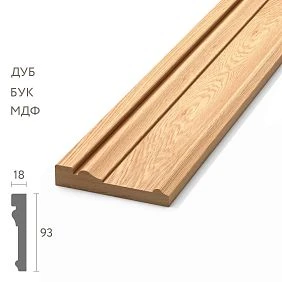
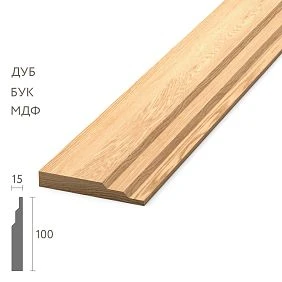
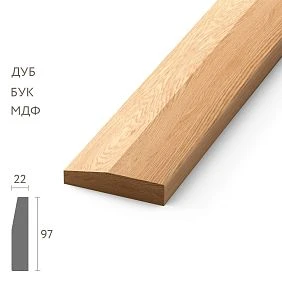
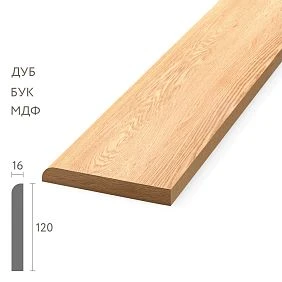
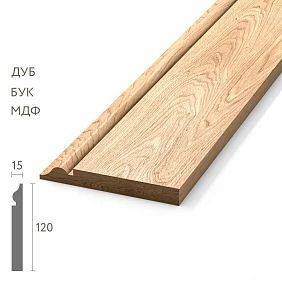
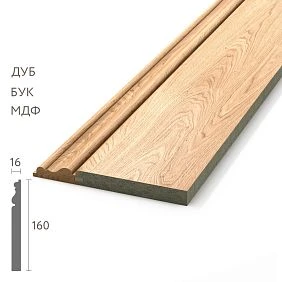
Building materials distributor: what function it performs in project procurement
A typical chain may look like this:
manufacturer → distributor → store or consolidator → site.
A distributor can be useful when the buyer wants to reduce the number of counterparties. Sometimes it is possible to combine products from several brands within a single contract and a single logistics scheme.
Potential advantages:
- wide assortment;
- regional availability;
- consolidation of different product groups;
- a single commercial communication channel;
- one delivery or a shared supply schedule;
- working with documentation processes familiar to the customer.
But for wooden mouldings, an additional question arises: how deeply does the intermediary channel know a specific profile, and is it able to refer the customer back to its manufacturer when a non-standard technical task arises.




Why the procurement channel is especially important for wooden mouldings
Skirting, moulding and cornice cannot be described by the product name alone.
A proper specification requires:
- manufacturer;
- article number;
- the material;
- cross-section;
- standard length;
- quality of finishing;
- finish option;
- possibility of reordering.
If the wall moulding has already been installed in the hotel's first phase, the second phase needs not a "similar classic profile" but the same SKU in the same configuration.
Therefore, the procurement channel must preserve the technical identification of the product along the entire path from catalogue to site.
Our factory also produces:

Wooden skirting board: what can easily be resolved through the seller, and what requires technical contact
For a standard item, the seller or distributor can usually quickly resolve basic questions:
- price;
- availability;
- shipping time;
- delivery;
- available stock options.
But a project may ask more:
- whether the size can be changed;
- is there another version;
- can the profile be repeated after six months;
- is a large serial batch possible;
- can a technical drawing be provided;
- is there a non-standard length.
Here the answer already depends on how closely the seller is connected to production and whether they have a proper technical channel.
For the buyer, what matters is not the fact of intermediation itself, but the speed and accuracy of transmitting the technical request.
Get Consultation
Wooden moulding: repeat ordering matters more than a pretty product card
Let's imagine a project:
- first order — 250 m of moulding;
- three months later — another 70 m;
- a year later — renovation of several rooms.
If the purchase was made based only on a photo and the store's internal code, the project becomes dependent on a single seller.
It is far more reliable to save:
manufacturer / MLD-XXX / material / cross-section / length / finish.
Then, even if the purchasing channel changes, there is still a chance to accurately identify the profile.
For the current MLD-059, for example, the manufacturer's product page directly specifies a cross-section of 17×10 mm and different standard lengths for MDF and solid wood. This is a good example of why a single manufacturer SKU is more valuable than the description “thin rectangular molding”.
The technical data sheet can be saved via the link Wooden molding MLD-059.
Wooden cornice: when an intermediary channel is convenient
If the cornice is:
- mass-produced;
- in stock;
- standard volume needed;
- no cross-section change required;
- no complex repeat planned in a few years,
the intermediary channel can be fully rational.
The customer receives the required product without needing to separately establish production communication.
But if the project requires:
- large volume;
- non-standard cross-section;
- new tooling;
- unusual material;
- repeated release for multiple queues,
the value of a direct connection to production increases.
This does not mean that a distributor automatically becomes a bad option. A good intermediary can arrange this contact themselves and maintain a single point of entry for the customer.
Distributor of finishing materials: when a wide range is truly useful
Distributor of finishing materials especially convenient when a single project simultaneously requires:
- floor coverings;
- paint;
- Doors;
- light;
- hardware;
- decorative profiles.
For a small procurement department, five separate contracts may be less convenient than one.
If the assortment is standard, no technical changes are required, and the distributor has transparent information on brands and item numbers, a single window really saves time.
It is precisely in this scenario that the breadth of the catalog is a real advantage.
When a broad assortment becomes a problem
A company may have ten thousand SKUs, but for a specific wooden molding no one can answer:
- who manufactures it;
- whether it can be ordered again in four months;
- whether there is a drawing;
- whether the length can be changed;
- who will confirm the material;
- will the product code be preserved.
Then a wide display does not solve the design task.
For a serial interior, one precisely identified profile can be more important than a hundred visually similar options.
Wooden moulding manufacturer: what changes with direct purchasing
The direct production channel is especially useful when you need to discuss the product itself.
With the manufacturer, it is easier to clarify:
- geometry;
- the material;
- standard length;
- finishing options;
- serial production;
- production volume;
- repeat production;
- possibility of non-standard operation.
On the current STAVROS website, the mouldings catalog contains 92 items in the general group, and the company is directly identified on the homepage as a manufacturer.
For a project customer, this means that STAVROS wooden mouldings catalog can be used as a production point for identifying the article number, and not only as a retail showcase.
One distributor or direct manufacturer: comparison without slogans
| Criterion | Distributor / single window | Direct manufacturer |
|---|---|---|
| Width of different brands | Usually higher | usually already |
| Number of counterparties | Smaller | may be more |
| Regional consolidation | Often more convenient | depends on logistics |
| Technical contact | through an intermediary | Straight |
| Non-standard | Depends on the scheme | under discussion with production |
| Profile repeat | needs confirmation | can be clarified with the manufacturer |
| Working with a single brand | Possible | natural model |
| Multiple brands in one purchase | Strong point | Usually not |
| Claim | through the seller | directly for their own products |
| Product modification | is passed to production | is discussed directly |
The table does not pick a winner. It shows which channel is better suited to a specific task.
How to find out who actually manufactures the selected profile
Before a large order, five things need to be confirmed:
- brand;
- manufacturer;
- manufacturer's SKU;
- the material;
- item's serial number.
If the product is purchased through an intermediary, ask them to confirm that the seller's internal code is linked to a specific manufacturer's SKU.
Bad:
oak molding 50 mm, store code 4811.
Better:
brand / manufacturer / MLD-XXX / oak / actual cross-section / seller code 4811.
Then the project preserves the product's identity regardless of who issued the first invoice.
Why the manufacturer's part number is needed in the specification
A project may change its procurement manager, general contractor, or store.
The manufacturer's article number remains a technical bridge between the first and second purchase.
This is especially important for:
- hotels;
- chain restaurants;
- serial furniture;
- apart-hotels;
- facilities with multiple phases.
If the documentation contains only the intermediary's commercial name, later repairs turn into a search for a similar profile.
Company building materials: what to check beyond the price list
Request company building materials it is useful to translate into a concrete check of the business that the facility will work with.
Look:
- is it clear who is selling the product;
- is the brand and manufacturer specified;
- are there product cards with exact specifications;
- are there contact details;
- are the order terms clear;
- is the current stock confirmed;
- can the company handle project-scale volumes;
- who answers technical questions.
For a B2B buyer, a beautiful catalog is not enough.
Sample: who is responsible for its compliance with the future order
Before a large batch, the sample becomes part of the specification.
If the order goes through a distributor, you need to record:
The sample refers to item ___ / material ___ / manufacturer ___ / approval date ___
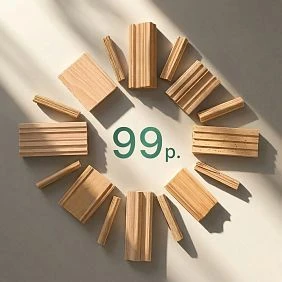
Available on the current STAVROS website Samples of linear products 100 mm long at 99 ₽ from available stock materials.
A direct production channel is convenient here because the sample is immediately linked to the manufacturer's catalog.
With intermediary purchasing this is also possible, but the identification must be preserved in the documents.
What the sample does not guarantee
A physical sample confirms the profile and gives an idea of the material, but it does not turn natural wood into a perfectly uniform material.
For oak or beech, the next batch may differ in grain and tone.
Therefore, with a clear finish, work with batches and reserve must be agreed separately.
A sample is a reference for the profile and the agreed solution, not a promise that every fiber will be identical.
Who is responsible for the claim
Before payment, it is useful to ask in advance:
if the wrong profile arrives, to whom should the claim be sent and who will arrange the replacement?
In an intermediary scheme, the contract is usually concluded with the seller or distributor, so the customer interacts with them under the terms of their contract.
In the direct model, the claim goes to the manufacturer-seller.
But for the project, the specific process is more important:
- to whom to send photos;
- what data is needed;
- who confirms the non-conformity;
- what happens to the erroneous batch;
- how the replacement is initiated;
- who communicates the new deadline.
The phrase "we are reliable" is weaker than a procedure that is clear in advance.
Geometry claim: what needs to be attached
If the issue concerns the profile, it is useful to record:
- article number;
- the material;
- order number;
- photo of the product;
- photo of the marking;
- measurement of the disputed dimension;
- number of affected lengths;
- comparison with the approved sample or drawing.
This way, the dispute is discussed in terms of parameters, not with the words "the profile seems different."
Repeat order after three months: testing the procurement channel
Before the first batch, ask the channel a simple question:
what will need to be sent so that in three months I can order the same 70 m?
A good answer is built around the SKU and configuration.
If the answer:
“send a photo — we’ll pick something”
for a serial project this is a bad sign.
A repeat order should be a continuation of the specification, not a new product search.
Wholesale building materials companies: when a single window saves time
wholesale building materials companies can indeed be convenient for the procurement department if one counterparty covers several standard groups.
This is especially useful when:
- the volume of each brand is small;
- no non-standard products;
- delivery consolidation is needed;
- all SKUs are accurately identified;
- technical issues are rare;
- the delivery schedule is clear.
Then direct contracts with five manufacturers may create more administrative work than benefit.
Supplier companies of building materials: how not to lose the manufacturer within the chain
Even if the contract is signed with building materials supplier companies, the project documentation must store information about the product itself.
Minimum:
manufacturer / brand / SKU / material / size / sample.
In a few years, both the seller and the manager may change.
But the technical identity of the profile must remain.
When a distributor is more efficient than a direct manufacturer
The intermediary model is especially convenient when the following conditions are met simultaneously:
- the project needs many different brands;
- the volume of each individual SKU is moderate;
- the items are standard;
- there are no customization requirements;
- consolidation is important;
- the item is available in regional stock;
- the customer wants a single counterparty.
For example, a small restaurant needs doors, paint, lighting, flooring, and 30 m of standard moulding. A separate production setup for a single profile may be excessive.
When a direct manufacturer is more rational
A direct channel is especially logical if:
- hundreds of meters of a single profile are needed;
- the project is being delivered in several phases;
- a repeat production run is required;
- there are custom/non-standard items;
- a technical drawing is needed;
- the material is critical;
- the product is part of the serial furniture range;
- long-term operation with repairs is planned.
Here the value of direct contact grows with technical complexity and order repeatability.
Hybrid scheme: often the best option for a large project
It is not necessary to choose a single channel for the entire building.
A rational scheme could be as follows:
paint, lighting, flooring, consumables → through a procurement specialist or distributor;
specialized wooden trim → directly from a specialized manufacturer.
Advantage:
- a single window is maintained for mass standard categories;
- technically sensitive profiles remain closer to the manufacturer;
- there is no need to force a single channel to handle tasks for which it is not intended.
For a complex project, this is often more sensible than the slogan "we buy absolutely everything in one place."
We calculate the cost of the channel, not just the price of the product
Two identical items can have different final procurement costs.
You need to compare:
product price + delivery + packaging + administrative overhead + risk of urgent additional purchase + cost of possible downtime.
A distributor may be more expensive on one SKU but cheaper on the overall logistics of five brands.
A manufacturer may be more cost-effective on a large run of a single profile, especially if repeat orders and technical support matter.
You cannot pre-select a winner without a full specification.
Three procurement scenarios: the same linear footage — different right channels
There is no one-size-fits-all answer like "buy only from the manufacturer" or "give everything to a distributor." It is more useful to compare three real tasks.
Scenario 1. A restaurant for one project, 35 m of standard molding
The project needs one standard profile, the volume is small, no custom work is planned, and a repeat in a few years is unlikely.
Here, a good distributor or assembler may be more rational than a separate production communication if they:
- accurately specify the manufacturer;
- record the manufacturer's article number;
- confirm the material and length;
- have the required quantity;
- are accountable for the deadline.
The main value of the channel is the speed and simplicity of the transaction.
Scenario 2. Hotel, 480 m of one molding in three phases
Here the requirements change.
You need to understand in advance:
- will the SKU be retained;
- can it be repeated after a few months;
- how is the missing volume covered;
- who confirms the parameters of the new batch;
- what to do if availability changes between orders.
If the distributor has a direct technical channel with the manufacturer and can document all of this, working through them is perfectly fine. If every question turns into a chain of "we'll check with someone and get back to you," the direct manufacturer becomes stronger.
Scenario 3. A furniture factory regularly uses one profile
Today 120 parts are needed, in a month another 200, then the series continues.
Here the procurement channel effectively becomes part of the factory's own production.
Key parameters:
reproducibility → stable SKU → technical changes → repeat batches → speed of resolving deviations.
The price of a single strip remains important, but an error in the profile can halt not just a repair, but the customer's own production line.
In such a scenario, direct contact with the manufacturer or a distributor with formalized technical communication is usually more valuable than a random one-off discount.
What a technical request through a distributor should look like
The intermediary channel works well if it does not distort technical information.
Instead of a message:
“Need a similar oak molding, approximately 250 meters.”
you should send a structured line:
| Field | What to specify |
|---|---|
| Manufacturer | ___ |
| Article number | MLD-___ |
| Material | Oak |
| Cross-section | ___ |
| Standard length | ___ |
| Quantity | ___ pcs. |
| Finished linear meters | ___ m |
| Repeat queue | date / volume |
| Sample | code / approval date |
| Non-standard | no / describe |
| Confirmation required | availability / lead time / repeat |
In such a scheme, the distributor is not required to be a factory technologist himself. His task is to pass the request on without losing its meaning and return a confirmed answer.
If material, length, or SKU disappear from the table during the process, the channel becomes weak regardless of its size.
Where the intermediary chain most often breaks
A procurement channel has several typical risk points.
An internal code replaces the manufacturer's SKU
Only a conditional code appears on the invoice 48372.
A year later, the seller changes the system, and the project no longer knows which product was installed at the site.
What to do: store both codes, but treat the manufacturer's SKU as the primary technical identifier.
An "analog" substitutes for an exact match
The manager sees that the original profile is currently unavailable and suggests a close match in width.
For a temporary consumable item, this may be acceptable. For a molding frame next to an already installed first phase — it is not.
What to do: any replacement requires separate sample approval and a new specification line.
A technical question turns into a verbal answer
For example:
"Yes, I think this length can be made."
For project procurement, this is not enough.
What to do: record the confirmation in the order, quotation, correspondence, or technical document — wherever the agreement can later be verified.
The complaint gets lost between the participants
The seller considers the issue a production one, the manufacturer considers it a commercial one, and the item is awaiting replacement.
What to do: before payment, define a single point of contact for complaints and the procedure for passing on a technical issue.
When changing the procurement channel is acceptable without risk to the project
Sometimes the first batch was bought from one seller, and the second is more profitable to order through another channel.
The transition itself is not dangerous if technical identity is preserved.
Before changing, you need to compare:
- manufacturer;
- article number;
- the material;
- cross-section;
- length;
- processing;
- the approved sample;
- the current product page.
If only the photograph matches, the transition is premature.
Particularly careful work is required with natural oak and beech: the same SKU does not mean an absolute match of the wood grain. For transparent finishing, it is better to compare a new batch with the existing one in advance.
Intermediary price and manufacturer price: bringing offers to a single basis
You need to compare not two figures in price lists, but two identical specifications.
For example:
| Parameter | Channel A | Channel B |
|---|---|---|
| The same SKU | Yes / no | Yes / no |
| One material | Yes / no | Yes / no |
| Same length | Yes / no | Yes / no |
| Quantity | ___ | ___ |
| Product price | ___ | ___ |
| Packaging | included / separate | included / separate |
| Delivery | included / separate | included / separate |
| Sample | Yes / no | Yes / no |
| Repeat batch | confirmed / not | confirmed / not |
| Technical contact | direct / via channel | direct / via channel |
Only after this does the honest final cost appear.
If a distributor is 3% more expensive but consolidates five brands into one delivery and one document flow, the difference may be justified.
If a manufacturer is more expensive in logistics but can repeat a critical profile and quickly confirm a non-standard item, for a serial project this may also be more advantageous.
That is why the channel price should be evaluated together with the project risk, not separately from it.
Checklist for choosing a procurement channel for wooden moulding
Before signing the contract, answer ten questions.
- Who actually manufactures the product?
- Is there a permanent manufacturer's article number?
- How are the material and dimensions fixed?
- Can I get a sample?
- Can the order be repeated after a few months?
- Who is responsible for technical questions?
- Is customization possible?
- Who handles the claim?
- Who confirms the stock and lead time?
- Who is responsible for the repeat batch?
If half of the answers are unknown, the problem is not the channel price — the project has simply not identified the product well enough yet.
Short decision matrix
| Situation | Rational first candidate |
|---|---|
| Many brands, few of each SKU | distributor |
| One standard profile, small volume | any transparent channel with availability |
| Hundreds of meters of a single SKU | direct manufacturer or channel with direct technical contact |
| Non-standard cross-section | Manufacturer |
| Repeat in six months | manufacturer or distributor with confirmed reproducibility |
| Need one window for the entire project | distributor/kit assembler |
| Complex mouldings + many standard materials | hybrid scheme |
Main conclusion:
the choice should not be between an “intermediary” and a “factory” as an ideology, but between the functions that the project needs.
If the task is standard and consolidation matters, a distributor may be the best channel. If geometry, repeatability, custom work, and a future series matter, the value of a direct manufacturer increases.
In this logic, STAVROS belongs specifically to the production channel: the current website describes the company as a Russian manufacturer of wooden decor and interior components.
Questions about choosing a procurement channel
Is STAVROS a distributor?
No. On the current official STAVROS website, it is designated as a Russian production company and manufacturer of wooden decor and components for furniture and interiors.
What is most important to preserve when purchasing through an intermediary?
The manufacturer, item code, material, size, length, and approved sample.
When is a distributor’s broad assortment truly advantageous?
When a project requires many brands, but the volume of each individual item is small and standard.
When is it better to contact the manufacturer directly?
For large volumes of a single profile, repeat batches, non-standard items, and technically complex specifications.
Can a project be handled through two channels?
Yes. A hybrid approach is often convenient: mass standard categories through a consolidator, specialized linear profiles directly.
Why is the manufacturer's article number needed if there is a seller's code?
It helps identify the item even if the seller or procurement person changes.
Can natural oak be replicated absolutely identically?
You cannot promise an identical wood grain pattern. SKU repeatability primarily means geometry and configuration.
How can a sample be verified in an intermediary purchase?
Link it to the manufacturer, item code, material, and approval date.
Who accepts the complaint?
The counterparty with whom the purchase was made, according to the terms of the contract; it is best to clarify the exact procedure before payment.
What has a stronger influence on channel selection — price or repeatability?
It depends on the project. For a one-off standard item, price and availability may be the main factors; for a series, repeatability is often more important.
Where can I view STAVROS moulding?
В STAVROS mouldings catalogue.
Can I order a sample first?
Yes. On the current website, 100 mm moulding samples are available for 99 ₽ from available stock materials.