Article Contents:
- What is a glazing bead — in simple words, without lyricism
- Where furniture glazing bead is used: a complete list of scenarios
- Cabinet with glass doors
- Display case with lighting
- Sideboard and buffet
- Kitchen cabinets with glass fronts
- Interior doors with glass inserts
- Decorative partitions and niches
- Restoration of old furniture
- Why a wooden glazing bead is better than a plastic one for furniture
- Types of glazing bead profiles: from simple to decorative
- Straight (rectangular) glazing bead
- Rounded (oval) glazing bead
- Decorative trim
- Glazing bead with a quarter (in quarter)
- Corner glazing bead
- How to choose the size of a glazing bead: important parameters
- Glass thickness
- Face width
- Profile height (depth)
- General rule of proportion
- Glazing bead for sideboard and display cabinet — a commercial accent
- Why shaped profile matters for a sideboard
- Lighting inside the display cabinet — a nuance for the glazing bead
- Sideboard style and profile shape
- Glazing bead for kitchen fronts with glass doors
- Coating — a key issue for the kitchen
- Consistency with kitchen decor
- Buffet area with glazed doors
- Glazing bead for interior doors with glass
- Glazing bead size for the door
- Door glazing bead profile
- Mitered corner cut
- Glazing bead attachment: methods and nuances
- Finish nails (brads)
- Glue + brads
- Glue only
- Groove + glazing bead
- Removing and replacing old glazing bead
- Material and wood species for furniture glazing bead
- Oak
- Oak
- Birch
- Spruce
- How to properly paint a wooden glazing bead
- Before installation or after?
- Surface Preparation
- Glass protection during painting
- Wooden glazing bead in the furniture decor system
- Mistakes when choosing and installing a wooden glazing bead
- What to check before buying a glazing bead — checklist
- FAQ — answers to popular questions about wooden glazing beads
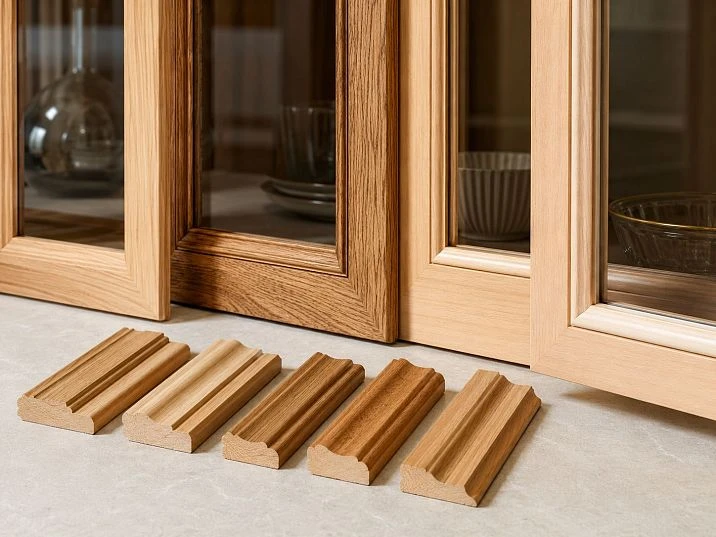
There are details that go unnoticed — until they are in place. A glass cabinet door, a display case with dishes, a sideboard with transparent inserts — all of this is held together by a thin strip around the perimeter of the glass. Remove it — and the glass will fall out. Install the wrong one — and the door will look cheap, sloppy, accidental.
A wooden glazing bead is not just a fastener. It is a visible part of the facade that runs along the entire perimeter of the glass and remains in sight every day. For solid wood furniture, a classic sideboard, a buffet, or a backlit display case — the glazing bead is chosen as carefully as handles, moldings, and legs: it is part of the image.
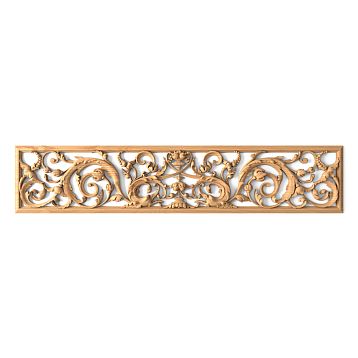
View wooden moldings and glazing beads STAVROS — in the catalog.
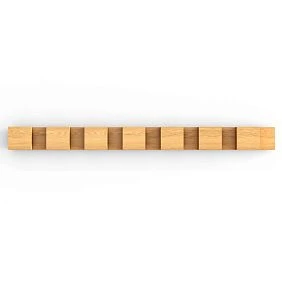
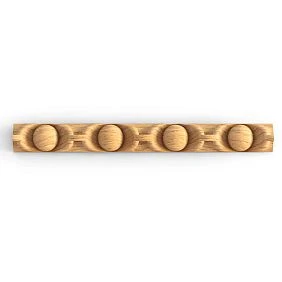
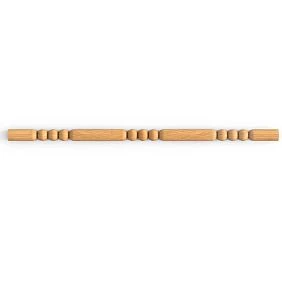
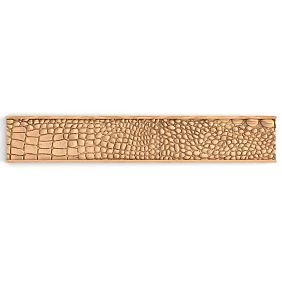
What is a glazing bead — in simple words, without lyricism
If you first encountered this word in a furniture repair or assembly task, we'll explain it right away and clearly.
A glazing bead is a narrow wooden (or plastic, metal) strip that is attached along the perimeter of a glass insert in a frame, facade, door, or opening. It holds the glass in place, covers the gap between the glass and the frame, prevents the glass from rattling—and at the same time becomes part of the decor.
In furniture, the glazing bead works in two modes at once:
Technical: presses the glass against the frame or facade frame, preventing it from shifting or falling out. For a cabinet or sideboard door, this is a safety issue.
Decorative: covers the contact point between the glass and the wooden frame. A neat profile, properly painted to match the facade color, makes the door look complete. A sloppy or mismatched one creates a feeling of unfinished work.
In construction, the glazing bead is used for windows—there it is wider and more massive. In furniture, it is thinner, more elegant, often with a shaped profile. These are different things, although the word is the same.
Go to section wooden glazing bead and furniture molding.




Where furniture glazing bead is used: a complete list of scenarios
Before choosing a profile, it's important to understand exactly where the glazing bead will work. Each scenario has its own requirements.
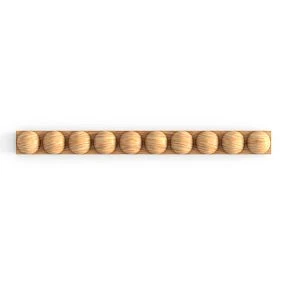
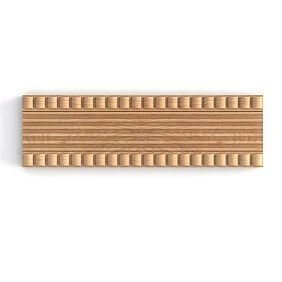
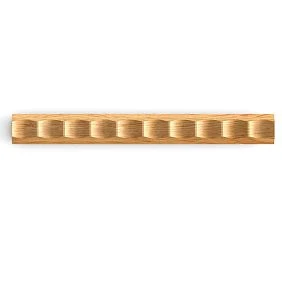
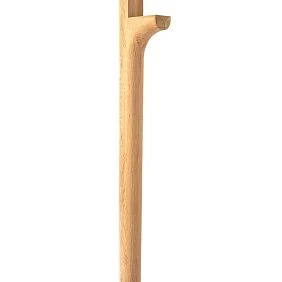
Our factory also produces:
Cabinet with glass doors
The most common case. A cabinet in the living room, bedroom, or study — with one or several glass doors. Furniture glazing bead holds the glass in the door frame and remains visible from the front side.
Important: the glass in cabinet doors is often clear or frosted, and the contents behind it — dishes, books, decor — are all visible. The glazing bead is the framing element of this "picture."
Get Consultation
Display case with lighting
A display case is furniture where the glass acts as a "stage": it shows the contents, lets light through, and creates the feel of an exhibition object. Wooden glazing bead for a display case here it should be neat, thin, and well-matched to the style of the furniture.
For a display case with lighting, there is an added nuance: the internal lighting reveals all imperfections and gaps. Careful fitting of the glazing bead is especially important.
Sideboard and buffet
A sideboard is classic furniture with glazed upper sections. A buffet is its more massive version with a combination of open shelves, glazed doors, and solid lower cabinets.
For sideboards and buffets, a shaped wooden glazing bead with a decorative profile is most often needed, which supports the classic or neoclassical style of furniture. A straight technical glazing bead would look unfinished here.
Kitchen cabinets with glass fronts
Upper kitchen cabinets with glass doors are a popular solution for classic, neoclassical, and Provencal kitchens. The glass opens up shelves with dishes, adding airiness.
The glazing bead in the kitchen should match the rest of the kitchen's trim: wooden moldings for fronts, cornice, baseboard. A unified decorative language — the style of the kitchen is made up of details.
Interior doors with glass inserts
A door leaf with a glass insert is an architectural object. Here door glazing bead Larger than furniture bead: the door bears a greater load, the glass is heavier, and the bead must securely hold it with every opening.
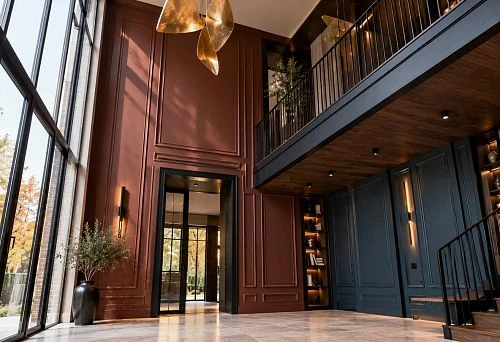
The profile of the door glazing bead is chosen to match the trim and door moldings — so that all the wooden door decor reads as a single piece.
Decorative partitions and niches
Wooden partitions with glazed sections — a modern solution for space zoning. The bead works both technically and decoratively: it is visible from both sides of the partition.
Restoration of old furniture
One of the most common requests in this topic is searching for a bead for restoring Soviet or antique furniture. Grandma's sideboard, an old credenza with figured doors, an antique display case — all require replacement of worn or missing beads.
For restoration, it is especially important to choose a profile as close to the original as possible. That is why figured wooden bead with a diverse profile is so in demand — it allows for a more accurate reproduction of the original element.
Why wooden bead is better than plastic for furniture
The question seems obvious to a specialist — but let's be honest.
Plastic glazing bead is used in mass-market furniture solutions. It is cheap, requires no treatment, and is not afraid of moisture. It is used where only function and low production cost matter.
Wooden glazing bead is a different story. Here are specific arguments:
-
Coating in the color of the facade. Wood is painted, tinted, and coated with varnish or oil in any color. A beech glazing bead under white enamel and an oak glazing bead in a "dark walnut" tint are two items made from the same material that make the facade cohesive.
-
Consistency with the wood species. If a cabinet or sideboard is made of oak, veneer, or solid wood — a glazing bead from the same species is organic. Plastic next to natural wood looks out of place.
-
Shaped profile. Plastic glazing bead is almost always straight. Wooden glazing bead can be made with a shaped profile: rounding, chamfer, molding, stepped transition. For a classic sideboard, buffet, or display case, this is fundamentally important.
-
Feeling of quality. A part made of real wood compared to plastic is perceived differently — physically, tactilely, and visually.
-
Durability. A high-quality wooden glazing bead with proper coating lasts as long as the furniture itself.
Types of glazing bead profiles: from simple to decorative
The glazing bead profile is the cross-section of the strip. It is the profile that determines how the glazing bead will look on the facade.
Straight (rectangular) glazing bead
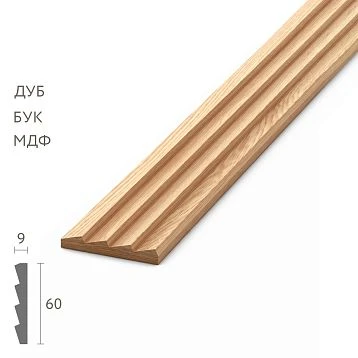
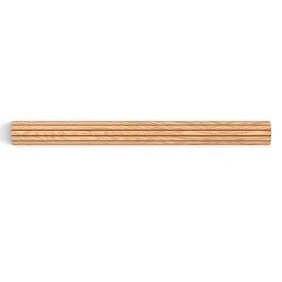
The simplest and most versatile profile. Rectangular in cross-section — a flat, even strip. Well suited for modern and minimalist facades where clean lines without additional decoration are important.
A straight glazing bead is the choice for those who want the detail to 'not distract.' It works as a technical element, giving way to the glass as much as possible.
Rounded (oval) glazing bead
A glazing bead with a rounded outer edge. The rounding softens the glass-to-frame transition line, making the facade visually 'softer.' Works well in neutral interiors, for bedroom furniture, and for Scandinavian style.
Additionally, the rounded profile is pleasant to the touch — this is important for doors that are opened by hand.
Decorative profile
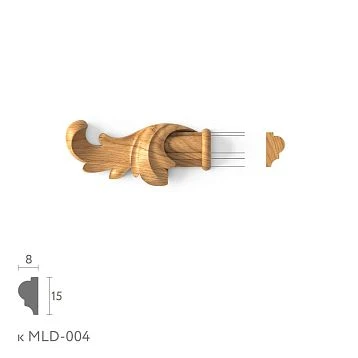
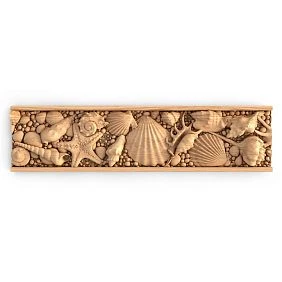
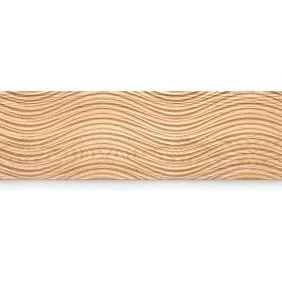
This is a glazing bead with a decorative profile: chamfer, ogee, reverse rounding, stepped transition, S-shaped line. The shaped profile adds relief and decorativeness.
It is the shaped wooden glazing bead that is in demand for:
-
classic sideboards and cupboards;
-
kitchen furniture in a classic style;
-
restoration of antique cabinets and display cases;
-
interior doors with glazing;
-
facades in neoclassical style.
The more complex the profile, the more decorative the glazing bead becomes. For classic styles, this is a plus: the bead ceases to be just a "strip" and becomes part of the facade's ornamental system.
Quarter-round glazing bead (with a quarter)
A special profile with a protrusion — a "quarter" — along one edge. This protrusion goes under the glass and secures it in the frame groove. The most technically reliable solution for cabinet doors and interior doors.
Angular glazing bead
A glazing bead with an L-shaped cross-section — used where the joint of two planes needs to be covered. In furniture, it is used less often than straight or shaped beads, but in certain constructions, it is indispensable.
How to choose the size of a glazing bead: important parameters
The size of a glazing bead is not just "width" and "height" in cross-section. It is a system of parameters that must match a specific facade.
Glass thickness
The first thing to know before buying is the thickness of the glass for which the glazing bead is intended. Standard furniture glass thicknesses: 3–4 mm (light doors), 5–6 mm (standard), 8 mm (heavy facades and doors).
The glazing bead must overlap the edge of the glass to the required depth. If the mounting groove in the frame is designed for 5 mm glass, the glazing bead with a rebate must exactly match this size.
Face width
This is what is visible from the outside: the width of the glazing bead on the face plane of the door. A too narrow glazing bead (3–4 mm) is a barely noticeable technical detail. A wide one (12–15 mm or more) is already a decorative element that "frames" the glass.
The choice depends on the task: for a minimalist modern facade — narrow. For a classic display case with decor — a wider shaped profile.
Profile height (depth)
The depth of the glazing bead is how far it goes into the frame or presses against the edge of the glass. This parameter determines the reliability of fixation. Heavy glass requires a greater grip depth.
General rule of proportion
The glazing bead should be proportionate to the facade. For a small door of an upper kitchen cabinet (30×60 cm), a wide heavy glazing bead will look ridiculous. For a large display case door (60×120 cm), a thin strip will get lost.
Guideline: face width of the glazing bead = 4–7% of the width of the smaller side of the glass insert.
Glazing bead for a sideboard and display cabinet — a commercial accent
A sideboard is a special case. It is furniture kept in the living room on display, often with expensive dishes, crystal, porcelain. Glazed doors are the main "stage" of the sideboard. And the glazing bead around the perimeter of these glasses is a detail that is constantly looked at.
Why a shaped profile is important for a sideboard
A straight glazing bead on a classic sideboard looks like a mistake: as if someone repaired an antique with a construction batten. A shaped profile with a decorative rounding or chamfer emphasizes the style of the furniture and reads as an organic detail.
For restoring a Soviet sideboard or buffet, it is especially important to choose a profile close to the original. Usually, this is a moderately shaped profile with a soft rounding — not a strict rectangle, but not overly rich decor.
Lighting inside the display case — a nuance for the glazing bead
A display case with internal lighting is a popular solution in living rooms. The lighting emphasizes dishes, collectible items, decor. But it also reveals the slightest irregularities in the glazing bead.
When installing a glazing bead in a display case with lighting, the following is especially important:
-
careful cutting of corners at 45° (miter joint);
-
no gaps between the glazing bead and the frame;
-
smooth, drip-free coating.
Wooden glazing bead for a display case made of beech or oak, coated with varnish to match the facade, looks impeccable in this light.
Sideboard style and profile shape
| Sideboard style | Recommended glazing bead profile |
|---|---|
| Classic, neoclassic | Shaped with molding, rounding |
| Provence | Rounded, for white enamel |
| Modern Classic | Moderately shaped, laconic chamfer |
| Minimalism | Straight thin glazing bead |
| Restoration of Soviet style | Original profile + shaped analog |
Glazing bead for kitchen fronts with glass doors
The kitchen is a space with special requirements: high humidity, temperature fluctuations, grease, detergents. Therefore, a wooden glazing bead in the kitchen requires a special approach.
Coating is a key issue for the kitchen
Wooden glazing bead for furniture in the kitchen must be protected from moisture. Coating options:
-
Alkyd or polyurethane enamel — creates a dense moisture-resistant film. An excellent choice for a kitchen to be painted.
-
Water-based varnish (2–3 coats) — provides good protection against moisture, will not yellow over time.
-
Oil with wax — a natural coating that requires periodic renewal. For the kitchen — only with moderate humidity.
Not recommended: shellac and nitrocellulose varnishes — they are not resistant to detergents.
Consistency with kitchen decor
The glazing bead in the kitchen should work in harmony with other wooden elements: moldings for facades, the cornice of the upper cabinets, the baseboard, furniture handles. If all these details have a uniform finish and profile, the kitchen looks like a single high-quality solution.
Buffet area with glass doors
The buffet area is a specially designated part of the kitchen or dining room with a sideboard or cabinet for dishes. Glass doors on the buffet serve a decorative function: to display beautiful dishes. The glazing bead here is chosen the same as for a china cabinet: shaped, neat, matching the facade.
Glazing bead for interior doors with glass
An interior door is not just a passage. In a modern apartment, a glazed door performs several functions: it lets in light, visually unites the space, and serves as a decorative object.
Glazing bead size for the door
The door glazing bead is larger than the furniture one. For glass in an interior door with a thickness of 6–8 mm, the face width of the bead is usually 12–20 mm, and the profile depth is 8–12 mm. This allows the glass to be held securely during intensive opening.
Door glazing bead profile
The door glazing bead profile is selected in accordance with the profile of the door leaf itself. If the door has shaped architraves with molding, the bead should repeat this decorative language. Wooden slats and strips allow you to select the required profile for a specific door.
Miter cutting of corners
For a door, as for furniture, the bead is cut at the corners at 45°. The joint must be tight: when opening the door, any gap will be visible. For soft wood (pine), precise cutting is more important because it compresses.
Attaching the glazing bead: methods and nuances
A technical question that is often asked: how exactly to attach the glazing bead? There are several methods.
Finish nails (pins)
The most common method. Thin finishing nails with a diameter of 1.2–1.6 mm are driven through the glazing bead into the frame at intervals of 10–15 cm. The heads are countersunk with a nail set and puttied over — after painting, they are invisible.
Advantages: fast, reliable, easy to dismantle if necessary (pry and pull out).
Glue + pins
For decorative glazing beads in a display case or cabinet — a combination of construction adhesive and finishing pins. The glue ensures pressure along the entire length, the pins provide immediate fixation until the glue dries. The neatest fastening.
Glue only
For a lightweight glazing bead on a small door — construction adhesive without nails. Convenient because there is no need to putty the holes. However, dismantling the bead without damage is more difficult.
Groove + glazing bead
In some furniture constructions, the door frame has a special groove into which the glass is inserted and then secured with a glazing bead. The bead is held in the groove by the geometry of the profile ('quarter turn'). The most technically sound method — often used in doors.
Removing and replacing old glazing bead
If a damaged glazing bead needs to be replaced, pry it up with a thin chisel or spatula, carefully peeling it away from the frame. It is important not to damage the glass. After removal: clean the area, apply new glue, and install a new glazing bead.
Material and wood species for furniture beading
Wooden trim It is made from different species, and the choice of species affects quality, appearance, and application.
Beech
Beech is the workhorse for beading intended for painting. Fine-grained structure, without pronounced grain, accepts enamel and varnish well. The surface after sanding is smooth, paint lays evenly without raising the grain.
For white kitchens, cream classic facades, Provence style — beech under enamel is ideal.
Oak
Oak — for open wood with expressive texture. Under oil or clear varnish, oak shows a characteristic large grain pattern, golden-brown hue. For classic sideboards, cupboards, office cabinets — oak is organic.
Limitation: oak reacts more actively to moisture, so the coating must be more thorough.
Birch
Birch — a neutral species, light, with a soft grain. Accepts tinting in any color well. For light interiors and under tinting — an excellent base.
Spruce
Pine — soft wood. For beading under load (doors) — not the best choice: it dents, crushes at corners. For light furniture doors in Provence style with a characteristic knotty grain — it may be suitable.
Tip: choose beading from the same species as the facade. Or in the same tint. This is the main rule of consistency.
How to properly paint a wooden beading
Bead covering is a step that makes the detail either invisible (in a good sense) or eye-catching.
Before installation or after?
Both approaches are valid, but each has its own logic.
Paint before installation: more convenient — the bead lies on a horizontal surface, paint applies evenly, all edges are accessible. After installation — minor touch-up of cut areas and nail holes.
Paint after installation: for precise color matching with the facade. The bead is painted together with the facade, the shade matches perfectly. More difficult to work with, requires care near the glass (painter's tape).
Surface preparation
-
Sanding (grit P180–P220) along the grain.
-
Priming — especially important for beech and oak to seal pores and ensure even paint application.
-
Application of the first coat of paint or varnish.
-
Light sanding (P320) after drying.
-
Application of the final coat.
Glass protection during painting
The glass near the installed glazing bead needs to be protected with painter's tape. Apply the tape carefully, along the edge of the bead — and paint won't get on the glass. After drying, remove the tape with a sharp motion.
Wooden glazing bead in a furniture decor system
A glazing bead is a small part, but it doesn't work alone. For a professional result, the glazing bead must be part of a well-thought-out facade decor system.
Glazing bead + molding = a finished framed door. Wooden moldings form a frame around the glass insert on the outside of the door, while the glazing bead does so on the inside. Together, they create a complete "window-like" look for the facade.
Glazing bead + handles. Furniture Handles and the glazing bead should be in the same style: a classic shaped glazing bead and a modern minimalist handle — a conflict. Classic glazing bead + classic wooden or bronze handle — harmony.
Glazing bead + overlays. decorative inlays for furniture on the facade — rosettes, corner overlays, central elements — together with the glazing bead form a full decorative system for a classic facade.
Bead + door frame. furniture frames They form the base of the door. The bead is the finishing detail that completes its assembly. The quality of the frame and the quality of the bead must match each other.
Mistakes when choosing and installing a wooden bead
These mistakes are common — read to the end to avoid repeating them.
Buying a bead without measuring the glass. The most common mistake. Glass thickness of 3 mm and 6 mm require different beads. Measure the glass before ordering.
Not considering the thickness of the facade frame. The bead must match the groove or seating in the frame. A profile that is too deep won't fit, too shallow won't hold.
Choosing a profile that is too wide for a small door. A wide bead on a small door looks like a window mullion on a dollhouse. Proportionality is the main criterion.
Choosing a plastic bead for a wooden facade. Plastic always loses next to natural wood. For wooden furniture — only a wooden bead.
Not checking if the bead can be painted. If you plan to paint the bead to match the facade color — make sure the wood species and surface coating allow it. A bead with a factory gloss finish will not accept new paint without sanding.
Ignoring the style of handles and moldings. The bead does not exist in isolation. If the rest of the hardware is classic — the bead should be the same.
Making straight joints in corners. A straight joint (end-to-end) in the corners of the glazing bead looks ugly and appears as a mistake. The correct method is a miter joint at 45°.
Using "whatever was at hand." A random strip from a hardware store is not a glazing bead. The profile matters, and it should be selected for the specific task.
What to check before buying a glazing bead — a checklist
Save this list:
-
Glass thickness (3/4/5/6/8 mm).
-
Size of the mounting groove in the frame.
-
Required face width of the glazing bead.
-
Profile — straight, rounded, shaped.
-
Wood species — beech, oak, birch.
-
Whether painting, tinting, or varnishing is planned.
-
Total length of glazing bead (perimeter of all glass + 15–20% allowance for trimming).
-
Fastening method — nails, glue, groove.
-
Furniture style — the profile is selected accordingly.
-
Consistency with handles, moldings, overlays.
FAQ — answers to popular questions about wooden glazing bead
What is a glazing bead in a furniture facade?
It is a thin wooden strip that holds glass or a decorative insert in a cabinet door, display case, sideboard, or interior door. View Furniture glazing bead.
Can a wooden glazing bead be used for a glass cabinet door?
Yes, it is the optimal choice for wooden and classic furniture. It is painted to match the facade color, has a decorative profile, and looks organic next to natural wood.
Which glazing bead to choose for a sideboard or display case?
figured wooden bead with a soft rounding or beading — it supports the classic style and looks like an organic part of the facade, not a technical strip.
Can a wooden glazing bead be painted?
Yes. A wooden glazing bead made of beech or oak can be painted, tinted, varnished, or oiled. For the kitchen, it is better to use polyurethane enamel — it is moisture-resistant.
How is a glazing bead different from a batten?
A batten is a general linear element. A glazing bead is a specialized strip with a profile designed for fixing glass. View Wooden slats and strips.
How to properly attach a glazing bead?
Finishing nails (pins) + mounting glue is the best method. Nails are driven in with a spacing of 10–15 cm, the heads are countersunk and puttied. Joints at corners — at 45°.
A glazing bead is a detail that goes unnoticed when done correctly. That is why it must be chosen carefully: the right profile, the right wood species, the right finish. Five minutes of attention when choosing — and the furniture looks like a unified professional solution. Five minutes of indifference — and the glass door of a sideboard or display case ceases to be a decoration and becomes just a "hole with glass."
STAVROS offers wooden glazing bead and furniture molding from solid beech and oak — straight, rounded, and shaped profile, Wooden slats and strips for furniture and doors, Decorative Inserts, Moldings and cornices, Furniture Handles and a full range solid wood products. Own production, dry high-grade solid wood, Contact us to confirm shipping to your destination. STAVROS — because every glass facade should have a proper wooden border.