Article Contents:
- What is a furniture plinth: function, form, meaning
- Three roles of a furniture plinth in a classic interior
- Role one: visual base
- Role two: transition from furniture to floor
- Role three: completion of the furniture decorative system
- Where wooden furniture plinth is used: a complete overview
- Kitchen: lower line of the set
- Cabinet and furniture portal: lower base with character
- Sideboard and library: strictness and weight
- Chest of drawers and cabinet
- Furniture portal for TV zone and niche
- How to choose the height of a furniture plinth: precise guidelines
- Height Standards
- Proportion rule with the upper cornice
- Connection with the floor baseboard
- How to choose a wooden plinth profile: eight criteria
- Criterion 1: Interior and furniture style
- Criterion 2: Coordination with facade moldings
- Criterion 3: Coordination with pilasters and bases
- Criterion 4: Overhang depth
- Criterion 5: Relief and shadow effect
- Criterion 6: Material — solid wood without compromise
- Criterion 7: Finishing before installation
- Criterion 8: Corner joints
- Wooden base for kitchen: detailed analysis
- Classic kitchen
- Neoclassical kitchen
- Provencal kitchen
- Wooden base for wardrobe: from dressing room to portal wardrobe
- Built-in wardrobe up to the ceiling
- Portal wardrobe with pilasters
- Library wardrobe
- Table: where and which base is needed
- Finishing a wooden furniture base: how to avoid mistakes
- Varnish: wood in its pure form
- Toning
- Enamel: a single color with facades
- Patina: 'history' in profile
- Base, plinth, and lower cornice: what's the difference
- How to calculate the length of a base profile
- Systematic approach: base in full furniture decor
- Mistakes that cost dearly
- Where to buy wooden furniture base STAVROS
- Frequently Asked Questions
- About the Company STAVROS
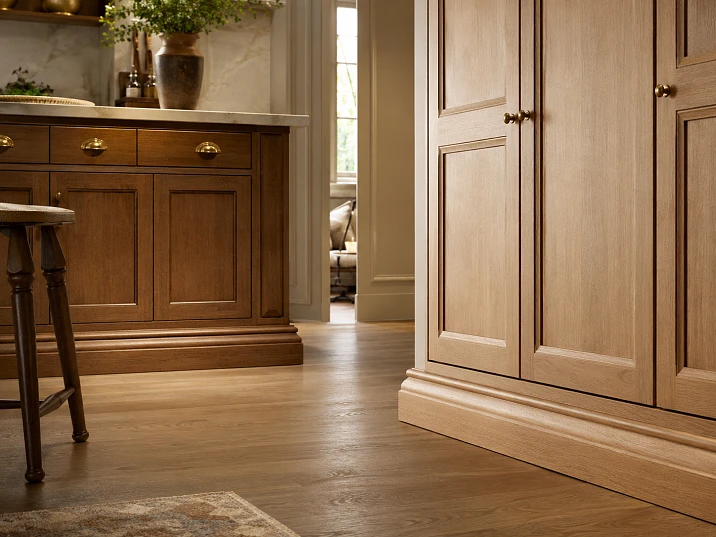
There is one detail in the interior that almost no one notices — and that is precisely why its absence immediately catches the eye. This is the lower base of the furniture. How the kitchen or cabinet 'stands' on the floor. How the lower line of the furniture interacts with the baseboard, the flooring, the room's space. This is where the furniture base works — and this is where mistakes are most often made, quietly ruining the most well-thought-out interior solutions.
Immediately — an important clarification. If you came to this page looking for a plastic PVC kitchen base, G4 base lights, or metal support strips for laminated chipboard — you are slightly off track. Here we are talking about something else: about wooden furniture baseboard made of solid wood — the lower profile that completes the base of classic and neoclassical furniture with decorative dignity.
Kitchen. Cabinet. Sideboard. Library. Chest of drawers. Furniture portal. Everywhere there is a bottom line of furniture — there is a place for a wooden base profile. And everywhere this profile is chosen correctly — furniture turns from a set of cabinets into a complete architectural system.
Let's figure everything out in order.
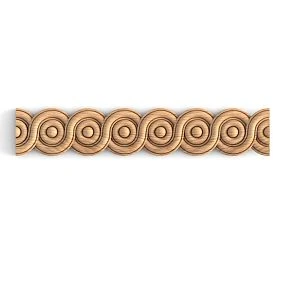
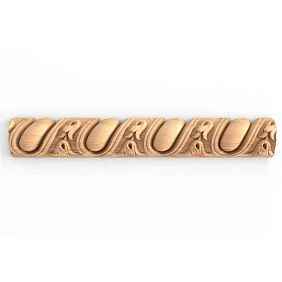
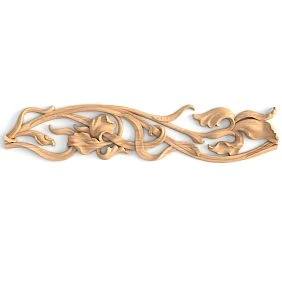
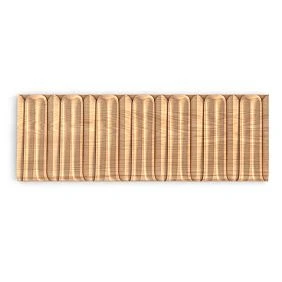
What is a furniture base: function, form, meaning
Before choosing, you need to understand what we are talking about. Because the word "base" is used in many different contexts, and each time it means something different.
In architecture, the base is the lower part of the building on which the entire volume stands. It visually "separates" the building from the ground, emphasizes the foundation, gives weight and solidity.
In furniture, the same logic applies. A furniture base is the lower finish of cabinet furniture that:
-
covers the technical space between the floor and the lower part of the cabinet
-
forms a decorative "support" for the furniture
-
sets the proportion between the lower and upper parts of the system
-
connects furniture with the floor covering and baseboard
-
in classical projects — becomes part of the order system "base — facade — cornice"
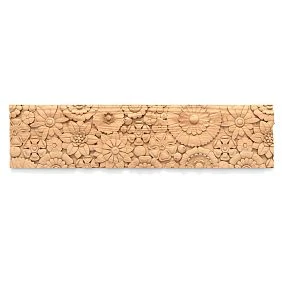
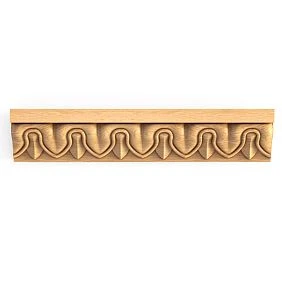
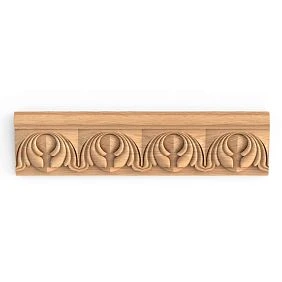
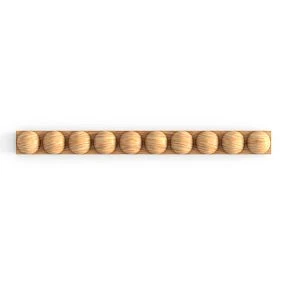
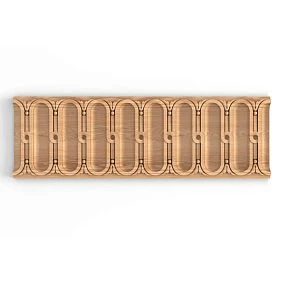
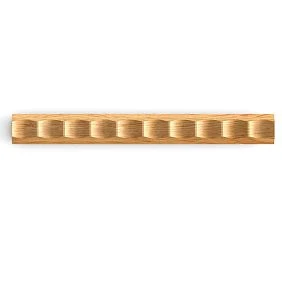
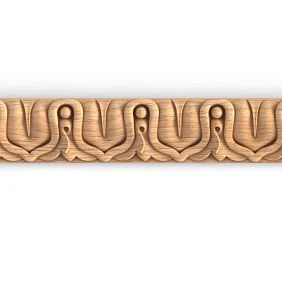
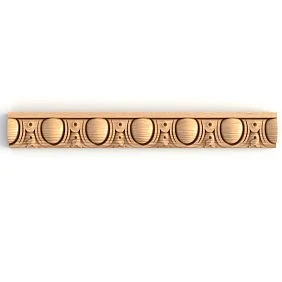
What is a furniture plinth in the context of wooden decor? It is a linear profile made of solid wood that is attached along the lower perimeter of furniture. In shape, it can be a baseboard with a profiled cut, a decorative strip with breaks, a plinth rail with relief, or a full lower cornice with several bands.
A furniture plinth is not the same as a floor baseboard. A floor baseboard stands against the wall, covering the seam between the floor and the wall. A furniture plinth is part of the furniture; it is attached to the body and "guides" the lower line of the furniture system.
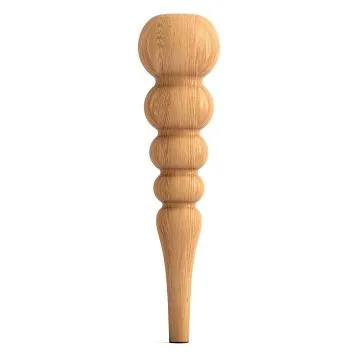
A furniture plinth is also not legs. Legs leave open space under the furniture. The plinth, on the contrary, covers this space — completely or partially. Although in some projects wooden furniture legs the plinth profile and legs work together: the legs support the body, and the plinth is a visual "skirt" between the legs.




Three roles of a furniture plinth in a classic interior
Our factory also produces:
First role: visual base
Look at any classic building facade. The lower part is always more powerful, "heavier," and more horizontally extended. This is not accidental — it is a principle. The base must "hold" everything above it.
The same works in furniture. A wooden furniture plinth creates a visual base: the lower part of the facade receives a horizontal "belt" that gives the furniture stability and weight.
A cabinet without a plinth starts directly from the floor — and this is normal for minimalist modern design. But a cabinet with a wooden decorative plinth acquires a different character: it "stands" rather than "lies on the floor."
Get Consultation
Second role: transition from furniture to the floor
The bottom line of furniture is where two worlds meet: the vertical world of furniture and the horizontal world of the floor. Without a decorative transition, this junction looks harsh.
The plinth softens the transition. A wooden profile with breaks creates a smooth "descent" from the vertical facade to the horizontal floor — just as the architectural plinth of a building creates a transition from the wall to the ground.
Third role: completing the decorative system of furniture
In a classic furniture system, there are three levels of horizontal decoration:
-
Upper — furniture cornice
-
Middle — facade moldings (horizontal belts, lintels)
-
Lower — furniture plinth
Without the lower level, the system is incomplete. A cornice without a plinth is a house with a roof but no foundation. Beautiful, but unfinished.
Where wooden furniture plinth is used: a complete overview
Kitchen: the bottom line of the set
The most common scenario is a kitchen furniture base. The lower sections of the kitchen set stand on the floor, and their bottom part always requires a solution: either legs (open space) or a base (closed foundation).
For classic and neoclassical kitchens wooden furniture base made of solid wood is the right choice. It creates a lower decorative line that:
-
connects the kitchen with the floor skirting board
-
forms a "heavy" base under light upper cabinets
-
creates balance with the upper furniture cornice
For the kitchen, it's important: the base should be painted in the same color as the facades. A white kitchen — a white base in enamel. A tinted wooden kitchen — a base in the same tint.
STAVROS kitchen solutions include classic and neoclassical systems, in which the base is a mandatory component of the lower design.
Cabinet and furniture portal: a lower base with character
For a cabinet — especially a built-in or portal cabinet — a solid wood base plays an architectural role. Let's consider several specific scenarios.
Built-in cabinet from wall to wall. The base runs along the entire lower perimeter, joining the floor baseboard on the sides. The goal is to create a visual "foundation" for the cabinet without a break with the baseboard.
Portal cabinet with pilasters. Here Wooden pilasters have bases at the bottom — and the base must be coordinated with the pilaster bases. This is a single lower horizontal line: base + pilaster bases = lower entablature of the portal system.
Built-in cabinet up to the ceiling. Base at the bottom + cornice at the top = complete system. The cabinet "stands" on the base and "rests" against the ceiling through the cornice. This is the most complete of possible solutions.
for cabinet decor The "cornice + facades + base" system is a mandatory minimum for a classic approach.
Sideboard and library: strictness and weight
In a classic sideboard or library cabinet, the base is a "pedestal" on which the entire system stands. That is why a taller and more expressive base is chosen for a sideboard and library than for a regular kitchen.
Base height for a sideboard: 80–120 mm. This is already a full-fledged lower belt with a decorative character.
The profile must be coordinated with carved decoration facades and with wooden moldings, if they are used on facade frames.
Chest of drawers and cabinet
A chest of drawers is a standalone piece of furniture. Here the base works differently: it does not 'close' the long horizontal line of the set, but creates a decorative foundation for a specific item.
The decorative furniture base for a chest of drawers can be made as:
-
stepped profile with overhang (the base 'protrudes' in front of the body)
-
baseboard strip with minimal relief
-
profile with breaks and decorative belt
for solutions for decorating chests of drawers and cabinets wooden base is one of the key elements of the lower design.
Furniture portal for TV zone and niche
TV zone with a furniture portal is a popular solution. Side pilasters + top cornice + central niche. At the bottom — a plinth or lower shelf of the portal.
The wooden plinth profile at the bottom of the portal covers the lower line and connects the side pilasters with the horizontal bottom part. Without a plinth, the base of the portal looks unfinished.
for TV zone frame The lower decorative belt is a mandatory element of a complete portal system.
How to choose the height of a furniture plinth: precise guidelines
Height is the first and main parameter when choosing a plinth. An error in height ruins all proportions.
Height standards
Kitchen (lower sections 720–750 mm high):
-
Standard plinth: 100–150 mm (this is the standard height of a kitchen plinth — provides legroom at the base of the furniture)
-
Decorative plinth for a classic kitchen: 80–100 mm (smaller than the technical one, but with a profile)
Built-in wardrobe (height 220–260 cm):
-
Plinth: 80–120 mm
-
For tall cabinets up to 280–300 cm: up to 150 mm
Sideboard, bookcase:
-
Lower tier base: 100–150 mm
-
Upper tier base (dividing belt): 50–80 mm
Chest of drawers (height 90–120 cm):
-
Base: 50–80 mm (no more than 1/12 of the chest height)
Cabinet (height 60–80 cm):
-
Base: 40–60 mm
Proportion rule with upper cornice
If furniture has both an upper cornice and a lower base, there should be a proportion between them. Classic ratio: base = 2/3 of the cornice height.
Cornice 90 mm → base 60 mm.
Cornice 120 mm → base 80 mm.
This is not an absolute rule, but a guideline. A base that is too heavy with a light cornice "pulls" the furniture down. A base that is too light with a massive cornice makes the furniture visually "unstable."
Connection with the floor baseboard
The height of the base should be coordinated with the height of the adjacent floor baseboard. If the furniture stands along a wall and there is a Wooden baseboard height of 80 mm — the furniture base can be the same height or slightly higher (90–100 mm). This creates a horizontal "link" between the baseboard and the furniture.
How to choose a wooden base profile: eight criteria
Criterion 1: Interior and furniture style
Each style requires its own "language" of profiles.
-
Classic → expressive profile with breaks: cavetto, quarter, reverse quarter, fillet, shelf
-
Neoclassicism → strict baseboard with 1–2 bands, without ornamental relief
-
Provence → soft profile, painted in light enamel, with gentle rounded transitions
-
Office style → massive profile in dark tint, Doric character
-
Modern classic → geometric baseboard without "historical" ornaments
Criterion 2: Coordination with facade moldings
wooden moldings, cornices, and baseboards On furniture facades, they create a decorative "frame" system. The baseboard should be in the same decorative family: similar language of breaks, similar depth of relief.
Rule: the baseboard is "richer" than the facade moldings. The molding on the door is light. The baseboard is more expressive. This creates a hierarchy of decor: the larger and lower the element, the more expressive its profile.
Criterion 3: Coordination with pilasters and bases
If a cabinet or portal has Wooden pilasters — their bases must align with the plinth. This is fundamental. The pilaster base sits on or next to the plinth — and both elements should visually form a single horizontal strip at the bottom.
If the pilaster base has a height of 80 mm — the adjacent plinth should be approximately the same height. If the plinth is 60 mm and the pilaster base is 120 mm — this creates a break in the bottom line.
Criterion 4: Projection Depth
The plinth projection is the distance the profile extends in front of the facade plane. For a classic plinth: 10–25 mm projection.
If the projection is too small — the plinth gets lost against the facade. If too large — it interferes with opening doors and drawers of lower sections.
Mandatory check: ensure that with an open door or extended drawer, the plinth does not create obstructions.
Criterion 5: Relief and Shadow Effect
A decorative furniture plinth is primarily perceived through shadows. The horizontal bands of the profile create clear shadow lines — and it is these that give a sense of architectural detailing.
Relief depth: 8–15 mm for standard interiors. With side or directional lighting — relief 15–20 mm.
Criterion 6: Material — solid wood without compromise
A solid wood base significantly outperforms analogs made from other materials in several parameters:
-
Painting and tinting: solid wood is tinted organically, matching furniture facades
-
Restoration: scratches and scuffs are repairable
-
Durability: a properly finished wooden profile lasts as long as the furniture itself
-
Tactility: the living surface of wood in the contact area with legs
In STAVROS projects, the entire system of solid wood — cornices, moldings, baseboards, trim — is made from a single material, ensuring color unity during tinting.
Criterion 7: Finishing before installation
This is a practical rule that is often ignored — and later regretted. The wooden baseboard must be painted before installation: this way all edges, ends, and profile grooves are covered evenly. After installation, it is nearly impossible to paint the inner grooves and the lower end of the profile.
Criterion 8: Corner joints
At the corners of a kitchen set or built-in wardrobe, the baseboard requires corner joints at 45°. For wood, this work requires precise cutting: clean corner joints are a sign of professional installation.
Wooden baseboard for the kitchen: detailed analysis
The kitchen is the most "demanding" scenario for a furniture baseboard. The bottom line of the kitchen set runs along the entire length of the wall — and the baseboard here works as a continuous horizontal line that visually "holds" the entire system.
What is important to understand: in a classic and neoclassical kitchen, a plastic kitchen baseboard is not the best solution. It looks appropriate in a budget or modern kitchen. But in a kitchen with wooden facades, with solid wood moldings, with pilasters and a cornice — a wooden furniture baseboard becomes mandatory.
Classic kitchen
For a classic kitchen — facades made of solid wood or in a frame design with moldings — the baseboard should have an expressive profile:
-
Height: 100–130 mm
-
Overhang: 15–20 mm
-
Profile: several belts, possible ornamental frieze
-
Finish: tinting to match the facades or patina
If the kitchen has side pilasters near the refrigerator or at the end of the set, the baseboard should be coordinated with the bases of these pilasters in height and profile.
Neoclassical kitchen
For neoclassical — stricter and calmer. Plinth with a laconic profile, 2–3 belts without ornament. Height: 80–100 mm. White or gray matte enamel matching the facades.
The principle of a neoclassical base: the profile should be "readable" but not "shout." The shadow from the belts is enough. No carved decorations.
Kitchen in Provence style
Provence — whiteness, softness, "aged" look. Base: small (60–80 mm), with soft breaks, light enamel or cream. Light patina on protrusions is welcome.
Key point: in Provence, the plinth should not be heavy. This is light furniture, and the plinth should emphasize that.
Wooden plinth for a wardrobe: from dressing room to portal wardrobe
For a wardrobe, the plinth is an element with a slightly different logic than for a kitchen.
In a kitchen, the plinth is a continuous long line. In a wardrobe, it completes a specific item and should function as a "pedestal."
Built-in wardrobe up to the ceiling
A floor-to-ceiling wardrobe is the most monumental option. Here, the plinth and cornice form a frame: the bottom horizontal and the top horizontal. Between them is the facade system.
Plinth for such a wardrobe: 100–120 mm, coordinated in profile with the cornice (2/3 of the cornice height). If the cornice is 120 mm, the plinth is 80 mm.
Portal wardrobe with pilasters
In a portal wardrobe, the plinth works in tandem with the bases or their bases, help you make a choice, and advise on the best installation and care methods for the item.. This is a single bottom horizontal line of the system. All three elements (base of the left pilaster + plinth of the central section + base of the right pilaster) must form a continuous, even line of the same height.
Library wardrobe
For a library in a study, the plinth is the "pedestal" of the entire system. Here, a taller and more expressive profile is appropriate: 120–150 mm.
Consistency with wooden molding on vertical layouts of the body and with wooden cornice the glass doors of the upper section.
Table: where and which base is needed
| Scenario | Base height | Profile | Finish |
|---|---|---|---|
| Classic kitchen | 100–130 mm | Expressive, with breaks | Toning / patina to match the facades |
| Neoclassical kitchen | 80–100 mm | Strict, 2–3 belts | Matte enamel in the color of the facades |
| Kitchen in Provence style | 60–80 mm | Soft, light breaks | White/cream enamel |
| Built-in wardrobe up to the ceiling | 100–120 mm | Coordinated with the cornice | Unified with the cornice |
| Portal cabinet | 80–120 mm | Coordinated with pilaster bases | Unified with the pilasters |
| Sideboard, bookcase | 120–150 mm | Strict office style | Dark tint |
| Commode | 50–80 mm | Compact with relief | Unified with the facade |
| Furniture portal | 80–100 mm | Portal lower belt | Unified with portal |
Finishing a wooden furniture base: how to avoid mistakes
Finishing is not a final stage that can be postponed 'for later'. Finishing must be planned before ordering the base, because it affects the choice of profile and installation method.
Varnish: wood in its pure form
Clear varnish preserves the texture and color of the solid wood. This is a solution for furniture where wood is a conscious material accent. An oak baseboard under matte varnish is a living surface with a visible grain pattern.
Number of layers: 2–3. Between layers — light sanding (grit 320).
The varnished base must match the color of the varnished finish of the facades. Even clear varnish gives a different tone on different wood species. Oak under varnish ≠ beech under varnish.
Toning
Toning changes the color of the wood while preserving the texture. Stain (water-based or oil-based) + lacquer in 2–3 coats.
Walnut toning is one of the most popular options for classic furniture. It gives a warm brown tone while preserving the wood grain.
Enamel: uniform color with facades
Enamel covers the wood texture and provides a uniform matte or semi-matte color. An ideal option for white kitchens, light cabinets in neoclassical style, and furniture in Provence style.
Application technique: primer-isolator → 2 coats of enamel → finish coat. The enamel color must match the enamel on the facades (the same tint).
Patina: 'history' in the profile
Patina is a finish with an aged effect. Dark base + light enamel on top + light abrasion of profile protrusions → dark recesses and light edges. Readable relief, 'historical' surface.
For classic furniture, patina is one of the best options. It makes the base profile as readable as possible and gives the furniture a noble 'age'.
Baseboard, plinth, and lower cornice: what's the difference
Three concepts that are often confused. Let's break them down once and for all.
| Element | Where it is located | Task | Mounting |
|---|---|---|---|
| Furniture base | Bottom part of furniture | Covers the base, provides support | To the furniture body |
| Floor skirting board | Wall and floor joint | Covers the floor-wall joint | To the wall or floor |
| Lower furniture cornice | Lower decorative furniture strip | Decorative finish at the bottom | To the furniture body |
| Wooden molding | Universal | Layouts, transitions, additions | Depending on the situation |
| Furniture legs | Under the cabinet | Support, open space | To the bottom of the body |
solid wood millwork — the most versatile material in this system. It can be used to make both a base profile and dividing horizontal belts, as well as vertical layouts on the bodies.
How to calculate the length of the base profile
Calculation is a job that needs to be done once, but carefully. An error in length means either a shortage of material (you'll have to order separately, which will break the unity) or an excess.
Step 1: Measure the width of each furniture section.
Not the total width — but each section separately, if the set consists of several modules.
Step 2: Determine the configuration (straight, L-shaped, U-shaped).
A corner kitchen requires calculation of both runs + the corner. A straight kitchen — one run.
Step 3: For each external corner, add 60–80 mm.
The corner joint is cut at 45°. Allowance is needed.
Step 4: For closed end sections (cabinet adjacent to the wall).
The plinth extends beyond the end by 20–30 mm and is trimmed. Account for this.
Step 5: Add allowance for trimming.
150–200 mm to each run — minimum. For long sets (over 3 m) — 300 mm.
Step 6: Check the profile height relative to door opening.
If there are pull-out drawers at the bottom of the cabinet, the baseboard should not interfere with the drawer movement. The baseboard is installed above the level of rollers or guides.
Step 7: Calculate taking into account wooden trim On side sections, if the side walls of the cabinet are visible.
System approach: plinth in full furniture decor
The base does not exist alone. It is an element of the system. And it can only be understood correctly in the context of the entire furniture composition.
Imagine a built-in library cabinet for a study. Height 260 cm. Width 300 cm. Three sections. This is a project where the following are used:
-
Lower base: wooden profile 120 mm in dark tint
-
Pilaster bases on each side of each section: coordinated with the plinth
-
Facade moldings on each door: light frames made of of wooden moldings
-
Wooden trim on vertical body panels
-
Pilasters are vertical decorative elements between sections
-
Wooden baguette on glass doors of upper sections
-
Upper cornice — 180 mm, crowns the entire system
This is not a set of separate parts. This is a solid wood decorative systemwhere each element works towards a common result.
for of boiserie and wall panels the same logic: the lower decorative band — a base or plinth profile made of solid wood — completes the wall system from below. Without it, the boiserie "hangs" in the air.
Mistakes that cost a lot
To avoid redoing it, study the list of mistakes in advance.
Mistake 1: Incorrect height.
A baseboard that is too high on small furniture feels oppressive. Too low, and it goes unnoticed. The 1/12 furniture height rule is your guide.
Error 2: Profile inconsistent with the rest of the system.
A baseboard "from a different decorative family" than the moldings and cornices is an aesthetic dissonance that is immediately visible.
Mistake 3: Finishing after installation.
Not allowed. Only before. Otherwise, there will be no even coating.
Error 4: Corner joints not accounted for.
No length allowance for joints — not enough material.
Error 5: Baseboard interferes with door or drawer opening.
Occurs when the profile overhang is too large or the height is chosen without considering furniture mechanics.
Error 6: Material mismatch.
Wooden facades + plastic base = incompatible in a classic project. Solid wood products require a wooden baseboard.
Error 7: Baseboard without connection to the floor plinth.
The height and profile of the furniture base must be coordinated with the height and profile of the floor plinth. Otherwise, the lower area of the room looks chaotic.
Where to buy wooden furniture base STAVROS
All wooden profiles, moldings, cornices, and baseboard strips made of solid wood — in the section STAVROS wooden moldings, cornices, and baseboards.
Also for a complete furniture project:
-
solid wood millwork — lower trims, fillers, transition strips
-
wooden furniture legs — when the plinth is combined with open supports
-
wooden pilasters and columns — vertical decorative elements
-
wooden decorative elements — corner covers, rosettes, accents
-
STAVROS carved decor — for classic furniture systems
-
Solid Wood Items — full catalog of wooden products
-
Kitchen solutions — systematic decor for kitchen projects
-
Cabinet decoration — system decor for cabinet systems
-
furniture solutions — full range of furniture decor
-
Chests and Dressers — solutions for individual furniture items
-
Boiserie and wall panels — wall systems next to furniture
-
Consoles and Frames — console zones with bottom decor
Frequently asked questions
What is a furniture base?
This is the lower finish of furniture — a wooden profile that covers the base of a kitchen, cabinet, sideboard, chest of drawers, or furniture portal and forms the visual "support" of the entire furniture system.
How is a furniture base different from a baseboard?
A floor baseboard covers the joint between the wall and the floor. A furniture base is part of the furniture; it is attached to the body and covers the lower base of the furniture facade.
What height of furniture base is needed for a kitchen?
The standard height of a kitchen plinth is 100–150 mm. For a classic kitchen with a decorative profile — 80–100 mm.
Can a wooden base be used instead of a plastic one?
Yes. For classic and premium furniture, a solid wood plinth is the optimal choice: it is tinted to match the facades, has a decorative profile, and is durable.
How to calculate the length of the base?
Width of the entire furniture + allowance for corners (60–80 mm per corner) + allowance for trimming (150–200 mm per run).
What to pair with the STAVROS furniture base?
With wooden moldings on the facades, a furniture cornice on top, pilasters and pilaster bases, wooden trim, and floor skirting. All elements are from the same decorative system, with the same finish.
When is it better to choose legs instead of a base?
Legs are appropriate in modern, Scandinavian, and minimalist styles — they leave open space under the furniture. A plinth is for classic, neoclassical, Provence, and cabinet styles, where the lower base should be closed and decorative.
About the company STAVROS
The lower foundation of furniture — what everything else stands on. Literally and figuratively. A solid wood furniture base is a detail made with the same precision and attention as everything else.
STAVROS — production of solid wood products for furniture and interiors. Cornices, moldings, baseboards, linear moldings, pilasters, carved decor, legs, decorative elements — a system where each element is coordinated with the others. From the bottom plinth to the top cornice — one material, one quality standard, one decorative logic.
STAVROS — because details matter. Especially the ones at the bottom.