





























Article Contents:
- What are wooden bushings, washers and discs in the STAVROS construction set
- Why these are not hobby blanks
- Where the mounting hole works
- Why precise dimensions matter
- Decorative posts
- Rods and horizontal axes
- Furniture supports and legs
- Partitions and vertical structures
- Balusters and custom elements
- Bushing — for a neat transition
- Washer — for thin separation of parts
- Disc — for a more noticeable accent
- Conical element — for directing the silhouette
- Cube or sphere — if a strong decorative accent is needed
- Table: what to buy together
- Beech for enamel and dense painting
- Oak for tinting and visible texture
- When materials cannot be mixed accidentally
- Need to close the joint between two wooden parts
- Need to separate elements on a decorative rod
- Need to assemble a vertical post
- Need to design a furniture support
- Need to create modern geometry
- Need to soften a classic post
- Mistake 1. Searching simply for "wooden blanks"
- Mistake 2. Not checking the mounting hole
- Mistake 3. Buying only large accents
- Mistake 4. Confusing a washer and a disc
- Mistake 5. Not considering the overall size of the stand
- Mistake 6. Mixing beech and oak without a concept
- Mistake 7. Not thinking about the hardware
- Mistake 8. Using construction kit parts instead of a ready-made support
- Where to buy wooden bushings for furniture stand?
- How is a wooden bushing different from a washer?
- How is a washer different from a disc?
- Can bushings be combined with balls and cubes?
- How to choose material: beech or oak?
- What should I check before ordering?
- Can such parts be used for furniture legs?
- Are bushings and washers suitable for a partition?
- Can these elements be used for children's toys?
- What to buy together with wooden bushings?
- Is it necessary to draw a stand diagram in advance?
- Can bushings and washers be painted?
- How not to overload the structure?
- Where can I see the fittings for assembly?
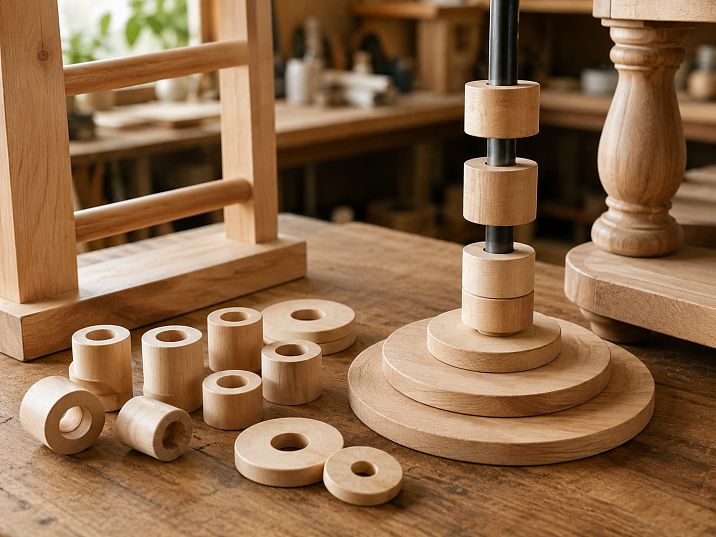
Where to buy wooden blanks is a question that often starts with a simple household task and ends with selecting precise parts for furniture, a stand, a decorative rod, a baluster, or a custom interior structure. The buyer may search for "buy wooden bushings", "buy wooden bushings", "wooden bushings buy" or "buy wooden blanks in an online store", but in practice, they need not a random hobby blank, but a precise element with a mounting hole, clear size, material, and purpose.
Bushings, washers, and discs seem like small parts, but they often make the structure neat. They cover the transition between elements, separate parts on a rod, help assemble the rhythm of a stand, soften the technical joint, and turn an ordinary axis into a well-thought-out wooden composition. Without such adapters, even expensive parts can look randomly strung together.
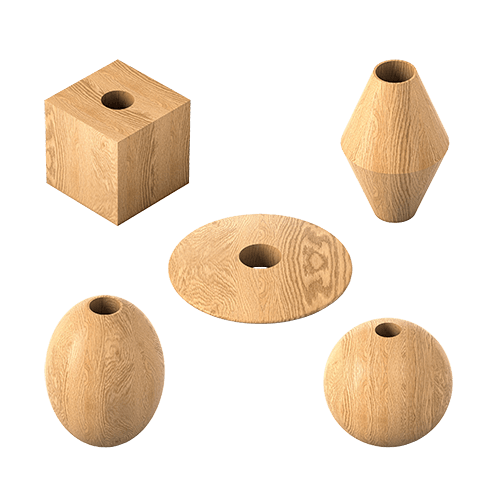
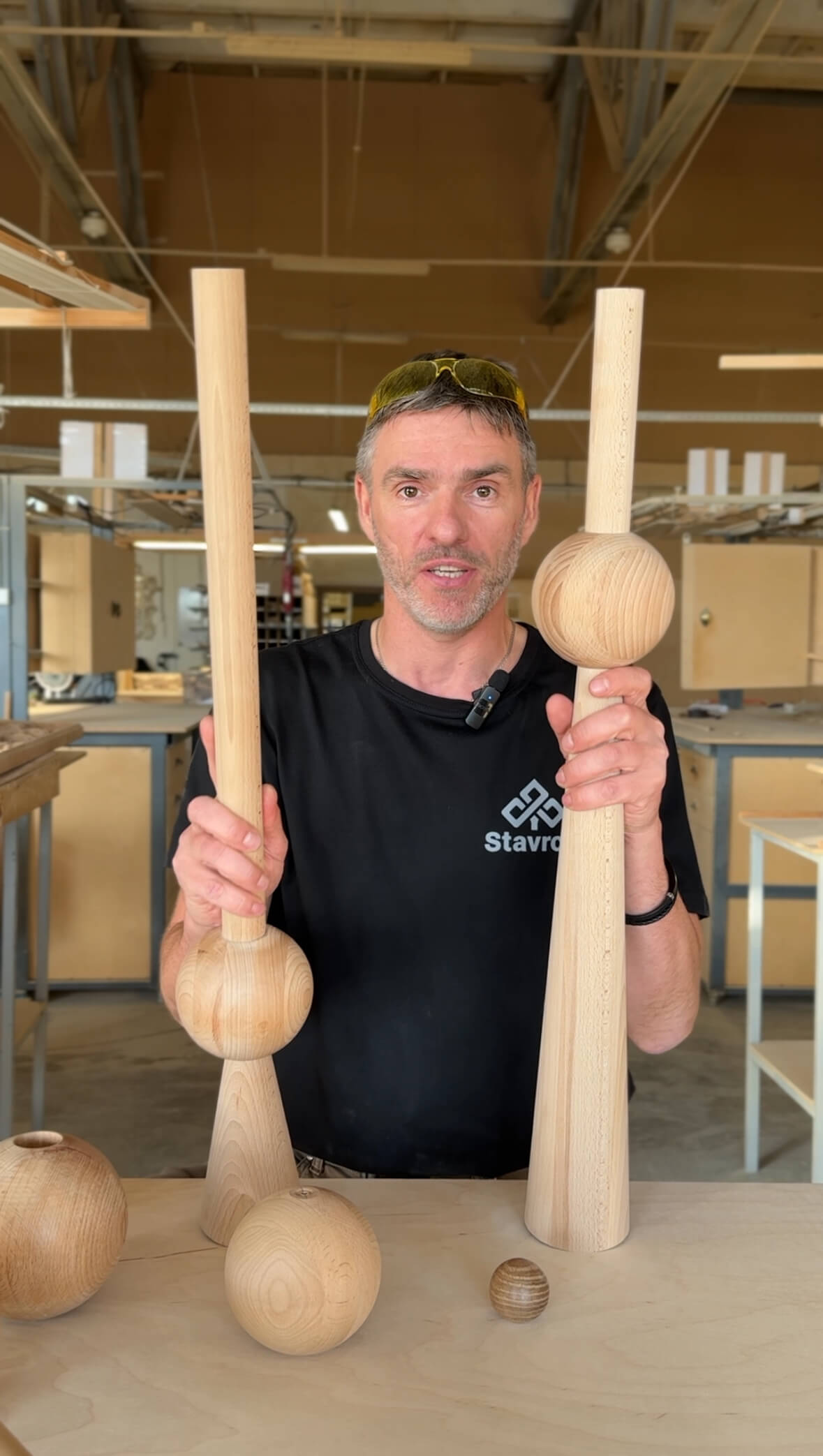
In STAVROS, such elements are located in the constructor section. These are not children's blocks, souvenir blanks, or craft kits. We are talking about wooden parts made from solid beech and oak, designed for furniture, stands, rods, legs, balusters, and interior structures. Therefore, the correct selection path begins not with the general phrase "wooden blanks", but with understanding the task: cover a joint, separate elements, reinforce a decorative node, assemble a stand, design a rod, or complement a furniture support.
If you need to view the entire group of parts, it is logical to start with the section wooden elements of the STAVROS constructor. There you can select bushings, washers, discs, balls, cubes, cones, and other elements in one system, and then link them with fittings, furniture legs, and mounting materials.


What are wooden bushings, washers, and discs in the STAVROS constructor
Bushings, washers, and discs are transitional and separating elements. They are not always the main decorative accent, like a ball or a cube, but without them, the structure often looks rough. It is these parts that cover small gaps, separate large elements from each other, help to fit the mounting on the rod, and make the stand visually cohesive.
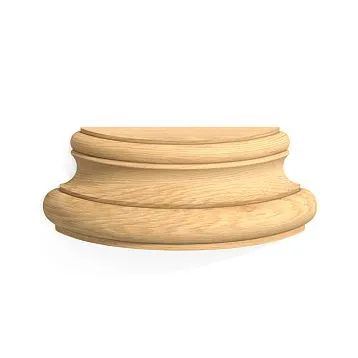
A bushing is usually perceived as a small transitional element. Its task is to soften the joint, cover the transition between parts, create a neat fit, or add a small rhythmic separator. A washer works more subtly: it provides a gap, a line, a flat gasket between parts. A disc is more noticeable than a washer: it can become a small accent, a rosette at the base, or a separating block between larger elements.
Why these are not hobby blanks
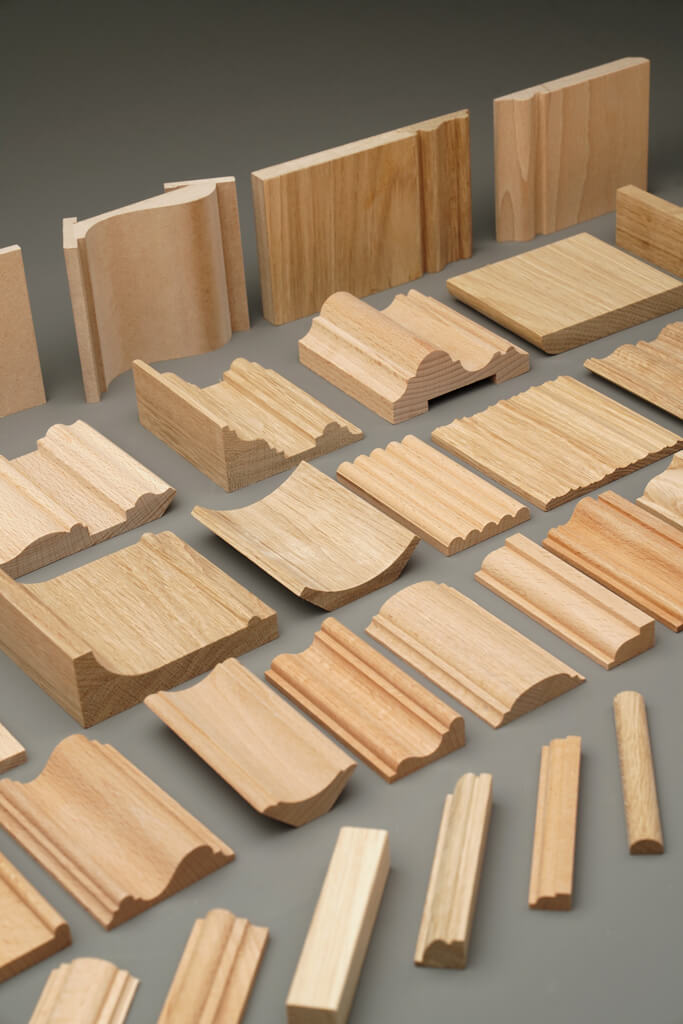
The word "blank" has two different logics. The first is hobby: crafts, decoupage, souvenirs, children's blocks, simple wooden shapes without strict requirements for fit. The second is furniture and joinery use: the part must match in diameter, fit on the axle, combine with other elements, and withstand normal finishing.
This article refers to the second scenario. A bushing, washer, or disc for a stand should not just be a beautiful wooden shape. They must have clear dimensions, material, a hole, compatibility with the axle, and the possibility of finishing. If the hole does not match the rod, the part will not fit. If the size is chosen randomly, the stand will look sloppy. If the material differs from adjacent elements, the finish may lay differently.
Our factory also produces:


Where the mounting hole works
The mounting hole is a key parameter for bushings, washers, discs, balls, cubes, and other construction elements. It allows the part to be placed on a rod, stand, shaft, or baluster. If the hole matches the diameter of the axle, the element becomes part of the overall structure. If it does not match, the buyer gets a beautiful but useless part.
The hole is especially important in vertical stands and horizontal rods. In a vertical stand, parts are strung along the axle and create the silhouette. In a horizontal rod, they can work as separators, tips, or decorative accents. In a furniture support, the mounting hole helps assemble a complex shape from several elements without ordering a custom turned part.
Get Consultation
Why precise dimensions matter
A small bushing can change the entire look of the stand. If it is too thin, the transition will remain unnoticeable and will not cover the technical joint. If it is too large, it will start to conflict with the ball, cube, or disc. A washer should provide a thin separator, not turn into a heavy block. A disc can be an accent, but its width and diameter must correspond to the adjacent parts.
Before ordering, you need to check three size groups: the outer size of the part, the height or thickness, and the mounting hole. The outer size determines the visual scale. The thickness determines the rhythm and spacing between parts. The mounting hole determines compatibility with a rod or post. An error in even one parameter ruins the assembly.
Where to use bushings, washers, and discs
Wooden bushings, washers, and discs should not be limited to just one task. They can work in furniture, partitions, posts, rods, balusters, decorative supports, and custom interior structures. The main thing is to understand that they do not replace load-bearing calculations. They help to design a joint, separate elements, cover a transition, and make a part visually neat.
Decorative posts
A post without transition elements often looks too simple. If it only has large parts, there are not enough pauses between them. Bushings and washers provide these pauses. They allow you to separate a sphere and a cone, a cube and a disc, a base and a top accent. The post becomes not a set of random shapes, but a sequential composition.
For a decorative post, it is important to determine the rhythm in advance. For example, the lower block can be more massive, the middle calm, and the top finished. In such a scheme, bushings work as connecting pauses, washers as thin lines, and discs as more noticeable levels.
Rods and horizontal axes
On a horizontal rod, bushings and washers help separate elements, cover a transition, and finish the edge. If a rod passes through several decorative parts, without separators they may look stuck together. A washer provides a thin line, a disc a noticeable accent, and a bushing a neat transition.
This logic is suitable for decorative rods, custom interior structures, furniture crossbars, and elements where the axis should be not only technical but also beautiful. If you need to purchase for this task, you can immediately look at buy wooden bushings and washers for postsand then check compatibility by diameter.
Furniture supports and legs
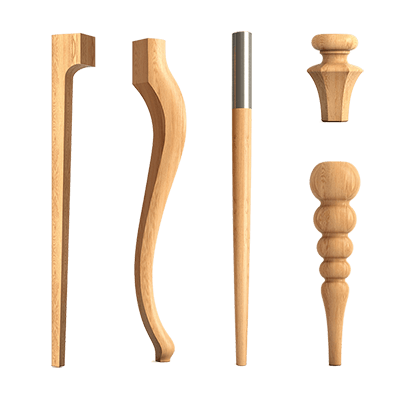
A furniture support can be simple or composite. In a composite support, bushings, washers, discs, balls, and cone elements help create a shape without manufacturing a unique part from scratch. For example, one part acts as a base, another as a transition, a third as a decorative volume, and a fourth as a finish.
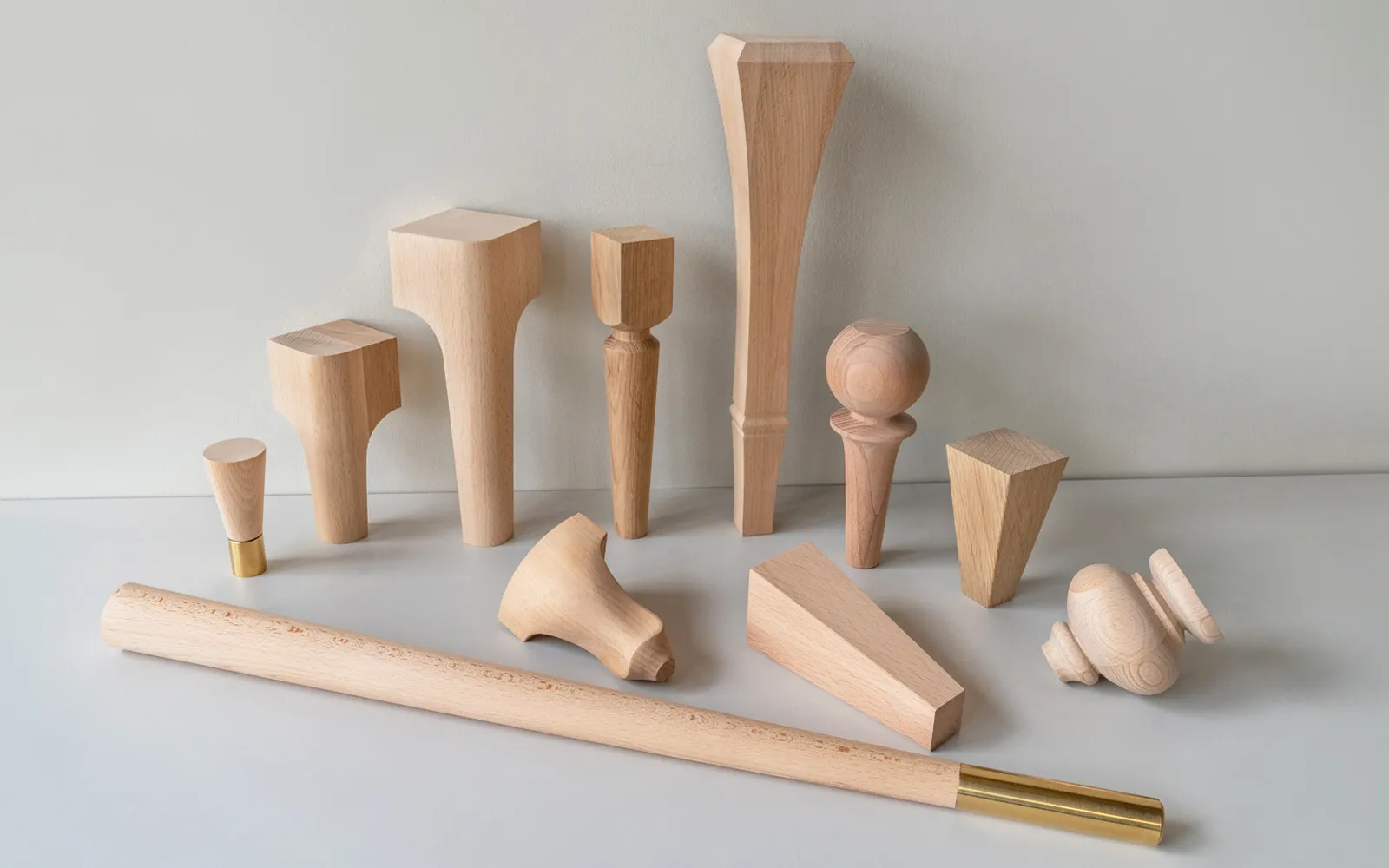
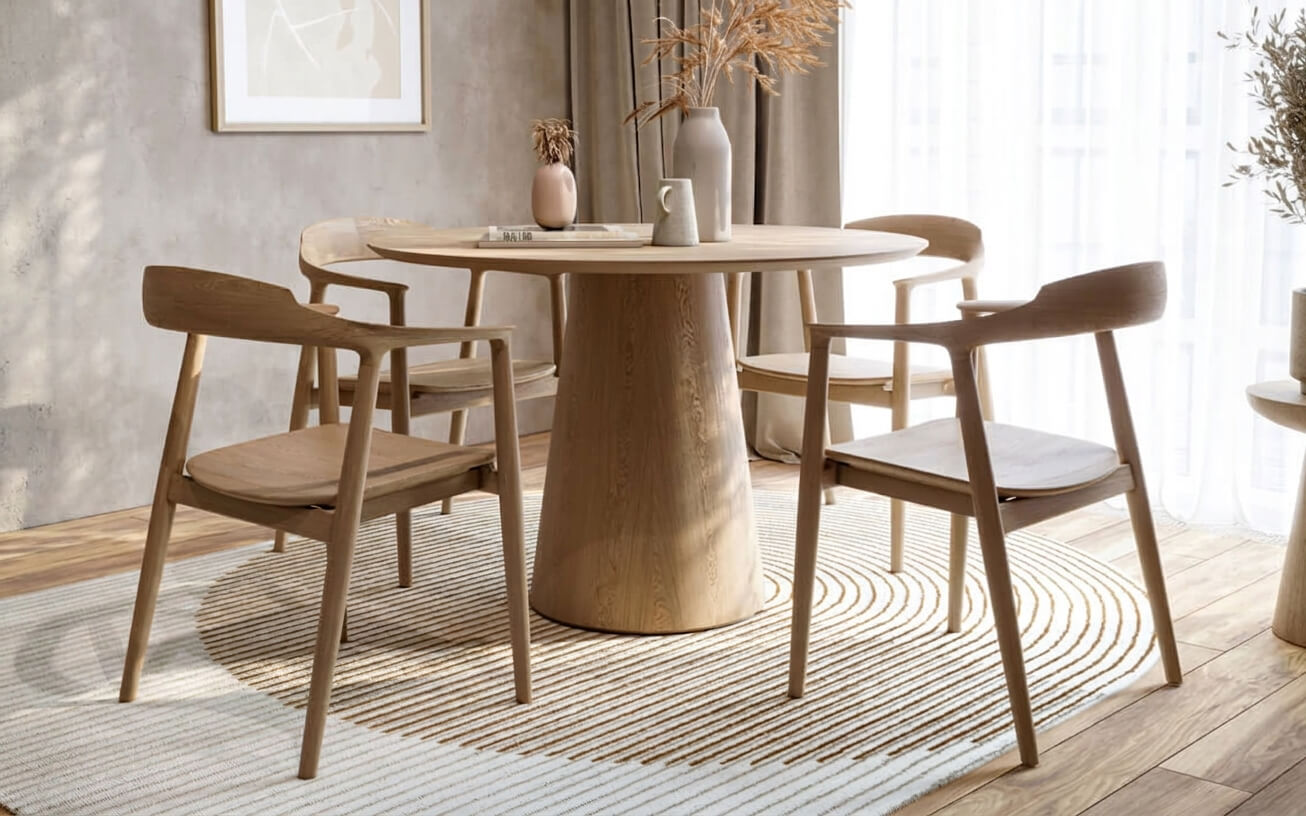
If the task is specifically related to supports, it is worth additionally looking at wooden furniture legs and supports. This helps to understand whether the buyer needs a separate construction element or a ready-made furniture leg. Sometimes a bushing and a disc are needed as an addition to a leg. Sometimes it is better to immediately choose a ready-made support rather than assemble it from several parts.
Partitions and vertical structures
In wooden partitions, vertical elements often look too technical if they lack a finish or decorative separators. Bushings, discs, and washers help to design the joint, base, top part, or transition point. They are especially useful if the partition should not be completely smooth but does not require complex carving.
In modern interiors, stricter forms can be used: cubes, washers, discs, bushings. In soft classic style — balls, cone elements, and thin bushings. The main thing is not to mix everything together. The partition should have a clear rhythm: repetition, pause, accent, finish.
Balusters and custom elements
Balusters are built on rhythm. Even if it's not a finished stair baluster but a custom decorative post, the principle is similar: there is an axis, elements are assembled on it, each element is responsible for part of the silhouette. A bushing helps cover the transition, a washer separates shapes, a disc enhances the level, a sphere adds soft volume, a cube adds geometry.
For custom elements, it is especially important to pre-assemble the scheme. You cannot buy parts just because each one individually appeals to you. In the finished post, they will work together, so you need to check the mounting diameter, the height of each element, the overall size of the structure, and the future finish.
How to choose an element for the task
To avoid mistakes, you need to choose not "the most beautiful wooden blank" but a specific part for the function. A bushing, washer, disc, sphere, cube, and finial solve different tasks. They can be combined but not confused.
Bushing — for a neat transition
A bushing is needed where a smooth transition between parts is required. It does not necessarily have to be the main decoration. Its strength lies in neatness. A good bushing makes the joint calm, eliminates sharp drops, helps connect two elements, and does not overload the structure.
A bushing is especially useful between large parts. For example, between a sphere and a disc, a cube and a cone, a base and a vertical part. If large elements are placed close together, the transition may look rough. A bushing creates a short pause and makes the assembly more professional.
Washer — for fine separation of parts
A washer works like a line. It does not create a large volume but helps separate one shape from another. On a post, a washer can emphasize a transition; on a rod, it separates elements; at the base, it creates a neat visual spacer.
A washer is often underestimated. A buyer wants to immediately buy a sphere, cube, or large disc, but then sees that the parts are not read separately. A washer solves exactly this problem. It provides space between elements and helps the eye see the structure.
Disc — for a more noticeable accent
The disc is larger and more noticeable than a washer. It can serve as a decorative level, base, accent spacer, or small rosette. The disc is appropriate where a thin line is no longer enough, but a large ball or cube would be excessive.
The disc works well at the bottom of a stand, between vertical blocks, or in places where a transition needs to be emphasized. However, the disc should not be used too frequently. If every pause becomes a disc, the structure starts to fragment and loses its calmness.
Conical element — for directing the silhouette
Conical parts help direct the silhouette. They visually elongate the stand, create upward or edgeward movement, and help shape the base or finish. When combined with bushings and washers, the cone looks neater because its transitions become softer.
If the structure feels heavy, a cone can add dynamics. If it is too calm, the conical element makes it more expressive. However, the cone requires proper neighbors: bushings, washers, and discs work well alongside it, helping to avoid a sharp break in the form.
Cube or sphere — if a strong decorative accent is needed
The sphere and cube are more active elements. The sphere softens the silhouette, making the stand more classic and gentle. The cube provides strict geometry, a modern character, and a clear visual accent. If the article is about bushings, washers, and discs, spheres and cubes should not be the main product, but it is important to explain their role in the set.
Bushings, washers, and discs often work specifically between spheres and cubes. They help prevent large forms from conflicting with each other. Therefore, when purchasing a construction set, it is worth thinking in terms of a kit: accent form plus transition elements plus fastening plus finish.
Commercial choice: what to buy for the task
| Buyer's task | What to offer | Why this is suitable |
|---|---|---|
| Close the joint between parts | Wooden bushing | Makes the transition neat and does not overload the structure |
| Separate elements on the rod | Washer or thin disc | Creates a visual pause between parts |
| Make a visible decorative accent | Disc, cube or sphere | Helps highlight a node or level |
| Assemble a vertical stand | Bushings + discs + spheres or cubes | Gives rhythm and a finished silhouette |
| Make modern geometry | Cubes + bushings + washers | Suitable for strict and concise constructions |
| Soften the classic stand | Balls + bushings + cone elements | Creates a smoother and more decorative silhouette |
| Design a furniture support | Bushings, discs, fittings and ready-made legs | Helps connect the decorative and structural parts |
| Prepare the product for finishing | Materials for installation and finishing | Needed for assembly, painting, tinting, and protection |
This block helps you quickly understand what exactly to buy. If you need a thin spacer — use a washer. If you need a transition — use a bushing. If you need a visible level — use a disc. If you need the main decorative volume — use a sphere or cube. If you need a ready-made support — you should look not only at the construction set but also at the furniture leg section.
What to buy together with wooden bushings, washers, and discs
Bushings, washers, and discs are rarely bought in isolation. They are usually part of a set of parts: axle, rod, post, sphere, cube, cone, furniture support, fasteners, coating. If you buy only bushings but don't plan the rod and adjacent elements, assembly may stall. If you buy only spheres or cubes without separators, the structure may look rough.
The main section for selection is — wooden elements of the STAVROS constructor. For assembly and fastening, you may need furniture fittings for assembling structures. If the task involves the lower part of furniture, you should open wooden furniture legs and supports. For finishing, adhesives, protective coatings, and installation logic, the following will be useful Mounting and finishing materials.
Table: what to buy together
| What to add to the purchase | Why this is needed | When it is especially useful | Link |
|---|---|---|---|
| Bushings, washers, discs, and adjacent construction set elements | To assemble the rhythm of a stand or barbell | When creating a decorative axis, stand, partition, baluster | wooden elements of the STAVROS constructor |
| Furniture fittings | For fastening and assembling the structure | When parts need to not only look beautiful but also hold correctly | furniture fittings for assembling structures |
| Furniture legs and supports | To avoid assembling the support completely from scratch | When a ready-made or combined furniture leg is needed | wooden furniture legs and supports |
| Materials for installation and finishing | For glue, coating, protection, and final preparation | When the structure will be painted, tinted, or actively used | Mounting and finishing materials |
Buying as a set is also important for color. If parts made of beech and oak are finished differently, the finished structure may look uneven. If one part is for enamel and another for tinting, this needs to be decided in advance. Even a small washer between large elements will be noticeable after finishing.
How not to confuse a bushing, washer, disc, ball, cube, and finial
| Element | When needed | What's the difference |
|---|---|---|
| Bushing | Hide the transition, finish the joint, add a short pause | A small transitional or separating element |
| Washer | Create a thin visual indent | A flat separating piece |
| Disc | Make a more noticeable accent | Wider and more expressive than a washer |
| Ball | Soften the silhouette of the stand | Works as a decorative volume |
| Cube | Give a modern geometry | Strict form, strong visual accent |
| Cone | Direct the silhouette upward or toward the edge | Transitional element with a directional shape |
| Finial | Finish the top of a post or stand | Not a separator, but a final top element |
The most common mistake is buying a ball or cube when a separator is needed. A ball or cube provides an accent, not a subtle transition. If you simply need to separate two elements, it's better to look at a washer or bushing. If you need a level, you can take a disc. If you need to finish the top, you need not a disc or washer, but a finial or a suitable finishing element.
How to choose the material: beech or oak
In the STAVROS constructor section, beech and oak are used. These are different materials in terms of visual character and finishing scenarios. You cannot choose them just by name. You need to understand what the finished product will be like.
Beech for enamel and dense painting
Beech is often chosen when the structure will be painted with dense enamel. It provides a calm base and is well suited for parts where the wood texture should not be the main visual effect. If the post or rod will be white, graphite, beige, green, black, or another opaque color, beech can be a convenient choice.
This is especially relevant for bushings, washers, and discs. These parts are small, but after painting they work as part of the overall silhouette. If all elements are painted in one color, the post looks solid. If some parts differ in material and finish, random visual breaks appear.
Oak for tinting and visible texture
Oak is chosen where wood needs to be shown. It is more expressive in texture, reveals itself better under tinting and transparent coating. If a post, rod, or support should look like a natural wooden structure, oak may be a more suitable option.
But oak requires careful selection of adjacent parts. If the bushing is oak and the ball or disc is made of another material, the difference may become noticeable under tinting. Therefore, it is better to select elements of the same logic in advance and check how they will be finished.
When materials cannot be mixed randomly
Beech and oak can only be mixed intentionally. For example, if the design is specifically built on contrast. But more often in furniture posts or rods, it is better to avoid random mixing. Especially if the structure will be coated with clear varnish or tinting.
With dense enamel, the material difference may be less noticeable, but fit, processing, and surface behavior are still important. Therefore, before ordering, it is worth determining the overall scenario: uniform color, wood texture, contrast, classic, modern geometry, or a technically calm post.
Practical selection for specific situations
Need to close the joint between two wooden parts
Take a bushing or washer. A bushing will provide a softer transition, a washer a thin line. If the joint is in a visible area, it is better not to leave it technical. A small separating part will make the assembly neater.
Need to separate elements on a decorative rod
Washers and thin discs work well on a rod. They do not take up much height but let the eye understand where one element ends and another begins. If large forms are placed without separators, they may look stuck together.
Need to assemble a vertical stand
First, determine the top, bottom, and center. Then select accent elements: a ball, cube, cone, or disc. After that, add bushings and washers as transitions. Do not start with a random set of parts. The stand must have rhythm.
Need to design a furniture support
Assess whether a ready-made leg or a composite decorative support is needed. If the task is structural, it is better to first look at furniture legs. If you need to supplement the support with decorative transitions, then bushings, washers, and discs become useful.
Need to create a modern geometry
Use cubes, discs, bushings, and washers. Avoid too many balls and classic cones if a strict modern character is needed. A modern stand relies on clean forms and neat pauses.
Need to soften a classic stand
Here, balls, cone elements, discs, and bushings work well. A ball provides softness, a cone gives direction to the silhouette, a bushing provides a transition, and a disc adds an accent. The main thing is not to overload the stand with equally large elements.
What not to make from scratch if there are ready-made STAVROS elements
If you need to assemble a stand, rod, furniture support, or decorative unit, you do not have to order each turned part separately. Ready-made construction kit elements allow you to assemble a composition from catalog forms. This is faster and safer than looking for random blanks without a compatible hole.
You do not need to manually turn a bushing if you can select a ready-made transition element. You do not need to make a washer from a random wooden circle if a precise fit is required. You do not need to adjust a disc without understanding the diameter if the catalog has elements with a mounting hole. You do not need to assemble a stand from hobby blanks if it is meant to work in furniture or interior design.
The correct route is: choose an axle or post, determine the mounting diameter, select accent elements, add bushings and washers as transitions, check the overall size, then choose hardware and finish.
Installation, preparation, and finishing
Before installation, lay out the elements in the required sequence. Do not immediately fix parts until the overall look is checked. Sometimes the composition looks good on a table but appears overloaded in a vertical position. It is better to assemble a trial order: base, bushing, disc, sphere or cube, another washer, then the next part.
If the structure is vertical, it is important to check the axis. All elements must sit evenly. If the hole does not align or there is a misalignment, the post will look bad. If the structure is horizontal, it is important to check the distances between elements and whether they interfere with the function of the rod.
Finishing should be planned before final assembly. Some parts are easier to coat separately, then assemble. Others are more convenient to assemble first, then finish as a single surface. The decision depends on the structure, coating, and whether the parts will be the same color or different shades.
For enamel painting, surface preparation is important. For tinting, the wood grain is important. For varnish, the cleanliness of sanding is important. For furniture and supports, the protective properties of the coating are also important because parts may be in contact with hands, floors, furniture, or loads.
Mistakes when buying wooden bushings, washers, and discs
Mistake 1. Searching simply for "wooden blanks"
A general query leads to too many different products: hobbies, souvenirs, crafts, decoupage, toy shapes. For furniture, precise parts with a mounting hole and clear purpose are needed.
Mistake 2. Not checking the mounting hole
If the hole does not fit the rod or stand, the part cannot be used properly. Before ordering, you need to check the axle diameter and the hole in the product card.
Mistake 3. Only buy large accents
Balls and cubes look noticeable, but without bushings, washers, and discs, the structure can be rough. Transitional elements are needed for neatness.
Mistake 4. Confusing a washer and a disc
A washer provides a thin separator. A disc makes a more noticeable accent. If a barely noticeable gap is needed, a disc may be too large. If a level is needed, a washer may be too weak.
Mistake 5. Not considering the overall height of the stand
Each bushing and washer adds height. If there are many parts, the structure may become taller than planned. You need to count not only large elements but also all separators.
Mistake 6. Mixing beech and oak without a concept
Under a transparent finish, the difference between materials will be noticeable. If a uniform look is needed, it's better to select elements within the same material logic.
Mistake 7. Not thinking about hardware
Decorative elements should not only be beautiful but also properly secured. Therefore, fittings and installation should be planned together with the construction kit parts.
Error 8. Using construction kit parts instead of a ready-made support
If a full-fledged furniture leg is needed, sometimes it is better to choose a ready-made support. The construction kit is useful for decorative nodes but should not replace structural calculation.
Who are wooden bushings, washers, and discs suitable for
Such elements are suitable for furniture workshops, designers, carpenters, manufacturers of racks, partitions, decorative rods, custom furniture, and non-standard interior structures. They are useful where you need to assemble a neat wooden node without manufacturing each part to order.
Bushings, washers, and discs are especially appropriate for those who understand the importance of the mounting hole, dimensions, and compatibility. This is a professional or semi-professional purchase. It requires measurements, an assembly diagram, and an understanding of the final finish.
Such elements are not suitable for those looking for children's blocks, souvenir blanks, decoupage parts, or cheap craft forms without precision requirements. If the product will not be part of furniture, a rack, a rod, or an interior structure, the buyer may need a different type of product.
| Suitable | Not suitable |
|---|---|
| For furniture workshops | If children's blocks or toys are needed |
| For carpenters and rack manufacturers | If souvenir hobby blanks are needed |
| For interior designers | If mounting holes and precise dimensions are not important |
| For manufacturers of partitions and decorative rods | If there is no axle, post, or structure |
| For those assembling custom furniture | If you need a random cheap blank with no finishing requirements |
How to buy wooden bushings and washers at STAVROS
Start with the section wooden elements of the STAVROS constructor. First define the task: joint, separator, accent, post, rod, furniture support, or partition. Then select the part type: bushing, washer, disc, ball, cube, cone, or finishing element.
Before ordering, check:
| What to Check | Why this is important |
|---|---|
| Mounting hole | The part must fit the axle, rod, or post |
| External size | It defines the visual scale |
| Thickness or height | Every detail adds size to the structure |
| Material | Beech and oak look different in finishing |
| Adjacent elements | The bushing, washer, and disc must match the spheres, cubes, and cones |
| Hardware | The structure must be assembled securely |
| Finishing | Enamel, tinting, and varnish require different preparation |
| Place of application | Furniture, stand, rod, partition, and baluster have different requirements |
If the task involves a furniture support, compare the selected elements with ready-made legs. If assembly is needed, open the hardware. If coating is required, pre-select materials for installation and finishing. This order helps to buy not random parts, but a kit for a specific structure.
FAQ
Where to buy wooden bushings for a furniture stand?
Wooden bushings, washers, discs, and other elements with a mounting hole can be viewed in the STAVROS constructor section. They are suitable for stands, rods, furniture supports, balusters, and interior structures.
How is a wooden bushing different from a washer?
A bushing usually works as a transition element between parts, while a washer acts as a thin separator on a rod or stand. A bushing softens the joint, a washer provides a neat flat pause.
How is a washer different from a disc?
A washer is thinner and more subtle. A disc is more noticeable and can serve as a decorative accent or level. If you need a barely noticeable separator, choose a washer. If you need a more expressive transition, look at a disc.
Can bushings be combined with balls and cubes?
Yes. Bushings, washers, and discs are convenient to use between balls, cubes, cones, and other constructor elements. They help avoid rough transitions.
How to choose material: beech or oak?
Beech is more logical to use under enamel and dense paint. Oak is suitable for tinting and finishing while preserving visible wood texture. The final choice depends on the entire structure.
What should be checked before ordering?
Check the part size, mounting hole, compatibility with the rod or post, material, future finish, and overall scale of the structure.
Can such parts be used for furniture legs?
Yes, if they fit the mounting and the project. But if you need a complete ready-made support, it is better to additionally check the furniture legs and supports section.
Are bushings and washers suitable for a partition?
Yes, if the partition has an axle, post, or vertical element of a suitable diameter. The parts help to design transitions, bases, and decorative accents.
Can these elements be used for children's toys?
The article topic is not about toys. STAVROS construction elements are designed for furniture, joinery, and interior tasks where precision, mounting hole, and finish are important.
What to buy together with wooden bushings?
Usually, adjacent construction elements, furniture fittings, installation and finishing materials are bought together, and if necessary, furniture legs or supports.
Do I need to draw a rack diagram in advance?
Yes, at least a simple one. You need to understand the sequence of parts, overall size, repetition, accents, placement of bushings, washers, and discs. Without a diagram, it's easy to buy too much or make a mistake with the scale.
Can bushings and washers be painted?
Yes, if the material and preparation are suitable for the chosen coating. For enamel, smooth preparation is important; for tinting, wood texture; for varnish, clean sanding and a neat surface.
How to avoid overloading the structure?
Choose one main accent: a ball, cube, large disc, or cone. Use bushings and washers as transitions. Do not turn every joint into a large decorative block.
Where can I see the fittings for assembly?
Fittings for assembly can be viewed in the STAVROS furniture fittings section. They are needed so that the decorative structure is not only beautiful but also reliably assembled.
Result: bushings, washers, and discs help assemble a neat wooden structure without random blanks
Wooden bushings, washers, and discs are small but important elements of a furniture construction kit. They help cover joints, separate parts, create rhythm in a stand, design rods, complement furniture supports, and create custom interior structures. They cannot be chosen like ordinary hobby blanks: you need to check the mounting hole, size, material, compatibility, and future finishing.
If a strong accent is needed, you can add a ball or cube. If a transition is needed, use a bushing. If a thin pause is needed, use a washer. If a more noticeable level is needed, use a disc. If a complete furniture support is needed, it's worth comparing the construction kit with ready-made legs. If a reliable assembly is needed, hardware and mounting materials are selected in advance.
At STAVROS, the correct route is simple: open the construction kit section, select elements for the task, check the mounting hole and dimensions, then choose hardware, furniture supports, or finishing materials. This approach helps you buy not random wooden blanks, but parts that actually work in a stand, rod, baluster, partition, or furniture structure.