
























Article Contents:
- Product base: what elements make up a wall-mounted handrail
- What is handrail mounting to wall
- Where a wall-mounted handrail is needed
- Types of handrail mounting to wall
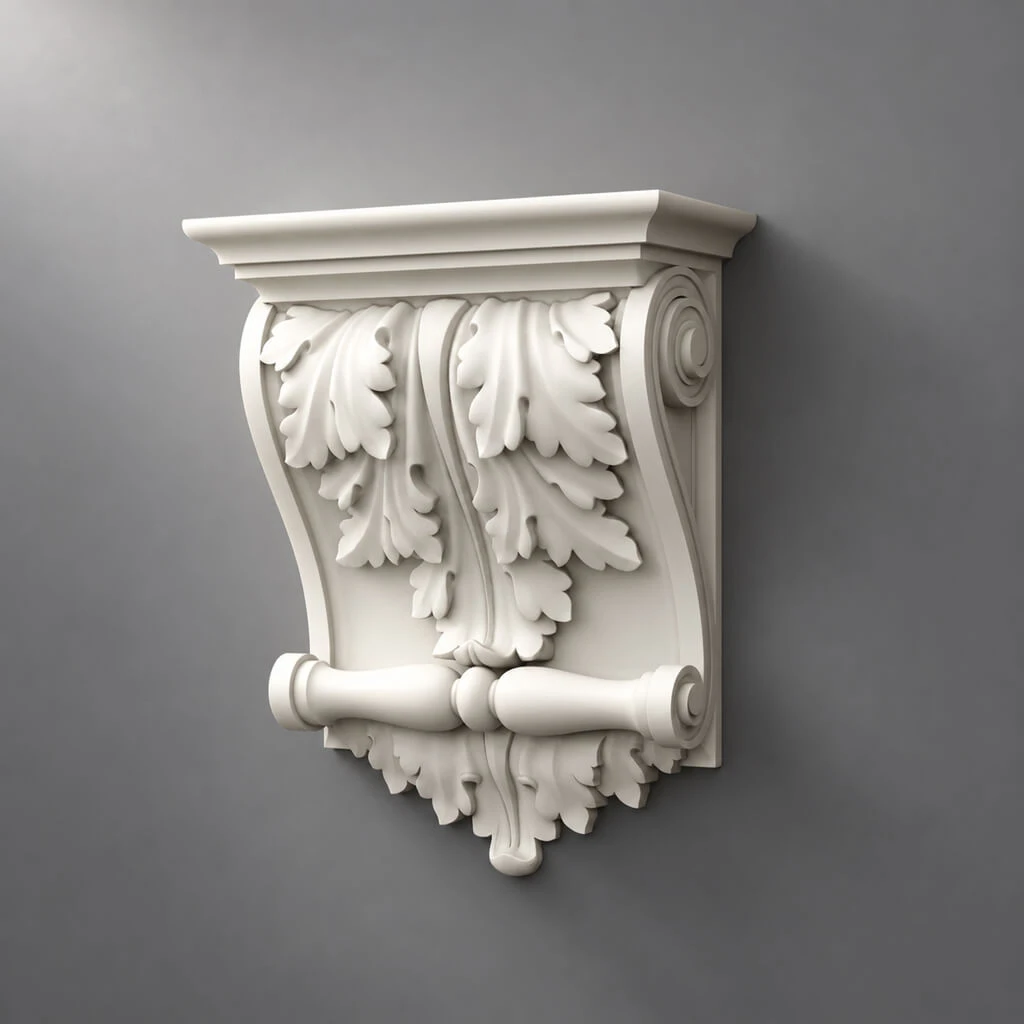
- Wooden brackets
- Hidden fasteners
- Combined units
- How is the handrail attached to the wall?
- What to use to secure a wooden handrail?
- Can wooden brackets be used for a handrail?
- What is the spacing for attaching a handrail to the wall?
- Can a handrail be installed without balusters?
- How to hide the handrail fasteners?
- Which is better for a handrail: oak or beech?
- Is PR-004 suitable for a wall-mounted handrail?
- Do I need to buy the under-rail strip PR-003?
- Can I attach a handrail to a drywall wall?
- How to choose a bracket for a classic interior?
- Where to buy wooden handrails and STAVROS brackets?
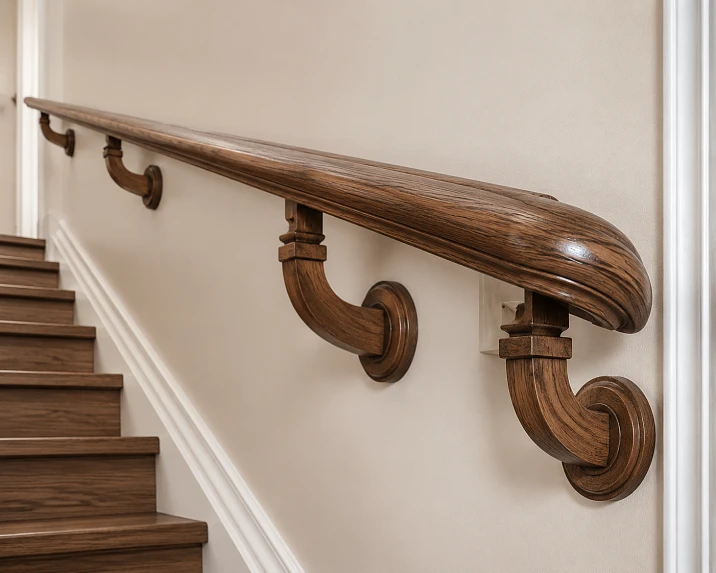
A wooden wall handrail mount is chosen when the handrail should function not only as a safety element but also as part of the interior. In a private house, on a staircase, in a corridor, hallway, foyer, or transition zone, the handrail often runs not along balusters but directly along the wall. In this case, all reliability depends on the fixing unit: the bracket, base, fasteners, wall material, installation spacing, and how correctly the handrail itself is selected.
It is a mistake to think that a wall-mounted handrail is just a wooden plank screwed to the wall. The handrail is grasped by hand, leaned on when going up and down, held by children, elderly people, guests, and sometimes a person transfers a significant part of their weight onto it. Therefore, the mounting must be thought out in advance: where the support points will be, what the height will be, what gap will remain between the hand and the wall, how to conceal the fasteners, how to connect the handrail with the staircase, doors, baseboards, and wooden decor.
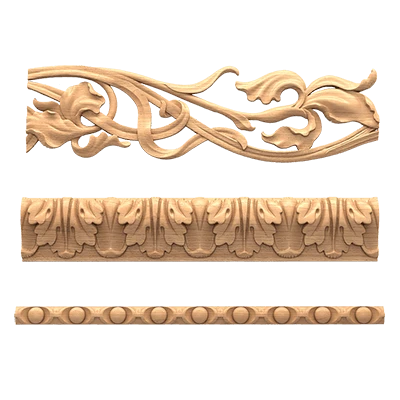
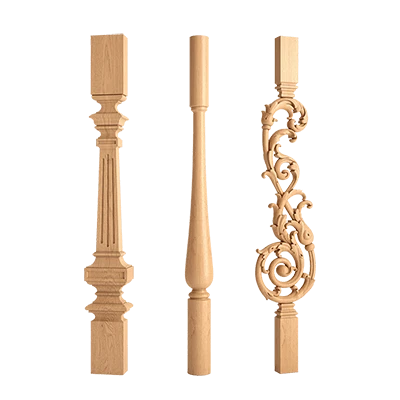
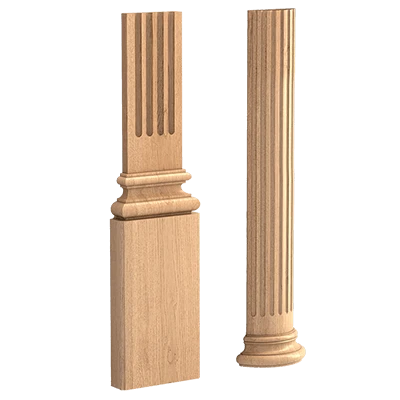
STAVROS offers wooden products that help assemble the staircase and interior unit in a unified style: stair railings, Wooden Brackets, Staircase Components and Elements, handrail support strips and accompanying wooden decor. Such a system is especially important in classic, neoclassical, wooden, and premium interiors, where a random metal holder can look alien.
In this article, we will analyze how to choose a wall handrail mount: when wooden brackets are needed, when it is better to use a hidden or combined unit, which handrail to select, how to calculate the number of supports, what mistakes occur during installation, and what to clarify before ordering from STAVROS.
Product basis: what elements make up a wall-mounted handrail
A wall-mounted handrail is not a single product, but an assembly of several parts. It includes the handrail itself, supports or brackets, wall fasteners, the point where the handrail attaches to the bracket, finishing, and, if necessary, decorative elements that cover or visually soften the connection.
If the handrail runs along the wall, it is not supported by balusters along its entire length. This means the load is transferred through the wall mounting points. Therefore, it is important not to confuse a decorative bracket with an engineering support. A wooden bracket can be a beautiful and supportive element, but the specific method of its use for the handrail, the type of fastener, the permissible load, and compatibility with the wall must be confirmed by the project, the installer, or a STAVROS manager.
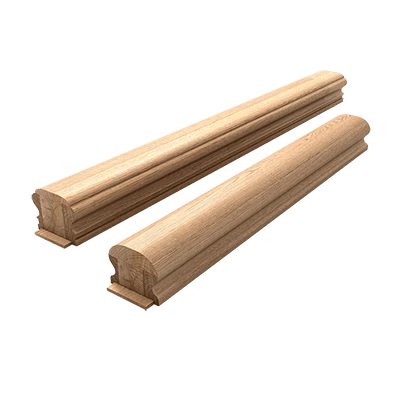
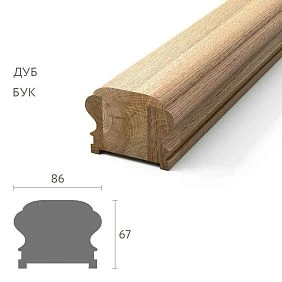
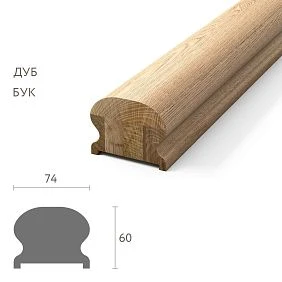
The main category for choosing a handrail is STAVROS stair handrails. For a wall-mounted scenario, a round profile is particularly interesting because it is comfortable to grip with the palm. For example, handrail PR-004 has dimensions of 2400×50 mm and is available in beech and oak as per the confirmed product card. For a more classic staircase system, you can consider handrail PR-002, which is used in staircase railing structures and is made from laminated oak and beech; the card indicates that the handrail is additionally supplied with a sub-rail plank PR-003.
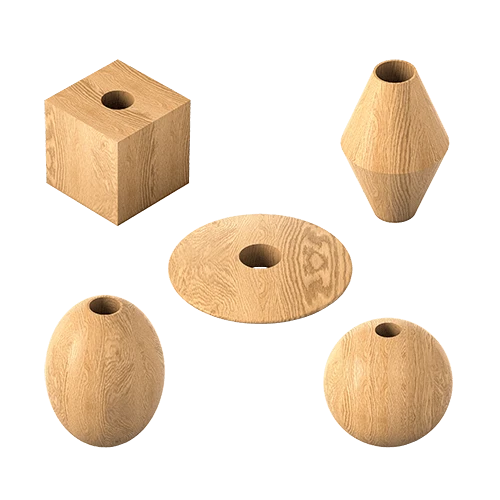
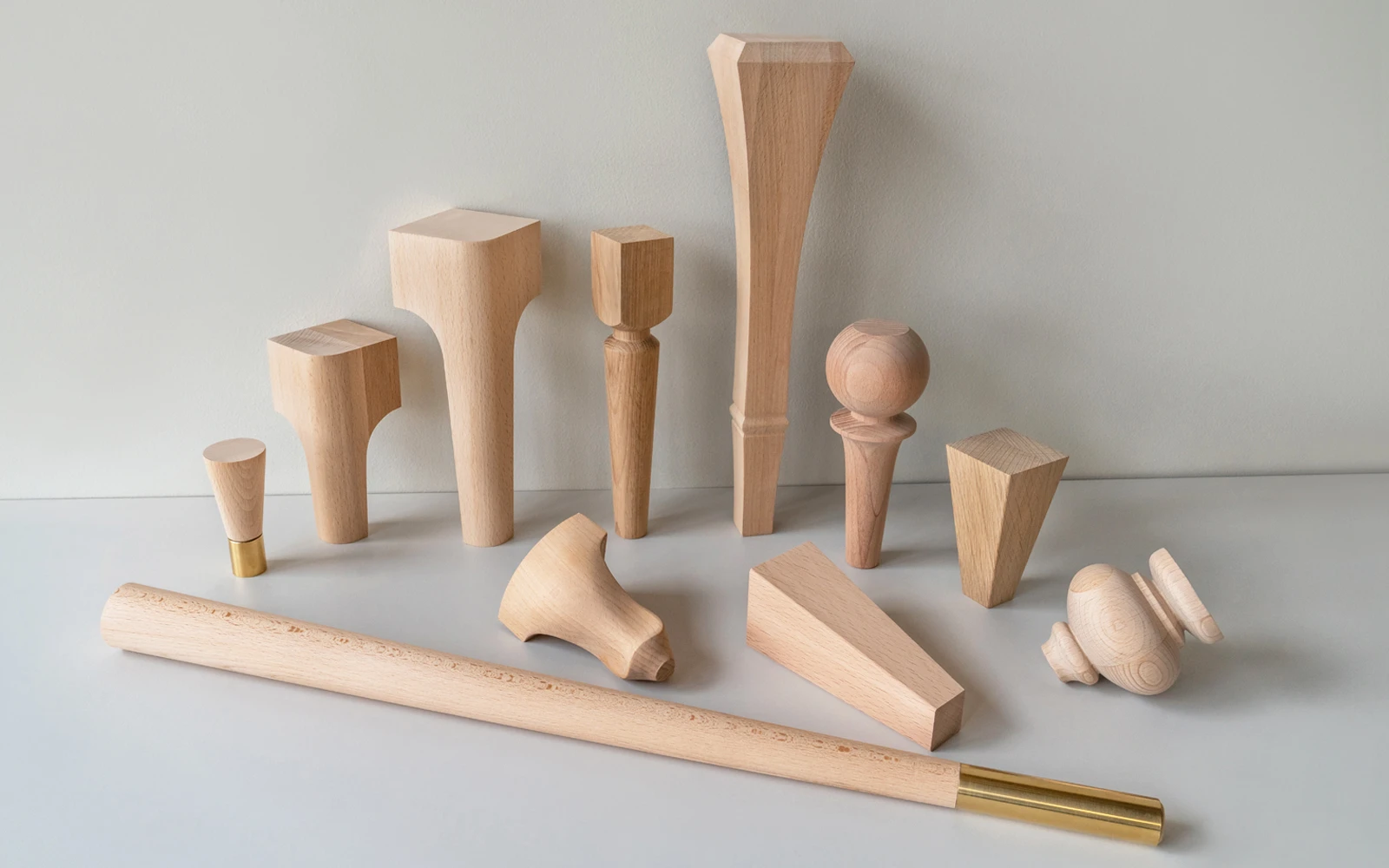
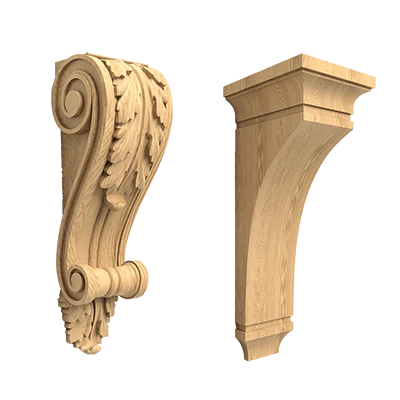
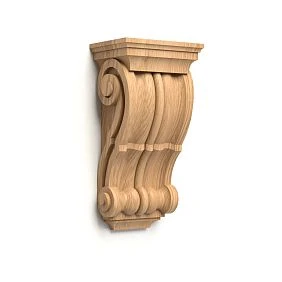
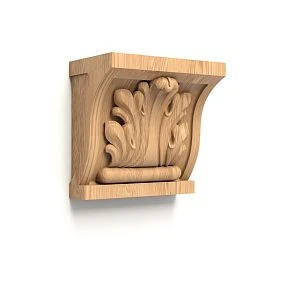
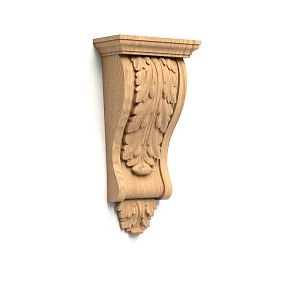
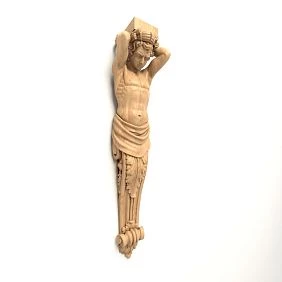
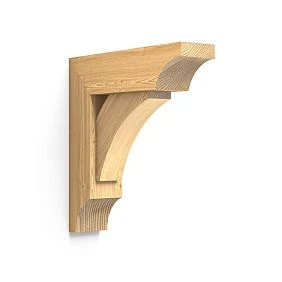
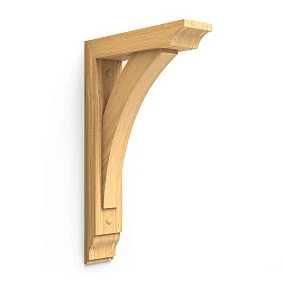
For the support and decorative part, you can look at STAVROS wooden brackets. The category features models of various shapes, sizes, and styles, available for order in beech and oak. However, when choosing a bracket specifically for a handrail, it is important to clarify not only the appearance but also the actual installation scheme: how it attaches to the wall, how it connects to the handrail, whether it is suitable for supporting loads, and what fasteners are needed for a specific wall.
| Element | Product Type | Confirmed data | Material / finish | Purpose | What to clarify |
|---|---|---|---|---|---|
| STAVROS stair handrails | Stair railing category | The category includes PR-004, PR-003, PR-002, PR-001 | Exact materials and finishes depend on the model | Selection of railing for stairs, wall section, corridor, or guardrail | Size, material, finish, availability, trimming, compatibility with brackets |
| handrail PR-004 | Round wooden handrail | 2400×50 mm | Beech or oak; the card specifies quality and preparation options for finishing | Comfortable grip for wall handrails, stairs, transition areas | Configuration, final finish, fasteners, trimming, order conditions |
| handrail PR-002 | Finger-jointed wooden handrail | Used in stair railings; lengths 1500, 2000, 2500 mm from solid lamella blank, over 2500 mm — from finger-jointed lengthwise blank | Glued laminated oak and beech array | Classic handrail for stair assembly | Compatibility with wall mounting, under-rail strip, finish, availability |
| Handrail Support Bar PR-003 | Accessory element for handrail | Specified in the handrail category and as an additional configuration for PR-002 | Check the product card for current specifications | Node under the handrail, connection to the staircase system | Is it needed in a wall-mounted scenario, how is it attached, compatibility |
| STAVROS wooden brackets | Decorative support elements | The category includes brackets of various shapes, sizes, and styles; models are available in beech and oak | Beech, oak; check the product card for finish details | Decorative support, interior nodes, potential part of a wall-mounted system | Whether a specific model is suitable for a handrail, load, fasteners, installation spacing |
| Staircase components STAVROS | Category of staircase elements | Balusters, handrails, posts, and other staircase elements | Materials depend on the product | Assembling a staircase system in a unified style | What is specifically needed for a wall-mounted handrail, and what pertains to a balustrade with balusters |
This article does not replace an engineering calculation or installation project. A handrail is a functional safety element, so the final fastening scheme, anchor type, number of supports, and permissible load must be coordinated with a specialist, taking into account the wall, span length, handrail weight, and usage scenario.
What is wall-mounted handrail fastening
A handrail is not always installed on balusters. In private homes and apartments, a wall-mounted handrail is often needed: it runs along a staircase, corridor, ramp, entrance area, transition between levels, wall in a hallway or foyer. Such a handrail does not form a complete railing by itself, but provides a person with a handhold.
Wall-mounted fastening consists of three zones. The first is contact with the wall. Here, the wall material, fasteners, fixation depth, and base strength are important. The second is the bracket or holder. It transfers the load from the handrail to the wall and simultaneously sets the distance between the handrail and the wall plane. The third is the connection of the bracket to the handrail. It must be rigid, neat, and safe for the hand.
When people say 'wooden wall-mounted handrail fastening,' they usually mean not only the wooden holder but also the overall appearance of the assembly: a wooden handrail, decorative support, clean line, concealed or inconspicuous fasteners, and finish matching the staircase, door, or wall panels. In a classic interior, such an assembly should look like joinery, not technical hardware.
If a random metal bracket is used, it may be strong but visually clash with the interior. If only a decorative wooden element is used without load calculation, it may be beautiful but insufficiently reliable. A good solution lies between these extremes: strength is provided by proper fasteners and base, while wood and decorative form make the assembly part of the interior.
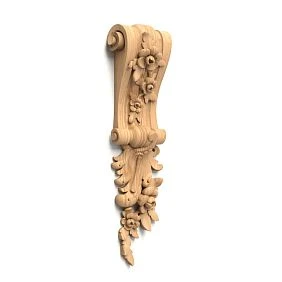
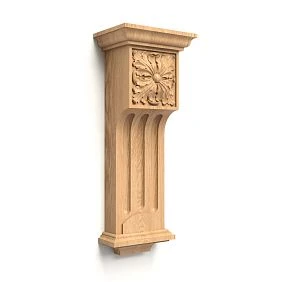
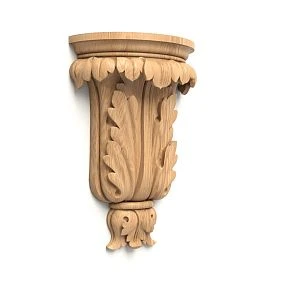
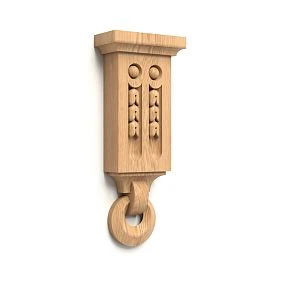
Our factory also produces:
Where a wall-mounted handrail is needed
A wall-mounted handrail is especially useful on stairs where one side runs along a wall. If there is a railing with balusters on the other side, a wall-mounted handrail can provide additional support. If the staircase is narrow, it helps to climb and descend more safely without taking up too much space.
In a hallway, a wall-mounted handrail is used less often, but in some homes it is very appropriate. For example, if there is a long passage, a change in level, a step between zones, or an area near the entrance where an elderly person needs support. In the entryway, the handrail can be not only functional but also decorative: a wooden line on the wall supports doors, baseboards, panels, stairs, or furniture.
In a country house, a wall-mounted handrail is often needed near the staircase leading to the second floor, basement, attic, or entrance group. In such places, it is important to combine convenience and style. The house can be wooden, classic, neoclassical, modern, with elements of a Russian estate or art deco. In each case, the handrail and its supports should complement the architecture.
In commercial interiors, a wall-mounted handrail can be used in offices, salons, hotel lobbies, restaurants, showrooms, corridors, and public spaces. Here, durability, safety, and a clear mounting scheme are especially important. Wood adds tactile warmth but requires proper protective finishing and maintenance.
Get Consultation
Types of handrail mounting to the wall
There are several approaches to wall mounting a handrail. The choice depends on the load, style, base, and how visible the joint should be.
Wooden brackets
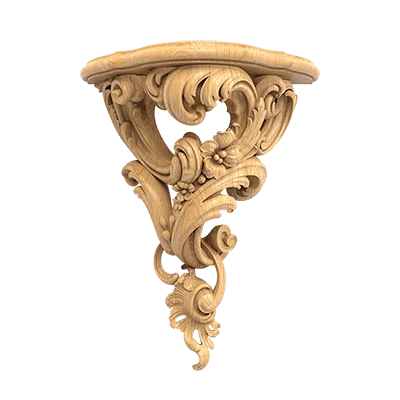
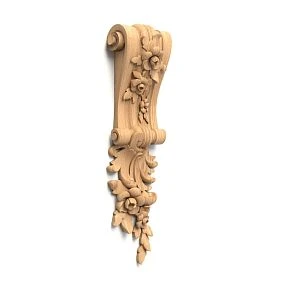
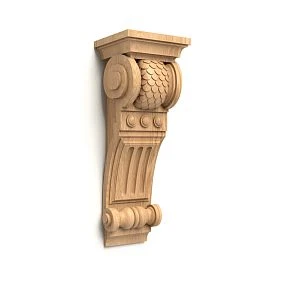
Wooden brackets are chosen when the mounting joint should look interior-oriented rather than technical. This is especially important for classic staircases, wooden houses, studies, halls, estate interiors, rooms with carved decor, and expensive joinery.
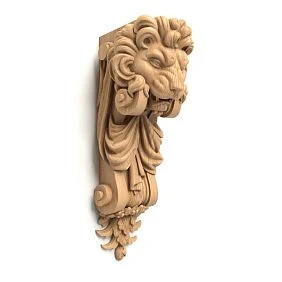
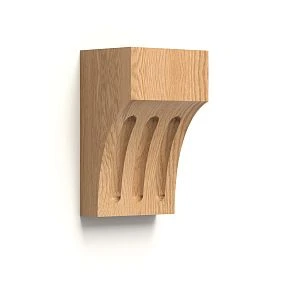
The bracket can be laconic or carved, geometric or classic, small or more expressive. In the category STAVROS wooden brackets Models of different styles are presented. But when choosing for a handrail, you need to remember: not every decorative bracket is automatically a ready-made handrail holder. You need to clarify whether a specific model is suitable for such a load and how exactly it is attached.
A wooden bracket is good because it can be combined with a handrail made of oak or beech, with baseboards, architraves, posts, balusters, furniture, and wall decor. It does not look out of place on a wooden staircase. If the bracket is painted or tinted in a common color, the assembly becomes integral.
Hidden fasteners
Hidden fasteners are used when it is important that almost only the wooden line of the handrail remains visible. This approach is suitable for modern interiors, minimalism, corridors, laconic staircases, and rooms where an extra decorative element is not needed.
The advantage of a hidden assembly is visual cleanliness. The disadvantage is increased installation requirements. You need to know exactly where the embedded parts are, what the wall material is, what fasteners are used, how to maintain the assembly, and whether the handrail will wobble. A hidden fastener cannot be chosen based on aesthetics alone.
In the STAVROS interior, a hidden assembly can be combined with a wooden handrail. For example, PR-004 remains visible, while the fastening works as discreetly as possible. But the specific hidden fastening system must be selected separately, because wooden handrail cards do not replace an engineering set of fasteners.
Combined assemblies
A combined assembly combines the strength of metal and the aesthetics of wood. For example, the load-bearing part can be metal, while the visible decorative overlay, support, or handrail can be wooden. This approach is often rational: metal handles the load, wood provides tactility and style.
The combined option is especially useful where high reliability is needed, but the interior should not look technical. For example, in a house with a classic staircase, where an open metal holder disrupts the image, you can design the assembly so that the structural part is reliable and the visible part is joinery.
Combined solutions need to be designed carefully. It is important that the decorative part does not interfere with the fasteners, does not create weak points, and does not complicate maintenance. If the exact layout is not confirmed, it is better not to buy elements blindly.
How to choose a bracket for a handrail
Choosing a bracket starts not with the shape. First, you need to understand the load, wall material, handrail length, frequency of use, installation height, and room style.
If the handrail is needed for a decorative area where it is rarely used, the requirements are one thing. If it is located on the main staircase, used daily by children, elderly people, and guests, the requirements are higher. If the handrail is in a public space, the calculation must be even stricter.
Wall material is a key factor. Concrete, brick, solid block, aerated concrete, drywall, wooden wall, frame partition — all these are different bases. The same bracket can behave differently in different walls. For weak bases, special solutions, embedded parts, or reinforcement are needed. You cannot attach a handrail to a random spot if the wall does not support the load.
The span length affects the number of supports. The longer the handrail, the more attachment points are needed. Roughly, fasteners are often placed at intervals of 500–900 mm, but the final spacing depends on the handrail's weight, load, base, and chosen hardware. For long sections, it's better not to skimp on attachment points.
The interior style determines the visible part. In classic style, a wooden bracket with an expressive shape is appropriate. In modern classic, a calmer support, neat profile, and clean finish. In minimalism, a hidden or laconic holder. In a wooden house, the material and finish should be related to the rest of the joinery.
Which handrail to choose for wall mounting
For a wall-mounted handrail, three qualities are important: comfortable grip, correct length, and compatibility with fasteners. The handrail should feel pleasant to the hand. A profile that's too sharp is uncomfortable, too wide is hard to grasp, too thin may feel unreliable.
A round wooden handrail is convenient because the palm wraps around it naturally. handrail PR-004 has a diameter of 50 mm and a length of 2400 mm in the confirmed product card. This format is well-suited for scenarios where a comfortable grip is important: stairs, wall sections, corridors, transition zones.
Oak handrails are chosen when expressive wood texture, high visual density, and a premium character are needed. Oak looks good in classic styles, country houses, halls, offices, staircases with wooden steps. Beech handrails are a rational choice for painting, tinting, and interiors where a smooth texture without too active a pattern is required. If both beech and oak are available in the product card, it is important to consider both materials, not just describe one.
handrail PR-002 belongs to the classic staircase system. It is used in stair railing structures, made from laminated oak and beech solid wood, and is additionally equipped with a sub-rail strip PR-003. For wall-mounted scenarios, its applicability needs to be clarified separately: it is important to understand how it connects to the supports, whether an additional element is needed, and how the fixation point will be resolved.
Materials: beech, oak, and finish
A wooden handrail is in constant contact with the hand. Therefore, the material is important not only visually but also tactilely. The surface should be smooth, pleasant, without burrs, sharp edges, or rough transitions. The wood must be prepared for use, and the final coating must match the load.
Oak is perceived as a more prestigious and expressive material. It has a characteristic texture, depth of pattern, density, and interior strength. An oak handrail supports massive doors, wooden steps, carved elements, classic furniture, office areas, and stairs in a country house well. If the handrail should be an accent, oak often looks convincing.
Beech is calmer in pattern. It is well-suited for enamel, tinting, and interiors where a smoother visual surface is needed. Beech can be used in modern classics, minimalism, light staircases, corridors, and homes where the wood should not compete with other materials.
The finish affects the durability of perception. The handrail can be made in a natural wood shade, for tinting, for enamel, or for another finish, if provided in the product card. Do not invent available options: the current parameters should be viewed in the card of the specific model or clarified with a STAVROS manager.
Brackets should also match in material and finish. If the handrail is oak and the bracket is beech under enamel, this may be fine if both elements are painted. But if a transparent finish is planned, the difference in wood may be noticeable. It is better to decide in advance whether the assembly will show natural wood or be covered with color.
Height, gap from the wall, and fastening spacing
The practice of installing a handrail begins with marking. First, the height of the handrail line is determined, then the attachment points, then the grip comfort is checked. It is important to consider not only an average-height adult but also those who will regularly use the stairs: children, elderly people, guests, people with limited mobility.
The height of the handrail depends on the stairs, floor, steps, and the specific project. In STAVROS product cards, there is no universal guideline for all cases, so you cannot assign one number as mandatory. However, during design, they usually focus on hand comfort and the requirements of the specific object. The final height should be confirmed by a specialist.
The gap between the handrail and the wall is needed for grip. If the handrail is too close to the wall, fingers will press against it, making it uncomfortable to use. If it is too far, the assembly becomes bulky, increasing the leverage load on the fastening. Therefore, the bracket should not only hold the handrail but also set the correct distance.
The spacing of fasteners depends on the length of the handrail, weight, wall material, and expected load. In household scenarios, 500–900 mm between supports is often used, but this is not a strict rule for all cases. If the base is weak, the handrail is long, or the load is high, more attachment points may be needed. If the base is strong and the section is short, the layout may differ. There is no room for compromise here: the handrail must be rigid, without play or a feeling of instability.
Mounting a handrail to a wall: practical logic
Installation begins not with drilling, but with checking the base. You need to understand what the wall is made of, where utilities run, whether there are embedded elements, and whether the material can withstand the load. Concrete and solid brick require one logic for fastening, aerated concrete and drywall another, and a wooden wall a third. If the base is weak, reinforcement will be needed.
Then, mark the handrail line. It should run parallel to the stair rise or horizontally in a corridor. On stairs, it is important to consider the angle of the flight, the edge of the steps, and the start and end of the handrail. The handrail should not end where a person still needs support.
After marking, determine the attachment points. The first and last brackets are usually placed not at the very edge, but with an offset from the end of the handrail, so that the edge does not act as a weak lever. The specific offset depends on the length, profile, and assembly. Intermediate supports are distributed evenly, but taking into account the wall material and ease of installation.
Next, attach the brackets or holders. At this stage, it is important not only to tighten the fasteners but also to check the plane. If one bracket protrudes differently, the handrail will wave or sit poorly on the supports. In a wooden interior, such an error is immediately noticeable.
After installing the supports, mount the handrail. Joints, ends, and connection points must be smooth. Sharp edges, protruding screws, unpainted ends, or roughness in the grip area are not allowed. After installation, check the rigidity: the handrail should not wobble, spring, or pull away from the wall.
How to hide handrail fasteners
Visible fasteners are not always bad. In some styles, they can be part of the design. But in classic and neoclassical interiors, exposed screws, rough metal plates, and technical covers often spoil the impression. Therefore, it is better to plan the assembly in advance.
The first method is to choose a decorative bracket. It makes the fastener part of the interior. If the shape of the bracket matches the handrail, baseboards, trim, and stair elements, the assembly looks natural.
The second method is to use hidden fasteners. In this case, the visible part is minimal, and the structural part is concealed. This option is suitable for modern interiors but requires precise installation and a proper base.
The third method is to cover the mounting areas with decorative covers. However, the covers should not interfere with maintenance and inspection of the fasteners. If the assembly is completely covered, it is important to understand how to repair it if necessary.
The fourth method is to paint or tint the elements in one color. Even if the fastener is partially visible, a unified finish reduces visual noise. For example, a wooden handrail, bracket, and wall cover can be made in the same shade.
Which STAVROS products to link to the purchase
If a customer chooses a wall-mounted handrail, they rarely need just one element. Typically, a handrail, supports, fasteners, trim, and sometimes related stair parts are required.
The first product is the handrail itself. For a comfortable grip, consider PR-004. For a classic stair system — PR-002, if its parameters fit the project.
The second product is brackets or decorative supports. In the category STAVROS wooden brackets you can select elements by style. But before purchasing, you need to clarify the applicability of a specific model specifically for a wall handrail.
The third product is staircase components. If the handrail is part of a full staircase system, you should look at STAVROS Staircase Components and Elements: balusters, posts, handrails, and other parts. Even if the article is not about balusters, the staircase should look cohesive.
The fourth product is materials for installation and finishing. The exact fasteners depend on the wall and the joint. The coating depends on the wood and the project. Glue, screws, anchors, plugs, putty, oil, varnish, or enamel are selected after agreeing on the scheme.
The fifth product is decorative elements, if the handrail should be part of a classic ensemble. For example, a wall handrail in a hallway can be supported by carved brackets, wooden architraves, baseboards, panels, or stair posts. But the decor should not interfere with grip and safety.
How to calculate the number of brackets
The calculation starts with the length of the handrail. You need to measure the entire area where a person needs support: from the beginning of the flight of stairs to the end, along a corridor, or along a transition zone. Then determine where the first and last brackets will be, and how many intermediate supports will be needed.
Simplified formula for preliminary estimation:
handrail length ÷ selected fastener spacing + extreme fixation points.
For example, if the handrail section is 2400 mm and the spacing is chosen around 800 mm, typically at least three support points are needed: near the start, in the middle zone, and near the end. If the handrail is longer, there will be more points. If the base is weak or the load is high, the spacing is reduced.
But this is only preliminary logic. The final number of brackets depends on the wall, type of fastener, chosen handrail, product weight, usage scenario, and safety requirements. For a wall-mounted handrail, it is better to provide a margin of rigidity than to deal with play later.
If the handrail consists of several sections, each section is calculated separately. The joint must not be left without support. If there is a turn, start, end, a section near a landing, or a change in direction, additional supports may be required there.
How to choose the color and finish of the assembly
The color of the handrail and brackets should be related to the interior. There are four main approaches.
First — to match the color of the stairs. If the steps, posts, balusters, or floor covering are in a wood shade, the handrail can be made in the same color scheme. Then it looks like part of the staircase system.
Second — matching the color of doors and trim. This works well in corridors and halls where the handrail runs along the wall next to doorways. The wooden line connects the space.
Third — matching the wall color. This option is suitable for modern interiors where the handrail should be less noticeable. But completely "dissolving" the handrail is not always correct: a person should easily find support with their eyes.
Fourth — a contrasting accent. For example, a dark handrail on a light wall. This is visually convenient and expressive, but requires support from other details: furniture, handles, staircase elements, lighting fixtures.
The finish must match the usage. The handrail is constantly touched by hands, so the surface should be pleasant, resistant to dirt, and possible local cleaning. The specific coating composition should be selected taking into account the material, room conditions, and STAVROS recommendations.
Mistakes when attaching the handrail to the wall
The first mistake is choosing a bracket solely based on appearance. The bracket should not only be visually appealing but also function properly in the specific assembly. You need to check the wall material, load, fasteners, and compatibility with the handrail.
The second mistake is placing fasteners too far apart. A long handrail on two supports may wobble. Even if it seems secure at first, under real load, play will develop.
The third mistake is fastening to a weak base without reinforcement. Drywall, loose blocks, old plaster, or hollow walls require special solutions. A regular self-tapping screw is dangerous in such a situation.
The fourth mistake is incorrect height. If the handrail is installed too low or too high, it is uncomfortable to use. A beautiful assembly does not compensate for poor ergonomics.
The fifth mistake is too small a gap from the wall. If fingers cannot pass between the handrail and the wall, the support becomes uncomfortable. A person cannot properly grip the handrail.
The sixth mistake is not finishing the ends and joints. The handrail is touched by hand, so all transitions must be smooth. Roughness, sharp edges, or protruding fasteners are unacceptable.
The seventh mistake is not coordinating the materials. An oak handrail, a beech bracket, a plastic cap, and a metal trim of a random color can ruin the integrity of the interior.
The eighth mistake is not considering cleaning and maintenance. The handrail should not only be beautiful on the day of installation but also convenient in use.
The ninth mistake is buying products without specifying the configuration. The product card may include a handrail, but the fasteners, brackets, under-rail strip, or trim may need to be selected separately. Everything must be checked before ordering.
Who would benefit from a wooden handrail wall mount
A wooden handrail bracket is suitable for those who want to maintain interior integrity. If the home already has a wooden staircase, oak steps, beech elements, classic architraves, baseboards, or carved decor, a wooden bracket looks more logical than random metal.
This solution is suitable for private homes. In a country house staircase, wood feels natural: it is warm to the touch, visually softer than metal, and pairs well with the decor.
Suitable for classic and neoclassical interiors. The bracket can be not just a holder, but a small architectural detail. It supports the style but should not overload the wall.
Suitable for hallways and entryways where a handrail is needed as additional support. Especially if there are elderly people in the house or an area with a step.
Suitable for those who want to make a custom staircase unit or assemble it from coordinated STAVROS elements: handrail, brackets, under-rail strip, balusters, posts, and decor.
Who should choose a different solution
Wooden brackets are not always the best option. If the interior is modern and completely minimalist, an open wooden support may look unnecessary. In that case, it is better to consider a hidden or concise combined unit.
If the base is weak and cannot be reinforced, the wall issue must be resolved first. A beautiful wooden bracket won't help if the fasteners pull out of the base.
If a handrail is needed in a public space with high traffic, the final structure must be calculated by a specialist. A metal support system may be required, with wood used as the handrail or decorative covering.
If the area is damp, cold, or subject to microclimate fluctuations, the material and finish must be chosen carefully. Wood requires proper protection. If such conditions are not suitable for the chosen model, consider another solution.
If a temporary fastening is needed, a complex decorative bracket may be excessive. Temporary solutions should not be made from premium elements without understanding the final project.
Where to buy STAVROS handrails, brackets and components
It's best to start your purchase with a handrail. Open the section of STAVROS stair handrails and choose a profile based on grip, length, material and style. If you need a round wall handrail, check PR-004. If you need a classic stair handrail, consider PR-002, specifying its suitability for a wall mount.
Then move on to supports. In the section STAVROS wooden brackets you can choose a style: classic, modern, art deco, Russian style, modern geometry. But before ordering, be sure to check whether the specific model is suitable for attaching the handrail to the wall and what fasteners are required.
If the handrail is part of a stair system, look at Staircase components STAVROS. There you can coordinate the handrail with balusters, posts and other elements. Even if the wall handrail does not rest on balusters, visual connection with the stairs is important.
Before ordering, prepare the data:
-
length of the railing section;
-
installation location: stairs, corridor, hallway, foyer;
-
wall material;
-
expected load;
-
desired fastener spacing;
-
wood species: beech or oak, if available for the selected model;
-
color and finish;
-
is a handrail bracket needed;
-
is concealed or decorative fastening needed;
-
Is trimming required?
-
What elements are already in the interior: baseboard, architraves, balusters, posts, doors.
Practical Selection Scenarios
If you need to install a handrail along the wall on a staircase in a private house, start by choosing a profile. Round PR-004 is comfortable for gripping, but brackets and fasteners need to be selected for the wall. If the staircase is already made of oak, it is logical to consider oak. If painting under enamel is planned, beech may be a rational choice.
If a handrail is needed in the hallway near a small level change, do not make the assembly too massive. It is important that the handrail is comfortable, does not obstruct passage, and does not look like a stair railing where only a neat support is needed.
If the interior is classic, decorative wooden brackets can be considered. But their shape should match the scale of the room. A bracket that is too large on a narrow wall will look heavy.
If the interior is modern, it is better to make the assembly calmer: a round or simple handrail, hidden fastening or a laconic support, finish in the color of the wall or wood.
If the handrail is long, do not skimp on the number of supports. Even a beautiful handrail will be perceived poorly if it wobbles.
If the staircase already has balusters and STAVROS posts, the wall-mounted handrail should match them in wood species, color, and profile. Otherwise, the two sides of the staircase will look like different systems.
FAQ
How is the handrail attached to the wall?
The handrail is attached through wall brackets, holders, or combined assemblies that are fixed to the wall with suitable fasteners. The type of fastener depends on the wall material: concrete, brick, wood, aerated concrete, drywall, or other base require different solutions.
How to secure a wooden handrail?
A wooden handrail is secured on brackets or holders that are rated for the load and match the chosen profile. The fasteners to the wall are selected based on the base. For a decorative wooden unit, STAVROS brackets can be considered, but the applicability of a specific model for a handrail needs to be clarified.
Can wooden brackets be used for a handrail?
Yes, wooden brackets can be part of an aesthetic assembly, especially in classic and wooden interiors. However, it is important to check the load-bearing capacity, fastening scheme, wall material, and compatibility with the chosen handrail.
What is the spacing for fastening a handrail to the wall?
Preliminarily, a spacing of 500–900 mm between attachment points is often used, but the exact distance depends on the handrail length, wall material, load, product weight, and type of fastener. For long sections and weak bases, more supports may be required.
Can a handrail be installed without balusters?
Yes, a wall-mounted handrail can be attached directly to the wall without balusters. This option is used on stair flights along the wall, in corridors, hallways, and transition areas. It is important to correctly calculate the brackets and fasteners.
How to hide the handrail fasteners?
Fasteners can be made less noticeable using decorative wooden brackets, hidden holders, covers, uniform painting, or tinting. However, decorative covering should not compromise the strength or maintenance of the assembly.
What is better for a handrail: oak or beech?
Oak is chosen for its expressive texture, premium appearance, and connection to a massive staircase. Beech is suitable for painting, tinting, and a more subdued visual solution. If both materials are available in the product card, the choice should be based on interior style and finish.
Is PR-004 suitable for a wall-mounted handrail?
PR-004 is a round wooden handrail 2400×50 mm made of beech or oak. It can be considered for wall-mounted scenarios where a comfortable grip is important, but the fasteners, brackets, and mounting scheme need to be selected separately.
Do I need to buy the under-rail strip PR-003?
The under-rail strip PR-003 is listed as an additional element in the handrail system, specifically for PR-002. Whether it is needed for a particular wall-mounted assembly depends on the chosen handrail and mounting scheme. This question is best clarified before ordering.
Can a handrail be attached to a drywall wall?
It is only possible with proper embedded elements, reinforcement, or a special mounting scheme. Regular fastening into a drywall sheet without reinforcement is unsafe for a handrail. The base should be assessed by a specialist.
How to choose a bracket for a classic interior?
Choose a wooden bracket that matches the style of the staircase, doors, baseboards, balusters, and handrail. For classic interiors, more expressive shapes are appropriate; for modern classic, calm and proportional ones are suitable.
Where to buy STAVROS wooden handrails and brackets?
Handrails can be selected in the section of STAVROS stair handrails, and decorative supporting elements in the section STAVROS wooden brackets. For a complete staircase system, see staircase components.
Conclusion
Wooden handrail mounting to the wall is not a minor installation detail, but an important safety and interior component. The handrail should be comfortable to grip, the brackets reliable, the fasteners suitable for the wall, and the entire system consistent with the home's style. If elements are chosen randomly, the handrail may look out of place or not be rigid enough. If approached systematically, a wall-mounted handrail becomes a beautiful and useful part of the staircase, hallway, or entryway.
STAVROS offers wooden handrails, brackets, and staircase components that help assemble such a unit in a unified aesthetic. PR-004 is suitable for scenarios where a round handrail with a comfortable grip is needed. PR-002 can be considered for a classic staircase system. STAVROS wooden brackets help design the visible part of the mounting in the interior style. Before purchasing, it is important to clarify dimensions, material, finish, availability, compatibility with fasteners, and the applicability of a specific model for a wall-mounted handrail.
A good handrail should not wobble, obstruct passage, or look like a technical addition. It should sit confidently in the hand, run beautifully along the wall, and support the overall look of the home. That is why handrail wall mounting should be planned in advance — together with the choice of wood, brackets, fixing units, and the entire STAVROS staircase composition.