










































































Article Contents:
- Product base: which STAVROS items solve the joint problem
- Why wallpaper joints become a problem
- When to repair a joint and when to cover it decoratively
- How to cover wallpaper joints: five solutions for different tasks
- Molding
- Decorative strip
- Wooden layout
- Angle
- Decor for moldings
- Inside corner
- External corner
- MLDPU-001 — a thin line for a neat joint
- MLDPU-002 — a more noticeable decorative transition
- MLDPU-004 — compact modern classic
- MLD-063 — wooden molding for a warm finish
- BR-001 — a bar or layout for a wide joint
- UG-001 — wooden corner for an external corner
- What to use to close the wallpaper joint?
- What to use to close wallpaper joints on the wall?
- How to cover the joint of different wallpapers?
- How to cover the joint between tiles and wallpaper?
- How to cover the joint between wallpaper and ceiling?
- How to cover the wallpaper joint at the corner?
- Can I cover the wallpaper joint with molding?
- How to cover the wallpaper joint beautifully?
- What is better: molding or decorative strip?
- When is a wooden corner needed?
- Can I paint the molding to match the wallpaper color?
- What to buy together with molding for the wallpaper joint?
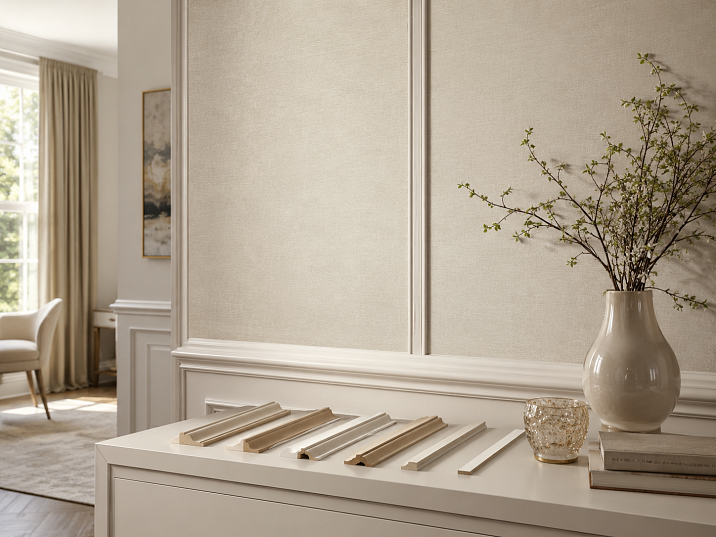
How to cover the wallpaper joint — a question that often arises not at the start of a renovation, but after wallpapering. The wallpaper has dried, the lighting is on, the furniture is in place, and suddenly it becomes visible: the panels have slightly separated, the vertical seam catches the eye, the transition between different wallpapers looks accidental, the outer corner quickly gets scuffed, and the border between wallpaper and tile resembles an unfinished repair area. In such a situation, it is important not just to hide the defect, but to design the joint so that it looks like a thoughtful part of the interior.
The wallpaper joint can be covered in different ways: with a thin molding, a decorative strip, a wooden layout, a corner piece, a bar, or a system of molding and decorative elements. The choice depends on the location: the joint on a flat wall surface, in a corner, near the ceiling, between two types of wallpaper, between wallpaper and tile, between wallpaper and paint, or next to a wall panel. In one case, a neat thin line is enough, in another a sturdy corner piece is needed, and in a third, a wooden profile that connects the wall with furniture, trim, and baseboard.
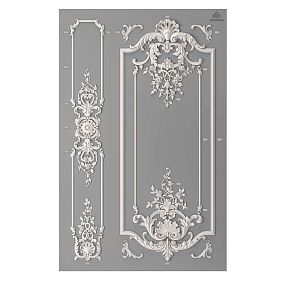
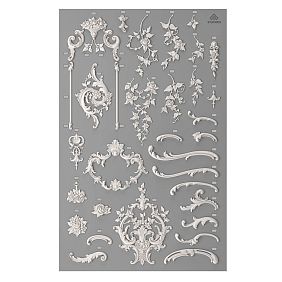
STAVROS offers several product groups for such tasks: Polyurethane moldings, cornices, and baseboards, Decor for Molding, wooden moldings STAVROS и Wooden corner pieces. These elements help turn a problematic seam into a decorative line, protect a vulnerable corner, and make the transition between materials neat.
The main task is not to install the first strip you come across. If the profile is chosen randomly, it can make the joint even more noticeable. But if you select a molding by width, material, color, and style, it will look not like a patch, but like an architectural divider. In this article, we will analyze how to cover wallpaper joints on the wall, in the corner, near the ceiling, between wallpaper and tile, which STAVROS products are suitable for different scenarios, how to calculate the profile length, what to buy along with the molding, and what mistakes to avoid.


Product foundation: which STAVROS products solve the joint problem
A wallpaper joint is not always the same defect. Sometimes it is a thin vertical line between panels. Sometimes it is the border of two different wallpapers. Sometimes it is a transition from wallpaper to paint, tile, wall panel, ceiling, or an external corner. Therefore, the product foundation here should be broader than just one molding. The buyer needs not the name of the product, but the correct type of profile for the specific seam.
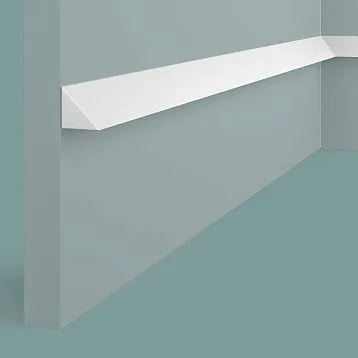
For thin and neat joints, polyurethane moldings are suitable. They help create a light decorative line that can be integrated into a modern interior, bedroom, hallway, office, living room, or entryway. If you need not just to cover the seam but to create a frame composition, you can add elements from the decorative section for moldings.
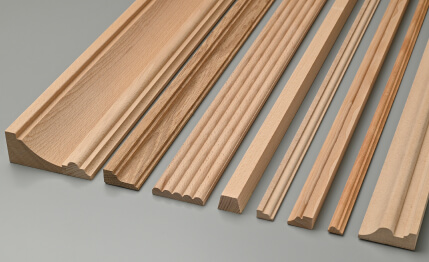
For warmer interiors where there is wooden furniture, doors, trim, baseboards, panels, or millwork nearby, wooden moldings, layouts, and bars are appropriate. Wood looks natural next to cabinet furniture, classic doors, panels, and wooden details. For external corners where wallpaper is quickly damaged, a wooden corner piece is especially useful.
| Model / Group | Product Type | Confirmed Size | Material | Finishes | Purpose | Features | Order Conditions |
|---|---|---|---|---|---|---|---|
| STAVROS polyurethane moldings, cornices, baseboards | Category of interior profiles | Size depends on the model | Polyurethane; check the product card for exact parameters | Check the product card for current finishing options | Vertical and horizontal joints, decorative lines, transitions between materials | Suitable for painting and creating an architectural line on the wall | Check availability, configuration, and ordering conditions with a STAVROS manager |
| Decor for STAVROS moldings | Decorative elements for moldings | Size depends on the model | Polyurethane; check exact specifications in the product card | Check the product card for current options | Frame corners, decorative transitions, composition completion | Used when a joint needs to be turned into a decorative element | Check compatibility with the selected molding before ordering |
| wooden moldings STAVROS | Category of wooden moldings, slats, bars, baseboards, and trims | Size depends on the model | Solid wood; check the exact wood species in the product card | Check the product card for current finishes | Wallpaper joints, panel joints, transitions near furniture, decorative moldings | Pairs well with wooden furniture, doors, and baseboards | Check availability, finish, wood species, and order conditions |
| STAVROS wooden corner pieces | Corners for external and internal junctions | Size depends on the model | Wood; exact species please check in the product card | Check the product card for current finishes | External corners, vulnerable edges, joints in walkways | Cover edges and protect wallpaper from damage | Check compatibility with the base and final finish before purchase |
| Molding MLDPU-001 | Polyurethane molding | Check the product card for the current size | Polyurethane | Check the product card for current options | A thin line at the wallpaper joint, a subtle decorative divider | Suitable when a heavy profile is not needed | Check availability and ordering conditions in the product card |
| Molding MLDPU-002 | Polyurethane molding | Check the product card for the current size | Polyurethane | Check the product card for current options | More noticeable transition between different materials | Can work as a decorative border between wallpaper, tiles, paint, or panels | Check the size and profile before ordering |
| Molding MLDPU-004 | Polyurethane molding | Check the product card for the current size | Polyurethane | Check the product card for current options | Compact line for small rooms, hallways, bedrooms, studies | Suitable for modern classics without overload | Check product specifications before purchase |
| Wooden molding MLD-063 | Narrow wooden molding | 14 mm; other specifications check in the product card | Wood; exact species please check in the product card | Check the product card for current finishes | Joints near furniture, panels, moldings, and trims | Warm wooden profile for neat separation | Check availability and order conditions |
| Bar / layout BR-001 | Wooden block / layout strip | Check the product card for the current size | Wood; exact species please check in the product card | Check the product card for current finishes | Wide or uneven joint, transition between materials, practical closure | Suitable where a thin molding is no longer sufficient | For size, finish, and applicability, consult STAVROS |
| Wooden corner UG-001 | Wooden corner | Size depends on the selected model in the group | Wood; exact species please check in the product card | Check the product card for current finishes | External corners, wall edges, high-traffic areas | Covers the joint and protects wallpaper from peeling | Check size, finish, and installation method |
If the exact size, wood species, finish, availability, configuration, mounting adhesive, or attachment method are not specified in the product card, do not assume them. For publication and purchase, it is safer to be honest: check current parameters in the product card or with a STAVROS manager.




Why wallpaper joints become a problem
A wallpaper joint can ruin even a good renovation. During installation, it may seem that the panels align perfectly, but after drying, a thin light line appears, the edge slightly separates, the pattern doesn't match, or the seam becomes noticeable under side lighting. This is especially visible in the evening when lamps cast a shadow along the wall.
One common cause is shrinkage and drying of the panels. Wallpaper can change slightly after applying glue and drying. If the base is unevenly prepared, if the glue is applied with varying density, or if the panels are stretched during installation, the joint may separate. Sometimes it's a small line that can be glued back. Sometimes the seam becomes so noticeable that it's easier and more attractive to cover it decoratively.
The second cause is an uneven wall or corner. Wallpaper prefers a flat surface. If the wall has a wave or the corner is misaligned, the joint starts to shift. On external corners, wallpaper additionally suffers from mechanical contact: it gets brushed by shoulders, bags, vacuum cleaners, furniture, and children's toys. In such places, simple regluing rarely solves the problem for long.
The third cause is the joint of different materials. Wallpaper may meet tile, paint, wall panel, decorative plaster, wooden trim, door casing, or ceiling molding. Materials have different thicknesses, edges, and textures. Without a separator, the transition looks abrupt or untidy.
The fourth cause is a designer combination of wallpapers. Interiors often use two types: solid and accent, textured and smooth, dark and light, wallpaper on the lower and upper parts of the wall. If the boundary between them is not finished, the transition may look like a forced connection rather than an intended design element. This is where molding or a decorative strip is especially useful.
The fifth cause is a mistake in choosing the joint location. Sometimes the seam falls in the most visible area: near a door, behind a sofa, by a bed, in a hallway, by a mirror, on an external corner, near a switch. If the joint ends up in a high-traffic or well-lit area, even a small defect becomes noticeable.
Therefore, the question "what to cover the wallpaper joint with" cannot be solved the same way for all cases. You need to understand: is it a gluing defect, a material transition, a vulnerable corner, or a design boundary. The choice of profile depends on this.
Our factory also produces:


When to repair a joint and when to cover it decoratively
Not every joint needs to be immediately covered with a molding. Sometimes it's better to first repair the base or glue the edge. If the seam is small, even, the edge is not damaged, the wallpaper is not peeling off the wall, and the problem is only noticeable upon close inspection, you can carefully glue the area and restore the line. A decorative profile in such a situation may be unnecessary.
But there are cases where repairing the joint is pointless or insufficient. If the seam is wide, if the panels have noticeably separated, if the edge of the wallpaper is damaged, if the joint is on an external corner or at the boundary of different materials, decorative covering looks more convincing. A molding or trim does not try to "pretend" that there is no seam. It turns it into a clear line.
If the joint is between different wallpapers, a decorative profile is almost always logical. It shows that the transition was made intentionally. Without it, the two finishes may look like remnants of different rolls. With a molding, an architectural boundary appears: top and bottom of the wall, left and right zones, accent panel, frame, or decorative insert.
If the joint on an external corner constantly gets scuffed, gluing won't solve the problem. Physical protection is needed there. A wooden corner covers the edge and absorbs some of the everyday contact. This is especially important in the hallway, corridor, children's room, kitchen, near furniture and doors.
If the joint between wallpaper and tile has a thickness difference, putty or sealant may look rough. A decorative strip, molding, or trim creates a clean transition. They do not hide the fact that the materials are different, but neatly separate them.
The main principle is simple: if the joint can be restored invisibly — repair it. If the joint will still be visible — decorate it. A good profile does not mask a mistake, but creates a new clear line.
Get Consultation
How to cover wallpaper seams: five solutions for different tasks
The choice depends on the shape of the joint. A vertical seam on a flat wall requires one solution. An external corner requires another. A wallpaper/tile transition requires a third. A wide uneven joint requires a fourth. Below is the practical logic of choice.
Molding
Molding is the most versatile solution for wallpaper joints on a wall. It works for vertical and horizontal seams, for the border between different wallpapers, for the transition between wallpaper and paint, and for decorative wall paneling. It's important to choose the right width profile: too thin may not cover the issue, too wide may make the wall look heavy.
If you need a light and neat divider, you can consider Molding MLDPU-001. It is appropriate where the joint needs to be closed calmly, without a large relief. This approach is suitable for a bedroom, study, living room, hallway, or children's room if the interior does not require active decor.
If the joint should become a more noticeable element of the composition, you can look at MLDPU-002 or MLDPU-004. But before ordering, you need to check the dimensions and profile in the product card to ensure the molding matches the scale of the room.
The molding can be painted to match the wall, ceiling, baseboard, door, or made contrasting. In the wall color, it looks modern and soft. In white, it creates classic graphics. A contrasting option requires support from other details.
Decorative strip
A decorative strip is suitable for a long, straight seam when a calm transition without pronounced relief is needed. It can cover the vertical border between two types of wallpaper, a horizontal line on the wall, the transition between wallpaper and paint, or the edge of a wall panel.
The strip is good because it does not look overly decorative. In a modern interior, it can be almost invisible, especially if painted to match the wall. In a classic interior, it can be tied to the baseboard, trim, or moldings.
A decorative strip is especially useful if the joint is in a high-traffic area. For example, in a hallway, the lower part of the wall is covered with more practical wallpaper, the upper part with light wallpaper. A border is needed between them. Without it, the line looks random. With the strip, it appears as a thoughtful wall division.
If you need a wooden batten, you can look at the STAVROS wooden molding. If you need a lighter profile for painting, a polyurethane molding is more appropriate.
Wooden strip
A wooden trim is suitable for interiors where wallpaper coexists with wooden furniture, doors, wall panels, baseboards, architraves, or slats. It creates a warmer and more carpentry-like line than polyurethane molding. This works especially well in a study, hallway, living room, dining room, or bedroom with wooden furniture.
If the wallpaper seam is located near a cabinet, doorway, panel, wooden trim, or furniture unit, Wooden molding MLD-063 it can look more natural than a plastic or random construction strip. In the product database file, it is described as a narrow wooden profile of 14 mm, making it convenient for neat separation and edge finishing.
If the seam is wide or uneven, it is better to consider a more practical trim or block BR-001. A thin profile does not always cover a big problem. Sometimes you need not to hide the seam, but to honestly frame it with a more confident strip.
Corner profile
A corner profile is needed for an external corner. This is not just a decorative solution, but protection. On external corners, wallpaper gets damaged the fastest: the edge is touched during cleaning, when passing by, when moving furniture, bags, boxes, children's toys, or a vacuum cleaner. If the corner is covered with wallpaper without protection, over time the edge starts to peel and fray.
STAVROS wooden corner pieces are suitable for finishing such areas. The corner profile covers the edge and makes the transition between two planes neat. In a hallway, corridor, children's room, near the kitchen or cabinet, this is especially important.
A corner profile should not be installed where molding on a flat surface is needed. If the seam runs along the wall, the corner profile will look unnecessary. But if the problem is specifically on an external corner, molding will not provide the same protection as a profile covering two planes.
Decor for moldings
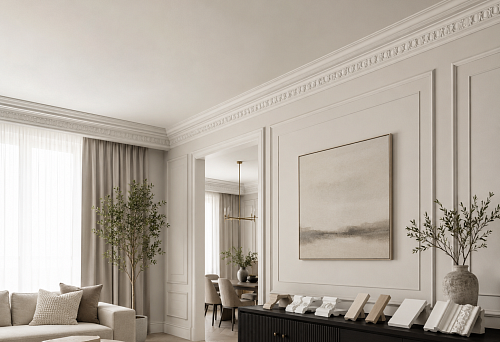
If the wallpaper joint needs not just to be covered, but turned into a decorative composition, you can use moldings together with decorative elements. For example, make a frame on the wall around accent wallpaper, design panel borders, add corner details or central elements.
Decor for STAVROS moldings is needed where a simple line seems insufficient. But it's important not to overload the interior. If the problem is one small seam, decor may be unnecessary. If the task is to create a classic or neoclassical wall composition, decorative elements help make the transition complete.
The compatibility of decor with a specific molding should be checked before ordering. You cannot take a corner element just because it looks nice: it must match in width, style, and scale.
What to cover the joint of different wallpapers with
The joint of different wallpapers is one of the most common tasks. For example, one wall is covered with accent wallpaper, the adjacent area with solid color. Or the lower part of the wall is dark, the upper part is light. Or in a children's room, they combine wallpaper with a pattern and a calm background. Without a divider, such a transition often looks accidental.
What to cover the joint of different wallpapers with? If the seam is thin and even, a molding will do. If the transition is horizontal, the molding works as a decorative belt. If vertical, as a dividing strip or panel border. If the wallpapers have different thicknesses, it's better to choose a profile that will cover the edge and create a volumetric line.
For a light transition, you can consider MLDPU-001. It is suitable if you need to cover the line neatly and not overload the wall. For a more noticeable decorative border, MLDPU-002 or MLDPU-004. If the interior is warm, with wooden furniture and trim, you can use MLD-063.
It is important that the profile looks intentional. If the molding runs only along one short section and is not connected to the rest of the wall, it may look like a patch. It's better to think through the composition: repeat the line on the other side, make a frame, tie the height to furniture, windowsill, headboard, door, or baseboard.
If the joint of different wallpapers is vertical, it's worth checking whether it would be better to make it the border of a decorative panel. For example, accent wallpaper can be framed with molding around the perimeter. Then the joint disappears inside the composition, rather than remaining a separate strip.
If the joint is horizontal, do not accidentally place the molding too high or too low. The line should align with the furniture and architecture: the headboard, dresser height, switch levels, door trims, or the wall's panel logic.
How to cover the joint between wallpaper and tiles
The joint between wallpaper and tiles is more complex than between two wallpapers. Tiles have thickness, a hard edge, a seam, and sometimes a textured surface. Wallpaper is thinner, softer, and more vulnerable. If the transition is left without a profile, the border may look rough. If you simply putty or fill it, the difference in materials will still be visible.
How to cover the joint between tiles and wallpaper? Most often, a molding, decorative strip, or wooden trim is needed. The choice depends on the location. In the kitchen, the transition may be between the backsplash and a painted or wallpapered wall. In the hallway, between the tiled area and wallpaper. In a bathroom or guest toilet, between tiles and decorative wall finish. In a corridor, between the practical lower zone and wallpaper above.
If the transition is in a dry area and a neat interior look is needed, a polyurethane molding can be used. It creates a decorative border and helps hide the difference. If there is a lot of wood nearby—doors, furniture, baseboards, panels—a wooden trim can be considered.
When choosing a profile, you need to consider the thickness of the tile. If the tile protrudes more than the wallpaper, a too-thin molding may not cover the difference. If the molding is installed incorrectly, the edge of the tile will remain visible. Therefore, before purchasing, you need to measure not only the length of the joint but also the thickness difference.
In the kitchen area, near the sink or backsplash, it is important to consider cleaning. The profile should be installed so that it does not collect dirt and does not interfere with wiping. If the material or finish is not confirmed for specific conditions, the parameters should be clarified with a STAVROS manager.
A well-designed joint between wallpaper and tiles looks like a designer border. It separates the practical zone from the decorative one, rather than showing where one material ended by chance.
How to cover the joint between wallpaper and paint
The transition between wallpaper and paint is often used in modern interiors. For example, part of the wall is covered with patterned wallpaper, and the adjacent part is painted. Or in a bedroom, the area behind the headboard is decorated with wallpaper, while the other walls are painted. Or in a children's room, the lower part of the wall is painted with more practical paint, and the upper part is covered with wallpaper.
The junction of wallpaper and paint should be designed carefully. If the line is straight and the materials are on the same level, it can be left open, but only with very precise work. If the edge of the wallpaper is noticeable, if there is a slight difference in level, or if you want to make the transition expressive, it is better to use a molding or a decorative strip.
A molding at the border of wallpaper and paint helps make the interior more cohesive. It shows that this is not a random transition, but part of the composition. This technique works especially well in modern classics: wallpaper inside a frame, painted wall around it, molding as the border.
If the interior is minimalist, choose a thin profile and paint it the color of the wall. Then the molding will be visible only due to the shadow. If the interior is classic, the molding can be made white, matching the baseboard or doors. If you want a warmer effect, you can use a wooden profile.
You should not choose too active a molding for a subtle transition. If the junction of wallpaper and paint is calm in itself, the profile should support the composition, not argue with it.
How to cover the junction of wallpaper and wall panel
Wall panels often have their own thickness and texture. If they meet wallpaper without a separator, the joint can look rough. This is especially noticeable in the hallway, study, living room, behind the headboard in the bedroom, in the dining area, or on the wall behind the TV.
The junction of wallpaper and wall panel can be covered with a wooden trim, molding, or batten. If the panel is wooden or imitates wood, wooden trim looks especially natural. If the panel is painted or polyurethane, you can use a molding suitable for painting.
If the panel protrudes above the wallpaper, the profile should cover the difference in level. If the wallpaper and panel are almost in the same plane, a thin molding is sufficient. If the joint is wide or uneven, it is better to consider BR-001 as a more substantial trim.
In such nodes, it is important not to forget about color. The profile can be made the color of the panel to make it look integral. It can be made the color of the wall to make the transition calmer. It can be tied to the baseboard and trim if the interior is built on wooden lines.
How to cover the junction of the ceiling and wallpaper
The junction of the ceiling and wallpaper often becomes a problem if the top gluing line is uneven, the ceiling has a height difference, the wallpaper is cut imperfectly, or there is a gap between the ceiling and the wall. This is especially noticeable with a light ceiling and colored wallpaper: the slightest wave is immediately visible.
How to cover the junction of the ceiling and wallpaper? If the line is small and even, you can use a thin molding. If there is a gap or uneven transition, a ceiling plinth or cornice will work. If the ceiling is suspended, you need to consider the technological gap and the ceiling structure.
In this article, the main focus is on the wallpaper joint on the wall, but the top transition cannot be ignored. If the wallpaper ends untidily at the ceiling, the wall looks unfinished. A cornice or ceiling plinth creates an upper boundary and makes the room look cohesive. To select such elements, you can look at the section STAVROS moldings, cornices, and baseboards.
If the interior is modern, you don't necessarily need to choose a large cornice. A neat line for painting is sufficient. If the interior is classic or neoclassical, the upper profile can be more expressive and complement the floor plinth, wall moldings, and door trims.
If the ceiling is suspended, the solution must be coordinated with the structure. The decorative profile should not interfere with the fabric, fastening, or maintenance. It is better to clarify all parameters before purchase.
How to cover the wallpaper joint at the corner
Corners require a separate approach. An inner corner and an outer corner present different challenges. In an inner corner, the joint is often related to uneven walls or the transition between two wallpapers. On an outer corner, the main problem is damage to the edge.
Inner corner
In an inner corner, wallpaper may separate due to uneven geometry. If the corner is out of plumb, the two panels meet not in a straight line. Sometimes the seam waves, sometimes a thin dark or light stripe appears. If the corner is not in a visible area, you can get by with careful gluing. If it is noticeable, it is better to use a thin molding or a decorative strip.
For an inner corner, it is important not to choose a profile that is too thick. It can make the corner look heavy and visually awkward. It is better to choose a calm line, painted in the color of the wall or wallpaper. If the corner is between two types of wallpaper, the molding can become a clear boundary.
If the internal corner is located in a niche, next to a cabinet, panel, or door, you can use a wooden molding. It will connect the corner with the furniture and trim.
External corner
An external corner is a high-risk area. Wallpaper here quickly peels off, especially in the hallway, corridor, children's room, near the kitchen, around doors and furniture. In such an area, molding on one plane does not always help. A profile that covers the corner itself is needed.
For an external corner, it is better to use a wooden corner piece. It covers the edge, protects the wallpaper, and makes the line neat. STAVROS wooden corner pieces can be selected by size, style, and finish. If there is a wooden baseboard, casing, or furniture nearby, such a corner piece will look especially logical.
It is important that the corner piece does not look like a random protective overlay. It needs to be tied to the interior: the color of the door, baseboard, floor, furniture, or wall panels. Then it will not only protect the wallpaper but also complete the corner.
Which STAVROS products to use for different joints
To choose correctly, you need to start from the task. Below is practical logic for STAVROS products and groups.
MLDPU-001 — a thin line for a neat joint
MLDPU-001 should be considered when the joint needs to be closed neatly and calmly. This is a solution for situations where a wide decorative band is not needed, but a clean line is.
This molding is suitable for vertical joints between different wallpapers, transitions between wallpaper and paint, thin horizontal divisions, small rooms, bedrooms, studies, and hallways. It is especially appropriate if the profile is planned to be painted the same color as the wall and made nearly invisible.
Before ordering, check the size in the product card. If the joint is wide or uneven, a thin profile may not be sufficient.
MLDPU-002 — a more noticeable decorative transition
MLDPU-002 suitable if the joint should not just be covered, but designed as a decorative border. For example, between two types of wallpaper, between wallpaper and tile, between wallpaper and panel.
This profile can be used when the interior allows for a more noticeable line. In modern classic style, it can be a divider between the lower and upper part of the wall. In the living room, it can be the border of an accent area. In the hallway, it can be a transition between practical lower finishing and decorative upper part.
The main thing is not to place an expressive molding without a system. If it runs only along one short seam, it may look like a patch. It is better to think through the composition: repeat the line, connect it with the baseboard or door casing, use symmetry.
MLDPU-004 — compact modern classic
MLDPU-004 can be considered for small rooms, hallways, bedrooms, studies, and neat transitions. It helps make the joint noticeable exactly as much as needed, without turning the wall into an overloaded composition.
This profile is well suited for modern classic: clean line, calm geometry, possibility of painting, connection with baseboard and cornice. If the wallpaper has a complex pattern, the molding should be calm enough not to compete with it.
MLD-063 — wooden molding for warm finishing
Wooden molding MLD-063 — a good choice for interiors where the wallpaper joint is near wooden elements: a cabinet, door, casing, baseboard, panel, or furniture group. The confirmed width of 14 mm makes it convenient for neat lines and small joints.
Wood works especially well in a study, hallway, bedroom with wooden furniture, living room with panels, or dining room with classic doors. Such a molding can be made in the color of the wood, wall, or furniture if the chosen finish allows it.
If the joint is wide, MLD-063 may be insufficient. Then it is worth considering BR-001 or another layout from wooden trim.
BR-001 — a bar or layout for a wide joint
BR-001 suitable for cases where the joint is wide, uneven, or requires a more durable closure. This is not so much a thin decorative divider as a practical wooden layout.
BR-001 can be considered for transitions between wallpaper and wall panel, a wide seam, an uneven area, an abutment near furniture, a hallway, study, or wooden finish. If a regular molding looks weak, a more confident layout creates a finished edge.
Before purchasing, you need to clarify the current size, material, finish, and order conditions.
UG-001 — a wooden corner for an external corner
Wooden corner UG-001 needed for external corners where wallpaper gets damaged. It covers the edge and protects the area from everyday contact. This is especially useful in high-traffic areas.
The corner can be used in a hallway, corridor, children's room, near the kitchen, at a wall protrusion, next to a cabinet or door. It should be selected by size and color. If there is a wooden baseboard or casing nearby, it is better to coordinate the corner with them.
How to choose the profile width
The profile width should match the problem. A thin seam does not need to be covered with a massive element. A wide joint cannot be hidden with a too thin strip. A mistake in scale makes the profile more noticeable than the defect itself.
| Situation | What to choose | Logic |
|---|---|---|
| Thin vertical seam | MLDPU-001 or narrow molding | Covers the line without adding weight |
| Joint of different wallpapers | MLDPU-004, MLDPU-002 or decorative strip | Makes the transition intentional |
| Transition wallpaper / tile | MLDPU-002, wooden layout or BR-001 | Covers the gap and creates a border |
| External corner | Wooden corner UG-001 | Protects the edge and covers the joint of two planes |
| Wide uneven joint | BR-001 or a more confident layout | A thin molding will look accidental |
| Wall next to wooden furniture | MLD-063 or wooden trim | Connects the joint with furniture and wood |
| Wallpaper and ceiling joint | Thin molding, ceiling plinth or cornice | Covers the top line of the room |
| Frame around accent wallpaper | Molding + decor for moldings | Turns the joint into a composition |
Before purchasing, measure the width of the visible seam and do a visual test fit. You can stick masking tape of the desired width on the wall and look at it from a distance. Often a profile that seems normal up close looks too wide on the wall. Or vice versa: a thin strip gets lost on textured wallpaper.
How to choose the color of molding, strip or corner
The color of the profile determines whether the joint will be hidden or emphasized. If the goal is to make the line as inconspicuous as possible, the profile is painted the color of the wall or wallpaper. This works well in modern interiors where you don't want extra graphics. The molding remains visible only due to shadow and volume.
If the goal is to create a classic structure, the profile can be made white or the color of the ceiling cornice, baseboard, or door casings. This option is suitable for modern classic, neoclassical, bedroom, living room, hall, or study. A white molding on a colored wall creates clear graphics but requires a neat composition.
If there is wooden furniture nearby, it is better to consider a wooden profile matching the color of the furniture, floor, doors, or baseboards. This approach is especially good when the wallpaper joint is located next to a wardrobe, panel, door, chest of drawers, bookshelf, staircase, or work area.
A contrasting color should be used carefully. It can look impressive if supported by other details: handles, lamps, furniture, paintings, doors. But if the contrast appears by accident, the profile will seem out of place.
For wallpaper with an active pattern, it is better to choose a calm profile. A complex relief next to a bright ornament can create visual noise. For plain walls, a more expressive molding is acceptable.
How to install molding on a wallpaper joint
Before installation, you need to check the joint itself. If the edge of the wallpaper is peeling, it needs to be glued. You cannot glue molding over a detached sheet and expect a durable result. The profile must rest on a stable base.
First, clean the joint line from dust. Then check if the edge of the wallpaper protrudes. If there is a bulge, it needs to be carefully eliminated. If the joint is wide, decide whether the selected profile will cover it. If not, it is better to choose a wider layout.
Next, marking is done. For a vertical joint, use a level; for a horizontal one, a long straight line. Marking is especially important if the molding will be visible on a large wall. A slight misalignment is immediately noticeable, especially next to a door, wardrobe, ceiling, or
How to calculate the amount of molding or layout
The calculation depends on the type of joint. If the joint is vertical, measure the height of the section. If horizontal, measure the length of the wall. If you need to make a frame around accent wallpaper, calculate the perimeter of the frame. If a corner is being finished, calculate the height of the corner. If covering the transition between wallpaper and tile, calculate the length of the border.
Basic formula:
joint length + 10–15% reserve for trimming, corners, and possible errors.
Example: a vertical joint from the baseboard to the ceiling has a height of 2600 mm. If the selected profile is sold in a plank of suitable length, one plank may suffice, but trimming must be considered. If there are multiple joints, the lengths are summed.
For a horizontal joint on a wall 4 m long, 4 m of profile plus a margin is needed. If the molding goes around the room, calculate the perimeter. If making a frame, add two heights and two widths of the frame, then add a margin for corner cuts.
For a wallpaper and tile joint, a margin is especially important because trimming must be neat. An error on the visible border will be noticeable. For external corners, it is also better to have a margin: the corner piece should cover the line seamlessly, without accidental joints at eye level.
If the profile is wooden, additionally consider the direction of the grain, color, and possible joining on visible areas. Two planks may differ in pattern, so it is better to plan in advance where the connections will be.
Why classic is modern
Molding is often perceived as a classic element, but modern classicism has long moved away from overload. Today it is built not on an abundance of decor, but on order, proportions, and clean lines. Molding at the wallpaper joint is just such an element: it does not necessarily make the interior palatial, but adds architectural logic to it.
If two types of wallpaper meet without a border, the wall may look random. If a thin profile appears between them, the transition becomes deliberate. This is the same principle as a picture frame: it does not distract from the image but helps it look complete.
Modern molding can be very subtle. It can be painted the color of the wall, made thin, straight, without active ornamentation. It will work as a shadow, as a divider, as a line of order. In minimalism, this is especially important: the fewer details, the more noticeable each joint.
A wooden layout can also look modern. If it is neat, properly painted or tinted, connected to furniture and baseboard, it does not resemble a repair plank. It creates a joinery node.
Classicism becomes modern when the excess is removed and proportions are left. A wallpaper joint covered with STAVROS molding can become just such a detail: practical, neat, and beautiful.
Mistakes when closing wallpaper joints
The first mistake is covering a dirty or peeling seam without preparation. If the wallpaper is coming off, the profile will hold worse. First, you need to reinforce the base, then install the molding or strip.
The second mistake is choosing a molding that is too wide for a small room. The profile can visually weigh down the wall and make the defect more noticeable. The scale should match the room.
The third mistake is using a random plastic strip in an interior with wooden furniture, quality doors, and neat finishes. Such an element often looks temporary. It's better to choose wooden trim or molding for painting.
The fourth mistake is not considering the thickness of the tile. If the wallpaper/tile transition has a height difference, the profile must cover it. A thin strip may not handle it.
The fifth mistake is gluing without marking. Even a slight deviation will be visible if the molding runs along the wall in a long vertical or horizontal line.
The sixth mistake is not painting the ends. On a molding, trim, or corner piece, the ends may be visible near the baseboard, ceiling, door casing, or furniture. They need to be carefully treated.
The seventh mistake is using different profiles without a system. If one wall has one molding, another wall has a different strip, and a third profile at the corner, the interior becomes fragmented.
The eighth mistake is making the joint more noticeable than the finish itself. The profile should solve the problem, not become the main element where it's not needed.
The ninth mistake is installing a corner piece just for decoration when the problem is on the flat wall. A corner piece is needed for a corner. For a vertical joint, a molding or trim is better.
The tenth mistake is buying without checking the product card. The size, material, finish, availability, and order conditions must be confirmed before purchase.
Who is wallpaper joint molding suitable for
Molding is suitable for those who want to cover a noticeable joint and make it part of the design. If the seam is on a visible wall, simple repair may not achieve the desired effect. Molding creates a neat line and visual order.
It is suitable for joining different wallpapers. If the room has an accent zone, vertical insert, horizontal division, or combination of textures, the profile will help make the transition intentional.
It is suitable for modern classics. The molding can be thin, painted to match the wall color, but still add architectural character.
It is suitable for the transition between wallpaper and paint. Especially if the wallpaper is used as a decorative panel or area behind furniture.
It is suitable for the joint of wallpaper and panels, if you need to connect two materials and hide the edge.
It is suitable for those who do not want to re-paste the entire wall because of one problematic seam. But it is important to remember: the molding should look logical, not like an attempt to hide a mistake.
When it is better to choose a corner, trim, or batten
It is better to choose a corner if the problem is on an external corner. There, protection is needed, not just a decorative line. This is especially important in the hallway, corridor, children's room, and near furniture.
It is better to choose a wooden trim if the joint involves wooden elements: furniture, doors, panels, baseboards, or architraves. It looks warmer and more natural than a regular thin strip.
A block or wider layout should be chosen if the joint is uneven, wide, or has a height difference. A thin molding may look weak in such a case.
Decor for moldings should be chosen if the joint is part of a larger composition: frames on the wall, panel system, decorative area behind the sofa, bed, table, mirror. If you need to cover a single simple seam, decor may be unnecessary.
Where to buy molding, corner, and layout STAVROS
It's best to start the purchase by determining the type of joint. First, answer the question: where is the problem? On the wall plane, between different wallpapers, at the ceiling, on an external corner, between wallpaper and tile, between wallpaper and panel, near furniture? Then measure the length and width of the joint, assess unevenness, check the thickness of adjacent materials.
If you need a polyurethane profile for painting, see STAVROS Moldings, Cornices, and Baseboards. For thin joints, consider MLDPU-001. For a more noticeable border, MLDPU-002 or MLDPU-004.
If you need a wooden profile, see wooden moldings STAVROS. For a neat line near furniture, consider MLD-063. For wider or more practical covering, BR-001. For external corners, STAVROS wooden corner pieces.
If a decorative frame or complex composition is planned, additionally see Decor for Molding. Before ordering, check the compatibility of the selected elements.
What to check before buying:
- joint length;
- visible seam width;
- installation location;
- profile material: polyurethane or wood;
- size of the selected model;
- color and paintability;
- compatibility with wallpaper, tiles, paint, or panels;
- need for corner elements;
- mounting adhesive;
- 10–% reserve for trimming;
- Product availability and ordering conditions.
Practical Selection Scenarios
If the vertical seam of the wallpaper on a flat wall has separated, first glue the weak edges. If the line is still noticeable, use a thin molding. It is better to make it the color of the wall so that it looks calm.
If you need to cover the joint of different wallpapers, think about the composition. The molding should not just cover the seam, but explain the transition. You can make a vertical border, a horizontal belt, or a frame around the accent area.
If the joint of wallpaper and tile is in the kitchen or hallway, consider the difference in thickness and cleaning. Choose a profile that covers the difference and does not collect dirt.
If the wallpaper is damaged on an external corner, use a corner piece. Gluing will be temporary, but the corner piece will provide physical protection.
If the joint between the wallpaper and the ceiling is uneven, you can use a thin molding, a ceiling plinth, or a cornice. The choice depends on the size of the gap and the style of the room.
If the joint is near wooden furniture, choose a wooden molding or trim. This way the profile will be connected to the interior.
If the seam is wide and uneven, do not try to cover it with a thin strip. It is better to use a more substantial trim or BR-001.
FAQ
What to cover the wallpaper joint with?
The wallpaper joint can be covered with molding, a decorative strip, a wooden trim, or a corner piece. If the joint is on a flat wall, molding is usually chosen. If on an external corner, a corner piece. If there is wood or furniture nearby, a wooden trim.
What to use to cover wallpaper joints on the wall?
For joints on the wall, thin moldings, decorative strips, and wooden trims are suitable. The choice depends on the width of the seam, the room style, and whether the profile needs to be inconspicuous or decorative.
What to use to cover the joint of different wallpapers?
It is better to cover the joint of different wallpapers with a molding or decorative strip. This way, the transition looks like a deliberate boundary between two zones, not a gluing mistake.
What to use to cover the joint between tiles and wallpaper?
The joint between tiles and wallpaper can be covered with a molding, wooden trim, or decorative strip. It is important to consider the difference in thickness between the tiles and wallpaper, as well as the operating conditions: kitchen, hallway, or dry living area.
What to use to cover the joint between wallpaper and ceiling?
If the joint is small, a thin molding will do. If there is a gap or uneven transition, it is better to use a ceiling plinth or cornice. With a stretch ceiling, the technological gap and ceiling structure must be taken into account.
What to use to cover the wallpaper joint at the corner?
On an external corner, it is better to use a wooden corner piece. It covers the edge and protects the wallpaper from damage. On an internal corner, a thin molding or neat decorative strip is often sufficient.
Can the wallpaper joint be covered with molding?
Yes, molding is one of the neatest ways to cover a wallpaper joint. It can be painted the color of the wall, made white, tied to the baseboard, or used as part of a frame composition.
How to cover a wallpaper joint beautifully?
First, determine whether the profile should disappear or become an accent. For a calm result, choose a thin molding in the color of the wall. For a decorative effect, you can use a more noticeable profile, frame, or wooden trim.
Which is better: molding or a decorative strip?
Molding is better if you need an architectural line and the ability to fit the joint into a classic or modern composition. A decorative strip is better for a calm long seam where no pronounced relief is needed.
When is a wooden corner needed?
A wooden corner is needed on external corners where the wallpaper gets scuffed or the edge is in a high-traffic area. It not only covers the joint but also protects the finish.
Can the molding be painted the color of the wallpaper?
Yes, if the profile material and the chosen paint are compatible. Often, molding is painted the color of the wall, ceiling, baseboard, or doors. Before painting, you need to check the recommendations for the material and preparation.
What to buy together with molding for wallpaper joints?
Usually you need mounting adhesive, sealant or joint compound, painter's tape, paint, trimming tools, and 10–15% extra profile. The exact set depends on the molding material, base, and installation location.
Conclusion
The wallpaper joint does not necessarily need to be re-glued if it can be properly styled. Molding, decorative strip, wooden layout, or corner piece help cover the seam and turn it into part of the interior. The main thing is to choose the profile not randomly, but based on the task: joint of different wallpapers, wallpaper/tile transition, external corner, ceiling joint, wide uneven seam, or border near wooden furniture.
STAVROS offers several solutions for such situations: polyurethane moldings for neat lines, molding decor for frame compositions, wooden millwork for warm interiors, corner pieces for protecting external corners, bars and layouts for more complex joints. Before purchasing, measure the seam, check product cards, clarify dimensions, material, finish, availability, and installation recommendations.
A good profile should not look like a repair patch. It should explain the joint, protect the vulnerable spot, and support the room's style. Then even a problematic wallpaper seam becomes a neat architectural line, and the interior looks complete and thoughtful.