Article Contents:
- Buy 20x20 bar: choosing a wooden profile for furniture, panels and decor
- Why a 20x20 bar is not just a small lumber
- Where a 20x20 wooden bar is used
- Furniture frames and internal frameworks
- Decorative slats and slat panels
- Wall panels and base for moldings
- Extensions and niche framing
- Decorative partitions and false panels
- Interior blanks
- 20x20 bar for furniture
- Internal frame elements
- Furniture fronts: inner frame
- Decorative frames on the front
- Small structural parts
- When 20×20 is not enough
- 20x20 bar for wall panels and decorative frame
- Creating rhythm on the wall
- Volumetric layout for moldings
- Dividing the plane into sections
- Base for decorative elements
- Decorative partitions
- Beech or oak: which 20x20 block to choose
- Beech block 20x20
- Buy oak block 20x20
- Moisture as a Critical Parameter
- Size 20x20: when it's enough, and when 40x40 is needed
- When 20×20 is enough
- When 40×40 is needed
- Length 2400 mm: standard for cutting
- How a 20x20 block differs from a batten, trim, and molding
- How to check the quality of a timber before buying
- Cross-section accuracy
- Straightness along the length
- Quality of sanding
- Wood species
- Moisture Content
- Glue joint quality
- Batch uniformity
- How to calculate the amount of timber for a project
- Basic formula
- Calculation for wall slat panels
- Calculation for furniture frames
- Why you shouldn't buy exactly to size
- How professional beech or oak timber differs from construction-grade lumber from a hypermarket
- Wood species
- Geometry
- Moisture Content
- Sanding
- Mistakes when buying a 20x20 bar
- Buying construction-grade raw timber for interior use
- Not accounting for moisture content
- Choosing a softwood for a load-bearing part
- Confusing a bar with a batten
- Not checking the geometry
- Not allowing for extra material
- Not considering future painting
- Choosing 20x20 where 40x40 is needed
- Mixing oak, beech, and MDF without a consistent finishing logic
- Choose only by price
- What to buy together with a 20x20 block
- Wooden moldings and profiles
- Furniture decor
- Installation materials
- Why STAVROS
- FAQ
- Where to buy a 20x20 wooden block?
- How is a 20x20 block different from a batten?
- What is a 20x20 wooden block suitable for?
- Which is better to choose: beech or oak?
- When is 20×20 not enough and 40×40 is needed?
- Do I need to take a length allowance?
- How to store a wooden block before installation?
- How to calculate the number of blocks for a slatted panel?
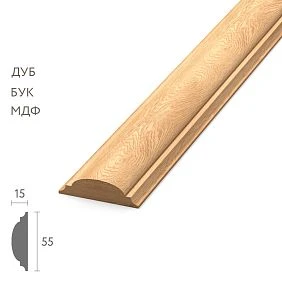
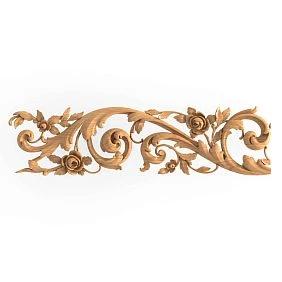
Buying a 20x20 block: choosing a wooden profile for furniture, panels, and decor
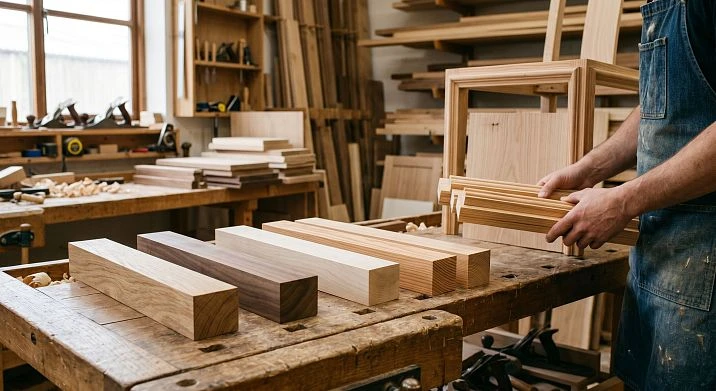
Twenty by twenty. Two centimeters on each side. At first glance, it seems insignificantly small for serious work. But this exact size is found in professional furniture workshops, in the hands of interior designers, and among those who make wall panels, decorative frames, and frameworks from their own drawings. Buying a 20x20 block means getting a wooden blank that works where precision is needed, not brute force.
This is not a construction material for formwork. Not a beam for a load-bearing wall. It is a furniture and decorative profile made of solid wood with a specific logic of use: lightweight frames, slats on the wall, filler for a niche, a frame for molding, an internal element of a facade. Buying a 20x20 block correctly means understanding what task it is designed for and what exactly distinguishes a professional wooden block from construction lumber from the nearest hypermarket.
We will break it all down. From choosing the wood species to calculating the footage, from the nuances of sanding to the mistakes even experienced craftsmen make.




Why a 20x20 block is not just a small piece of lumber
A small cross-section creates an illusion of insignificance. "Small means not serious" — this is a common and mistaken belief. In reality, it is precisely the precise small cross-sections that require the strictest quality control: a 0.5 mm error on a 40x40 block is almost invisible, but on a 20x20 block, it is already a noticeable deviation that ruins the entire geometric pattern of a panel or frame.
Buying a 20x20 wooden block means choosing a blank that works within a system. One block means nothing. Twenty blocks forming a vertical slatted structure on the wall behind the sofa — that is a powerful design element. Four blocks forming an internal frame of a decorative facade — that is precise joinery, invisible from the outside and holding the entire structure together.
That is why professional requirements are placed on a 20x20 block:
— precise cross-section with a tolerance of no more than 0.2 mm;
— even geometry along the entire length without warping or bending;
— polished surface, ready for finishing;
— chamber drying — moisture content no more than 8–10%;
— wood species with predictable characteristics: beech or oak, not nameless softwood.
Buying a 20x20 wooden block from the professional range means working with material that will remain straight after installation, will not warp with humidity changes, and will accept paint or stain without unpredictable spots or unevenness.
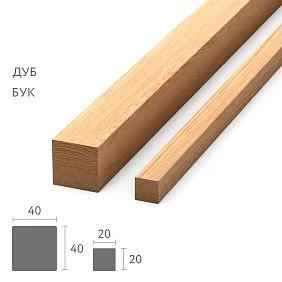
Start getting acquainted with the product with the card of the wooden block BR-001 in the STAVROS catalog: sizes 20×20×2400 mm and 40×40×2400 mm, material — beech and oak, unfinished, ready for finishing.
Our factory also produces:
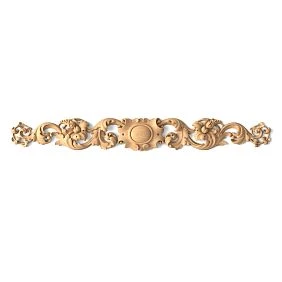
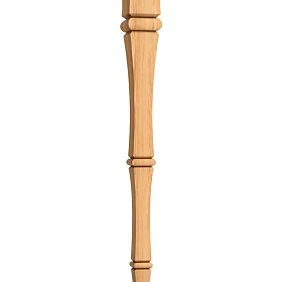



Where is the 20x20 wooden block used
Before buying a 20x20 wooden block, it is worth honestly answering the question: where exactly will it be used? The species, moisture content, finish, and acceptable tolerances depend on this. Let's consider real professional scenarios.
Get Consultation
Furniture frames and internal frameworks
This is one of the most common scenarios. Inside cabinet furniture, a 20×20 block is used as a jumper, corner reinforcement, or guide element. It is not visible from the outside of the cabinet, but it is what holds the geometry.
The block is especially often used in assembled cabinets, dressers, and nightstands, where MDF connecting elements require an additional rigid frame. A beech block glued along the perimeter turns an MDF panel into a rigid structure resistant to deformation.
Decorative slats and slatted panels
A wall slatted panel is one of the main interior trends of recent years. Vertical wooden slats on the wall, behind the sofa, at the head of the bed — this is a simple and very expressive decor. In this context, a 20×20 block is either the slat itself or a base element onto which the slats are glued.
In the Stavros catalog — wooden slats RK-001 as a ready-made solution for slatted panels. The 20×20 block complements this system as a structural element where a base is needed, not decor.
Wall panels and base for moldings
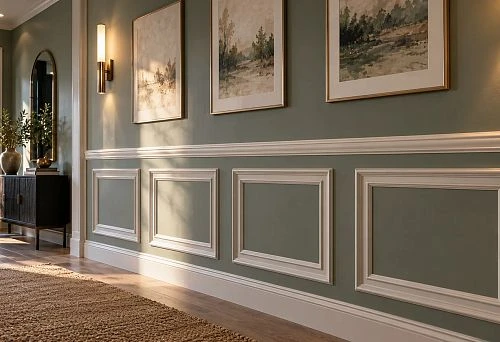
Decorative wall panels with molding divisions are mounted on a pre-leveled surface. If the wall is uneven, an intermediate slat or block is needed between the putty and the molding to create a level vertical line. The 20×20 block is ideal for this role: it is thin, does not protrude beyond the molding, and creates a solid attachment point.
Extensions and niche framing
A niche in the wall for shelves or a TV requires precise framing of the ends. A 20×20 oak block for tinting is a clean, professional solution for end extensions. It is glued with construction adhesive and sanded flush with the wall's finish coating.
Decorative partitions and false panels
Light decorative partitions in studios, zoning elements in the living room, false panels for hiding utilities — all these structures require a lightweight, precise frame. The 20×20 section is optimal here: the structure is not heavy, the frame is not thick, and the cladding lays flat.
Interior blanks
Design studios and furniture workshops often use 20×20 timber as a universal blank for finishing: custom elements, corner inserts, modules for a specific project. In this scenario, the most important factors are section accuracy, batch uniformity, and sanding quality.
View the entire range of bars, cornices, and moldings in the section wooden bars, cornices, and moldings of the STAVROS catalog.
20x20 timber for furniture
Furniture timber is a separate category with its own requirements. Here, not only the section matters, but also whether the part will be visible or hidden, whether it bears a load or performs a decorative function.
Internal frame elements
Inside the furniture body, a 20×20 block works as reinforcement. A typical story: the back wall made of thin HDF (3–4 mm) holds poorly. A 20×20 beech block glued along the perimeter creates a rigid frame to which the back wall is securely attached. The structure stops "playing" and creaking.
The same applies to shelves: an end block under a decorative edge. An MDF shelf with a block glued along the front edge looks like a solid product — and is significantly stronger at the end.
Furniture fronts: internal frame
If you are making a frame-and-panel front from solid wood — a 20×20 block becomes part of the frame. It is used to assemble sides and horizontal crossbars, between which the panel is inserted. With a frame block width of 20 mm, the front looks elegant, with thin frame elements — this is good for neoclassicism and Provence.
Decorative frames on the front
A 20×20 block is glued onto the front surface, imitating a frame-and-panel construction. Unlike a molding, the block has no decorative relief — it creates a strict geometric line without extra volume. This is a "clean" modern version of front division.
Small structural details
Spacers, stops, travel limiters, guides — an endless list of small furniture parts for which a 20×20 block is ideal. Here, precision of cross-section and hardness of the species are important: beech is significantly better than softwood construction timber — it does not dent under load and does not get marks from fasteners.
When 20×20 is not enough
It is important to be honest: a 20×20 mm cross-section block is a lightweight structural blank. It is not intended for:
— load-bearing supports for heavy loads;
— a frame experiencing bending load over a length greater than 400–500 mm;
— corner joints with impact or pull-out load.
For these tasks, a cross-section of 40×40 mm or more is required. Wooden Block BR-001 available in the STAVROS catalog in both formats — choose according to the task.
20x20 bar for wall panels and decorative frame
A wall panel is perhaps the most aesthetically significant application of the 20×20 bar in modern interiors. Let's break down how this works in practice.
Creating rhythm on the wall
Vertical 20×20 bars fixed at equal distances on the wall create a monotonous, soothing rhythm. The distance between bars can vary: a dense rhythm (20–30 mm between slats) — for an active, rich panel; a free rhythm (50–80 mm) — for a calm, geometric division.
Bars painted the same color as the wall 'disappear' against the background and work only with volume and shadow. Contrasting ones attract attention and become the main visual element of the wall.
Volumetric layout for moldings
If the wall is uneven or requires an additional fastening contour for moldings — 20×20 bars are glued according to the markings and leveled. They are attached to Wooden moldings — and the wall gets precise geometric layout without the need for global plastering.
Dividing the plane into sections
Horizontal and vertical bars divide a large wall into cells — this is the decorative technique of a "wall in frames," popular in bedrooms and living rooms. The bars only define the outline, and inside each cell there can be a different color or texture. This is a strong design solution at minimal cost.
Base for decorative elements
20×20 bars are used as an intermediate layer — between the wall and the final decorative element. For example, under Wooden angle on the inner corner of a niche: the bar provides a support surface for attaching the corner, hides minor wall irregularities, and ensures a smooth, precise result.
Decorative partitions
A lightweight decorative partition in a studio or open space is a frame made of bars with cladding. A 20×20 section is sufficient for partitions up to 2 meters high without load: simple zoning, without shelves, without hanging elements. For more functional partitions with hanging elements — a 40×40 section is needed.
Beech or oak: which 20x20 bar to choose
Choosing a breed is a key decision. Everything depends on it: how the timber will behave during processing, how it will accept paint, and how durable it will be under specific conditions.
| Material | When to choose | Advantages |
|---|---|---|
| Beech | For enamel, smooth painting, furniture elements | Dense, stable, ideal surface for painting |
| Oak | For tinting, varnish, visible texture | Durable, expressive grain, prestigious appearance |
| Solid wood for enamel | When an exact color of the facade or wall is needed | Integrates into a unified interior |
| Solid wood for tinting | When it's important to preserve the nature of the wood | Emphasizes the naturalness of the material |
Beech block 20x20
Beech is a closed-pore wood with a uniform, dense structure. It feels heavy, dense, and "oily" to the touch. When sanding and painting, beech behaves predictably: pores do not open, it does not absorb primer unevenly, and enamel lays without craters.
Buying a wooden block 20x20 made of beech is the right choice for:
— white furniture with smooth enamel;
— light decorative frames and slats for painting;
— internal frame elements where density is important;
— furniture in Provence, Scandinavian, neoclassical style with enamel.
The downside of beech is that it is less expressive under clear varnish: the texture is fine, the pattern is unremarkable. But this is a drawback only where visible wood structure is important.
Buy oak block 20x20
Oak is a wood with character. Large pores, pronounced pattern, powerful texture. Under oil or varnish, an oak block looks "rich" — this word is not a metaphor here, but a literal description of how professional designers and their clients perceive oak.
Buying an oak block 20×20 costs for:
— visible decorative elements for natural finishing;
— slats and panels where wood texture matters;
— furniture in classic, Nordic, and rustic styles;
— extensions and trims in interiors with natural wood.
Important point: oak under enamel is losing its main advantage. If the block will be painted — take beech. If it will be varnished or tinted — oak.
Moisture as a critical parameter
A construction pine block bought at a hypermarket often has a moisture content of 15–20% or more. After installation in a warm room, it dries out, warps, and cracks. Professional Wooden Block BR-001 from the STAVROS catalog — kiln drying, moisture content 8–10%. Such a block is stable in interior conditions and will not bring unpleasant surprises a month after installation.
Size 20x20: when it is enough, and when 40x40 is needed
The question of size is a question of the task. There is no universal answer 'which block is better.' There are only specific applications.
When 20×20 is enough
-
Decorative slats on the wall without load
-
Inner frames of furniture facades
-
Extensions and niche framing
-
Base for moldings
-
Light partitions and false panels
-
Blanks for small furniture elements
-
Reinforcement of shelf ends
Main criterion: no significant bending load, free span length — no more than 400–500 mm, lightweight construction.
When 40×40 is needed
-
Frame lintels over 1.5 meters high
-
Horizontal shelves with load
-
Frames for heavy cladding
-
Support elements for suspended structures
-
Legs of banquettes and light chairs
Both 20×20 and 40×40 — both sizes are in the card of the wooden block BR-001 STAVROS. You can order both in one batch — for a combined structure with different load requirements.
Length 2400 mm: standard for cutting
Length 2400 mm is standard for linear products and convenient for cutting: this is the standard room height plus allowance. From one 2400 mm piece you can cut:
— two posts of 1100 mm (with allowance for a standard height wall panel);
— three segments of 750 mm each (for shelves in the cabinet);
— four elements of 550 mm each (for a medium-sized decorative frame).
Cutting should be planned in advance — and then there will be almost no waste.
How a 20x20 block differs from a batten, trim, and molding
Confusion in terms is normal for those choosing a wooden profile for the first time. Let's sort out the system once and for all.
| Element | Main task | When to choose |
|---|---|---|
| 20×20 block | Structural or semi-structural blank | Frame, reinforcement, base for decor |
| Rail | Linear decorative element with minimal relief | Slat panels, rhythm on the wall |
| Layout | Joint closure, plane division | Facades, glass, doors, panels |
| Molding | Decorative profile with pronounced relief | Frames, walls, classic furniture |
| Molding | Decorative frame-type trim | Frames, mirrors, panels |
From this table it is clear: the bar is the base of the system, not decor. It creates what holds the decor. The batten is a decorative line. The layout is a transition and joint. The molding is a relief accent.
More details on the differences between all these elements — in the article “Wooden batten, layout, glazing bead, and corner” on the STAVROS website. This is a practical guide to distinguishing related products — a must-read before placing an order.
Also recommended article "Wooden block for furniture and decor" — there, a broader context of choosing a block as a blank for interior products is analyzed.
How to check the quality of a block before purchase
Buying a wooden block 20×20 is not a lottery if you know what exactly to check. Here is a professional checklist.
Cross-section accuracy
Measure at several points along the length. For a professional product, the tolerance is no more than 0.2 mm. If measurements "wander" by 0.5–1 mm, it is construction or non-calibrated material, not for interior work.
Straightness along the length
Place the block on a flat surface. It should lie without gaps along the entire length. Any deviation — "propeller", bend, warping — means the material is either raw or improperly stored. After installation, such a block will deform even more.
Sanding quality
Run your finger over the surface. No burrs, no rough marks from planer knives, no untreated areas. The surface should be uniformly smooth — ready for priming and painting without additional manual processing.
Tree species
Do not buy a "wooden block" without specifying the species. Pine, spruce, poplar are completely different materials in terms of density, resin content, and behavior under painting. For furniture and interior tasks, beech or oak are needed.
Foamed polystyrene is hygroscopic - it absorbs moisture from the air, albeit in small amounts. Long-term storage in a humid environment (basement, unheated warehouse in winter) may result in dark spots appearing on the surface.
Ask the supplier or check with a moisture meter. The norm for interior use is 8–10%. Material with a moisture content of 15% or higher is construction-grade; it will dry out indoors and warp.
Quality of gluing
If the block is glued (made from several lamellas), check the quality of the glue joints. They should be almost invisible, even, without voids or delamination. A poor glue joint is a future defect during painting or sanding.
Batch Uniformity
For wall panels and decorative work, it is important that the entire order comes from the same batch. Different batches may have slight differences in wood shade, and this will be noticeable after painting. Everyone is interested in the price per meter of a 20x20 block, but batch uniformity is a more important issue.
How to calculate the amount of block for a project
A good calculation is money you won't spend extra or won't have to spend again when material runs out at the most inopportune moment.
Basic formula
Total length = sum of all sections + 10–15% for trimming and waste
For straight-line work without corner cuts — 10% margin. For work with 45° cuts and corner joints — 15%.
Calculation for a wall slat panel
Suppose the wall is 3.5 meters wide, the panel height is 2.1 meters, and the vertical slats are spaced at 50 mm.
-
Number of slats: 3500 mm / 50 mm = 70 slats
-
Length of one slat: 2100 mm
-
Total length: 70 × 2100 = 147,000 mm = 147 linear meters
-
Length of one bar: 2400 mm
-
Number of bars: 147,000 / 2400 ≈ 62 bars
-
With a 10% margin: 62 × 1.1 ≈ 69 bars
Don't forget the horizontal crossbars at the top and bottom of the panel: another 2 × 3500 mm = 7 meters → another 3 bars with margin. Total: ~72 bars.
Calculation for furniture frame
For the frame inside a cabinet or a frame facade, calculate separately:
-
List all horizontal elements with lengths.
-
List all vertical elements with lengths.
-
Add them up.
-
Divide by the length of one bar (2400 mm).
-
Add 15%.
There is always waste during cutting — corner cuts, adjustments, defective sections. It's better to buy two extra bars than to reorder from a different batch.
Why you can't buy "to zero"
Three reasons:
-
Trimming always produces waste — from 5 to 20% depending on the task.
-
Possible defects in the batch — a crack, a bend in one bar, a knot in an inconvenient place.
-
Possible installation errors — rework requires material.
Stock is not waste, it's a professional standard.
How a professional beech or oak block differs from construction lumber from a hypermarket
This question always arises when a person sees the price difference and starts to doubt. Let's break it down.
Wood species
In construction stores, it's almost always pine or spruce. These are soft woods with high resin content. Resin under enamel and varnish eventually shows through as spots. Soft wood leaves dents from fasteners and cutting tools. Beech and oak in a professional product are dense, stable, predictable species.
Geometry
Construction lumber is cut for technical needs with tolerances of several millimeters — that's normal for formwork, not for decor. Professional blocks are calibrated with an accuracy of 0.1–0.2 mm. The difference is immediately visible — on corner joints, wall panels, furniture frames.
Foamed polystyrene is hygroscopic - it absorbs moisture from the air, albeit in small amounts. Long-term storage in a humid environment (basement, unheated warehouse in winter) may result in dark spots appearing on the surface.
Construction material is often sold raw. Professional blocks are kiln-dried to 8–10%. This is a fundamental difference for interior use.
Sanding
Planed construction lumber requires manual sanding: first 80, then 120, then 180 grit. That's several hours of work for a batch of 50 blocks. Professional blocks come with a sanded surface — ready for primer.
Buying a 20x20 wooden block from a professional range is not overpaying. It's saving on finishing, rework, and lost time.
Mistakes when buying a 20x20 timber
These mistakes occur in real projects. Study them — to avoid repeating.
Buying construction-grade raw timber for interior use
Already detailed above. Let's add: 'raw' timber in a warm apartment loses 5–8% of its volume in 2–3 months. This means gaps where there was a tight joint, cracks at the ends, and warping along the length. Redoing it will cost more than the price difference.
Not accounting for humidity
Even if you bought the 'right' timber — check the humidity. A professional supplier specifies it in the documentation. If there's no data — that's a reason to ask.
Choosing a softwood for a load-bearing part
A pine timber 20×20 as a shelf support — deformation under load within a year. For load-bearing parts — only hardwoods.
Confusing timber with a batten
STAVROS batten RK-001 — this is a decorative profile with parameters tailored to a specific interior scenario. A bar is a structural or semi-structural blank. Their tasks partially overlap but do not fully coincide.
Do not check geometry
"Bought 50 bars — didn't check — installed — turned out half are warped." This is a real story. Check at least 10% of the batch for straightness — place on a flat table and look against the light.
Do not account for margin
Ten percent above the calculated footage is normal. Fifteen — for complex work with corner cuts. Buying "to the exact amount" is a beginner's professional mistake.
Do not consider future painting
If the bar will be under white enamel — choose beech: the surface is smooth, pores are closed, paint applies perfectly. If under tinting — choose oak: the texture is expressive, tinting adds depth. Choosing wood species "by price" without considering the final finish means getting an unpredictable result.
Take 20×20 where 40×40 is needed
Violation of load characteristics. If the part will experience bending load over a length of more than 500 mm — a larger cross-section is needed. Do not skimp on structural reliability.
Mix oak, beech, and MDF without a unified finishing logic
If a project uses oak blocks, beech slats, and MDF moldings — with a single paint color, it's unnoticeable. With different colors, different wood species under the same paint can produce different shades. Plan your finishing system before purchasing materials.
Choosing only by price
Price per linear meter is not the main criterion. The main ones are: wood species, moisture content, geometry, sanding, batch consistency. The cheapest block can end up costing the most — in the form of rework.
What to buy together with a 20x20 block
If you've already decided on a block — it's time to assemble a kit for the project.
Wooden linear molding and profiles
-
wooden slats RK-001 — for decorative rhythm on walls and panels, pairs well with the block as a base
-
Wooden moldings — for decorative division of walls and furniture over the block
-
Wooden angle — for finishing internal and external corners of panels
-
Wooden Picture Frame — for framing decorative panels and frames
Furniture decor
-
Decorative wooden inlays — corner and center accents for frames made of block
-
Furniture Legs and Supports — for furniture where the block is used in the frame
Installation materials
Assembly adhesive, fasteners, and primer — in the section Mounting and finishing materials. For gluing the block to the wall — TYTAN Prof.classic Fix, for structural bonding — high-concentration woodworking PVA.
Why STAVROS
You can buy a wooden block 20x20 in dozens of places. But professional results are only ensured by professional material. Here is what STAVROS specifically offers.
Real product with parameters. Wooden Block BR-001 — sizes 20×20×2400 and 40×40×2400 mm, material beech and oak, unpainted. This is a specific product with specific characteristics, not a "wooden block in assortment."
Molding system. The block is part of the unified STAVROS molding catalog. Nearby — slats, corners, moldings, cornices, baseboards, baguettes. You can assemble the entire project in one order.
Wood quality. Kiln-dried beech and oak are not construction lumber. They are interior blanks suitable for furniture, decor, and professional finishing.
Contact us to confirm shipping to your destination. CDEK and DPD. Showrooms in St. Petersburg and Moscow — you can come, touch, compare species and sections in person.
Expertise. STAVROS has been working with professional workshops, design studios, and cultural heritage sites since 2002. Among the projects — the Hermitage, the Konstantinovsky Palace, the Alexander Palace. Rating 5.0 — over 260 reviews.
FAQ
Where to buy a 20x20 wooden block?
At STAVROS — Wooden Block BR-001 Size 20×20×2400 mm in beech and oak. Order online with Contact us to confirm shipping to your destination. or pickup from the showroom in St. Petersburg and Moscow.
How is a 20x20 block different from a batten?
A block is a structural or semi-structural blank: used in frames, reinforcements, bases. A batten is a decorative linear element for rhythmic panels and accents. The cross-sections may look similar, but the tasks and applications differ.
What is a 20x20 wooden block suitable for?
For lightweight furniture frames and frames, decorative slatted panels, bases for moldings, fillers in niches, edge trims, decorative partitions, and interior blanks for any task.
Which is better to choose: beech or oak?
Beech — for enamel and smooth painting: dense structure, perfect sanding, predictable result. Oak — for tinting, oil, varnish: expressive texture, natural premium look.
When is 20×20 not enough and 40×40 is needed?
If the element carries a significant load, works in bending over a length of more than 400–500 mm, or is a load-bearing part of the structure. For decorative and lightweight structural tasks, 20×20 is the right choice.
Do I need to add extra length?
Always. For simple straight work — 10%, for work with miter cuts — 15%. Extra length is protection against waste, batch defects, and cutting errors.
How to store a wooden block before installation?
Horizontally on a flat support — without sagging or bending. In a dry room with air humidity of 40–60%. Not vertically, not in dampness, not outdoors. Before installation, let the block "acclimate" in the room for 2–3 days.
How to calculate the number of blocks for a slatted panel?
Determine the spacing between slats, count the number of slats across the entire wall width, multiply by the panel height — you get the total length. Divide by 2400 mm (length of one block), add 10–15% extra. Don't forget about horizontal crossbars.