Article Contents:
- When to choose a white MDF baseboard
- Modern apartment with white doors
- Minimalist style renovation
- Scandinavian style and neoclassicism
- Renovation for painting
- Turnkey renovation in a new building
- How MDF baseboard differs from wooden: an objective look
- Why MDF is better for painting
- White baseboard or paintable baseboard: what's the fundamental difference
- Ready white MDF baseboard
- MDF baseboard for painting
- How to choose the height of an MDF baseboard: table, logic, examples
- Baseboard height table by ceiling height
- Low baseboard (40–70 mm)
- Medium baseboard (80–120 mm)
- High baseboard (140–200 mm and more)
- Baseboard and door casing height
- How to choose an MDF baseboard profile
- Straight minimalist profile
- Quarter-round baseboard
- Shaped profile with curves and bevels
- Tall smooth profile
- Baseboard with classic ornament
- How to combine MDF baseboard with doors: a system, not a set of parts
- Baseboard for white doors
- Baseboard for colored doors
- Baseboard and wall moldings
- Baseboard profile and casing profile
- White MDF baseboard for different flooring
- Skirting board for laminate
- Baseboard for engineered wood and parquet
- Skirting board for tiles
- Skirting board for quartz vinyl
- Gray MDF baseboard: a separate story
- Installation of white MDF baseboard: technique and practice
- Mounting methods
- Wall Preparation
- Corner Trimming
- Painting before or after installation
- Mistakes when buying MDF baseboard
- Care for white MDF baseboard
- Where to buy white MDF baseboard
- FAQ: Answers to Popular Questions
- About the manufacturer
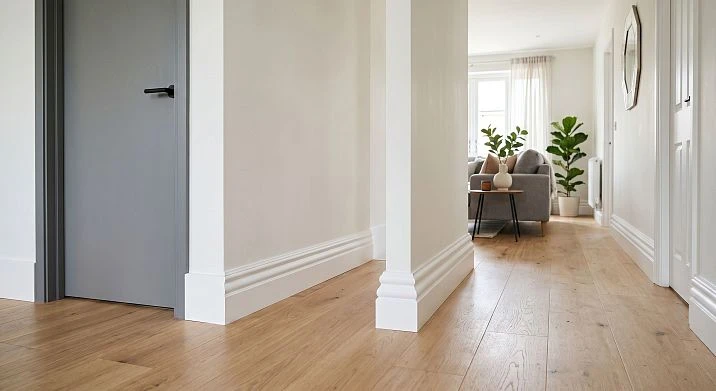
A baseboard is a detail noticed twice: when it's poorly chosen and when it's chosen perfectly. In the first case, it irritates: it sticks out, doesn't fit, breaks the line. In the second, it simply exists as part of a correct interior, unobtrusive yet absolutely precise.
white MDF skirting board — is a choice made by millions of people renovating in a modern style. And not because 'it's customary' or 'cheap.' But because it solves a specific task: to create a clean, even horizontal line at the base of the wall that aligns with white doors, light walls, modern flooring, and a minimalist interior.
But 'white MDF baseboard' is not one item. It's dozens of options in height, profile, finish, and purpose. And to choose correctly, you need to understand the logic of selection, not just look at a picture.
This article is written precisely for this: to cover the topic completely, from material characteristics to specific application scenarios.
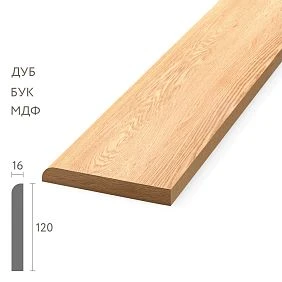
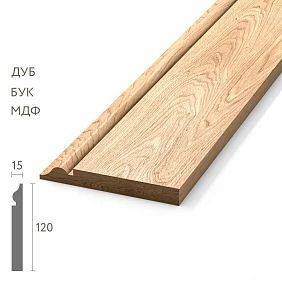
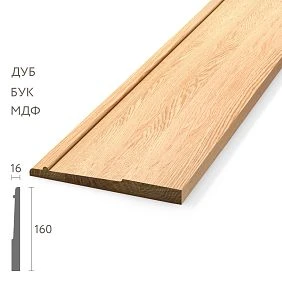
When to choose a white MDF baseboard
There are situations where a white MDF baseboard is not just one of the options, but the most logical choice. Let's break them down.




Modern apartment with white doors
White enamel doors are the dominant choice in modern apartments. White — is a horizontal element that frames the room at the bottom of the walls where the wall meets the floor. Skirting boards perform several functions: they hide the technological gap between the wall and floor covering (necessary for thermal expansion), protect the lower part of the wall from mechanical damage, create visual completion, and may conceal wiring. or a ready-made white baseboard is a continuation of the same white line around the perimeter of the room. The baseboard and door frame in the same color and texture is a systematic approach where all finishing details 'talk' to each other.
Our factory also produces:

Renovation in a minimalist style
Minimalism does not tolerate unnecessary elements. A white baseboard against a light wall almost dissolves — its role is visually minimal, but without it the wall looks unfinished. That's the point: presence without noise.
Get Consultation
Scandinavian style and neoclassicism
In Scandinavian interiors, white surfaces are the foundation. White baseboard, white doors, white frames — a single canvas. In neoclassicism, a tall white MDF skirting board with a shaped profile adds that architectural line at the base of the wall, creating a sense of order and classicism without heavy decor.
Repair for painting
When the entire interior is painted in a single color scheme — a paintable baseboard allows you to avoid searching for the "right shade" among ready-made profiles. You paint everything yourself: walls, doors, baseboard — in a single tone. The result is a perfectly coordinated interior.
Turnkey renovation in a new building
Typical new buildings with ceiling heights of 2700–3000 mm, white walls, and light floor coverings are an ideal environment for white MDF baseboards. They are quick to install, look neat, paint well, and require no complex maintenance.
How MDF baseboard differs from wooden: an objective look
A question asked before every purchase. We will answer honestly and fully.
solid wood baseboard — is a natural material with a living texture, individual pattern, high strength, and durability. It is easy to work with, can be sanded, touched up, and restored. Under a clear varnish, it is an elegant natural profile. In a country house, classic or rustic interior — wooden baseboard is unrivaled.
MDF skirting board — is a profile made of medium-density fiberboard. It is produced from the same wood fibers as solid wood, but pressed under high pressure with the addition of a binding agent. MDF has no living wood texture — its surface is perfectly smooth and uniform.
| Parameter | MDF baseboard | Wooden skirting board |
|---|---|---|
| Surface | Perfectly smooth | Natural texture |
| Painting | Excellent result | Requires preparation |
| Geometric Stability | High | Deformations possible |
| Price | More affordable | More expensive |
| Naturalness | No | Yes |
| Carving and decor | Limited | Wide possibilities |
| Application | Modern interiors, painting | Classic, natural interiors |
The conclusion is simple: choose MDF if you need a perfect white surface for painting, even geometry, modern interior. Choose solid wood baseboard, if the naturalness of the material, living texture and the possibility of restoration are important.
Why MDF paints better
This is a key advantage of MDF baseboards over wooden ones when it comes to painting. The MDF surface is uniform, without pores, without resin pockets, without differences between early and late wood. The paint lays evenly, does not raise the grain, and does not require multiple priming coats.
A wooden pine baseboard must be primed before painting — otherwise, resins will seep through the paint. MDF requires only one coat of primer, after which the paint lays perfectly smooth.
White baseboard or baseboard for painting: what is the fundamental difference
This is a practical choice that affects installation timelines and the final result.
Ready white MDF baseboard
white MDF skirting board with a factory white coating — this is a profile ready for installation. You install it, cover the joints, and it's done. No additional painting is required.
When this is the best choice:
-
walls are light, close to white;
-
doors are white in a standard white color;
-
there is no need to match an exact tint from color matching.
Nuance: "white" varies by manufacturer. Warm white, cool white, milky, pearlescent — these are different shades. Before purchasing, compare with the actual color of the doors and architraves.
MDF baseboard for painting
— is a horizontal element that frames the room at the bottom of the walls where the wall meets the floor. Skirting boards perform several functions: they hide the technological gap between the wall and floor covering (necessary for thermal expansion), protect the lower part of the wall from mechanical damage, create visual completion, and may conceal wiring. — profile without finish coating or with a primer base. It is painted independently — in any color with acrylic paint.
When this is the best choice:
-
needs an exact color according to RAL or NCS to match the doors;
-
non-standard wall colors (gray, green, blue) and the baseboard must match;
-
furniture, doors, and finishes are executed in a unified custom color scheme;
-
repainting is planned during the next renovation.
A baseboard for painting offers maximum flexibility. But it requires time and precision when working with paint.
How to choose the height of an MDF baseboard: table, logic, examples
Height is the first selection parameter. And it is directly related to ceiling height, door opening width, interior style, and the scale of the space.
Table of baseboard height based on ceiling height
| Ceiling Height | Recommended skirting board height |
|---|---|
| Up to 2500 mm | 50–70 mm |
| 2500–2800 mm | 70–100 mm |
| 2800–3200 mm | 100–150 mm |
| Above 3200 mm | 150–200 mm and more |
These are recommendations, not rules. A low baseboard in a high room is an acceptable minimalist technique. A high baseboard in a room with a 2500 mm ceiling creates a visual "grounding," which is sometimes undesirable.
Low baseboard (40–70 mm)
The most delicate option. In a minimalist or Scandinavian interior, a low baseboard is almost the absence of a baseboard: a clean line at the floor that does not attract attention. Suitable for small rooms where every centimeter on the wall matters.
Medium baseboard (80–120 mm)
A universal option. Looks good in standard apartments with a ceiling of 2700–3000 mm. It does not overload the wall and is noticeable enough to set a horizontal rhythm. White MDF Skirting Board 80–100 mm is the most popular size in the modern segment.
High baseboard (140–200 mm and more)
Architectural element. A high white baseboard evokes a classic feel at the base of the wall, elevating the interior's status. In neoclassical styles, spacious living rooms, and rooms with tall white doors, a high baseboard works flawlessly.
Important: a high baseboard requires that Wooden casings the cornices be proportionally large. Thin architraves with a high baseboard create disproportion.
Baseboard and door architrave height
A rule often broken: the height of the baseboard should match the width of the door architrave. An architrave 70 mm wide + a baseboard 150 mm high is a mismatch in proportions.
Guideline: baseboard height = 1.5–2 times the architrave width. Architrave 70 mm → baseboard 100–140 mm. Architrave 100 mm → baseboard 150–200 mm.
How to choose an MDF baseboard profile
The profile is the cross-sectional shape. It determines how the baseboard looks on the wall.
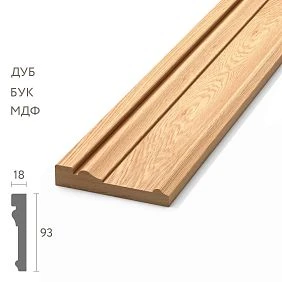
Straight minimalist profile
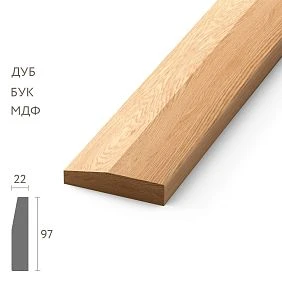
A straight rectangular baseboard without chamfers or rounded edges is absolute minimalism. It is almost invisible on a light wall, creating a clear straight line. Popular in apartments with a "white box" style, loft, and Scandinavian minimalism.
A straight baseboard has a nuance: it requires very even walls and floors. On a curved wall, a gap between the baseboard and the surface is inevitable — and on a straight profile, this is more noticeable than on a shaped one.
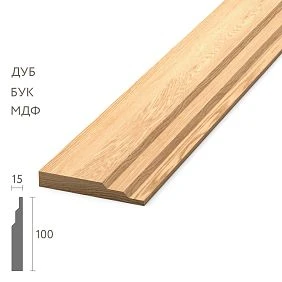
Baseboard with a quarter
Classic profile: a quarter is removed from the back side — a rectangular cutout that allows the baseboard to fit more tightly to the wall even with minor irregularities. This is a practical and common profile.
Shaped profile with rounded edges and bevels
A more decorative option. The front edge has a smooth bevel or rounded edge — this adds volume to the baseboard and creates a play of light. In neoclassicism and modern classicism, it is a popular choice.
Tall smooth profile
High white MDF skirting board with a smooth front surface and a slight bevel on top — an elegant and architectural option. No complex ornaments — only geometry and height. Looks good in modern spacious interiors.
Baseboard with classic ornament
For neoclassicism and classic interior — a profile with several horizontal bands, as in the classical order. This is a compromise: MDF as the base, but the form has historical connotations.
How to combine MDF baseboard with doors: a system, not a set of parts
This is one of the most important practical questions. A baseboard separate from doors is a mistake in approach. Proper renovation is a system: baseboard, casing, door frame, threshold, wall moldings — everything in a single logic.
Baseboard for white doors
White doors — white baseboard. This is a rule without exceptions in modern interiors. The only question is the shade: cool or warm white. Be sure to compare the baseboard and door under the same lighting — warm and cool white look contrasting next to each other.
Wooden casings for white doors — also in white or paintable. A unified white system: casing + baseboard + door frame — this is a professional approach to finishing.
Baseboard for colored doors
If the doors are colored (gray, green, dark, black) — the baseboard can be:
-
matching the doors: a unified system, a designer technique;
-
white: neutral contrast, emphasis on the doors;
-
matching the walls: the baseboard "dissolves" into the wall, the door reads separately.
Each of these options works under the condition of mindfulness. — is a horizontal element that frames the room at the bottom of the walls where the wall meets the floor. Skirting boards perform several functions: they hide the technological gap between the wall and floor covering (necessary for thermal expansion), protect the lower part of the wall from mechanical damage, create visual completion, and may conceal wiring. — allows you to implement any of them without searching for the "right color" among ready-made profiles.
Skirting boards and wall moldings
If the walls are decorated wooden moldings or MDF — the baseboard must match them in color and profile style. White moldings + white baseboard — a clean system. Natural wood moldings + white baseboard — a contrast that requires a conscious design decision.
Baseboard profile and trim profile
This is a subtle detail noticed by professionals. If the trim has a figured profile — the baseboard at the base of the wall should "rhyme" with it. Complete matching is not necessary, but a common "vocabulary" of shapes — straight lines or smooth curves — should be consistent.
White MDF baseboard for different floor coverings
The floor covering influences the choice of baseboard: its height, profile, and installation method.
Baseboard for laminate
Laminate — a covering that requires a deformation gap near the wall (8–10 mm). The baseboard covers this gap. The height of the baseboard must fully cover the gap — at least 50 mm. white MDF skirting board 70–100 mm high for laminate — an optimal choice.
Important: the skirting board for laminate is attached only to the wall, not to the floor — the laminate must be able to "float" freely. This directly affects the installation technique.
Skirting board for engineered wood and parquet
Parquet and engineered wood are floor coverings with a "warm" character. Here Wooden baseboard made of solid wood is a more organic choice. But if all doors are white and walls are light — a white MDF skirting board also works. The main thing: color consistency with other white interior details.
Skirting board for tiles
Tile is a floor covering for the kitchen, bathroom, hallway. Here, a skirting board made of the same material as the tile is often used. But in a hallway with tile and white doors — a white MDF skirting board creates a clean transition.
Skirting board for quartz vinyl
Quartz vinyl is a modern covering with imitation wood or stone. With neutral light quartz vinyl — a white MDF skirting board is ideal. With dark quartz vinyl imitating wood — both white (contrasting) and a skirting board matching the covering are possible.
Gray MDF skirting board: a separate story
MDF skirting board gray — this is a trend that is actively gaining popularity. A gray interior — gray walls, gray doors, gray floor — requires a gray skirting board. White would be out of place here.
Gray MDF skirting board for painting is the most flexible solution for a gray palette. Walls in light gray, doors in graphite, skirting board in an intermediate gray — this is professional color design that creates depth without sharp contrasts.
Possible options for the gray palette for the skirting board:
-
light gray (close to white) — minimalist neutral;
-
medium gray — active accent on the floor;
-
dark gray, anthracite — bold contrast with light walls.
— is a horizontal element that frames the room at the bottom of the walls where the wall meets the floor. Skirting boards perform several functions: they hide the technological gap between the wall and floor covering (necessary for thermal expansion), protect the lower part of the wall from mechanical damage, create visual completion, and may conceal wiring. provides access to this entire palette: one profile — any shade of gray according to RAL or NCS.
Installation of white MDF baseboard: technique and practice
Methods of mounting
Liquid nails or construction adhesive. The neatest option — without visible fastening points. Suitable for smooth walls. The baseboard is glued to the wall and floor (to the floor — without load, only for tight fit).
Finish nails (brads). Fast, reliable. Nails are countersunk with a nail set, puttied, sanded. When painted — no traces visible.
Dowels and screws. For concrete walls or brickwork. Screw heads are countersunk, covered with putty.
Wall Preparation
MDF baseboard requires smooth walls. Wall unevenness more than 3–5 mm per 1 linear meter — the baseboard fits loosely, gaps remain. Before installation, walls near the floor need to be leveled.
Trimming Corners
Internal corner — cutting at 45° or installing a corner cap. External corner — cutting at 45° on both sides. For MDF — use a miter saw or miter box.
Painting before or after installation
Both options are possible. Professional approach: prime and paint before installation, then install, putty the joints, touch up with a brush. This way the surface of the baseboard is smoother — without traces of painter's tape and drips near the wall.
Mistakes when buying MDF baseboards
These mistakes occur in every third renovation. Do not repeat them.
Buying a baseboard without considering door architraves. The baseboard and architraves are a single system. Different profiles, different shades of white — and the whole system falls apart.
Choosing a profile that is too low for tall doors. A door 2100 mm high with an 80 mm architrave + a 50 mm baseboard is disproportionate. The baseboard gets lost near the floor.
Not considering the wall color. A cool-white baseboard on a warm-cream wall is a contrast that looks like a mistake, not a design choice.
Choosing a white baseboard for 'warm' doors without checking the shade. Warm milky white of the door + cool white baseboard — they conflict. Always compare samples under the same lighting.
Forgetting about corners, joints, and additional elements. Corner caps, joint strips — all of this needs to be purchased in advance. Otherwise, the corners will look amateurish.
Not calculating linear meters. Standard mistake: measured the perimeter of the room and bought exactly that amount. Then there isn't enough considering trimming, defects, non-standard corners. Rule: perimeter × 1.15 = quantity to purchase.
Buying for painting without considering the paint and finish. MDF for painting requires primer + 2 coats of acrylic paint. Without primer, the paint absorbs unevenly. Without the second coat, the color is pale. Plan your consumables in advance.
Installing without an expansion gap under the baseboard. The baseboard should not press the laminate or engineered board tightly against the wall. Leave a gap — the baseboard is only attached to the wall.
Caring for a white MDF baseboard
A white baseboard requires regular attention: dust, mop marks, scratches — all are noticeable on a white surface.
Wet cleaning. A slightly damp cloth weekly. MDF does not like excess moisture: do not wash the baseboard with a stream of water.
Minor scratches. They are painted over with the same paint used for the baseboard. That is why you should keep a small amount of paint after painting — it will come in handy.
Repainting. After 5–7 years, the baseboard can be repainted: lightly sand with 240 grit sandpaper, dust off, prime problem areas, and apply 1–2 coats of paint. MDF accepts recoating well.
Where to buy a white MDF baseboard
Buy a white MDF baseboard from a manufacturer that provides complete information about height, profile, and coating options.
In the Stavros catalog — MDF Skirting Board with a ready white coating and — is a horizontal element that frames the room at the bottom of the walls where the wall meets the floor. Skirting boards perform several functions: they hide the technological gap between the wall and floor covering (necessary for thermal expansion), protect the lower part of the wall from mechanical damage, create visual completion, and may conceal wiring. — for any finishing option. Nearby in the catalog — solid wood baseboard, Wooden casings, Wooden moldings и Wooden trim — a complete system of profiles for modern renovation.
FAQ: Answers to popular questions
How to choose a white MDF baseboard?
Determine the ceiling height → select the baseboard height from the table → match the profile with door trims → choose ready white or for painting depending on the task.
What is better: MDF baseboard or wooden baseboard?
MDF — for modern white interiors and painting. Solid wood — for classic, natural interiors and wood texture.
Can MDF baseboard be painted?
Yes. MDF is an ideal base for painting. Primer + 2 coats of acrylic paint give a smooth, even surface without visible joints or pores.
What height should I choose for a baseboard in an apartment?
For a ceiling of 2700 mm — 70–100 mm. For a ceiling of 3000 mm — 100–140 mm. For high ceilings from 3500 mm — 150–200 mm.
How to combine white baseboard with doors?
White doors — white baseboard of the same shade. Check the shade under the same lighting. Trim and baseboard in a unified system.
Is MDF baseboard suitable for neoclassical style?
Yes. A tall MDF baseboard with a shaped profile in white is a characteristic element of a neoclassical interior.
What to choose: white baseboard or one for painting?
Ready white — if you need quick installation without painting. For painting — if you need an exact color to match doors, walls, or furniture.
Is MDF baseboard suitable for laminate flooring?
Yes. Only attach to the wall, not to the floor — to allow the laminate to 'float' freely.
How to calculate baseboard quantity?
Room perimeter (minus doorways) × 1.15 = total linear meters.
Where to buy white MDF baseboard?
In the STAVROS catalog: White MDF Skirting Board и For painting with Contact us to confirm shipping to your destination.
About the manufacturer
STAVROS is a Russian manufacturer of wooden profiles and interior finishing elements. The company's catalog includes White MDF Skirting Board, Paintable MDF Profiles, solid wood baseboard, Wooden casings, Moldings и Wooden trim a full range for modern renovations. If you are looking for a white MDF baseboard for an apartment, house, or office — in the catalog STAVROS you will find the required profile, height, and finish with Contact us to confirm shipping to your destination.