








































































Article Contents:
- What are beech balusters and why they are an important stair detail
- How a beech baluster differs from its counterparts made of other wood species
- Where beech balusters are used: from a country house to a grand interior
- Interior staircases
- Double-height balustrade
- Gallery and mezzanine railing
- Staircase in a classic interior
- Country house and cottage
- Restoration
- Why beech is the right choice for balusters: technical arguments
- Density and hardness
- Uniformity of texture
- Turning and carving
- Stability under load
- Moisture resistance (relative)
- Beech or oak balusters: an honest comparison
- Turned and carved beech balusters: what shapes exist
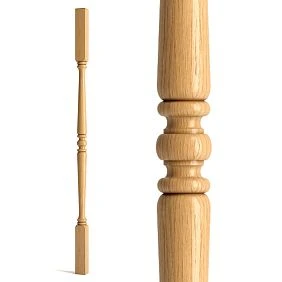
- Simple turned balusters
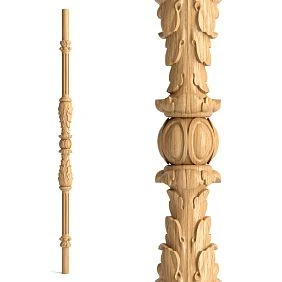
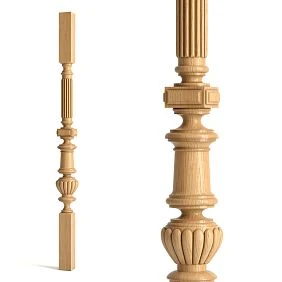
- Classic shaped balusters
- Carved newels
- Flat balusters
- Decorative balusters for balustrade
- How to choose the shape of a baluster to match the staircase style
- Classic and neoclassic
- Modern classicism
- Scandinavian style and minimalism
- Art of installation: installing trims
- Country house in the style of a Russian estate
- How to choose baluster size and installation spacing
- Baluster height
- Baluster cross-section
- Baluster Installation Spacing
- Number of balusters per step
- Beech baluster coating: varnish, stain, enamel, oil
- Clear varnish
- Stain + varnish
- Enamel
- Oil and wax
- Open wood without coating
- What to check before buying beech balusters: checklist
- Geometry and dimensions
- Turning and sanding quality
- Wood moisture content
- Blemishes and defects
- Batch uniformity
- Compatibility with handrail and string
- Beech stair components: what else you need besides balusters
- Handrail
- Posts (support columns)
- String or stringer
- Mistakes in choosing and buying beech balusters: experience to avoid
- Furniture and balusters in a unified style: on consistency of wooden elements
- Where to buy beech balusters: STAVROS catalog
- FAQ: answers to key questions about beech balusters
- STAVROS: балясины, в которых есть характер
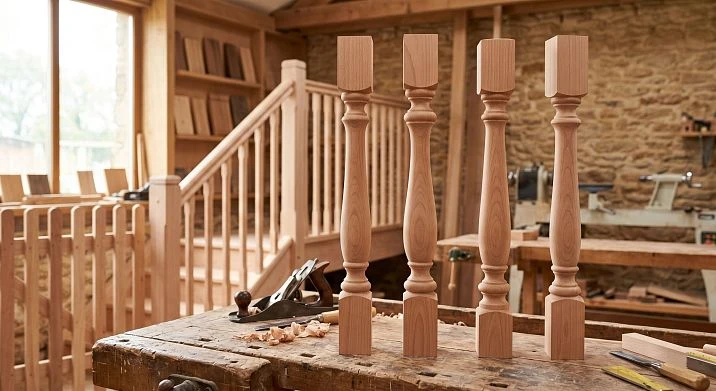
Лестница — это движение, застывшее в дереве. И нет в ней детали более ритмичной, более живой и более заметной, чем балясины. Они выстраиваются в ряд вдоль марша — равные, повторяющиеся, но каждая несущая свою долю нагрузки и свою часть образа. Именно балясины определяют характер лестницы: строгий или изящный, лаконичный или богато декорированный, современный или классический.
Когда встаёт вопрос о материале, бук — один из первых претендентов. И не случайно. Балясины из бука сочетают в себе всё, что нужно: плотность и прочность под нагрузку, ровную однородную структуру для точёного и резного декора, хорошую адгезию любого покрытия — лака, морилки, эмали, масла. Это рабочий материал столярного производства с вековой репутацией.
Эта статья — о том, почему бук выбирают для балясин, как разобраться в формах и размерах, как не ошибиться с покрытием и шагом установки, и на что смотреть при покупке. Без общих слов — только конкретика, которую можно сразу применить.
Что такое балясины из бука и почему это важная деталь лестницы
Balusters for staircase — это вертикальные стойки ограждения, которые устанавливаются между нижним опорным элементом (тетивой, ступенью или горизонтальной планкой) и верхним поручнем. Их функция двойная: конструктивная — удерживать поручень и обеспечивать безопасность ограждения, и декоративная — формировать ритм, пропорции и визуальный образ всего лестничного ограждения.
Балясины из бука — это балясины, выточенные или вырезанные из массива буковой древесины. Бук (Fagus sylvatica) — твёрдолиственная порода с плотностью 650–750 кг/м³. Это плотнее, чем сосна (460–520 кг/м³), и сопоставимо с ясенем (670–750 кг/м³). По твёрдости бук уступает дубу незначительно, но при этом гораздо лучше ведёт себя при точении: даёт чистый, ровный срез без задира волокна.
Именно последнее свойство делает бук предпочтительным материалом для точёных балясин с развитым профилем — тех, где важна точность геометрии, чёткость рельефа и гладкость поверхности под покрытие.
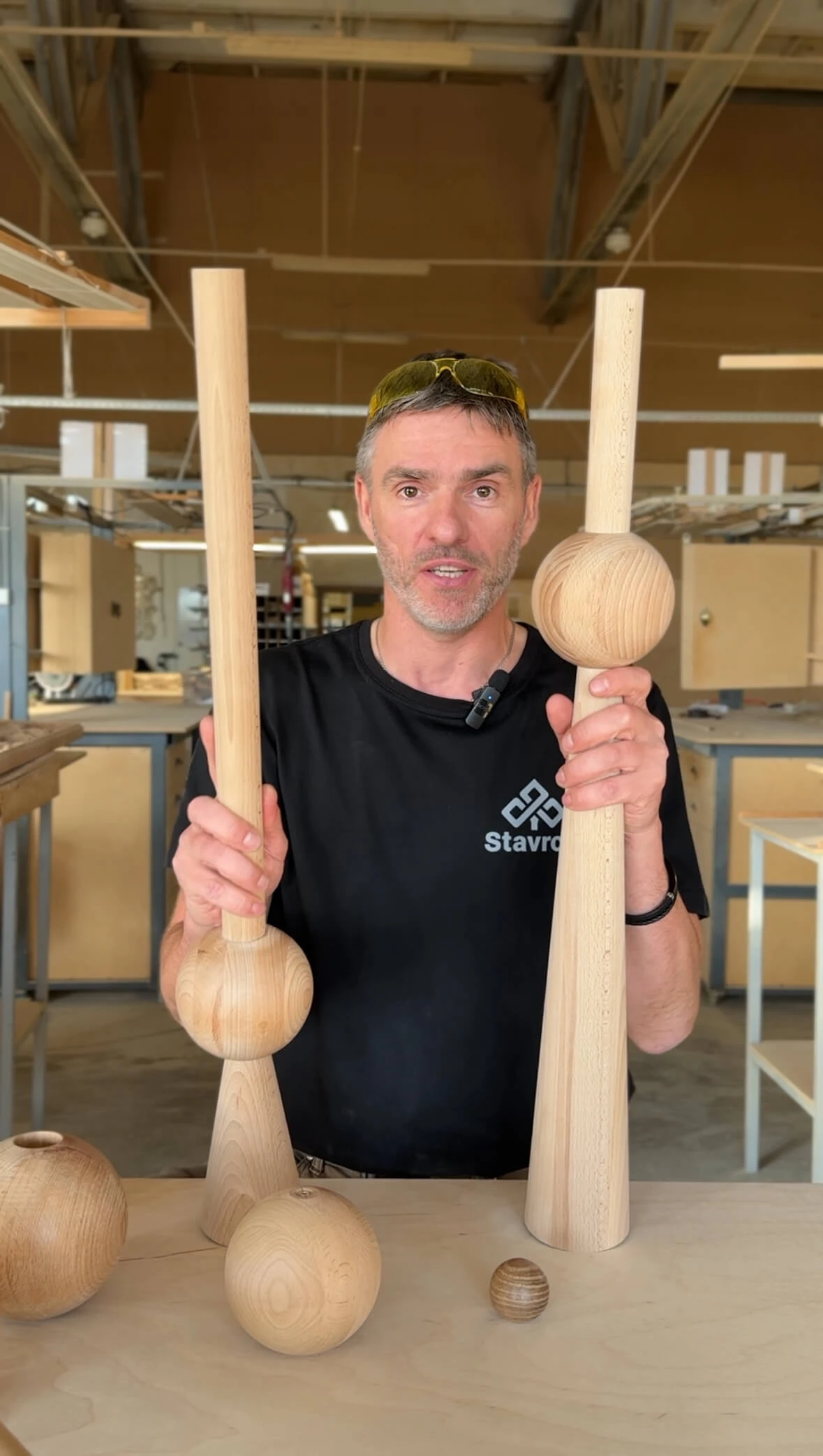
Чем буковая балясина отличается от своих аналогов из других пород
Бук — не единственный материал для деревянных балясин. На рынке присутствуют балясины из сосны, дуба, ясеня, ольхи и берёзы. Каждый материал имеет свою логику применения:
-
Pine: cheaper, softer, resinous, yellows over time. For open staircases in non-permanent structures. Acceptable under white paint.
-
Ash: close to beech in density, with pronounced straight grain. More "sporty" texture character.
-
Oak: prestigious material with large expressive texture, more expensive than beech. Emphasizes texture under clear varnish.
-
Beech: uniform fine texture, high density, ideal geometry after turning, good adhesion of any coatings.
If the staircase is painted white or other opaque colors — beech is optimal. If the staircase is tinted to look like "natural oak" — beech with stain gives a convincing result. If expressive open wood texture without tinting is needed — oak.
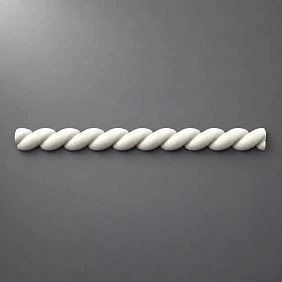
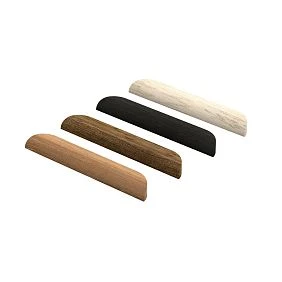
Our factory also produces:
Where beech balusters are used: from a country house to a formal interior
Wooden beech balusters are used much more widely than just "a staircase in a house."
Get Consultation
Pine balusters are ideal for interior staircases in residential homes, offices, and public buildings. Stable operating conditions — constant temperature, controlled humidity, absence of direct exposure to precipitation — ensure longevity and preservation of the appearance of the products.
Main application. Straight-flight staircases in country houses, cottages, duplex apartments — the main market for beech balusters. Balusters are installed along the entire length of the flight, on the upper and lower landings.
Second-light balustrade
An open balcony at the second floor level overlooking the living room always features a balustrade made of balusters. This is one of the most decorative applications: the double-height balustrade is visible from all points on the first floor and serves as the main architectural accent of the interior.
For a double-height balustrade, use balusters with a developed classical profile; the height matches the railing height (from 900 to 1100 mm), and the installation spacing is rhythmic and uniform. This is exactly the place where saving on the quality of balusters is definitely not worth it.
Gallery and mezzanine railing
A gallery above the living room, a mezzanine floor, an open corridor at the second floor level—all require railing with balusters. Safety requirements: railing height at least 900 mm, gap between balusters no more than 150 mm (per SP 20.13330 standard to prevent a child from sticking their head through).
Staircase in a classical interior
Interiors in classical, neoclassical, Empire, country, and Provence styles require wooden staircases with turned or carved balusters. Beech is a material that provides the necessary precision and expressiveness of the profile.
Country house and cottage
For timber houses, frame houses, and Scandinavian-style homes, beech balusters with natural or light tinting fit well into the aesthetic.
Restoration
When restoring old country houses, mansions, or estates—replacing worn or missing balusters. Beech allows reproducing any historical profile: turned, carved, or flat.
Why beech is the right choice for balusters: technical arguments
This is not a marketing thesis. It is a consequence of the physical properties of wood.
Density and hardness
Beech density: 680–750 kg/m³ in air-dry condition. Brinell hardness: 3.8 HB. This means that a beech baluster is resistant to mechanical damage: impacts, scratches from furniture, abrasion from accidental contact — beech holds up significantly better than softwoods.
For comparison: pine — 1.6–1.8 HB. A pine baluster is three times softer than a beech one.
Uniformity of texture
Beech is a diffuse-porous species with very small vessels evenly distributed across the cross-section. Unlike oak, which has large pores and a pronounced grain pattern, beech under coating provides a smooth, even surface without the need for special pore filling.
For turned balusters, this is fundamentally important: after sanding with P240, the beech surface reaches a state close to perfectly smooth. Varnish lays evenly without 'sinking' into pores. Enamel — without the need for additional priming of large-pore areas.
Turning and carving
Beech cuts and turns well in all grain directions — this is important for complex turned baluster profiles. Fillets, grooves, spherical thickenings, conical transitions — all come out with sharp edges and a clean surface. Pine, with similar turning, produces 'tearouts' of fibers at intersections with knots.
Stability under load
The baluster in the railing works in bending and shear under lateral load (a person leans on the handrail). The modulus of elasticity of beech in bending: 14,000 MPa. For comparison: pine — 10,000 MPa. Beech with the same cross-section is more resistant to lateral load.
Moisture resistance (relative)
Beech is not an outdoor species: it is hygroscopic and can behave unstably with humidity fluctuations. For open terraces, verandas — protection measures are needed (oil, varnish with high water resistance, or special impregnation). For indoor staircases in heated rooms — beech behaves stably at normal air humidity levels of 40–60%.
Balusters made of beech or oak: an honest comparison
This is one of the most common questions. And there is no single correct answer — only a situational one.
| Parameter | Beech | Oak |
|---|---|---|
| Density | 680–750 kg/m³ | 700–800 kg/m³ |
| Brinell hardness | 3,8 HB | 3,7–4,0 HB |
| Texture | Fine, uniform | Large, expressive |
| For painting/enamel | Excellent | Good (requires pore filling) |
| Under clear lacquer | Neutral beauty | Expressive texture |
| For tinting | Accepts any color evenly | The texture 'shows through' with tinting |
| Profile turning | Excellent clarity | Good, but with nuances |
| Price | Below | 20–40% higher |
| Application area | Any balusters, especially for painting | Premium staircases with open wood grain |
Conclusion: if the staircase is painted white, gray, beige, or a single color — beech is preferable and more cost-effective. If the staircase is stained to look like walnut or dark oak — beech with stain gives the same result for less.
If natural open grain without tinting under clear lacquer is essential — oak. Its large fiber pattern becomes an advantage, not a drawback, in this case.
For most residential interiors with painted or stained staircases — beech balusters are optimal.
Turned and carved beech balusters: what shapes exist
Buy wooden balusters — means first choosing a shape. And there are far more shapes than it seems at first glance.
Simple turned balusters
Basic type. Turned along the entire height: uniform cone, cylinder, or moderate profile with one or two small thickenings. For modern classics, Scandinavian style, functional stairs without excessive decor.
Size: height 900–1100 mm (standard railing), cross-section 40–60 mm at the base. The lower and upper parts are straight, for attachment to the support rail and handrail.
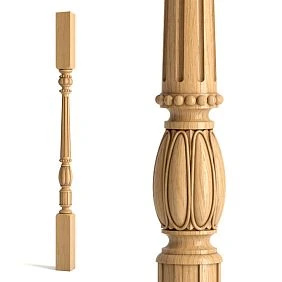
Classic figured balusters
Developed turned profile: several thickening zones, grooves, spherical elements, conical transitions. Associated with stairs of country houses in classic style. This type is the most popular for wooden stairs in Russia.
The profile may include: lower square base → conical transition → spherical thickening → thin cylinder → second thickening → upper square base. This is a classic "three-element" profile.
Carved balusters
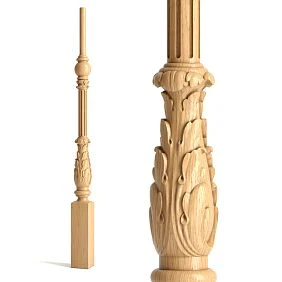
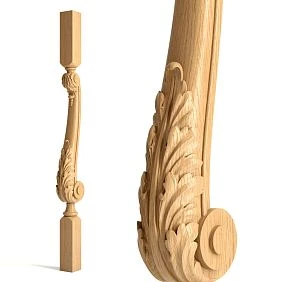
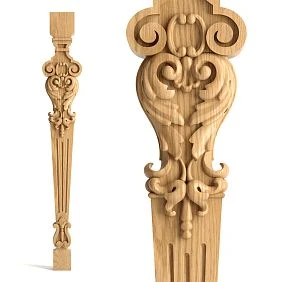
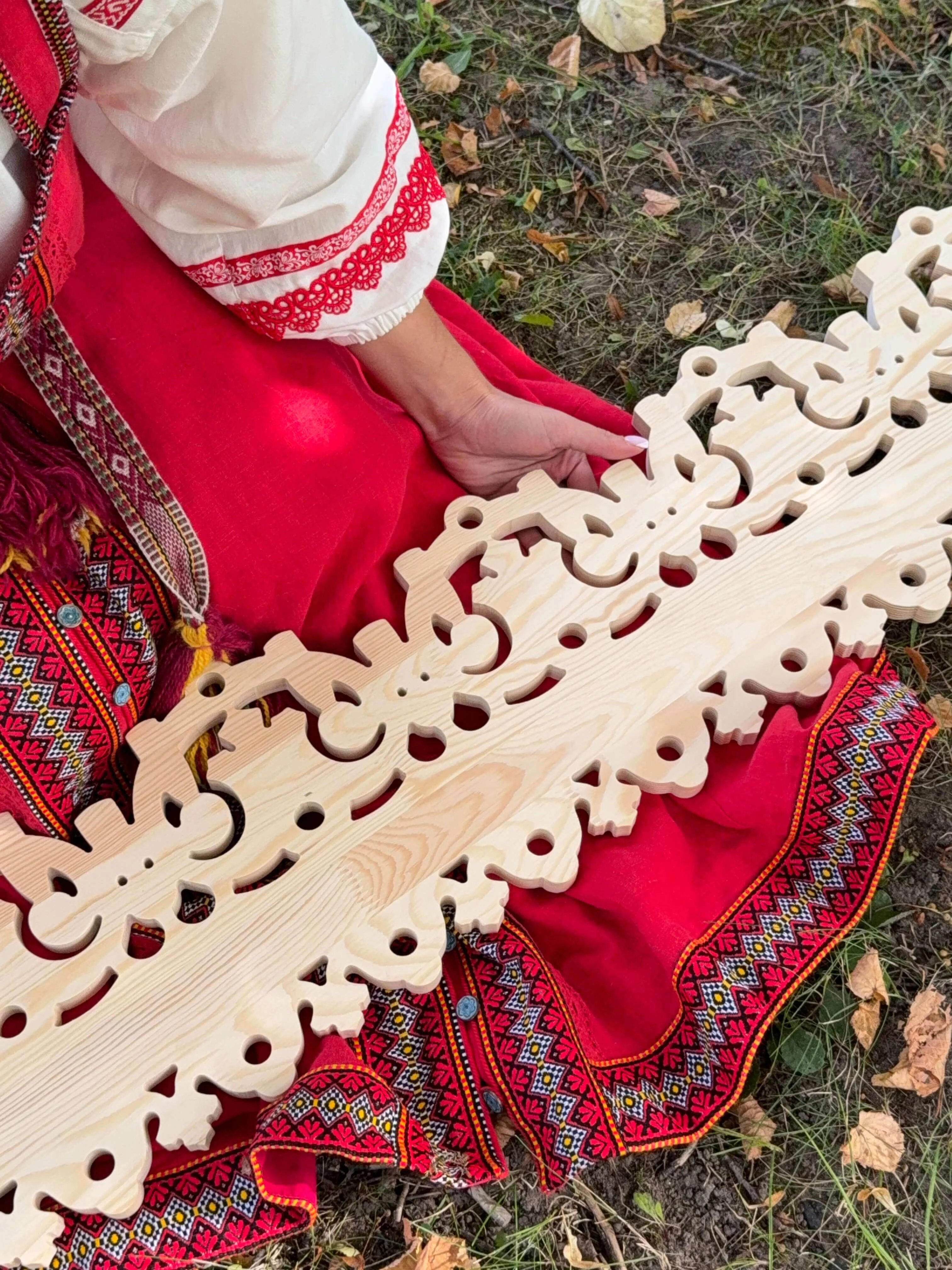
carved balusters — this is a combination of turning and milling or hand carving. Ornamental elements are added: leaves, rocailles, vertical fluting, braided ornament. For grand staircases, halls, high-end classic interiors.
A carved beech baluster is the most complex and decoratively rich type. Beech is ideal: it allows carving small details of the ornament with good clarity while maintaining shape without cracking.
Flat balusters
Flat balusters — not turned, but cut from a flat panel or board. The silhouette is created by milling or band saw cutting. They can be both laconic (rectangle with chamfer) and decorative (shaped silhouette with decorative cutouts).
Application: stairs in art deco style, interiors with geometric decor, modern classics with an emphasis on horizontal and vertical.
Decorative balusters for balustrade
For grand double-height balustrades — a developed type with maximum decorativeness: complex profile, decorative vase in the central zone, carved accent elements. Installed less frequently, but serve as the main decorative accent.
How to choose the shape of a baluster to match the staircase style
A baluster is not a separate item. It is part of a system: steps, stringer or carriage, handrail, posts, decor. An inconsistent baluster ruins the staircase's appearance even with perfect execution quality.
Classicism and neoclassicism
Turned figured balusters with a developed profile. Toning: dark walnut, wenge, patina. Top handrail — wooden, same shade. Steps — solid wood or laminate "under dark wood". The railing matches the carved decor on the furniture in the interior: a unified ornamental language.
Mistake in this style: conical straight balusters (too laconic) or metal inserts in the railing (break the unity of the wooden look).
Modern classic
Turned balusters with a moderate profile: one or two elements in the middle part, without complex decor. Or flat balusters with a simple silhouette. Coating: white enamel or neutral toning "light oak".
Pairs well with staircases with white risers and wooden steps in a natural shade.
Scandinavian style and minimalism
Tapered straight balusters, thin cross-section. Natural beech without tinting — oil or wax. Rhythmic spacing — balusters are placed frequently, creating an even, strict rhythm.
Country and Provence
Turned balusters "with character" — slightly less perfect than in strict classic style. Matte tinting, stain in a natural shade. Handrail — solid wood in the same tinting.
Country house in the style of a Russian estate
Carved or turned-carved balusters with traditional ornament. Tinting "walnut" or "oak". Solid wood staircase with open texture.
How to choose the size of the baluster and installation spacing
This is a technical block — and one of the most important. A mistake here is costly: reworking an already installed railing is extremely labor-intensive.
Baluster height
Railing height (from the stair tread surface to the top edge of the handrail) — at least 900 mm according to standards for residential buildings. On flights with great height or in homes with children — 1000–1100 mm.
Baluster height = railing height − height of the upper fastening unit (in the handrail) − height of the lower fastening unit (in the stringer or tread). Usually: 80–100 mm goes into fastening at the top and bottom. Working height of the baluster (visible part): 700–900 mm.
For an inclined flight: balusters have the same length, but the lower base is cut at the angle of the staircase flight. This is done on-site during installation.
Baluster cross-section
Standard sections of turned balusters:
-
40×40 mm — for lightweight decorative railings and galleries
-
45×45 mm — standard for most residential staircases
-
50×50 mm — for railings with increased load, front staircases
-
60×60 mm — for heavy buffet and front railings
Rule: the higher and heavier the railing, the wider the baluster section.
Baluster installation spacing
Distance between balusters is a key safety parameter. According to standards for residential buildings: the gap between balusters must not exceed 150 mm (to prevent a child from slipping through).
With a standard baluster section of 45×45 mm: installation step (center to center) — no more than 195 mm. For a section of 50×50 mm — step no more than 200 mm.
Practical options:
-
Step 120 mm (c-c): dense, safe, decorative rhythm
-
Step 150 mm (c-c): standard
-
Step 180 mm (c-c): acceptable for cross-section 45–50 mm
-
Step 200 mm (c-c): maximum allowable
Tip: for a 5 m long staircase with a step of 150 mm (c-c) and one baluster per step — number of balusters: ~33 pieces. Add 10% reserve for trimming and defects. Order ~37 balusters total.
Number of balusters per step
-
One baluster per step: step about 250–280 mm (step width). For a narrow staircase with a small railing.
-
Two balusters per step: step about 120–140 mm. Denser, more decorative, safer rhythm — recommended for staircases with children.
Beech baluster coating: varnish, stain, enamel, oil
Beech is unique in relation to coatings: it accepts everything and does it evenly. That is why a beech baluster is equally good under enamel, under tinting, and under natural varnish.
Clear varnish
Natural color of beech is warm beige with a slight pinkish tint. Under clear varnish (polyurethane, alkyd) beech looks neutral and warm. For interiors where a 'light natural' look is needed — an excellent choice.
Important: beech under clear varnish yellows over time in light. After 3–5 years the shade becomes more golden. This is normal and even decorative. If color stability is important — use tinting with UV filter.
Stain + varnish
The most popular option. Stain (water-based or alcohol-based) adds the desired shade: "oak", "walnut", "dark walnut", "wenge". Then one or two coats of varnish for protection. Beech takes stain evenly, without spots or streaks — thanks to its uniform structure.
The result of tinting beech to look like "oak" or "walnut" is convincing and decoratively rich. In a blind test, most people cannot tell it apart from real oak.
Enamel
White, cream, gray, beige — for stairs in modern classic, Provence, Scandinavian styles. Beech does not require special pore filling before enamel: the surface after sanding to P240 has virtually no open pores.
Coating scheme: sanding P180 → primer (alkyd or acrylic) → sanding P240 → two coats of enamel. Light sanding with P320 between coats.
White beech balusters with matte enamel — a classic of French and Scandinavian interiors. It looks fresh, light, and expensive at the same time.
Oil and wax
Natural coatings — for interiors in eco, country, Scandinavian minimalist styles. Oil penetrates the wood pores without creating a film. The surface looks "alive", matte, with a warm soft sheen.
Disadvantage: less protection against mechanical damage than varnish. Requires renewal every 2–3 years. Not recommended for railings with high traffic (more than 50 people per day). For private homes — it's fine.
Open wood without coating
Uncoated balusters are blanks for self-finishing. They are useful when the final coating is applied after installation: painting together with the wall or handrail in a single cycle. In this case, all staircase elements receive an identical shade without discrepancies.
What to check before buying beech balusters: a checklist
This is a question rarely asked — and later regretted. A mismatch in at least one parameter leads to part of the batch being scrapped or reworked.
Geometry and dimensions
Take three or four balusters from the batch and compare:
-
Height (deviation allowed ±1 mm)
-
Diameter at the widest point (deviation ±0.5 mm)
-
Diameter at the thinnest point of the neck (deviation ±0.5 mm)
-
Straightness: roll on a flat surface. Axis curvature is unacceptable.
Quality of turning and sanding
The surface must be smooth along the entire length — without tool marks, without "steps" in transitions between profile zones, without unpolished areas. Feel it with your hand: no point should catch.
Wood moisture content
Beech balusters must be made from kiln-dried wood with a moisture content of 8–12%. High moisture content will lead to shrinkage and cracking after installation in a heated room. A reliable supplier provides documented kiln drying.
Knots and defects
Small knots on a beech baluster are acceptable if they are closed (without a resin pocket, without fallout). Open knots, cracks, blue stain, fungal spots — are non-conforming.
Uniformity of the batch
All balusters from one order must look identical. Different shades of beech, different grain patterns, different profile depths create a patchy, uneven staircase even with a quality coating.
Compatibility with handrail and stringer
The top base of the baluster must fit into the handrail groove or be attached to it via a metal fastener. Check: baluster base width vs. handrail groove width. The bottom base — into the stringer or step via a dowel/stud.
Beech staircase components: what else is needed besides balusters
A baluster is part of the system. components for wooden staircases include several elements that are selected together with the balusters.
Handrail
A wooden handrail made of the same material as the balusters is fundamentally important for the unity of the design. A beech handrail + beech balusters = system. An oak handrail + beech balusters tinted to "oak" is also acceptable if the tinting is done professionally.
Handrail profile: round (diameter 60–70 mm), oval, rectangular with a chamfer. A handrail in residential interiors is usually 60–80 mm wide — comfortable for gripping.
Posts (support columns)
The bottom and top support posts are massive elements that secure the handrail at the beginning and end of the flight. Made of the same wood as the balusters. The shape of the post sets the "tone" for the entire baluster system.
Stringer or carriage
A stringer is the side board of a flight of stairs to which the balusters are attached. It can be made of solid beech or other wood. If the staircase has a stringer, the balusters are attached into it from below.
A carriage is a load-bearing beam on which the steps rest. With this design, the balusters are attached directly to the step.
Mistakes when choosing and buying beech balusters: experience best avoided
They buy without checking moisture content. Balusters with natural moisture of 15–18% shrink and crack within one winter after installation in a warm house.
They mix balusters from different batches. Two batches of the same item may differ slightly in shade and profile geometry. The mixture creates a variegated railing.
They do not account for the flight angle when calculating the quantity. On a sloping flight, the bottom base of each baluster is cut at an angle — this is an additional expense. Without a reserve, the batch turns out to be insufficient.
They buy balusters without checking them against the handrail. Mismatch between the baluster base width and the handrail groove is one of the most common installation problems.
They choose balusters based on photos without looking at the cross-section profile. The same height of a baluster with a different profile looks completely different. Before ordering, ask for a profile drawing or sample.
They install with a spacing of more than 150 mm when there are children. Violation of safety standards. A child under 10 years old can get their head stuck in the railing gap.
They paint balusters without primer. Enamel on untreated beech — poor adhesion, peeling after 1–2 years.
They skimp on quantity. There is no reserve — and during installation, several balusters become defective. Buying identical ones is a task with an uncertain outcome.
They do not coordinate the style of the balusters with the style of the stair posts. Simple conical balusters next to massive baroque posts — a stylistic dissonance.
During restoration, they take 'similar' ones. When replacing several balusters in an old staircase — the difference in profile between old and new creates a visible 'repair patch'.
Furniture and balusters in a unified style: on the consistency of wooden elements
A wooden staircase is not an isolated object. It lives in the interior together with furniture, doors, floors, and decor. And a professional designer always views the wooden elements of the staircase and the wooden elements of furniture as a single system.
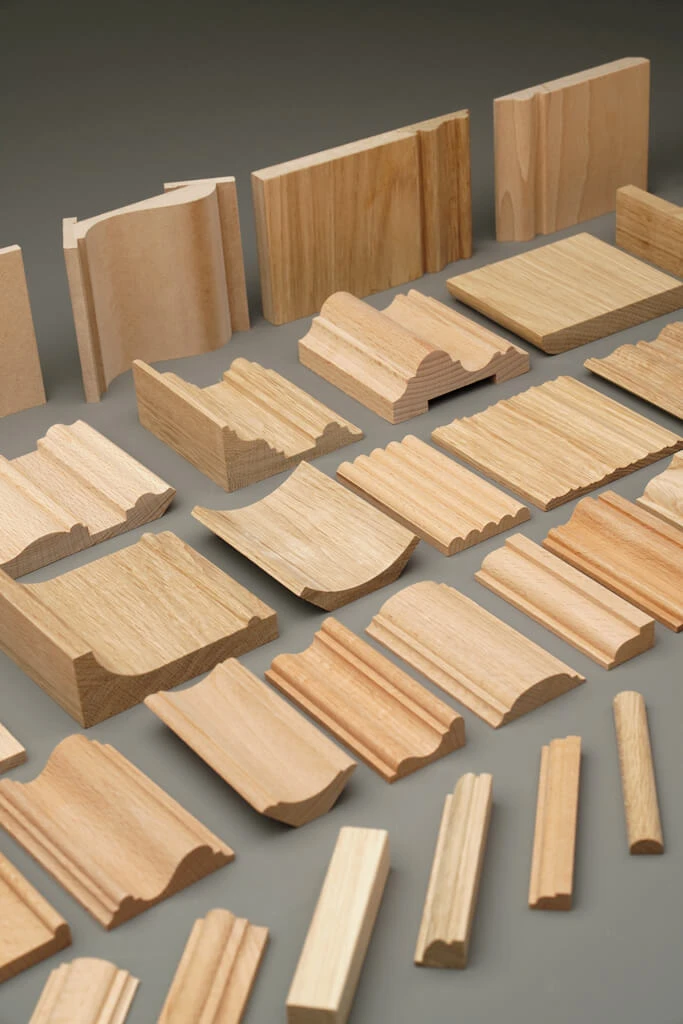
If the living room has classic furniture with turned legs, the staircase balusters should be in the same profile language. If the cabinet fronts have decorative overlays with leaf ornamentation carved balusters with a similar motif will create a unified interior image. If the furniture uses Moldings a 'goose neck' profile, the same profile is appropriate on the staircase handrail.
Toning: ideally, if the furniture legs, door frames, baseboards, and staircase balusters are in the same shade. This is a sign of a designed interior, not one assembled piece by piece.
Where to buy beech balusters: STAVROS catalog
The question 'where to buy' is asked at the end but decided at the beginning. The right supplier is not only the right article at the right price. It is batch consistency, kiln drying, precise geometry, documented quality, and the ability to get a sample before a large order.
wooden balusters for staircases in the STAVROS catalog: several profiles, including classic turned ones, Carved и Flat balusters. Next to it — full set of staircase components: handrails, posts, stringers. Contact us to confirm shipping to your destination.
FAQ: answers to main questions about beech balusters
What are the advantages of beech balusters?
Beech is dense (680–750 kg/m³), turns well, gives a clean profile without pores or marks. Accepts any coating evenly. 2–2.5 times stronger than pine. Cheaper than oak with comparable performance characteristics.
Is beech suitable for staircase balusters?
Yes. It is one of the most suitable materials: strength, density, geometric stability, good coating adhesion.
What is better for balusters: beech or oak?
For painting or tinting — beech is preferable and cheaper. For clear lacquer with open grain — oak is more expressive. In most cases, beech is a practical choice.
Can beech balusters be painted?
Yes. Beech is one of the best materials for enamel: fine-pored structure does not require special pore filling. Scheme: sanding → primer → two coats of enamel.
Are beech balusters suitable for a classic staircase?
Yes. Especially in the form of shaped turned or carved balusters with a «walnut» or «dark walnut» tint.
What shapes of beech balusters are available?
Simple turned, classic shaped, carved, flat, decorative for balustrades. Each shape suits its own style and interior.
How to choose the height of a baluster for a staircase?
The railing height (from step to handrail) is at least 900 mm. Subtract the length of the mounting ends (usually 80–100 mm total) — that is the baluster length to order.
What handrail should be paired with beech balusters?
With a wooden handrail made of the same or similar material. A beech handrail with a «walnut» tint + beech balusters with the same tint is an ideal system.
Can beech balusters be used in a country house?
Yes, for interior stairs in heated rooms, beech works perfectly. For open terraces and verandas, enhanced moisture protection treatment or the use of a different wood species is required.
Where to buy beech balusters?
In the STAVROS — full range of wooden balusters: turned, carved, flat. Contact us to confirm shipping to your destination.
STAVROS: balusters with character
A good staircase is not mathematics. It is rhythm, proportion, and material. And while mathematics can be calculated in an hour, the right material is chosen once — and lasts for decades.
Beech balusters made of solid wood are the choice of those who understand: there are no trifles in staircase details. The profile shape, turning quality, batch uniformity, geometric stability — all of this determines how the staircase will look in a year, five years, and twenty years.
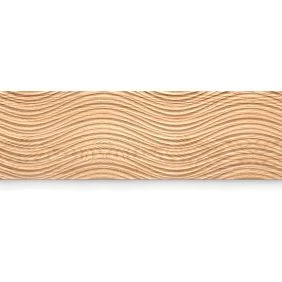
STAVROS manufactures wooden balusters for staircases made of kiln-dried solid wood — with precise profile, even sanding, and stable batch geometry. Next to — staircase components, Carved Decor, Moldings и wooden interior products — everything for the staircase and the space around it.
STAVROS — because a staircase seen every day must be made right.