




























Article Contents:
- When separate legs for a kitchen table are needed: purchase scenarios
- New countertop for assembly
- Replacing old legs on an existing table
- Restoration of an antique table
- Assembling a dining set to your liking
- Updating a kitchen-living room
- How table legs differ from an underframe: an important choice
- How to choose the height of legs for a kitchen table: a calculation that affects comfort
- Standard dining table height
- How to calculate leg height
- Height for different scenarios
- Non-standard height
- How to choose the shape of wooden legs for a kitchen table
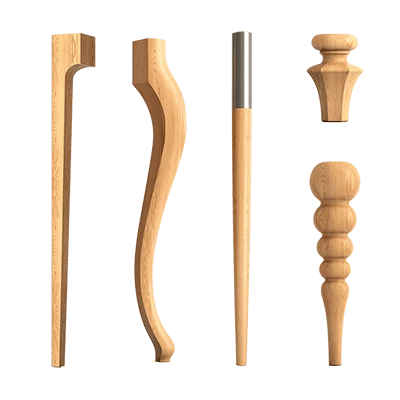
- Straight rectangular legs
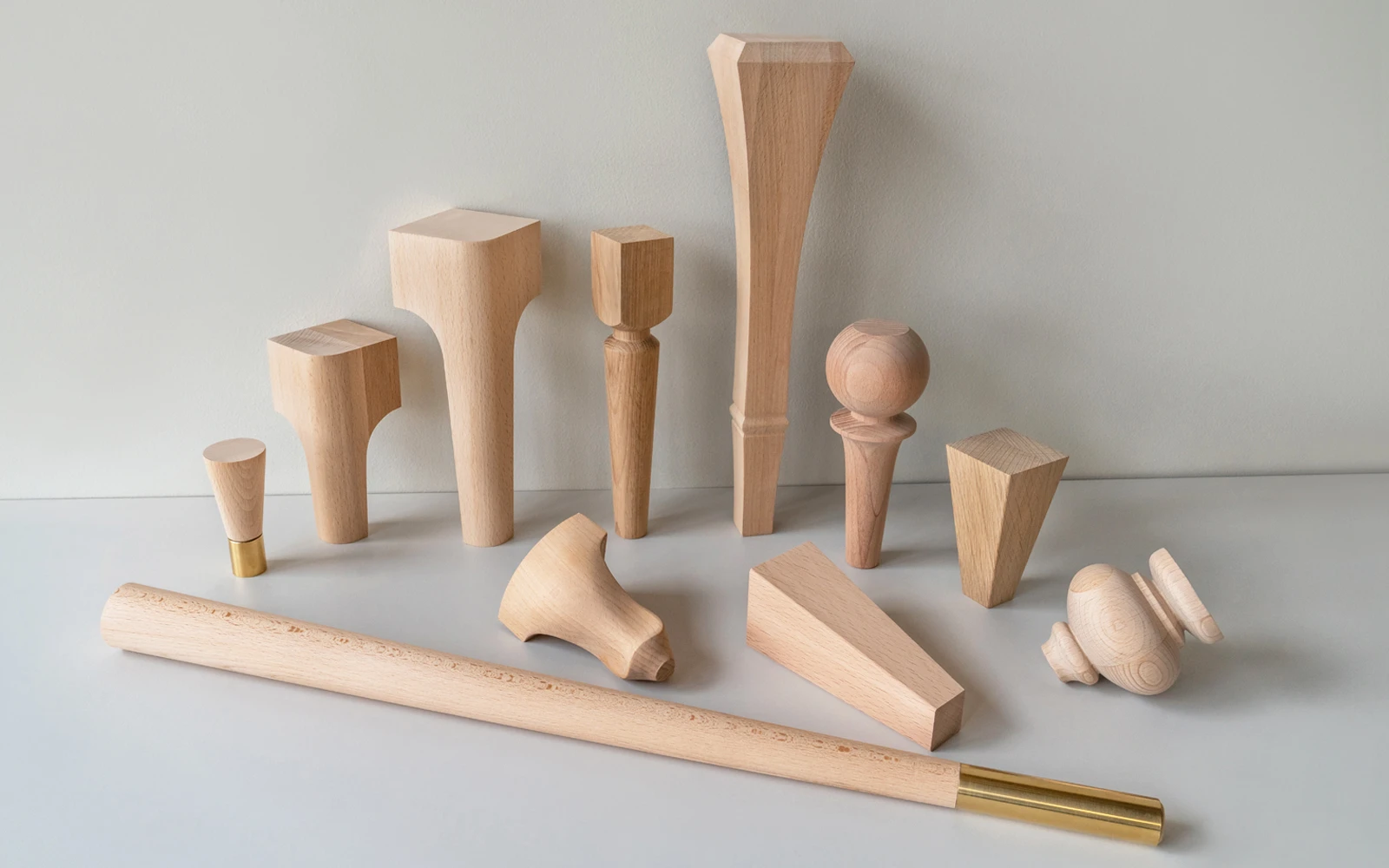
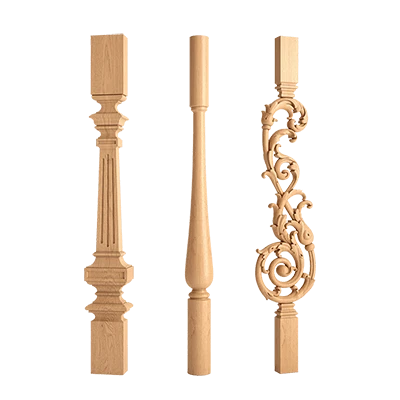
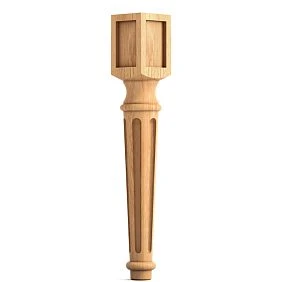
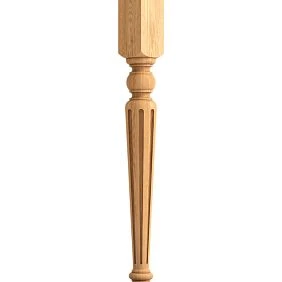
- Turned legs
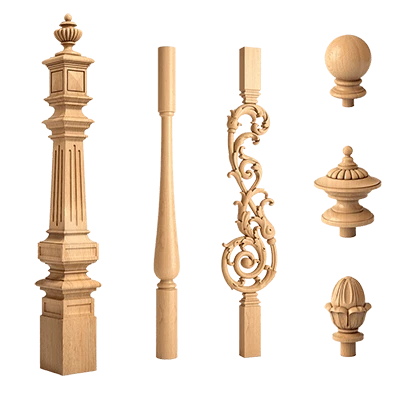
- Carved legs
- Conical legs
- Square and round supports
- Legs for painting
- Leg material: why wood wins in the kitchen
- Warmth and naturalness
- Compatibility with kitchen interior
- Repairability and durability
- Which wood species are best for kitchen table legs
- Legs for round and rectangular tables: geometry decides
- Rectangular tabletop
- Round tabletop
- Oval tabletop
- Wooden legs for kitchen-living room: the table as part of the interior
- Principle of Consistency
- Legs and kitchen fronts
- Legs and chairs
- Legs and kitchen decor
- How to choose the finish for wooden legs: the finish that defines the character
- No finish (sanded legs for painting)
- Varnish
- Stain + varnish
- Enamel
- Oil or Wax
- Mistakes when choosing legs for a kitchen table: typical miscalculations
- Installation of wooden legs under the tabletop: technique and procedure
- Marking Mounting Points
- Mounting types
- Height Adjustment
- Crossbars between legs
- Where to buy wooden legs for a kitchen table
- FAQ: Answers to Popular Questions
- About the manufacturer
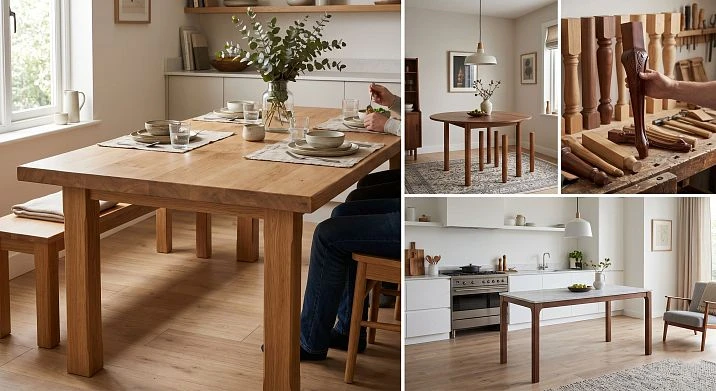
A kitchen table is not just a surface for eating. It is the center of kitchen life: a place for breakfasts, conversations, family dinners, and work breaks with coffee. And it is the table legs that determine how stable, comfortable, and beautiful this surface is. Incorrectly chosen supports mean a wobbly table, uncomfortable seating, a mismatch with the kitchen style, and disappointment from the purchase.
legs for a kitchen table made of wood — it is a combination of function and aesthetics. They bear the load of the tabletop and everything on it. They set the table height and determine seating comfort. They are visible from all sides and participate in the kitchen interior just like facades, floor, and chairs. That is why choosing legs is not a technical trifle, but a design and engineering decision at the same time.
This article is written for those who are assembling a new table for a custom tabletop, restoring an old dining table, replacing worn-out supports, or simply want to understand how to choose the right wooden legs for a kitchen table — for a specific size, style, and load. We will break down everything: height, shape, material, finish, compatibility with the tabletop, and typical mistakes that lead to rework.
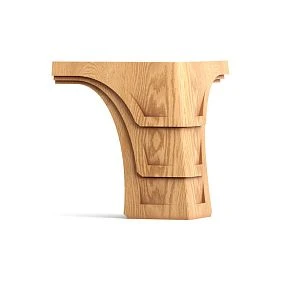
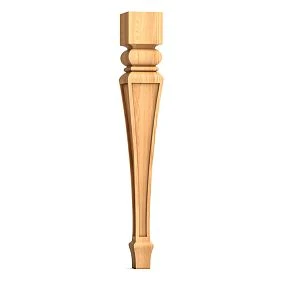
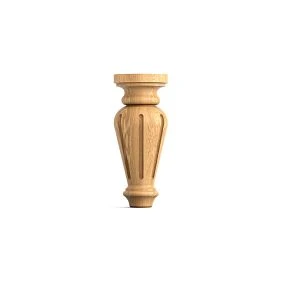
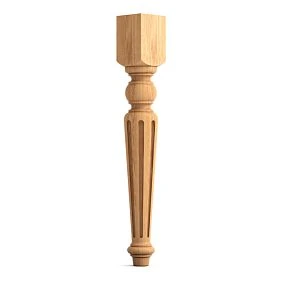
When separate legs for a kitchen table are needed: purchase scenarios
Before choosing, it's worth understanding what task you are looking for supports for. There are several scenarios, and they affect the choice.
New tabletop for assembly
You ordered a tabletop made of solid oak, ceramic, postforming, or another material. The tabletop arrived without a base. You need four (or more) legs that match in height, load, and style. This is the cleanest scenario: you choose legs for the tabletop from scratch.
Our factory also produces:
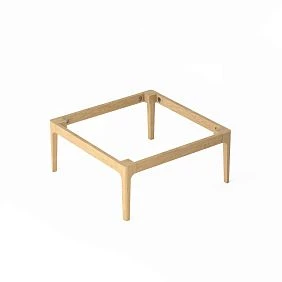
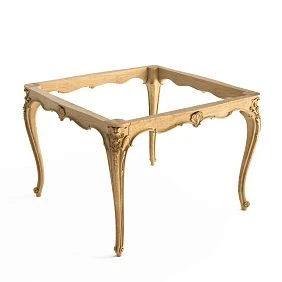
Replacing old legs on an existing table
The table is good, the tabletop is alive — but the legs are loose, cracked, or simply outdated. Instead of buying a new table, you only replace the supports. Economical, eco-friendly, efficient.
Get Consultation
Restoration of an antique table
An antique or just old table has lost one or more legs. A replacement in the same style is needed — turned or carved. This is a separate task where the shape of the leg and the type of wood are of fundamental importance.
Assembling a custom dining group
A designer or the owner themselves assembles a table of non-standard size: for a large kitchen-living room, for an unusual tabletop shape, for a specific number of seats. Separate wooden furniture legs here give freedom that is not available when buying a ready-made table.
Kitchen-living room update
The interior is changing. New chairs, new fronts, new floor. The old table "falls out" of the updated space. Replacing the legs with more modern or stylistically accurate ones is a quick and inexpensive way to fit the table into the new interior.
How table legs differ from an underframe: an important choice
This difference needs to be understood right away to avoid confusion when choosing.
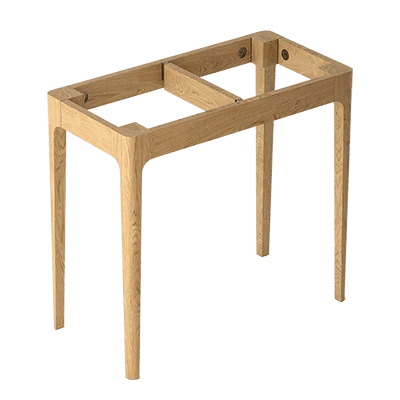
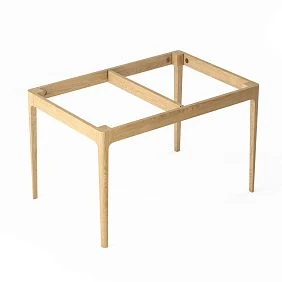
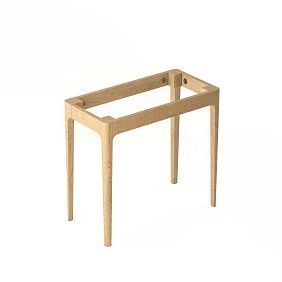
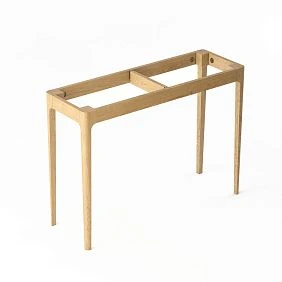
the base for a table — is a ready-made frame: a frame with four supports connected by horizontal stretchers or an apron. An underframe is a solid structure that is placed under the tabletop as a single base. Its advantage is rigidity and ease of installation. The disadvantage is fixed sizes and less freedom in design.
Individual Wooden legs for table — these are supports without a frame. You position them yourself under the tabletop at the necessary points, adjust the edge distance yourself, and decide yourself whether stretchers are needed. This offers more flexibility in geometry and design, but requires precise calculation and proper installation.
When are individual legs better?
-
Non-standard tabletop size.
-
Tabletop with an overhang (legs are placed not at the corners, but closer to the center).
-
A specific leg shape is needed that is not available in ready-made underframes.
-
A table with several independent supports (e.g., six legs for a long tabletop).
-
Replacing old legs without replacing the entire frame.
When is an underframe better?
-
Quick assembly with guaranteed rigidity is needed.
-
The table size is standard.
-
No freedom in leg placement is needed.
Both options are in the STAVROS wooden furniture frames catalog.
How to choose the height of legs for a kitchen table: a calculation that affects comfort
Height is not just a number. It's the comfort of everyone sitting at the table. A mistake in height of 30–40 mm — and the table is either too high (uncomfortable to eat, shoulders hurt) or too low (knees hit the tabletop).
Standard dining table height
The standard dining table height is 740–760 mm from the floor to the tabletop surface. This height is designed for an average adult when seated on a chair with a height of 440–460 mm.
Free legroom under the tabletop (from the chair seat to the underside of the tabletop) — at least 250–300 mm. Less — knees "hit" when sitting down.
How to calculate the leg height
Formula:
Leg height = table height − tabletop thickness
Example:
-
Table height: 750 mm
-
Tabletop thickness: 40 mm
-
Leg height: 750 − 40 = 710 mm
If the tabletop is thin (20 mm) — legs need to be longer. If massive (60–80 mm) — shorter.
Important: many wooden legs for kitchen come with adjustable supports at the bottom (threaded heel ±10–20 mm) — this allows leveling the table on uneven floors.
Height for different scenarios
| Table type | Table height | Chair height | Leg height (with 40 mm tabletop) |
|---|---|---|---|
| Dining table | 740–760 mm | 440–460 mm | 700–720 mm |
| Kitchen work table | 850–900 mm | Standing work | 810–860 mm |
| Bar table | 900–1100 mm | 650–750 mm (bar stool) | 860–1060 mm |
| Children's table | 520–580 mm | 300–360 mm | 480–540 mm |
Non-standard height
A tall owner needs a tall table. If family members are over 185–190 cm tall, a table height of 790–800 mm will be more comfortable. The ability to buy legs of the desired height (rather than taking what is available in a ready-made table) is the main advantage of assembling from individual elements.
How to choose the shape of wooden legs for a kitchen table
The shape of the leg is not just about aesthetics. It is also about function: how the leg behaves under load, how it connects to the tabletop, and how comfortable it is to sit next to it.
Straight rectangular legs
A classic of modern interior. A strict rectangular or square profile, with the same cross-section along the entire height. No turned elements, no decorations — only pure geometry.
Ideal for: minimalist, Scandinavian, modern interiors. A kitchen with white matte facades + straight light oak legs — a perfect combination.
Cross-section: from 40×40 mm (for light tabletops) to 80×80 mm (for heavy slabs and massive tabletops).
Turned legs
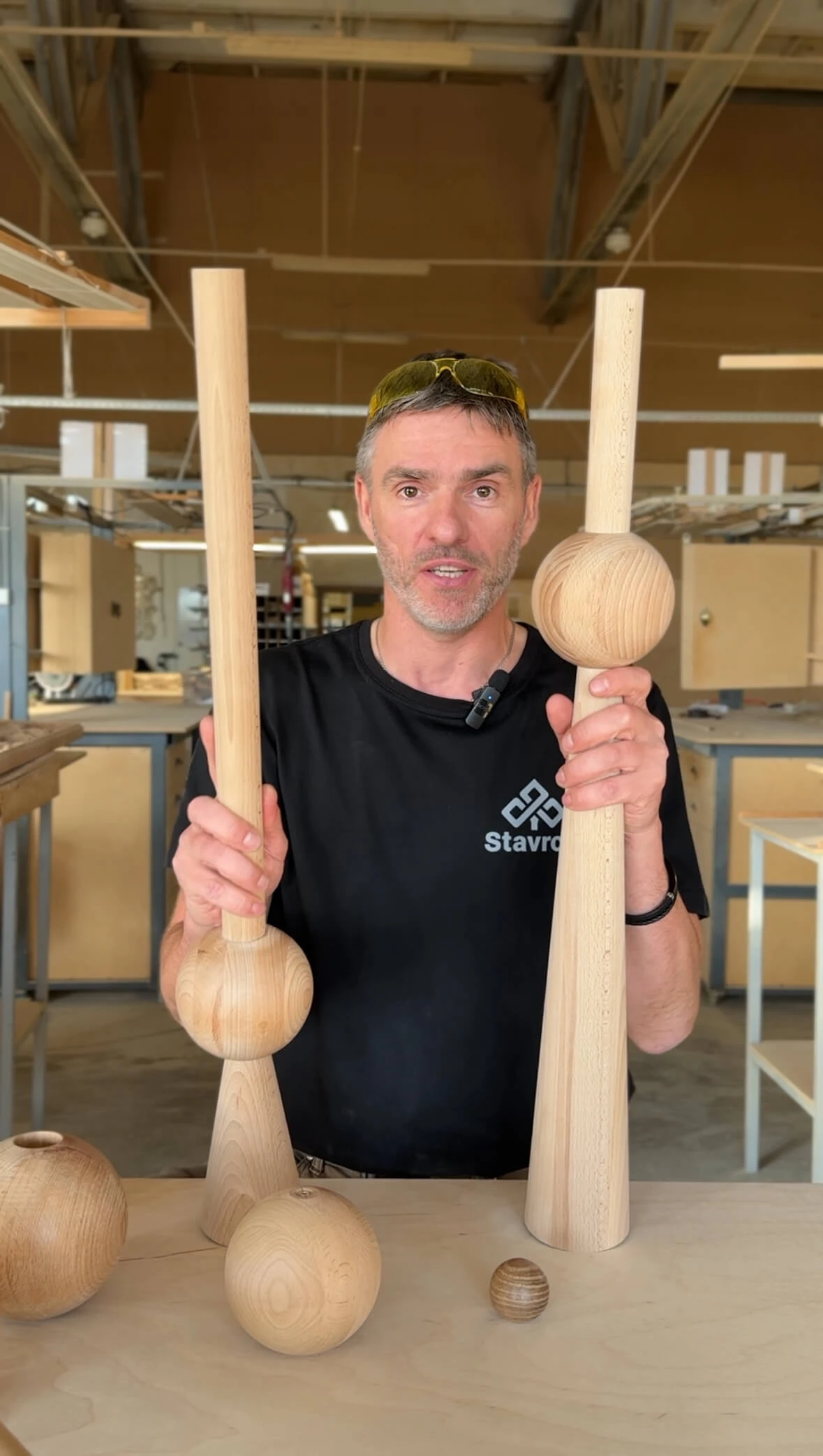
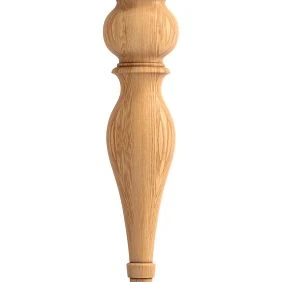
A turned leg is a profile with a variable cross-section: thickenings and narrowings created on a lathe. A pot-bellied leg, conical, "spindle", "barrel", "vase" — all these are varieties of a turned profile.
Precision legs for a table — a choice for classic, Provencal, country, and Scandinavian interiors. The turned profile looks "handmade", lively, natural — unlike strict straight supports.
Nuance: a turned leg often tapers towards the bottom — this creates an effect of lightness but slightly reduces stability compared to a straight leg of the same diameter. This is compensated by the correct placement of the legs under the tabletop.
Carved Legs
A carved leg is a turned leg with hand or machine carving: ornaments, leaves, spirals, fluting. This is a high class of furniture decor — for classic, baroque, or neo-renaissance interiors.
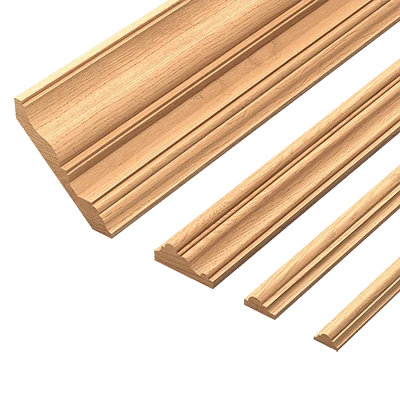
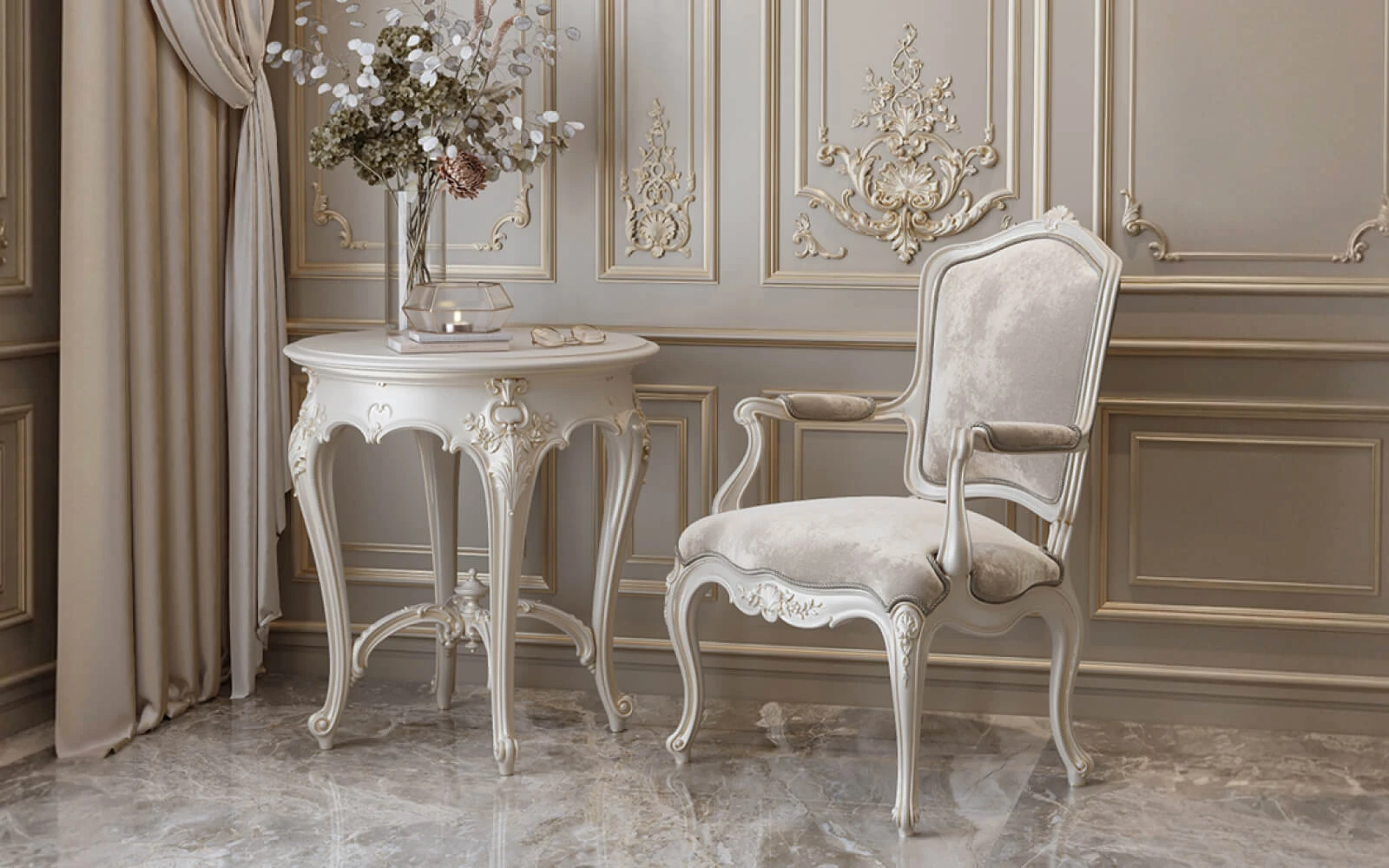
Carved legs for a dining table pair well with wood furniture decor: applied elements, carved rosettes, wooden moldings. This is a system where the table looks like part of an expensive interior, not a separate piece of furniture.
Conical legs
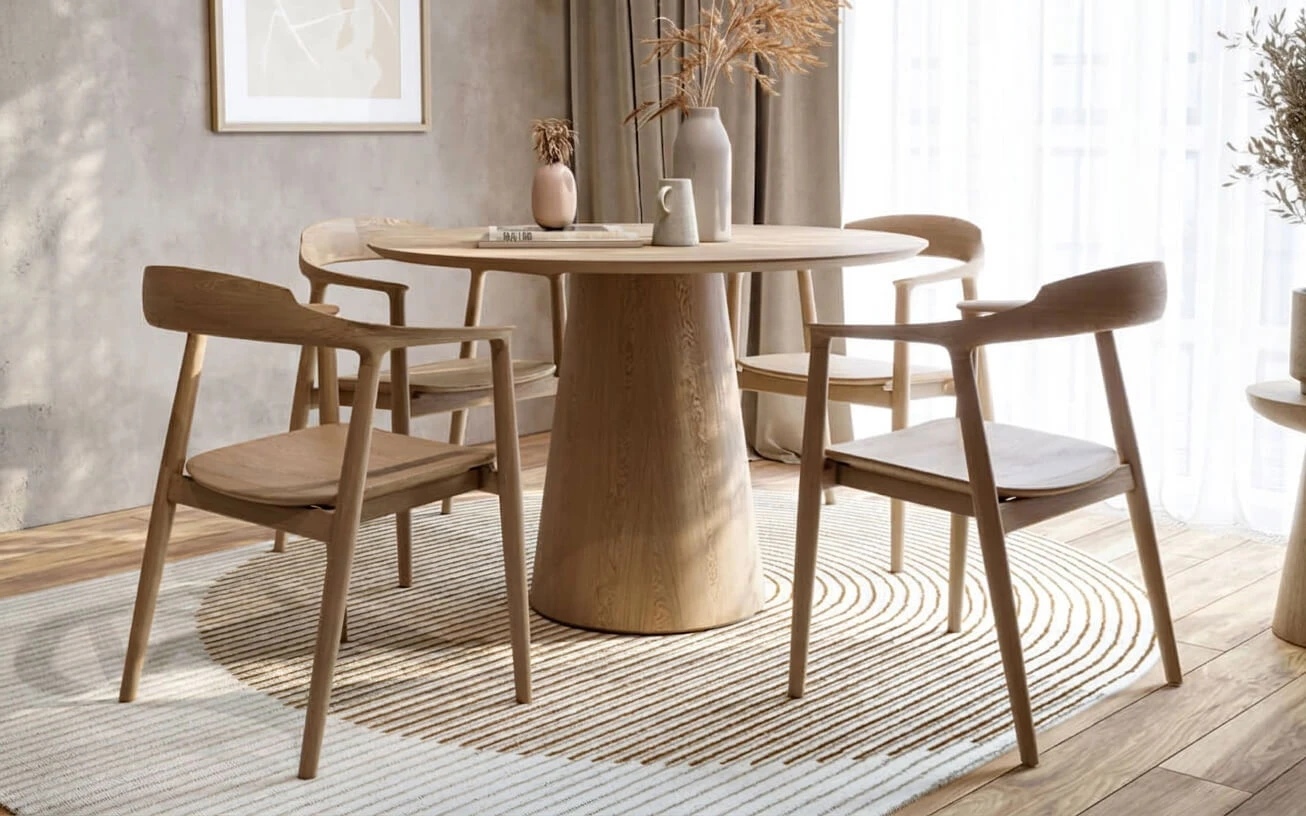
A tapered leg is straight but narrows from top to bottom. It is a middle ground between a straight and a turned leg: there is the lightness of a cone, but not the complexity of a turned profile. Popular in retro interiors, mid-century, and Scandinavian style.
Tapered legs at an angle (slightly splayed) are another popular technique. This design looks very stable yet light.
Square and round supports
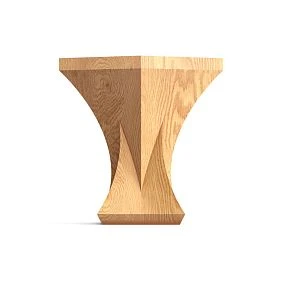
A square support with a large cross-section (from 80×80 to 120×120 mm) is already a monumental, architectural element. Such a table looks powerful and stable. Suitable for heavy tabletops (ceramic, wood slab, marble).
A round massive support is an analogue of a square one, but softer in silhouette. Using a single central support or two large cylindrical posts is a design move that frees up space around the table.
Legs for painting
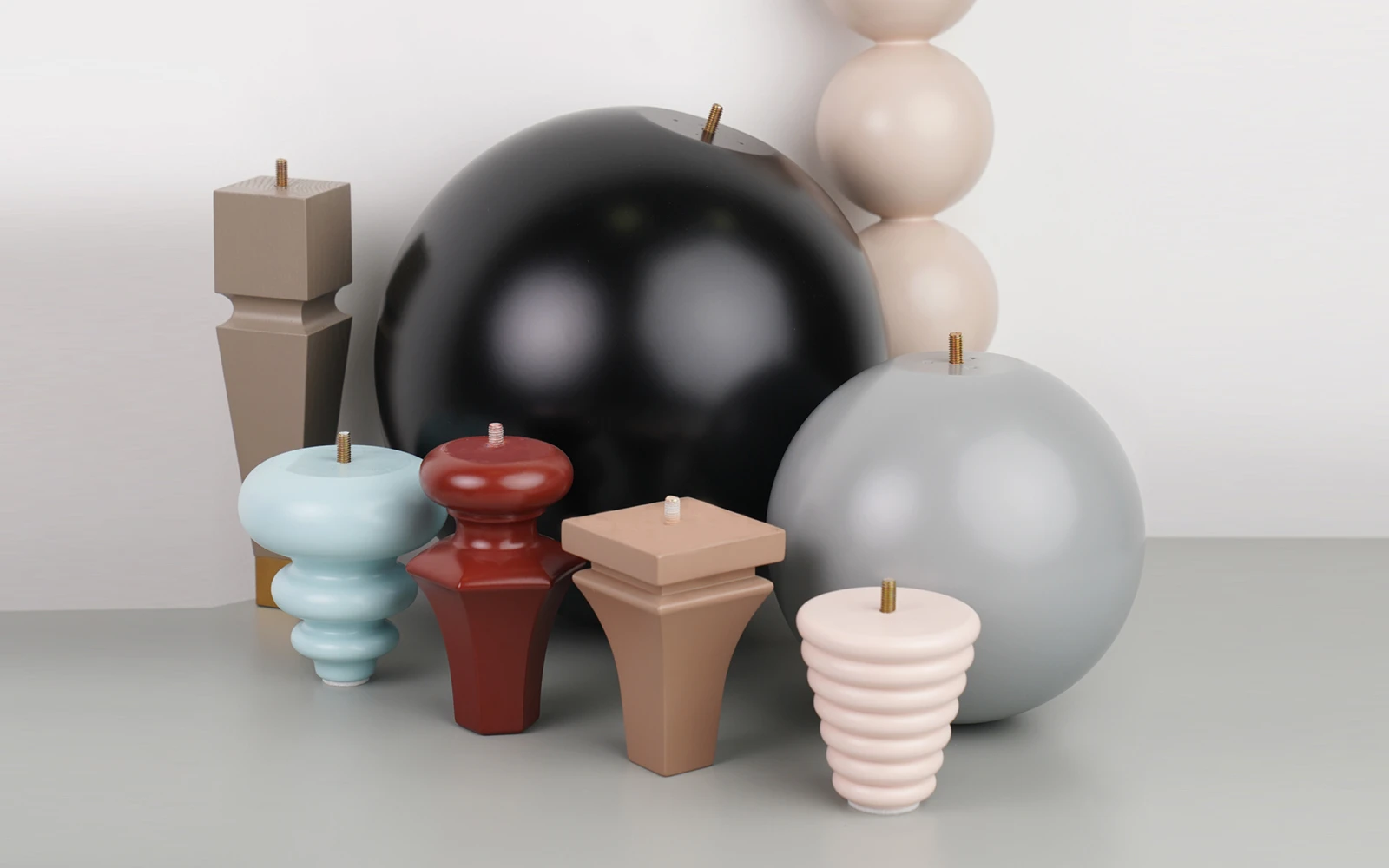
Uncoated legs made from sanded solid wood — a universal option when a specific paint or tint is needed. White enameled legs for a white kitchen, green for dark facades, black for a loft interior — all this is possible precisely with unpainted legs.
Material of legs: why wood wins in the kitchen
You can compare wood with metal or plastic for a long time. But in the kitchen, at the dining table, wood outperforms alternatives in three key parameters.
Warmth and naturalness
Metal legs feel cold to the touch and create an industrial look. In a living space—especially in a family kitchen—this often feels uncomfortable. Wooden legs are warm, pleasant, and natural. At a wooden table, you want to sit, eat, and talk.
Compatibility with kitchen interior
The kitchen is a space where, as a rule, there is already wood: facades, floor, doors, wooden trim. Wooden legs for table can be matched to the floor tone, to the facades tone, or to the tone of wooden moldings — and the table becomes part of a unified wooden system, not a foreign object.
Repairability and longevity
A wooden leg can be repainted, sanded, or one of the four replaced. A metal leg with damaged coating is a rust stain or peeling chrome. Wood is a living material that "forgives" scratches and can be renewed.
Which types of wood are best for kitchen table legs
Oak. Hard, durable, with expressive texture. Holds load well. Tones beautifully. Expensive — but a table on oak legs lasts for decades.
Beech. Dense, heavy, uniform. One of the best materials for turned legs: processes evenly, gives clear relief. Slightly lighter than oak, less expressive texture, but mechanically — an excellent choice.
Birch. Softer than oak and beech, but stronger than pine. Easy to work with, good compatibility with painting. Suitable for legs that are painted to match the kitchen color.
Pine. The most affordable. For a dining table — used with caution: soft, may dent upon impact. But for light tables in country or rustic style — quite organic.
Ash. Light, strong, elastic. Beautiful texture with expressive fibers. A good choice for legs in a light interior.
All these species are presented in the STAVROS solid wood product catalog.
Legs for round and rectangular tables: geometry decides
The shape of the tabletop directly affects how the legs should be positioned. And there are nuances here that are important to consider before purchasing.
Rectangular tabletop
A rectangular table is the most common type in the kitchen. The standard solution: four legs at the corners. But "at the corners" doesn't mean "flush with the edges." The optimal leg offset from the tabletop edges is 60–100 mm. If the offset is smaller, the leg interferes with those sitting at the ends (the chair bumps into it).
For a long table (180 cm or more, for 8–10 people), consider six legs: four at the corners and two along the center line on each long side. This prevents the tabletop from sagging under load in the center.
Another option for a long table is two pairs of legs connected by a stretcher (a horizontal crossbar between the legs of one pair). This significantly increases the rigidity of the structure.
Round tabletop
A round table is not just about aesthetics, but also about compactness. It takes up less space and is comfortable for a large group to sit around (no "end seats").
The standard for a round table with a diameter of up to 100 cm is three or four legs. For a round table, four legs are placed not at "corners" (there are none), but evenly around the circumference at a distance of 70–100 mm from the edge.
For a round table with a diameter of more than 120 cm, consider a central support (a pedestal or cross base) instead of four separate legs. This frees up space under the table and makes seating easier.
Oval tabletop
An oval table is a compromise between rectangular and round. Four legs are the standard, positioned symmetrically along the long axis, with an offset of 80–100 mm from the edge.
Wooden legs for a kitchen-living room: the table as part of the interior
A kitchen-living room is a special space. The dining table here is visible from the living room, the hallway, and the kitchen island. It should not look like a utilitarian object, but as an element of a unified interior solution.
Principle of coordination
In a kitchen-living room, the rule of a unified wood system applies. If the floor is parquet made of natural shade oak — wooden legs for a kitchen table should be either in the color of the floor, or in the color of the kitchen fronts, or in the color of the doors.
Three types of wood in one space is already too much. A working system: floor + legs of one tone, kitchen facades + chairs of another. Or: legs = chairs = baseboards. A unified color axis.
Legs and kitchen facades
White kitchen + white painted legs — a monochrome that is always appropriate. White kitchen + oak legs — warmth of natural material against a white surface, a classic of Scandinavian style. Dark kitchen (anthracite, graphite) + black or dark brown legs — a powerful modern look.
Legs and chairs
Table legs and chair legs should be coordinated in shape. Straight table legs + turned chair legs — a style conflict that will be noticeable. Turned table legs + turned chair legs — harmony. Straight rectangular table legs + straight chair legs — a strict modern system.
Buying chairs with similar legs or selecting table legs to match existing chairs is a rule that designers always follow.
Legs and kitchen decor
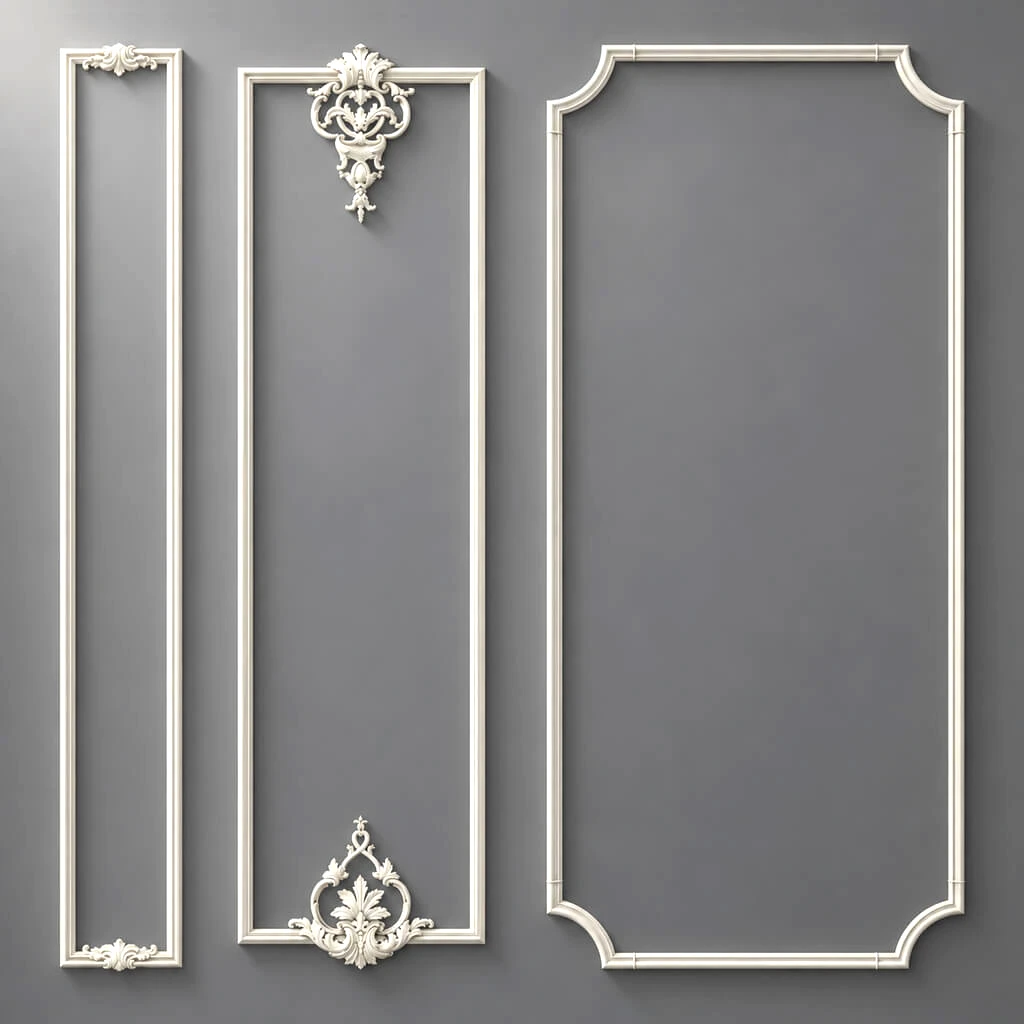
If the kitchen-living room has Furniture Decoration from Wood — overlay elements, carved inserts, figured handles — then the table legs should pick up this ornamental row. A table with carved legs in an interior with wooden overlays on the facades is not a coincidence, but a well-thought-out system.
How to choose the finish for wooden legs: the coating that defines the character
The leg coating is the final touch that changes everything.
Without coating (sanded legs for painting)
Uncoated legs — this is pure solid wood, ready to accept any color. This is the choice for those who want to match the kitchen color exactly: they order the legs, paint them themselves or have a painter do it in the desired RAL or NCS. The result is a perfect color match that cannot be achieved with a ready-made coating.
Before painting — primer. For legs that will be used intensively — varnish over the paint (protective layer).
Varnish
Matte or semi-matte varnish preserves the natural color and texture of the wood. Varnished legs made of oak or beech — a natural look with protection from moisture and mechanical impact.
Glossy varnish — for a classic style. The shine of the varnished surface enhances the sense of grandeur.
Stain + varnish
Stain tints the wood to the desired shade while preserving the texture. Then — varnish for protection. The most popular option for furniture legs. Stained oak to match the parquet color — ideal.
Popular tinting shades: light oak, natural oak, walnut, dark walnut, wenge, mocha, tobacco, bleached oak.
Enamel
An opaque coating that hides the texture. Provides an even, rich color. White, gray, green, black enamel on wooden legs is a clear color accent. Popular in Scandinavian, Provencal, and modern styles.
For legs, acrylic or alkyd enamel is recommended — resistant to abrasion and mechanical damage.
Oil or wax
Oil or wax coating — for those who value the most natural feel of wood. Oil penetrates the fiber structure without creating a film. The leg remains warm, pleasant, and matte. Downside: requires periodic renewal.
Mistakes when choosing legs for a kitchen table: typical miscalculations
Let's break down the mistakes that are regularly made when choosing legs for a kitchen table.
Buying legs without calculating the table height. Measure the chairs, decide on the tabletop height, calculate the required leg height using the formula. Without this step, you risk getting a table of an uncomfortable height.
Not considering the weight of the tabletop. A ceramic tabletop 200×90 cm weighs 80–120 kg. A thin leg with a diameter of 40 mm made of soft pine is a risk. For heavy tabletops, choose legs made of hardwoods (oak, beech) with a cross-section of at least 70–80 mm or a diameter of at least 80 mm.
Choosing supports that are too thin for a large table. The longer the table, the higher the requirements for support rigidity. A table 220×100 cm on thin legs is a structure that "breathes" under load. Or consider Pedestal as a more rigid solution.
Forgetting about seating comfort. Legs placed too close to the edge or center of the long side of the table interfere with those sitting. Standard calculation: legs on long tables are placed closer to the ends, and the central area is free for legs.
Not checking the attachment to the tabletop. Legs are attached to the tabletop with bolts, screws, or special mounting plates. Ensure the leg has pre-drilled mounting holes or threaded inserts. Glue as the sole method of fastening for a kitchen table is unreliable.
Mixing different wood shades from different batches. The four table legs should look identical. Buy the entire set from one batch so that the tone, texture, and finish match.
Not accounting for load margin. A kitchen table is not a coffee table. Adults sit at it, place heavy dishes, and sometimes lean with their full weight. A load margin of 30–50% above the calculated value is not overkill but sensible practice.
Choosing the leg shape separately from the chairs and kitchen. Legs are not an independent object but part of a system. Look at leg samples alongside samples of flooring, facades, and chairs—only then can you assess compatibility.
Installation of wooden legs under the tabletop: technique and procedure
Well-chosen legs do not make a finished table. Proper installation determines the stability and durability of the structure.
Marking Mounting Points
Place the tabletop face down on a soft surface. Set back the required distance (60–100 mm) from each edge—mark the leg attachment points. Check symmetry by measuring diagonals (the distance from leg to leg diagonally should match).
Types of mounting
Bolt fastening through a flange or plate: the leg has a metal flange with holes. It is applied to the tabletop and secured with through bolts or screws from above. Reliable, detachable.
Pin or threaded rod: a hole is drilled in the tabletop, a threaded rod is inserted, and the leg is screwed on from below. Very rigid fastening, but not detachable without tools.
Mounting plate with corners: the mounting plate is screwed to the tabletop from below, the leg is fixed with bolts through the plate. Universal method.
Height adjustment
Many wooden legs for a kitchen table have adjustable feet: a metal support with a thread, screwed into the bottom of the leg by ±10–20 mm. After installing all legs, level the table by rotating the feet. This will take 5–10 minutes and make the table perfectly horizontal even on uneven floors.
Stretchers between legs
If you want additional rigidity, connect the legs with horizontal stretchers. These are wooden beams connecting pairs of legs at the bottom or at mid-height. Stretchers are especially needed for long tables and heavy tabletops.
Where to buy wooden legs for a kitchen table
buy legs for a table correctly means choosing a manufacturer with a full range, precise dimensions, and clear specifications. In the STAVROS catalog — wooden furniture legs of various shapes, sections, and heights: straight, turned, carved, for painting, and with a ready-made finish. Next to — Uncoated legs for self-painting, table bases, wooden furniture frames и Furniture Decoration from Wood — everything for assembling and finishing a dining table of any style.
FAQ: Answers to popular questions
How to choose legs for a kitchen table?
Determine the table height (750–760 mm standard), subtract the tabletop thickness — you get the required leg height. Choose the shape to match the kitchen style. Select the cross-section based on the tabletop weight. Coordinate the color with the floor and chairs.
What leg height is needed for a dining table?
With a standard table height of 750 mm and a tabletop thickness of 40 mm — the leg height is 710 mm. Adjust according to your specific tabletop thickness.
What is better: individual legs or a table base?
Individual legs offer more flexibility in size, shape, and design. A table base is easier to assemble and more rigid in construction. For non-standard sizes and custom design — individual legs.
Which legs are suitable for a heavy tabletop?
Made of hardwoods (oak, beech) with a cross-section of at least 70×70 mm or a diameter of at least 80 mm. If the tabletop weighs more than 80 kg, consider a table base.
Can wooden legs be painted?
Yes. Uncoated legs — specially for self-painting in any color. Prime before painting.
Which legs to choose for a round table?
Four legs evenly spaced around the circumference with an indent of 80–100 mm from the edge. For a table with a diameter over 120 cm — a central support or crosspiece.
How to choose legs to match the kitchen style?
Modern minimalism — straight rectangular. Scandinavian style — conical or straight from light wood. Classic — turned or carved. Country and Provence — turned from oak or pine.
How many legs are needed for a large table?
For a table up to 160 cm — four legs. From 180 cm — six legs or an underframe with an additional central support.
How to replace old table legs?
Unscrew the fasteners, remove the old legs. Measure the holes or attachment points. Choose new legs with a similar type of fastening. Secure according to the markings while maintaining symmetry.
Where to buy wooden legs for a kitchen table?
In the STAVROS catalog: Wooden legs for table with delivery across all of Russia.
About the manufacturer
STAVROS is a Russian manufacturer of wooden products for furniture and interiors. The catalog includes wooden legs for a kitchen table, Uncoated legs for painting, table bases, wooden furniture frames и Furniture Decoration from Wood. Everything for assembling, repairing, and updating a kitchen table of any style is on the website STAVROS.