Article Contents:
- Purchasing and supplier selection are not the same thing
- Purchasing starts with the production plan
- Minimum input for calculation
- Why revision is critical
- A particular risk: the same base SKU with a different finish
- Need date is not the same as the model launch date
- The RFQ and the quotation must refer to the same SKU
- The sample must be linked to a specific configuration
- Center-to-center is not a secondary parameter
- When a large batch is justified
- When it's smarter to buy less
- Reserve should be calculated by SKU
- Class A
- Class B
- Class C
- When a simple formula isn't enough
- Quantity check is not the only acceptance step
- Do not use a non-conforming batch "temporarily" without authorization
- Correspondence remains a confirmation, but not a master reference
- Preliminary BOM
- Samples
- Prototype
- Final BOM
- Pilot order
- Production order
- Shortage list
- Need date
- Owner
- Recovery action
- OTIF
- Percentage of non-conformities
- Average delay
- Urgent reorders
- Stoppages due to shortages
- Excess stock
- When a wholesale volume is, on the contrary, rational
- Materials for furniture manufacturing must also have a requirement date
- 1. Determine the product category
- 2. Select a specific SKU
- 3. Check the technical data
- 4. Obtain and check a sample
- 5. Include the SKU in the BOM
- 6. Calculate the net requirement
- 7. Send an RFQ
- 8. Agree on commercial and logistics terms
- 9. Perform incoming inspection
- 10. Move the item to regular supply
- How to organize the procurement of components for furniture production?
- How does procurement differ from supply?
- How to calculate the quantity of furniture components?
- What is gross requirement?
- How to account for warehouse stock?
- What reserve of furniture hardware is needed?
- What should be specified in an RFQ?
- How to choose a furniture hardware manufacturer?
- Why order a sample before a bulk purchase?
- How to inspect an incoming batch?
- How to organize regular component deliveries?
- What to do when one SKU is out of stock?
- Can furniture components be purchased wholesale for an entire year at once?
- When is a new prototype needed?
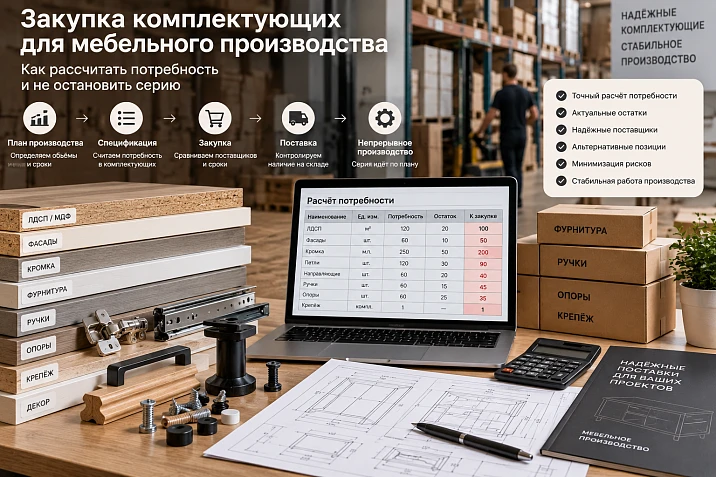
It is not enough for a furniture factory buyer to know that next month they will need "handles, legs, and decor." To place a real order, they need to know the specific SKU, the component quantity per unit, the production program volume, the free verified stock, the safety reserve, and the date by which the batch must physically be at the production site. Only then does a purchasing need arise.
Therefore, purchasing components for furniture production does not begin with a price list or even with choosing a supplier. It begins with the link between the production plan and the current bill of materials:
production plan → BOM → SKU → gross requirement → usable stock → safety stock → net requirement → RFQ → supplier → sample → PO → lead time → LOT → incoming inspection → warehouse → production → reorder.
If even one link is missing, the procurement department is forced to replace data with guesswork. "Let's order roughly like last month," "there seems to be some left in the warehouse," "we've already used this handle" — such formulations work until the first change of model, finish, supplier, or production volume.
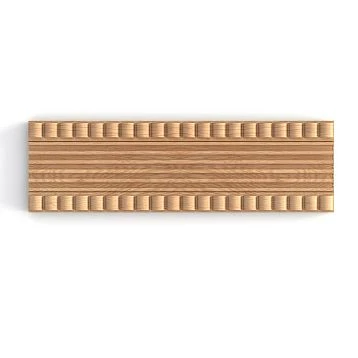
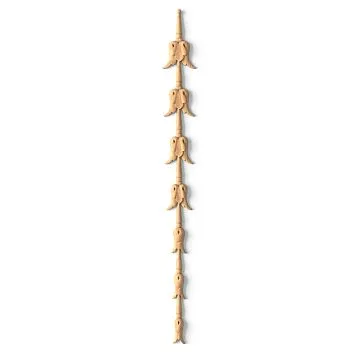
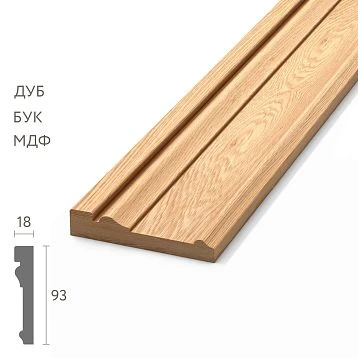
For STAVROS, it is convenient to build the procurement loop from the general section furniture hardware to the categories that are actually represented in the assortment: furniture handles, legs and supports, hardware for legs and handles, decorative inserts, wooden trim и product samples. But the catalog itself does not replace the procurement system: each selected item must be linked to the BOM, the requirement date, and a specific furniture series.
Purchasing and supplier selection are not the same thing
These processes are often confused. Because of this, the procurement department re-evaluates the supplier with every order or, conversely, automatically orders from a once-selected company without checking current terms.
Supplier selection answers the question: with whom is the factory fundamentally ready to work.
Purchasing answers a different question: what exactly, in what quantity, in what configuration, and by what date needs to be ordered now.
The STAVROS website already has a separate article about choosing a furniture hardware supplier. In a procurement article, it is more important not to repeat the ranking of criteria, but to show the operational cycle after the supplier is approved to work. The general question of wholesale selection is also covered in the material about furniture hardware wholesale, so here the focus remains on demand calculation and order fulfillment.
Example. The factory has approved a manufacturer of wooden handles. This does not yet mean that the procurement department can send an order for “handles for a chest of drawers — 2,000 pcs.” You need to know the SKU, material, size, finish, quantity per item, production plan, and required date. If the same model has BASIC and PREMIUM versions, procurement for them may differ, even though the supplier is the same.
This creates a useful distinction:
supplier approval ≠ purchase requirement.
A supplier may be approved, but a specific SKU may not be yet. Conversely, a SKU may have been approved earlier, but the current lead time or price requires new confirmation before a large batch.




Procurement starts with the production plan
The first number appears not in the commercial proposal, but in the production plan.
For example:
COMOD-A — 300 pcs.
TUMBA-B — 180 pcs.
KITCHEN-C — 40 sets
Each model has a current BOM revision. It specifies how many units of a particular component are required per item.
If a dresser needs four HL-XXX handles, then the gross requirement for a batch of 300 pcs.:
300 × 4 = 1200 handles.
If the same handle is used for a nightstand and two units are required for it:
180 × 2 = 360 handles.
Total gross requirement:
1200 + 360 = 1560 handles.
That is why purchasing calculations should be done by SKU, not by furniture model. A single component can be used in multiple items, and the total order must sum up the requirement across the entire program.
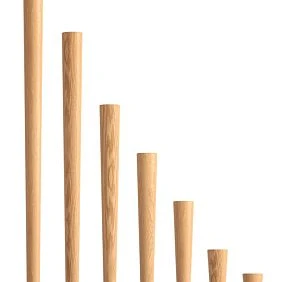
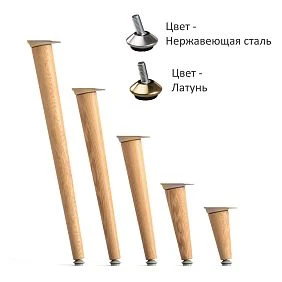
Our factory also produces:
Minimum input for calculation
The planning and production department must provide procurement with:
-
model code;
-
production plan;
-
launch date;
-
current BOM revision;
-
component quantity per unit;
-
order priority;
-
substitution eligibility.
Without this, the procurement department inevitably starts calculating from past invoices, old Excel files, or memory.
Get Consultation
The BOM must be the single source of standard consumption
A previous order is not the standard for current demand.
Last month, the factory could have been producing a different batch, a different product revision, or using the remainder of a previous delivery. A supplier invoice shows how much was purchased, but it does not explain how much should be in one product.
Workflow:
MODEL → BOM REV → SKU → QTY PER UNIT.
For example:
| Model | BOM rev | SKU | Per product |
|---|---|---|---|
| COMOD-A | REV-C | HL-052 | 4 |
| COMOD-A | REV-C | MN-188 | 4 |
| COMOD-A | REV-C | FUR-020 | 4 |
| TUMBA-B | REV-B | HL-052 | 2 |
If handle HL-052 is used in two models, the purchasing system sums the lines. If REV-D has been released and the handle has been replaced, the old consumption should no longer be included in the new calculation.
Why the revision is critical
Let's imagine that in REV-A, two handles were installed per product, while in REV-B, four. If the buyer takes the quantity from the old bill of materials, when producing 500 products, the shortage will be 1,000 handles. The arithmetic itself may be flawless — it is the source standard that will be wrong.
Therefore, the purchase of furniture components must be based on a managed BOM, not on purchase history.
Gross requirement and actual purchasing demand are different numbers
Gross requirement — gross demand: how many parts are required according to the production plan before accounting for inventory.
Purchase requirement — how much actually needs to be ordered.
Simplified formula:
Gross requirement − usable stock + reserve = purchase requirement.
Example.
Plan: 300 dressers.
Handles per dresser: 4.
Gross requirement: 300 × 4 = 1200.
The records show 180 handles. But after verification it turns out:
-
140 match by SKU and finish;
-
20 belong to an old revision;
-
10 are in quarantine;
-
10 are reserved for service.
Usable stock = 140, not 180.
Without reserve:
1200 − 140 = 1060.
If a safety stock of 40 pcs is approved for this item:
1060 + 40 = 1100.
It is 1100 that becomes the procurement requirement.
The professional value of the formula is not in the arithmetic, but in the discipline of terms. Warehouse stock and stock available for production are different indicators.
Why you cannot subtract the entire warehouse stock
The ERP may show 500 units, but not all 500 are suitable for a new production order.
The stock may include:
-
a different finish;
-
a different revision;
-
a different size;
-
a quarantined batch;
-
items with damage;
-
service reserve;
-
reserved items;
-
parts for another production order;
-
returned components without re-inspection.
Therefore, before calculating the net requirement, the stock balance must be qualified.
It is useful to use statuses:
AVAILABLE
RESERVED
QC HOLD
SERVICE STOCK
REWORK
OBSOLETE
DAMAGED
Only the stock balance that is approved for use for a specific product revision is included in the purchase requirement.
A particular risk is the same base item number with a different finish
For wooden handles and legs, the visual finish is critical. If one base item number appears unfinished and in several finishes, inventory accounting must distinguish between the variants. Otherwise, the system will show sufficient stock, but production will discover that the required color is not available.
Therefore, the SKU or internal code must include the specific configuration.
The SKU must describe the purchasing configuration
Bad line:
Wave handle.
Working line:
HL-___ / SIZE / MATERIAL / FINISH.
For a leg:
MN-___ / HEIGHT / MATERIAL / FINISH / MOUNTING.
For the decorative profile:
MLD-___ / MATERIAL / LENGTH / FINISH.
For the overlay:
N-___ / MATERIAL / ORIENTATION / FINISH.
It is not necessary to encode all parameters in one long SKU. They can be stored as separate ERP fields. The main thing is that the purchasing position is unambiguous.
If two parts cannot be used interchangeably without approval from a process engineer, they should not look like the same order line.
When to create a purchase requisition
Quantity is only half the task. The other half is time.
For each critical item, three dates are needed:
-
NEED DATE— when the component must be available to production; -
LEAD TIME— how much time is required from order confirmation to readiness/delivery; -
ORDER DATE— when the order must be placed.
Simplified:
ORDER DATE = NEED DATE − lead time − internal time buffer.
If the handles are needed on the line on November 20, the confirmed delivery time is 15 calendar days, and the factory allows another 5 days for incoming inspection and buffer, the order cannot be placed on November 10. It must be confirmed earlier.
Need date is not equal to the model launch date
If a component is installed during final assembly, physically it may be needed later than the start of carcass cutting. But the procurement plan must take into account the entire product route and the actual assembly date.
For parts with a long lead time, the order is sometimes placed even before the start of the main carcass processing.
Lead time must be confirmed before every significant batch
One of the dangerous habits of the procurement department is to treat delivery time as a constant property of an SKU. In practice, it can change due to volume, production load, raw material availability, coating, packaging, and logistics.
Therefore, before a significant batch, the buyer confirms:
-
whether there is ready stock;
-
what the manufacturing time is;
-
whether finishing is included;
-
when shipment is possible;
-
whether special packaging is required;
-
whether the delivery can be split;
-
whether the lead time changes when the quantity increases.
The lead time from a previous order is useful as a historical reference, but not as an automatic promise for the current batch.
For a regular item, it is convenient to store:
LAST LEAD TIME
CURRENT CONFIRMED LEAD TIME
MAX OBSERVED LEAD TIME
This way, planning no longer depends on a single old value.
RFQ: what a supplier request should look like
A request like "send us prices for handles and legs" forces the supplier's manager to gather the technical information all over again. A good RFQ already contains everything needed for a quote.
Minimum table:
| SKU | Material | Finish | Quantity | Need date |
|---|---|---|---|---|
| HL-___ | Beech | FINISH-01 | 1200 | 20.11.2026 |
| MN-___ | Oak | RAW | 480 | 25.11.2026 |
| N-___ | Beech | RAW | 600 | 25.11.2026 |
Additional Items:
-
delivery address;
-
allowance of partial shipment;
-
required packaging;
-
need for a sample;
-
approved revision number;
-
forecast for the following months;
-
technical specialist contact.
If the configuration is new, the RFQ must clearly indicate that a sample or pilot order is required before the main batch.
The RFQ and the commercial proposal must refer to the same SKU
The buyer must be able to match the request line and the response line without interpretation. If the RFQ states MN-___ / oak / RAWbut in the commercial offer it is listed only as "furniture leg", there is a risk that the price refers to a different configuration.
The larger the batch, the more dangerous such abbreviations become.
Forecast is beneficial to both the supplier and the buyer
The forecast helps the supplier see potential workload, and the buyer notice future shortages earlier.
For example:
| Month | Forecast SKU HL-A |
|---|---|
| October | 500 |
| November | 900 |
| December | 700 |
But a forecast cannot be presented as a confirmed order. It must be designated as a forecast.
This is important for both parties. The supplier understands the possible volume but does not consider it an obligation. The factory can adjust the plan without conflict with an already confirmed PO.
It is useful to distinguish:
FORECAST
FIRM ORDER
CALL-OFF
If the enterprise works with regular deliveries, the forecast can be updated monthly or weekly depending on the production cycle.
Buying furniture hardware wholesale: the price per piece is not equal to the cost of procurement
When buying furniture hardware wholesale, it is easy to compare only the unit price. For a factory, this is not enough.
Need to consider:
-
price;
-
minimum order quantity;
-
delivery cost;
-
packaging;
-
delivery time;
-
need for separate finishing;
-
likelihood of urgent reorder;
-
SKU stability;
-
defect rate;
-
internal operations;
-
cost of production downtime.
Let's imagine two handles. Item A is 5% cheaper, but is supplied with a long lead time and, in case of shortage, requires expedited logistics. Item B is slightly more expensive, but is consistently available and can be reordered quickly. For a series with a high risk of downtime, the second scheme may prove more economically advantageous.
Therefore, wholesale purchasing of furniture components is evaluated not only by the purchase price, but also by overall supply reliability.
Furniture hardware manufacturer: when to buy directly
A direct manufacturer is especially relevant when the factory values:
-
stable SKU;
-
serial volume;
-
samples;
-
repeat batches;
-
the ability to agree on a custom specification;
-
a clear point of contact for technical matters.
But it cannot be said that a direct manufacturer is always better than a distributor. A distributor may have a broader warehouse assortment, several brands, and quick access to different categories.
For the buyer, the question is framed as follows:
which supply model is more reliable for this SKU and this production plan?
The query "furniture hardware manufacturer" is useful when a company is looking not just for a product, but for a long-term production partnership.
STAVROS offers dedicated terms of cooperation with furniture manufacturers: special prices, Contact us to confirm shipping to your destination., a personal manager, and handling of production orders. For a B2B buyer, this page makes sense after the demand has been calculated and an RFQ has been prepared.
Quality hardware: buyers need measurable criteria
The phrase "quality hardware" is not suitable for batch acceptance until it has been translated into specific parameters.
For a buyer, quality is not "premium" and not "looks good." It is a match with the approved configuration.
For a handle, the following are checked:
-
SKU;
-
size;
-
center-to-center distance, if applicable;
-
material;
-
coating;
-
surface;
-
fasteners;
-
compliance with the approved sample.
For a leg:
-
height;
-
upper mounting section;
-
material;
-
geometry;
-
finish;
-
thread or fastening;
-
compatibility with the mounting plate.
For the decorative overlay:
-
overall dimension;
-
orientation;
-
relief;
-
material;
-
surface;
-
absence of damage;
-
compliance with the reference sample.
That is why the request for “quality furniture hardware” in production procurement turns into a checklist. As long as properties are not measurable or at least unambiguously comparable to a reference, the assessment remains subjective.
A physical sample before including the SKU in serial procurement
The catalog helps shortlist candidates, but a production SKU cannot be approved based on a photo alone.
STAVROS has a separate section product samples, also aimed at furniture manufacturers. For a specific item, the sample format should be clarified separately: the existence of a sample category does not mean that any serial part automatically exists in a mini version.
Workflow:
catalog → sample → prototype → approval → BOM → serial procurement.
The physical sample is used to check:
-
actual size;
-
texture;
-
color;
-
surface quality;
-
geometry;
-
compatibility with adjacent parts;
-
installation feasibility;
-
appearance on the product.
For wooden parts, it is especially important to evaluate the actual material, not just the image on the screen.
The sample must be linked to a specific configuration
A box of "handle samples" must not be stored without labels.
The label or card must include:
SKU / MATERIAL / FINISH / DATE / STATUS.
If the sample is only being reviewed, the status may be SAMPLE.
After approval — APPROVED SAMPLE.
If the configuration has changed, the old sample cannot be used as a current reference without verification.
Approved sample must not be confused with an advertising sample
An advertising sample showcases the product.
Approved sample confirms the production configuration.
These are different roles.
Approved sample must be:
-
identified;
-
linked to SKU;
-
linked to material;
-
linked to finish;
-
linked to revision;
-
dated;
-
protected against accidental substitution.
Incoming inspection can use it to compare a new batch.
A physical reference is especially useful where numbers do not describe everything. For example, the size of a leg can be checked by measurement, but the appearance of the surface and the shade of the finish are easier to compare with an approved control part.
An approved sample does not replace a drawing or specification. It works together with them.
Pilot order before regular purchasing
If the configuration is new, the transition 1 sample → 3000 units creates unnecessary risk.
A pilot order allows you to check not just a single part, but a small real batch.
This could be 10, 20, or 50 units — the exact quantity depends on the component and the production scale. There is no universal number.
A pilot order verifies:
-
order placement;
-
deadline;
-
packaging;
-
marking;
-
batch quality;
-
incoming inspection;
-
warehouse processing;
-
release to production;
-
installation;
-
actual consumption.
Sometimes a single sample is perfect, but on a small batch you discover finish variation, inconvenient packaging, or mixed sorting.
After a successful pilot order, the item can move into regular purchasing.
How to purchase furniture handles
STAVROS furniture handles catalog includes different types and size options. For the buyer, the category must be broken down to a specific item.
The order records:
-
SKU;
-
handle type;
-
size;
-
center-to-center distance, if any;
-
material;
-
coating;
-
quantity;
-
fastener completeness;
-
reserve.
If the factory performs the finishing itself, you can consider handles without coating. If a ready-made item is needed, the following are accounted for separately Handles with Finish.
For purchasing, these are different SKUs even when the geometry matches.
Center-to-center is not a secondary parameter
If the handle is installed into existing holes, a center-to-center mismatch means a problem with the front panel, not just the hardware. Therefore, replacing it with a "similar" one without checking with a process engineer is unacceptable.
When the main handle is in short supply, the approved alternative must have compatible geometry or be accompanied by a new front panel revision.
How to purchase furniture legs and supports
In the section of furniture legs and supports solutions are available for different types of furniture. For the procurement department, the model name is only the beginning.
Before ordering, the following are recorded:
-
SKU;
-
height;
-
the upper mounting geometry;
-
material;
-
shape;
-
finish;
-
fasteners;
-
a compatible mounting plate;
-
a glide, if provided;
-
quantity per item.
The leg affects the finished height of the furniture. Therefore, a replacement based on the principle of "this one is almost the same and is in stock" must go through technical approval.
It is especially important to check the mounting interface. A visually similar support may require a different plate or threaded rod.
The leg and mounting hardware are separate order lines
In the hardware for legs and handles mounting plates, threaded rods, glides, and related items are available.
A procurement mistake is to consider:
500 sets of legs.
If the composition of the "kit" is not described anywhere.
Working specification:
| Position | SKU | Quantity |
|---|---|---|
| Leg | MN-___ | 500 |
| Screw | FUR-___ | 500 |
| Plate | FUR-___ | 500 |
| Thrust bearing | FUR-___ | 500 |
If one of the four lines is missing, production may formally receive "legs" but not receive a finished assembly unit.
For a regular SKU, it is useful to store the relationship:
LEG-A → STUD-A → PLATE-A → FOOT-A.
Then, when replacing a leg, the system shows that related items need to be rechecked.
How to purchase decorative elements
For decorative overlays, profiles, and moldings, the usual count in "pcs." is not enough.
У decorative inserts can be:
-
symmetric and asymmetric options;
-
left and right parts;
-
different sizes;
-
different orientation.
Therefore, the order records not only the quantity but also the finish.
for wooden trim Important:
-
profile;
-
cross-section;
-
material;
-
product length;
-
cutting map;
-
remainder;
-
finish.
If the profile is cut into parts, the gross requirement is better calculated not only in linear meters but through a cutting map. Mathematically, the required length may turn out to be insufficient if the remnants cannot be used in the required dimensions.
This is a good example where practical calculation matters more than a formula for area or length.
Minimum batch is not the only factor in order size
MOQ — minimum order quantity — affects purchasing, but does not determine it on its own.
Batch size should be linked to:
-
production plan;
-
delivery time;
-
available warehouse;
-
in price;
-
risk of shortage;
-
storage cost;
-
likelihood of model change;
-
collection lifespan.
A large batch can offer a better price, but create excess if the model is discontinued or the finish is changed. Too small a batch reduces inventory, but increases the risk of urgent reorders.
Therefore, the buyer needs a balance.
When a large batch is justified
It makes sense if:
-
consumption is stable;
-
the SKU is used in multiple models;
-
lead time is long;
-
the supplier offers a significant condition for volume;
-
the risk of specification change is low;
-
the warehouse allows storing stock safely.
When it is wiser to buy less
A small batch is more useful if:
-
the model is new;
-
a pilot is still underway;
-
a design change is likely;
-
the finish is experimental;
-
the warehouse is limited;
-
the item is expensive and is consumed slowly.
You should not automatically impose the EOQ formula without real company data. For most furniture manufacturers, it is more useful first to discipline the BOM, inventory balances, and lead time, and only then to complicate the optimal order model.
Safety stock: why it is needed
Safety stock protects production from deviations between plan and actual.
The causes of shortages can vary:
-
the delivery was delayed;
-
demand increased;
-
part of the batch was rejected;
-
actual consumption is higher than the norm;
-
the item was damaged during assembly;
-
an urgent service kit was needed.
But the rule "always keep 10%" is too crude.
For a critical SKU with a long lead time, the reserve may be higher. For a cheap and quickly available item — lower. For unique decor from a discontinued collection, the service stock may be more important than the production stock.
It is useful to distinguish:
PRODUCTION SAFETY STOCK
SERVICE STOCK
PROJECT RESERVE
They solve different tasks and should not automatically be used in place of each other.
The reserve should be calculated by SKU
If there are ten types of handles in the warehouse, the phrase "there are 500 spare handles" is meaningless.
Need to know:
HL-A / FINISH-01 — 120
HL-B / RAW — 80
HL-C / FINISH-03 — 300
Only this way does the reserve actually protect a specific furniture model.
Critical A-class components
ABC analysis is usually associated with procurement cost, but for furniture production supply, another classification is useful — by impact on the ability to finish the product.
Class A
Furniture cannot be completed or shipped without the part.
For example, a visible handle on the final facade, a unique leg, or a mounting plate without which the support cannot be assembled.
Class B
The shortage creates a problem, but there is an agreed temporary alternative, or the item can be installed later without disrupting the process.
Class C
The part does not block the main production flow or is easily replaced with a standard item.
This is not a universal regulatory classification, but a factory management tool.
For A-items, it is usually logical to:
-
confirm lead time earlier;
-
maintain safety stock;
-
monitor the alternative;
-
check the remaining stock more often;
-
escalate delays faster.
This way, the procurement department focuses not only on expensive items, but also on those whose absence would actually halt the production run.
Reorder point for a regular item
For a regularly consumed SKU, a simple reorder point is useful.
Basic logic:
Reorder point = usage during lead time + safety stock.
For example, the factory uses an average of 100 handles per week. Confirmed lead time is 3 weeks. Safety stock is 80 pcs.
Then the approximate reorder point is:
100 × 3 + 80 = 380.
When the available stock approaches 380, the system should initiate a procurement check.
This does not mean that the order automatically equals a fixed number. Next, the forecast, already open POs, and the current plan are taken into account.
When a simple formula is not enough
If consumption fluctuates heavily, lead time is unstable, or production is project-based, the average figure may distort reality.
Then, instead of an automatic ROP, it is more useful to use:
-
weekly forecast;
-
production order calendar;
-
confirmed POs;
-
nearest need date.
The main thing is not to turn the article into a textbook on complex statistics without data from a specific factory.
Why different LOTs must not be mixed before incoming inspection
A new batch must remain physically and documentarily separate until acceptance.
Especially if the following are critical:
-
color;
-
finish;
-
wood shade;
-
geometry;
-
fasteners;
-
revision.
If a new LOT is immediately poured into the common warehouse bin with the old one, and a problem is discovered later, it will be difficult to determine the boundary of the defective batch.
Work sequence:
DELIVERY → QUARANTINE → QC → ACCEPTED → AVAILABLE STOCK.
Until the status ACCEPTED parts must not be considered usable stock.
After acceptance, two LOTs can be merged into one available item only if the factory rules allow mixing and the parameters are actually compatible.
For visible parts, it is sometimes wiser not to mix batches even after inspection, but to consume them sequentially by production order.
Incoming inspection of the delivery
Acceptance is where purchasing turns into usable production stock.
Minimum control includes:
-
SKU;
-
quantity;
-
material;
-
size;
-
surface;
-
finish;
-
packaging;
-
fastener completeness;
-
compliance with documents.
For critical parameters, an approved sample or technical documentation is used.
It is convenient to record the batch result using one of the statuses:
ACCEPTED
HOLD
CLAIM
PARTIAL ACCEPTANCE
If part of the goods is accepted and part is blocked, the ERP must reflect exactly the usable quantity.
Quantity check is not the only acceptance step
A box may contain exactly 500 handles, but if it is the wrong finish, usable stock is zero.
And conversely, a small quantity discrepancy does not always require blocking the entire batch if the remaining part fully complies with the specification and the company can process the short delivery separately.
How to proceed in case of non-conformity
Not every deviation requires automatically returning the entire shipment.
First, you need to:
-
isolate the disputed LOT;
-
record the SKU;
-
record the quantity;
-
take photos;
-
describe the type of non-conformity;
-
check the sample;
-
compare with the approved sample;
-
identify the affected items;
-
open a claim.
After that, a decision is made:
-
full return;
-
partial acceptance;
-
sorting;
-
rework;
-
replacement;
-
discount if the deviation is acceptable for the specific task;
-
new delivery.
Important: the decision on technical acceptability should not be made by the buyer alone if the deviation affects the design or appearance of the product. A process engineer, designer, or another authorized specialist is needed.
Do not use a non-conforming batch "temporarily" without approval
One of the most expensive mistakes is sending disputed parts to the line to avoid stopping production, and sorting it out later.
If a component affects appearance or assembly, a temporary solution quickly turns into a new uncontrolled revision of the product.
Regular supply: how to turn a one-time purchase into a regular delivery
Regular deliveries of furniture components begin not with the promise "we will work together on an ongoing basis," but with a repeatable process.
This requires:
-
stable SKU;
-
forecast;
-
clear lead time;
-
agreed packaging;
-
order history;
-
approved sample;
-
contact of the responsible manager;
-
reorder rules;
-
clear claims procedure.
If every new order starts with re-explaining which shade is needed and which leg fits, there is no regular supply yet — just a series of one-off deals.
Regular furniture hardware supplies become manageable when a new PO can be assembled from master data without reconstructing technical requirements from correspondence.
How to avoid depending on managers' correspondence
If the technical specifications, latest price, and delivery time exist only in a specific employee's email, the procurement system is vulnerable.
For each regular item, it is useful to store centrally:
-
supplier;
-
supplier SKU;
-
internal SKU;
-
configuration description;
-
material;
-
finish;
-
MOQ;
-
last price;
-
last price date;
-
last order;
-
last confirmed lead time;
-
approved sample;
-
last LOT;
-
alternative SKU status;
-
responsible manager;
-
link to the commercial proposal;
-
related furniture models.
This could be an ERP, PIM, MRP, a corporate spreadsheet, or another system. What matters is not the tool, but the principle of a single source of data.
Correspondence remains a confirmation, but not the master reference
A supplier's letter is useful as a document: it confirms the price, lead time, or a special condition. But the working parameters need to be transferred into a structured card.
Otherwise, four months later, a new buyer is searching through dozens of emails for which lead time was considered current and what coverage was agreed upon.
What to do when the price changes
Price changes over time. That is why the field PRICE without a date is almost useless.
You need to store:
PRICE
CURRENCY
VALID FROM
VALID TO, if known
QUANTITY BASIS
QUOTE REFERENCE
A new price must not overwrite an old purchase order retroactively.
The historical PO retains the actual order price. A new quotation creates a new reference point for future purchases.
This allows analyzing:
-
purchase price dynamics;
-
volume effect;
-
change in the cost of a specific SKU;
-
impact of a new finish or packaging;
-
<
Purchasing components for a new furniture series
A new series requires a different purchasing process than a long-produced model. There is no stable consumption history, repeat LOTs, or confirmed supply cycle yet.
Work sequence:
concept → preliminary BOM → samples → prototype → final BOM → RFQ → pilot order → approval → production order.
Preliminary BOM
At an early stage, the specification may contain candidates. They cannot be automatically ordered for the main production run.
For example:
HANDLE-A — CANDIDATELEG-B — SAMPLE REQUESTEDDECOR-C — APPROVEDThe status allows purchasing to understand what is already approved for serial ordering.
Samples
You cannot skimp on the real-part verification stage for new visible components. If it doesn't fit, the cost of a sample is disproportionately lower than the cost of reworking a batch of fronts or carcasses.
Prototype
The component is checked as part of the finished furniture. For a handle — on the front, for a leg — on the carcass, for a decor — in the real composition.
Final BOM
Only after technical approval does the preliminary specification become a production one.
Pilot order
A small batch verifies repeatability and logistics.
Production order
The main order is placed according to the already approved configuration.
This scheme is especially important when new components for furniture production are being purchased: the price of the main batch should not force the factory to skip the qualification stage. General standardization of BOM and external components is covered separately in the material on contract furniture manufacturing; here the same data is already used as input for the procurement department.
Purchasing for an already serial model
For a mature product, the logic is shorter:
forecast → production plan → usable stock → shortage → PO → delivery → QC → production.
There is no need to select the handle or leg anew each time. If the SKU and revision have not changed, the buyer works from the master data.
The main risks are different:
-
incorrect forecast;
-
untimely reorder;
-
increase in lead time;
-
PO delay;
-
inaccurate stock balance;
-
mismatch of the new LOT;
-
unnoticed price change;
-
consumption of the service reserve.
For a serial model, the goal of supply is not to look for "what is better," but to ensure the availability of the approved item at the right moment.
How not to stop the line because of one cheap component
The cost of a part and its criticality for production may have almost no correlation.
A small handle, foot pad, or mounting plate may cost many times less than the body, but without it the finished product cannot be shipped.
Therefore, for A-components, separate shortage control is useful.
Shortage list
Daily or at another suitable frequency, the department sees items where:
available stock + confirmed incoming < demand before next delivery.Need date
Each shortage is tied to a specific need date, not to an abstract "low in stock" status.
Owner
Each critical item has an employee responsible for action.
Recovery action
The shortage card records:
-
expedite the main order;
-
approve a partial delivery;
-
use an approved alternative;
-
reschedule production;
-
postpone assembly;
-
request an emergency reorder.
This way, a shortage becomes a manageable task rather than a sudden message from the assembly line.
What to do if the supplier can ship only part of the order
A partial delivery can be more useful than waiting for the entire batch if it covers the nearest production horizon.
For example, the need is 1,200 handles, and the supplier can currently ship 500, with the rest in two weeks.
The decision depends on the production schedule.
If 500 handles are enough to complete the first week of production, split delivery can reduce the risk of a stoppage.
In the PO and schedule, it is necessary to clearly separate:
BATCH 1 — 500 — DATE ABATCH 2 — 700 — DATE BAfter each delivery, a separate incoming inspection is performed and the LOT is retained.
An order cannot be considered “fully secured” just because the supplier has confirmed the total volume.
Delivery of components to furniture production: shipment date and availability date are not the same thing
The supplier may ship the goods on time, but production will receive them later.
Between shipment and the status
AVAILABLEAvailable:-
transportation;
-
unloading;
-
acceptance;
-
incoming inspection;
-
internal movement;
-
sometimes sorting or rework.
Therefore, the delivery of components to furniture production must be planned based on the date of availability for the line, and not only on the date the truck leaves the supplier’s warehouse.
For critical SKUs, it is useful to include internal receiving time in the order date calculation.
How to split purchases into production waves
If a factory launches a large program lasting several months, it is not necessary to deliver the entire volume at once.
Delivery can be split into waves:
WAVE-1 / OCTWAVE-2 / NOVWAVE-3 / DECAdvantages:
-
less warehouse load;
-
lower risk of freezing money in stock;
-
easier to separate LOT;
-
easier to adjust forecast.
The limitation is that each subsequent wave creates a separate lead-time risk. Therefore, this scheme is suitable only with manageable lead time and a confirmed schedule.
For decorative parts with a critical shade, the risk of visual differences between batches must be assessed separately. Sometimes it is more advantageous to obtain a single LOT for the entire visible series, even if the warehouse load is higher.
Procurement department metrics
An article about supply should not turn into an ERP course, but a few metrics help to see systemic problems.
OTIF
On Time In Full — the share of deliveries that arrived on time and in the full agreed volume.
For a buyer, it is important to define their own rule: what counts as "on time" and how to account for partial deliveries.
Percentage of non-conformities
How many units or batches receive HOLD/CLAIM during incoming inspection.
Average delay
Shows not only the presence of delays, but also their depth.
Urgent additional orders
If there are many of them, the problem may be in the forecast, consumption rate, stock levels, or too low safety stock.
Stoppages due to shortages
One of the most telling KPIs: how many times production was unable to complete planned work due to missing components.
Excess stock
If the procurement department fights shortages only by increasing all stock levels, the warehouse gradually fills up with slow-moving items.
A good system should simultaneously reduce two risks: shortage and excess stock.
How to analyze the cause of an urgent reorder
The mere fact of an urgent purchase does not fix anything.
After closing the shortage, it is useful to specify the root cause:
-
incorrect forecast;
-
incorrect BOM;
-
incorrect stock balance;
-
supplier delay;
-
defects;
-
plan change;
-
actual consumption overrun;
-
loss or damage;
-
unplanned service.
If the cause repeats, it can be addressed systematically.
For example, constant reorders of the same SKU with an accurate forecast may mean that the consumption BOM does not match reality or that some parts are lost in the area.
Supplier scorecard for a regular item
For a supplier with whom furniture hardware is repeatedly purchased, it is useful to see history rather than the manager's impression.
A simple scorecard may include:
Indicator Last 6 deliveries OTIF ___ Average delay ___ Claims ___ Partial deliveries ___ Urgent replacements ___ Lead time, actual ___ This is not a "best/worst" rating for public evaluation. It is an internal procurement tool.
It helps to understand whether safety stock should be increased, an approved alternative should be sought, or the schedule should be revised.
When you should not increase the order for a wholesale discount
A lower unit price does not always mean savings for a furniture factory. If a buyer increases the batch only for a more favorable price, they must calculate what will happen to the remaining stock after the production plan is fulfilled.
Let's imagine: the demand for the next three months is 1,800 handles. The supplier offers a lower price starting from 3,000 pcs. Formally, the offer looks more advantageous. But the additional 1,200 parts make sense only if there is confirmed future demand or the savings exceed the cost of storage and the risk of obsolescence.
Excess stock becomes a problem if:
-
the furniture model may be discontinued;
-
a new front revision is planned;
-
the color program is changing;
-
the supplier is preparing an updated SKU;
-
the finish has unstable demand;
-
there is little space in the warehouse;
-
the part is expensive;
-
the item is used in only one model.
Therefore, wholesale purchasing of furniture hardware must compare not only the price of 1,000 and 3,000 units, but also the remaining balance after consumption.
Useful check:
Purchase quantity − confirmed demand − target reserve = projected excess.
If the projected excess is large, the buyer must understand why the company is deliberately creating this stock.
When the wholesale volume, on the contrary, is rational
A large batch can be justified if the SKU is used in many products, consumption is stable, the specification has not changed for a long time, the lead time is long, and volume-based terms provide a tangible economic effect.
That is why wholesale purchasing of furniture components should not be done according to a single universal rule. One SKU is worth buying in a quarterly volume, another — only against a confirmed order.
Pre-shipment check: what to confirm before shipping a large batch
For an important production order, it is useful not to wait for the machine to see the batch status for the first time.
Before shipment, the buyer can confirm with the supplier:
-
the finished quantity;
-
SKU;
-
material/finish;
-
number of packages;
-
marking;
-
the readiness date;
-
the shipment date;
-
the breakdown by LOT, if available;
-
the availability of the agreed packaging;
-
completeness of linked items.
Such a pre-shipment check does not replace incoming inspection. It is needed to identify an obvious error before the batch has already gone to the factory.
For example, an order has 1200 handles FINISH-02, but before shipment the packing list states FINISH-01. Correcting the discrepancy at the supplier's warehouse is usually easier than after delivery.
For a complex set, you can verify completeness:
LEG 480PLATE 480STUD 480FOOT 480If the legs are ready but the mounting plates are delayed by a week, the buyer understands in advance whether the first delivery will actually be suitable for assembly.
Open PO control: a confirmed order is not yet warehouse stock
An open purchase order reduces future shortage, but it should not be considered available stock until receipt.
It is useful to distinguish:
ON HANDAVAILABLEOPEN POIN TRANSITQC HOLDACCEPTED.If the system adds up
AVAILABLE + OPEN POwithout taking dates into account, you can get a false picture of coverage.For example, there are 200 parts in stock, another 1000 are in an open PO, and the demand for the coming week is 600. If the delivery of 1000 units is expected only in two weeks, the near-term demand is still not covered.
Therefore, for each open PO, the following are important:
-
confirmed quantity;
-
confirmed ship date;
-
expected arrival date;
-
need date;
-
status;
-
risk of delay.
The more critical the SKU, the more frequently this data needs to be updated.
Weekly shortage review for critical components
For a factory with regular output, a short shortage review is useful, where procurement, production, and warehouse look at the same table.
Example columns:
SKU Available Open PO Need 14 days Need date Risk Action HL-A 180 500 620 03.10 HIGH expedite 200 MN-B 240 0 180 08.10 LOW no action N-C 40 200 220 05.10 MEDIUM confirm shipment Such a review shows not “who is to blame,” but what needs to be done before a stoppage occurs.
For HIGH priority, action is assigned immediately. For MEDIUM, supplier confirmation or an alternative scenario is verified. LOW remains under observation.
Shortage review is especially useful when furniture production components are used across several models at once. A single shortage SKU can simultaneously affect dressers, nightstands, and kitchen modules.
When procurement demand needs to be recalculated
Net requirement is not a number that is calculated once and never changed again.
Recalculation is needed if:
-
the production plan has changed;
-
a new BOM revision has been released;
-
part of the warehouse stock has been moved to HOLD;
-
the supplier has confirmed a partial shipment;
-
an additional production order has appeared;
-
service reserve has changed;
-
alternative SKU received approval;
-
actual consumption differs from the norm.
It is especially dangerous to continue working with the old calculation after a change in the production plan. If the batch volume has increased from 300 to 450 items, the procurement requirement must be updated before the additional output reaches the line.
Materials for furniture manufacturing must also have a requirement date
Although the main subject of the article is components, the same principle applies to primary furniture materials. Board, solid wood, decorative profile, or another material must be available for a specific production stage. The only difference is the unit of measurement: pieces, linear meters, sheets, area, or volume.
This allows the procurement department to follow one common logic:
norm → plan → available balance → requirement → date → order → control.
How furniture production can work with STAVROS
For a production customer, it is more convenient to divide work with STAVROS into technical and commercial stages.
1. Determine the product category
First, the factory determines which group is needed for the item:
2. Select a specific SKU
A category is not yet a procurement item. A specific model, size, material, and finish are required.
3. Check the technical data
For design, you can use STAVROS catalogs and drawings and the data of the specific product card.
4. Obtain and check a sample
If the item is new to the series, the sample or reference part goes through prototype and approval.
5. Include the SKU in the BOM
After approval, the component receives a quantity per item and a linked revision.
6. Calculate net requirement
The production plan is converted into gross requirement, then usable stock and reserve are taken into account.
7. Send RFQ
The request specifies exact SKUs, finish, quantity, and need date.
8. Agree on commercial and logistics terms
Current ordering and delivery methods are collected in the section payment and delivery.
9. Perform incoming inspection
The received batch is compared with the specification and approved sample.
10. Move the item to regular supply
If the component is recurring, procurement keeps a history of lead times, prices, and LOT, while the manufacturer receives a forecast of future demand.
STAVROS has a dedicated page for B2B interaction for furniture manufacturers. It lists special prices, a personal manager, Contact us to confirm shipping to your destination., and adherence to agreed deadlines. It makes sense for a manufacturer to move to a commercial request with a prepared nomenclature rather than a general question like "what components do you have".
Practical template for a SKU procurement card
Even if the factory is not yet implementing a separate MRP system, it is useful to standardize the card for a regular item.
Field What to store Internal SKU Internal code Supplier SKU Supplier SKU Category handle / leg / decor / fastener Material Material Finish Finish QTY per unit BOM consumption Applicable models furniture models BOM revision current revision Supplier Supplier MOQ Minimum order quantity Last price last price Price date price date Lead time confirmed deadline Safety stock safety stock Service stock service stock Approved sample link/ID Last LOT last batch Alternative SKU approved alternative Status active / hold / obsolete This card links purchasing to production. If the parameter exists only in an employee's head, the system is not yet protected against staff changes.
Checklist before sending a purchase order
Before the PO, it is useful to run a quick check.
Nomenclature
-
SKU matches the active BOM;
-
material and finish are specified;
-
no old revision.
Quantity
-
gross requirement calculated;
-
usable stock confirmed;
-
reserve accounted for;
-
open POs not double-counted.
Date
-
need date confirmed;
-
lead time up to date;
-
internal receiving buffer accounted for.
Supplier
-
the commercial offer is valid;
-
the price applies to the same configuration;
-
MOQ is met;
-
packaging and batch splitting are agreed.
Quality
-
an approved sample exists;
-
the pilot order is completed if the SKU is new;
-
an alternative SKU does not replace the main one without approval.
If all five blocks are closed, the PO is already based on data, not assumptions.
FAQ
How do you organize the procurement of components for furniture production?
Start with the production plan and the current BOM. Calculate the gross requirement for each SKU, check usable stock, add the approved reserve, and get the net purchase requirement. After that, create an RFQ, confirm lead time, place a PO, and receive the LOT through incoming inspection.
How does purchasing differ from procurement?
Purchasing is the process of identifying needs, requesting terms, and placing orders. Procurement is broader: it includes delivery, receiving, storage, line feeding, and shortage management. In a small factory, one department may handle both functions, but it is still useful to separate the processes.
How do you calculate the quantity of furniture components?
For each SKU, multiply the quantity per unit from the current BOM by the production plan for all models where it is used. This is the gross requirement. Then subtract only usable stock, account for confirmed incoming orders, and add a reserve according to company policy.
What is gross requirement?
This is the gross requirement before accounting for stock. For example, if one unit requires four handles and the plan is 300 units, the gross requirement is 1,200 handles.
How should warehouse stock be accounted for?
Do not subtract the entire book stock. Only parts of the correct SKU, revision, and finish with a status that allows use should be included in the calculation. Quarantine, service reserve, damaged, and reserved items are not free usable stock.
What reserve of furniture hardware is needed?
There is no universal percentage. It depends on the criticality of the SKU, lead time, consumption stability, defect risk, and the possibility of reordering. For an A-component with a long lead time, a reserve is usually more important than for an easily available item.
What should be specified in an RFQ?
Specify the SKU, material, finish, quantity, need date, delivery address, whether a sample is required, any possible batch breakdown, and the forecast, if available. For a new configuration, record the pilot order separately.
How to choose a furniture hardware manufacturer?
Choosing a supplier is a separate task. After the initial screening, assess the ability to receive a stable SKU, technical information, samples, repeat batches, and predictable lead times. For a detailed methodology, use the material on choosing a furniture hardware supplier.
Why order a sample before a series purchase?
A sample allows you to check the actual size, surface, finish, compatibility, and appearance on a prototype. Once approved, the reference item can become an approved sample for incoming inspection of subsequent batches.
How to control an incoming batch?
First isolate the new LOT, then check the SKU, quantity, material, dimensions, surface, finish, packaging, and completeness. Only after the ACCEPTED status does the batch become usable stock.
How to organize regular supplies of components?
You need a stable SKU, order history, current lead time, forecast, clear packaging and inspection rules, an approved sample, and unified master data. Then a new order does not require rebuilding the technical configuration from scratch.
What should be done when there is a shortage of one SKU?
First, determine the date when the shortage will occur. Then check expediting the main shipment, partial shipment, an approved alternative, and the possibility of rescheduling production. Do not replace a critical part with an unapproved equivalent just to keep the line running.
Can furniture components be purchased wholesale for the entire year at once?
Sometimes yes, if consumption is stable, the specification does not change, the warehouse can store the stock, and the volume-based savings justify it. For a new collection or unstable demand, an annual order can create excess inventory and the risk of SKU obsolescence.
When is a new prototype needed?
If replacing a supplier or component changes the geometry, material, finish, mounting part, or appearance of the finished product. If only the logistics of the same confirmed item change, a full prototype is usually not required, but the decision must be formalized.
Bottom line: the buyer manages not a catalog, but dated demand
A strong procurement system answers not the question “where to buy furniture hardware,” but four more precise questions:
what exactly is needed → how much is actually needed → when it must be available → how to prove that the correct batch arrived.
This is where the entire cycle is built from:
production plan → BOM → SKU → gross requirement → usable stock → safety stock → net requirement → RFQ → confirmed lead time → PO → LOT → incoming inspection → available stock → production → reorder point → regular delivery.
This is how purchasing components for furniture production becomes a manageable process rather than a reaction to a shortage of parts on the line.
When a factory wants to buy components for furniture or arrange wholesale purchasing of furniture hardware, the first practical step is to prepare an accurate specification. After that, you can select the required Handles, Legs and supports, mounting hardware, decorative elements and send the calculated RFQ via STAVROS terms of cooperation with manufacturers.
For the procurement department, the value of such a scheme is not measured by the number of suppliers found. It is measured by the fact that the approved component arrives in the required configuration before the need date, passes incoming inspection, and does not become a reason for stopping a furniture series.
-