Article Contents:
- PLM-023 in the product card: what is confirmed without assumptions
- The size 721 × 179 × 118 mm should be read as the full dimension
- "Under enamel" does not mean "painted with enamel"
- "Standard" and "Prestige" are not decorative names
- Why you cannot pay for beech and add "need oak" in the comments
- Why a verbal promise is not enough
- Beech in a monochromatic architectural composition
- Beech for a built-in library
- When beech is no longer suitable
- Is oak finish available at all
- Is the size 721 × 179 × 118 mm preserved
- What preparation is provided for a clear finish
- Is there a minimum quantity
- How will the price and delivery time change
- Will the word 'oak' appear in the invoice
- When the oak requirement is truly fundamental
- When beech can be re-approved
- Entry for a confirmed standard option
- Request for oak execution
- Why it is useful to specify the purpose
- Why a replacement ban is needed even when ordering beech
- What to request for visible texture
- Why color in visualization guarantees nothing
- Enamel does not cancel the test
- When to consider "Standard"
- When "Prestige" is rational
- Why two half-columns should have the same option
- What to write in the order
- Material
- Size
- Quality of processing
- Preparation for finish
- Batch and visual consistency
- Packaging
- The 118 mm protrusion cannot be ignored
- The 721 mm height must be linked to the bottom and top points
- The wall must be checked for flatness
- Doorway
- Fireplace portal
- Library or built-in wardrobe
- Wall composition
- Half-column or pilaster
- Half-column or full column
- Half-column or overlay
- Capital too narrow
- Capital too wide
- Mismatched depth
- Finished set not confirmed
- Three possible joints
- Why you shouldn't order the plinth earlier
- Do not buy a capital based on the collection name
- Do not add mounting materials randomly
- Do not mix finishes of different wood species
- Wall
- Back side of the product
- Finishing sequence
- Trial assembly
- Check upon acceptance
- Check upon acceptance
- The project specifies oak, but the entire composition will be white
- Oak is needed to match the panels
- One half-column is needed for the asymmetrical niche
- Two pieces are needed on the sides of the door
- The card only allows selecting "Standard", but the project requires "Prestige"
- The project includes a clear lacquer over beech
- The opening size differs by a few millimeters
- The capital has already been purchased
- The baseboard has already been installed
- The finisher suggests choosing the material after receipt
- Product card
- Project sheet
- Cart
- Correspondence
- Invoice
- Flat contour
- Volumetric template
- Pair fitting
- Top finish check
- Check with baseboard
- The object is handed over under author supervision
- Half-column is included in the set of joinery products
- The order is executed for a public interior
- The project includes patina over enamel
- Half-column is installed next to bright side light
- The client is still choosing between oak and beech
- Mistake 1. Assuming the description equals the product selector
- Mistake 2. Adding beech to the cart and expecting oak
- Mistake 3. Writing down only the article number
- Mistake 4. Leaving the oak requirement only in the comment
- Mistake 5. Assuming 'under enamel' means ready-made paint
- Mistake 6. Choosing the color before choosing the wood species
- Mistake 7. Approving beech staining for future oak
- Mistake 8. Ordering paired parts with different finishes
- Mistake 9. Buying a capital based only on style
- Error 10. Not measuring the 118 mm protrusion
- Error 11. Checking only the height
- Error 12. Considering a half-column as a load-bearing support
- Error 13. Cutting the product before studying the pattern
- Error 14. Ordering one piece when the project requires a pair
- Error 15. Ordering two pieces separately
- Error 16. Not prohibiting material substitution
- Error 17. Not checking the invoice after correspondence
- Error 18. Assuming the size of the oak version is unchanged
- Error 19. Transferring the beech price to oak
- Error 20. Reschedule a standard position to a non-standard one
- Error 21. Mix a semi-column, capital, and base in one line
- Error 22. Order installation materials without a base scheme
- Error 23. Start painting before a trial assembly
- Error 24. Evaluate relief only from the front
- Error 25. Not check the wall for flatness
- Error 26. Agree on material verbally
- Error 27. Not save the current version of the invoice
- Error 28. Approve a sample without specifying the finishing system
- Error 29. Consider beech a deterioration by default
- Error 30. Counting oak as a guaranteed improvement
- Step 1. Match the project and the card
- Step 2. Decide if oak is essential
- Step 3. If beech is suitable, choose the finish
- Step 4. If oak is needed, send a full request
- Step 5. Check the quantity
- Step 6. Coordinate mating elements
- Step 7. Get the final specification
- Step 8. Prohibit uncoordinated replacement
- Step 9. Check the deadline and delivery
- Step 10. Pay only for the matching invoice
- What material is standardly available in the PLM-023 card?
- Why is oak mentioned in the description?
- Can I order PLM-023 made of oak?
- Can I pay for beech and then ask to make it from oak?
- What is the size of PLM-023?
- Which digit indicates the height?
- What processing options are available?
- What does preparation for enamel mean?
- Can standard beech PLM-023 be coated with clear oil?
- Is beech suitable for white enamel?
- Is beech suitable instead of oak for tinting?
- Is enamel included in the set?
- Is PLM-023 sold ready on the installation side?
- Is the capital included?
- How to choose a capital?
- Can a half-column be installed without a base?
- Will PLM-023 fit a door portal?
- Can it be used near a fireplace?
- Is the half-column load-bearing?
- How many half-columns are needed for an opening?
- Do paired parts need to be ordered at the same time?
- Can I order one PLM-023 as a sample?
- How to verify that the invoice specifies oak?
- What to do if the manager confirmed oak by email, but the invoice still says beech?
- Can the replacement of oak with beech be agreed upon after ordering?
- Which finish option should I choose for a visible portal?
- Do I need to make a test coat for enamel?
- Do I need to make a sample for oak tinting?
- Can PLM-023 be shortened?
- What should I check on the wall before installation?
- Can a half-column be installed after the wall has been finish-painted?
- What to do if the baseboard is already installed?
- Where can I compare other half-columns?
- Where can I view pilasters and columns?
- Where can I choose other carved decor?
- What question should I ask the manager first?
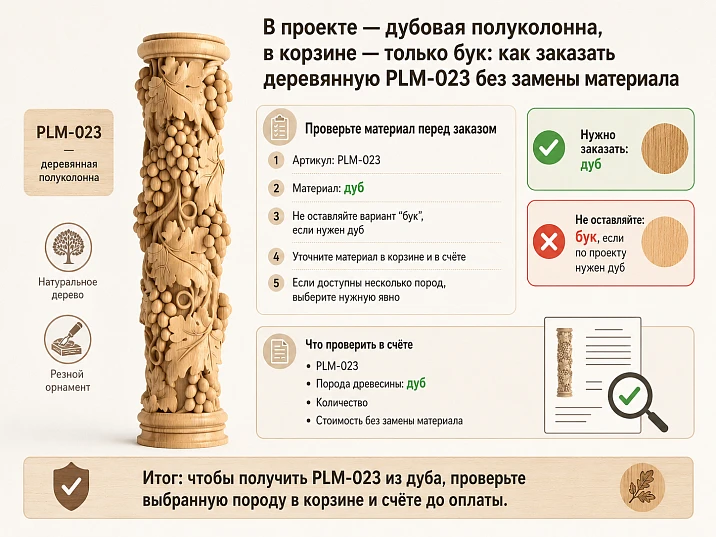
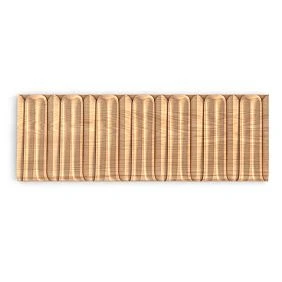
The designer included an oak half-column PLM-023 in the specification for transparent or semi-transparent finishing. The visualization shows the wood texture, with oak trim, baseboard, and portal details nearby. The buyer opens the product page to order the item and encounters a contradiction: the description mentions oak and beech, but the active selection table only offers beech. Moreover, the selected configuration is marked as prepared for enamel.
Can the item be added to the cart, hoping that the word "oak" from the description will be considered during manufacturing? No. The cart records the selected modification, not the designer's intention, which remains in a separate project file. If the selector shows beech, then beech should be considered the confirmed standard material until the manufacturer agrees in writing to another option.
The main mistake here does not occur during installation or painting. It appears earlier—at the moment of paying for a product line that is too short: "PLM-023, 2 pcs." This record does not include the wood species, processing quality, preparation for finishing, or a ban on substitution. When the product is made to order, ambiguity becomes part of the production task.
The direct answer for the buyer is this: the standard confirmed configuration of PLM-023 is beech, sized 721 × 179 × 118 mm, with processing quality "Standard" or "Prestige" and preparation for enamel. The oak half-column cannot be considered available just because oak is mentioned in the description. The possibility of manufacturing from oak must be obtained through separate written confirmation and transferred to the invoice or specification before payment.
If the project allows beech and opaque painting, you can buy the wooden half-column PLM-023 in the configuration that is actually displayed on the product card. If the wood species is critical, the cart should only be used after agreeing on oak, finishing, size, lead time, and cost.
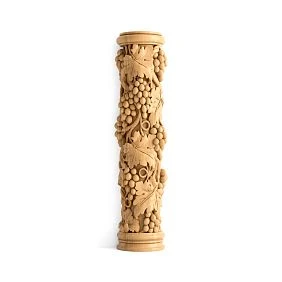
PLM-023 on the product card: what is confirmed without assumptions
The product page provides enough data for a standard order, but it must be read literally. One dimensional configuration is confirmed—721 × 179 × 118 mm. The material in the table is beech. The buyer can choose processing quality "Standard" or "Prestige." The preparation is marked as "for enamel." The item is made to order and can be added to the cart or purchased with one click.
| Parameter | Confirmed value | What does this mean when ordering |
|---|---|---|
| Article number | PLM-023 | The invoice needs the full article number |
| Name | Wooden half-column | The product should not be written as a general word "decor" |
| Size | 721 × 179 × 118 mm | All three dimensions are recorded in the specification |
| Material in the table | Beech | This is a standardly selected wood species |
| Processing quality | "Standard" or "Prestige" | The selected option needs to be transferred to the invoice |
| Preparation | For enamel | This is not a finished paint |
| Production | Custom Order | Current validity is confirmed before payment |
| Oak in description | Mentioned in text | Availability as a modification is not confirmed by the table |
| Oak in selector | Not shown | Requires a separate request to the manufacturer |
| Ready-made set with base and capital | Not confirmed | Mating elements are selected separately |
This table separates fact from expectation. The wording "from oak or beech" in the descriptive part of the page may reflect a general idea, a previous version of the card, or the possibility of custom production. But the buyer should not have to guess the origin of the discrepancy. The commercially valid option is the one that can be selected and that will then appear in the cart and on the invoice.




The size 721 × 179 × 118 mm should be read as the full dimension
Three numbers describe the product in three dimensions. However, without a separate drawing, you should not independently assign the terms "height," "width," or "depth" to each number unless the labels on the diagram have been verified. For the project specification, it is important to preserve the original order 721 × 179 × 118 mm and attach a drawing or image with the orientation of the part.
In practice, 721 mm is perceived as an elongated vertical dimension, but the final alignment with the mounting plane must match the technical documentation. An error in orientation can affect the niche, portal, top finish, and connection with the baseboard.
Our factory also produces:
"Under enamel" does not mean "painted with enamel"
The card confirms preparation for future opaque finishing, not a ready white, black, or colored finish. You should not silently include in the order the expectation that the half-column will arrive painted in the color of the walls or furniture.
Before payment, you need to determine:
-
who performs priming and painting;
-
what color and degree of gloss are provided by the project;
-
whether additional preparation is needed after receipt;
-
will the product be painted separately or together with the portal;
-
which installation seams should disappear under the common finish.
Get Consultation
"Standard" and "Prestige" are not decorative names
The quality of processing affects the volume of subsequent painting preparation. The buyer must choose a specific option in the product card and repeat it in the invoice. You cannot order two paired parts with different processing, expecting that the enamel will completely hide the differences without additional work.
If half-columns are installed mirrored on both sides of the opening, both positions must have the same processing quality, the same wood species, identical preparation, and a common finishing system.
The description says "oak", the table offers beech: which source is more important
The product page consists of several levels of information. They look equal, but for ordering they perform different functions.
The description helps to understand the product's image, purpose, and general options. The modification table shows what can be selected now. The cart records the specific configuration. The invoice turns the selection into a commercial obligation. The manager's written confirmation closes non-standard conditions that are not in the selector.
| Information level | What it communicates | Can oak be paid for on its basis? |
| Text description | Mentions oak and beech | No, if oak is not in the selection |
| Options table | Shows beech | Yes, for the standard beech configuration |
| Cart | Records the selected modification | Only if the material is explicitly specified |
| Count | Determines the paid position | Yes, if the line contains agreed material |
| Manager's letter | Confirms individual terms | Yes, if it is unambiguous and matches the invoice |
| Designer's specification | Shows project requirement | No, until the manufacturer confirms it |
The designer's specification does not automatically manage production. The manufacturer does not see the client's internal file unless it is attached and agreed upon. Therefore, the phrase "we have oak in our project" by itself does not change the beech in the cart.
Why you cannot pay for beech and add "need oak" in the comments
The comment may be noticed, but it must not contradict the paid line. If the cart and invoice contain beech, and the free field contains a request to make oak, a conflict of documents arises. Any non-standard change must be included in the official specification before payment.
Correct sequence:
-
send a request about oak execution;
-
get confirmation of the possibility of manufacturing;
-
agree on size, processing, gluing, and finish;
-
receive a new invoice where the material is specified as oak;
-
separately prohibit changing the wood species without written approval;
-
only after that make the payment.
Why a verbal promise is not enough
A phone conversation helps to quickly understand the situation, but does not replace a document. In a few days, the order may be transferred to another employee, and production will rely on the line in the system. Written confirmation must include the article number, wood species, size, and finishing preparation.
Half-column made of beech under enamel: when the standard configuration fits without compromise
Beech in the card is not a "backup" or deliberately inferior material. It becomes a problem only when the project requires a different wood species and visible texture. For opaque painting, beech can fully meet the task.
The standard option is rational when:
-
the half-column is painted with opaque enamel;
-
the wood grain should not remain visible;
-
the entire portal or furniture block receives a single color;
-
adjacent parts are also prepared for enamel;
-
the wood species is not specified as a mandatory project condition;
-
the craftsman confirmed the compatibility of the preparation with the chosen painting system;
-
the customer wants to use a modification available in the table without individual wood approval.
Beech in a monochrome architectural composition
Imagine a door portal painted in a deep gray-green shade. The half-columns, casings, top finish, and bottom base should be perceived as a single architectural shell. The natural texture is not part of the concept. In such a system, confirmed beech under enamel may be more logical than unconfirmed oak.
The buyer still needs to check the quality of processing and paint preparation. Covering paint does not fix geometric defects, open joints, or improperly fitted connections. It unifies parts by color, but does not replace professional assembly.
Beech for built-in bookshelf
If PLM-023 is used on the sides of a bookcase and the entire facade is painted in one color, the visible wood grain again takes a back seat. Much more important is the matching of dimensions, verticals, and top and bottom joints.
In such a situation, you can buy a wooden half-column after comparing available models, but specifically PLM-023 is ordered only in a confirmed configuration.
When beech stops being suitable
Beech should not be taken as an automatic replacement if the project contains:
-
clear oil;
-
translucent tinting;
-
matching to oak panels;
-
visible wood texture;
-
the requirement for "oak" in the contract with the customer;
-
a restoration or author's solution where the wood species has independent significance.
In such cases, changing the material changes not only the raw material but also the external result.
Oak half-column PLM-023: what information to request before changing the material
The request "make it from oak" is too short. Even if the manufacturer replies that oak is possible, the buyer still does not know whether it will be the same PLM-023 in terms of size, finish, and production conditions.
A written request should cover the entire set of parameters.
Is an oak version available at all
The first question should be direct: is PLM-023 currently produced in oak. Not "can you make something similar," not "do you have oak," but specifically PLM-023.
If the answer is positive, the status of the option needs to be clarified:
-
standard modification, temporarily not shown in the selector;
-
custom manufacturing;
-
another model based on a similar pattern;
-
previous version that is no longer produced;
-
possible only with a certain quantity.
These options cannot be mixed. A custom order may have different lead times, pricing, and approval requirements.
Is the size 721 × 179 × 118 mm preserved?
Changing the wood species should not automatically change the geometry, but confirmation is still required. If the oak version is made to order, the manufacturer may offer a different construction, lamination, or tolerances.
It is better to write in the request:
PLM-023 in oak is required, preserving the size 721 × 179 × 118 mm. Please confirm that the external dimensions and pattern match the standard model.
What preparation is provided for a transparent finish?
The phrase "under enamel" does not suit a project where the texture must remain visible. For oak, the quality of re-gluing and preparation for tinting, oil, varnish, or another system chosen by the finisher must be separately agreed upon.
The article should not promise that such preparation is available. It only shows that the question is mandatory.
Is there a minimum quantity?
A non-standard wood species can only be manufactured with a certain batch. The absence of a minimum print run in the card does not mean it is absent for an individual modification.
How will the price and lead time change?
The current price and lead time are confirmed after the configuration is agreed upon. The price of a beech item cannot be transferred to an oak item. Nor can the lead time of a standard order be considered valid for an individual material.
Will the word "oak" appear in the invoice?
This is a decisive question. Even detailed correspondence should not remain separate from the payment document. The line should state:
Wooden half-column PLM-023, oak, 721 × 179 × 118 mm, treatment ___, preparation ___, quantity ___ pcs.
If the account still shows beech, it cannot be paid as an oak order.
Beech or oak: comparing not abstract species, but two commercial situations
The general debate about 'which is better — beech or oak' is useless here. The buyer is not choosing wood in a vacuum. He is comparing a confirmed standard configuration and a desired but not yet confirmed option.
| Criterion | Beech in the current table | Oak mentioned in the description |
| Status | Available for selection | Not shown as a standard modification |
| Size | 721 × 179 × 118 mm | Requires confirmation |
| Processing | "Standard" or "Prestige" | Requires approval |
| Preparation | For enamel | Not confirmed for a transparent finish |
| Adding to cart | Affordable | Cannot be selected directly |
| Price | Determined by the selected card | Requires separate calculation |
| Lead time | Confirmed for the order | May differ |
| Risk of substitution | Low with exact specification | High without written specification |
| Suitable scenario | Opaque painting | Visible oak texture if manufacturing is approved |
Main takeaway from the table: beech can be discussed as a real purchase, oak — first as a request. Until a written response, these options are not on the same commercial level.
When the oak requirement is truly fundamental
The wood species becomes mandatory if it affects the visible result or contractual obligations. For example:
-
the half-column must match the oak panels;
-
the project specifies transparent oil;
-
the client approved an oak tinting sample;
-
the part is installed next to a natural oak baseboard;
-
the specification explicitly states "solid oak";
-
the project falls under premium joinery finishing, where substituting the wood species is unacceptable.
When beech can be renegotiated
If all decor will be painted opaquely, the designer can officially replace the requirement. But the decision must be made not by the store manager or the buyer independently, but by the person responsible for the project: the designer, architect, technologist, or client.
Re-approval is formalized with a new list or a written letter. After that, the beech ceases to be a random substitute and becomes an approved material.
Architectural half-column in the specification: one line that protects the entire project
A weak specification lists only the article number and quantity:
PLM-023 — 2 pcs.
Such an entry does not answer the main questions. Production does not see which wood species is needed, what quality of processing is chosen, and for which finish the surface is being prepared.
Entry for a confirmed standard option
Wooden half-column PLM-023.
Dimensions: 721 × 179 × 118 mm.
Material: beech.
Quality of processing: "Prestige".
Preparation: under enamel.
Quantity: 2 pcs.
Products for paired installation.
Replacement of material or processing quality without written approval is not allowed.
Request for oak version
A wooden half-column PLM-023 made of oak is required.
Dimensions: 721 × 179 × 118 mm.
Quantity: 2 pcs.
Purpose: paired portal design.
Planned finish: translucent tinting with visible texture.
Please confirm the possibility of manufacturing, external dimensions, processing quality, type of gluing, surface preparation, price, delivery time, and minimum quantity.
Beech as a replacement is not approved.
Why it is useful to specify the purpose
The phrase "paired portal design" helps the manufacturer and the assembler understand that two parts should be perceived together. This does not automatically guarantee a mirrored texture match, but it provides a basis to separately discuss pairing, packaging, and visual consistency.
Why a replacement ban is needed even when ordering beech
Replacement may concern not only the wood species. In the project, it is critical to preserve the quality of processing, size, and preparation. The last line of the specification protects the entire set of parameters.
"Under enamel" and transparent finish: why these are two different production routes
The buyer sometimes thinks that any wooden part can first be ordered under enamel, and then instead of paint, covered with oil. Technically, the wood will remain wood, but the visual result may not match the project.
Preparation for opaque enamel allows a logic where the main thing becomes a smooth paintable relief. With a transparent or semi-transparent finish, the viewer sees the texture, color, grain direction, glue joints, and differences in wood areas. The selection criteria become different.
What to request for visible texture
-
a photo or description of the available preparation;
-
confirmation of the wood species;
-
processing quality;
-
acceptable finish type;
-
a sample or test piece, if possible;
-
rules for agreeing on the appearance of the pair;
-
information on how adhesive joints will look;
-
finisher's recommendations for a test stain.
Why the color in the visualization guarantees nothing
Computer visualization shows the designer's intention, not the actual wood. The tint depends on the base, preparation, composition, and number of layers. Even an approved oak needs to be checked on a sample.
Enamel does not cancel the test
For beech under opaque painting, a test is also needed. White matte enamel, dark glossy surface, and a complex patinated scheme impose different requirements on relief preparation.
In this section you can Buy materials for installation and finishing After agreeing on the technology with the master. The link leads to a related category, but specific compositions are not automatically included in PLM-023.
"Standard" or "Prestige": how to choose processing quality without unnecessary overpayment
The buyer should not choose an option only by its name. It is necessary to link the processing quality with the future finish, the location of the product, and the volume of painting work.
When to consider "Standard"
The option may suit a project where the workshop performs full additional preparation, and the product is painted with an opaque system. But the exact scope of work should be discussed with the manufacturer and the finisher. The article does not attribute specific defects or operations to the option that are not in the card.
When "Prestige" is rational
For a large visible portal, paired installation, and complex relief, higher processing quality can reduce the risk of differences and the amount of manual finishing. This is especially important when the part is at eye level and illuminated by side light.
Why two half-columns should have the same option
If "Prestige" is ordered on the left and "Standard" on the right, the painter gets two surfaces with potentially different readiness. Even after painting, differences may appear in the shadows of the relief and the quality of joints.
What to write in the order
Not "good processing", but the exact name from the card. Colloquial assessments do not work as a production parameter.
Paired installation: two PLM-023 must be ordered as one composition
A half-column is often not installed alone. Two pieces frame a doorway, fireplace portal, library, niche, or central furniture section. With this application, an error in one position becomes more noticeable because the viewer compares the left and right sides.
Material
Both pieces must be from the same matched wood species. Beech on the left and oak on the right cannot be turned into a uniform pair with one line "paint the same", especially with a transparent finish.
Size
Dimensions must match. If one half-column is trimmed on site, the decision must be included in the installation diagram in advance.
Quality of processing
The same processing category simplifies preparation and painting.
Preparation for finish
You cannot order one piece for enamel and another for tinting. Even if both currently look like raw wood, the production route differs.
Batch and visual consistency
For oak with visible texture, ask for the pieces to be produced and selected as a pair, if such a service is available. You cannot promise a mirror match of the grain until it is agreed, but the request itself must be made before manufacturing.
Packaging
Paired items should preferably be marked as left and right or as a set 1/2, if the installation diagram distinguishes sides. The card does not confirm special packaging of the pair, so the question is asked separately.
Half-column for the portal: dimensions are checked before ordering, not before installation
PLM-023 has a height of about 721 mm according to the dimension line, so it does not replace a full column from floor to ceiling. In the portal, the part can work as a lower or central decorative module, and can be paired with a base, capital, cornice, or other elements.
Before ordering, you need to take not one overall opening size, but a whole grid.
| Measurement | What it's for |
| Height of available zone | Checking the 721 mm dimension and interfaces |
| Width of the wall section | Checking the 179 mm dimension and side margins |
| Allowable protrusion | Checking the 118 mm dimension and passage |
| Distance to door leaf | Conflict exclusion when opening |
| Skirting board height | Alignment of bottom junction |
| Top decor dimension | Alignment of capital or cornice |
| Wall deviation | Base preparation calculation |
| Distance between pair | Composition symmetry check |
The 118 mm protrusion cannot be ignored
In a narrow passage, deep relief can approach the trajectory of a door, furniture, or a person's movement. A paper facade template does not show depth. It is useful to make a three-dimensional mockup from cardboard or foam material.
The 721 mm height must be linked to the lower and upper points
You cannot first buy a half-column and then look for a random base to cover the remaining gap. The entire vertical set is designed in advance.
The wall must be checked for flatness
Wooden relief does not level a sloped surface. If the base has a wave, gaps will appear between the part and the wall. The preparation method is determined by the installer.
Doorway, fireplace, library, or furniture: four different ways to use PLM-023
The same article can be used in different compositions, but the list of mating elements and material requirements change. You cannot copy the specification from a fireplace portal to a cabinet, even if both structures externally have vertical carved details.
Door opening
Half-columns work on the sides of the opening and visually enhance the vertical. Here, especially important are:
-
free passage width;
-
door trajectory;
-
junction with the casing;
-
height of the bottom baseboard;
-
identical position of the left and right parts;
-
absence of protrusions that could catch on a shoulder or clothing.
If the project requires a flatter solution, it is worth comparing a semi-column with a pilaster. In the catalog, you can buy pilasters and columns after checking the depth, pattern, and installation method of each model.
Fireplace portal
A semi-column forms the side part of a decorative composition. It should not automatically be considered a structural support for a mantel or other heavy element. The load-bearing function requires a separate calculation, which the product card does not confirm.
For the portal, the following are agreed upon:
-
distance to the heat source;
-
base material;
-
top termination;
-
lower base;
-
finish of the entire composition;
-
equipment manufacturer's requirements;
-
possibility of using wood in the selected zone.
The article does not specify the permissible temperature and distance: such data is not in the card.
Library or built-in wardrobe
PLM-023 can frame the central section, side panels, or a portal around open shelves. Precise furniture dimensions, door positions, drawers, and handles are important here.
If the entire system is painted with opaque enamel, beech under enamel can match the project. If the facades and cornice are made of oak with a transparent finish, the material of the half-column becomes crucial.
Wall composition
On the wall, a semi-column can be connected to panels, cornice, capital, and plinth. This is not a reason to turn the order into a single line "wooden decor." Each element has its own material, size, finishing, and preparation.
For a comprehensive selection, you can buy wooden decor in the relevant categories, and then compile a general list without mixing article numbers.
How not to confuse a semi-column with a column, pilaster, and overlay
A long historical review is not needed here. The buyer needs to understand what type of part they are ordering and why a similar product may not fit in the same place.
| Product type | Practical difference | What to check before replacement |
| Half-column | A three-dimensional element designed to adjoin a plane | Depth, radius, mounting surface |
| Full column | Visible from all sides or has independent volume | Circular geometry and support scheme |
| Pilaster | Flatter vertical decorative element | Width, thickness, pattern |
| Carved overlay | Local decor without extended column body | Base size and composition |
| Casing | Frames the edge of a door or window opening | Width of the overlap and junction with the wall |
Half-column or pilaster
If there is little space in the corridor and the 118 mm protrusion obstructs passage, a pilaster may be more practical. But the replacement cannot be made solely based on the word "flat." You need to re-check the height, width, pattern, and top finish.
Half-column or full column
PLM-023 is designed for composition against a flat surface. Attempting to use it as a freestanding element will leave the back exposed or require special assembly not confirmed by the product card.
Half-column or overlay
An overlay can add ornament to the facade, but it will not create the same volume and vertical rhythm. This is a different scale of architectural decor.
Capital for PLM-023: why style does not replace the drawing
The upper completion of column decor is often called a capital. The buyer sees an appealing floral ornament and assumes that any capital can be installed above PLM-023. In practice, compatibility is determined by geometry.
Before buy a wooden capital, you need to compare:
-
the width of the half-column is 179 mm;
-
the depth is 118 mm;
-
shape of the top end;
-
radius and profile of the front part;
-
width and depth of the capital;
-
size of the side projection;
-
method of attachment to the wall;
-
location of the adjacent cornice;
-
drawings of both parts.
Capital too narrow
If the top finish is narrower than the body of the half-column, the composition looks random, and the joint may remain open.
Capital too wide
A large protrusion can catch on a door, an adjacent cabinet, or narrow the passage. In a paired composition, wide parts may visually come closer together than in the sketch.
Mismatched depth
The capital may protrude forward more or less than the half-column. Sometimes this is intended by the architectural logic, sometimes it creates an unfortunate step. The decision is made based on the side view.
The finished set is not confirmed
The PLM-023 card does not show the universal base and capital that are automatically included in the order. Each item is added separately after verification.
Bottom finish: base, plinth, and floor line
The lower part of a half-column rarely exists on its own. It meets the floor, furniture plinth, wall baseboard, or a separate base. An error in this area is immediately visible: the plinth hits the relief, leaves a gap, or breaks off without logic.
When PLM-023 is used in a portal or wall composition, the lower horizontal profile is better included in the same finishing schedule. Can buy wooden skirting board be under an agreed enamel or tinting, but the material, length, preparation, and finish of the half-column and plinth are fixed for each item separately.
Three possible joints
-
The plinth fits against the side face of the half-column.
-
The plinth runs behind it, and the half-column is installed on top.
-
The lower base breaks the plinth and forms an independent assembly.
No option can be declared universal. The choice depends on the drawing and the installation sequence.
Why the plinth should not be ordered earlier
If the base or half-column changes the actual width, the plinth lengths will need to be recalculated. First approve the assembly, then create the cutting map.
What to buy together with PLM-023
The set depends on the project. The table helps check related categories, but does not mean that all items are mandatory or compatible without drawings.
| Product or category | Task in the project | What to check |
| Wooden half-column PLM-023 | Main vertical decor | Material, size, finish, preparation |
| Section of wooden half-columns | Comparison of other models | Dimensions, depth, pattern |
| pilasters and columns | Alternative vertical elements | Construction type and protrusion |
| Wooden capitals | Top finish | Matching by width and depth |
| carved wooden decor | additional composition elements | Style, size, and finish |
| Mounting and finishing materials | Preparation, mounting, and finish | Compatibility with beech or matched oak |
| Wooden Skirting Boards | Lower horizontal framing | Height, profile, material |
Do not buy a capital based on the collection name
Even stylistically similar items may not match in geometry. The drawing matters more than the words "classic," "Doric," or "carved."
Do not add mounting materials randomly
The composition depends on the wall, furniture, part weight, installation method, and future coating. The PLM-023 card does not confirm a universal fastener kit.
Do not mix finishes of different wood species
If an oak half-column is to be matched, materials for a test stain are chosen specifically for oak. A system approved on beech does not guarantee the same color on another species.
Mounting preparation without invented technology
The product card does not provide full instructions for mounting PLM-023. Therefore, the article should not specify the number of screws, type of adhesive, placement of hidden pins, or allowable load.
Professional preparation begins with five questions:
-
What base is the part installed on?
-
Is the half-column purely decorative?
-
Should it be removable?
-
How are the mounting points concealed?
-
When is the final painting done?
Wall
The base is checked for strength, flatness, and material. Drywall, a solid wall, a furniture panel, and a wooden portal require different solutions.
Back side of the product
You need to obtain a drawing or the actual part and understand the contact area. You cannot calculate the mounting based on a single frontal photo.
Sequence of finishing
The half-column can be prepared separately, and the finish can be done after installation, or painted before installation. The decision depends on the visibility of seams and the finishing system.
Trial assembly
Before applying the final coating, it is useful to do a dry fit of the entire composition: half-columns, capitals, bases, plinth, and adjacent panels.
How to organize a test paint-out
One of the most expensive mistakes is approving a color from a fan deck without testing it on the selected wood and relief. Deep carving creates shadows, and paint is perceived differently on a flat panel and a voluminous half-column.
ForCheck upon acceptance
Before installation, compare:
-
article number;
-
quantity;
-
size;
-
material according to documents;
-
processing quality;
-
visible damage;
-
matching of paired parts;
-
packaging marking.
If the order is approved as oak, but the documents or the product raise doubts, do not start finishing until clarified. After tinting, the dispute over the material becomes more complicated.
Practical scenarios: what decision to make in each situation
The project specifies oak, but the entire composition will be white
Do not rush to demand a non-standard material. First ask the designer whether oak is a technical requirement or a formal note. If the texture is completely covered by enamel, beech can be officially approved without losing the intent.
Oak is needed to match the panels
Do not pay for beech. Request oak manufacturing, a finish sample, and fixation of the material in the invoice.
One half-column is needed for an asymmetrical niche
Check whether the composition really does not require a pair. The quantity "1 pc." must be explicitly stated.
Need two pieces on the sides of the door
Order them in one batch with the same material and finish. Specify paired use.
The card only allows selecting "Standard", but the project requires "Prestige"
Do not replace the parameter in the comment. Get an invoice with the required finish option.
The project specifies clear lacquer on beech
The standard card says "under enamel". The possibility of other preparation must be agreed separately, even if the wood species remains beech.
The opening size differs by a few millimeters
It is not assumed that a half-column can be trimmed in any zone without consequences. Before changing the size or cutting, request a drawing and consultation with a craftsman.
The capital has already been purchased
First compare its dimensions with PLM-023. Having a ready capital does not automatically make the half-column compatible.
The plinth is already installed
Take precise measurements of the node and decide whether the half-column will adjoin, overlap, or break it. Reworking the lower zone may be required.
The finisher suggests choosing the material after receipt
This order is unacceptable if the wood species is critical. The material is determined before manufacturing and specified in the documents.
Control cross-check of documents: the card, cart, invoice, and project must say the same thing
The buyer often checks each document separately. In the card, they see the size; in the project, oak; in the cart, beech; in correspondence, a promise to clarify the material. Each part seems clear, but together they contradict each other. Before payment, they need to be assembled into a single chain and checked for parameter consistency.
Product card
The card answers the question of what standard configuration is published. For PLM-023, it is beech, size 721 × 179 × 118 mm, finish "Standard" or "Prestige", preparation for enamel, and made to order.
Project specification sheet
The specification shows what is required for the object. If it lists oak, that is a design condition, not an automatically available modification. Any discrepancy with the card must be resolved before purchase.
Cart
The cart must match the agreed configuration. If it shows beech but the project requires oak, the order is put on hold.
Correspondence
The manager's letter confirms non-standard terms, but must contain specifics. The phrase "I think we can" is not equivalent to production approval. Article number, material, size, finish, and preparation are required.
Invoice
The invoice is the final point before payment. It should not make the buyer mentally connect information from different files. All critical parameters are specified in the product line itself or in the attached specification.
| Parameter | Project | Product card | Cart | Count | Result |
| Article number | PLM-023 | PLM-023 | PLM-023 | PLM-023 | Matches |
| Size | 721 × 179 × 118 mm | 721 × 179 × 118 mm | Check | Specify | Must match |
| Material | Oak | Beech | Beech | Beech | Cannot be paid without re-approval |
| Processing | «Prestige» | Available | Select | Specify | Must match |
| Preparation | For tinting | For enamel | For enamel | For enamel | Requires separate approval |
| Quantity | 2 pcs. | Not applicable | 2 pcs. | 2 pcs. | Matches |
Such a matrix takes a few minutes and immediately shows where the conflict is. It is useful not only for a plain order. Even a standard beech can be designed incorrectly if processing or quantity is missed in the invoice.
How to evaluate PLM-023 at full scale before production
Dimensions on screen are perceived abstractly. A half-column about 721 mm high, 179 mm wide, and 118 mm deep may look compact on a large wall and too massive next to a narrow door. Before ordering, it is useful to make a full-size mockup.
Flat outline
Cut out a rectangle from paper or cardboard according to the frontal dimension and attach it to the wall. It will show height and width, but not depth.
Volumetric template
Assemble a box-shaped mockup with a 118 mm protrusion. It is this that reveals conflicts with the passage, door leaf, handle, or adjacent furniture.
Paired fitting
For the portal, create two templates. One half-column may look appropriate, but a pair may excessively narrow the composition. Check the distance between the inner edges and the free margin around the opening.
Check the top finish
Add a conditional outline of the capital or cornice. Without it, the half-column may appear smaller than it will look in the assembled system.
Check with the plinth
Mark the height of the existing or future plinth. It will immediately become clear where the joint occurs and whether a separate base is needed.
The mockup does not replace a drawing, but it allows understanding the scale before the product is made to order.
Why the article does not promise oak, price, and lead time
Commercial text should help to buy, not push toward paying for an unconfirmed item. In the case of PLM-023, three parameters cannot be fixed without a separate response from the manufacturer.
The first is the oak version. It is mentioned in the description but absent from the table. The second is the price of the oak version: the cost of beech cannot be transferred to a custom wood species. The third is the lead time: custom production may differ from the standard configuration.
An honest article does not become less sales-oriented due to such limitations. It turns doubt into a clear next step: the buyer formulates a request, receives an accurate specification, and pays for a product that truly matches the project. This is stronger than a promise that will reveal its inaccuracy only after manufacturing.
Additional situations where the breed needs to be fixed especially strictly
The object is handed over under author supervision
The architect checks compliance with the approved list. Unauthorized replacement of oak with beech can be grounds for rework, even if the part is painted with high quality.
The half-column is included in the set of joinery products
If doors, panels, skirting boards, and furniture are made of oak, one beech item violates the material specification. All elements must be listed separately but coordinated as a system.
The order is executed for a public interior
In a restaurant, hotel, or office, repeatability is important. If an additional part is needed later, the saved specification will help reproduce the material and finish.
The project provides for patina on enamel
Even with opaque finishing, preparation and quality of processing must be confirmed. Patina emphasizes the relief, so surface differences become more noticeable.
The half-column is installed next to bright side light
Light reveals geometry and finish. For a pair, it is especially important to have consistent quality and neat alignment with the wall.
The client is still choosing between oak and beech.
Do not place a production order until a decision is made. You can request two commercial options: confirmed beech under enamel and possible oak under an agreed finish. You need to compare the full set of terms, not just the product price.
Mistakes that cause the buyer to receive the wrong half-column
Mistake 1. Treating the description as equal to the product selector
The text mentions oak, but the table shows beech. For payment, the selected configuration matters.
Mistake 2. Adding beech to the cart and expecting oak
The cart does not read the designer's specification. The material must be stated explicitly.
Mistake 3. Writing down only the article number
The line "PLM-023 — 2 pcs." does not specify the wood species, finish, or preparation.
Error 4. Leave the oak requirement only in the comment.
The comment must not contradict the invoice. A corrected product line is needed.
Error 5. Consider "under enamel" as a finished paint.
The product requires separate finishing work.
Error 6. Choose the color before choosing the wood species.
A semi-transparent finish depends on the wood base.
Error 7. Approve the tinting on beech for future oak.
A sample on a different wood species does not show the final color.
Error 8. Order paired parts with different treatments.
The left and right sides may require different amounts of preparation.
Error 9. Buying a capital only by style
The junction is checked by width, depth, and drawing.
Error 10. Not measuring the 118 mm protrusion
A half-column may interfere with a door or passage.
Error 11. Checking only the height
The width of the wall section and the allowable depth are no less important.
Error 12. Treating a half-column as a load-bearing support
The card confirms a decorative product, not a calculated structural function.
Error 13. Cutting the product before studying the pattern
Changing the top or bottom part may disrupt proportions and junctions.
Error 14. Ordering one part when the project requires a pair
The second half-column may later differ in batch or preparation.
Error 15. Ordering two parts separately
A paired composition is better specified in a single specification.
Error 16. Not prohibiting material substitution
Without an explicit line, beech may be perceived as an acceptable alternative to the desired oak.
Error 17. Not checking the invoice after correspondence
The manager agreed on oak, but the document remained beech.
Error 18. Assuming the size of the oak version is unchanged
For custom manufacturing, dimensions are confirmed separately.
Error 19. Transfer the price of beech to oak
Individual material requires a new calculation.
Error 20. Transfer the deadline of a standard item to a non-standard one
The actual deadline is confirmed after configuration approval.
Error 21. Mix a half-column, capital, and base in one line
Each product must have its own article number and characteristics.
Error 22. Order mounting materials without a base scheme
Mounting depends on the wall, furniture, and finishing sequence.
Error 23. Start painting before the test assembly
After finishing, it is harder to fix joints and gaps.
Error 24. Evaluating the relief only from the front
The side view shows the actual protrusion and depth of shadows.
Error 25. Not checking the wall for flatness
A rigid wooden part does not conform to a curved base without gaps.
Error 26. Agreeing on the material verbally
In case of a dispute, production relies on documents.
Error 27. Not saving the current version of the invoice
The buyer cannot prove which configuration was paid for.
Error 28. Approving a sample without specifying the finishing system
The color of one layer does not equal the result of the full cycle.
Error 29. Considering beech a downgrade by default
For opaque enamel, it can be a fully consistent solution.
Error 30. Considering oak a guaranteed upgrade
Without confirmed preparation and a sample, an expensive species does not guarantee the desired visual result.
Who the standard PLM-023 in beech suits
A confirmed modification should be considered if:
-
the size 721 × 179 × 118 mm matches the mounting area;
-
the project allows beech;
-
the surface will be painted with opaque enamel;
-
the processing quality "Standard" or "Prestige" is chosen deliberately;
-
the product is used as a decorative half-column;
-
paired parts are ordered simultaneously;
-
the upper and lower connections are already designed;
-
the customer understands that the finished finish is not automatically included;
-
the production time for custom order is confirmed;
-
the material and parameters are transferred to the invoice.
Who cannot be paid for standard beech without re-approval
The order must be stopped if:
-
oak is recorded in the approved list;
-
a transparent or semi-transparent finish is required;
-
The half-column must match the natural oak parts;
-
The wood species is a condition of the contract;
-
The texture is part of the design;
-
The client did not approve the replacement;
-
The material is missing from the invoice;
-
The paired parts are listed on separate lines;
-
The size of the installation area has not been checked;
-
The capital and base have not been selected yet;
-
A structural load is anticipated;
-
There is no clarity on who will perform the finishing and installation.
Ready order PLM-023 at STAVROS
Step 1. Match the project and the card
Write down the required breed, size, quantity, finish, and purpose. Then compare with the available modification.
Step 2. Decide if oak is essential
Get the designer's or client's answer. Do not make the decision instead of the project author.
Step 3. If beech is suitable, choose the treatment
Record "Standard" or "Prestige" and preparation for enamel.
Step 4. If oak is needed, send a full request
Clarify the possibility of manufacturing, size, treatment, re-gluing, finish, price, lead time, and minimum quantity.
Step 5. Check the quantity
For paired installation, two parts are usually considered, but the actual number is determined by the drawing.
Step 6. Align mating elements
The capital, base, plinth, and adjacent decor are selected by size.
Step 7. Obtain the final specification
It must include the article number, material, size, finish, preparation, and quantity.
Step 8. Prohibit unauthorized replacement
Add the corresponding line to the order.
Step 9. Check the deadline and delivery
Since the product is made to order, current terms are confirmed for the selected configuration.
Step 10. Pay only for the matching invoice
If the correspondence says "oak" and the invoice says "beech," the document needs to be corrected.
Checklist before payment
-
The article PLM-023 is listed without error.
-
The dimensions 721 × 179 × 118 mm have been transferred to the specification.
-
The material is written as a separate word.
-
Beech is selected for the standard order.
-
For oak, a separate written confirmation has been received.
-
The quality of processing has been recorded.
-
Preparation for enamel is not confused with finished painting.
-
The planned finish has been agreed with the finisher.
-
Quantity matches the project.
-
Paired designation is specified.
-
Replacement of material without approval is prohibited.
-
The size of the pier has been checked.
-
The 118 mm protrusion does not obstruct passage.
-
The door opens freely.
-
The top finish is selected according to the drawing.
-
The bottom connection to the baseboard has been developed.
-
The base has been checked for flatness.
-
Mounting materials are not considered automatically included.
-
Production time confirmed.
-
The price refers to the required wood species.
-
Packaging and delivery method agreed upon.
-
Final invoice matches the correspondence.
-
Current version of the document saved.
-
Finishing will not begin until material inspection.
-
For transparent finish, a test stain has been approved.
FAQ about wooden half-column PLM-023
What material is standardly available in the PLM-023 card?
Beech is available in the current table. It should be considered the confirmed standard wood species.
Why is oak mentioned in the description?
The reason for the discrepancy is not explained. The mention may reflect a general possibility or a previous revision, but it does not confirm the availability of oak in the selector.
Can I order PLM-023 in oak?
The option needs to be requested separately. The article cannot guarantee an oak finish because it is not in the published table of options.
Can I pay for beech and then ask for oak?
No. First, the material is changed in the specification and invoice, then paid for.
What is the size of PLM-023?
The confirmed dimension line is 721 × 179 × 118 mm.
Which number indicates the height?
The orientation should be checked against the current drawing. In the specification, it is safer to keep the full order of dimensions.
What processing options are available?
The card indicates "Standard" and "Prestige". The selected option must be repeated in the invoice.
What does preparation for enamel mean?
The product is intended for subsequent opaque finishing. Finished painting is not considered automatically included.
Can standard beech PLM-023 be coated with clear oil?
Such finishing is not confirmed by the selected configuration. The possibility and final appearance must be coordinated with the manufacturer and finisher.
Is beech suitable for white enamel?
It may be suitable if the project allows beech and the craftsman confirms the preparation system. The final result is verified with a sample.
Is beech suitable instead of oak for tinting?
This is not an equivalent replacement. The species have different visual characteristics, so the change must be approved by the project author or the customer.
Is enamel included in the set?
There is no reason to consider it included. Materials and finishing works are arranged separately.
Is PLM-023 sold ready for installation?
The card does not confirm a complete installation kit. The mounting method and base preparation need to be designed separately.
Is the capital included?
A ready universal kit of capital and base is not confirmed. The top finish is chosen separately.
How to select a capital?
Match the width, depth, shape of the top end, and drawings. Stylistic similarity is not enough.
Can a half-column be installed without a base?
This depends on the composition and the bottom node. You need to decide how the part meets the floor or baseboard.
Will PLM-023 fit for a door portal?
May be suitable if the dimensions, protrusion, and door trajectory are checked. The product should not reduce the passage or obstruct opening.
Can it be used near a fireplace?
Only after checking the conditions of the specific equipment and base. Permissible distances and temperatures are not confirmed by the card.
Is the half-column load-bearing?
The card does not confirm a load-bearing function. Consider it as a decorative architectural element.
How many half-columns are needed for the opening?
For a symmetrical portal, a pair is usually designed, but the exact quantity is determined by the drawing.
Is it necessary to order paired items at the same time?
Yes, this reduces the risk of differences in batch, processing, and preparation. Indicate the paired purpose in the order.
Can I order one PLM-023 as a sample?
The possibility and terms of ordering need to be checked in the product card or with a manager. Please note that the item is made to order.
How to check that the invoice specifically says oak?
The product line must explicitly state "oak." The words "PLM-023" and "wooden" are not sufficient.
What to do if the manager confirmed oak by email, but the invoice still says beech?
Request a corrected invoice and do not pay a contradictory document.
Is it possible to agree on replacing oak with beech after the order is placed?
Only before production starts or in a manner confirmed by the manufacturer. The change must be in writing.
Which finishing option should be chosen for a visible portal?
Compare the finisher's requirements and the installation location. For paired, noticeable decor, "Prestige" is often considered, but the decision is made based on the actual scope of preparation.
Is it necessary to do a test paint for enamel?
Yes. The sample shows the color, gloss, and behavior of the coating on the relief.
Do I need to make a sample for oak tinting?
Yes, after confirming the oak finish. The sample must match the actual wood species and preparation.
Can PLM-023 be shortened?
The possibility depends on the pattern and construction. Trimming cannot be planned without a drawing and consultation with a craftsman.
What should be checked on the wall before installation?
Flatness, strength, base material, wiring location, and junction with other elements.
Can a half-column be installed after the wall has been finish-painted?
Only according to the agreed technology. It is often more convenient to first do a fitting and prepare the joints.
What to do if the baseboard is already installed?
Develop a junction node: the plinth can approach the part, pass behind it, or be interrupted by the base.
Where can I compare other half-columns?
Can be opened Section of wooden half-columns and compare the dimensions and shape of available models.
Where can I view pilasters and columns?
In the catalog you can buy pilasters and columns after checking the product type and mounting depth.
Where can I choose other carved decor?
Related categories are collected in a section where you can buy wooden decor for furniture and interior compositions.
What question should I ask the manager first?
"Confirm whether PLM-023 can be made from oak and whether the material 'oak' will be specified in the invoice."
The buyer must receive the wood species they paid for.
In the case of PLM-023, there is no complex puzzle. There are two different messages on the same product page. The description mentions oak and beech, while the table only allows selecting beech. Until this discrepancy is resolved, the standard order is considered to be a beech half-column measuring 721 × 179 × 118 mm with the selected finish "Standard" or "Prestige" and preparation for enamel.
If the project is designed for opaque painting and the wood species is not critical, beech can be an accurate, rational, and fully consistent solution. But if the designer approved a visible oak texture, you cannot substitute the requirement with hope for a textual description. Oak is first confirmed as an available material, then the size, finish, preparation, price, and lead time are agreed upon, after which you receive an invoice with a direct line item "oak."
Before payment, check not only the article number. Verify the wood species, three dimensions, finish quality, preparation for coating, quantity, paired purpose, and substitution prohibition. For the portal, additionally coordinate the capital, lower base, plinth, protrusion, and method of adjoining the wall.
STAVROS company combines in its catalog wooden half-columns, pilasters, capitals, carved decor, plinths, and materials for installation and finishing. A strong order is built not on guesswork, but on an agreed bill of materials: the project requirement turns into a precise product line, the product line into a correct invoice, and the invoice into a product of the required material without unexpected substitution.