




























Article Contents:
- What is a floral garland in interior decor
- What types of plant garlands exist
- Floral garland
- Grape garland
- Laurel garland
- Garland with buds and leaves
- Where to use a floral garland
- On furniture
- On walls
- On doors and portals
- On mirrors and frames
- Polyurethane or wood — which to choose
- How to choose the size of a floral garland
- How to choose a finish
- How to combine a garland with moldings
- Mistakes when choosing a floral garland
- FAQ: Answers to Popular Questions
- About the company
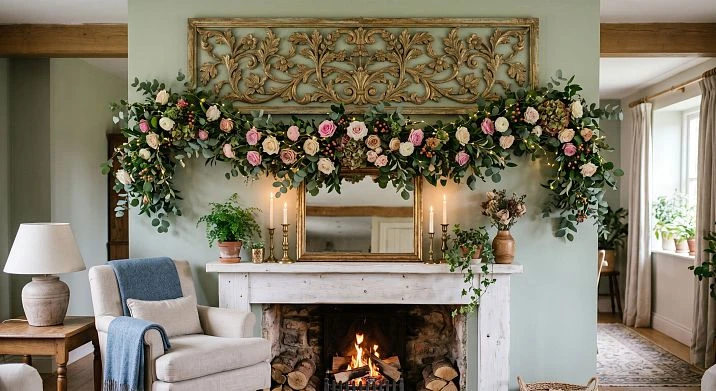
A floral garland in the interior is not an accessory or a random detail. It is an architectural gesture that changes the perception of furniture, a wall, a door, or an entire portal. When choosing a decorative overlay with a floral pattern, you are not just selecting a beautiful design — you are setting the character of the entire space, its stylistic vector, its historical depth. And that is why the choice of such an overlay should be approached with understanding: what material, what scale, what motif, what finish.
For furniture facades, the best solution remains a carved wooden overlay made of beech or oak — it holds the relief, preserves the precision of the ornament, and looks organic in the texture of natural material. For wall compositions, large portals, and frame structures, they often use molded decoration made of polyurethane — it is lighter, does not require complex fastening, and accepts any paint without losing relief. The main thing is not to confuse the tasks. It is from this mistake that half of unsuccessful interiors grow: they bought something beautiful, did not think about the place.
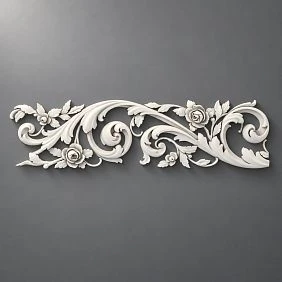
What is a floral garland in interior decor
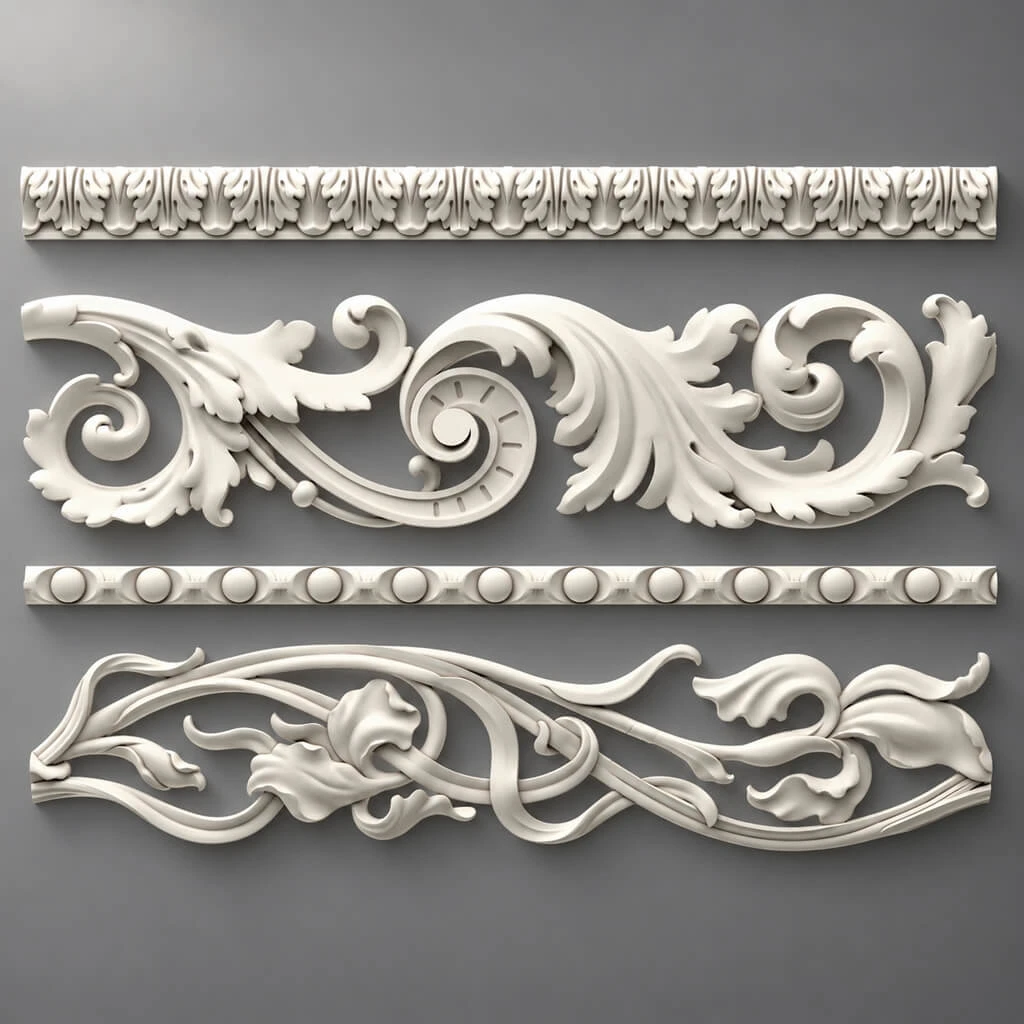
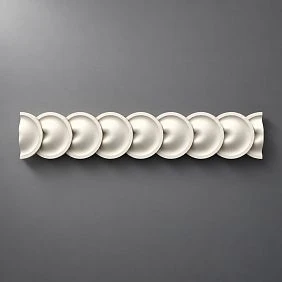
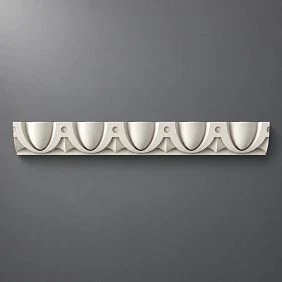
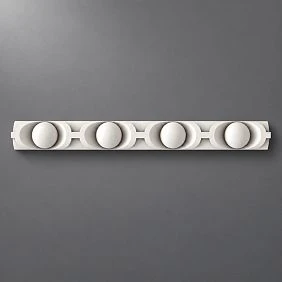
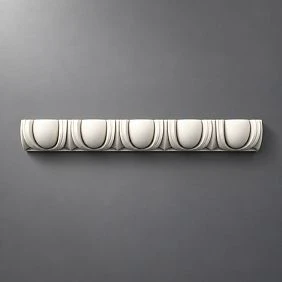
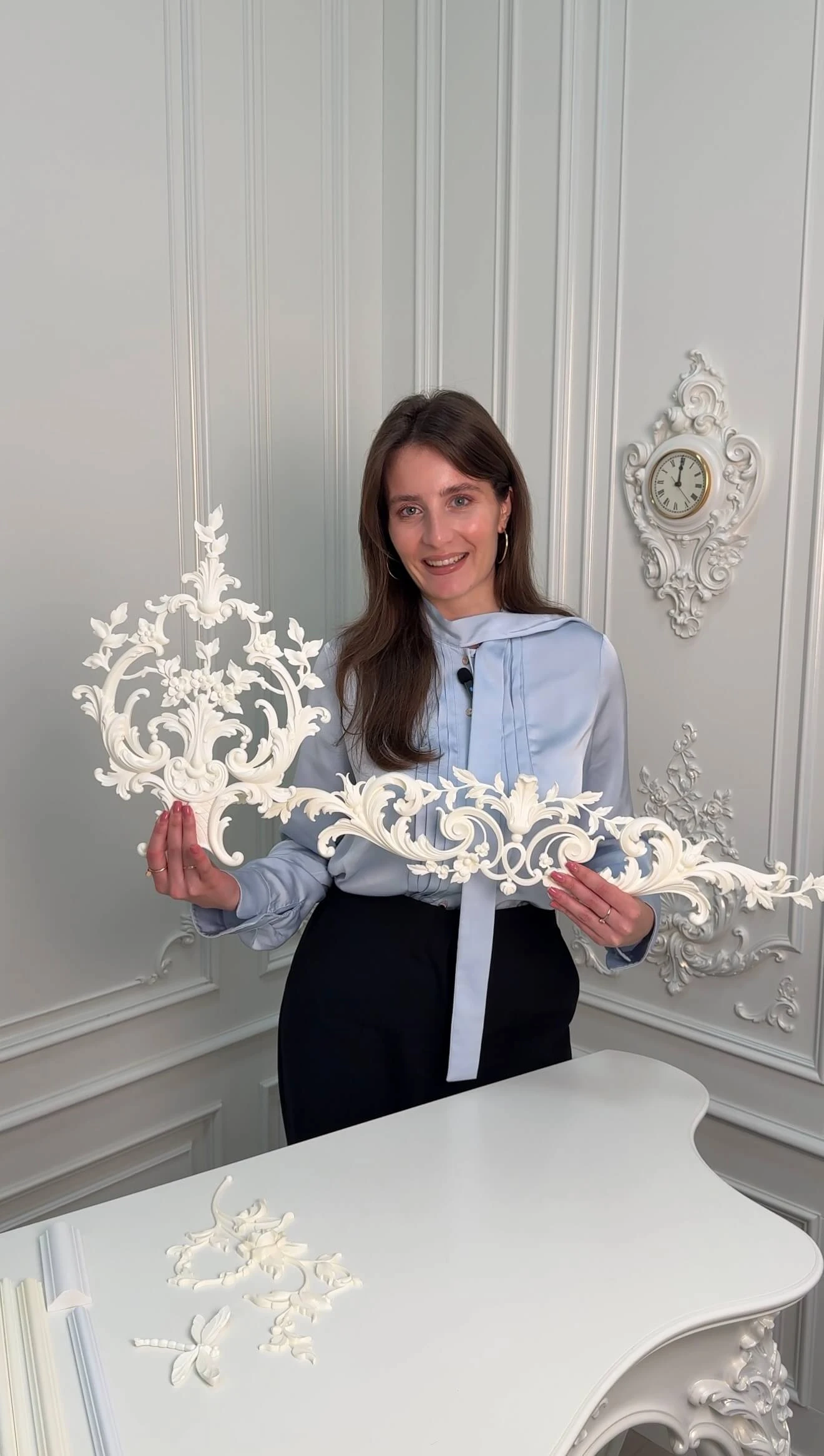
The concept of "garland" in classical interior decor refers not to festive lights, but to a specific ornamental type. It is an elongated decorative composition of flowers, leaves, buds, fruits, grape clusters, laurel branches, or other plant elements tied into a single line or wavy chain. This form has roots in ancient architecture, where garlands adorned temple friezes, tombstones, and triumphal arches. In the Baroque, Classicism, and Empire styles, it entered the interior and firmly established itself on furniture, walls, portals, mirror frames, and door trims.
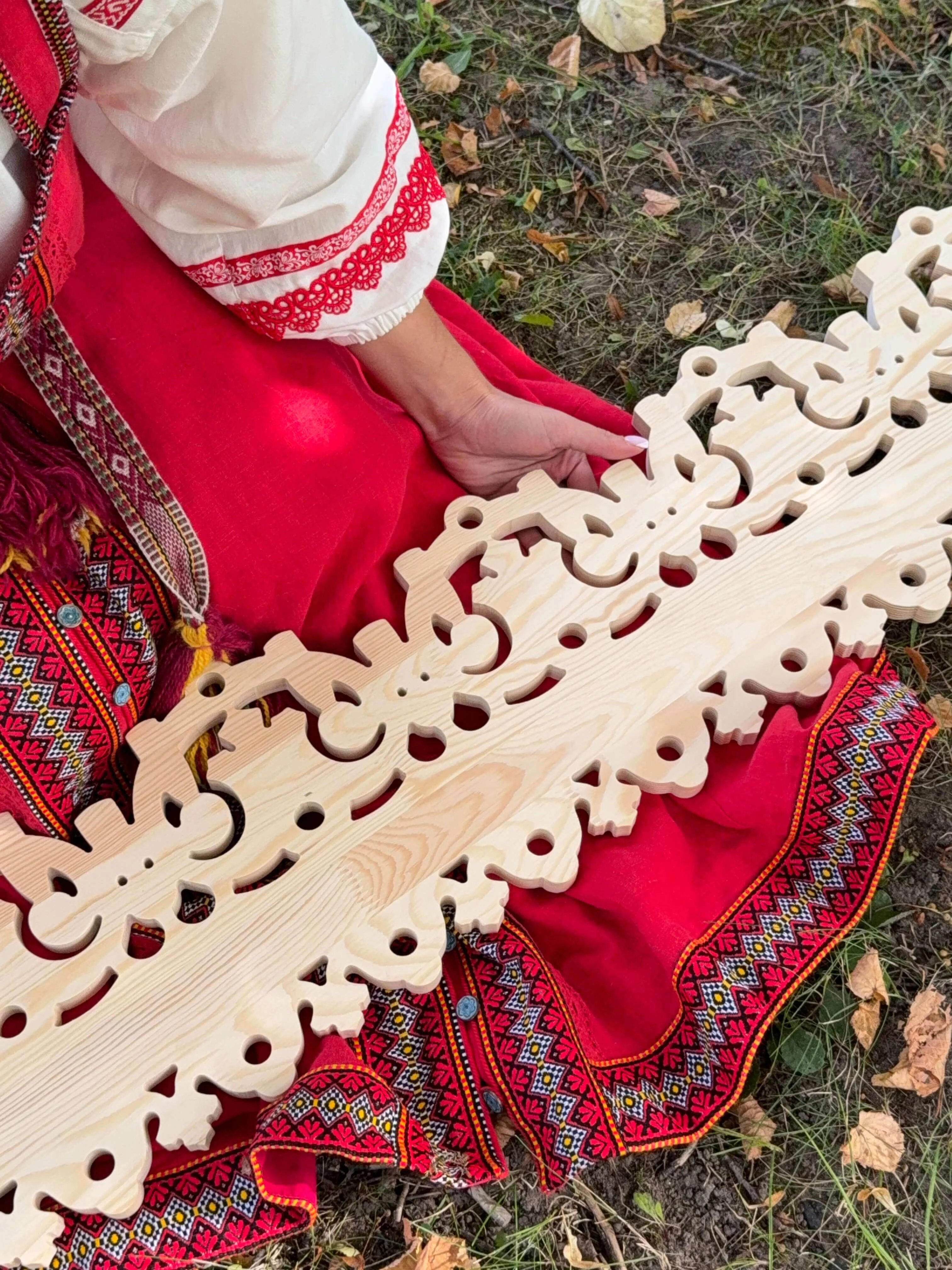
Today floral garland in the interior — is primarily a decorative overlay with a floral pattern that is attached to the surface and visually transforms it. It can be horizontal (for the upper belts of furniture facades, cornice areas, piers) or vertical (for side posts of cabinets, door portals, wall panels). Its distinctive feature is the continuous rhythm of the plant motif: a line that either contracts or expands, creating a living, breathing movement in a static material.
The floral and plant garland is used in classic, neoclassical, Empire, Baroque, French classic, as well as in soft modern classic and the "timberlake" style, where natural wood is combined with neat carving without excessive pathos. This is an ornament that works in different contexts — you just need to choose its scale and execution correctly.

What types of plant garlands are there
Plant and floral ornaments in decorative overlays are divided into several clearly defined types. Each carries its own mood, historical connotation, and purpose in the space. An experienced designer never mixes a vine with a laurel branch in the same composition without a clear conceptual justification — and there are good reasons for this.
Our factory also produces:
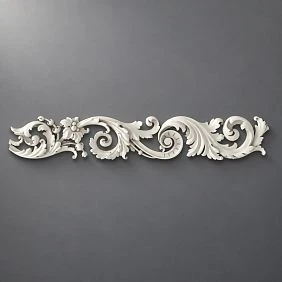
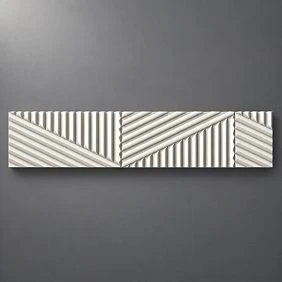
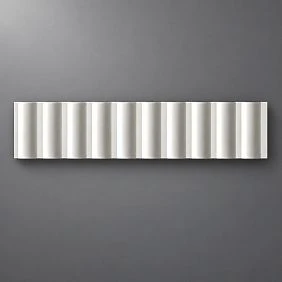
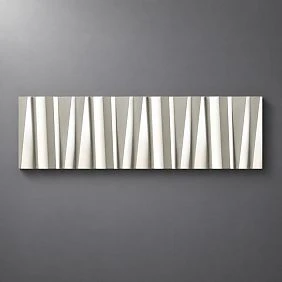
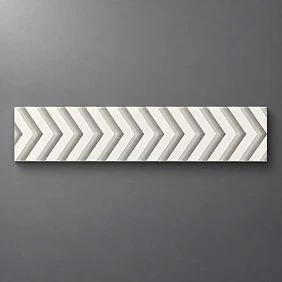
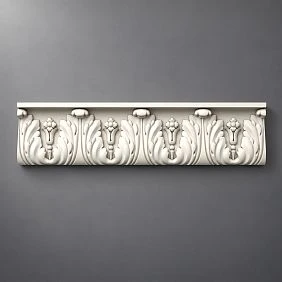
Floral garland
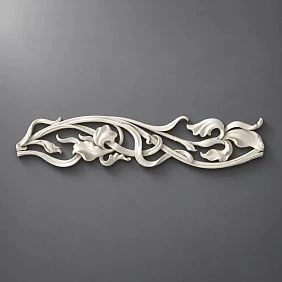
Floral ornament is the most feminine, soft, and lyrical of all plant motifs. Roses, peonies, daisies, tulips, and abstract buds dominate here, connected by leaves and tied with ribbons in classic carving. Such an ornament looks impeccable in a bedroom, boudoir, living room with soft classic furniture, near a mirror, or framing a calm doorway.
For furniture — especially for chests of drawers, dressing tables, display cabinets, and consoles — decorative overlays with floral ornament made of beech or oak look impeccable when combined with enamel in delicate tones: ivory, dusty rose, pearl gray. The floral garland here acts as a piece of jewelry — it does not dominate, but it is what makes the facade unique.
Get Consultation
Vine garland
Vine ornament is a story of abundance, fertility, and sensual pleasure. Clusters, leaves, tendrils of the vine create a lush, slightly baroque rhythm, rich in details. This motif was traditionally used in the decoration of dining rooms, sideboards, kitchen areas, cellars, and dining halls — spaces associated with food and hospitality.
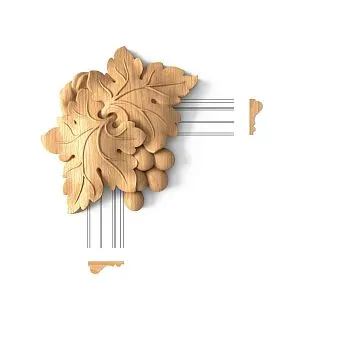
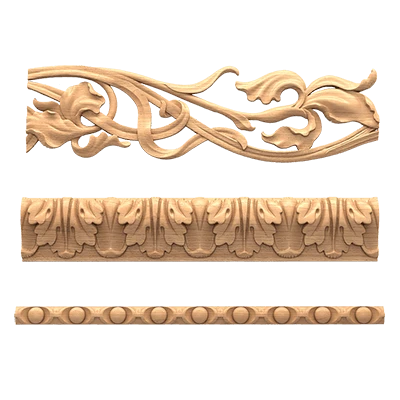
Among STAVROS wooden decorative overlays deserves special attention Carved overlay N-254L — a product with grape clusters and leaves, made of oak or beech. This is a characteristic example of a high-quality grape garland: deep relief, detailed workmanship, correct scale for a furniture facade or door portal. Such an overlay is chosen for sideboards in a classic dining room, for display cabinets with dishes, for wooden kitchen facades to be tinted in oak color.
Laurel garland
Laurel branch is a symbol of victory, honor, triumph, and strict dignity. In the interior, a laurel garland carries a state, official, chamber-ceremonial character. It is often found in the design of offices, libraries, formal hallways, door portals, and fireplace surrounds. Laurel ornament works well with dark wood species, patina, deep tinting — it does not tolerate frivolity.
For symmetrical facade compositions, the laurel garland is especially expressive in a paired version: two vertical overlays on the edges of a cabinet or portal, connected by a horizontal central insert — this is a classic scheme that never looks outdated. With the right proportion, it even works in strict modern neoclassicism.
Garland with buds and leaves
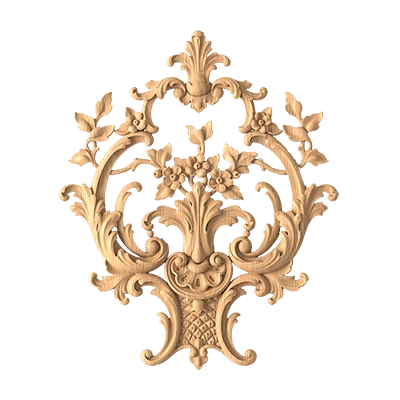
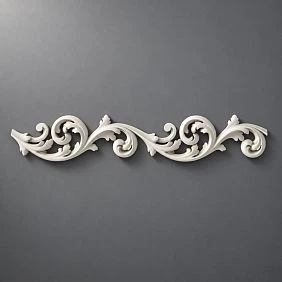
This type of ornament is the most universal of all. It does not have a strict historical affiliation: the combination of buds and leaves is equally organic in classic and neoclassic, in Empire style and in modern soft classic. It is these overlays that are most often chosen for vertical accents on wall panels, for decorating narrow pilasters, for decorating door sides and piers.
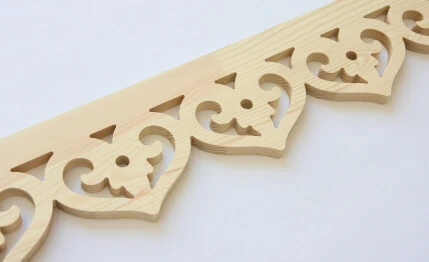
Among the STAVROS assortment, one can highlight carved wooden garland N-079-1 — a piece with a fine rhythm of leaves and buds that works beautifully in a vertical format. This overlay is ideal precisely where an accent without heaviness is needed: on the side of a narrow cabinet, on a console stand, on a panel next to a mirror.
Where to use a floral garland
The installation location determines not only the appearance of the garland, but also its scale, shape, relief, and material. The same overlay will look completely different on a furniture facade and on a wall panel — and this is no exaggeration. Therefore, you should always start your selection by answering the question: where exactly and why.
On furniture
Furniture is the most common environment for floral and plant overlays. Cabinets, dressers, sideboards, nightstands, consoles, kitchen unit facades — all these are surfaces that benefit from a well-chosen plant accent. Three parameters are important here: the scale of the overlay relative to the facade, the relief (not too deep to avoid interfering with functionality), and the material's compatibility with the furniture finish.
For furniture facades, the optimal ones are Wooden decorative inlays made of beech or oak. Beech is ideal for enamel — its surface is dense, without a pronounced texture, providing an even coating. Oak is good for tinting — its noble structure shows through the varnish, creating a lively, warm effect of natural wood with an accentuated ornament.
Central symmetrical overlays with floral ornament — for wide facades of central cabinets. Small garlands with leaves and buds — for sides, drawers, nightstands. Grape ornament — for sideboards and kitchen facades. Laurel ornament — for bookcases and office furniture. The logic is always the same: the ornament should rhyme with the purpose of the item.
On walls
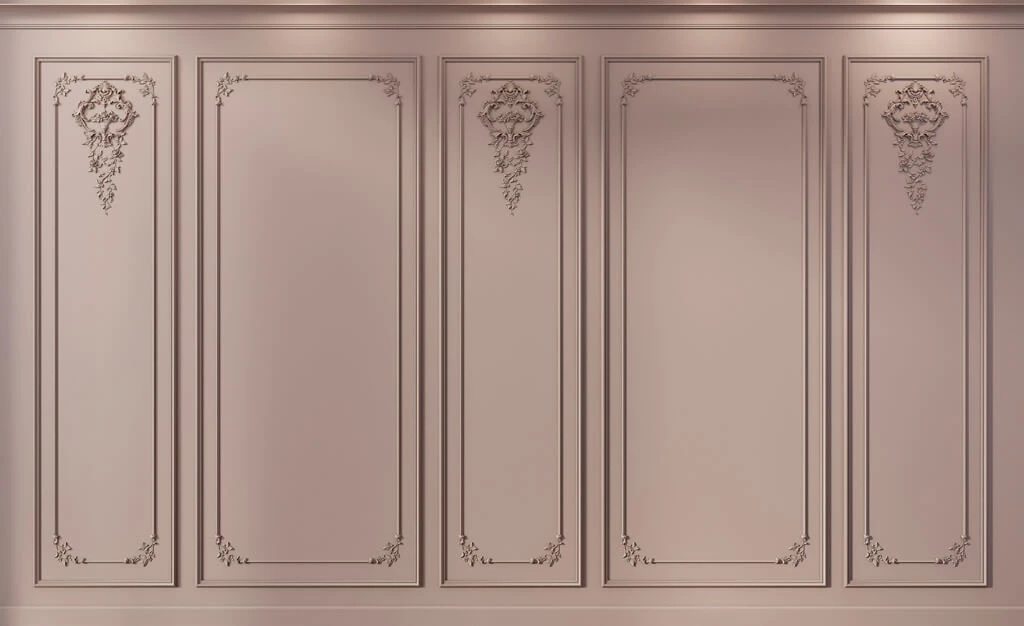
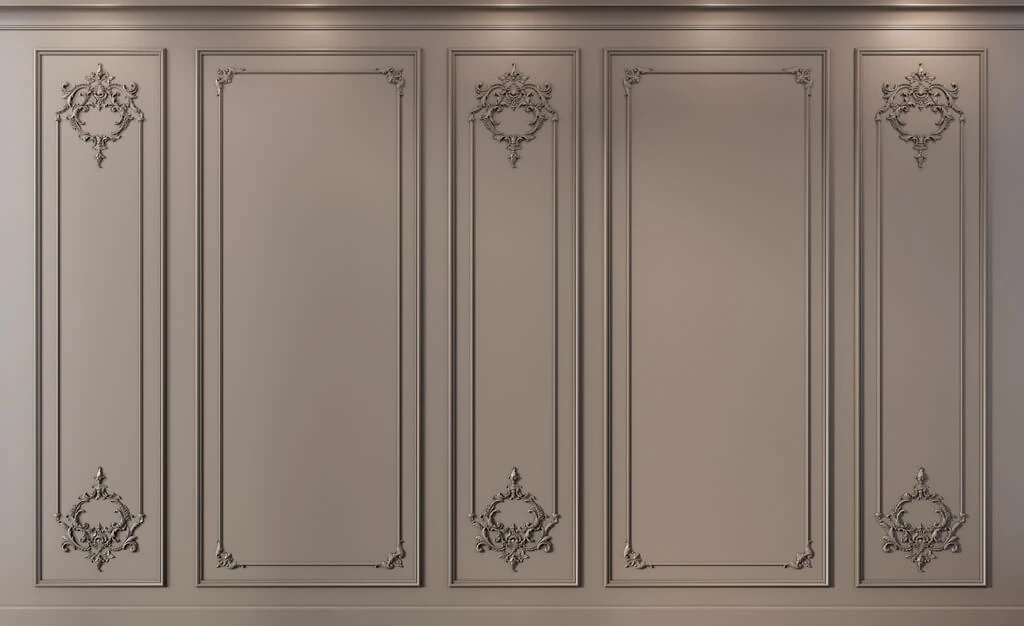
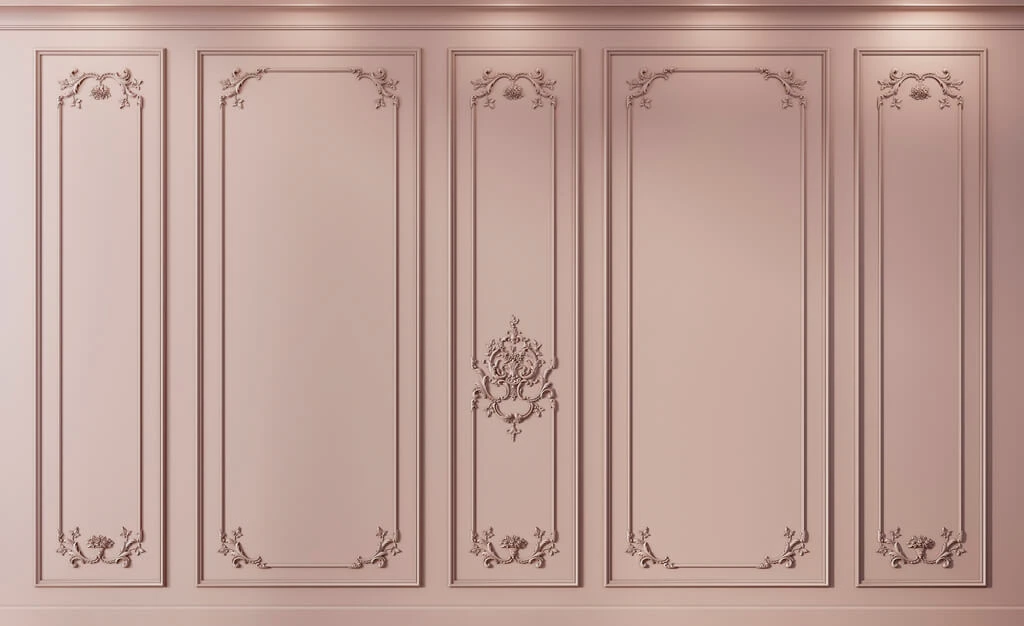
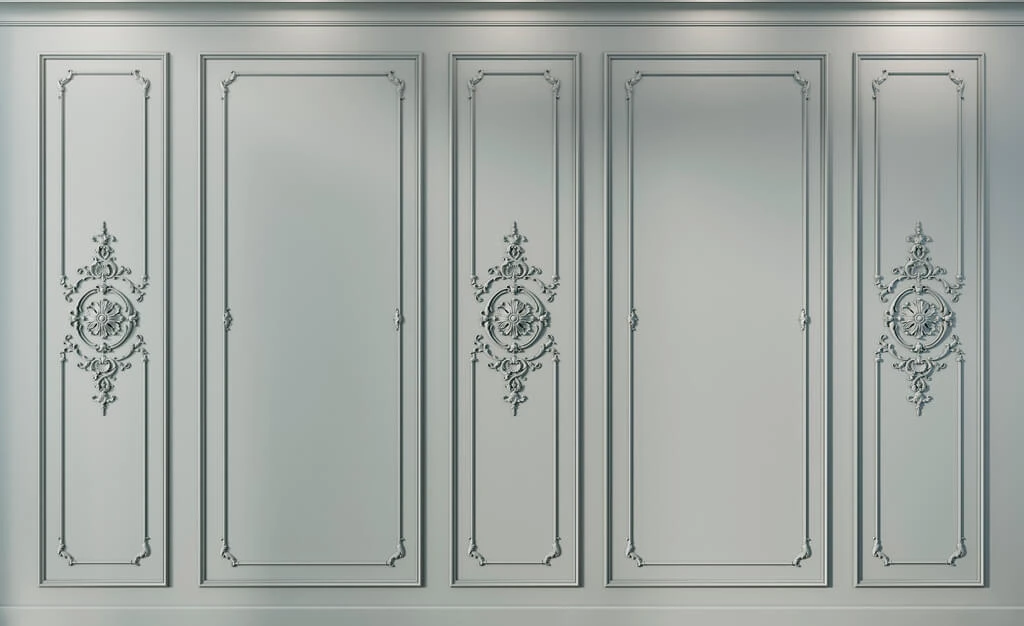
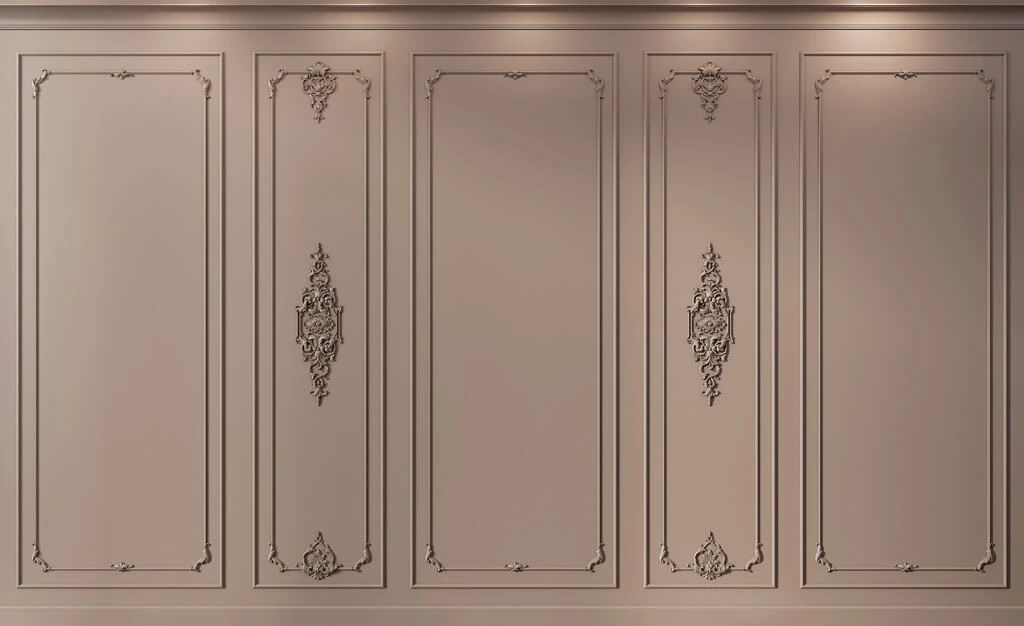
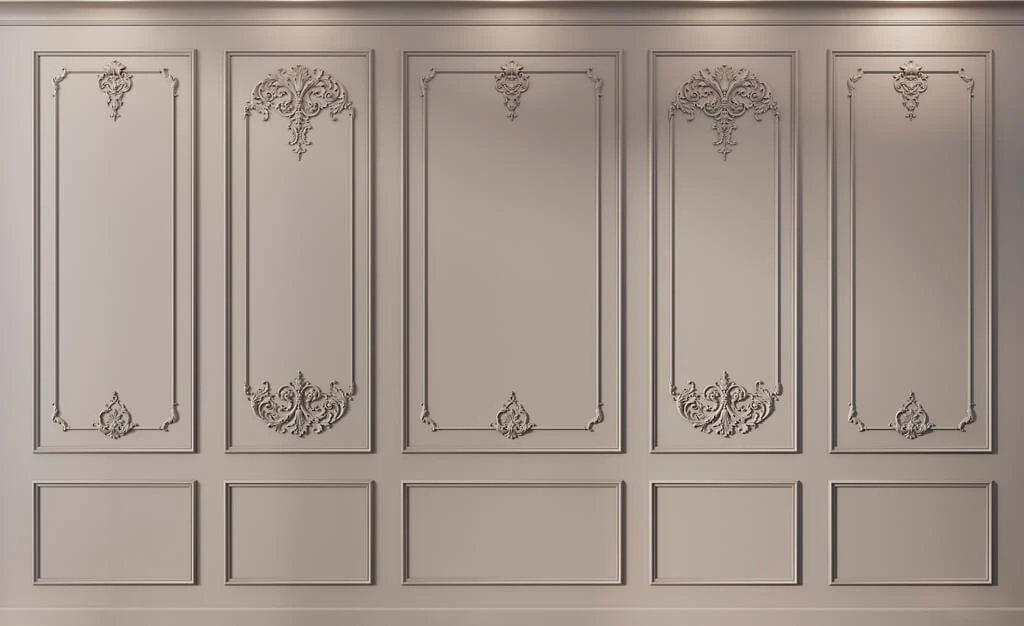
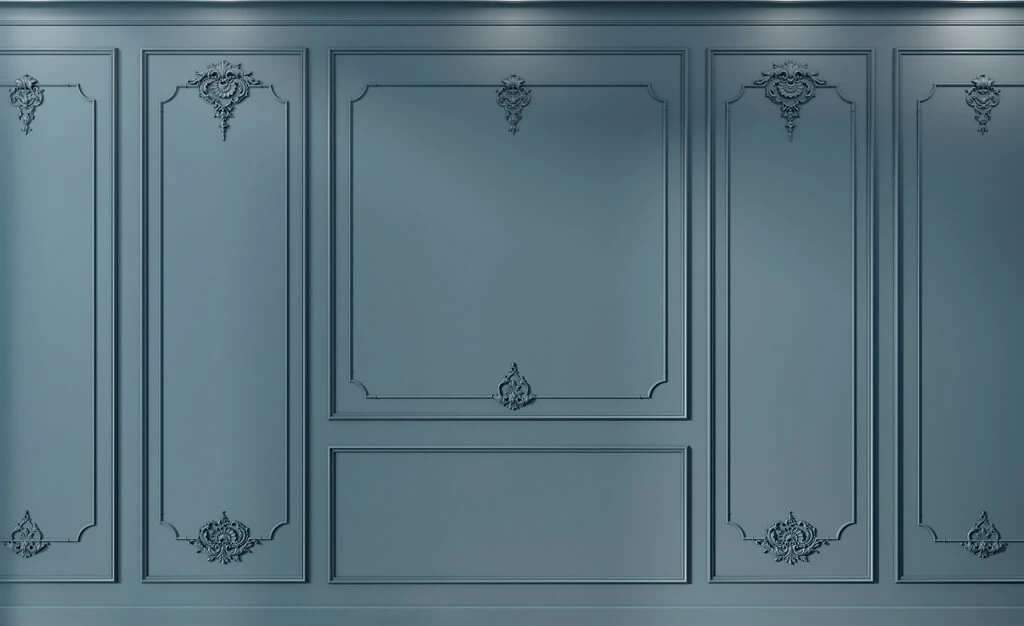
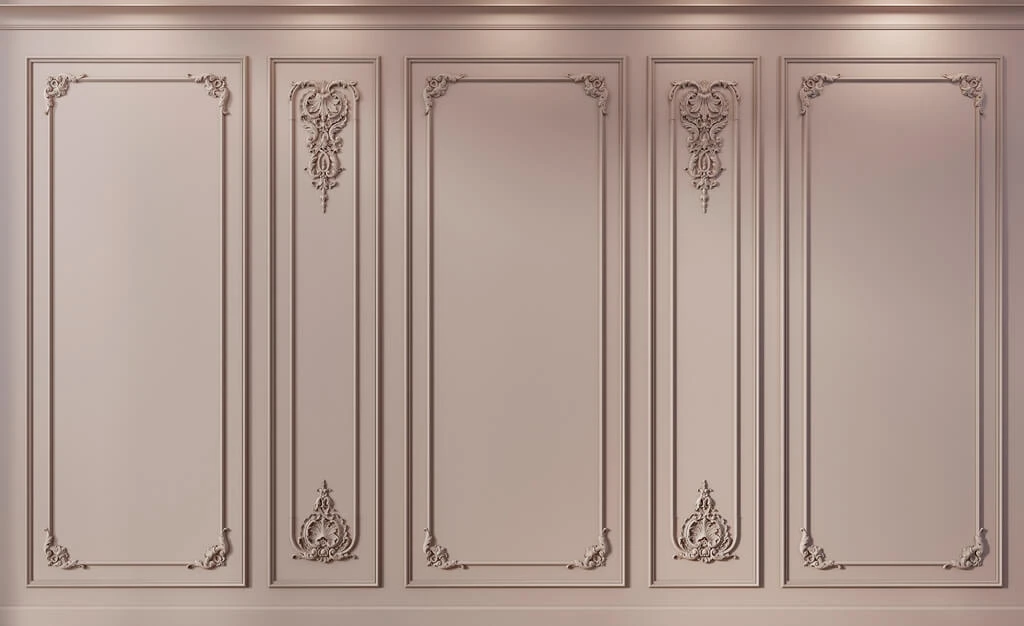
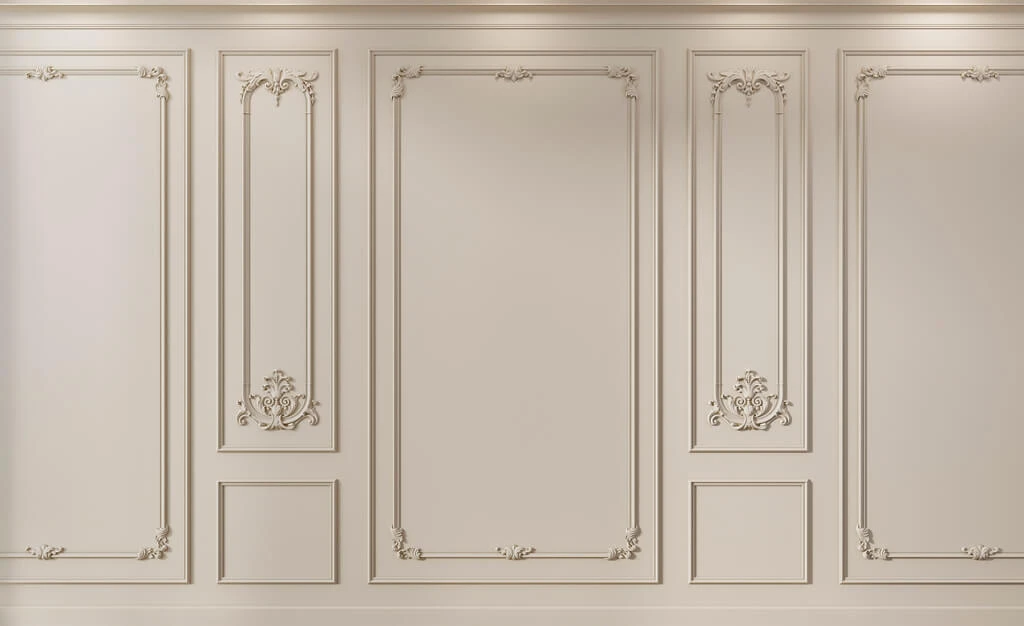
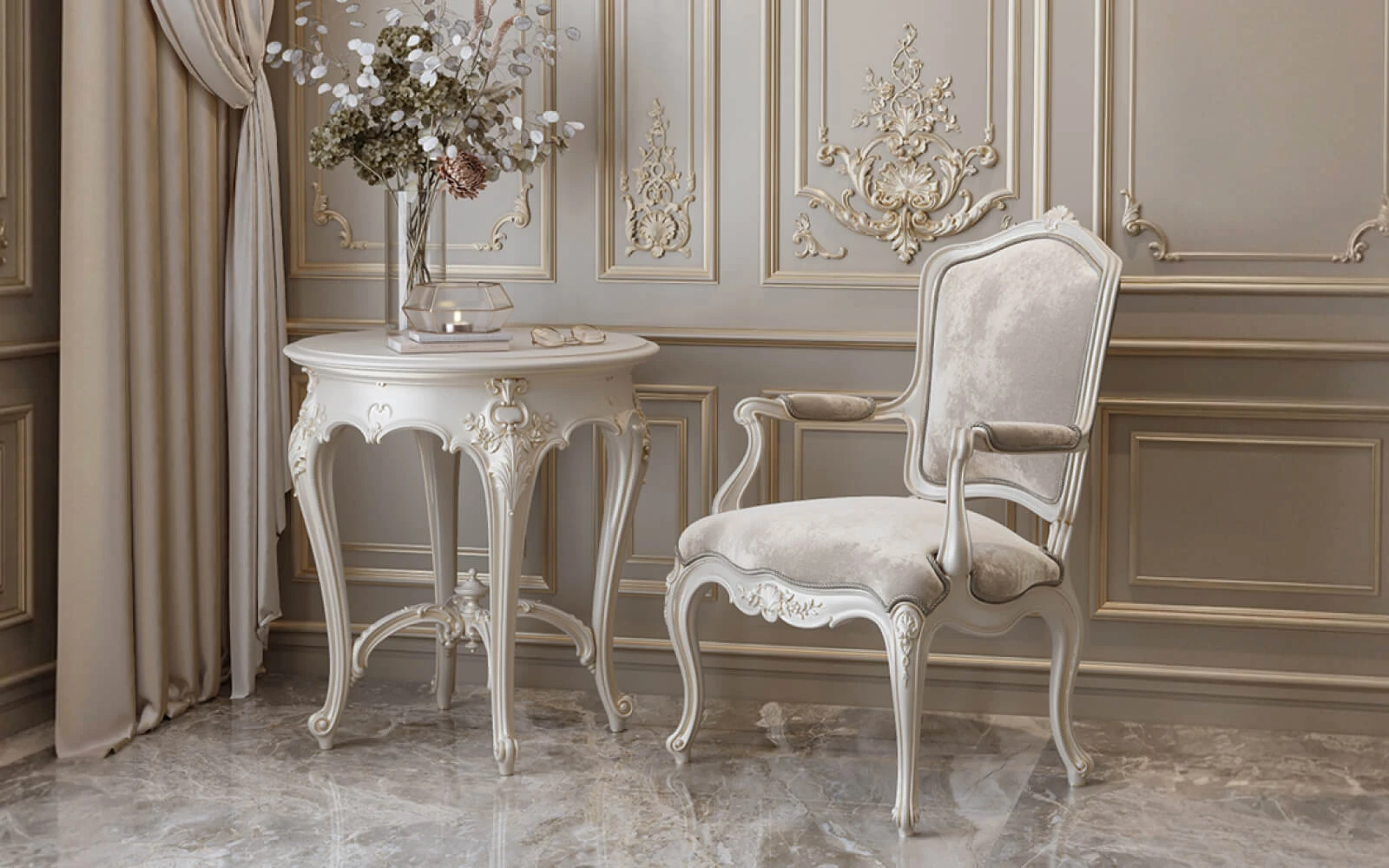
Wall application of a floral garland opens up a different scale. Here you can afford a larger relief, a more lush ornament, longer horizontal rhythms. An overlay with a plant motif inside a frame of moldings is a classic scheme for a classic living room or bedroom. It creates a complete decorative panel without the need for complex wall finishing.
Polyurethane appliqués are especially convenient in this context: their weight does not create a load on the wall, installation is possible with glue, the surface accepts any paint. For a wall garland made of polyurethane, you can choose a more expressive relief — one that would look overloaded in furniture execution. The wall 'holds' the scale better. In a niche, on a pier, framed by a decorative panel — a floral garland on the wall turns a plane into an architectural element.
Among the specific solutions, it is worth paying attention to polyurethane stucco garland NPU-043 — a product with a characteristic plant rhythm that looks organic both in a wall niche and as part of a more complex decorative composition.
On doors and portals
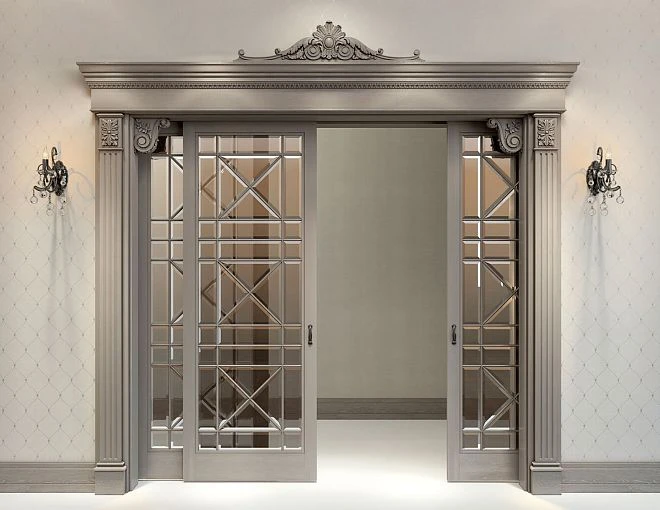
A door portal is the most solemn place for a plant garland. The upper horizontal part of the portal is traditionally decorated with the most lush element: this is the area that is seen first upon entry. A horizontal garland with flowers and leaves above the opening sets the tone for the entire space behind the door.
The side pilasters of the portal are the place for vertical garlands with leaves and buds. Symmetry is important here: the left and right overlays should be mirror images of each other. That is why in the STAVROS catalog most overlays are presented in pairs L (left) and R (right) — this is a fundamental requirement for a portal of any level.
It is better to choose decor for a door portal from polyurethane if painting in the color of the wall is planned — then the portal visually dissolves into the space, leaving only the shape and ornament. Wooden overlays for the portal are chosen when the door frame should retain a natural or tinted character.
On mirrors and frames
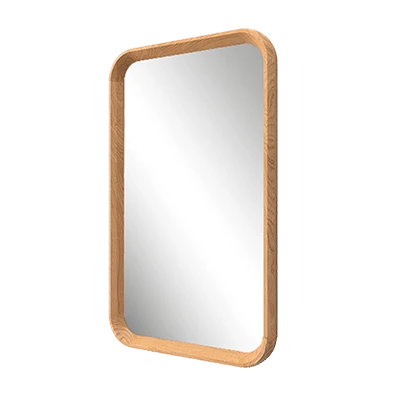
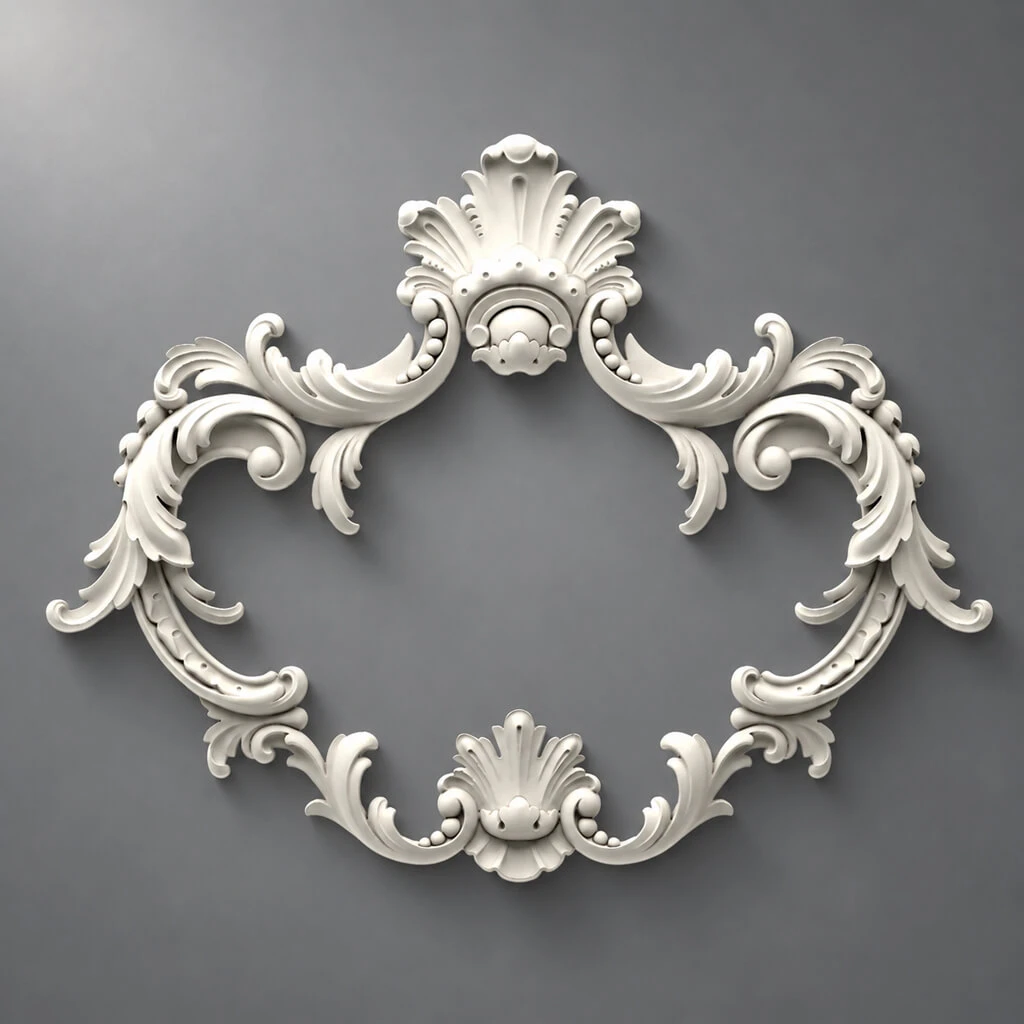
A mirror in a classic interior is not just a functional object. It is an architectural vertical, a visual center of the wall, a source of light and volume. A decorative overlay with a floral pattern on the mirror frame or above it is a detail that completes the composition. A small central garland at the top of the frame, paired side accents with leaves — this is enough to turn an ordinary mirror into an element of interior expression.
For mirror frames, wooden overlays with fine carving are more often chosen — they match the scale and do not weigh down the light frame structure. Carved wooden decoration STAVROS offers a wide selection of overlays of exactly this format: compact, elegant, with a detailed relief, which are easily mounted on a wooden base.
Polyurethane or wood — what to choose
This is the question that is asked most often. And the answer to it is never unambiguous — it depends on the task. Let's consider both materials honestly and to the point.
Wooden overlays are carvings from solid beech or oak. Their main advantage is naturalness. Wood is warm, alive, it breathes, it has texture and color. A carved wooden overlay for oak tinting looks different than any polyurethane — precisely because it has a living structure. For furniture, for restoring antiques, for interiors with natural materials — wood is irreplaceable.
Polyurethane overlays are a new generation of molded decor. They are lighter, cheaper to produce in large forms, are not afraid of moisture, accept paint perfectly, and do not deform with temperature changes. For large wall compositions, for painting to match the wall color, for complex architectural forms — polyurethane wins.
| Task | Best choice |
|---|---|
| Large wall composition | Polyurethane |
| Furniture facade for tinting | Oak |
| Furniture facade for enamel | Beech or polyurethane |
| Painting the overlay to match the wall color | Polyurethane |
| Natural texture in relief | Wood |
| Furniture Restoration | Wood |
| Light stucco accent on the portal | Polyurethane |
| Decor for kitchen facade | Beech or oak |
| Wall panel with frames | Polyurethane |
| Decor for mirror frame | Wood |
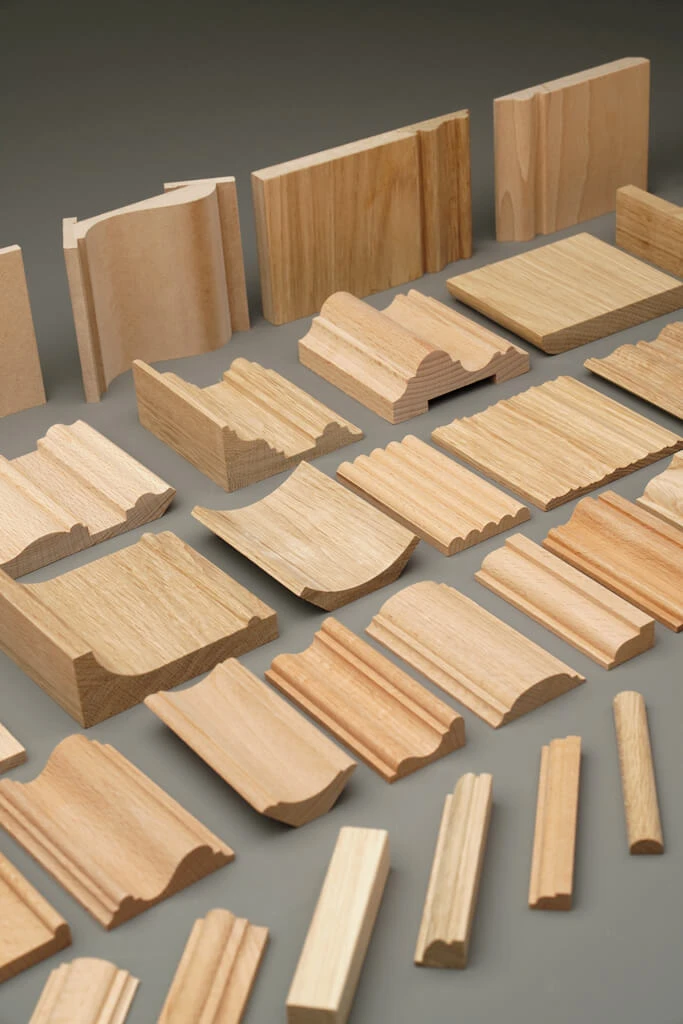
Wooden decorative overlays STAVROS used for furniture, doors, walls, and ceilings, while carving helps to place accents on furniture facades and create decorative interior compositions. STAVROS polyurethane stucco decor presented as decorative elements to complete interior compositions and match different styles — from classic to soft modern neoclassicism.
There is another important nuance: a wooden overlay cannot be used outdoors or in damp rooms without special protection. Polyurethane is significantly more reliable in these conditions. But where natural warmth of the material and fine carving are concerned, wood achieves a result that polyurethane cannot replicate.
How to choose the size of a floral garland
Size is the most common point of error. People choose an overlay based on a photo without mentally applying it to a specific facade. As a result, they buy either too small — and it gets lost, or too large — and it overlaps handles, cornices, or adjacent details.
Here is how the correct logic for choosing a size is built.
Scale of the furniture or surface. The overlay should occupy 40 to 70% of the facade width. If the facade is 60 cm wide — a garland of 25–40 cm. If the facade is 90 cm wide — a garland of 40–60 cm. This is a guideline, not a strict rule, but it is a good starting point.
Height of the portal or wall panel. For vertical garlands on a portal, proportion is important: the height of the overlay should not exceed one-third of the pilaster height. Otherwise, the decor will dominate the architecture rather than emphasize it.
Relief thickness. This is a parameter that is often ignored. Deep relief (10–15 mm or more) creates expressive shadow play but requires space around it — there should be no closely placed handles, hinges, or moldings nearby. Thin relief (3–6 mm) is softer and can be placed closer to other elements.
Distance to adjacent details. There should be at least 15–20 mm of free space between the overlay and the handle. At least 10 mm between the garland and the cornice. This is breathing space, without which the ornament blends into the surroundings and loses readability.
Symmetry. If paired use is planned (left and right garland), both elements should be located at the same distance from the center of the facade, from the edge, from the handle. Any deviation is noticeable at first glance — especially in a classic interior, where symmetry is one of the main principles.
One element or a pair. Central overlay — for accent. Paired side overlays — for framed and symmetrical compositions. Combination of central and paired overlays — for large facades and portals. The choice depends on the surface size and the concept: accent or framing.
How to choose the finish
Finishing a decorative garland is not the final step, but the starting point of choice. If you don't know what the finish will be, you cannot correctly choose the overlay material. Therefore, the question "for enamel or for tinting" must be decided before purchase, not after.
Beech for enamel. Beech is a dense, almost non-porous wood with minimal texture. That is why it is ideal for enamel coating: the paint lays evenly, without emphasizing the structure, creating the feeling of a monolithic product. White, cream, gray-blue, dark green enamel — beech accepts everything. This is a choice for neoclassicism with painted furniture, for Scandinavian classicism, for interiors with a color dominant.
Oak for tinting. Oak is a species with a pronounced, lively structure, large pores, and a noble character. Tinting emphasizes this structure, makes it readable, adds depth. Dark oak, natural oak, oak with a light gray undertone — each option gives its own result. This is a choice for interiors with natural wood, for classic kitchens, for study spaces with dark furniture.
Polyurethane for painting. Polyurethane overlays are initially neutral in color — they are ready to accept any paint. They are painted together with the wall (then they "dissolve" into the architecture), or highlighted with a separate color (then they become an accent). Patina on polyurethane creates an imitation of antiquity — this is a classic technique for Baroque and Empire interiors.
Why is it important to decide the finishing issue in advance? Because different finishes require different materials, and sometimes different reliefs. A deep relief under patina looks luxurious — under flat enamel it may look heavy. A thin relief under tinting will be lost — under enamel it will be exactly what is needed. This is an interconnected system where each parameter affects the next.
How to combine a garland with moldings
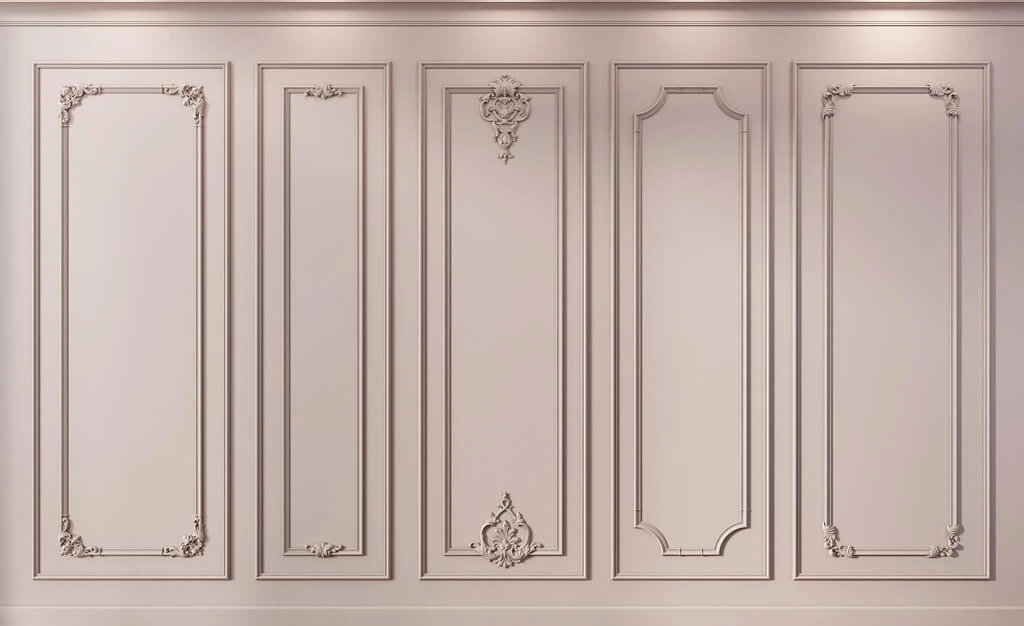
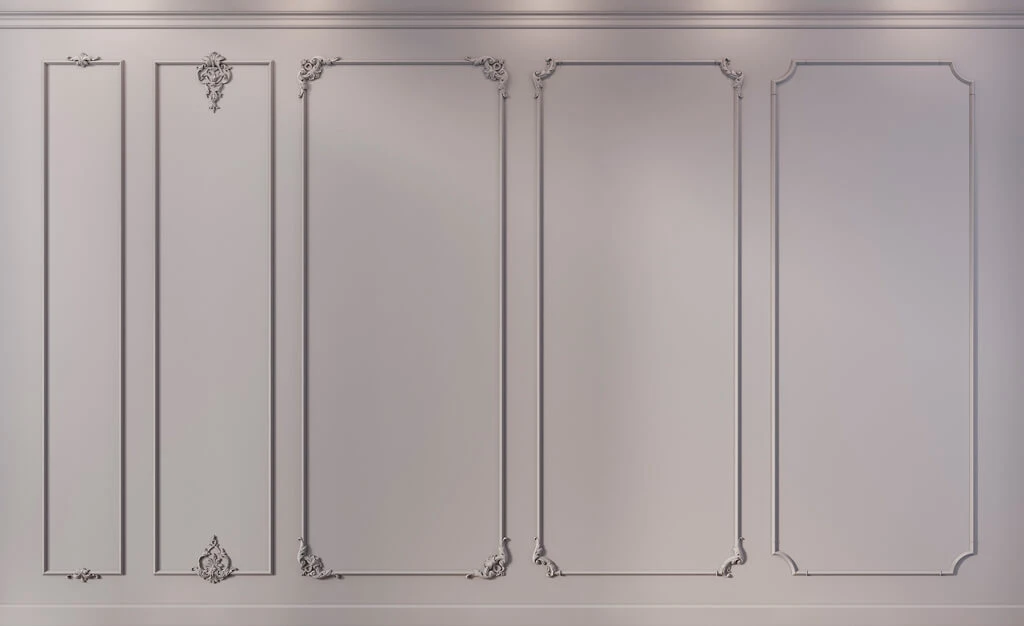
Moldings and garlands are an inseparable pair in a classic interior. Moldings create a frame structure: they divide the wall or facade into fields, form geometry. Garlands fill these fields with ornament, adding liveliness and detail. Together they create a complete architectural picture.
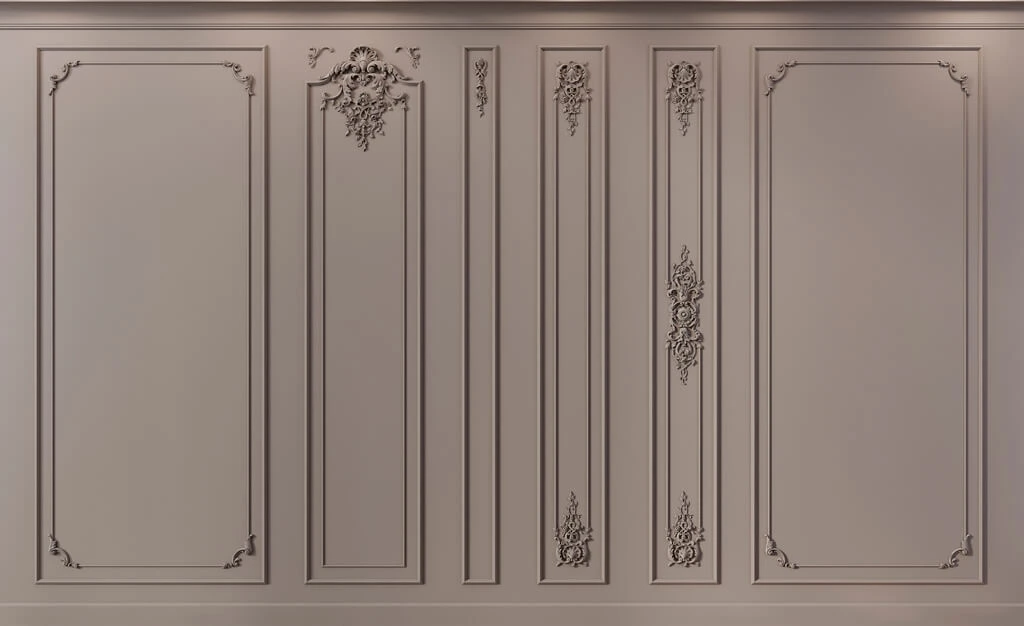
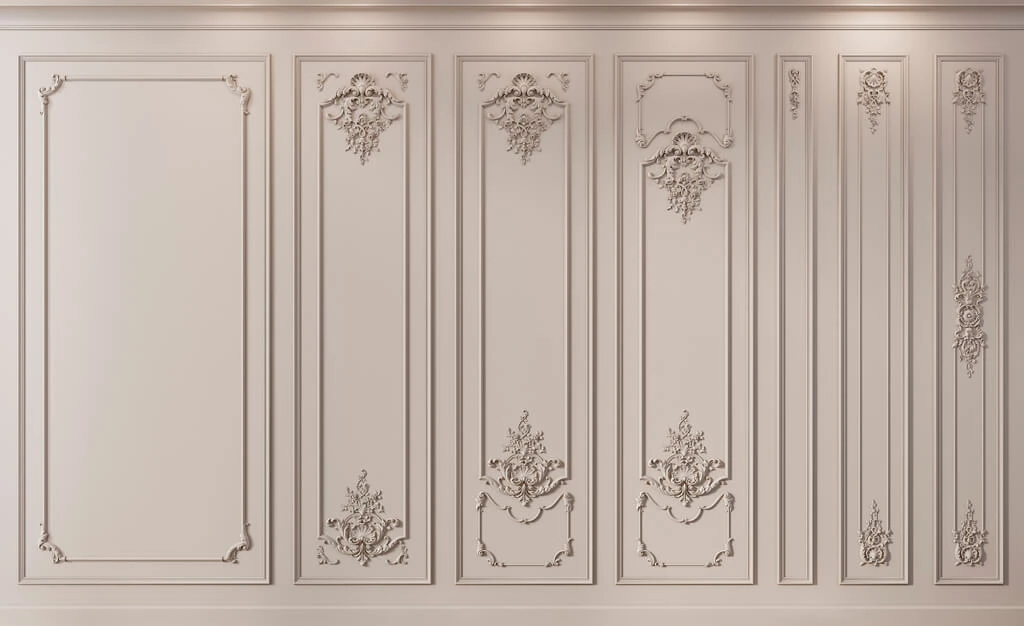
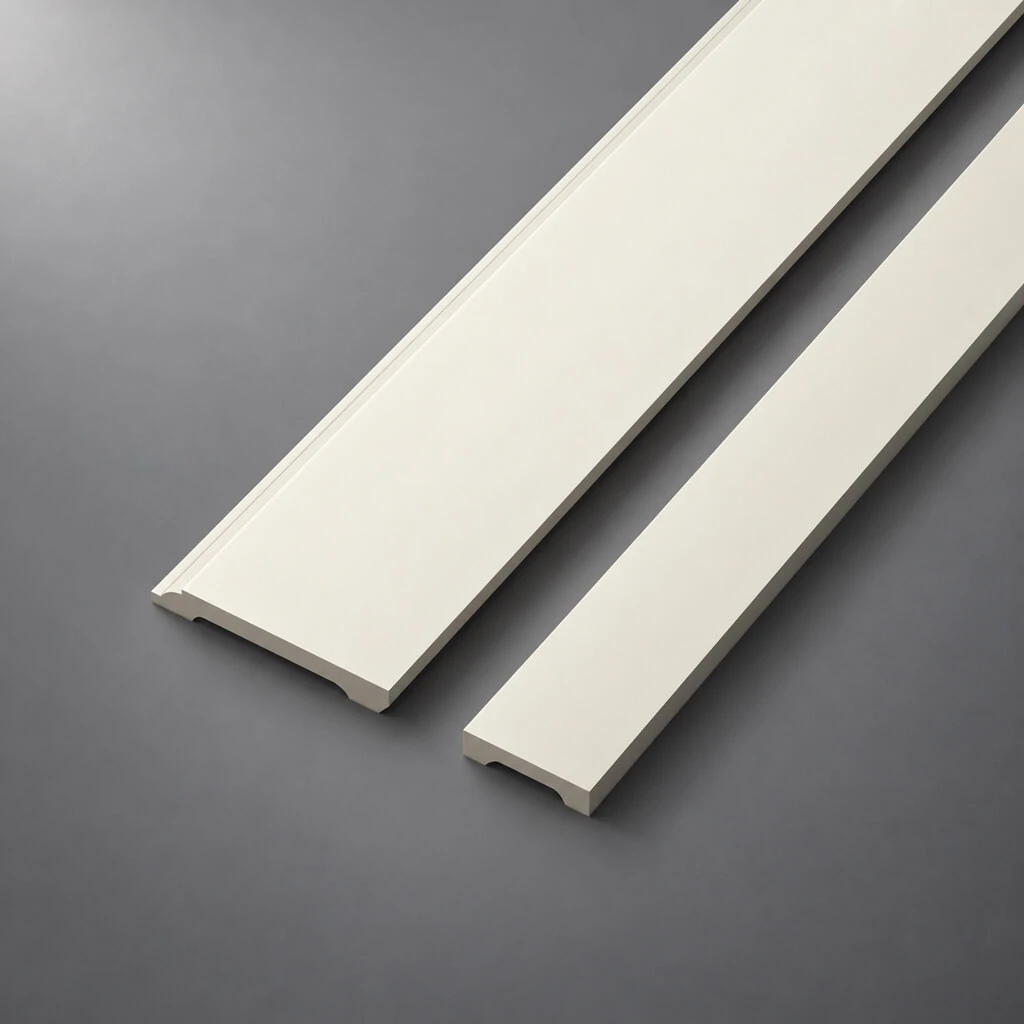
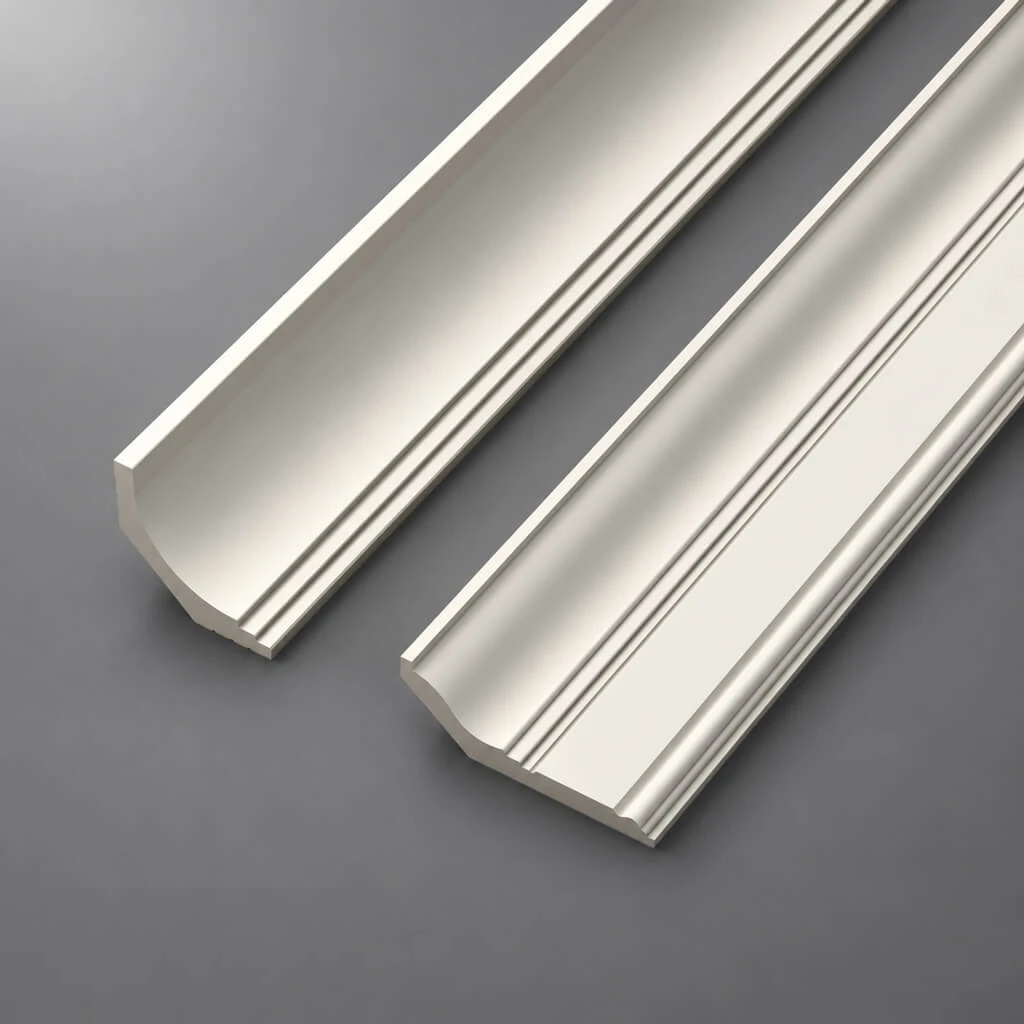
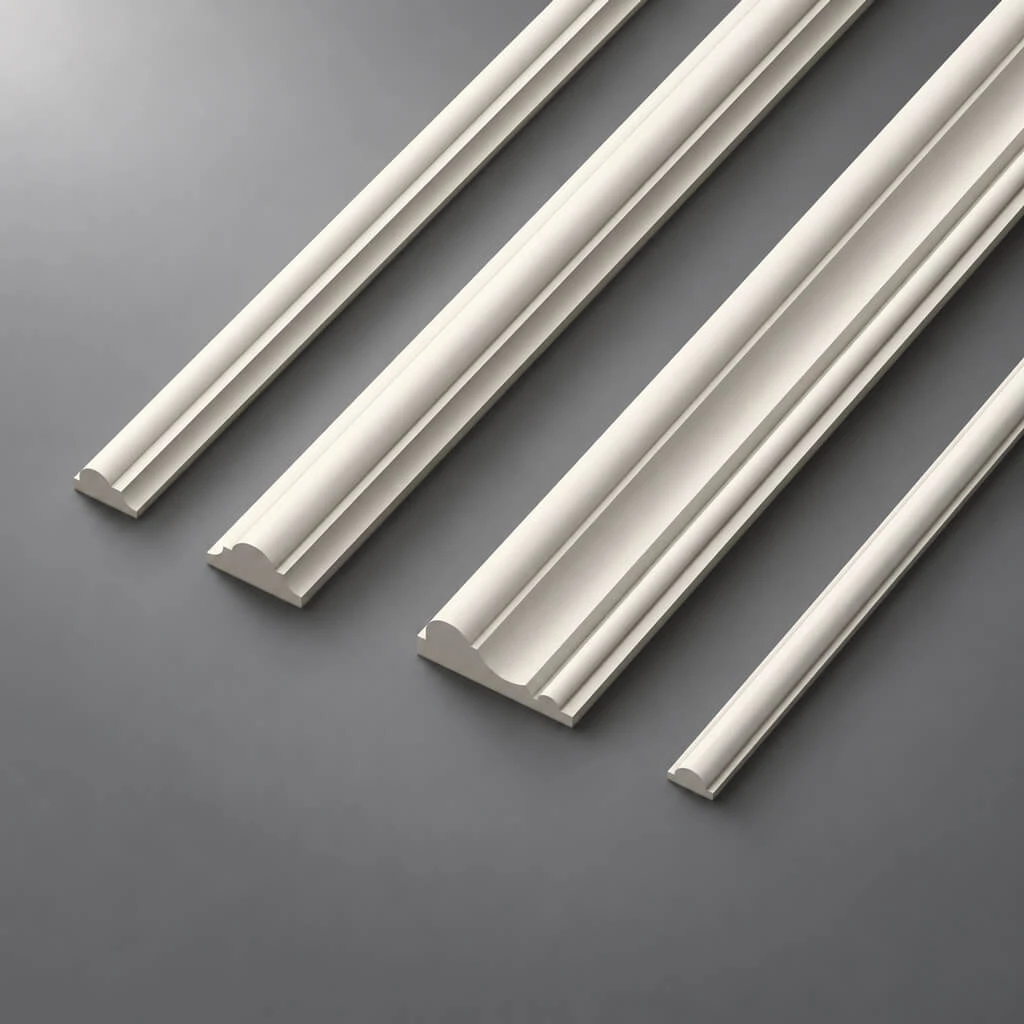
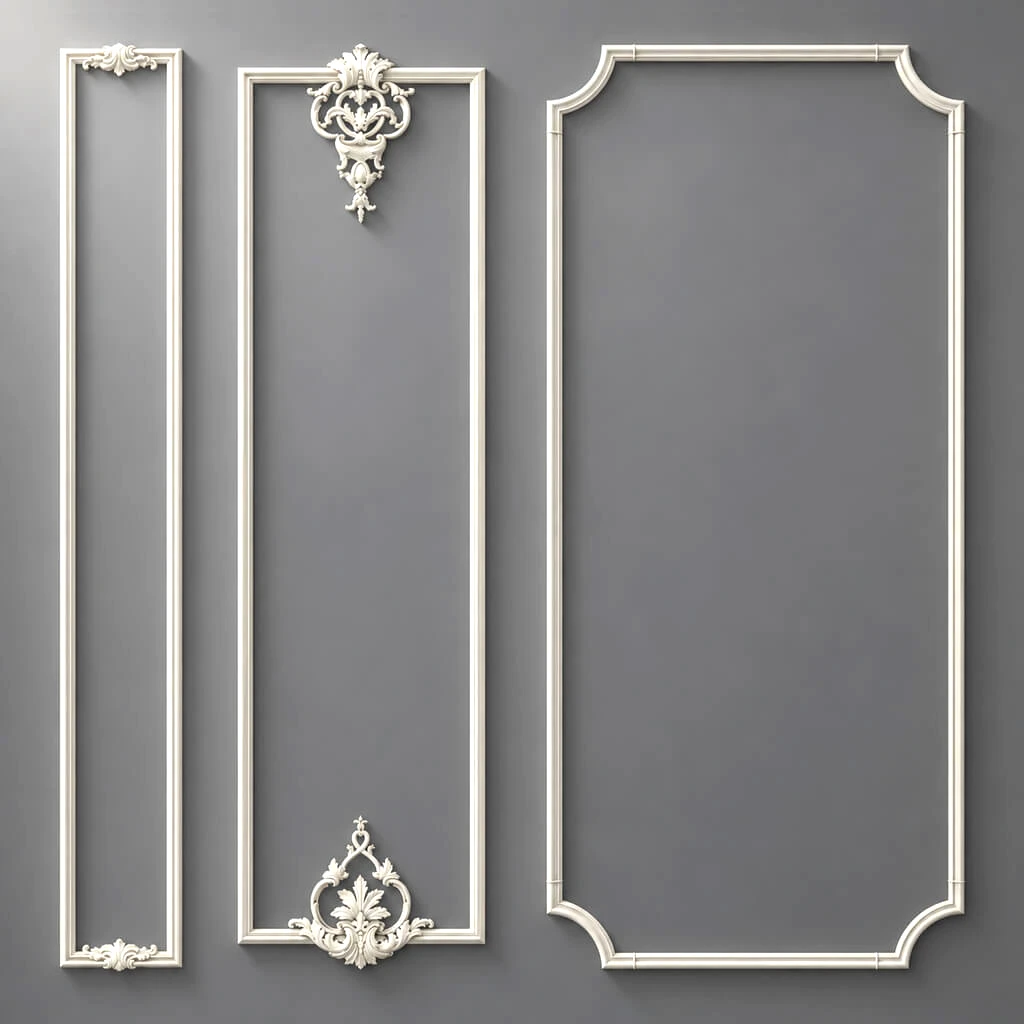
STAVROS polyurethane moldings offer a wide selection of profiles for any scale of task. A frame made of molding, inside which a floral garland is placed — this is a working scheme for both a wall and a furniture facade. It is important to maintain the proportion: the molding should be noticeably thinner and quieter than the garland. If the molding draws too much attention, the garland gets lost.
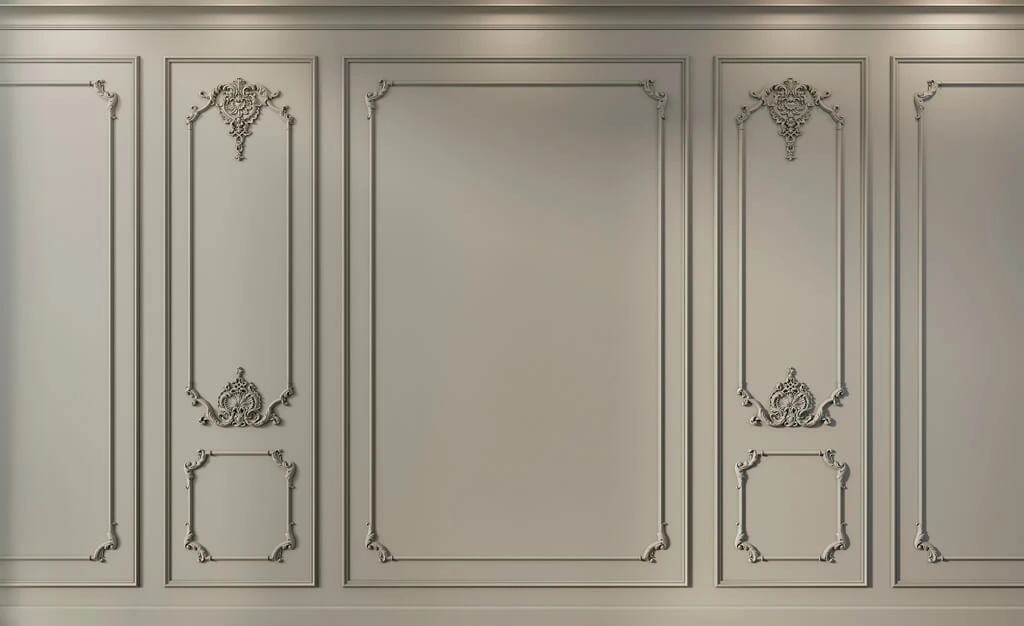
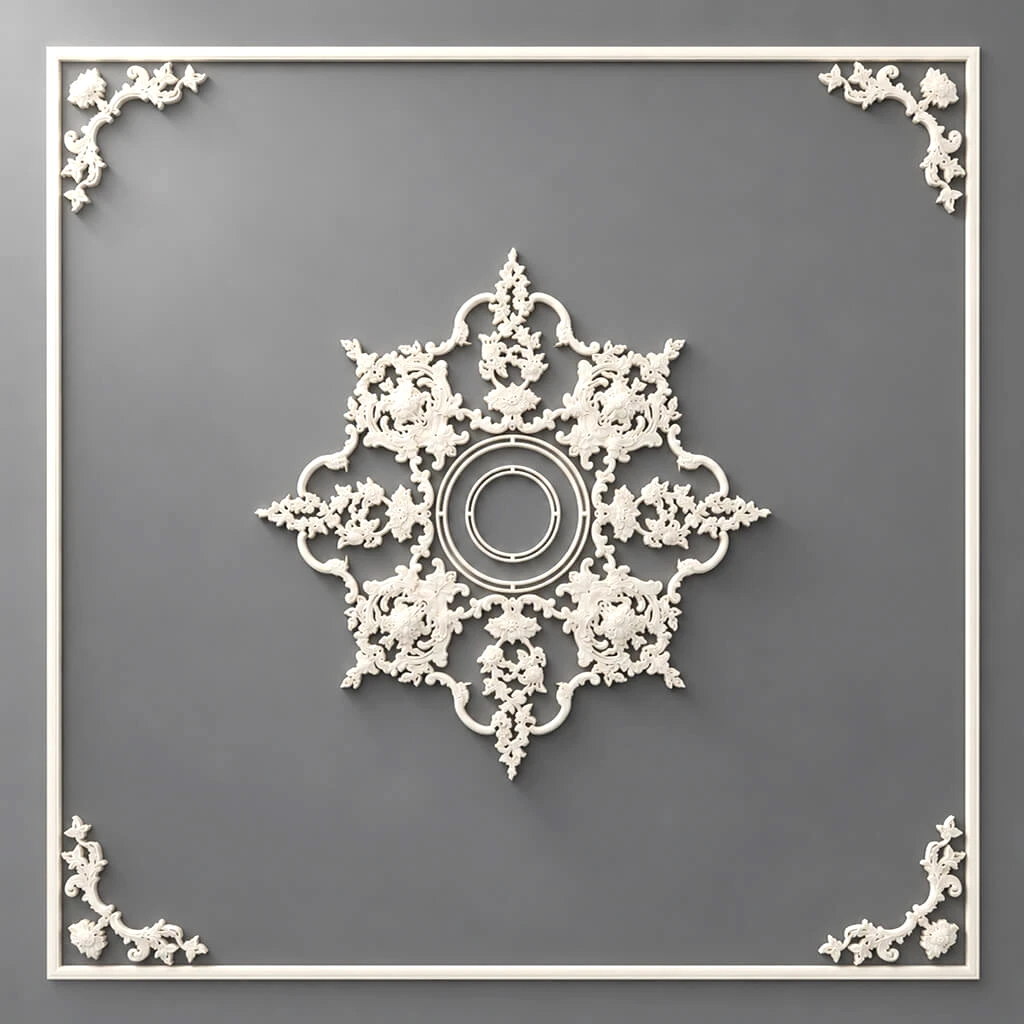
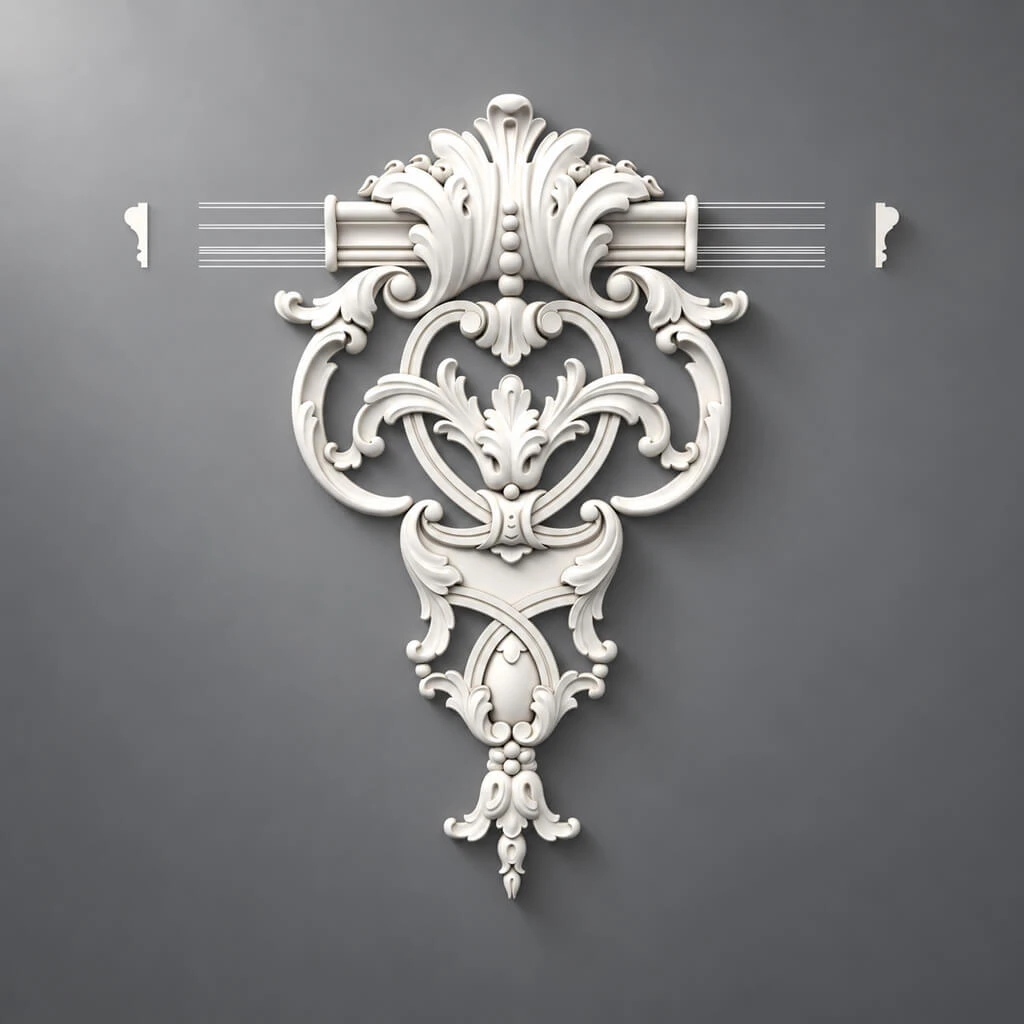
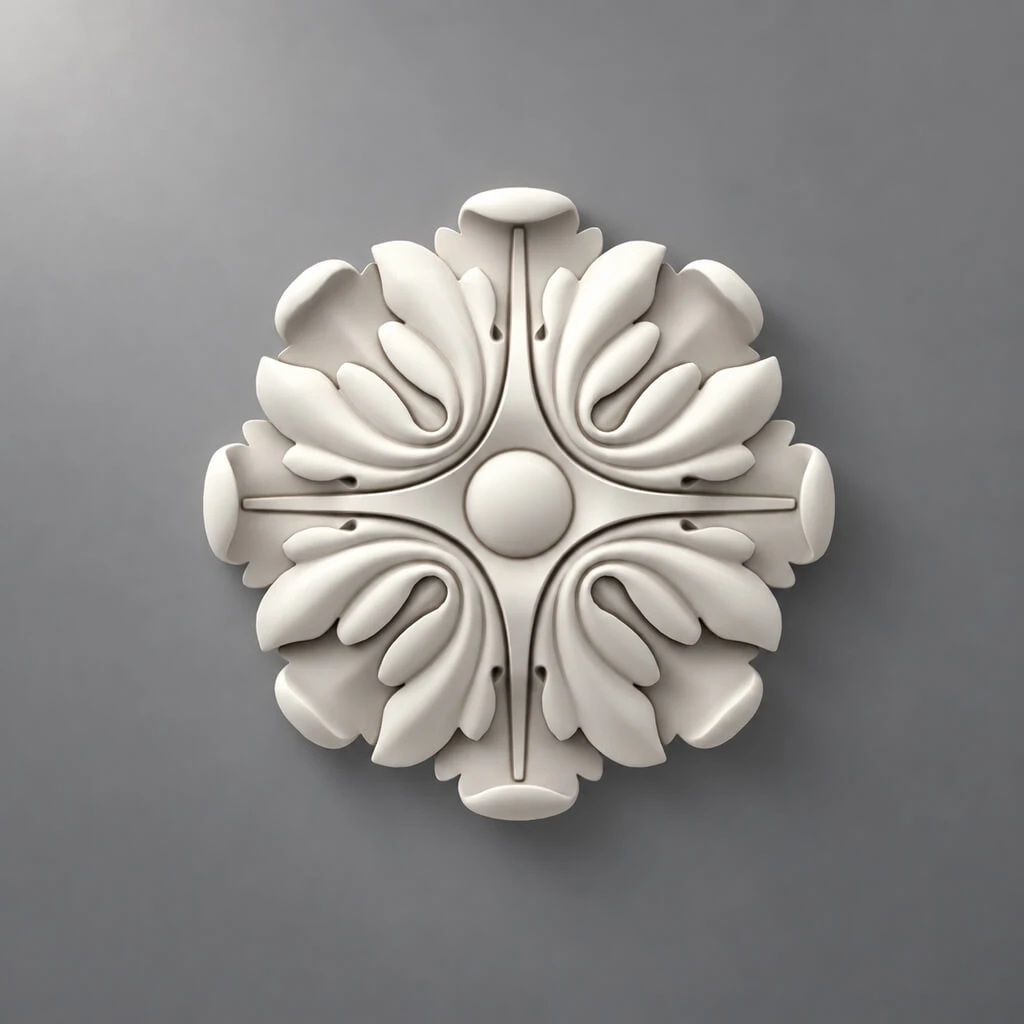
Decor for Molding — a separate category of products placed in corners and at intersections of molding frames. Corner elements with a floral motif paired with a horizontal plant garland inside the frame form a complete wall decorative panel that requires nothing additional.
When combining different decorative elements, it is important to adhere to a single ornamental language. A grape garland with corner floral rosettes is incompatible. A floral garland with corner acanthus elements is possible if they belong to the same stylistic system. A laurel garland with geometric corner inserts is strict and correct. The ornament should tell one story, not several at once.
Mistakes when choosing a floral garland
Over years of working in interior decor, mistakes when choosing decorative overlays repeat with surprising consistency. They should be named honestly—so you don't fall into the same traps.
Choosing only by pattern without checking the size. The photo on the site always deceives a little—it doesn't convey the real scale. Always look at the exact dimensions of the product and mentally or with a paper template apply them to your facade or wall.
Mixing different plant ornaments without logic. Grapes, laurel, flowers, and acanthus leaves in one space is not richness, it's chaos. Each ornamental type has its own role. Choose one dominant motif and stick to it.
Taking lush decor for calm neoclassicism. A Baroque garland with large roses and fruits in a minimalist neoclassical interior looks alien. Neoclassicism requires restraint—fine relief, laconic rhythm, neutral ornament.
Using a small overlay on a large wall. Small decor on a large surface is visual clutter. It doesn't create an accent; it creates disorder. If the wall is large, you need a large garland or a system of several elements.
Choosing a large garland for a narrow facade. A garland that takes up 90% of the facade's width leaves no space for the ornament to 'breathe.' It's cramped; it doesn't work. The overlay should have free space on each edge.
Not considering the base material. A polyurethane overlay can be attached to wooden furniture, but the result will differ from a wooden overlay. Always think about material compatibility.
Don't decide in advance: enamel, tinting or painting. This was already mentioned above, but it's so important that it's worth repeating. The overlay material and its finish are a single system. They need to be decided together.
Don't check the relief thickness. Deep relief is beautiful — until it turns out it hits the handle or prevents the drawer from opening. Always check if there is enough space around the overlay.
Don't consider adjacent moldings and frames. A garland in a molding frame should harmonize with it in style and scale. If the molding is already purchased — choose the garland to match it. If not yet — choose both elements together.
Buy one element when a symmetrical pair is needed. In a classic interior, symmetry is the law. If your composition involves paired overlays, buy the left and right ones at once. Ordering one overlay from another batch later is risky: the shade and size may differ slightly.
FAQ: Answers to popular questions
What is a floral garland in an interior?
This is a decorative overlay with an ornament of flowers, leaves, buds, or other plant elements. It is attached to furniture, a wall, a door, a portal, or a frame and is used as a classic accent in Baroque, Classic, Neoclassic, and Empire interiors.
Where are decorative garlands with plant ornaments used?
On furniture facades (cabinets, chests of drawers, sideboards, consoles), on walls (inside molding frames, on wall panels), on door portals (horizontal top part, side pilasters), on mirror frames and decorative frames. This is a universal element that works in almost any place with a classic or neoclassic character.
What is better to choose: polyurethane or wood?
Depends on the task. For furniture facades under tinting — oak, under enamel — beech. For wall and portal compositions under painting — polyurethane. For a natural, lively character of the ornament — wood. For easy installation and large forms — polyurethane.
Which garland is suitable for a furniture facade?
Compact carved wooden overlay made of beech (for enamel) or oak (for tinting). Relief — moderate. Width — 40–70% of the facade width. Ornament — floral for soft classics, grape for kitchen and dining furniture, laurel for cabinet products.
Which garland is suitable for a wall or portal?
Larger, with expressive relief. Made of polyurethane — if painting or working with large forms is planned. Made of wood — if the wall or portal is made of natural materials and the texture of natural wood is needed.
Can a floral garland be painted?
Yes. Wooden overlays are painted with enamel or coated with tinting and varnish. Polyurethane overlays are painted with any interior paint, including patina or wall color.
What to choose under enamel — beech, oak, or polyurethane?
For enamel, beech is best — its dense structure does not show through the coating. Polyurethane also accepts enamel well. Oak is used less often for enamel: its large pores require additional surface preparation.
How to choose the size of a decorative garland?
Focus on the width of the facade or wall field: the overlay should occupy 40–70% of this width. Consider the distance to handles, cornices, and adjacent elements. Check the thickness of the relief — it should not interfere with functionality.
Can a floral garland be combined with moldings?
Yes, and this is one of the most effective schemes. A molding frame + a garland inside = a finished decorative panel. It is important that the molding and the garland are in the same ornamental language and correct proportions.
Where to buy a decorative garland with a floral pattern?
The STAVROS catalog features both Wooden decorative inlays beech and oak, as well as Polyurethane appliqués with floral and botanical patterns. Also available here STAVROS interior decor in a wide range: moldings, molding decor, decor sets, and individual elements for any task.
About the Company
STAVROS is a Russian manufacturer and supplier of decorative overlays, carved wood decor, and polyurethane molded decor for furniture, doors, walls, ceilings, and portals. The catalog features over 400 models of wooden overlays in beech and oak, a wide range of polyurethane products, moldings, cornices, baseboards, and molding decor. Contact us to confirm shipping to your destination., pickup from warehouses in Moscow and St. Petersburg. If you are looking for a floral garland for furniture, walls, or a portal, start with the catalog STAVROS: here you will find both carved and molded garlands, and everything needed to create a complete classical composition.