Article Contents:
- The first mistake is treating today's price as permanent
- Four dates of one price
- PRICE DATE
- VALID UNTIL
- ORDER DATE
- DELIVERY DATE
- Current estimate
- Confirmed cost of one phase
- Agreed cost of the entire scope
- CONFIRMED
- FORECAST
- Model 1 — price confirmed only for the current batch
- Model 2 — terms for the entire project volume agreed separately
- Model 3 — each phase is recalculated
- PRICE VARIANCE
- QUANTITY VARIANCE
- CONFIGURATION VARIANCE
- LOGISTICS VARIANCE
- October
- January
- March
- Does the price from a commercial proposal apply to the entire project?
- What is PRICE BASELINE?
- Can the price of one SKU be compared after three months?
- Why should CONFIRMED and FORECAST be separated?
- What should be done if the length of the plank has changed?
- Should old prices be kept after receiving a new invoice?
- Is a price reserve always necessary?
- What should be checked before paying for the next batch?

The project is designed for eight months. The overall requirement is already clear: skirting board, moulding and cornice have been selected, the linear footage has been calculated, and the purchase is divided into three phases — October, January and March. The commercial proposal was received in September. The main question arises: does today's price apply to the entire project or only to the first batch?
for prices for building materials in a long project, a single figure cannot be used without a date and context. The buyer needs to record:
which SKU → in which material → in which size → of what length → what volume → for which date the price is calculated → until when it is valid → to which queue it belongs.
Only after that does a manageable budget emerge.
Practical scheme:
technical specification → commercial proposal → PRICE BASELINE → procurement queues → CONFIRMED / FORECAST → reforecast before each batch → variance analysis → new baseline version.
The main goal of the article is not to find “where it is cheaper,” but to understand why the project amount changes over time and which part of the change is caused by price, and which by quantity, configuration, or logistics.
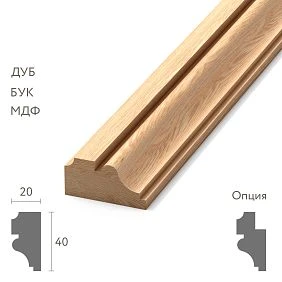
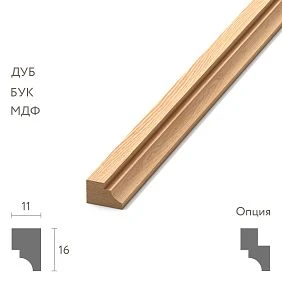
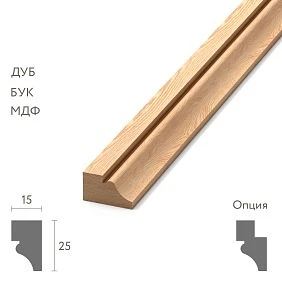
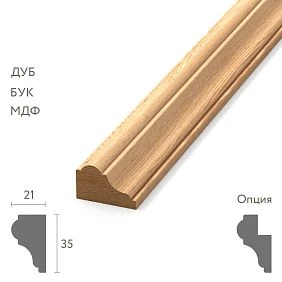
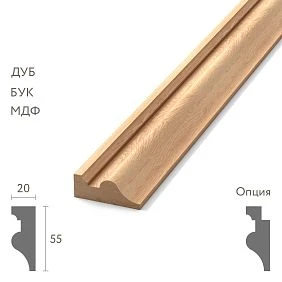
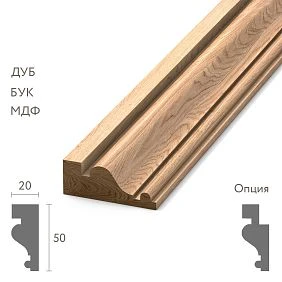
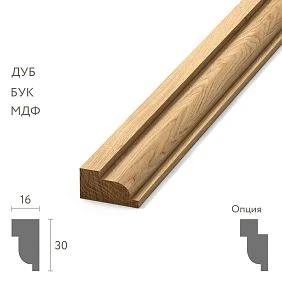
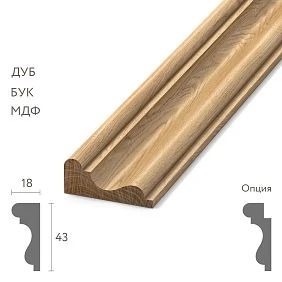
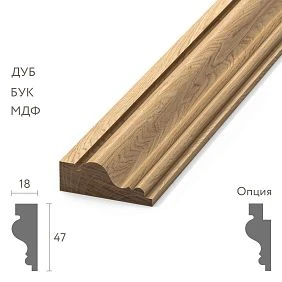
STAVROS wooden mouldings catalog shows why such detail is necessary: a single item code can have several versions, materials, and commercial lengths. For example, for PLT-006, the solid wood variants have a length of 2400 mm, while the MDF versions are 2600 mm. Therefore, cost can be compared between two dates only after verifying that the same configuration is being compared.
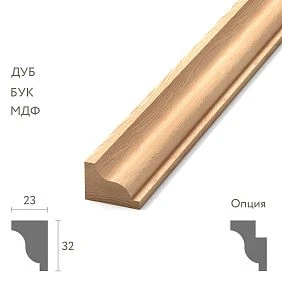
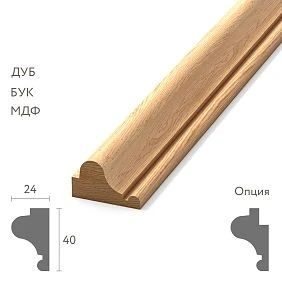
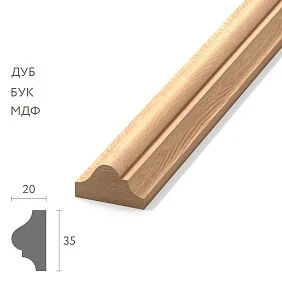
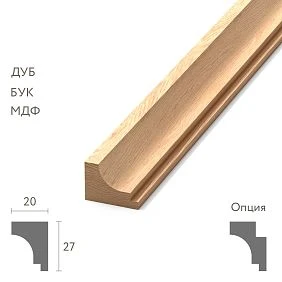
The first mistake is to consider today's price indefinite
The price may be located:
- in the product card;
- in the price list;
- in the commercial proposal;
- in the invoice;
- in the confirmed order.
These figures may have different statuses.
At least five parameters matter to the buyer:
- calculation date;
- specific configuration;
- quantity;
- validity period of the offer, if established;
- delivery terms.
Phrase:
PLT-A costs 1,000 ₽
by itself is not a normal line in a project budget.
An entry is needed:
PLT-A / oak / cross-section ___ / length ___ / volume ___ / price as of date ___ / terms ___
This is how it becomes possible to return to this line four months later and understand exactly what is being compared.




Four dates of one price
For a single procurement item, it is useful to keep four dates.
Our factory also produces:
PRICE DATE
The date for which the price is calculated.
Get Consultation
VALID UNTIL
Until what point the offer is valid, if such a period is agreed upon or specified.
ORDER DATE
When a specific batch is actually placed.
DELIVERY DATE
When this batch is needed by the site.
These dates may fall in different months.
For example:
- PRICE DATE — September 15;
- ORDER DATE of the first batch — September 25;
- DELIVERY DATE — October 10;
- the second batch will be placed only in December.
The September price does not automatically become the confirmed December price.
Why the phrase “project budget — 1.8 million” is insufficient
It is necessary to understand what 1.8 million means.
This could be:
Current estimate
Calculation based on today's prices for the entire volume.
Confirmed cost of one phase
The first batch has already been agreed upon, while the rest have not yet.
Agreed cost of the entire scope
Separately documented terms for the entire project.
These are three different budget states.
If they are not separated, within a few months any change to the invoice looks like an "unexpected price increase," even though part of the amount was only a forecast from the start.
What is PRICE BASELINE
PRICE BASELINE is the project's price base as of a specific date.
For example:
PRICE-BASELINE-01 / 15.09.2026
It records:
- article numbers;
- materials;
- dimensions;
- lengths;
- quantities;
- prices;
- packaging;
- logistics;
- terms;
- the status of each phase.
Baseline does not mean that the supplier is obligated to keep this price indefinitely.
It means something else:
on that date the project looked like this.
This is the point from which future changes can be honestly measured.
Who should approve the project's price baseline
A PRICE BASELINE is useful only when it is clear who issued it and who accepted it as the working budget reference point.
On a small project, this may be the client and the procurement specialist.
On a larger one — the buyer, financial controller, project manager, and client.
The table itself needs only these fields:
- baseline version;
- date;
- calculation author;
- who verified the technical specification;
- who approved the budget;
- which batches are CONFIRMED;
- which remain FORECAST.
If a new invoice appears two months later, the old version is not overwritten. A new one is issued:
PRICE-BASELINE-02 / 20.11.2026
The reason is recorded in the change log.
This way, no one argues about which figure was "originally": the original and new versions exist simultaneously, and the decision to change the budget can be reconstructed from the documents.
Why the price base must be linked to the specification
A price without an exact product is almost useless.
Not:
MLD-A — 1 000 ₽.
But:
MLD-A / oak / size ___ / length ___ / finish ___ — 1,000 ₽.
If after three months the material changes from oak to beech or the commercial length changes, the new amount is no longer a pure price change.
First, it is checked whether the same configuration remains.
Only then is the price deviation calculated.
CONFIGURATION ID: how not to confuse the same SKU in different versions
For procurement accounting, it is convenient to assign an internal configuration identifier.
For example:
PLT-A-OAK-2400
Or:
PLT-A-MDF-2600
Even if the trade name of the profile is the same, these lines cannot be considered one procurement item.
This is clearly visible in the current PLT-006: the beech and oak array has one length and thickness, while MDF has another. When the material changes, not only the price changes, but also the calculation of the number of slats.
Therefore, a direct comparison over time is correct only for one CONFIGURATION ID.
Wooden skirting board: price change or configuration change
First queue:
PLT-A / oak / 2400 mm
Second batch:
PLT-A / MDF / 2600 mm
Even if the profile has the same name, different product versions are purchased.
If the amount of the second batch is lower or higher, you cannot record:
the price of the skirting board changed by X%.
It needs to be divided into:
- change of material;
- change of length;
- quantity change;
- change in the price itself.
This is especially important for reporting to the customer or the finance department.
A single SKU can change the budget through cutting
Suppose a project needs 96 m of profile.
With a length of 2400 mm, the mathematical minimum:
96 / 2.4 = 40 strips.
With a length of 2600 mm:
96 / 2.6 = 36.92, so a minimum of 37 bars.
But the commercial footage:
40 × 2.4 = 96 m.
37 × 2.6 = 96.2 m.
That is, the number of bars decreased, while the purchased footage increased slightly.
If the price of one bar changed at the same time, the budget changes for two reasons at once.
Therefore, the buyer must see not only the price per meter or per piece, but also the cutting configuration.
Wooden moulding: why length affects the budget even at the same price per meter
Moulding is often cut into many separate segments.
Therefore, the same net requirement in meters may require a different number of planks at different stock lengths.
Let's imagine four segments:
- 1.8 m;
- 1.8 m;
- 1.8 m;
- 1.8 m.
total net length:
7.2 m.
If the plank is 2.4 m, each segment requires a separate plank:
4 × 2.4 = 9.6 m of purchased meterage.
Simple division:
7.2 / 2.4 = 3 planks
mathematically it looks sufficient, but in practice it does not yield four solid pieces of 1.8 m.
This is a good example of why PRICE BASELINE should be based on the actual number of whole items, not just the total linear meters.
Wooden cornice: it is better to track an expensive item with a separate price history
If one SKU takes up a noticeable part of the budget, it is useful to keep versions:
PRICE V1
PRICE V2
PRICE V3
For each version you can see:
- date;
- the material;
- length;
- quantity;
- price;
- conditions.
Then, when the amount grows, you can quickly understand what exactly changed.
This is especially useful for a large cornice: even a small change in the price of one plank, with a large quantity, noticeably affects the overall budget.
Material costs: what to include in the initial price base
material costs it is better not to store it as a single line "all together."
The following are tracked separately:
- goods;
- processing or finishing, if ordered;
- packaging;
- logistics;
- additional agreed-upon expenses.
This allows changes to be analyzed later.
For example, the cost of the molding itself did not change, but the project was split into three separate deliveries instead of one.
The total amount increased due to logistics, not due to the price of the material.
If the product and delivery were initially combined into a single line, the reason for the overspend is lost.
Why the product and delivery should have separate baselines
For example:
product portion — 900,000 ₽.
logistics — 60,000 ₽.
After three months, the goods remain at 900,000 ₽, but logistics becomes 95,000 ₽ due to a different delivery scheme.
The total amount has increased:
960 000 → 995 000 ₽.
The difference:
35 000 ₽.
But this is not an increase in the cost of the molding itself.
The report should include:
LOGISTICS VARIANCE +35 000 ₽
And not:
materials have risen in price by 35,000 ₽.
Cost of building materials: total budget and confirmed first phase
cost of building materials in a long project, it is useful to divide into two layers.
CONFIRMED
The price has already been confirmed for a specific batch.
FORECAST
Future estimate based on the current price base.
For example:
- total project — ₽3,000,000 per baseline;
- first phase — ₽800,000 confirmed;
- second — ₽1,050,000 forecast;
- third — ₽1,150,000 forecast.
You cannot present all ₽3 million as equally guaranteed if the commercial terms of future batches have not yet been fixed.
Three commercial proposal models
Model 1 — price confirmed only for the current batch
Then:
BATCH 01 — CONFIRMED
BATCH 02 — FORECAST
BATCH 03 — FORECAST
This is a transparent model for a long-term project.
Model 2 — terms separately agreed for the entire project volume
If the supplier and buyer have fixed the price, volume, timelines, and other terms for the entire project, this must be directly reflected in the documents.
Such fixation cannot be assumed automatically.
Model 3 — each queue is recalculated
Then the project knows in advance that the baseline is only a reference point, and a reforecast is performed before each batch.
What does “fixing the price” mean?
The phrase is too abstract.
The right questions:
- for which SKU;
- for which variant;
- for what quantity;
- for what period;
- for which batches;
- does the price include packaging;
- does it include logistics;
- what happens when the volume changes.
Only after the answers does the phrase “price locked” become a manageable commercial agreement.
Locking the price without locking the volume is almost useless
For example:
PLT-A — 1,000 ₽ per strip.
But it is unclear whether this applies:
- to 20 strips;
- to 200;
- to 2,000.
If volume affects commercial terms, a price without quantity does not describe the deal.
Therefore, the baseline links:
SKU + configuration + quantity + price + date + terms.
Fixing the total volume without a schedule is also incomplete
The project reports:
we will need 5,000 linear meters.
But the manufacturer and the buyer need to know:
when exactly?
For example:
- 1,600 m — October;
- 1,700 m — January;
- 1,700 m — March.
The schedule affects:
- production;
- warehouse;
- reservation;
- logistics;
- financial plan.
Therefore, the pricing model must account not only for total volume but also for queues.
Today's construction material prices are a snapshot
today's construction material prices useful as a current reference point.
But for a six-month project, today's price is:
baseline
and not necessarily the cost of all future batches.
If the buyer keeps the date, in three months he can honestly say:
As of September 15, the project was valued at X; in December, the cost of the same configuration became Y.
Without a date, comparison is meaningless.
Every price change must have a reason
Example log:
| Version | Price | Reason | | --- | ---: | --- | | V1 | 1,000 | baseline | | V2 | 1,060 | new commercial price | | V3 | 1,120 | material changed + new price |
V2 is a pure price change.
V3 can no longer be called just a price increase, because the product itself changed.
This is how the distinction emerges:
PRICE VARIANCE
и
CONFIGURATION VARIANCE.
Why a design project change cannot be recorded as price inflation
The designer replaced MLD-A with the larger MLD-B.
The new amount is 15% higher.
Incorrect output:
construction materials became 15% more expensive.
Correct analysis:
- part of the difference is due to the new SKU;
- part is due to the new quantity;
- part is due to the current commercial price.
This is why budget variance is broken down by cause.
PRICE VARIANCE, QUANTITY VARIANCE, CONFIGURATION VARIANCE, and LOGISTICS VARIANCE
These are the four main categories of variance.
PRICE VARIANCE
The same configuration costs more or less.
QUANTITY VARIANCE
The project requires a different quantity.
CONFIGURATION VARIANCE
The material, length, SKU, or finish has changed.
LOGISTICS VARIANCE
The cost or delivery scheme has changed.
After that, the overage is no longer a single unclear amount.
Example: the price increased, the quantity did not change
Baseline:
500 planks × 1,000 ₽ = 500,000 ₽.
New price:
500 × 1 080 ₽ = 540 000 ₽.
PRICE VARIANCE:
+40 000 ₽.
Here the analysis is simple: the item and quantity are the same, only the price changes.
Example: the quantity increased at the same time
Now the quantity has increased to 550 units.
New budget:
550 × 1 080 = 594 000 ₽.
Total deviation from baseline:
594 000 − 500 000 = 94 000 ₽.
Of these:
PRICE VARIANCE = 500 × (1 080 − 1 000) = 40 000 ₽.
QUANTITY VARIANCE = (550 − 500) × 1 080 = 54 000 ₽.
Check:
40 000 + 54 000 = 94 000 ₽.
Now the finance department understands that not all of the overspend was caused by a price increase.
How to account for a configuration change
For example, previously it was:
PLT-A / oak / 2400 mm
Now:
PLT-A / MDF / 2600 mm
PRICE VARIANCE cannot be calculated directly between these lines.
First, the old configuration is closed and a new baseline line is created.
Otherwise, the buyer compares two different items as if they were the same line item.
How to account for a logistics change
The project planned one large delivery.
After the schedule change, it became three.
Product prices did not change.
But the following appeared:
- three transports;
- three receipts;
- three unloadings;
- possibly, three packaging sets.
This is not PRICE VARIANCE.
This is a separate logistics deviation.
So the report does not blame the cost of the linear meter for the fact that the construction schedule changed.
Should a price contingency be included
A budget may have a contingency — a reserve for uncertainty.
But there is no universal rule:
always add 10%
No.
The size of the reserve depends on:
- project durations;
- how much of the price is actually fixed;
- the number of future phases;
- the complexity of configurations;
- the likelihood of design project changes;
- currency and logistics factors of a specific purchase;
- the degree of specification readiness.
The more future uncertain batches there are, the more important it is to honestly show FORECAST separately from CONFIRMED.
The further out the batch, the more important the FORECAST status is
For example:
October
BATCH 01 — CONFIRMED
January
BATCH 02 — FORECAST A
March
BATCH 03 — FORECAST B
This is better than recording the September price once for all future months and then being surprised by a budget change.
The forecast can be updated regularly.
The baseline is not deleted in this case.
It remains the point of comparison.
Before each new batch, we verify the price against the baseline
Before paying a new invoice, check:
- Is the SKU the same?
- Is the material the same?
- Is the size the same?
- Is the length the same?
- Does the quantity match the new requirement?
- Has the price changed?
- Has the packaging changed?
- Has the logistics changed?
Only after this reconciliation does the new amount get the correct reason.
Why the new invoice should not overwrite the old baseline
If the old line is simply replaced with the new price, the history disappears.
Was:
PRICE-BASELINE-01 / 15.09
Now:
PRICE-BASELINE-02 / 20.12
Both versions must be preserved.
Otherwise it is impossible to answer:
- when the budget changed;
- what the original price was;
- what was confirmed to the customer;
- what deviation appeared between batches.
Versioning makes the budget auditable.
How to create a reforecast without changing the original budget
A reforecast is a new current estimate, not an edit of history.
It is convenient to keep three columns:
| Metric | Baseline | Current Forecast | | --- | ---: | ---: | | Batch 1 | ___ | ___ | | Batch 2 | ___ | ___ | | Batch 3 | ___ | ___ | | Total | ___ | ___ |
The baseline remains unchanged.
The Current Forecast shows how much the project expects to spend now.
The difference between them is the current budget variance.
On the next recalculation, a new forecast date is created, but the original version is again not deleted. This approach is especially useful when the client wants to see not only the final amount but also the trajectory of budget changes by month.
Project Price Register
Practical tool:
| SKU | Configuration | Baseline price | Current price | Δ Price | Qty | Impact | | --- | --- | ---: | ---: | ---: | ---: | ---: | | PLT-A | OAK-2400 | ___ | ___ | ___ | ___ | ___ | | MLD-A | OAK-2400 | ___ | ___ | ___ | ___ | ___ | | KZ-A | OAK-2400 | ___ | ___ | ___ | ___ | ___ |
Additionally, for each line:
- PRICE DATE;
- VALID UNTIL;
- PO number;
- status CONFIRMED / FORECAST;
- procurement queue number;
- date of the last reforecast.
This makes it clear which items require attention.
How to manage three queues of a single specification
Initial example:
| SKU | Total | Batch 1 | Batch 2 | Batch 3 | | --- | ---: | ---: | ---: | ---: | | PLT-A | 1200 m | 400 | 400 | 400 | | MLD-A | 1850 m | 650 | 600 | 600 | | KZ-A | 560 m | 200 | 180 | 180 |
Total volume:
1200 + 1850 + 560 = 3610 m.
But it is better to budget not as a single line of 3610 m, but by phases.
Then:
- the first batch may be CONFIRMED;
- the second — FORECAST;
- the third — FORECAST.
After each new quotation, the forecast is updated.
When it really makes sense to discuss fixing the price for the entire project
This is justified if the following are clear at the same time:
- exact SKUs;
- configurations;
- total volume;
- batch schedule;
- payment terms;
- storage and shipping terms;
- validity period of the agreement.
And even in this case, the very possibility of fixing must be separately agreed with the supplier.
It must not be turned into an automatic promise from the manufacturer.
When you don't need to fix the price for the entire project
Full fixing may be impractical if:
- the design is still actively changing;
- the scope of the second and third phases is unknown;
- there are no final measurements;
- material for some items is not approved;
- construction timelines are slipping;
- supplies can significantly change the volume.
In such a situation, an honest forecast and regular reforecast are better than a formally "fixed budget" that will have to be rewritten anyway.
Cost of construction materials: the budget must explain the change
cost of construction materials becomes manageable when any deviation can be broken down by cause.
For example:
+40 000 ₽ — price variance;
+54 000 ₽ — quantity variance;
+35 000 ₽ — logistics variance;
+___ ₽ — configuration variance.
Then the client sees not one big line "it got more expensive," but a clear story of the project.
Mistakes in maintaining the price base for trim and molding
Mistake: treating the price from a quotation as indefinite.
Cause — no VALID UNTIL field. Consequence — the future batch is calculated using the old figure. Solution — record the date and status.
Error: comparing different configurations of the same SKU.
Cause — the name matches. Consequence — configuration variance is mistaken for price variance. Solution — CONFIGURATION ID.
Error: storing goods and delivery as a single amount.
Cause — it's easier that way. Consequence — it's impossible to understand the reason for budget growth. Solution — separate baselines.
Error: a new invoice overwrites the old one.
Cause — the table stores only the current value. Consequence — history disappears. Solution — versions.
Error: future batches are shown as confirmed.
Cause — a "nice-looking" total budget is needed. Consequence — forecast is perceived as a guarantee. Solution — CONFIRMED / FORECAST.
Error: all overspend is called price growth.
Cause — causes not separated. Consequence — incorrect project analysis. Solution — price / quantity / configuration / logistics variance.
Final algorithm
- Finalize the technical specification.
- Obtain a commercial proposal.
- Lock the PRICE DATE.
- Verify the CONFIGURATION ID of each line item.
- Lock the quantity.
- Verify VALID UNTIL.
- Split the project into procurement batches.
- Clarify which price applies to which batch.
- Create PRICE-BASELINE-01.
- Record who approved the baseline.
- Separate the product, packaging, and logistics.
- Separate CONFIRMED and FORECAST.
- Reforecast before each batch.
- Compare the new invoice with the baseline.
- Separate price, quantity, configuration, and logistics variance.
- Do not delete old versions.
- Keep the Price Register until the project is completed.
This way, the budget of a long project no longer depends on a single September figure and becomes a transparent system where it is clear exactly what changed between the first and third delivery.
Pricing questions in a long project
Does the price from the commercial proposal apply to the entire project?
Only if this is separately agreed upon. The price of the first batch cannot be automatically carried over to future months.
What is a PRICE BASELINE?
A price baseline of the project fixed on a specific date with exact SKUs, configurations, quantities, and terms.
Can the price of one SKU be compared after three months?
Yes, if the material, size, length, and other specifications remain the same.
Why is it necessary to separate CONFIRMED and FORECAST?
So that a future estimate is not perceived as an already guaranteed commercial price.
What should be done if the length of the plank has changed?
Recalculate the quantity and cutting plan, and attribute the budget change not only to the price but also to the configuration.
Do I need to keep old prices after receiving a new invoice?
Yes. Without history, it is impossible to explain variance.
Is a price reserve always necessary?
There is no universal percentage. The reserve depends on the project timeline and the level of commercial and design uncertainty.
What should be checked before paying for the next batch?
SKU, configuration, quantity, price, packaging, logistics, and the status of the current baseline.