Article Contents:
- What to buy for a light classic interior: a complete set
- Why white is never the same
- Shades of white: a conversation that changes everything
- How to check shade compatibility
- Where to use wood in a light classic interior
- Furniture handles: touch decides everything
- Furniture legs: elevation and nobility
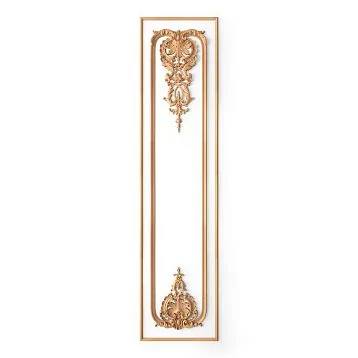
- Decorative wooden elements and furniture overlays
- Solid wood molding: the connecting link
- Where to use polyurethane decor in a light interior
- Polyurethane moldings: wall architecture for a light living room
- Polyurethane cornice: where the ceiling meets the wall
- Ceiling rosettes: the central accent of the ceiling
- Decorative stucco: point accents without overload
- Decor for moldings: details visible up close
- Ready-made sets for a light classic interior
- Light classic living room: space for living and impressions
- Milky classic bedroom: peace and the feel of a luxury hotel
- White kitchen-living room: unity in an open space
- Beige classic hallway: first impression
- Classic study in light tones: intelligence in details
- How to choose stucco relief for furniture
- Scale of relief: the rule of proportion
- Frame relief and furniture facade relief: a dialogue, not a monologue
- Ceiling rosette and chandelier: the central axis of the space
- How not to make a light interior flat and boring
- Two or three close shades instead of one "dead" white
- Wooden details as anchors of warmth
- Matte or semi-matte finish of moldings
- Lighting: a light interior lives differently at night
- Mistakes when buying light stucco and furniture
- Buying white stucco without comparing it with furniture
- Mixing cool and warm white
- Choosing too small a relief for large furniture
- Making all elements absolutely identical
- Forgetting about the baseboard and cornice
- Not considering lighting when choosing a shade
- Buying handles after painting the facades
- Do not take spare moldings and paint
- Complete shopping checklist: one order — a full system
- STAVROS: from carved palaces to a bright living room in your apartment
- Frequently Asked Questions
There is a moment in renovation when everything is already bought, arranged, and painted — but something still feels off. The furniture is white. The moldings are white. The walls are white. The ceiling is white. But instead of an airy classic feel, there is a hospital-like coldness or, on the contrary, a chaotic tangle of shades that are supposedly the same but clearly are not.
Sound familiar? This is not bad taste. It is the absence of a system.
Light classic furniture is one of the most subtle requests in interior design. White, milky, ivory, beige, cream, buttery — these are all different colors. And when Classic Furniture a warm milky shade is placed next to cold-white moldings, both look 'wrong' — even though each individually would be perfectly fine.
This article is about how to assemble a light classic interior as a system: from furniture to cornice, from handle to ceiling rosette. Without random white details. Without a sense of incompleteness. With an understanding of where wood is needed, where polyurethane is, and how the shade defines the character of the entire space.

What to buy for a light classic interior: a complete set
Before talking about shades and proportions — a specific list. A person searching for 'what to buy for a light classic living room' has already made a decision about the style. They need a system.
Furniture and components:
-
Classic Furniture — collections Versailles, Marseilles, Adele, Estelle in light finish options;
-
Wooden Furniture Handles — overlays, in white, milky, or transparent coating;
-
wooden furniture legs — turned, shaped, matching or contrasting colors;
-
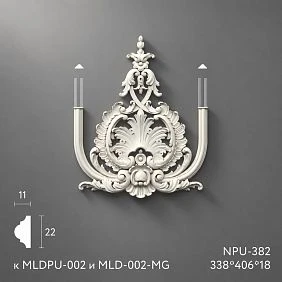
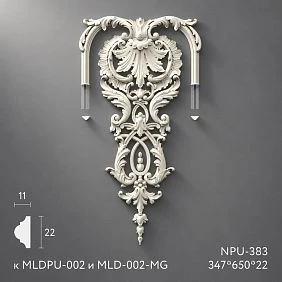
Furniture decor, decorative elements — applied carved elements on facades, cornice strips, friezes;
-
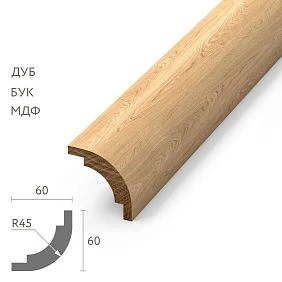
Pogonazh iz massiva — wooden profiles for framing panels, dividing strips.
Polyurethane decoration:
-
Moldings made of polyurethane — wall profiles for frames, horizontal accents;
-
a polyurethane cornice — ceiling transition, completion of the top line;
-
Polyurethane trim — baseboard, horizontal dividing profiles;
-
Polyurethane ceiling rosettes — chandelier frame, central ceiling accent;
-
Decorative stucco / polyurethane overlays — spot accents on walls and furniture fronts;
-
Polyurethane wall decor — frames, panels, wall elements;
-
Decor for Molding — corner rosettes, frame lock inserts;
-
Polyurethane moldings — the entire range for a light classic interior.
Finishing materials:
-
Assembly adhesive for polyurethane profiles — more details: what to glue polyurethane molding with;
-
Acrylic sealant — joints, corners, abutments;
-
Primer — for painting polyurethane profiles;
-
Paint — a single tone for moldings, cornice, baseboard, and stucco;
-
Reserve 5–10%.
The main idea: a light classic interior is not a random set of white details. It is a system where furniture, handles, legs, moldings, cornices, and stucco are selected in a unified color and plastic logic.




Why white is never the same
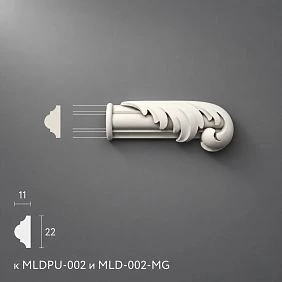
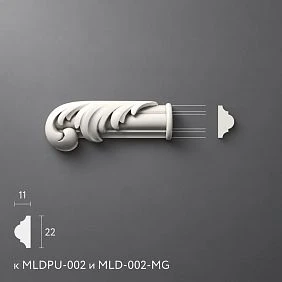
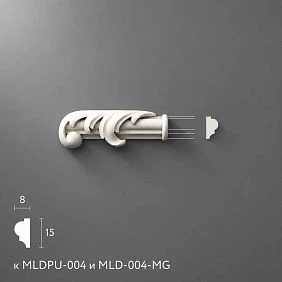
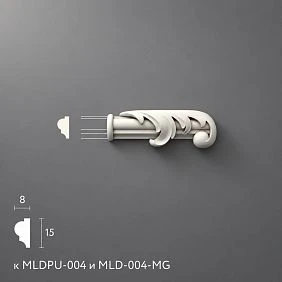
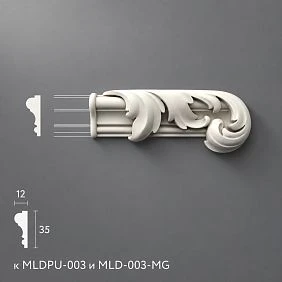
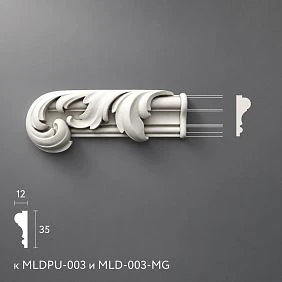
Our factory also produces:

Shades of white: a conversation that changes everything
Here's the paradox: it is in a light interior that color errors are most noticeable. A dark interior forgives a lot — nuances drown in saturation. A light one is merciless. Every mismatch of shades is immediately readable.
White can be different. Let's look at the key shades found in a light classic interior:
| Shade | Character | Temperature |
|---|---|---|
| Arctic white | Cold, sharp | Cold |
| Pure white | Neutral, bright | Neutral |
| Milky | Warm, soft | Warm |
| Ivory | Warm, creamy | Warm |
| Creamy | Warm, rich | Warm |
| Beige | Earthy, cozy | Warm |
| Champagne | Golden, noble | Warm |
Most items from collections classic furniture — the Versailles and Marseilles collections are produced in warm shades: milky, ivory, champagne. This is no coincidence: the classic style is organic precisely in a warm palette. Warm shades create coziness, a sense of a "living" space, a connection with wood and natural materials.
Cold white in a classic interior is a risk. It is appropriate in strict neoclassicism or Empire style, but requires very precise tuning: all elements — furniture, stucco, moldings, handles — must be kept in the same temperature.
Get Consultation
How to check shade compatibility
A simple rule: compare in person, under a single light source. Photos on a screen do not convey the real shade — the monitor has its own color calibration. Place samples side by side: a piece of furniture facade, a molding sample, a piece of painted surface. In daylight and under artificial light — they should "sound" together.
Warm shades (milky, ivory, creamy) harmonize with each other, even if they differ slightly. Mixing warm and cold white is a conflict that is always visible.
Where to use wood in a light classic interior
Furniture handles: touch decides everything
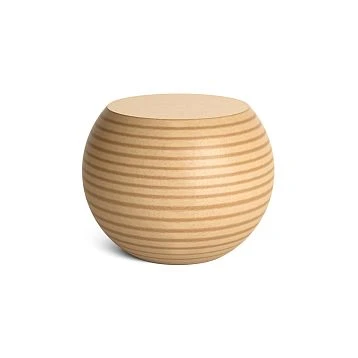
Furniture Handles — this is a detail that is touched dozens of times a day. It is the only element of furniture with which a person interacts tactilely. That is why the material of the handle is of fundamental importance: metal is cold and slippery; ceramic is fragile; wood is warm, reliable, "familiar".
Wooden furniture handles made of beech or oak are produced using 3D milling, which ensures geometric accuracy and surface cleanliness. In the STAVROS collection — 32 overlay-type models: large diameter round, asymmetrical triangular, scallop handles with smooth edges, long oval, rectangular, classic U-shaped brackets, compact knob handles. Each model is available in four colors: white, black, brown, clear coating.
For light classic furniture in a milky or ivory shade, the optimal choice is white wooden handles. They create unity with the facade, without standing out, but at the same time add tactile warmth that no metal handle can provide. An alternative is handles with a clear coating: the natural color of the wood provides a subtle contrast to the white facade.
Furniture legs: lift and nobility
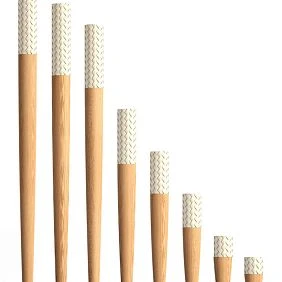
wooden furniture legs — this is what literally lifts furniture above the floor level and gives it lightness. Classic turned legs with curved profiles — "cabriole", "wine glass", "cone" — are instantly recognized as belonging to the style. Without proper legs, even the most beautiful facade looks like a "box on the floor".
In a light interior, wooden legs can be chosen in two ways. The first is a single tone with the furniture: the legs are painted in the same milky or white shade as the facades. The interior is unified, airy, monochrome. The second is a subtle contrast: legs in natural wood or a dark tone, while the facades are light. This is a neoclassical technique: a clear boundary between the supporting element and the decorative surface.
Decorative wooden elements and overlays for furniture
decorative elements for furniture — applied carved details from solid wood — this is the facade architecture of furniture. Rosettes, medallions, cartouches, friezes, corner overlays on panels — all this creates relief, which in a light interior is perceived especially expressively: soft light glides over the relief and creates a play of shadows.
For light facades, wooden overlays are painted in the same tone as the furniture. The relief then "lives" due to chiaroscuro, not due to color contrast. In bolder versions, the overlays can be highlighted with gold or light varnish — this is a classic technique of the "Versailles" style.
Solid wood moldings: the connecting link
Pogonazh iz massiva — wooden profiles, strips, baguettes — are used to create horizontal dividing strips on furniture facades and walls, framing wooden panels, and transitioning between finishing zones. In a light classic interior, this is especially important: a horizontal wooden strip at a height of 80–100 cm divides the wall into a lower panel zone (wood or decorative panel) and an upper molding zone. It is the molding that creates this boundary.
Where to use polyurethane decor in a light interior
Polyurethane moldings: wall architecture of a light living room
Moldings made of polyurethane — these are wall profiles that turn an empty painted plane into an architectural surface. In a light classic interior, moldings perform three tasks: create a frame system on the walls (rectangular frames dividing the wall into sections); frame areas with decorative elements (niches, mirrors, paintings, sconces); create horizontal accents (friezes at the level of furniture facades or slightly higher).
The key principle for a light interior: moldings should be painted in the same shade as the walls, or one tone lighter. "White stucco on a white wall" is not overkill, it's a classic: the relief is read through shadows, not through color contrast. This technique creates depth without tension.
Polyurethane cornice: where the ceiling meets the wall
a polyurethane cornice — the upper horizontal boundary of the wall. In a classic interior, a cornice is an architectural necessity, not a decoration. Without a cornice, the junction of the wall and ceiling looks like unfinished construction. With a cornice, it looks like part of a well-thought-out interior.
In a light space, the cornice is usually painted in the same white or milky shade as the ceiling, or in the color of the walls. The cornice can be modest (profile 50–70 mm) or expressive (profile 100–150 mm with rich relief). The scale of the cornice is determined by the ceiling height: up to 2.7 meters — a light profile, 2.8–3.2 meters — medium, higher — a full architectural cornice.
Ceiling rosettes: the central accent of the ceiling
Polyurethane ceiling rosettes — round or oval decorative elements at the base of the chandelier — this is a detail that instantly elevates the status of the interior. In a light classic living room, a chandelier without a rosette is incompleteness. A chandelier with a ceiling rosette is an architectural point around which the entire ceiling space is organized.
The size of the rosette is selected according to the size of the chandelier and the ceiling height. Diameter 300–400 mm — for compact chandeliers and small rooms. 500–700 mm — for a full-fledged classic living room with a ceiling height of 2.8 meters or more. The relief of the rosette should echo the relief of the cornice and moldings — this ensures visual unity of the entire space.
Decorative stucco: point accents without overload
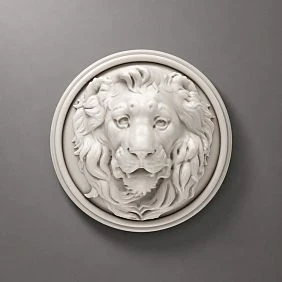
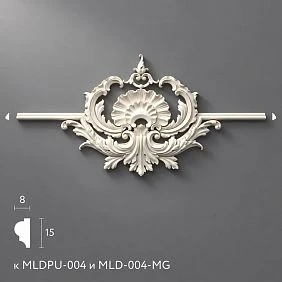
Decorative stucco and polyurethane overlays are used in a light interior as point elements: a medallion above the door, a cartouche on the pier, a corner overlay in the frame. This is not the principle of "more is better." In a light classic space, one expressive element in the right place means more than ten small details around the entire perimeter.
Polyurethane wall decor In a light interior, these are mirror frames, sconces, and decorative panels. They create "attention" zones — points where the gaze lingers and takes pleasure.
Decor for moldings: details that are visible upon closer inspection
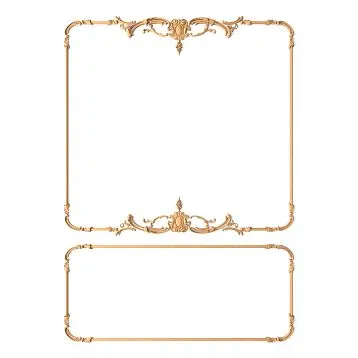
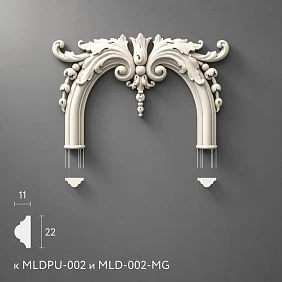
Decor for Molding — corner rosettes and keystone elements are what distinguish "made beautifully" from "made professionally." Instead of a simple 45° miter joint at the corners of the frame, a decorative insert appears. This is a detail that is not noticed immediately — but it is precisely this that creates the feeling that the interior is "brought to completion."
Ready-made sets for a light classic interior
Light classic living room: a space for living and impressions
The living room is the main stage of the home. This is where the entire arsenal of light classic decor should work.
Furniture from the collection Versailles in a milk or ivory shade. Wooden handles in white on the facades of cabinets and consoles. Walls with molding frames matching the walls. Cornice along the perimeter of the ceiling. Ceiling rosette under the chandelier. Baseboard from polyurethane molding. One or two point decorative elements on the accent wall.
Full set: classic furniture + white wooden handles + turned legs + moldings + cornice + ceiling rosette + baseboard + decor for moldings + glue + primer + milk paint + spare.
Milky classic bedroom: peace and the feel of an expensive hotel
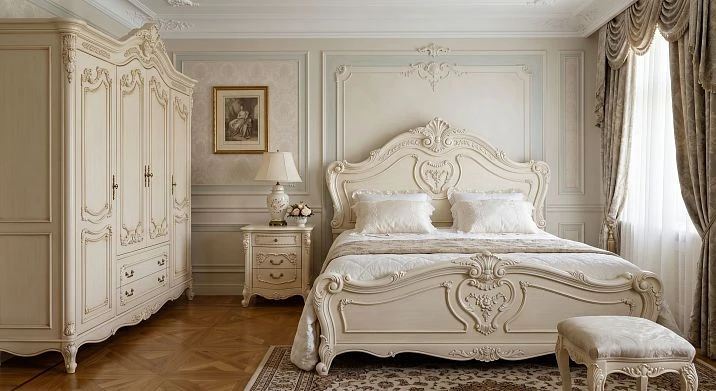
In the bedroom, light classics create what the whole interior is about: a feeling of luxury and peace at the same time. Bed from the collection Versailles with a carved headboard. Bedside tables with wooden handles. The wall behind the headboard — with molding frames or a decorative panel framed by of polyurethane moldings. Light profile cornice. Baseboard. No heavy overlay elements — only frames and thin profiles.
Special technique for the bedroom: the wall behind the bed is painted a half-tone darker (e.g., warm beige), and the molding frames on it are in milky white. The contrast is minimal, but it creates depth and highlights the bed headboard as an architectural accent.
White kitchen-living room: unity in an open space
In an open-plan kitchen-living room, the task of classic decor is to unite two functional spaces without a sense of transition. Moldings in the kitchen area and moldings in the living room are of the same profile and color. decorative elements for furniture On the kitchen facades, they repeat the pattern of handles and trims in the living room. The cornice runs along the entire perimeter: both above the kitchen cabinet and above the sofa.
Wooden handles in white or transparent finish on all kitchen furniture. Countertop in a shade of beige or champagne. A single baseboard along the entire length of the open space.
Beige classic hallway: first impression
The hallway is the face of the home. It is here that a person first finds themselves in your interior and reads its character. Beige walls, white or milky moldings, Polyurethane baseboard of the same shade, a console with wooden legs in light oak finish, a mirror framed . Clear lines, created using modern technologies, emphasize the strict aesthetics of the room. Each decorative element harmoniously fits into the overall concept, creating a sense of order and thoughtfulness. — this is a hallway where it is immediately clear: people with taste live here.
The hallway does not require a ceiling rosette — but it does require a cornice and a baseboard. This is the minimal frame that makes the space complete.
Classic study in light tones: intellect in details
A bright study is a rare but very convincing option. White or cream walls, a light cornice, thin molding frames, a desk with wooden handles a transparent finish, a chair with wooden legs. No heavy decorative molding — only clear frames and a restrained cornice.
In the study, a light classic interior creates an atmosphere of concentration and intellectual elegance. Not glamour — dignity.
How to match the relief of stucco to furniture
Scale of relief: the rule of proportion
One of the most common mistakes in a light classic interior is choosing moldings and stucco without considering the scale of the furniture. Large classic furniture with expressive carving requires proportionate decor: medium-width moldings with a clear profile, a cornice with rich relief. Light "French" furniture on thin legs — delicate thin moldings, an elegant cornice, a modest rosette.
Guideline: the width of the molding should be 2–3% of the wall height. For a wall height of 2.7 meters, this is 54–81 mm. For ceilings of 3 meters — 60–90 mm. The cornice should be 1.5–2 times wider than the main wall molding.
Relief of the frame and relief of the furniture facade: a dialogue, not a monologue
Wall molding and decorative overlay on furniture facades should "converse," not shout over each other. If the furniture facade has a complex, expressive relief (rosettes, cartouches, figured inserts), the wall moldings should be simpler. And vice versa: with restrained facades, the walls can carry more expressive decor.
In a light monochrome interior, this dialogue is especially important — when everything is one color, only relief creates a difference between elements. That's why you cannot choose Polyurethane appliqués without considering what already exists (or will exist) on the furniture facades.
Ceiling rosette and chandelier: the central axis of the space
Ceiling rosette — this is not only an aesthetic but also a visually centering element. It literally marks the middle of the space. In a rectangular room, the rosette should be exactly in the center — and then it "pulls" everything around it, creating a sense of a properly organized space.
The relief of the rosette should echo the relief of the cornice: if the cornice has acanthus leaves, the rosette should also have a floral ornament; if the cornice is geometric, the rosette should have a geometric relief. This creates ceiling unity.
How not to make a light interior flat and boring
Two or three close shades instead of one "dead" white
A space painted in the same white color from floor to ceiling — walls, cornice, baseboard, furniture, handles — looks like a room where renovations haven't even started. Everything blends together. No depth. No life.
Rule: in a light classic interior, there should be at least two, optimally three, close shades. For example: walls — warm beige; cornice, moldings, baseboard — milky white; furniture — ivory; handles — matte white. Four positions, three shades. Each slightly different, but all in the same warm palette. The result is depth without tension.
Wooden details as anchors of warmth
In a monochrome light interior, wooden details — handles, legs, moldings — are "anchors" that prevent the space from feeling cold. Wood with natural oil (light oak, bleached beech) or wood with milk paint — in both cases, it carries texture and tactile warmth that no polyurethane profile can provide.
Rule: at least one element in each zone should be wooden — and be touched by hands. A cabinet handle. A chair leg. A mirror frame. This is fundamental.
Matte or semi-matte painting of moldings
Glossy white stucco in a light interior is a risk. In daylight, it can create glare that destroys the feeling of a soft classical atmosphere. Matte or semi-matte paint absorbs light, creating a velvety surface that reveals the relief especially beautifully in side lighting.
Recommendation for a light classical interior: matte or silk (satin) paint for moldings, cornices, baseboards, and moldings from polyurethane. Semi-gloss — only where functional moisture resistance is needed (kitchen, bathroom).
Lighting: a light interior lives differently at night
A light classical interior in daylight and in evening light is essentially two different interiors. During the day, the space is open, airy, bright. In the evening — with side lighting from sconces and floor lamps — moldings, overlays, and rosettes "come alive": the relief creates shadows, the space gains depth.
This means: when designing a light classical interior, you need to think about lighting in advance. Sconces on molding frames. Backlighting in niches. Floor lamps that create side light. This is not a luxury — it is a necessity for an interior where the relief must "work".
Mistakes when buying light stucco and furniture
Buying white stucco without comparing it to furniture
We bought moldings in "off-white" — brought them home, placed them next to the furniture, and it turned out one was cool-toned and the other warm. The difference is small, but in a light interior it catches the eye. Solution: always compare samples under the same lighting, in person.
Mixing cool and warm white
Cool whites Moldings made of polyurethane next to milky furniture — conflict. A milky cornice and bright white Ceiling rosette — also. Keep the color temperature consistent.
Choosing too small a relief for large furniture
Large classic furniture with rich carving requires proportionate decor. A thin 20 mm molding next to a massive sofa with carved legs is a mismatch in scale. The relief should "respond" to the furniture.
Making all elements absolutely identical
"Let everything be one color" sounds reasonable, but in practice it gives a flat, lifeless result. Small tonal nuances within a warm palette are not a mistake, they are depth.
Forgetting about the baseboard and cornice
Wall moldings have been purchased. Handles have been chosen. Furniture has been placed. But the baseboard is old, Soviet, out of place. Or there is no cornice at all. The baseboard and cornice are the bottom and top frames of the entire interior. Without them, any decor looks unfinished.
Not considering lighting when choosing a shade
In daylight, one shade of milky looks neutral. In yellow evening light, the same shade becomes rich and warm. In cold daylight, it may appear grayish. Check shades under different light sources before purchasing.
Buying handles after painting the facades
Handles should be chosen before painting, not after. Otherwise, it may turn out that the chosen handle requires a different facade shade — and you have to repaint.
Not buying a reserve of moldings and paint
Cutting corners, defects, small installation errors — all this consumes 10–15% of the material. Buying "just enough" and then looking for the same molding article is a risk of getting a batch with a slightly different shade or not finding it at all. A reserve is mandatory.
Complete shopping checklist: one order — a full system
Furniture and wooden elements:
-
Classic Furniture in milk, ivory, or beige shade;
-
Wooden furniture handles — white or transparent, 32 models to choose from;
-
Wooden furniture legs — turned, matching furniture tone or contrasting;
-
decorative inlays for furniture — rosettes, cartouches, corner elements of facades;
-
Pogonazh iz massiva — dividing strips, friezes, panel trims.
Polyurethane profiles and moldings:
-
Moldings made of polyurethane — along wall linear footage + 10% reserve;
-
a polyurethane cornice — along ceiling perimeter + 10%;
-
Polyurethane trim — baseboard along perimeter + 10%;
-
ceiling rosettes — by the number of chandeliers;
-
Decorative stucco / overlays — by the number of accent points;
-
Polyurethane wall decor — frames for mirrors, sconces;
-
Decor for Molding — 4 corner inserts for each frame.
Consumables:
-
Glue for polyurethane profiles — selection details;
-
Acrylic sealant — white, matching the moldings;
-
Primer — for painting polyurethane;
-
Paint — a single tone for all polyurethane decor; matte or semi-matte;
-
Oil or varnish — for wooden handles and legs, if they remain with a natural texture.
STAVROS: from carved palaces to a bright living room in your apartment
Behind a light classic interior stands a manufacturer — and this is fundamentally important. When furniture, wooden handles, legs, overlays, and polyurethane decor are produced by one company and designed in a unified system of proportions and relief — assembling a harmonious interior is much easier. There is no need to spend time searching for a "suitable" molding — it already fits because it was created with an understanding of what furniture it will be next to.
STAVROS is a Russian manufacturing company with a history dating back to 2002. The first products were created for the restoration of imperial palaces: Konstantinovsky, Alexandrovsky, and the Hermitage. This experience — working with architectural proportions, historical profiles, and selecting relief to match the scale of the space — has become part of the DNA of every product the company manufactures today.
Today STAVROS offers:
-
classic furniture in-house production — the Versailles, Marseilles, Adele, Estelle, Louis, and Luxe collections;
-
Wooden furniture handles — 32 models, four colors, delivery from one piece;
-
Full range moldings from polyurethane: moldings, cornices, baseboards, rosettes, overlays, frames.
Production — Saint Petersburg. Showrooms in Saint Petersburg and Moscow. Contact us to confirm shipping to your destination. Products from stock — from 3 business days. Made-to-order products — 5–10 business days. Order from one piece.
Frequently asked questions
Which stucco molding suits light classic furniture?
Moldings made of polyurethane и Decorative Inserts with a soft relief, painted in a warm white, milky, or beige shade — in the same warm color scheme as the furniture. The relief is read through shadows, not through color.
Can white furniture and white molding be combined?
Yes — provided the shades match in 'temperature'. Cold-white stucco next to warm milky furniture creates a conflict. Be sure to compare samples in person under daylight.
What to buy for a light classic living room?
classic furniture in a light shade, Wooden handles и Legs, Moldings, Cornice, ceiling outlet, baseboard, glue, primer, paint, and a 10% reserve.
How to add volume to a light interior?
Use 2–3 close shades instead of a single white. Add wooden handles and legs with natural texture. Choose moldings with a clear relief. Provide side lighting — sconces and floor lamps that "reveal" the relief in the evening.
What molding relief should be chosen for a light classic room?
For modern classic and neoclassical — a clear geometric profile with one or two relief elements. For full classic — a profile with a floral ornament, proportionate to the cornice and rosette. Guideline: molding width 50–90 mm with a ceiling height of 2.7–3 meters.
Is a ceiling rosette needed in a light classic bedroom?
It is desirable. Even a small rosette with a diameter of 300–400 mm creates a ceiling center and architecturally completes the space. Without it, the chandelier looks "screwed on" rather than integrated into the interior. Choose ceiling outlet in accordance with the cornice relief.
How to choose wooden handles for light furniture correctly?
For milk and ivory facades — white Wooden handles in a single color or handles in a transparent coating with natural beech texture. For beige facades — handles in a transparent or brown coating. The main thing: no metal in cold chrome — it destroys the warm palette of a light classic interior.
How to connect moldings on walls with the decor of furniture facades?
Use Decor for Molding (corner frame inserts), the relief of which echoes the applied decorative elements on the facades. The same motif — floral, geometric, classic — should be present both on wall moldings and on furniture overlays.