

































Article Contents:
- When a good chair becomes a source of irritation
- What is a chair frame: not just legs
- Chair frame vs. just legs: what's the fundamental difference
- Wooden chair frame: why wood wins over metal
- Warmth and tactile feel
- Furniture-grade, not office-grade character
- Compatibility with the interior
- Workability
- Which styles suit a wooden frame
- Kitchen chair frame: what 'for daily use' means
- What matters for a kitchen frame
- Kitchen chair backrest
- Dining chair frame for the dining room: representativeness and compatibility
- Proportions and scale
- Combination with the table and other furniture
- Height and compatibility with the table
- Chair frame for cafes and restaurants: durability is not a wish, but a requirement
- What is needed from a frame for a cafe
- Chair frame for a restaurant: when a higher level is needed
- Chair backrest: why comfort starts not with softness
- Backrest height
- Backrest tilt angle
- Shape of the upper part of the backrest
- Chair silhouette
- Stretchers and crossbars: invisible heroes of strength
- What is a stretcher
- Size and cross-section of stretchers
- Crossbars between legs
- How to choose chair height: numbers that matter
- Standard parameters
- Why the gap matters
- Semi-bar stool: a separate format
- Chair frame for upholstery or rigid seat: what to choose
- Soft seat on a wooden frame
- Hard wooden seat
- Combined option
- How to choose a chair frame style: the visual language of furniture
- Classic frame
- Neoclassical style frame
- Bistro-style cafe frame
- Scandinavian frame
- Semi-bar frame
- Mistakes when choosing a wooden chair frame
- Choosing Based Only on Appearance
- Not considering table height
- Forget about the backrest angle
- Take a weak frame for the cafe
- Not account for the thickness of the soft seat
- Mix the frame style with the table and kitchen
- Buy legs when a full frame is needed
- Not think through the wood coating
- Not check the joints and stretchers
- Not think through ergonomics for a specific user
- Chair base: technical parameters that determine service life
- Material
- Moisture and Drying
- Type of joints
- Finish
- Wooden frame and furniture set: how to assemble a harmonious ensemble
- Table and chairs: material connection
- Table base and chair frames
- Details: handles, overlays, decor
- Where to buy a wooden chair frame: from the manufacturer or through a catalog
- STAVROS: furniture frames that don't wobble
- FAQ: Answers to Popular Questions
- How is a chair frame different from legs?
- Which frame to choose for a kitchen chair?
- Will a wooden chair frame work for a cafe?
- Why does a chair start to wobble?
- Can you buy a chair frame separately?
- What is the standard seat height of a chair?
- How to distinguish a durable frame from a weak one?
- What type of wood is best for a chair frame?
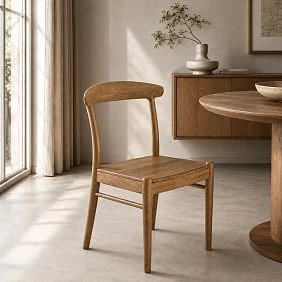
When a good chair becomes a source of irritation
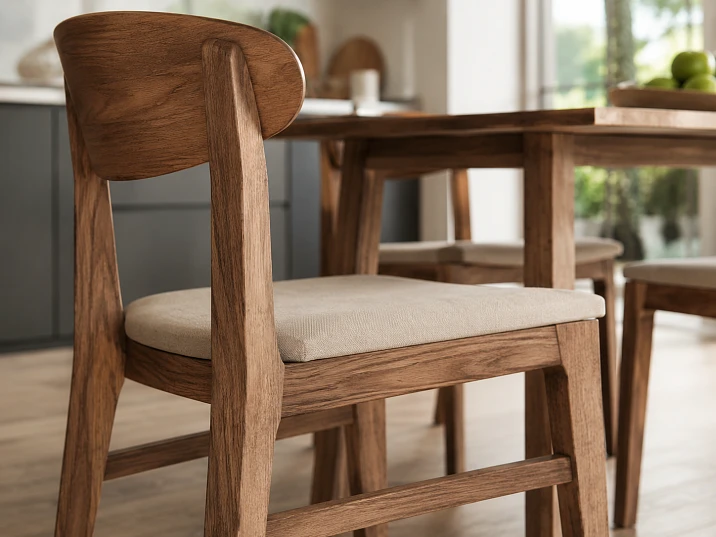
There is a special kind of household discomfort that accumulates unnoticed but one day erupts with full force. You sit down at the kitchen table — and the chair wobbles slightly. You push it back — it creaks. You lean on the backrest — and you feel something in the structure "gives way," doesn't hold, doesn't give a feeling of reliability.
A beautiful chair, good upholstery, a pleasant color. But sitting on it is uncomfortable. And it's not about the softness of the cushion or the height of the backrest. It's about what is hidden under the fabric and wood: in the chair frame.
The frame is what you don't see and hardly think about when choosing furniture. But it determines everything: whether the chair will stand level in a year, whether it will retain its rigidity in five years, whether it will withstand intensive use in a cafe or just daily use in the kitchen. The beauty of furniture is on the outside. Its value is inside, in the construction.

What is a chair frame: not just legs
Before talking about choice, you need to clearly understand what exactly we are choosing. Chair frame — this is a complete load-bearing structure that includes all structural elements: legs, stretchers, cross braces, the base for the seat, and the backrest with its vertical and horizontal components.
It's not just four legs. It's a system where every part works in conjunction with another. The legs bear the load vertically. The stretchers — horizontal planks between the legs under the seat — provide rigidity in the horizontal plane. The braces at the bottom (not always, but often) additionally secure the structure. The backrest with vertical posts and horizontal slats holds the position of the seated person's body.
If at least one of these elements is weak, incorrectly calculated, or poorly connected — the entire system performs worse. The chair starts to wobble, creak, and ultimately — break down.
Our factory also produces:
Chair frame and just legs: what is the fundamental difference
An important clarification that clears up a common misconception. Many people think: 'I'll buy good legs — and the chair will be sturdy.' That's not the case.
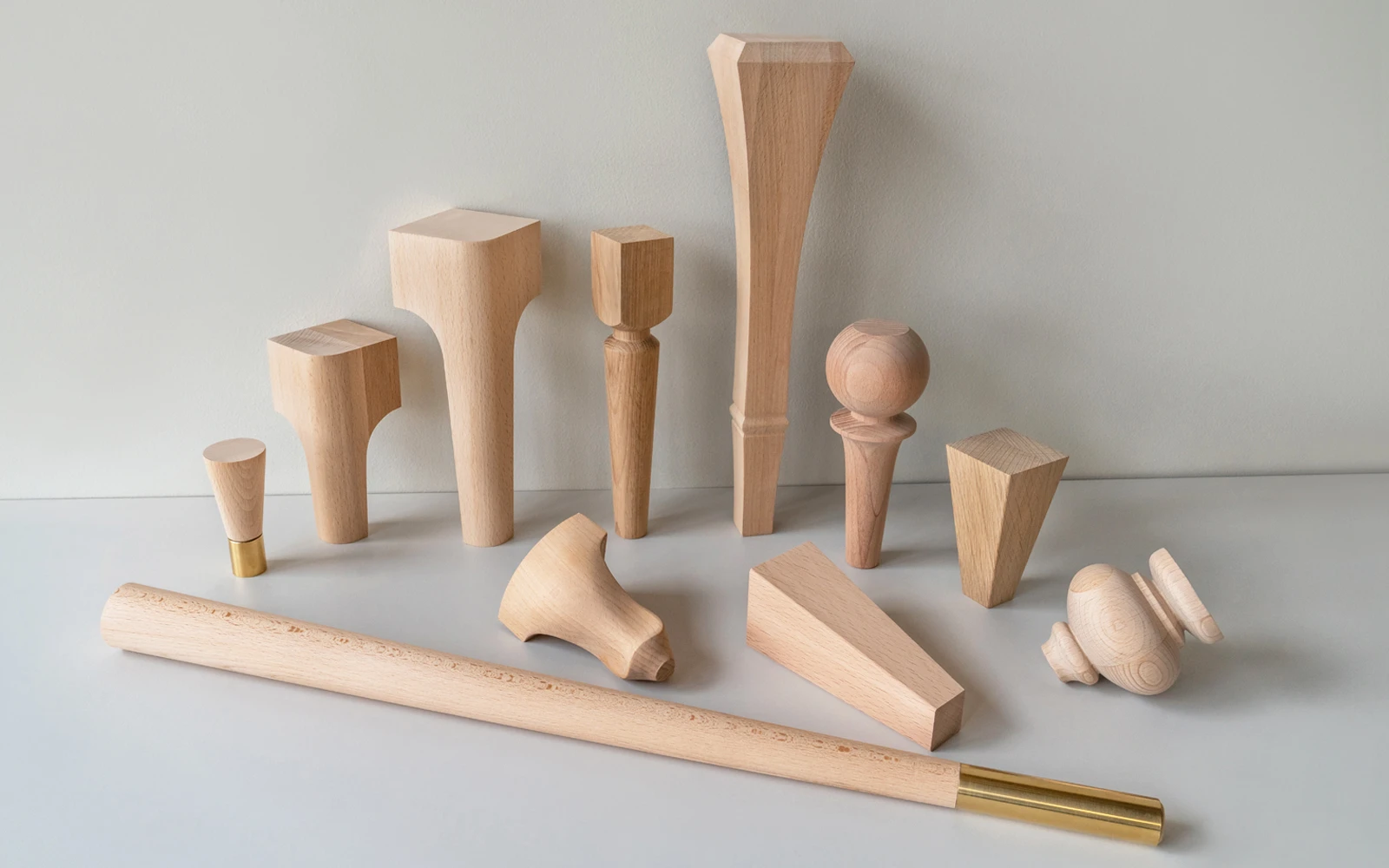
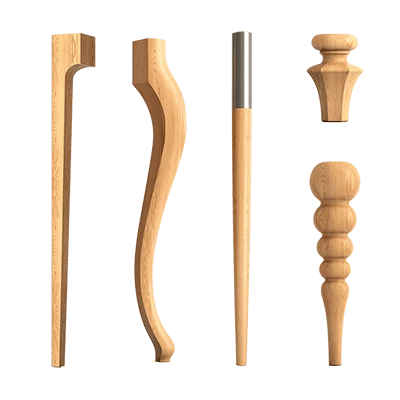
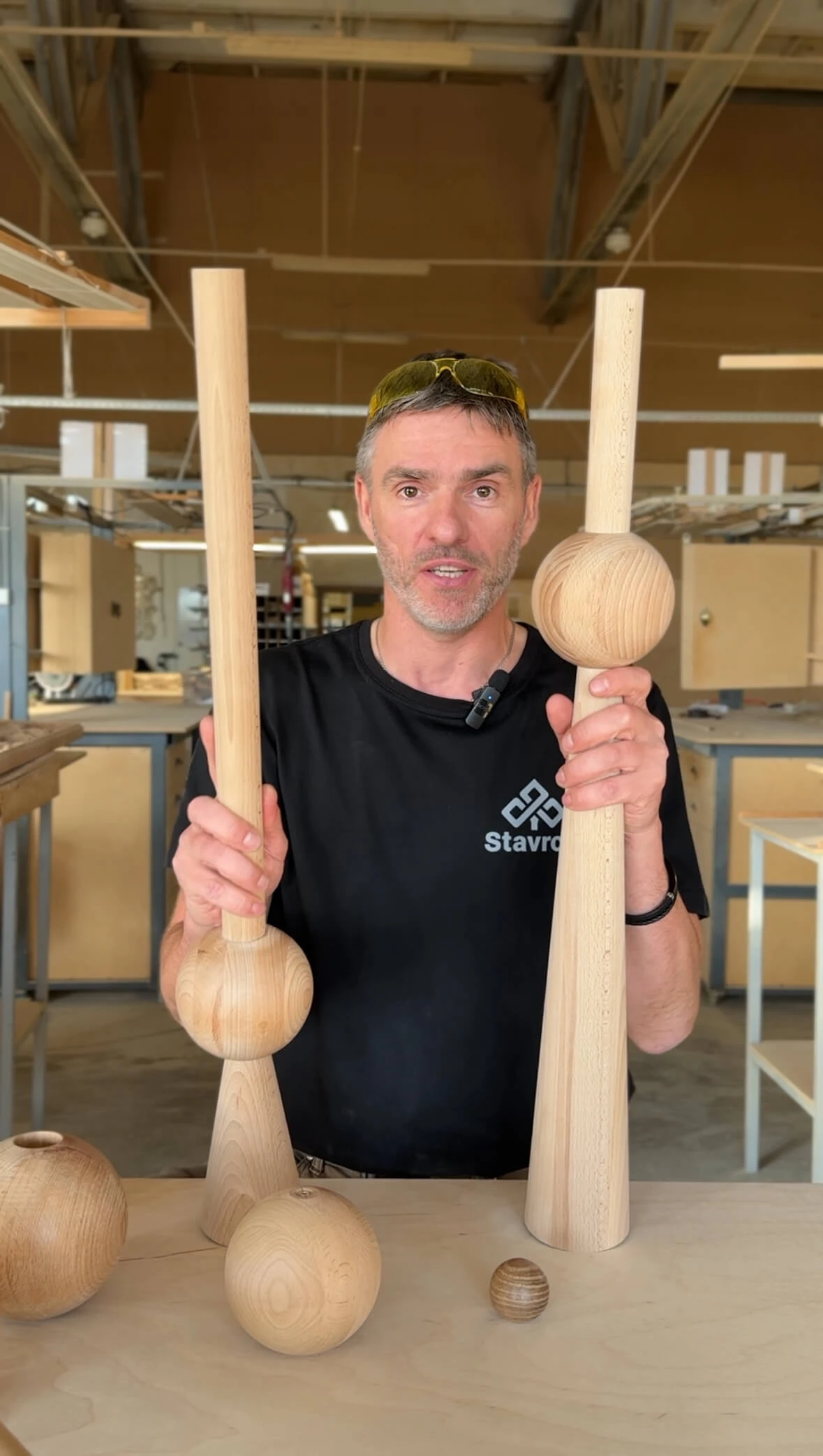
wooden legs for a chair — these are separate support elements. They maintain the height and transfer the load to the floor. But legs without stretchers and braces are an unstable structure that will immediately start to 'play' under lateral force. Stretchers provide horizontal rigidity. Without them, the legs spread apart under the weight of the seated person.
Wooden chair frame — this is a ready-made structure where all elements are already connected: legs, stretchers, the base for the seat, and the backrest. This is a complete foundation onto which you only need to install the seat and, if necessary, the upholstery.
The difference is fundamental:
-
Legs — a component for assembly or restoration, if the frame already exists.
-
The frame is a full-fledged load-bearing system from which the chair begins.
Get Consultation
Wooden chair frame: why wood wins over metal
The question of material is not only aesthetic. It is a question of the furniture's character, its feel, its service life, and the space where it will stand.
Warmth and tactility
Wooden solid wood chair frame warm to the touch. A metal frame is neutrally cold or outright cool. In a residential interior, especially in the kitchen and dining room, this is a difference you feel every day.
Furniture-like, not office-like character
A metal frame is associated with office or public furniture: conference rooms, coworking spaces, waiting areas. Wood is associated with home, kitchen, family dinner, coziness. This is not a subjective feeling — it is a stable cultural code that works in most residential interiors.
Compatibility with the interior
wooden chair frames blend organically into a wooden interior: next to a wooden tabletop, wooden handles, and solid wood moldings. The material echoes, the interior looks cohesive.
Processability
A wooden frame can be painted any color, tinted to match the floor, coated with oil or varnish. A metal frame can too, but metal interacts with paint differently and requires a different application technology. Wood is a living, repairable material.
Which styles suit a wooden frame
-
Classic and neoclassical — wood is a must here.
-
Country, Provence, rustic interior — only wood.
-
Scandinavian style — light solid wood with simple geometry.
-
Modern interior — dark or painted frame.
-
Bistro-style cafe, retro or eclectic — a wooden frame with character.
Kitchen chair frame: what does 'for daily use' mean
A kitchen chair is the most heavily used piece of furniture in the home. Not a sofa, not an armchair, but a kitchen chair. People have breakfast, lunch, drink coffee, talk on the phone, do homework, and just sit on it. It gets moved during cleaning, bumped into, and knocked over by children.
Kitchen chair frame must withstand this without losing rigidity and without squeaking. That is why it has more stringent requirements than a living room chair frame, which is used once a week.
What matters for a kitchen frame
Joints. This is the most critical part. The places where legs connect to stretchers are the main risk point. If the joint uses tenons and glue with correct geometry, the frame will hold its shape for many years. If the joint is weak, after a few months of intensive use the chair will start to wobble.
Cross-section thickness of elements. Thin legs and thin stretchers mean less load capacity. For a kitchen chair, it's better to choose frames with a slightly more massive cross-section that compensates for frequent use.
Stability on uneven floors. The kitchen is a room where the floor may have minor unevenness. The frame should allow for adjustable glides or be rigid enough so the chair doesn't wobble due to base irregularities.
Seat height. For a kitchen table with a standard countertop height of 75–76 centimeters, the optimal seat height is 44–46 centimeters. This creates a comfortable seating position: feet on the floor, knees under the table, back not strained.
Backrest of a kitchen chair
For the kitchen, a medium-height backrest is the optimal choice. A low backrest doesn't provide lumbar support during prolonged sitting. A very high backrest can make it difficult to push the chair close to the table. A backrest height of 40–50 centimeters from the seat is a comfortable balance for most people.
Dining chair frame for the dining room: representativeness and compatibility
The dining room is a different context. Here, not only comfort matters, but also how the chair looks. Guests sit at the dining table. The chair in the dining room is part of the decor, part of the 'picture' of the meal.
Wooden chair frame In the dining room, it should match the dining table — in height, material, and style. If the table is made of dark oak, chair frames in the same tint will create a unified ensemble. If the table is light, the chairs can be lighter or slightly more contrasting, but not radically different in character.
Proportions and Scale
In a large dining room, chairs with a more expressive frame are appropriate: a higher backrest, a wider seat, possibly — carved decor on the details. In a small dining room of a city apartment — a light, lightweight frame with clean lines.
Combination with the table and other furniture
A dining chair with a standard wooden underframe forms an organic set if the material and color are coordinated. This is important for country houses, where the table, chairs, sideboard, and kitchen furniture often form a single wooden story.
Height and matching the table
A standard dining chair for a table with a height of 76 cm has a seat height of 44–46 cm. The distance between the seat and the tabletop — about 30 centimeters — is considered comfortable for most people with a height of 160 to 185 centimeters.
Chair frame for cafes and restaurants: durability is not a wish, but a requirement
Discussion of commercial use is a separate and important topic. a chair frame for a cafe operates under conditions that are hard to compare with home environments.
In a cafe, 30–50 people of different weights can sit on one chair in a single day. Chairs are moved, rearranged, sometimes stacked on top of each other. They are wiped with damp cloths. Drinks are spilled on them. They stand near a terrace where temperature fluctuations are possible.
What is needed from a cafe chair frame
Strong tenon joints with glue. This is not an option—it's a standard. A tenon and mortise with quality woodworking glue is a classic and reliable solution for furniture under heavy use.
Sufficient cross-section of elements. In a cafe, you cannot skimp on the thickness of legs and stretchers. A frame that is too thin is not designed for commercial loads.
Correct geometry. Legs must be strictly vertical or have the proper splay angle. The slightest deviation in geometry under load becomes a crack and wobble.
Resistance to moisture. Wooden wooden chair frames for cafes must be coated with moisture-resistant varnish or oil. Unprotected wood in conditions of wet cleaning and temperature fluctuations will begin to deform.
Compatibility with the seat. In cafes, hard wooden seats are often used—they are easier to maintain. For guest comfort, thin removable cushions are sometimes added.
Restaurant chair frame: when a higher level is needed
In restaurants, requirements for the frame are complemented by aesthetics. A restaurant chair is part of the establishment's brand image. Wooden Chair Frame in a restaurant should be not only durable but also beautiful — correct proportions, a well-designed backrest, and quality finishing.
Chair backrest: why comfort starts not with softness
Most people, when choosing a chair, look at the seat — whether it's soft or not. But comfort during prolonged sitting is primarily determined by the backrest. More precisely — its height, angle of inclination, and shape.
Backrest height
-
Low backrest (20–30 cm above the seat) — provides almost no back support. Suitable for short seating, decorative chairs, and bar counters.
-
Medium backrest (35–50 cm) — supports the lower back, optimal for the kitchen and dining room.
-
High backrest (55 cm and above) — supports the entire back, including the shoulder blades. For long-term seating areas — study, living room, dining area with long meals.
Backrest angle of inclination
A backrest installed strictly vertically is comfortable when working at a table but quickly tires during relaxed sitting. A slight backward tilt — 5–8 degrees from vertical — significantly increases comfort. This angle is used in most quality wooden frames for a chair.
Shape of the upper part of the backrest
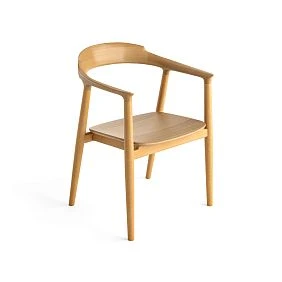
A straight horizontal crossbar is a classic. A curved top rail that follows the shape of the shoulders is a more ergonomic option. Rounded corners of the backrest are safer, softer to the touch, and more visually appealing.
Chair silhouette
The shape of the backrest is the main thing that determines the visual character of the chair. Vertical posts with horizontal rails between them are restrained classics. A baluster backrest with turned details is a more decorative option. A solid carved backrest is for classic and baroque interiors.
Aprons and crossbars: invisible heroes of strength
Aprons are not mentioned in advertising descriptions. They are not photographed in close-up. The buyer does not look at them. But it is the aprons that are responsible for whether the chair will be Chair Frame rigid or not.
What is an apron
An apron is a horizontal plank connecting the legs of a chair under the seat. Usually there are four: two side ones, a front one, and a back one. Aprons work like ties: they prevent the legs from spreading under lateral load.
If the stretchers are thin or poorly connected to the legs, play appears under load. At first barely noticeable, then increasingly pronounced. The chair starts to "wobble," and the joints loosen even more.
Size and cross-section of stretchers
For a chair with heavy use (cafe, kitchen), the cross-section of the stretchers should be sufficient: at least 25–30 mm in width. Decorative chairs with light loads may have thinner stretchers, but when reducing the cross-section, the joint must be reinforced.
Cross braces between legs
Additional horizontal cross braces in the lower part of the legs are an archaic but very reliable construction technique. It has been used in classic joinery chairs for centuries. Cross braces significantly increase structural rigidity, although they add visual "weight." For cafes and places with heavy use, it is a justified choice.
How to choose chair height: numbers that matter
Chair height is one of the most ignored parameters when buying furniture. Then it turns out the table "presses down," or the seat is too low and the legs are uncomfortably extended forward.
Standard parameters
| Table type | Table height | Optimal seat height | Table–seat gap |
|---|---|---|---|
| Kitchen table | 75–76 cm | 44–46 cm | 29–32 cm |
| Dining table | 76–78 cm | 45–47 cm | 30–32 cm |
| Semi-bar table | 90–95 cm | 60–65 cm | 28–32 cm |
| Bar table | 105–110 cm | 74–76 cm | 30–35 cm |
Why the gap matters
The distance between the seat and the tabletop is the "working space" for the thighs and abdomen of the seated person. Too small a gap creates pressure, an uncomfortable seating position, and a feeling of tightness. Too large a gap forces the person to reach for the table. The optimum is 28–32 centimeters.
Semi-bar stool: a separate format
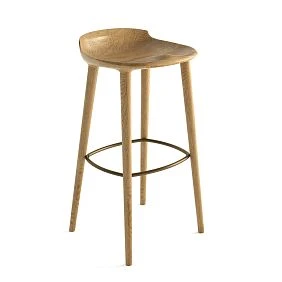
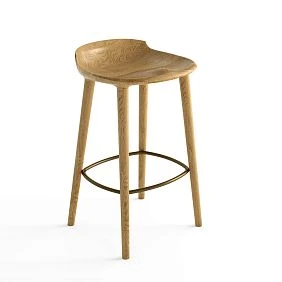
Semi-bar stool — is a structurally different product. The seat height of 60–65 centimeters requires different frame proportions, a different backrest, and a different ratio of legs and stretchers. Suitable for kitchen islands, semi-bar counters, and areas where the table is slightly higher than standard.
Chair frame for upholstery or a rigid seat: what to choose
This is a matter of balance between comfort and practicality.
Soft seat on a wooden frame
Chair base for soft upholstery — a flat frame or solid panel on which the filler (foam rubber, spring block) and fabric are placed. A soft seat is significantly more comfortable for long sitting — this is obvious. But it has its features:
-
The fabric requires care and can get dirty.
-
The thickness of the padding must be considered when choosing the frame height.
-
Replacing the upholstery after a few years is a realistic scenario.
If the seat has thick padding (5–8 cm), the frame must be designed for this height: total seat height = frame height + seat thickness.
Hard wooden seat
A wooden seat is a more practical option. It is easy to wipe clean, does not absorb odors, and does not require periodic replacement. For cafes, it is often the preferred choice for this reason. For the kitchen, it is also good, especially if you add a thin removable cushion.
Visually, a hard seat makes the chair more 'carpentry-like' — this appeals to those who value natural materials and the handcrafted character of furniture.
Combined option
A wooden frame + a soft fabric insert is the most popular compromise. The wood is visible around the perimeter, giving the chair a strict and structured look. The central part is soft — comfort is ensured.
How to choose the style of a chair frame: the visual language of furniture
furniture frames They speak different visual languages. The same wooden chair can be strict and geometric, or warm and ornate. It depends on the shape of the parts, their proportions, and finishing.
Classic frame
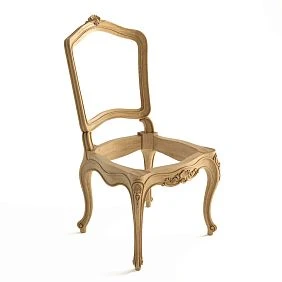
Turned legs tapering downward, a baluster or panel back with horizontal slats, possibly a small Carved Decor on the top rail of the backrest. Suitable for classic kitchens, dining rooms, interiors with moldings and cornices.
Neoclassical style frame
Clean lines with soft details: slightly tapered legs, a neat backrest without excessive decoration, possibly a light relief on the aprons. This is restrained beauty that suits most modern interiors.
Bistro-style café frame
Recognizable Parisian bistro shape: light curved legs, round or rectangular seat, minimal backrest. A classic that works well in retro cafes, country houses, and rustic dining rooms.
Scandinavian frame
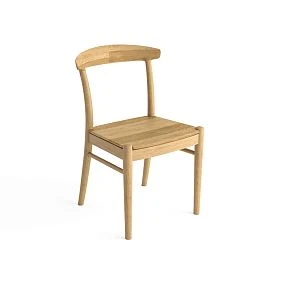
Maximally simple geometry: straight or slightly tapered legs, a straight backrest with one or two horizontal slats. Minimum ornament, maximum functionality. Works well in modern apartments and small kitchens.
Semi-bar frame
Semi-bar stool — a separate story of proportions. High legs, short base, backrest with a different angle and height. Stability when mounting is crucial here: a person climbs onto the chair rather than sits down, so connections and rigidity are critical.
Mistakes when choosing a wooden chair frame
Mistakes when choosing a chair frame — it's not just wasted money. It's uncomfortable furniture for years to come. Let's break down the main ones.
Choosing based only on appearance
The most common mistake. A beautiful photo says nothing about the quality of joints, cross-section of stretchers, or leg geometry. When buying, it's important to look at specifications: material, cross-section, type of joints.
Not considering table height
Buying a chair without measuring the table height means risking an uncomfortable seating position. Always check the gap between the seat and the tabletop.
Forgetting about the backrest angle
A vertical backrest tires your back during prolonged sitting. A minimum backward tilt of 5–8 degrees is mandatory for a comfortable seating position.
Choosing a weak frame for a cafe
A home chair frame is not designed for commercial use. For cafes and restaurants, a more durable option with reinforced joints is needed.
Not accounting for the thickness of the soft seat
If a soft seat is planned, the frame height should be reduced by the thickness of the padding. Otherwise, the chair will be too high.
Mixing the frame style with the table and kitchen
A wooden frame in retro-bistro style next to a modern minimalist table is a conflict. The frame style should match or delicately complement the style of the table and kitchen.
Buying legs when a full frame is needed
Individual legs do not replace a full frame. If a reliable base for a chair is needed, you need exactly Wooden chair frame, not a set of supports.
Not thinking through the wood coating
An unprotected array in the kitchen or cafe absorbs moisture, darkens in areas of contact with hands and feet. Varnish, oil, or other coating is a mandatory step before use.
Not checking the connections and stretchers
Before purchasing — especially in a store or warehouse — it's worth taking the frame in your hands and checking the rigidity of the structure. A small force in different directions will show how firmly the legs are connected to the stretchers.
Not thinking through the ergonomics for a specific user
If there are people in the family with tall stature or posture features, the standard height and backrest angle may not be suitable. This should be considered in advance.
Chair base: technical parameters that determine service life
Let's talk more specifically about what affects durability. Chair base made of solid wood is a long-term investment if done correctly.
Material
Hardwood species — oak, ash, beech — are stronger and more wear-resistant. They are denser, hold fasteners and joints better. Softwood (pine) is cheaper but less durable under load.
Moisture and Drying
Well-dried wood (moisture content 8–10%) is a must. Raw or overdried lumber deforms during use, which directly affects joint strength.
Type of joints
-
Tenon and mortise with glue — a classic and most reliable solution.
-
Tie rods and bolts — used in knockdown constructions, but less durable with heavy use.
-
Dowels (wooden pins) in addition to glue — reinforces the joint.
Finish
Varnish — reliable protection against moisture and mechanical damage. Oil — a more natural option, highlights the wood grain. Paint — complete freedom in color and good surface protection.
Wooden frame and furniture set: how to assemble a harmonious ensemble
Chair Frame never exists in isolation. It is always part of a set: table, chairs, sideboard, kitchen cabinet.
Table and chairs: connection through material
Chairs with frames made of solid wood of the same type as the dining table create a cohesive, unified look. If the table is oak, the chairs are oak or in an oak finish. This is not a mandatory rule, but it yields the most predictably beautiful result.
Table base and chair frames
wooden bases from the same series as Wooden chair frames from the manufacturer, create a complete furniture set. A single material, a single finish, a single style — the table and chairs are perceived as one cohesive story.
Details: handles, overlays, decor
If the interior has wooden handles from solid wood on kitchen cabinets or a sideboard, a wooden chair frame made of the same material will create unity. The details echo each other — the interior becomes cohesive.
Where to buy a wooden chair frame: from the manufacturer or through a catalog
Two paths: purchasing through a retail catalog or ordering from the manufacturer.
A catalog is more convenient and faster. You see the finished product, real dimensions, and select the desired item. Buy a chair frame through the catalog means getting a certified product with clear parameters.
Wooden chair frames from the manufacturer — an option for those who purchase several items for furniture production or equip a cafe. Direct interaction with the manufacturer allows you to clarify technical requirements and choose the best option.
In the Stavros catalog — Furniture Frames from Solid Wood, including wooden chair frames of different styles and formats, semi-bar stools, underframes and related products. Buy a chair frame with delivery directly through the catalog.
STAVROS: furniture frames that don't wobble
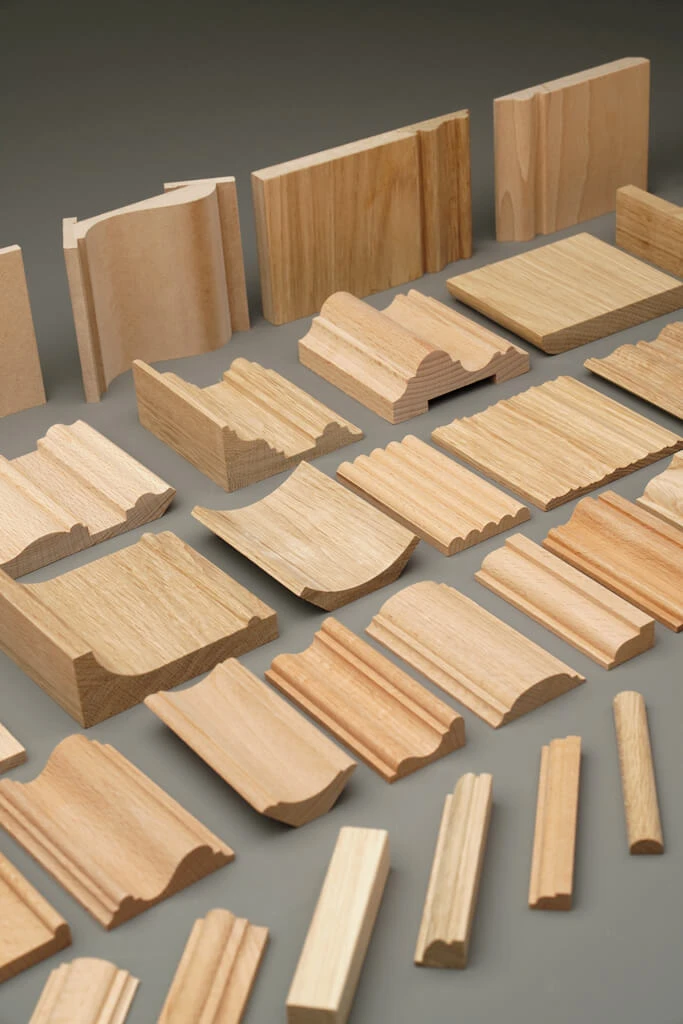
STAVROS is a company that manufactures and supplies Solid Wood Items for interiors and furniture production. Chair frames, underframes, legs, handles, decorative overlays, and moldings — all these are parts of a single system that makes up quality wooden furniture.
STAVROS frames are made of hardwood, with strong joints, ready for painting or tinting. Suitable for residential interiors, country houses, cafes, restaurants, and furniture production. Buy chair base with confidence in quality — that's what STAVROS offers.
A chair should not wobble. It should last long, stand straight, and sit comfortably. It starts with the right frame.
FAQ: Answers to popular questions
How is a chair frame different from legs?
Legs are only support elements. Chair Frame — this is the complete load-bearing system: legs, stretchers, crossbars, seat base, and backrest. Without stretchers, legs cannot handle lateral load, and the chair quickly becomes loose.
Which frame to choose for a kitchen chair?
For the kitchen, strong mortise and tenon joints, stability on the floor, seat height of 44–46 cm, and a medium backrest with lumbar support are important. The material is hardwood with a moisture-resistant coating.
Would a wooden chair frame be suitable for a cafe?
Yes, if it is made of hardwoods with strong joints and proper coating. For a cafe, reinforced stretchers, sufficient leg thickness, and matching the table height in the hall are important.
Why does the chair start to wobble?
The main reason is loosening of the joints between the legs and stretchers. This happens due to poor-quality glue, incorrect geometry, or too thin cross-section of parts. Sometimes it is due to an uneven floor.
Can I buy a chair frame separately?
Yes. Buy a wooden chair frame separately for assembling a new chair, restoration, furniture production, or equipping a cafe.
What is considered the standard seat height for a chair?
For a table with a height of 76 cm, the standard seat height is 44–46 cm. The gap between the seat and the tabletop should be 28–32 centimeters.
How to distinguish a durable frame from a weak one?
Take the frame in your hands and apply moderate force sideways — rock the structure. A quality frame has no play. Check the joints: they should be tight, without gaps or creaking.
Which type of wood is best for a chair frame?
Oak, ash, and beech are the most durable for furniture frames. They hold joints well, are resistant to loads, and last a long time. Pine is suitable for items with low load.