Article Contents:
- A single facility can be outfitted with a project; a network of facilities requires a standard
- What remains individual for each facility
- What can be corporate
- Why the corporate code is useful
- How to tell that the library is already overloaded
- Savings not only in purchasing
- How to store the reference sample
- When a single short sample is not enough
- What should be identical in base proposals
- What should be on the reserve label
- Why you shouldn't start with forced unification of old projects
- Where to start
- Why this matters for the general contractor
- When a finish still requires a separate corporate item
- What to do with an undocumented deviation

The company opened its first restaurant and approved a wooden baseboard, molding, and cornice. A year later, a second location appeared. The new designer chose similar but different profiles. At the third location, the contractor independently replaced the molding with an affordable equivalent. After five openings, the chain is using four almost identical baseboards, three moldings, and two cornices, and the maintenance department no longer understands which repair stock fits which address.
The problem does not arise because of a bad catalog or a lack of choice. On the contrary: each project was given the freedom to choose anew what had already once been architecturally approved. If the chain grows, this approach gradually destroys interior repeatability, increases the number of SKUs, and complicates repairs, reorders, and tenders.
Therefore company building materials for repeatable locations, it is better to divide into two levels. The first is the corporate standard: which profiles are allowed, where they are used, and what their exact SKU, material, size, length, finish, and physical reference sample are. The second is the specific location: how many of these approved products are required for this particular address.
LOCATION No. 1 → APPROVED PROFILES → CORPORATE CODES → REGISTER OF APPROVED PROFILES → NEW LOCATION → QUANTITY CALCULATION → CURRENT CHECK → PURCHASING → MAINTENANCE
The central principle of the article: each new location must recalculate the quantity, but it does not have to reselect the architectural standard.
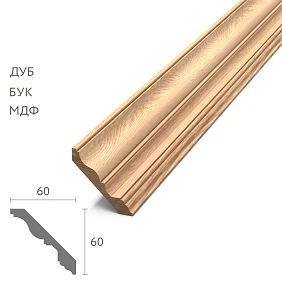
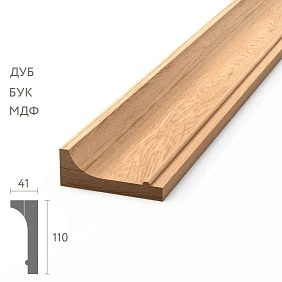
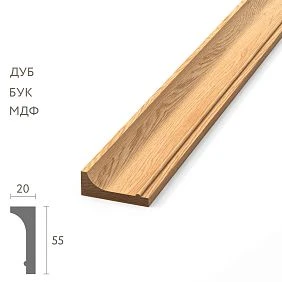
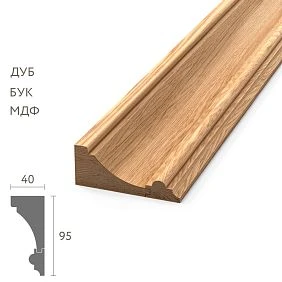
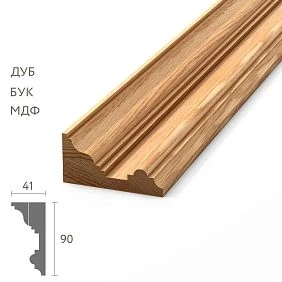
A single object can be outfitted with a project; a network of objects requires a standard
For a single restaurant or office, the natural chain looks like this: designer → profile selection → sample → approval → calculation → purchase. If a company opens a second, tenth, and twentieth object, repeating this chain from scratch creates excessive variability. A new designer may not know which skirting board was used before. A procurement specialist may find an "almost identical" molding from another seller. The general contractor may substitute oak with beech for an opaque finish. Each individual project may look acceptable, but the network gradually loses a unified language.
For repeatable objects, a different logic is more useful: corporate standard → selection of an approved option → assignment to project zones → quantity calculation → purchase. The standard does not replace design. It reduces the number of decisions that have to be made repeatedly.




What remains individual for each object
- finished dimensions;
- number of planks;
- cutting map;
- installation reserve;
- logistics;
- lead times;
- price at the time of order;
- local non-standard assemblies.
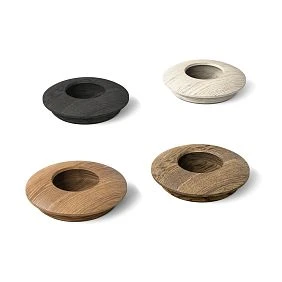
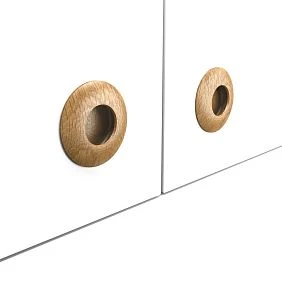
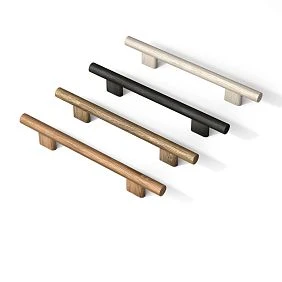
Our factory also produces:




What can be corporate
- approved article number;
- material type;
- profile geometry;
- the role of the product in the interior;
- standard finish;
- application rule;
- physical reference sample;
- substitution rule.
Get Consultation
We separate the architectural standard from the specific order
The corporate library answers the question: what is the company allowed to use? An order for a specific address answers: how much of this material is needed right here?
For example, the corporate skirting profile remains the same: KP-PLT-01 → STAVROS PLT-006 / oak. But the objects differ quantitatively.
| Object | Corporate code | Quantity | Comment |
|---|---|---|---|
| Moscow | KP-PLT-01 | 84 pcs. | Standard format |
| Kazan | KP-PLT-01 | 62 pcs. | Smaller area |
| Saint Petersburg | KP-PLT-01 | 105 pcs. | More rooms |
The product standard is the same, but the facility's needs differ. This distinction is what allows the chain to scale without copying old quantities and without selecting a new profile.
Why keeping the old invoice is not enough
The first restaurant's invoice is a commercial document of a specific moment. It contains quantity, price, date, payment terms, and possibly delivery. But two years later, it does not answer all the questions of a new project.
The corporate card must store more: the manufacturer's exact SKU, manufacturer, product type, material, cross-section, commercial length, finish, photo, physical sample, permitted application areas, status, last inspection date, replacement rule, and revision history.
The invoice answers “what we bought back then.” The standard registry answers “what the company considers the right decision now.”
We introduce a corporate code separately from the manufacturer's SKU
The internal code is needed not to replace the SKU, but to describe the material's function in the corporate system.
| Corporate code | Purpose | SKU STAVROS | Material | Status |
|---|---|---|---|---|
| KP-PLT-01 | Main baseboard | PLT-006 | Oak | Approved |
| KP-MLD-01 | Basic molding | MLD-050 | Oak | Approved |
| KP-MLD-02 | Premium molding | MLD-… | Oak | Approved |
| KP-KZ-01 | main cornice | KZ-… | Oak | Approved |
A new designer sees not just a product, but its role in the standard.
Why a corporate code is useful
It allows discussing the function regardless of how the contractors' internal catalogs are structured. The phrase "we use KP-MLD-01" immediately means: this is the network's base molding, not a random profile chosen for the current project.
The corporate code must not replace the real STAVROS article number
Leaving only the internal designation in the project is dangerous. A few years later, a new purchaser will see KP-MLD-02, but will not understand what exactly needs to be ordered.
Correct line: KP-MLD-02 → STAVROS MLD-… / oak / size / commercial length / finish. The internal code and the external article number live together.
The internal code is responsible for the corporate function. The manufacturer's article number is responsible for the reproducibility of a specific product.
Material suppliers: the manufacturer must remain visible in the library
Even if Material suppliers for a specific project they change — procurement goes through a specifier, dealer, general contractor, or supply company — the corporate library must preserve the original manufacturer and the exact SKU.
This is especially important for future renovations, reordering a year later, a new tender, comparing alternatives, changing the procurement channel, and verifying the actual product at a new site.
If the library retains only the seller's name and the phrase "wooden molding 40 mm," the technical bridge between projects is lost.
Do not create a standard out of twenty equally important profiles
The corporate library should narrow down the choice, not turn into a copy of the full catalog.
| Level | Purpose | Application example |
|---|---|---|
| Base | The main set for most projects | Typical restaurant, office, hotel room |
| PREMIUM | Areas enhanced with decor | Lobby, separate hall, representative area |
| FLAGSHIP | Rare expressive solutions | The main object of the network, a historical interior |
For a single function, one main profile and a limited number of deliberate alternatives are usually sufficient.
How to tell that the library is already overloaded
If a designer has to choose between six nearly identical skirting boards for the same purpose, standardization is not working. You need either to remove the duplicates or clearly describe how the options differ in function.
Wooden skirting board: one corporate profile is better than five nearly identical ones
Let's imagine a network of thirty restaurants. If each designer chooses their own Wooden baseboard, after a few years of operation you end up with five types of repair stock, five specifications, different heights, different thicknesses, different schemes for joining to the architrave, different painting rules, and different leftovers in local warehouses.
If one profile suits most concepts, standardizing it reduces the number of SKUs and simplifies repairs.
Savings not only in procurement
Labor costs are reduced for re-approval, sample sourcing, unit development, reserve storage, and contractor training. This is an organizational, not just a price advantage.
When a single skirting board cannot be standardized for the entire chain
A corporate standard should not be a dogma. A chain can have different formats.
| Format | Task | Solution |
|---|---|---|
| Standard | Regular restaurant | KP-PLT-01 |
| FLAGSHIP | The brand's main location | KP-PLT-02 |
| HISTORICAL | Special architectural context | KP-PLT-03 or an individual solution |
The difference must be described in the library. Then a new contractor won't invent a fourth option just because it's more convenient for them.
Wooden molding: we set the standard not only by article number, but also by the application system
for wooden molding a single article number is not enough. In the corporate standard card, it's useful to indicate its role.
KP-MLD-01 — a standard wall frame, basic level, room numbers, offices, and regular halls. KP-MLD-02 — a more expressive frame for lobbies, representative areas, and premium interiors.
This way, the designer chooses not from the full catalog, but from a clear system of applications.
Wooden cornice: standardization is especially useful for maintenance
wooden cornice it gets damaged less often than a baseboard, but over the years it can be harder to restore the original model: the cornice is located high up, photos poorly convey the cross-section, and the physical remnant is not always kept on site.
The corporate library must retain the exact SKU, profile, commercial length, material, finish, interior photograph, physical sample or signed fragment, and a list of projects where it was installed.
Building materials suppliers: the library must not depend on one manager's memory
A bad process looks like this: "email Ivan, he remembers which molding was used in the first three restaurants." Two years later Ivan changes jobs, and the company starts reconstructing the specification from photographs.
When corporate procurement involves construction materials suppliers, the data must live in a single registry, not in email or in a specific person's memory.
The minimum for a card: corporate code, manufacturer, SKU, product type, material, profile, commercial length, finish, photograph, link to the product card, physical reference, permitted zones, status, date of last check, and replacement rule.
The physical sample must live together with the digital card
A digital library is convenient for search, approval, and procurement. But for wooden profiles, it does not replace the physical reference.
You can store a signed sample:
REFERENCE KP-PLT-01 / STAVROS PLT-006 / oak / approval date
On a new project, the designer, specifier, and procurement manager all get the same reference point.
A physical reference sample is especially useful when you need to confirm:
- the actual height and thickness;
- relief;
- the character of the edges;
- the wood species;
- the junction with the door casing;
- finish;
- the difference between two similar profiles.
How to store the reference sample
It must be labeled and linked to a digital record. Without a label, a physical sample turns into “some baseboard from the archive” within a year.
When one short sample is not enough
For a complex assembly, you can additionally store a photograph or a 1:1 diagram of the approved test section. This is especially useful for baseboard next to casing, a moulding frame, and cornice at built-in furniture.
Why a photograph does not replace a physical reference
A photo is necessary, but it does not convey exact scale. The camera changes perspective, the screen changes color and contrast, and lighting changes the depth of the relief.
A photograph answers the question “what did the solution look like.” A physical reference answers “which profile was actually approved.”
Therefore, it is useful to have both levels in the corporate card:
| Material | What it is for |
|---|---|
| Photo in the interior | Application context |
| Physical sample | Actual geometry and surface |
| Drawing/dimensions | Technical check |
| Article number | Repeat order |
Building materials supplier companies: a new tender should not change the design again
The company may hold a new tender for the next project, comparing terms, timelines, and commercial proposals. But participation building materials supplier companies must not automatically turn the tender into a new competition of decorative profiles.
The base request must count the approved technical position. For example:
KP-MLD-01 → STAVROS MLD-050 / oak / approved geometry
If a participant wants to propose an alternative, it is submitted separately as an option for review. Then the customer compares two things independently:
- a commercial proposal for the approved standard;
- the proposed replacement with its differences and risks.
This protects the tender from hidden substitution: a low price must not arise because one participant priced a different profile.
What must be the same in the base proposals
- article number;
- the material;
- cross-section;
- product length;
- finish;
- quantity;
- the current version of the corporate library.
How to approve a corporate profile replacement
The phrase "the old one is gone, let's take a similar one" must be prohibited as a working mechanism.
The replacement is processed as a separate request specifying:
- reason;
- original corporate code;
- original SKU;
- proposed new SKU;
- the material;
- dimensions;
- visual comparison;
- impact on adjacent elements;
- physical sample;
- decision of the authorized person.
REASON → REPLACEMENT CANDIDATE → SAMPLE → ASSEMBLY COMPARISON → DECISION → NEW LIBRARY REVISION
If only one current object needs replacement, this does not necessarily mean an immediate change to the corporate standard. It may remain a local exception.
Three material statuses in the corporate library
A few clear states are enough for a managed history.
| Status | Meaning | Can it be used in new objects? |
|---|---|---|
| Approved | Current standard | Yes |
| Under review | Needs updating or additional verification | Only after a decision |
| ARCHIVED | Retained for the operation of old objects | No, unless a separate decision has been made |
If necessary, you can additionally use the status "withdrawn from new projects", but do not delete the entry from the history.
An archived profile cannot be deleted from the library
Let's assume that KP-MLD-01 is no longer used in new restaurants. But it is installed at facilities No. 1, No. 2, No. 3, and No. 6.
Operations still need:
- exact article number;
- the material;
- cross-section;
- finish;
- usage addresses;
- remaining reserve;
- repair rules.
Deleting the row makes old facilities "orphaned". Therefore, archived status means "do not use further", not "forget that this existed".
We separate "approved for new projects" and "installed at old facilities"
A single item can have two characteristics at the same time:
- not permitted for new construction;
- still installed in existing facilities.
It is useful to maintain separate fields:
| Field | Example |
|---|---|
| Status for new projects | ARCHIVED |
| Operational facilities | Restaurant 01, 02, 03, 06 |
| Reserve | 6 whole planks |
| Possibility of reordering | Check with the manufacturer |
If the available product version has changed, the library must not be edited silently
Before a new project, the company verifies whether the approved item is still current. The same product code may exist, but the available material, commercial length, or surface preparation option may have changed.
Need to verify:
- whether the same product code still exists;
- whether the product type matches;
- whether the material is correct;
- whether the geometry is the same;
- whether the commercial length is the same;
- whether the finish has changed;
- whether a new sample is needed.
If a technically important parameter has changed, the item is placed under review until a new revision is released.
The corporate library must have its own revision
For example:
LIBRARY-PGO / REVISION 04
Each new project records its basis:
Standard basis: LIBRARY-PGO / EDITION 04
After a few years, it becomes clear which standard each address was built to.
| Revision | Date | Change | Who it applies to |
|---|---|---|---|
| 03 | 01.03.2026 | Base version | Projects 1–8 |
| 04 | 12.09.2026 | New premium molding | New projects after the release date |
A new edition must not automatically change a project already under construction
Edition 05 was released today, but project A is already being procured under edition 04. That is no reason to silently change its skirting board or molding.
For the current object, the following must be decided separately:
- whether it remains on the old revision;
- whether there is a reason to switch to the new one;
- what has already been ordered;
- what has already been installed;
- how the change will affect stock levels;
- whether new approval is required.
The corporate library sets the standard for future decisions, but does not replace change management on the current construction project.
Major building material suppliers: approval does not equal availability
If large building material suppliers are involved in the new object, the status "approved" means that the product is architecturally permitted. It does not mean that a specific quantity is available right now.
Before each order, the following are checked:
- the current product page;
- execution;
- availability;
- production lead time;
- current price;
- availability of a sample or confirmation;
- terms of a specific delivery.
A corporate library narrows down project selection, but does not replace commercial verification before purchase.
Price should not be a permanent parameter of a corporate standard
A corporate library defines what to buy. Price is a temporary commercial parameter.
Today it is one price, a year later another. A price change does not require changing the corporate code if the technical configuration has not changed.
The card can store the date of the last price check as reference information, but the current price must always be requested for each new object.
Large building materials supplier: company size does not replace standard verification
large supplier of building materials may have advanced logistics and a wide range, but a new project must still verify the item against the corporate library.
You must not replace the exact approved profile with a more general description like “oak skirting 100 mm” just because the supplier is large and offers a convenient cart.
For standard corporate items, the same requirements remain: manufacturer, SKU, material, geometry, length, finish, and the current revision of the library.
What to do with the network's operational reserve
A corporate standard can have two levels of stock.
| Level | Where it is stored | What it is for |
|---|---|---|
| Local operational reserve | At a specific site | Local repair for this address |
| Central reserve | At the company warehouse | Fast servicing of several standard sites |
A central reserve is not always useful. If a chain has thirty sites and almost everywhere uses one base skirting board, a few intact planks in the central warehouse can quickly cover damage. But storing a rare flagship cornice there, which is installed in only one restaurant, may be pointless.
What should be on the reserve label
- corporate code;
- manufacturer's SKU;
- the material;
- length;
- finish;
- date received;
- purpose;
- compatible sites.
When a central reserve truly makes sense
It is especially useful when several conditions are met at the same time:
- dozens of active sites;
- one base skirting board is used almost everywhere;
- local damage occurs regularly;
- sites are located in the same region or share common logistics;
- reordering takes a noticeable amount of time;
- storage cost is reasonable.
If a profile is rare, expensive, and almost never damaged, a centralized stock may freeze material without benefit.
A new project should start with a library, not with an internet search
Correct sequence for a new project:
CORPORATE LIBRARY → APPROVED PROFILES → DESIGN ZONES → PHYSICAL REFERENCES → QUANTITY CALCULATION → CURRENT PRICE AND LEAD TIME REQUEST → ORDER
That is, the search is reduced from hundreds of products to a few approved solutions.
This does not prevent the designer from proposing a new solution. But a new proposal becomes a separate process and does not automatically replace the base standard.
How to work with the designer of a new site
To keep the corporate standard from turning into an architectural prison, it is convenient to divide the decision zones.
| Category | Meaning | Example |
|---|---|---|
| Mandatory | A brand element that cannot be changed without approval | Standard baseboard for a typical restaurant |
| Preferred | Recommended solution that allows an alternative after review | Basic frame molding |
| OPEN | The designer can propose a new solution | A flagship area or a local art object |
This way the company preserves repeatable brand elements while leaving room for the concept to evolve.
A new profile first goes through a pilot cycle
The designer of the flagship restaurant proposes a new molding. It cannot be added to the corporate registry simply because it looks good in the rendering.
Workflow:
proposal → physical sample → test area → assessment of junctions → decision → corporate code → new edition of the library.
During the pilot, the following are checked:
- the real scale;
- joints;
- corners;
- connection with the baseboard and casing;
- finish;
- labor intensity of installation;
- reorder availability;
- maintenance repairability.
How not to bloat the library in five years
If each project adds three new profiles, thirty objects will yield up to ninety additional SKUs. Standardization will lose its meaning.
Therefore, the library needs periodic cleanup.
Check:
- which items were actually used in new projects;
- which duplicate each other;
- which differ only by an insignificant detail;
- which are no longer needed by new projects;
- which to keep only as archived for maintenance;
- which ones to merge by function.
Historical records cannot be deleted, but the number of active variants can be reduced.
How to evaluate duplicates within the library
Two profiles are considered competitors within a standard if they solve the same task in the same zones and do not have a clear functional difference.
| Check | Profile A | Profile B | Conclusion |
|---|---|---|---|
| Purpose | Base frame | Base frame | Matches |
| Material | Oak | Oak | Matches |
| Scale | Medium | Medium | Similar |
| Functional difference | No | No | Candidate for reduction |
If the difference is purely aesthetic and is not supported by a separate object format, one of the profiles may be moved to the archive.
Which metrics are useful to track
There is no need to invent universal standards. It is useful for a company to see its own dynamics.
- how many active corporate profiles;
- how many objects each one uses;
- how many new profiles were added over the year;
- how many replacements contractors requested;
- how many replacements were approved;
- how many urgent reorders there were for each profile;
- how often the local reserve is used;
- how often the central reserve is used;
- how many archived items remain in operation;
- how many objects operate on each library revision.
If the library grows faster than the network and most items are used only once, standardization is probably not working.
How to link a corporate standard with typical assemblies
An article number alone does not explain how to install it next to a door, furniture, or other trim. For repeatable objects, it is useful to store typical assemblies.
For example:
- KP-PLT-01 + casing;
- KP-PLT-01 + furniture plinth;
- KP-MLD-01 — typical frame corner;
- KP-KZ-01 + floor-to-ceiling cabinet;
- KP-MLD-02 + premium zone cornice.
Then the new contractor receives not only a list of materials, but also the approved logic for how they fit together.
Why a corporate standard should store not only the product, but also the context
The same profile can work well in a standard room and be too bulky in a small office. That is why the card must contain restrictions.
| Field | Example |
|---|---|
| Allowed zones | Standard rooms, corridors |
| Not recommended | Very low spaces |
| Adjacent elements | Door casing N-01 |
| Standard finish | F01 |
| Need a 1:1 test | When changing the door height |
This protects against mechanical copying of the profile into an unsuitable architecture.
How to work with an exception for a single object
Sometimes a historic building, low ceiling height, or a special concept requires deviating from the standard.
Such an exception is documented separately:
- which standard does not fit;
- why;
- what solution is proposed;
- whether it will be only local;
- whether it needs to be added to the general library;
- who approved the exception.
Not every exception becomes a new corporate profile.
How to maintain a single architectural standard across different procurement channels
Site 1 may purchase directly, site 2 through a procurement agent, site 3 through a general contractor. The procurement channel changes, but the corporate identifier must reference the same technical product.
Therefore, the order line contains:
corporate code → manufacturer → SKU → material → parameters → quantity.
The seller may be an additional field, but not the sole identifier.
How to run a tender without hidden substitution of the standard
In the base request, all participants quote the same approved item. If someone proposes an alternative, it is listed as a separate line.
| Proposal | What we compare | Status |
|---|---|---|
| Base | Approved profile | Comparable across participants |
| Alternative | Different profile/material | Requires technical assessment |
This way, a low price does not mask a product change.
What to do if the approved profile is temporarily unavailable
Options are checked in order:
- confirm the restoration timeline for the original SKU;
- check central or local reserve;
- assess the possibility of rescheduling the project queue;
- request a technical alternative;
- compare samples and assemblies;
- decide whether this is a local replacement or a standard update.
Unavailability in a single week does not have to turn an alternative profile into a new corporate standard.
How to keep a history of objects for each corporate profile
It is useful to store a list of addresses and application dates in the card.
| Corporate code | Object | Year | Revision | Status |
|---|---|---|---|---|
| KP-PLT-01 | Restaurant 01 | 2026 | 03 | Usage |
| KP-PLT-01 | Restaurant 02 | 2026 | 03 | Usage |
| KP-PLT-01 | Restaurant 09 | 2027 | 04 | Project |
If an operational issue is discovered years later, the company immediately sees where else the same profile is installed.
How to transfer the operational standard
After each facility is commissioned, the operations service must receive not only a local inventory list but also a connection to the corporate library.
Minimum package:
- corporate codes;
- manufacturer part numbers;
- finishes;
- local reserve;
- sample storage location;
- replacement request rule;
- corporate standard owner contact;
- library revision according to which the facility was built.
Then, three years later, the renovation does not start a new search for “something similar.”
Who should own the corporate library
The standard should not belong to a single supplier, designer, or site foreman. Within the company, there needs to be a process owner.
This could be:
- architecture department;
- procurement service;
- purchasing function together with design;
- technical director;
- another designated role.
Authority matters:
- approve new items;
- archive items;
- issue a new revision;
- control physical samples;
- approve exceptions;
- update relevance information.
How often to review the standard
There is no universal timeframe. A review is needed when the following events occur:
- launch of a new concept;
- change to the manufacturer's product;
- recurring installation difficulties;
- unsuccessful reorders;
- too many exceptions;
- accumulation of similar items;
- change of key finish;
- scaling the network to a new format.
Additionally, the company may schedule a regular audit, but its frequency should match the pace of network development.
How to check the library before a new project
Before handing it over to the designer, it is useful to make sure that active items are not outdated.
- Open the manufacturer card.
- Verify the SKU.
- Verify the material and geometry.
- Check the available configuration.
- Request the current lead time and price.
- Obtain a new sample if necessary.
- Update the verification date.
This is how the corporate standard stays alive instead of turning into an archive from two years ago.
How to create a corporate library if the network already exists
The most difficult case is not launching a new network, but bringing order to a company where ten or twenty locations are already operating. Each address has accumulated its own specification, some SKUs are outdated, in some places physical samples have been preserved, in others only photographs, and the repair stock is stored without labeling.
You should start not by choosing the "ideal" new skirting board, but by taking inventory of the system already installed.
For each location, they collect:
- current executive report;
- skirting board, moulding and cornice article numbers;
- the material;
- finish;
- commercial lengths;
- photographs;
- physical stock;
- current reserve data;
- reorder history;
- known operational issues.
After this, a consolidated network matrix is built.
| Profile | Objects | Number of objects | Repeatability | Solution |
|---|---|---|---|---|
| PLT-006 | 01, 02, 04, 06, 08 | 5 | High | Candidate for base standard |
| PLT-011 | 03 | 1 | Low | Archive / exception |
| MLD-050 | 01, 02, 04, 06 | 4 | High | Candidate for standard |
| MLD-074 | 05 | 1 | Low | Check the reason for use |
This way the company sees which solutions have effectively already become the standard and which are one-off exceptions.
Why you shouldn't start with forced unification of old sites
If a restaurant already uses a different skirting board, there's no point in changing it just for the sake of a new library. The old profile is recorded as archived or local, and the unified standard is applied to new projects and future renovations where it is technically reasonable.
The "site — corporate profile" matrix shows actual standardization
A list of approved SKUs by itself doesn't show how much the chain actually uses them. A matrix is useful:
| Object | KP-PLT-01 | KP-MLD-01 | KP-MLD-02 | KP-KZ-01 | Local exceptions |
|---|---|---|---|---|---|
| Restaurant 01 | Yes | Yes | No | Yes | No |
| Restaurant 02 | Yes | Yes | No | Yes | No |
| Flagship 03 | Yes | No | Yes | Yes | Cornice of the historical zone |
| Restaurant 04 | Yes | Yes | No | Yes | No |
This matrix yields several practical conclusions:
- which profiles are truly universal;
- where exceptions recur and may require a new standard;
- what reserve makes sense to keep centrally;
- for which items can tenders be combined;
- which archived profiles remain critical for operation.
How to determine which profile deserves corporate status
Not every successful product from the first site should automatically become a standard for the entire network. Before assigning corporate status, it is useful to evaluate it against several criteria.
| Criterion | Question |
|---|---|
| Architectural versatility | Is the profile suitable for most typical sites? |
| Compatibility | Does it work with standard doors, furniture, and assemblies? |
| Repeatability | Can the same item number be ordered unambiguously? |
| Installation | Is the technology clear and the result repeatable? |
| Usage | Can it be repaired locally and can a reserve be stored? |
| Availability | Can the current execution and lead time be checked regularly? |
| Visual consistency | Is the profile tied to a single short-lived designer trend? |
A corporate standard must be not only beautiful but also repeatable in an organizational sense.
How to describe the replacement rule before the problem arises
If the library simply states "replacement is prohibited," a real project will still encounter a situation of unavailability, lead times, or changed execution. It is better to define the procedure in advance.
For example:
- confirm the unavailability of the original item code;
- check the reserve;
- request technically similar options from the manufacturer;
- compare the cross-section and material;
- check adjacent assemblies;
- obtain a physical sample;
- if necessary, assemble a test section;
- make a decision: a local exception or an update to the corporate library.
Thus, the replacement rule exists before a crisis and does not depend on who exactly is managing the current project.
How to protect the corporate standard in the contractor's working documentation
If the library exists only in the head office, and the contractor receives an ordinary drawing without corporate codes, the standard quickly disappears on site.
In working documents, it is useful to specify:
- corporate code;
- manufacturer's SKU;
- the material;
- finish;
- the library revision;
- a reference to the standard detail;
- the status "replacement only after approval."
Then the contractor sees that the item relates not only to a specific estimate, but also to the company's corporate standard.
How to verify the actual material on site
A corporate standard only makes sense when the actual delivery is checked against it.
When accepting standard profiles, it is enough to check:
- the corporate code in the object specification;
- the actual SKU on the delivery;
- the material;
- size/length;
- finish;
- compliance with the current revision.
If an "analog" arrives instead of KP-MLD-01, it cannot be accepted automatically just because it looks similar. You need to open the substitution record and go through approval.
How the corporate library helps with reordering
Eight months after opening, the restaurant needed 12 more skirting board planks. Without a standard, the purchaser searches for the old invoice, correspondence, a photo of the warehouse, and tries to figure out exactly what was bought.
With the library, the task is shorter:
Object 07 → KP-PLT-01 → STAVROS PLT-006 / oak / revision 04
Next, current availability is checked and a new order is placed.
This is especially important if the original delivery was arranged by a different contractor or employee.
How the library helps with repairs after several years of use
The maintenance service sees a damaged skirting board. It doesn't need to choose a new profile from a photo. It opens the object card and gets:
- corporate code;
- article number;
- the material;
- finish;
- remaining reserve;
- item status — active or archived;
- method for reordering.
If the profile is already archived, the library still stores its history and allows you to determine whether the old reserve is needed or an approved replacement.
How a corporate standard affects the training of new employees
Without a library, a new completer learns from dozens of old projects. With a library, they get a short system:
- which skirting boards are active;
- which moldings are basic;
- which cornices are premium;
- where samples are stored;
- who approves replacements;
- which revision to use;
- where to view the history of objects.
This reduces dependence on the oral knowledge of the old team.
How a standard helps consolidate procurement across multiple new sites
If three restaurants launch simultaneously and use KP-PLT-01, the buyer sees the same technical item across all projects. This allows discussing a shared production and logistics strategy without mixing site quantities.
| Object | KP-PLT-01 | KP-MLD-01 | KP-KZ-01 |
|---|---|---|---|
| Site A | 84 | 62 | 20 |
| Site B | 76 | 58 | 18 |
| Site C | 92 | 66 | 24 |
The technical standard is shared, but site ownership is preserved. This does not turn three addresses into a single warehouse order without breakdown.
How not to confuse corporate standardization with buying “one item forever”
A corporate standard is not a promise to never change the profile again. It creates a manageable baseline system.
A material may leave the market, a brand concept may change, a technology may improve, and operations may reveal an inconvenient component. The standard must be able to change through revisions.
The difference is that the change happens deliberately and immediately becomes visible to the entire network, rather than appearing accidentally at a single site.
When a network needs two standards instead of one
Sometimes a company genuinely has two different interior families: for example, a hotel and a restaurant, an economy and a premium format, an urban and a resort property.
Then it is wiser to maintain two approved systems than to force one skirting board to work in incompatible architectures.
| Family | Skirting board | Molding | Crown Molding |
|---|---|---|---|
| System A — basic | KP-PLT-01 | KP-MLD-01 | KP-KZ-01 |
| System B — premium | KP-PLT-02 | KP-MLD-02 | KP-KZ-02 |
It is important that these be two systems, not twenty random combinations.
How to evaluate a contractor's offer of “we have a cheaper equivalent”
Such an offer should not be rejected automatically, but it also cannot be accepted on price alone.
First, the following are compared:
- geometry;
- the material;
- product length;
- nodes;
- finish;
- ability to reorder;
- maintainability;
- impact on existing objects.
If the new profile is genuinely better, it goes through a pilot and can become the next edition of the standard. If it is merely a convenient local replacement, it remains a local proposal.
How to store physical samples without turning the warehouse into a museum
There is no need to store full-size sets for every object.
A rational system:
- one master sample of each active profile;
- one signed sample of each important finish;
- archival samples only for those items that are still installed and genuinely needed for repairs;
- large test stands — in photos and drawings, if their physical storage is impractical.
During a periodic audit, samples are checked against the digital registry.
How to fill out a corporate profile card
| Field | Example content |
|---|---|
| Corporate code | KP-MLD-01 |
| Function | Basic wall frame |
| Manufacturer | STAVROS |
| Article number | MLD-050 |
| Material | Oak |
| Size | according to the current product page |
| commercial length | according to the current product page |
| Finish | F01 |
| Level | Base |
| Allowed zones | Standard halls, rooms |
| Status | Approved |
| Physical reference | Sample cabinet / cell 12 |
| Revision | 04 |
| Last check | 12.09.2026 |
This card is already suitable for the designer, the buyer, and operations.
Checklist before releasing a new version of the library
- Do all active corporate codes have real SKUs?
- Have materials and geometry been verified?
- Do physical samples exist and are they labeled?
- Have archived items not been deleted?
- Have new items passed the pilot?
- Are replacement rules up to date?
- Has the list of usage objects been updated?
- Is the price not fixed as an eternal technical characteristic?
- Is there an owner of the standard?
- Are the revision date and changes described?
Only after this does the new revision become the basis for future objects.
How to roll out the standard in stages rather than trying to rewrite the entire network in one month
If a company already has many sites, it is better to implement the library in phases.
Practical order:
- identify the most frequently repeated profiles;
- create cards for the base set;
- label the physical samples;
- appoint a library owner;
- use the standard on the next new site;
- collect feedback;
- after that, transfer the remaining categories and the archive into the system.
This way, the company quickly gets a working minimum and does not wait until all historical purchases have been processed.
Where to start
Start with the positions that occur most frequently and have the greatest operational importance: base skirting, base molding, main cornice, standard casing. Rare decorative profiles can be digitized later.
How a new contractor should receive the corporate standard
At the start of a project, it is not enough for the contractor to send a link to a folder with a hundred files. A short package is needed.
- the current version of the library;
- list of applicable corporate codes;
- manufacturer's article table;
- standard assemblies;
- physical samples or access to them;
- replacement rule;
- standard owner contact.
The contractor must understand: if a specific item is out of stock or seems inconvenient to install, they do not change it themselves. They submit a request.
Why this matters for the general contractor
A general contractor often purchases many categories at once and strives to unify their logistics. Without an explicit rule, a corporate profile may be replaced with a product from a familiar supply channel. The standard package shows in advance which items are architecturally fixed.
How to use installers' feedback without turning it into chaotic substitutions
Installers are the first to see real difficulties: an awkward angle, overly complex cutting, sensitive relief, extra time on a joint. This information is valuable, but it should enter the library as structured feedback.
| Corporate code | Issue | Frequency | Consequence | Solution |
|---|---|---|---|---|
| KP-MLD-01 | Complex angle fitting | Rare | Additional time | Keep, update instructions |
| KP-PLT-01 | Conflict with the new casing | At 3 sites | Rework of the assembly | Check the casing standard |
If the problem repeats across several sites, that is already a reason to revise the standard. If it occurred once due to a poor substrate, there is no need to change the profile.
The operations service should participate in updating the library
The designer sees the profile at the time of the project. Operations sees it after one, three, and five years. Therefore, project evaluation alone is not enough.
It is useful to collect data:
- what gets damaged most often;
- what is difficult to repair;
- which leftovers are actually used;
- which finishes are difficult to reproduce;
- which profiles had to be replaced entirely;
- which item codes can be easily reordered.
This information can change the corporate standard more than the original design.
How to link a corporate profile with a finish without turning them into a single code
The same profile can be used in several approved finishes. Therefore, it is useful to separate geometry and finish.
For example:
KP-PLT-01 → PLT-006 / oak
FINISH-F01 → white opaque finish
FINISH-F02 → tinted oak
Then the project line:
KP-PLT-01 + FINISH-F02
This way, the library does not create two artificial product codes for a single geometry just because of different finishes.
When a finish still requires a separate corporate item
If a finish option fundamentally changes the material, preparation, or scope of application, the company may treat it as a separate standard. But the decision must be deliberate.
How to account for regional differences across the network
A single corporate standard can be used in different cities. However, lead times, logistics, procurement channels, and availability may vary.
There is no need to create a regional profile just because delivery to another city is more expensive. The geometry remains corporate. Regional commercial parameters are stored separately:
- typical lead time;
- available procurement channel;
- logistics scheme;
- local reserve;
- acceptance contact.
A new article is needed only when the region truly requires a different technical solution.
How to proceed when a local object offers a more successful profile
Sometimes an exception turns out to be better than the current standard. For example, a new object assembled a test section with a different molding that is easier to install and works better with the updated door system.
Then there is no need to forbid the innovation just because it is "not from the library." You need to compare:
- visual result;
- installation;
- compatibility;
- operation;
- repeatability;
- availability;
- impact on the reserve of old objects.
If the new option wins, it passes the pilot and becomes a candidate for the next revision. The old one can then move to the archive rather than disappear.
How not to mix the brand standard and a specific product card
The corporate standard of the chain is broader than a single product card. It describes the role of the item, application rules, and compatibility with other elements.
For example, a brand standard might state:
- all base restaurants use a tall wooden baseboard of one approved geometry;
- in standard halls — one base molding;
- in flagships, a second option is allowed;
- replacement without approval is prohibited.
The manufacturer's product card provides current technical data for a specific SKU. Both levels are needed simultaneously.
How to transfer a library from the design department to procurement
A common problem: designers maintain their own designations, while procurement receives only images. A technical handover is needed.
| Field | Project | Purchase |
|---|---|---|
| Corporate code | KP-MLD-01 | KP-MLD-01 |
| Manufacturer's SKU | MLD-050 | MLD-050 |
| Material | Oak | Oak |
| Finish | F01 | F01 |
| Quantity | As per project | After calculation and cutting |
| Revision | 04 | 04 |
This way, procurement doesn't have to guess which product is hidden behind a designer name.
What information should not be stored in the corporate library as mandatory
The library should not turn into an archive of all project documents. It does not necessarily need to include:
- every old price;
- all invoices for all sites;
- every transport document;
- all installation photos;
- all correspondence with contractors.
These documents can be stored in site archives. The corporate library should remain a compact technical core that helps make new decisions.
Pre-launch check for a new restaurant or hotel
Before issuing a procurement specification, a short corporate checklist is useful.
- What is the property format?
- Which library edition is in effect?
- Which corporate profiles are mandatory?
- Which zones allow a choice?
- Are all SKUs up to date?
- Have physical samples been checked?
- Are there any local exceptions?
- Has the project quantity been recalculated?
- Is the reserve defined?
- Are the design nodes fixed?
- Is the replacement rule clear?
- Will operations receive the final package?
This checklist allows the standard to be used as a real working tool, not as a beautiful folder with profiles.
How to verify that the corporate standard is actually used on site
Having a beautiful library does not yet mean that real projects follow it. A simple spot check of actual projects is needed.
For several active projects, you can compare once per certain period:
- which corporate codes are specified in the project;
- which actual SKUs were ordered;
- what material arrived;
- whether there were agreed substitutions;
- whether the library revision matches;
- what exceptions appeared;
- whether the operation data was submitted.
| Object | Standard in the project | Actual SKU | Replacement | Status |
|---|---|---|---|---|
| Restaurant 11 | KP-PLT-01 | PLT-006 | No | matches |
| Restaurant 12 | KP-MLD-01 | Another profile | Not completed | Check |
Such a check shows not the quality of the product, but the discipline of applying the corporate standard.
What to do with an unformalized deviation
First, understand the cause: a design error, a contractor's decision, the actual unavailability of the original item, or a deliberate design change. After that, either restore the standard or formalize an exception and decide whether it affects the library.
How to close the life cycle of a profile that is no longer needed for new projects
Removing an item from the standard should be manageable.
Sequence:
- stop using it in new projects;
- change the status to archived;
- record the reason;
- keep a list of projects where the profile is installed;
- keep the physical reference sample if it is needed for repairs;
- assess the existing reserve;
- describe an acceptable strategy for future repair;
- specify which new profile replaces it in new projects, if such a replacement exists.
For example:
KP-MLD-01 — archived as of 12.09.2026; new projects use KP-MLD-03; existing facilities 01, 02, 03, 06 continue to be serviced under the old item.
This is far more useful than deleting the row and leaving operations without history.
What the minimum corporate package for one profile looks like
If a company wants to start without a complex information system, one compact set is enough.
| Element | What to store |
|---|---|
| Identification | Corporate code + STAVROS + article number |
| Technical data | Type, material, dimensions, length |
| Application | Function and permitted areas |
| Visual inspection | Photo + physical reference sample |
| Finish | Approved finish code/sample |
| Control | Status, revision, verification date |
| History | Usage and replacement objects |
Even this set already solves the main problem: a new object does not start technical selection from scratch and does not depend on the memory of a specific employee.
The system can then be expanded — adding standard assemblies, a centralized reserve, usage metrics, tender history, and operational feedback. But the core value appears as soon as any employee in the company can give an unambiguous answer to the question: which specific skirting board, molding, or cornice is the current corporate standard, and what confirms this.
What to do if the company changes the interior concept for the entire chain
A rebranding or a new design concept should not destroy the history of the old standard. It is more correct to create a new branch of the corporate library and record the transition.
For example:
| Period | System | Application |
|---|---|---|
| Until 2026 | Standard A | Existing facilities, repair and maintenance |
| From 2027 | Standard B | All new openings and major renovations |
Then the new skirting board does not "replace the old one in history." It becomes the standard for future projects, while the previous profile remains available for the operation of already-built addresses.
During the transition, it is useful to decide separately:
- which old facilities will be reconstructed;
- where the existing interior is preserved until major renovation;
- how much old operational reserve should be kept;
- which physical reference samples are moved to the archive;
- which components need to be developed anew for the new system;
- from which project the new revision becomes mandatory.
This is how the library supports brand evolution without destroying the operational history of the network.
18 mistakes in the corporate standard for wooden trim
- Store only the old invoice. A commercial document does not fully describe the standard.
- Use only the internal code without the manufacturer's SKU. A new buyer does not understand what to order.
- Use only the SKU without a corporate role. The designer does not understand why this item exists in the system.
- Do not store the material. Oak and beech become "one profile."
- Do not store length and dimensions. Repeat purchasing loses technical precision.
- Lose the physical reference. Comparison is done by photograph.
- Allow analogues verbally. The exception becomes a hidden substitution.
- Let each contractor choose the profile anew. The network quickly accumulates variability.
- Change the product within the tender. Commercial proposals cease to be comparable.
- Delete old profiles from history. Operations lose data on active sites.
- Do not have an archived status. Old items get mixed with new ones.
- Do not use library revisions. It is unclear by which standard the site was built.
- Automatically change objects under construction after a new revision. A conflict arises with the specification and already purchased material.
- Store the old price as a permanent attribute. Commercial data becomes outdated.
- Do not check current availability before ordering. An approved material is mistakenly considered guaranteed available.
- Create too many similar active profiles. The library turns into a catalog.
- Add a new profile without a pilot check. An unverified solution enters the standard.
- Do not hand over the operating standard. Repair again begins with searching for an equivalent.
Final algorithm for creating a corporate standard
1. OBJECT No. 1
↓
2. APPROVED PHYSICAL SAMPLES
↓
3. CORPORATE CODES
↓
4. REGISTER OF APPROVED PROFILES
↓
5. LIBRARY REVISION
↓
6. NEW OBJECT
↓
7. SELECTION FROM APPROVED PROFILES
↓
8. QUANTITY CALCULATION AND CUTTING PLAN
↓
9. CURRENT PRICE, LEAD TIME AND AVAILABILITY CHECK
↓
10. PURCHASING
↓
11. OPERATION AND RESERVE
↓
12. IF A NEW ITEM IS NEEDED: PROPOSAL → SAMPLE → TEST → DECISION → NEW REVISION
Practical check before launching the next object: if the project team cannot, within a few minutes, show the current corporate code, the exact STAVROS article number, the material, the current library revision, the physical reference sample, and the approved scope of application, the item is not yet ready for serial repetition. In this case, it is safer to first restore the technical identity, and only then calculate the quantity and request a commercial proposal. Such a simple test protects the network from the gradual accumulation of "almost identical" solutions and makes it possible to distinguish a genuine corporate standard from a set of old files and employees' memories.
Conclusion: the network must follow the standard, not a process of random selection
The first project almost inevitably requires a large number of decisions: the designer selects a profile, the team receives samples, checks joints, clarifies the finish, calculates quantities, and initiates procurement. The mistake is forcing every subsequent project to go through the same path again without using the solution already accumulated.
A corporate library turns approved wooden trim into a managed standard. In it, the internal code is linked to the actual STAVROS article number, material, geometry, finish, physical reference sample, permitted zones, and application history. A new project receives not an abstract instruction to "do it like in restaurant No. 1," but a precise technical basis.
The standard should not be a rigid dogma. For flagship, historic, and other special projects, separate approved variants may be used. New profiles can appear — but through a pilot, sample, test, and release of a new revision, not randomly within a tender or on the initiative of an installer.
Archived profiles are not deleted because they continue to live in existing projects. Price does not become a permanent part of the standard because it must be confirmed before each purchase. The status "approved" does not promise availability, so a new project still checks the current execution and lead time.
This is how the network gains the main advantage of standardization: each new location recalculates meters, lengths, cutting, and reserve anew, but does not start searching again for an "approximately similar" skirting board, molding, or cornice. This reduces variability, simplifies tenders, additional orders, and operation, and preserves a unified architectural language between projects built in different years by different teams.