Article Contents:
- Why wooden trim should not be delivered together with rough materials
- Three dates that must not be confused
- ORDER DATE
- READY DATE
- SITE READY DATE
- NOT READY
- CONDITIONALLY READY
- READY FOR POGONAZH
- ROUGH
- PRE-FINISH
- FINISH
- DECORATIVE FINISH
- Postpone delivery
- Accept to a pre-prepared finished warehouse
- Redirect the batch
- Can wooden trim be delivered while the screed is in progress?
- How many days should you wait after the screed?
- Do you need to wait until painting is finished throughout the entire property?
- Can the skirting board be ordered in advance?
- When is the best time to bring in the moulding?
- What matters more for the cornice before delivery?
- How long should acclimatization last?
- Who confirms that the property is ready?

Skirting boards, mouldings and cornices have already been ordered or are ready for dispatch, but the screed is still drying on site, plastering is still being finished in places, painting is underway on one floor, and another floor is almost ready for final finishing. The most common mistake in this situation is to reason like this: “the goods are ready, so it’s time to deliver them.”
For wooden trim, this is weak logic. The readiness of the product at the supplier and the readiness of the property to receive final decorative elements are two different dates.
Therefore construction and finishing materials it makes sense to distribute them across construction stages, and to bring in wooden trim only after a separate inspection of the property:
goods ready → area inspected → wet processes completed → room protected → final levels and junctions determined → storage location prepared → installation queue confirmed → delivery scheduled.
The main question here is not "when to buy", but:
when is a specific area physically ready to receive skirting, moulding or cornice without the need to store them next to screed, fresh plaster, paint, construction dust and constant movement of other materials?
The current range can be selected in advance in the section STAVROS wooden molding, but the shipment date is better tied to the condition of the site, and not only to the readiness of the order.
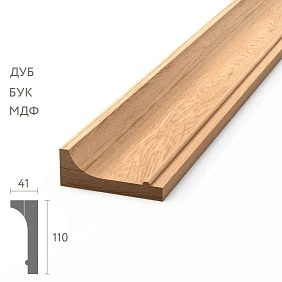
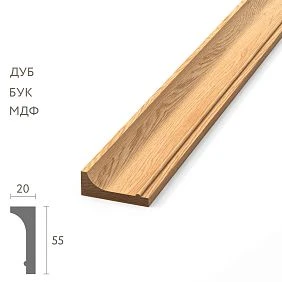
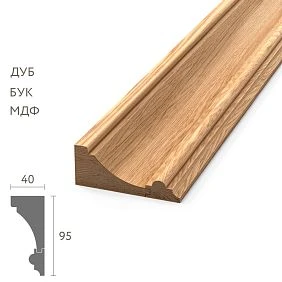
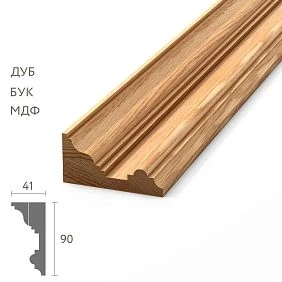
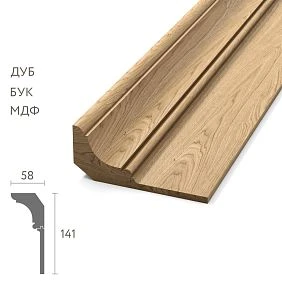
Why wooden trim cannot be delivered together with rough materials
On one construction site, the following may be present at the same time:
- bags of mix;
- drywall;
- tile;
- paint;
- metal profile;
- finish floor packaging;
- wooden skirting boards;
- Moldings;
- Crown mouldings.
But all these items do not have to arrive at the same time.
Wooden decorative trim belongs to the finishing stage. Its early delivery creates extra operations even before installation:
- the material has to be moved around;
- long-length items get in the way of other work;
- packaging gets dirty;
- the risk of impact from tools increases;
- packs get mixed up by article and zone;
- you need to find storage space in a room that is not ready yet.
If wet processes are still ongoing at the site, the main risk is no longer just organizational. Wood needs a dry, prepared area, not a free corner next to plastering and screed work.




Three dates that must not be confused
For finished trim, it is useful to keep three separate dates.
Our factory also produces:








ORDER DATE
When the order is placed.
Get Consultation
READY DATE
When the material is ready at the supplier.
SITE READY DATE
When the site is able to safely receive this batch.
It is the third date that is often lost.
For example:
- the order was placed on September 1;
- the goods are ready on September 25;
- the site was planned to receive the trim on September 30;
- in fact, the screed and painting work dragged on until mid-October.
In such a situation, product readiness on September 25 does not make September 25 the correct delivery date.
Delivery must be synchronized with SITE READY DATE.
What SITE READY means for wooden trim
It is convenient to use three statuses.
NOT READY
Processes continue in the area that are incompatible with the safe storage and handover of trim for installation.
For example:
- fresh screed;
- active plastering;
- intensive wet cleaning;
- constant tile cutting and abrasive dust;
- the area is not protected from precipitation;
- there is no prepared storage location.
CONDITIONALLY READY
Part of the facility is already ready, but not the entire scope.
For example, the first floor can be accepted, the second is still being painted, and the third remains at the wet works stage.
READY FOR POGONAZH
A specific zone meets the requirements of the next stage: the material can be accepted, identified, placed in storage, and then handed over for installation according to the agreed schedule.
This is not a legal or construction standard. It is a management status of the facility.
Screed and wooden trim: do not rely on the calendar alone
Screed is a wet process.
The main mistake is using a single universal number:
N days have passed, so the wood can already be brought in.
Screed technologies differ, site conditions differ, and thickness and drying regimes differ.
For the buyer, a different question is more useful:
is the room ready for the next finishing stage based on its actual condition and the requirements of the materials being used?
If the scheduled delivery date has arrived but the site is not yet ready, the delivery is adjusted rather than trying to fit the wood to the old schedule.
Why “28 days” should not become a universal rule
On construction sites, familiar control deadlines are often used, but an article about purchasing trim should not turn them into a universal standard.
For different technologies, the timelines and readiness criteria differ.
Therefore, before delivering the trim, they check not only:
when was the screed poured?
But also:
- has the wet process itself been completed;
- whether the area meets the requirements of the next stage;
- whether the room conditions have stabilized;
- whether dry storage can be arranged;
- whether repeated intensive moistening is not upcoming.
If at least one answer is negative, SITE READY DATE it is postponed.
Fresh plaster: why a smooth wall does not yet mean a finished area
After plastering work, the surface may visually look almost finished.
But that is not enough for the purchaser and the site foreman.
Need to confirm:
- work in the area is completed;
- no ongoing intensive moistening;
- the room is not used as a mixing area;
- the long-length piece will not have to be placed against a damp wall;
- the storage area is already separated from rough work.
The readiness of the moulding cannot be assessed "by eye" based only on the appearance of the wall.
What to check after plastering work
Working control can be reduced to five questions.
- Have the wet operations in this area actually been completed?
- Is re-plastering or local wet corrections planned?
- Is there a dry place for horizontal storage?
- Won't the trim constantly be moved around for other work?
- Has the next installation stage already been confirmed?
If the material arrives a month before installation and the space continues to change, early delivery will only create a storage burden.
Should we wait for all painting to be finished
Not always.
A large site rarely reaches a single stage all at once.
For example:
| Zone | Status | | --- | --- | | Floor 1 | READY FOR POGONAZH | | Floor 2 | PAINTING | | Floor 3 | WET WORKS |
Instead of waiting for the entire building to be ready, you can work in batches.
Batch No. 1 — for floor 1.
The next batches — after floors 2 and 3 are confirmed ready.
This way, the finishing decor arrives closer to the actual need and spends less time on the construction site.
Why the status "facility is 80% complete" is useless
Phrase:
facility is 80% complete
does not answer a single practical question for the procurement manager.
Unknown:
- which specific rooms are ready;
- where long-length materials can be stored;
- where wet processes are completed;
- where baseboards are needed;
- where junctions have already been approved;
- where heavy construction work remains.
Zone-based information is needed:
Floor 1 — READY.
Floor 2 — HOLD until painting is complete.
Floor 3 — NOT READY.
Then the delivery can be tied to the actual front.
When to bring in the wooden baseboard
The baseboard depends not only on the condition of the walls.
It interacts with:
- finished floor;
- lower wall geometry;
- door casings;
- with built-in furniture;
- junctions;
- actual perimeter of the room.
Therefore, purchasing and delivery are separate decisions.
The item code can be selected in advance.
The order can be placed in advance.
But it is reasonable to link the handover of material for installation and sometimes the delivery itself to the readiness of the final assemblies.
Why skirting cannot be considered final without final junctions
Let's imagine the design perimeter:
92 m.
After installing built-in furniture, 7 m of the wall is covered by the cabinets.
Actual open line:
92 − 7 = 85 m.
If the purchase has already been calculated strictly according to the early perimeter, a surplus appears.
The opposite situation — after the control measurement, short sections were added at new door units.
Therefore, before the final batch, it is useful to verify not only the area and plans, but the actual installation points.
Ordering earlier does not mean delivering earlier
For skirting, the following scheme is quite normal:
approve the SKU → calculate the preliminary volume → place the order → coordinate production → hold delivery until the site is ready.
This is especially useful for an item with a known manufacturing lead time.
Early ordering reduces purchasing risk.
Early physical delivery is a separate decision.
They do not need to be mixed.
When the object is ready for wooden moldings
Moldings work with wall geometry.
Before delivery and installation, it is important to understand:
- whether the wall plane is final;
- whether the layout has been approved;
- whether adjacent wet works have been completed;
- whether there will be heavy rough work nearby;
- whether the storage area is prepared;
- whether the sequence of installation and painting has been confirmed.
Molding can be ordered well before finishing is complete, but it doesn't have to end up in the construction chaos.
Why molding is especially inconvenient to store on a construction site too early
This is not to say that any molding is "fragile."
The problem is organizational.
The longer long decorative profiles sit before installation, the more times they are:
- carried;
- moved around;
- temporarily cleared out of the passageway;
- taken off the rack;
- put back;
- are sorted between zones.
Each extra operation increases the chance:
- contamination;
- packaging damage;
- mixed-up grades;
- loss of labeling.
Therefore, the best warehouse risk is the one that can be avoided with the correct delivery date.
When to bring in a wooden cornice
The cornice depends on the upper assembly of the room.
Before delivery, it is useful to check:
- the final geometry of the wall;
- the ceiling system;
- junctions;
- built-in furniture;
- curtain solutions;
- hidden elements;
- lighting, if it interacts with the curtain rod;
- readiness of the storage location.
It is especially important to know in advance where the large profiled long-length item will be placed after unloading.
Phrase:
we'll find a place when the truck arrives
for a finished curtain rod means that the site has not prepared for acceptance.
The curtain rod is ready at the supplier, but the ceiling assembly is still changing
This is a typical case when READY DATE came earlier SITE READY DATE.
There is no need to bring the cornice just because production is complete.
If the ceiling geometry or cabinets are still being adjusted, the project has two risks:
- the cornice will be stored for a long time;
- after final changes, a new calculation of the quantity or assembly may be needed.
It is better to keep the delivery manageable and set a date after the geometry is confirmed.
READY FOR POGONAZH checklist
Before calling the batch, check:
- wet work in the area is completed;
- the room is protected from precipitation;
- the conditions are suitable for storing finished wood;
- final floor and wall levels are determined;
- door junctions are known;
- furniture junctions affecting the linear footage are determined;
- there is a level horizontal storage area;
- the material will not have to be constantly moved;
- the storage area is separated from dirty work;
- a person responsible for the batch has been assigned;
- the specification is up to date;
- the installation queue is confirmed;
- acceptance will be carried out by item codes and quantity.
If a significant part of the checklist is not completed, the status is:
DELIVERY HOLD.
After completion:
READY FOR DELIVERY.
Construction and finishing materials arrive at the site in different phases
construction and finishing materials you cannot plan a single common date to "deliver the finishing materials."
Different groups have different tasks.
Rough mixes are needed at the beginning of the relevant processes.
Preparatory materials — before the finishing stage.
The finished floor — at its own stage.
Wooden decorative trim — closer to the moment when the room can safely receive it.
Supply becomes more precise when each group is tied to a real stage of the site.
Repair and construction products: a useful classification by stage
repair and construction products it is convenient to divide them internally into four groups.
ROUGH
Rough materials.
PRE-FINISH
Materials for substrate preparation and transition to the finishing stage.
FINISH
Main finish coatings and products.
DECORATIVE FINISH
Decorative finishing elements, including wooden trim in most interior scenarios.
The classification is not normative.
Its purpose is to prevent the purchaser from sending decorative long-length items to the site using the same principle by which mix or drywall is delivered there.
Why “all finishing materials in one trip” is often inconvenient
Let's imagine:
- floor is ready on floor 1;
- the walls of floor 2 are still being painted;
- floor 3 is at the plastering stage.
If the entire skirting, moulding and cornice for three floors are delivered in one trip, most of the batch turns into temporary warehouse stock.
More rational:
completed zone → its batch → installation → the next confirmed zone.
The exception is a project with a truly prepared centralized warehouse where long-term storage is planned in advance.
What to do if only one floor is ready
You don't have to wait for the entire building to be completed.
If the specification is divided by zones and the supplier can form batches, use staged delivery.
For example:
- floor 1 — 240 m of skirting, 310 m of moulding;
- floor 2 — 220 m of skirting board, 280 m of moulding;
- floor 3 — 260 m of skirting board, 330 m of moulding.
If only floor 1 is ready, the first batch:
240 + 310 = 550 m.
The remaining 1090 m of skirting board and moulding from this example do not have to be stored on site in advance.
Splitting the delivery reduces the volume of temporary storage.
Construction readiness map
Practical tool:
| Zone | Screed / wet works | Walls | Floor | Door units | Trim | | --- | --- | --- | --- | --- | --- | | Floor 1 | completed | ready | ready | defined | READY | | Floor 2 | completed | ready | in progress | partially | HOLD | | Floor 3 | ongoing | not ready | — | — | NOT READY |
This table is more useful than a calendar schedule if the actual work has deviated from the original timeline.
It can be updated once a week or before each planned batch.
Who confirms SITE READY
Not a purchaser based on a photo from a messenger.
The status must be confirmed by a person who actually knows the site:
- site foreman;
- site manager;
- project manager;
- another designated responsible person;
- the kit assembler together with the site team.
The purchaser receives confirmation and links it to logistics.
This way responsibility is properly divided:
the site confirms readiness → procurement arranges delivery.
Repair material: “already paid” does not mean “shipping immediately”
If material for repair has already been paid for, a psychological desire arises to collect it as quickly as possible.
But money and the physical readiness of the site are different matters.
Early delivery may mean:
- additional warehousing;
- repeated movements;
- risk of damage;
- confusion between floors;
- loss of labeling;
- a longer period of responsibility for the material on the construction site.
Sometimes it is better to arrange a later shipment or organize another prepared warehouse than to turn an unfinished site into a storage facility for finishing decor.
Materials for finishing works: the storage location must be determined before the vehicle
If materials for finishing works include long-length wooden trim, the storage location must be part of the delivery plan.
Before the vehicle arrives, you need to know:
- the specific room;
- which rack or floor zone;
- how the long planks will be arranged;
- who receives it;
- how the SKUs are separated;
- what belongs to which phase;
- whether a heavy crew will pass through this room the next day.
Storing it "wherever it fits" is a sign that SITE READY not fully confirmed.
Delivery and installation should not happen at the same moment automatically
After delivery, the wood may require acclimatization in the room conditions before installation.
On the STAVROS website, there are different recommendations for acclimatization duration for different materials and scenarios, so a universal number for any item would be inaccurate.
The correct rule:
comply with the current requirements of the specific product and the project conditions.
This means that the schedule must account for a separate interval:
delivery → storage/acclimatization per requirements → installation.
Not:
the truck arrived in the morning → we install everything in the afternoon automatically.
Why acclimatization does not justify early delivery into an unprepared room
Phrase:
let it sit and acclimatize
only makes sense in a suitable area.
If the material is stored:
- next to fresh screed;
- by a damp wall;
- in a dirty high-traffic room;
- vertically between stacks of other materials;
- where it is moved around daily,
this is not proper preparation for installation.
First, the room must be suitable for storage.
Only then does proper acclimation of the material begin.
What to do if the moulding is already on its way but the site suddenly isn't ready
This happens if the schedule changed after the truck was confirmed.
There are three working options.
Reschedule the delivery
If the supplier and logistics allow changing the date.
Receive to a pre-prepared finished warehouse
Only if such an area actually exists and is suitable for storage.
Redirect the batch
For example, accept only the volume for the finished floor, if this is possible under the order and shipping terms.
Bad option:
the truck is already on its way, so we'll unload it anywhere.
A logistics fact must not override material requirements.
DELIVERY HOLD and DELIVERY APPROVED
For large or phased projects, it is useful to introduce a simple status.
DELIVERY HOLD — the site has not confirmed readiness.
DELIVERY APPROVED — the area is ready, the storage location is determined, and acceptance is organized.
The transition between them follows the chain:
site → purchaser → supplier/logistics.
This reduces the likelihood that the warehouse will ship material according to the old schedule, even though the construction situation has already changed.
How to calculate the time gap between READY DATE and SITE READY DATE
Suppose:
- the goods are ready on October 1;
- the site is confirmed for the trim on October 12.
Gap:
12 − 1 = 11 days.
This is not automatically a “material idle time.”
If delivery, by agreement, remains with the supplier or at a suitable warehouse, these 11 days can be a normal part of the schedule.
The problem arises when the project does not notice the difference in dates and transports the goods to an unprepared construction site solely to comply with the old calendar.
When early delivery is still justified
Early delivery can be rational if the following conditions are met simultaneously:
- there is a prepared finished-goods warehouse;
- the material is correctly identified by SKU;
- the batches do not interfere with the work;
- storage conditions meet the requirements;
- it is clear in advance when the material will go into installation;
- early delivery reduces the real risk of future delays.
That is, early delivery should solve the project's problem, not create a new one.
When delivery should be postponed
Postpone the batch if:
- wet processes continue in the storage area;
- the room is exposed to precipitation;
- the moulding will have to be stored vertically or with bending;
- the passage is occupied by other work;
- no one responsible for acceptance;
- the final assembly is still changing;
- the material will have to be moved multiple times;
- the installation queue is not confirmed.
Under these conditions, having the goods on site does not give the project an advantage.
Mistakes in planning the delivery of wooden trim
Mistake: the goods are ready — we deliver immediately.
Cause — READY DATE is confused with SITE READY DATE. Consequence — unnecessary storage and risks. Solution — separate confirmation of the site.
Mistake: relying on the drying calendar without actual verification.
Cause — a simple deadline is needed. Consequence — the material ends up in an unprepared area. Solution — confirm the condition of the site.
Error: waiting for the entire building to be ready.
Cause — delivery is planned as a single batch. Consequence — the finished area sits idle. Solution — zonal delivery, if it is acceptable.
Error: bringing the entire volume to the first finished floor.
Cause — there is free space there. Consequence — the floor turns into a warehouse for the remaining phases. Solution — bring the volume tied to actual demand.
Error: treating any storage as acclimatization.
Cause — the material is already inside the building. Consequence — storage conditions remain unsuitable. Solution — a prepared area first.
Error: not determining the location before unloading.
Cause — it seems the long-length material will fit "somewhere." Consequence — constant moving and risk of damage. Solution — a location in the SITE READY checklist.
Final algorithm
- Approve the SKUs for the skirting board, molding, and cornice.
- Split
ORDER DATE,READY DATEиSITE READY DATE. - Break the object into zones.
- Track the completion of wet works.
- Check the final geometry of the walls and floor.
- Check door and furniture junctions.
- Determine which items are actually needed for the nearest phase.
- Prepare a horizontal storage area.
- Assign a person responsible for acceptance.
- Get status
READY FOR POGONAZH. - Move the delivery from
DELIVERY HOLDвDELIVERY APPROVED. - Accept and identify the items.
- Comply with the current requirements for storage and curing of the specific product.
- Release the material for installation only after the corresponding area is confirmed ready.
Thus, the delivery date is determined not by the desire to collect the paid goods faster, but by the actual construction readiness of the site.
Questions before delivery
Can wooden trim be brought in while the screed is still curing?
Finished wooden trim should not be brought into an area with unfinished wet processes. The date depends on the actual readiness of the room and the requirements of the materials.
How many days should you wait after the screed?
A universal number for all technologies is incorrect. You need to be guided by the floor technology, the actual condition, and the requirements of the next stage.
Do you need to wait until painting is finished throughout the entire site?
Not necessarily. You can work by completed zones if delivery and storage are organized separately.
Can skirting board be ordered in advance?
Yes. The order date and the actual delivery date can differ significantly.
When is the best time to bring in the moulding?
When the wall area has its final geometry, work incompatible with storage is completed, and space for the batch is prepared.
What matters more for the cornice before delivery?
A confirmed ceiling assembly, adjacent junctions, and a pre-prepared storage area.
How long should acclimatization last?
The current requirements of the specific product and the project conditions must be observed; setting a universal duration for any trim is incorrect.
Who confirms the site is ready?
The designated person responsible on site; the purchaser uses this confirmation to coordinate delivery.