



























Article Contents:
- Table Chester 002-012: what the buyer gets from the product card
- What is included in the solution, and what remains a separate task
- Why four finishes are not four universal colors
- The circle does not cancel straight lines, but changes their hierarchy
- Why the top view and eye-level view matter
- Solid slatted wall
- Central slat panel
- Slats on one side only
- Slat corner
- Tabletop projection area
- Full zone formula
- From which plane to measure to the slat wall
- Full-scale marking
- Square dining room
- Elongated dining room
- Pass-through dining room
- Dining room combined with living room
- Oak, walnut with patina
- Oak, white enamel RAL 9010
- Beech, cherry tint
- Beech, white enamel RAL 9010
- Oak and beech cannot be considered fully interchangeable
- Contrast in lightness
- Related wood tones
- Monochromatic light scheme
- Three control questions
- Why diameter doesn't give a ready answer
- Layout with real chairs
- Lamp shape
- Height and light spot
- Electrical work before purchase
- Fixed and movable obstacles
- Center coordinates
- Photo documentation
- White Enamel
- Tinting and patina
- Water, heat, and table setting
- Check before ordering
- When you don't need to buy Chester
- Why the 5-10 day timeframe doesn't equal the installation date
- What to check in a commercial proposal
- Acceptance
- Floor Protection
- Drawing only the tabletop on the floor plan
- Consider the diameter to be approximately 1200 mm
- Call the table extendable
- Promise a certain number of seats
- Match oak to oak panels without samples
- Call a 'walnut with patina' a walnut table
- Consider RAL 9010 to be any white
- Center the table against the wall, ignoring the walkway
- Install the light fixture first, then choose the table
- Do not check the carry-in
- Lock in the old price
- Considering 5–10 days as the full project duration
- 1. What is the diameter of Chester 002-012?
- 2. What is the height of the table?
- 3. Does Chester extend?
- 4. How many people can sit at Chester?
- 5. What materials is the table made from?
- 6. What finishes are available for oak?
- 7. What finishes are available for beech?
- 8. Does "walnut with patina" mean the table is made of walnut?
- 9. Will the white Chester suit wooden panels?
- 10. Is it necessary to choose oak for oak slats?
- 11. How much space does the table take up without chairs?
- 12. How to calculate the total diameter of the dining area?
- 13. From where should the distance to the slatted wall be measured?
- 14. Is a round rug needed?
- 15. Should the light fixture be round?
- 16. Can a different diameter be ordered?
- 17. What is the production time?
- 18. Why is there no fixed price in the article?
- 19. What should be requested for delivery?
- 20. When is it better not to buy Chester?
- 21. How to compare Chester with a rectangular table?
- 22. What should be specified to the manager in the order?
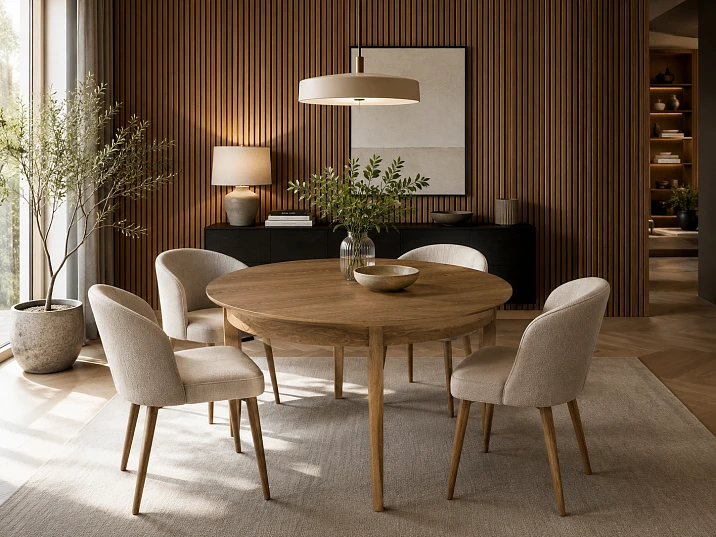
The slat wall already sets a strong vertical rhythm in the dining room. If you add a rectangular table, a linear light fixture, a tall cabinet, and chairs with straight backs, the interior may become too rigid: the eye reads parallel axes, corners, and repeating stripes, and the dining group looks like a continuation of the finish. In such a situation, a round table can indeed soften the composition. But the round shape is only useful when the model fits together with chairs and walkways, and the chosen finish does not create a new conflict with the panels and the floor.
Chester 002‑012 is a specific catalog table, not a conditional illustration. The card specifies dimensions of 1148 × 764 × 1148 mm, materials oak and beech, four combinations of wood and finish, production to order, and an average lead time of 5–10 days. The diameter of 1148 mm cannot be changed in the text to "approximately 1200 mm," and the height of 764 mm cannot be passed off as a universal standard for all models. Before payment, the buyer needs to check the drawing, mark the circle on the floor, determine the free space around the tabletop, and confirm the chosen execution.
The main limitation: the card does not confirm a folding mechanism, diameter change, custom size, or a specific number of seats. Therefore, Chester is evaluated as a round non-folding table of a given dimension based on confirmed data, without attributing capabilities that the manufacturer has not stated. If transformation or strictly defined capacity is critical for the family, these requirements are checked separately and, if necessary, another model is chosen.
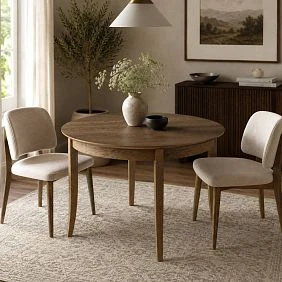
Chester 002‑012 table: what the buyer gets according to the product card
In the product card, Chester 002‑012 is designated as a table from the modern collection. Its overall size is 1148 × 764 × 1148 mm. With a round shape, the first and third values form the same dimension in plan, so the tabletop diameter is 1148 mm. The middle value of 764 mm refers to the vertical dimension according to the manufacturer's scheme; before designing, it is still useful to compare it with the A × B × C drawing.
| Parameter | Confirmed data | What to check before payment |
|---|---|---|
| Model | Chester 002‑012 table | Specify the name and article number without abbreviations |
| Size | 1148 × 764 × 1148 mm | Open the drawing and verify designations A, B, and C |
| Shape | Circle, diameter 1148 mm | Make a full-diameter floor template |
| Materials | Oak or beech | Select a specific wood species before calculating the price |
| Oak | "Walnut with patina" or white enamel RAL 9010 | Confirm the selected combination in the order |
| Beech | Cherry tint or white enamel RAL 9010 | Do not replace the exact name with the wording "dark" or "white" |
| Availability | Custom Order | Clarify the current availability of the configuration |
| Production | On average 5–10 days | Get the lead time for a specific order and add delivery time |
| Unconfirmed options | Layout, spreading, other diameter not specified | Do not include them in the project without written confirmation |
The price depends on the wood species and finish and is updated. For a long-lived article, it is more correct not to fix an amount that will become outdated in a few weeks. The buyer needs the current cost of the selected combination at the date of ordering, not the minimum figure of the category or the price of another version of Chester.
After checking the dimensions and finish, it is possible buy a round wooden table Chester 002‑012 in the product card. An exact link reduces the risk of confusing the model with another round table from the modern collection.
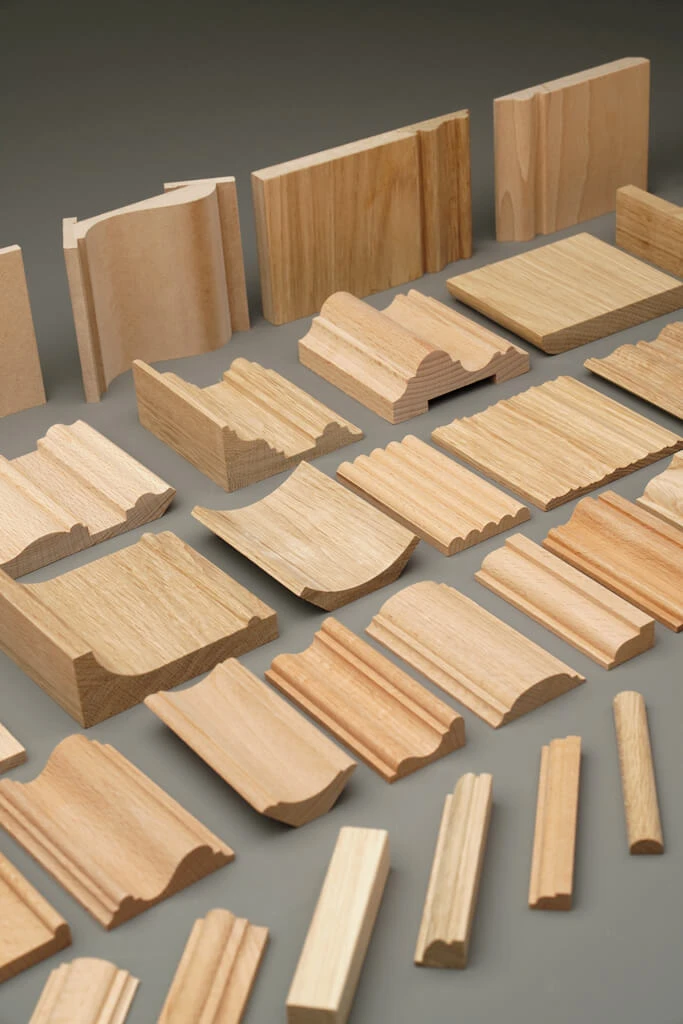

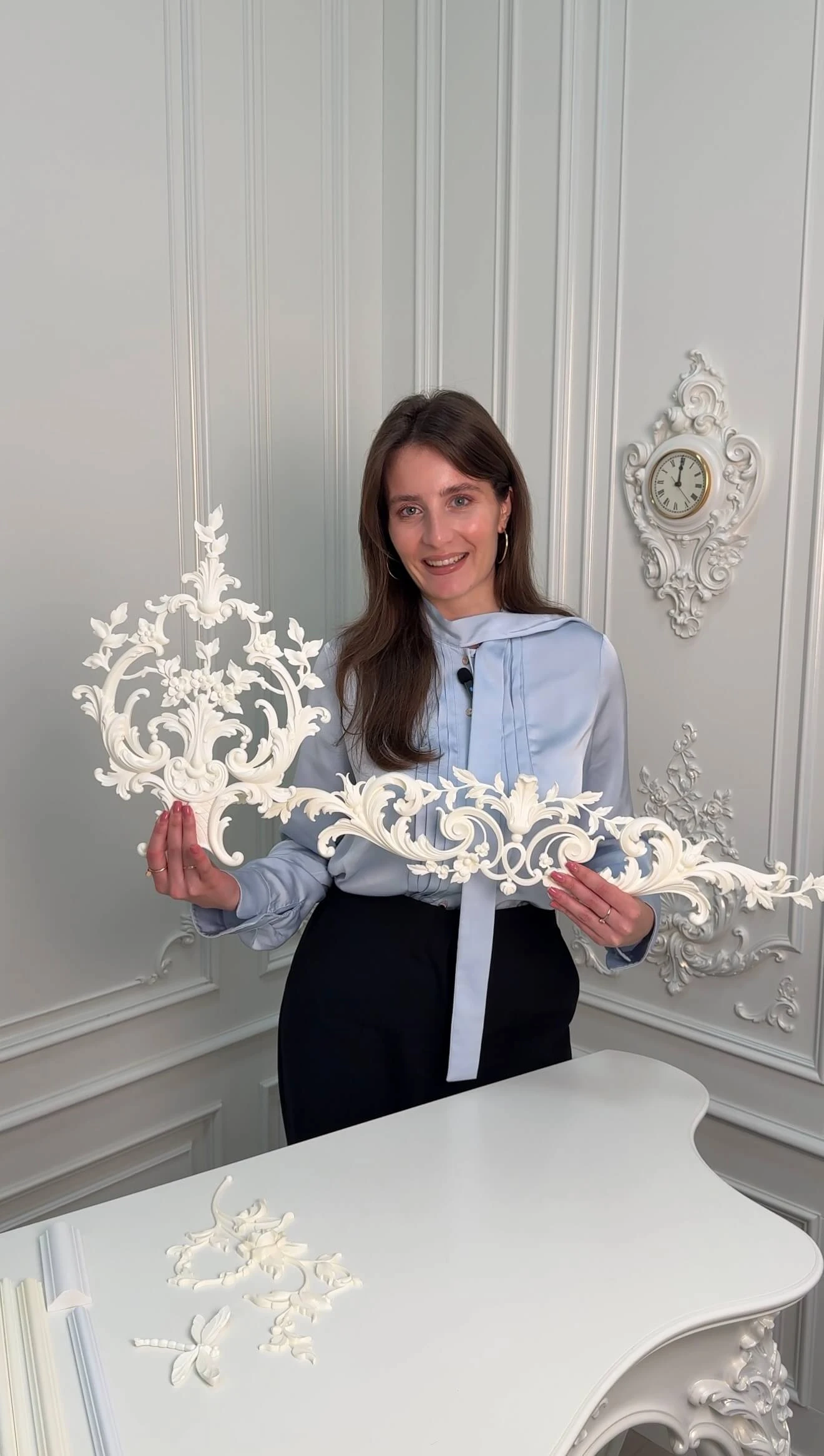

What is included in the solution and what remains a separate task
One Chester product item is a table in the selected finish. Chairs, rug, lamp, delivery, lifting, assembly, and floor protection should not be considered automatically included. Completeness and delivery condition should be clarified with the seller: it is especially important to understand in what form the table arrives and what conditions are needed for bringing it in and assembly.
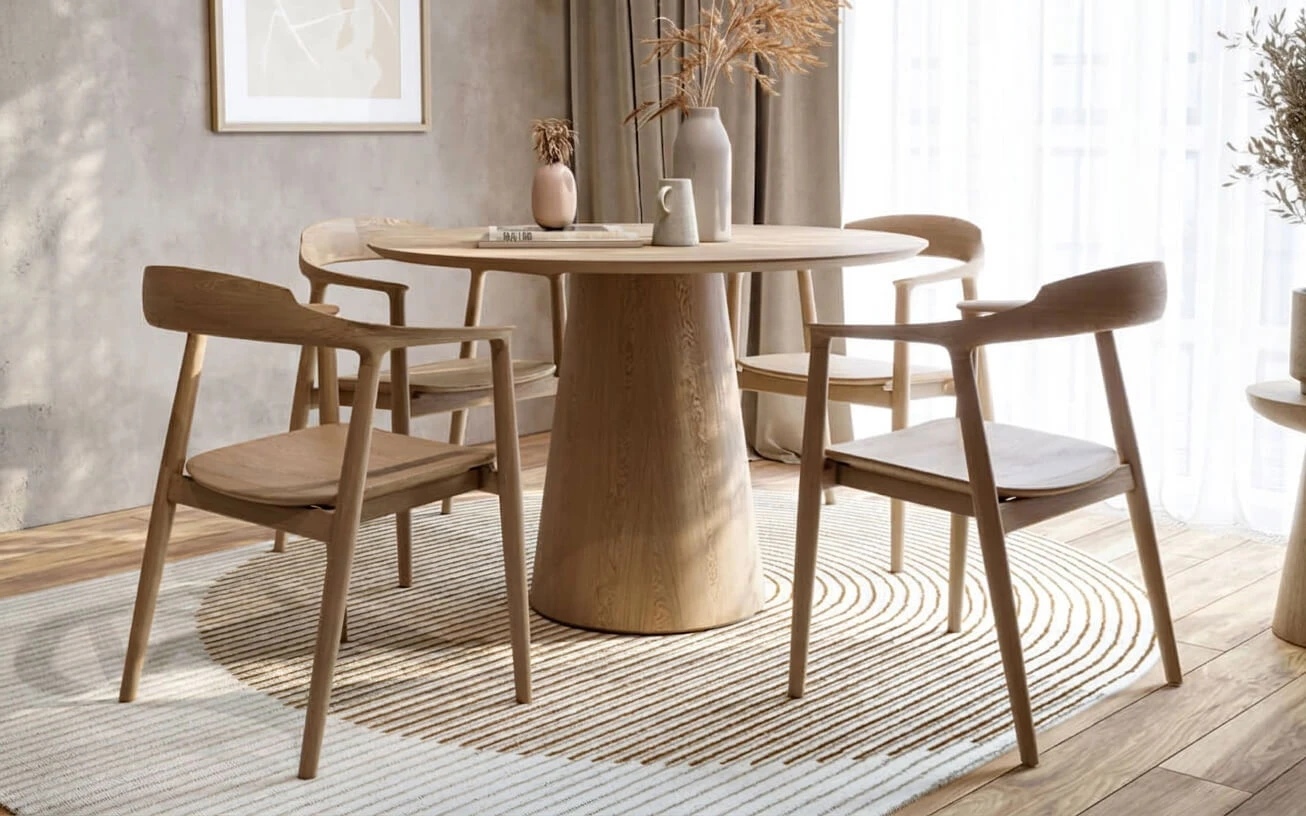
The interior photo also does not confirm the dimensions of surrounding objects. The chairs in the image may have a different width and depth than the buyer's furniture. Therefore, the dining group is assembled according to a separate list, not by copying the proportions of the advertising shot.
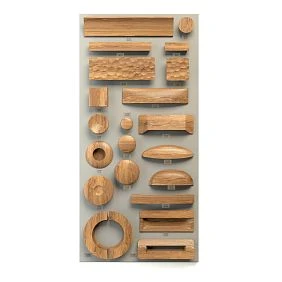
Our factory also produces:
Why four finishes are not four universal colors
White enamel RAL 9010 is available for both oak and beech, but two finished surfaces should not automatically be considered visually identical without samples: the base, preparation, and coating batch can affect perception. The "walnut with patina" tint in the card is associated with oak, while "cherry" is associated with beech. These options cannot be arbitrarily transferred between wood species and expect the same price.
If the buyer needs a different color or custom execution, the request is formulated separately. The availability of "made-to-order" furniture does not mean an unconditional possibility to change the size, construction, or finish in a single piece.
Get Consultation
Round wooden table against a slatted wall: how the shape softens vertical geometry
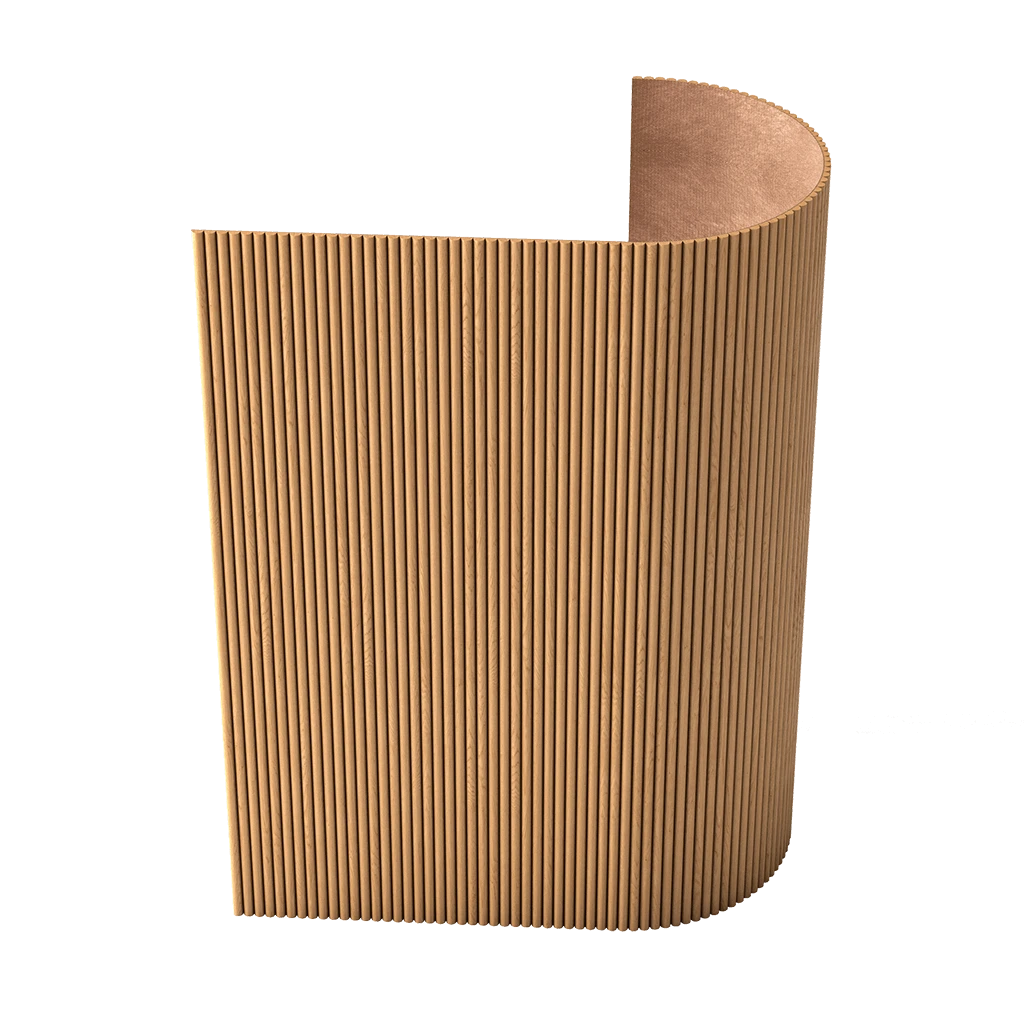
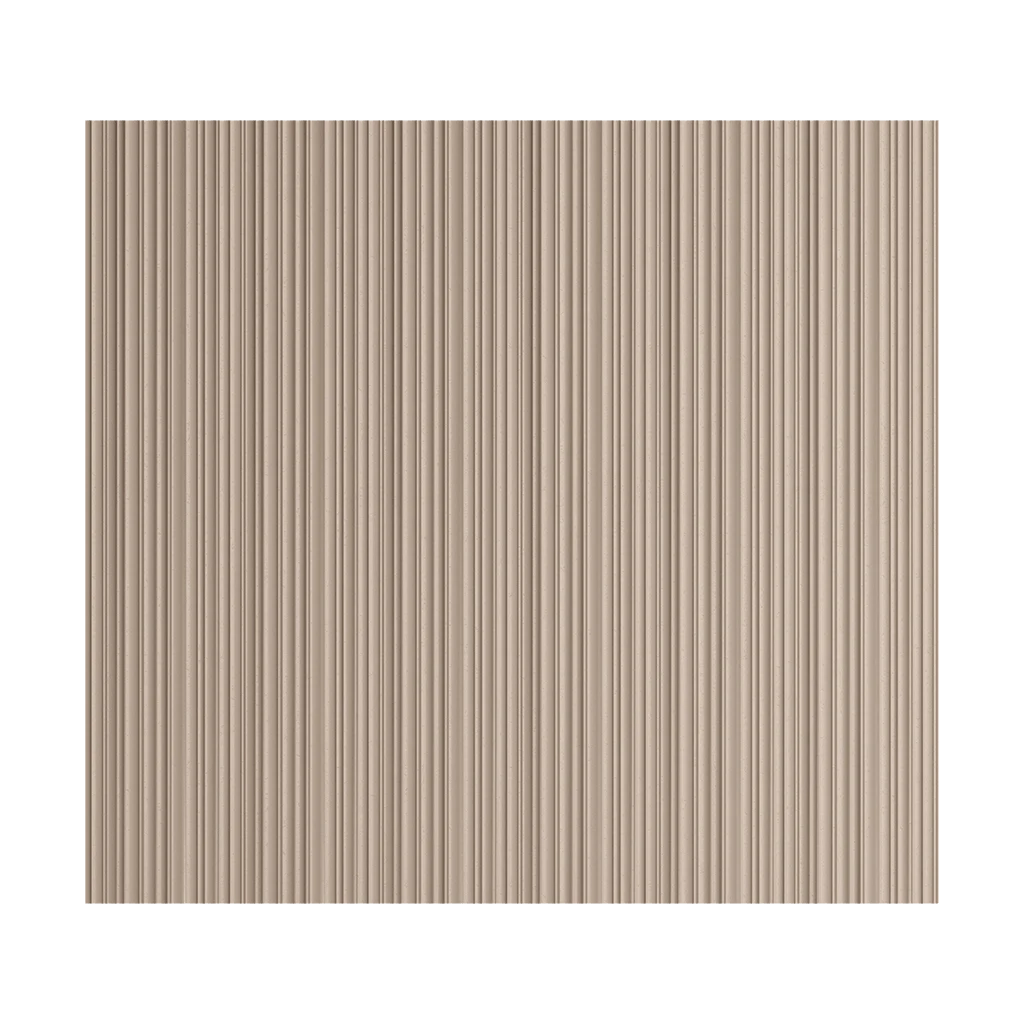
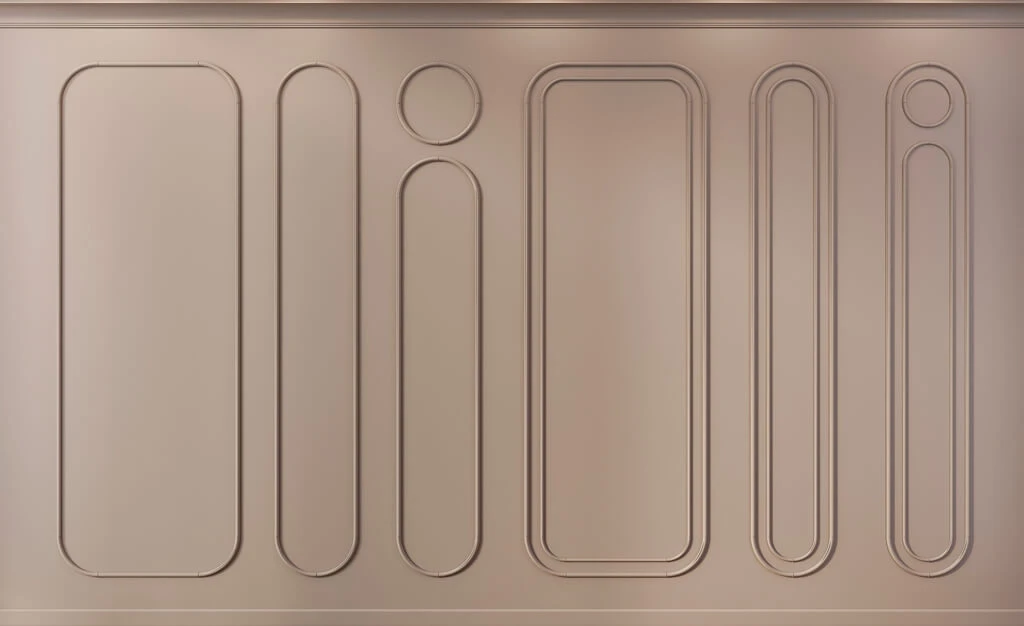
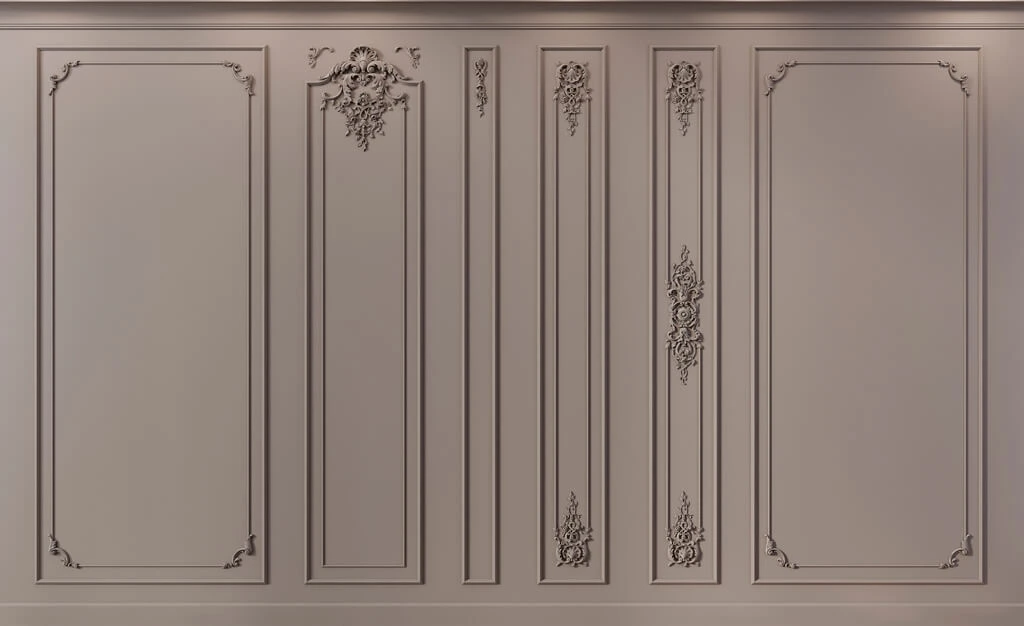
The slats work as many closely spaced straight lines. Their vertical rhythm is enhanced by shadows between the lamellas. A rectangular tabletop adds two long parallels and four corners, so the composition can become overly graphic. A circle introduces a continuous curve with no main long edge or corner points. The eye stops moving only along verticals and horizontals.
The effect is especially noticeable when Chester is seen in silhouette from the dining room entrance. The round edge forms a calm contour against the slatted wall, and chairs are placed not along rigid sides of a rectangle but around the center. This is a visual argument, but not proof of comfort: the actual result depends on the room size, table base, and specific chairs.
A circle does not eliminate straight lines but changes their hierarchy
There is no need to try to remove all verticals from the dining room. Panels, doors, and cabinets will remain rectilinear. Chester introduces one large rounded form that becomes a counterbalance. If after that you add a round rug, a spherical lamp, a round mirror, and many curved chairs, the interior may swing to the other extreme—mechanical repetition of the circle.
It is enough for the round tabletop to be the main geometric change. The lamp can remain minimalist, the rug rectangular, and the chairs with moderately soft backs. The connection arises not from literal copying of the shape but from balance.
Why the top view and eye-level view matter
On the plan, Chester looks like a perfect circle. At eye level, the tabletop is perceived as an ellipse, and most of the silhouette is formed by the base and chairs. Therefore, one top-down scheme is not enough. You need to look at the card and drawing, assess the side profile, the height of 764 mm, and how much the table will be covered by the seats.
If there are many tall chairs with massive backs around, the round edge almost disappears from the usual angle. In this case, the shape still affects movement and arrangement, but the visual effect will be weaker. For the "soften the wall" scenario, it is useful to check the composition on a collage with real chair models.
Four scenarios for a slatted wall behind Chester
The phrase "table at a slatted wall" describes several different situations. Panels can occupy the entire plane, only the central insert, one side section, or extend to the adjacent wall. The round tabletop interacts with each scheme differently, so the background is assessed together with the position of the Chester center.
Solid slatted wall
The verticals run behind the entire dining group. In this case, the round table provides the clearest contrast: one large outline is opposed to many narrow lines. To prevent the effect from being lost, a calm field is left around the group, and no competing shelves, pictures, or sconces are added to the wall.
The center of Chester does not have to coincide with the geometric center of the wall. It should account for passages, the cabinet, and the light fixture. But the offset relative to the slatted module is checked on the frontal elevation. If the table, pendant, and decorative insert form one axis, and the slats are cut asymmetrically, a small error will become noticeable.
The shade of the panels determines the strength of the contrast. On a dark background, white Chester looks graphic, tinted oak looks deeper and calmer. On a light wooden background, warm tinting can almost blend in, so chairs or a rug will be needed to separate the group from the wall.
Central slatted panel
The panels occupy only the area behind the table. Then their width becomes a frame for the group. A too-narrow panel looks like a strip that accidentally ended up behind the table; a too-wide one loses its connection with Chester and is perceived as general room finishing.
The width is checked not only by the diameter of 1148 mm, but also by the outer contour of the chairs. If the panel barely matches the tabletop, the backs extend beyond its edges and the composition falls apart. If the task is to show Chester as the main object, the slatted background should support the entire group, not just the circle on top.
The height of the panel also affects proportions. A low finish may align with the edge of the lamp or the top of the chair backs, creating an accidental horizontal line. Full-height panels up to the ceiling usually provide a more cohesive background, but the specific solution depends on the room's architecture.
Slats on one side only
Asymmetric finishing suits an open kitchen-living room, where panels highlight the buffet area or the transition between spaces. Chester does not need to be forcibly placed exactly on the boundary. More often it is calmer when the center of the table relates to the functional dining area, while the side slatted surface remains an accent.
If the edge of the panels passes behind the middle of the tabletop, the background visually divides the circle into two parts. This can be a deliberate modern technique, but it requires precise collage. Accidental division looks like a measurement error. In practice, the position is checked from the main entry point, not just frontally.
Slatted corner
Panels transition from one wall to another, creating a vertical "cocoon." A round table works well in such a space because it does not repeat the room's corner. But too close a position turns the circle into a constrained object: from the side of two walls, the chairs cannot be pulled out equally.
Marking is done from both front planes of the slats. Chester's position may be offset from the angle bisector for passage, but the lamp and rug should support the new center. If a symmetrical field is impossible, assess whether the circle is truly more convenient than a rectangular model.
If the panels have not been purchased yet, you can choose the material and spacing in the section buy slat panels for walls for interior finishingFirst, mark out the dining group, then choose the width of the slatted backdrop; the reverse order often forces the table to be subordinated to a ready-made but inconvenient axis.
When a round table stops softening the interior
The rounded tabletop does not act in isolation. If chair legs, a tall cabinet, linear lights, and contrasting floor seams create many rigid lines, a single circle may not be enough. Conversely, too many rounded objects turn the reception into an obsessive theme.
The first risk is that the circle is hidden. Tall, dense backs form a visual fence around Chester, and the edge is only visible from above. Then the shape is supported by the distance between chairs, a lighter silhouette of the seats, or a view from the passage side. You should not buy new chairs just for a photo, but their influence must be considered.
The second risk is that the circle is repeated too literally. A round rug, a round ceiling, a ring light, a round mirror, and dishes on open shelves create a catalog of shapes. It is better to choose one dominant and one supporting repetition. For example, Chester and a soft lampshade, but a rectangular rug.
The third risk is that the table is too small for the scale of the wall. On a wide, tall plane, a diameter of 1148 mm may look modest, especially if the group stands far from the panels. Increasing it visually with many chairs is not always wise. Check the overall view from a distance and, if necessary, choose a different model or narrow the slat field.
The fourth risk is that the color blends with the background. Oak of a similar shade on oak slats removes a readable contour. The difference can be restored with a rug, chairs, and lighting, but if explicit geometric contrast is required, white enamel or a more noticeable tint will solve the task more directly.
Round dining table with a diameter of 1148 mm: how much space Chester takes up
The diameter of 1148 mm describes the tabletop, not the entire dining area. For use, you need chairs, space for pulling them out, and a passage. The mistake occurs when only a circle with a diameter of 1148 mm is drawn on the plan and free floor is seen around it. After delivery, the chairs extend into the passage, the cabinet door does not open, and a person by the wall cannot stand up comfortably.
Tabletop projection area
The radius of Chester is 574 mm. The area of the circle is calculated by the formula:
[
S = πr² = 3.1416 × 0.574² ≈ 1.035 m².
]
That is, the tabletop occupies about 1.04 m² in plan. This is not the area of the entire group, nor the standard for free space. The calculation is useful for comparing geometry: a square 1148 mm wide would have an area of approximately 1.318 m². A circle of the same maximum width is smaller by about 0.283 m², or 21.5%. It is precisely the absence of corners that makes it visually and spatially lighter, but at the same time reduces the usable surface relative to a square of the same size.
Full zone formula
If the designer has assigned a free field C from the tabletop edge in all directions, the total zone diameter is:
[
D_zone = 1148 + 2C.
]
| Free field adopted in the project on each side | Total zone diameter |
| 500 мм | 2148 мм |
| 600 мм | 2348 мм |
| 750 мм | 2648 мм |
| 900 мм | 2948 мм |
This table does not prescribe a universal setback. It shows the consequences of an already chosen field. The value C is determined by the actual chair depth, the pull-out trajectory, the presence of a passage and doors. For a wall without transit, one value may work; for a main route, another.
From which plane to measure to the slat wall
The distance is measured from the front, most protruding part of the panels, not from the base wall behind them. If the slats protrude by 20–30 mm or more, this difference eats into the usable clearance. The baseboard also affects the position of the chair's rear legs and prevents it from being pulled up close.
To determine the position of the Chester's center relative to the wall, add the chosen free clearance to the edge to the radius of 574 mm:
[
L_{\text{center–wall}} = 574 + C.
]
With a clearance of 600 mm, the center will be 1174 mm from the front plane of the panels; with 750 mm — 1324 mm. This is pure geometry. Convenience is tested with a chair and human movement.
Full-scale layout
Mark the center on the floor, then draw a circle with a diameter of 1148 mm. Around it, place the outlines of real chairs in two positions: pulled in and pulled out. After that, open doors, cabinets, and drawers, walk along usual routes, and simulate table setting.
A paper circle can be replaced with a cord 574 mm long, secured at the center. But painter's tape better shows a permanent edge and allows you to live with the layout for a few days. If household members regularly step on the tape in the walkway, a real table will also be in the way.
How to check Chester in a rectangular, square, and walk-through dining room
The same diameter works differently in different layouts. A round table does not automatically become the best choice for any small room. It requires uniform clearance around the center, whereas a rectangular model can more effectively use an elongated niche.
Square dining room
A circle naturally supports a central composition. If entrances and furniture are evenly distributed, Chester can be placed along the axis of the light fixture and the slat field. The risk is excessive formality: the table, ceiling point, and wall insert end up strictly in the center, and the slightest offset becomes noticeable.
Before ordering, check not only symmetry but also function. The center of the room may coincide with the route between the kitchen and the living room. Then a beautiful axial position will create a constant obstacle. The table can be shifted if the new position preserves clear zones and looks intentional.
Elongated dining room
A diameter of 1148 mm uses the same width and depth, so on a narrow, long area there may be little space on the sides and too much at the ends. Here, a rectangular table sometimes better follows the room's proportions. Chester is justified if softening the geometry matters more than maximizing the use of the elongated zone and the passages remain convenient.
It is useful to compare two templates: a 1148 mm circle and a rectangle of the desired table. Add the same chairs in a pulled-out position to each. Comparing by tabletop alone is misleading.
Pass-through dining room
The absence of corners reduces the risk of catching a protruding edge on a diagonal route, but the circle still occupies its full diameter. A person goes around it in an arc, so a narrow passage between Chester and a cabinet may feel longer than a short straight section along a rectangular model.
The check is done by movement, not just with a tape measure. Walk around the layout with a tray, open the door, and pull out a chair. If routes intersect, change the center of the group or the type of table.
Dining room combined with living room
The circle helps to designate a separate dining "island" zone without a partition. The slatted wall sets the background, and the table forms the center. But the rug and the lamp should support the boundary without blocking the path to the sofa. In an open space, the view from several sides is especially important: Chester will be perceived not only frontally against the background of the panels.
Chester table made of oak or beech: which finishes can be ordered
The material is chosen together with the finish. The card does not present an abstract "oak of any color" or "beech under any tint." Four specific combinations are confirmed: oak with a "walnut with patina" finish, oak with white enamel RAL 9010, beech with a "cherry" tint, and beech with white enamel RAL 9010.
Oak, "walnut with patina"
This is the most saturated wood scenario of those listed. The dark warm finish can separate the table circle from the light slatted wall and support the cabinet, sideboard, or flooring. The patina adds visual complexity, so nearby one should not simultaneously use several active wood patterns and contrasting slats.
The name "walnut" refers to the color finish of oak, not to the walnut species. In the order, you need to write the full combination: oak, "walnut with patina" tint. The abbreviation "walnut table" would be factually incorrect.
Oak, white enamel RAL 9010
The opaque white surface shifts attention from the texture to the round contour. Against dark wooden slats, Chester will become a noticeable light center. On white panels, a calm monochrome is possible, where the shape is shown by the shadow under the tabletop.
RAL 9010 cannot be evaluated by monitor. White walls, kitchen facades, and table enamel may differ in undertone and gloss level. A physical sample or an exact comparison with approved swatches is needed.
Beech, "cherry" tint
A warm reddish-brown tone can soften a cold gray interior and support classic details. Next to a slatted wall, it works better if the panels and floor do not have a conflicting green or sharply cold undertone. The comparison is made both during the day and in the evening.
Beech has a calmer grain pattern than oak, but staining does not turn it into cherry wood. In the commercial offer, beech and the exact name of the coating are specified.
Beech, white enamel RAL 9010
This is the most minimalist option for an interior where the round shape is needed primarily as a geometric contrast. White Chester can tie in with kitchen fronts, doors, or ceiling lighting and at the same time stand apart from wooden panels.
Monochrome does not mean the table will automatically blend in. The height of 764 mm, the shadow from the tabletop, and the contour of the base will preserve volume. But if the chairs are also white and the floor is very light, the composition may lack depth. It can be added with a rug, textiles, or chairs in a different tone, without changing the table itself.
Oak and beech cannot be considered fully interchangeable
The texture, visual density, and available stains differ. The price also depends on the execution. If a customer switches from beech to oak after the initial quote, a new cost and lead time must be requested. It cannot be assumed that changing the wood species only affects the shade.
If you need to see other items in the same style, you can buy furniture in a contemporary style after approving Chester. But the set does not have to consist of the same wood species and one color: the connection can be created through shape, proportions, or repeating the finish in two items.
White wooden table or warm stain: how to combine Chester with a slatted wall
The choice between enamel and tinting is a choice of the table's role. White enamel makes the circle more graphic and separates it from the wood background. Tinting connects the table to the natural theme and enhances materiality. Neither scheme is unconditionally better.
Contrast in lightness
If the panels are dark, the white Chester reads immediately. If the panels are light, dark tinting forms the center. Contrast is useful in a room where the table's shape should be noticeable from the entrance. It is supported by one or two details: the color of the chairs, a lamp, or a small item on the sideboard.
There is no need to repeat the table's color in all elements. A fully white group against a dark background can look like an inserted ready-made set. A more lively result is achieved when chairs connect the table to the floor or panels.
Related wood palette
An oak Chester next to oak slats can look cohesive, but matching the wood species does not guarantee matching the tone. Panels, table, and floor differ in cut, sorting, finish, and lighting. If the goal is a close palette, samples are compared in the room.
A slight difference is acceptable if it looks intentional. More problematic are almost identical shades with conflicting undertones. In such a case, one material is better made noticeably lighter or darker.
Monochromatic light scheme
A white table and painted light slats create a quiet background for chairs, dishes, and light. The circle is read through shadows. The scheme is demanding on lighting quality and comparison of white surfaces. RAL 9010 is not automatically equal to any "warm white."
If the wall is already painted, take a physical sample of its color and compare it with the Chester finish. A phone photo is useful for a collage but insufficient for the final decision.
Three control questions
-
Should the table stand out against the panels or be part of a calm group?
-
Is it important to show the wood theme, or is a clean round outline more important?
-
How does the chosen shade look next to the floor and chairs in evening light?
The answers provide direction without a mechanical rule like “wooden panels — only an oak table.”
Chairs around Chester: what to check without promises about the number of seats
The card does not confirm the capacity, so the article does not designate Chester as a “table for four,” “for six,” or for any other number of people. The actual seating depends on the width of the chair, armrests, table base, leg position, and customary table setting.
Why the diameter does not give a ready answer
Mathematically, any number of narrow segments can be distributed around the circumference, but people do not sit like lines. Shoulder width, space for elbows, plates, and cutlery are needed. A chair with armrests takes up more space and requires a different seating trajectory than a compact model without them.
The Chester base can also limit leg positioning. Since the article does not have a confirmed diagram of all base dimensions, it cannot be replaced by an assumption. Before buying chairs, open the table drawing or request the necessary parameters.
Layout with real chairs
The best test is to place the selected chairs around a floor circle with a diameter of 1148 mm. If the model is not yet available, cut out rectangles according to the maximum width and depth of each chair. They are placed in both pushed-in and pulled-out positions.
Check:
-
whether the armrests collide;
-
whether there is room for legs at the base;
-
whether one can sit from the wall side;
-
whether the pulled-out chair extends into the aisle;
-
whether access to the cabinet and doors is maintained;
-
whether the high backrest covers the circular outline in the main view.
This is not a calculation of the number of seats, but a check of the selected furniture group.
Lamp above the round table and slatted wall
Light helps the circle become the center, but an incorrect position emphasizes any shift. First, the actual center of Chester is fixed, then the fixture is brought out. Doing it the other way around is dangerous: an existing ceiling point may force the table to be placed in an inconvenient passage.
Fixture shape
A round shade or a composition along the circumference directly supports the tabletop. A linear fixture creates contrast and can tie the group to the kitchen architecture. The choice depends on whether there are enough rounded forms in the interior. There is no need to automatically repeat the circle.
Height and light spot
The specific hanging height is determined by the fixture model, user height, sightlines, and the manufacturer's instructions. The shade should not block faces or blind those seated. The light spot should cover the tabletop without excessive emphasis on the slat wall.
If the panels have a deep relief, side lighting creates active shadows. In a dining room, this can look expressive in the evening, but it should not interfere with seeing the dishes and conversation partners. Several scenarios are checked: general light, dining, and evening decorative.
Electrical work before purchase
If the table center is not yet determined, the ceiling outlet is not fixed permanently. In a finished renovation, a solution is used that allows correct shifting only according to the project and installation rules; a random wire across the ceiling can ruin the composition more than a slight asymmetry.
Rug, sideboard, and passages: how to complete the dining group
A rug can highlight the round Chester against the slat wall and separate the table wood from a similar floor. But its size is checked with the chairs pulled out. If the back legs extend beyond the edge, the chair will tilt and catch on every movement.
A round rug reinforces the circular motif. A rectangular one ties the group to the room's geometry. Both options are acceptable. What matters more is that the edge does not fall into the working path of the legs.
A sideboard or cabinet against the slatted wall adds storage but reduces the open area. The plan shows the cabinet depth and open facades. The distance to the Chester is measured not from the wall, but from the most protruding point of the furniture. If a person sits between the table and the sideboard, account for their chair and access to the doors.
A robot vacuum, high chair, serving cart, and large pets also change real-world usage. You don't have to design the interior around every rare scenario, but permanent routes should be checked before ordering.
Dining room measurement sheet before ordering Chester
Scattered numbers in correspondence are easy to mix up. It's more convenient to compile a single measurement sheet that the buyer can pass to the designer, salesperson, and delivery specialist. It includes not only the room's length and width.
| What to measure | From where to where | What it's used for |
| Clear width of the zone | Between the front surfaces of walls, panels, or furniture | Checking the diameter and side clearances |
| Clear depth | Between the most protruding obstacles | Checking chairs and passage |
| Panel protrusion | From base wall to front rail | Correct starting measurement plane |
| Baseboard protrusion | From wall to outer edge | Position of chair rear legs |
| Buffet depth | Including handles and open doors | Access to storage |
| Door panels | Full opening arc | Avoiding collision with chairs |
| Ceiling outlet | Coordinates from two fixed walls | Aligning the light fixture and table center |
| Delivery route | Narrow doors, elevator, stairs, and turns | Checking packaging locations |
| Chair dimensions | Maximum width and depth | Full group layout |
| Carpet | Edge size and position | Stability of the pulled-out chair |
Fixed and movable obstacles
Walls and columns are fixed. Doors, chairs, and drawers are movable. On a regular plan, they are often shown closed, making the passage appear free. Both positions are noted in the passport.
For a sliding door, the access zone to the handle is important; for a hinged door, the arc of the leaf; for a sideboard, the drawer extension. If the dining area adjoins the kitchen, check the dishwasher and oven. An open facade should not block the only path around Chester.
Center coordinates
After approving the center position, two coordinates are recorded from permanent surfaces, for example, from the finished wall and the edge of the doorway. A measurement from a movable sideboard is unreliable. Using the coordinates, an electrician can check the light fixture, and a carpet installer can check its position.
The center on the plan and the real center of the tabletop must coincide after assembly. If the base allows an ambiguous orientation, it is determined according to the instructions, without randomly rotating the table relative to the walls.
Photo documentation
Each critical dimension is photographed with a tape measure and labeled. This does not replace a professional measurement, but helps avoid mixing up numbers. The panel protrusion, narrow delivery turn, and ceiling outlet are photographed separately.
The passport is also useful when declining Chester: using the same data, you can quickly check another model without starting measurements from scratch.
Everyday use of a wooden tabletop
The choice of finish affects not only color. The dining table comes into contact with hot dishes, liquids, abrasive particles, and care products. The article should not invent the chemical resistance of a specific Chester coating, so before purchasing, official care recommendations are requested.
White enamel
On a light surface, dark crumbs, traces of colored liquids, and scratches from hard objects are quickly noticeable. This does not mean the enamel is impractical, but the family must understand the visual regime. Coasters and napkins reduce direct contact, and a cleaning product is chosen according to the manufacturer's instructions.
You cannot use a random solvent or abrasive, because it can change the gloss and color. If children's creative work is constantly done on the table, a removable protective cover compatible with the coating should be planned in advance.
Tinting and patina
On a wood grain pattern, minor marks may be less noticeable, but this does not make the surface invulnerable. Patinated finishes should not be aggressively rubbed in recesses or attempted to be "refreshed" with household stain. Coating repairs should be coordinated with a specialist.
Direct sunlight affects color perception throughout the day. A table by the window is compared with panels not only in the evening. If part of the tabletop is constantly covered by a runner or objects, the usage mode is also discussed with the coating manufacturer.
Water, heat, and table setting
Spilled liquid is removed using the method recommended for the surface, without leaving it for long. Hot dishes are placed on suitable stands. The specific allowable temperature cannot be stated without technical documentation.
The central arrangement on a round table should not be so tall as to block the view of conversation partners. A vase and a lamp together form a vertical line in front of the slatted wall; if both are large, the effect of straightness will return already at the center of the circle.
Check before ordering
It is useful for the buyer to ask:
-
How to clean the chosen surface?
-
Which cleaning agents are prohibited?
-
Are stands for hot items needed?
-
What to do in case of a chip or scratch?
-
Can a protective transparent cover be used, and will it damage the surface?
-
What storage conditions are needed before assembly?
Answers are kept with documents on the table. Care based on memory or advice for other furniture may be unsuitable.
Buy a round solid wood table: when Chester is better than a rectangular model
Chester is worth choosing when the round template fits with working clearances, the interior needs one strong contrast to verticals, and the fixed diameter matches the family scenario. The shape is especially useful in a square or open area where the table is perceived from several sides.
A rectangular model may be better if the room is narrow and elongated, the table needs to be pushed with one side against the wall, a strictly linear seating is required, or a large tabletop area is important at the same maximum width. The circle loses its advantage when it is squeezed between a wall and a cabinet or constantly moved from the center.
If a buyer is looking for buy a solid wood table, for Chester, the materials of specific components need to be separately confirmed. The card indicates oak or beech, but the article should not declare every hidden part and the tabletop as made from a single solid board without a drawing. The term "solid wood" in a commercial request does not replace a technical specification.
To view tables as an interior solution, you can open the section buy a solid wood table. You should compare not only the price and photo, but also the exact dimensions, shape, material, confirmed finishes, and construction capabilities.
When Chester doesn't need to be bought
-
the family definitely needs a folding mechanism, but it's not confirmed for this model;
-
the diameter of 1148 mm doesn't fit together with chairs and a walkway;
-
the elongated niche requires a rectangular tabletop;
-
the existing ceiling light cannot be safely aligned with the center of the table;
-
the chosen finish conflicts with the floor and panels, and samples are not confirmed;
-
the buyer expects a custom size without prior agreement;
-
the exact number of seats is a strict requirement, but it hasn't been verified with real chairs.
Refusing Chester in these cases doesn't mean refusing a round table altogether. Perhaps a different diameter, design, or model is needed.
Wooden products and modern furniture: how not to assemble a random set
The table doesn't have to match the chairs, sideboard, and panels in wood species. Full repetition sometimes looks like a furniture set from one series, although the interior needs a more lively balance. First, choose the role of Chester, then link the remaining items through one parameter: color, shape, material, or degree of visual lightness.
Section solid wood products to buy useful for finding additional wooden elements. But moldings, decor, and furniture
Order Chester table 002‑012: what to tell the manager
The request "need a round white table" leaves too much uncertainty. In the order, the model, size, material, finish, quantity, and city of receipt are fixed. The deadline and completeness are confirmed separately.
| Position | What to specify |
| Model | Chester 002‑012 table |
| Dimension | 1148 × 764 × 1148 mm |
| Shape | Round, diameter 1148 mm |
| Quantity | 1 pc. or actual number |
| Material | Oak or beech |
| Finishing | One of the confirmed names |
| Address | City and delivery parameters |
| Lead time | Please confirm the current readiness date |
| Completeness | Scope of delivery, assembly requirements, documentation |
| Logistics | Packaging, dimensions of items, delivery, lifting and carrying in |
Example request: "Please calculate one Chester 002-012 table measuring 1148 × 764 × 1148 mm, oak, finish 'walnut with patina', delivery to the specified city. Please confirm the current price, production time, completeness, packaging dimensions, and conditions for carrying in and assembly."
If delivery is needed to another region, the conditions can be checked on the page order a wooden table with Contact us to confirm shipping to your destination.. The anchor leads to the payment and delivery section, and does not promise free or uniform logistics costs for all addresses.
Why the 5-10 day timeframe does not equal the installation date
The average timeframe refers to production to order. Added to it are approval, payment, packaging, transportation, lifting, and assembly, if required. For a housewarming or event, plan a buffer. The date is fixed based on the specific configuration, not on the general phrase in the product card.
What to check in the commercial proposal
The breed name and coating must match the selection. You cannot accept the string "Chester wooden table" without specification if the price depends on the finish. Size, quantity, city, and logistics services are also verified. Any replacement requires a new calculation.
What makes up the full budget for a dining area
Comparing only the prices of two tables is incomplete. Chester is the main item, but the final budget includes logistics and surroundings. Some expenses are mandatory, some depend on existing furniture.
| Budget item | Mandatory | What to clarify |
| Chester 002‑012 | Mandatory | Material, finish, current price |
| Delivery | Usually separate | City, weight, volume, and transport conditions |
| Lifting and carrying | by object | Elevator, floor, manual lifting, turns |
| Assembly | By completeness | Who performs it and is the service included |
| Chairs | If there are no suitable options | Dimensions, height, and compatibility with the base |
| Lighting fixture and electrical work | As per project | Center, installation, and lighting scenario |
| Carpet | Optional | Size for pulled-out chairs |
| Floor and countertop protection | Per terms | Material compatibility |
The estimate is divided into three stages. The first is the mandatory order of the table and delivery. The second is the functional environment: chairs and lighting. The third is the rug and decorative elements. This order prevents spending the budget on accessories until the delivery and comfort of the group are resolved.
If a more expensive wood species is chosen, they check what task it solves. Oak under enamel may be needed for a specific configuration, but buying it only for the texture invisible under an opaque coating without discussing the specification is irrational. The decision is made based on the product as a whole, not on the prestige of the material's name.
Old prices from articles and screenshots are not transferred to the estimate. The final amount is considered to be the sum from the current offer with the specified wood species, finish, and services.
Delivery, assembly, and acceptance of a round table
The diameter of 1148 mm needs to be matched not only with the room but also with the delivery route: doors, stair landings, elevator, and corridor turns. The type of delivery matters. If the tabletop and base are transported separately, the requirements are one thing; if the unit is larger, they are different. This cannot be guessed from a photo.
Before payment, they request dimensions and the number of packages, weight, possibility of disassembly, assembly requirements, and the minimum route width. If the manufacturer or carrier has not confirmed that the item will fit, measurements are taken by a specialist.
Acceptance
First, the packaging is inspected and damage is recorded before opening. Then the model, material, finish, and completeness are checked. The tabletop is inspected under good side lighting: this makes chips, dents, and finish defects more visible. Stability is assessed on a level floor after correct assembly.
If a problem is identified, do not touch up or repair the item yourself before contacting the seller. Keep the packaging, take photos, and follow the agreed acceptance rules.
Floor protection
Floor glides are chosen based on the type of flooring and table construction. A universal pad may collect sand, leave marks, or change stability. The specific solution is agreed upon after inspecting the supports and manufacturer recommendations.
Mistakes when buying Chester 002-012
Drawing only the tabletop on the plan
A circle with a diameter of 1148 mm fits, but chairs and people extend into the walkway. The entire work area is marked out.
Consider the diameter to be approximately 1200 mm
The difference seems small, but with narrow gaps every millimeter matters. Use the confirmed 1148 mm.
Call the table extendable
The card does not confirm the mechanism. The buyer may expect the tabletop to expand and find that this function is absent.
Promise a specific number of seats
Without the dimensions of the chairs and the base, this is an assumption. Check the actual group.
Match oak to oak panels without samples
The wood species matches, but the color and texture argue. Compare specific finishes under real light.
Call a "walnut with patina" an oak table
The material is oak, and "walnut" refers to the finish. The error changes the buyer's expectation.
Consider RAL 9010 as any white
Adjacent surfaces may have a different undertone and gloss. A sample is needed.
Center the table against the wall, ignoring the passage
The composition looks symmetrical, but it obstructs movement. The functional route is more important than the abstract axis.
First install the light fixture, then choose the table
The ceiling point fixes an inconvenient position. The center of the group is confirmed before electrical work.
Do not check the clearance
The table fits the room, but it does not fit through the elevator or corridor turn. Packing dimensions and delivery type are requested.
Fix the old price
The cost varies and depends on the finish. The current product card and commercial offer are used.
Consider 5–10 days as the full project timeline
Production is only one stage. Delivery and assembly require additional time.
If Chester doesn't fit: which round tables to consider
Alternatives are needed only after checking Chester. If the issue is size, construction, or visual character, compare the specific parameter rather than diving into an endless catalog.
Model buy round table Camelot 002-015 considered as a separate product with its own card and characteristics. You cannot transfer Chester's dimensions, materials, or capabilities to it.
The second option is buy round table Fjord 002-007. It is also compared by actual drawing, base shape, materials, and finish. Links are placed at the end to first help decide on Chester 002-012, not to lead the reader to other models on the first screen.
Final check before payment
Chester 002-012 suits a dining room with a slat wall if the 1148 mm diameter round truly softens the composition and fits with working clearances. Material and finish should be chosen based on samples, not by wood species name. Chairs are checked around the template, the light fixture is centered according to the actual group position, and logistics are calculated before payment.
Decision sequence:
-
Mark out the 1148 mm circle.
-
Add real chairs in two positions.
-
Check passages, doors, and buffet.
-
Align the center of the table with the slat wall and light.
-
Choose oak or beech.
-
Choose one confirmed finish.
-
Compare physical samples with panels and floor.
-
Check the delivery route and completeness.
-
Get the current price and lead time.
-
Verify the commercial proposal.
After such a check, the buyer orders not an abstract "round table for slats," but a specific model in a clear configuration. The round shape solves the visual task, the diameter matches the room, and the finish ties Chester to the interior without literally repeating every wooden surface.
There is another useful final test. Mentally remove the slat wall from the visualization and leave only Chester, chairs, passages, and light. If the group remains comfortable, the choice is based on function, not decorative effect. Then bring the panels back and check whether the circle really softens the verticals. If the table works without the slats, and with them the composition becomes calmer, the model solves both tasks. If Chester is needed only as an "antidote" to poor finishing, perhaps the wall itself, lighting, or the number of linear details should be adjusted.
Keep the final order in one list. It should simultaneously contain item 002-012, dimensions 1148 × 764 × 1148 mm, wood species, exact finish, quantity, city, price, lead time, and logistics. Different options in multiple messages create a risk that the wrong configuration goes into production. After any change of wood species or finish, the list and amount are confirmed again.
FAQ about the Chester 002-012 round table
1. What is the diameter of Chester 002-012?
The diameter is 1148 mm. The full size in the product card is listed as 1148 × 764 × 1148 mm. For layout planning, use the exact value, not rounding to 1200 mm.
2. What is the height of the table?
The average value in the dimensions is 764 mm. Before ordering, open the A × B × C drawing and confirm that the notation corresponds to the vertical size of the specific version.
3. Does Chester expand?
In the provided and verified specifications, a folding or extending mechanism is not confirmed. You cannot rely on transformation without a written response from the seller.
4. How many people can fit at Chester?
The product card does not specify the number of seats. It depends on the width of the chairs, armrests, base, and table setting. Make markings and check specific chairs.
5. What materials is the table made from?
The card specifies oak and beech. The technical composition of individual components and the tabletop is clarified by specification if necessary, without replacing it with the general word "solid wood".
6. What finishes are available for oak?
"Walnut with patina" and white enamel RAL 9010 are confirmed. The current availability and price of a specific option are checked before payment.
7. What finishes are available for beech?
"Cherry" tint and white enamel RAL 9010 are confirmed. Any other coating cannot be considered standard without approval.
8. Does "walnut with patina" mean the table is made of walnut?
No. The card specifies oak as the material, and "walnut with patina" is the name of the finish.
9. Will white Chester suit wooden panels?
Yes, if a light contrast is needed and RAL 9010 matches other white surfaces. The decision is verified with a physical sample in daylight and evening light.
10. Is it mandatory to choose oak for oak slats?
No. Beech in enamel may better separate the table from the wooden background. Matching the species name does not guarantee matching the shade.
11. How much space does the table take up without chairs?
Diameter in plan is 1148 mm, tabletop projection area is approximately 1.04 m². For a full zone, add space for chairs and walkways.
12. How to calculate the overall diameter of the dining area?
Add twice the free clearance from the edge to 1148 mm: D = 1148 + 2C. The clearance itself C is set based on actual chairs and routes.
13. From where to measure the distance to the slatted wall?
From the most protruding front plane of the panels. The base wall behind the slats is not the boundary of the free space.
14. Is a round rug needed?
Not necessarily. A round one supports the table's shape, a rectangular one connects the group with the room's architecture. The size is chosen so that pulled-out chairs stand stably.
15. Should the lamp be round?
No. A round shade repeats the tabletop, a linear one creates contrast. More important is the correct center, even light, and absence of glare.
16. Can I order a different diameter?
The article covers the standard 1148 mm. The possibility of a non-standard size is not confirmed and requires a separate response from the manufacturer.
17. What is the production time?
The card indicates an average time of 5–10 days for an order. The exact date is confirmed based on the selected wood species and finish, with delivery considered separately.
18. Why is there no fixed price in the article?
The price depends on the execution and changes. For a purchase, the current amount for a specific combination of oak or beech with the chosen coating is needed.
19. What should be requested for delivery?
Dimensions and number of packages, weight, delivery type, requirements for bringing in, lifting, and assembly. One tabletop diameter is not enough for logistics.
20. When is it better not to buy Chester?
If a confirmed folding mechanism is needed, the diameter does not fit with walkways, the shape works poorly in an elongated niche, or the chosen chairs conflict with the base.
21. How to compare Chester with a rectangular table?
Mark out both tabletops and add the same real chairs in the pulled-out position. Compare walkways, usable surface, and the view against the panels.
22. What should be specified to the manager in the order?
Chester 002-012, size 1148 × 764 × 1148 mm, quantity, oak or beech, exact finish, and city of receipt. Request the current price, lead time, completeness, and logistics.