


































Article Contents:
- What lies behind the concept of 'wood-look': analysis of materials
- MDF with decorative wood-look coating
- PVC slats with wood-look decor
- WPC: wood-polymer composite
- Natural solid wood with wood species tinting
- Why 'wood-look' does not equal 'instead of wood': the fundamental difference
- When MDF slatted panel wood-look is the right choice
- Monochromatic color concept with wood tone
- High humidity room (moisture-resistant MDF)
- Limited budget while preserving a 'wooden' look
- Commercial space with high foot traffic
- What wood-look slatted panels look like in real interiors
- Living room: MDF 'natural oak' behind the sofa
- Bedroom: PVC 'pine' in a child's room with wet cleaning
- Study: tinted pine 'walnut finish'
- Wood-look wall slatted panels: full selection by interior style
- Scandinavian style: bleached ash or birch
- Loft: dark oak or MDF 'wenge'
- Classic and neoclassic: dark walnut, tobacco oak
- Minimalism: solid slats with or without natural grain
- Technical parameters of wood-look slat panels for interior finishing
- Standard Sizes
- Coating: how wood-look slats are treated
- Decorative wood-look tints: popular shades
- Natural oak (light amber)
- Cognac (warm amber with golden sheen)
- Tobacco (warm medium-saturation brown)
- Walnut (medium-dark brown)
- Anthracite (dark gray with warm undertone)
- Bleached/Scandinavian (light, almost white)
- Wood-look slatted ceiling panels: when imitation is especially convincing
- Installation of wood-look slatted wall panels: what's important to know
- Wood-look MDF: installation features
- Wood-look PVC: installation of lightweight material
- Key requirements for fastening slatted panels
- Finishing system for wood-look slatted field
- Wood-look slatted panels and natural interior: biophilic principle
- How to avoid mistakes when buying wood-look slatted panels
- Frequently Asked Questions
- How does wood-look MDF slatted panel differ from natural wood in feel?
- Can you paint MDF battens with an already applied wood-grain finish?
- How long do wood-look MDF slatted panels last?
- Wood-look slatted panels for the bathroom — what material?
- Can you install wood-look slatted panels yourself?
- Wood-look slatted panel for the wall — how to calculate the quantity?
- What gap should be left between battens when installing a wood-look finish?
- Conclusion
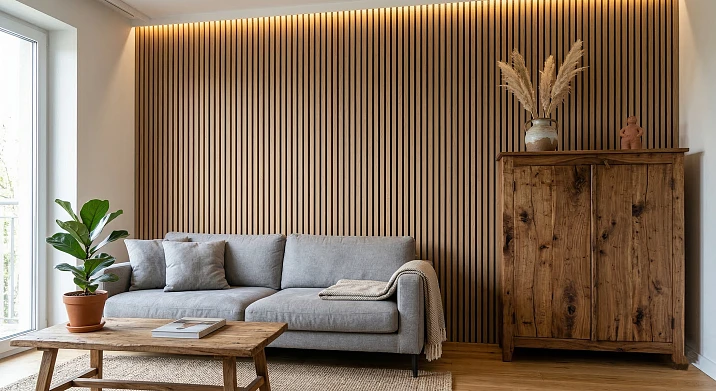
Let's be honest. When someone searches for 'wood-look slatted wall panel' — there's a very specific psychology of choice behind this query. They've already seen wooden slatted panels. They've already understood that this exact look — warm vertical planks, the lively grain pattern, the play of shadow in the gaps — is precisely what their space needs. But something stopped them: the price, questions about maintenance, doubts about durability, special room conditions.
And so they stand at the crossroads between 'real wood' and 'wood-look'. And this crossroads is by no means obvious.
This article breaks down the topic completely, without false modesty and without advertising exaggerations: what a wood-look slatted panel is, how it differs from solid natural wood, when an imitation is a sensible choice, and when it's a compromise you'll regret. And how to get an interior from any of these options that will look expensive, natural, and lively.
What lies behind the concept of 'wood-look': a breakdown of materials
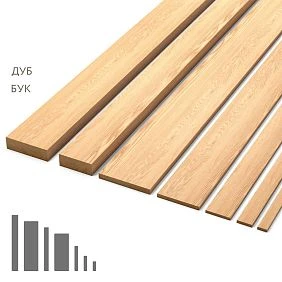
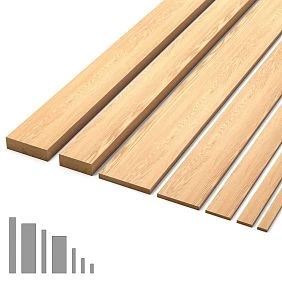
"Wood-look" is not a single material, but an entire category of products with different characteristics, price, and aesthetics. Before choosing a specificwall slat panel, you need to understand what the market actually offers under this term.
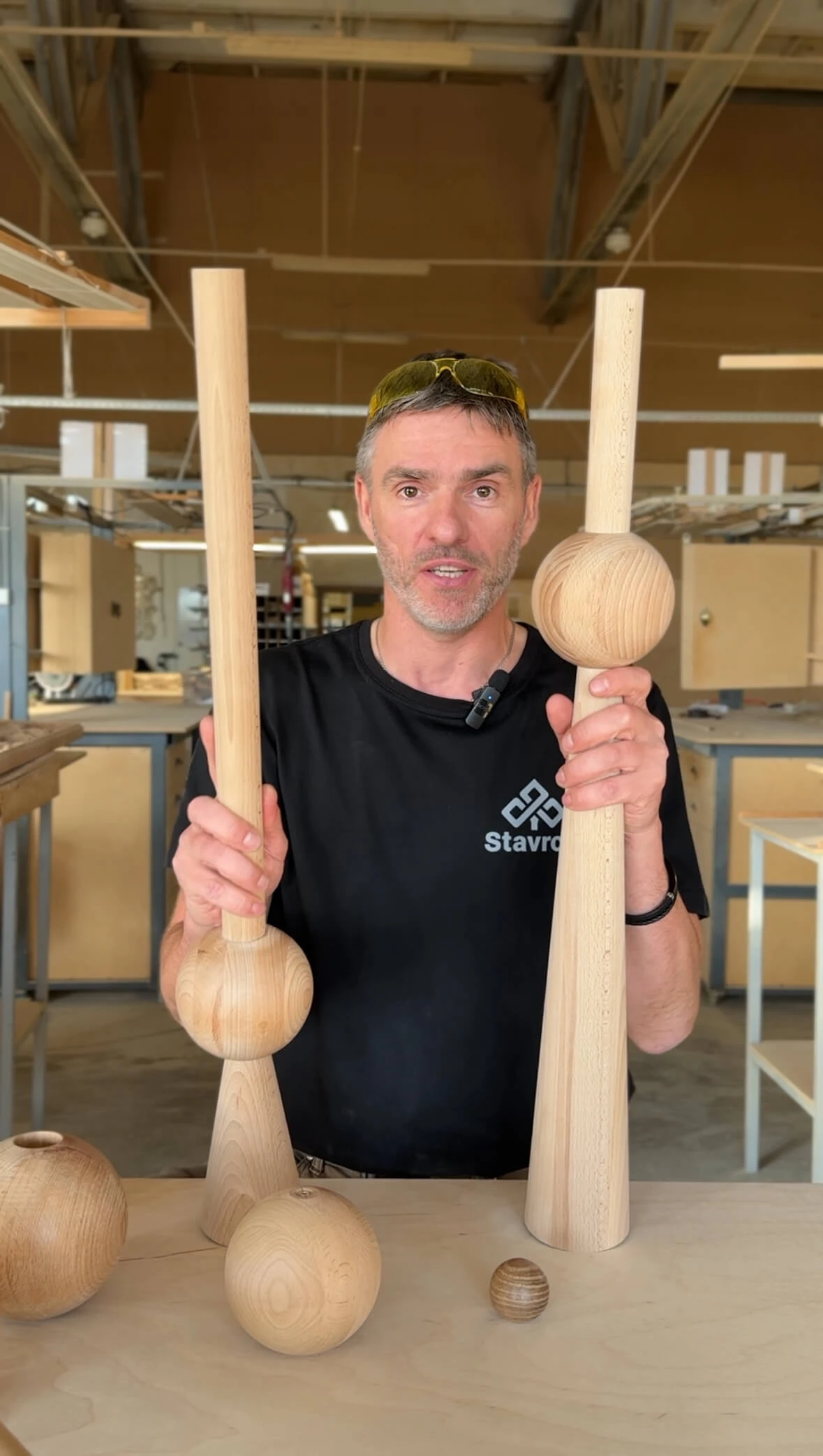

MDF with a decorative 'wood-look' finish
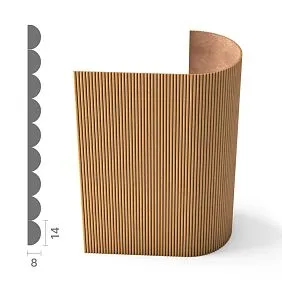
MDF Slatted Wall Panelwith a film or printed coating imitating wood texture is the most common 'wood-look' option on the market. The MDF base is covered with a decorative film featuring a photo-printed natural pattern: oak, walnut, ash, pine, wenge — any species.
What does the buyer get? A geometrically precise slat with a natural 'pattern' on the surface. From a distance of 2–3 meters — a convincing imitation. Up close — a film, a repeating pattern. Without the tactile warmth of solid wood. Without the scent of wood. But — stable, uniform, predictable in behavior.
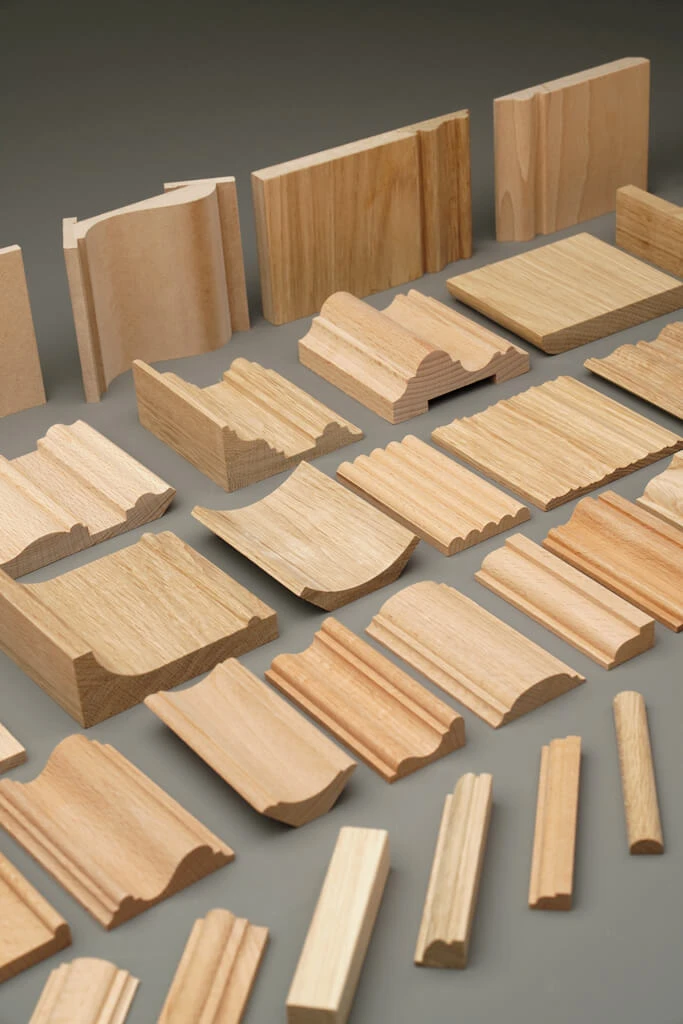
A direct alternative —Wooden slat panelsmade from natural solid wood. Here there is no 'pattern' — there is nature itself: a unique, non-repeating pattern on each slat, a living tactile surface, a changing tone under different lighting angles.
Our factory also produces:


PVC slats with a 'wood-look' finish
PVC slat panels with decorative film are a fully synthetic material imitating wood. Maximally moisture-resistant. For bathrooms, loggias, pool areas — a technically correct choice when a wooden aesthetic is needed in high-humidity conditions.
However, the visual 'deception' of PVC is more obvious than that of high-quality MDF: the film's gloss, rigid form, and synthetic cold tone to the touch. For areas where visual naturalness is needed, and touching the wall is not expected — a workable option.
Get Consultation
WPC: wood-polymer composite
Slatted panels made of WPC (wood-polymer composite) are a mixture of wood flour (40–70%) and polymer binder. Externally — natural tone and texture close to wood. In terms of properties — more resistant to moisture and mechanical loads than pure wood.
WPC slats are an intermediate option between natural wood and fully synthetic panels. A natural component is present, but in a 'diluted' form. Used primarily for exterior applications —Slatted Façade Panelsmade of WPC: natural appearance on the outside with high weather resistance.
Natural solid wood with 'under species' tinting
A separate category: natural solid wood of an inexpensive species (pine, birch) with tinting that imitates a more expensive species (oak 'wenge', birch 'under walnut'). This is not 'under wood' — this is wood, but with a color accent on a more expensive species.
Tinted pine or birch — a living natural material with a real wood grain pattern, but in the tone of oak or walnut. For most residential interiors — an excellent balance of price and naturalness. The natural grain of pine with 'tobacco' tinting looks rich and warm.
Why 'under wood' is not equal to 'instead of wood': the fundamental difference
Before making a final decision, it's worth honestly answering the question: what fundamentally differsWood-look slatted panelHow does it differ from real wooden slatted panels? Not technically, but sensually and visually.
Living pattern vs. repeatable pattern. Each natural oak slat has a unique grain pattern—no two are alike. A wall of 60 oak slats is 60 unique natural 'paintings' forming a single harmonious field. A wall of 60 MDF slats with an 'oak-look' finish is the same pattern repeated 60 times. An experienced eye notices the difference immediately.
Tactility. Natural wood feels warm to the touch, slightly rough with an oil finish, with the natural microtexture of the grain. MDF with film is smooth and cold to the touch. This is a difference anyone notices when touching the wall.
Scent. Natural oak or pine slats with an oil finish subtly 'smell like wood'—especially when warmed in summer or under intense lighting. This scent cannot be artificially reproduced. It's biophilia in the most literal sense.
Aging over time. Natural solid wood 'ages' with dignity: the tone deepens, patina enriches the surface. MDF film may peel at the edges over time, fade from direct sunlight, or scratch.
Price. MDF 'wood-look' is significantly cheaper than natural solid wood. For a limited budget, this is a real argument.
Understanding this difference, you make an informed choice—not buying 'a pig in a poke.'
When MDF wood-look slatted panel is the right choice
There are situations whereslatted MDF panelWith wood imitation — not a compromise, but a professionally justified solution.
Monochromatic color concept with a wood tone
The designer sets the exact color for the entire interior: walls, slats, furniture fronts — all in a unified 'light oak' tone. Natural oak provides a natural pattern, but the color tone is lively, unpredictable, with each slat slightly different. MDF with a 'light oak' film gives an exact, uniform tone across the entire surface — perfect for a monochromatic concept.
High-humidity area (moisture-resistant MDF)
For areas with moderate humidity — kitchen, living area next to the bathroom, enclosed balcony — moisture-resistant MDF (MR MDF) with a 'wood-like' finish is more practical than solid wood. With proper ventilation, it performs without deformation in conditions where standard oak would require additional treatment.
Limited budget while preserving the 'wooden' look
For an accent wall in a rental apartment, for temporary or budget renovations —decorative slatted panelsWood-look MDF provides the 'picture' of a wooden rhythm at significantly lower investment.
Commercial space with high foot traffic
In a restaurant, where walls are subject to mechanical impact and cleaned with detergents — the durable lacquered surface of MDF is more practical than the oil finish of natural oak. Replacing damaged slats is easier and cheaper.
What does a wood-look slatted panel look like in real interiors
Theory is good. But what does it look like in a living space? Let's examine specific visual scenarios.
Living room: MDF 'natural oak' behind the sofa
Living room 24 sq. m, ceiling 2.7 m. Walls — warm white (Farrow & Ball All White). Floor — engineered board 'bleached oak'. Wall behind the sofa — vertical MDF slats with 'natural oak' finish, width 35 mm, gap 18 mm. Height from floor to ceiling.
From a distance from the sofa (3–4 meters) — a convincing image of a wooden slatted wall. Warm golden tone, rhythm of vertical slats, shadows in the gaps. The engineered board on the floor in a similar tone 'echoes' the slatted wall — creating a sense of natural unity.
At close view (50–80 cm) — the decorative pattern 'repeats' every 30–40 cm along the length of the slat. But no one examines the wall closely at 30 centimeters. The image works.
Bedroom: PVC 'pine' in a child's room with wet cleaning
Child's room 14 sq. m. Parents chose the material with the expectation: walls will be rubbed, toys will be dragged along them, washed with chlorine-containing agents during illnesses. Vertical PVC slats with 'light pine' finish, width 25 mm, gap 12 mm.
Practicality: slats are not afraid of moisture, withstand mechanical impacts, are easy to clean. Visually — a light wooden rhythm, a natural image for a child's room. Here, PVC with a wood look is the correct practical solution: natural image + functionality.
Study: tinted pine 'walnut finish'
Home office 12 sq. m. Budget is limited. Decision made: natural pine with 'dark walnut' oil-based stain. Width 30 mm, gap 15 mm. Result: natural pattern of pine slats (with characteristic knots) in a dark brown tone reminiscent of walnut.
Upon close inspection, it's clear it's pine, not walnut: a different grain structure. But the stain creates the desired 'mood' — warm, dark, business-like. Functionally — real wood with a living pattern. Budget-wise — significantly cheaper than oak. This is 'wood-like' in the most honest sense: a different species, the same natural image.
Wood-look wall slat panels: full selection for interior styles
Wall finishing with slatted panels'Wood-look' — different style scenarios. Let's consider specific combinations.
Scandinavian style: whitewashed ash or birch
For a Scandinavian interior — the key image: light wood with a natural pattern. MDF with 'whitewashed oak' or 'Scandinavian birch' decor gives a close image, but natural birch with whitewash oil — true northern naturalness.
Wood-look slatted panelIn the Scandinavian version: thin slats 20–25 mm, gap 12–15 mm, light tone with a barely noticeable natural pattern. White walls around, light floor, minimal decor — a delicate wooden rhythm as the only accent.
Loft: dark oak or MDF 'wenge'
Loft interior requires contrast — warm natural material against concrete or brick. Natural oak in 'tobacco' or 'anthracite' stain — ideal. MDF with 'wenge' decor — visually close result at a lower cost.
For a loft, horizontal orientation of the slats is especially important — 'wooden layers' against brickwork. Slat width 50–60 mm, gap 20–25 mm. From a distance in a spacious loft — the 'wenge-look' imitation works convincingly.
Classic and neoclassic: dark walnut, tobacco oak
For classic interiors with moldings, herringbone parquet, fabric wallpapers — slatted paneling in the lower wall zone (wainscoting), 90–110 cm high. Toning: natural oak "walnut" or "tobacco".
Here solid wood is preferable: in a classic interior where natural materials are used (parquet, fabric, natural stone) — wood imitation on MDF will look like a dissonant note.wooden lath panelsmade of natural oak in such a system — this is the logic of natural materials that requires no justification.
Minimalism: solid-color slats with or without natural grain
For strict minimalism — a monochrome look. Slats matching the wall color (white or light gray), with or without natural grain. MDF for painting to match the walls is the perfect option: the slats "dissolve" into the wall, leaving only geometry. Natural grain is not needed here — purity of lines is required.
If natural grain is still desired in minimalism: natural ash with white oil to match white walls — the fiber pattern is present but barely noticeable, delicate.
Technical parameters of wood-look slatted panels for interior finishing
Moving on to specific numbers — without them any choice remains abstract.
Standard Sizes
| Parameter | Wood-look MDF | Natural solid wood | PVC wood-look |
|---|---|---|---|
| Slat width | 15–100 mm | 20–80 mm | 50–200 mm |
| Thickness | 12–22 mm | 14–25 mm | 8–14 mm |
| Standard length | 2440/2800 mm | 2400/3000 mm | 3000–6000 mm |
| Recommended gap | 12–25 mm | 14–25 mm | 15–30 mm |
Coating: how slats are treated "wood-like"
PVC/melamine film on MDF is the most common decorative coating for wood imitation. Applied in factory conditions. Durable, washable. Limitation: if the edge is damaged - peels off. With prolonged exposure to direct sunlight - fades.
Veneer on MDF is a natural thin wood slice glued onto an MDF base. This is not "wood-like", it's a genuine natural grain pattern on an inert base. Unique fiber pattern + MDF stability. Premium category.
Oil/wax on natural solid wood is an open coating that emphasizes the natural wood grain. The slat "breathes", the natural pattern is maximally visible. Requires maintenance (refresh every 2–3 years). For biophilic interiors - ideal coating.
Matte varnish on natural solid wood is a closed coating. Grain under varnish, surface is more durable, less demanding in maintenance. Less "alive" tactilely compared to oil coating.
Decorative wood-like tints: popular shades
Consider ceiling height, room size, interior style, and functionality.decorative slatted wall panels"wood-like" is one of the main questions: which specific "wood-tone" to choose? Let's examine the most in-demand ones.
Natural oak (light amber)
The most popular shade is warm, golden amber. It evokes naturalness, warmth, and coziness. Suitable for any style: from Scandinavian to classic. Pairs well with neutral white and gray walls, light parquet, and warm beige and cream tones.
On natural oak, this shade is created with a transparent oil finish that preserves the wood's natural color.
Cognac (warm amber with a golden sheen)
Slightly richer than natural. A more 'luxurious,' more 'southern' shade. Pairs well with warm gray, terracotta, and warm white. One of the best tones for cozy living rooms and restaurant interiors.
Tobacco (warm brown of medium saturation)
A classic 'wooden' shade. Evokes traditional furniture, parquet, and library shelves. Versatile for classic and neoclassical interiors. On natural oak, it is created with a tinted oil composition.
Walnut (medium-dark brown)
A more restrained, 'masculine' shade. For offices, meeting rooms, and business spaces. On oak slats, the 'walnut' tint produces a rich brown-chocolate tone with a natural grain.
Anthracite (dark gray with a warm undertone)
A modern 'graphic' tone. Between black and gray. For contemporary minimalist and loft interiors. On natural oak with an 'anthracite' tint—the wood grain is barely visible through the dark tone, but the tactile feel and natural quality are present. This particular tone creates the most 'designer' look among all wood finishes.
Whitewashed/Scandinavian (light, almost white)
A whitewashed tone on natural solid wood is not 'painting,' but a bleaching oil that lightens the natural tone while preserving the wood grain. The result: a natural pattern in a soft, whitish tone. Soft, Scandinavian, Nordic. For light minimalist interiors—it's the perfect natural accent.
Wood-look slatted panel for the ceiling: when imitation is especially convincing
On the ceiling, a wood-look slatted panel works especially effectively—precisely because the ceiling is a surface that isn't touched by hand and is viewed from a distance. When looking up from below at an angle, the MDF film pattern is practically indistinguishable from the natural oak grain.
Batten panels for ceilingswith an 'oak-look' finish—a functional choice where natural solid wood is technically complex or expensive. With integrated LED lighting behind the slats, the effect of a 'glowing wooden ceiling' is created regardless of whether it's real wood or MDF with film.
Important: for ceiling installation of wood-look slatted panels—the slat thickness should be at least 18 mm (MDF) or 16 mm (solid wood) to prevent sagging. For more details on installation requirements, see thestep-by-step guide to installing slatted panels yourself.
Installation of wood-look wall slatted panels: what's important to know
installation of slatted panelswith an 'oak-look' finish made of MDF and PVC has specific characteristics compared to installing natural solid wood.
MDF wood-look: installation features
MDF battens with decorative coating require careful handling of edges. When cutting, the unprotected MDF end is exposed. Open ends on visible cuts (external corners, top and bottom edges) must be either covered with corner profiles or painted with special paint matching the film color.
Tools for cutting wood-look MDF: miter saw with fine-toothed blade. Circular saw - with reverse teeth to prevent film chipping. When using a hand saw - move the saw along the film (not against it).
Storage temperature: not below +5°C. MDF absorbs moisture when frozen, causing film blistering. Acclimatization: 24–48 hours indoors at normal humidity and temperature.
PVC wood-look: installation of lightweight material
PVC battens are lightweight - less mounting adhesive needed than for MDF or solid wood. Fastening: liquid nails (neutral, solvent-free - solvent damages PVC) + clips. PVC has higher thermal expansion than wood and MDF - leave thermal gaps at ends (3–5 mm).
PVC cutting: utility knife or metal saw. Ends after cutting are smooth, without burrs.
Key requirementsfastening batten panels
-
Wall - dry, level (deviation no more than 3 mm over 2 m)
-
First slat — strictly aligned with the laser level
-
Gap template — metal spacer of required thickness
-
Bottom mounting gap — 8–10 mm, covered by baseboard
-
Top mounting gap — 8–10 mm, covered by cornice
Wood-look slat field finishing system
A wood-look slat wall without proper perimeter finishing is an incomplete image. A professional result requires a complete system.
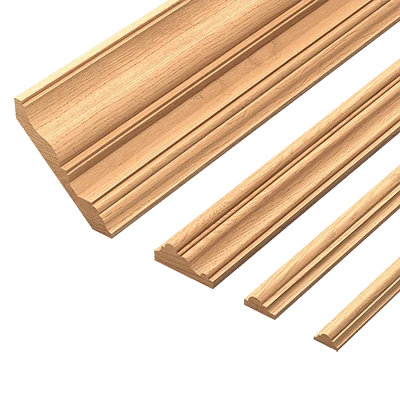
Cornice at the top of the slat field.a polyurethane corniceIn the tone of the slats (painted the same wood tone or ceiling color) — covers the top end of the slats. With a light cornice: hidden groove for LED strip — light 'flows' down from above along the slats.
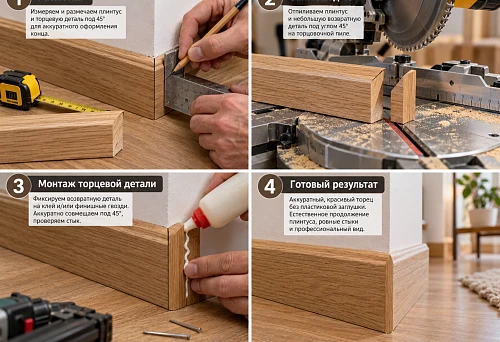
Baseboard.solid wood baseboardIn the tone of the slat panels (wood-look or natural). Natural wood baseboard as bottom finishing even with MDF wood-look slats — adds naturalness to the entire system: real wood at the bottom 'justifies' the imitation at the top.
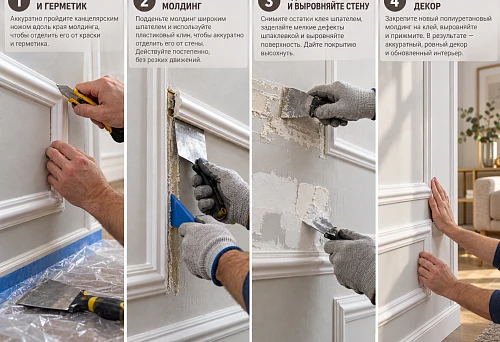
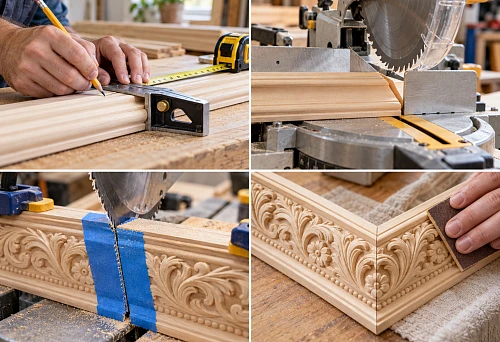
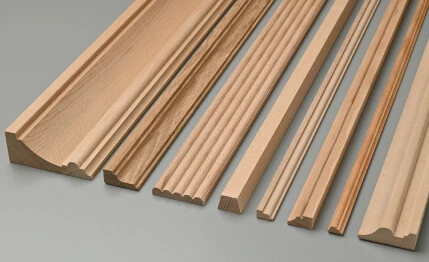
Moldings on horizontal boundaries.Moldings made of polyurethaneIn a two-zone finish (slats below + neutral wall above) — a professional horizontal boundary. Without molding, the two-zone solution looks incomplete.
Corner profiles. For corner transitions — overlay wooden corner profiles matching the slats' tone. They conceal slat ends in corners, creating a clean architectural transition.
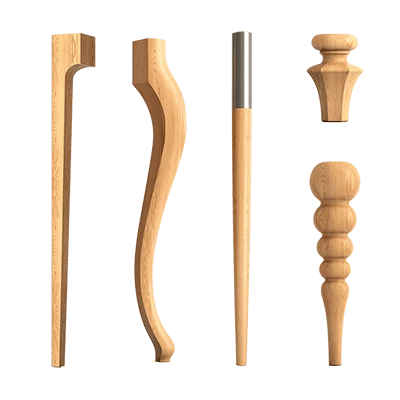
Furniture handles in matching tone.Wooden furniture handlesOn built-in cabinets next to a slatted wall — in the tone of the slats. A detail noticed upon close inspection: the natural system extends from the cabinet to the wall.
Wood-look slatted panel and natural interior: the biophilic principle
The query 'wood-look wall slatted panel' is a query for naturalness. The person wants a natural image in their space. This is not a random desire: it's biophilia — an evolutionarily ingrained need to be among natural materials and forms.
Wall slat panels in interiorMade from natural wood fully satisfy the biophilic request: living natural pattern, tactility, scent, warmth. MDF 'wood-look' — satisfies the visual component of biophilia, but not the tactile or aromatic ones.
If the biophilic principle is important to you — consider a compromise:Wooden slat panelsMade from natural wood only on one accent wall. The remaining walls — neutral. One genuine natural surface is better than three walls of imitation — from a biophilic perspective, this is truthful.
How to avoid mistakes when buying wood-look slatted panels
Practical section for those preparing to place an order.
Request a physical sample. The color on a monitor screen always lies. The same 'natural oak' decor from different manufacturers has different shades. Only a physical sample under the actual lighting of your room gives an accurate idea of the tone.
Check the edge coverage. For MDF slats with film, look at the ends: are they covered with the same decor or left as exposed MDF. Exposed MDF ends are vulnerable to moisture.
Clarify the emission class. MDF for residential premises should be class E1 or E0. A higher formaldehyde emission class (E2) is only for non-residential spaces.
Check the pattern repeat. For MDF with a 'wood-like' film, find out the pattern length (how many centimeters before the pattern repeats). A long pattern (80+ cm) means less noticeable repetition. A short one (20–30 cm) means repetition is noticeable upon close inspection.
Assess compatibility with adjacent natural materials. Wooden floor + MDF 'oak' on the wall — compare tones in the same room. A close but not exact match looks 'cheaper' than a contrasting combination. Either an exact match or a deliberate contrast.
Frequently asked questions
How does an MDF slat panel that looks like wood differ from natural wood to the touch?
Natural oak with an oil finish is warm, slightly rough, with a natural micro-texture. MDF with film is smooth, cool. The difference is obvious to the touch. If tactility is important — only solid natural wood.
Can you paint MDF slats that already have a 'wood-like' decorative finish applied?
Theoretically — yes (acrylic paint over the film with prior priming). Practically — the result is unpredictable: the film may react to the primer solvent. The best option for painting is MDF slats without a decorative finish (primed for painting).
How long do wood-look MDF slat panels last?
With proper installation, normal humidity, and no mechanical damage — 15–20 years. Vulnerable areas: edges from mechanical impacts, areas exposed to direct sunlight (film fading after 5–7 years of intense exposure).
Wood-look slat panels for the bathroom — what material?
For areas with moderate humidity (without direct splashes) — moisture-resistant MDF. For direct contact with moisture — PVC or WPC. Natural solid wood — larch or thermally modified wood with waterproof varnish for areas without direct water contact.
Can wood-look slat panels be installed independently?
For a single straight wall without corner transitions and integrated lighting — yes, with basic construction tools (laser level, miter saw, nail gun or screwdriver). For complex solutions with corner transitions and integrated lighting — professional installation is recommended.Complete guide on how to install slat panels— in the professional guide.
Wood-look slat panel on a wall — how to calculate the quantity?
Wall width ÷ (slat width + gap) = number of slats. Number of slats × height = total linear footage. + 15% reserve. For modular panels: wall area ÷ module area + 15%.
What gap between slats during installation for a 'wood-look'?
Standard for residential spaces: 15–20 mm. For acoustic solutions with sound-absorbing underlay — 18–25 mm. For partitions (openwork effect) — 25–35 mm.
Conclusion
Wood-look slatted wall paneling is a broad topic with many branches. MDF with film, PVC with decor, tinted pine 'walnut finish', thermo-wood 'dark oak finish' — each option has its own applications, advocates, and limitations.
But there is one truth independent of material: the slatted rhythm on a wall is an architectural solution that transforms space. Regardless of whether the slats are made of natural oak or MDF 'oak finish' — the vertical rhythm on the wall, shadows in the gaps, integrated lighting create an image unattainable with wallpaper, paint, or plaster moldings.
Wooden slat panelsmade from solid natural wood,MDF slatted panelswith decor,modular slat wall panelsin ready-made format,Polyurethane Crown Moldingandsolid wood baseboardfor completing the system — all this in the full range of STAVROS company.
STAVROS — production of decorative interior solutions for those who consciously choose a natural aesthetic. Natural solid oak, ash, birch, and pine with professional tinting. A complete slatted finishing system from slat to finishing elements.Wooden furniture handles, Moldingsand solid wood moldings. Professional consultation on material selection, parameters, and tinting — so your wood-look or genuine wood slatted wall looks exactly as you envisioned.