Article Contents:
- First screen: when wide moldings are needed
- How a wide molding differs from a regular one: the essence of the difference
- Thin profile: line
- Wide profile: architecture
- Key parameters that change with width
- Where to use wide moldings: twelve scenarios
- Accent wall in the living room
- Wall behind the sofa
- TV Area
- Door portal
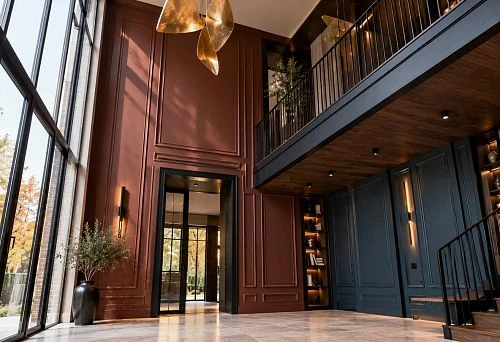
- Entrance Hall and Foyer
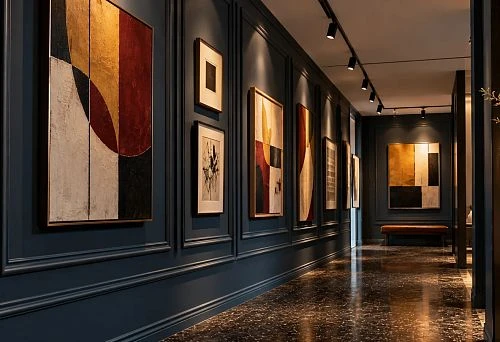
- Corridor with high walls
- Bedroom: headboard as a frame
- Paneled room
- Restaurant and cafe
- Showroom and boutique
- Hall of a country house
- Private house facade
- How to choose profile width: practical rules
- First criterion: ceiling height
- Second criterion: wall length and area
- Third criterion: relief, not just width
- Fourth criterion: furniture scale
- Fifth criterion: interior style
- How to combine wide moldings with other elements
- Molding and baseboard
- Molding and cornice
- Polyurethane molding and ceiling molding
- Polyurethane molding and decor for moldings
- Polyurethane molding and corner moldings
- Polyurethane molding and decorative elements
- Molding and door casings
- Wide molding as part of a system: specific kits
- For a classic living room, ceiling height 3.2 m
- For a modern living room with an accent wall, ceiling height 2.8 m
- For a restaurant, ceiling height 4 m
- For an office with paneling, ceiling height 3.0 m
- What to buy with wide moldings: a commercial checklist
- How to calculate the quantity of wide moldings: a practical algorithm
- Step one: sketch the wall
- Step two: mark the frames
- Step three: calculate the linear footage
- Step four: add a reserve
- Step five: convert to lengths
- Step six: corner inserts
- Painting wide moldings: three approaches
- Matching wall color
- White on a colored wall
- Accent color
- Ten mistakes when buying wide moldings
- Complete combination table: wide molding and adjacent elements
- Frequently Asked Questions
- About the Company STAVROS
There are interiors that simply exist. And there are interiors that speak. The difference is not in the furniture, not in the wall color, and not in an expensive lamp. The difference is in the architectural line. In how the molding holds the wall, how the cornice leads the eye to the ceiling, how a large profile around the portal turns an opening into a statement.
Wide polyurethane moldings — is a tool for exactly that kind of conversation. Not a thin frame "for show", but a full-fledged architectural element that shapes the space, sets the rhythm, and makes the wall not just a flat surface, but a meaningful plane.
Why wide? Because scale matters. On a wall 3 meters high, a molding 20 mm wide will be barely noticeable. It will get lost. But a large profile of 60–80 mm and above will be visible, will be readable, will hold the wall. That is why in expensive residential interiors, in commercial spaces, on the facades of country houses — there is always a large profile.
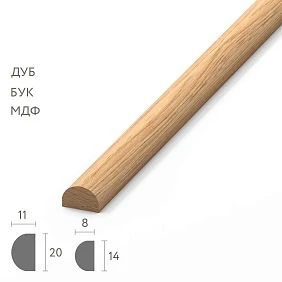
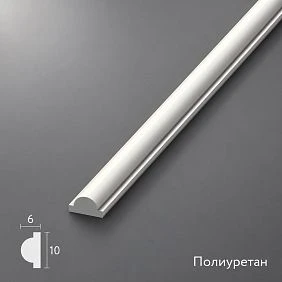
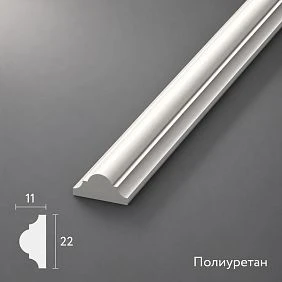
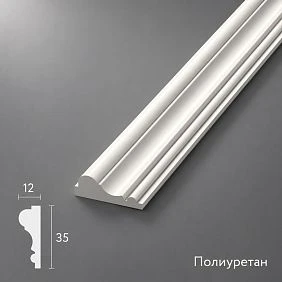
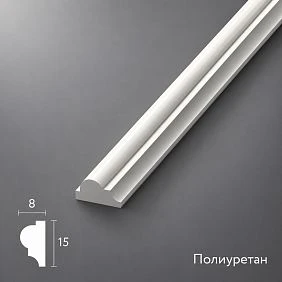
First screen: when wide moldings are needed
Answer without introductions — for those who appreciate specifics.
Buy wide polyurethane moldings is worth it when the task is to create a noticeable architectural effect:
-
High walls — from 2.8 m and above.
-
Accent wall in the living room, behind the sofa or TV.
-
Door or arch portal.
-
Entryway and hall, where first impressions are formed at a glance.
-
Study or library with paneled wall finish.
-
Bedroom — headboard as an architectural niche.
-
Restaurant, showroom, hotel, beauty salon.
-
Country house with large rooms.
A narrow molding is not a solution for all these tasks. It looks like a detail without context. A wide profile is context in itself.




How wide molding differs from regular: the essence of the difference
Many think that wide molding is just 'bigger'. In fact, the difference is deeper: it's a different function, a different visual task, and a different way of working with space.
Our factory also produces:
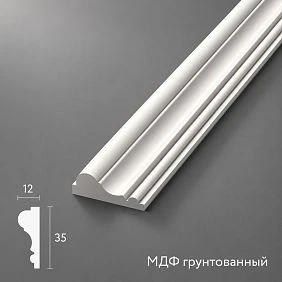
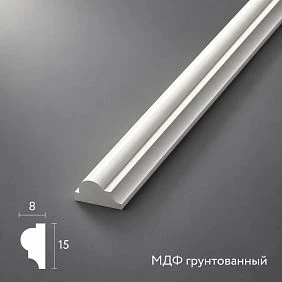
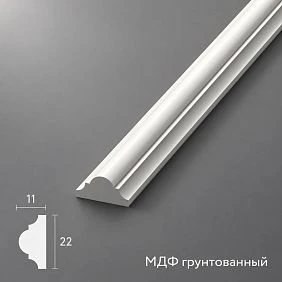


Thin profile: line
A molding 20–35 mm wide is a line. It defines a frame, creates a contour, and makes the wall structured. Its role is a subtle graphic accent. It is suitable in small rooms, in modern interiors with minimalist finishes, where delicacy is needed.
Get Consultation
Wide profile: architecture
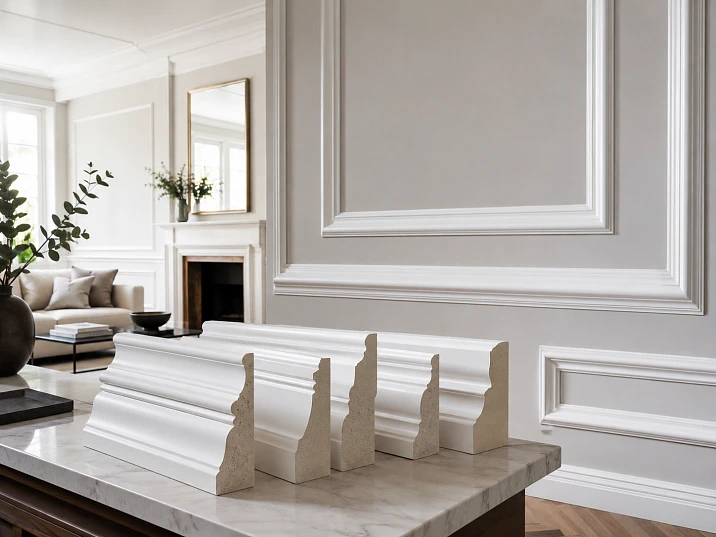
wide polyurethane molding from 50–60 mm wide and above is no longer a line, but an architectural element. It holds the scale of the wall, creates a deep shadow, and sets the proportions of the frame. It is visible. It is noticed. It controls the perception of space.
That is why large polyurethane moldings are chosen for interiors where they want to see not just a "frame on the wall," but real finishing in the architectural sense of the word.
Key parameters that change with width
| Parameter | Narrow (20–35 mm) | Medium (40–55 mm) | Wide (60 mm and above) |
|---|---|---|---|
| Visibility | Delicate | Noticeable | Expressive |
| Shadow from the relief | Minimal | Moderate | Deep |
| Suitable for ceiling | up to 2.7 m | Up to 3.0 m | From 2.8 m and above |
| Commercial interior | Rare | Yes | Yes |
| Classic and neoclassical | Acceptable | Good | Excellent |
| Modern interior | Best choice | Moderately | By calculation |
Where to use wide moldings: twelve scenarios
To avoid guessing — specific points for applying large profile.
Accent Wall in Living Room
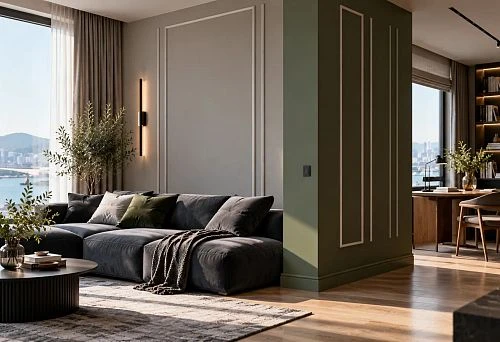
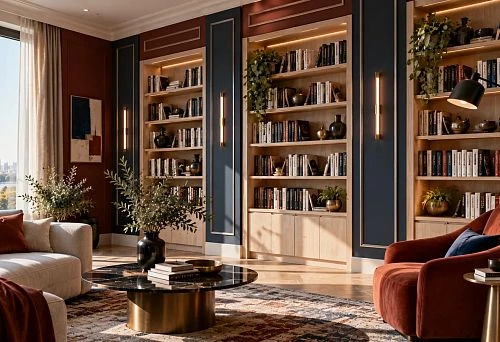
The main wall of the living room — what you look at when entering the room. polyurethane decorative moldings 55–80 mm wide create large panel frames that hold the scale of the wall even at a width of 4–5 m. Inside the frames — Polyurethane wall decor as point accents: a medallion, a cartouche, an insert.
Wall behind the sofa
The horizontal zone behind the sofa is the most readable surface in the living room. One wide frame or a horizontal belt of large molding here looks substantial and complete.
TV area
A TV built into a niche or simply mounted on the wall requires framing. A wide profile around the TV area creates a portal effect and 'integrates' the appliance into the wall architecture.
Door portal
Framing a doorway with a wide profile is a classic technique. Two vertical elements on the sides, one horizontal at the top. polyurethane wall moldings 60–80 mm wide create a portal that is visible from a distance and sets the tone for the entire room beyond it.
Hallway and hall
The first meter of an apartment or house is the most important. In an entryway, even a small one, one wide belt of molding around the perimeter of the walls or a frame system on the end wall changes the entire impression.
A hallway with high walls
A long hallway with a ceiling height of 2.8–3.2 m is one of the most advantageous scenarios for a large profile. A horizontal belt of wide molding at a height of 1.2–1.5 m from the floor makes the hallway look like a gallery.
Bedroom: headboard as a frame
A wide frame of large profile around the bed headboard — instead of a padded headboard or in addition to it. Especially expressive when the frame is painted in the wall color: the relief is read only by light and shadow.
Paneled office
Library, office, executive office — spaces where paneling from of polyurethane moldings is perceived as a sign of seriousness and solidity. High frames from baseboard to ceiling, wide profile — this is an "English library" without a single wooden panel.
Restaurant and cafe
In commercial interiors, the scale is always larger than in residential ones. Restaurant walls with a height of 3.5–4 m require a profile of 70–100 mm and above. Buy decorative polyurethane moldings for a restaurant means choosing a large profile with rich relief.
Showroom and boutique
In a store or showroom, molding works as a branding element. A large frame around a display window or shelf is a visual highlight of the zone. The buyer focuses exactly there.
Hall of a country house
A country house with large rooms, high ceilings, and spacious walls is an ideal place for wide molding. A profile of 80–120 mm holds the scale of double-height living rooms and halls with ceiling heights of 4–5 m.
Facade of a private house
Polyurethane wall profile works on the outside as well. Platbands, belt moldings of the facade, window frame trims — a large profile is mandatory here, because on the facade a small cross-section gets lost in the scale of the building.
How to choose the width of the profile: practical rules
Here is the main fear of a buyer of a wide molding: "Will I overdo it?" Let's break it down by criteria.
Criterion one: ceiling height
This is the basic parameter. The higher the ceiling, the wider the molding can be.
-
Ceiling 2.5–2.7 m — molding 30–45 mm.
-
Ceiling 2.8–3.0 m — molding 45–65 mm.
-
Ceiling 3.0–3.5 m — molding 60–85 mm.
-
Ceiling above 3.5 m — molding 80–120 mm and more.
This is not a strict rule, but a violation of proportion is the main reason why a wide molding sometimes looks out of place.
Criterion two: wall length and area
A long wall (from 4 m) requires a large profile, otherwise the frame looks fragile. A narrow wall (2–2.5 m) is better with a moderate width.
Rule: the frame should be proportional to the plane it is set into. A wide molding on a small wall is like a large painting in a tight alcove.
Criterion three: relief, not just width
Width is not the only parameter. Wide polyurethane profile can be either with active relief (fluting, leaves, ornament) or with a smooth cross-section. For a modern interior, a wide but smooth profile is better — it provides an architectural line without stucco overload.
Criterion four: furniture scale
If the living room has a 2.5 m sofa and a 2.2 m table, a 40 mm molding will be weaker than them. The furniture will "overwhelm" the decor. A 60–70 mm profile creates the necessary visual balance.
Fifth criterion: interior style
-
Classic, neoclassical, art deco — a wide profile with pronounced relief.
-
Modern interior, Scandinavian style — wide but smooth or minimally profiled.
-
Minimalism — the boundary: the molding here is either very delicate or deliberately enlarged as the only architectural accent.
How to combine wide moldings with other elements
A wide molding works in a system. Buying only the profile and thinking the task is done means missing the most important thing.
Molding and baseboard
Decorative polyurethane baseboard must be proportionate to the molding. A large molding (60–80 mm) + a thin baseboard (40 mm) — a dissonance. Rule: the height of the baseboard should be comparable to the width of the molding or slightly larger. A frame made of wide molding starts from the baseboard and ends at the cornice — this is a unified architectural system.
Molding and cornice
The upper boundary of the wall — the cornice — should be of the same scale as the molding on the wall. If the frames are made of a wide profile of 65 mm and the cornice is 50 mm — the cornice looks "weaker" than the frame and loses its role as the main top line. The cornice should be larger than or equal in width to the molding.
Molding and Ceiling molding made of polyurethane
If there is an additional decorative profile on the ceiling — for example, frames on the ceiling plane or coffered elements — they should be in the same style line as the wall moldings. Ceiling molding made of polyurethane and the wall profile is a single system, not two different solutions on one wall.
Molding and Decor for polyurethane moldings
Corner inserts, linear accents, "knots" in the corners of the frame — these are Decor for Molding, which turns a simple frame into a rich architectural system. For a wide profile, corner inserts should be proportionate: a too-small corner insert on a wide molding looks lost.
Molding and Polyurethane corner moldings
Ready-made corner elements are an alternative to 45° miter cutting. Especially convenient for wide profiles: precise cutting of a large molding on a miter box requires care, and a ready-made corner molding made of polyurethane is installed without complex cutting and provides a clear corner even on uneven walls.
Molding and decorative polyurethane elements
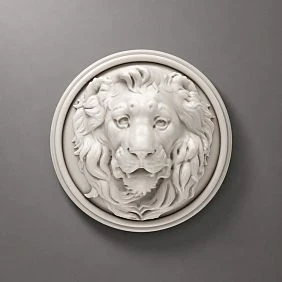
Inside a frame made of wide molding — point decorative accents. A medallion in the center of the horizontal side, a cartouche in the upper part of the frame, an ornamental insert. molded decoration made of polyurethane as the filling of the system — this is the difference between "just a frame" and an "architectural composition."
Molding and door casings
In a systematic interior, door casings should be of the same profile and width as the moldings on the walls. Otherwise, the door "falls out" of the overall rhythm. A wide wall molding logically continues the wide casing of the door portal.
Wide molding as part of the system: specific sets
For a classic living room, ceiling height 3.2 m
-
Wide molding — 70–80 mm, with leaf or ionic relief.
-
Cornice 140–160 mm.
-
Baseboard 120–140 mm.
-
Decor for Molding — corner inserts, proportionate to the profile.
-
Decorative Inserts — medallions in the center of horizontals.
-
Paint: white.
For a modern living room with an accent wall, ceiling height 2.8 m
-
Wide smooth molding 55–65 mm.
-
Cornice 100–120 mm.
-
Baseboard 100 mm.
-
Corner moldings — without additional inserts.
-
Painting: to match the walls.
For a restaurant, ceiling height 4 m
-
large polyurethane moldings — 90–120 mm with rich relief.
-
Cornice 180–200 mm.
-
Baseboard 150–180 mm.
-
Polyurethane wall decor — high reliefs and medallions on accent walls.
-
Painting: white + accent color on walls beyond the frames.
For a study with paneling, ceiling height 3.0 m
-
Wide molding 60–75 mm — vertical and horizontal strips forming tall rectangular panels.
-
Cornice 120 mm.
-
Polyurethane trim — horizontal belt at mid-wall.
-
Baseboard 120–140 mm.
-
Painting: dark wall tone, white molding — or all dark.
What to buy with wide moldings: commercial checklist
Wide profile is just the beginning. Complete kit for installation and finishing:
Decor:
-
wide polyurethane molding — required quantity + 12–15% spare.
-
Decor for Molding — corner inserts per number of corners.
-
Polyurethane decorative appliques — by the number of accent points.
-
Cornice — if needed.
-
Baseboard — if needed.
Mounting materials:
-
Specialized adhesive for polyurethane. About the choice — in the article what to glue polyurethane molding with.
-
Acrylic sealant — 1–2 tubes per room.
-
Acrylic primer.
-
Paint.
Tools:
-
Level.
-
Miter box with angle lock.
-
Fine-tooth hacksaw or miter saw.
-
Painter's tape.
-
Glue and sealant gun.
About the complete installation process — in the article installing polyurethane molding.
How to calculate the number of wide moldings: a practical algorithm
Step one: sketch the wall
A wall sketch with dimensions — width, height, position of doors and windows. This will take five minutes and save an hour of mistakes.
Step two: mark the frames
Determine the number of frames, their sizes and placement. Standard principle: frames should be proportionate to the wall and identical in proportions. Discrepancy in the sizes of adjacent frames is obvious.
Step three: calculate the linear footage
For each frame: (width × 2) + (height × 2) = perimeter. Sum the perimeters of all frames. Add separate horizontal and vertical lines (belts, portals).
Step four: add a margin
For large profiles — a margin of 12–15%. A wide molding when cut at 45° loses a larger piece than a narrow one. For every 10 m of linear footage — 1.5–2 m of margin.
Step five: recalculate into strips
Divide the total linear footage by the length of one strip (usually 1 or 2 m). Round up.
Step six: corner inserts
Based on the number of corners: 4 inserts per frame. Reserve — 2–4 inserts per object.
Painting wide moldings: three approaches
Painting is the final stage that determines 80% of the visual result. For a wide profile, choosing the painting method is especially important: a large relief amplifies any mistake.
In the same tone as walls
The most elegant approach for an expensive interior. The molding disappears into the wall surface — but its relief lives through the play of light and shadow. Requires perfectly clean painting without drips or uneven layers.
White on a colored wall
Classic contrast. White molding on a gray, green, blue wall — expressive, theatrical. A wide profile is especially good here: the larger the relief, the richer the contrast.
Accent color
Molding in a color different from the wall — not white, but, for example, gold, beige, dark blue. A non-standard approach that requires design confidence. Works in commercial interiors and eclectic residential ones.
Ten mistakes when buying wide moldings
Not to scare — to warn.
Mistake one: buying a wide molding for a small room without calculation.
In a room of 10 m² with a ceiling of 2.5 m, a 70 mm profile "eats" the wall. Be sure to calculate the proportion.
Mistake two: not considering the ceiling height.
An 80 mm wide profile with a 2.6 m ceiling is architectural overkill. Result: the room visually becomes lower.
Mistake three: not linking the molding with the baseboard and cornice.
A wide molding without a proportionate baseboard and cornice hangs in the air — without a beginning and end of the system.
Mistake four: buying without glue and sealant.
A wide profile is heavier than a thin one. Without proper glue, it will slide before setting. Without sealant along the contour, it will leave a noticeable gap after painting.
Mistake five: not buying a reserve.
A wide molding loses more material when trimmed than a narrow one. A 15% allowance is mandatory.
Mistake six: mixing different styles.
A large profile with leaves in the Baroque style + a corner insert in a geometric style = a style conflict that is immediately visible.
Mistake seven: choosing too active a relief for a modern interior.
An ornamental profile with flutes and volutes in a minimalist white apartment is like a tailcoat on the beach. For a modern interior, a wide but smooth profile is better.
Mistake eight: not checking the profile depth (projection from the wall).
A wide molding with a large projection on a wall with a switch or socket nearby creates a conflict. Check that the profile projection does not overlap functional wall elements.
Mistake nine: not accounting for corner installation with complex geometry.
For non-standard walls with obtuse or acute angles, standard 45° trimming won't work. Need Polyurethane corner moldings or non-standard trimming with an angle finder.
Mistake ten: forgetting to paint hard-to-reach areas before installation.
Corner zones, ceiling junctions — after installation, they are harder to paint evenly. In some cases, it is better to apply the first coat of paint before installation.
Complete combination table: wide molding and adjacent elements
| Situation | Molding | Crown Molding | Skirting board | Additional decor |
|---|---|---|---|---|
| Classic living room, 3.2 m | 70–80 mm | 150–160 mm | 130 мм | Medallions, corner inserts |
| Modern living room, 2.8 m | 55–65 mm | 100–120 mm | 100 мм | Corner inserts |
| Study, 3.0 m | 60–75 mm | 120–130 mm | 120 мм | Belt at mid-wall |
| Restaurant, 4.0 m | 90–120 mm | 180–200 mm | 160 мм | High reliefs, medallions |
| Hallway, 2.7 m | 50–60 mm | 90–100 mm | 90 мм | Corner inserts |
| Country house, 3.5 m | 80–100 mm | 160–180 mm | 140 мм | Overlays, belts |
Frequently asked questions
When should you buy wide polyurethane moldings?
When a noticeable architectural line is needed: large frames on walls, door portal, accent wall, TV zone, hall with high ceilings, or commercial interior.
Is a wide molding suitable for a small room?
Not always. In small spaces, it's important to maintain proportion: ceiling height, wall length, and profile width should be balanced. In a small room, a moderate width of 40–50 mm is better.
What to buy together with wide moldings?
Glue for polyurethane, acrylic sealant, primer, paint, spare profile, Decor for Molding (corner inserts), cornice and baseboard in the same style line.
Can wide moldings be painted the color of the wall?
Yes — and this is one of the best options for an expensive, calm interior. The relief of a large profile works only with light and shadow, creating a deep architectural effect without color contrast.
How are wide moldings better than narrow ones?
They hold the scale of a large wall, create a deep shadow from the relief, and make the interior truly architectural. A narrow profile on a tall, wide wall gets lost — a wide one manages the space.
Is special glue needed for wide moldings?
Yes. A wide and heavier profile requires glue with good initial adhesion. More details in the article what to glue polyurethane molding with.
How to buy wide polyurethane moldings online?
Select a profile in the catalog of polyurethane moldings, check the dimensions according to the profile diagram, calculate the quantity based on the perimeter of the frames with a margin of 12–15%, add compatible elements and consumables.
About the company STAVROS
STAVROS — manufacturer and supplier of professional polyurethane molding decoration for residential interiors, commercial spaces, and facades. The STAVROS catalog features a complete system of architectural decor: wide and standard polyurethane moldings, Ceiling moldings, Decor for Molding, corner elements, Decorative Inserts, Wall Decor и Trim.
STAVROS works with professional designers, construction companies, and private buyers across Russia. Consultations on kit selection, quantity calculation, and installation recommendations are all part of working with each order. For those who want not just decor, but architecture — STAVROS offers a system, not a separate element.