




























































Article Contents:
- Why a regular corner ruins the impression of a beautiful shelf
- Three scenarios where the corner works against you
- What is a carved bracket and how is it different from simple hardware
- What makes a bracket carved and decorative
- Architectural bracket vs furniture bracket
- Where to use a carved bracket: a complete overview of scenarios
- Open shelves in the kitchen
- Bookshelves and bookcases in the study
- Hallway shelves
- Decorative Niches
- Furniture consoles
- Portals and arched openings
- Wooden curtain rods
- Open shelving in the living room and library
- Carved shelf bracket: when it's better than a regular angle bracket
- Bracket as part of an interior composition
- Angle bracket for a shelf: when shape matters
- Wall-mounted shelf bracket: fastening and decor in one
- Wooden or polyurethane bracket: which to choose
- Wooden bracket: warmth, naturalness, furniture character
- Polyurethane bracket: architectural scale and durability
- Comparison table: wood vs polyurethane
- How to choose the size and shape of a carved bracket
- Bracket depth and shelf depth
- Bracket height and shelf thickness
- Distance between brackets
- Carving shape: how to match the style
- Symmetry is a must
- Mistakes when choosing a decorative bracket
- Too small bracket under a massive shelf
- Random carving style in a mismatched interior
- Metal bracket next to a wooden support
- One bracket where two are needed
- Plastic decorative bracket in an interior with natural materials
- Installation without considering the wall material
- Forgetting the finish coating
- What to pair carved brackets with in an interior
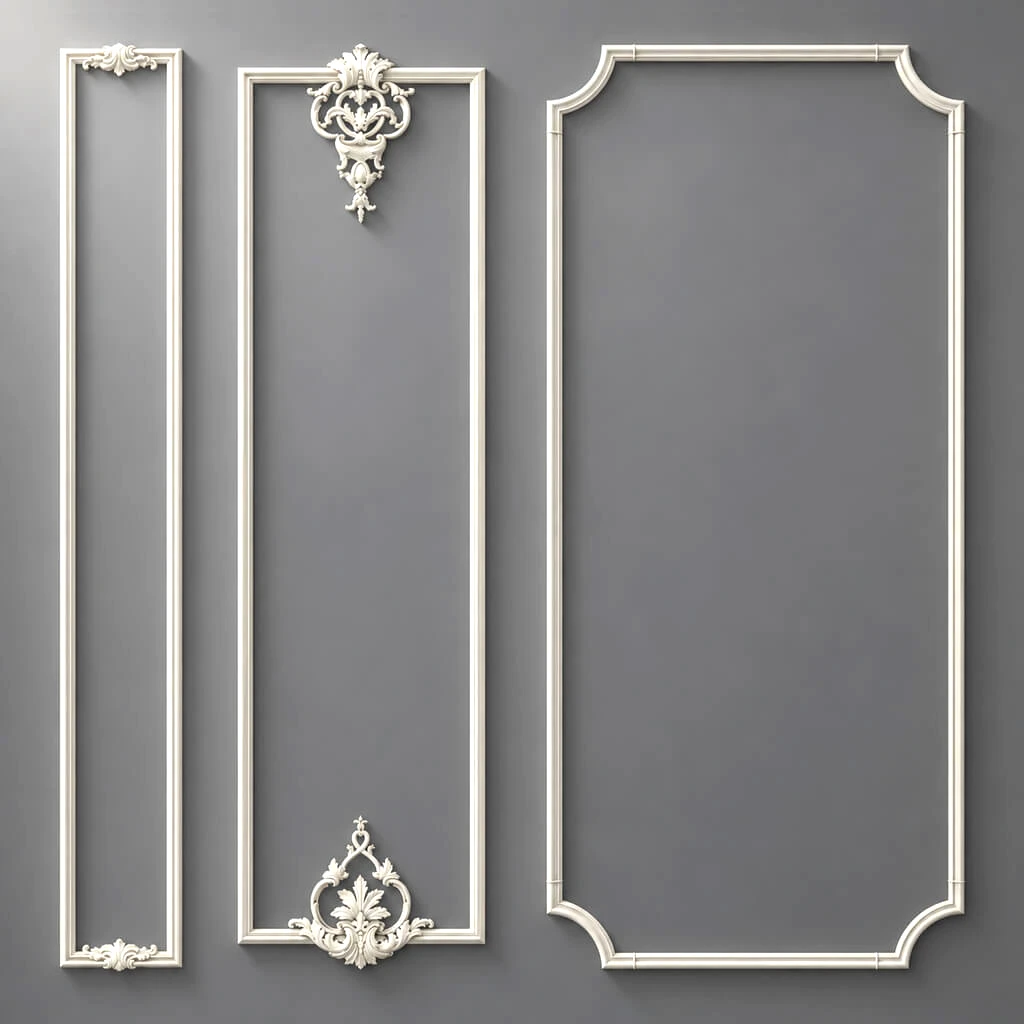
- Bracket and wooden molding
- Bracket and moldings
- Bracket and carved decor
- Bracket and furniture
- Bracket and polyurethane products
- Wooden bracket in different interior styles: specific examples
- Classic and neoclassic
- Provence and shabby chic
- Country and rustic
- Modern classicism
- Loft and Industrial Style
- Where and how to buy a carved shelf bracket
- What to check before ordering
- FAQ: answers to popular questions about carved brackets
- How is a carved bracket different from a regular shelf angle?
- Can a wooden bracket be used for a wall shelf?
- What is better for a classic interior: a metal angle or a carved bracket?
- Is a decorative bracket suitable for furniture?
- Can a wooden bracket be painted?
- How is a wooden bracket different from a polyurethane one?
- How many brackets are needed for a shelf?
- About the Company STAVROS
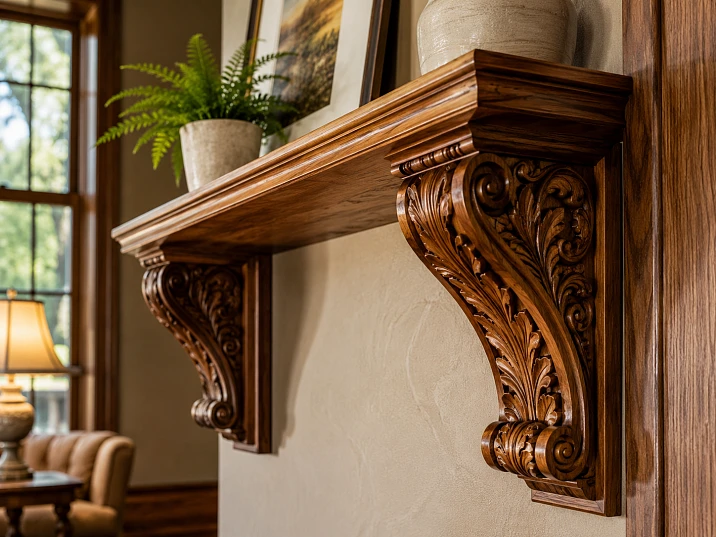
Imagine: in a room, an expensive wooden shelf made of solid oak, on it — books in leather bindings, a small sculpture, candles. The interior is thought out, everything is in its place. And suddenly — two metal stamped angles under the shelf. Silver. Bolts outward. This ruins everything. One technical detail nullifies hours of the designer's work and thousands of rubles invested in materials.
This is not an exaggeration — it's a law of perception. The gaze of a person entering a room instantly catches inconsistencies. Beautiful wood and cheap metal fasteners are an inconsistency that is impossible to ignore.
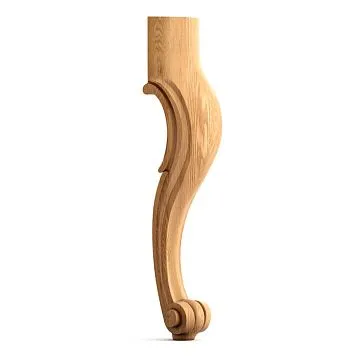
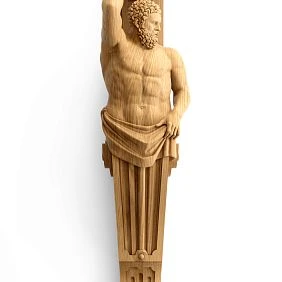
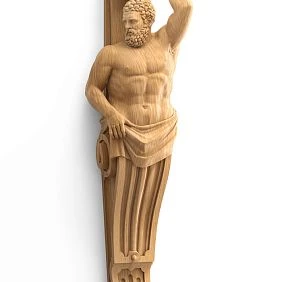
This is exactly where it appears carved bracket — not as a fastener, but as a decorative support. A detail that does not hide, but works for the interior. An element that itself is part of an architectural or furniture composition.
This article covers everything you need to know about how to choose, where to apply, and how to properly combine decorative brackets with wood, trim, moldings, and furniture.
Why an ordinary bracket ruins the impression of a beautiful shelf
The question sounds provocative — but it's honest. Why do we so carefully choose the type of wood for a shelf, think through the thickness, color, finish — and then go to a hardware store for metal brackets costing 40 rubles?
The answer is simple: a metal bracket is perceived as a "fastener" — a hidden, utilitarian detail. But a decorative shelf is not a storage structure; it's an object that should be beautiful. And if the support is visible, it must be part of the image.
Three scenarios where the bracket works against you
An open shelf in the living room. The shelf hangs in plain sight, the supports face the viewer directly. A metal bracket here is a warehouse detail, not an interior one.
A bookshelf with a console. A console in a classic or neoclassical room on metal brackets looks as if it was hung temporarily — "until we come up with something better."
Furniture niche, portal, open shelving. If the decorative niche has built-in lighting, noble materials are used, and the support parts are stamped metal, all the designer's work is devalued by one mismatch.
A simple metal corner bracket is justified where it is hidden: behind a facade, inside a cabinet, under cladding. But where the bracket is visible, it must be decorative.
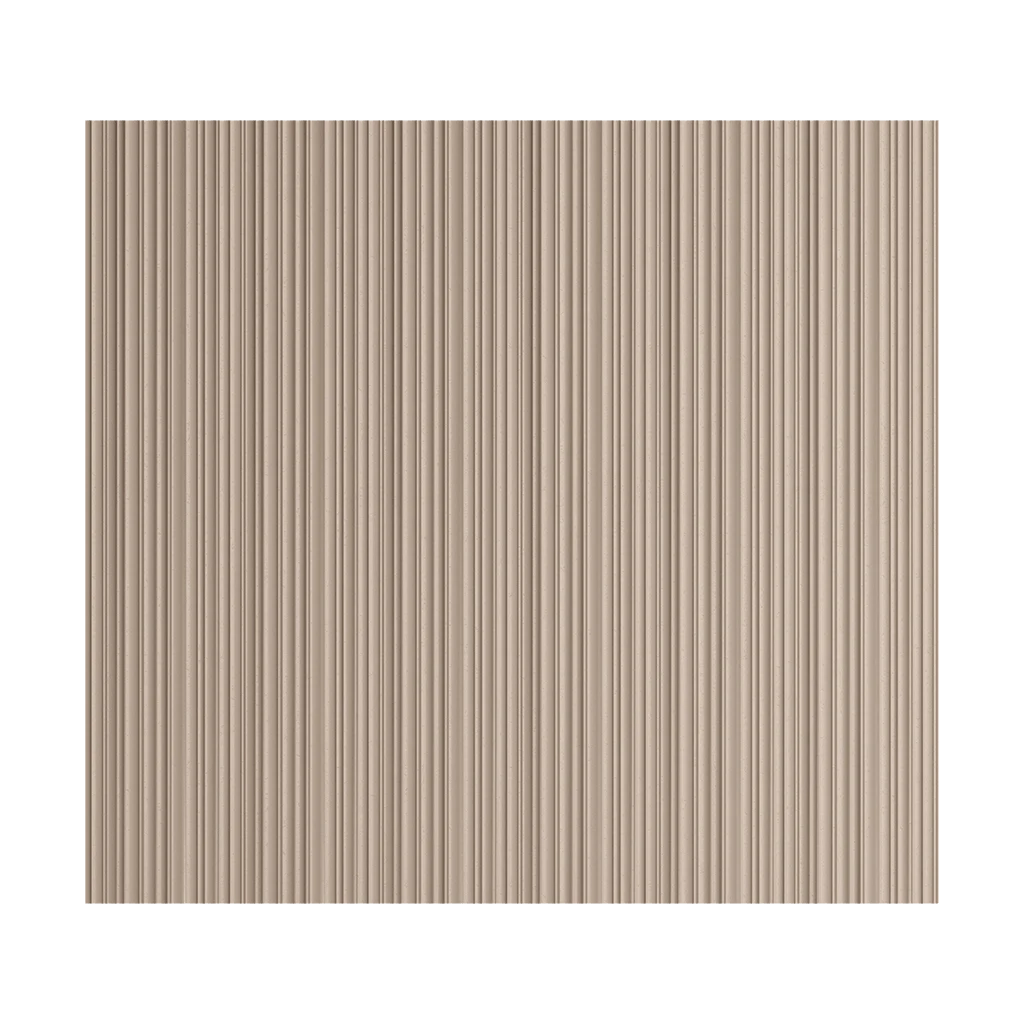
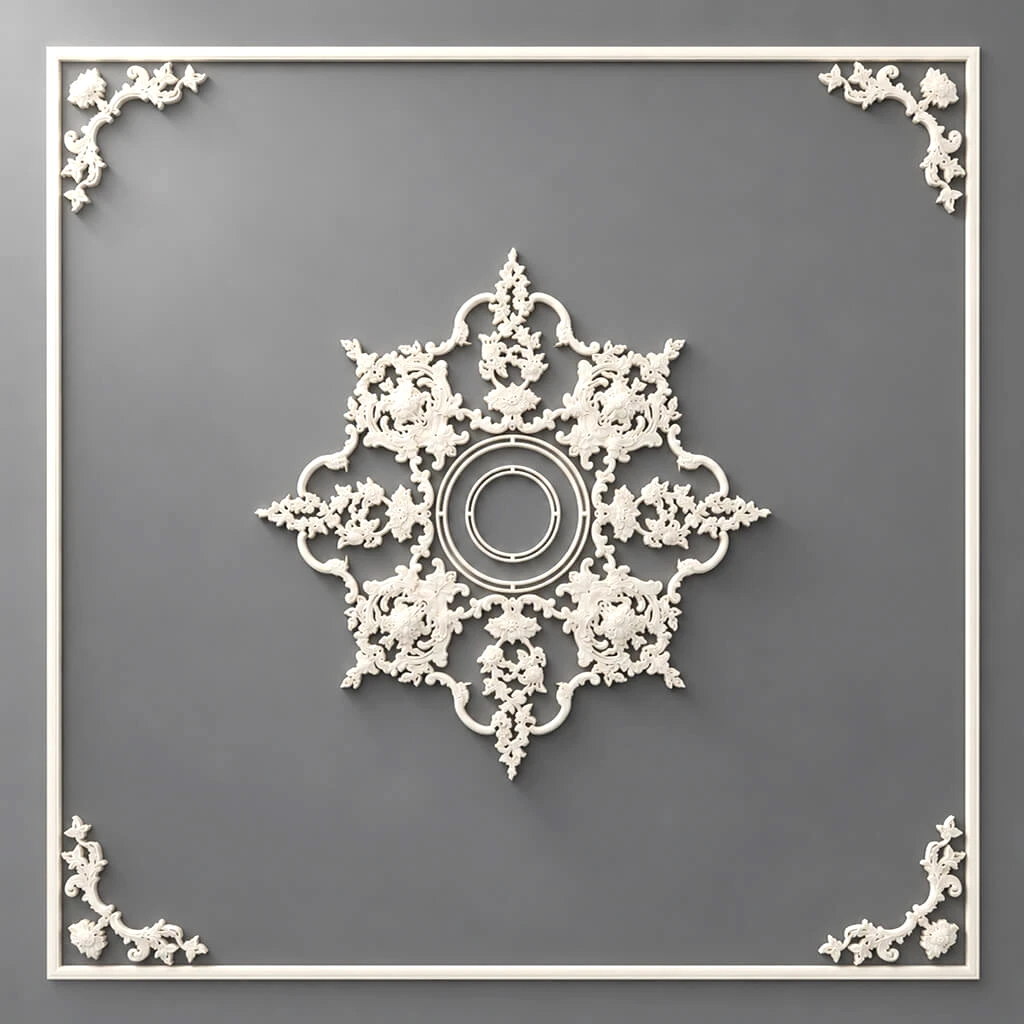
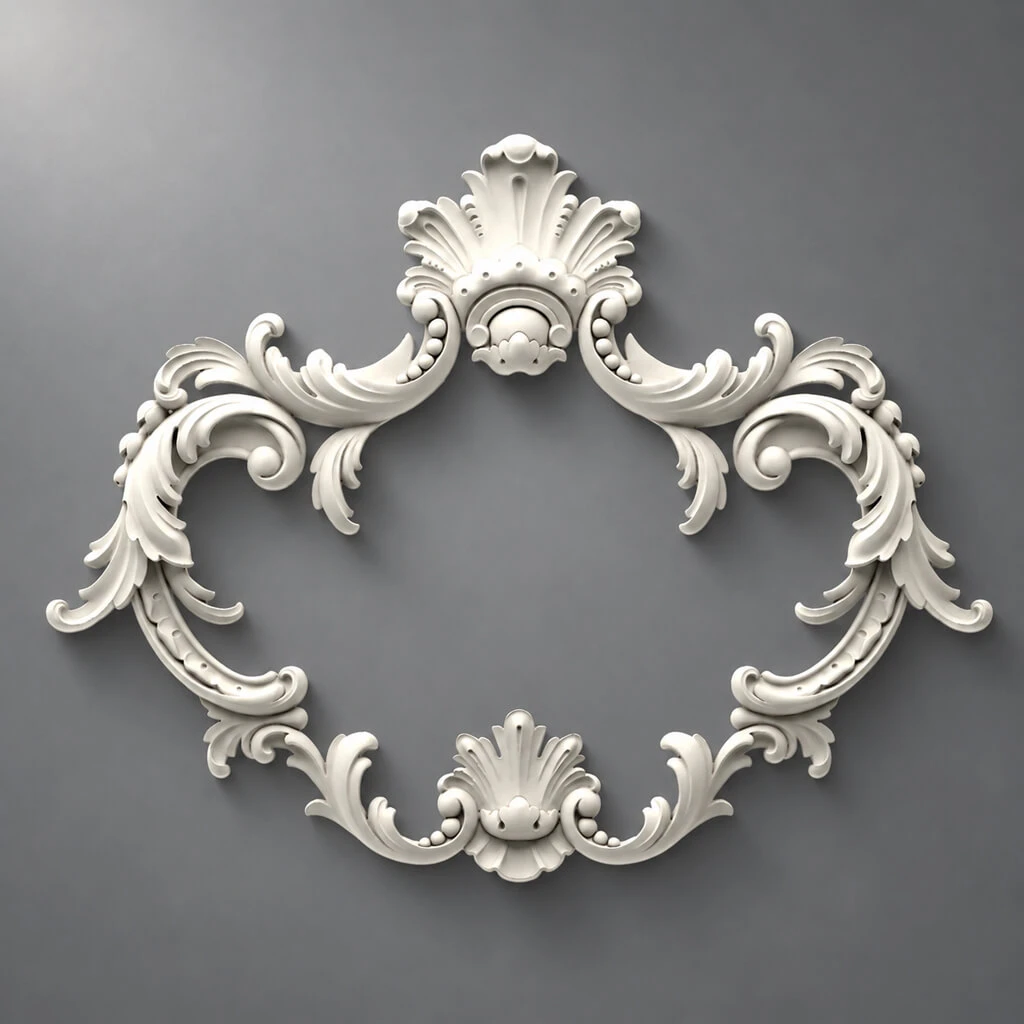
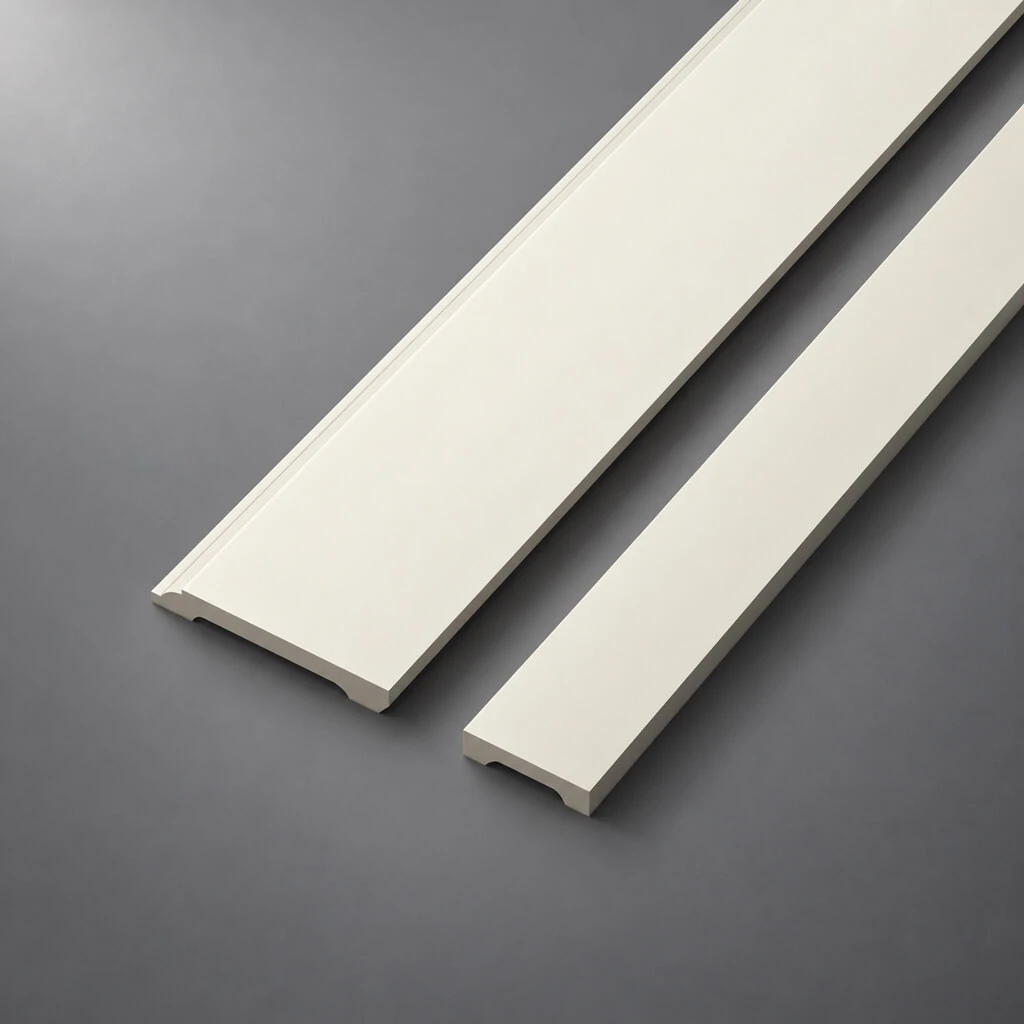
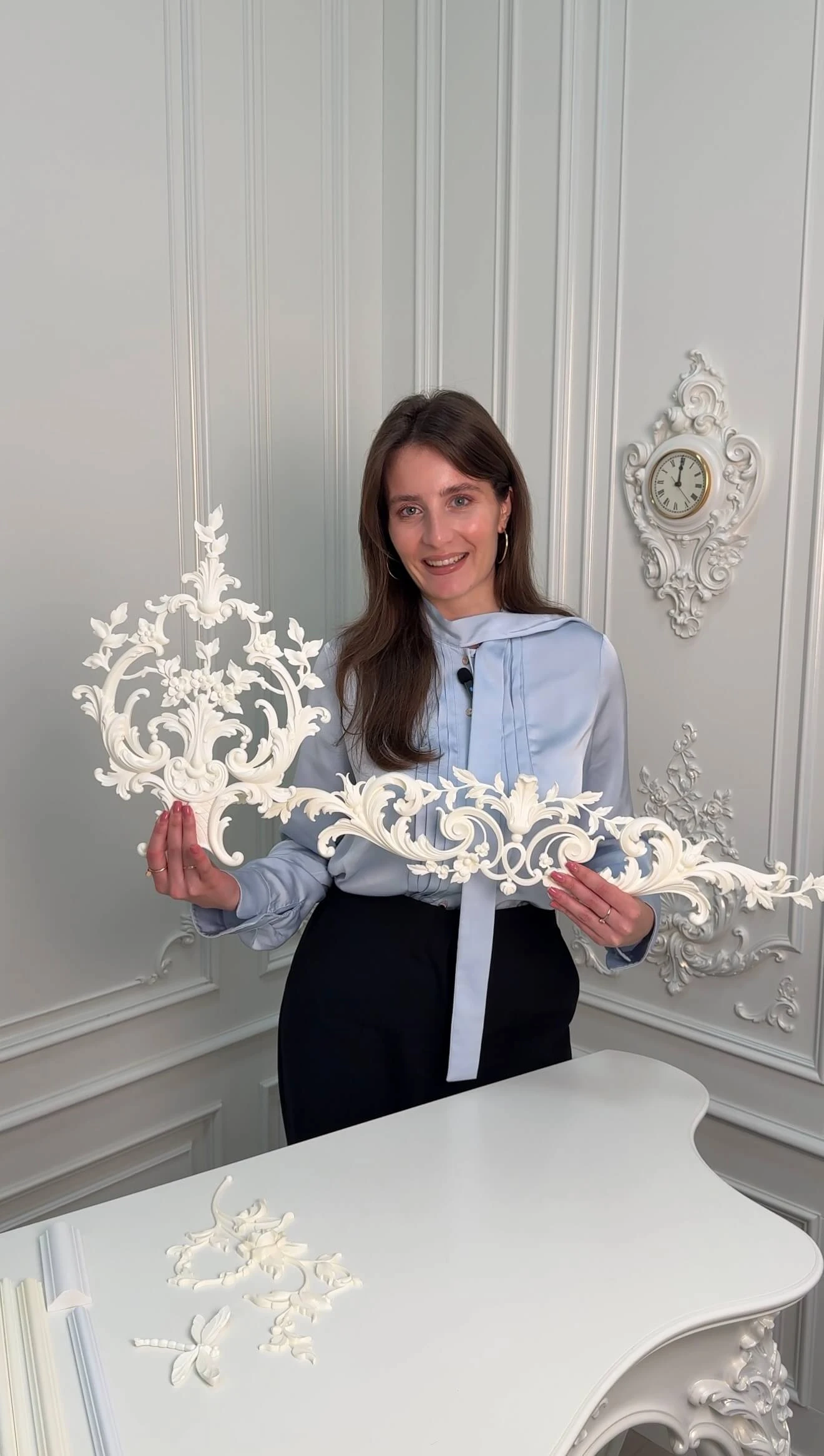
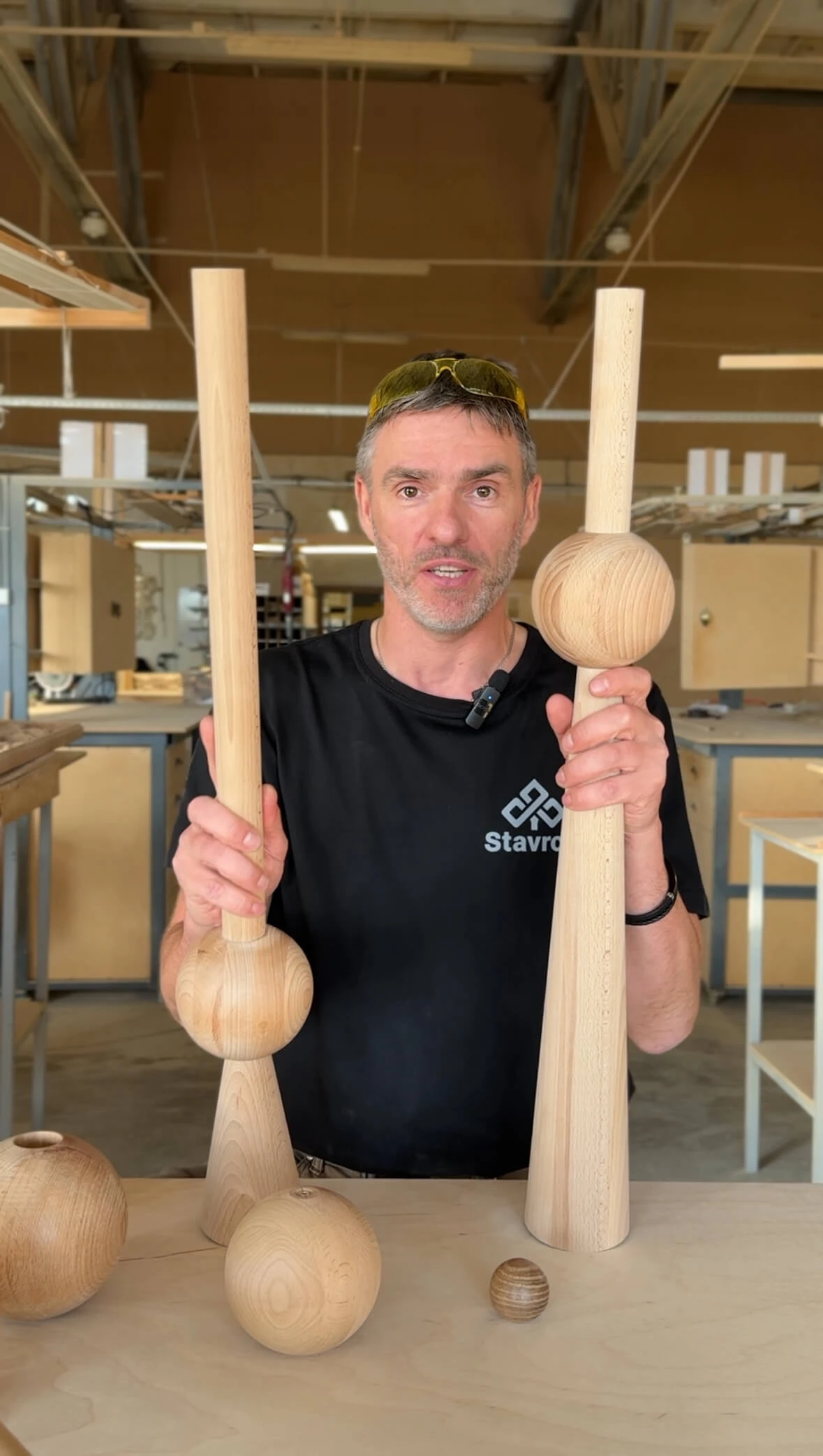
Our factory also produces:
What is a carved bracket and how does it differ from simple hardware
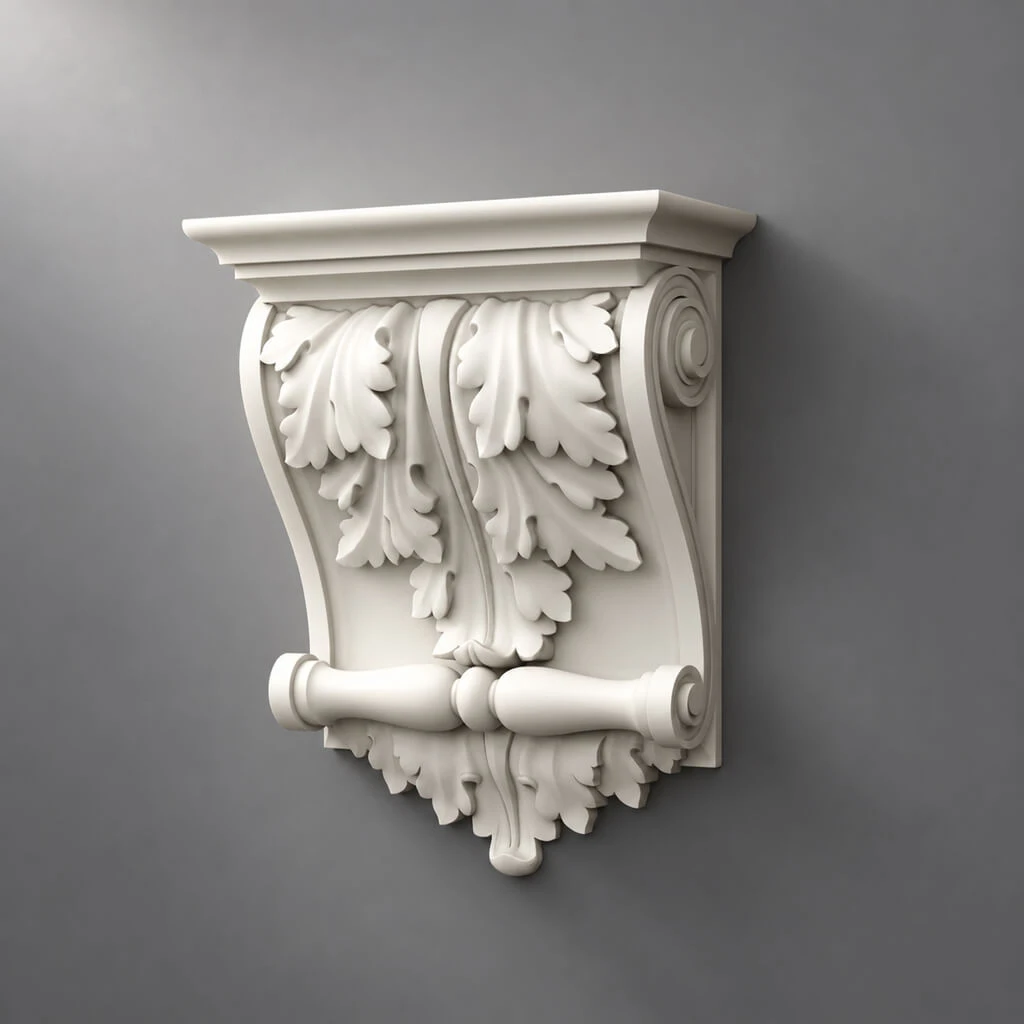
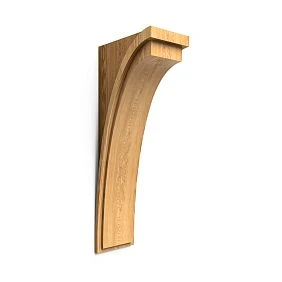
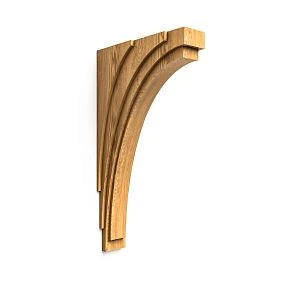
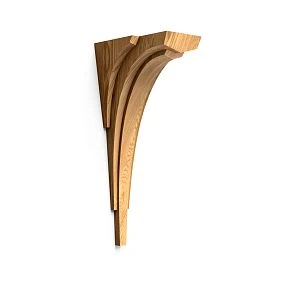
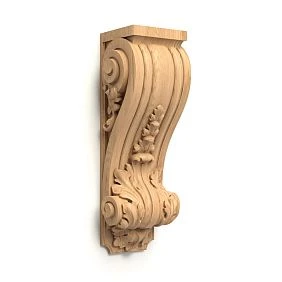
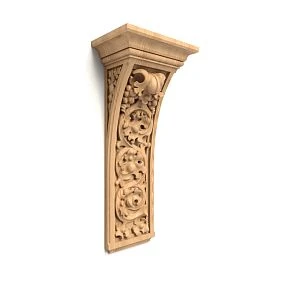
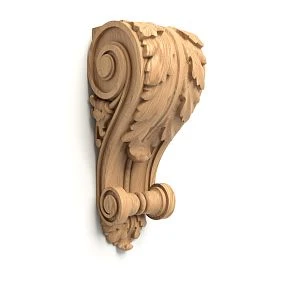
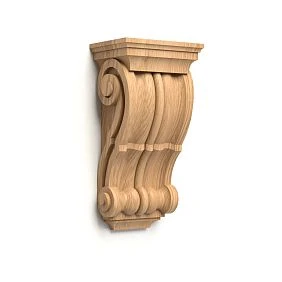
decorative bracket — is an architectural support with a decorative function. In classical architecture, a bracket is an element that supports a cornice, balcony, console, or protruding facade detail. In furniture and interior design, a bracket performs the same role: it supports a shelf, console, or protruding element — and at the same time is itself a decorative object.
The difference between a technical angle bracket and a decorative bracket is like the difference between a nail and a decorative hook. The first is hidden, the second is shown.
Get Consultation
What makes a bracket carved and decorative
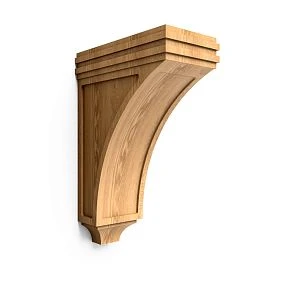
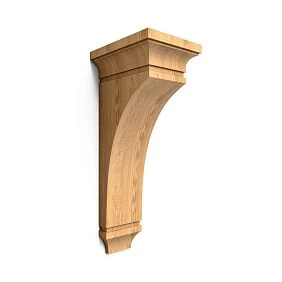
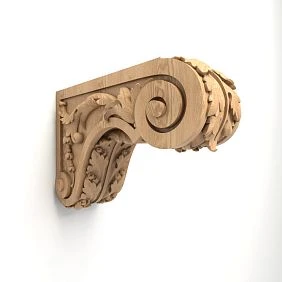
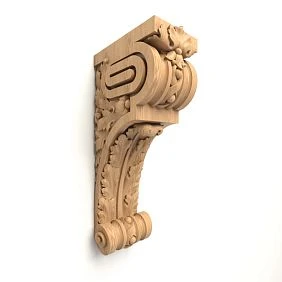
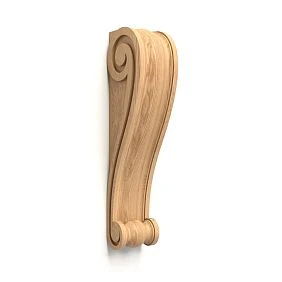
Shape. A decorative bracket has a profiled, curved, or multi-tiered shape — unlike a straight angle bracket. The classic silhouette of a carved bracket is an S-shaped or L-shaped curve with varying width and thickness.
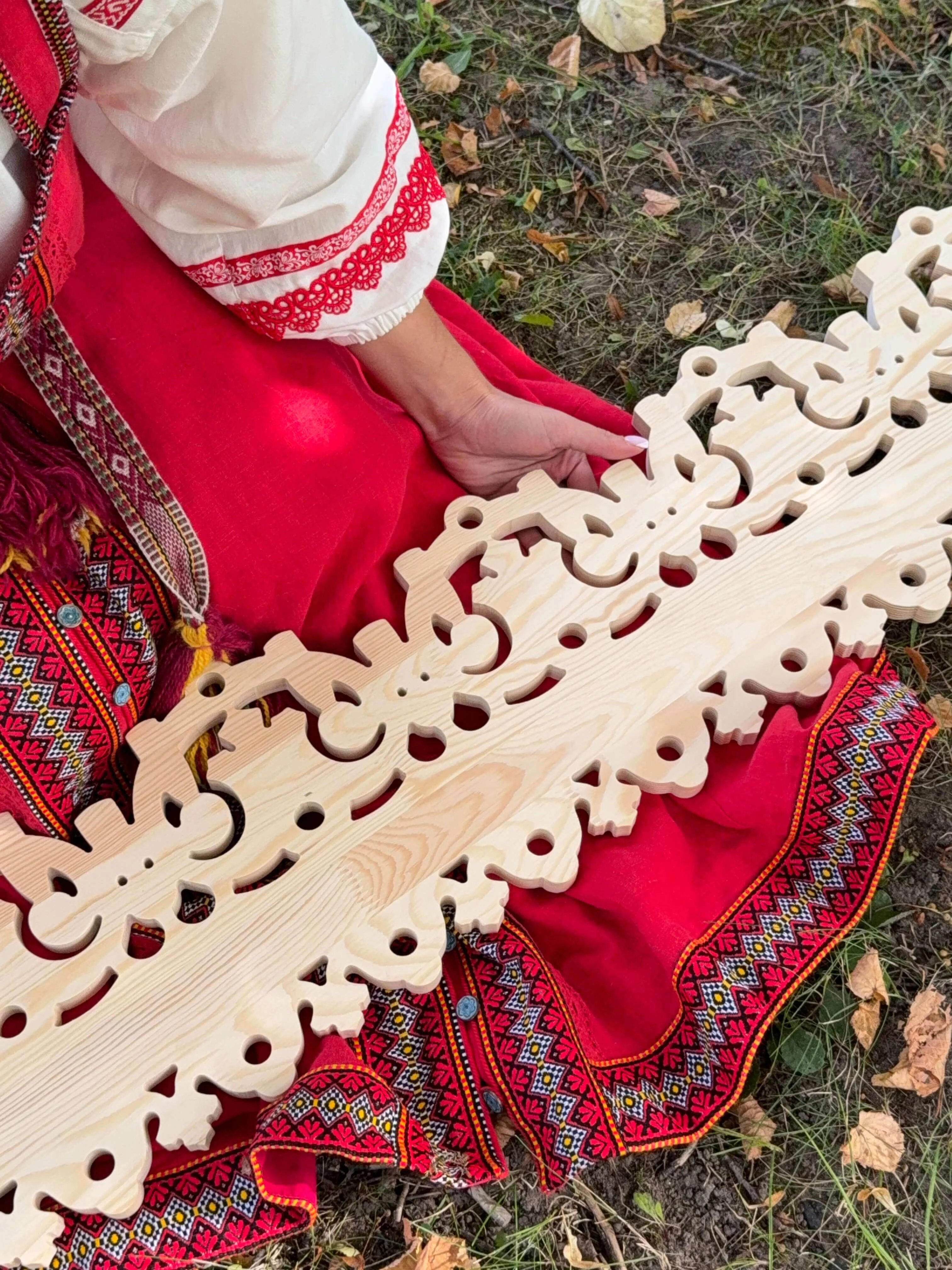
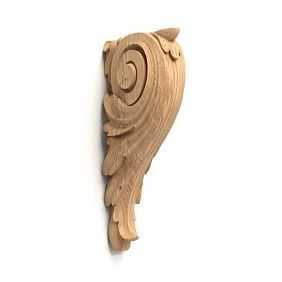
Carving. On the surface of the bracket there is an ornament: leaves, scrolls, geometric motifs, acanthus leaves, rocaille patterns. This turns a technical part into a work of decorative and applied art.
Material. Wooden bracket — is a warm, living material. It feels different to the touch than metal. It looks different to the eye. Wood in an interior works to create a sense of lived-in comfort, naturalness, and quality.
Scale and visual weight. A carved wooden bracket is a three-dimensional element that has visual weight. It balances the shelf, creating a sense of reliability and completeness.
Architectural bracket vs furniture bracket
There are two main types based on the area of application.
An architectural bracket is used in architectural interior elements: under cornices, in piers, under protruding ceiling beams, in portals, in loggias, on facades. It is typically larger, more massive, and designed to be perceived from a distance.
A furniture bracket is used directly on furniture and shelves. It is neater, proportional to furniture parts, designed for close-up perception — and therefore the carving on it must be more detailed and precise.
Where to use a carved bracket: a complete overview of scenarios
Carved wooden brackets — a universal element that works in a wide variety of contexts. Here is a complete map of applications — from obvious to unexpected.
Open shelves in the kitchen
Open kitchen shelves are one of the main interior trends of recent years. Shelves without doors free up space, make the kitchen more airy, and allow you to display dishes as decor. But open shelves also mean open supports.
In a kitchen in Provence, country, or neo-rustic style, a wooden bracket with a floral or woven ornament is an ideal support. It matches the shelf material (wood), supports the style (natural, warm), and does not ruin the impression with random metal.
An important nuance for the kitchen: the brackets here must allow wet cleaning — the thread should not be too deep or hard to reach. Wooden brackets in the kitchen are coated with varnish or oil — this protects them from steam and grease.
Bookshelves and bookcases in the study
The study is a space for intellectual work and status expression. Bookshelves here are not storage, but an architectural element. Carved wooden brackets under bookshelves made of oak or walnut are an appropriate, organic detail.
For a study in English style or traditional classic — brackets with acanthus leaf or geometric ornament. For a modern study with wooden details — a laconic profiled Wooden bracket without complex carving, but with a clear silhouette.
Shelves in the hallway
The hallway is the first thing a guest sees. And the last thing the owner sees when leaving the house. A small shelf for keys, glasses, mail — with carved wooden brackets — is a detail that sets the tone for the entire home.
Compact brackets are appropriate here: not too deep, not too high — proportionate to a narrow hallway. A wooden bracket for a small wall shelf in the hallway is one of the most affordable interior details that works as a full-fledged decorative element.
Decorative niches
A built-in decorative niche is a popular architectural technique. The niche houses lighting, books, vases, sculptures, collectibles. Shelves inside the niche are attached to the back or side walls — and are visible from the opening.
Decorative brackets in the niche work as architectural accents: they structure the vertical, create rhythm, add volume. Carved brackets look especially good in niches with lighting: shadows from the carving create an additional decorative effect.
Furniture consoles
A console is a shelf surface attached to a wall or furniture frame, without rear support. A console in the hallway, by the mirror, in the bedroom, at the head of the bed is one of the most elegant interior design techniques.
A console shelf on carved wooden brackets looks like custom-made furniture from a joinery workshop. The brackets here take on a fully decorative role: they transform a simple board into an interior piece.
Portals and arched openings
In classical and neoclassical interiors, decorative portals are designed using moldings, crown moldings, pilasters, and brackets. A bracket under the portal cornice is an architectural element that works in conjunction with the entire ornamental system.
Polyurethane brackets are especially suitable for ceiling and wall architectural details where lightness and moisture resistance are important. More details about polyurethane brackets are in a separate section below.
Wooden curtain rods
A wooden curtain rod with carved brackets is a design technique that restores architectural significance to the window opening. Wooden trim as a cornice bar mounted on carved brackets — exquisite, warm, architecturally convincing.
Open shelving in the living room and library
An open shelf is a series of shelves visible at the same time. If each shelf has identical carved brackets, the shelving gains rhythm. The repeating decorative element creates unity, transforming the shelf from a functional item into an architectural object.
Carved shelf bracket: when it is better than a regular corner bracket
The short answer: always when the bracket is visible. The long answer is understanding in which situations replacing a technical corner bracket with a decorative shelf bracket changes everything.
Bracket as part of an interior composition
If the shelf is part of a well-thought-out interior composition (with a mirror, lamp, frames), then the bracket should be its organic participant. A metal corner bracket falls out of this system. A carved wooden bracket fits into it.
Corner bracket for a shelf: when form matters
A classic corner bracket is a straight L-shaped profile. Even in metal, it can be beautiful if made of forged metal with patina. But for interiors with wood, warm materials, and classic ornamentation — shelf bracket-angle carved wood is more organic than any metal.
Wall shelf bracket: fastening and decor in one
A wall-mounted wooden bracket serves both functions: it attaches the shelf to the wall — and at the same time decorates the attachment point. It is this duality that makes it valuable: you pay once, you get both structure and decor.
For brick walls, aerated concrete walls, wooden walls, and walls with cladding — the choice of fasteners for the bracket itself to the wall depends on the base material. This is an important technical point that will be discussed in the section on mistakes.
Wooden or polyurethane bracket: which to choose
This is a question that arises for everyone who has seriously started choosing brackets. Both options are available on the market — and each has its own area of application.
Wooden bracket: warmth, naturalness, furniture character
wooden bracket made from solid wood — oak, beech, pine, or other species. It is a living material with texture, character, and tactile quality that cannot be imitated.
When a wooden bracket is appropriate:
-
For shelves and consoles in dry living areas
-
For furniture: as a support or decorative element
-
For natural interiors with wood, linen, leather
-
When the bracket will be painted, tinted, or oiled to match the furniture
-
For classic, neoclassical, country, Provence, Scandinavian styles
Wooden brackets accept any type of finish well. An unpainted beech bracket is an ideal base for painting: beech is uniform, without large pores, and the surface after sanding and priming is flawless. An oak bracket under oil has an expressive texture with a warm natural tone.
Polyurethane bracket: architectural scale and durability
Polyurethane brackets — it is a different material with different properties. Polyurethane is not afraid of moisture, does not crack, and does not deform. This makes it ideal for:
-
Ceiling and wall architectural elements
-
Facade decor
-
Rooms with high humidity: bathroom, kitchen, loggia
-
Large architectural forms where wood would be too heavy
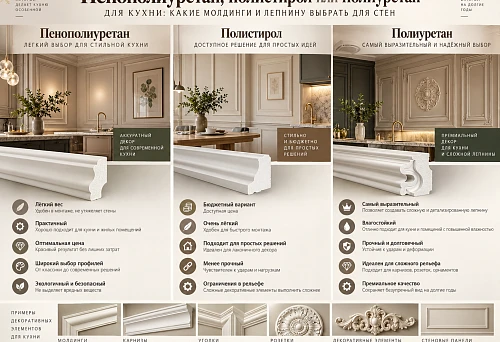
The polyurethane bracket is painted to look like wood, stone, or stucco. After high-quality painting, it is visually indistinguishable from plaster stucco or a wooden bracket — and at the same time, it is significantly lighter and more durable in humid conditions.
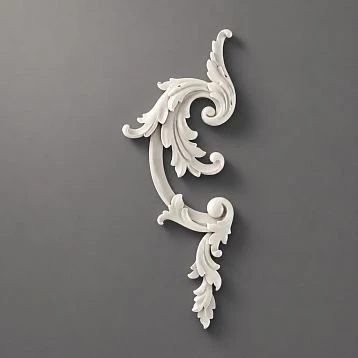
The STAVROS range includes vertical polyurethane brackets — a special shape for installation in vertical niches, partitions, and architectural portals.
Comparison table: wood vs polyurethane
| Characteristic | Wooden bracket | Polyurethane bracket |
|---|---|---|
| Material | Solid wood | Polyurethane |
| Moisture resistance | Medium (requires coating) | High |
| Weight | Medium | Lightweight |
| Finishing | Varnish, oil, enamel, stain | Painting |
| Best area | Furniture, shelves, dry rooms | Ceiling, walls, wet rooms |
| Tactile quality | Natural wood | Imitation |
| Price group | Medium–high | Affordable |
How to choose the size and shape of a carved bracket
This is the most practical section of the article — and the most important for those who have already decided on the type but don't know which size to choose.
Bracket depth and shelf depth
Key rule: the bracket depth should be at least 70–80% of the shelf depth. If the shelf is 250 mm deep, the bracket should have a horizontal shelf of at least 175–200 mm. A bracket significantly smaller than the shelf depth will look disproportionate and create a risk of tipping under load.
Bracket height and shelf thickness
The vertical part of the bracket should be proportionate to the shelf thickness and the visual weight of the entire structure. For a shelf thickness of 28–35 mm, the vertical part of the bracket should be 150–200 mm. For a massive shelf of 40–50 mm, the vertical part should be 200–280 mm and higher.
A vertical element that is too short makes the bracket visually "chopped off" — it doesn't read as an architectural detail. One that is too long is disproportionate to the shelf.
Distance between brackets
The spacing between brackets depends on the load and shelf material:
-
For lightweight decorative shelves: 500–600 mm between supports
-
For loaded bookshelves: 400–500 mm
-
For heavy shelves (stone, thick solid wood): 300–400 mm
-
For shelves longer than 1200 mm, three brackets are mandatory
This is not only a structural requirement but also a decorative one: even spacing of brackets creates rhythm — and rhythm in an interior is perceived as order and thoughtfulness.
Thread shape: how to match the style
Classic and neoclassical interior. Acanthus leaf, scrolls, rocaille shell, Ionic motifs. The bracket should appeal to the order tradition — look like a fragment of an architectural facade from the classicism era.
Provence and shabby chic. Flowers, branches, roses, soft leaves. The bracket is delicate, light, with a feminine ornament. It pairs well with white or cream paint.
Country and Tuscan style. Weaving, rustic motifs, rough natural forms. The bracket can be somewhat more massive and "rustic" in spirit.
Modern classic and neoclassical without excessive decor. A profiled bracket with minimal carving or a purely geometric shape. Emphasis is on the silhouette, not the ornament.
Scandinavian style. Clean geometry, straight lines, a wooden bracket without carving — only shape and profile. Here, "carved" means shaped, not ornamental.
Symmetry is a mandatory condition
Brackets are always installed in pairs or in a row with equal spacing. Asymmetry in the placement of brackets is a mistake that is immediately noticeable. Exception: intentional asymmetry as a design technique — but this is a subtle solution requiring experience.
When placing two brackets symmetrically under a shelf, it is important that they are at an equal distance from the edges of the shelf — usually 100–150 mm from the edge.
Mistakes when choosing a decorative bracket
Let's list the most common ones — and honestly explain why each of them ruins the result.
Bracket too small for a massive shelf
This is the most common mistake. People buy a bracket "by eye" without measuring — and it turns out disproportionately small. Under a heavy, massive shelf, a thin decorative bracket looks alarming — it creates the feeling that the shelf is about to fall. Even if structurally it is not the case.
Rule: bracket depth — at least 70% of the shelf depth, height of the vertical part — at least two thicknesses of the shelf.
Random carving style in an inconsistent interior
A baroque scroll on a bracket in a minimalist Scandinavian kitchen is a disaster. The bracket's ornament must belong to the same stylistic tradition as the other decorative elements in the room: Moldings, applique, Outlets, handles.
Metal corner bracket next to a wooden bracket
If wooden carved brackets are on one shelf and metal corner brackets are on the next, it looks like an unfinished renovation. Either all supports are decorative, or all are hidden. Mixing doesn't work.
One bracket where two are needed
For a shelf longer than 600 mm, one bracket is a risk. Under load, the shelf will sag or tilt. This is both a structural and aesthetic mistake: a lone bracket looks incomplete.
Plastic decorative bracket in an interior with natural materials
Among budget options, there are plastic "decorative" brackets. When placed next to natural wood, plastic is instantly recognizable—by its shine, weight, and lack of tactile quality. This is categorically not the material for interiors with wood, leather, metal, and textiles.
Installation without considering the wall material
A wooden bracket is heavier than a metal angle bracket. To attach a decorative bracket with a shelf to a wall made of aerated concrete or drywall, special anchors or pre-installed embedded elements are required. Installing "as usual" with regular dowels into a hollow partition can cause the entire structure to fall along with the shelf's contents.
Forget about the finish coating
An unpainted wooden bracket in a living space is an unfinished detail. Without a coating, wood darkens quickly, especially in the kitchen and hallway. Coating—varnish, oil, enamel—is a mandatory step, not an option.
What to combine carved brackets with in the interior
A decorative bracket is not a solo performer but a member of an ensemble. It works best when integrated into the room's wooden decor system.
Bracket and wooden trim
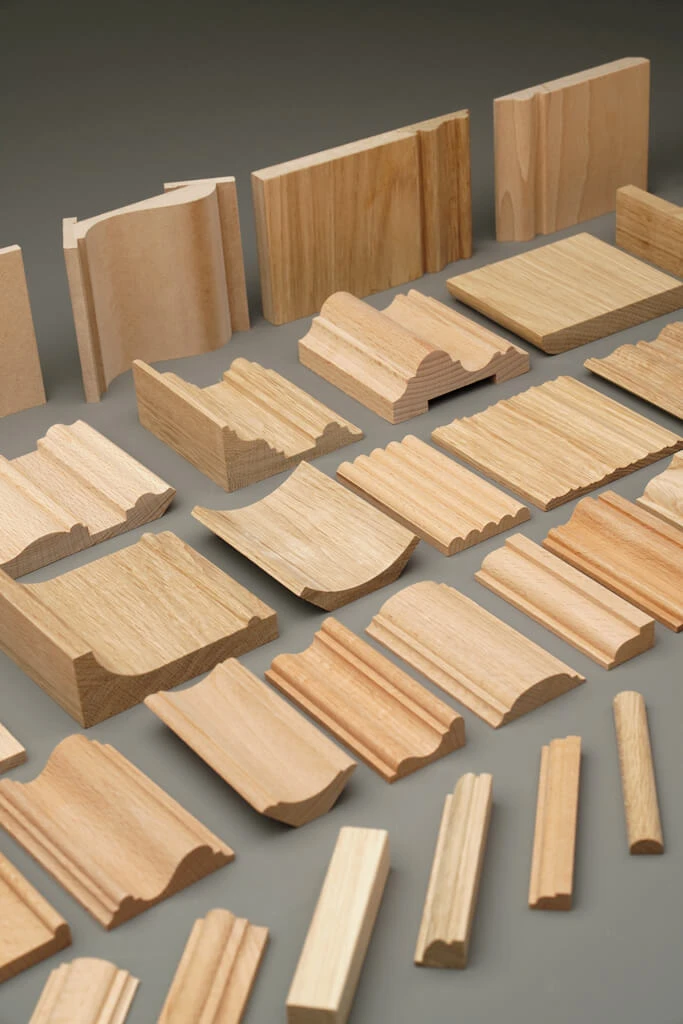
Wooden trim — baseboards, architraves, cornice strips—creates the room's framing system. If the wooden shelf bracket is made from the same wood species and with the same tint as the trim, it fits organically into this space without standing out.
Bracket and moldings
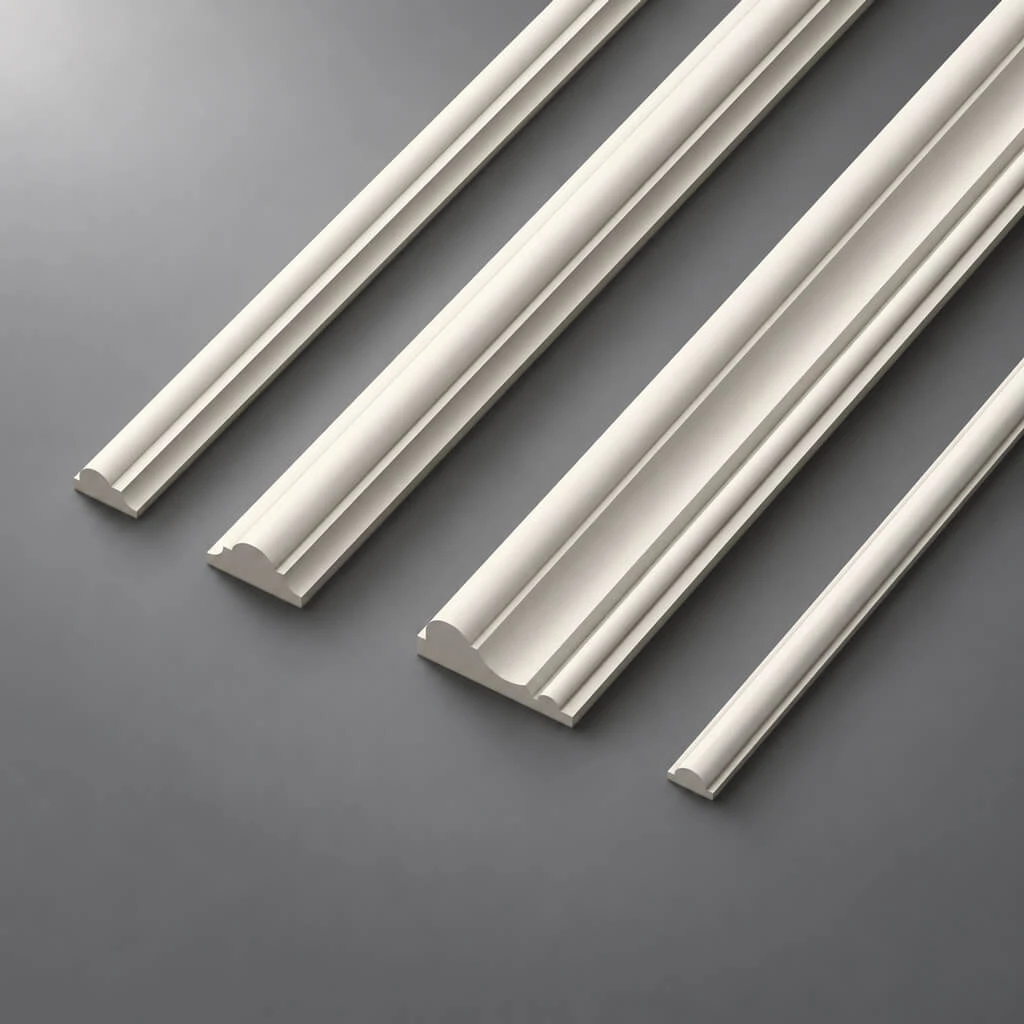
Wooden moldings on the walls create a decorative framing system. A bracket installed inside such a frame or at the junction of moldings works as an architectural accent—it continues the logic of the ornamental sequence.
Bracket and carved decor
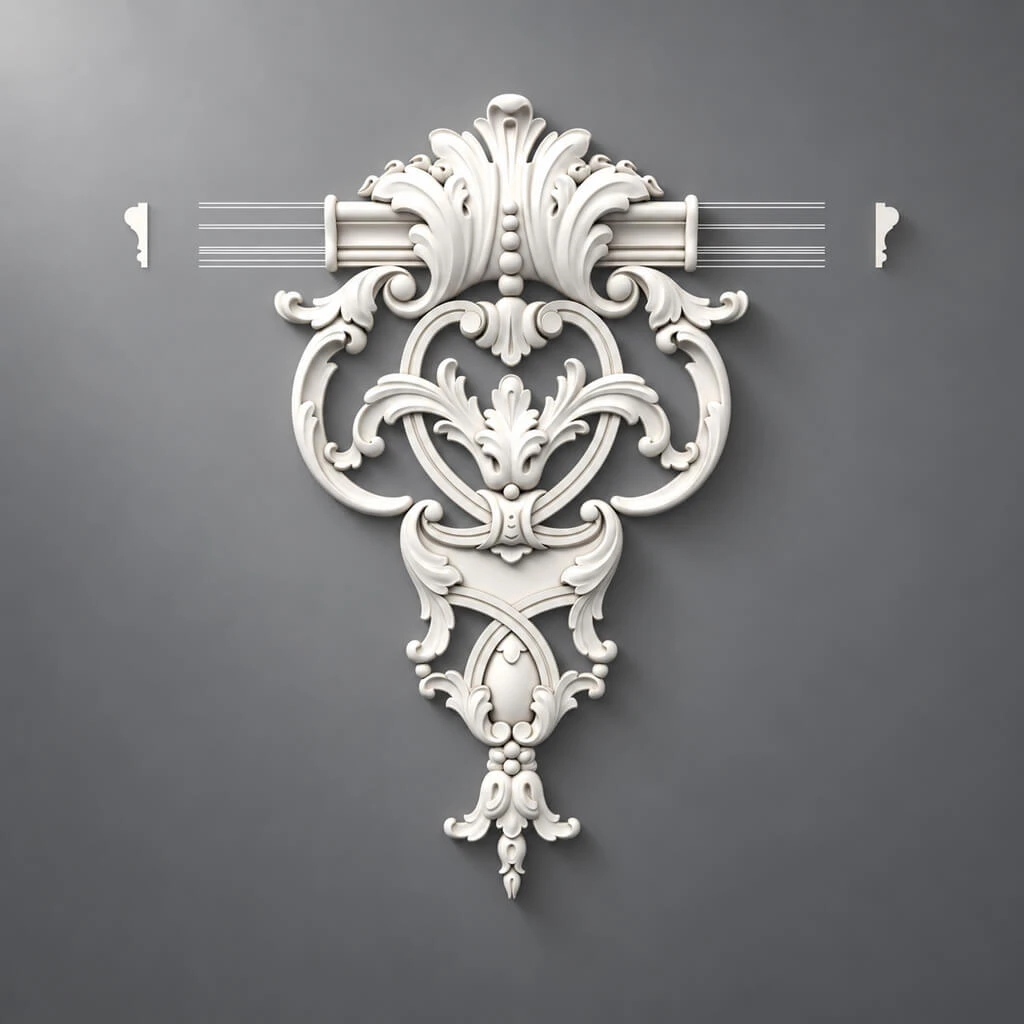
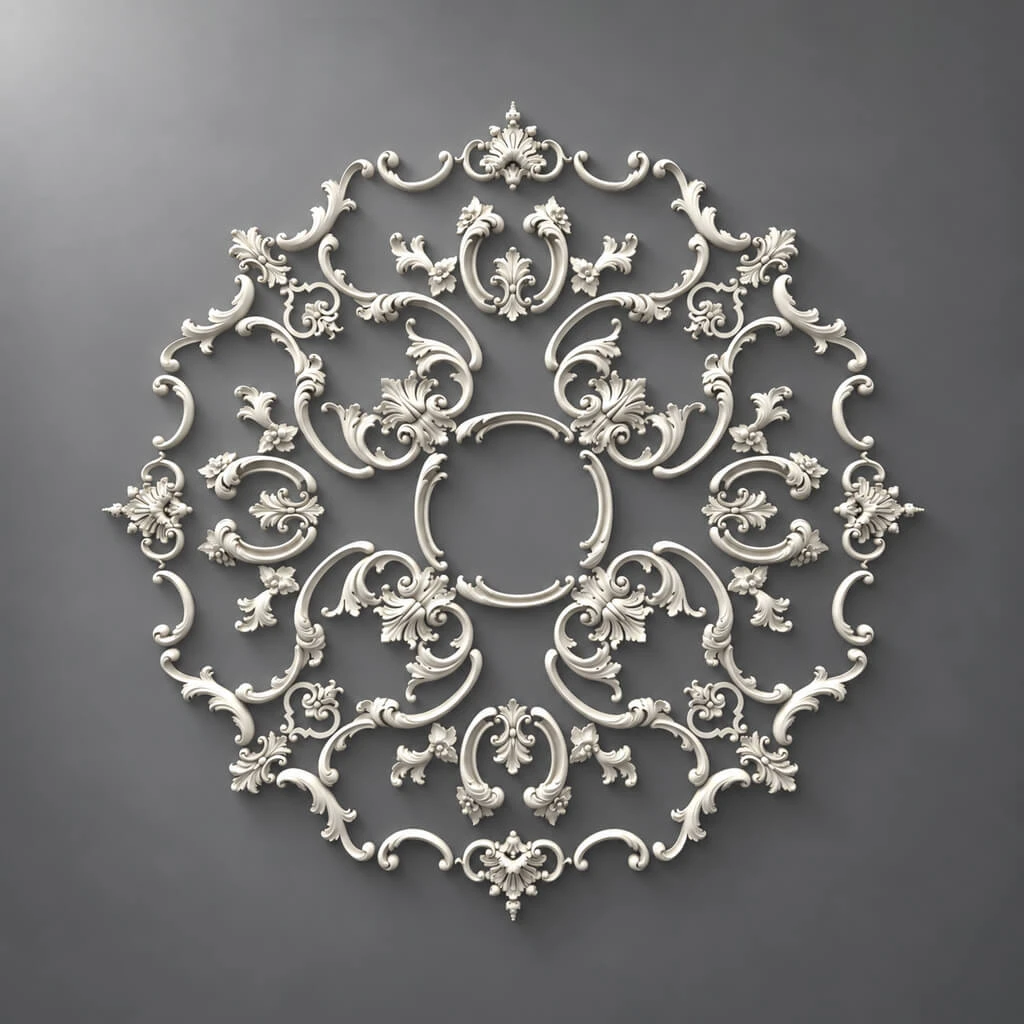
Carved decor for interior — sockets, overlays, corner elements — create the ornamental language of the room. Brackets chosen in the same ornamental tradition reinforce this language and create unity.
Imagine a living room: on the wall — molding frames with wooden corner overlays. On the shelf — wooden brackets with a similar ornament. In the center of the ceiling rosette — a chandelier. All elements speak the same language — and the room reads as designed, not randomly assembled.
Bracket and furniture
A carved wooden bracket can be part of a furniture composition: a side decorative element of a sideboard, a support part of a console, a decorative element at the base of a built-in wardrobe shelf. In this case, the bracket is matched to solid wood products — by wood species, shade, and carving style.
Bracket and polyurethane products
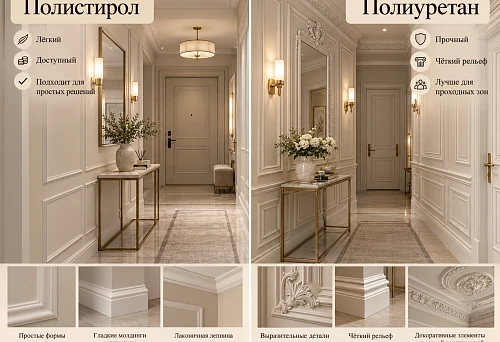
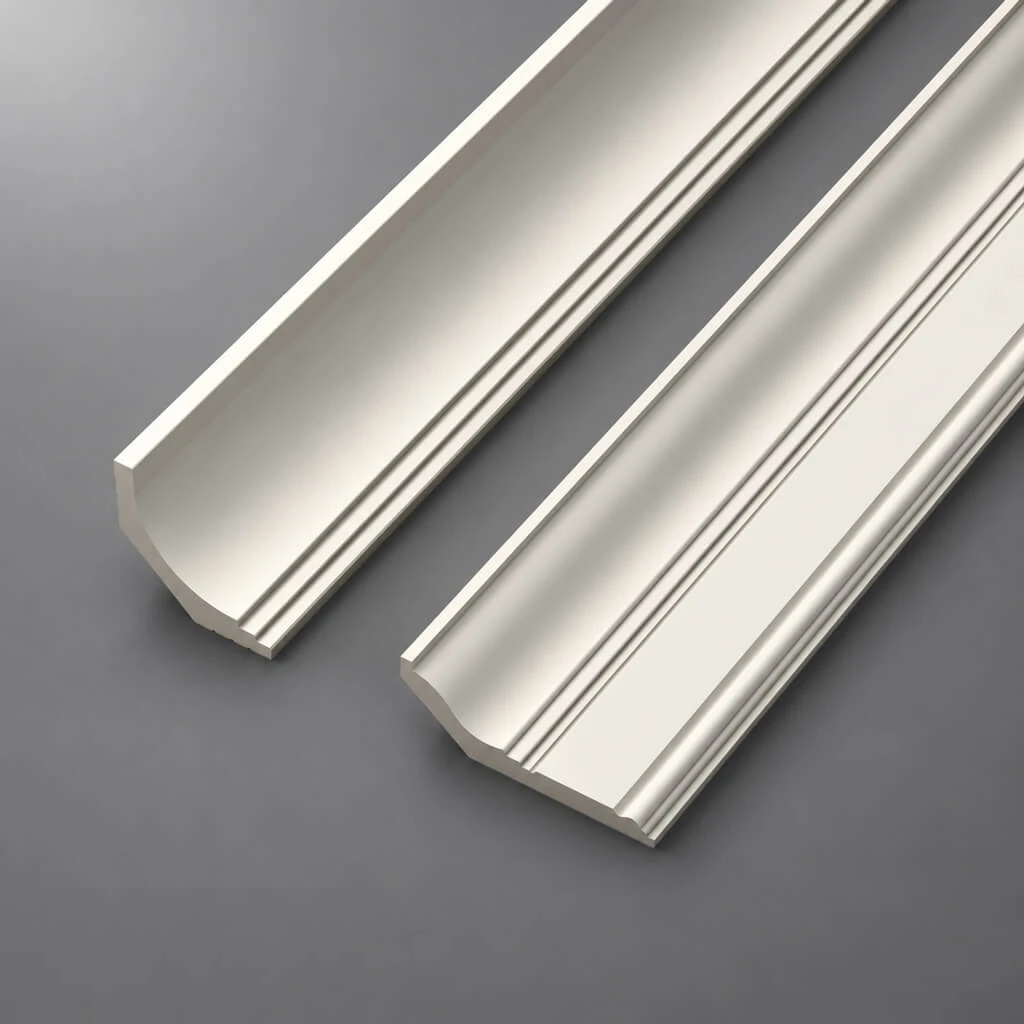
In mixed interiors where there are both wooden details and Polyurethane Items (stucco, cornices, ceiling rosettes), a carved wooden bracket can work alongside polyurethane decor provided coordinated painting. If everything is painted in one color — white, cream, light gray — the difference in materials disappears, and the space is perceived as unified.
Wooden bracket in different interior styles: specific examples
Theory is good — but concrete examples are even better. Let's consider how the same element works in different style contexts.
Classicism and neoclassicism
High ceilings, profiled cornices, parquet flooring, framed mirrors. Here, a shelf with carved wooden brackets under the cornice looks like part of the architecture — it's not "screwed to the wall," but built into the interior. Brackets with acanthus or S-shaped profiles and floral ornamentation, coated with dark varnish or oil with walnut tinting.
Important: in a classic interior, brackets should be large and confident in silhouette. A miniature bracket will be lost against the backdrop of large-scale decor.
Provence and Shabby Chic
White walls, worn surfaces, lace, flowers. The brackets here are white, with floral ornamentation, softly rounded shapes. Under a shelf of light wood or painted white — a wooden bracket with white patinated paint. This is touching, delicate, and absolutely in character with the style.
Countryside and rustic
Rough wooden surfaces, brick, exposed beams, ceramics. Carved wooden brackets Here — massive, with rustic ornamentation or without carving at all, but with an expressive profile. The wood is pine or oak with an open texture. The finish is oil or dark stain.
Modern classic
Neutral colors, quality materials, delicate decor. The bracket here — without complex carving, but with a clear, profiled silhouette. The wood is oak or beech, the finish is matte varnish or oil. The shape is geometric, with a smooth curve, without ornamental excess.
Loft and industrial style
Here, a wooden bracket is not a frequent guest. Loft prefers metal, pipes, rough textures. But a wooden bracket without carving, made of dark oak, on forged bolts — can become an interesting contrast to metal details. This is a subtle solution for those who want to add a bit of "warmth" to an industrial space.
Where and how to buy a carved shelf bracket
Buying a decorative bracket is not just ordering hardware from a construction store. It is choosing a decorative element that must precisely match the shelf size, interior style, and finishing material.
What to Check Before Ordering
Dimensions. Depth (horizontal part) and height (vertical part). Both parameters must match your shelf.
Wood species. If the bracket will be painted, the species is not critical (though beech is preferable for painting). If the finish is transparent, the species determines the tone and texture.
Carving style. Does the bracket's ornament match the style of other decorative elements in the room?
Quantity. Don't forget symmetry: brackets are always taken in pairs or sets.
Wall material. Determine in advance what fasteners will be used to attach the bracket to the wall, and ensure the wall can support the load.
Buy shelf brackets — wooden carved, made of solid oak and beech, in various sizes and ornamental designs — available in the STAVROS catalog. Also presented here are decorative polyurethane brackets for architectural and ceiling applications.
FAQ: answers to popular questions about carved brackets
How does a carved bracket differ from a regular shelf angle?
A regular metal angle is a fastener that is usually hidden. A carved wooden bracket is a decorative support that is intentionally made visible. It decorates the junction of the shelf with the wall and itself becomes part of the interior.
Can a wooden bracket be used for a wall shelf?
Yes. Wooden brackets are suitable for wall shelves in dry rooms. It is important to correctly select the size (depth and height), number of supports, and fasteners for the specific wall material. For load-bearing walls — regular dowels, for drywall — special anchors or embedded elements.
What is better for a classic interior: a metal angle or a carved bracket?
Without a doubt — a carved wooden bracket. A classic interior is a system of natural materials and ornamental decor. A stamped metal angle in this system looks like a random construction part.
Is a decorative bracket suitable for furniture?
Yes. Brackets are used as support parts for consoles, as side decorative elements of sideboards and shelving units, as parts of furniture portals. In this case, they are selected according to the style and material of the other solid wood products.
Can I paint a wooden bracket?
Yes. Unpainted wooden brackets accept any type of finish: white or colored enamel, tinting, varnish, oil, stain. Before painting — sanding and priming. The bracket is painted to match the shelf, furniture, or wall color — this achieves maximum integration into the interior.
How is a wooden bracket different from a polyurethane one?
Wooden — natural material, warm to the touch, ideal for furniture and shelves in dry rooms. Polyurethane bracket — lightweight, not afraid of moisture, suitable for ceiling and wall decor. When painted, they look similar, but tactilely and structurally — they are different.
How many brackets are needed for a shelf?
For a shelf up to 600 mm — two are enough. For a shelf 600–1200 mm — two brackets, but with load calculation. For lengths over 1200 mm or with significant content weight — three brackets are mandatory. The spacing between brackets is 400–600 mm depending on the load.
About the company STAVROS
STAVROS is a Russian manufacturer of wooden decor and solid wood products for interiors and furniture. The company's assortment includes a complete system of architectural and furniture decor: wooden carved brackets, Polyurethane brackets, Moldings and cornices, Wooden trim, carved appliqués, furniture rosettes and entire Carved decor for interior.
STAVROS products are made from solid oak, beech and other wood species. Wooden and polyurethane decor is designed to be system-compatible: brackets, moldings and overlays are coordinated by style groups — allowing you to assemble complete decorative systems from a single source. Full catalog of polyurethane products и solid wood products available on the STAVROS website.