








































































Article Contents:
- Sound that no one notices — until it starts to interfere
- Why a beautiful office can have poor sound
- What are decorative acoustic panels: not a studio, but an interior
- Acoustic panels for a home office: a space that must work
- Desk against the wall
- Separate room for an office
- Workspace in the bedroom or living room
- Manager's Office
- Home Library
- Wall behind the desk: the most important place in the office
- Why this particular wall
- What to choose for the wall behind the table
- How to remove echo in a room without a studio look
- Comprehensive approach to office acoustics
- Slat acoustic panels: vertical rhythm that decorates and calms
- Why slats work in an office
- Where to use slat panels in an office
- Acoustic panels in the bedroom: silence as part of the interior
- Where to place panels in the bedroom
- Choosing material and color for the bedroom
- Acoustic panels in meeting rooms and offices: where clarity matters more than aesthetics
- What you need from panels in a meeting room
- Panels for online meetings
- How to choose the size and placement of acoustic panels
- Coverage area
- Where to place: practical guidelines
- Mounting height
- Empty walls vs. walls with furniture
- Color and texture: how not to overload the office with unnecessary decor
- Natural wood: warmth and naturalness
- Light panels: for small and bright offices
- Dark panels: for sophisticated interiors
- Panels matching wall color
- Contrasting Accent
- What to pair acoustic panels with in an office: a unified language of wooden decor
- Wooden slats and solid wood moldings
- Wooden slats as a standalone accent
- Furniture handles and details
- Panel lighting
- Tabletop and underframe
- Mistakes when choosing acoustic panels: what doesn't work
- Expecting complete soundproofing
- Covering too small a wall area
- Choosing only by photo
- Making the relief too active in a small office
- Not accounting for empty walls and glass
- Forgetting about baseboards and trim elements
- Choosing a color that clashes with the furniture
- Not planning the background for video calls
- Acoustic panels in interior projects: from apartment to office
- Open office
- Podcast studio or home studio
- Media room and home theater
- Coworking and workspaces
- Installation of acoustic panels: what is important to know before starting work
- Wall preparation
- Mounting methods
- Underlayment and filler
- Baseboard and trim elements
- Where to buy decorative acoustic panels for an office and workspace
- STAVROS: wooden decor that works for sound and style
- FAQ: Answers to Popular Questions
- Do acoustic panels help eliminate echo in a room?
- Where is the best place to install panels in a home office?
- How do slatted acoustic panels differ from regular wall panels?
- Are slatted panels suitable for a workspace in the bedroom?
- Can acoustic panels be used in a meeting room?
- Does the wall require special preparation for installing panels?
- How much wall area needs to be covered for a noticeable effect?
- Do the panels need to be painted, or are they sold in a finished color?
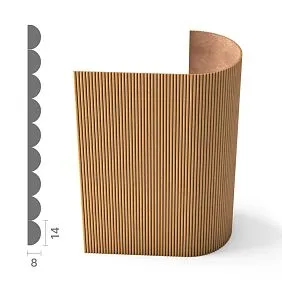
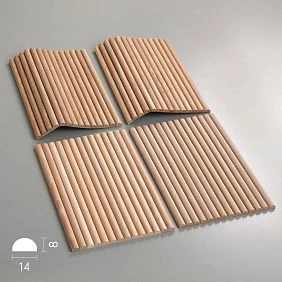
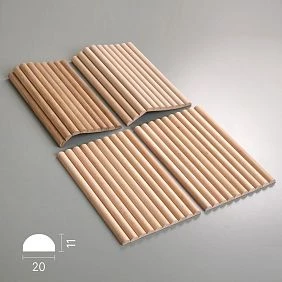
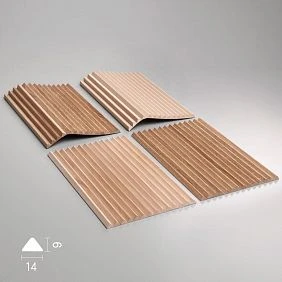
The sound that no one notices — until it starts to interfere
Imagine a situation familiar to anyone who has ever worked from home. The office is furnished, the desk is by the window, shelves are in place. On the surface — everything is right. But as soon as you start a video call, your voice sounds like it's coming from a barrel. Colleagues ask you to repeat. You yourself hear your own echo in your headphones. A long work call is exhausting not only because of the content — it's simply unpleasant to be in a space where every word echoes with an extra overtone.
Echo in the office is not a technical issue or a renovation problem. It's an acoustics problem, and it's easier to solve than it seems.
acoustic wall panels — is exactly the tool that changes the sound of a room without major renovations, without studio foam, and without visual chaos. Moreover, modern decorative solutions look like a full-fledged interior element: a textured wall, rhythmic slats, warm wood — all of this works simultaneously for appearance and sound comfort.




Why a beautiful office can have bad sound
Room acoustics is how sound behaves inside a space. When a room has many hard, smooth, parallel surfaces, sound waves reflect multiple times — from walls, ceiling, floor, window, glass table, mirror. Each reflection creates a delay. The sum of these delays is what we call echo, or 'reverberation.'
Modern interiors are especially prone to this. Bare concrete, laminate flooring, large windows, minimalist furniture without soft elements — a beautiful picture, but an acoustically disastrous environment. In such a room, every sound lasts longer than it should.
What creates acoustic problems:
-
Empty smooth walls without finishing or decor.
-
Hard floor without a carpet.
-
Large glass surfaces — windows, doors, mirrors.
-
Lack of upholstered furniture, curtains, bookshelves.
-
Parallel walls without any obstacles for sound waves.
None of these problems require drastic intervention. It is enough to correctly place a few materials — and the sound character of the room changes.
Our factory also produces:



What are decorative acoustic panels: not a studio, but an interior
Here it is important to immediately dispel a common misconception. When people say 'acoustic panels,' many imagine gray foam pyramids on the walls of a recording studio. That is a technical material — it works, but looks accordingly.
Decorative acoustic panels for walls — a fundamentally different class of products. These are wall solutions that:
-
look like part of the interior — wood, slats, relief;
-
mounted on the wall like regular finishing;
-
work with sound reflection through surface geometry;
-
combine with furniture, baseboards, moldings, and other wooden elements.
The key word here is 'decorative'. They don't hide behind cabinets or create the feel of a utility room. They take center stage: as an accent wall, as a frame for the work area, as a backdrop behind the desk.
Acoustic wall panels made of wood work through two mechanisms: the textured surface scatters sound waves in different directions, reducing direct reflection, while the material itself absorbs part of the sound energy. This is not full soundproofing — it's improving the acoustics within the room.
Get Consultation
Acoustic panels for a home office: a space that must work
A home office is a space with a dual purpose. On one hand — a place of concentration, where silence, focus, and privacy are needed. On the other — a visual environment seen by everyone on your video calls.
It is in the home office Wall acoustic panels provide maximum effect. And it's not just about the sound.
Desk against the wall
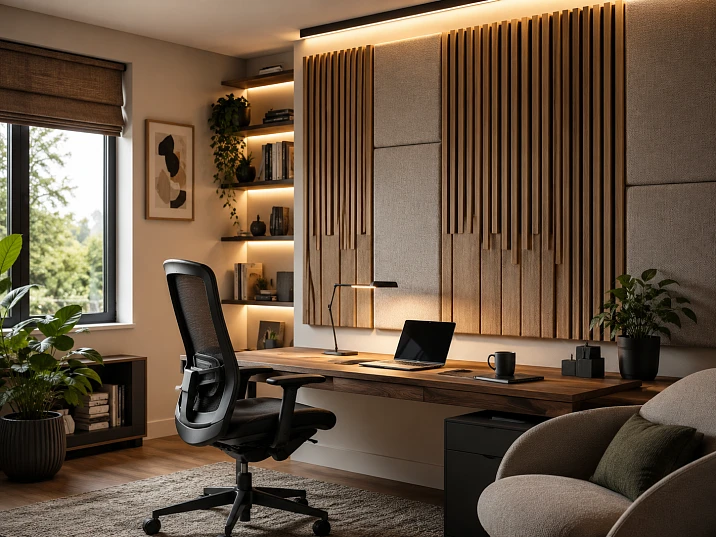
The most common home office layout. The desk is placed flush against the wall, and this wall is constantly in view — both yours and your colleagues' on video calls. If the wall is empty, the space looks unfinished. If covered with slatted panels, it adds texture, depth, the warmth of wood, and a sense of a well-thought-out workspace.
A separate room for an office
Here there are more possibilities: you can cover one accent wall or several surfaces with panels. The larger the treated area, the more noticeable the acoustic result. At the same time, the appearance remains interior-oriented: wooden slats on the office wall are perceived as a design solution, not a technical element.
Work area in the bedroom or living room
A popular format in city apartments: a corner with a desk in the bedroom or living room. Here Decorative acoustic panels they also work as a spatial marker — they visually separate the work area from the rest of the room. Panels behind the desk say: 'this is a different place.' This is important psychologically.
Executive office
In an executive office, decorative wall panels are an element that sets the tone. Dark wooden slats or a deep ornamental relief create an image of a solid, serious space. Here, not only acoustics matter, but also the impression the office makes on guests and partners.
Home Library
An office with bookshelves is already a partially solved acoustic environment: books themselves scatter sound. But the walls between the shelves and above the desk often remain empty. Slatted or relief acoustic wall panels they close these sections, continuing the visual rhythm and improving acoustic comfort.
The wall behind the desk: the most important place in the office
Ask yourself: what do your colleagues see when you join a video call? It is the wall behind you that forms your visual image in professional communication. An empty white wall says "I didn't think about it." Random items on a shelf say "I'm disorganized." Neat slat panels say "I know what I'm doing."
Panels for the wall behind the desk are one of the simplest and most illustrative examples of how a decorative solution serves multiple purposes at once: acoustics, aesthetics, and professional image.
Why this particular wall
-
It is constantly in view — both yours and the participants of the calls.
-
It is usually empty — a direct hard reflection of sound.
-
It is easy to mount panels on it without rearranging furniture.
-
A small area (1.5–2 meters wide, the wall behind the desk) provides a noticeable acoustic and visual effect.
What to choose for the wall behind the desk
Slat acoustic wall panels — the optimal choice for this scenario. The vertical rhythm of the slats creates depth that looks good both in person and on camera. The warm wood neutralizes the coldness of the screen and equipment. The texture diffuses sound — direct reflection from the wall is reduced.
How to remove echo in a room without a studio look
Here is an honest answer to the most frequently asked question: can you remove echo without drastic measures? Yes. And decorative panels are only part of the system.
Comprehensive approach to office acoustics
Good acoustics in a home office are the result of several solutions working together:
Accent wall with panels. The most noticeable and quickest way to reduce reflection from one wall. Especially effective — if it is the wall opposite the window or the wall behind the desk.
Carpet on the floor. A hard floor is a mirror for sound. A carpet under the workspace radically changes the acoustics of the lower part of the room. Even a small carpet 1.5×2 meters under the desk and chair makes a noticeable difference.
Curtains or heavy drapes. A large window is the main reflector. Heavy curtains absorb some of the sound and break up direct reflection from the glass.
Bookshelves. Filled shelves with books work as a chaotic diffuser. There is no point in leaving shelves empty in an office with acoustic problems.
Upholstered furniture. An armchair, sofa, or pouf in the office is an additional absorbing element. Even a single upholstered armchair next to the workspace noticeably affects the sound environment.
Wall acoustic panels as a system element. Panels cover what upholstered furniture and carpet do not: the walls. They are especially effective in the most empty and echoing areas.
It is important to understand: none of these elements replace soundproofing. If the goal is not to hear neighbors, that is a different problem requiring different solutions. If the goal is to eliminate echo and reverberation inside the room, the described approach works.
Slatted acoustic panels: a vertical rhythm that decorates and soothes
Rafter panels — one of the most popular formats of decorative wall solutions in recent years. And this is not a random fashion trend: behind the popularity lie several practical reasons.
Why slats work in the office
The vertical rhythm of wooden slats visually elongates the wall and ceiling. In an office with a low ceiling, this is a valuable effect. The depth of shadows between the slats creates volume and liveliness of the surface, which neither painted walls nor wallpaper have.
Acoustically: slats with gaps create an uneven surface that scatters sound in different directions. A soft filler can be placed between the slats, enhancing the absorption effect.
acoustic slat panels for a home office — this is a solution that combines:
-
the aesthetics of warm wood;
-
acoustic scattering;
-
structural interior element.
Where to use slatted panels in an office
-
The wall behind the desk is the top priority.
-
The side wall next to the desk enhances the acoustic effect.
-
A wall from floor to ceiling makes the ultimate architectural statement.
-
A wall fragment in the video call area serves as an accent background.
Slat panel PAN-001 — an example of a ready-made solution that installs without complex preparatory work and delivers the desired result immediately.
Acoustic panels in the bedroom: silence as part of the interior
The bedroom is a space with special requirements. It doesn't need the strictness of an office or the formality of a meeting room. It needs softness, silence, and a feeling of coziness. But acoustic problems arise here too — especially in modern bedrooms with minimalist decor.
Where to place panels in the bedroom
Behind the headboard. A classic solution: an accent wall behind the bed. Slatted or relief panels here create a soft architectural accent that visually supports the bed as the central element of the room. Moreover, the surface behind the head is one of the closest to a person's ear, so its acoustic character is felt particularly distinctly.
On the side wall. A long empty bedroom wall is often the main source of reflections. A few panels on this wall — and the room becomes noticeably quieter.
In the area of a dressing table or workspace in the bedroom. If the bedroom has a work corner — the wall behind it requires attention. The same principles as in an office.
Choosing material and color for the bedroom
In the bedroom, calm, warm tones are preferred: light ash, natural beech, bleached oak. Dark slats are appropriate in bedrooms with serious design or in men's studies. For the bedroom, it is better to choose panels with a softer relief — without sharp corners and aggressive geometry.
Acoustic panels in the meeting room and office: where clarity matters more than beauty
A meeting room is a space where sound literally costs money. When negotiations take place in a room with poor acoustics, participants ask again, get tired, and lose the thread of the conversation. This is not an exaggeration — it is the physiology of speech perception.
What is needed from panels in the meeting room
Speech intelligibility. The main parameter: every spoken word should sound clear, without 'tails' and reflections. This requires a sufficient area of acoustic treatment — at least 20–30% of the wall area.
Neutral, representative look. A meeting room is not a recording studio. A technical look is inappropriate here. Decorative acoustic panels for walls create a solid image: wood, texture, color — everything contributes to the impression.
Combination with other elements. A meeting room is often designed with attention to detail: a solid wood table, armchairs, the company's brand colors. The panels should fit into this environment, not conflict with it.
Panels for online meetings
In the era of constant video conferences, a meeting room should look good in the camera lens. The wall behind the speaker is a crucial element of the company's professional image. Neat, representative slatted wall panels create a neutral yet visually rich background — exactly what is needed for business meetings.
How to choose the size and placement of acoustic panels
The question is not only which panels to buy, but also how many and where to place them. Mistakes in placement negate even high-quality material.
Coverage area
The minimum effective treatment area is 15–20% of the total wall area. For a room of 15 sq. m with a ceiling height of 2.7 m, the total wall area is about 40 sq. m — meaning at least 6–8 sq. m needs to be covered. This is approximately one full accent wall or several large sections.
Where to place: practical guidelines
| Room | Priority zone | Additional zones |
|---|---|---|
| Office | Wall behind the desk | Side wall, wall behind during calls |
| Bedroom | Wall behind the headboard | Side wall, workspace area |
| Meeting room | End wall behind the speaker | Side walls |
| Living room with workspace | Work area wall | Wall behind the TV |
Mounting height
Panels are most effective at the ear level of a sitting or standing person — that is, from 80 centimeters to 2 meters from the floor. This is where the majority of sound reflections occur in a living space.
Empty walls vs. walls with furniture
If a wall is covered by a cabinet or shelf, there is no point in covering it with panels. Look for empty areas: they are what create echo. Pay special attention to walls opposite windows and walls that have no furnishings.
Color and texture: how not to overload the office with unnecessary decor
Decorative panels should enhance the space, not overwhelm it. It's a matter of choosing the right color, texture, and pattern scale.
Natural wood: warmth and naturalness
Raw or lightly tinted solid wood is the most organic choice for a home office. Warm wood creates a feeling of coziness and solidity at the same time. It pairs well with wooden furniture, wooden moldings and baseboards and a wooden tabletop.
Light panels: for small and bright offices
In a small office, dark slats can "eat up" space. Light ash, bleached oak, or white-painted panels preserve airiness and do not visually overload the room.
Dark panels: for solid interiors
Wenge, dark oak, tinted slats — this is an executive office, a representative space, an interior with weight and character. Dark panels require good lighting: without it, the room can become too gloomy.
Panels in the color of the wall
One of the most sophisticated design techniques: panels are painted the same color as the wall. The result is relief without obvious contrast. The surface gains depth but remains monochrome. Ideal for interiors where minimalism and calm are important.
Contrast accent
The opposite technique: panels are significantly darker or lighter than the main wall color. An accent wall behind the desk immediately becomes the room's focus — everything else fades into the background. A bold but effective approach for offices with interior ambition.
What to combine acoustic panels with in an office: a unified language of wooden decor
Acoustic panels work best not as an isolated element, but as part of a system of wooden decor in the interior.
Wooden slats and Pogonazh iz massiva
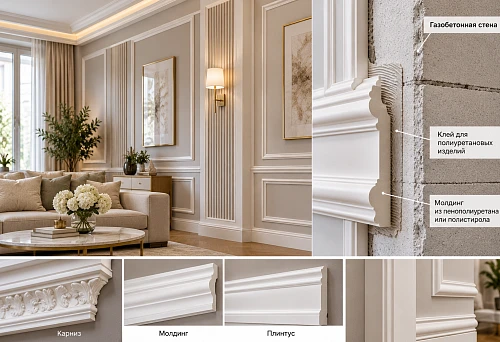
If the walls are decorated with slatted panels, it is logical to continue the wooden language in moldings, baseboards, and slats. Wooden moldings and baseboards from the same species and in the same finish create a cohesive decorative look for the room.
Wooden planks As an Independent Accent
Individual slats can be used not only as part of panels but also as a decorative element on the wall — for example, to separate zones or create geometric accents.
Furniture handles and details
Solid Wood Items for furniture — handles, legs, overlays — from the same wood species as the panels create unity of material language in the study. This is not a coincidence: it is intentional design.
Panel lighting
Lighting built into the slatted panels or under the bottom slat is an effective way to add depth and soft illumination. Such lighting does not blind but creates an atmosphere. For a study where people often work in the evening, this is a noticeable improvement.
Tabletop and under-table
A wooden desk tabletop wooden bases and the slatted panels behind it form an organic trio. The workspace looks like a single wooden object, not a collection of random items.
Mistakes when choosing acoustic panels: what doesn't work
There are fewer mistakes here than it seems, but each one costs a noticeable result — or wasted money.
Expecting complete soundproofing
The most common misconception. Decorative acoustic wall panels reduce echo and reverberation inside the room. They do not isolate from external noises — from neighbors, the street, or ventilation systems. These are fundamentally different tasks.
Covering too small a section of the wall
One small panel 60×60 centimeters on an empty wall is cosmetic. Its acoustic effect is minimal. For results, you need area — at least one wall or a significant portion of it.
Choosing based only on photos
A photo conveys color and shape, but not scale, tactile texture, or how the panel looks next to specific furniture. If possible, request samples.
Placing too active a relief in a small office
In a small office (up to 10 sq. m), a large, aggressive relief can overload the space. For such rooms — thin slats, low profile, calm color.
Do not account for empty walls and glass
If the office has a large window, but the panels are placed on the opposite blank wall, the result will be worse than it could be. Glass is one of the main reflectors. It needs to be neutralized with curtains, and the panels should be placed on walls that "interact" with it.
Forget about baseboards and trim elements
Slat panels require proper finishing along the bottom edge — a baseboard that matches in style and width. If this is not thought out in advance, the joints and edges will create an unfinished look. Trim elements — strips, corners, moldings — should be included in the design.
Choose a color that clashes with the furniture
Dark slats next to light furniture — this is either a deliberate contrast or a conflict. If you want harmony, match the panel tone to the main wooden elements of the office.
Not think about the background for video calls
If the workspace is positioned so that the camera sees a completely different wall, not the one with the panels, the work is done in vain. First, determine what falls into the frame — and place the panels there.
Acoustic panels in interior design projects: from apartments to offices
Wall acoustic panels are used far beyond the home office. Let's look at other scenarios where they work especially effectively.
Open office
An open-plan office is an acoustic nightmare. Dozens of voices, phone calls, footsteps, printing. Slatted panels on walls, partitions with acoustic filler, ceiling solutions — all of this makes the open office more comfortable for work and reduces employee fatigue.
Podcast studio or home studio
In a home recording or podcasting studio, more serious acoustic treatment is needed than in a regular office. But even here, decorative panels have their place: they complement technical solutions while making the space suitable for video recording.
Media room and home theater
A movie-watching room suffers from reflections just like an office — only the consequences are different: blurred sound, loss of bass, uneven sound field. Slatted panels on the side walls of a media room are a classic and elegant solution.
Coworking and workspaces
In coworking spaces and hybrid offices, slatted panels are often used as a zoning element: they create visual partitions while improving acoustics in a specific area.
Installation of acoustic panels: what to know before starting work
Installing decorative panels is not a difficult job, but it requires preparation.
Wall preparation
The wall must be level, dry, and clean. If there is old wallpaper or peeling paint on the surface, it must be removed. For installing slatted panels, a lathing system is sometimes used — horizontal guides to which the slats are attached.
Methods of mounting
-
Using glue — the neatest method for lightweight panels without a backing.
-
Using lathing with self-tapping screws — reliable, allows hiding utilities behind the panels.
-
Using clamps (hidden fasteners) — convenient for disassembly.
Backing and filler
If acoustic filler (felt, mineral wool) is installed between the wall and the panels, the absorption effect increases significantly. This is especially important in rooms with strong reverberation.
Baseboard and trim elements
Finishing the bottom edge of the panels — Wooden moldings and baseboards — should be planned at the design stage. A properly selected baseboard covers the joint between the panel and the floor, creating a finished look.
Where to buy decorative acoustic panels for an office and workspace
Decorative panels are not a product to choose at random. Here, the material, dimensions, wood species, the ability to select additional elements, and professional consultation are important.
Buy acoustic wall panels with selection by style and material, as well as Wooden planks and additional elements can be found in the STAVROS catalog — where wall panels are presented as part of a wooden decor system, including moldings, baseboards, and linear trim.
Buy slatted acoustic panels with delivery, choose a color, and get installation recommendations — all available in the catalog.
STAVROS: wooden decor that works for sound and style
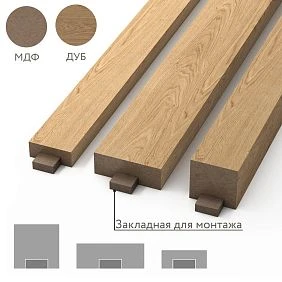
STAVROS — manufacturer and supplier of solid wood for residential and commercial interiors. Slatted panels, wooden slats, moldings, baseboards, Pogonazh iz massiva and furniture components — all are parts of a unified wooden system from which a complete interior is created.
Buy decorative acoustic wall panels At STAVROS, it means getting products made from proven solid wood, in the right sizes, with the ability to select additional elements from the same collection.
A home office without echo is not a fantasy. It is the result of choosing the right materials and a thoughtful approach to walls, floor, and lighting. It all starts with one wall. The one behind your desk.
FAQ: Answers to popular questions
Do acoustic panels help eliminate echo in a room?
Yes, acoustic wall panels reduce sound reflection inside the room. Reverberation noticeably decreases when covering 15–25% of the wall area. But this is not soundproofing from external sources — neighbors or the street.
Where is the best place to install panels in a home office?
Priority is the wall behind the desk. This is the main point of acoustic and visual issues. Additionally — side walls and the wall behind you during video calls.
How do slatted acoustic panels differ from regular wall panels?
Acoustic slat wall panels have a relief with gaps between the slats, which scatters sound waves. Regular wall panels are a flat surface that can reflect sound. The slatted structure is a fundamental acoustic difference.
Are slatted panels suitable for a workspace in the bedroom?
Yes. Slatted panels in the workspace of a bedroom help visually separate the work area and improve acoustics in that part of the room. Light, bright slats do not overwhelm the bedroom.
Can acoustic panels be used in a meeting room?
Yes, and this is one of the most effective application scenarios. Decorative acoustic panels In a meeting room, they improve speech intelligibility, create a representative appearance, and do not look like a technical solution.
Is special wall preparation needed for panel installation?
The wall must be level, dry, and clean. For slatted panels on a lathing, the lathing is attached to the wall with a spacing matching the slat size. For adhesive installation, the surface is primed.
How much wall area needs to be covered for a noticeable effect?
The minimum effect starts from 15% of the wall area. A good result is 25–30%. For a medium-sized office, this is usually one full accent wall plus fragments of side walls.
Do the panels need to be painted, or are they sold in a finished color?
It depends on the manufacturer. Some panels are supplied in a natural state for further treatment with oil, varnish, or paint. Some come with a finished tint. STAVROS offers options with ready-made finishes and for self-treatment.