

























Article Contents:
- What is a carved wooden cross
- Where carved crosses are used
- How a carved cross differs from a simple wooden one
- How to choose the size of a carved cross
- Small size (up to 30 cm in height)
- Medium size (from 30 to 60 cm)
- Large size (from 60 cm and above)
- How to choose material
- Oak
- Oak
- Spruce and pine
- Important criteria for choosing the material
- How to assess the quality of carving
- Purity of lines
- Depth and uniformity of relief
- Quality of sanding
- Symmetry
- Quality of joints (if the cross is composite)
- Finish
- Coating: varnish, stain, tint
- Natural shade
- Dark tinting
- Light tint
- Patina and Aging
- Gilding and gold leaf
- How to combine a carved cross with an icon and church decor
- Cross and carved icon
- Cross and wooden shelf
- Cross and icon case
- Cross and architectural decor
- Color and tone
- Mistakes when choosing a carved cross
- Care for a wooden carved cross
- How to mount a carved cross on a wall
- Where to buy a carved wooden cross
- FAQ: Frequently Asked Questions
- About the manufacturer
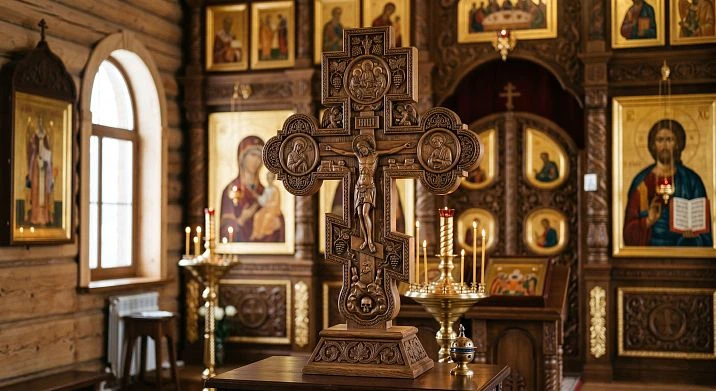
A carved wooden cross is not just a religious symbol placed on a shelf or hung on a wall. It is a three-dimensional decorative item with character, history, and visual power that can speak without words. When you enter a room and see a wooden cross with fine ornamental carving, deep relief, and the warm texture of living wood on the wall, it creates a completely different impression than a metal or plastic product. That is why wooden carved cross is so in demand today — in the decoration of churches, in home iconostases, and in the interiors of prayer rooms, chapels, country houses, and studies.
This article is for those who want to make an informed choice. Not just to buy "something wooden with a cross," but to select an item that will fit organically into the space, meet the task — spiritual or decorative — and last for decades without losing its shape and beauty.
What is a carved wooden cross
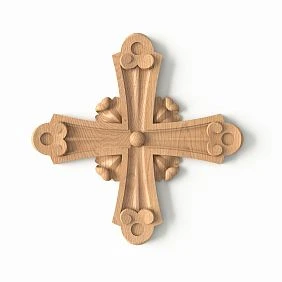
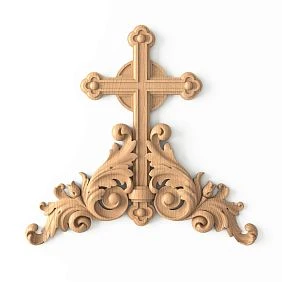
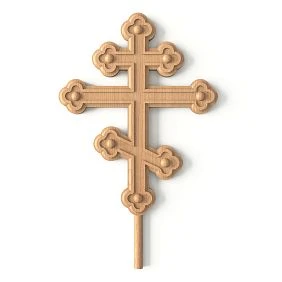
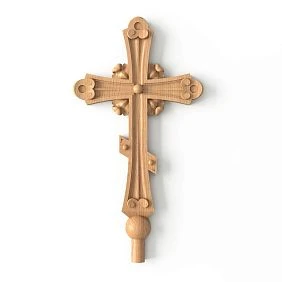
Let's start with the main thing: what exactly do we mean when we say "carved wooden cross". This is a product carved from solid wood or composite wooden blanks, the surface of which is processed by hand or on a professional CNC machine with subsequent manual finishing. The result is a three-dimensional relief: ornaments, plant motifs, geometric patterns, Orthodox symbols, intertwined lines and smooth transitions between planes.
It is important to understand: a carved cross is fundamentally different from a simple wooden blank product. A simple cross is proportions and shape. A carved cross is a work of applied art, where each element of the ornament carries a semantic and aesthetic load. It is the relief that creates the play of light and shadow, which changes depending on the lighting — in the morning, in the evening, by candlelight. It is for this living, breathing effect that people choose Wooden church decor.
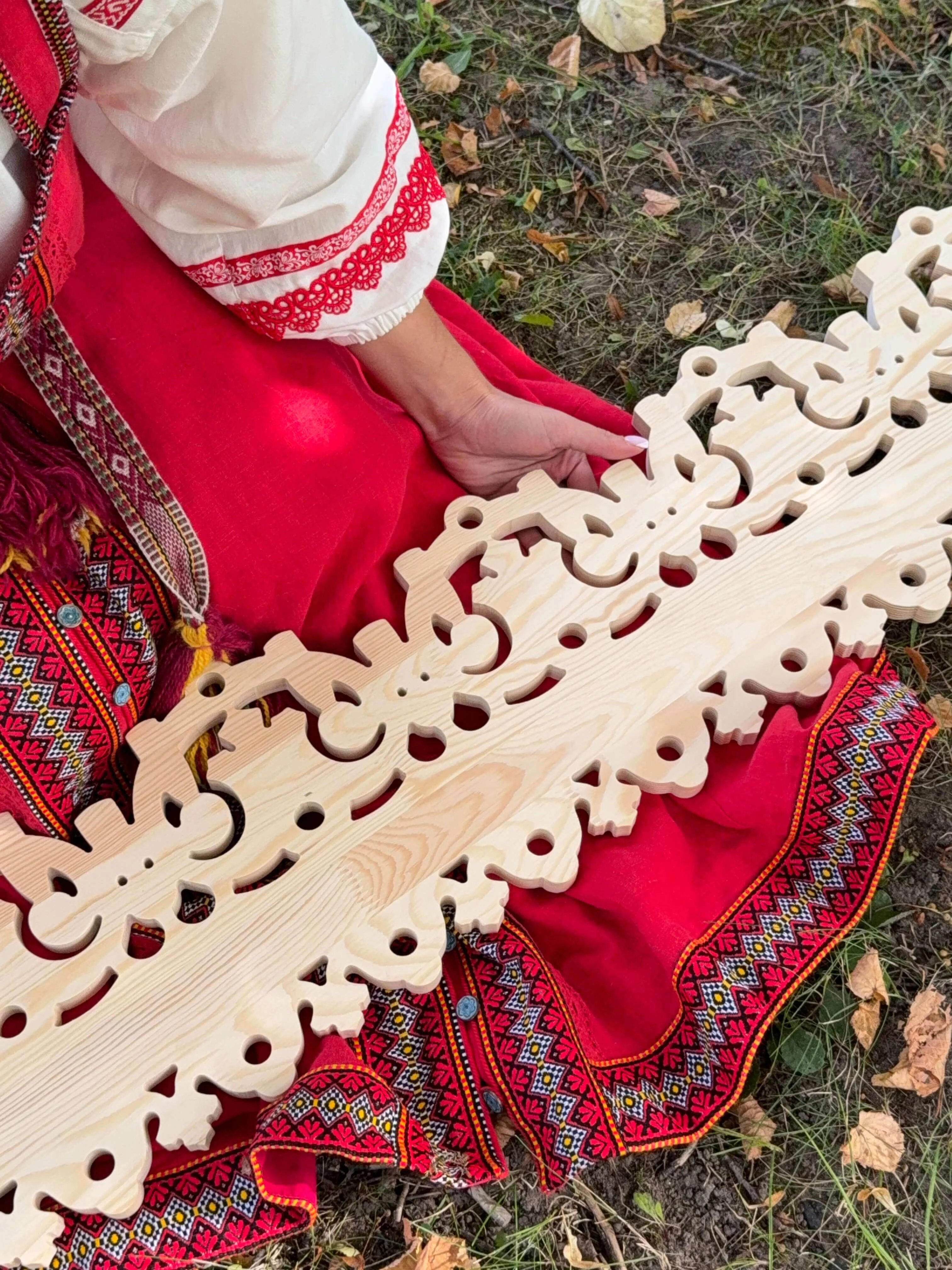
A wooden carved cross can be flat with engraving, three-dimensional with deep relief, through with openwork carving, or monolithic with a pattern on the surface. Each option has its own area of application and its own visual solution.
Where carved crosses are used
The range of applications is wider than it seems at first glance. A wooden cross for the wall is not only a church attribute. It is a universal element that fits organically into completely different spaces.
Temple and church premises. Here, a carved cross is part of the liturgical decoration. It is placed above the altar, on the side walls, above the entrance gates, as part of the iconostasis. The scale in this case requires appropriate: large crosses with elaborate ornamentation, made of dense wood species, capable of holding their shape for decades.
Chapel. A special space, intimate and focused. Here, a wooden cross becomes the semantic center of the entire interior — it is placed on the central wall, often without additional decorations, so that it speaks for itself. A carved cross for a chapel is not just a symbol, it is the heart of the space.
Home iconostasis. One of the most popular placement options. The cross is located in the center or above the icons, setting the vertical and semantic hierarchy. For a home iconostasis, medium-sized crosses with fine carving, proportionate to the icons and wooden shelves, are most often chosen.
Prayer room. A separate room in the house designated for prayer. Here, the cross is the main element—it defines the entire character of the space. Its size, texture, and color set the tone for the entire design.
Country house and study. Here, a wooden carved cross serves not only a spiritual but also a decorative function. In a classic study, in a wooden country house, in a hunting lodge—such a cross fits into the interior as an organic element of natural decor.
Memorial design. Carved crosses are used in memorial interiors, in chapels at burial sites, in remembrance corners. Here, the durability of the material and the unobtrusive solemnity of the form are important.
Wall next to icons. Even without a full iconostasis, a carved cross on the wall next to an icon creates a meaningful and visual ensemble. This is the simplest yet very expressive way to organize a spiritual corner.
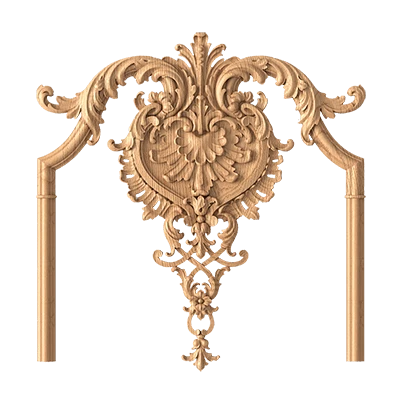
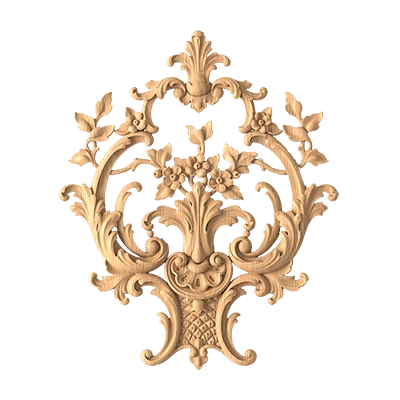
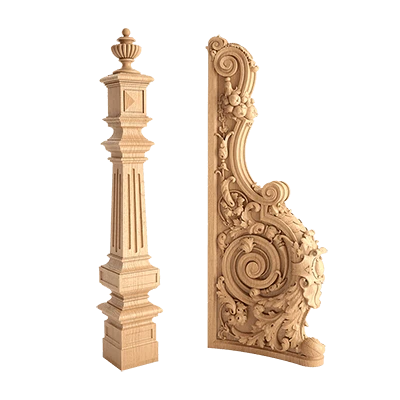
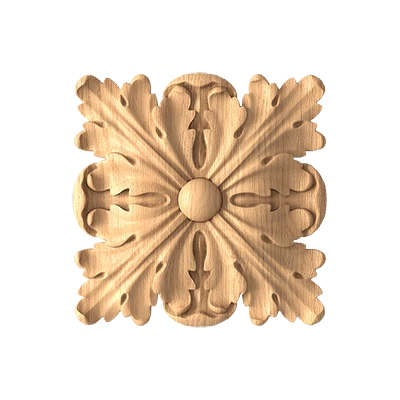
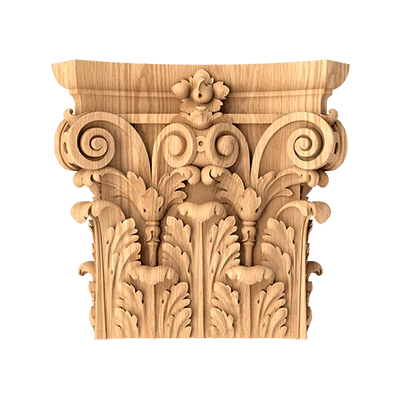
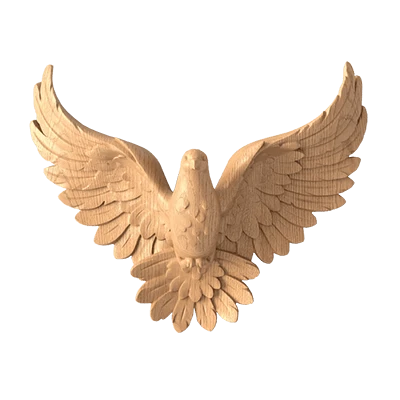
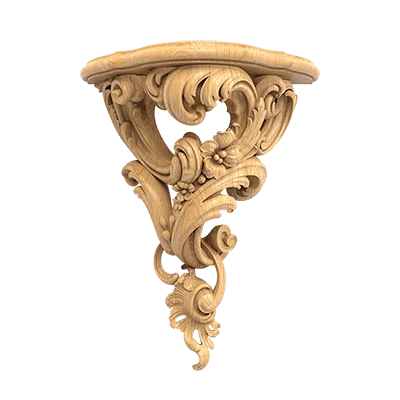
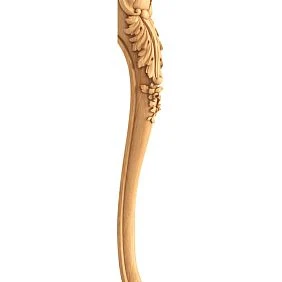
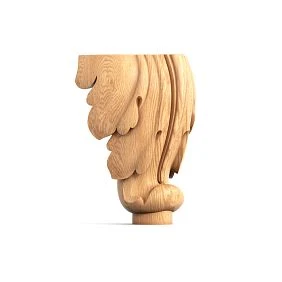
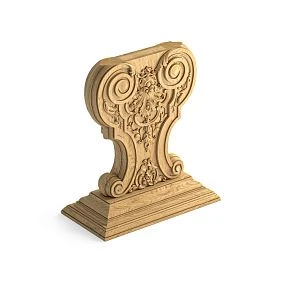
Our factory also produces:
How a carved cross differs from a simple wooden one
This question arises for many—especially for those comparing products by price and not understanding the difference. We will explain as specifically as possible.
A simple wooden cross is proportion and symmetry. Smooth surface, clear outline. Minimalistic, functional, without excess. Such a cross is appropriate where strictness and conciseness are needed.
Carved wooden cross —this is a completely different dimension. The master works with relief: carves ornamentation, deepens lines, creates transitions between planes. The surface lives—it catches light differently depending on the angle of incidence, it creates shadows that change throughout the day. This creates a visual depth that cannot be reproduced by simple processing.
In addition, wood carving is a manifestation of skill. High-quality carved ornamentation requires professional execution: precision of lines, uniformity of depth, cleanliness of edges. That is why Carved wooden decoration always perceived as a higher-class product — and this perception is absolutely justified.
Get Consultation
How to choose the size of a carved cross
Size is one of the key selection parameters, and this is where mistakes are most often made. A cross that is too small gets lost on the wall. One that is too large feels oppressive and disrupts the balance of the space.
Small size (up to 30 cm in height)
Suitable for a home iconostasis, a small shelf with icons, a bedside corner, or a child's room. Such a cross for a home iconostasis is proportionate to standard-format icons and does not draw all the attention to itself — it fits into the ensemble, complementing it.
Medium size (from 30 to 60 cm)
The optimal choice for a prayer room, study, country house, small chapel, or a wall in the living room. Such a cross already creates a semantic accent: it is visible from different points in the room, sets the mood for the space, but does not overwhelm it.
Large size (from 60 cm and above)
For a temple, large chapel, grand hall, or spacious church room. A large cross must match the scale of the wall and the height of the ceilings. Proportions are critical here: a narrow cross on a wide wall looks lost, while one that is too wide appears disproportionate.
Practical rule: before purchasing, mark the intended dimensions of the item on the wall with painter's tape or paper. Look at it from a distance of two to three meters. This takes five minutes and saves you from disappointment.
How to choose material
The material of a carved cross is not a secondary issue. The appearance, durability, and finishing possibilities depend on the type of wood.
Oak
The densest and hardest of common species. Oak features an expressive texture with large pores, a dark core, and a warm brown hue. Oak wooden carved cross has an impressive weight and monumental character—ideal for temples, chapels, and large prayer rooms. Oak takes stain and varnish well, does not deform over time, and is resistant to humidity.
Beech
A dense, light-colored species with a fine texture. Beech is excellent for fine carving, holding clear lines and ornaments. Beech items look lighter and more elegant than oak ones. It takes well to staining in walnut, wenge, mahogany, or light shades. Suitable for home iconostases and prayer rooms.
Spruce and pine
Softer coniferous species. Affordable, easy to work with, offering a warm amber hue and a pleasant pine scent. For small crosses and home use, this is an optimal choice. They require high-quality coating for moisture protection.
Important criteria for material selection
-
Shape stability: the wood must be dried to standard moisture content, otherwise the cross will warp
-
Absence of knots in critical areas of the ornament
-
Surface cleanliness: no cracks, delamination, or traces of rot
-
Wood species suitability for placement conditions: in rooms with temperature fluctuations, it is better to use dense species
All Wooden products for interior STAVROS products are manufactured in compliance with these requirements — from stabilized dry wood that has passed quality control before processing.
How to evaluate the quality of carving
This is the most difficult section for a non-specialist. How to distinguish quality carving from hackwork? What to look for?
Line cleanliness
Look at the edges of the ornament — they should be clear, without "fringe", without traces of chips or unevenness. If the line "floats" or has jagged edges, this is a sign of poor-quality processing.
Depth and uniformity of relief
The ornament should have the same depth over the entire surface. If in one place the carving is deep, and in another it is barely outlined, this indicates careless execution.
Sanding quality
After carving, the surface should be sanded. Smooth in the main planes, worked out in the recesses. No traces of tools, no scratches from sandpaper in the ornament.
Symmetry
The cross is a geometrically strict product. The symmetry of its parts must be impeccable. Check visually: place the cross horizontally and look from a distance. Any asymmetry will be noticeable.
Quality of joints (if the cross is composite)
If the product is made of several parts, check the joints: they should be invisible or minimally noticeable, without gaps or steps.
Finish
Is the coating applied evenly? Are there any varnish drips, unpainted areas, or stains? A good coating emphasizes the wood texture, not hides it.
Coating: varnish, stain, tinting
The question of coating is a question of the product's character. The same carved product will look completely different depending on how it is finished.
Natural shade
If the wood has a beautiful texture — oak, ash, beech — sometimes the best choice is a clear matte or semi-matte varnish that preserves the natural color. Such wooden wall cross looks most organic, especially in interiors with natural materials — wood, stone, linen.
Dark tinting
Stain in walnut, wenge, or ebony gives the product solemnity and strictness. A dark wooden carved cross looks good on light walls, creating contrast and accent. For church interiors, dark tones are traditional.
Light tinting
For bleached oak, vanilla, light ash — for modern interiors, Scandinavian or minimalist style. The light cross softly blends into neutral walls without creating visual heaviness.
Patina and aging
The effect of an "antique" product: a dark base with lightened raised ornament. This technique works well for classic and historical interiors. Patination emphasizes the depth of the relief — the ornament literally "emerges" from the darkened surface.
Gilding and gold plating
For formal church interiors, partial or full gilding is relevant. Gilding requires impeccable form and clean carving from the product — any defect under the gold becomes doubly noticeable.
The choice of coating should be coordinated with the overall style of the interior. Wooden items with ornament STAVROS are supplied both with factory coating and in raw "for finishing" form — depending on the buyer's task.
How to combine a carved cross with an icon and church decor
This is perhaps the most practically important section for those creating a home iconostasis or arranging a prayer room. Because an isolated cross on a bare wall is one thing, but a well-composed arrangement is quite another.
Cross and carved icon
The most organic combination is a carved cross and a carved icon in the same style and from the same material. If the cross is made in the style of plant ornament, the icons should be designed in the same aesthetic. Mixing geometric carving with baroque ornament is risky: the result will look eclectic and sloppy.
Cross and wooden shelf
A shelf for icons made from the same wood as the cross is a connecting element that unifies the composition. The shelf is placed below, the icons stand on it, and the cross completes the vertical from above. It is important to maintain proportionality: the shelf should not be wider than the base of the cross.
Cross and icon case
An icon case is a wooden glazed ark for an icon. If there is an icon case in the interior, the cross is selected proportionally to it: it can be placed above the icon case or next to it, complementing the composition. Wooden church decor — crosses, icons, icon cases, shelves — should form a single ensemble.
Cross and architectural decor
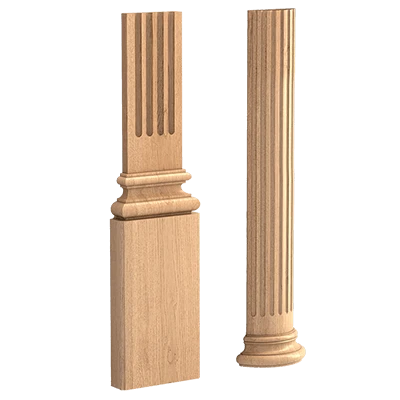
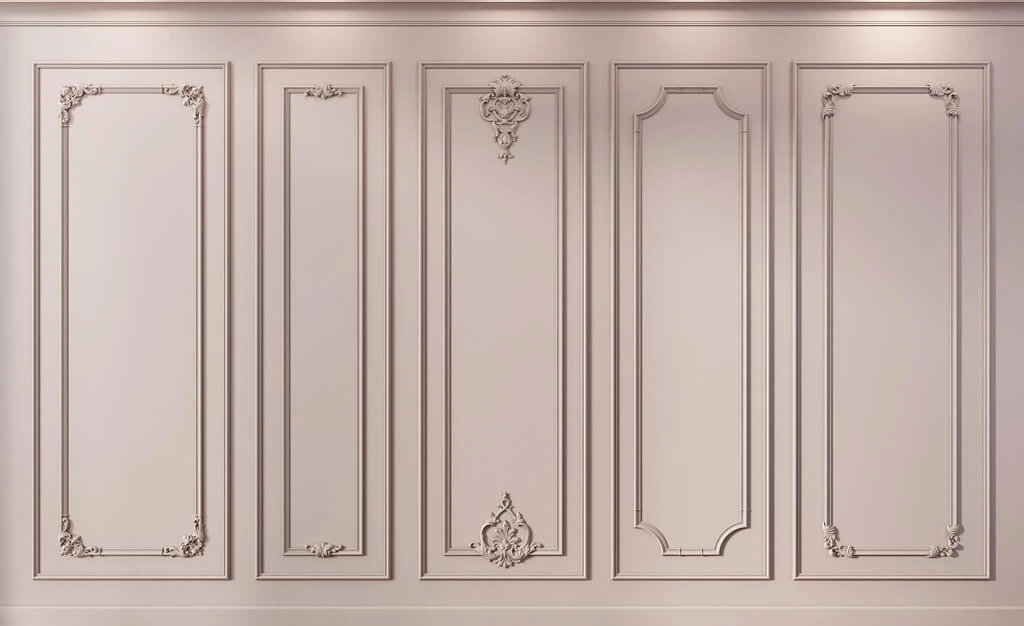
In churches and chapels, the cross is often placed within a frame of wooden ornamental elements — pilasters, columns, carved overlays. Carved wooden decoration for walls and architectural details must be stylistically unified with the cross. This creates a sense of a cohesive, well-thought-out decoration.
Color and tone
If the cross is dark, the icons and shelves should be either the same tone or contrastingly lighter. You cannot allow "random" color neighbors: a chaotic mix of tones destroys visual unity. The rule is simple: either one tone for all items, or a deliberate contrast of two tones.
Mistakes when choosing a carved cross
Let's list the most typical mistakes — not to scare you, but so you can avoid them.
Choosing only by size. Many look at centimeters and forget about proportions. A cross can be the "right" size but be too wide or too narrow for its placement. Always evaluate proportions in the context of the wall and surrounding objects.
Not considering the placement location. A cross for a church and a cross for a home iconostasis are different items. Scale, ornament, finish — everything must match the space. A monumental cross in a small apartment overwhelms the space. A thin, elegant cross in a high church hall gets lost.
Not checking the quality of the carving. A photo in a catalog can hide defects. If possible, see it in person. If not, request detailed high-resolution photos of the ornament.
Choosing a cross that is too large for a small wall. A wall 80 cm wide cannot accommodate a cross 60 cm wide — it will look cramped. The golden rule: the width of the cross should not exceed half the width of the available wall.
Not considering the color of the wood next to the icons. Different wood species have different shades. Mixing without intention creates chaos. Compare the tone of the cross with the tone of existing icons, shelves, and frames in advance.
Forgetting about the mounting. A solid wood cross is a heavy item. It requires reliable fastening: dowels, anchors suitable for the wall material. Do not hang a heavy cross on a decorative nail in drywall.
Mixing different carving styles. Geometric patterns and baroque curls, braiding and floral ornament — the coexistence of styles requires a deliberate approach. If you are unsure, it is better to stick to a single style.
Not checking the coating. The coating must be resistant to touch, sunlight, and dust. Clarify the composition of the finish coating — this is important for long-term care of the product.
Care for a wooden carved cross
Proper care extends the life of the product for decades. Nothing complicated — but a few important rules are worth knowing.
Avoid direct sunlight. UV radiation fades and dries out wood over time. If the cross is placed near a window — cover it during bright hours or use UV-protective curtains.
Do not allow humidity fluctuations. Wood reacts to changes in humidity by expanding and contracting. In rooms with central heating, maintain humidity at 40–60% — this is comfortable for both people and wooden products.
Wipe with a soft dry cloth. Use a soft lint-free cloth to remove dust. Damp cleaning is only acceptable for products with a high-quality varnish coating.
Renew the coating every 1–2 years. If the cross is coated with wax or oil, periodically renew the coating. This protects the wood and restores color saturation.
Do not use abrasive products. Any hard brushes, powders, and aggressive cleaning agents damage both the wood and the ornament.
How to mount a carved cross on a wall
This point is often not given due attention — and it's a mistake. Incorrect mounting can cost both the product and the wall finish.
For lightweight crosses (up to 1–1.5 kg), a hook or a dowel with a screw driven into the wall is sufficient. For heavy oak or beech items, especially large crosses (over 2 kg), anchor fasteners or a mounting plate that distributes the load are needed.
Check the wall type: brick, concrete, drywall — each material requires its own fastening. A heavy cross cannot be hung on drywall without a transverse profile.
Most products have a factory mounting hole or a metal loop on the back. Clarify this point when ordering.
Where to buy a carved wooden cross
When choosing where to buy a carved wooden cross, it is important to focus not only on price but on a combination of factors: the manufacturer's reputation, the quality of catalog photos, the availability of material and coating descriptions, the ability to ask a specialist a question, and delivery conditions.
Carved cross from the STAVROS catalog — this is a product backed by real manufacturing, specific wood species, and clear parameters: size, coating, mounting method. In the section of church decor made of wood crosses of several formats are presented — from chamber-sized for home iconostases to large ones for chapels and churches.
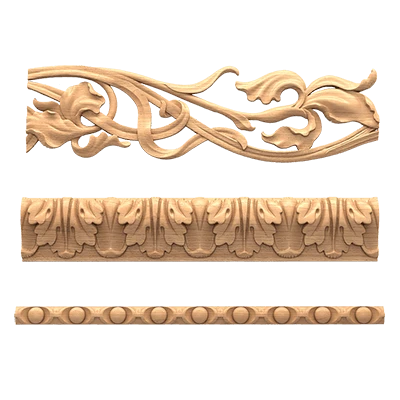
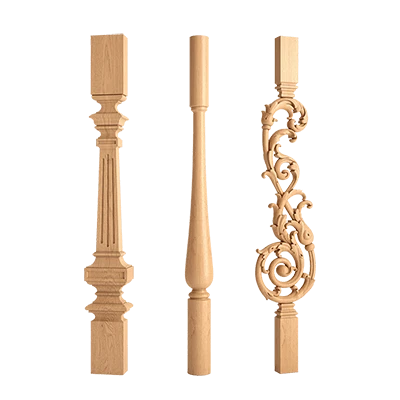
If you are looking not only for a cross but also for accompanying Carved wooden decoration for walls, iconostasis, shelves, ornamental frames — in a single catalog you can select the entire ensemble in one style. This greatly simplifies the task of creating a cohesive church or home interior.
FAQ: Frequently Asked Questions
How to choose a carved wooden cross?
Focus on four parameters: placement location (temple, chapel, home), wall and space size, carving style and ornament, coating and wood tone. Determine these four conditions — and the selection will narrow down to a few suitable options.
Where can a wooden carved cross be used?
In a temple, chapel, home iconostasis, prayer room, study, country house, on the wall next to icons, in memorial interiors. The range of use is wide — the main thing is to maintain proportionality and stylistic unity.
Is a carved cross suitable for a home iconostasis?
Yes, and it is one of the most organic placement options. The cross completes the vertical composition of the iconostasis, sets the semantic hierarchy. Choose a cross proportionate to the icons — usually a medium or small format.
What size of carved cross should I choose?
For a home iconostasis — up to 30–40 cm. For a prayer room or study — 40–60 cm. For a temple or chapel — from 60 cm and above. Always first mark the spot on the wall and evaluate visually.
What type of wood is best for choosing a cross?
Oak and beech — dense, durable, ideal for large and church items. Pine — light, affordable, well-suited for home formats. The choice depends on placement conditions and desired appearance.
How does a carved cross differ from a simple wooden one?
With carved ornamentation, relief, and the play of light and shadow. A carved cross is applied art with depth and texture. A simple wooden cross is a laconic form without additional decorative detailing.
Can a carved cross be combined with a carved icon?
Not only can it be — it is an ideal combination. The main condition: a unified carving style, a unified wood tone, and a unified coating. Mixing styles creates visual chaos.
How to care for a wooden cross?
Wipe with a soft dry cloth, avoid direct sunlight and humidity fluctuations, renew the protective coating (wax, oil, varnish) every 1–2 years. Do not use abrasives or damp cloths on items without a moisture-resistant coating.
How to mount a carved cross on a wall?
Light crosses — dowel with screw. Heavy ones — anchor fastening or mounting plate. The type of fastening depends on the weight of the item and the wall material. Check for the presence of a mounting hole or loop when ordering.
Where to buy a carved wooden cross?
The STAVROS catalog features carved wooden crosses in various formats for home iconostasis, chapels, churches, and prayer rooms. You can choose an item in the section of church decor made of wood or go directly to the carved cross page.
About the manufacturer
STAVROS — Russian manufacturer wooden carved decoration и of solid wood for interior, church decoration and architectural design. The company's catalog features crosses, icons, crucifixes, columns, capitals, carved bases, gates and a full range of decorative elements for church and residential interiors. STAVROS products are made from dense wood with professional finishing and are available for order with Contact us to confirm shipping to your destination. If you are looking for a wooden carved cross for a church, chapel, home iconostasis or country house — in the catalog STAVROS you will find a solution that matches your task in size, style and quality of execution.