








































































Article Contents:
- Carved wooden church utensils for the temple: how to choose columns, capitals, crosses and overlays
- Wooden church utensils: what the buyer is looking for and what STAVROS offers
- What is included in carved wooden church utensils for the temple
- Crosses
- Wooden icons
- Crucifixes
- Columns, capitals and bases
- Overlays and decorative details
- Gates
- Carved elements for the iconostasis: columns, capitals, bases, and overlays
- Verticals: carved columns
- Upper finishes: capitals
- Lower bases: bases
- Accents: carved overlays
- Crosses, icons, and crucifixes in a unified system of church decor
- Overlays for church furniture: when a point carved element is needed
- Lectern
- Icon case
- Iconostasis: restoration of individual fragments
- Church furniture: analogions, altars, sexton's tables
- How to choose church decor by material
- Oak
- Oak
- Linden
- Rule of wood species compatibility
- How to choose church utensils by purpose
- For an Orthodox church
- For a chapel
- For home iconostasis
- For restoration of existing decoration
- For a new set of church decor
- What to check before buying church utensils online
- Typical mistakes when choosing wooden church decor
- Mistake 1: buying a separate element without an overall composition
- Mistake 2: mixing different carving styles
- Mistake 3: not checking the scale
- Mistake 4: choosing the wrong type of wood
- Mistake 5: not considering the finish
- Mistake 6: focusing only on price
- Mistake 7: ordering without consultation for a complex project
- How to choose a carving style for Orthodox church decor
- Baroque Style
- Naryshkin (Moscow Baroque)
- Classicist style
- "Russian" style (19th-century historicism)
- Modern neutral style
- Where to buy carved wooden church utensils
- About the Company STAVROS
- FAQ: Answers to the Most Popular Questions
- What are carved wooden church utensils?
- How do church utensils differ from church decor?
- Can I buy individual iconostasis elements rather than the entire iconostasis?
- What type of wood is best for ordering church decor?
- How to choose a carved element for restoration?
- Where to buy wooden church utensils in Moscow and Saint Petersburg?
- Can I order church decor according to an individual project?
- Is there Contact us to confirm shipping to your destination.?
- What does it mean to "buy an iconostasis" from STAVROS?
- Is wooden church decor suitable for a home iconostasis?
Carved wooden church utensils for a temple: how to choose columns, capitals, crosses, and overlays
There are things that cannot be chosen by chance. Wooden carved church utensils are one of them. They not only decorate a temple, chapel, or home prayer corner. They shape the space where a person encounters something greater than everyday life. That is why every element — a column, capital, cross, overlay, iconostasis detail — must be chosen precisely: by material, by scale, by style, by purpose.
If you are looking for where buy church utensils made of wood — this article will give you a complete understanding of the choice. Without general words and without the mistakes made by those who rush.




Church utensils made of wood: what the buyer is looking for and what STAVROS offers
When a person types "buy church utensils" into the search bar, they may be looking for completely different things: candles, vestments, censers, icons, consumables for worship. This is a broad, diverse market.
But there is a separate category of buyers — and this article is written specifically for them. These are those who build or restore a temple, decorate a chapel, create a home iconostasis, or update church furniture. They need carved wooden elements: columns, capitals, bases, overlays, crosses, wooden icons, iconostasis details. These are not consumables. They are architectural and decorative decor that lasts for decades.
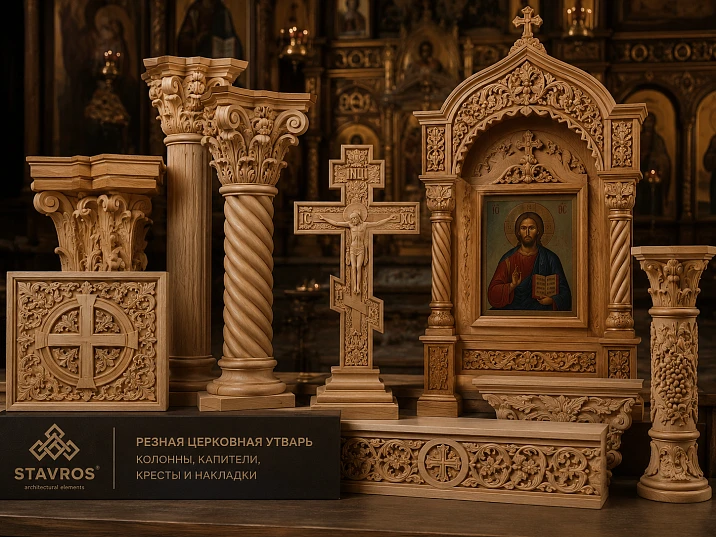
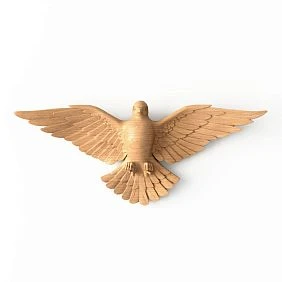
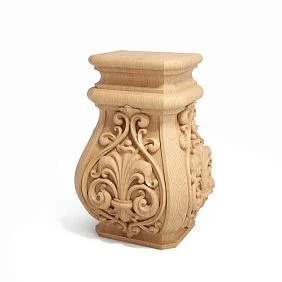
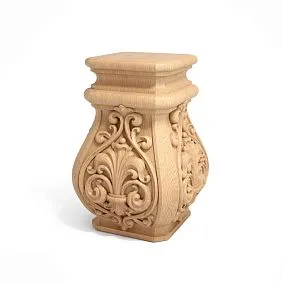
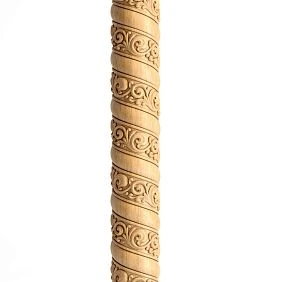
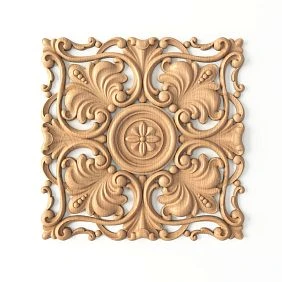
Church decor STAVROS — this is exactly that category. Carved wooden products made of solid wood, manufactured with restoration experience. The catalog includes: crosses, icons, crucifixes, columns, capitals, bases, overlays, gates, and decorative details for the iconostasis. All of these are not decorative souvenirs, but full-fledged architectural and liturgical elements.
Our factory also produces:
What is included in carved church utensils for the temple
Before choosing, you need to understand: what exactly are you buying and for what purpose. The concept of "church utensils" is widely used in everyday life — almost as a synonym for "everything needed for a temple." But wooden carved church utensils for the temple have their own logic and classification.
Get Consultation
Crosses
A wooden carved cross is one of the main symbols of the Orthodox space. It can be installed on the iconostasis, on the wall of the altar area, on the analogion, above the entrance to the temple, in the home prayer corner.
Wooden crosses differ in shape (eight-pointed, four-pointed, Golgotha), in size (from tabletop to altar), and in the nature of the carving (flat relief, three-dimensional carving, openwork ornament). More about choosing a wooden carved cross — in the article "Buy a wooden carved cross".
Icons made of wood
A carved wooden icon is a three-dimensional image in which the image is created through relief. This is one of the oldest forms of church decor, rooted in the pre-Mongol tradition.
Wooden icons are used in iconostases, on analogions, in icon cases, and in home prayer corners. For types, sizes, and selection of carved wooden icons, see a separate article. "Buy a carved wooden icon".
Crucifixes
A crucifix is a cross with an image of Christ. In wooden execution, this can be a flat-relief image, a three-dimensional sculptural figure, or a combined solution. The crucifix occupies a central place in the iconostasis or is installed separately in the altar area.
Columns, Capitals, and Bases
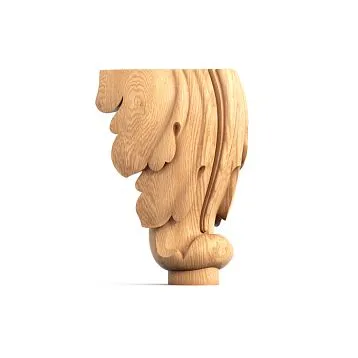
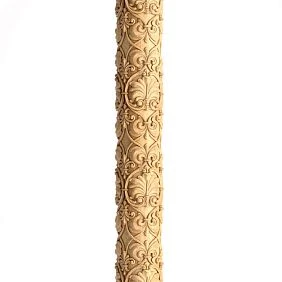
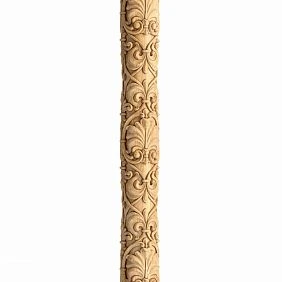
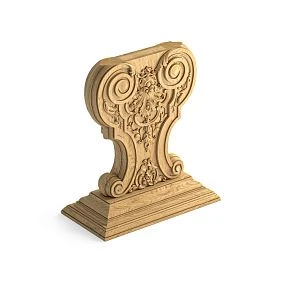
These are architectural elements of the iconostasis and church interiors. Carved wooden columns set the vertical rhythm of the iconostasis, divide it into tiers, and frame the icon fields. Capitals complete the column from above — they are both a decorative and structural element. Bases are the foundation of the column, its lower completion.
The STAVROS catalog features Carved Column IKN-019 and other products of the series church columns.
Overlays and Decorative Details
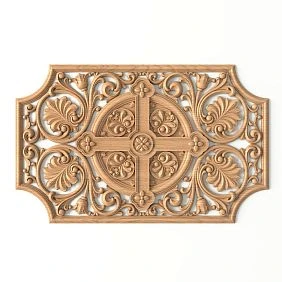
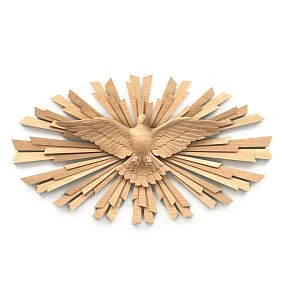
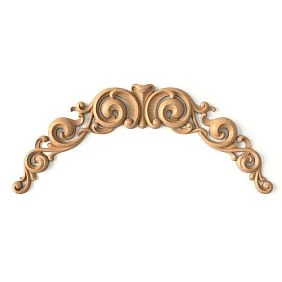
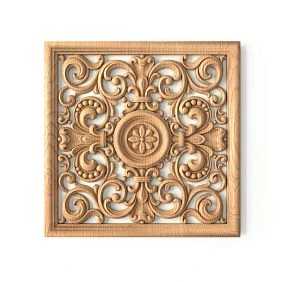
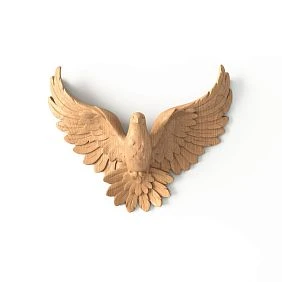
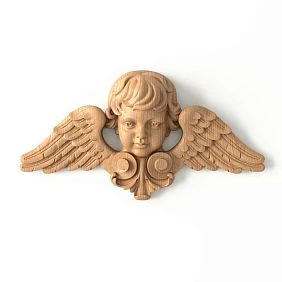
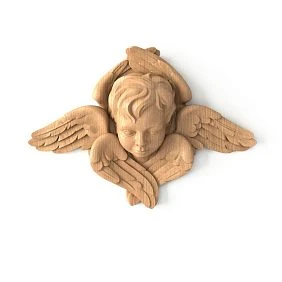
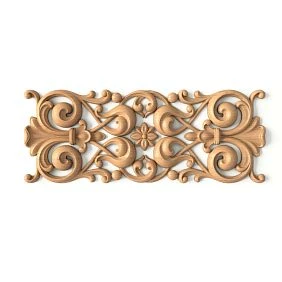
Carved overlays are flat or relief wooden elements that are attached to the surface of an iconostasis, icon case, lectern, or church furniture. They may feature a cross, floral ornament, acanthus relief, angel heads, or other symbolic motifs.
Carved applique IKN-009 и carved overlay IKN-016 — specific examples of products from the STAVROS catalog.
Gates
The Royal and Deacon's gates are key elements of the iconostasis. They are made of wood with carved decoration, often with gilding or walnut tinting. The gates require special precision: in size, style, and proportions relative to the iconostasis.
Carved elements for the iconostasis: columns, capitals, bases, and overlays
The iconostasis is not just a wall with icons. It is an architectural system where each element serves a function: constructive, symbolic, aesthetic. And it is the wooden carved details that create its visual language.
Often a buyer looking for wooden iconostasis parts, does not know exactly what they need — because they see the iconostasis as a whole, without distinguishing its components. Let's break down the system.
Verticals: carved columns
Columns divide the iconostasis into tiers and vertical sections — "tyabla". They create rhythm, set the scale, and emphasize height. In a classic Orthodox iconostasis, columns are one of the main plastic motifs.
Choosing wooden columns for the iconostasis, you need to consider:
-
The height of the column — it should match the height of the iconostasis tier.
-
The diameter or cross-section — depending on the scale of the iconostasis and the width of the sections.
-
The nature of the carving — smooth shafts, fluting, spiral ribbed profile.
-
Style — Baroque, Classicism, "Russian" with floral ornament.
Top finials: capitals
A capital is the crown of a column. It completes the vertical with decorative relief: acanthus leaves, volutes, angelic faces, floral motifs. The capital is the element that makes the column "alive" and gives it character.
For the iconostasis, the capital must be consistent in style with the column and the overall tier decoration. If the column is smooth, the capital can be basket-shaped or leaf-shaped. If the column has a fluted shaft, the capital continues this rhythm.
Lower bases: bases
The column base is the lower transitional element from the floor or tier base to the column shaft. In iconostases, bases often have a profiled shape: Attic (with two convex toruses), Tuscan (with a wide plinth), or more complex with decorative relief.
The base is important not only aesthetically — it also ensures the correct visual 'weight' of the column, preventing it from appearing 'suspended' in the air.
Accents: carved overlays
Overlays work where a point decorative accent is needed. They are attached to flat surfaces of the iconostasis — to tier beams, central panels, and the frames of the Royal Doors. An overlay with a cross above the central section, an overlay with acanthus ornament on the side pilasters, overlays with cherubs on the frieze — these are what transform the iconostasis from 'just a wall' into a work of art.
Carved applique IKN-009 — an example of a product with a characteristic church ornament. carved overlay IKN-016 — another variant, with a different relief and proportions.
Crosses, icons, and crucifixes in a unified system of church decor
Each of these elements can be purchased separately. But in a proper church space, they work as a system — and it is the systematic approach that yields a cohesive result.
Imagine an iconostasis: in the center — the royal doors with carved decor, above them — a carved cross or crucifix, on the sides — columns with capitals. In the icon fields — icons, including carved ones. Overlays on the tyablo beams — in the same style as the column ornament. This entire system reads as a single whole.
How to achieve this unity?
Rule one: a unified carving style. If the columns are made in the Baroque spirit — with lush acanthus decor and volutes — the overlays should belong to the same tradition. Mixing Baroque and strict Romanesque in one iconostasis creates a visual conflict.
Rule two: unified material and finish. If the columns are made of oak with a walnut tint — the icons, overlays, and crosses should be from the same wood with the same finish. Otherwise, the difference in color and texture will destroy the unity.
Rule three: consistent scale. Small overlays on a large iconostasis get lost. Large crosses in a small chapel look heavy. The scale of each element should match the scale of the space.
Select icons and church utensils as a single system — a task that STAVROS solves when working on projects of churches, chapels, and home iconostases.
Overlays for church furniture: when a point carved element is needed
Not every order is a new iconostasis. Often the task is formulated differently: to update a specific element, add a decorative accent, restore a lost fragment. This is where a carved overlay becomes the main tool.
Analogion
Analogion — a slanted stand for liturgical books and icons. In classical analogions, wooden carved overlays are placed on the slanted surface, on the side edges, and on the legs. If the analogion is old and the overlay is lost, a replacement can be selected based on the preserved pattern or ordered from a sketch.
Icon case
A wooden icon case is a frame structure for an icon. Overlays on the icon case create an ornamental framing of the image: corner rosettes, central crosses, arched tops. For a home prayer corner, a carved overlay with a cross or acanthus ornament is a quick way to give the icon case a finished look.
Iconostasis: restoration of individual fragments
In restoration projects, a common task arises: one decorative element is lost, but there is neither need nor opportunity to replace the entire iconostasis. A carved overlay with a similar ornament, matched by style, scale, and material, allows restoring integrity.
Church furniture: analogions, altars, sexton's tables
Wooden furniture in the altar area and the main volume of the church is often decorated with carved overlays. This is not only aesthetics — it is part of the liturgical program of the space, where each object has its place and its image.
How to choose church decor by material
The question of material is one of the first asked when choosing wooden church utensils. And it is not as simple as it seems.
Oak
Oak is a dense, hard wood with a large expressive grain. It is traditionally used for carved church decor when maximum strength and durability are important. Oak accepts tinting, varnish, and wax well. Under natural oil, it reveals a warm golden tone.
For large elements — columns, bases, iconostasis beams, royal doors — oak is ideal. Its density allows carving fine relief without the risk of chipping.
If you need church decor made of oak for a church or chapel with heavy load and long service life — this is the first choice.
Beech
Beech is a homogeneous, fine-grained wood. It is well suited for fine relief and delicate ornaments. Under white enamel, gilding, or light varnishes, beech gives a clean, even result without "bleeding" of unwanted texture.
Beech is chosen when precision of details is important: thin acanthus leaves, small ornamental motifs, openwork cutouts.
Linden
Linden is a traditional wood for Orthodox carving. Soft, light, with a homogeneous structure. It was from linden that icons and church decor were carved in the Middle Ages and Modern times.
Linden cuts beautifully by hand, allowing for the highest level of detail. But it is softer than oak and beech, so it is less preferable for elements with mechanical load (columns, bases). For icons, thin overlays, relief ornaments — this is a classic choice.
Rule of wood compatibility
If the iconostasis already exists and is made of oak, new elements must be made of oak. Mixing woods under the same tint almost always results in a different final color. Specify the material when ordering — this is crucial for restoration and supplementary projects.
How to choose church utensils by purpose
The context of use changes the requirements for the product. Let's break down the main scenarios.
For an Orthodox church
Requirements are maximum. Elements must conform to Orthodox iconographic tradition and have the correct style (Baroque, Naryshkin style, "Russian" style, strict classicism — depending on the church's architecture). Sizes — to match the actual dimensions of the iconostasis, altar area, and interior. Material — as durable as possible, with a long service life.
For parish churches and monasteries, STAVROS carries out projects both from ready-made catalog items and according to individual technical specifications.
For a chapel
A chapel is a smaller scale, often a more intimate and personal context. Here, it is important to match the scale of the space: elements should not "overburden" a small interior. Often, a more restrained decor is chosen for a chapel — without lavish Baroque carving, with an emphasis on clean forms and natural material.
Wooden decor for a chapel from the STAVROS catalog is an opportunity to select elements for a specific scale without ordering a full iconostasis set.
For a home iconostasis
A home iconostasis is a prayer corner in a living space. Here, the requirements are different: the size is limited by the wall or niche, the style can be more free. But the quality of the material and precision of execution are just as important as in a church project.
For a home iconostasis, they often buy:
-
Carved cross for placement above icons.
-
Wooden icons framed in a carved icon case.
-
Overlays with a cross or ornament for decorating the shelf under icons.
For restoration of existing decoration
A restoration project requires special care in selecting elements. You need to know exactly: the type of wood, the nature of the carving, the profile of the elements, the tone and method of finishing. Only when all these parameters match will the new element fit seamlessly into the existing iconostasis.
STAVROS has restoration experience — Konstantinovsky Palace, the Hermitage, Alexander Palace — and can produce items based on samples, sketches, and photographs.
For a new set of church decor
If the iconostasis is being created from scratch — this is the most free scenario. You can choose the style, material, and scale without restrictions from the existing context. But in this case, it is most important to have a unified design solution: all elements must be coordinated with each other before production begins.
What to check before buying church utensils online
Buying wooden church utensils online is convenient but requires attention. Here is what you need to clarify before placing an order.
Dimensions:
-
Exact dimensions of the product (length, width, height/thickness).
-
Compliance with the dimensions of your iconostasis, analogion, or wall.
-
Size of the mounting hole or fastening elements.
Material:
-
Wood species (oak, beech, linden, other).
-
Solid wood or composite parts (for large elements).
-
Availability of certification or product passport (for restoration objects).
Finishing:
-
Tinting (shade, saturation).
-
Coating (varnish, oil, wax, enamel).
-
Possibility to change the finish upon request.
Style and relief:
-
Thread character (baroque, classical, "Russian", floral).
-
Relief depth (flat, medium, three-dimensional).
-
Compatibility with existing elements.
Delivery:
-
Packaging to protect the thread during transportation.
-
Production time (if the product is made to order).
-
Delivery region.
Possibility of ordering by project:
-
Can the size, profile or ornament be changed for a specific project?
-
Does the manufacturer accept technical specifications with drawings?
All these questions can be clarified with the STAVROS manager before placing an order.
Typical mistakes when choosing wooden church decor
Working with clients — from parish rectors to private homeowners — builds an understanding of where mistakes most often occur. Here are seven of them.
Mistake 1: buying a separate element without an overall composition
The most common one. Buy a beautiful overlay — and then find that it doesn't fit the scale of the iconostasis, doesn't match the style of the columns, or doesn't suit the size of the icon frame.
Solution: before purchasing, have at least a layout diagram of all elements, even a sketchy one.
Mistake 2: mixing different carving styles
Baroque capitals with volutes next to flat geometric overlays in the Art Nouveau style — this is a stylistic conflict. In a church space, it is especially noticeable because it disrupts the integrity of the sacred image.
Mistake 3: not checking the scale
A cross that looks good in a catalog photo may turn out to be half the size (or larger) than expected. Always check dimensions in centimeters against the actual proportions of the installation site.
Mistake 4: choosing the wrong type of wood
If the main part of the iconostasis is made of oak with a "walnut" tint, and the overlay is ordered from beech — under the same tint they will give different colors. Compatibility of wood species is critical for a uniform result.
Mistake 5: not considering the finish
Some customers purchase the product without finishing, planning to coat it themselves. Without experience with professional tinting compounds, the result may be disappointing. It is better to order products with the desired finish already applied.
Mistake 6: focusing only on price
In wooden church utensils, price is an indirect indicator of quality. A cheap element from mass-produced blanks and a stamped overlay made of plastic or MDF will provide neither the necessary detail nor durability. This is unacceptable for a sacred space.
Mistake 7: ordering without consultation for a complex project
If you are designing an iconostasis from scratch or restoring an old one — do not try to do it yourself, relying only on catalog photos. Consultation with a specialist in church decor helps avoid incompatibilities even before production begins.
How to choose a carving style for Orthodox church decor
This is a topic that is often underestimated. The carving style is not just aesthetics; it is a cultural and historical affiliation.
Baroque style
Lush plant ornamentation: acanthus leaves, scrolls, clusters, angel heads. Most common in Orthodox iconostases of the 17th–18th centuries. If your church is from this period, Baroque decor is organic.
Naryshkin (Moscow Baroque)
A more restrained version of Baroque, characteristic of Moscow and central Russia in the late 17th century. Motifs: spiral columns, leaf capitals, openwork kokoshniks, a combination of white stone and red brick as a model. In wood — clean profiles with moderate decor.
Classical style
Strict, geometric, based on the classical order. Columns with fluting, Ionic or Corinthian capitals, medallions, garlands. Characteristic of churches of the 18th — early 19th century.
"Russian" style (19th-century historicism)
Imitation of medieval Russian forms: kokoshniks, twisted ropes, braids, keel-shaped arches. Characteristic of churches from the era of Alexander III and Nicholas II.
Modern neutral style
For chapels and home iconostases in modern interiors, a more restrained, laconic decor is often chosen: clean lines, minimal relief, emphasis on wood texture. This is a valid choice if the space is not a historical monument.
Where to buy carved wooden church utensils
The answer is direct: in the catalog church decor STAVROS.
Here are:
-
Crosses, icons, crucifixes, gates, capitals, bases.
For those in Saint Petersburg or who prefer to see products in person — a section is available church utensils in stock in Saint Petersburg.
Also in the catalog carved decor elements и of solid wood you can find related categories: moldings, linear products, decorative elements for architectural design.
Delivery — throughout Russia and CIS countries. Showrooms — in Saint Petersburg and Moscow. For project orders with individual parameters — consultation with a manager by phone or via the website.
About the company STAVROS
STAVROS is a Saint Petersburg manufactory of wood and MDF products, founded in 2002 by artists Andrey Ragozin and Evgeny Tsapko. STAVROS's restoration history began in 2003 with the Konstantinovsky Palace in Strelna and continued at the Hermitage, Alexander Palace, Trinity-Izmailovsky Cathedral, Sheremetev Mansion, and many other historical and church sites.
It is this experience that makes STAVROS not just a manufacturer of wooden decor, but a manufactory that understands the context of church space from within. Every carved column, every overlay, every cross is created with an understanding of where and for what purpose it will serve.
STAVROS church decor consists of items worthy of sacred space: crafted from solid wood, executed precisely and with respect for tradition.
FAQ: answers to the most popular questions
What is carved wooden church utensil?
In the context of STAVROS, these are carved wooden items for temple and home church spaces: crosses, icons, crucifixes, columns, capitals, bases, overlays, gates, and decorative details for the iconostasis. These are not consumables, but long-term architectural and liturgical elements.
How does church utensil differ from church decor?
"Church utensil" is a broad user concept that includes everything necessary for a temple. "Church decor" is a more precise term for carved wooden elements that shape the architectural and decorative design of the space.
Can I purchase individual elements of the iconostasis rather than the entire iconostasis?
Yes. STAVROS sells individual columns, overlays, capitals, bases, and other details. This is especially relevant for restoration and for adding new elements to an existing iconostasis.
What type of wood is best for ordering church decor?
It depends on the task. Oak for strength and expressive texture. Beech for fine relief and even coloring. Linden for highly detailed hand carving. For compatibility with an existing iconostasis, use the same wood species as the original.
How to choose a carved element for restoration?
You need to know the wood species, carving style, profile, dimensions of the lost element, and the method of attachment. Based on this data, STAVROS can manufacture the product according to a sample or sketch.
Where to buy wooden church utensils in Moscow and St. Petersburg?
In STAVROS showrooms in both cities and through the website stavros.ru. For St. Petersburg, a section with items in stock is available.
Can I order church decor according to an individual project?
Yes. STAVROS accepts orders based on technical specifications, drawings, photographs, and samples. For complex projects, consultation with a manager at the development stage is provided.
Is there Contact us to confirm shipping to your destination.?
Yes, delivery is carried out throughout Russia and to CIS countries by any transport company chosen by the customer.
What does it mean to "buy an iconostasis" from STAVROS?
STAVROS offers elements for decorating the iconostasis: columns, capitals, bases, overlays, crosses, gates. A complete set is assembled from these elements according to the project. Clarify the composition with the manager.
Is wooden church decor suitable for a home iconostasis?
Yes. Many catalog items are suitable for home use: carved crosses, icons, overlays, icon cases. The scale is chosen to fit the size of the prayer corner.