
























Article Contents:
- What is a decorative wooden rosette: essence and purpose
- Rosettes and other carved elements: how to distinguish them
- Rosettes — round and oval accents
- Cartouches — figured frame elements
- Capitals and corner elements
- Where wooden decorative rosettes are used: a complete overview of scenarios
- Furniture facades: central accent of a wardrobe, chest of drawers, nightstand
- Kitchen facades in classic style
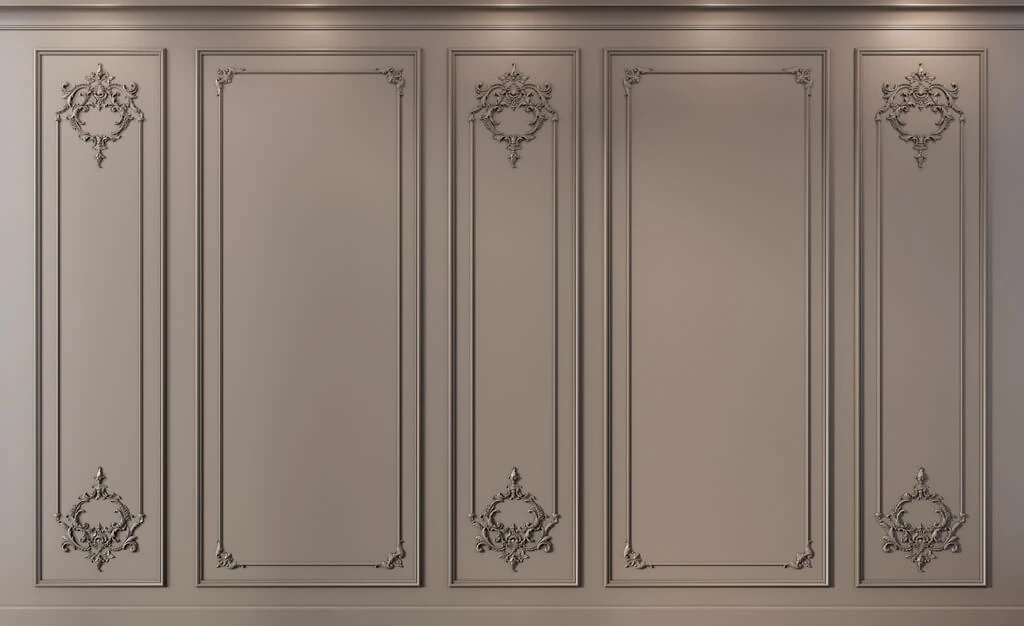
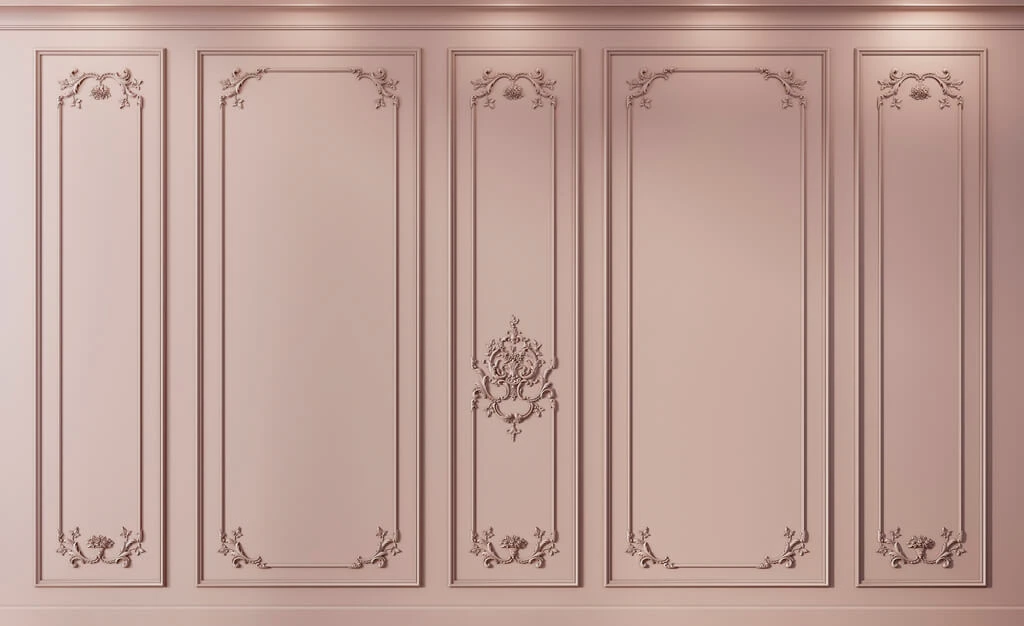
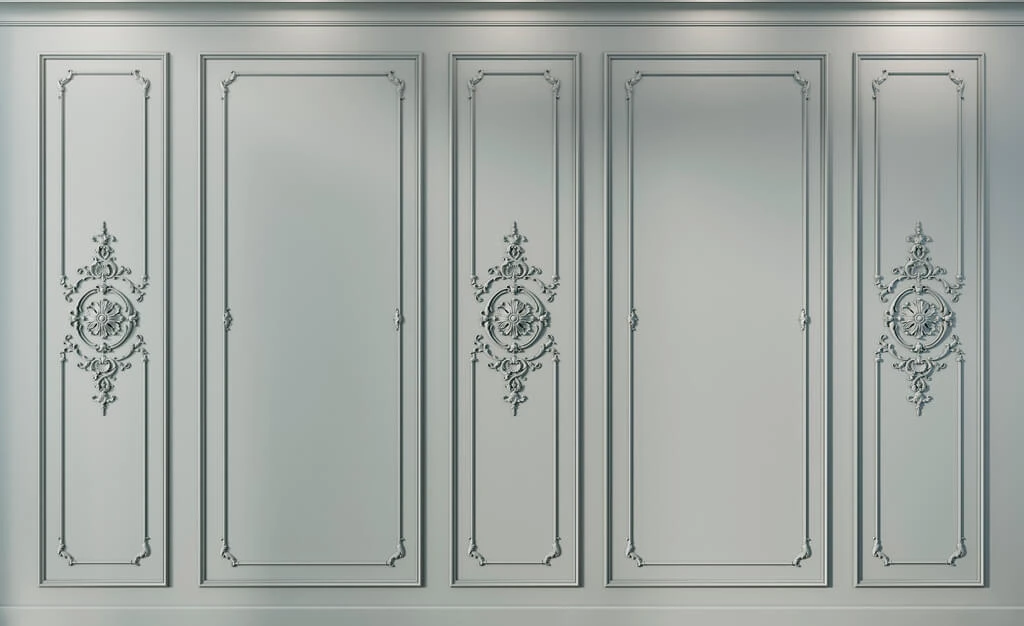
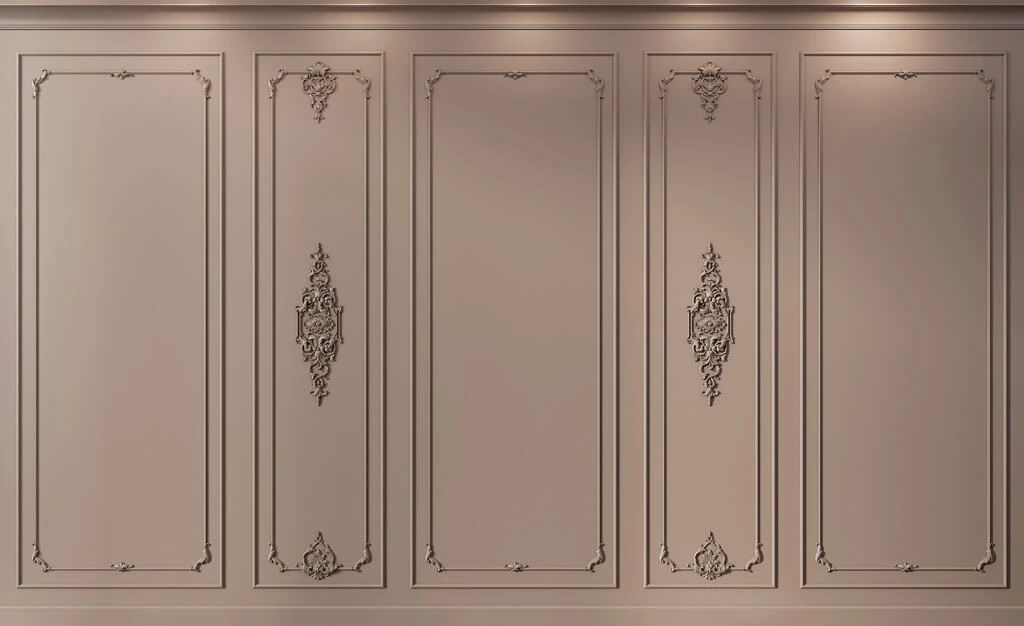
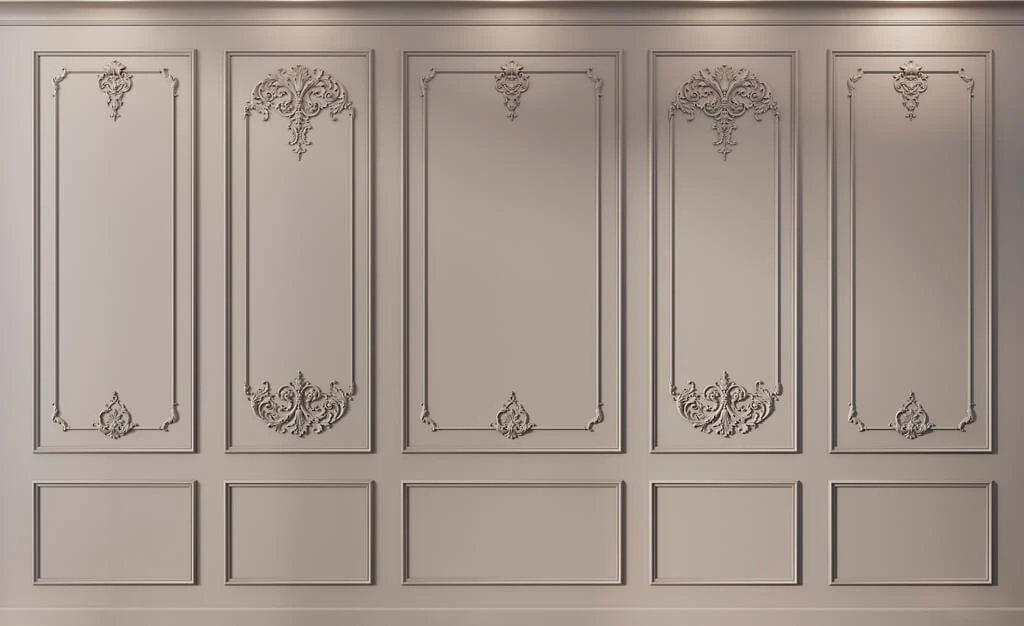
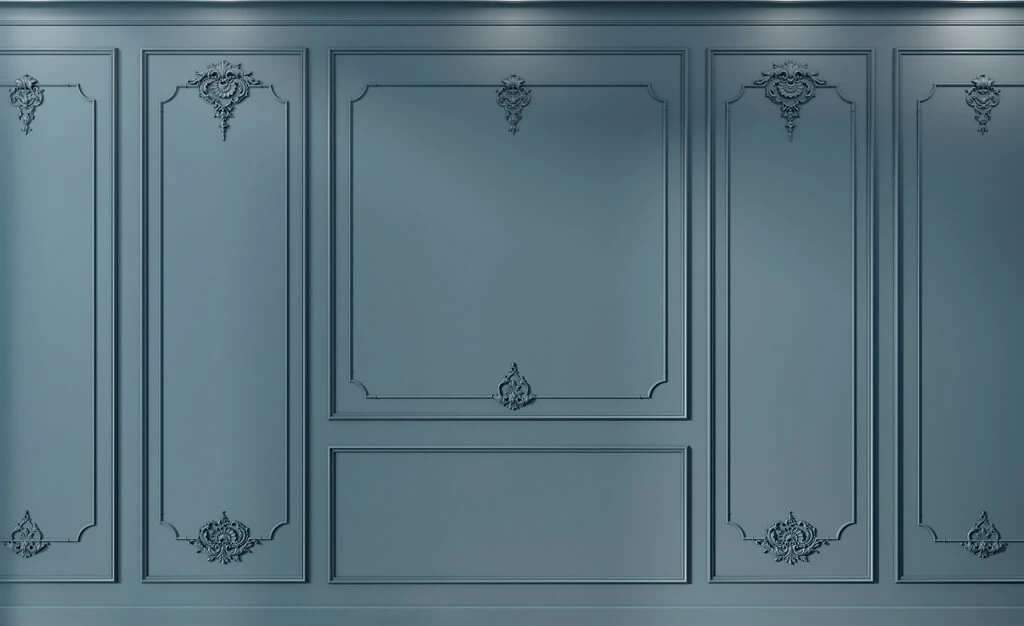
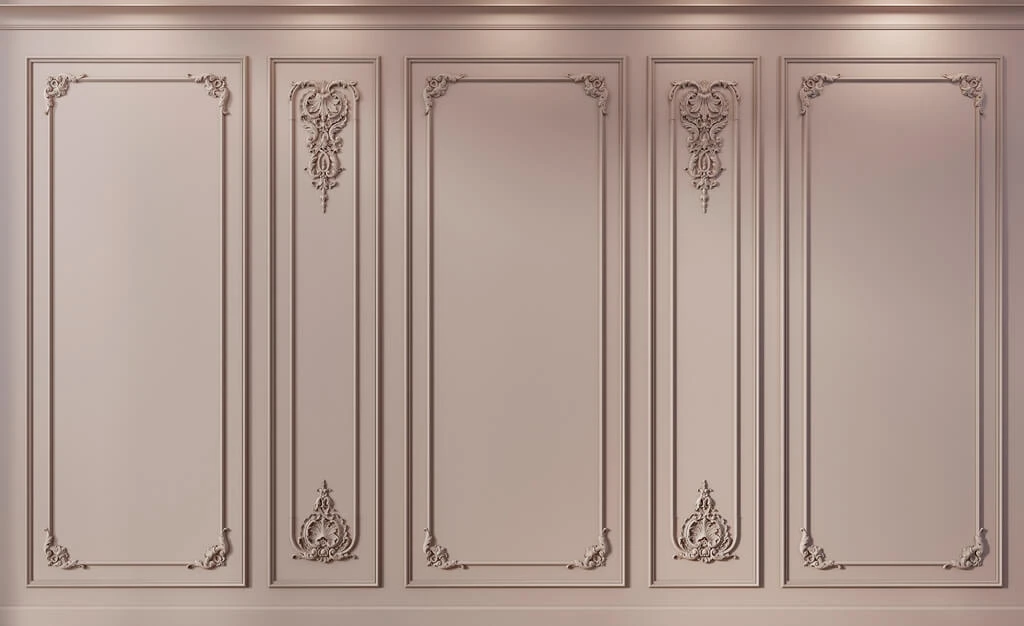
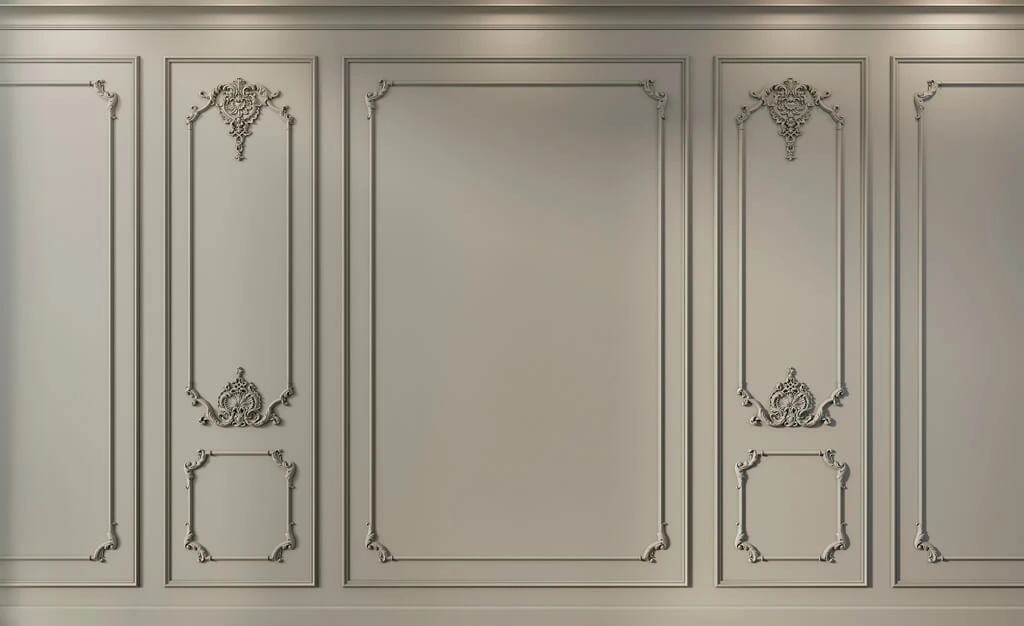
- Wall panels and boiserie: rhythm and accent
- Furniture portals: TV area, library, fireplace portal
- Restoration and updating of classic furniture
- How to choose the shape of a decorative rosette: five key criteria
- Criterion 1: Surface shape
- Criterion 2: Ornament style
- Criterion 3: Relief height
- Criterion 4: Compatibility with molding profile
- Criterion 5: Finish — before or after installation
- Size of decorative rosette: how to calculate accurately
- For furniture fronts
- For wall panels and molding frames
- For corner accents within frames
- Distance from socket to handle
- What to pair decorative wooden rosettes with: a decor system
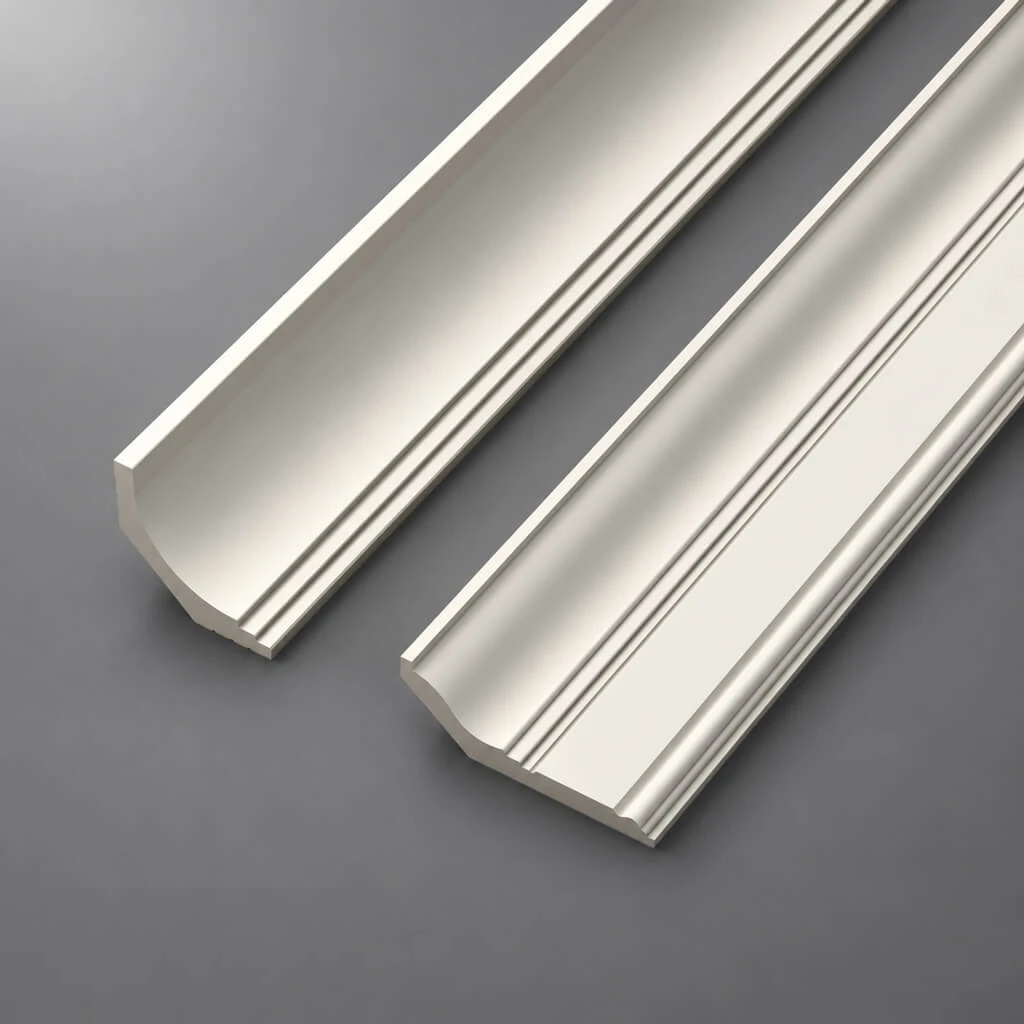
- Moldings: frame around the accent
- Baguette: expressive framing
- Trim: layouts and transitions
- Overlays: supporting decor
- Pilasters: vertical accents
- Carved decor: developed ornamental systems
- Wooden rosettes and interior styles: specific solutions
- Classic: rich relief and symmetry
- Neoclassicism: accent without excess
- Provence: lightness and florality
- Cabinet style: dark wood and strict ornament
- Finishing wooden rosettes: what works and why
- Varnish: purity and depth of wood
- Toning to walnut, oak or wenge
- Enamel: color to match the interior
- Patina: shadows and light in one element
- Installation of decorative rosettes: principles and practice
- Glue as the main method of fastening
- Additional fastening on furniture
- Marking: center is important
- Final joint putty
- Typical mistakes when choosing and using decorative rosettes
- Mistake 1: Inconsistent ornament styles
- Mistake 2: Incorrect Scale
- Mistake 3: Choosing a rosette separately from moldings
- Mistake 4: Not accounting for the handle when placing rosettes
- Mistake 5: Installation on an unprepared surface
- Mistake 6: Mixing wooden and polyurethane elements
- How to calculate the number of elements for a project
- Where to buy STAVROS decorative wooden rosettes
- Frequently Asked Questions
- About the Company STAVROS
In interior decor, there is one small but fundamental detail. Literally — a point. The geometric center of a facade, the middle of a wall frame, the "heart" of a furniture composition. When this spot remains empty, the entire system of moldings, baguettes, trim, and profiles looks unfinished. Like a well-written letter without a signature.
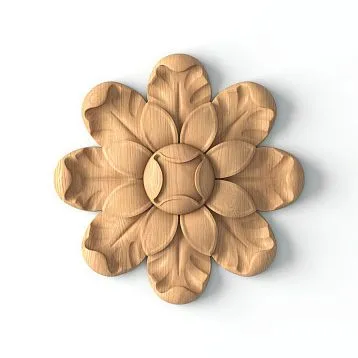
That is exactly where decorative wooden rosettes — carved overlay elements are placed, which complete the composition, bring it together as a whole, and give the interior that very sense of completeness. Not loudly, not pretentiously, but precisely.
And immediately — an important caveat. We are not talking about electrical outlets. Not about socket boxes, not about switch frames, not about Legrand or Schneider products. Decorative wooden rosettes are carved overlay elements made from solid wood for furniture, facades, wall panels, boiserie, and interior compositions. A completely different item — and a completely different world.
How to choose the right carved accent? Where to place it? How to coordinate it with the rest of the decor? We analyze in detail.
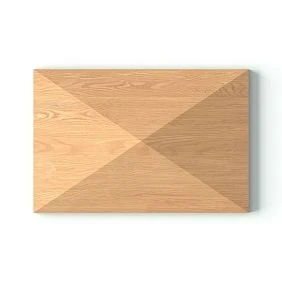
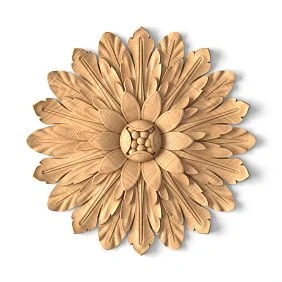
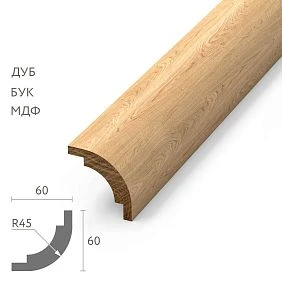
What is a decorative wooden rosette: essence and purpose
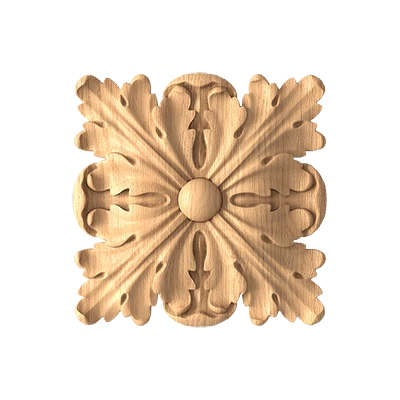
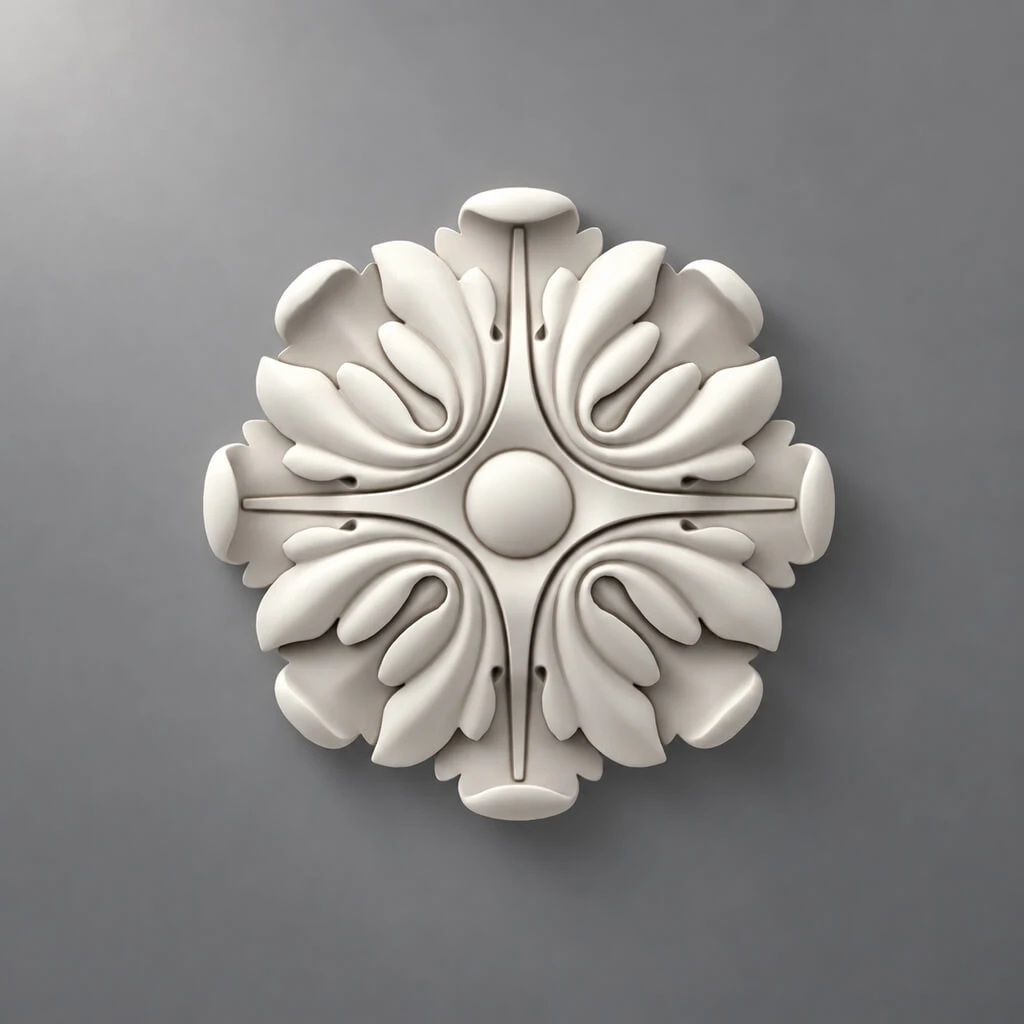
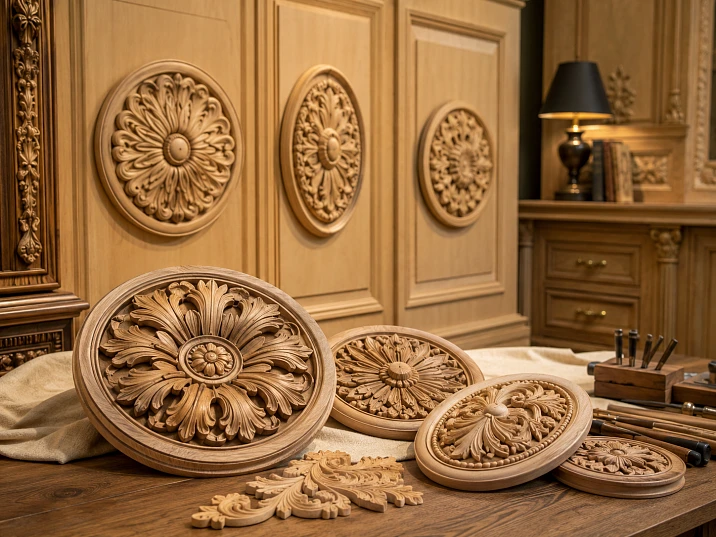
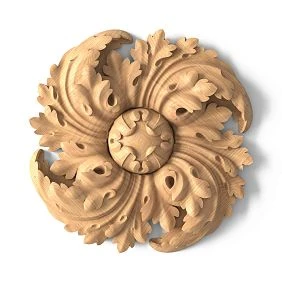
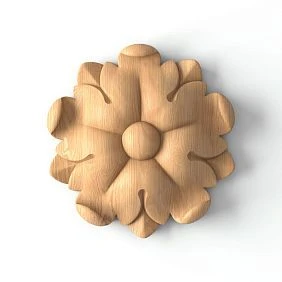
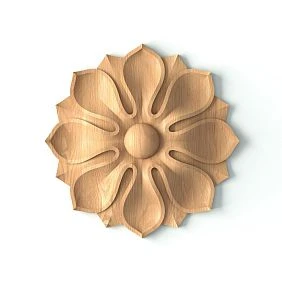
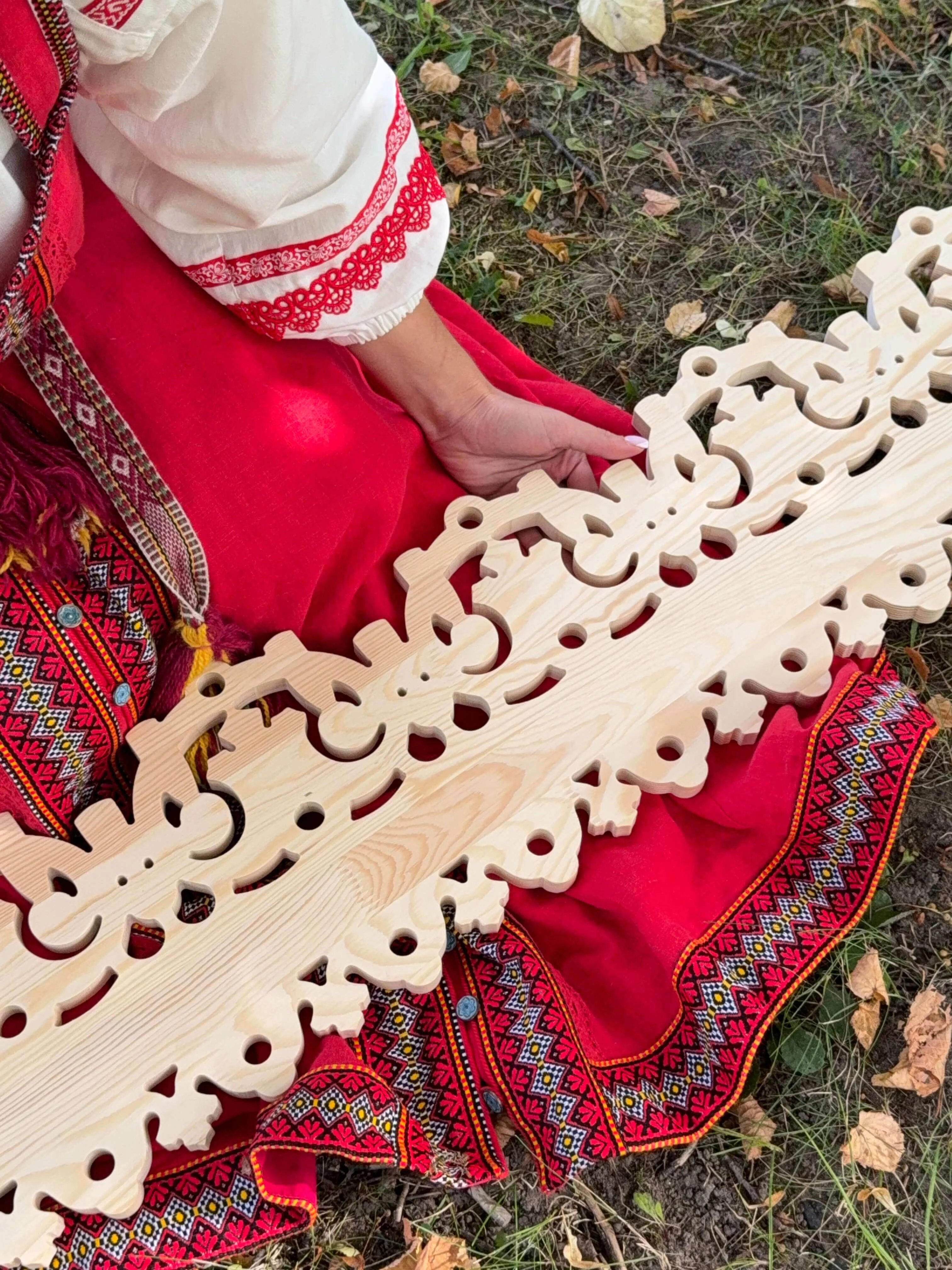
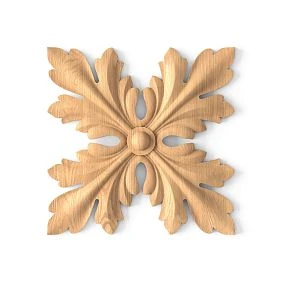
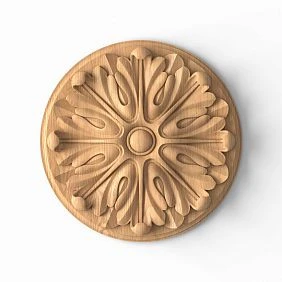
If we start with a definition — a decorative rosette in an interior context is an overlay carved element, typically round, oval, or shaped with an ornamental relief. It is attached to the surface of furniture or a wall as an independent accent object.
The word "rosette" comes from the Latin "rosette" — "little rose." In architectural and decorative art, this term was used for round ornamental elements reproducing a stylized floral motif. It was rosettes that adorned the ceilings of Versailles, the columns of Palmyra, and the facades of Florentine palaces.
In furniture and interior decor, a wooden decorative rosette works as:
-
Central element — in the middle of the furniture facade, at the center of the wall frame, at the "assembly point" of the entire decorative system
-
Corner accent — in the corners of molding frames, instead of or over corner joints
-
Transition element — where several decorative profiles meet and a "node" is needed to hide the joints
-
Independent decorative motif — on a flat surface of a facade or wall, without a frame
Fundamentally important: wooden decorative rosettes are not an independent solution, but a system element. They work together with wooden moldings, wooden cornice, trim, carved inlays and other interior decor elements.
Rosettes and other carved elements: how to distinguish them
In the section wooden decorative elements rosettes are just one of the groups. To choose correctly, it is useful to understand the difference between types of carved overlay elements.
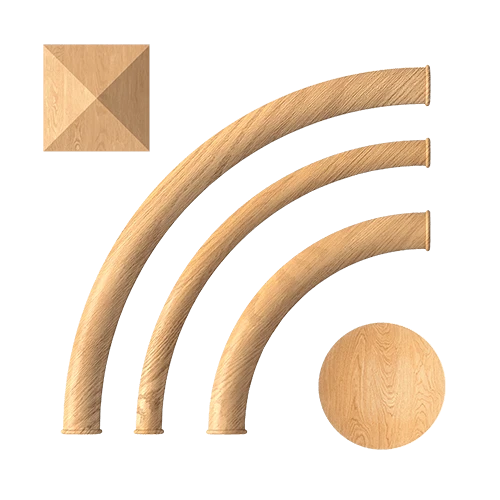
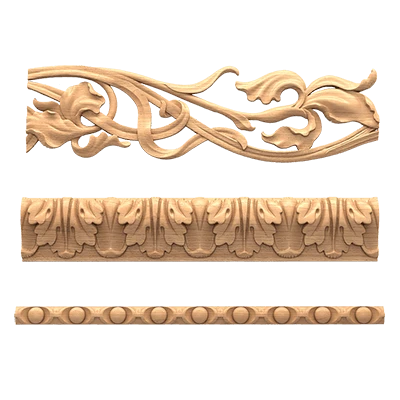
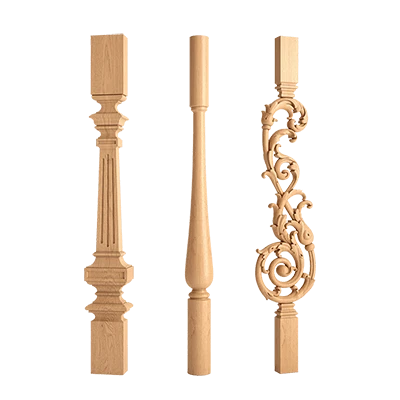
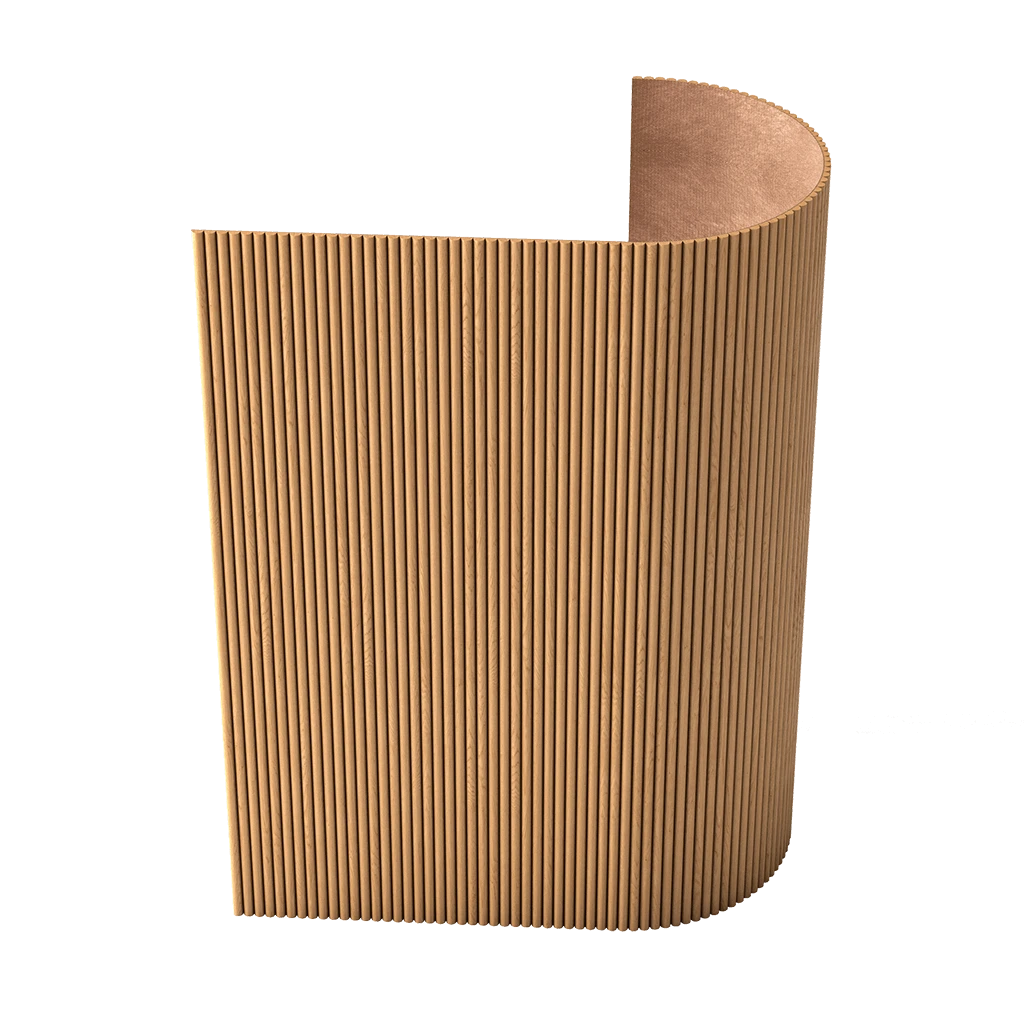
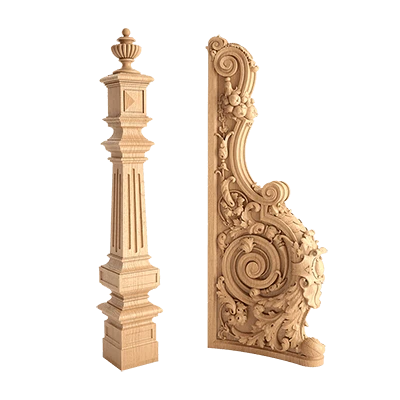
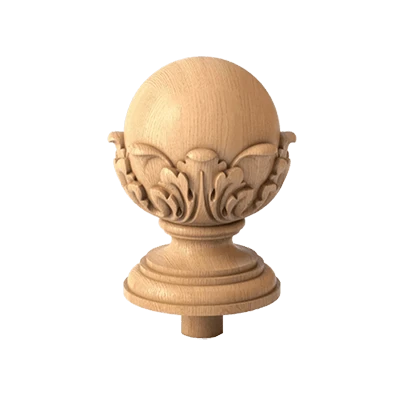
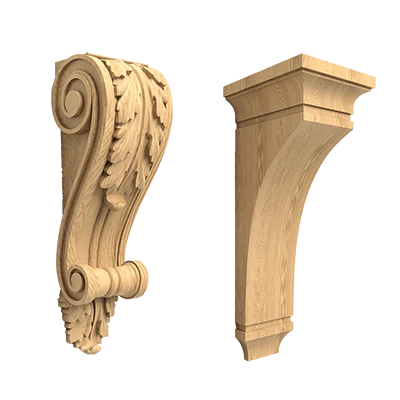
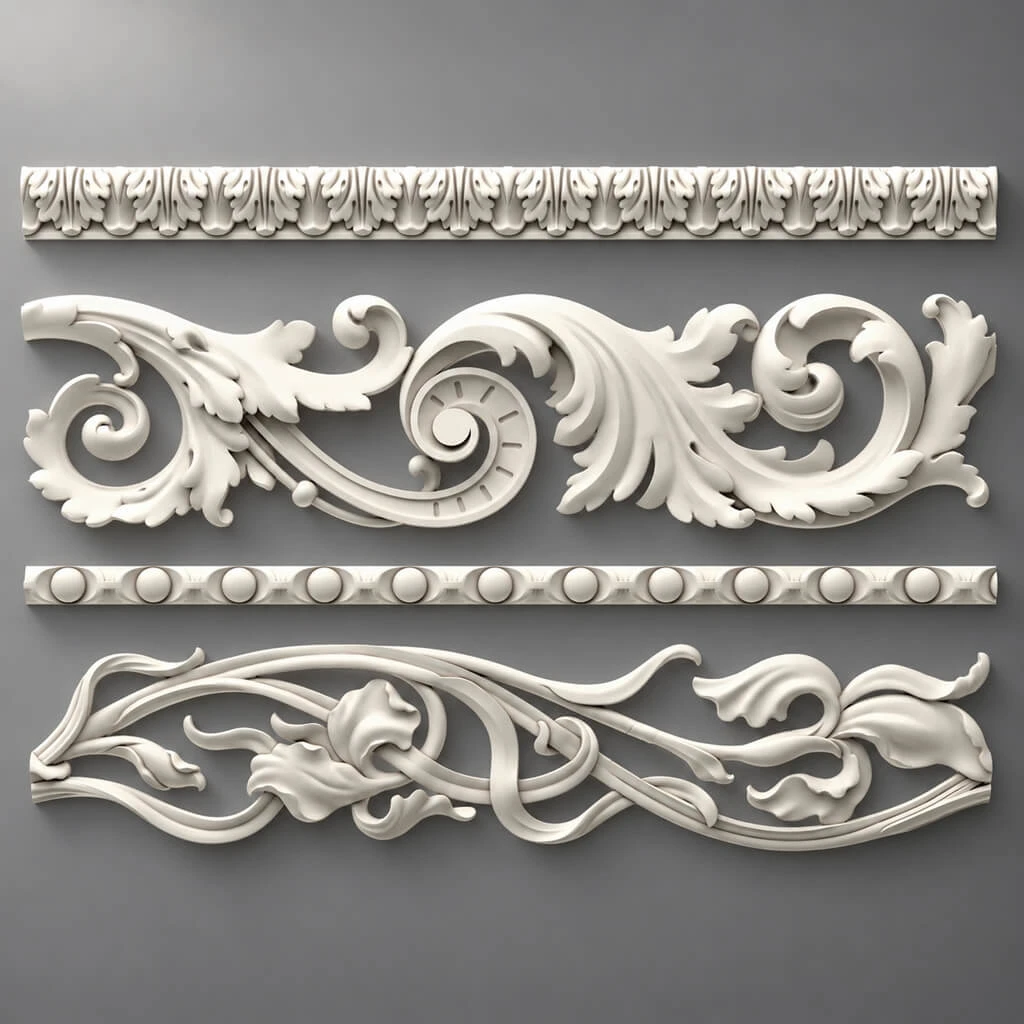
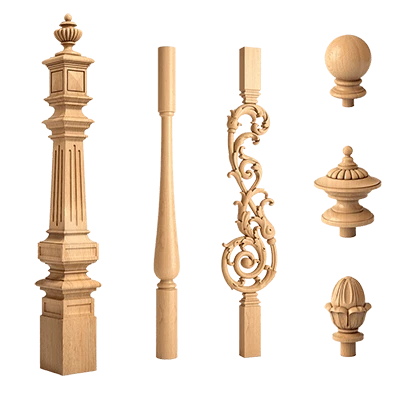
Our factory also produces:
Rosettes — round and oval accents
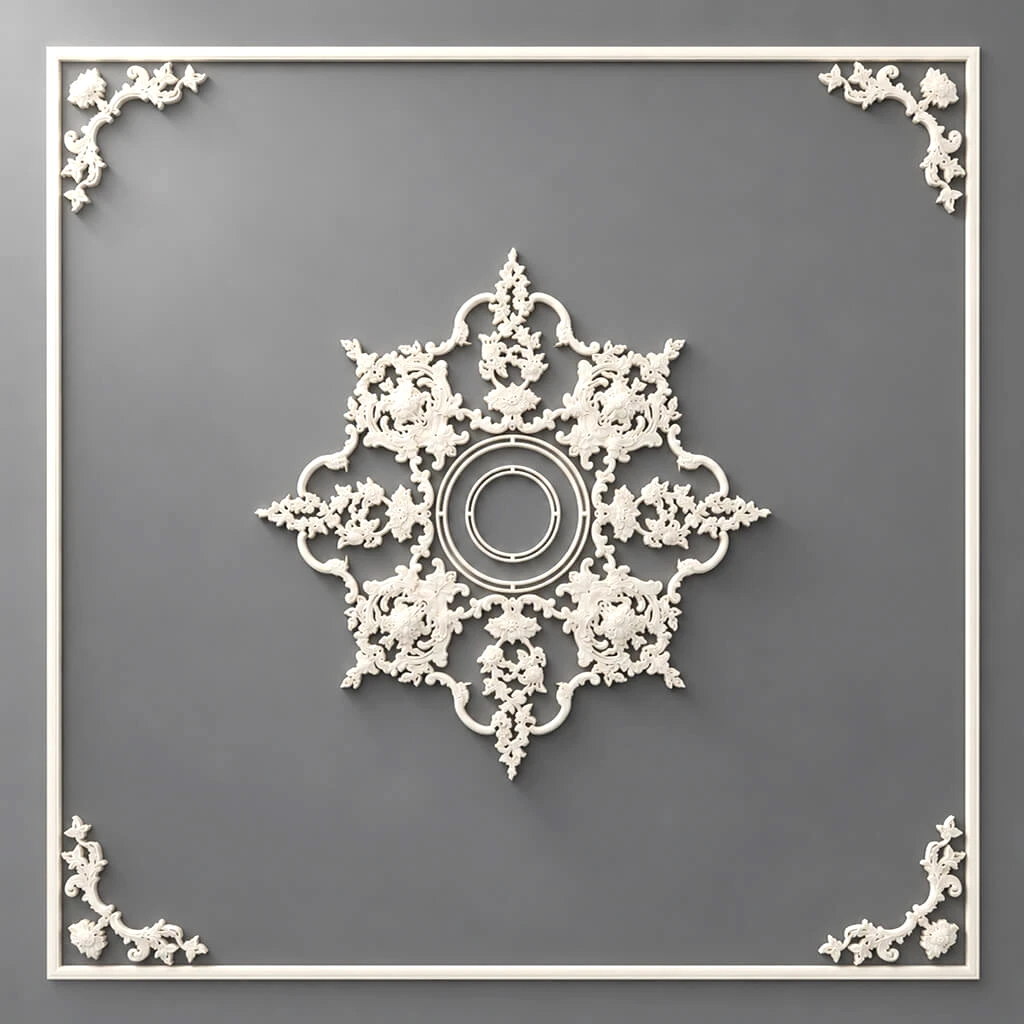
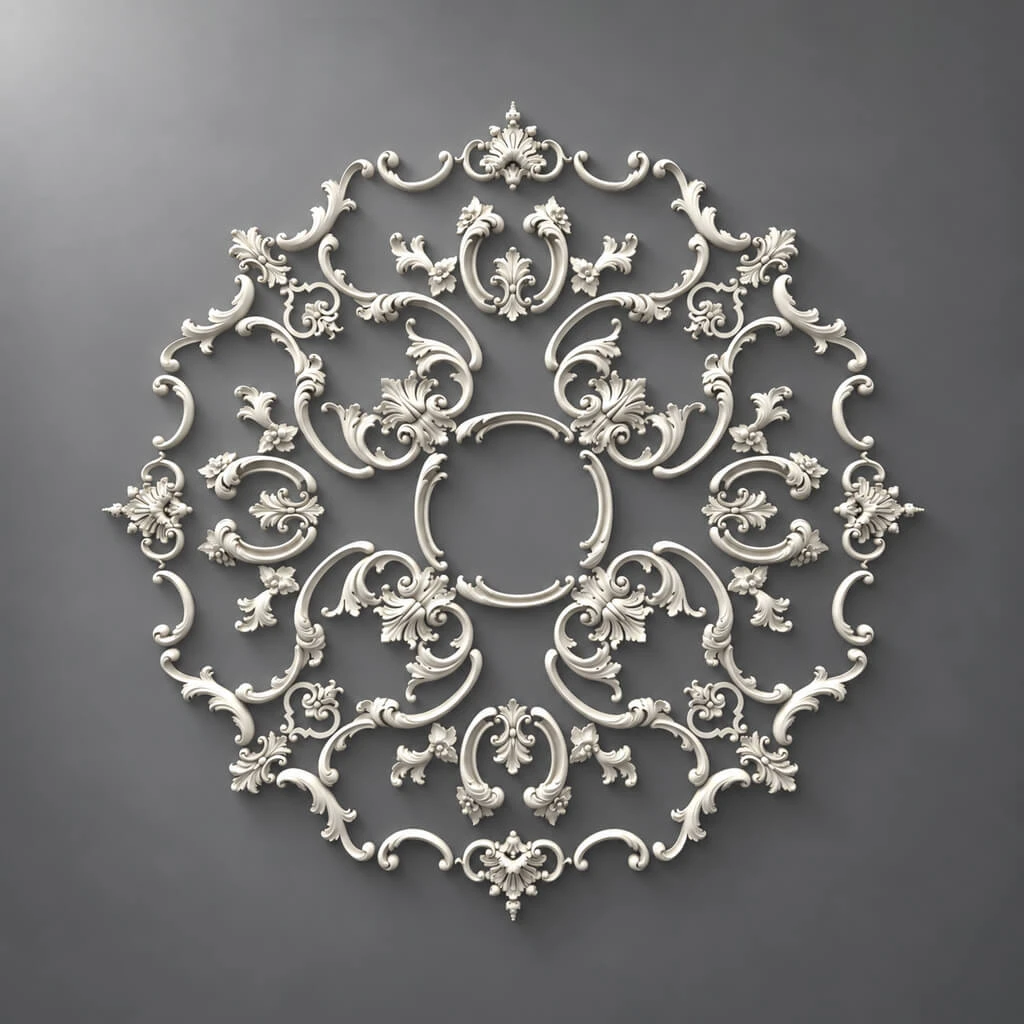
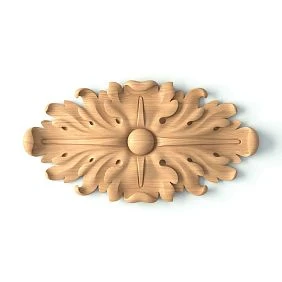
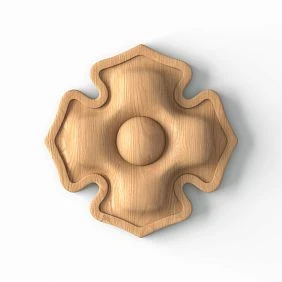
A classic round rosette is a symmetrical element with a radial ornament. The rosette "reads" the same from any point. This makes it universal: it works for the center of a facade, a frame corner, or an "empty" spot on a wall panel.
An oval rosette is an elongated version. It works better on horizontally oriented surfaces: long facades, horizontal panels, wooden beams above a portal.
Get Consultation
Cartouches are figured frame elements
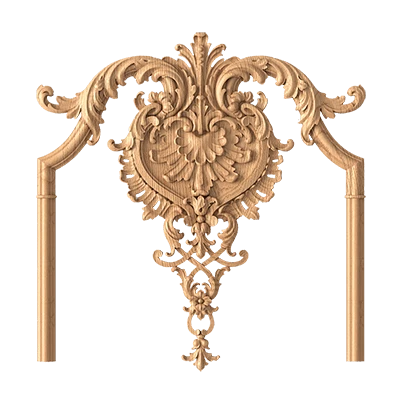
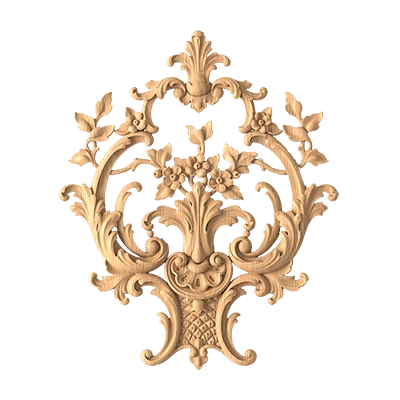
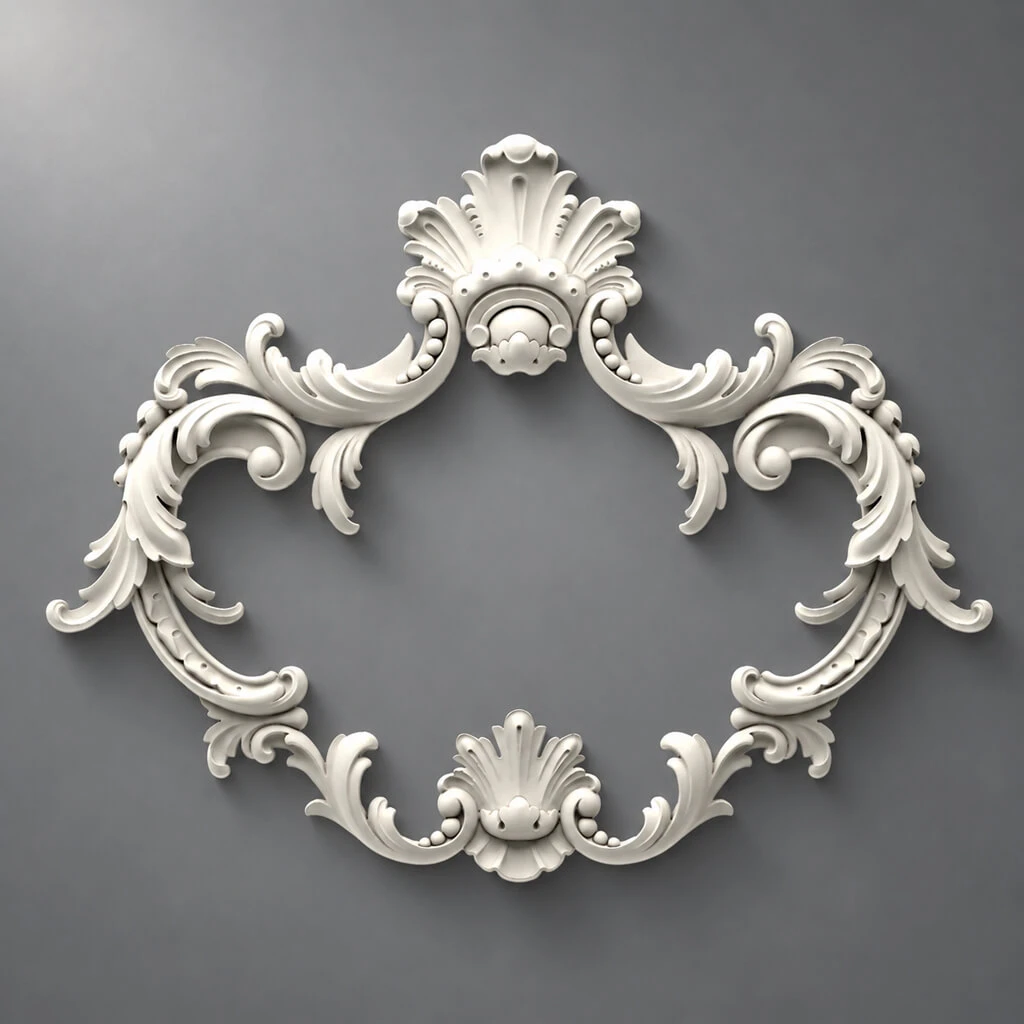
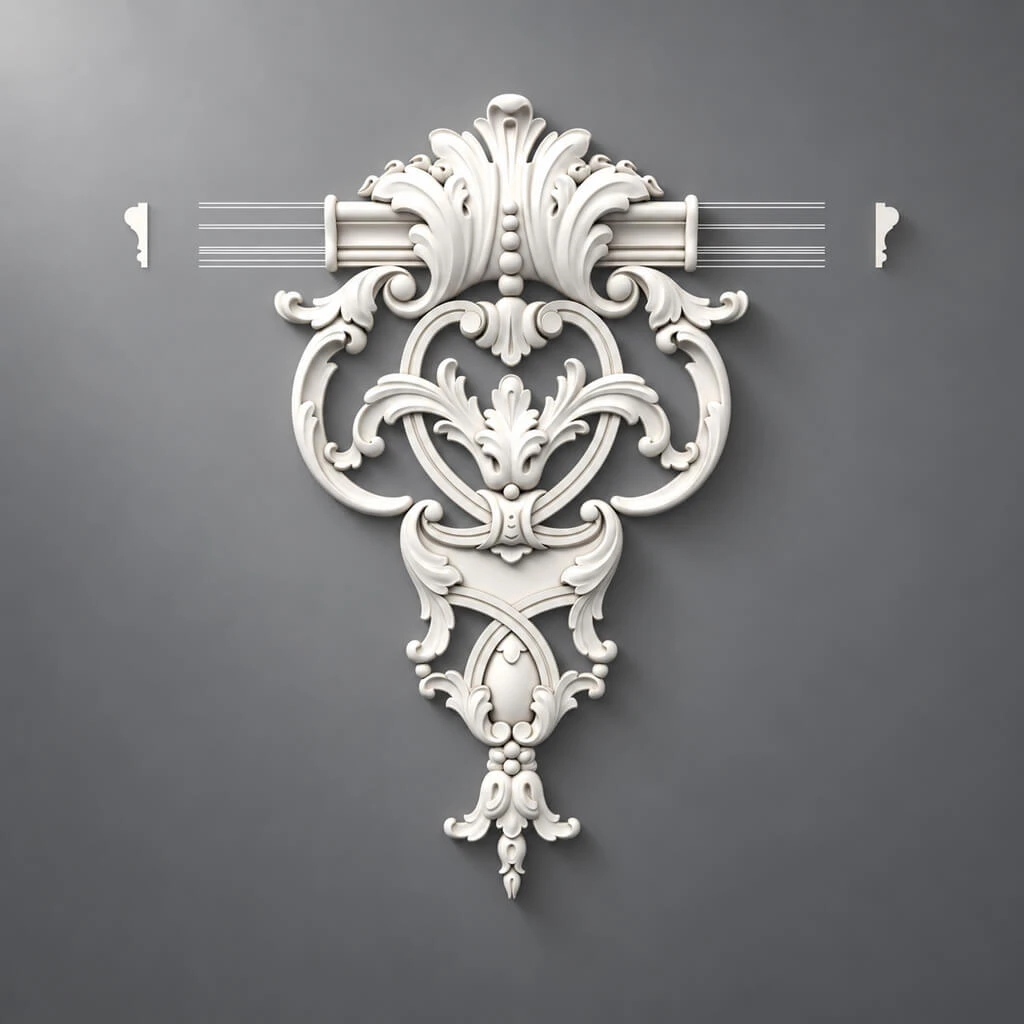
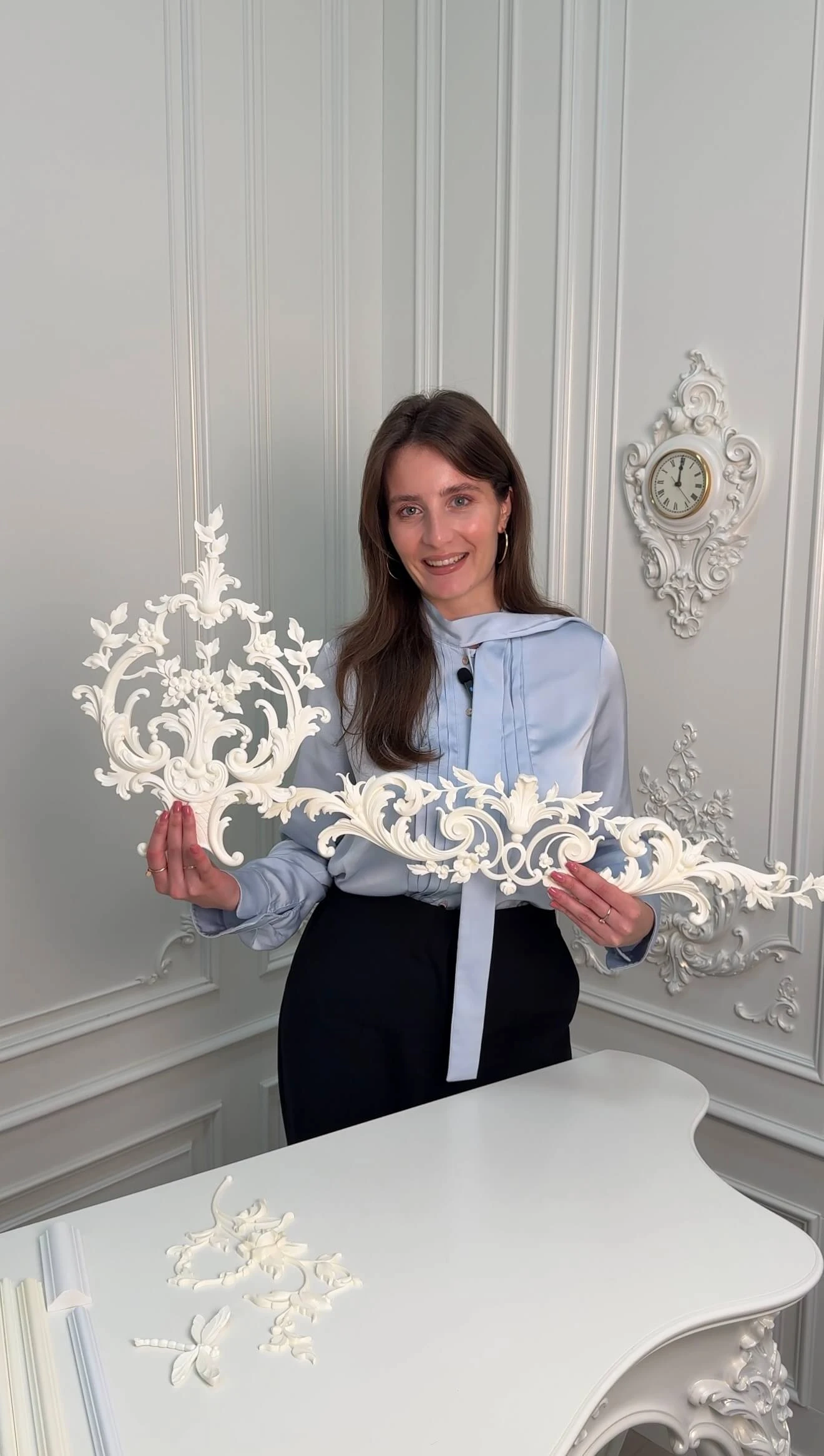
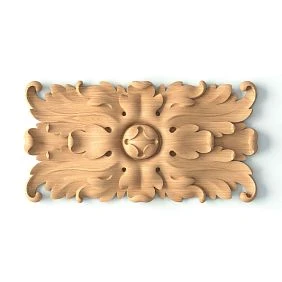
A cartouche is a decorative "plaque" with figured edges. Historically, inscriptions, coats of arms, and monograms were written in cartouches. In modern interior decor, a cartouche is a carved accent element with a more complex, "frame-like" shape. It is more voluminous and expressive than a rosette.
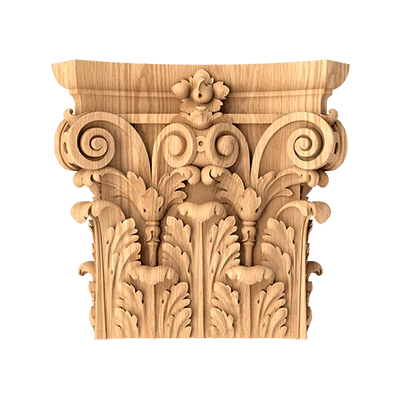
Capitals and corner elements
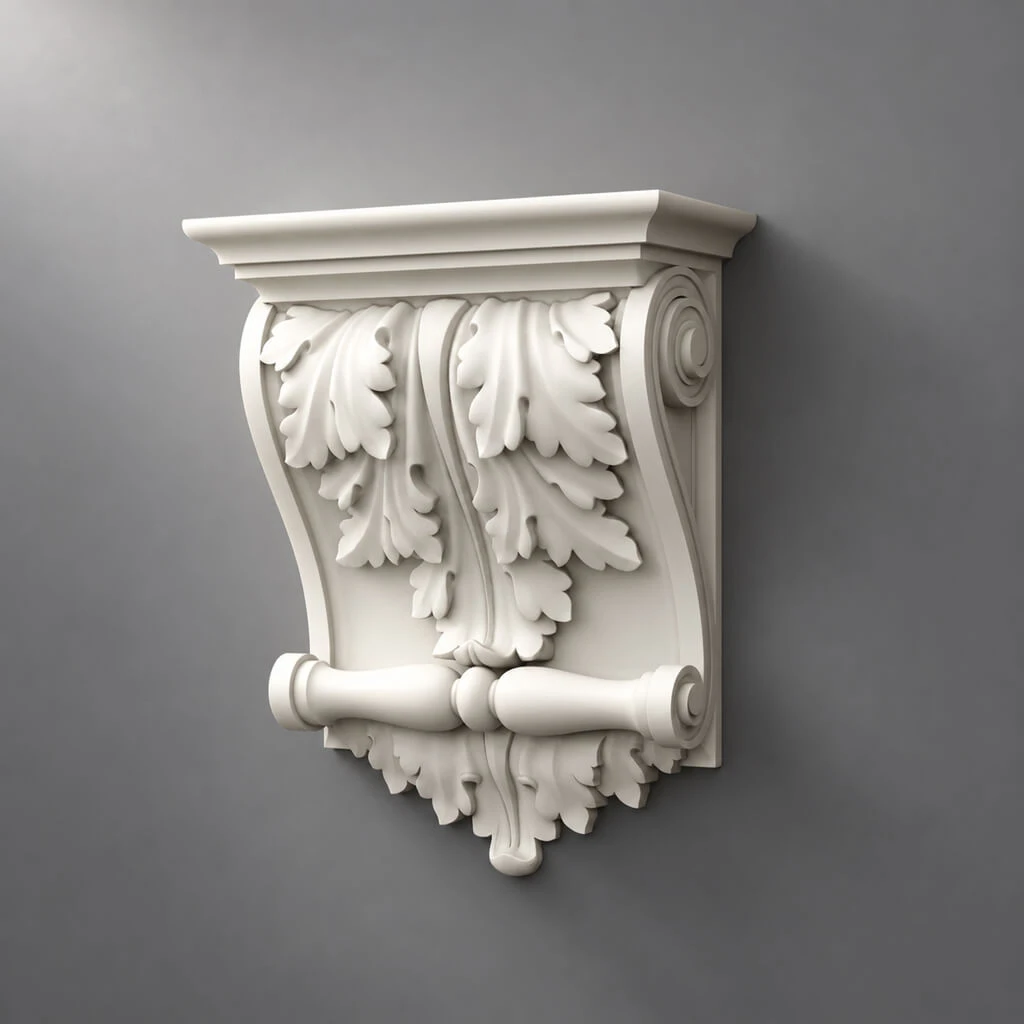
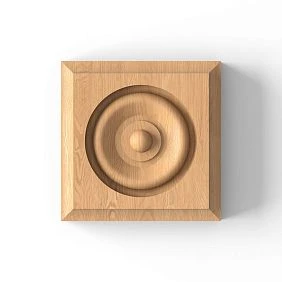
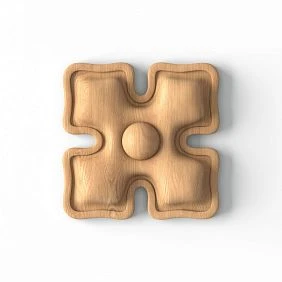
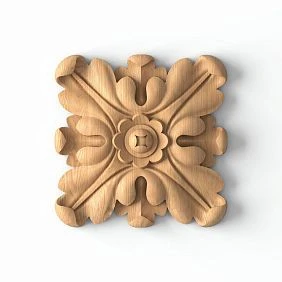
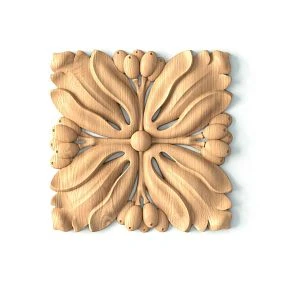
Corner decorative elements are mounted in the corners of frames and frame systems. These are not rosettes, but "corner accents" that replace or decorate the corner joints of moldings.
Decor for Molding — a separate category, including elements specifically designed for use in molding systems.
Where wooden decorative rosettes are used: a complete overview of scenarios
Furniture facades: central accent of a cabinet, dresser, nightstand
This is the most common application. A furniture facade with a properly selected central carved element looks completely different than just a smooth board with a handle.
Imagine a classic cabinet with double doors. Each door is framed with a molding border. In the center of each frame is a wooden decorative rosette matching the overall finish. Handles are centered in the frame, below the rosette. The result: furniture with a complete, thoughtful look — without unnecessary details, but with the right "focal point."
Where are rosettes used on furniture:
-
Center of the cabinet door — the main "focus" of the facade plane
-
Upper center of the door — above the handle, in the upper third of the facade
-
Corner accents in the frame — four rosettes in the corners of the molding frame + straight profiles between them. This solution creates a "proper" frame with architectural corners
-
Center of the dresser drawer — a small compact rosette on the narrow drawer front, next to the handle or instead of it (in combination with a knob handle)
-
Decor of cabinets — TV cabinets, bedside tables, console tables with decorated doors
for cabinet decor wooden rosettes are one of the most affordable yet effective solutions. They do not require repainting all furniture or replacing facades — just choose the right element and attach it.
Kitchen facades in classic style
Classic kitchens are a separate topic. Facades with frame moldings, pull handles, a cornice above the upper cabinets. And here, wooden decorative rosettes play a very specific role: they complement the molding frames with corner accents.
В in kitchen decor sockets are used:
-
As corner overlays on the joints of molding frames of lower and upper cabinets
-
As a central element of wall cabinet facades
-
As accent details on the decorative cornice above cabinets
-
in combination with wooden molding as profile inlays on facades
Size of the rosette for a kitchen facade: standard facade 400 × 720 mm — rosette diameter 50–70 mm. Facade 600 × 720 mm — 70–90 mm.
Wall panels and boiserie: rhythm and accent
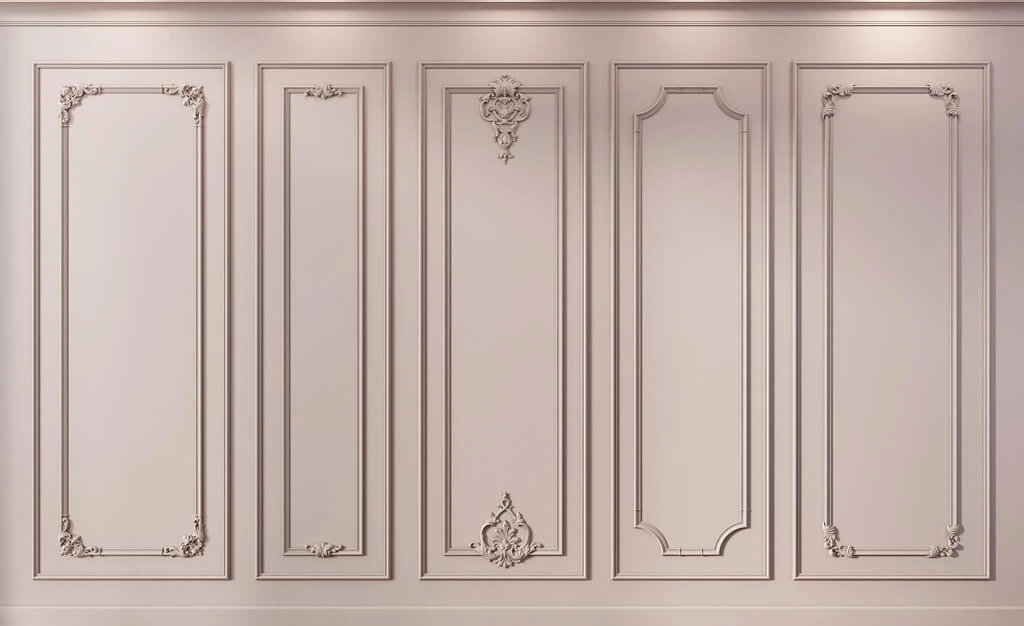
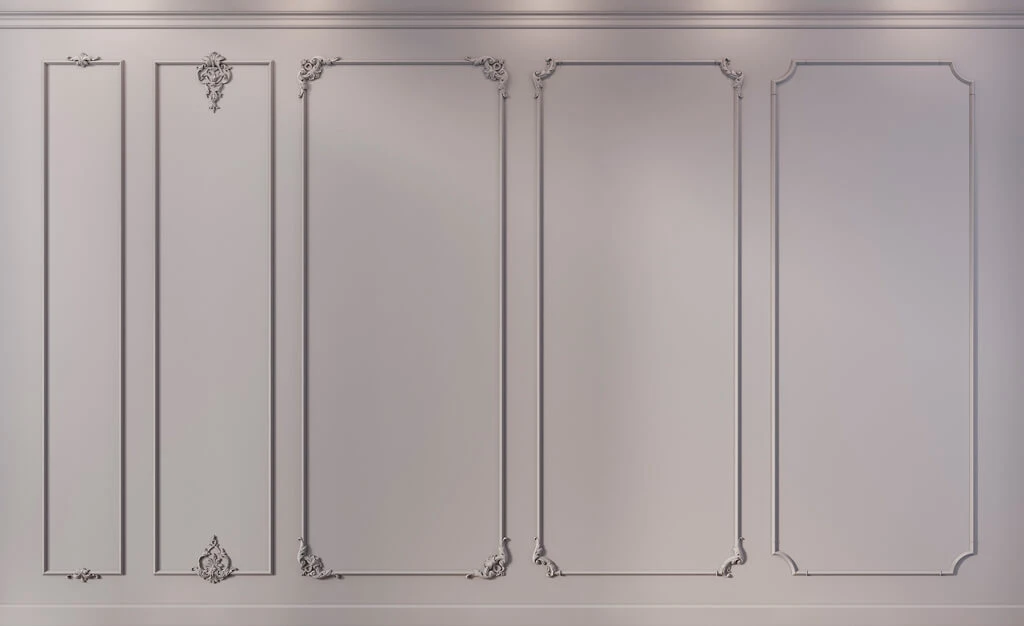
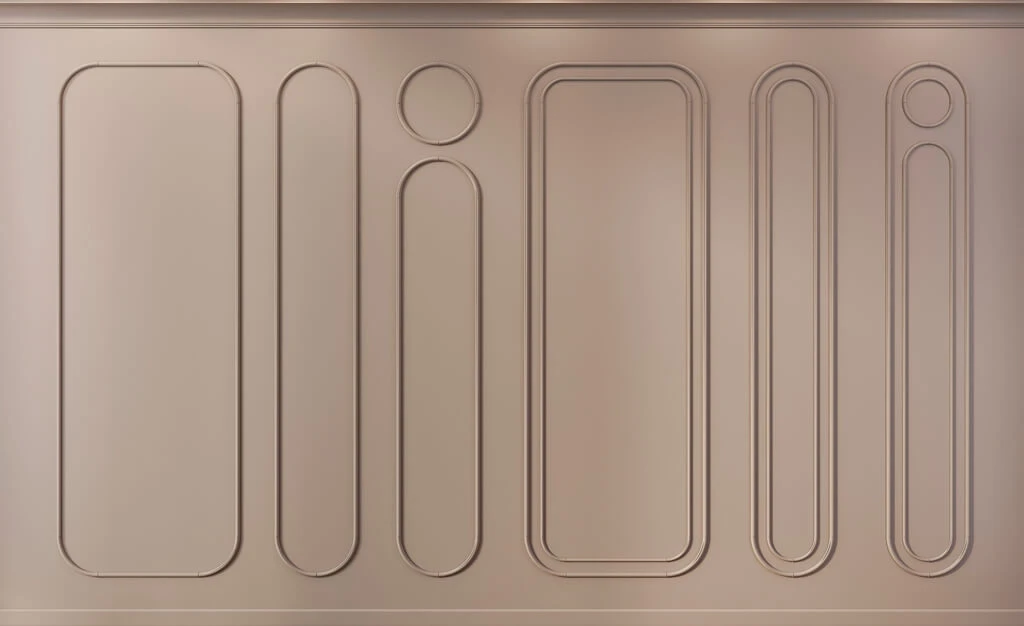
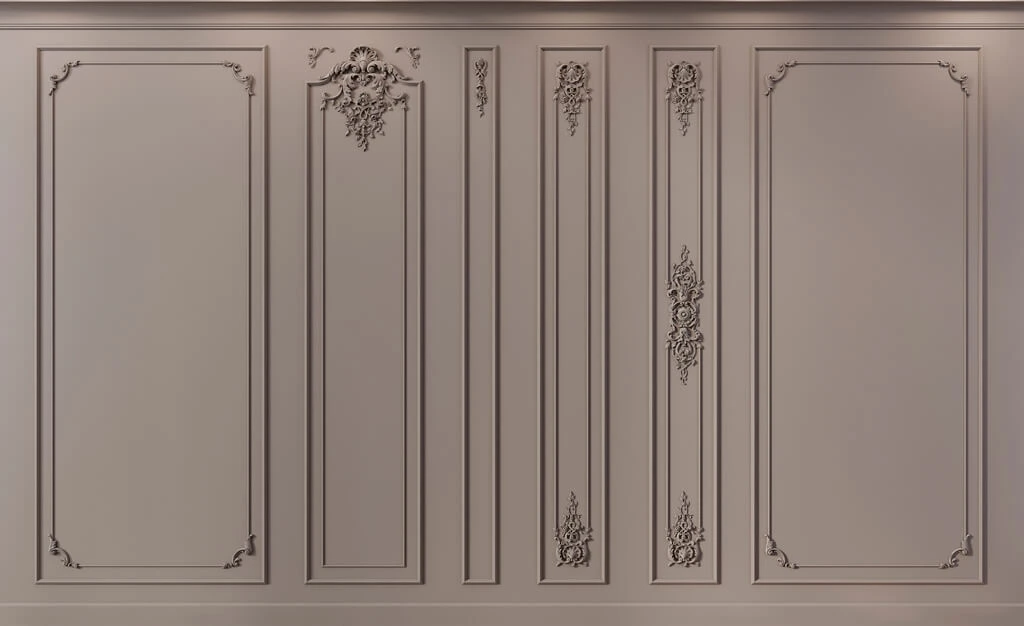
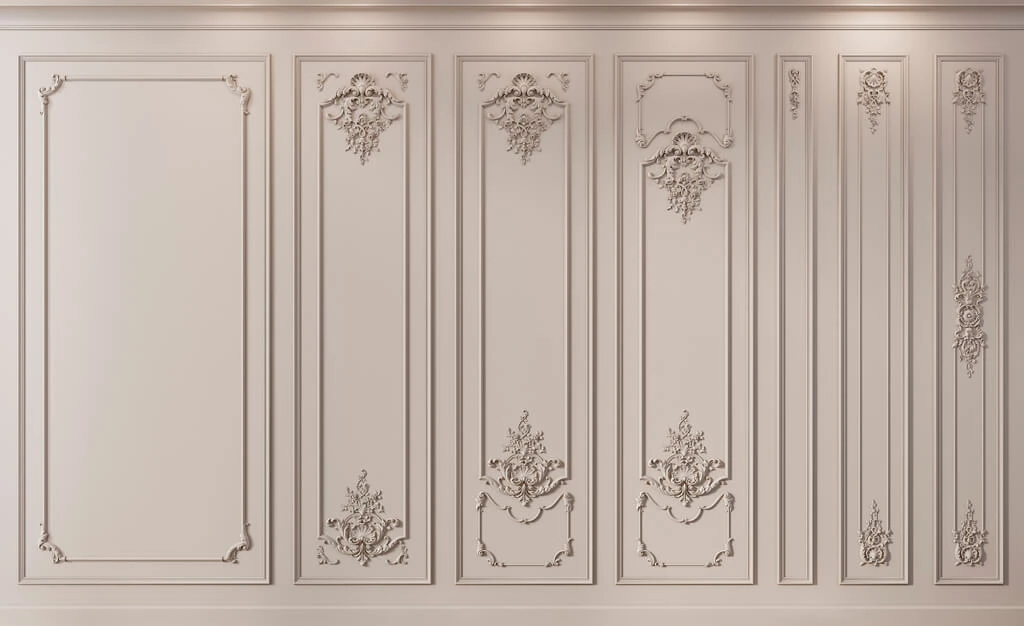
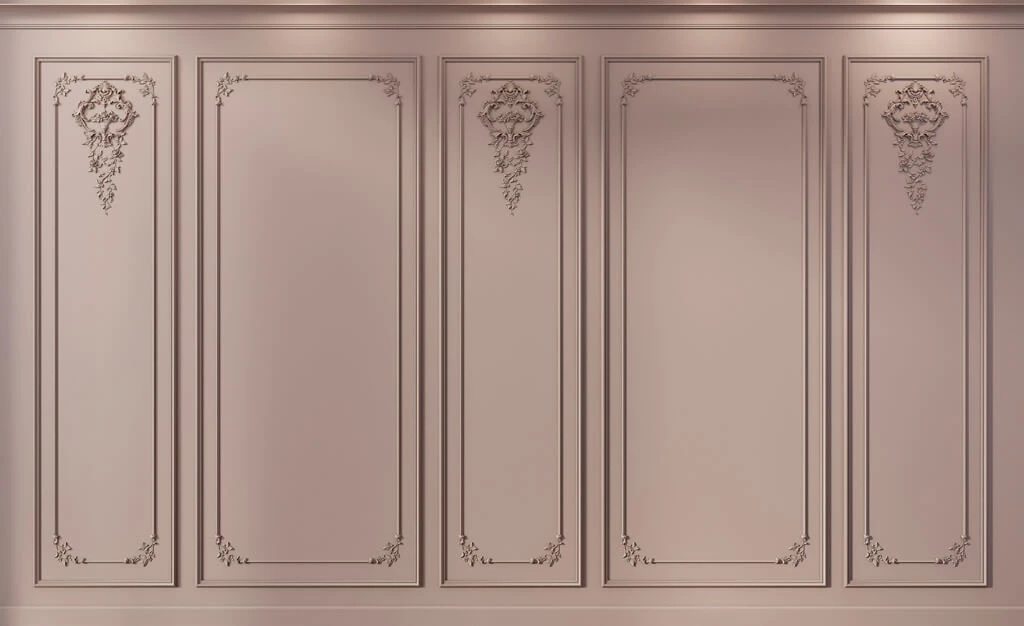
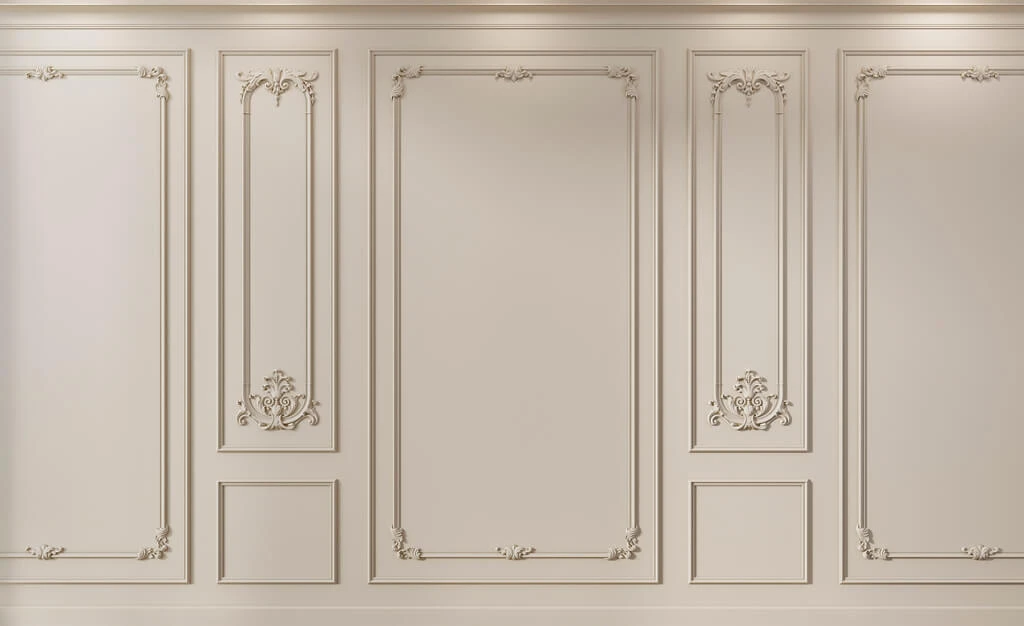
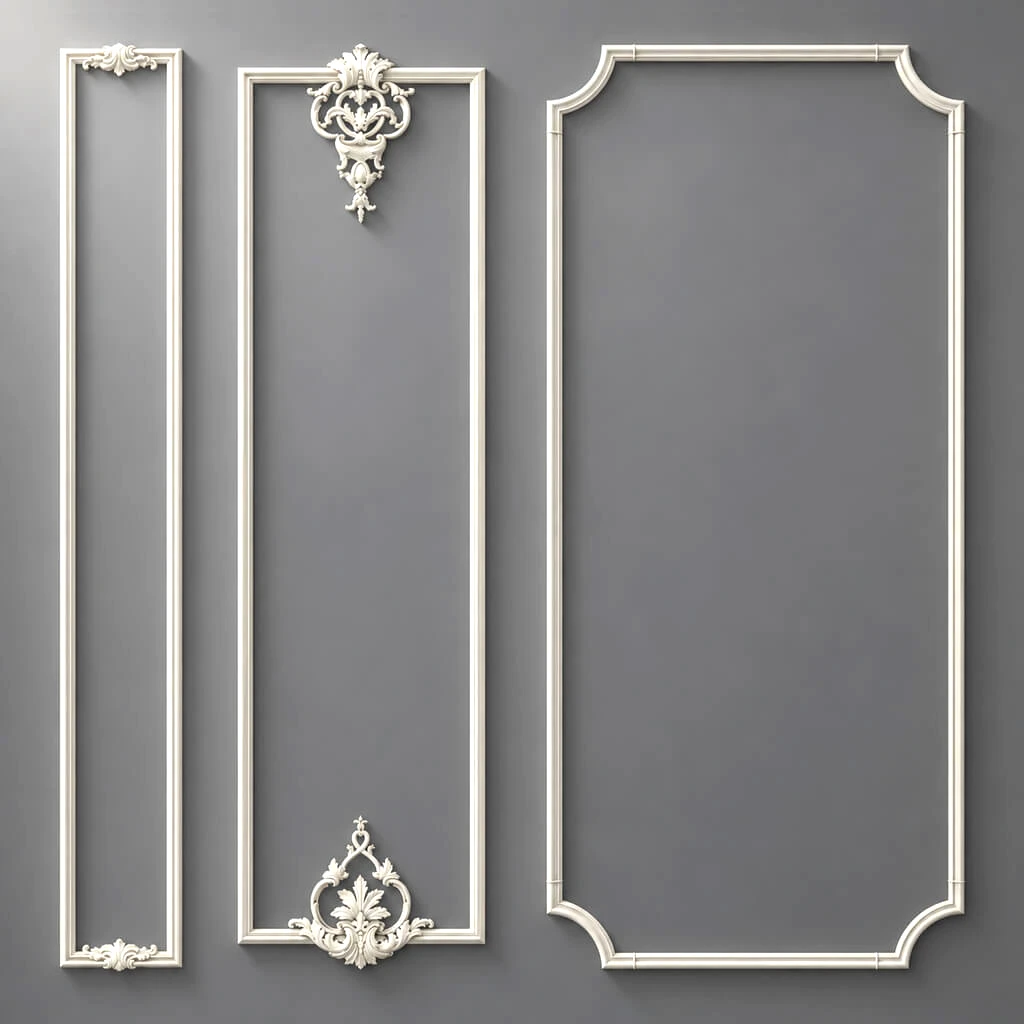
In the system of boiserie and wall panels a decorative rosette is a "pause" in the rhythm of frames. Where you need to add visual weight or highlight a specific wall section, a carved accent works precisely.
Application options in boiserie:
Center of the main section. If the wall is organized into boiserie with sections of different widths — the central, widest section may have a decorative carved element in the center of the frame. The other sections — without accents. This creates a hierarchy: the "main" panel is highlighted.
Paired elements on a symmetrical wall. Two sections on each side of the center, each with an identical rosette. Symmetry is the principle of classical decor.
Accent above a console or table. Wall console area: below — a shelf or console, above — a panel with a wooden rosette in the center of the frame. This completes the "altar" composition.
Hallway design. The hallway is the first space a guest sees. Boiserie with accent rosettes in the central sections creates the "first impression" and sets the tone for the entire home.
For wall panels, rosettes are chosen larger than for furniture facades: a diameter of 80–120 mm is the standard working range for a wall.
Furniture portals: TV area, library, fireplace portal
A furniture portal is an architectural frame around a TV panel, fireplace, niche, or book section. In portal solutions, decorative rosettes are used as corner accents — at the junction points of vertical and horizontal elements.
The principle is simple: vertical pilasters + horizontal cornice + Wooden Picture Frame frames = portal. At the "capitals" of pilasters — a decorative carved element. In the center of the horizontal belt above the niche — a central rosette or cartouche.
For the library: STAVROS furniture solutions and decor of furniture portals — the combination of pilasters, moldings, baguettes, and decorative rosettes creates a "classical" library wall with proper architectural language.
Restoration and renewal of classic furniture
A separate scenario that is often overlooked. Old classic furniture without decor, or with damaged and missing decorative elements — it can be "brought back to life" with properly selected wooden rosettes and overlays.
Carved decorative inserts for furniture + wooden rosettes — this is not restoration in the professional sense, but it is a renewal that gives old furniture a new decorative life.
How to choose the shape of a decorative rosette: five key criteria
Criterion 1: Surface shape
Square or nearly square facade — round rosette. Horizontal, elongated surface — oval. Elongated vertical surface with a frame made of molding — a small round rosette in the upper third.
Proportion rule: the diameter of the rosette should be 12–20% of the smaller side of the facade or frame. For a wall frame 500 mm wide — a rosette of 60–100 mm.
Criterion 2: Ornament style
The carved rosette ornament should match the style of the furniture, interior, and other decor.
| Style | Rosette type | Ornament characteristics |
|---|---|---|
| Classic | Large, with elaborate ornament | Petals, acanthus leaves, symmetrical relief |
| Neoclassical | Restrained, with a clear profile | Geometric or floral motif |
| Provence | Small, with a floral motif | Light relief, delicate ornament |
| Cabinet style | Expressive, with dark tinting | Classic petal ornament |
| Chalet | Simple, with a natural motif | Minimal relief or no ornament |
Criterion 3: Relief height
Relief height determines the "volume" of the element. In diffused light — relief 5–8 mm. In directional or side light — relief 10–15 mm or more creates expressive shadows that "reveal" the ornament.
For a furniture facade viewed up close: relief height 6–12 mm is optimal.
For a wall panel viewed from a distance of 2–3 meters: relief 10–20 mm.
Criterion 4: Compatibility with molding profile
This is a subtle but important point. If the frame is made of molding with an "egg-and-dart" ornament — a rosette with a petal ornament may visually conflict. It is better to choose a rosette from the same "decorative family" as the moldings.
Ideally: all decorative elements of one project should be from the same collection so that the reliefs and ornaments are coordinated.
Criterion 5: Finishing — before or after installation
Wooden rosettes can be painted before installation (the entire element is covered evenly) or after (in the color of the already applied facade finish). The first method gives a better quality result. The second is logistically simpler.
Size of a decorative rosette: how to calculate accurately
Size is one of the most common reasons for mistakes. An element that is too small gets lost. One that is too large overloads.
For furniture fronts
Narrow dresser drawers (height 150–200 mm): rosette 40–55 mm.
Standard cabinet doors (400–500 × 700–800 mm): rosette 60–80 mm.
Wide double doors (600–700 mm width): rosette 80–100 mm.
Facades of tall cabinets (2000–2400 mm height): rosette 90–120 mm if it is the only one; or a system of several elements along the vertical axis.
For wall panels and molding frames
Frame 400 × 600 mm: rosette 70–90 mm.
Frame 600 × 800 mm: rosette 90–110 mm.
Large frame 800 × 1000 mm and larger: rosette 110–140 mm or cartouche with a more complex shape.
For corner accents in frames
The corner element must "cover" the corner joint of the molding. Width of the corner element = at least double the width of the molding. For a 30 mm molding — corner rosette at least 60 × 60 mm.
Distance from rosette to handle
If the pull handle is installed on the facade axis below the center — the rosette is placed higher. Distance from the center of the rosette to the handle axis: at least 80 mm. This is the minimum at which the rosette and handle do not visually "interfere" with each other.
What to pair decorative wooden rosettes with: decor system
A wooden rosette never works in isolation. Here is how the system is built.
Moldings: frame around the accent
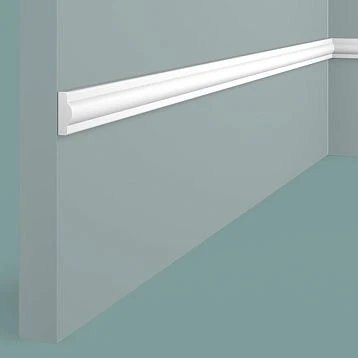
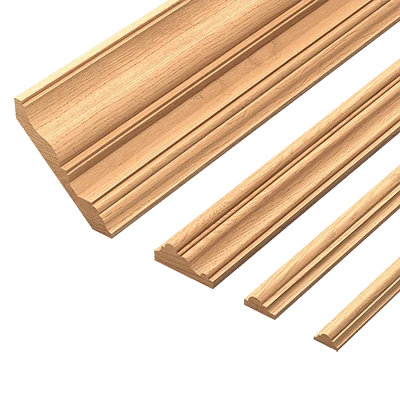
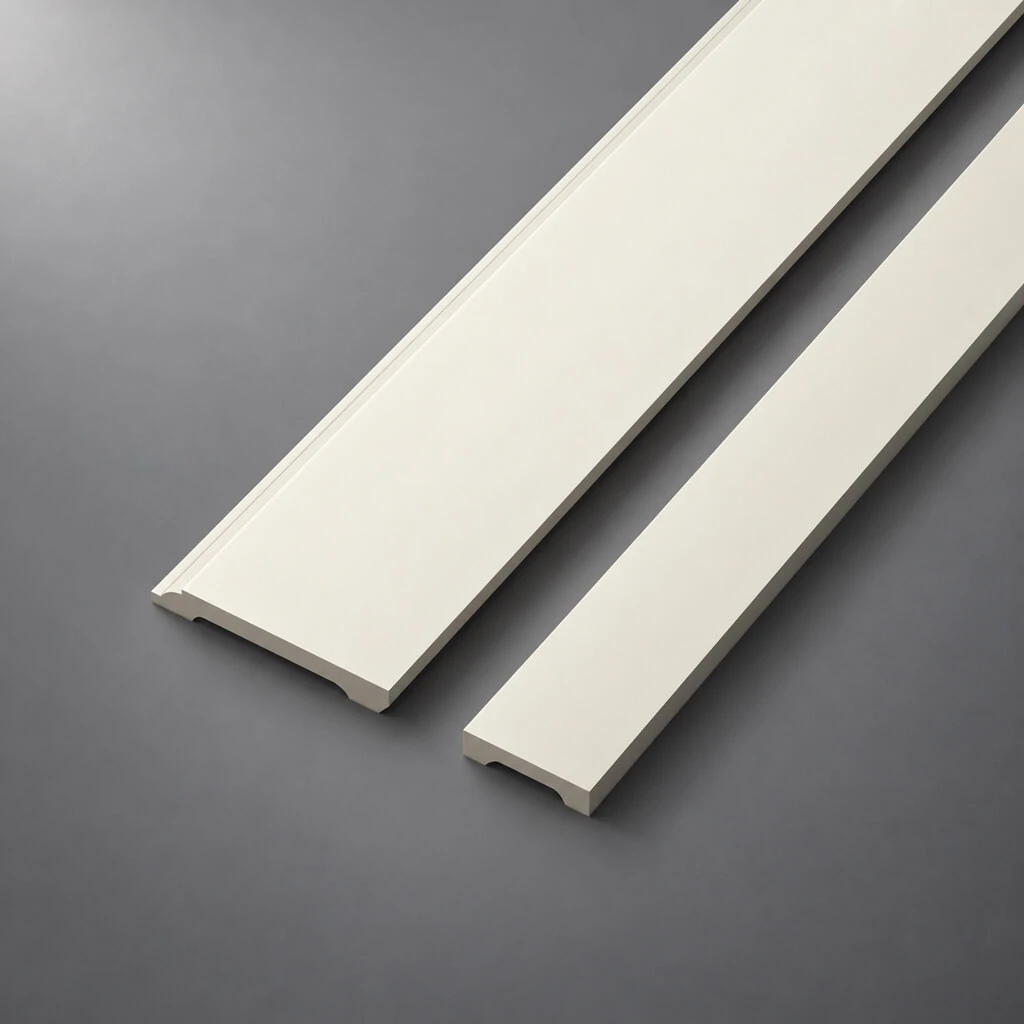
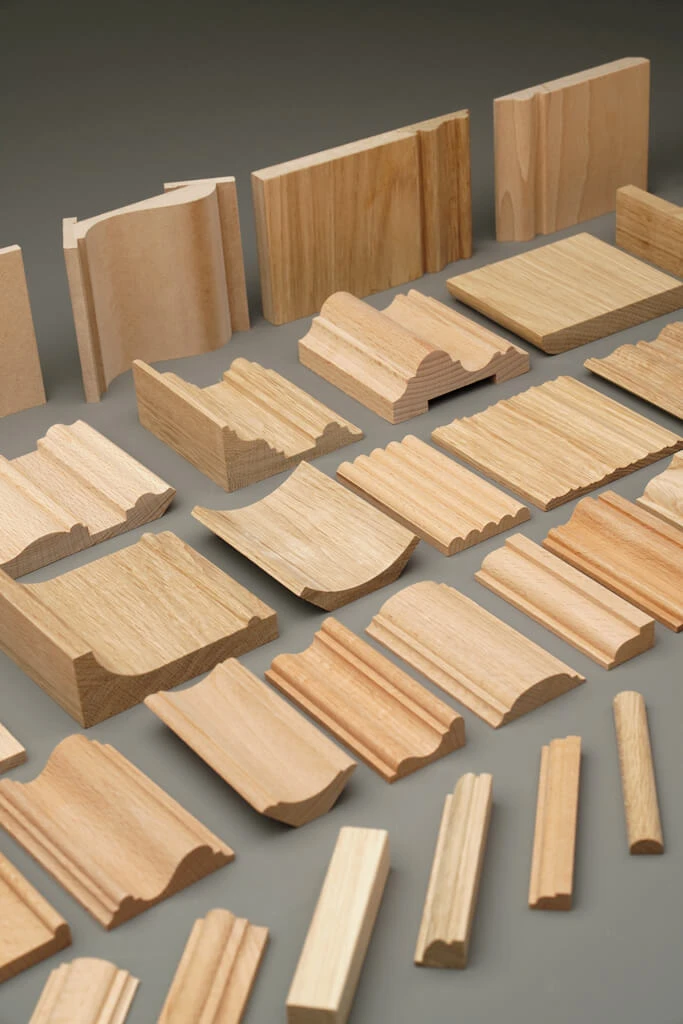
wooden moldings, cornices, and baseboards — the basis of a frame system centered around a rosette. The molding creates a "frame," the rosette — a "focal point."
Width of molding for the frame around the rosette: 20–40 mm — for furniture fronts; 30–50 mm — for wall panels.
Important: molding in the corners of the frame is joined at 45°. If corner decorative elements are installed in the corners — moldings are joined at 90° (right angle), and the corner element "covers" the joint.
Baguette: expressive framing
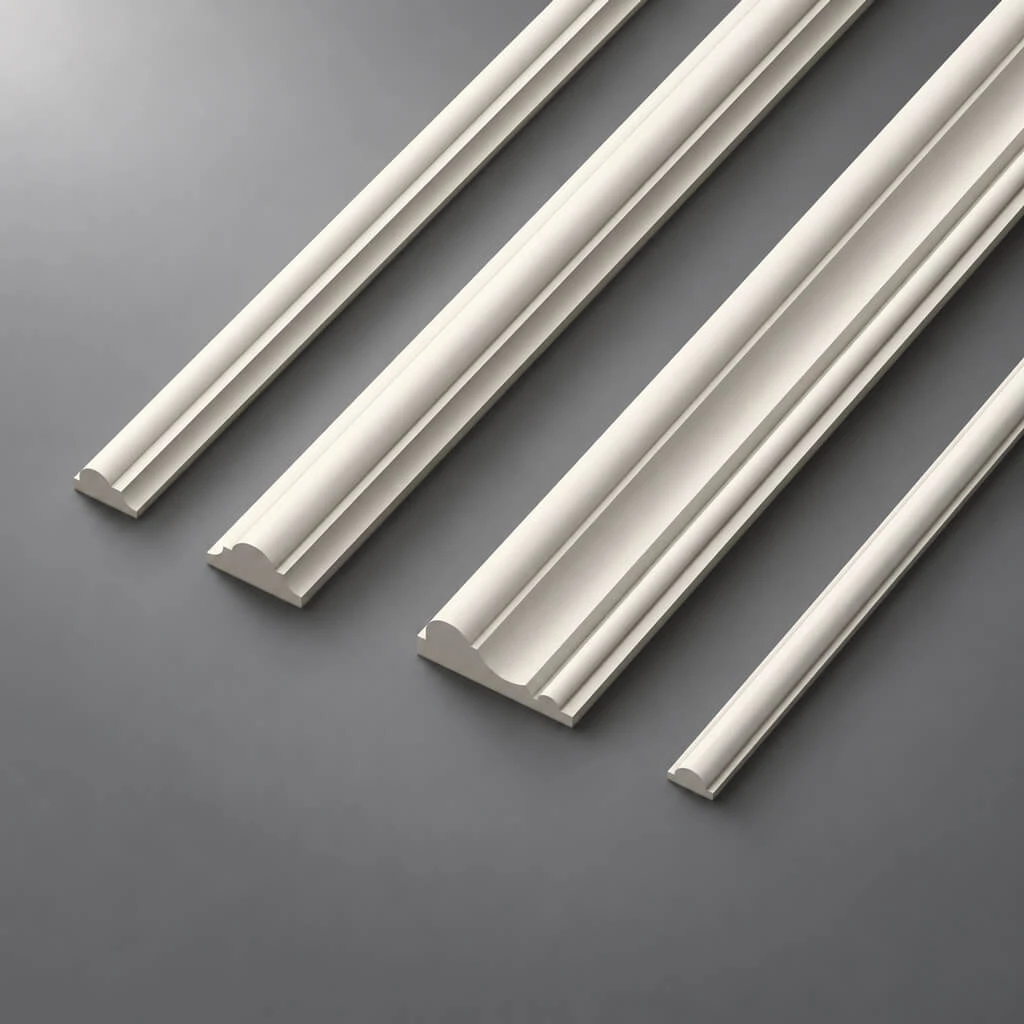
Wooden Picture Frame — a more developed profile than molding. Paired with a decorative rosette, it creates a frame system with more pronounced volume. Used for wall panels, niche frames, and furniture portals.
Linear elements: layouts and transitions
Wooden trim — profile strips that define the surface structure: horizontal belts, vertical posts, transition layouts. The rosette is mounted at the intersection of linear profiles — at the "nodal" point of the system.
Overlays: supporting decor
Carved decorative inserts for furniture — horizontal and vertical decorative strips with ornament. Combined with a rosette, they form a "cross" — vertical overlay + horizontal overlay + rosette at the center of the intersection. This is a classic motif of furniture decor.
Pilasters: Vertical Accents
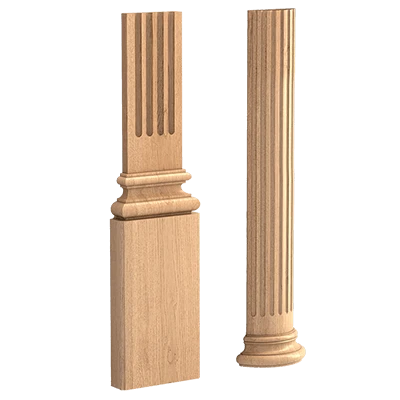
wooden pilasters and columns flank portal and panel compositions. In the "pilaster + cornice + frame" system, the rosette is installed as the "keystone" in the horizontal belt above the niche.
Carved decor: developed ornamental systems
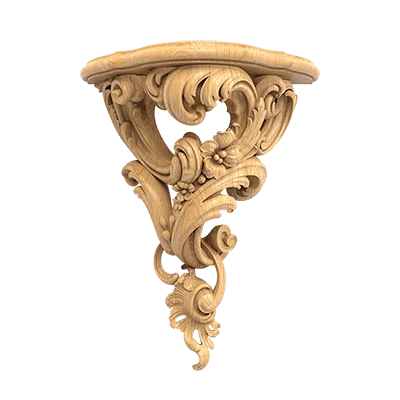
STAVROS carved decor — for interiors where the decorative program is stated in full force. Brackets, shelves, pilasters, rosettes, overlays — all from one system, with a consistent ornamental language.
Wooden rosettes and interior styles: specific solutions
Classic: rich relief and symmetry
A classic interior is the territory of the rosette 'in full voice'. Large elements with developed ornamentation are appropriate here: acanthus leaf petals, symmetrical floral motifs, multi-tiered relief.
Application scheme: boiserie on walls + decorative rosettes in the centers of main panels + corner accents from the same series + pilasters vertically + cornice belt on top.
Finishing: walnut tinting or patina (dark base + light highlights). This 'reveals' the relief to the maximum.
Neoclassical: accent without excess
Neoclassical is stricter and more restrained than classic. Rosettes here are smaller, the ornament is more geometric or abstract. Molding frames are thin, profiles are without excessive relief.
Principle: one accent per section. Not four corner elements + a central rosette — that's already classic. Only one central accent per frame.
Finish: enamel in the color of the wall or furniture. The socket "dissolves" into the surface, leaving only the relief as a play of shadows.
Provence: lightness and florality
Provence requires small elements with a delicate floral motif. Petals, leaves, small floral ornament — without Baroque heaviness.
Finish: white or cream enamel. Light "artificial aging" is possible — local rubbing of the top layer of paint on the relief protrusions. This creates a patinated effect characteristic of Provence.
Cabinet style: dark wood and strict ornament
Dark tinting in wenge or walnut. Expressive classical ornament. Rosettes are larger than in neoclassicism, but without Baroque heaviness. Strictness and depth are the two key words.
In cabinet style, rosettes are combined with dark pilasters, dark panels made of Boiserie, wooden shelves with carved brackets.
Finishing wooden rosettes: what works and why
Varnish: purity and depth of wood
Clear varnish preserves the natural wood texture. For beech — a warm golden hue. Matte varnish is better than clear: it doesn't create glare under side lighting, which "reveals" the relief.
Technique: primer + 2–3 coats of varnish. Light sanding between coats. Final coat — thin.
Staining to match walnut, oak, or wenge
Stain changes the wood color to the desired shade. Varnish on top. For cabinet style: dark staining "walnut" or "wenge." For classic style: warm staining "oak" or "American cherry."
Important: decorative rosettes should be stained in the same color scheme as other wooden elements in the room. Mismatched stains result in a "patchy" look.
Enamel: color to match the interior
White, cream, gray, colored enamel — a wooden rosette can take on any shade. This makes it versatile: you can buy decorative wooden rosettes for painting and seamlessly integrate them into any color scheme.
Before enamel: 2 coats of acrylic wood primer. Finish enamel — 2 coats. All operations — before installation.
Patina: shadows and light in one element
Patina is a technique where the recesses of an element remain dark, and the protruding edges are lightened. For carved ornamentation, this provides maximum effect: each petal, each vein becomes visible separately.
Base coating: dark tinting. Then — matte enamel on top. Then — sanding the protrusions with fine sandpaper until the dark base shows on the edges. Result: an "antique" look with historical character.
Installation of decorative rosettes: principles and practice
Glue as the main method of fastening
Wooden decorative rosettes are in most cases attached with glue: liquid nails or special PVA-based wood glue.
The surface must be clean, degreased, and dry. Glue is applied to the back side of the rosette, the element is pressed and fixed (tape, weight) for 20–30 minutes until set.
Additional fastening on furniture
For furniture facades, especially on vertical surfaces — combined fastening is recommended: glue + one thin finishing nail through the back part of the element into the surface. The nail head is countersunk and puttied.
Marking: the center is important
Before installation — precise marking of the center. A 2 mm error in centering a rosette on a 400 mm facade is not critical. A 5 mm error is already noticeable. Use a ruler and pencil, check the diagonals.
Finishing putty of joints
If the rosette is mounted on a painted surface and a thin gap remains between the element and the surface (due to unevenness) — the gap is filled with acrylic sealant. After drying — it is cleaned and painted over.
Typical mistakes when choosing and using decorative rosettes
Mistake 1: Mismatched ornament styles
A Baroque rosette with heavy acanthus ornament on furniture in Provence style. Or a strict geometric rosette in a "Russian classicism" interior. The ornament style should match the interior style.
Mistake 2: Incorrect scale
A large rosette with a diameter of 120 mm on a narrow dresser drawer 150 mm high — overload. A small rosette 40 mm in the center of a wall frame 800 × 1000 mm — invisible. Scale is not a feeling, but a calculation.
Mistake 3: Choosing a rosette separately from moldings
"First we ordered moldings, then we decided to add rosettes" — but the rosettes turned out to be from a different decorative series. As a result, the reliefs conflict. Rule: choose the entire system of elements simultaneously.
Mistake 4: Not accounting for the handle when arranging rosettes
A furniture handle is also an "accent" on the facade. Two accents (handle and rosette) should be placed so that there is the correct distance and hierarchy between them. The rosette is a decorative accent. The handle is a functional one. They should not "argue".
Mistake 5: Installation on an unprepared surface
A rosette glued to a surface with traces of dust, paint, or grease will peel off. Before installation, the surface must be: cleaned, degreased, and sanded if necessary.
Mistake 6: Mixing wooden and polyurethane elements
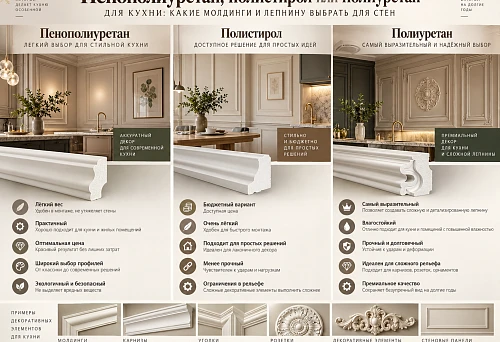
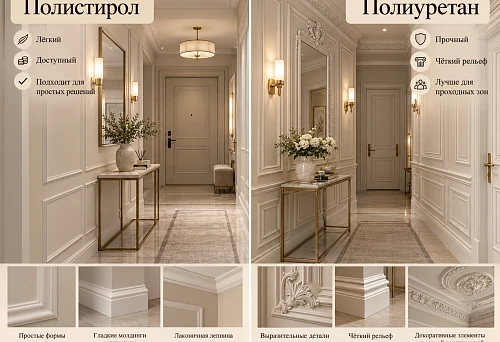
In one interior project, STAVROS wooden rosettes on furniture and polyurethane ceiling rosettes are different materials. When painted the same color, they look similar. But when tinted to look like wood, polyurethane and wood will give different results. It is important to understand in advance where the wood is and where the polymer is.
How to calculate the number of elements for a project
This is a practical task that needs to be solved before ordering.
-
Draw a "map" of all surfaces: furniture facades, wall frames, portals
-
On each surface, mark: whether a central rosette, corner accents, or only straight profiles are needed
-
Count the number of central positions (each = 1 element)
-
Count the number of corner positions (each frame = 4 corner elements, if corner decor is selected)
-
Add 10% margin (in case of defects during installation and trimming)
-
Check: there is no size conflict between rosettes on adjacent surfaces
-
Coordinate the style: all rosettes in the project are from the same ornament series
Where to buy decorative wooden rosettes STAVROS
To buy decorative wooden rosettes and carved wooden elements for furniture and wall panels — the entire assortment is collected in the section wooden decorative elements. Here — rosettes, corner accents, cartouches and decorative inserts for furniture facades, boiserie and interior frames.
Complete system of wooden decor:
-
Solid wood products STAVROS — the entire catalog of wooden products
-
wooden moldings, cornices, and baseboards — for frames and bands
-
Wooden Picture Frame — for frames and framing systems
-
solid wood millwork — profiles and layouts
-
Carved decorative inserts for furniture — horizontal and vertical accents
-
Decor for Molding — elements for molding systems
-
STAVROS carved decor — full range of carved elements
-
wooden pilasters and columns — for portals and architectural accents
-
Boiserie and wall panels — wall systems
-
Cabinet decoration — solutions for furniture decor
-
Kitchen decor — for classic kitchen fronts
-
STAVROS furniture solutions — full section
Frequently asked questions
What is a decorative wooden rosette and how is it different from an electrical one?
A decorative wooden rosette is an overlay carved element made of solid wood, used as a central accent on furniture facades, wall panels, boiserie, and interior frame systems. It has nothing to do with electrical wiring.
Where are decorative wooden rosettes used?
On furniture facades (cabinets, dressers, nightstands, kitchen fronts), wall panels and boiserie, in furniture and architectural portals, within molding frames, on decorative niches and console areas.
How to choose the size of a rosette for a furniture facade?
The diameter of the rosette should be 12–20% of the smaller side of the facade or frame. For a standard cabinet facade of 400–500 mm, a rosette of 60–80 mm is suitable.
Can wooden decorative rosettes be painted?
Yes. Wooden rosettes accept any finish: clear varnish, tinting, enamel, patina. It is recommended to paint before installation to achieve an even coating without drips in the relief.
What to pair decorative rosettes with in an interior?
With wooden moldings (frames), wooden picture rails (framing), linear moldings (surface structure), carved overlays (linear accents), pilasters (vertical elements), and other decorative wooden elements.
How to attach a wooden rosette to a furniture facade?
Liquid nails or wood glue + if necessary, one thin finishing nail. The surface before installation must be clean and degreased.
What mistakes are most often made when choosing decorative elements?
Inconsistent ornament style, incorrect scale (too small or too large), installation on an unprepared surface, choosing rosettes separately from moldings.
About the company STAVROS
Precision of detail is what distinguishes an interior from an expensive set of furniture. It is a wooden decorative rosette, correctly chosen and installed in the right place, that turns a facade into an object with history, a wall into an architectural system, and a room into a space with character.
STAVROS is a Russian manufacturer of wooden interior and furniture decor from solid wood. Rosettes, moldings, overlays, baguettes, linear moldings, pilasters, carved decor — the entire system for full-fledged wooden decor of furniture and interiors. Manufactured in Russia, delivery throughout the country. Catalog on the website.
STAVROS — wood that knows its place.