
























Article Contents:
- Anatomy of a column and pilaster: three parts, three tasks
- Historical context: why it matters when choosing decor
- Where wooden capitals and bases are used: a complete overview of scenarios
- Furniture portal: the cabinet as architecture
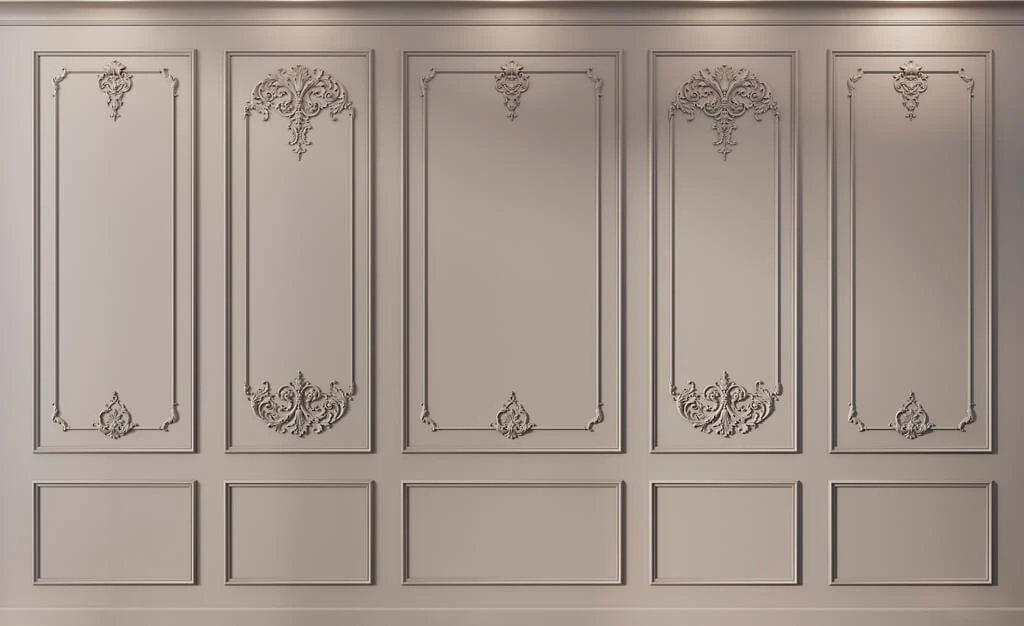
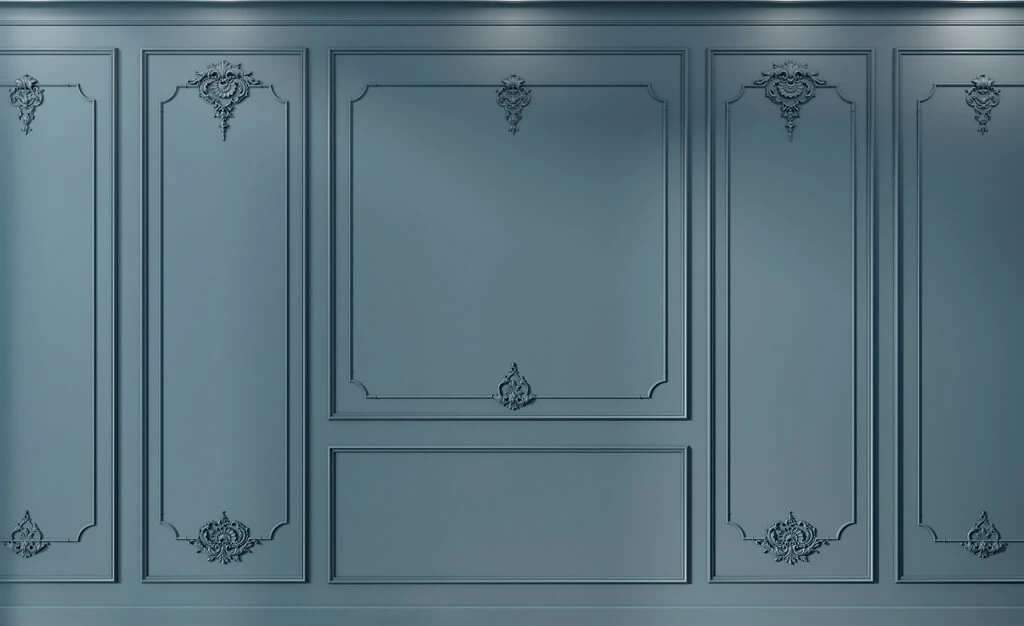
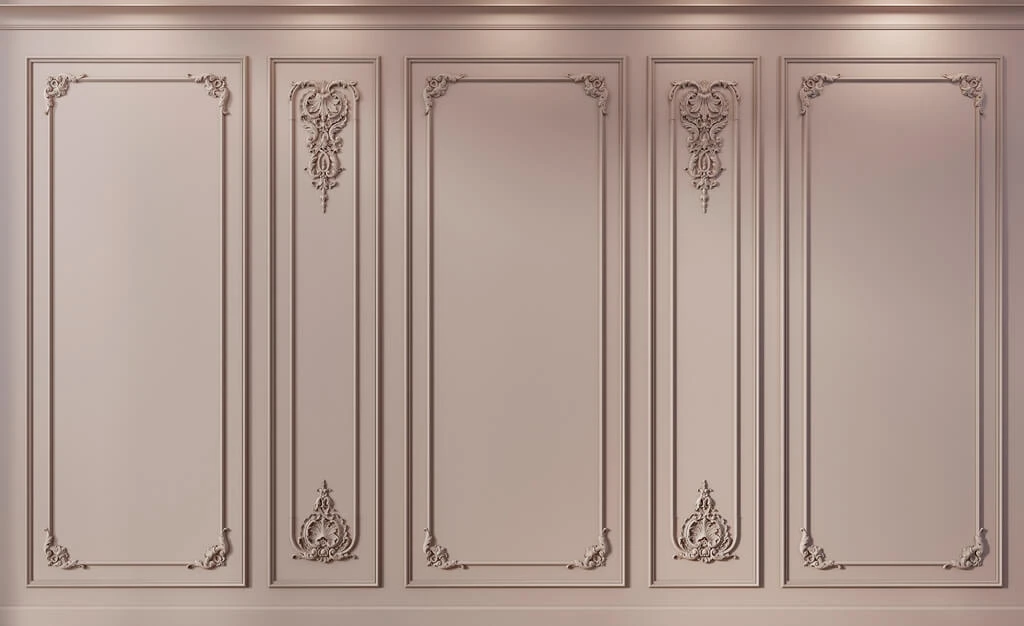
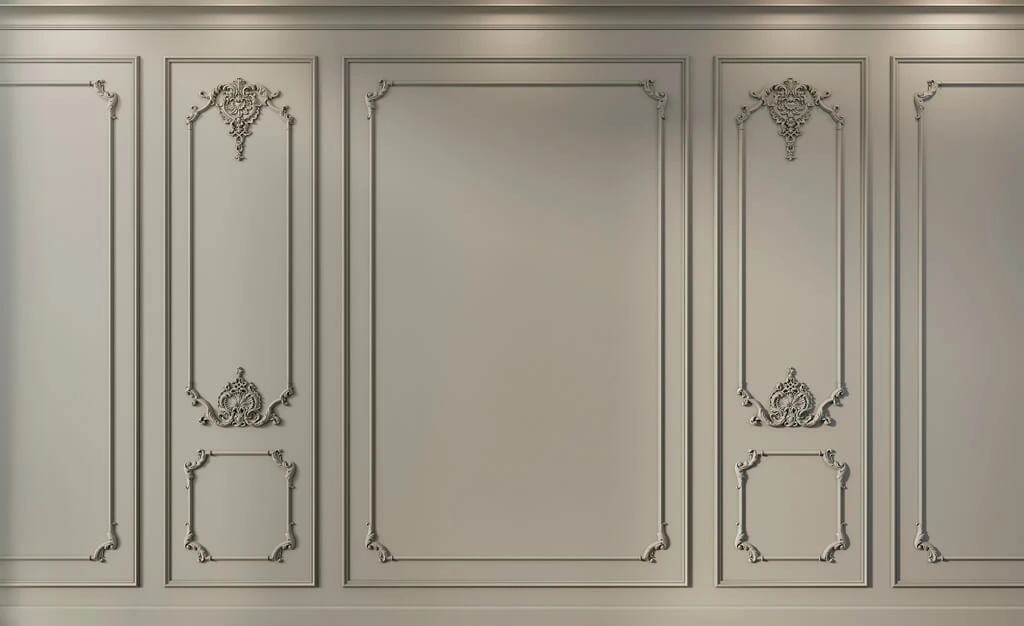
- Boiserie and wall panels: the rhythm of verticals
- TV zone: a wooden frame as a portal
- Decorative opening, niche, console area
- Furniture facades: the capital as a vertical accent
- How to choose a wooden capital: six criteria
- Criterion 1: Matching the width of the pilaster and capital
- Criterion 2: Height of the capital in proportion to the total height
- Criterion 3: Ornament style and consistency with other elements
- Criterion 4: Relief height
- Criterion 5: Alignment with the horizontal entablature
- Criterion 6: Finish
- How to choose a base for a wooden column or pilaster
- Task 1: Visual "placement" of the vertical
- Task 2: Connection with the baseboard and lower tier
- Task 3: Stylistic coordination with the capital
- Practical dimensions of bases for interior pilasters
- Capital and base as a system: how to assemble everything correctly
- Step 1: Determine the vertical element
- Step 2: Determine the overall height and width of the system
- Step 3: Choose the style and ornament
- Step 4: Coordinate with moldings and trim
- Step 5: Coordinate the finish
- Step 6: Installation
- Interior styles and selection of capitals: practical solutions
- Classic: Corinthian or Ionic choice
- Neoclassical: rigor and proportion
- Provence: softness and florality
- Cabinet style: strictness and dark depth
- Wooden capital in the TV area: how it works in practice
- How to calculate the number of elements for a project
- Typical mistakes when choosing capitals and bases
- Where to buy wooden capitals and column bases: STAVROS products
- Frequently Asked Questions
- About the Company STAVROS
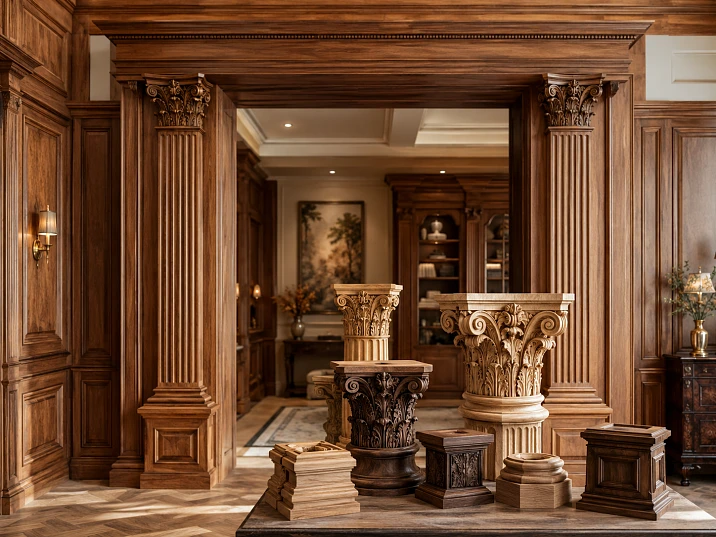
In architectural language, there are two moments that define everything: the beginning and the end. Not the middle. Not the length. It is precisely where the vertical is born from the base and where it arrives at the completion. In the classical order system, these points are called the base and the capital. And it is they that turn an ordinary pillar into a column, and a flat vertical overlay into a pilaster with architectural character.
If you are faced with the task of designing a furniture portal, Boiserie, cabinet, TV area, or classic opening — and at the same time do everything not in a "furniture-faceless" way, but with true interior dignity — the question of choosing wooden capitals and bases becomes fundamental.
And immediately — an important precision. This article is not about construction nodes. Not about metal anchors, not about calculations of foundations for steel columns, not about I-beams and bolted connections. We are talking exclusively about interior wooden capitals and bases — decorative elements made of solid wood that complete wooden pilasters and columns in classic interior and furniture projects.
How is this system arranged? How to choose the right size and style? How to avoid mistakes that make even an expensive project visually "cheap"? We analyze sequentially and in detail.
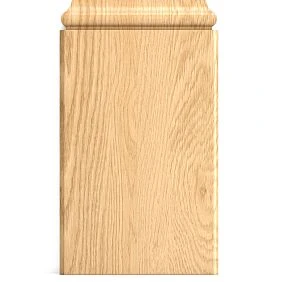
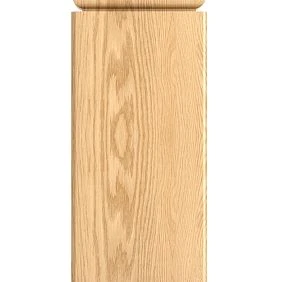
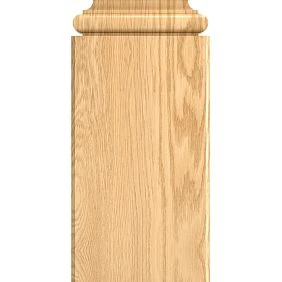
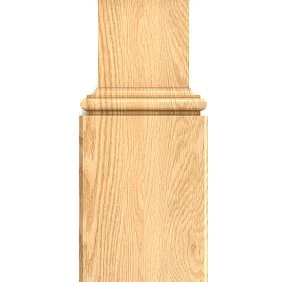
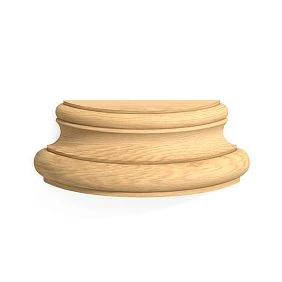
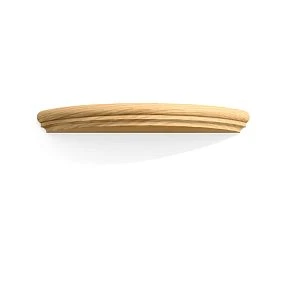
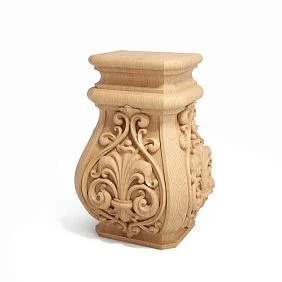
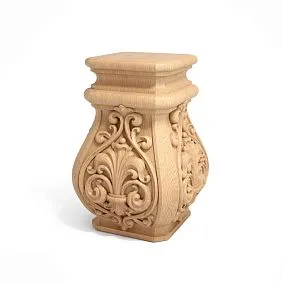
Anatomy of a Column and Pilaster: Three Parts, Three Functions
To consciously choose capitals and bases, you need to understand the role each plays in a unified system.
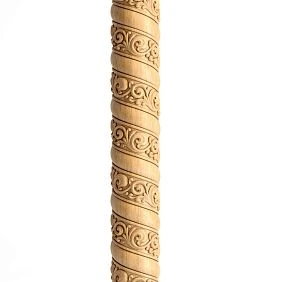
Any classical column consists of three parts. The base is the lower, "earthly" part. The shaft (or fust) is the main vertical. The capital is the upper, "heavenly" part, which supports the entablature or ceiling.
In interior decor, this relationship is preserved, though reinterpreted. Here, the column or Pilaster no longer bears real load — they create visual order, a decorative vertical, the "architectural rhythm" of a wall or portal.
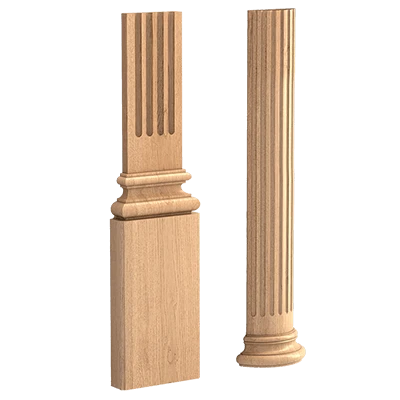
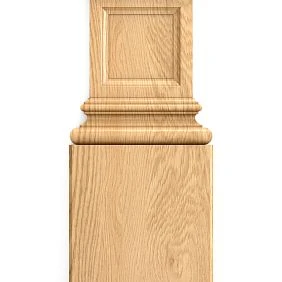
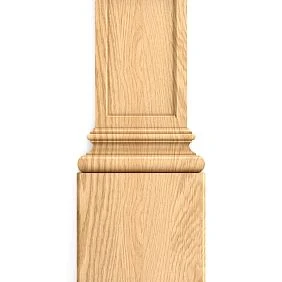
The base — the lower foundation of a column or pilaster — "places" the vertical element on a plane. It is responsible for the connection with the floor, baseboard, lower tier of boiserie, or furniture plinth. Without a base, a pilaster or column looks "suspended" — as if the element starts from nowhere.
The capital — the upper termination — "hands over" the vertical element to the horizontal. This is the point of transfer: below — the slender vertical of the shaft, above — the horizontal of the cornice, molding, or architrave. Without a capital, a pilaster or column "disappears into the wall" without completion, without a point.
Together, the base and capital transform a simple vertical element into an architectural unit — self-sufficient, legible, and stylistically complete.
Historical Context: Why This Matters When Choosing Decor
A wooden capital is a concept with a millennia-long history. The Doric capital — the most austere and laconic — consists of an abacus (a flat slab on top) and an echinus (a rounded cushion beneath it). Minimum forms. Maximum monumentality.
The Ionic capital is more delicate and refined. Characteristic volutes on the sides (spiral scrolls). This is lightness and elegance.
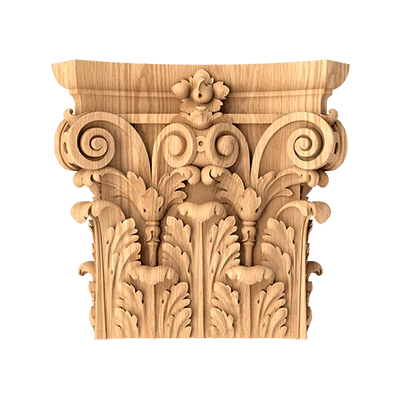
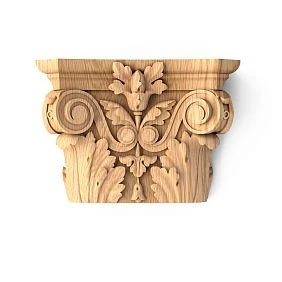
The Corinthian capital is the richest of the three. A basket abundantly decorated with acanthus leaves. This is luxury and decorative generosity.
Why know this when choosing a wooden capital for a cabinet or furniture portal? Because these three systems are not outdated — they have turned into three basic "languages" of interior decor:
-
Doric language → laconic neoclassicism, study style, minimalist classic
-
Ionic language → classic of medium expressiveness, Provence, English style
-
Corinthian language → rich classic, Baroque, Russian Empire style, hall with high ceilings
Choosing wooden carved capital for your project, you are essentially choosing the "language" in which the space will "speak."
Our factory also produces:
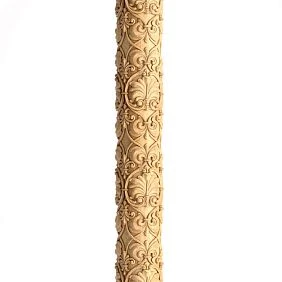
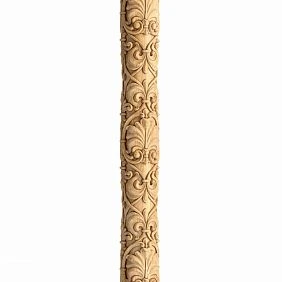
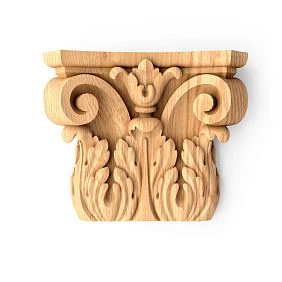
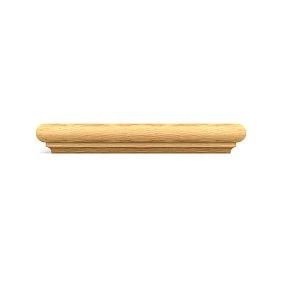
Where are wooden capitals and bases used: a complete overview of scenarios
Get Consultation
Furniture portal: cabinet as architecture
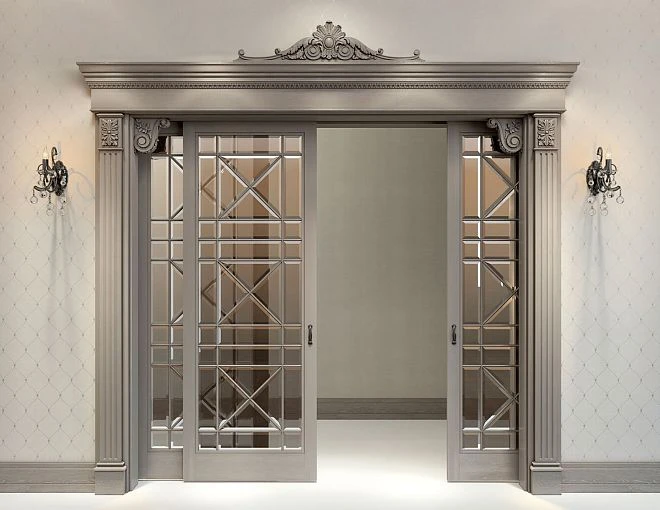
A portal wardrobe is a furniture system organized on the principle of an architectural opening. Side pilasters + horizontal cornice + central niche or panel = portal.
Here, the capital plays a key role: it connects the vertical of the side pilaster with the horizontal of the cornice above the wardrobe. It is at the point of the capital that the vertical and horizontal "meet" — and the entire decorative power of the portal depends on how beautifully this meeting is resolved.
Without a capital, the cornice simply "lies" on the pilaster — this is a mechanical contact. With a capital, a transition appears that says: here is architecture, not just furniture.
The base in a furniture portal works symmetrically: it connects the lower edge of the pilaster with the furniture plinth or floor molding. If the furniture portal stands on a podium or pedestal, the base "sits" on this podium. If the plinth is built-in, the base aligns with its height and profile.
for cabinet decor The "pilaster + capital + base" system is one of the most architecturally convincing and at the same time practically feasible methods.
Boiserie and wall panels: rhythm of verticals
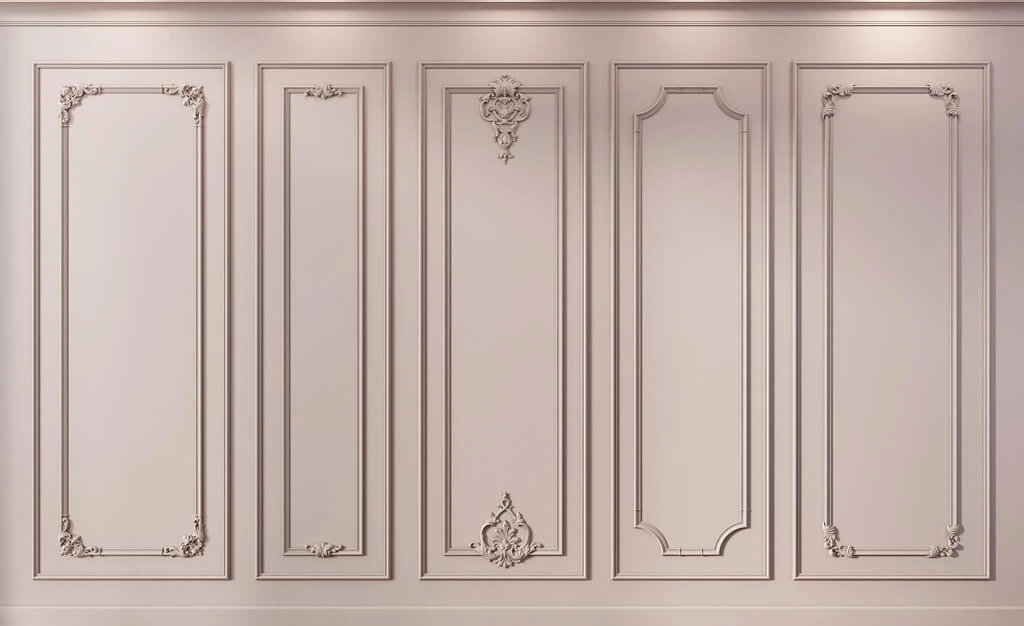
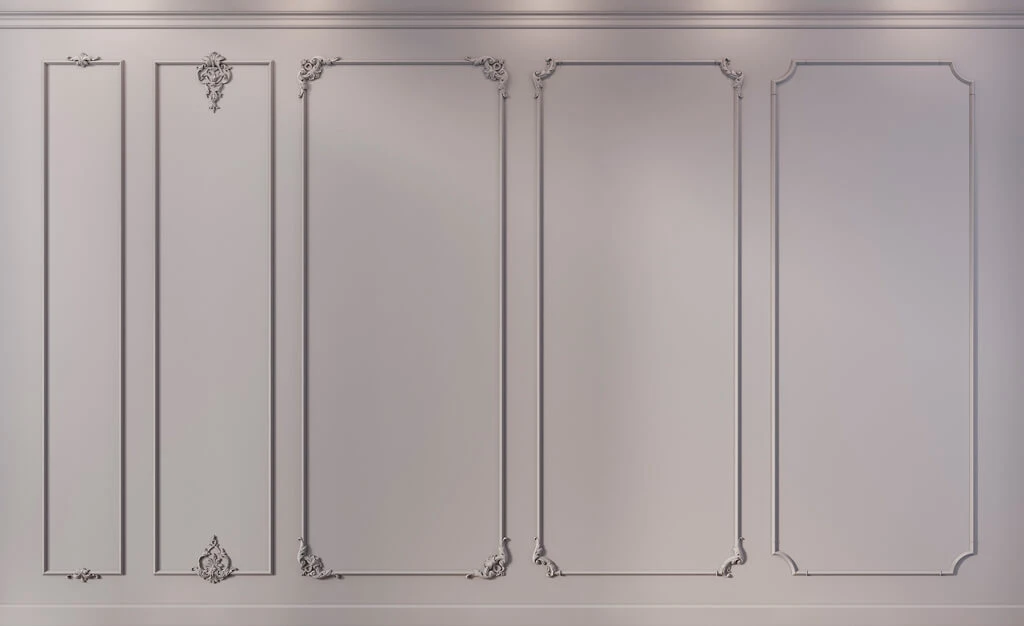
In the system Boiserie Pilasters are the vertical "ribs" of the system that divide the wall into sections. Each pilaster has its own logic of beginning (base) and end (capital).
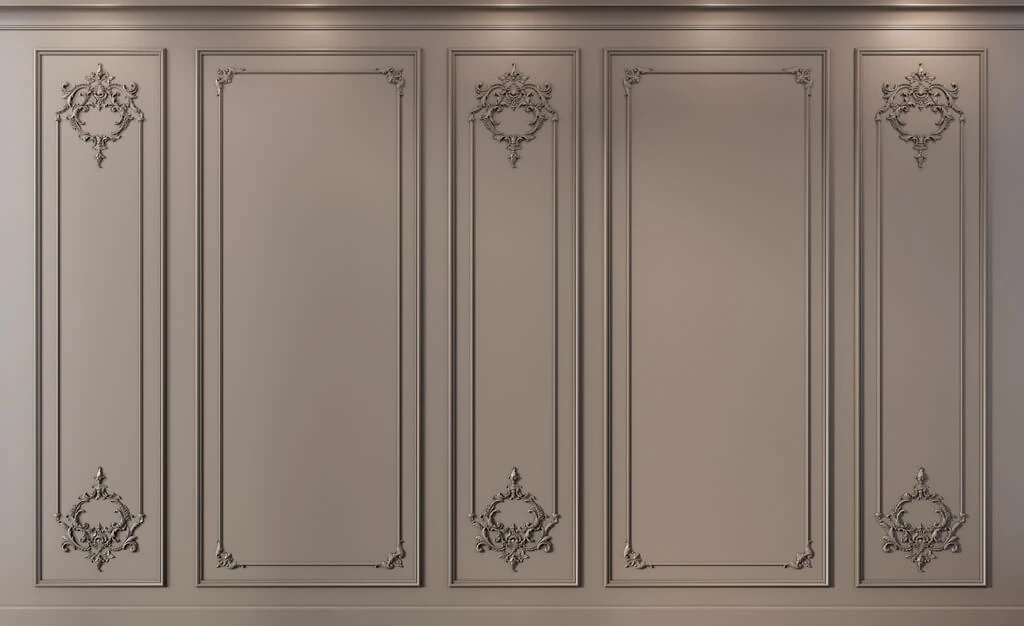
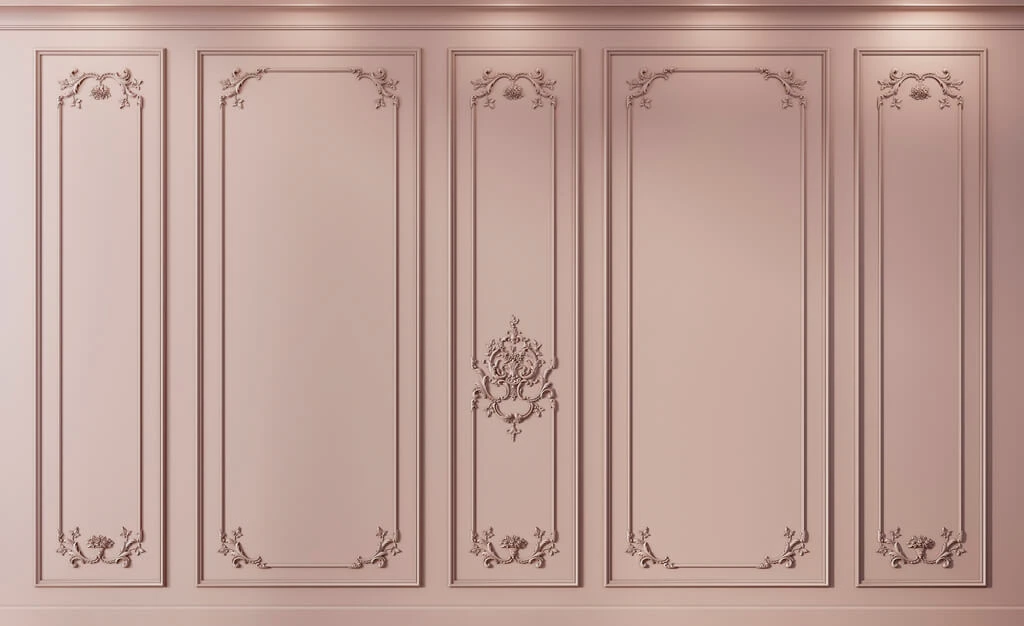
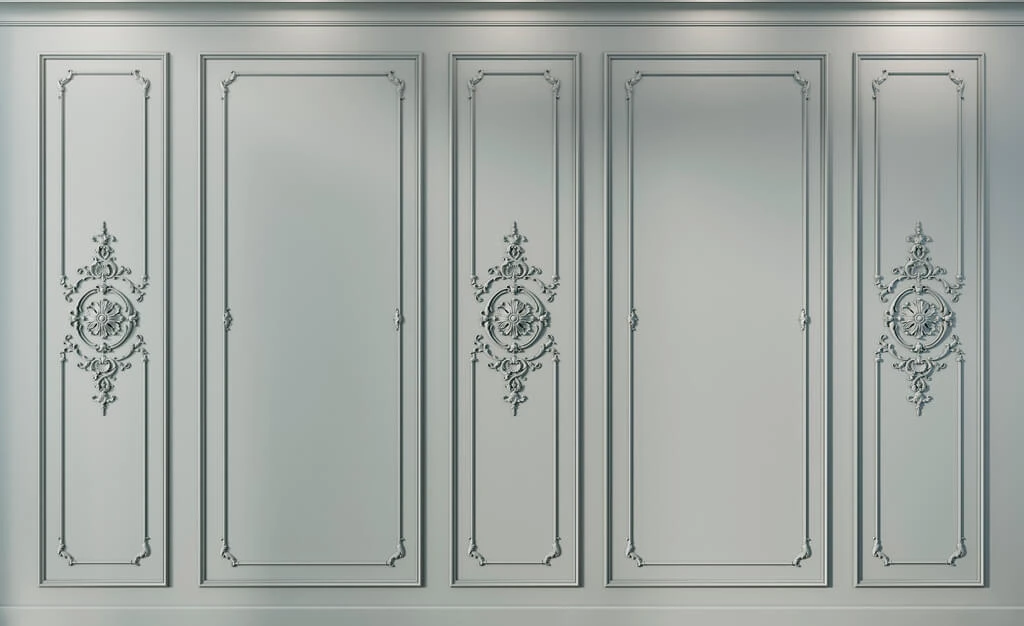
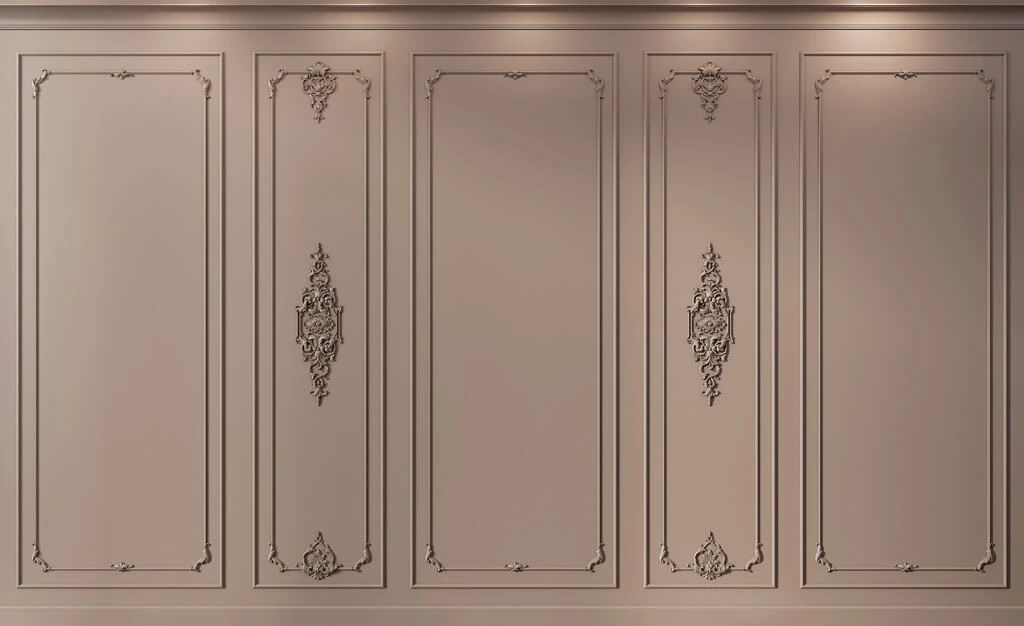
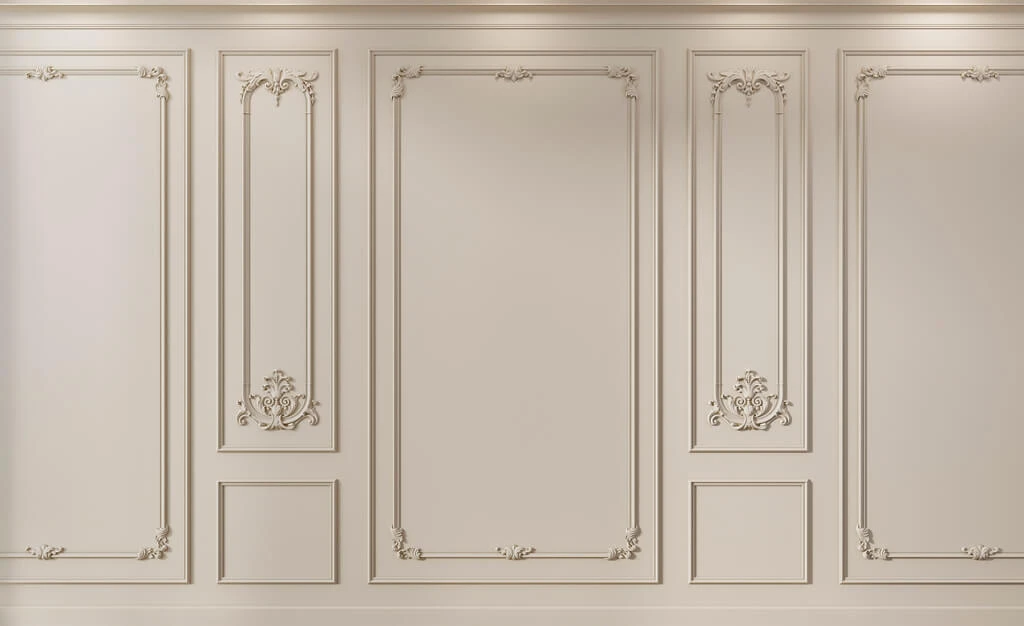
When pilasters in boiserie are properly finished, the wall reads as a single whole with an internal structure. Verticals "stand," horizontals "lie" — and the entire decor is perceived as an architectural program, not just "stuck-on moldings."
The capital is especially important in two-tier boiserie. The lower tier consists of panels and a plinth. The upper tier consists of higher panels or an open wall. At the "break" between the tiers, there is a horizontal belt. And it is at the point of this belt that the capitals of the lower tier pilasters "transfer" the vertical into the horizontal of the intermediate entablature. This is the visual "seam" of the system.
wooden moldings, cornices, and baseboards In boiserie, they form horizontal belts with which the capital aligns. The width of the horizontal belt profile influences the choice of height and type of capital.
TV zone: a wooden frame as a portal
A TV wall with pilasters on the sides is an architectural move that turns the TV from an electronic device into a "picture in an interior frame."
Side pilasters + horizontal cornice above the TV = portal. The capital of the side pilaster is at the junction with the upper horizontal frame element. The base is at the floor, coordinated with the baseboard.
For a TV zone with a wooden pelmet around the screen and moldings on the wall, the "pilaster + capital + base" system makes the entire composition complete and architecturally convincing.
More about TV wall solutions in the section TV Zone Frames.
Decorative opening, niche, console zone
A classic decorative opening is a portal without doors. Arched or rectangular. Side pilasters with capitals + a horizontal architrave on top. This solution is used in transitions between the living room and dining room, in the design of fireplace niches, in decorative niches for mirrors and sculptures.
В console zones Side pilasters with capitals flank a mirror or decorative panel above the console. This gives the console area a "portal" character — not just a table by the wall, but an architectural scene.
Furniture facades: capital as a vertical accent
Even without a full portal, a capital can be used on a furniture facade. For example: narrow vertical overlays on a cabinet facade (imitating pilasters) — with a small capital on top and a base at the bottom.
This creates an "architectural" effect on the facade without serious structural rework. It is enough to choose the overlays correctly, Carved decorative elements and apply the system logically.
How to choose a wooden capital: six criteria
Criterion 1: Matching the width of the pilaster and capital
The width of the capital should either match the width of the pilaster shaft (Doric version — strict correspondence) or be slightly wider (classic version — the capital "opens" upward).
Classic rule: capital width = pilaster shaft width × 1.1–1.25. This "opening" creates a proper transition from the narrow shaft to the wide horizontal belt.
If the capital is narrower than the pilaster or exactly equal to it without opening, the result visually "shrinks." The transition is unattractive.
If the capital is too wide, it "sticks out" and disrupts the vertical rhythm.
Criterion 2: Height of the capital in proportion to the total height
Classic proportion: capital height = 1/6 of the total column or pilaster height. For a pilaster 240 cm high — capital 40 cm. For a pilaster 180 cm high — capital 30 cm.
This is not a strict rule, but a guideline. A capital that is too high "overloads" the upper part. One that is too small is unnoticeable and gets lost.
For furniture portals: pilaster 220 cm high — capital 25–35 cm.
Criterion 3: Ornament style and consistency with other elements
This is fundamental. Wooden carved capital with acanthus ornament of the Corinthian type and at the same time a strict Doric base — this is a stylistic conflict. The top and bottom finishes should be from the same "decorative family."
The ornament of the capital should echo:
-
Ornament of wooden moldings nearby
-
Drawing carved appliqués on furniture facades
-
decorative elements in frame centers
-
Profile wooden molding in frames
The principle is the same: everything from one stylistic 'dictionary'.
Criterion 4: Relief Height
High relief of the capital is more expressive but requires proper lighting. With side or directional light, high relief creates deep shadows and 'reveals' itself to the maximum.
In uniform diffused light (a typical scenario in Russian apartments without accent lighting), high relief is less readable. In such conditions, it is better to choose moderate relief, but with clear, detailed elements.
Recommended relief for residential interiors: 12–20 mm.
Criterion 5: Coordination with the horizontal entablature
The capital is not the final point. It 'meets' the horizontal: cornice, architrave, horizontal molding. And this meeting must be architecturally logical.
If the horizontal element is a narrow molding 30 mm wide, and the capital is a wide Corinthian 'basket' — they conflict. A rich capital requires a rich entablature. A strict Doric capital corresponds to a laconic cornice.
Criterion 6: Finish
A wooden capital can be varnished, tinted in any shade, or painted with enamel. Principle: the finish of the capital must match the finish of the pilaster shaft and base. All three elements are a single whole.
For white enamel: primer → 2 coats of enamel → top coat. The capital and base are painted before installation.
For tinting under walnut or wenge: stain → varnish in 2–3 coats. The intensity of tinting is the same on all elements of the system.
Patina on the capital: dark base → matte enamel on top → light rubbing of protrusions → revealing the dark base on the edges. 'Antique' decor effect.
How to choose the base of a wooden column or pilaster
Wooden column base — the lower foundation that solves several tasks simultaneously.
Task 1: Visual "placement" of the vertical
The base is the "feet" of the column. It should visually support the vertical element and give a sense of stability. A base that is too narrow or too low makes the pilaster "hang". A base that is too massive relative to the shaft overwhelms the vertical.
Classic proportions: base height = 1/4–1/3 of the capital height. Base width = shaft width × 1.15–1.3.
Task 2: Connection with the baseboard and lower tier
The base should "connect" with what it rests on: baseboard, lower boiserie molding, furniture plinth.
If the baseboard is 80 mm high and the base molding profile is simple, the base should have similar "modesty". If the lower boiserie tier is massive with a developed profile, the base can be more expressive.
Principle: the base as a "continuation" of the lower horizontal belt.
Task 3: Stylistic Coordination with the Capital
The base and capital are a pair. They must "speak" the same decorative language. A strict base with a laconic profile + a rich Corinthian capital are incompatible. This is a stylistic dissonance.
| Capital type | Corresponding Base |
|---|---|
| Doric (strict, without ornament) | Laconic, with a simple band |
| Ionic (with volutes) | Attic Base (torus + scotia + torus) |
| Corinthian (acanthus leaves) | Developed Base with a Rich Profile |
Practical Base Sizes for Interior Pilasters
Pilaster 60 mm wide:
-
Base width: 70–80 mm
-
Base height: 60–90 mm
Pilaster 80 mm wide:
-
Base width: 95–105 mm
-
Base height: 80–120 mm
Pilaster 100 mm wide:
-
Base width: 115–130 mm
-
Base height: 100–140 mm
These parameters are guidelines. The final size depends on the height of the entire composition, the type of space, and the style of ornament.
Capital and base as a system: how to assemble everything correctly
Analyzing the capital and base separately is useful. But in a real project, they only work as a system. How is this system built?
Step 1: Define the vertical element
First of all: what exactly is being finished? A pilaster (flat) or a half-column (volumetric, protruding from the wall)? This determines the cross-sectional shape of the base and capital.
For a pilaster — a flat section, a rectangular 'sole'. For a half-column — a semicircular section.
Step 2: Determine the overall height and width of the system
Measure the height of the room or furniture portal. Determine the width of the pilaster. Calculate proportions (capital height = ~1/6 of the height, base height = ~1/3–1/4 of the capital height).
Step 3: Choose the style and ornament
Focus on the interior style. For classic — Ionic or Corinthian type. For neoclassical — Doric or simplified Ionic. For Provence — soft, floral ornament without heavy relief.
Step 4: Coordinate with moldings and trim
Check: Wooden moldings should not "overpower" the capital next to it. Wooden trim of horizontal belts should organically "receive" the capital.
Step 5: Coordinate the finish
All elements — one finish. Pilaster, capital, base, moldings, Wooden Picture Frame — a single color and tone.
Step 6: Installation
Installation order: first the pilaster shaft, then the base from below, then the capital from above. Or vice versa — the capital is attached to the horizontal element (cornice, entablature) first, then the shaft is adjusted to it.
Interior styles and capital selection: practical solutions
Classic: Corinthian or Ionic choice
A classic interior is a space where the decorative program is fully expressed. A rich Corinthian capital with acanthus leaves or an Ionic one with volutes is appropriate here. The relief height is 15–20 mm. The base has a developed profile.
Example of application: a portal cabinet in a library study. Pilasters 80 mm wide, 220 cm high. Corinthian capitals with acanthus ornament 30 mm high, 100 mm wide. Bases with three bands (torus — scotia — torus) 80 mm high. Finish: dark walnut stain with patina on the protrusions.
For a complete interior solution in a classic style — STAVROS furniture solutions.
Neoclassicism: rigor and proportion
Neoclassicism is a space of restrained dignity. There is no place for ornamental excess here. The best choice: a simplified Doric or Ionic capital without heavy relief. Relief height is 8–12 mm. Clear horizontal bands. Base with two or three distinct bands without excessive molding.
Finish: matte enamel in the tone of the wall or slightly contrasting (a bit darker or lighter). Effect: the relief is "read" as a play of shadows, not as a flashy accent.
Provence: softness and florality
Provence requires lightness. Small capitals with floral ornament — leaves, delicate curls, floral motifs. Without Baroque heaviness. Base is simple, with smooth transitions.
Finish: white or cream enamel. Light "artificial aging" is possible: rubbing the protrusions with sandpaper after painting to simulate wear.
Cabinet style: rigor and dark depth
Dark wenge or "American walnut" tinting. Strict capital shape — Doric or with fluted echinus. The base is massive, with a pronounced belt. All this creates a feeling of "study" weightiness.
For the study style, the following combination works especially well: wooden pilasters with capitals + wall in Boiserie with dark panels + Carved Decor as accent details in the centers of the frames.
Wooden capital in the TV area: how it works in practice
Many doubt: are capitals appropriate in a modern living room with a TV? The answer is yes, if everything is coordinated.
TV wall scheme with capitals:
-
On the wall — molding frames made of of wooden moldings
-
On the sides of the TV — two pilasters, each with a capital on top and a base on the bottom
-
Above the TV is a horizontal cornice resting on pilaster capitals
-
The TV is framed wooden cornice
-
Lower console area — see TV Zone Frames
When executed correctly, the TV ceases to be a "device in the wall" and becomes a "picture in an architectural frame." Capitals are the key element that completes the side pilasters and transforms the entire system from "moldings on the wall" into an "architectural portal."
How to calculate the number of elements for a project
This is a practical block that saves time when ordering.
For one symmetrical portal (cabinet, niche, TV area):
-
2 pilasters (left and right)
-
2 capitals (one for each pilaster)
-
2 bases (one for each pilaster)
-
1 horizontal entablature (cornice, architrave)
For a boiserie with three sections:
-
4 pilasters (one on each vertical axis of the partition)
-
4 capitals
-
4 bases
Spare: when ordering decorative wooden elements, it is recommended to add 10–15% to the calculated quantity to account for finishing defects or fitting.
Checklist before ordering:
-
Height of the entire composition (measured from floor to ceiling or from base to cornice)
-
Pilaster width
-
Capital type (Doric, Ionic, Corinthian, or simplified)
-
Base type (Attic, simple, with ornament)
-
Ornament style (floral, geometric, acanthus)
-
Finish (enamel, lacquer, tinting, patina)
-
Consistency with moldings, trims, and picture frames
Typical mistakes when choosing capitals and bases
Some of them seem obvious — but they are the ones most often encountered in practice.
Mistake 1: Capital chosen without considering the pilaster width. A capital that is too wide "sticks out" beyond the edges of the pilaster — this is unattractive and looks like a miscalculation. Always: capital width ≈ pilaster width × 1.1–1.25.
Mistake 2: Top and bottom finishes are of different styles. Corinthian capital + a completely neutral, laconic base without character — a stylistic break. The base and capital are a pair.
Mistake 3: The horizontal element is not coordinated. A narrow molding does not "support" a rich capital. You need exactly the horizontal element that matches the scale of the chosen capital.
Mistake 4: Different finishes for elements of the same system. Pilaster in one tint, capital in another. This is unacceptable. Everything — a single color.
Mistake 5: Furniture base not taken into account. The base "sits" on the cabinet base or on the baseboard. If the height of the base is not considered, the base ends up on an inappropriate "pedestal".
Error 6: Mixing wooden and polyurethane elements in one system. When tinting to look like wood, polyurethane and solid wood will yield different results. It is necessary to determine in advance: the entire project is wood, and consistently select elements from one material.
Error 7: The capital is too small for the scale of the portal. This is a "timid" capital — it does not "hold" the top of the portal, does not create the necessary visual weight. Proportion: capital height at least 1/6 of the pilaster height.
Error 8: The base does not align with the baseboard. The base profile and the baseboard profile "compete" — this creates visual noise in the lower part. Consistency is needed: either the base "continues" the baseboard, or there is a clear horizontal transition between them.
Where to buy wooden capitals and column bases: STAVROS products
-
wooden pilasters and columns — capitals, bases, shafts, half-columns
-
STAVROS carved decor — accent carved elements for portals
-
wooden decorative elements — rosettes, cartouches, corner overlays
-
Solid Wood Items — full catalog of wooden decorative elements
-
wooden moldings, cornices, and baseboards — frames and horizontal bands
-
solid wood millwork — profile strips and trims
-
Wooden Picture Frame — frames and surrounds
-
Carved decorative inserts for furniture — for furniture facades next to pilasters
-
Boiserie and wall panels — system solutions for walls
-
Cabinet decoration — furniture portals and cabinet systems
-
TV Zone Frames — TV portals with pilasters
-
Consoles and Frames — console portals
-
furniture solutions — classic furniture projects
Frequently asked questions
What is a wooden capital in interior design?
This is the upper decorative finish of a wooden column, half-column, or pilaster. In furniture and interior projects, the capital connects the vertical element with the horizontal entablature — cornice, molding, or upper portal frame.
How does a wooden capital differ from a construction column base?
A construction column base is a metal assembly for attaching load-bearing structures to the foundation. A wooden capital and decorative base are interior elements made of solid wood that do not bear structural load but create a decorative finish.
How to choose the size of a pilaster capital?
Capital width = pilaster shaft width × 1.1–1.25. Capital height = ~1/6 of the total pilaster height. Relief: 12–20 mm for residential interiors.
What is the base of a wooden column?
This is the lower base of a column or pilaster — a decorative element that visually "places" the vertical on the surface and connects it with the baseboard, furniture plinth, or lower tier of boiserie.
Can wooden capitals be used in a TV zone?
Yes. Side pilasters with capitals create an architectural portal around the TV. The capital connects the vertical pilasters with the horizontal cornice above the TV, turning the wall from a set of moldings into a complete interior frame system.
Is it necessary to order the capital and base in the same style?
Absolutely. The capital and base are a pair. They must be from the same stylistic system: Doric, Ionic, or Corinthian. Mixing types within a single pilaster is a stylistic mistake.
How to attach a wooden capital?
A wooden capital is attached with glue (liquid nails or woodworking PVA glue) with additional fixation using thin finishing nails. The surface before installation must be degreased, clean, and dry. All elements are painted before installation.
About the company STAVROS
The capital and the base are small elements. But they are what make the difference between "decoration" and "architecture." These are details that not everyone notices — but they are what create that feeling of thoughtfulness, completeness, and quality that people sense when entering a space.
STAVROS produces wooden interior and furniture decor from solid wood: pilasters, columns, capitals, bases, moldings, baguettes, millwork, carved decor, overlays, decorative elements. All for classic, neoclassical, study, and Provencal interiors.
STAVROS — when every detail is in its place.