

























Article Contents:
- What is carving for window trims and why is it needed
- Visual level
- Architectural level
- Cultural and symbolic level
- What types of carving for window trims exist
- Geometric Carving
- Floral carving
- Ornamental carving
- Russian traditional carving
- Modern decorative carving
- Which threaded elements are used for platbands
- Carved overlay strips
- Valances and lambrequins
- Side elements with ornament
- Decorative corner blocks (rosettes)
- Top piece (lintel)
- Carved windowsill board
- Why wooden carving for platbands is the best solution
- How to choose carving for platbands
- By House Style
- By window size
- By depth and richness of decoration
- By material
- In combination with other facade elements
- Carving for wooden house, cottage, and timber house window trims
- For a wooden house
- For a timber house
- For a log house
- For a country house
- For a Cottage with Decorative Facade
- What is better to buy: ready-made carved trims or separate carved elements
- Ready-made carved trims
- Separate carved elements for assembly
- Comparison: ready-made trim vs separate elements
- How to complement carving for trims
- Mistakes when choosing carving for trims
- Where to buy carving for trims
- System principle
- What to look for when buying
- Price benchmarks
- Why STAVROS is suitable for choosing trim carving
- Conclusion
- FAQ: frequently asked questions about trim carving
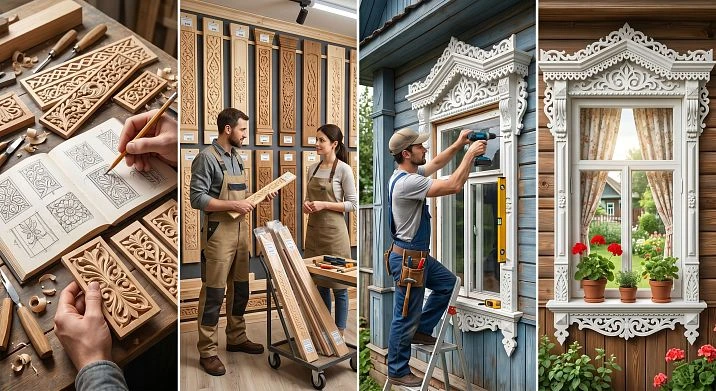
Ask anyone who has ever seen a real wooden house with carved windows—and they will say: it’s memorable. Not the shape of the window, not the color of the walls, but precisely the trim carving. It is that decorative element that turns an ordinary facade into an artistic object, and an ordinary house into something special, speaking about its owners more than any words.
Today, you can buy trim carving in a variety of formats: ready-madeCarved Door Casings for Windows, separate overlay ornaments, carved elements for independent composition assembly, house carving in a unified style with facade decor. The market is generous—but that’s exactly why it’s so easy to make a mistake in your choice.
Trim carving for windows is not just 'decoration on top of a board.' It is a language with which the house communicates with the street. And if this language is chosen correctly—the house sounds expensive, cohesive, confident. If incorrectly—that annoying incoherence arises, where beautiful details in sum do not yield a beautiful result.
In this article—everything you need to know about carved elements for trims: types, materials, selection criteria, typical mistakes, and practical guidelines on price and purchase. Read without haste: each section is a specific tool for making the right decision.
What is trim carving and why is it needed
Before talking about selection, you need to understand the essence. Carving on trims is ornamental decor applied to the surface of a window frame by mechanical or manual material removal. The result is a relief pattern that creates interplay of light and shadow, volume, depth, character.
But why is it needed on a modern house? Is a smooth trim not functionally sufficient?
The answer is simple: decorative carving for window trims works on three levels simultaneously.
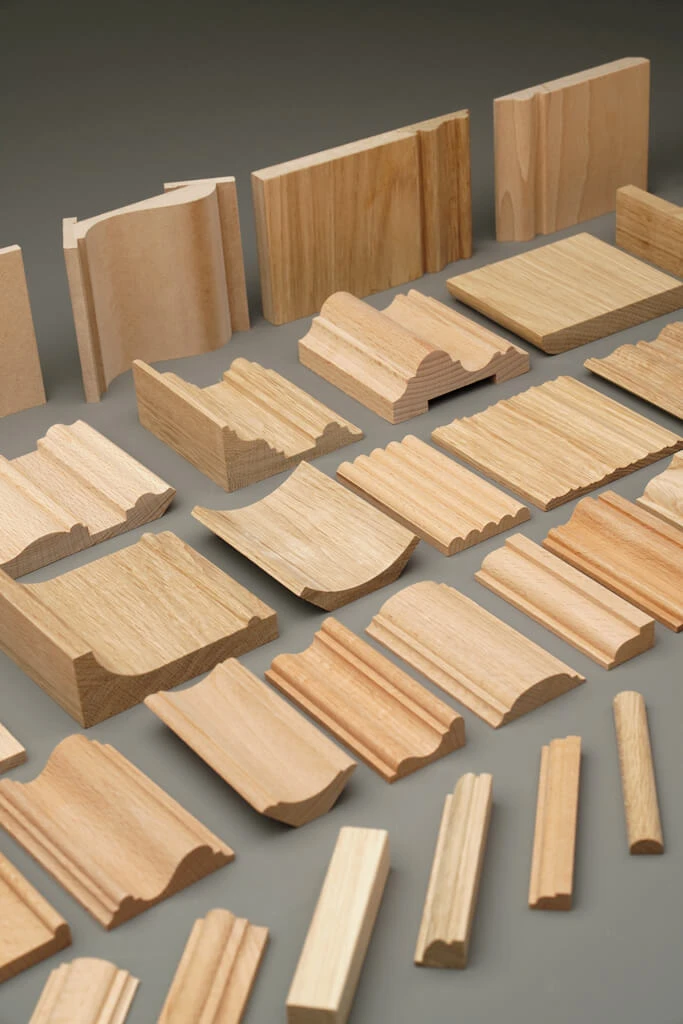
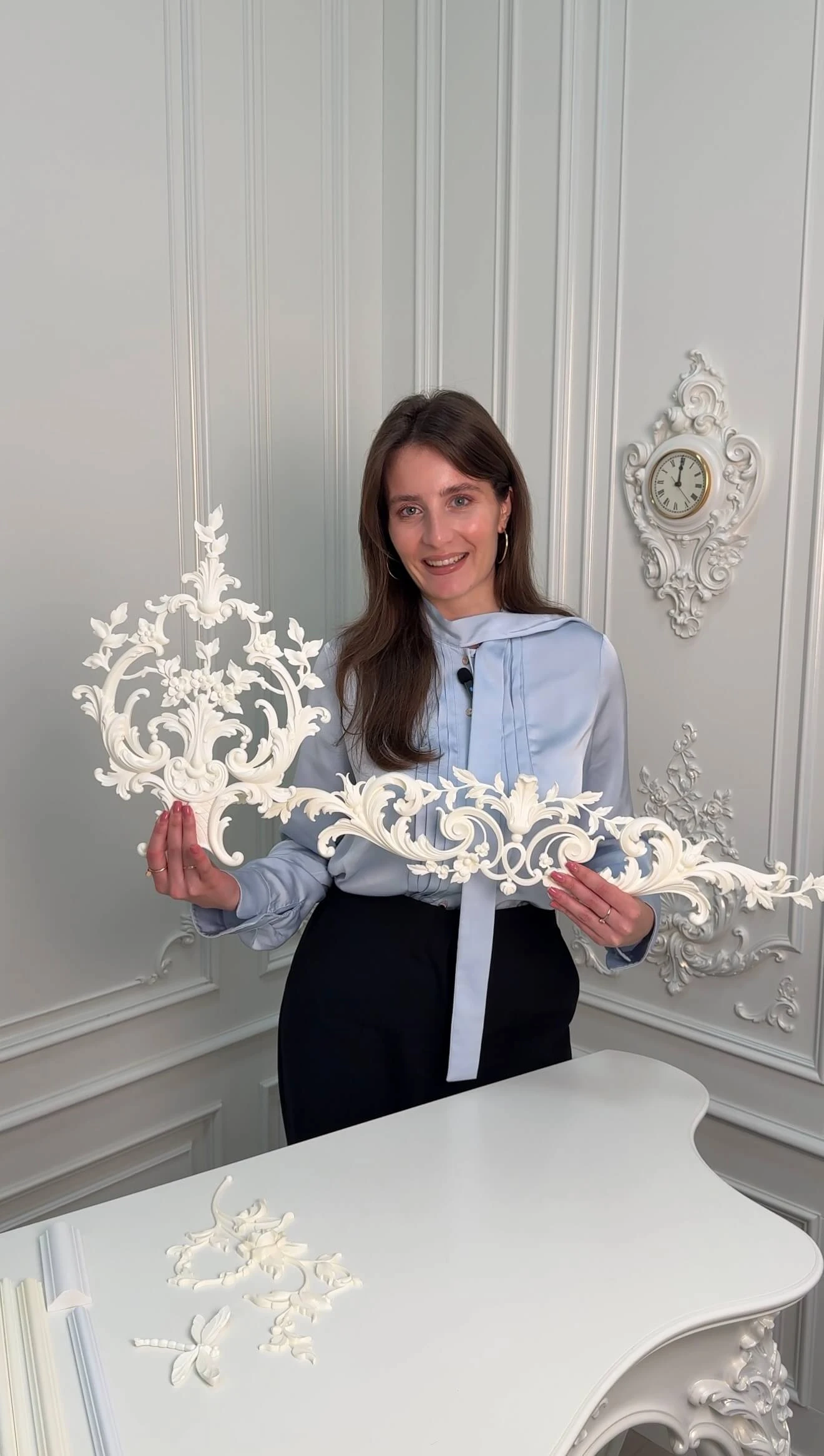
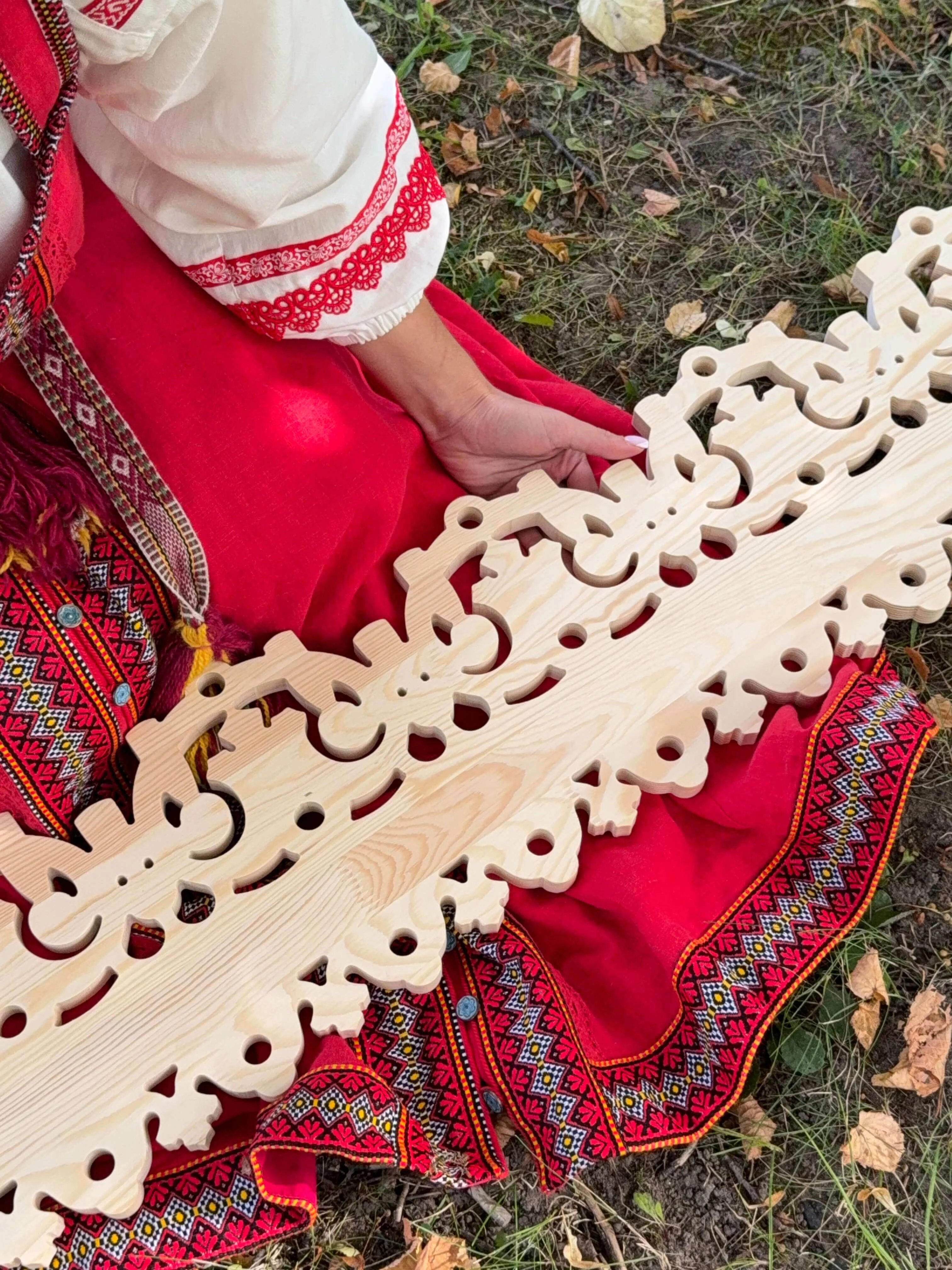
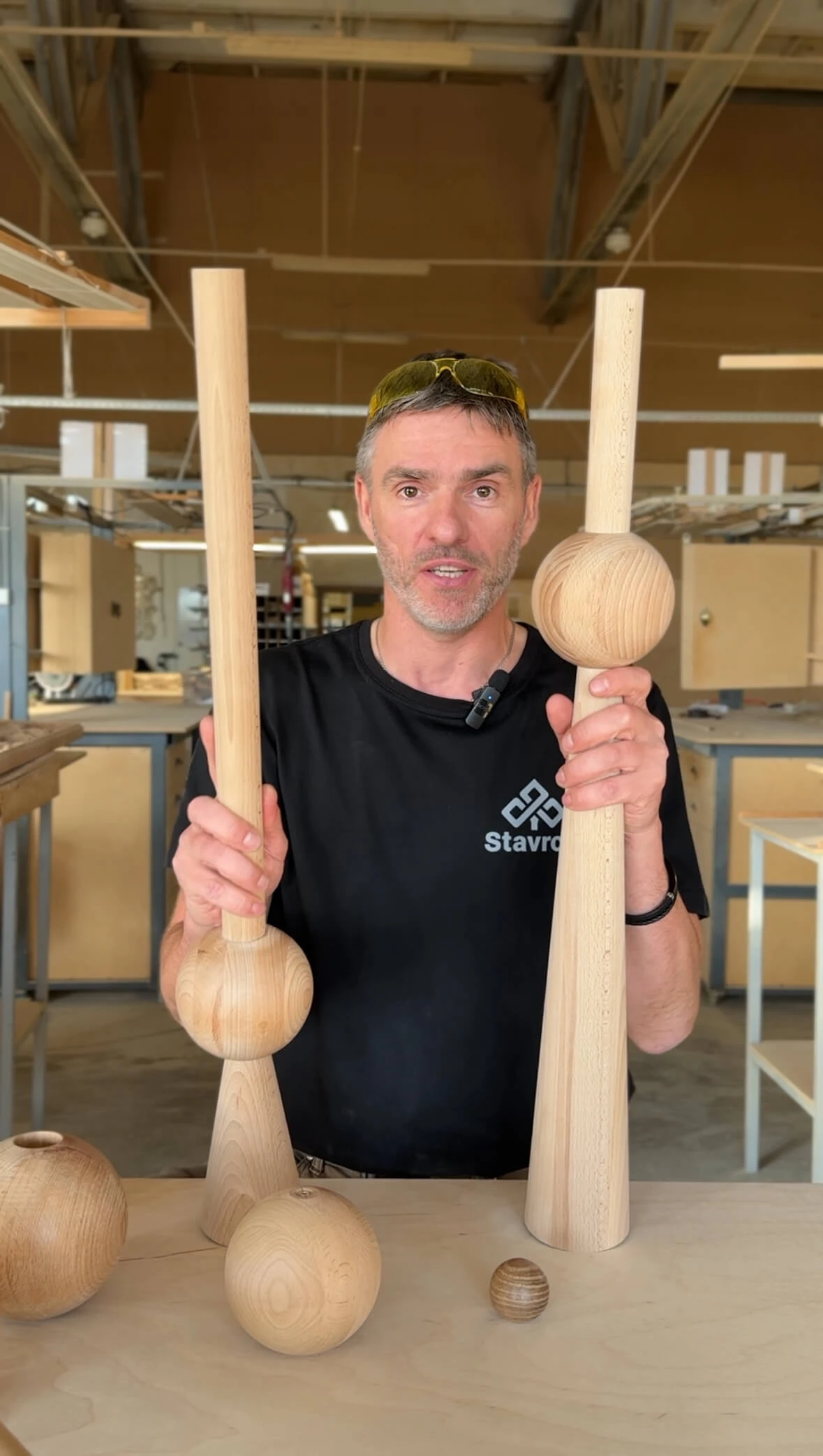
Visual level
A smooth trim is a frame. A carved trim is an accent. It guides the gaze: first a person sees the window, then notices the framing, and then examines the ornament—and in this process, an impression of the entire house is formed.
Wooden carving for window trims creates that visual 'weight' which synthetic analogs lack. Natural wood with three-dimensional relief is not an imitation, but genuine sculptural quality.
Our factory also produces:
Architectural level
patterns on wooden house mouldingsThey structure the facade, set the rhythm of the window row, and create a connection between individual elements of the building. Carving 'assembles' the facade into a unified whole.
Get Consultation
Cultural and symbolic level
Window carving in Russia is a tradition that goes back centuries.Wooden patterns on mouldingsThey carried a meaningful load: protection of the home, connection with nature, reflection of the owner's character. Today, this is a revived language that speaks of respect for tradition and an understanding of the true value of natural materials.
What types of carving for window trims exist
Understanding the types means gaining a tool for conscious choice. Each type of carving has its own technology, its own visual effect, and its own area of application.
Geometric carving
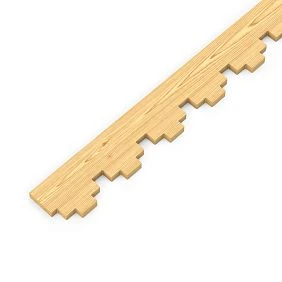
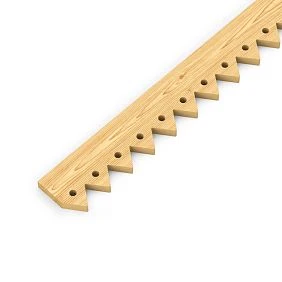
The most ancient and one of the most expressive types. Diamonds, triangles, squares, zigzags, checkerboard patterns — all of this is geometric carving. Clear, repeating elements create a rhythm that is easily readable from a distance and does not 'overload' the eye.
Geometric carving for wooden window trims is the choice of those who value restraint and precision. It looks wonderful on houses with laconic architecture: small dachas, log houses with horizontal wall textures, country cottages in Scandinavian or modern rustic style.
Technically, geometric carving is simpler to execute than plant-based carving — it is a flat-relief method with clear grooves. The relief depth is 5–15 mm. It pairs well withmouldingswithout ornament.
Plant-based carving
Leaves, stems, flowers, berries, grapevines, acanthus tendrils, hops, ferns — all of this is plant-based ornament. The most lively, organic, diverse group.
Carved ornament for window trims of the plant-based type can be executed:
-
In contour technique: light grooves outline the contours of leaves and stems, the background remains flat;
-
In relief technique: leaves, flowers, and fruits 'emerge' from the background, creating real volume;
-
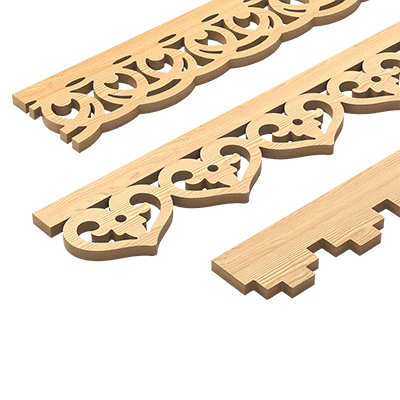
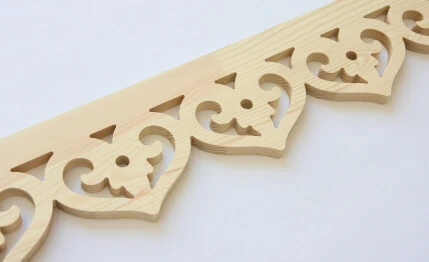
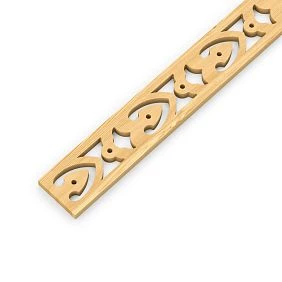
In openwork (pierced) technique: the pattern is cut all the way through, the background is completely removed — resulting in a 'lace-like' overlay with air and light.
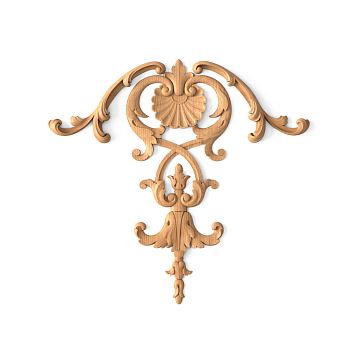
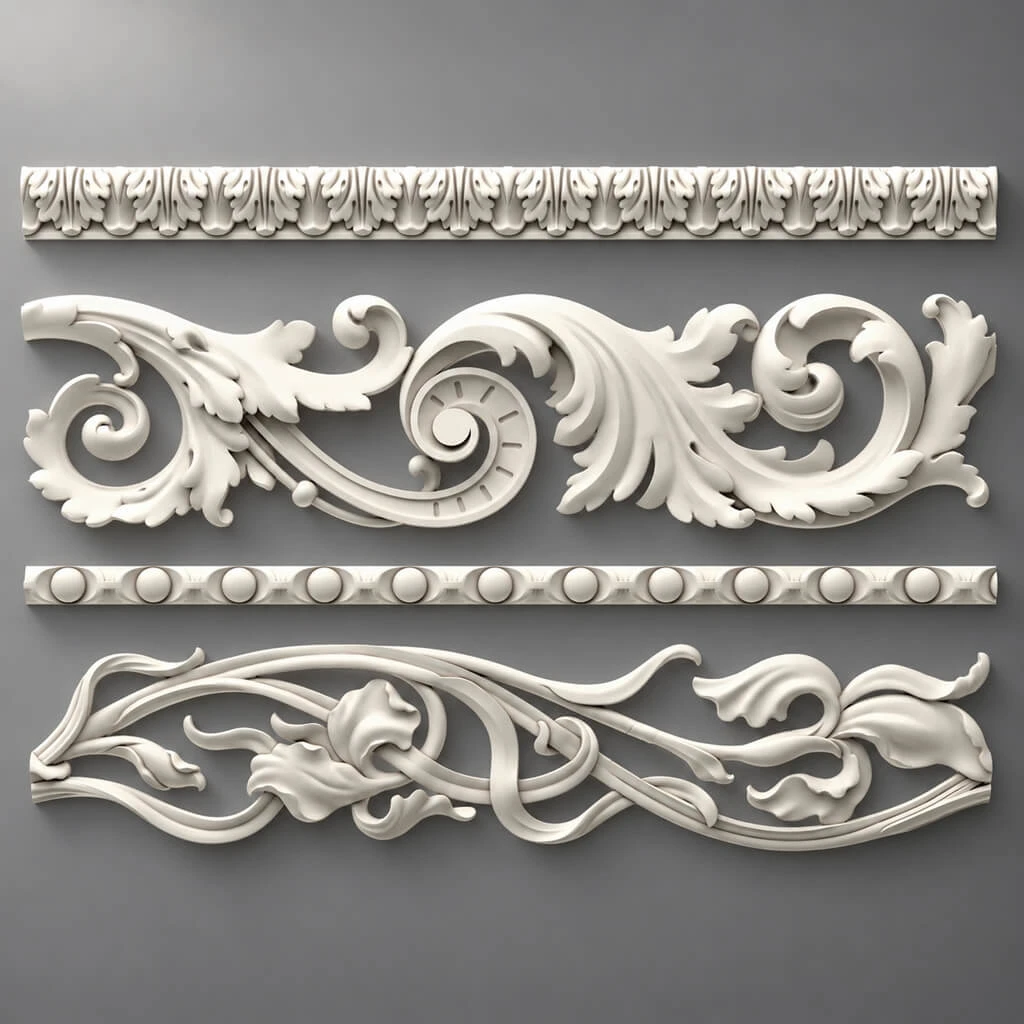
Carved wooden ornament – this is an art that preserves traditions of the past and finds its place in modern interiors. It can decorate any space, adding style, elegance, and individuality. Use wooden ornaments to create expressive accents, decorate facades, furniture, and walls, and you will transform your space, making it unique and irreplaceable!of the plant type — the most popular choice for wooden houses, dachas, and country cottages.
Ornamental carving
An ornament is a system: a repeating motif arranged in a row or grid. Border strips, repeat grids, medallions surrounded by interlacing — carved patterns for platbands of the ornamental type provide maximum richness while maintaining order.
wooden ornamentin the framing of a platband — is a way to turn a window opening into a complete architectural frame. It looks especially impressive on a wide platband (from 90 mm) with a central medallion and border strips on the sides.
Russian traditional carving
A separate and very strong layer. Carving for platbands in the Russian style — is a system of symbols rooted in folk art: solar rosettes, 'towels', 'valances', Sirin birds, Bereginya mermaids, horse heads in the top piece. Each motif has meaning.
Wooden patterns on housesin the Russian traditional style — is not a museum exhibit. Today it is a living and very popular direction: owners of wooden houses, log cabins, dachas in the folk style are returning to this language because it works — creates an image with history and soul.
Technically, traditional Russian carving — is typically openwork (pierced). The board with carving is mounted as an overlay or as an independent visor.House Carvingin traditional Russian execution — is an independent type of facade decor.
Modern decorative carving
Modern motifs include geometric abstraction, ethnic patterns from various cultures, natural forms in stylized interpretations, Scandinavian and Japanese motifs. Artistic carving for window trims in a modern style is for homes that want a unique visual solution rather than reproducing traditional patterns.
Such carving is often done on CNC machines: precision, perfect repeatability, and the ability to realize any complex design.Decorative Wooden PatternsIn a modern style, it's a good solution for homes in contemporary or modern eco-style.
Which carved elements are used for window trims
Knowing specific elements is a practical key to understanding exactly what to buy.
Carved overlay strips
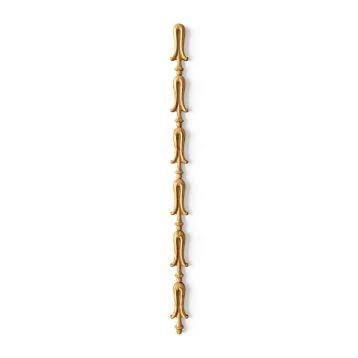
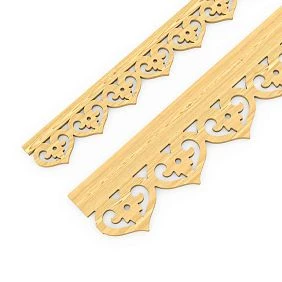
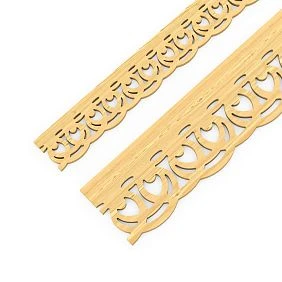
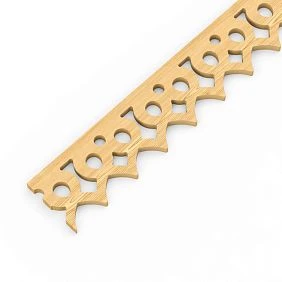
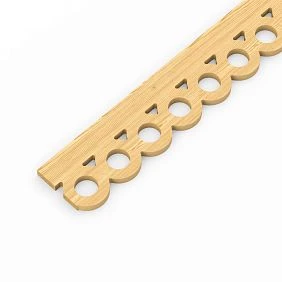
Long strips with ornamentation or openwork carving are mounted on the side posts and top crosspiece of the window trim. This is the main type of carved elements for window trims. Width: 40–150 mm. Selected based on the width of the main trim.
Buy Wooden PatternsIn the form of such strips, it can be purchased ready-made — just cut to the required length and secure.
Valances and lambrequins
The horizontal top element of the casing is the most noticeable and decoratively rich detail. Buying carved elements for casings in the form of a top 'lambrequin' means creating an accent element that is visible first.
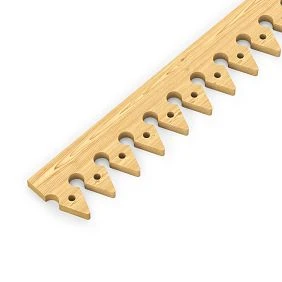
Lambrequins can be straight (horizontal cut) or figured (with wavy, arched, or pointed contours). The depth of the openwork pattern is 15–25 mm. This is the most complex element in terms of carving.
Side elements with ornament
Vertical slats of the side posts—they bear either a repeating ornament (border) or a single pattern along the entire length. Buying wooden ornament for casings in the form of side vertical elements is a basic purchase when decorating a window casing.
Decorative Wooden Patternsfor side posts: plant braid, geometric mesh, running wave, vertical arcature.
Decorative corner blocks (rosettes)
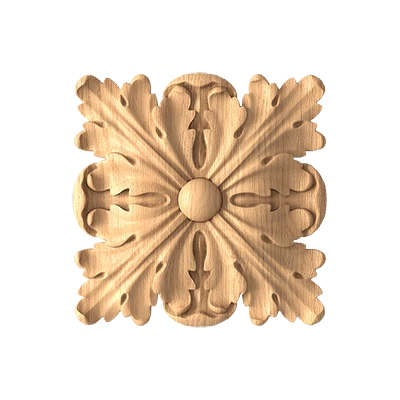
Square or rectangular inserts that cover the corners of the joints between the side posts and the top crosspiece. Buying wood carving elements for casings in the form of corner rosettes means turning a corner from a technical joint into a decorative accent.
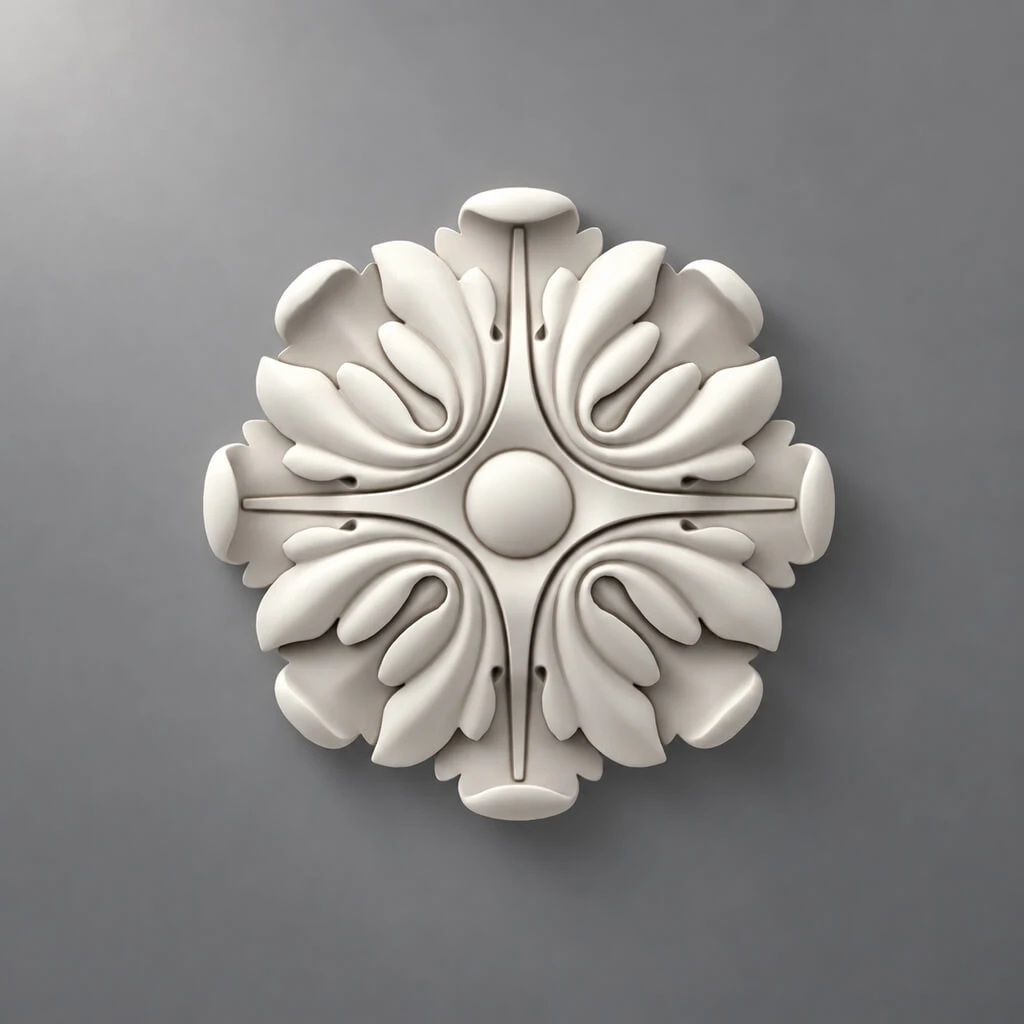
Buy carved wood decorin the form of rosettes—a separate category. Rosettes can have a floral center, a solar sign, a monogram, or a classic palmette motif.
Finial (ochelie)
A figured decoration at the very top point of the casing—the 'crown' of the window framing. It is the ochelie that creates the silhouette of the casing, recognizable from a distance.Wooden patterns on windowsin the traditional Russian style almost always have an expressive figured finial.
Carved window board
The lower horizontal element - covers the gap under the window unit, carries an ornament or a simple chamfer. Completes the framing from below. In the systemic window design, the absence of this element creates a sense of incompleteness.
Why wooden carving for window surrounds is the best solution
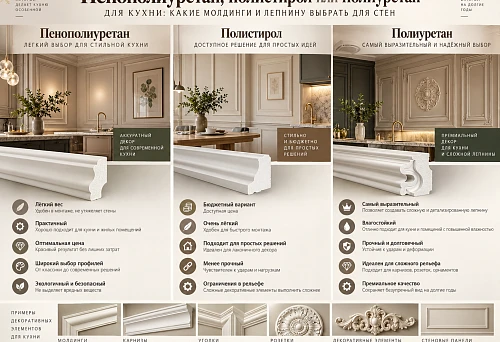
The market offers carving made of PVC, polyurethane, MDF with milling. Why is choosing solid wood not sentimentality but a practical calculation?
Living texture. Wooden carving for window surrounds made of solid wood is not a homogeneous surface. Wood fibers create a micro-relief that interacts with light: in the morning the ornament looks different than at noon, and in the evening side lighting makes the relief almost sculptural. Polyurethane and PVC do not work this way - their surface is lifeless.
Real carving depth. Carving from solid wood for window surrounds can have a relief of up to 30-40 mm. This is a true sculptural volume that creates shadow and is readable from a distance of 20-30 meters. Synthetic materials hold no more than 5-8 mm - and from a distance turn into a barely distinguishable surface.
Freedom of finishing.Solid Wood Itemsaccept any coating: white enamel, tinting under stained oak, ochre, blue 'in the folk spirit', open oil.Carved wooden elements for window surroundsCan be repainted when changing the facade style — without replacing the decor itself.
Repairability. A scratched or damaged wooden element can be sanded and repainted. A synthetic counterpart with mechanical damage — only replacement.
Durability with proper protection. Antiseptic impregnation + quality finish coating = 10–15 years without the need for intervention.Wooden itemsWith proper care, they last for decades.
Environmental purity. In open air — a fundamental argument. Natural wood does not release toxic substances when heated by the sun, does not become electrified, and does not structurally degrade from UV radiation as polymer imitations do.
System compatibility.Wood carving for window trimsfrom the same wood species aswooden corniceandWooden trim— this is a unified facade system, not a set of elements from different collections.
How to choose carving for window trims
From general to specific. Let's break down each selection criterion.
By house style
How to choose trim carving — start with the facade:
| Architectural style | Recommended type of carving |
|---|---|
| Traditional wooden house, log house | Russian traditional openwork carving, plant weaving |
| Timber house, eco-style | Geometric or moderate plant carving |
| Classic cottage | Ornamental carving, classical motifs, rosettes |
| Dacha, folk style | Openwork fretwork, folk motifs, birds |
| Modern house | Geometric or stylized modern carving |
| House in European style | Classical border ornaments, palmettes, acanthus |
To window size
How to choose carving for window trims considering proportions — the rule is simple: the scale of the ornament should be proportionate to the opening.
-
Window up to 80 cm: small repeating border ornament. A large pattern will 'overwhelm' a small opening.
-
Window 80–120 cm: medium scale, plant or geometric ornament, corner rosette possible.
-
Window from 120 cm: large openwork lambrequin with a central accent, three-dimensional plant carving on side posts.
Important: the width of the trim affects the permissible richness of carving. Narrow trim (40–60 mm) — only border strip. Wide (90–130 mm) — full relief ornament.
By depth and richness of decor
Three saturation levels:
-
Minimal (contour carving, bevel, simple groove): emphasis on silhouette, slight relief. For houses with concise architecture.
-
Medium (relief or sawn carving with moderate ornamentation): good visual effect, versatile option. For most wooden houses and cottages.
-
Saturated (volumetric relief or complex openwork carving): maximum expressiveness. For houses with rich facade decor, log cabins, cottages in a representative style.
Which carving is better for platbands in terms of saturation depends on the overall decorative context of the facade. The more decor on the facade, the stricter the measure must be kept on each individual element.
By material
-
Pine: soft, easy to work with, affordable. Good for openwork carving. Requires quality impregnation and painting for facade use.
-
Larch: dense, resinous, naturally resistant to moisture. An excellent choice for exposed facades. The carving turns out slightly less fine, but durable.
-
Oak: maximum hardness, expressive texture. Relief carving from oak is premium with a very long service life.
-
Maple, ash: light uniform texture, takes tinting well. Suitable for classic ornaments.
By combination with other facade elements
How to choose an ornament for platbands in the context of the entire facade:
-
Determine the cornice style — the window casing ornament should be "from the same family" of motifs, but not identical.wooden window corniceswith a coordinated pattern — this is a facade system.
-
Considerhouse carvingon other elements: on the bargeboards, under-eave trim, corner elements. All facade carvings should "speak" the same language.
-
wood trim itemsWithout ornament, they connect decorative elements, creating pauses between accents.
Carving for window casings of a wooden house, cottage, and log house
Each type of house has its own requirements for the decorative program. Let's examine in detail.
For a wooden house
Carving for window casings of a wooden house is the territory of maximum freedom. A wooden house "accepts" any carving organically. For a log cabin or a house made of rounded logs — traditional Russian openwork carving: a wide casing with a sawn ornament, a figured top piece, a window sill under-eave trim with a plant motif.
Wooden patterns on windowsfor a wooden house — typically, the most saturated in relief and richness of ornament. Openwork through-carving from pine or larch here is a classic of the genre.
Optimal width of architraves for a wooden house: from 100 to 160 mm. The ornament should be legible from a distance of 15–20 meters.
For a timber house
Carving for architraves on a timber house should consider the horizontal rhythm of the walls. The rows of timber themselves create a pronounced texture. Architraves with carving for a timber house should either have a vertical accent (to compensate for the horizontality of the walls) or a moderate relief ornament that does not compete with the wall texture but complements it.
A good choice for a timber house: geometric ornament with clear vertical lines, moderate plant carving with shallow relief depth.wooden ornamentfor a timber house — restrained but expressive.
For a log house
Carving for architraves on a log house — the richest decorative program. A log cabin carries a powerful visual load on its own. Architraves here should be either very rich (to withstand the proximity of the large texture of the logs) or deliberately simple (as a contrast).
Traditional choice: an openwork lambrequin 150–200 mm wide with a large plant ornament and a traditional Russian motif in the top piece.House Carvingfor a log house — it's always a wide format.
For a country house
Carving for architraves on a country house — the most creative scenario. A dacha allows for experimentation: folk ornaments, floral weaves, birds and berries, cheerful geometric patterns. Here you can allow yourself more color, more naivety, more joy.
Decorative Wooden Patternsfor a dacha with plant or folk motifs will create that very feeling of a real country house, which cannot be conveyed by other means.
For a dacha, pine with bright painting is suitable — traditional colors: blue, white, ochre, green.
For a cottage with a decorative facade
Carving for cottage window trims is a matter of stylistic unity. If the cottage is executed in a European classical style, the carving should follow the same architectural register: symmetry, classical motifs, precise proportions. Palmette, acanthus, laurel branches, egg-and-dart.
For a cottage in a modern style — geometric abstraction or stylized natural forms.wooden ornamentin a European classical key works in conjunction witha wooden corniceand pediment decor.
What is better to buy: ready-made carved window trims or separate carved elements
This is the main practical question. Let's examine both scenarios.
Ready-made carved window trims
Buying carved window trims as a ready-made kit is the fastest route. You purchase a product where the carving is already applied to the board: either mechanically milled or assembled from overlay elements at the factory.
When this is the best solution:
-
You need to quickly decorate several windows in a unified style;
-
The selected ornament is already present in the catalog;
-
No desire or ability to engage in self-assembly;
-
Standard window sizes match the ready-made offer.
Carved Door Casings for WindowsReady-made — the most popular scenario for a country house or cottage with several standard windows.
Individual carved elements for assembly
Buy ready-made carving for platbands in the form of separate overlay elements — a more flexible and precise option. A smooth or profiled platband is taken and supplemented with overlay ornaments, rosettes, side strips with carving.
Buying a set of carved elements for platbands separately means:
-
Creating a unique composition for a specific window;
-
Combining different ornaments in one frame;
-
Replacing only the decor if necessary without dismantling the main platband;
-
Achieve maximum flexibility in scale and thread density
Decorative Wooden Patternsas separate elements — a toolkit for those who want a truly unique result
Comparison: ready-made architrave vs separate elements
| Criterion | Ready-made architrave with carving | Separate carved elements |
|---|---|---|
| Speed | Fast | Requires assembly |
| Uniqueness | Serial ornament | Individual composition |
| Flexibility | Limited | Maximum |
| Installation difficulty | Minimal | Slightly higher |
| Decoration replacement | Only with the casing | Only element |
| Cost | Unified | Total by elements |
How to complement the thread for casings
One casing with thread is good. A system of several coordinated elements is a facade to be proud of.
House carving.House Carving— is an extended context of the casing. Eaves boards, soffits, wind boards, corner overlays — all these are parts of the overall facade program. WhenWooden patterns on mouldingsare coordinated with the house carving of the rest of the facade — the house acquires that integrity which distinguishes a professional result from amateur work.
Wooden cornices.wooden corniceabove the window — a horizontal 'cap' of the frame. It completes the window ensemble from above and can carry its own ornament — light, coordinated with the ornament of the casing.buy wooden cornicewith the correct profile — an essential element of a complete window frame.
Rosettes and ornaments.Carved wooden decorationin the form of decorative rosettes — these are corner accents that cover the joint between the vertical posts and the horizontal crossbar of the casing. Rosettes give the opening architectural completeness.
Molding.Wooden trim— profile rails without ornament — connects the decorative elements of the casing into a unified system. It creates 'pauses' between accents and ensures clean transitions.Trimming Itemsfrom the same wood species as the carving — a mandatory condition for a cohesive facade.
What to buy together with casing carving:
-
Wooden casing— the foundation of the frame;
-
wooden cornice— the top finishing;
-
Carved wooden decoration— corner rosettes;
-
Decorative Wooden Patterns— additional accents;
-
wood trim items— finishing transitions.
Mistakes when choosing trim carving
Five mistakes that turn expensive decor into a visual failure.
Too fine an ornament on a large facade. Intricate carving with a fine pattern on a small trim—from a distance of 15 meters, it simply isn't legible. It turns into a gray, uniform strip. How to choose carving for trims for a large facade: the pattern's ornament should have elements at least 3–5 cm in size.
Overloading the window with decor. A wide lambrequin + rich side planks + corner rosettes + a windowsill board with carving—on a small window, this will look like a parade uniform on a child. Moderation is the main principle. Which carved elements for trims to buy and in what quantity is determined by the window size and the overall facade decor.
Mismatch with the house style. Traditional Russian intricate carving on a modern high-tech style house—this is a stylistic conflict that is difficult to fix. Which carving is best for the trims of a specific house depends primarily on the architectural image, not on personal taste detached from context.
Choosing only from a photo without considering scale. A photo of a trim in a catalog doesn't convey the real scale. An element that looks beautiful in a photo at a conditional scale may turn out too large or too small on your specific facade. Always compare dimensions.
Poor combination with the cornice. Geometric carving on the trim + a floral ornament on the cornice of a completely different scale—this is visual noise. All carved facade elements should be from the same 'family' of motifs.
Where to buy carving for trims
A section for those ready to move from selection to purchase.
System principle
Purchasing trim for architraves from a supplier whose unified catalog includes both the trim itself, architraves, cornices, house trim, and moldings is the only way to guarantee a facade system. Trim for architraves from the manufacturer ensures material transparency, style consistency, and the ability to order custom sizes.
Trim for architraves catalog with prices should contain:
-
exact dimensions of each element;
-
photographs from real projects (not just studio shots);
-
information about available wood species;
-
finishing options (for painting / for tinting / pre-painted).
What to look for when purchasing
-
Relief depth: for facade application — minimum 8–10 mm. Less — the pattern 'washes out' in rainy weather and gets lost at a distance;
-
Processing quality: clear edges of the ornament, absence of splits, even surface;
-
Wood species: larch or oak for open facades without additional protection; pine — requires mandatory painting with impregnation;
-
Compatibility with other elements: does the catalog include cornices, moldings, and house carving from the same series.
Price Benchmarks
| Type of carved element | Material | Approximate price |
|---|---|---|
| Ornamental overlay strip (linear meter) | Spruce | 700–1,500 RUB |
| Ornamental overlay strip (linear meter) | Oak/larch | 1,800–4,500 RUB |
| Openwork lambrequin (pcs.) | Spruce | 1,500–4,000 RUB |
| Openwork lambrequin (pcs.) | Oak | 4,000–12,000 RUB |
| Corner rosette (pcs.) | Wood | 500–2,500 RUB |
| Carving set for one window | Spruce | 5,000–15,000 RUB |
| Carving set for one window | Oak | 15,000–40,000 RUB |
How much does carving for window trims for the entire house (6 windows) cost: from 30,000 to 200,000+ rubles depending on the richness of the decor, wood species, and manufacturing method.
Ordering carving for window trims for non-standard sizes or a unique pattern is a custom order, which costs 30–60% more than a standard one. But it is the only way to get a truly unique facade.
Why STAVROS is suitable for choosing carving for window trims
STAVROS is a manufacturer of wooden facade and interior products, whose catalog contains everything needed for complete window decoration with carving.
Carved Door Casings for Windows, Decorative Wooden Patternsin the form of applied ornaments,Carved wooden ornament – this is an art that preserves traditions of the past and finds its place in modern interiors. It can decorate any space, adding style, elegance, and individuality. Use wooden ornaments to create expressive accents, decorate facades, furniture, and walls, and you will transform your space, making it unique and irreplaceable!of the plant type,Carved wooden decorationin the form of rosettes — all these are parts of a single system. Nearby —wooden window cornicesfor horizontal completion,wood trim itemsfor finishing transitions anddecorative elementsfor additional accents.
Everything is made from solid wood. Everything follows a unified stylistic logic. Everything can be custom-ordered to specific dimensions and patterns. This means: one catalog — complete facade design without compromise.
Go to the catalog of solid woodor to the sectionhouse carving— to select trim carving, coordinate it with cornices and facade decor, and assemble the house image that will last for years.
Conclusion
Trim carving is not a finishing touch, but the foundation of the window's appearance. It creates expressiveness, individuality, and that visual 'luxury' you can't buy in a construction hypermarket.
The right choice is always systematic: window trim carving + coordinated cornice + house carving for the rest of the facade + millwork in the same wood species and style. Only then does the house acquire that cohesive architectural face that is memorable and delights the owners every day.
Wooden trim carving made from solid wood is a choice for authenticity, durability, and timeless aesthetics. Polyurethane and PVC imitate — wood creates.
STAVROS is a manufacturer for whom trim carving is part of the facade decor system: fromthe wooden skirting boardandcarved wooden ornamenttowooden corniceandwooden trim— everything in one catalog, everything from solid wood, everything with the possibility of custom order.
FAQ: Frequently Asked Questions About Trim Carving
What type of carving is best suited for exterior trim?
For exterior applications, fretwork (openwork) carving works best: it does not accumulate water in cavities, dries easily after rain, and is clearly visible from a distance. Relief carving is also used but requires more thorough surface protection.
What type of wood is best for making exterior trim carvings?
Optimally — larch or oak: high density and natural resin content provide good moisture resistance. Pine is an affordable alternative but requires mandatory antiseptic treatment and a finish coating.
Can carved overlays be installed on already finished trim?
Yes. Overlay carved elements are mounted onto the finished surface with adhesive (PVA or liquid nails) with additional fixation using finish nails. This is a standard technology for overlay decoration.
What carving depth is needed for facade application?
Minimum 8–10 mm. With less depth, the relief becomes visually 'washed out' in rainy light and is lost at a distance. For volumetric floral ornaments — 15–25 mm. For openwork carving, the depth equals the board thickness — typically 18–25 mm.
How often should the coating on carved trim be renewed?
When using high-quality alkyd or acrylic coating for exterior work — every 5–7 years. When using an oil-wax composition — every 3–5 years. In case of visible damage (cracks, peeling) — immediately, to prevent damage to the solid wood.
What is the difference between house carving and carving for window trims?
House carving is a general concept for all facade carved decor: window trims, cornice boards, soffits, wind boards, corner overlays. Carving for window trims is a specific element of the system. The best result is when the carving on the trim is part of a unified house carving program.
Can a non-standard ornament be ordered?
Yes. Manufacturers of solid wood carved decor typically accept orders based on a sketch or drawing. The cost of a custom order is 30–80% higher than a serial one, depending on the complexity of the pattern.