









































Article Contents:
- Moscow finishing materials market: abundance without guarantees
- What is bought in Moscow today for walls and ceilings: demand map
- Slatted panels: wood, MDF, veneer — selection for the task
- Solid wood: living, demanding, unique
- MDF: precision, reproducibility, any color
- Veneered slats: wood outside, MDF inside
- MDF for painting
- Stucco decor Moscow: what the professional market offers
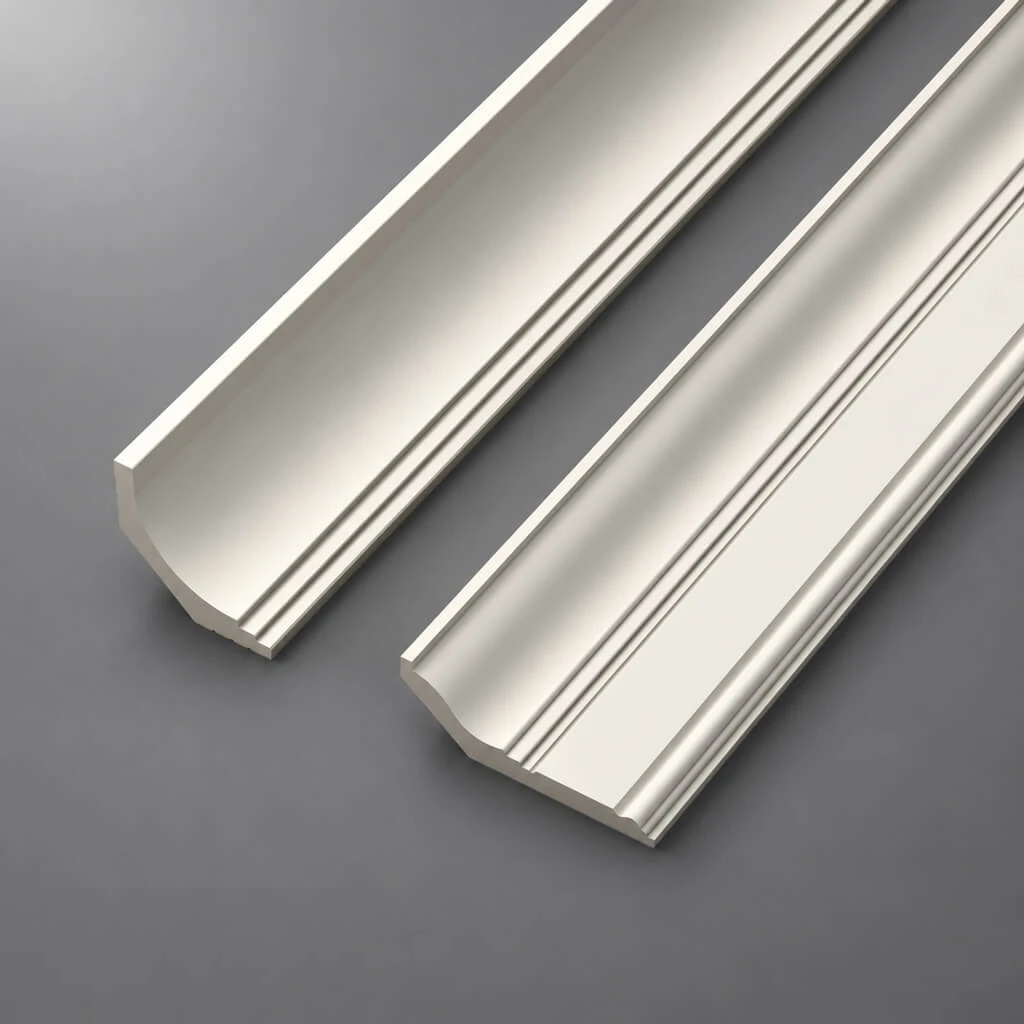
- Ceiling cornice: foundation of the stucco system
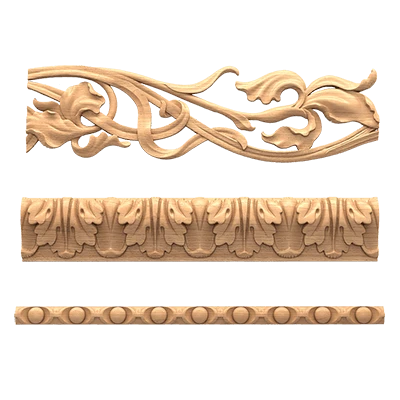
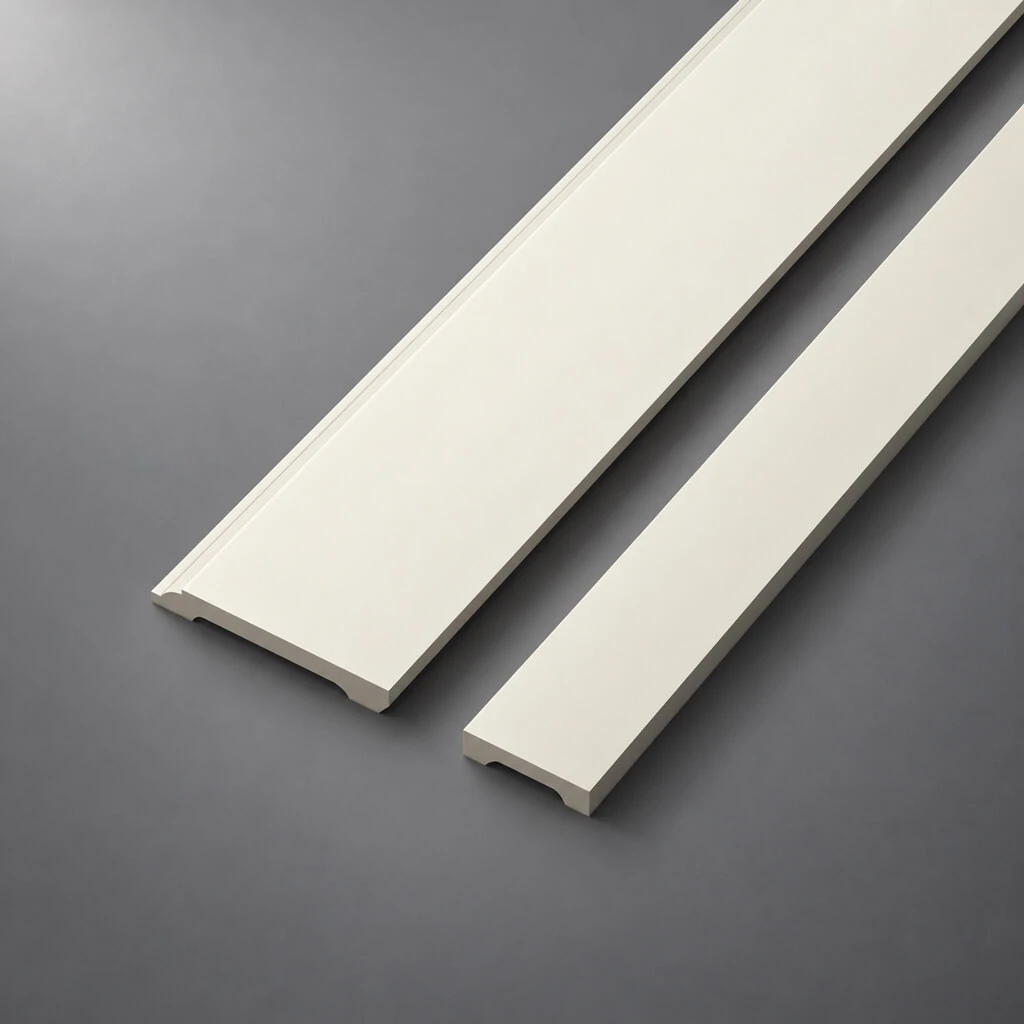
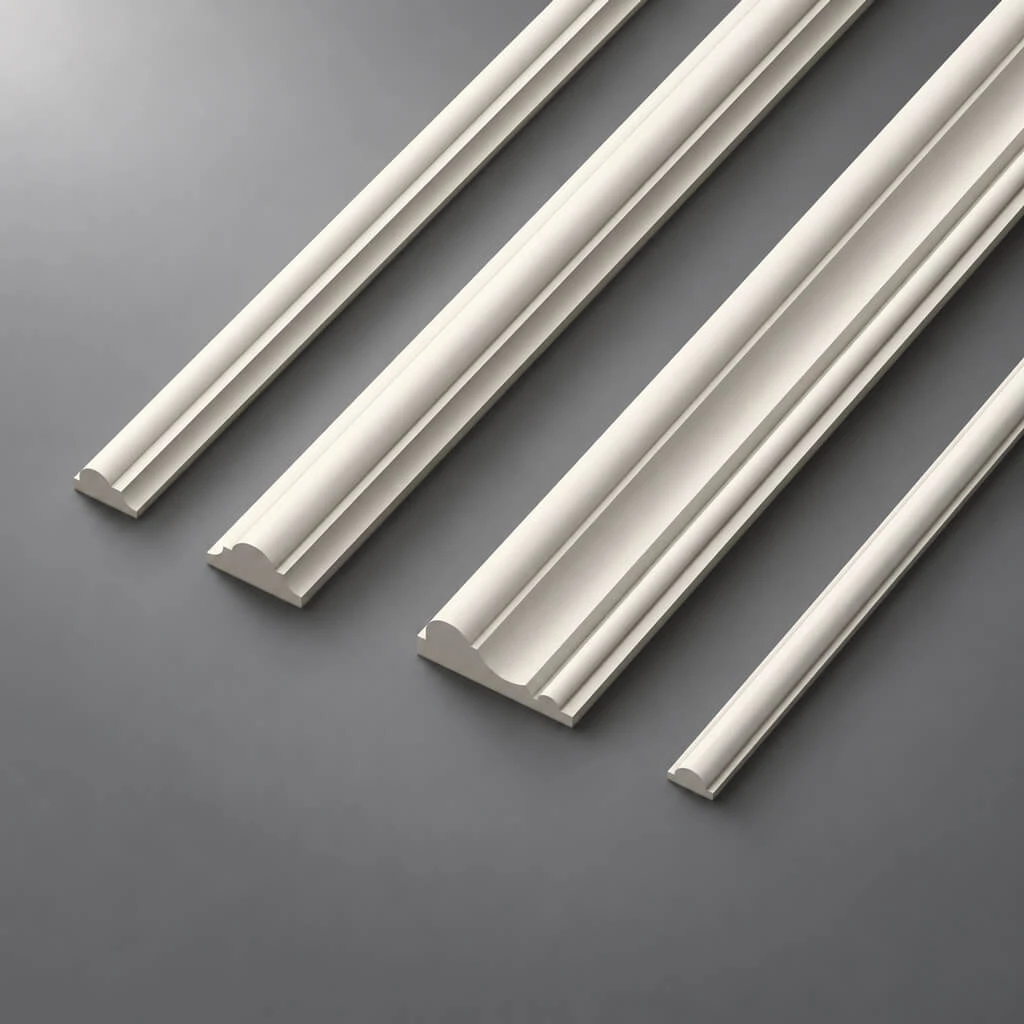
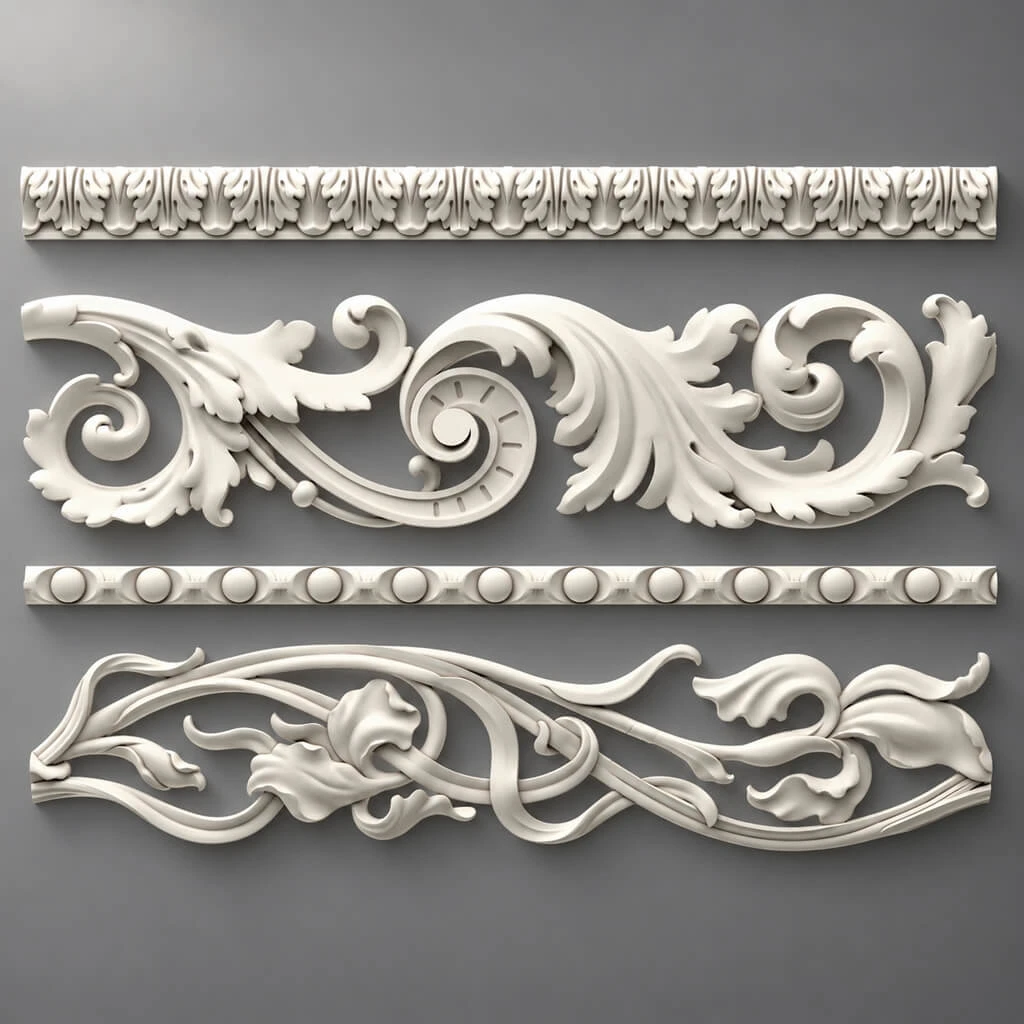
- Moldings: linear decor for walls and ceilings
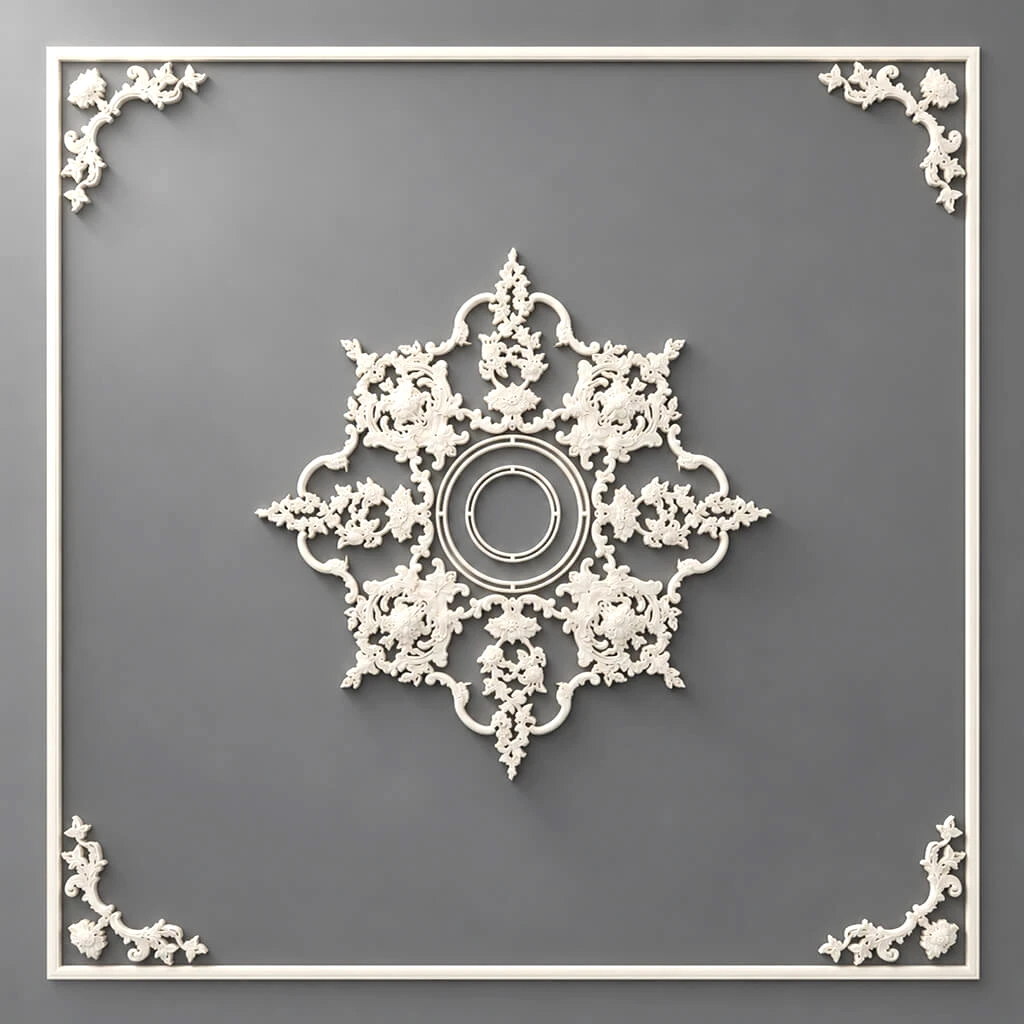
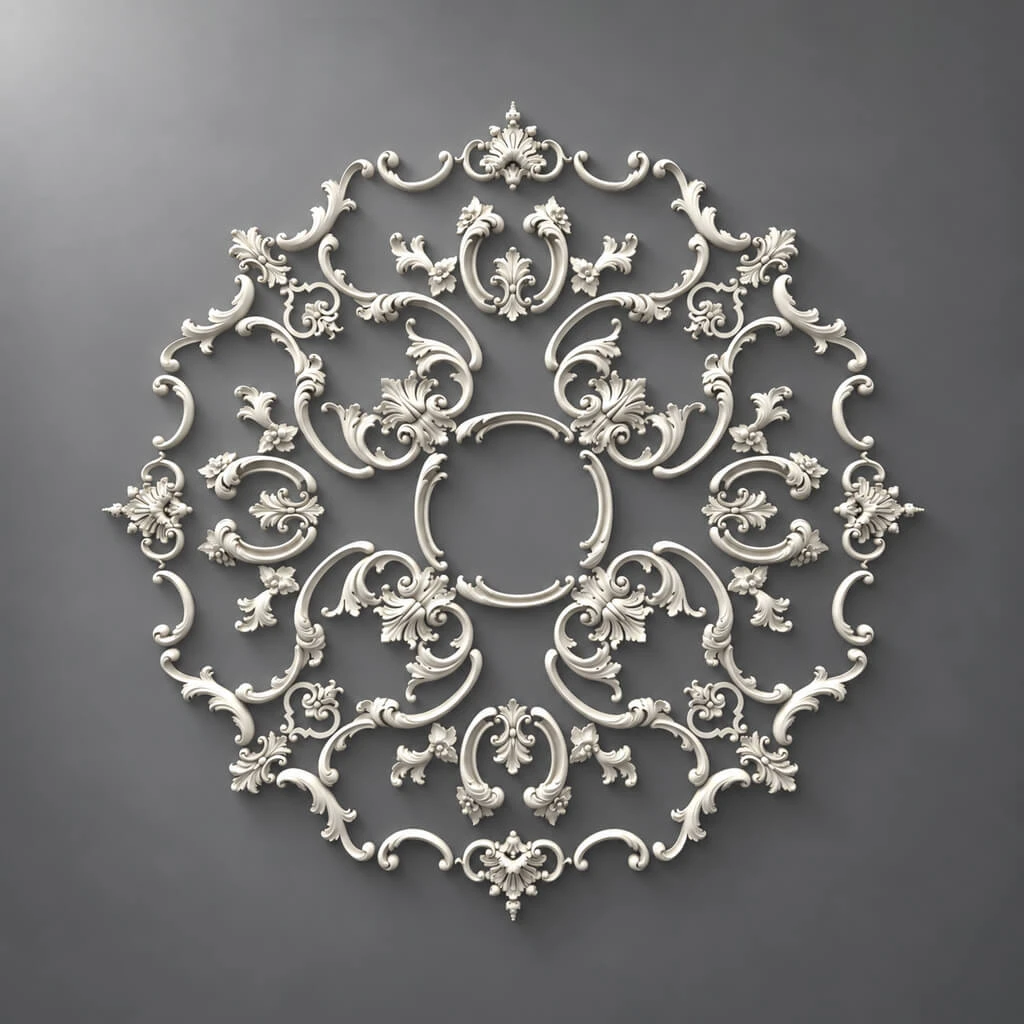
- Rosettes and medallions: accents that remember
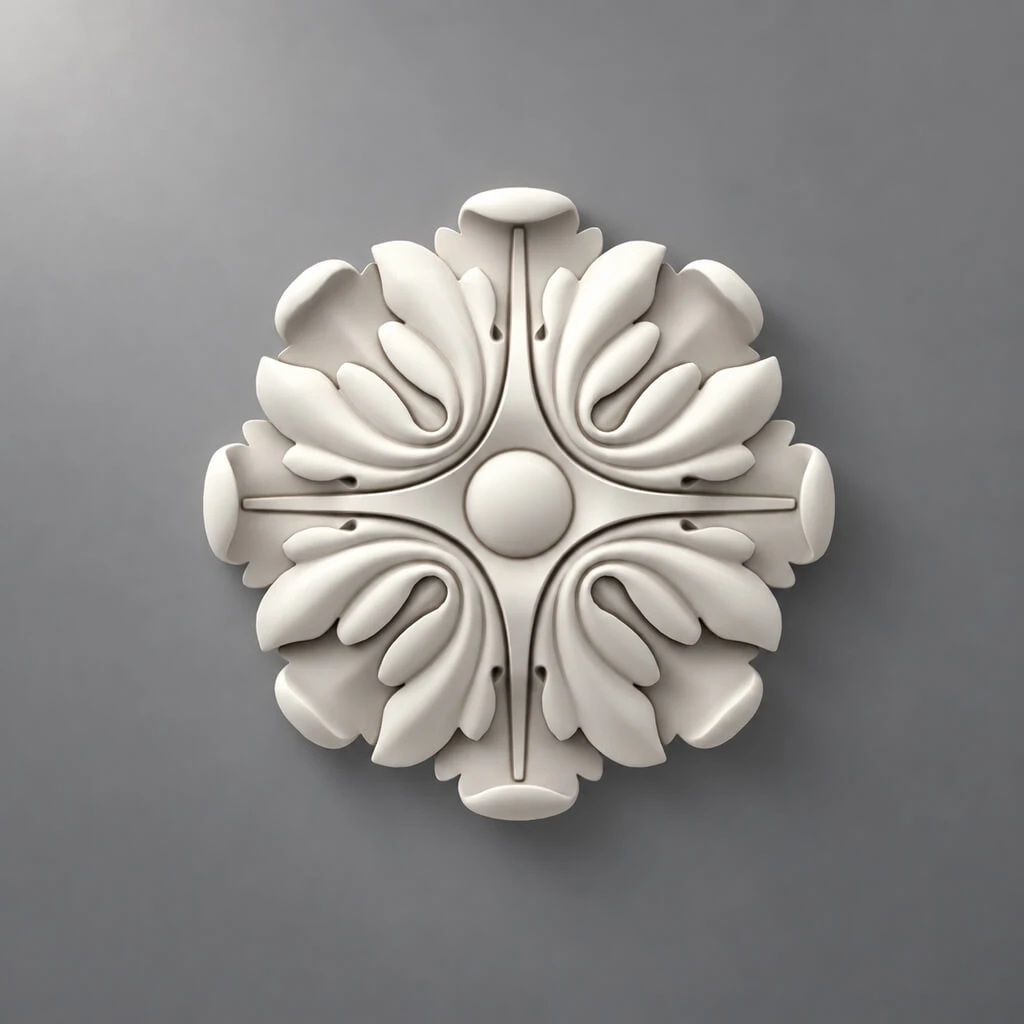
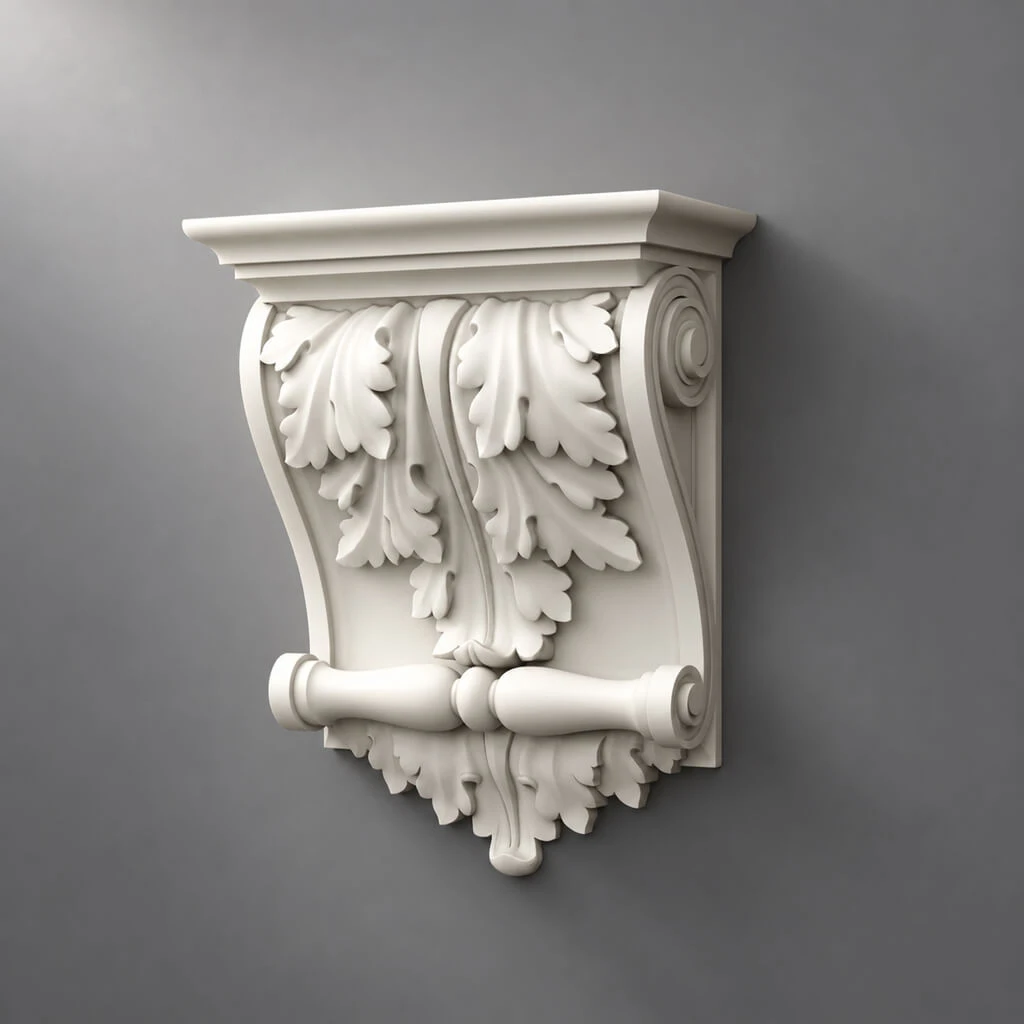
- Overlay elements: architectural details
- How to combine slatted panels and polyurethane moldings: six working concepts
- Concept 1: "Pure classic" — white on white
- Concept 2: "Dark accent" — contrast as strategy
- Concept 3: "Natural interior" — wood and white frame
- Concept 4: "Neoclassical study" — dark slats, complex moldings
- Concept 5: "Scandinavian with details" — neutrality and minimal moldings
- Concept 6: "Art Deco" — geometry and symmetry
- How to evaluate product quality: not just price and appearance
- Quality parameters of slatted panels
- Quality parameters of polyurethane moldings
- How to avoid visual conflict between finishing elements
- Rule 1: One style — one vocabulary
- Rule 2: One leader — one follower
- Rule 3: Color temperature is uniform
- Rule 4: Scale matches the room
- Rule 5: Finishing details complete — do not 'rework'
- Installation sequence: how it's done correctly
- Slat panels for different rooms of a Moscow apartment
- Comparison table: polyurethane, gypsum, polystyrene
- Where people make mistakes when buying slat panels in Moscow
- Mistake 1: Buying on marketplaces without samples
- Mistake 2: Not clarifying the MDF class
- Mistake 3: Choosing a cornice based on a single catalog picture
- Mistake 4: Thinking that molding 'just glues on easily'
- Mistake 5: Ignoring acclimatization
- Mistake 6: Buying molding separately from slats from different suppliers
- FAQ: Questions and Answers
- About the Company STAVROS
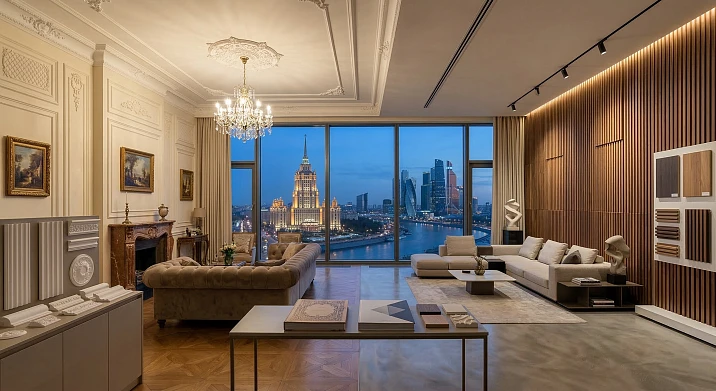
Moscow is accelerating. Not in terms of the pace of life—that's already obvious. But in terms of interior design thinking: today's Moscow buyer of building materials often understands slats, moldings, and molding better than some consultants in showrooms. Access to foreign references, designers' Telegram channels, YouTube renovation marathons—all this has created a special type of buyer: well-informed, demanding, and willing to pay for quality, but only if it's truly there.
This article is specifically for him. Not a brief overview of 'what's available,' but a comprehensive breakdown: buying slatted panels in Moscow with an understanding of exactly what you're getting. Molded decor in Moscow — not as mere 'decoration,' but as a systematic architectural element. And most importantly — how to combine all of this in an interior that won't disappoint after a year.






Moscow's finishing materials market: abundance without guarantees
The paradox of the Moscow market lies in its size. Huge selection, hundreds of suppliers, dozens of construction hypermarkets, marketplaces with thousands of listings. And yet — a chronic problem: a person wants to buy a slatted panel in Moscow and ends up with something that only looks like slats until the first repair season.
Why does this happen? Three reasons.
First: resale without quality control. Most listings on marketplaces are not from the manufacturer, but from a middleman. They don't know what MDF the slats are made from, what coating is applied, or how the batch geometry was checked. They sell based on photos and descriptions.
Second: lack of systematic thinking by the buyer. A person searches for 'slats for the wall,' finds something suitable in color and price — and doesn't ask questions about the base material, type of coating, or geometric tolerance. And then it turns out that standard MDF was used in the hallway, and the ends swelled up after two seasons.
Third: price as the only criterion. In Moscow, there's always 'the same thing, but cheaper.' This is an illusion: behind the identical appearance lie fundamentally different characteristics.
The goal of this article is to provide the toolkit to buy slatted panels in Moscow consciously: with an understanding of the material, coating, proportions, and the systemic logic of the entire structure.

What people in Moscow are buying today for walls and ceilings: a demand map
The Moscow market of 2025–2026 is characterized by several stable trends that shape the main demand for slatted systems and molded decor.
Trend 1: 'Modern Classic' as the dominant request. Not minimalism, not baroque — but something in between: geometrically precise slats combined with a concise plaster cornice. White or neutral gray. Lines are clear, ornamentation is moderate.
Trend 2: Dark accent walls. Anthracite, deep blue, dark green — a slatted wall behind the TV or sofa in a dark tone. Contrasting white ceiling with a cornice. This solution ranks first in requests for interior panels in the Moscow segment.
Trend 3: Monochrome. Everything white, everything in one tone — slats, molding, ceiling, walls. The decor is read through relief and light play, not through color. A complex solution requiring precise execution — but it looks the most expensive with the right approach.
Trend 4: Natural wood with molded framing.Wooden slat panelsOak or ash in a natural tone + white polyurethane cornice. A warm, organic interior with classic details.
Trend 5: Coffered ceilings made of moldings. Rectangular division of the ceiling with polyurethane moldings — a 'coffer' without actual depth. For Moscow apartments with ceilings of 2.8–3.0 m, this creates an illusion of architectural complexity at moderate cost.
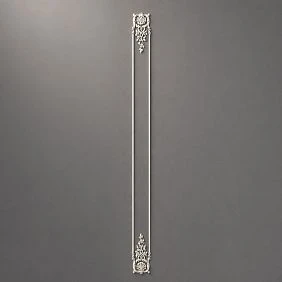
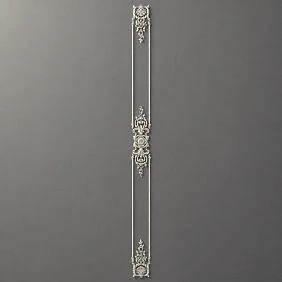
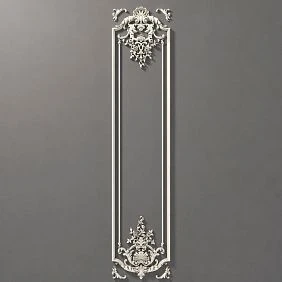
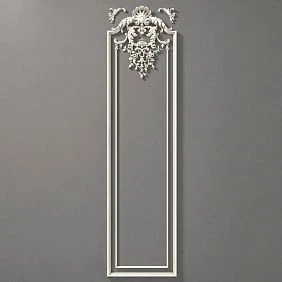
Our factory also produces:

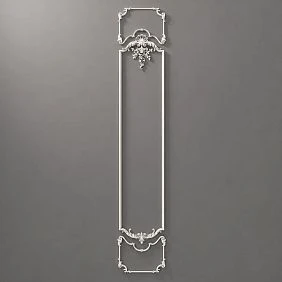
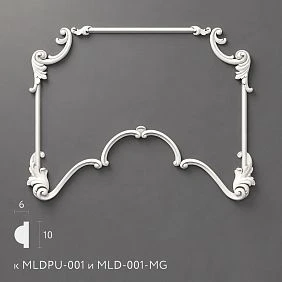
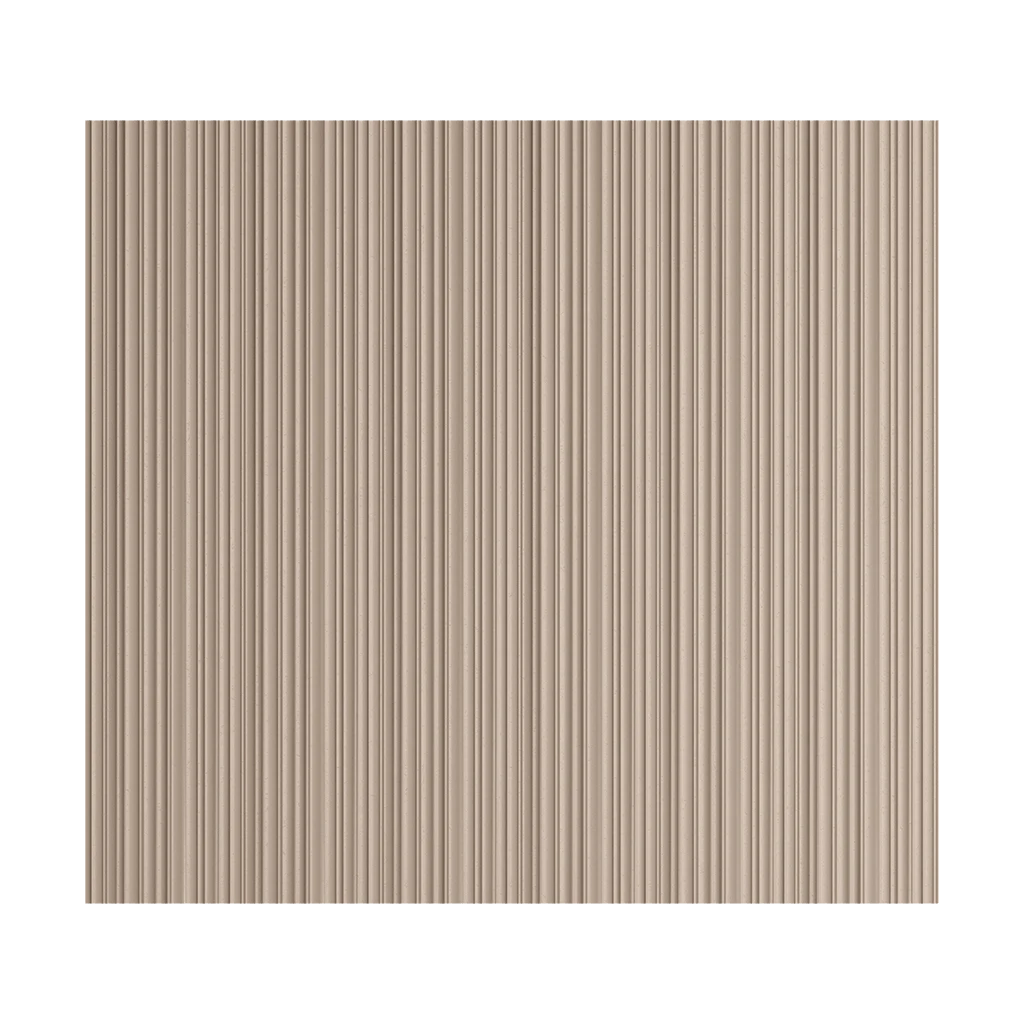
Slatted panels: wood, MDF, veneer — choice based on the task
The first question to ask yourself when choosing slatted panels: what is more important — the character of the surface or the stability of characteristics? This question determines the material.
Get Consultation
Natural solid wood: lively, demanding, unique
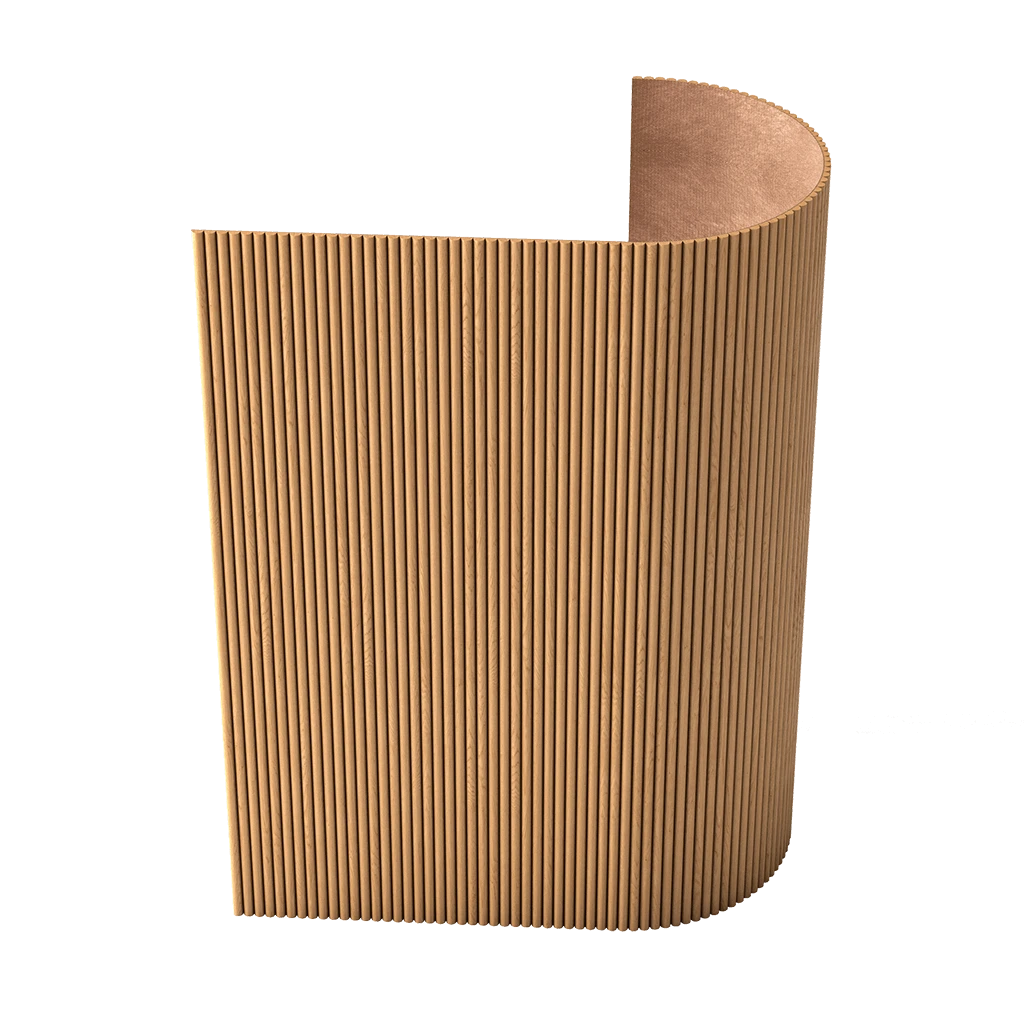
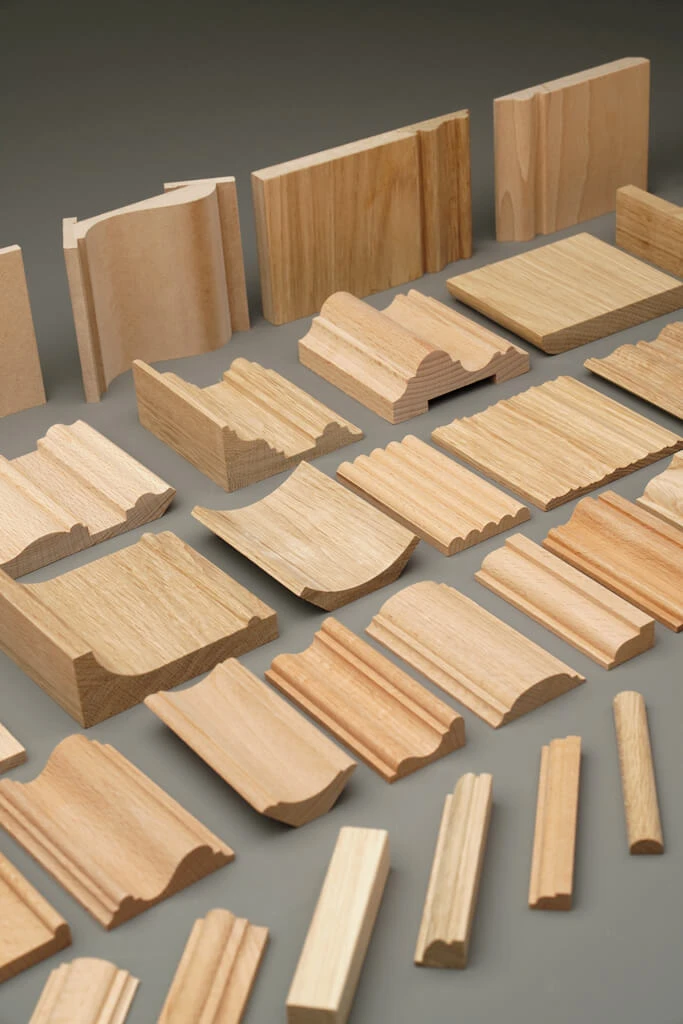
Wood is not just a material. It is a surface with individuality: each board has its own grain pattern, its own tone, its own story.Wooden slat panelsOak, ash, pine, or larch create something that MDF fundamentally cannot replicate: a living, breathing surface.
But solid wood demands:
-
Chamber drying to 8–10% moisture content—otherwise warping and cracks are inevitable.
-
A finish that 'works' with the wood's movement: UV lacquer, oil-wax, hard oil—not rigid film-forming compositions.
-
Proper fastening: floating installation without rigid fixation across the grain.
For Moscow with its sharp humidity fluctuations during the heating season (from 15–20% with central heating on to 60–70% in the off-season)—this point is especially relevant.
Areas of application: living rooms, studies, libraries, dining rooms. Not recommended for entryways with an exterior door or kitchen work zones.
MDF: precision, reproducibility, any color.
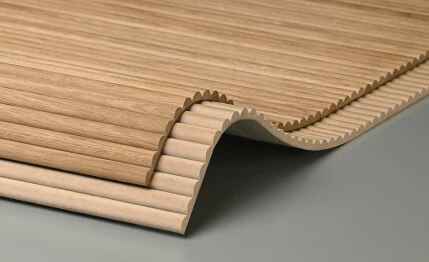
MDF slatted panel—is the workhorse of modern interiors. Stable dimensions, any shade by RAL/NCS, precise geometry. If a clear color is important, not the living grain of wood—choose MDF.
Classes for Moscow:
-
E1, standard: for dry living spaces — living room, bedroom, study
-
MR E1 (moisture-resistant): for hallway, kitchen dining area, children's room with unstable microclimate
-
E0: for children's rooms with minimal formaldehyde emission
MDF wall slat panels— the most technological option for projects with a fixed color concept. Especially good in combination with polyurethane moldings: a unified tone of slats and cornice is achieved by precise RAL matching.
Veneered slats: wood on the outside, MDF inside
Natural wood veneer on an MDF base — a compromise between the liveliness of wood and the stability of MDF. Visually — natural wood. In behavior — close to MDF. Veneer 0.6–1.0 mm preserves the wood grain pattern but does not 'work' like solid wood.
Important nuance: veneered slats require a coating applied under factory conditions. Veneer on MDF without protective coating is vulnerable to abrasion and moisture.
MDF for painting
Painted MDF plank panels— primed base without a finish color. On-site: two-component polyurethane paint or acrylic enamel in an exact tone.
This is the only way to achieve absolute color matching of slats, cornice, moldings, and walls — a crucial decision for monochrome concepts. Slats and moldings in the same RAL tone — this is not a catalog, it's on-site painting.
Moldings in Moscow: What the Professional Market Offers
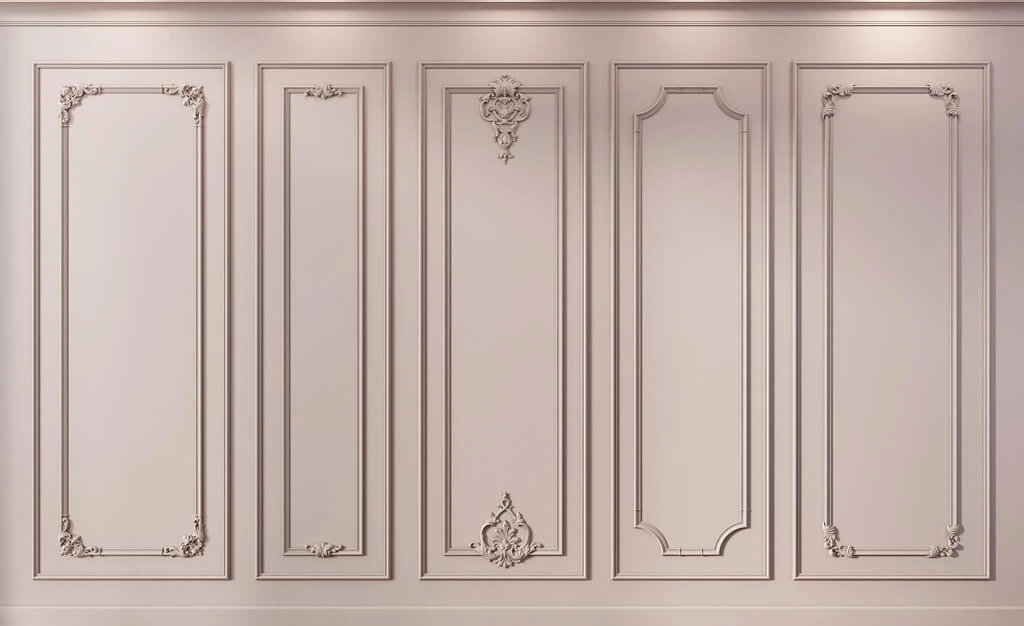
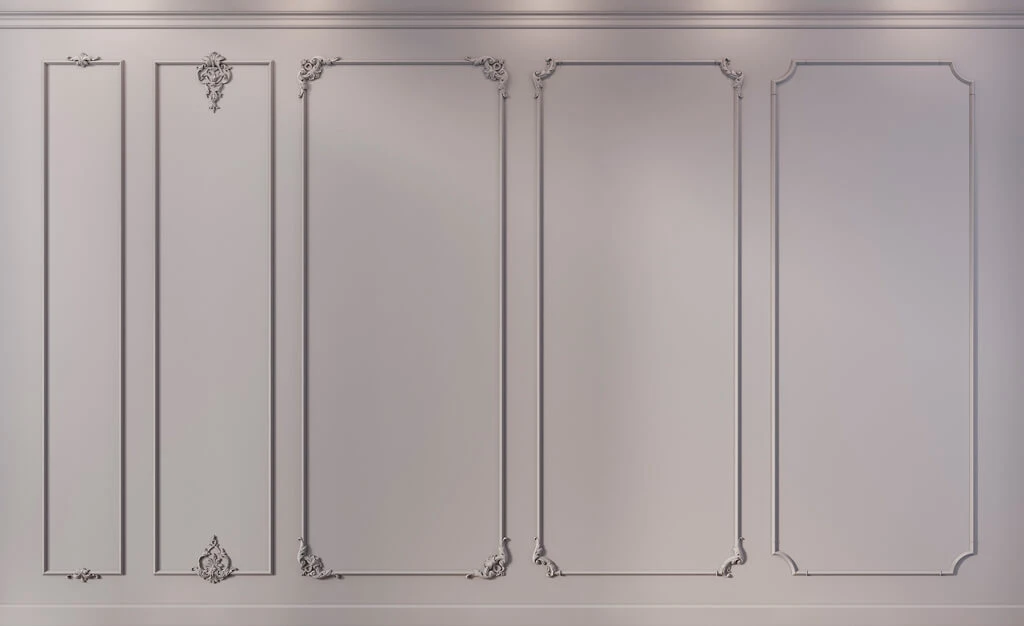
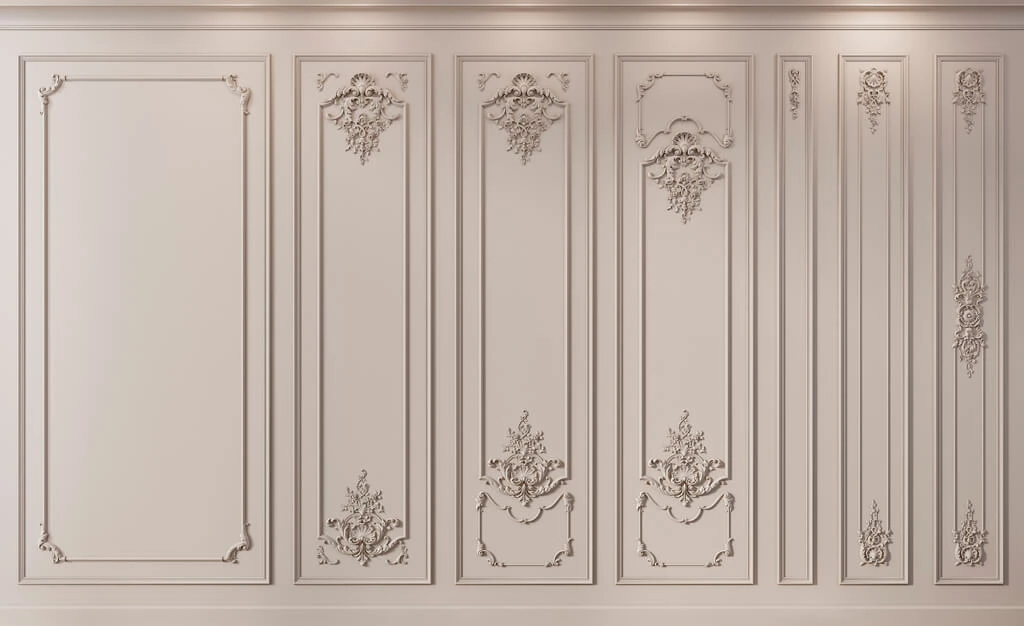
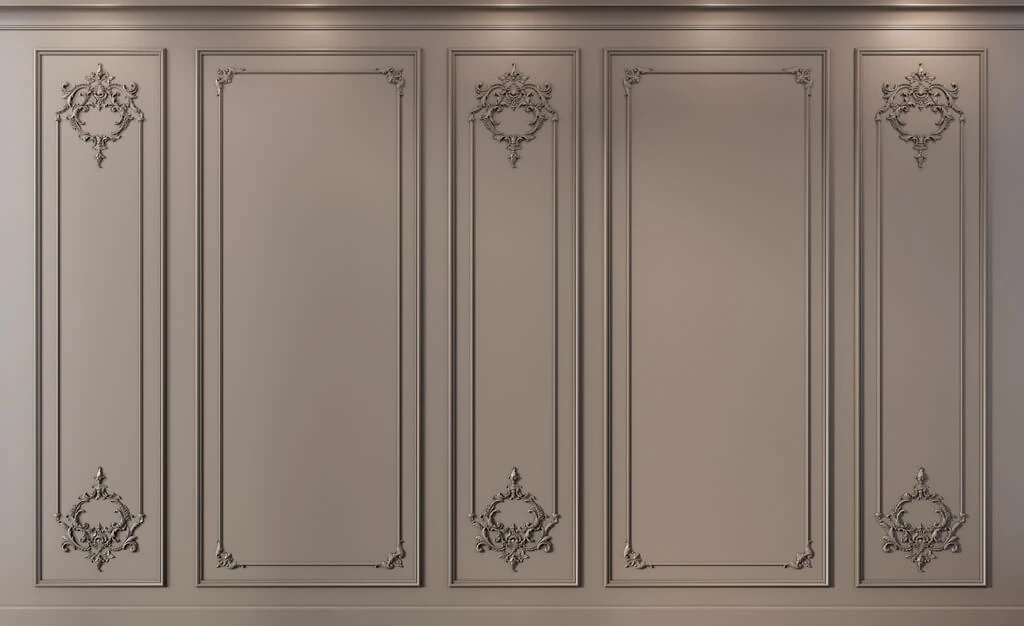
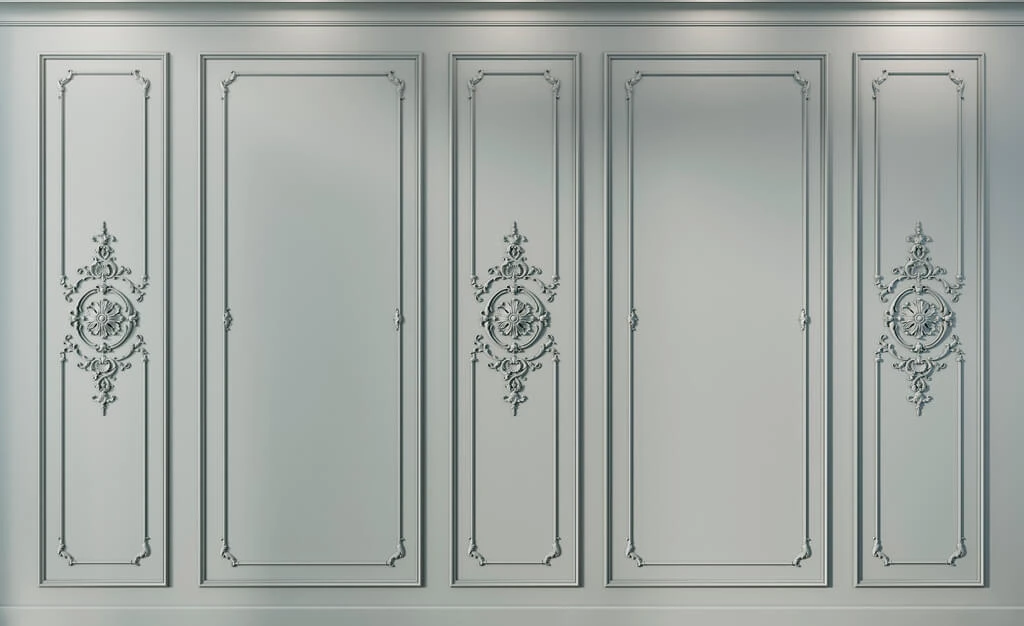
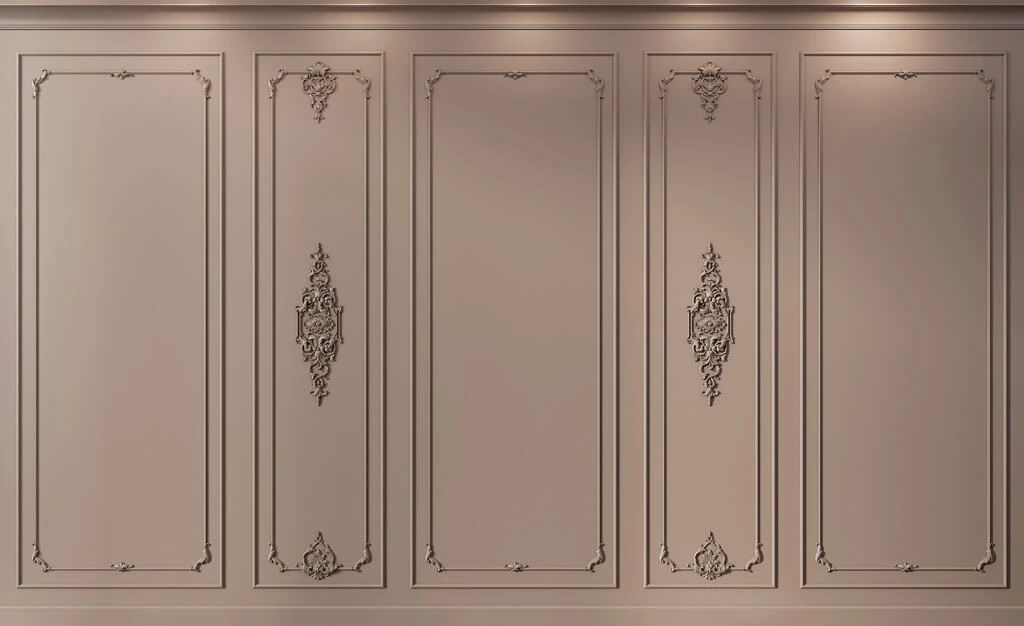
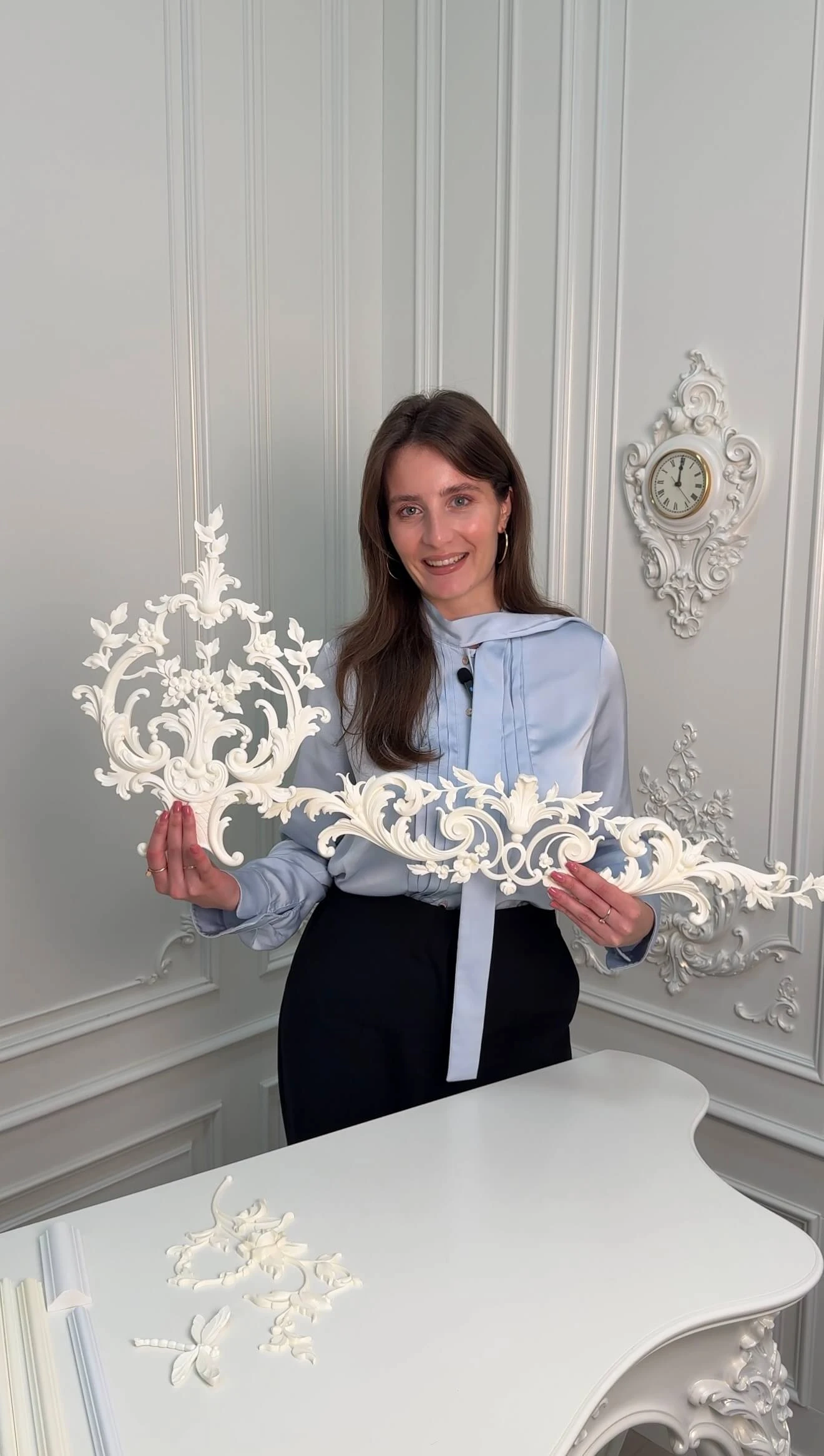
molded decoration Moscow— a query that hides very different needs. Some are looking for a simple ceiling cornice, others — a complete system with rosettes, coffers, and pilasters. Let's examine the range that is actually needed when working with panel systems.
Ceiling cornice: the foundation of a molding system
The cornice is the most in-demand element of molding decor in combination with panel constructions. Its purpose is to create a horizontal boundary between the wall and ceiling, the 'frame' for the entire interior.
Polyurethane molding in Moscowis available in a range of profiles from 35 to 200+ mm. For Moscow apartments:
| Ceiling Height | Recommended cornice height | Profile type |
|---|---|---|
| 2.5 m | 40–55 mm | Smooth, without ornament |
| 2.7 m | 55–75 mm | Smooth or with a light profile |
| 2.8–3.0 m | 70–100 mm | Profiled, with a classic ornament is acceptable |
| 3.0–3.5 m | 90–140 mm | Classic with ornament |
| Above 3.5 m | 120–200 mm | Full classic profile |
All polyurethane cornices are supplied in white and require finishing painting. This is not a drawback — it's an opportunity to choose the exact shade.
Moldings: linear decor for walls and ceilings
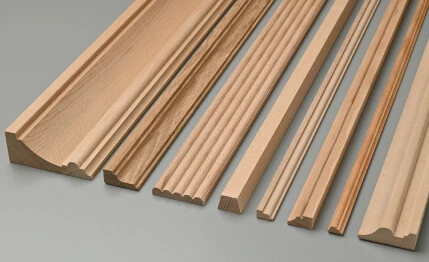
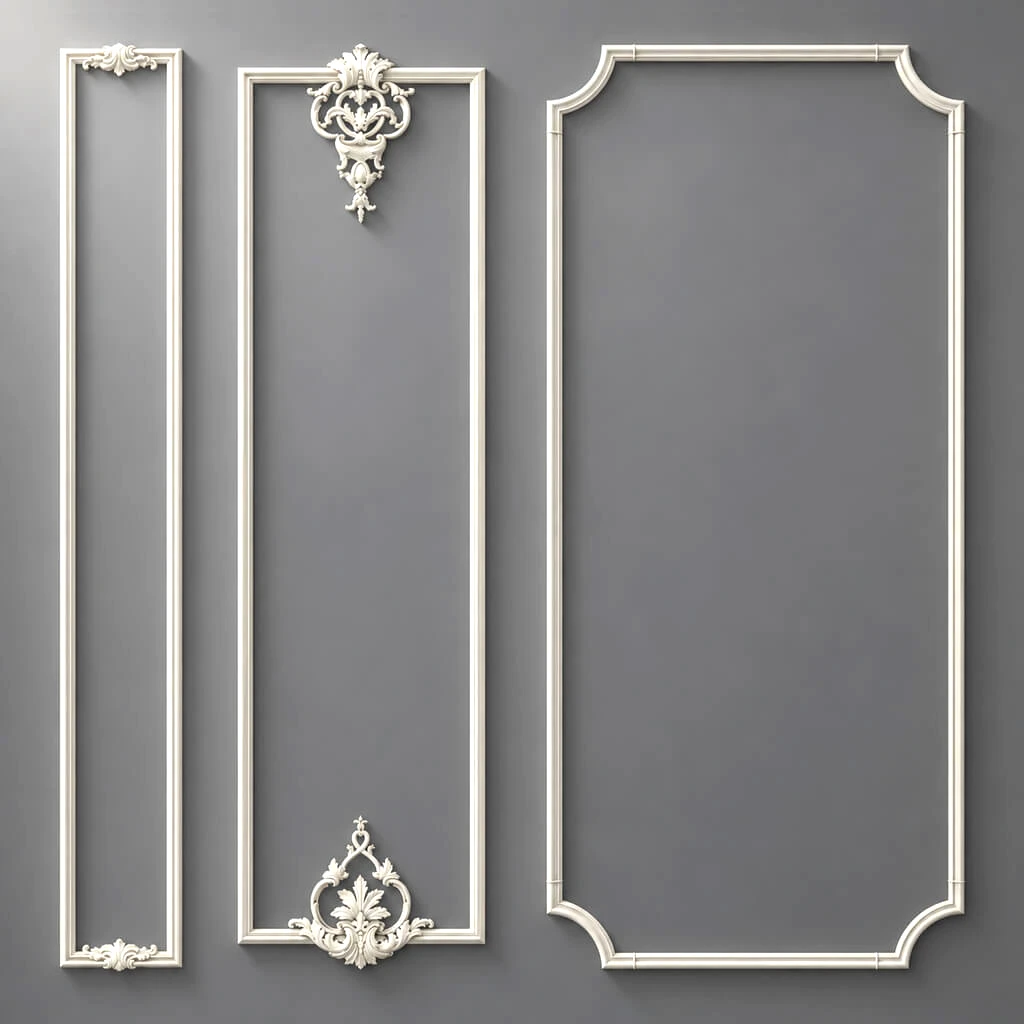
Buy polyurethane molding in Moscowin the form of moldings — means getting a tool for creating panel and frame partitioning of any surface. Moldings are installed:
-
Horizontally on walls — separate the lower (slat) and upper zones
-
In the form of rectangular frames — create 'panels' of classical architecture
-
Along the perimeter of the ceiling — paired with a cornice, they create a 'stepped' transition
-
On the ceiling — coffered partitioning without actual recess
Molding height: 20–60 mm. For coffered ceilings — usually 30–45 mm, to avoid creating excessive relief.
Rosettes and medallions: accents that remember
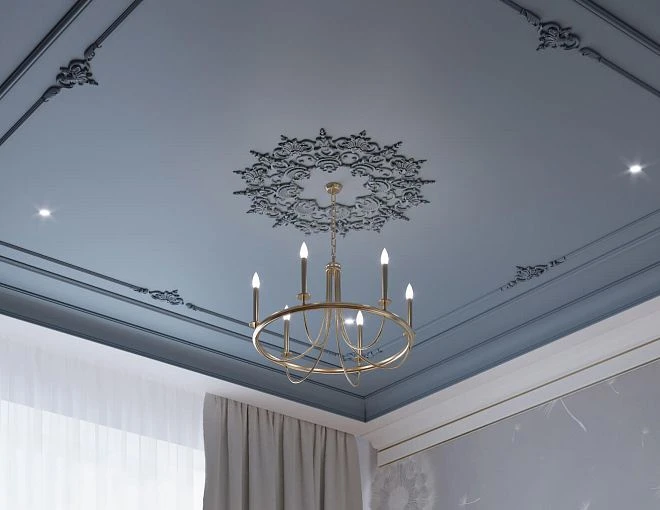
Buy Molded Decorationin the form of ceiling rosettes — means getting an element that 'marks' the center of the room. For a chandelier, for a pendant light, as an independent decorative accent.
Diameters for Moscow apartments:
-
Ceiling 2.5 m: socket 120–200 mm
-
Ceiling 2.7–2.8 m: socket 200–300 mm
-
Ceiling 2.9–3.0 m: socket 300–400 mm
-
Ceiling above 3.0 m: socket 400–600 mm
The style of the socket should match the style of the cornice — it's a unified system, not a set of random elements.
Overlay elements: architectural details
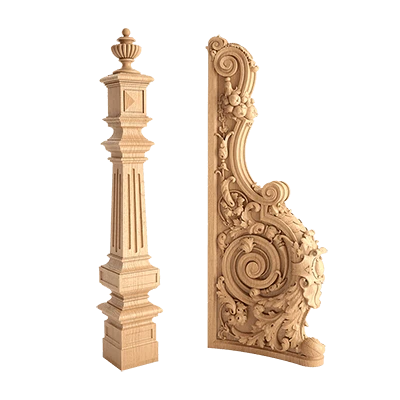
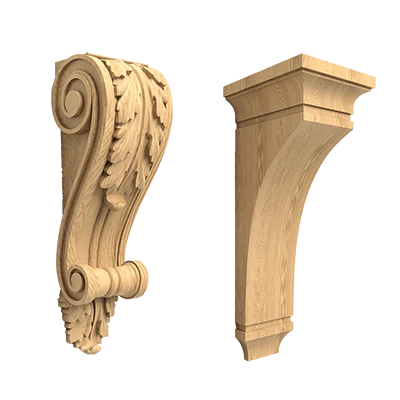
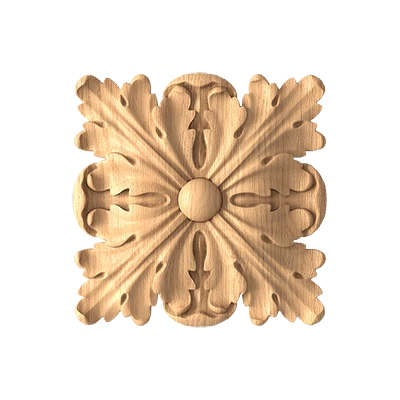
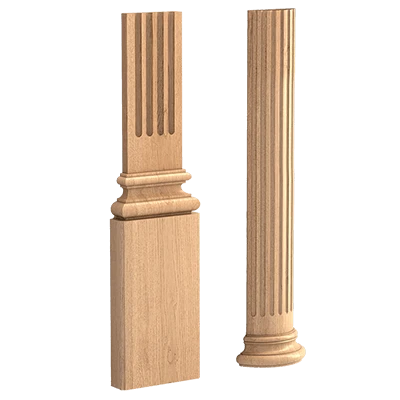
Relief Decoration in the form of overlay elements — pilasters, keystones, capitals, corner overlays, decorative consoles — transforms a standard interior into an architectural statement.
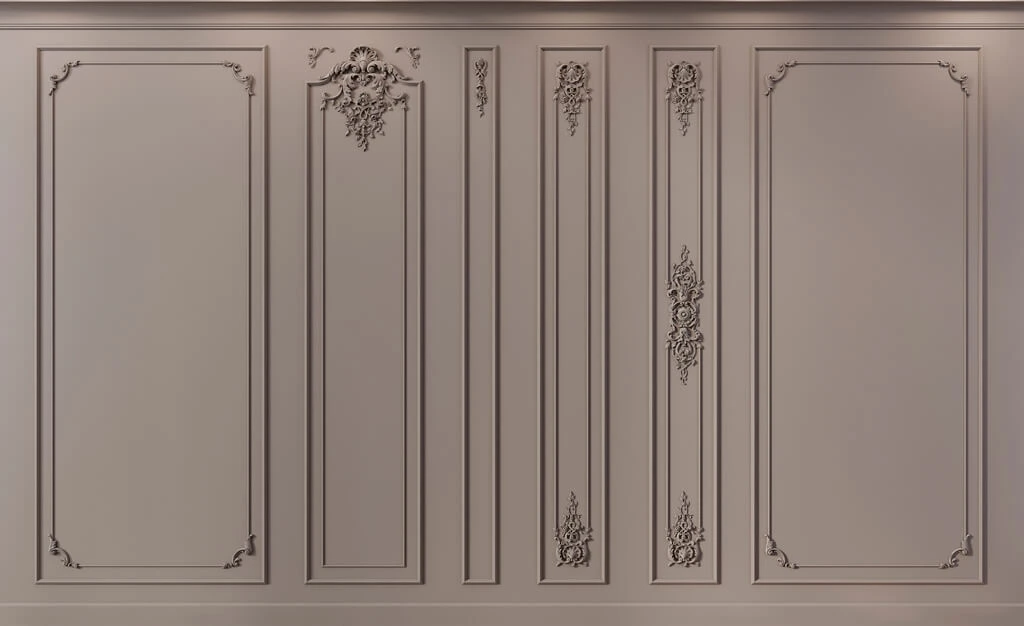
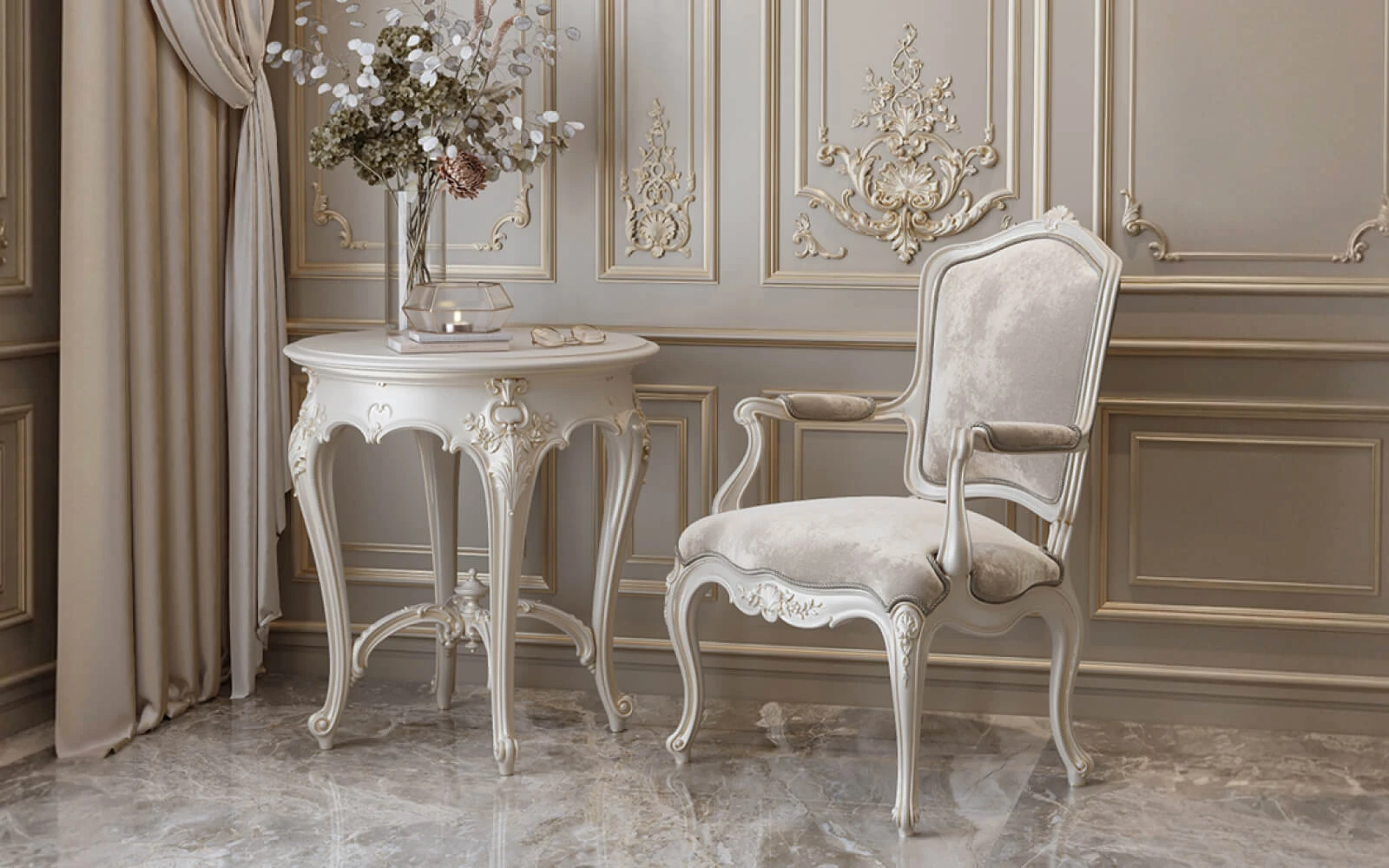
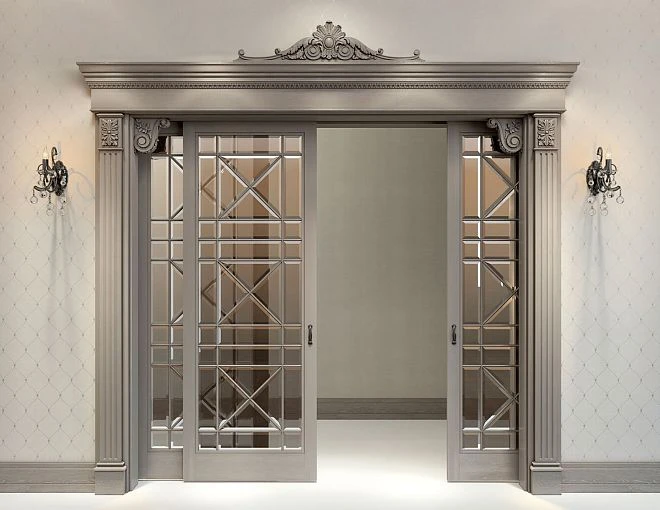
For Moscow apartments in neoclassical style: pilasters at the edges of the slatted structure, keystones above openings, corner overlays at cornice joints — this entire 'set' made of polyurethane is installed in one day and lasts for decades.
How to combine slatted panels and polyurethane molding: six working concepts
The combination of slatted panels and stucco decor is not a single solution, but a whole family of concepts. Six of them are the most in-demand on the Moscow market.
Concept 1: 'Pure Classic' — white on white
White MDF slats 45–55 mm. White smooth cornice 65–80 mm. White ceiling. White molding frames on the walls. Accents — through furniture, textiles, lighting.
This is a concept of maximum neutrality: the room's shell disappears, the content (furniture, objects, light) comes to the fore. Requires precise execution: any deviation in tone or geometry is immediately noticeable.
Concept 2: 'Dark Accent' — contrast as a strategy
Dark slats (anthracite RAL 7016, dark blue NCS S 8010-R90B, dark green). White cornice 70–90 mm. White ceiling. White or light other walls.
An accent dark wall is a 'theatrical backdrop' for furniture, TV, paintings. The white cornice creates a clear boundary, 'separating' the dark wall from the white ceiling. This concept is the most photogenic: it is the one that most often appears in professional photography.
Concept 3: 'Natural Interior' — wood and white frame
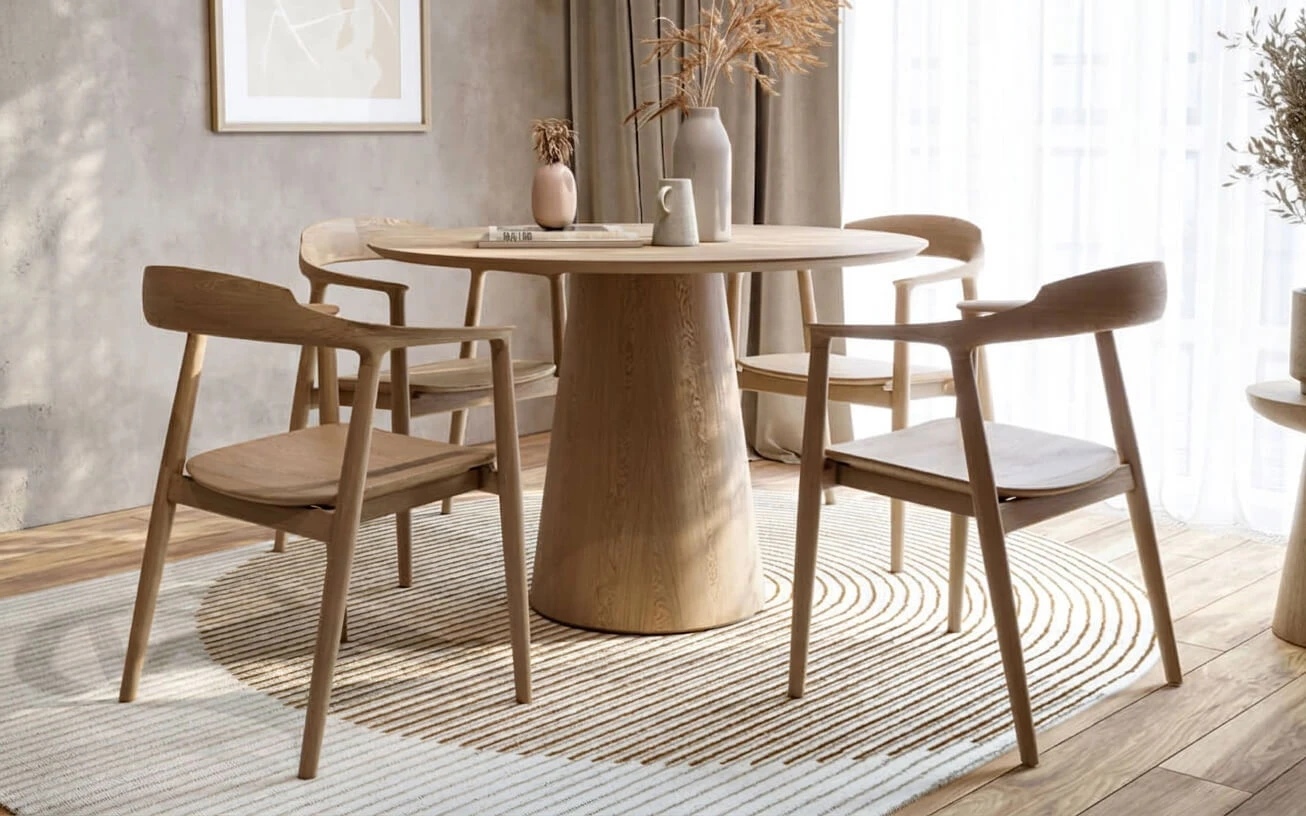
Wooden slat panelsOak slats in the tone of natural oil or tinted UV varnish. Polyurethane cornice 70–85 mm in white. Molding frames in white. Other walls — white or light beige.
This is the concept of 'warm nature in a classic frame': live wood is framed by geometrically precise white stucco. No conflict — wood and white are an eternal pair.
Concept 4: "Neoclassical Study" – dark battens, intricate molding
Dark battens (walnut, dark green, anthracite) on three walls. The fourth wall is either a window or light-colored. Ceiling: coffered moldingpolyurethane trim, cornice 90–110 mm, rosette 350–450 mm. Lighting fixture – classic or in the "new classic" style.
Requires a ceiling height of at least 2.8 m. When executed correctly – the most complex and impressive concept.
Concept 5: "Scandinavian with Details" – neutral and minimal molding
Light battens 40–50 mm (white, taupe, light beige). Cornice 50–60 mm, smooth. No rosettes, no molding frames. Accent through textures and materials, not through decor.
For Muscovites who love Scandinavian minimalism but want "completeness" – it is the thin, smooth cornice that provides this feeling without overload.
Concept 6: "Art Deco" – geometry and symmetry
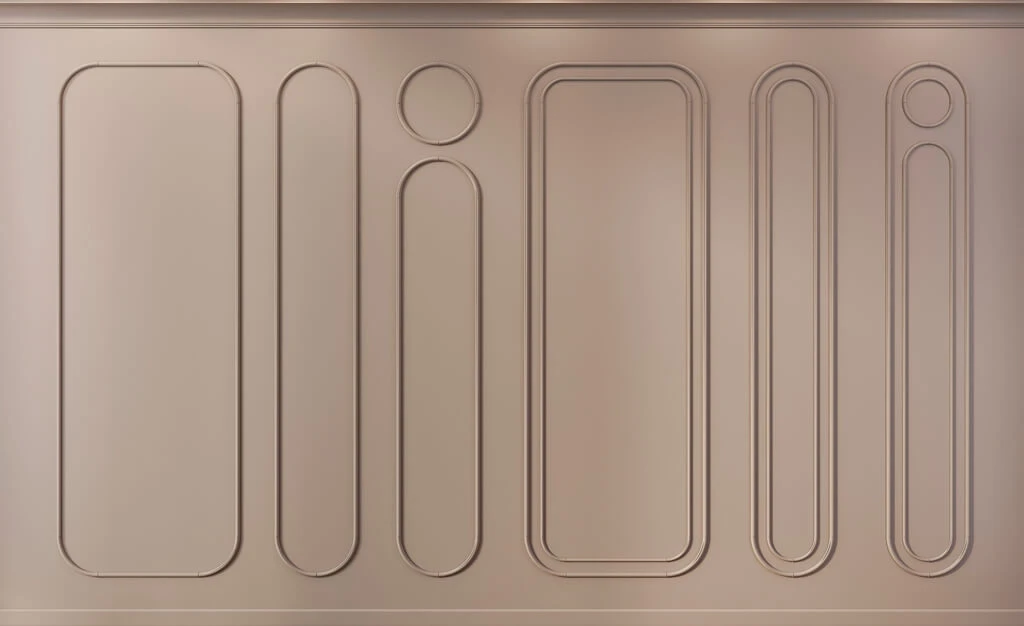
Battens 45–55 mm in white or golden-beige. Moldings with a geometric profile – rectangular frames with clear corners. Cornice 70–80 mm with an angular profile. Rosette with geometric ornament. Light fixture with metal details – gold or brass.
Art Deco requires strict symmetry: all molding frames are the same size, distances between elements are equal, not a single random detail.
How to evaluate product quality: not just price and appearance
When buying slatted panels in Moscow ormolded decoration Moscow, it's important to evaluate quality based on objective parameters. Visual appeal is the first, but not the only criterion.
Quality parameters of slatted panels
Base material. MDF slats should be accompanied by a document: a declaration of conformity indicating the emission class (E1 or E0) and, if necessary, the moisture resistance class (MR).
Type of finish coating. Ask the supplier: single-component acrylic enamel or two-component polyurethane varnish? 2K coating is the industrial standard for slatted structures. 1K is only acceptable in dry areas with minimal traffic.
Geometric accuracy. Request 5–7 samples from different parts of the batch, measure the width with a caliper. Permissible deviation: ±0.3 mm. More than that leads to cumulative error when installing a long wall.
Straightness. Place a 2.4 m long slat on a flat surface. The deflection arrow should be no more than 2 mm. More than that causes problems with installation on a flat load-bearing system.
System of elements. A reliable supplier offers not just slats, but a system: load-bearing profile, corner strips, starting and finishing elements, skirting board. Without a system, it's 'finish it yourself'.
slatted wall panels for interior finishing— a detailed guide on selecting material, construction, and application format for each type of room.
Quality parameters of polyurethane molding
Density and hardness of polyurethane. High-quality two-component polyurethane is dense, elastic, and does not deform when pressed. Light and soft elements are polystyrene or low-density foamed PU. The difference in durability is multiple times.
Precision of relief. The ornament is cast in a silicone mold—each detail is clear, without 'melted' edges. Blurred relief is a sign of a worn-out mold or low-quality raw materials.
Geometry of the cross-section. The cornice should fit tightly to the wall/ceiling joint without gaps. If the base of the cornice is not straight—there will be gaps that will need to be filled.
Standard length and joinability. Elements 2.0 m long should join 'butt-to-butt' without steps on the front surface. Mismatch of relief at the joint is a sign of unstable production.
How to avoid visual conflict between finishing elements
The most subtle question is not 'what material to buy,' but 'how to make everything look like a design concept, not like a set of purchases.' Several rules that always work.
Rule 1: One style—one vocabulary
Slatted panels and molded decor should 'speak' the same architectural language. Concise flat slats + ornamental Baroque molding—different languages. Concise slats + smooth cornice with a profile shelf—one language. Slats with a chamfer + cornice with a classic profile—also one language, slightly more complex.
Rule 2: One leader—one follower
In each room, one decorative element should be the main focus. Either the slats—then the molding serves as a 'frame': cornice, molding, baseboard. Or the molding—then the slats should be a concise background.
Two 'loud' elements at once—this is not double beauty, it's visual noise.
Rule 3: One color temperature
Warm slats (oak, walnut, beige) + cool white molding—conflict. Warm slats + molding in milk or ivory—a unified voice. All elements from one color temperature: warm or cool, but not together.
Rule 4: Scale corresponds to the room
In an apartment with a 2.5 m ceiling, a 120 mm cornice is monstrous. A 500 mm rosette in a 12 m² children's room—scary. Each element should be proportionate to the height and area.
Basic cornice proportion: 1.5–2.5% of the room height. At 2.7 m—40–67 mm. At 3.0 m—45–75 mm. This is the range within which the cornice looks 'correct' automatically.
Rule 5: Finishing details complete—do not 'finish up'
Baseboard below the slat structure, molding along the edges, sealing joints—this is not an addition, it's part of the design. If finishing details are 'added later,' it shows. Plan in advance:Moldings made of polyurethanein the same tone as the slats—a unified system, not a set of parts.
Installation sequence: how to do it correctly
The installation sequence in a project with slatted panels and stucco decor is not a household issue, but an architectural one. Violating the work order leads to one element interfering with the installation of another.
Correct order:
-
Preparation of bases: putty, priming, leveling. Installation of sockets, electrical supply points.
-
Install stucco first. Cornice, moldings, rosettes. The ceiling and upper wall zone are primed and painted before starting the installation of the slatted structure.
-
Painting the ceiling and wall area above the slatted structure. After installing the slats, accessing this area without the risk of staining the slats is impossible.
-
Load-bearing system of the slatted structure. Metal profile, plane verification with a laser level.
-
Installation of MDF slats or wooden panels. Bottom-up or according to another scheme depending on the system.
-
Finishing elements of the structure: baseboard, corner overlays, top edge molding.
-
Sealing joints: neutral acrylic sealant around the perimeter of the structure.
-
Painting or finishing: if the slats are for painting — final painting on site.
Detailed technology — in the step-by-step guide toinstallation of slatted panels.
Rack panels for different rooms of a Moscow apartment
| Room | Material | Class | Finish | Features |
|---|---|---|---|---|
| Living room (dry) | MDF or solid wood | E1 | 2K polyurethane | Any format |
| Bedroom | MDF | E1 or E0 | Water-based acrylic | No solvent odor |
| Hallway (with entrance door) | MDF | MR E1 | 2K polyurethane | End sealing |
| Kitchen (dining area) | MDF | MR E1 | 2K polyurethane | Not in the work area |
| Office | MDF or solid wood | E1 | 2K polyurethane | Dark tones are appropriate |
| Children's room | MDF | E0 | Water-based acrylic | No solvents |
| Corridor | MDF | MR E1 | 2K polyurethane | Narrow slats for visual expansion |
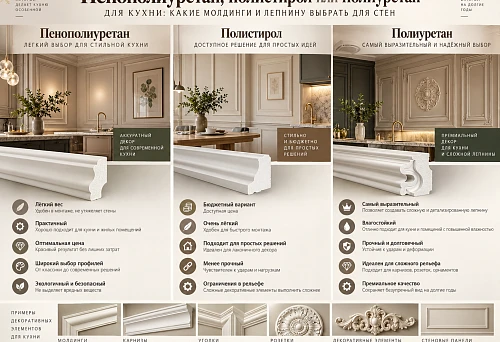
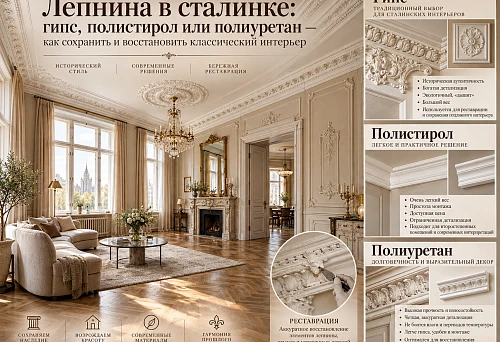
Comparison table: polyurethane, gypsum, polystyrene
| Parameter | Polyurethane | Gypsum | Polystyrene |
|---|---|---|---|
| Weight (80 mm cornice, kg/m) | 0,3–0,4 | 1,5–2,5 | 0,12–0,18 |
| Water absorption | <0,5% | 20–25% | <1% |
| Mechanical resistance | High (elasticity) | Brittle | Low (crumbles) |
| Relief accuracy | High | High | Low |
| Repaintability | Yes, acrylic paint | Difficult | Poor |
| Service life | 20–30+ years | 10–15 years (with humidity) | 3–7 years |
| Flammability class | G1–G2 | Does not burn | G4 (burns) |
| Installation | Glue + nails | Mortar or glue | Glue |
| For St. Petersburg / Moscow humidity | Ideally | Risk of Damage | Not recommended |
Where People Go Wrong When Buying Slatted Panels in Moscow
Mistake 1: Buying on Marketplaces Without Samples
Saving on sample shipping = risk of getting material that's 'not it'. Always order samples before the main batch.
Mistake 2: Not Clarifying the MDF Class
'Moisture-resistant' is not just a word on the packaging. It's a green edge when cut and a corresponding declaration. Demand the document.
Mistake 3: Choosing a Cornice Based on a Single Picture in the Catalog
A molded cornice looks completely different depending on lighting, paint tone, and room scale. Order a 20–30 cm sample and view it in the actual room.
Mistake 4: Thinking that Molding 'Is Easy to Glue'
Polyurethane molding is installed with special PU adhesive, with surface priming and holding under pressure. Without primer — peeling in 6–12 months. Without special adhesive — the same.
Error 5: Ignoring acclimatization
MDF battens delivered from a cold warehouse in winter require 24–48 hours of acclimatization at room temperature. Installing cold battens in a warm room guarantees warping.
Error 6: Buying molding separately from battens from different suppliers
And getting incompatible tones when painting. All elements that will be painted in the same tone must be primed identically — otherwise the paint 'takes' differently.
FAQ: Questions and Answers
Can I buy batten paneling in Moscow with delivery to the regions?
Most professional manufacturers deliver throughout Russia. For orders of 10–15 m² or more — delivery cost is typically included in the calculation or minimal.
How to properly select a cornice for battens?
Rule of proportion: cornice height = 1.5–2.5% of room height. Batten width and cornice height should be in the same 'weight' range: 55 mm battens → cornice at least 60 mm. More details in the guide tobatten wall paneling in interior.
Can IBuy polyurethane molding in Moscowfor painting in a custom RAL tone?
Yes. Polyurethane molding is primed with a special PU primer and painted with any acrylic paint in the desired RAL or NCS shade.
How to distinguish polyurethane molding from polystyrene molding in a Moscow store?
Squeeze with your fingers: polyurethane is elastic, does not deform. Polystyrene crumples. Bend at 20–30°: polyurethane bends without breaking, polystyrene breaks.
Slatted panels and molding in an apartment with a 2.5 m ceiling — is it possible?
Possible and recommended. Narrow slats 35–45 mm, smooth cornice 45–55 mm in the ceiling tone — the ceiling visually 'rises'. No horizontal wall moldings.
What budget should be allocated for a 'slats + molding' set for an 18 m² living room?
Approximately: accent wall MDF MR (12 m²) — 35,000–70,000 rubles, perimeter cornice — 12,000–25,000 rubles, rosette — 3,000–8,000 rubles, moldings — 5,000–14,000 rubles. Total: 55,000–117,000 rubles for materials + installation 25,000–40,000 rubles.
Is primer needed before installing polyurethane molding?
Yes, mandatory. Base (ceiling, wall): acrylic or alkyd primer. The back surface of the molding before installation with adhesive — special contact primer for PU.
About the company STAVROS
Moscow is accustomed to choice. But real choice is not when there are many options, but when there is one right one. Material with documentation. Production backed by responsibility. A system where every element is made for another.
STAVROS is a full-cycle Russian manufacturer: wooden moldings, slat systems, polyurethane molded decor. Own production: chamber drying of solid wood to 8–10%, CNC milling with a tolerance of ±0.1 mm, painting booths for applying 2K coatings. Full documentation: declaration of conformity, emission class E1, technical specifications.
For Moscow projects in the STAVROS catalog:Wooden slat panelsmade of oak and ash with UV varnish;MDF slatted panelMR E1 class with 2K coating;Paintable lath panelsfor monochrome concepts;molded decoration Moscow— overlay elements, pilasters, rosettes;Polyurethane molding in Moscow— cornices, moldings, profiles;Buy polyurethane molding in Moscowwith delivery and samples;Moldings made of polyurethane— baseboards, cornices, moldings;slatted wall panels in the interior— complete selection guide.
Material samples — upon request. Free consultation on selection, proportions, and combinations for your specific Moscow project. STAVROS — because the right choice starts with the right material.